MELBOURNE (TIP): A magnitude-6.6 earthquake struck in the South Pacific near the island nation of Samoa on Friday, but caused no apparent damage. The quake occurred 440 kilometers (273 miles) southwest of the capital Apia at a depth of 314 kilometers (195 miles), the U.S. Geological Survey said.
Jarrett Malifa, a staff member at the Samoa Observer news website, said no damage or injury has been reported. Malifa said in a email Samoa Meteorological Services had confirmed there was no tsunami threat. The Pacific Tsunami Warning Center in Honolulu also assessed there was no tsunami threat.
Samoa sits on the “Ring of Fire,” an arc of seismic faults around the Pacific Ocean where earthquakes and volcanoes are common.
In 2009, two large earthquakes struck midway between Samoa and American Samoa, a U.S. territory. The earthquakes generated tsunami waves that killed at least 192 people in Samoa, American Samoa and Tonga. (AP)
Month: July 2025
-
6.6 magnitude earthquake hits South Pacific near Samoa, no damage reported
-

Parliament paralyzed for 4th day as Opposition protests over Bihar SIR
NEW DELHI (TIP): Proceedings in both Houses of Parliament were disrupted for the fourth consecutive day of the Monsoon session on Thursday, July 24, as the Congress-led opposition staged noisy protests over the ongoing Special Intensive Revision (SIR) of electoral rolls in Bihar, demanding the exercise be rolled back.
The opposition continued to press the Union government for a debate not only on the SIR but also on Operation Sindoor, former US President Donald Trump’s repeated claims of brokering a ceasefire between India and Pakistan and the abrupt resignation of Vice President Jagdeep Dhankhar after the session’s opening day.
Although the government has agreed to a 16-hour discussion next week on the Pahalgam terror attack and Operation Sindoor, opposition MPs have stalled proceedings in both Houses since July 22 over the SIR in Bihar.
Sources indicate that the Rajya Sabha may also take up a 16-hour debate on these issues next week.
On Thursday, July 24, the Houses opened to fresh protests by opposition MPs focused on the SIR issue. Earlier in the day, members of the opposition INDIA bloc demonstrated outside Parliament, criticizing the Election Commission of India’s handling of the SIR and demanding a full debate in both Houses. As the Lok Sabha convened, opposition MPs attempted to raise the matter of electoral roll revision in Bihar, shouted slogans and entered the Well of the House holding placards. Speaker Om Birla urged protesting members to return to their seats and assured them opportunities to raise their concerns as per rules. However, as the din continued, he adjourned the House until 2 pm.
When the Lok Sabha reconvened, protests resumed with equal intensity. Officiating Speaker Krishna Prasad Tenneti appealed to the MPs to allow the House to take up a bill reserving seats for Scheduled Tribes in the Goa Legislative Assembly. As opposition members refused to relent, the TDP MP adjourned proceedings for the day.
Similar scenes played out in the Rajya Sabha, which faced repeated adjournments before being adjourned for the day until July 25.
-

Prime Minister Modi’s foreign visits from 2021-24 cost the nation USD 34,114,449 (Rs 295 cr)’; USD 7,746,345 (Rs 67 cr ) on trips to 5 countries in 2025: Govt data
NEW DELHI (TIP): Over Rs 67 crore (USD 7,746,345) was incurred on Prime Minister Narendra Modi’s visit to five countries, including the US and France, in 2025, while the total expenditure figures related to his foreign trips from 2021 till 2024 stood at nearly Rs 295 crore (USD 34,114,449) , according to data shared by the government, says a PTI report.
As per the country-wise and year-wise data, the corresponding figures for Modi’s visits to Mauritius, Cyprus, Canada and Croatia, and Ghana, Trinidad & Tobago, Argentina, Brazil and Namibia this year were not available.
For these visits, the column for ‘total expenditure’ in the data shared by Minister of State for External Affairs Kirti Vardhan Singh on Thursday, in his written response to a query by TMC MP Derek O’Brien in Rajya Sabha, said, “Bills under settlement. Total expenditure is not yet available.” Of these visits, the costliest one was to France, which incurred over Rs 25 crore (USD 2,890,009) , while the one Modi undertook to the US in June 2023 incurred over Rs 22 crore (USD 2,542,900) .
On March 20, the ministry had shared data in in Rajya Sabha, according to which nearly Rs 258 crore ( USD 29,821,291) was incurred on 38 foreign visits of Modi between May 2022 and December 2024.
In 2025, Modi had travelled to France and the US from February 10-13. In Paris, he held bilateral talks with President Emmanuel Macron and attended an AI Summit, while in the US he met and held talks with President Donald Trump, among other engagements.
According to the data shared, the country-wise figures for these five countries Modi visited in 2025 are–Rs 25,59,82,902 (France); Rs 16,54,84,302 (US); Rs 4,92,81,208 (Thailand); Rs 4,46,21,690 (Sri Lanka) and Rs 15,54,03,792.47 (Saudi Arabia).
The cumulative figures for the preceding four years are–about Rs 109 crore (2024) spanning 16 countries, including Russia, Ukraine, the US and Brazil; nearly 93 crore (2023); Rs 55.82 crore (2022) and about Rs 36 crore (2021).
In 2021, Modi visited Bangladesh (Rs 1,00,71,288–total expenditure); the US (Rs 19,63,27,806); Italy (Rs 6,90,49,376); and the UK (Rs 8,57,41,408). His trips in 2022 included visits to Germany (Rs 9,44,41,562); Denmark (Rs 5,47,46,921); France (Rs 1,95,03,918); Nepal (Rs 80,01,483) and Japan (Rs 8,68,99,372), it said. For Modi’s 2023 visit to Egypt, the expenditure on advertising and broadcasting was Rs 11.90 lakh, according to the data.
-

French President Macron says France will recognize Palestine as a state
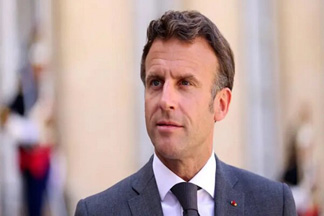
PARIS / NEW YORK (TIP): French President Emmanuel Macron announced Thursday, July 24, that France will recognize Palestine as a state, amid snowballing global anger over people starving in Gaza, according to an Associated Press report. Macron said in a post on X that he will formalize the decision at the United Nations General Assembly in September. “The urgent thing today is that the war in Gaza stops and the civilian population is saved.″
The French president offered support for Israel after the Oct. 7, 2023 Hamas attacks and frequently spoke out against antisemitism, but he has grown increasingly frustrated about Israel’s war in Gaza, especially in recent months.
France is the biggest and most powerful European country to recognize Palestine. More than 140 countries recognize a Palestinian state, including more than a dozen in Europe.
France has Europe’s largest Jewish population and the largest Muslim population in western Europe, and fighting in the Middle East often spills over into protests or other tensions in France.
The Israeli Foreign Ministry had no immediate comment. France’s foreign minister is co-hosting a conference at the U.N. next week about a two-state solution. Last month, Macron expressed his “determination to recognize the state of Palestine,” and he has pushed for a broader movement toward a two-state solution, in parallel with recognition of Israel and its right to defend itself.
Thursday’s announcement came soon after the U.S. cut short Gaza ceasefire talks in Qatar, saying Hamas wasn’t showing good faith.
Momentum has been building against Israel in recent days. Earlier this week, France and more than two dozen mostly European countries condemned Israel’s restrictions on aid shipments into the territory and the killings of hundreds of Palestinians trying to reach food.
The Palestinians seek an independent state in the occupied West Bank, annexed east Jerusalem and Gaza, territories Israel occupied in the 1967 Mideast war. Israel’s government and most of its political class have long been opposed to Palestinian statehood and now say that it would reward Hamas after the Oct. 7, 2023, attack. Israel annexed east Jerusalem shortly after the 1967 war and considers it part of its capital. In the West Bank, it has built scores of settlements, some resembling sprawling suburbs, that are now home to over 500,000 Jewish settlers with Israeli citizenship. The territory’s 3 million Palestinians live under Israeli military rule, with the Palestinian Authority exercising limited autonomy in population centers.
-

Brazil to join South Africa’s Gaza genocide case against Israel at ICJ
BRASILIA / NEW YORK (TIP): Brazil is finalizing its submission to join South Africa’s genocide case against Israel’s actions in Gaza at the International Court of Justice, the Foreign Ministry said in a statement on Wednesday, July 23, 2025, a Reuters report says.
South Africa filed a case in 2023 asking the ICJ to declare that Israel was in breach of its obligations under the 1948 Genocide Convention. The case argues that in its war against Hamas militants Israel’s military actions go beyond targeting Hamas alone by attacking civilians, with strikes on schools, hospitals, camps, and shelters.
Other countries – including Spain, Turkey, and Colombia – have also sought to join the case against Israel. In its statement, the Brazilian government accused Israel of violations of international law “such as the annexation of territories by force” and expressed “deep indignation” at violence suffered by the civilian population.
Israel denies deliberately targeting Palestinian civilians, saying its sole interest is to annihilate Hamas. Lawyers for Israel have dismissed South Africa’s case as an abuse of the genocide convention.
Brazil’s National Israeli association CONIB said in a statement in response to Wednesday’s decision that “the breaking of Brazil’s long-standing friendship and partnership with Israel is a misguided move that proves the extremism of our foreign policy.”
Brazilian President Luiz Inacio Lula da Silva has long been an outspoken critic of Israel’s actions in Gaza, but Wednesday’s decision carries added significance amid heightened tensions between Brazil and Israel’s ally, the United States. The Trump administration announced 50% tariffs on all Brazilian goods this month.
A diplomat familiar with the thinking of the Lula administration told Reuters that Brazil does not believe its decision to join South Africa’s case will impact its relationship with Washington, however.
The United States has opposed South Africa’s genocide case under both former President Joe Biden and Trump. In February, Trump signed an executive order to cut U.S. financial assistance to South Africa, citing in part its ICJ case.
-

India, UK ink landmark trade pact to boost economic ties
Bilateral trade to double by 2030 from $56 bn, deal eliminates tariffs on 99% of Indian exports Textiles, gems, EVs win big as pact unlocks $23-bn opportunities; simplified visas for professionals
LONDON / NEW DELHI / NEW YORK (TIP): India and the UK on Thursday, July 24, sealed a landmark free trade agreement (FTA) that will eliminate tariffs on 99 per cent of Indian exports, open new markets for British whisky and automobiles and create thousands of jobs in both nations.
Prime Minister Narendra Modi and his UK counterpart Keir Starmer attended the signing ceremony, hailing the pact as a transformative step toward enhancing trade, generating employment and stimulating economic growth.The pact, officially called comprehensive economic and trade agreement (CETA), was finalized in May after three years of negotiations. It comes amid shifting global trade dynamics influenced by protectionist policies of US President Donald Trump.
Indian farmers stand to gain preferential access to the UK’s $37.5 billion agricultural market, with reduced tariffs on key exports such as basmati rice, millets, cotton, fruits, vegetables, spices, tea and coffee. Sectors sensitive for India like dairy, vegetables, apples, cooking oils and oats remain protected, while the UK’s $5.4 billion seafood market will open with duties dropping from 20 per cent to zero.
Commerce and Industry Minister Piyush Goyal and UK Business and Trade Secretary Jonathan Reynolds signed the deal, marking Britain’s most significant trade agreement since Brexit in 2020 and India’s largest strategic partnership to date.
Modi described the pact as “more than just an economic partnership; it is a blueprint for shared prosperity,” while Starmer emphasized its potential to deliver “huge benefits” by making trade cheaper, faster and more efficient.
Bilateral trade between the two nations currently stands at nearly $56 billion, with targets to double this figure by 2030. The CETA ensures duty-free access for 99 per cent of India’s exports to the UK, potentially unlocking $23 billion in new opportunities, said Goyal. Key sectors such as textiles, marine products, leather, footwear, gems, jewelry and engineering goods will benefit from zero tariffs, down from previous rates of 4 per cent to 16 per cent. The UK, in turn, gains from lower duties on clothing, footwear, tea, seafood and coffee.
The agreement also facilitates greater mobility for Indian professionals, including architects, engineers, chefs and IT specialists through streamlined visa processes. Additionally, it opens doors for Indian startups, MSMEs and service providers in IT, finance, law and education.
Notably, tariffs on Scotch whisky will plummet from 150 per cent to 75 per cent immediately, eventually reducing to 40 per cent over 10 years. India will also cut duties on UK cars from over 100 per cent to 10 per cent under a phased quota system, while Indian manufacturers will gain access to the UK’s electric and hybrid vehicle market, also under a quota system.
The deal further benefits the aerospace sector, with India eliminating import duties on components, a move expected to support major contracts with firms like Airbus and Rolls-Royce. With the UK already importing £11 billion worth of Indian goods annually, the liberalized tariffs are poised to make Indian products more affordable for British consumers while boosting export opportunities for Indian businesses, it said in a statement before signing the agreement.
(Source: TNS) -

The real drone war is yet to come
Preparing for the future means thinking beyond the victories of Operation Sindoor
“An effective counter-drone system must address both tactical and operational levels. Frontline troops must be equipped with portable jammers and rifle-mounted AI-assisted sights. At the operational level, the most effective architectures integrate long-range detection by radar and other sensors, mid-range disruption through jamming or spoofing, and close-in destruction by kinetic means. We may also need to examine new organizational structures that integrate radars, guns and Electronic Warfare resources.”

By Lt Gen DS Hooda (Retd) It’s now over two months since Operation Sindoor, and with the media frenzy having subsided, a dispassionate assessment can be made of some of the key military issues surrounding the operation. One of these issues is the description of the conflict as South Asia’s first drone war. Senior Indian military officers have spoken about the revolutionary employment of drones during the operation and the effectiveness of India’s counter-drone systems.
Drones have undoubtedly become central to modern conflict, and India’s successful defense against Pakistani intrusions has been justifiably praised. Yet a closer analysis of drone employment during the operation shows that drone warfare in both countries is still at a nascent stage. This is borne out by how the two countries utilized drones during the operation.
On the night of May 7-8, a day after India launched strikes on nine terrorist camps, Pakistan retaliated with drone activity, targeting Indian military bases at 15 locations across Punjab, Jammu and Kashmir, Gujarat, and Rajasthan. The following night saw further intrusions at 36 locations, stretching from Leh to Sir Creek, with an estimated 300 to 400 drones. According to official briefings, the aim of these incursions was likely to test Indian air defense systems and gather intelligence.
On the night of May 9-10, drone activity was reported at 26 locations, spanning from Srinagar to Naliya. Most of these drones were successfully neutralized, though limited damage was sustained at Udhampur, Pathankot, Adampur and Bhuj.
According to media reports, most of the drones employed by Pakistan were unarmed. A few specialized military drones, such as Turkey’s Asisguard Songar and the Yiha-III loitering munition, were used. The Songar has a range of about 10 km and can be equipped with a light armament, such as a gun or grenade launcher. The Yiha-III is designed for precision strikes against high-value targets, but it remains a low-end capability compared to more sophisticated systems.
Indian drone strikes, though fewer in number, were more targeted and precise. These employed loitering munitions such as the Harpy and Harop. The Harpy is an anti-radiation drone designed to destroy enemy radar systems, while the Harop has electro-optical sensors and can engage a broader range of targets. Polish Warmate and the indigenously developed Nagastra-1 loitering munitions were also employed.
It is likely that some of the Indian strikes on terrorist camps on May 7 were carried out by drones, though this has not been officially confirmed. What has been revealed through press briefings is that on May 8, Indian drones targeted air defense radars and systems at multiple locations inside Pakistan, destroying one radar in Lahore. On May 9, four more air defense sites were targeted, with at least one additional radar destroyed.
On May 10, the Indian Air Force launched devastating airstrikes on Pakistani airbases, command centers and military infrastructure using long-range standoff weapons such as the BrahMos and SCALP cruise missiles, and air-to-ground munitions like the Crystal Maze and Rampage. These strikes were preceded by decoy drones and Harops designed to degrade Pakistani air defense systems.
On the counter-drone front, Pakistan claimed to have downed at least 48 Indian drones. The Indian counter-drone effort was commendable as it neutralized almost all Pakistani drone attacks. At the forefront were air defense guns like the L-70, ZU-23 and Shilka. India also has an indigenous Drone Detection and Interdiction System that would have played an important part in neutralizing hostile drones.
India did come out on top in the brief drone war, but there are some important lessons. The reason drones are having such a significant impact on the battlefield is due to their affordability and ubiquity. Thousands of $500 drones in the hands of soldiers make aerial surveillance, precision strikes and real-time intelligence accessible to even small infantry units. Low-cost drones also permit strategic reach, as seen in Ukraine’s deep strikes into Russia.
It is not technology, but the scale of drone warfare that is redefining warfighting. Both Ukraine and Russia are estimated to have between one and two million drones in their military inventory. It is the mass usage that is the fundamental characteristic of drone warfare, and this has sparked innovation in tactics and battlefield adaptation.
One might argue that a four-day conflict between India and Pakistan cannot be compared to the Ukraine war. There is merit in this argument, but then we should also not conclude that the Sindoor experience offers a reliable blueprint for future conflicts involving drones. In fact, it highlights several areas that must be addressed.
Indian drone strikes were precise but primarily carried out by specialized drones. Such drones are highly expensive; each Harop drone costs approximately $700,000. What is required is a massive infusion of low-cost drones, particularly in the Army. Units at the tactical level must then devise practical doctrines and battlefield tactics for their effective employment.
India must also indigenously develop medium and long-range strike drones. Ukraine has developed a series of drones with ranges of up to 1,000 km, which transitioned from concept to combat use in around six months. While this wartime mobilization is not replicable in India, drone development timelines must be drastically shortened through mission-mode programs and agile public-private partnerships.
The military must also not rest on its laurels of having countered Pakistani drones. With few exceptions, the drones were mostly unarmed and posed little direct threat. An effective counter-drone system must address both tactical and operational levels. Frontline troops must be equipped with portable jammers and rifle-mounted AI-assisted sights. At the operational level, the most effective architectures integrate long-range detection by radar and other sensors, mid-range disruption through jamming or spoofing, and close-in destruction by kinetic means. We may also need to examine new organizational structures that integrate radars, guns and Electronic Warfare resources.
Preparing for the future means thinking beyond the victories of Operation Sindoor. It requires scaling up the employment of drones, rewriting doctrine and integrating drone defenses into every level of the battlefield. The real drone war is yet to come.
(Lt Gen DS Hooda (retd) is a former Northern Army Commander. He was the Northern Army Commander during the ‘surgical strike’ in September 2016)
-

The India-U.K. FTA spells a poor deal for public health
The entry of cheaper junk food as a result of a free trade agreement can prove to be expensive in terms of public health

By Chandrakant Lahariya, Arun Gupta India and the United Kingdom have signed their Free Trade Agreement (FTA), with the Union Commerce and Industry Minister, Piyush Goyal, and the British Business and Trade Secretary, Jonathan Reynolds, signing the deal on July 24, 2025, during the visit of Prime Minister Narendra Modi to the U.K. On July 22, 2025, the Union Cabinet, Government of India had approved the FTA. Officially called the Comprehensive Economic and Trade Agreement, this FTA was first announced at the conclusion of negotiations on May 6, 2025.
The India-U.K. FTA is good news from the economic perspectives of both countries. However, the FTA could pose a public health challenge for India. It will allow tariff-free entry — and thus lower prices — for U.K.-made food products such as biscuits, chocolates and soft drinks in India, many of which would fit into the categorization of High Fat, Sugar and Salt (HFSS), posing grave long-term health risks. Cheaper prices supplemented by the expected aggressive marketing and advertising campaigns could prove harmful from the point of view of the health of citizens.
The case of Mexico
Concerns about the FTA and its adverse public health impact are not hypothetical. In 1992, when the North American Free Trade Agreement (NAFTA) was signed between Mexico, the United States and Canada, Mexico made the mistake of not implementing robust public health safeguards. In the years that followed, Mexico experienced the following: a dramatic rise in imports of cheap, sugary drinks, snacks and processed foods; a surge in the consumption of HFSS food products, and a steep rise in diet-related diseases, obesity and diabetes. Mexico could halt the rise in the sale of HFSS products and manage lifestyle diseases only when it introduced stringent public health regulatory mechanisms such as a ‘Soda Tax’ and warning labels upfront in 2014.
From a public health viewpoint, the India-U.K. FTA is a concern for India. While the sale of unhealthy food products in the U.K. is relatively better regulated, the regulatory framework is sub-optimal in India. For example, the U.K. has implemented a ban on the advertising of HFSS products on television and online. The ban on such TV advertisements before 9 p.m., and a complete ban on paid online advertisements for HFSS products will come into effect on October 1, 2025. Similarly, the U.K.’s traffic light Front-of-Pack Nutrition Labelling (FOPNL) system uses a color-coded system to help consumers quickly understand the nutritional content of packaged foods and drinks. For example, green indicates low levels of fat, saturated fat, sugar, and salt, amber indicates medium, while red indicates high. This system helps consumers make healthier choices.
India lacks binding restrictions on junk food advertisements targeting children; the existing regulations are not effectively enforced and routinely flouted. India relies on self-regulation through the Advertising Standards Council of India, which is an industry body. There is ample evidence that in the food sector ‘industry self-regulation’ is rarely and partially effective. There are a few regulations that prohibit misleading advertisements, i.e., the Advertising Code of the Ministry of Information and Broadcasting; however, regulatory bodies are often unable to identify misleading advertisements or, if done so, no penalty is assigned. The cartoon mascots on food products targeted at children on the one hand and celebrity endorsements on the other normalize unhealthy choices. The use of celebrities and sportspersons are key to these tactics. Many of these celebrities have privately acknowledged that they do not use the products which they publicly promote and advertise. Yet, such deceitful behavior has never resulted in social or public outrage.
The problem with India’s ‘star rating’
In India, the issue of a mandatory FOPNL is pending for want of a decision on the right type of labels and amendments under the Food Safety and Standards (Labelling and Display) Regulations, 2020. While evidence from various studies is that all types of warning labels help in reducing the consumption of HFSS, the most effective are the use of warning labels. Yet, Indian authorities are more interested in the use of “star rating”, which could be misleading and less effective. Therefore, the process of introducing a warning system on packaged food is slow. For example, in September 2022, there were proposed amendments to introduce mandatory warning labels. Yet, three years later, the amendments remain on paper. After a Public Interest Litigation in April 2025, the Supreme Court of India has directed the authorities to make a decision on warning labels in a time-bound manner. Many independent subject experts believe that a part of the reason for the delay in the adoption of the Food Safety and Standards Authority of India (FSSAI)’s 2022 draft regulations for FOPNL is because of industry lobbying — this has diluted the proposals, opting for “star ratings” that are confusing instead of clear warnings such as Chile’s black octagonal labels (when ‘food products exceed certain thresholds of sugar, sodium, saturated fat, and/or calories’).
India and many parts of the world are already facing a challenge of rising lifestyle diseases. In March 2025, The Lancet published two studies which indicated that obesity is on the rise across large parts of the world. Ultra Processed Food (UPF) and HFSS food items have witnessed a CAGR of 13.3%, in India, from 2011-21. Not surprisingly, the burden of lifestyle diseases such as obesity, diabetes and hypertension is rising at an alarming rate, in all age groups — more so in children and adolescents. A position statement on FOPNL in India, released in June 2025 and signed by 29 organizations, provided comprehensive evidence on the harmful effects of HFSS and UPF; it also advocated having warning labels being a mandatory part of HFSS and UPF packages.
Commercial activities, i.e., trade and treaties have been integral part of human life and the economic ambitions of nations. The FTAs have economic benefits and multiple rationales. However, getting cheaper junk food as a result of an FTA can be costly in public health terms. These apprehensions are founded in sound global evidence. In fact, in the last decade, global health agencies have begun talking about the Commercial Determinants of Health — the conditions, actions and omissions by commercial actors that affect health.
There is news that India may sign another deal, the India-European Free Trade Agreement Trade and Economic Partnership Agreement (TEPA), involving Iceland, Liechtenstein, Norway, and Switzerland, in October 2025. Trade deals and FTAs are likely to be signed with some more countries. They could be good for the economy, but from the point of view of public health they could prove to be the Trojan horses of non-communicable diseases, unless sufficient safe-guards are implemented. There is a need to balance the economic benefits of FTAs with the need to protect public health and ensure restrictions on the marketing and labelling of food products.
It is still not late
Now that the India-U.K. FTA has been signed, the legal text will be drafted in the weeks ahead, and this is the opportunity for India to make the right move, it needs to act immediately to mitigate the FTA’s public health impact. It is time for strong measures to regulate the advertising of HFSS, as also suggested in the Economic Survey 2024-25 and in line with the recent ‘Dietary Guidelines for Indians’, published by the National Institute of Nutrition in May 2024. The mandatory FOPNL in the form of warning labels should be implemented at the earliest. The proposed ‘sugar boards’ and ‘Oil Boards’ in schools are a good entry point to having ‘health promoting schools. However, ‘a more holistic approach of ‘HFSS boards’ needs to be considered. School meals and school college canteens should stop the sale of packaged and unhealthy food items. Protective measures must be implemented with urgency to counter the potential effects of current and future FTAs. Public health practitioners and health policymakers need to be more engaged on issues that are related to trade deals, and when it comes to ultra-processed food and high fat, salt and sugar food. It is an issue of public health, which affects nearly every Indian in every age group, and a subject that must be treated with urgency.
(Dr. Chandrakant Lahariya is an Indian medical doctor, public health & policy expert and writer. Lahariya is the author of the book Till We Win: India’s Fight Against The COVID-19 Pandemic. He has worked with the World Health Organization and other United Nations agencies for nearly 17 years.
Dr. Arun Gupta is a pediatrician and the lead of Nutrition Advocacy in Public Interest–India -NAPI)
-

Why the reluctance to recognize Israel’s genocide in Gaza?
A narrow understanding of the term, as well as Israel’s history as a haven for genocide victims, explains the dissonance

By Kenneth Roth Why is it so difficult for some to accept that the Israeli government is committing genocide in Gaza? The case for genocide is compelling, but some governments and members of the public resist acknowledging it. The reason lies in not only Israel’s history as a haven for the Jewish victims of genocide but also an unduly narrow understanding of the meaning of the term, by both the public and the international court of justice (ICJ).
Israel benefits from a halo effect associated with the Holocaust. Because the state of Israel was founded in response to the Nazi genocide, it is harder to accept that the Israeli government in turn would commit genocide. One obviously does not preclude the other, but Israel benefits from the cognitive dissonance.
One would have hoped that a history of genocidal victimhood would yield an appreciation for human rights standards that prohibit oppression, but some leaders seem to have drawn the opposite lesson. They interpret the vow “never again” to mean that anything goes in the name of preventing renewed persecution, even the commission of mass atrocities. Indeed, they weaponize the genocidal past to suppress criticism of their current atrocities.
That was the experience in Rwanda. The genocidal slaughter of some 800,000 Tutsis in 1994 was stopped by the Tutsi-led Rwanda Patriotic Front, an exile rebel group based in neighboring Uganda. Under the military leadership of Paul Kagame, who went on to become Rwanda’s long-serving president, the RPF executed some 30,000 Rwandans during and immediately after the genocide.
Kagame’s government went on to repeatedly invade neighboring Democratic Republic of Congo (formerly Zaire), ostensibly to chase remnants of the genocidal forces that had fled there but, these days, mainly to capitalize on Congo’s mineral wealth. An estimated 6 million Congolese have died from the violence and resulting humanitarian crises. Meanwhile, the Rwandan government imprisons critics on the spurious grounds that they are promoting a vaguely defined “genocide ideology”.
The Israeli government has followed a similar logic, using increasingly brutal means to crush any perceived threat. Like Kagame, Benjamin Netanyahu and his predecessors have used ostensible self-defense as a pretext for a land grab. Israeli settlements have gradually cannibalized large portions of the occupied West Bank, and the prime minister is now threatening to forcibly deport 2 million Palestinians from Gaza. Meanwhile, the government and its partisans dismiss critics as “antisemitic”.
Israel also benefits from a public misconception of what genocide is. The Genocide Convention, which 153 states have embraced, prohibits various acts with the intent to destroy a specified group “in whole or in part” as such. The proscribed acts of greatest relevance to Gaza are “killing” or “deliberately inflicting on the group conditions of life calculated to bring about its physical destruction in whole or in part”.
Both the Holocaust and the Rwandan genocide were examples of genocide targeting a group “in whole”. After a certain point, the Nazis in Germany and the Hutu extremists in Rwanda tried to kill as many Jews or Tutsis as they could get their hands on. Genocide was the primary purpose.
But what does it mean to target a group “in part”? That requirement might be met when the killing is not targeted at every member of a specified group but at enough to accomplish another goal. For example, in 2017 the Myanmar military executed some 10,000 Rohingya to send 730,000 Rohingya fleeing for their lives to Bangladesh. Genocide in that case was a means to the end of ethnic cleansing.
That is a better way to understand what the Israeli government today is doing in Gaza. Although the Netanyahu government has displayed a shocking indifference to Palestinian civilian life there, it has not tried to kill all Palestinians. Rather, it has killed enough of them, and imposed conditions of starvation and deprivation that are sufficiently severe, to force them to flee, if things go according to plan. The far-right Israeli ministers Bezalel Smotrich and Itamar Ben-Gvir have openly articulated that goal, as has Netanyahu.
There is little doubt that Israel’s actions are sufficient to meet the requirements for genocidal conduct. More than 57,000 Palestinians have been killed in Gaza since Hamas’s attack of 7 October 2023. A November 2024 study found that nearly 70% of those killed at the time had been women and children, and clearly many male victims were not combatants either. The number of civilians killed thus far exceeds the 8,000 killed by Bosnian Serb forces in Srebrenica in 1995, which an international tribunal found to constitute genocide.
Although many of the dead in Gaza were not deliberately killed, their deaths were the product of Israel’s disregard for Palestinian civilian life – for example, by devastating Palestinian neighborhoods with enormous 2,000-lb bombs, attacking military targets knowing that the civilian toll would be disproportionately high, or repeatedly killing starving Palestinians as they seek food.
Meanwhile, Israel has imposed a punishing siege on civilians in Gaza, blocking access to food and other necessities for lengthy periods. In addition, at least 70% of the buildings have been leveled. It confines surviving Gazans to primitive camps that it regularly moves or attacks. And it has destroyed the civilian institutions needed to sustain life in the territory, including hospitals, schools religious and cultural sites, and entire neighborhoods. These conditions are believed to have contributed to several times the official death toll in indirect deaths.
When the ICJ considers the merits of South Africa’s genocide case against Israel, the key contested issue is likely to be whether Israel has taken these steps with the requisite genocidal intent – does it seek to eradicate Palestinian civilians in whole or in part as such? Some genocidal statements by senior Israeli officials have become notorious. Isaac Herzog, the Israeli president, said about Hamas’s 7 October 2023, attack that “this rhetoric about civilians not aware, not involved” is false because civilians “could have risen up” against Hamas (which is a brutal dictatorship). The former defense minister Yoav Gallant spoke of fighting “human animals” – not, as some claim, referring to only Hamas but in discussing the siege, which affects everyone in Gaza. Netanyahu himself invoked the biblical nation of Amalek, in which God is said to have demanded the killing of all “men and women, children and infants”.
Yet other Israeli officials in their public utterances hew more closely to legal requirements to spare civilians. So the ICJ will likely also examine whether genocidal intent can be inferred from Israel’s conduct in Gaza. That is where the court’s conservative jurisprudence introduces a complication.
In its 2015 decision in Croatia v Serbia, the court ruled that genocidal intent could be inferred from conduct if it “is the only inference that can reasonably be drawn from the acts in question”. Because the killing in that case was also committed with the aim of forced displacement, the court ruled it could not give rise to an inference of genocidal intent.
Ignoring the possibility of two parallel intents – one to commit genocide, another to advance ethnic cleansing – the court’s ruling suggests, anomalously, that the war crime of forced displacement could be a defense to a charge of genocide. That makes no sense. The issue should be whether a charge is conclusively proved, not whether it is the only criminal activity under way.
The ICJ will have a chance to correct its jurisprudence in the Gambia v Myanmar case about the Myanmar military’s attacks on the Rohingya, which should be decided before the Israel case. The court would be well advised to find that Myanmar committed genocide against the Rohingya for the purpose of ethnically cleansing them – that forced mass deportation was a motive, not a defense, for genocide. That would lay the groundwork for a similar ruling against Israel.
Why would the ICJ have adopted this rule in the first place? It never explained, so we can only speculate. But its rationale may have rested in part on the view that genocide should be about killing maximally – killing “in whole”, like the Holocaust and the Rwandan genocide – rather than killing or creating deadly conditions “in part”, as a means to an end. But that’s not what the Genocide Convention says. And that is not how we should assess Israel’s conduct in Gaza. That there is an illicit purpose to Israel’s unspeakable cruelty should not be a defense to the charge of genocide.
(Kenneth Roth, former executive director of Human Rights Watch (1993-2022) , is a visiting professor at Princeton University’s School of Public and International Affairs. His book, Righting Wrongs: Three Decades on the Front Lines Battling Abusive Governments, was published by Knopf and Allen Lane in February.)
-

France’s Bold Recognition of Palestine: A Beacon for Global Democracy

By Prof. Indrajit S Saluja As the fires of war continue to engulf Gaza and the world once again watches in deafening silence, a bold voice has emerged from the very land that gifted humanity the rallying cry of democracy—Liberty, Equality, Fraternity. French President Emmanuel Macron, in a historic declaration, announced that France will formally recognize the State of Palestine at the United Nations General Assembly in September 2025. His words are more than symbolic; they signal a long-overdue stand for justice and a rare assertion of moral courage on the world stage.
This is no ordinary declaration. France is not just another country joining the chorus—it is the birthplace of modern democratic ideals. Macron’s announcement cuts through the noise of diplomatic platitudes and geopolitical hypocrisy, and lands like a thunderclap in an international arena largely paralyzed by fear, favoritism, and false equivalence.
A Century of Denial and Dispossession
The roots of the Palestinian-Israeli conflict run deep. In 1917, the British government issued the Balfour Declaration, supporting a “national home for the Jewish people” in Palestine—then home to a majority Arab population. That was the beginning of a century-long denial of Palestinian self-determination.
In 1948, the State of Israel was established, resulting in the Nakba—the catastrophic displacement of over 700,000 Palestinians, who were forced to flee or were expelled from their homeland. The 1967 Six-Day War saw Israel occupy the West Bank, Gaza Strip, and East Jerusalem, territories considered central to any future Palestinian state. Despite UN Security Council Resolution 242 calling for Israel’s withdrawal, the occupation has only deepened.
Over the decades, countless peace efforts—including the Oslo Accords of the 1990s—have faltered. While Palestinians offered recognition of Israel and pursued diplomacy, Israel, under successive hardline governments, has continued to expand illegal settlements, maintain a brutal blockade on Gaza, and wage recurrent military assaults.
Gaza: From Occupation to Genocide
The ongoing war in Gaza, which erupted yet again in October 2023, has reached horrifying proportions. More than 38,000 Palestinians have been killed, according to the Gaza Health Ministry, the majority being women and children. Over 85% of Gaza’s population has been displaced. Civilian infrastructure—hospitals, schools, even UN shelters—has been systematically destroyed.
Israel’s actions have been condemned by UN agencies, Amnesty International, and Human Rights Watch, with multiple calls for war crimes investigations. Yet, the same powerful nations that once lectured the world on democracy and human rights—chief among them the United States and the United Kingdom—have either blocked resolutions at the UN or sent more weapons to Tel Aviv.
The duplicity is staggering. While Ukraine is rightly supported in resisting Russian occupation, Palestinians asking for freedom are labeled terrorists. This double standard has eroded the credibility of the West’s so-called moral leadership.
A Global Shift in Momentum
President Macron’s declaration comes at a time when international sentiment is rapidly shifting. As of July 2025, 143 out of 193 UN member states have recognized the State of Palestine, including Spain, Norway, Ireland, and much of the Global South. These nations see what millions of people around the world—especially the youth—see: a dispossessed people resisting apartheid, occupation, and annihilation.
Even within the U.S. and Israel, there are growing movements of dissent. Tens of thousands have marched in American cities demanding a ceasefire and justice for Palestinians. Within Israel, families of hostages and progressive voices are challenging the government’s intransigence and warmongering.
Macron’s recognition is therefore not isolated. It is a sign of an emerging global consensus that Palestinian statehood is not a gift to be granted—it is a right long denied.
France’s Historic Role and Responsibility
France’s role in the Middle East has not been without controversy—from its colonial history in the region to its past alignment with certain authoritarian regimes. But in this case, Macron has aligned France with the moral arc of history.
By taking this stand, France reclaims its revolutionary heritage not just in words but in action. It reminds the world that democracy is not about convenience—it’s about courage. Macron’s move may not immediately change the brutal reality in Gaza, but it chips away at the edifice of impunity Israel has enjoyed for too long.
His decision will likely face backlash. There will be pressure from Washington, pushback from Tel Aviv, and shrill accusations from lobby groups. But the tide of history is turning. The more the world waits, the more complicit it becomes in an unfolding genocide.
A Defining Moment for Democracy
Recognition of a Palestinian state is not an act of hostility toward Israel—it is a long-delayed affirmation of justice. It envisions a two-state solution, the only viable path toward lasting peace in the region. Israel, if it is to survive as a democratic state, must end its occupation, cease its apartheid policies, and make peace with the people it has displaced and oppressed.
President Macron’s announcement is a clarion call to the world: to stop watching and start acting. To live up to the very values they profess: democracy, human rights, freedom.
In years to come, this decision may be remembered as a turning point—when a major power broke the silence, rejected complicity, and chose justice over geopolitics. If France succeeds in shepherding a formal UN recognition in September, it will not just elevate the Palestinian cause; it will also restore faith in the global project of democracy, at a time when that very ideal is under siege.
The world has watched too many times as Palestinian lives were reduced to statistics, their suffering dismissed, their aspirations ignored. France, with this courageous stand, has drawn a line in the sand.
Let history record that in 2025, while the bombs still fell on Gaza, a nation stood up and said: Enough!
-

India fret over vice captain Pant’s fitness
RISHABH Pant’s injury is one of the biggest worries for India ahead of the fourth Test here in Manchester. Currently second on the list of top run getters with 425, the 27-year-old southpaw from Delhi has been indispensable for the team in the past few years, especially during their away tours.
Be it his shows Down Under in 2018 and 2021 that helped India clinch the Border-Gavaskar Trophy or dominant performances at home against England across two series. His ton in Cape Town, South Africa in 2022 where the next highest score was 29 or his 146 off just 111 balls in the last of the five-match series in England in 2022.
Not long ago, he became the first Indian wicketkeeper-batter to score twin centuries in a single Test in England when he scored 134 off 178 & 118 off 140 in the first match in Headingley. Most importantly, he is on joint second to former India captain Rahul Dravid as far as Test centuries are concerned on these shores. The former has scored six while Pant along with Sachin Tendulkar, KL Rahul and Dilip Vengsarkar is second with four centuries on English soil.
While his two hundreds in Leeds could not fetch India the win in the first match, his 65 off 58 balls in the second innings of the next Test at Edgbaston helped the team declare on 427/7 setting up a 608-run target for the opponents. In the end, it proved too much.
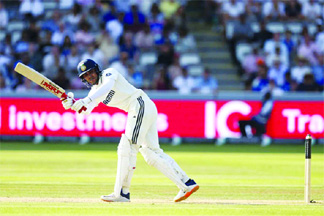
However, an injury to his left index finger in the Lord’s Test meant Pant had to walk off the field and he couldn’t keep for the remainder of the match with substitute Dhruv Jurel replacing him. Despite immense pain, he scored 74 in the first innings as the visitors managed to level England’s first innings total. He was undone by pacer Jofra Archer’s brilliance in the second innings.
Pant might have been relieved of wicketkeeping responsibility at Lord’s but the injury hampered him to a great extent while batting. He overcame the pain in the first essay but in the next he looked less convincing and pulled his bottom hand off the bat four times in an Archer over where the pacer was bowling at around 144 kmph. -

England reach Euro 2025 semis after shootout win over Sweden
ZURICH (TIP)- England roared into the semi-finals of Women’s Euro 2025 on Thursday after coming back from two goals down and then beating Sweden 3-2 in a chaotic penalty shoot-out to continue their title defence. Smilla Holmberg blasted over from the spot to settle the shootout drama in Zurich after the match finished 2-2 thanks to Lucy Bronze and Michelle Agyemang’s quick-fire strikes just as England looked to be limping out of the tournament.
The reigning European champions were staring at elimination with 11 minutes remaining in normal time after Kosovare Asllani, who opened the scoring with her 50th international goal in the second minute, and Stina Blackstenius shot Sweden into a two-goal lead at half-time. “That was one of the hardest games I have ever watched. We could have been out four or five times,” England boss Sarina Wiegman told the BBC.
“We started badly. We didn’t create anything so we changed shape and we scored two goals which was crazy. The shootout, we missed a lot but they missed more and we’re through.”
England will face Italy, who are in the last four for the first time since 1997, in Geneva on Tuesday after a rollercoaster comeback.
“Not how we planned it to be, of course, but it’s a learning experience that we put in our back pocket and learn from going forward,” Chloe Kelly, who was key to both England goals and took one of the few good penalties of the shootout, told reporters.
“We solved the problems and then it was about getting back in the game. The resilience of the team is incredible.”
Defeat ended Sweden’s bid for a first major honour since winning the first official Euros back in 1984, Peter Gerhardsson’s team falling in the most painful of fashions. -

England made ‘personal attacks’ on Shubman Gill at Lord’s
London (TIP)- When you are the captain of the Indian Test side, stringent scrutiny comes as an unavoidable byproduct of the recognition and responsibility. Not that Shubman Gill was very far away from the spotlight anyway but his elevation as India’s Test captain amplified its intensity to levels he might have never imagined, let alone experienced it. As far as batting is concerned, the leadership responsibility has done wonders. The captaincy, one would have to say, is still a work in progress. But then again, he is just 25. There is another thing that is not yet clear: What brand will Gill’s leadership be associated with? Is he a calm and cool character like MS Dhoni? Or does he believe in Virat Kohli’s motto of fighting fire with fire and coming out on top? Then there is the laid-back yet intense style of Rohit Sharma.
So far, it has been a mixed bag. By nature, Gill appears to be closer to the Dhoni bracket but the Day 3 events at Lord’s say that he has a lot of fire within him, too. But it’s one thing to pick up a fight with the opposition and completely another to handle it when you get it back.
While Gill excelled at showing his ultra-aggressive style to Zak Crawley and Ben Duckett, he was not natural at tackling the same when it was England’s turn to hound him on Day 4. That is where the difference between him and Virat Kohli lies, feels former India batter Sanjay Manjrekar.
“The thing with Virat Kohli was that he would get even more fired up and become a better batter [if things got nasty]. What disappointed me with Shubman Gill and that is why I was wondering, where is Shubman Gill heading? Because that seemed like it didn’t have the right effect on Shubman Gill, the batter,” Manjrekar said on ESPNcricinfo Match Day.
Manjrekar, a part of the broadcasting team, cited the stump microphone chatter to claim that India captain Shubman Gill was subjected to ‘personal attacks’ when he came out to bat in India’s second innings at Lord’s. He also added that Gill did not handle it well, as he was tentative in his short stay in the middle.
“He came out looking very tentative and, you know, these days we are privy to the stump mic and we could hear the things being said and there were some personal attacks made. This could be a new experience for Shubman Gill because these days, as you can see, you know, with Indian players, there’s mostly a friendly reception from a lot of foreign teams. So this was new territory. And he looked tentative and wasn’t up for it,” he added.
Gill arrived at Lord’s with close to 600 runs to his name that included two centuries and a record-breaking 269. The conditions were much difficult than the ones he faced in Leeds and Birmingham. In the second innings, the ball was hard and new, compared to the old and soft ones that he had encountered.
Gill missed a full toss outside the off stump right at the start of the innings. And although he survived a caught behind dismissal by using DRS, he was out lbw after he missed an in-dipper from Brydon Carse during India’s 193-run chase. The visitors misfired despite a stubborn act from Ravindra Jadeja, Jasprit Bumrah and Mohammed Siraj. India succumbed to a 22-run defeat and trails England 1-2 in the five-match series.
“We saw it pan out in the way he batted. Because these were deliveries, good deliveries, but he’s negotiated beautifully through his marathon run as a batter through the series. And suddenly he was missing those balls. There was a review situation as well. Next ball, there was a leg before. Going through Shubman Gill’s defence has been hard work. He has hardly missed a ball. The control percentage has been brilliant. And suddenly, in about nine deliveries [in the second innings], he’s missed four. I have no doubt that there is a connection there,” Manjrekar said. -

Beyond the beaches of Bali: Discovering Island’s hidden heart
When you think of Bali, you probably picture golden beaches, coconut palms, and surfers chasing the perfect wave. But just a few hours away from the coast, a different Bali unfolds—one of misty mountains, emerald rice terraces, sacred temples, and rich cultural rituals. For the traveler willing to go beyond the beaches, Bali’s true soul awaits in its villages, jungles, volcanoes, and centuries-old traditions.
This is your guide to exploring Bali beyond the shoreline—an island of spiritual wonder, living heritage, and breathtaking natural beauty.
Ubud: The Artistic and Spiritual Heart
Nestled among rice fields and dense forest, Ubud is often called the cultural capital of Bali—and for good reason. This is where art, spirituality, and community intertwine.
– Art & Culture: Explore local galleries like Agung Rai Museum of Art (ARMA) and Neka Art Museum, or visit traditional villages like Mas (wood carving) and Celuk (silverwork).
– Healing & Wellness: Ubud is also a wellness haven. Sign up for yoga at The Yoga Barn, enjoy a detox retreat, or consult a local balian (traditional healer).
– Nature & Adventure: Don’t miss the Tegalalang Rice Terraces, a stunning display of subak irrigation, or hike the Campuhan Ridge Walk for a scenic stroll through hills and valleys.
– Temples & Traditions: Visit Goa Gajah (Elephant Cave), a mystical sanctuary dating back to the 9th century, or witness a Barong dance performance, a traditional mythological show.
Temples of Time: Sacred
Sites and Ancient Wisdom
Bali has over 10,000 temples, but some of its most powerful are tucked away from the beach crowds.
– Pura Lempuyang: Known for the iconic “Gateway to Heaven” photograph, this temple complex sits on a mountain slope and requires a spiritual 1,700-step climb.
– Tirta Empul: A centuries-old water temple where pilgrims perform melukat, a holy water cleansing ritual believed to purify body and soul.
– Besakih Temple: Located on the slopes of Mount Agung, this is Bali’s mother temple and the largest, most important religious complex on the island.
– Ulun Danu Beratan: Floating gracefully on Lake Beratan, this picturesque temple honors Dewi Danu, the goddess of lakes and rivers.
These temples aren’t just attractions-they are living places of worship, integral to the daily rhythm of Balinese life.
Highlands, Volcanoes & Rainforests
If Bali’s beaches awaken your body, its interior landscapes awaken your soul.
– Mount Batur: Trek this active volcano in the pre-dawn hours to reach the summit for a spectacular sunrise. From the top, you’ll witness Lake Batur and the surrounding caldera bathed in early light.
– Sekumpul Waterfall: Arguably the most beautiful waterfall in Bali, hidden in the lush jungle of northern Bali. A trek through local villages and bamboo forests leads you to its dramatic twin cascades.
– Munduk & Bedugul: This cooler region in north-central Bali is known for coffee plantations, twin lakes (Buyan and Tamblingan), and mist-covered hills perfect for slow, immersive travel.
These lesser-visited highland areas are ideal for nature lovers, photographers, and those seeking tranquility.
Traditional Villages and Local Life
Bali’s cultural core is in its banjars (village communities) and the customs that have been passed down through generations.
– Penglipuran Village: A pristine, traditional village near Bangli, known for its orderly homes, bamboo architecture, and deep commitment to preserving Balinese Hindu culture.
– Tenganan: One of Bali’s oldest Bali Aga villages, where ancient traditions like double ikat weaving and unique social customs remain unchanged.
– Sidemen: A hidden gem in East Bali that offers terraced rice fields, artisan weavers, and homestays where you can immerse yourself in authentic rural life.
Here, you can learn how to make offerings, join a temple ceremony, or simply enjoy the warm hospitality of local families.
Culinary Journeys Off the Coast
Beyond beachside smoothies and seafood BBQs, Bali’s inland regions offer earthy, traditional cuisine that tells stories of the land.
– Farm-to-Table Dining: In Ubud and Sidemen, many restaurants source directly from nearby organic farms. Try bebek betutu (slow-cooked duck in banana leaves) or lawar (a spiced vegetable and coconut salad).
– Cooking Classes: Join a market tour and cooking class where you’ll learn how to prepare satay lilit, nasi campur, and fragrant Balinese spice pastes.
– Coffee & Cacao Trails: Tour plantations near Munduk or Kintamani and taste locally grown Bali coffee, chocolate, and even herbal tonics made from native plants.
Bali’s food is a mirror of its land: rich, layered, nourishing.
Festivals, Ceremonies, and Spirit of Bali
What sets Bali apart is its everyday spirituality. Life here is infused with ceremony, color, and reverence for both the divine and the natural world.
– Galungan & Kuningan: These festivals mark the victory of good over evil, with elaborately decorated penjor (bamboo poles) lining the streets.
– Nyepi (Day of Silence): Bali’s New Year is celebrated in complete silence. No lights, no travel, no noise-just reflection and renewal.
– Odalan: Temple anniversaries are celebrated all year round, with dance, music, and rituals. You’re likely to stumble upon one during your travels.
Even an ordinary day might include dozens of offerings-canang sari-arranged with care and gratitude for harmony between humans, spirits, and nature.
Travel Tips for Exploring Bali
– Best Time to Visit: April to October (dry season) is ideal for hiking and temple visits.
– Getting Around: Hire a local driver or rent a scooter for flexibility; inland roads are scenic but winding.
– Cultural Etiquette: Always wear a sarong and sash when visiting temples. Ask before taking photos during ceremonies.
– Where to Stay: Opt for eco-lodges, homestays, or wellness retreats in Ubud, Sidemen, or Munduk. -

Hariyali Teej: Celebrating the reunion of Lord Shiva and Goddess Parvati
Hariyali Teej is a famous festival of Hindus. This festival is celebrated on Tritiya of Shukla Paksha of Shravan month. Hindu women fast on this day. It is especially celebrated in all the cities of northern India. Swings occur from house to house. The group of women sings folk songs. Beautiful dishes, gunjia, ghevar, fanny etc. are sent to Sindhara in Savan. It is of special importance to apply henna on this Teej. Women also put feet on the feet, which is considered a sign of Married. It is believed that Shiva and Parvati had a reunion on this day. On this day Hindu women worship Lord Shiva and Parvati. This day is also known as Chhoti Teej and Shravan Teej.
It is said that Lord Shiva gave this blessing at the behest of Goddess Parvati ji that if a virgin girl keeps this fast, then the obstacles in her marriage will be removed. On this day Lord Shiva granted Goddess Parvati the boon to accept her as his wife.On this day, Rajputs wear red colored clothes in Rajasthan. The ride of Mata Parvati is taken out. During the reign of King Suraj Mal, Pathan kidnapped some women and took them on this day. Whom Raja Surajmal rescued and sacrificed himself. From the same day, the practice of wrestling started here.
On this day, women fast and listen to the story of Teeri Hariyali. Lord Shiva and Parvati are worshiped. Married women observe this fast because their husbands should be long and their family should have happiness.
Hariyali Teej Vrat Katha
According to the legend associated with Hariyali Teej, Lord Shiva reminds Goddess Parvati about the number of times she took rebirths to win his heart. Mata Parvati had forgotten all that happened in the 107 previous births. Therefore Lord Shiva narrated the stories of her struggles, determination and perseverance to her. Mata Parvati took her 108th birth at the house of the King of Himalayas.
During this birth, Mata Parvati performed intense penance to win Lord Shiva’s heart. She survived on dry leaves after giving up food and water. She braved harsh weather, hail and storm and continued with her penance. After seeing her undergo so much pain, her father was distraught.
A few days later, Devarshi Narada Muni visited her father’s palace as Lord Vishnu’s representative with a marriage proposal. After learning that Lord Vishnu has expressed his desire to marry his daughter, the father beamed with joy, but this news left Parvati devastated. Therefore, she sought one of her friend’s help and hid in a thick forest. The king of Himalayas sent his soldiers to nook and corner, but all their efforts went in vain. Meanwhile, Lord Shiva appeared before Parvati and granted her the boon of having him as her husband. He also asked her to inform her father about her decision not to marry Lord Vishnu. Eventually, after learning about his daughter’s desire, the father invited Lord Shiva and got Parvati married to him.
Therefore, on the day of Hariyali Teej (Tritiya Tithi, Shukla Paksha Shravan), women worship Lord Shiva and Parvati and seek their blessings for a blissful married life. It is also a special occasion for unmarried girls, who wish to marry the man of their choice.
The Significance of Hariyali Teej
“Hariyali” means greenery, and the festival coincides with the lush monsoon season, typically in July or August (Sawan month). As crops begin to grow and nature renews itself, Hariyali Teej honors this abundance and fertility, making it a deeply seasonal and spiritual celebration.
For Love, Marriage, and Womanhood
Hariyali Teej holds special meaning for married women, who observe fasts (vrat) for the long life and well-being of their husbands, and for unmarried girls, who pray for a loving future partner. It’s also a moment for women to come together, share joy, express solidarity, and celebrate womanhood through traditional rituals, dress, and dance.
Traditional Celebrations and Rituals
The beauty of Hariyali Teej lies in its vibrant and deeply symbolic customs:
Fasting and Worship
Women, especially in North India, observe a strict nirjala vrat-a fast without food or water-throughout the day. They offer prayers to Lord Shiva and Goddess Parvati, often listening to or reading the Teej Katha, which narrates the story of Parvati’s devotion.
Solah Shringar and Green Attire
The color green, symbolic of fertility and prosperity, dominates the festival. Women wear green sarees or lehengas, adorn themselves with solah shringar (the 16 traditional adornments), and apply mehndi (henna), which is considered a sign of luck and love.
Swings, Songs, and Folk Traditions
Beautifully decorated swings (jhoolas) are hung from trees or courtyards, and women sing folk songs of love and monsoon as they take turns swinging. These melodies and playful rituals evoke the charm of rural India and connect generations through culture.Festive Foods
No celebration is complete without sweets. Delicacies like ghewar, kheer, malpua, and gujiya are prepared at home or shared with loved ones as part of festive offerings.
Teej Across India
Though most prominent in Rajasthan, Uttar Pradesh, Bihar, and Madhya Pradesh, Teej is celebrated in different forms across India:
– In Rajasthan, royal cities like Jaipur host grand Teej processions, featuring decorated elephants, folk dancers, and palanquins carrying idols of Parvati.
– In Punjab, Teej is observed as a festival of daughters, and parents send gifts (sinjhara) to their married daughters, including clothes, bangles, sweets, and mehndi. -

Rajasthan Surgeon Sets New Standard in Sports Surgery Excellence by fixing ligament reconstruction

By Dr Yash Goyal, Spl. Correspondent TIP JAIPUR, INDIA (TIP): It is sometimes unfortunate the sports persons playing in the field get ligament fracture which was till now not reconnect or reconstructed in orthopedic surgery in routine procedure.
In a remarkable achievement for sports injury care, Dr. Rohil Singh Kakkar, Consultant Orthopedic Surgeon at Eternal Hospital, Sanganer, successfully performed the hospital’s first Anterior Talo-Fibular Ligament (ATFL) reconstruction surgery.
Football player Dharmveer Sharma, a 32-Year-old resident of Viratnagar, Rajasthan, sustained an injury to his left ankle joint three months ago while playing the game. Despite initial conservative care, he continued to experience persistent pain and instability. On presentation at Eternal Hospital, detailed radiological evaluation revealed a complete tear of the ATFL, a key stabilizing ligament of the ankle.

Dr Rohil Singh Kakkar (Pictures: ET Hospital media cell) To restore joint stability and function, Dr. Kakkar performed ATFL reconstruction surgery utilizing two titanium anchor sutures, a state-of-the-art technique typically reserved for high-demand athletes and chronic instability cases.
Physiotherapy was initiated two weeks postoperatively, and the patient was allowed full weight-bearing walking shortly thereafter. After just three weeks of post-surgery, he has regained full range of motion and strength in his ankle and has resumed his normal work activities.
Meanwhile, Dr. Samin K. Sharma, Chairman, Eternal Hospital asserted, “This is an outstanding achievement by Dr. Kakkar and his team. This case marks a significant milestone as the first ATFL reconstruction surgery at highlighting the hospital’s growing expertise in advanced sports injury and ligament reconstruction procedures.
-

First Ever Percutaneous Trans-Axillary TAVI in India
Heart Valve Replaced Without Surgery Through Arm Artery
- Dr. Yashpal Goyal
JAIPUR, INDIA (TIP): Now nothing to worry for patients who are having unfortunately both legs’ blocked arteries and they need valve replacement without surgery as the Interventional Cardiologists team in Rajasthan performed successfully Percutaneous Trans-Axillary (PTA) to replace non-working heart valve of a patient through “Arm Artery” without surgery.
Dr. Ravindra Singh Rao, renowned Interventional Cardiologist at Rajasthan Hospital in Jaipur claimed, “In India, around 3–5% of patients suffering from aortic stenosis may have blocked femoral arteries, making the standard TAVI approach unfeasible. For such patients, this alternative arm artery route can be life-saving.”
The patient, a 78-year-old man (name changed to Hemendra), had severely blocked arteries in both legs due to calcium buildup, which made the conventional transcatheter valve implantation through the femoral artery impossible.
Cardiologists team led by Dr. Rao performed this innovative and life-saving procedure, claiming it as the first such case in India. Normally, TAVI (Transcatheter Aortic Valve Implantation) is done by passing an artificial valve through the femoral artery in the thigh. However, in Hemendra’s case, this route was blocked, and the patient’s heart was functioning at only 25% capacity. The patient also had difficulty breathing, worsening kidney function, and had previously undergone two stent procedures, according to Dr Rao.

Refusing to give up, Dr. Rao’s team opted for a rare and complex approach. Using ultrasound guidance, they precisely punctured the subclavian artery near the collar-bone in the left arm. A small tube (sheath) was inserted, followed by placement of a percutaneous suture system to secure the access point. A larger delivery system was then advanced through the artery, allowing the team to successfully implant the new artificial heart valve.
After valve deployment, the artery was sealed using a ProGlide closure device. Until now, the subclavian artery route for TAVI in India was used only through open surgery, the first ever percutaneous (completely non-surgical) trans-axillary TAVI in the country.
The patient’s symptoms improved almost immediately after the procedure. His breathing eased, kidney function normalized, and heart efficiency improved significantly. He was discharged from the hospital just five days later, fully stable. The success of the percutaneous trans-axillary TAVI has demonstrated that with innovation and courage, even the most complex medical challenges can be overcome, Dr Rao told TIP.
[Key Highlights:
- First-ever heart valve replacement through the arm artery without surgery in India
- Conventional femoral route was blocked due to severe calcification
- Patient’s heart functioning only at 25%; kidneys also deteriorating
- Innovative approach led to full recovery; patient discharged in 5 days
- Sets a new path of hope for patients with similar vascular limitations.
( Dr. Goyal is Senior Correspondent in Jaipur. He is a Foreign Correspondent, The Indian Panorama. Formerly with PTI | The Tribune | Lokmat Times | The Statesman . He can be reached on 9414043334)
-

Washington State University Honors Varinder Bhalla with the Highest Alumni Achievement Award
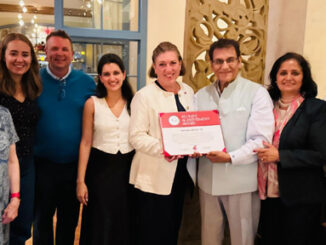
NEW YORK (TIP): In a deeply meaningful and long-awaited moment, Varinder Bhalla was conferred the Alumni Achievement Award, the highest honor bestowed by Washington State University (WSU), 54 years after graduating from the university and 30 years after being nominated for the prestigious distinction.
Mariah Maki, Executive Director of the WSU Alumni Association, flew in from Washington to personally present the award at an exclusive dinner reception hosted by the university in New York City. The event was attended by members of the New York Chapter of the WSU Alumni Association, including Vice President Meghann Cherzan and Fran Rowley, who graduated alongside Bhalla in the Class of 1971.
The WSU Alumni Achievement Award is a rare distinction – bestowed on fewer than 0.2% of alumni since its inception in 1969. Out of more than 250,000 graduates, fewer than 500 individuals have received this honor in the past century. Notable recipients include Microsoft co-founder and philanthropist Paul Allen.
“In recognition of your outstanding services and humanitarian efforts as Founder and President of the AWB Food Bank, as well as your numerous philanthropic endeavors, we honor your deep compassion and unwavering dedication to the underprivileged,” said Director Maki. “From New Delhi to New York, your commitment to improving lives reflects the highest ideals of service and leadership. With sincere gratitude, the Washington State University Alumni Association proudly bestows upon you its highest honor for exemplifying the spirit, values, and pride of what it means to be a WSU Coug.”
Varinder Bhalla and his wife, Ratna, co-founded the AWB Food Bank in New Delhi, which has delivered nearly 15 million meals to the needy over the past three decades. By collecting surplus food from hotels, airlines, and industrial kitchens, their efforts have become a model of sustainable, scalable, and compassionate solutions to food insecurity.
Although the award is traditionally reserved for WSU alumni, but in a rare and touching gesture, the university also honored Ratna Bhalla for her unwavering support and partnership in her husband’s philanthropic work. She was ceremoniously adopted into the WSU Cougar Family and recognized for her extraordinary commitment with the distinguished status of Honorary WSU Family Member.
In his emotional acceptance remarks, Bhalla said: “I may not have made it back to Pullman to receive this honor all those years ago, but having WSU come all the way to me 50 years later feels like a full-circle moment – one that fills my heart with gratitude and deep emotion.
“Tonight, I dedicate this award to my mother, Agya Wanti Bhalla. As a child, I watched her quietly and consistently feed hungry people in our hometown. Her compassion, her sense of duty, and her unwavering belief in the power of giving left a lifelong impression on me. She planted the seed; I simply helped it grow,” added an emotional Bhalla.”
“Washington State University gave me more than an education – it gave me purpose. This recognition reconnects me with my roots and reminds me that giving back is the truest form of success.”
Last year, Bhalla was also honored with a United States Congressional Award in recognition of his philanthropic service, which, among many, includes traveling to a remote village in Gujarat to donate a motorboat for 125 schoolchildren who previously had to swim across a turbulent river to reach school; donating warm clothes and school supplies to children attending classes in freezing temperatures after their school roof collapsed; inspired by the legacy of his father, Chaman Lal Bhalla, launching an eye camp in his hometown in Punjab, providing free prescription glasses to more than 1,200 individuals who lacked access to vision care; and sponsoring hand pumps for in villages, lacking drinking water. Bhalla also pioneered the first celebration of India’s centuries old Dussehra in the USA, with 50-feet tall effigies in support of the AWB Food Bank, attracting over 50,000 spectators.
Maki reiterated the invitation for Bhalla to return to WSU so “your legacy could be a reminder to the current students that what they learn today can become the foundation for a life of purpose and service.”
(Based on a press release issued by Varinder Bhalla) -

A better terror fight with J&K police under elected government reins
Placing the J&K police under the command of the elected government will ensure policing strategies that align with the local population’s concerns
“This intangible asset, as part of the repertoire of the local police, is mainly due to their connect with the local population, facilitating high-grade intelligence of terrorists who operate amidst the population. Can we deny the fact that the terrorists who were behind the Pahalgam strike on April 22, 2025, are still at large mainly due to an existing gap in human intelligence (HUMINT)? Or, for that matter, there indeed was a lack of HUMINT prior to the strike and that had it been present it could have averted Pahalgam? Unless we acknowledge the gap, learn lessons and proceed accordingly, it will be challenging to ward-off potential terror strikes.”

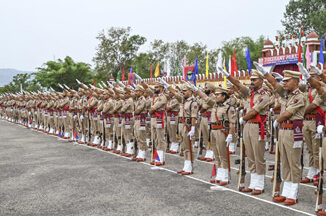
By Shashank Ranjan On June 16, 2025, the Lieutenant Governor of Jammu and Kashmir (J&K), Manoj Sinha, emphasized that the eradication of terrorism from J&K was the government’s top priority. In his address on the occasion of the passing out parade at the Sher-e-Kashmir Police Academy, Udhampur, he called upon the J&K Police (JAKP) to utilize modern technology to counter security threats, prevent radicalization and triumph over adverse situations. He exhorted the JAKP to adopt a multi-pronged approach and harness the power of intelligence, community engagement, technology and inter-agency collaboration, based on good old beat policing.
Crucial asset
Mr. Sinha could not have been more accurate in underlining the role of the local police in fighting terrorism. The primacy of the local or State police as the fulcrum of counter-terror operations is a well-established fact. The central forces — to include the armed forces and central police forces — always supplement and can never supplant the State forces. The strength, and hence the advantage of the local police in the given context, comes from the fact that its personnel belong to the region and know the terrain and demography like no outside force would know.
This intangible asset, as part of the repertoire of the local police, is mainly due to their connect with the local population, facilitating high-grade intelligence of terrorists who operate amidst the population. Can we deny the fact that the terrorists who were behind the Pahalgam strike on April 22, 2025, are still at large mainly due to an existing gap in human intelligence (HUMINT)? Or, for that matter, there indeed was a lack of HUMINT prior to the strike and that had it been present it could have averted Pahalgam? Unless we acknowledge the gap, learn lessons and proceed accordingly, it will be challenging to ward-off potential terror strikes.
It is upon the government to constantly improve the functional aspects of JAKP, which could contribute to the overall consolidation of the security situation. A beginning needs to be made by placing the JAKP under the command of the government that has been elected by the people.
The local population has the most intimate connect with the elected representative, who cannot be kept out of the loop as far as the security situation is concerned. Developments such as terrorist movements and overground workers’ activities in an area can never escape the notice of peoples’ representatives, who are one of the most crucial stakeholders in the security matrix. It is reiterated that locals always feel more comfortable to share information with their sarpanch or their Member of the Legislative Assembly (MLA) than with someone from a central agency.
Restore the democratic structure
J&K has a rich and vibrant democratic culture wherein the population has always participated in local body elections with much enthusiasm. In fact, the participation percentage in elections decreases as one goes up the structure to Assembly and parliamentary elections. Unfortunately, due to the fragile security situation, the local elected representatives — though elected from time to time — have never been empowered as in the constitutional provisions.
The democratic order in J&K needs to be restored, with all tiers in the structure of governance from panchayats/municipal bodies to MLAs and Members of Parliament activated and made responsible for security. In the laid-down tiered structure, the JAKP has a vital role towards participatory execution. If not, there will be an attitude of indifference on the part of peoples’ representatives, with a likely trickle-down effect — of an indifferent local population — which will be detrimental to counter-terrorism.
Policymakers will have to encourage a structured dialogue between police forces and local leaders to collaborate and address community concerns, gather information on terror-related activities and enhance public safety initiatives.
This partnership can lead to more informed decision-making and improved community engagement in policing efforts. In a diverse situation that exists in the various sub-regions of J&K, terrorism has a local flavor, contextualized by participation of local terrorist cadres operating with foreign terrorists. These diverse challenges will have to be tackled by respective local governance, against the one size fits all approach. The JAKP, with its basic unit at the thana level, has always been enmeshed with local governance to produce amazing results.
Bridging the gap
In the present situation of elected representatives having been kept out of the security matrix, the desired end will always be found wanting. The policy measure of restoring the control of the JAKP under the elected government will facilitate better accountability and responsiveness to community needs, ensuring that policing strategies align with the local population’s concerns and aspirations. Elected officials can play a vital role in bridging the gap between the police and the community, fostering trust and cooperation essential for effective law enforcement and counter terrorism.
By holding Assembly and parliamentary elections in J&K, we have acknowledged the agency of the people; the measures undertaken will remain an unfinished agenda if not addressed in an inclusive manner. More than terrorism, it is about granting a participatory governance model as against an elitist model, to the people. Mr. Sinha’s overall aim of community engagement will remain a pipe dream if elected representatives are not incorporated with vigor, to respect the decision of the people in electing them. An improved security situation will follow.
(Shashank Ranjan is an Indian Army veteran (colonel) with substantial experience of serving in a counter-terrorism environment. He currently teaches at the O.P. Jindal Global University, Sonepat, Haryana)
-

Indian inequality and the World Bank’s claims
Even if the precision of the World Bank’s inequality estimates is discounted, a significant improvement in India’s international ranking is a fact

By Ram Singh Inequality is an important concern for the political economy of a democracy. However, the Indian inequality debate is often characterized by the selective use of data to make exaggerated claims that fuel misperceptions rather than result in a better understanding. The sharp reactions to a recent World Bank report (“India Poverty and Equity Brief: April 2025”) are an illustrative case in point.
The World Bank report claims that India has almost eradicated extreme poverty. Further, it claims, the country has significantly reduced consumption inequality since 2011-12, in terms of consumption patterns of the population. In terms of the Gini coefficient, a measure of inequality, the report (without separating the consumption and income inequality-based estimates) has placed India among the top four least unequal countries. These findings have created quite a stir, as the media and the public are accustomed to reports claiming very high inequality in India. What has happened?
What it is based on
The World Bank’s claims about the Indian inequality are based on the official Household Consumption Expenditure Survey (HCES) data for 2022-2023. This data is collected using the modified mixed reference period (MMRP) method, which employs state-of-the-art statistical technique. As the World Bank report correctly observes, “The MMRP is considered an improvement and alignment with international best practices…” The World Bank has adjusted the Indian data to account for some but not all government-provided free goods and services.
The World Bank finds that during 2011-12 and 2022-23, India registered a major decline in consumption inequality; in this period, the consumption-based Gini coefficient dropped from 28.8 to 25.5.
Critics of the report argue that the World Bank has underestimated the inequality, as the HCES data does not capture consumption by the rich. It is a valid critique, but India is not an exception. This limitation applies to all survey data in all countries and, in itself, does not question the broad ranking of countries. Even if we discount the precision of the World Bank’s inequality estimates, a significant improvement in India’s international ranking is a fact. Of course, we should not confuse consumption inequality with income inequality.
The decrease in India’s consumption inequality is substantial and indisputable. To address the data issue, let us assume that the problem of missing elite consumption is more pronounced in India — say, the HCES rounds do not capture consumption by the top 5% families at all. In that case, going by the consumption expenditure data, it is irrefutable that the consumption inequality has decreased between 2011-12 and 2022-23 for the remaining 95% of the population covered in HCES data.
The HCES data show that the country’s consumption basket is healthier today than ever. Between 2012 and 2023, the per capita availability of milk and eggs has increased by 45% and 63%, respectively. The availability of fruits, vegetables and protein products has increased. The share of cereals in the food bill, as well as calorie intake, has decreased, while that of healthier products has increased, for all strata. All this improves the diet for the 95%, rather than the richest groups, whose consumption already matches the best in the world.
The dietary intake improvements are most striking for the bottom 20% of households in rural and urban areas, even if we ignore the free food and cash transfers received by these groups. The share of rural households consuming fresh fruits (to a different frequency) has increased from 63.8% in 2011-12 to 90% in 2023.
The 2022-23 and 2023-24 rounds of consumption data irrefutably demonstrate that extreme poverty has been almost eradicated. Whether we use the Rangarajan, Tendulkar, or the multi-dimensional poverty index of NITI Aayog, poverty has declined significantly. Based on the International Poverty Line of $3 between 2011 and 2023, India has pulled around 27 crore people out of extreme poverty.
Independently, the nightlight data show a significant increase in ownership rates of pucca homes and paved roads in rural areas over the last 10 years, owing to the Pradhan Mantri Gramin Awas Yojana and Pradhan Mantri Gram Sadak Yojana. Among the poorest 20% of households, more than 40% own a vehicle today, compared to just 6% in 2011-12. This enables rural workers to work part-time in nearby cities without having to migrate. If we factor in these and the other policies targeted at the bottom of the pyramid, such as Ayushman Bharat, the aggregates of welfare for the poor would look even better.
Examining income levels
True, it is important to examine income inequality separately from consumption inequality. There is no official income survey data yet. The mainstream media and commentators use the income shares of the top 1%, as estimated by the World Inequality Lab (WIL) to argue that the income inequality is very high in India, disregarding critical limitations of these estimates.
Given the lack of data on income distribution, the WIL uses the income tax data to estimate top income levels. They use the old consumption data and estimates of the income-consumption relationship to estimate income for low- and middle-income households. The latter estimates unrealistically assume that consumption expenditure exceeds income for 70%-80% of households. How can it be that all families, except the top 20-30%, spend more than they earn, year after year?
As an inevitable consequence of using such an implausible assumption, the income of the bottom 80% gets underestimated. This reduces their estimated share of national income. Conversely, shares of top income groups are overestimated.
Even if we ignore these limitations, we do not find an increase in income inequality. Taking the WIL estimates as they stand, the national income shares of the bottom 50% have increased from 13.9% in 2017 to 15% in 2022. During the same period, the share of the top 10% has decreased from 58.8% to 57.7%.
The high national income shares of the top 1% are a matter of concern. However, since 2017, the income shares of the top 1% have increased by only 0.3 percentage points. Research by this writer indicates that a part of this increase is attributable to improved income reporting by affluent groups in response to the Centre’s anti-tax evasion measures since 2016-17. Better reporting should not be mistaken for increased inequality.
Furthermore, the WIL inequality estimates used by the media and commentators are based on pre-tax income levels. However, it is the post-tax and post-subsidy/transfer income that matters to people. Therefore, to be meaningful, income inequality estimates should be based on the post-tax rather than the pre-tax income. For instance, in the assessment year 2023-24, the top 1% of all taxpayers accounted for 72.77% of the total tax paid. Even in the individual category, the top 1% paid 42% of the total tax paid.
Arguably, wealthy individuals should pay more taxes, but the point is that even at the existing tax rates, the actual post-tax income of top-income taxpayers is only 65%-75% of the levels used in headline-grabbing estimates. For low-income groups, in contrast, the income levels used are smaller than the actual effective income, which is higher, due to the all-time high welfare transfers that account for more than 8% of GDP. On a post-subsidy, post-tax income basis, over the last decade, we will find a decrease in income inequality in recent years.
The other story about India
Admittedly, we must travel a long way before we can claim to be an egalitarian society. Inequality in accessing quality health and education is a serious concern. For a country of our size and diversity, inevitably, there are many lived realities. However, the story of India is not just about poverty and inequality anymore; it is about progress and aspirations too. While being mindful of the current problems and challenges ahead, let us also celebrate the country’s successes.
(Ram Singh is Director, Delhi School of Economics, Member, Monetary Policy Committee of the Reserve Bank of India (RBI) and Member, Technical Expert Group for the First Household Income Survey, Ministry of Statistics and Programme Implementation (MoSPI), Government of India)
-
The Ukraine-Russia War Enters Its Fourth Year: The Madness Must End

By Prof. Indrajit S Saluja As the brutal war between Ukraine and Russia enters its fourth year, the world watches with a disturbing mixture of fatigue, apathy, and helplessness. What began in February 2022 as a full-scale invasion by Russia, following years of rising tensions since the 2014 annexation of Crimea, has turned into one of the most destructive conflicts in modern European history. With hundreds of thousands of lives lost, cities leveled, economies shattered, and millions displaced, this is no longer just a war between two nations—it is a moral failure of the entire global order.
Despite promises, posturing, and power games, the war drags on. U.S. President Donald Trump, known for his close relations with Russian President Vladimir Putin during his term from 2017 to 2021, once confidently claimed that if elected again, he could end the Ukraine-Russia war in 24 hours. Six months into his reemergence as the President of America, that promise remains as far from reality as ever. The war continues, and with every passing day, the human cost multiplies.
A History of the Conflict
The roots of the conflict run deep. The 2014 Ukrainian revolution, which ousted the pro-Russian president Viktor Yanukovych, was followed swiftly by Russia’s annexation of Crimea. Putin justified it by citing the protection of ethnic Russians and Russian speakers in Ukraine. This began an 8-year-long simmering conflict in the eastern Donbas region, between Ukrainian forces and Russian-backed separatists. By the time Russia launched its full-scale invasion on February 24, 2022, over 14,000 lives had already been lost in the Donbas.What followed was even more horrific. Kyiv, Kharkiv, Mariupol, and other Ukrainian cities became battlegrounds. Civilian targets were bombed indiscriminately. The United Nations reports over 30,000 civilian casualties since the war began, though the true numbers may be far higher. Ukraine claims to have lost over 70,000 soldiers; Russia’s losses are estimated at 100,000 or more, although official figures remain secret. Infrastructure worth hundreds of billions of dollars have been reduced to rubble.
The Cost of War
According to the World Bank, Ukraine’s economy contracted by more than 30% in 2022 alone. Agricultural exports—once a cornerstone of its GDP and crucial for global food supplies—were blocked, weaponized, and destroyed. Russia has faced its own challenges. Sanctions imposed by the West—primarily the U.S., the EU, and NATO allies—have hurt the Russian economy, isolating it financially and technologically. Over $300 billion in Russian assets were frozen, and several international corporations exited the Russian market.But amid all the economic data and geopolitical analysis, the human tragedy remains paramount. Millions of Ukrainians have fled to Europe and North America, creating the largest refugee crisis in Europe since World War II. Children have been killed or orphaned, schools destroyed, hospitals bombed, and entire generations traumatized.
Where Is the Leadership?
Donald Trump’s claim that he could end the war in 24 hours was not without its believers. His relationship with Putin—often criticized as too cozy—was seen by some as a potential diplomatic asset. Trump frequently reminded the world that “Putin respected me” and that “this war would never have happened under my watch.” Whether that’s true or not is now moot.The reality is that even six months after Trump’s return to political center stage, no roadmap to peace has emerged from his camp. Rhetoric has replaced action. Meanwhile, NATO remains committed to arming Ukraine. The United States alone has committed over $175 billion in military and economic aid to Ukraine since the invasion. Russia, in turn, continues to escalate, receiving arms and drones from Iran and North Korea, while China walks a tightrope between neutrality and quiet support.
President Zelensky of Ukraine, while a symbol of resistance, has also shown a rigid stance, repeatedly insisting on full territorial integrity—including Crimea—as a precondition for negotiations. On the other side, Putin has dug in, justifying his war on claims of NATO encroachment, “denazification,” and the defense of Russian-speaking populations.
The result? A complete diplomatic stalemate, a prolonged proxy war, and ever-growing suffering.
The Silence of the World
Where is the United Nations? Where is the global outrage? Where are the Nobel Peace laureates, the neutral mediators, the humanitarian voices? Aside from resolutions, condemnations, and aid, the world has largely accepted this war as a permanent fixture. This normalization of war is a danger far greater than the weapons being fired.History will not be kind to the warmongers, nor will it spare the silent. Nations that have egged on the war with weapons and money, without putting equal effort into peacebuilding, must answer for their part. Countries that looked away, too preoccupied with their own affairs, share the guilt. Those who support this war under the guise of strategic necessity must ask themselves: At what human cost?
An Appeal to Trump, Putin, NATO, and the United Nations
Mr. Trump, if you truly believe you can end this war, then now is the time. Use your influence. Speak to your “friend” Putin. Propose a peace framework. Do more than tweet or boast.President Putin, this war has brought neither glory nor victory. It has brought death, sanctions, isolation, and a wounded economy. If your goal was to reassert Russian pride, this war has undermined it. End it before it becomes your enduring legacy of cruelty.
President Zelensky, while your courage is admirable, peace must not be equated with surrender. Compromise is not betrayal. The longer this war continues, the more your people suffer—and not all of them wish to die for Crimea or Donbas.
To NATO leaders: Arming Ukraine cannot be the only strategy. You have the leverage, the resources, and the diplomatic infrastructure to push for negotiations. Use it.
To the United Nations: Your silence is deafening. Your Charter was built to prevent such wars. What good is a Security Council that cannot secure peace?
The Madness Must End
This war is not heroic. It is not noble. It is not a chessboard for geopolitics. It is madness. It is criminal. And it is avoidable.In a world facing climate change, poverty, pandemics, and displacement, we cannot afford to let two nations bleed each other—and the rest of us—dry. We must reclaim diplomacy. We must return to humanity. We must stop the missiles, the tanks, the drones—and start talking.
History Is Watching
History will not forgive Putin or Zelensky for perpetuating this war. But it will also not forgive the rest of us—for watching it happen. The warmongers and profiteers will be remembered with shame. But so will the indifferent.Let this be the moment where leaders rise above ego and revenge. Let this be the moment the world says: enough. For the sake of the children of Ukraine, for the future of Russia, and for the soul of humanity—this war must end. And it must end now.
Let us, the people who love peace, raise our voices louder than the bombs. Let the cries of the innocent awaken the conscience of the powerful. Let the madness stop, before history turns from judge to executioner.