Month: August 2025

  • Tirlok Malik, Chandra Barot – Director of “DON”- and the 3D Dream That Could Have Changed Bollywood

    Tirlok Malik, Chandra Barot – Director of “DON”- and the 3D Dream That Could Have Changed Bollywood

    NEW YORK (TIP): When Chandra Barot passed away recently at the age of 86, obituaries rightfully celebrated him as the man who gave Indian cinema the cult classic Don (1978), starring Amitabh Bachchan, Zeenat Aman, and Pran, and based on a script by Salim-Javed. But among the many fascinating chapters of his life, one unfinished dream stood out—a forgotten film project that could have changed the course of Indian cinematic history: Big Daddy, India’s first planned 3D feature film, starring Dharmendra, Zeenat Aman, and Shammi Kapoor.

    The year was 1983. The country was still new to the concept of three-dimensional cinema. Hollywood had just tasted success with Friday the 13th Part III (1982), a slasher film that became notable not just for its gore but for its groundbreaking use of the DePix 3D camera system. That technology, developed by American inventors Alvin and Mortimer Marks, captured the left and right eye perspectives on a single 35mm film frame. An innovation that made stereoscopic 3D cinema more accessible than ever before.

    In a bold and visionary move, Indian American filmmaker Tirlok Malik—then a young dreamer deeply passionate about cinema—sought to bring this very system to Indian screens. Malik had already begun conversations with Mortimer Marks, who agreed to collaborate and adapt the Depix technology for Big Daddy. It was a story of scale and spectacle—a heist action-adventure film infused with music, dance, and the unique charisma of its three superstars. And with Chandra Barot, fresh off the success of Don, agreeing to direct, the project was poised to become a landmark.

    Teaming up with Dharmendra

    But as with many visionary ventures, destiny had other plans. “The idea was way ahead of its time,” Tirlok Malik recalls. “We were trying to bring Hollywood technology to Bollywood storytelling, but the infrastructure, the costs, and the skepticism from producers held us back.”

    Malik stayed with Barot at his Peddar Road residence for two months, as they worked towards getting the project rolling. “After Don, Barot was in talks with Dilip Kumar, who had shown interest in working with him. Barot was fixated on the idea of directing two of India’s finest actors, one after the other. But that project could never materialize, and Barot missed the opportunity to encash the success of Don,” explains Malik.

    Despite the initial excitement, the project ran into insurmountable hurdles—technical, financial, and logistical. The Indian film industry in the early ’80s wasn’t ready to fully support the complexities of stereoscopic filmmaking. The sets were designed, camera tests were conducted, and preliminary footage was even discussed—but the film never went into full production. “I invited Chandra Barot to New York and introduced him to Mortimer Marks. Subsequently, Barot signed the three stars for the film—Dharmendra, Zeenat Aman, and Shammi Kapoor, who was to play the antagonistic titular character,” reveals Malik.

    Yet for Malik, Big Daddy was not the end; it was a beginning. In the early 1990s, he shifted his focus to the U.S., where he would go on to pioneer a new wave of Indian American cinema. His 1991 feature Lonely in America, which he wrote, produced, and starred in, became a festival favorite and is today regarded as one of the earliest South Asian diaspora films to gain international recognition. The film was a heartfelt exploration of immigrant identity and the challenges of straddling two worlds—an experience Malik knew all too well.

    Things came full circle when Malik collaborated with the creative minds behind India’s first released 3D film Chhota Chetan, on another film: Chhota Jadugar (also known internationally as Magic Magic 3D, directed by Jose Punnoose and produced by Navodaya Appachan and Allu Aravind. It combined Indian mythology, 3D innovation, and charming performances. Malik not only served as the U.S. producer on the film but also played a pivotal on-screen role, sharing screen space with the beloved playback singer and actor S. P. Balasubrahmanyam, who played his father. The film ran for five weeks at #1 at the Indian box office. It was also proved to be a technical triumph.

    Years later, Chandra Barot and Malik met again at a film event. By then, Barot had retreated into semi-retirement, and Malik had become a torchbearer of Indian American storytelling. The meeting was emotional. Barot, ever gracious, congratulated Malik on Magic Magic 3D, even as he expressed a bittersweet regret: “Big Daddy could have been something truly historic. Alas, sometimes destiny has other plans.”

    Over the years, Malik never let go of his love for family-oriented, visually rich storytelling. He went on to make films like Khushiyaan and On Golden Years, continuing to craft stories rooted in emotion and cross-cultural values. Today, Tirlok Malik remains a bridge between cultures, generations, and cinematic traditions. Based in New York, he is currently developing multiple international film projects, including a children’s feature inspired by folklore and spirituality.

    As we remember Chandra Barot and the luminous, if unfulfilled, vision of Big Daddy, we are reminded of a simple truth: not all dreams are meant to be realized. “Chandra Barot, unfortunately, hasn’t gotten his due yet. He was a visionary filmmaker, a trailblazer whose legacy will continue to illuminate the way for the coming generation of filmmakers,” sums up Malik.

  • IOCUSA Vice-Chair denounces the arrest and detention of Catholic Nuns

    IOCUSA Vice-Chair denounces the arrest and detention of Catholic Nuns

    NEW YORK (TIP): “The arrest and detention of Sisters Preethi Mary and Vandana Francis of the Assisi Sisters of Mary Immaculate in the state of Chhattisgarh is a blatant violation of their fundamental rights under the constitutional laws. The relentless harassment and intimidation of Christians in BJP-ruled states is deplorable and a stark sign of diminishing religious tolerance in the country, posing a grave threat to the very secular fabric of India,” said George Abraham, Vice-Chair of the Indian Overseas Congress, USA. The plight of these nuns is part of a larger pattern of attacks on Christian tribals, Pastors, and female religious workers that have been occurring for some time. When a government fosters and defends religious fanaticism, communalism, and mob rule, the freedom and liberty of all citizens are in jeopardy.

    On July 25, 2025, Sisters Preethi Mary and Vandana Francis of the Assisi Sisters of Mary Immaculate were taken into custody at Durg railway station. They were accused under the Chhattisgarh Religious Freedom Act and India’s trafficking law for allegedly converting and trafficking three young tribal women from Narayanpur — all adults with documented parental consent for convent work in Agra.

    The Central government’s consistent silence in the face of atrocities against minorities, particularly Christians, is alarming. They are entrusted with safeguarding the constitutional rights and equal justice for all citizens. However, the erosion of freedom and democracy under the current BJP rule is a distressing reality.

    This incident serves as a stark warning for all Christians in Kerala who may be considering voting for the BJP in the upcoming election. The BJP’s actions in Kerala are nothing but a facade, and it is crucial to remain vigilant. They may offer sweet words and distribute cakes during Christmas, but remember, what you see in Kerala BJP is nothing but a wolf in sheep’s clothing. Beware and be prepared to defend your rights and freedom!

    The Indian Diaspora, which shouts for religious freedom all across the globe, should demand the immediate release of these nuns without charges that have further tarnished the status of Indian democracy with this morally reprehensible action.

  • Hampi: A journey through the lost empire of stones and stories

    Hampi: A journey through the lost empire of stones and stories

    Tucked away in the rugged, boulder-strewn landscapes of Karnataka, Hampi is a destination that whispers tales of grandeur, devotion, and resilience. Once the capital of the mighty Vijayanagara Empire, this UNESCO World Heritage Site is more than just ruins – it’s a living museum where history and myth converge in stone.
    A Walk Through Time
    As you enter Hampi, the first impression is surreal – massive granite boulders stacked precariously over undulating terrain, dotted with ancient temples, market streets, and royal pavilions. It’s as if time forgot to move forward here.
    Virupaksha Temple
    The temple is so constructed that its main entrance faces east and homes to two courtyards. No sooner you enter the temple, there is a statue of Nandi with three heads. There is a pillared hall in the center which is reckoned as the Ranga Mandapa.
    In case you are an international traveler, you have to register yourself at a police outpost with all your essential details. Mostly, this temple remains crowded in December; whereas it celebrates its annual festival in February and it is one of the best places to visit in Hampi.
    Vijaya Vittala Temple
    Vijaya Vittala Temple or Vijaya temple of Hampi amongst the ancient Places to Visit In Hampi worthy of visiting. There are fantastic stone structures all around, and the pillars here appear as if they are playing music.
    This is true architectural excellence of Hampi as it exemplifies remarkable creativity and the beauty of architecture’s imagination. The architecture of this temple dates back to the Dravidian era and reflects South Indian traits.
    Three towering gateways are encircling the temple along with high compound walls. Maha Mantapa, Stone chariot, musical pillars are amongst the tourist attractions of this Vijaya Vittala Temple.
    Lotus Mahal
    Lotus Mahal or Kamal Mahal exhibits an explicit architectural design amongst all the other Hampi tourist places. It is so called as it more or less resembles the shape of a lotus flower.
    Central dome of this Mahala resembles the bud of lotus and the balcony and passages as petals. The roof illustrates a multi-layered design reflecting and Indo architectural style. There are around 24 pillars to provide excellent support to the arched windows of this palace.
    Yantrodharaka Hanuman Temple
    Yantrodharaka Hanuman Temple is present at a distance of around 2km from the famous Virupaksha temple. This temple is a part of a cave standing at the peak of a hill and is dedicated to the Hindu deity Lord Hanuman.
    Also, the Tungabhadra river flows through the steps of this hill. Here, you can find Lord Hanuman indulged in a state of deep meditation. Within a distance of five minutes from here, you can find another temple dedicated to Lord Srinivasa. In case you feel hungry, you can approach small stalls nearby selling either mangoes, biscuits or cucumbers.
    Hippie Island
    Another area which is amongst the most visited Places to Visit In Hampi is Hippie Island, named after its vibrant culture. Virapapur Gadde is a small island located across the Tungabhadra River. Known to be a backpacker’s delight, this island is stunning and is popular amongst the locals as well as tourists for its laid back ambience and cosy lodges.
    Tourists can spend their time relaxing at one of the many cafes and shacks, like Green Garden Restaurant, Laughing Buddha Café, etc. while gorging on great food, and soaking in the view of beautiful rice paddies. This location is also known to be a centre for people to conduct sunset jam sessions with musical instruments for a fun party-like atmosphere.
    Queen’s Bath
    Reckoned as a large bath of Hampi, Queen’s Bath exemplifies the Vijayanagara’s architectural excellence. It lies close to one of the most awful places to visit in Hampi- the Royal Enclosure.
    Although built around 500 years ago, this magnificent structure still remains intact in its construction. It’s simplest exterior perfectly blends with an ornate interior to embrace its overall appearance.
    It a rectangular building admeasuring around 30 square meters and has a large sunken bath at its center. It may interest you to find arched corridors all around this Royal bath.
    Matanga Hill
    Out of all the places to visit in Hampi, Matanga Hill is the one which is most talked about. It represents the highest point of Hampi, and it’s a picturesque destination for the travel photographers to capture some aerial vies of Hampi.
    North portion of this hill terminates into Tungabhadra river where you have another religious place to visit-Kodanda Rama temple. Towards the south of this hill, you have a twisting valley with a zigzag Turthu canal. Low-lying Northern section exhibits a trekking trail that connects straightaway to Hampi bazaar.
    Elephant Stables
    Elephant Stables is amongst the significant tourist places to visit in Hampi to witness a little to absolutely no destruction. It is a long building homing to a series of dome-shaped chambers which once were used for the parking of royal elephants.
    These chambers are around 11 in their total count; some of which are interconnected. The whole building gives a symmetrical appearance, and the central hall tower reflects the shape of most of the temples here. This central hall has five domes on either side of it which reflects an Islamic style of architecture.
    Monolithic Bull
    Situated at the east end of the Hampi Bazaar, the Monolith Bull or Nandi is a grand piece of ancient architecture that is housed in a two-story pavilion. This huge structure, which mythologically is the vehicle of Lord Shiva, is placed just opposite to the famous Virupaksha Temple. This Monolithic Bull, although partially mutilated, exhibits a coarse style of carving. The statue is so beautiful that it attracts a large number of visitors every day. It is also one of the frequently visited historical Tourist Places in Hampi. It is also surrounded by huge boulders and rock pillars.

  • My New York City Sojourn- Time to Reminisce

    My New York City Sojourn- Time to Reminisce

    • By Sheila Chaman

    NEW YORK CITY (TIP): New York is an exotic city and holds within itself a lot of Moments and memories for everyone who visits this ‘happening place”
    New York City is often described with sayings that highlight its energy, diversity, and ambition. Common phrases include “The city that never sleeps,” “The concrete jungle where dreams are made of,” and “The capital of the world.”

    It is always a pleasure to be in NYC during the summer. I particularly enjoy attending the International Day of Yoga at the United Nations HQ, where I have the opportunity to reconnect with old friends and make new ones. I have had the privilege of being a part of this wonderful event every year on 21st June since it was first held in 2015, efficiently organized by the Permanent Mission of India in New York. Such gatherings bring together people of different cultures from various parts of the World who come together in collective effervescence under the banner of YOGA, which is a way of Life. These experiences always leave me with a wealth of happy memories and strengthened connections. The motto for this year’s International Day of Yoga was “Yoga for One Earth, One Health”. This theme emphasizes the interconnectedness between personal well-being and the health of the planet, highlighting yoga’s role in promoting both individual and planetary harmony.

    This year the day was celebrated on 20th June and the North lawns of the UNHQ saw a record gathering of over a thousand people spread out on colorful yoga mats wearing white T shirts printed with the YOGA logo
    ( both generously provided by the PMI). The entire programme was ably conducted by Ms. Denise Scotto whom I have known for some years. She is an attorney at law, international policy advisor, public speaker, interfaith minister & Founding Chair of a variety of international committees, most recently, the International Day of Yoga Committee at the UN.

    With Brahma Kumari Sister Jayanti (standing in the middle )and Sister Sabita Geer at the UN

    The Brahma Kumaris (“Daughters of Brahma”) is a spiritual movement that originated in Hyderabad, Sindh, Pakistan during the 1930s. Founded by Lekhraj Kripalani, the organization teaches the importance of moving beyond labels associated with the human body, including race, nationality, religion, and gender, through meditation that emphasizes the concept of identity as souls rather than bodies. It aims to establish a global culture centered around what they refer to as “soul-consciousness”. Women continue to hold primary leadership positions within the organization and are addressed as ‘Sister’. The BK ( short form for Brahma Kumari) , with its spiritual headquarters in Mount Abu, India, comprises a worldwide network of centers in more than 110 countries and is an international non-governmental organization (NGO) of the United Nations accredited with General Consultative Status with the Economic and Social Council (ECOSOC). Sister Sabita Geer is part of a team of 3 persons who coordinate its activities from Brahma Kumari’s office at the United Nations NYC office situated near the UNHQ. Meetings at their Center are a soul rewarding experience with soft embalming words and meditation sessions. I was invited, along with a small group of people to the BK’s UN office, to an exclusive meeting with senior Sister Jayanti Kirpalani, who is exceptionally articulate on the subject of spiritual knowledge and practice. The session lasted an hour which seemed to pass by swiftly as we drifted along spiritual waves of meditation.

    With Dilip Chauhan, Deputy Commissioner, New York City Mayor’s Office

    It was also very enriching to hear about the activities of New York State during my meeting with Mr. Dilip Chauhan, Deputy Commissioner in the Mayor’s office for International Affairs. “We break bread and build bonds” he said as the office often holds meetings with people of different faiths and religions who come together to discuss various matters of common interest and improvements to the City.” They all bring their own food to the table” Mr. Chauhan told me. He is the Deputy Commissioner for Trade, Investment, and Innovation in the NYC Mayor’s Office for International Affairs. He helps promote economic development initiatives in this role by fostering strategic international partnerships and supporting international business expansion to New York City. He works closely with the United Nations, Consulates General, Permanent Missions, and the private sector to promote NYC’s economic growth and resilience. My upcoming book, “Doordarshan Diaries: The Golden Era of Television,” offers a unique look into Doordarshan’s evolution from black and white to color broadcasting. Having spent three decades at India’s National Television Channel, I witnessed its transition and transformation firsthand. The book promises a nostalgic journey for some, with behind-the-scenes accounts and untold stories. For others, it will be an enlightening education on how we successfully managed a broadcast channel with limited resources, covering every department from presentation and programming to production and engineering.

    With Ramu Damodaran, one of the best newscasters at Doordarshan

    I remain in touch with some colleagues from my days as a News anchor at Doordarshan, and we often connect to reminisce. One such friend and news colleague is Mr. Ramu Damodaran, who was among our best newscasters. Known for his photographic memory, he would read a few lines from the page below, look into the camera, and recite them from memory. We all envied his talent.
    During my annual summer visit to New York, I always make sure to meet up with Ramu . A former officer of the Indian foreign services, he joined the United Nations Department of Global Communications in 1996 and concluded his career with the UN in May 2021. Our conversations are always lively, covering old times, former colleagues, friends, and, of course, Doordarshan. This year was no exception; Ramu remains as articulate and youthful as ever. I updated him on the Doordarshan book, mentioning his inclusion in the “News” section. Like many others, he’s eagerly awaiting its release, which is now with the publishers.

    (Sheila Chaman, a Miss India, was a popular News Anchor with Doordarshan in its heyday)

  • Kinner Kailash Yatra: A sacred trek to the abode of Shiva

    Kinner Kailash Yatra: A sacred trek to the abode of Shiva

    Kinner Kailash is an important religious place for Hindus and Buddhism. Kinner Kailash is a symbol of faith for Hindus. Kinner Kailash is located near the Tibet border in Kinnaur district of Himachal Pradesh. Kinner Kailash is a mountain which is 6050 meters (about 24,000 feet) above sea level. Kinner Kailash is situated on the top of the mountain, whose height is approximately 40 feet and the width is about 16 feet. In Hindu religion, this khand is worshiped as Lord Shiva’s natural Shiva Ling. There is also Parikrama of Kinner Kailash, which is one of the pilgrimage pilgrimages to the Himalayas for Hindus.
    The Himalaya Mountains are not only related to Hindu mythology, but it also has a deep attachment to the belief of Hindu society. This is the same Himalaya from where the origin of the river Ganges is originated from Ghumukh. Kullu, the valley of the Gods, also comes in the same Himalayan range. There are more than 350 temples in this valley.
    Travel to Kinner Kailash is considered as difficult as traveling to Mansarovar and Amarnath. This journey begins every year in the month of Savan. It takes about 2 to 3 days to complete the journey. This visit has been opened for tourists since 1993. During the journey, flowers of Brahma Lotus can be seen in thousands of thousands. This flower is very much like Lord Shiva.
    According to Hindu mythology this place is associated with Lord Shiva and Parvati. It is believed that the meeting of Lord Shiva and Parvati has happened in this place.
    It has been said in mythology that Lord Shiva organized the Deities and Gods assembly on Kinner Kailash Peak in every winter. Every year, hundreds of Shiv devotees travel in the month of July and August through the inaccessible route to Kinner Kailash. In order to start the journey of Kinner Kailash, devotees have to cross the Sutlej river and reach Tangling village from Powari, located on National Highway-5, about seven km from the district headquarter. Parvati Kund is about five hundred meters away from Ganesh Park. There is a belief about this Kund that if the coin is cast from reverence, it will be fulfilled. Following the holy bath in this kund, after passing a rough 24-hour hard journey, the Kinner can see the Shiva at Kailash.One feature of this Shiv Ling of Kinner Kailash is that it changes color several times a day. White before sunrise, yellow after sunrise, red before sunset and it becomes black after sunset.
    Kinner Kailash vs. Mount Kailash
    While Mount Kailash in Tibet is globally recognized as a spiritual epicenter, Kinner Kailash offers a more accessible and intimate pilgrimage within India. The mystical aura, combined with its tough terrain and deeply rooted legends, gives it a unique spiritual identity.
    Deeper Spiritual Significance
    The Kinner Kailash Yatra is far more than a test of physical endurance – it is a sacred journey of inner awakening, symbolic of the pilgrim’s ascent toward moksha (liberation), self-realization, and union with the divine.
    In Hindu cosmology, the Himalayas are not just mountains – they are considered the abode of gods, especially Lord Shiva, the lord of transformation, destruction, and deep inner stillness. Kinner Kailash, in particular, holds a mystical aura as a lesser-known seat of Shiva, radiating raw spiritual power and silence. To tread its path is to symbolically leave the material world behind and ascend toward spiritual truth.
    The Lingam as the Cosmic Pillar
    At the summit of the yatra stands a natural rock formation known as the Shiva Lingam – rising like a cosmic axis, representing Shiva’s presence in his formless form (Nirguna Brahman). The changing hues of the rock at different times of day reflect Shiva’s many moods and cosmic roles – as creator, destroyer, and preserver of the universe.
    The Lingam is not carved by man but sculpted by nature, seen by devotees as a divine self-manifestation (Swayambhu). Reaching this sacred spot is considered equivalent to receiving direct darshan (vision) of Shiva himself – an incredibly rare spiritual merit.
    Metaphor for Spiritual Evolution
    The grueling climb to the summit – through forests, scree, ice, and thin air – is symbolic of the path of the yogi. In spiritual terms, it mirrors the inner journey through the chakras, from base survival instincts (Muladhara) to ultimate consciousness (Sahasrara).
    – The initial steep climbs test the ego and willpower – just as spiritual seekers must confront doubt, pride, and attachment.
    – The solitude and silence of the high altitudes reflect the inner silence a seeker must cultivate.
    – The final push to the summit, where air is thin and mind becomes still, represents the merging of the individual self with the cosmic self – Shiva.
    Tapa (Austerity) and Bhakti (Devotion)
    The Kinner Kailash Yatra is traditionally performed with strict vows of celibacy, purity, silence, and mental discipline – similar to the tapasya (austerity) performed by sages and ascetics.
    Many devotees undertake the journey barefoot or with minimal supplies, seeing it as an offering of their suffering and surrender to the divine. This self-denial is not for punishment, but to burn away karmic impurities and purify the inner being.
    Every step taken in devotion becomes an act of bhakti yoga – the yoga of surrender and love – transforming the yatra into a moving prayer.
    Mythical Connections and Divine Presence
    In local Kinnauri mythology, Kinner Kailash is where Shiva and Parvati reside during the winter months, and where gods gather to hold celestial meetings (Deva Sabha). It’s believed that the high vibration of the mountain still echoes with the chants of sages, the music of cosmic drums, and the silent gaze of Mahadev.
    Some say that only those who are “called by Shiva” can complete the yatra – aligning with the belief that the divine grants darshan only when the seeker is truly ready.
    Transformation and Inner Peace
    Many pilgrims report experiencing a profound sense of stillness, oneness with nature, and inner clarity upon completing the yatra. This transformation mirrors Lord Shiva’s own nature – beyond time, beyond mind, beyond form.
    In a world consumed by noise, speed, and distraction, the Kinner Kailash Yatra offers a sacred pause, a place to return to one’s essence. It’s not just a pilgrimage – it’s a path to remembering the Self.

  • What Every Protester Should Know: NYC Defense Attorney Details Five ‘911’ Warning Signs

    What Every Protester Should Know: NYC Defense Attorney Details Five ‘911’ Warning Signs

    BROOKLYN, NY (TIP): David Secular is a defense attorney in New York City with over 30 years of experience. He has specific expertise in the courtroom process and the law, particularly regarding immigration issues. Here, he is adding insight regarding the risks that protesters face, particularly if they are non-citizens.

    According to David Secular, any protester puts themselves in harm’s way or risks unlawful arrest because they are viewed as obstructing the administration of justice. They are often harshly detained until an arraignment and must respond to criminal charges, which are unlikely to withstand judicial scrutiny. Secular also notes that when it comes to non-citizens, particularly those who are permanent residents, the charges can be far more severe.

    “An arrest by federal law enforcement, even for permanent residents with a green card who have lawfully lived and worked in the United States for decades, can trigger deportation,” he explained. “If the arrestee is undocumented and turned over to ICE, deportation will loom even if the charges are dismissed.”

    For American citizens and those hoping to become citizens, Secular details five crucial warning signs to be aware of before attending a protest:

    1. Listen to Law Enforcement: If law enforcement gives you instructions to stop your activities or leave the area, it is critical to comply with those instructions to avoid arrest or charges.
    1. Make Immigration Status a Priority: As a non-citizen, your current and future immigration status, as well as your visa applications, could be affected if you are arrested, charged, or convicted while participating in a protest.
    1. No Need to Answer to ICE: If questioned by ICE (Immigration and Customs Enforcement), you are not obligated to answer questions or provide information about your immigration status.
    1. Know Your Rights: If you are detained, remain silent. If you choose to speak to the police, what you say can be used against you. Request a lawyer immediately.
    1. Your Home is Still Your Temple: If INS (Immigration and Naturalization Service) or law enforcement officials try to enter your home after your release, do not open the door unless they have a judicial warrant. This is based on the Fourth Amendment, which protects individuals from unreasonable searches and seizures.

     About David Secular

    Born in Brooklyn, New York, David Secular grew up in New Rochelle with parents who ensured he kept his feet firmly on the ground, rather than chasing a basketball. A dual U.S. and U.K. citizen, Secular attended the London School of Economics and graduated from New York University School of Law. He has spent his career as a criminal defense attorney and legal writer, having tried and argued cases in federal courts throughout the United States, as well as in the state courts of New York. He has appeared and prepared appellate briefs that have been heard before the U.S. Supreme Court. He has crossed paths and been involved in numerous notable cases with legendary counsel, such as William Kunstler, and presided over by renowned jurists, including Jack Weinstein.

    Secular is also the author of the novel A Hate Crime in Brooklyn (Central Park South Publishing; ISBN-13: 978-1956452648). If you interview him, please reference his book in the credits.

  • Why Trump’s 25% tariff is a double whammy for India

    Why Trump’s 25% tariff is a double whammy for India

    New Delhi (TIP)- India’s trade ties with the United States were jolted this week after President Donald Trump imposed a blanket 25% tariff on all Indian exports, citing unfair trade barriers and deepening defence and energy links between New Delhi and Moscow. The decision, announced on July 30 and effective August 1, also includes an additional, undefined penalty connected to India’s Russian oil and arms purchases.
    The move comes at a time when Indian exports are already under pressure and global demand remains uneven. It also marks a sharp deterioration in bilateral negotiations that had, until recently, appeared to be progressing toward a limited trade understanding.
    “The 25% tariff on India, plus an unspecified penalty for energy and defence-related purchases from Russia, is very bad news for Indian exports and thereby on the growth prospects of the Indian economy in the short run,” said Dr. VK Vijayakumar, Chief Investment Strategist at Geojit Financial Services. “This short-term hit will reflect in the stock market, too.”
    Indian goods worth $87.4 billion were shipped to the US in 2024, according to the US Census Bureau. That amounts to over 17% of India’s total exports and about 2.2% of its GDP.
    With no exemptions currently in place, labour-intensive sectors such as textiles, gems and jewellery, pharmaceuticals, electronics, and auto components are seen as most vulnerable to disruption. According to preliminary estimates from economists at NCAER and ICRIER, the new duties could shave 0.2 to 0.5 percentage points off GDP in the current fiscal if they remain in place. Small and mid-sized exporters, already facing weak global demand and high logistics costs, may bear the brunt. Nachiketa Sawrikar, Portfolio Manager at Artha Bharat Global Multiplier Fund, said India had been on the radar for higher tariffs due to a mix of trade imbalances and perceived protectionism.
    “Given that America’s baseline tariffs had gone up from 10% to 15%, it is not a surprise that the tariff rate imposed on India is higher at 25%. Trump had already highlighted that India’s tariffs on US goods are high and India’s agriculture market is mostly closed… So it is not good news for India, but could have been worse.”
    Beyond trade, the move is widely seen as a signal on strategic alignment. The penalty portion—linked to India’s sustained purchase of discounted Russian crude and ongoing defence deals with Moscow—has not been formally quantified but adds to the unpredictability.
    A day after announcing the tariff, President Trump escalated tensions further with a blistering post on Truth Social. In the message, he lashed out at India’s partnership with Moscow, declaring, “I don’t care what India does with Russia. They can take their dead economies down together, for all I care.”
    He also reiterated familiar accusations that India imposes “among the highest tariffs in the world” and blamed New Delhi for what he called “very little business” between the two countries. This is the first time a tariff decision has been publicly tied to India’s Russia policy. While Washington has repeatedly urged India to scale down ties with Moscow, New Delhi has maintained that its decisions are guided by national interest and economic necessity.
    WHAT OPTIONS DOES INDIA HAVE
    India has so far not announced any retaliatory tariffs or formal protest at the World Trade Organisation. But officials privately acknowledge that talks will have to accelerate, especially with a G20 trade ministers’ meet slated later this year.
    Meanwhile, exporters are bracing for an extended period of volatility. Some are exploring third-country routing, while others are pressing the government for faster free trade agreements with Europe and the UK to de-risk dependence on the US.
    For investors, experts recommend staying cautious in trade-exposed sectors while focusing on domestic demand stories and structural reforms.

  • Toyota races ahead with record sales, despite Trump’s tariff turmoil

    Toyota races ahead with record sales, despite Trump’s tariff turmoil

    Toyota Motor Corp. saw record global sales during the first half of 2025 as strong demand for hybrid vehicles in core markets helped offset headwinds from President Donald Trump’s tariffs on cars imported to the US.
    Toyota’s global sales — including that of subsidiaries Daihatsu Motor Co. and Hino Motors Ltd. — rose 7.4% to more than 5.5 million units between January and June, the company said Wednesday. That’s mostly due to strong demand in the US, Japan and China. Production grew 8.8% to 5.5 million units during the period, including a nearly 20% jump in domestic output.
    The carmaker’s sales were bolstered in the early part of the year by a last-minute rush from customers to lock-in purchases before Trump’s 25% tariff on car imports.
    While that sparked uncertainty across the global auto sector, Japan’s carmakers may be better placed than rivals following a trade pact reached this month that will see just a 15% duty on vehicles imported to the US. Toyota’s shares climbed 14% on July 23 in response to the deal.
    The US is the biggest export market for Japanese carmakers, with $40.8 billion worth sold there last year and additional models imported from factories in Canada or Mexico. Toyota, which was set to face the biggest hit from tariffs among its peers, has said it hopes for improved ties between the US and Japan, and called for further reductions in duties.
    The carmaker said that in June, global sales rose 2.7% to 937,246 units. Production increased 7.7% to 963,455 units.
    While a rebound in the popularity of hybrids has helped its bottom line, Toyota and other legacy brands face intense competition from a wave of electric vehicle makers, led by Elon Musk’s Tesla Inc. and China’s BYD Co. Toyota has sold about 82,000 battery EVs so far this year, almost all of which were delivered to customers outside of Japan.

  • Federal Reserve leaves interest rates unchanged

    Washington (TIP)- The U.S. Federal Reserve’s Federal Open Market Committee (FOMC) has kept interest rates unchanged at 4.25 percent to 4.5 percent in the July 29-30 meeting for the fifth straight session. The central bank maintained the same level since December 2024 amid ongoing geopolitical tensions and tariff-related volatility.
    In a statement, the Federal Reserve flagged that uncertainty about the economic outlook remains elevated. “Although swings in net exports continue to affect the data, recent indicators suggest that
    growth of economic activity moderated in the first half of the year. The unemployment rate
    remains low, and labor market conditions remain solid. Inflation remains somewhat elevated,” said the FOMC. During the FOMC meeting, the vote was not unanimous. There were two dissenting members, Michelle W. Bowman and Christopher J. Waller, who wanted the key rate to be trimmed by 25 basis points.
    Despite concerns over slowing economic growth, the Fed was widely expected to hold rates steady. Ahead of the meeting, the CME FedWatch tool showed nearly 98 percent of market participants expected no change in the key lending rate.
    Ahead of the announcement, the U.S. reported a strong increase in GDP for the second quarter, with the economy growing at three percent as against expectations of 2.3 percent.
    As a result, U.S. President Donald Trump posted on Truth Social, his social media platform, the reading was three percent was “WAY BETTER THAN EXPECTED!” Using his nickname for Fed Chair Powell, Trump said, “‘Too Late’ MUST NOW LOWER THE RATE. No Inflation! Let people buy, and refinance, their homes!”

  • Isro launches Nisar: Satellite to reveal earth’s heartbeat

    Isro launches Nisar: Satellite to reveal earth’s heartbeat

    India crossed a milestone in its space and climate ambitions on Wednesday, July 30, with the successful launch of the Nasa-Isro Synthetic Aperture Radar (Nisar) satellite from the Satish Dhawan Space Centre in Sriharikota.
    The 2393-kilogram satellite lifted off at 5:40 pm IST aboard Isro’s Geosynchronous Satellite Launch Vehicle (GSLV) into the vacuum of space.
    The Nisar mission, a $1.5 billion joint venture between the Indian Space Research Organisation (Isro) and the United States’ National Aeronautics and Space Administration (Nasa), is now set to revolutionise climate monitoring and disaster response, not just for India, but worldwide.
    Nisar is the world’s first Earth-mapping satellite equipped with dual-frequency synthetic aperture radar.
    This combination of Nasa’s L-band radar and Isro’s S-band radar enables Nisar to capture the faintest shifts on Earth’s surface — whether under forests, clouds, or even in darkness — detecting movements as small as a few millimetres.
    The synthetic aperture radar combines multiple measurements, taken as a radar flies overhead, to sharpen the scene below. It works like conventional radar, which uses microwaves to detect distant surfaces and objects, but steps up the data processing to reveal properties and characteristics at high resolution.
    Nisar is designed to orbit the planet every 97 minutes, mapping nearly all land and ice surfaces with an unparalleled imaging swath every 12 days.
    The implications for India, often at the frontline of climate change impacts and natural disasters, are profound.
    Nisar’s freely accessible, near-real-time data will empower Indian researchers, disaster managers, and policymakers to monitor glacier movements in the Himalayas, detect fault-line shifts before earthquakes, track agricultural cycles, and manage water resources more effectively.
    With this tool, India is set to improve forecasting for floods, droughts, and landslides, enabling rapid response and informed policy decisions.
    This historic mission not only cements India’s position as a leader in space-based climate monitoring but also demonstrates how international collaboration can drive scientific progress for the collective good.
    The development of the satellite spanned nearly a decade as the Indian and American space agencies came together for development, launch and now the operations of the satellite.
    The S-Band SAR and L-Band SAR were independently developed, integrated, and tested by Isro and JPL/Nasa, respectively. The Integrated Radar Instrument Structure (IRIS), comprising both SAR systems and additional payload elements, was assembled and tested at JPL/NASA before being delivered to Isro.
    The mainframe satellite elements and all payloads were then assembled, integrated, and tested at Isro’s U R Rao Satellite Centre (URSC).

  • Google to start guessing users’ age using AI, these accounts could face restrictions

    Google to start guessing users’ age using AI, these accounts could face restrictions

    Google is getting ready to use AI to estimate how old you are while using YouTube. It will soon stop registering based on what you say and act based on how you behave. Starting August 13, the company will begin testing this new system in the United States, aiming to improve age-related safety features on its platform.
    For years, users have been able to simply enter a random birthdate while creating a YouTube account, often choosing an older age to avoid restrictions on certain content. But now, YouTube plans to use AI to look at what kind of videos you watch, how often you engage with them, and your overall activity on the app and use that data to guess whether you are likely under or over 18.
    If the system believes you are a minor, it will automatically apply stricter controls on your account. These could include removal of personalised ads, hiding certain video categories like dating or intense fitness content, and limiting access to features like live chats or comments. Even if your account says you are an adult, these changes will be applied if the AI thinks otherwise.
    YouTube explained its plan in a short note. “We will use AI to interpret a variety of signals that help us to determine whether a user is over or under 18. These signals include the types of videos a user is searching for, the categories of videos they have watched, or the longevity of the account.”
    This means the system will look at more than just individual videos. It will study how long you have had the account, what kind of content you engage with the most, and even how you scroll and click. Over time, it will try to learn and adjust its guess about your age based on your usage patterns.
    If an account is mistakenly flagged as underage, YouTube will ask the user to prove their age. This could be done by uploading an official ID, using a credit card, or clicking a selfie for verification. Until the age is verified, certain videos and features will stay restricted.
    This change is part of a larger trend across the world. Countries like the UK are already enforcing stricter online age checks under new laws, and similar rules could soon come to the US and other countries. Google appears to be getting ahead of these regulations with its AI-based solution.
    The feature will first be tested on a small group of US users. But if it works well, there are chances that it could eventually expand to other regions, including India. For users who have long relied on fake birthdates to bypass age restrictions, this may be the end of that workaround.

  • India beats China as top smartphone supplier to the US

    India beats China as top smartphone supplier to the US

    India has become the largest supplier of smartphones to the US for the first time, overtaking China, and it’s Apple that has made this possible. According to new data from research firm Canalys (now part of Omdia), Indian-made smartphone shipments to the US jumped by a massive 240 per cent in the second quarter of 2025. These phones now account for 44 per cent of all smartphones shipped into the US during this period, up from just 13 per cent a year ago. At the same time, China’s share fell sharply to 25 per cent, down from 61 per cent in Q2 2024. The reason? A mix of shifting supply chains, trade tensions, and Apple’s growing dependence on Indian factories to meet US demand.
    Apple has been steadily ramping up its manufacturing base in India over the past few years, and that effort is now clearly paying off. “India became the leading manufacturing hub for smartphones sold in the US for the very first time in Q2 2025, largely driven by Apple’s accelerated supply chain shift to India amid an uncertain trade landscape between the US and China,” said Sanyam Chaurasia, Principal Analyst at Canalys.
    As the US and China continue to clash over tariffs and trade policies, smartphone companies have started to rethink their manufacturing strategies. For Apple, this has meant making more of its iPhones in India — especially the standard models like the iPhone 16 and iPhone 15 — while still leaning on China for the larger-scale production of Pro models. But that balance seems to be shifting. In fact, Apple has already started assembling some iPhone 16 Pro models in India, though its main Pro production still depends on Chinese factories for now.
    Other brands like Samsung and Motorola have also started sending more India-made phones to the US, but their contribution to this shift is smaller in scale compared to Apple’s. Samsung, for instance, still relies heavily on Vietnam for most of its production. Motorola’s supply chain is also largely rooted in China, though it has increased output from Indian facilities in recent months. The bigger picture here is that US smartphone makers are clearly looking to diversify where they get their phones assembled. Canalys analysts say that concerns over tariffs and unpredictable trade rules have forced vendors to front-load inventory (acquiring a large amount of inventory earlier than usual or in advance of anticipated needs) and quickly adjust their sourcing plans.

  • Trump Hikes Tariffs on Canada to 35 Percent

    Trump Hikes Tariffs on Canada to 35 Percent

    The White House cited Canada’s ‘failure’ to curb fentanyl trafficking and its continued use of counter-tariffs as reasons for the increase.

    WASHINGTON, D.C. (TIP): U.S. President Donald Trump has followed through on his threat to raise tariffs on Canada from 25 percent to 35 percent starting on Aug. 1, with the White House saying the country has “failed” to stop the flow of fentanyl and other drugs into the United States through their shared border.

    Products under the United States-Mexico-Canada Agreement (USMCA) continue to be exempt from the tariffs. The White House says products that are transshipped to evade the 35 percent tariff will be subject to a 40 percent rate. Canada is also subject to 50 percent sectoral tariffs on aluminum, steel, and copper.

    “Canada has failed to cooperate in curbing the ongoing flood of fentanyl and other illicit drugs, and it has retaliated against the United States for the President’s actions to address this unusual and extraordinary threat to the United States,” the White House said in a statement on July 31.

    Story continues below advertisement

    “In response to Canada’s continued inaction and retaliation, President Trump has found it necessary to increase the tariff on Canada from 25% to 35% to effectively address the existing emergency.”

    The announcement on July 31 came ahead of the Aug. 1 deadline for countries to reach new trade deals with the United States. Trump had earlier warned Prime Minister Mark Carney of his intention to raise tariffs on Canada, citing as concerns Canada’s supply management, fentanyl trafficking, as well as Canada’s counter-tariffs on the United States.

    Unlike Canada, Mexico was spared an increase in tariffs, with Trump saying on July 31 that he won’t raise tariffs on Mexican good for 90 days. His announcement came after he spoke on the phone with Mexican President Claudia Sheinbaum.
    Related Stories
    Trump Gives Mexico 90-day Extension to Reach Trade Deal
    The Epoch Times
    Carney Gives Updates on US Trade Negotiations After Europe Secures Deal
    The Epoch Times
    Washington’s initial tariffs on Canada and Mexico were set at the same rate of 25 percent, with Trump citing concerns about fentanyl trafficking and illegal immigration as the reasons.

    Earlier on July 31, U.S. Commerce Secretary Howard Lutnick noted that Canada is the only country beside China that has issued counter-tariffs against the United States. He also called Canada’s decision a day earlier to recognize Palestinian statehood “tone deaf.”

    Trump had said earlier on July 31 that it would be “very hard” to reach a trade agreement with Ottawa after Carney said his country would recognize a Palestinian state. However, Trump said later the same day that Canada’s decision on Palestine is “not a deal breaker.” The U.S. president told reporters on July 31 that Carney had called him earlier in the day, but that they hadn’t spoken.

  • H1B Wage Rule Changes Threaten Students, Tech Future

    H1B Wage Rule Changes Threaten Students, Tech Future

    • Aishwarya Panda

    WASHINGTON, D.C. (TIP): The U.S. has made major changes to the H1B visa lottery process, focusing on higher wages. For international students, especially those in academic fields or just starting their careers, this new system could shut down their chances of building a life in America. These students pay full tuition, supporting many universities financially. But if low entry-level salaries block them from the H1B lottery, the motivation to study in the U.S. could disappear. The impact isn’t just academic—it could slow down future innovation and economic growth. Experts warn this policy shift might reduce international student numbers, weakening university budgets and the broader economy. Many tech giants were built by immigrants who began their journey in American classrooms. Losing that pipeline could hurt the country’s competitive edge. While the new rule aims to prioritize high-skilled, high-paid workers, critics argue that it sidelines new graduates and academics. The result could be a talent drain at a time when the U.S. needs fresh ideas and energy to drive its tech sector forward. Indian students and skilled workers now face greater uncertainty. It’s more important than ever to explore alternative visa options and consult immigration professionals. Careful planning could help manage the risks introduced by these sweeping changes. America has long been a destination for global talent, but this new regulation may undermine that promise. For many young immigrants, the American dream could now be harder to reach just as they begin to chase it.

  • Democratic lawmakers sue over ICE’s new policy limiting access to detention centers

    Democratic lawmakers sue over ICE’s new policy limiting access to detention centers

    WASHINTON, D.C. (TIP): Twelve Democratic members of Congress have filed a lawsuit against the Trump administration, accusing it of unlawfully obstructing their efforts to visit federal immigration detention centers.

    The complaint, filed Wednesday, July 30, in Washington, DC, argues that a new Department of Homeland Security policy that requires seven days’ notice and limits access to certain field offices violates a longstanding federal law that permits unannounced inspections by members of Congress. Visits by members of Congress have been one of the few ways the public has learned what’s happening inside immigration detention centers. Lawmakers have reported overcrowded cells, spoiled food, medical neglect, and even the unlawful detention of US citizens.

    Without access, plaintiffs argue, ICE facilities could operate in the dark as the administration detains more people than ever before.

    Several lawmakers say they have already been denied entry to facilities in their districts. On Monday, Maryland Democrats — including Rep. Kweisi Mfume, Sen. Chris Van Hollen, Sen. Angela Alsobrooks, Rep. Glenn Ivey, Rep. Johnny Olszewski Jr., and Rep. Sarah Elfreth — were turned away from the ICE holding facility at the George H. Fallon Federal Building in Baltimore. (None of those lawmakers are plaintiffs in the new lawsuit, though another Maryland Democrat — Rep. Jamie Raskin — is. ) Reps. Robert Garcia, Jimmy Gomez, Jason Crow, and Veronica Escobar have also been blocked from facilities in California, Colorado, and Texas, and each of them have signed onto the legal challenge.

    “These illegal actions have harmed each Plaintiff’s right as an individual member of Congress to conduct oversight and obtain information about DHS facilities and the conditions of immigration detention,” attorneys from Democracy Forward, which is representing the lawmakers, wrote. “These harms are significant, irreparable, and ongoing as long as Defendants continue to block such visits pursuant to their unlawful policy.”

    Tensions around access have escalated sharply. Last month, Democratic Rep. LaMonica McIver of New Jersey was charged with allegedly assaulting law enforcement officers outside a detention center following the arrest of Newark’s mayor. McIver has called the charges “purely political” and part of a broader effort to silence oversight.

    “Blocking Members of Congress from oversight visits to ICE facilities that house or otherwise detain immigrants clearly violates federal law — and the Trump administration knows it,” said assistant House Minority Leader Joe Neguse. “We will not sit by while this administration hides what is happening inside these facilities from the American people.”
    (Source: CNN)

  • Coronary calcium scan: A simple heart test that could save your life

    Coronary calcium scan: A simple heart test that could save your life

    When we think about a cardiac arrest, we usually imagine dramatic scenes – chest pain, ambulances, and emergency surgeries. However, the truth is, for most people, heart disease is quietly brewing long before any symptoms actually show up. That’s exactly where a test called the Coronary Artery Calcium (CAC) scan comes in. It’s quick, non-invasive, and surprisingly underused, especially considering how much life-saving information it can provide.
    “Yes, traditional blood tests and stress tests are useful, but they don’t actually show the disease. CAC scanning does,” says Dr. Dinesh Narang, a senior interventional cardiologist at the Lilavati Hospital. “It’s one of the few tools we have that can spot a heart attack risk that’s otherwise invisible.”
    It is a CT scan with a very specific goal: checking for calcium deposits in the arteries that feed our heart. These deposits are early warning signs of plaque build-up (known as atherosclerosis) which can eventually lead to cardiac arrest. The test gives you a “calcium score” which speaks volumes about your heart health and whether you need to heed warning signs.
    A score of 0 translates to Zero Plaque, which means you’re in the clear. No visible heart disease. Similarly, a calcium score between 1–100 is Mild Plaque, which shows some build-up, but it is usually manageable with lifestyle changes. A score on the scan that reads between 101–400 is Moderate Plaque. That means it is time to get proactive. Medications like statins may be recommended for such patients.
    A score of 401+ is known as Extensive Plaque. This simply means you’re at high risk; immediate action is non-negotiable for these patients.
    Dr. Aakruti Mehta, a preventive cardiologist and faculty member, believes, “a CAC score of zero is the most powerful negative predictor we have in cardiology. It’s like getting a clean bill of health for your arteries.” And 401 plus is also an assurance that your heart is at risk.
    There’s a caveat here that experts want you to be mindful of. The CAC isn’t a scan for everyone. It is for those patients who fall somewhere “in-between” — when you’re not low-risk, but not high-risk either.

  • Dementia diagnosis takes over 3 years: Study reveals why that’s a problem

    Dementia diagnosis takes over 3 years: Study reveals why that’s a problem

    When we talk of dementia, it is one of the most frightening neurodegenerative diseases in the world. And, not to mention, among the fastest growing neurological conditions. Known as a brain-shrinking disease, dementia is an umbrella term for a variety of symptoms causing various brain disorders.
    It includes memory, thinking, reasoning, changes in behaviour and also personality. Alzheimer’s disease is the most common type of dementia. But what makes it so frightening is that the diagnosis takes years, in fact, three years on average, a new study has found.
    The research led by University College London (UCL) has found that people with dementia are often diagnosed three and a half years after symptoms first appear, and the delay is even longer, 4.1 years, for those with early-onset dementia.
    Published in the International Journal of Geriatric Psychiatry, the study is the first systematic review and meta-analysis of global data examining how long it typically takes for dementia to be diagnosed.
    The researchers reviewed data from 13 previous studies conducted in the US, Europe, Australia, and China, covering 30,257 participants. They looked at the average time between the first symptoms noticed by patients or their family members and the final medical diagnosis.
    The study highlights how delays in diagnosis can affect patients and families, and why improving early detection must be a global priority.
    Dr Vasiliki Orgeta, lead author from the UCL Division of Psychiatry, spoke to Science Direct and said, “Timely diagnosis of dementia remains a major global challenge, shaped by a complex set of factors, and specific healthcare strategies are urgently needed to improve it. Other studies estimate that only 50-65% of cases are ever diagnosed in high-income countries, with many countries having even lower diagnostic rates. Timely diagnosis can improve access to treatments and for some people prolong the time living with mild dementia before symptoms worsen.”

  • Vitamin C with Zinc: A powerful duo for immunity, skin health

    Vitamin C with Zinc: A powerful duo for immunity, skin health

    In today’s fast-paced world, maintaining a strong immune system and healthy skin is more important than ever. One simple yet effective way to support both is through Vitamin C with Zinc tablets. These two essential nutrients, when combined, offer a range of health benefits — from defending against common illnesses to enhancing skin vitality.
    Why Vitamin C and Zinc?
    Vitamin C (ascorbic acid) is a water-soluble vitamin well-known for its antioxidant properties and critical role in immune function. Zinc is a trace mineral essential for immune regulation, cellular repair, and enzymatic reactions. Deficiencies in either nutrient can impair immune response and skin integrity.
    How Vitamin C Supports Immunity
    – Enhances White Blood Cells: Vitamin C stimulates the production and activity of neutrophils, lymphocytes, and phagocytes – white blood cells that detect and destroy pathogens.
    – Antioxidant Protection: By neutralizing free radicals, Vitamin C prevents oxidative damage to immune cells, preserving their effectiveness.
    – Supports Skin Barrier: The skin acts as the first line of defense against pathogens. Vitamin C is essential in collagen synthesis, ensuring skin strength and wound healing.
    – Increases Iron Absorption: Vitamin C enhances non-heme iron absorption from plant-based foods, which is vital for maintaining healthy red blood cells and immune competence.
    The Immune Role of Zinc
    – Immune Cell Function: Zinc is crucial for the normal development and function of cells mediating innate immunity, including neutrophils and natural killer cells.
    – Inflammation Control: Zinc modulates the production of inflammatory cytokines, helping prevent excessive immune reactions.
    – Antiviral Effects: Some studies suggest zinc may inhibit replication of certain viruses, contributing to reduced severity and duration of infections.
    – Wound Healing: Zinc’s role in cell division and repair accelerates tissue recovery from injury.
    Skin Health: A Dynamic Duo
    – Collagen Production: Vitamin C is a cofactor for enzymes that hydroxylate proline and lysine residues during collagen synthesis, essential for skin elasticity and firmness.
    – Protection from UV Damage: Vitamin C’s antioxidant properties reduce photodamage caused by ultraviolet radiation.
    – Regulation of Sebum Production: Zinc helps balance oil production, reducing acne and preventing clogged pores.
    – Anti-inflammatory Effects: Both nutrients reduce skin inflammation, aiding conditions like acne, eczema, and rosacea.

  • Bridging the gap: Dealing with partner who doesn’t support you

    Bridging the gap: Dealing with partner who doesn’t support you

    Dealing with an unsupportive partner can be emotionally exhausting and frustrating, especially when you’re seeking encouragement, empathy, or shared responsibility in life’s challenges. Whether it’s about your career, emotions, goals, or even day-to-day stressors, feeling unsupported can create distance in a relationship.Here are practical and emotionally grounded ways to handle an unsupportive partner:
    ASK YOURSELF
    If you’ve been dating someone for years and this seems to be the first time they’ve been unsupportive, ask yourself why. Maybe they have issues with your plan that they’re uncomfortable telling you about. If your partner is normally behind anything you do 100%, this isn’t as much of a personality trait than something very specific to the situation at hand. He has a right to his opinion, and it may very well be different from yours.
    BE COMPASSIONATE
    Maybe you’re subconsciously not very supportive of their projects and goals and they’re just projecting that onto you. Sit down and talk about the whole future with your partner. Maybe they’re just feeling a little excluded by your most recent idea. See if you share any similar goals and try to figure out a plan together. If they continue to be negative or almost seems controlling over what you will and won’t do, then it may be time to separate.
    LISTEN TO HIM
    There’s a good chance they’re not a monster — they’re just viewing the situation from a completely different perspective. Before you write them off and get into a fight about it, listen to them and take it all to heart. If they have your best interests in mind, it’s worth thinking about.
    KEEP HIM INFORMED
    Maybe your boyfriend doesn’t know how much research you’ve put into your planned move or work promotion. Maybe they’re just hearing snippets and don’t know how badly you want something to change. Or, if you’re starting a business, perhaps they don’t know that you’re looking into buildings and permits and loans — maybe they just assume that you’re hoping they’ll take the lead. Tell them what you’re doing and don’t spare the details. If they’re still not supportive, don’t use that as an excuse to stop.
    ADMIT YOUR RESERVATIONS
    This will prove to them that you’re not just willingly jumping into a project that’s destined to fail. Showing them that you’re aware of the pros and cons will help keep the conversation open, and also let them know that you’re not acting on a whim.

  • Cheesy chicken fingers

    Cheesy chicken fingers

    Ingredients
    Chicken Breast – 3, boneless, skinless
    Eggs – 2, beaten
    Milk – 1/2 cup
    Olive Oil – 1/3 cup
    Plain Flour – 1/4 cup
    Breadcrumbs – 1 cup
    Parmesan Cheese – 1/2 cup, grated
    Salt as per taste
    Black Pepper Powder as per taste
    Method
    – Cut the chicken breasts into even-sized strips.
    – Whisk the eggs, 2 tblsp olive oil, milk and 2 tblsp water.
    – Mix well.
    – Add the chicken strips and keep aside for 10 to 15 minutes.
    – Mix the flour, salt, cheese, pepper powder and breadcrumbs in a large bowl.
    – Remove the chicken from the egg mixture, shaking off excess moisture, and dredge them in the flour mixture.
    – Heat oil in frying pan over medium flame.
    – Shake off any excess flour and gently add the chicken pieces.
    – Fry for 10 minutes or until golden brown, turning from time to time.
    – Remove and drain excess oil.
    – Serve hot with a choice of dipping sauce.

  • From relaxation to rejuvenation: Best oils for every massage style

    From relaxation to rejuvenation: Best oils for every massage style

    Massage therapy has long been celebrated for its ability to relieve stress, ease muscle tension, and promote overall wellness. One of the essential elements that can elevate a massage from ordinary to exceptional is the oil used. The best massage oils not only provide a smooth glide for the therapist’s hands but also nourish the skin and enhance relaxation through scent and therapeutic properties.Here’s a guide to the best oils to use during body massage, depending on your needs and preferences:
    Jojoba Oil
    Jojoba oil is actually a wax extracted from the seed of the jojoba plant. It has antibacterial properties which is why this oil is highly beneficial for massage in people with back acne issues. It doesn’t have any odour and is not greasy.
    Sunflower oil
    It is a light and non-greasy oil which makes the skin moisturised and smooth. Sunflower oil has linoleic acid the amount of which gets reduced as we age. So, regular massage with this oil can help you maintain the level of this acid. But if you have allergies with sunflower oil, then avoid it.
    Almond oil
    Almond oil can quickly be absorbed into the skin and doesn’t irritate the skin at all. The oil is of pale-yellow colour which is highly popular amongst massage therapists.
    Apricot Kernel Oil
    This oil is highly beneficial for aromatherapy massage. It is rich in vitamin E which makes the skin soft, smooth and rejuvenating. After application, this oil may be a bit greasy on the skin, but that would be alright after some time of the massage.
    Coconut Oil
    Many people think that coconut oil is dense and greasy, but it is just the opposite. It is light and non-greasy, and it gets absorbed into the skin quickly. It contains medium-chain triglycerides and is, hence, good for massages that involve shorter strokes (used for target muscles). Coconut oil is mostly used in heavy massages, such as deep tissue and prenatal massages, Shiatsu, and reflexology. Fractionated coconut oil (also known as virgin coconut oil) is the best for massages as it has several benefits.
    Peanut Oil
    Peanut oil is also used in spas for massage. However, a few people might be allergic to it, which is why it is important to do a patch test before using this oil. Peanut oil is also known as groundnut oil. People generally warm up peanut oil and then massage it all over their bodies. This relieves muscle and tissue pain and soothes your aching joints.
    Sesame Oil
    This oil is highly regarded as a massage oil in Ayurveda. Ayurvedic texts, such as Charaka Samhita, have listed the benefits of using sesame oil for massages. A massage with sesame oil is believed to strengthen your body structure that includes the ligaments, muscles, and tendons. It is a thick oil and may leave your skin feeling oily and greasy.

  • Brad Pitt returns as Cliff Booth in Once Upon a Time in Hollywood sequel

    Brad Pitt returns as Cliff Booth in Once Upon a Time in Hollywood sequel

    The first photos of Hollywood star Brad Pitt as Cliff Booth in The Adventures of Cliff Booth, the follow-up to Quentin Tarantino’s Oscar-winning feature Once Upon a Time in Hollywood, are now out— and yes, the signature long hair is back. While earlier images from the set had shown Brad sporting a buzz cut, those now appear to have been from rehearsals. Fresh paparazzi shots, from the actual shoot, taken on Tuesday night outside Los Angeles’ Beverly Cinema by Just Jared, confirm that Brad is back in full costume — complete with a blonde wig and vintage ’70s threads — for the upcoming film which will stream on Netflix.
    According to report in Just Jared, earlier that day, Brad was also spotted in casual wear prepping for scenes alongside Girl Meets World alum Corey Fogelmanis and Anora actor Karren Karagulian. A closer look at the set reveals some key period details: notably, a poster of Richard Pryor’s 1977 comedy Which Way Is Up? displayed at the cinema’s entrance — a clue that the sequel unfolds nearly a decade after the events of the original film.
    The new project has attracted particular attention because it brings together some of Hollywood’s biggest names, both on and off camera.

  • Amid dating rumors, Tom Cruise, Ana De Armas spotted holding hands in US

    Amid dating rumors, Tom Cruise, Ana De Armas spotted holding hands in US

    Tom Cruise and Ana de Armas are keeping everyone guessing. The two stars, who’ve been at the centre of dating rumours for a while now, were recently seen spending a cosy weekend together in Vermont, USA. In pictures making rounds online, they can be spotted walking hand-in-hand, looking relaxed and completely at ease in each other’s company.
    Tom Cruise kept it casual in a navy T-shirt, denim and a baseball cap, while Ana paired a white tee with black skinny jeans. TMZ reported that they drove through a nearby National Park, went shopping and ended their outing with a stop for ice cream. Definitely sounds like a date.
    This Vermont outing came just days after the duo was seen together at an Oasis concert at London’s Wembley Stadium. As per Page Six, the two were spotted laughing, dancing, and even holding hands in the crowd. Fans at the show took note of the chemistry and could not help but wonder if there was more to their connection.
    The Tom Cruise-Ana de Armas buzz first started back in February when they were seen dining together in London. At the time, a source told People that it was a casual dinner with their agents and was strictly work-related. “Potential collaborations down the line,” the source said, adding that the two “appeared to have no romantic connection, just friends.”
    Since then, though, sightings of the duo have only become more frequent – and a lot more affectionate. There has been no official word from either Tom or Ana, but from concerts to countryside strolls, they are definitely not staying under the radar.
    On the work front, Tom Cruise was last seen in Mission: Impossible – The Final Reckoning. The Christopher McQuarrie directorial also featured Hayley Atwell, Ving Rhames and Simon Pegg in key roles.

  • Katy Perry, Justin Trudeau’s dinner date sparks romance rumors

    Katy Perry, Justin Trudeau’s dinner date sparks romance rumors

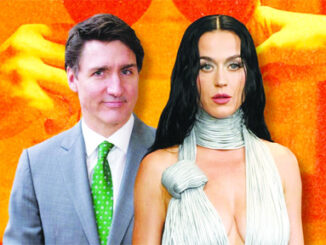
    Global pop star Katy Perry and former Canadian Prime Minister Justin Trudeau were seen dining together at a high-end French bistro in Montreal last night, TMZ reported. Their secret dinner at Le Violon — an exclusive eatery known for exquisite cuisine has sparked significant gossip about a possible romance between the two public figures.
    Witnesses described their interaction as warm and friendly. Seated at a private corner table, Perry and Trudeau enjoyed cocktails and appetisers, including a lobster special. Perry seemed deeply engaged in conversation, according to witnesses.
    Both Perry and Trudeau were accompanied by discreet security teams stationed nearby, ensuring privacy without drawing attention. Adding to the exclusivity of the evening, the restaurant’s head chef greeted the pair mid-meal. After dinner, the two visited the kitchen to personally thank the staff.
    Perry is currently touring Canada to promote her new album, 143. She recently performed in Winnipeg and is scheduled to perform next in Ottawa. Trudeau has maintained a low profile since resigning as Prime Minister in January 2025. He separated from Sophie Grgoire Trudeau in 2023, ending an 18-year marriage.
    Incidentally, Perry also broke up with actor Orlando Bloom earlier this year. The exes, who have a daughter, have reportedly remained friendly and committed to co-parenting.
    While some speculate that the dinner may signal the start of something romantic, those close to them remain tight-lipped. Social media, however, is buzzing with hashtags like #KatyPerryBoyfriend and #JustinTrudeauDating.

  • Sitaare Zameen Par skips OTT release, to stream directly on YouTube for this amount

    Sitaare Zameen Par skips OTT release, to stream directly on YouTube for this amount

    RS Prasanna’s Sitaare Zameen Par, starring Aamir Khan and Genelia D’Souza in lead roles, will stream digitally soon after its theatrical release on 20 June. The spiritual sequel to the 2007 hit Taare Zameen Par is skipping OTT release and will stream directly on YouTube soon. Know all about its digital release.
    On Tuesday, Aamir held a press conference in Mumbai to announce that Sitaare Zameen Par will not be released on any OTT platform. He announced that it will be available on YouTube from 1 August for Rs 100 in India. The film will also be available to watch in the USA, Canada, UK, Australia, Germany, Indonesia, Philippines, Singapore, and Spain, with pricing localised for each market. Subtitles will be offered, along with dubs in some key languages.
    Commenting on the move, Aamir stated, “For the past 15 years, I have been struggling with the challenge of how to reach audiences who do not have geographical access to theatres, or those who are unable to make it to theatres for various reasons. Finally, the time for the perfect storm has come. With our government bringing in UPI and India becoming no 1 in the world in electronic payments, with internet penetration in India having grown dramatically and growing every day, and with YouTube being on most devices, we can finally reach vast sections of people in India, and a significant part of the world.”
    He spoke of his dream of democraticising cinema, adding, “My dream is that Cinema should reach everyone at a reasonable and affordable price. I want people to have the ease of watching Cinema when they want, where they want. If this idea works, Creative voices can tell different stories, breaking geographical and other barriers. This will also be a great opportunity for younger creative people entering the field of Cinema. If this idea works, then I see this as a win-win for all.”