Month: August 2025

  • Fatima Sana Shaikh: Not only women, but even men face the wrath of patriarchy

    Fatima Sana Shaikh: Not only women, but even men face the wrath of patriarchy

    Fatima Sana Shaikh has had a busy July as she had two back-to-back releases with Metro… In Dino and Aap Jaisa Koi. Both the films explored love in different ways, and talking about her tryst with love stories, the actor quips, “I’m living my love life through the films that I’m doing.”
    In both the films, her character is battling for a relationship of equals in different ways. Ask her about it and she says, “Equality in a relationship is very important. I don’t have to be a man, I would love to be feminine and the man doesn’t have to be me. But there is a synergy that is important to maintain. I don’t want my partner to change me and I wouldn’t want him to change because we got attracted to each other because we were ourselves. That’s why it’s important to first respect each other and once that happens, then everything is fine.”
    In Aap Jaisa Koi, Fatima Sana Shaikh is paired opposite actor R Madhavan, who plays a character whose mindset is formed by patriarchy. The actor asserts that it’s not only women but also men who suffer because of it. “There are men also who are in a toxic relationship. The unfortunate fact is that when they come out with their stories, they’re ridiculed. That’s also because of patriarchy because boys are not supposed to cry. They can’t complain as they are supposed to have this front that ‘I take care of the family. I’ll take care of everybody. I can’t hurt. I’m not weak because it’s not accepted’. So, it’s not that only women are facing the wrath of patriarchy, even men are,” she says.
    Recently, as in the case of actor Deepika Padukone and filmmaker Sandeep Reddy Vanga’s alleged feud over the film Spirit raised a debate about when female actors make any demands, they are termed unprofessional or difficult to work with. Ask Fatima if she feels that women taking a stand for themselves ruffles the feathers of male bigwits in the industry even today and she agrees. “In any profession men are more, especially in corporate. There are only a few professions where women are more in numbers,” she says.

  • Sidharth Malhotra, Janhvi’s ‘Param Sundari’ to release on Aug 29

    Sidharth Malhotra, Janhvi’s ‘Param Sundari’ to release on Aug 29

    The makers of Param Sundari have unveiled the motion poster of the upcoming film and announced that the cross cultural romance movie will hit the big screen on August 29, 2025.
    Janhvi, Sidharth and Maddock in a collaborative post on Instagram unveiled the motion poster featuring the two stars. In the poster, Sidharth looks handsome in a shirt paired with jeans and a bag on his shoulder.
    The actress looks her traditional best as she does a classical dance form in a saree. In the motion poster the two can be seen crossing paths.
    The caption reads, “In cinemas worldwide. 29th August 2025. A Maddock Films Production.” It also mentioned that its first song Pardesiya will be out on Wednesday.
    The remaining caption says, “Dinesh Vijan brings to you the biggest love story of the year #ParamSundari arrives in cinemas on 29th August And in just 1 hour, feel its soul with the year’s most heartfelt song — #Pardesiya.”
    The film was earlier scheduled to release on July 25, 2025.
    The film centers on a love story between a North Indian played by Sidharth and a South Indian girl played by Janhvi, filmed in Kerala.
    The film “promises a heartfelt tale of love, where two worlds collide, and sparks are bound to fly. Set against the breathtaking backwaters of Kerala, this love story is a rollercoaster of laughter, chaos, and unexpected twists you won’t see coming,” as per the introduction to the film by Maddock.
    “Its like those films that Mani Sir (Mani Ratnam) used to do, like Saathiya (the Hindi-language remake of the Tamil romance drama Alai Payuthey),” Maddock chief Dinesh Vijan had previously told Variety.
    “The kind of music it has and Janhvi playing a South Indian is interesting, Sid’s playing a Northern Delhi boy and the conflict is very cool. It’s like maybe taking Teri Baaton Mein Aisa Uljha Jiya forward – there’s a high tech idea in there. But we are going into the Kantara world of sorts – we are going a little more than that.”

  • Former Tamil Nadu chief minister OPS quits BJP alliance

    Chennai (TIP)- The BJP’s Tamil Nadu election plans took a hit after expelled AIADMK leader and former Chief Minister O Panneerselvam – from the influential Thevar community – led loyalists out of the national party-led alliance. OPS was reportedly miffed at being excluded from meeting Prime Minister Narendra Modi during his visit earlier this week. He was also excluded from the guest list when Home Minister Amit Shah visited.
    This was after AIADMK chief Edappadi K Palaniswami revived BJP ties before the election.
    OPS loyalist Panruti Ramachandran confirmed the withdrawal; pressed on the reason for the break-up Mr Ramachandran, flanked by his boss, told reporters “the reason is widely known”.
    The ex-Chief Minister’s future plans will be announced shortly, Mr Ramachandran said. “… a right alliance to lead the people in the right direction will materialise in the future”.
    For now, he also said, OPS will travel the state ahead of the 2026 Assembly election.
    There was plenty of buzz after OPS met DMK boss and Chief Minister MK Stalin this morning, but the meeting was played down as a chance encounter during a morning constitutional.
    There was plenty of buzz after OPS met DMK boss and Chief Minister MK Stalin this morning, but the meeting was played down as a chance encounter during a morning constitutional.
    But an alliance with the DMK could be problematic given OPS is seen as the ‘true heir’ of AIADMK icon and ex-Chief Minister J Jayalalithaa, who hand-picked him as her stand-in when she had to step down. Joining hands with her arch-rivals will anger his supporters.
    He could contest next year’s election solo. But recent solo results have been a disaster. Nevertheless, by going on his own he will split votes from the Thevar community and dent the AIADMK’s prospects. He will also almost certainly not win enough seats to form the government, but could win enough, backed by the Thevar voters, to become a ‘kingmaker’ and secure his own political future.
    Or he could patch up with the Bharatiya Janata Party and return to the NDA fold.
    The BJP and he were allies for the 2024 Lok Sabha poll; this was when the AIADMK itself had split from the national party.

  • No evidence: All 7 acquitted in 2008 Malegaon blast case

    No evidence: All 7 acquitted in 2008 Malegaon blast case

    New Delhi (TIP) – special National Investigation Agency (NIA) court on Thursday , July 31, acquitted all the seven people charged in connection with a bomb blast in Maharashtra’s Malegaon town in 2008, saying the evidence against them did not inspire confidence and that it would be unsafe to base convictions on these grounds.
    The high-profile order – which came nearly 17 years after six people were killed and 95 injured in the blast during the last namaz of the day at a public compound on September 29, 2008 – cleared former Bharatiya Janata Party lawmaker Pragya Singh Thakur, 55, and Lt. Col Prasad Purohit, 53, who was an officer with the Indian army.
    “Terror has no religion, as no religion promotes violence,” said special NIA judge AK Lahoti while pronouncing the acquittal.
    The five others who were exonerated, beside Thakur and Purohit, were retired army officer Ramesh Shivaji Upadhyay, 73, Pune-based businessman Samir Sharad Kulkarni, 53, Purohit’s purported close associates Ajay Eknath Rahirkar, 56, and Sudhakar Omkarnath Chaturvedi, 53, and Sudharkar Dhar Dwivedi, also known as Swami Amritananda Devtirth, 56, a self-proclaimed Shankaracharya.
    “Mere suspicion cannot take the place of real proof,” the court said, adding that in the absence of any evidence, the accused persons deserve the benefit of doubt.
    In its order, the trial court said there was no evidence to show that Purohit had brought the RDX from Kashmir as claimed in the charge sheet. The court also found no evidence to prove that the bomb strapped to a motorcycle and seized from the spot belonged to Thakur.
    “The sadhvi had become a sanyasi (ascetic) two years before the incident, and had distanced herself from all material possessions,” the court said while explaining why the two-wheeler’s ownership could not be attributed to the former MP from Bhopal. The accused thanked Lahoti and their lawyers, and Thakur said that she was able to survive the ordeal only because she was a ‘sanyasi’ (ascetic). “This is not my victory. This is no individual’s victory. This is the victory of bhagwa (saffron), bhagwan (god) and Hindutva,” she said after the court explained the verdict in Hindi.
    Advocate Shahid Nadeem, who represented the blast victims, accused NIA of not prioritising their concerns, and said they would file an appeal in the high court after reviewing the judgment.
    The politically sensitive case was part of a larger bouquet of terror incidents in the late 2000s dubbed by investigating agencies at the time as “saffron terror” cases. Almost every one of those cases – including the 2007 Samjhauta Express blasts, the 2007 Mecca Masjid blast and the 2007 Ajmer Sharif bombing – have since collapsed in court.
    The verdict also sparked a political controversy with the BJP?demanding an apology from the Congress, which was in power at the Centre and in the state when the blasts and the prosecution began.
    Two RDX bombs strapped to the seat of an LML Freedom motorcycle went off during the “eesha namaz” at 9.35pm on September 29, 2008 in the Muslim-dominated town, roughly 200km from Mumbai.
    Six died and 95 were injured. This was the second terror attack in Malegaon. On September 8, 2006, on the day of Shab-e-Baraat, four bombs had gone off at the crowded Hamidia mosque complex killing 31 and injuring 312 others.
    The blast was investigated by two different agencies – first by the Maharashtra Anti-Terror Squad (ATS) and then by the NIA from 2011.
    According to the ATS, the blast was the handiwork of an extreme Right-wing group led by Purohit, Upadhyay and Dwivedi. In its charge sheet, the agency claimed that Purohit, who at the time served in the Indian Army’s Military Intelligence unit, had in February 2007 formed Abhinav Bharat, an organisation with an intention to convert India into a Hindu rashtra named Aryavart.
    It also arrested Thakur, a native of Lahar in the Bhind district of Madhya Pradesh, and two others in October 2008, alleging that the motorcycle belonged to her.
    On January 20, 2009, the ATS arrested 11 people and filed a charge sheet, invoking the stringent Maharashtra Control of Organised Crime Act (MCOCA). In April 2011, the case was transferred to NIA, a specialised federal agency established after the 2008 Mumbai terror attack. Throughout this time, the accused alleged that the ATS case was fabricated and their statements were coerced after torture.
    Source: HT

  • After Mahadev, India launched Op Shiv Shakti. 12 terrorists killed in 100 days

    The armed forces have ramped up counter-terror operations after the Pahalgam attack, with 12 most-wanted terrorists having been eliminated in 100 days, sources said. Among the 12 eliminated, six were Pakistani terrorists, while the rest were locals involved in major terror attacks in J&K.
    Besides, more than 100 terrorists were killed by the forces in Pakistan during Operation Sindoor between May 6-7. Since May, multi-agency counter-terror exercises have been launched, with the most significant being Operation Mahadev, which saw the three terrorists who carried out the Pahalgam attack being killed.
    On July 28, Lashkar-e-Taiba (LeT) terrorists Suleiman, Afghan and Jibran were killed in a joint operation by the Army, CRPF, and the Jammu and Kashmir Police near Srinagar’s Dachigam area.
    The very next day, another operation named Shiv Shakti was carried out where two more terrorists were eliminated by the Army.
    “If we talk about the number of these operations, it is very difficult to set a figure. All units across Jammu and Kashmir are carrying out these counter operations continuously in their respective areas,” one of the sources told India Today.
    Four major counter-terror operations were launched in the first week after the Pahalgam attack. The operations were focused mainly in South Kashmir, including Shopian and Pulwama. Two more crucial operations started after mid-May. Three Lashkar terrorists were killed in an operation in Shopian’s Keller Forest. On May 15, another operation in Tral’s Nader area eliminated three more terrorists.
    According to intelligence agencies, 42 terror launch pads, housing 110-130 terrorists, were active in Pakistan-Occupied Kashmir (POK) before the Pahalgam attack.

  • Will give copies of Bihar draft roll to all parties: EC ahead of publication

    New Delhi (TIP)|- The Election Commission It assured contenders on July 31 that all recognised political parties in Bihar will receive physical as well as digital copies of the voters’ list draft in all 38 districts. All individuals and political parties will also get a month to submit applications for addition and removal of names in the draft roll.
    Chief Election Commissioner Gyanesh Kumar said the chief electoral officer (CEO) of Bihar and 243 electoral registration officers (EROs) would invite voters and political parties in Bihar to come forward and give claims and objections from August 1 to September 1, for adding names of any missing eligible elector, removing names of any ineligible elector or correction of any entry in the draft electoral rolls.
    As per the poll panel’s findings, around 65 lakh voters face the possibility of their names getting deleted from the electoral roll of Bihar. It has been reported that around 36 lakh people had shifted permanently or were not found; seven lakh had enrolled themselves at multiple places and 22 lakh of the voters had passed away since the roll was last published.
    The findings are likely to create fresh political uproar once the draft roll comes out on August 1.
    Meanwhile, Kumar along with the other two Election Commissioners Sukhbir Singh Sandhu and Vivek Joshi on Thursday interacted with a delegation from Janata Dal (United), led by its general secretary and authorised representative Afaque Ahmad Khan.
    The meeting was part of the poll body’s outreach with all political parties, which it has been undertaking since May this year. Under this exercise, the ECI has held interactions with representatives of 15 political parties, which include five national parties — BJP, BSP, CPI(M), AAP and National People’s Party (NPP).
    These interactions provide for a long-felt need of constructive discussions which enable national and state party presidents to share their suggestions and concerns directly with the Commission. This initiative aligns with the Commission’s broader vision of further strengthening the electoral process in accordance with the existing legal framework with all stakeholders, it said in a statement. Source: TNS

  • India’s state refiners halt Russian oil purchases: Report

    India’s state refiners have not purchased Russian oil for the last week, marking a dramatic turn in one of Moscow’s strongest energy relationships since the onset war in Ukraine, news agency Reuters reported, citing sources.
    Indian Oil Corp, Hindustan Petroleum Corp, Bharat Petroleum Corp and Mangalore Refinery Petrochemical Ltd are the state refiners in the country that have not acquired Russian crude in the last week or so, four sources, who were aware of the refiners’ buying plans, told the news agency.
    However, Indian refineries such as IOC, BPCL, HPCL and MRPL or the central government, have not made an official statement on the issue.
    India, the world’s third-largest oil importer, is the biggest buyer of seaborne Russian crude, a vital revenue earner for Russia as it wages war in Ukraine for a fourth year.
    Russia, on the other hand, is India’s leading supplier, with around 35% of India’s total supplies.
    The action follows narrowing price discounts on Russian crude and renewed threats from US President Donald Trump to impose punitive tariffs on countries buying oil from Moscow, the agency further reported.
    With discounts now at their lowest since 2022, India’s economic rationale for importing from Moscow has weakened. India is substituting Russia with alternative sources, including Middle Eastern oil such as Abu Dhabi’s Murban and West African oil, to meet the supply deficit, sources said.
    But business interests do not appear to be the sole aspect of the equation. On July 14, Trump threatened 100% tariffs on nations that purchase Russian oil unless Moscow clinches a grand peace agreement with Ukraine.
    Meanwhile, Trump announced a 25% tariff on goods imported from India from August 1, but added that negotiations were ongoing. He also warned of potential penalties for purchase of Russian arms and oil.
    Trump cut the deadline to impose secondary sanctions on buyers of Russian exports to 10-12 days from the previous 50-day period, if Moscow does not agree to a peace deal with Ukraine.

  • BJP, Congress trade barbs as Rahul says economy is dead

    BJP, Congress trade barbs as Rahul says economy is dead

    New Delhi (TIP)- Leader of the Opposition in the Lok Sabha Rahul Gandhi’s claim on Thursday, July 31, that mirrored US president Donald Trump’s statement that the Indian economy is “dead “ triggered a war of words with the ruling BJP, which said that the world recognizes India’s achievements even as Gandhi tried to run it down.
    “Yes, he (Trump) is right, Everybody knows this except the Prime Minister and the Finance Minister. Everybody knows that the Indian economy is a dead economy. I am glad that President Trump has stated a fact… The entire world knows that the Indian economy is a dead economy…,” Gandhi told journalists outside Parliament. Later on, in a post on X , he listed his criteria for his view on the state of the Indian economy.
    Trump’s overnight comments were made in the context of India and Russia’s bilateral trade. After imposing a 25% tariff on Indian exports to the US and an additional penalty for buying Russian oil, Trump said on Truth Social: “I don’t care what India does with Russia. They can take their dead economies down together, for all I care…” . He also alleged that tariffs in India are “too high” and “among the highest in the world”.
    Union Culture and Tourism Minister Gajendra Singh Shekhawat slammed Gandhi for his comments. “Contrary to your political career, Rahul Gandhi, India’s economy is not dead — it is fully alive and moving forward with strong momentum,” he said.
    In his statement, Shekhawat said that during the tenure of the United Progressive Alliance (UPA) government India was counted among the ‘Fragile Five’ countries, and today India is now counted among the ‘Robust Five’. “India’s economy is not only setting new standards of stability and growth, but it is also firmly moving towards becoming the world’s third-largest economy,” he added.
    Sambit Patra, a Lok Sabha lawmaker of the BJP, said on X, “Rahul Gandhi has crossed all limits—publicly endorsing Donald Trump’s slur that India is a ‘dead economy’. Whose side is he really on?”
    “While the world recognises India’s aspiration, achievement, and wellbeing, Rahul Gandhi seems intent on running it down. IMF just upgraded India’s growth forecast: 6.9% for 2025, the fastest among major economies.. World Bank calls India the “standout growth story” of the decade. Inflation is at a 6-year low. PMI is at a 17.5-year high. Rahul Gandhi is attempting to chip away at India’s collective spirit of its ambition & achievements but he’s simply out of sync with a nation chasing its dreams with determination. Shameful!!” Patra said.
    While no other senior Congress leader commented on Trump’s statement, party leader Jairam Ramesh said that the Indian economy has never really recovered from the twin shocks of a “bizarre demonetisation” and a fundamentally flawed “GST” (goods andservices tax) . “The growth rate of the Indian economy will simply not accelerate with current levels of private corporate investment and current levels of private consumption. The Modi government’s own policies are responsible for this twin deficit,” he said.
    Congress MP Rajiv Shukla, however, took a different position and told the media, “It is incorrect for Trump to say that the Indian economy is dead.” Shukla added that economic reforms were ushered in by the Narsimha Rao government and the UPA government and the current government has taken more steps. “In no way, our economy is weak,” he said
    Parliamentary affairs minister Kiren Rijiju cited Shukla’s comment and said on X, “Now, a senior Congress leader Rajiv Shukla ji is also speaking in our country’s favour! Indian economy will never be dead.” Source: HT

  • Familiarization Business Seminar on the UP International Trade Show 2025

    Familiarization Business Seminar on the UP International Trade Show 2025

    GUATEMALA CITY (TIP): The Embassy of India in Guatemala City successfully organized a Familiarization Business Seminar on the UP International Trade Show 2025 on Friday, 25 July 2025, aimed at introducing and promoting the upcoming trade show among local companies, entrepreneurs, and business associations. The seminar was held in a hybrid format, allowing the participation of delegates and business representatives from El Salvador and Honduras through virtual means. The event drew a strong response from local industry representatives, business chambers, and potential trade partners eager to explore opportunities in Uttar Pradesh, India.

    The UP International Trade Show, scheduled for 26-29 September 2025 in Greater Noida, India, is one of the largest trade platforms showcasing India’s diverse industrial strengths, including handicrafts, textiles, engineering goods, food processing, electronics, MSMEs, and agricultural products. Organized by the Government of Uttar Pradesh in collaboration with the Federation of Indian Export Organizations (FIEO), the trade show provides a unique opportunity for global buyers and sellers to engage directly, explore joint ventures, and forge new partnerships. The seminar aimed to familiarize Guatemalan businesses with the scale, structure, and opportunities offered by the trade show, thereby encouraging participation from the region.

    The program commenced with welcome remarks by Mr. Ramesh Khulbey, Head of Chancery at the Embassy of India, Guatemala. In his address, Mr. Khulbey highlighted the growing trade relations between India and the Central American region and stressed that the UP International Trade Show would be an ideal platform for local businesses to expand their reach and interact directly with Indian exporters and manufacturers. He encouraged Guatemalan, Salvadoran, and Honduran entrepreneurs to take advantage of this opportunity to discover India’s manufacturing excellence and emerging industrial sectors. His presentation included a promotional video and glimpses of the previous year’s successful edition of the trade show, which received strong international participation.

    Mr. Rohit Tejpal, Dy. Director, FIEO,, delivered an informative presentation highlighting key sectors, matchmaking sessions & buyer programs.

    This was followed by a detailed presentation by Mr. Rohit Tejpal, Deputy Director, FIEO, who provided insights into the upcoming trade show’s layout, key sectors, matchmaking sessions, and business networking opportunities. He explained how participating companies could benefit from direct B2B interactions, product showcases, and government-supported buyer programs. The seminar also featured experience-sharing sessions by previous visitors who had attended trade fairs in India, including the earlier editions of the UP International Trade Show. They shared their positive experiences, the quality of networking, and the opportunities that emerged from such visits.

    An engaging Q&A session enabled participants to gain clarity on travel plans, sectors of focus, and opportunities at UP International Trade Show.

    The session concluded with an interactive Q&A session, during which participants raised queries regarding logistics, travel arrangements, and sectors of focus in the 2025 edition. Mr. Khulbey and Mr. Tejpal addressed these queries, providing clarifications and guidance. In the concluding remarks, Mr. Keshav Chodhary, Commercial Wing thanked all attendees for their participation and urged them to submit the feedback forms provided during the seminar. A large number of attendees expressed keen interest in visiting India for the trade show and acknowledged the event’s usefulness in providing comprehensive information about the opportunities available. The seminar was widely regarded as a success in creating awareness and generating enthusiasm for the UP International Trade Show 2025, paving the way for stronger business linkages between India and Central America.

  • When Power Threatens Liberty: On Rising Autocracy in Democratic Disguise

    By Prof. Indrajit S Saluja
    By Prof. Indrajit S Saluja

    In the theater of politics, the rules have long been simple: defeat the opponent, discredit his vision, and champion your own ideology. Nobody denies that politics is often a zero-sum game—one in which success frequently depends on the failure of the other. But even zero-sum games have rules. The boundaries, the framework, the fair play—these are the pillars that sustain the credibility of any competition, including politics. When these rules are trampled upon in pursuit of expediency, convenience, or raw power, the political game ceases to be democratic and begins to resemble despotism.

    The adage “Power tends to corrupt, and absolute power corrupts absolutely” has never been more relevant than it is today. In an age when the democratic experiment is nearly a century old in many parts of the world, we find ourselves paradoxically fighting for the very soul of democracy. Across the globe, from mature democracies like the United States and India to fledgling republics in Africa and Eastern Europe, the rise of authoritarianism under a democratic garb is unmistakable. A power-drunk politician, once elevated by the people’s mandate, quickly transforms into a custodian of tyranny, eroding the very rights he was elected to protect.

    The Autocratic Drift in Democracies

    The disturbing trend is that this transformation often happens not by coup or violent revolution, but within the legal framework of democracies. Leaders are increasingly using legislation, state institutions, media control, and even the courts to suppress dissent and consolidate authority. The Hungarian Prime Minister Viktor Orbán calls this model “illiberal democracy.” In practice, it means elections are held, but freedom of the press is stifled, judiciary is weakened, opposition is intimidated, and civil liberties are curtailed—all under a veil of constitutional legality.

    In India, the world’s largest democracy, there are concerns over growing intolerance of dissent, misuse of investigative agencies against political opponents, internet blackouts, and a shrinking space for civil society. The Citizenship Amendment Act (CAA) and the abrogation of Article 370 in Jammu and Kashmir, regardless of one’s political leanings, are seen by many as examples of sweeping changes enforced without meaningful debate or consensus.

    In the United States, the storming of Capitol Hill on January 6, 2021, showcased what can happen when political demagoguery goes unchecked. A former President refusing to accept election results, falsely crying foul, and inciting supporters to violence was not just an American crisis—it was a global warning sign. If such disregard for democratic norms can happen in the most powerful democracy in the world, it can happen anywhere.

    Democracy Under Siege: By the Numbers

    A 2023 report by the Varieties of Democracy (V-Dem) Institute noted that 72% of the world’s population now lives in autocracies—up from 46% a decade earlier. In fact, the number of electoral autocracies—regimes that hold elections but fail to meet minimum standards of democracy—has surpassed the number of liberal democracies globally.

    Freedom House’s 2024 report marked the 18th consecutive year of democratic decline worldwide. Of the 195 countries assessed, 84 (43%) were rated “Not Free.” Only 20% of the global population lives in “Free” countries. Democracies are not just failing to expand; they are shrinking in size, scope, and spirit.

    Even in countries where the facade of democracy remains, surveillance technologies, media capture, and state-sponsored propaganda are becoming tools to control the narrative and suppress opposition. The digital realm, once a space of empowerment, is increasingly weaponized by governments to monitor citizens, manipulate elections, and spread disinformation.

    Robbers in the Name of Democracy

    Democracy’s greatest irony is that the very systems built to protect liberty can be manipulated to destroy it. Elections, parliaments, courts, and constitutions—each of these can be undermined from within. Adolf Hitler, after all, was elected Chancellor of Germany through democratic means before becoming the architect of history’s most notorious dictatorship.

    Today’s autocrats don’t wear jackboots; they wear suits. They don’t silence dissent with guns; they use sedition laws, tax raids, and defamation lawsuits. They don’t ban newspapers; they buy them. They don’t cancel elections; they manipulate voters through hate speech, fake news, and polarization.

    The modern-day threat is not an external invasion but the internal corrosion of democratic values. Robbers of liberty now sit in legislatures, not jungles. The war on democracy is fought not with bullets but with bills and ballots.

    Eternal Vigilance: The Need of the Hour

    The phrase “eternal vigilance is the price of liberty” is more than a warning; it is a moral imperative. Citizens cannot outsource their responsibility to guard democracy to politicians or institutions. They must stay informed, ask questions, and resist authoritarian temptations.

    But vigilance alone is not enough. Civic education needs a renaissance. In many parts of the world, including India and the U.S., political literacy is shockingly low. Voters must be equipped with the tools to distinguish propaganda from fact, debate from hate, and authority from authoritarianism.

    Moreover, institutions—courts, media, election commissions—must be fiercely independent and ethically uncompromised. Civil society organizations need to be strengthened, not stifled. Whistleblowers must be protected, not prosecuted.

    The Global Democratic Compact

    There is an urgent need for democratic nations to collaborate—not just for economic and military alliances, but for the preservation of democratic norms. Just as there is NATO for collective defense, there should be a global democratic compact that watches over the conduct of its members, much like a peer-review mechanism.

    Countries that trample on press freedom, imprison opposition leaders, or interfere in judicial appointments should face consequences—not just rhetorical condemnation but diplomatic, economic, and legal pressure.

    The United Nations and international human rights bodies must evolve from being mere report card issuers to active defenders of democratic rights.

    The Inescapable Conflict: Power vs Liberty

    Ultimately, we stand at the edge of a defining conflict: Will the powerful relinquish their grip, or will the people surrender their freedoms? This is not merely a political debate; it is a civilizational question.

    History teaches us that tyrants don’t stop until they are stopped. The march toward authoritarianism never pauses of its own accord; it is halted by protest, by vote, by law, and by courage. The people’s silence is the tyrant’s strength. The people’s resistance is democracy’s hope.

    We are reminded of the French philosopher Montesquieu’s belief: “The tyranny of a prince in an oligarchy is not so dangerous to the public welfare as the apathy of a citizen in a democracy.” That apathy, that fatigue, that normalization of authoritarianism must end now.

    The battle lines are clear. On one side stand the power-hungry who manipulate democracy to monopolize authority. On the other side stand ordinary citizens, fighting to retain their dignity, rights, and freedom.

    Who wins this battle will determine the future not just of individual nations, but of humanity itself. For when liberty is lost in one corner of the world, it threatens to vanish everywhere. Democracy is not self-sustaining; it needs nourishment, defense, and above all, a citizenry that refuses to bow.

    Because in the final analysis, it is not the strength of dictators but the weakness of the people’s resistance that brings democracy to its knees. Let us not kneel. Let us stand. Let us fight—for the right to be free.

  • New Consular Services from August 1, 2025: Consul General Binaya Srikanta   Pradhan

    New Consular Services from August 1, 2025: Consul General Binaya Srikanta Pradhan

    NEW YORK (TIP): The Indian Consulate in New York  is preparing to launch new services on August 1, including  new satellite centers in Boston, Columbus, Ohio, and Edison, New Jersey, to provide comprehensive consular services. These centers will handle passports, visas, OCI cards, and miscellaneous services, with a uniform service fee of $19. The consulate also aims to engage more with the Indian American community, particularly students, who number 117,000 in their jurisdiction, and the second and third-generation Indian Americans. The consulate is also working to support Indian women facing challenges and promote Indian culture, which is increasingly mainstream in the U.S.

    This information was provided by Mr. Binaya Srikanta Pradhan,  Consul General of India in New York,   in an interview with The Indian Panorama Chief Editor Prof. Indrajit S Saluja on July 30.

    Here are excerpts from the Interview.

    TIP

    I  want The Indian Panorama readers to know what is going to come from you on the coming Independence Day.

    CG

    Let’s come to that. So, from first of August, we are going to have a few additional services in a decentralized manner. For example, in this consular jurisdiction, will be having three new satellite centers which will be providing all Indian consular services. And when I say consular services, it is not only passport, visa and OCI card. It also includes the miscellaneous services, which include, like attestation, power of attorney, giving a death certificate, a birth certificate,  registering your will,  giving the notary,   and any kind of consular services that we offer. The same services would now be dealt with by the satellite centers. At the moment, our service provider is a company called VSF Global. At present, people deal with VSF Global in New York City. From the first of August we  will be having centers from VSF Global opened in Boston, in Columbus, Ohio, and in Edison, New Jersey. So, these are the three new centers which are being opened here. Similar centers  are being opened in other parts of the country. But in our jurisdiction, we are having three additional centers. In other words, people in those regions  do not have to come to New York City to avail those services. They can go to those centers. The second thing we are doing is that hereafter, VSF  would not be limited to dealing with passport, OCI and visa. They will be dealing with all the miscellaneous services which were so far being dealt with by only the consulate in this building. So now you are going to be getting those facilities in all the VSF centers, from New York to Boston to in addition to Ohio, Columbus. Third, people will be paying a uniform service fee of $19 that is one nine- $19,  which would be taking care of, almost all needs. If  you are coming to a VSF  center and you require somebody to help you to fill up the application,  that will be provided as part of the services. If you have not got your right photographs, or you have forgotten to  get your photographs, the VSF  center will take your photograph, and provide you four photographs free of cost.  Photocopy of your documents will be provided free of cost. And the courier service,  the return courier service, is a  part of that $19 service charge. So earlier, you give an envelope with the required fees so that the envelope can go back to you. Now it is provided as part of the $19 service fee.  I would say that these are the new services that we  are providing and helping people to fill in the application form, so that they are not having trouble understanding the guidelines or understanding the instructions. It is going to be a new thing, because many a time we come across complaints that people are unable to understand how to complete the application form. Now you can go to the VFS center. They will help you to fill it up without any additional charge. So,  that is the new features in this service. And more importantly, earlier VSF was open from Monday to Friday. Hereafter, it would be open from Monday to Saturday. So only Sunday  would be the holiday. So, Monday to Saturday, all these four places in our jurisdiction, New York, Boston, Edison and Columbus in Ohio, would be open from 9 am to 6 pm.  I would say this is a substantial improvement in terms of both the duration of time that they would be open to quality service they would provide in  a more intimate engagement with the people who would come for services. So, I’m sure this would improve the experience that our people had in terms of getting Indian consular services.

    TIP

    Surely. There are people who work for five days a week, and  they can’t leave their job to go to VS. And if it is open now on Saturdays,  it becomes very convenient for them to visit a VSF center  in case they have to transact a business with it.  And also, nobody would mind paying a fee of $19 and be assured of all the services you have just mentioned. I think people  will be happy with the new services being launched from August 1. 

    CG

    For  comparison, I would urge you to check about the service fees other countries charge. You would find that this is a very small amount compared to what other countries will charge.  $19 which would include your photocopy to photograph, to return courier service. I would say, it is a very, very competitive service.

    TIP

    The services that you have just now detailed would probably be taken as  an Independence Day gift by the community here. Thank you for thinking of launching  the new services a few days before the 79th Independence Day of India.

  • Trump releases revised tariffs for 70 countries; India remains at 25%, Pakistan’s rate slashed by 10%

    Trump releases revised tariffs for 70 countries; India remains at 25%, Pakistan’s rate slashed by 10%

    While August 1 was the tariff deadline, the new levies will come into effect from August 7

    WASHINGTON, D.C. (TIP): India will face tariffs of 25 per cent on its exports to the US as President Donald Trump issued an executive order listing the various duties that Washington will impose on exports from countries around the world. In the Executive Order titled ‘Further Modifying The Reciprocal Tariff Rates’, Trump announced tariff rates for nearly 70 nations. A 25 per cent “Reciprocal Tariff, Adjusted” has been imposed on India, according to the list released. The executive order however does not mention the “penalty” that Trump had said India will have to pay because of its purchases of Russian military equipment and energy.

    Pakistan’s tariff rate has been reduced to 19% from 29%.

    On Wednesday, Trump, through a post on his social media website Truth Social, announced the 25 per cent tariff on India and an additional penalty for New Delhi’s purchases from Russia.

    While August 1 was the tariff deadline, the new levies will come into effect from August 7.

    In April, Trump had announced that India will face a 26 per cent “discounted reciprocal tariff”, a per cent higher than the rate announced now.

    Responding to the executive order, Senior Vice President of the Asia Society Policy Institute (ASPI) and former Deputy US Trade Representative Wendy Cutler said in a statement that India, a “promising candidate for an early agreement”, was assigned a 25 per cent tariff.

    This “calls into question the fate of a bilateral trade agreement. The President’s annoyance with India on a range of trade and broader matters rang through his Truth Social post,” Cutler said.

    Federation of Indian Export Organizations (FIEO) Director General Ajay Sahai said that the order provides relaxation for goods in transit and those loaded on ship for final sailing to the US by August 7.

    Goods cleared for consumption in the US by October 5 will also not be subject to reciprocal tariffs, thus providing some relief to exporters of goods already shipped or likely to be shipped this week.

    According to Cutler, US customs officials will face challenges implementing the executive order, particularly with the different tariff rates now applied across the world.

    The seven-day breathing period before implementation will help, but importers should expect start-up problems at a minimum.

    “US companies will also face challenges as they navigate this new tariff landscape. Of particular concern is the continued uncertainties they will face with new sectoral tariffs coming and possibilities of additional tariffs if the Administration believes countries are not operating in good faith in their implementation efforts,” she said.

    In the executive order, Trump stated that some trading partners have agreed to, or are on the verge of agreeing to, meaningful trade and security commitments with the US, thus signaling their sincere intentions to permanently remedy trade barriers and align with Washington on economic and national security matters.

    “Other trading partners, despite having engaged in negotiations, have offered terms that, in my judgment, do not sufficiently address imbalances in our trading relationship or have failed to align sufficiently with the United States on economic and national-security matters,” he said.

    “Goods of those trading partners will remain subject to the additional ad valorem duties… until such time as those agreements are concluded, and I issue subsequent orders memorializing the terms of those agreements.” The tariff modifications shall be “effective with respect to goods entered for consumption, or withdrawn from warehouse for consumption, on or after 12:01 a.m. eastern daylight time 7 days after the date of this order.” The tariffs in the list range from 10 per cent to 40 per cent, with Japan being charged 15 per cent, Laos and Myanmar (40 per cent each), Pakistan (19 per cent), Sri Lanka (20 per cent) and the United Kingdom (10 per cent).

    Declaring that the US has a massive trade deficit with India, Trump had said that while “India is our friend, we have, over the years, done relatively little business with them because their tariffs are far too high, among the highest in the world, and they have the most strenuous and obnoxious non-monetary Trade Barriers of any country.

    “Also, they have always bought a vast majority of their military equipment from Russia, and are Russia’s largest buyer of energy, along with China, at a time when everyone wants Russia to stop the killing in Ukraine — All things not good!” Trump said.

    He said that India will therefore be paying a tariff of 25 per cent, plus a penalty for the above, starting on August 1.

    Trump also mounted a sharp attack on India and Russia for their close ties and said that the two countries can take their “dead economies down together”.

    “I don’t care what India does with Russia. They can take their dead economies down together, for all I care,” he said.

    “We have done very little business with India, their Tariffs are too high, among the highest in the World,” he added.

    “Likewise, Russia and the USA do almost no business together. Let’s keep it that way, and tell Medvedev, the failed former President of Russia, who thinks he’s still President, to watch his words. He’s entering very dangerous territory!” Trump said, referring to former Russian President Dmitry Medvedev.

    In its reaction, India said it will take all necessary steps to safeguard and promote national interest and that the implications of the tariffs are being examined. Trump also referred to India’s membership in the BRICS (Brazil, Russia, India, China and South Africa) grouping, which he described as anti-US.

    At an event in the White House Wednesday, Trump was asked what the additional penalty will be for India for its purchases from Russia.

    “Well, we’re negotiating right now, and it’s also BRICS. You know, they have BRICS, which is basically a group of countries that are anti the United States and India is a member of that, if you can believe it,” Trump said adding that “it’s an attack on the dollar, and we’re not going to let anybody attack the dollar.” He had said the reason for tariffs on India is partially BRICS and partially the trade deficit.
    (Source: PTI)

  • Trump announces US will develop ‘massive’ oil reserves in Pakistan, says they might sell to ‘India some day’

    Trump announces US will develop ‘massive’ oil reserves in Pakistan, says they might sell to ‘India some day’

    WASHINGTON, D.C. (TIP): Hours after announcing 25 per cent tariffs with additional penalties on India, US President Donald Trump on Wednesday, July 30, announced a trade deal with Pakistan, touting a joint initiative to develop oil reserves in India’s terror-harboring neighbor and even floated the idea that “some day” Islamabad might sell oil to New Delhi. In a post on Truth Social, Trump stated that the United States and Pakistan are currently in the process of selecting the oil company for the partnership.

    “We have just concluded a Deal with the Country of Pakistan, whereby Pakistan and the United States will work together on developing their massive Oil Reserves. We are in the process of choosing the Oil Company that will lead this Partnership. Who knows, maybe they’ll be selling Oil to India some day!” Trump stated.

    The remarks came after Trump announced a 25 per cent tariff and additional penalty on Indian imports starting August 1, citing Washington’s trade deficit with New Delhi and its purchase of Russian oil.

    Trump, in his post, further stated that he had conversations on trade deals with leaders of many countries, noting “all of whom want to make the United States extremely happy.”

    “We are very busy in the White House today working on Trade Deals. I have spoken to the Leaders of many Countries, all of whom want to make the United States “extremely happy.” I will be meeting with the South Korean Trade Delegation this afternoon. South Korea is right now at a 25% Tariff, but they have an offer to buy down those Tariffs. I will be interested in hearing what that offer is,” the post read.

    He also noted that many countries are currently making offers to the US for “Tariff reduction.”

    “Likewise, other Countries are making offers for a Tariff reduction. All of this will help reduce our Trade Deficit in a very major way. A full report will be released at the appropriate time. Thank you for your attention to this matter. MAKE AMERICA GREAT AGAIN!” it further read.
    (Source: ANI)

  • Canadian PM Mark Carney breaks silence on US tariffs

    Canadian PM Mark Carney breaks silence on US tariffs

    • Prabhjot Singh in Toronto

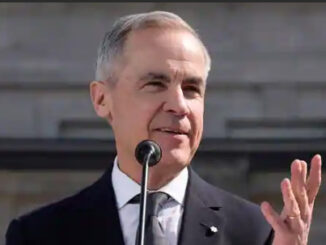
    OTTAWA (TIP): August 1 would be marked as a watershed day in the bilateral relations between two strong neighbors—Canada and the USA. While the USA President Donald Trump has announced to increase the tariffs on those Canadian exports that are not covered under one of the world’s second largest free trade agreements—the Canada-United States-Mexico Agreement (CUSMA)—from 25 percent to 35 percent, the Canadian Prime Minister, Mark Carney, in a statement issued shortly after midnight, has not only expressed his government’s disappointment over the US move but has also firmly reiterated his country’s commitment to be its own best customer.

    Canada’s refusal to bow to tariff diktats has come after the federal and provincial governments have generally, by cutting across their political affiliations, come together to fight the US tariffs unitedly. This is the second major action of the Mark Carney government after it decided to recognize Palestine, which appears to have prompted the US president to issue an executive order on Thursday night imposing heavier tariffs on Canadian imports.

    In his statement, Mark Carney made it clear that while Canada would continue to negotiate with the USA on “our trading relationship, the Canadian government is less focused on what we can control, building Canada strong. The federal government, provinces, and territories are working together to cut down trade barriers to build one Canadian economy. We are developing a series of major nation-building projects with provincial, territorial, and indigenous partners. Together, these initiatives have the potential to catalyze over half a trillion dollars of new investments in Canada.

    “Canadians will be our own best customers, creating more well-paying careers at home, as we strengthen and diversify our trading partnerships throughout the world. We can give ourselves more than any foreign government can ever take away by building with Canadian workers and by using Canadian resources to benefit all Canadians,” Mark Carney said in his statement.

    The statement has evoked mixed reactions from various quarters in Canada. Most of the critics of the new Liberal government have lauded Prime Minister Mark Carney for his bold stand, by hailing his statement. Of late, Canada has been gradually moving away from the shadow of the US on various contentious and important issues, including its defense build-up and its fast-growing friendly policies towards the European Union.

    Mark Carney’s statement also says that “the US application of CUSMA means that the US average tariff rate on Canadian goods remains one of its lowest for all its trading partners. Other sectors of our economy—including lumber, steel, aluminum, and automobiles—our export markets are, however, heavily impacted by US duties and tariffs. For such sectors, the Canadian government will act to protect Canadian jobs, invest in our industrial competitiveness, buy Canadian, and diversify our export markets.

    While reacting to the US president’s allegation that Canada has done little to check the smuggling of fentanyl across the borders, Mark Carney’s statement stated, “The United States has justified its most recent trade action based on the cross-border flow of fentanyl, even though Canada accounts for only 1 percent of the US fentanyl imports and has been working intensely to further reduce these volumes. Canada’s government is making historic investments in border security to arrest drug traffickers, take down transnational gangs, and end migrant smuggling. These include thousands of new law enforcement and border security officers, aerial surveillance, intelligence and security operations, and the strongest border legislation in our history. We will continue working with the United States to stop the scourge of fentanyl and save lives in both countries,” the statement said.

  • India announces eight new consular application centers in US

    India announces eight new consular application centers in US

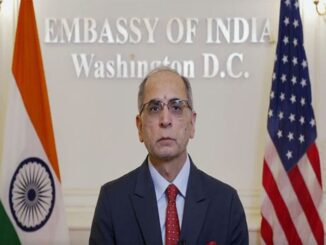
    WASHINGTON, DC (TIP): India’s Ambassador to the United States, Vinay Kwatra, on Thursday, July 31, announced the opening of eight new Indian Consular Application Centers across the United States, aimed at expanding access to consular services for the Indian diaspora.

    In a post on X, the Embassy of India in Washington, DC shared a video message by Ambassador Vinay Kwatra.

    “Announcing major expansion of our Consular Services in the USA beginning August 01, 2025. Here is a message from Ambassador Vinay Kwatra about this expansion and the positive changes it would bring to our delivery service.”

    Announcing major expansion of our Consular Services in USA beginning August 01, 2025. Here is a message from Ambassador Vinay Kwatra about this expansion and the positive changes it would bring to our service delivery. pic.twitter.com/w35fakWDTo

    — India in USA (@IndianEmbassyUS) July 31, 2025

    Ambassador Kwatra said in his statement that the new Indian Consular Application Centers would be in Boston, Columbus, Dallas, Detroit, Addison, Orlando, Raleigh, and San Jose.

    “In addition, we would also be opening another Indian Consular Application Centre in Los Angeles very soon. With the opening of these new Indian Consular Application Centers, our presence to provide extensive consular services and related delivery capabilities would increase and expand significantly. Besides, it would also make the delivery of these consular services faster and more accessible to our vibrant Indian diaspora.”

    The Ambassador said that starting August 1, all the Indian consular application centers would also remain open on Saturdays. He noted that this would help significantly enhance not just the availability of various consular services, but also their accessibility to the Indian diaspora.

    The Ambassador also mentioned the streamlining of various miscellaneous consular services, which would be made available through the Indian Consular Application Centers, and a few of the important services would, however, continue to be dispersed and made available from the embassy premises.

    “We firmly believe that people-to-people ties are at the heart of the India-US partnership. With the opening of two new consulates in Boston and Los Angeles, which the Prime Minister of India had announced a few months ago, we would be able to further strengthen not just a relationship between our two countries, but also our people-to-people ties, particularly in the areas of Boston and Los Angeles”.

    Ambassador Kwatra requested the members of the Indian diaspora to keep visiting the website of the Indian Embassy, where detailed information about the opening of these Indian Consular Application Centers and the availability of various miscellaneous Consular services would be made available more regularly.

    As per the Ministry of External Affairs, about 5.4 million Indian origin people (per MEA data; includes 2.07 million NRIs) reside in the US. Persons of Indian origin constitute the third-largest Asian ethnic group in the US. The Indian diaspora has been a catalyst in cementing closer ties between India and the US.

    Earlier this year, in January, the United States held a dedication ceremony for its new Consulate in Bengaluru, which made it the fifth US consulate in India.
    (Source: ANI)

  • Indian-origin workers in Singapore presented with appreciation coins for rescuing driver from sinkhole

    SINGAPORE (TIP): Seven Indian workers were presented with tokens of appreciation by Singapore’s Ministry of Manpower (MOM) for rescuing a driver after her car plunged into a sinkhole, according to a media report on Monday. The sinkhole developed along the city-state’s Tanjong Katong Road South thoroughfare on Saturday.

    The migrant workers — Pitchai Udaiyappan Subbiah, Velmurugan, Saravanan, Veerasekar, Ajithkumar, Chandrisekaran and Rajendran — pulled to safety the driver whose car had fallen into it.

    Each of them received an ‘MOM Ace coin’ from Minister of State for Manpower Dinesh Vasu Dash on Sunday, Channel News Asia reported. In a video posted on Facebook, Dinesh said that he met the workers at their dormitory after they had finished their work.

    “I think this is a very good example of how our migrant workers help society in general,” the report quoted him as saying. “All of them have in their own ways (leaned) forward to support the lady who was in need, and that made a big difference to a situation that would have otherwise been very, very different,” he said.

    He also wrote in the post that he is “grateful” to the contributions of the workers not only to Singapore’s progress but also their “many selfless acts and for helping to make Singapore a gracious society”.

  • Indian American Georgia Father Drowns in Hilton Head Tragedy

    Indian American Georgia Father Drowns in Hilton Head Tragedy

    ATLANTA, GA (TIP):  Saumen Kundu, 49, a Georgia resident originally from Bengal and an employee of Cognizant, tragically drowned on Thursday, July 24,  evening while swimming with his young son at Sea Pines on Hilton Head Island. According to the Beaufort County Sheriff’s Office and local media reports, the incident occurred around 7:51 p.m. when Kundu and his son were swept into a rip current.

    At about 7 p.m., Hilton Head Fire Rescue’s 911 Center received a report of multiple swimmers in distress in the area of South Sea Pines Drive at beach marker 5. When Hilton Head Fire Rescue arrived at the scene, they located two people in the water. Fire Rescue and Shore Beach Services went into the water and got both of the swimmers out. The Beaufort County Sheriff’s Office confirms that a father and son were the two swimmers. They were caught in rip current while in the water.

    Once on shore, lifesaving efforts were started on the father. Despite those efforts, he was later pronounced dead. The son was rescued unharmed.

    The body of the father is now in the custody of the local mortuary.

    Community members in Atlanta shared that Kundu, who was in the U.S. on an H1-B visa, had traveled to Hilton Head earlier that day with his wife Nivedita, their son, and Nivedita’s mother for a short family trip.

    Local Indian American organizations and support groups have begun mobilizing to assist the grieving family. Messages of condolence have been pouring in from friends, colleagues, and community members.

    The Beaufort County Sheriff’s Office is continuing its investigation into the drowning, which occurred during what authorities described as hazardous rip current conditions along parts of the South Carolina coast.

    A GoFundMe has been set up to help his family cover funeral and other essential expenses. https://www.gofundme.com/f/support-for-saumen-kundus-family-after-tragedy.

  • The Arrested  Indian American Delta Co-Pilot’s Ex-Girlfriend Also Taken Into Custody

    The Arrested Indian American Delta Co-Pilot’s Ex-Girlfriend Also Taken Into Custody

    SAN FRANCISCO (TIP) : A Delta Airlines co-pilot was arrested moments after landing at San Francisco International Airport over the weekend, in connection with alleged child sexual assault charges.

    The Indian-origin suspect, Rustom Bhagwagar, 34, was taken into custody by agents from Homeland Security Investigations (HSI) and deputies from the Contra Costa County Sheriff’s Office. The arrest occurred just 10 minutes after Delta Flight 2809, a Boeing 757-300 from Minneapolis, touched down at SFO.

    According to eyewitnesses, at least 10 federal and local officers boarded the aircraft immediately after it arrived at the gate, moved quickly through the cabin, and entered the cockpit. There, Bhagwagar was handcuffed and escorted off the plane while passengers were still preparing to disembark.

    One passenger told the San Francisco Chronicle: “The officers were pushing their way through the aisle with badges, guns, and different agency vests. They went straight into the cockpit and took him out in cuffs.”

    Authorities said Bhagwagar’s co-pilot was unaware of the impending arrest, a precaution taken to prevent any chance of tipping off the suspect.

    The Contra Costa County Sheriff’s Department confirmed that Bhagwagar had been under investigation since April 2025, following a report involving suspected crimes against a child. A Ramey arrest warrant — issued before formal charges — was later secured.

    According to a statement posted on the sheriff’s official Facebook page, Bhagwagar is facing five felony counts of oral copulation with a child under the age of 10. He is currently being held at the Martinez Detention Facility, with bail set at $5 million.

    In a statement to the media, Delta Air Lines said: “Delta has zero tolerance for unlawful conduct and is fully cooperating with law enforcement. The individual in question has been suspended pending the outcome of the investigation.”

    The widening investigation into a Delta Air Lines co‑pilot accused of child sex abuse has led to the arrest of his former girlfriend, who prosecutors say participated in the alleged crimes against her own daughter.

    Jennifer Powell, 45, was taken into custody this week and charged alongside Rustom Bhagwagar, 34, a Delta co‑pilot dramatically arrested on July 26 after landing at San Francisco International Airport. Powell is accused of allowing — and at times joining in — the abuse that prosecutors allege began when her daughter was just six years old and continued for several years.

    Bhagwagar faces 24 felony counts, including aggravated sexual assault and lewd acts on a child under 10. Powell faces related charges involving participation in the abuse. According to charging documents, the incidents occurred between 2018 and 2023 in Contra Costa County.

    Authorities say Powell not only knew about the abuse but actively participated in it. Both defendants are being held at the Martinez Detention Facility; Bhagwagar’s bail is set at $15 million, while Powell’s bail has not yet been disclosed.

    The pilot’s arrest — carried out by Homeland Security Investigations agents and Contra Costa County deputies who boarded his plane minutes after arrival from Minneapolis — shocked passengers and made national headlines. Delta Air Lines has suspended Bhagwagar and issued a statement condemning unlawful conduct.

    Both defendants are scheduled for arraignment on July 30. If convicted, they could each face lengthy prison sentences, including terms of 15 years to life.

  • 30-year-old British Sikh Gurmukh Singh stabbed to death in London attack

    30-year-old British Sikh Gurmukh Singh stabbed to death in London attack

    LONDON (TIP): A 30-year-old British Sikh man has been stabbed to death in east London in an attack involving people known to each other, the UK police believe. Gurmukh Singh, known as Gary, died last week in Felbrigge Road, Ilford in East London, and was formally named by Metropolitan Police on Thursday, July 30. The force said its officers had arrested Amardeep Singh, 27, on suspicion of the murder that took place on July 23. He has since been charged with one count of murder and remains in custody until his next court appearance at London’s Old Bailey for trial on January 5, 2026.

    “Police were called by the London Ambulance Service to reports of an altercation at a residential address,” said the Met Police statement. “Officers attended as Gary was treated for stab wounds. Despite the best efforts of the paramedics, he sadly died at the scene,” it said.

    Detectives also arrested a 29-year-old man and three women aged 29, 30 and 54 in connection with the fatal stabbing. They have all since been released on bail until October while the police investigation continues.

    “Gary was a well-loved man who had a remarkable ability to connect with everyone he met,” his family said in a statement released by the police.

    “A true social butterfly, nothing brought him more joy than being surrounded by his family. Gary will be deeply missed, but his memory will live on in our hearts forever,” they said.

    A post-mortem examination has indicated the cause of death as a stab wound to the left thigh, with an inquest opened and adjourned while the police investigation into the attack is ongoing

    Detective Chief Inspector Joanna Yorke from the Met’s Specialist Crime North unit said at the time of the attack that detectives believed it was an “isolated incident”.

    “An incident of this nature sends shockwaves throughout the local area and we understand the direct impact on the community. People can expect to see an uptick in police presence while officers conduct initial investigations. Please do not hesitate to speak to them if you have any concerns at all,” she said.

  • BATTERY DANCE FESTIVAL REVISITS NYC

    • By Mabel Pais

    BATTERY DANCE celebrates its annual art of dance in its home community of New York City this August, in partnership with Battery Park City Authority (BPCA).

    Dance @ The New Wagner Park, Saturday, August 9 at 7pm

    On Saturday, August 9, Battery Dance Company celebrates the re-opening of Robert F. Wagner, Jr. Park. A medley of dance companies will present a 1-hour program opened by Indigenous performer Marie Poncé, followed by tap-dancer John Manzari with a live band.  Battery Dance presents ‘Frontiers’ by Turkish-Dutch choreographer Rutkay Özpinar and Limón Dance Company caps off the evening with the classic work ‘A Choreographic Offering’ created by José Limón in 1964.

    BATTERY DANCE FESTIVAL

    August 12-16 brings the 44th Annual Battery Dance Festival enlivening Rockefeller Park with a rain date on August 17. New York City’s longest-running free public dance festival brings together eight diverse dance companies from around the world coupled with a dynamic roster of eight New York-based companies. The free series of events celebrates the universal language of dance with a mix of performances, workshops, and immersive experiences for audiences of all ages.

    The five-night performance line-up features a plethora of premieres and several performances featuring live music.  Crowds of over 12,000 in-person and over 35,000 virtual viewers typically flock to the Festival each summer, with audiences glorying in the opportunity to experience dance against the spectacular water, sky and cityscape backdrop.

    “Battery Dance stands committed to providing the enlightenment and transcendence of dance free to the public despite the shattering of precedents we had taken for granted. We prevailed through Superstorm Sandy’s flooding of lower Manhattan, the financial crisis of the 2008/09 recession, and the attacks on the World Trade Center,” said Jonathan Hollander, artistic director of Battery Dance. “Thanks to our partners at Battery Park City Authority, our sponsors and donors, and the dancers and staff and Board of Battery Dance and all the participants who join us in the timeless pursuit of community gathering and beauty, we are prevailing again!”

    “For more than a decade our beautiful public spaces have played host to the beauty of the Battery Dance Festival, and we’re honored this year to host events both as part of Wagner Park’s reopening celebration, and in Rockefeller Park for five more fantastic evenings of dance,” said BPCA President & CEO Raju Mann. “A neighborhood favorite and staple of Battery Park City’s summer programming calendar, the Festival provides New Yorkers a front-row seat to world-class talent, and we thank our partners at Battery Dance for this enduring partnership.”

    PERFORMANCE SCHEDULE

    Dance @ The New Wagner Park, Saturday, August 9 at 7pm

    Battery Dance performs in this celebratory night of dance alongside Marie Poncé, The Limón Dance Company, and tap dancer John Manzari & Band in celebrating Wagner Park’s reopening.

    Battery Dance Festival:  Tuesday, August 12 – Saturday, August 16 at 7pm

    Tuesday, August 12: John Manzari & Band, excerpts of Recenter (USA); Pace University Dancing to Connect conducted by Robin Cantrell (USA); Battery Dance, Sense of Belonging, a world premiere by Faizah Grootens (USA); Faizah Grootens, While You’re Here (Netherlands), Bulareyaung Dance Company, Colors (Taiwan)

    Wednesday, August 13: UNARTE, Verso Roto (Spain -World Premiere); Theater Plauen – Zwickau Ballet Ensemble, Eden (South Korea/Germany); Bulareyaung Dance Company, Colors (Taiwan); Faizah Grootens While You’re Here (Netherlands), Platforma 13, Balkan Ballerinas (Romania – U.S. Premiere)

    Thursday, August 14: Kar-mel Small, La Manta de Reina (USA); Theater Plauen – Zwickau Ballet Ensemble, Eden (South Korea/Germany); Platforma 13, Balkan Ballerinas (Romania – U.S. Premiere); UNARTE, Verso Roto (Spain -World Premiere); Buglisi Dance Theatre, Sospiri (USA), Battery Dance, Empty Hand by Damani Pompey (USA – World Premiere)

    Friday, August 15: India Day – SHAKTI, Divine Energy

    Dashamahavidya – Nandanik Dance Troupe, Pittsburgh (Credit: Arindam Sen)
    Sonali Skandan, Durga (Credit: Anushila Shaw)
    Subhajit Khush Das (Credit: Pratyush Roy Choudhury)

    India Independence Day – celebrates SHAKTI – Divine Energy

    Sutradhar – Rajika Puri

    Performers

    Bharatanatyam:  Nandanik Dance Troupe (Pittsburgh) ‘Dashamahavidya,’ choreography by Subhajit Khush Das,

    Odissi:  Bijayini Satpathy Dance Collective (Bangalore/New York), ‘Lāsya:  Lathika & Mahamaya’ performed by Ariaki Dandawate and Malavika Singh, choreographed by Bijayini Satpathy

    Uday Shankar Style:  Subhajit Khush Das (Kolkata), untitled – world premiere

    Kuchipudi & Kathakali:  Kalpavruksha Dance Ensemble (Hyderabad/New Jersey) Swathi Gundapuneedi-Atluri, Choreographer

    Bharatanatyam:  Sonali Skandan (New York), ‘Durga’ choreographed by Sonali Skandan and Maya Kulkarni

    Bharatanatyam:  Malini Srinivasan & Dancers (New York), ‘Being Becoming’

    Program subject to change.

    Battery Dance Festival

    New York City’s longest-running free public dance festival was established by Battery Dance as the Downtown Dance Festival in 1982. Originally envisioned and conducted as an “art in the workplace” series, the festival brought hundreds of free noontime dance performances to lower Manhattan public spaces including South Street Seaport, One Chase Plaza, City Hall and for many years, the World Trade Center Plaza.  When Superstorm Sandy flooded lower Manhattan in 2012, Battery Park City Authority offered Robert F. Wagner Jr. Park as an alternative site and the Festival refashioned itself into a nighttime event beginning in 2013.  With the need to conduct an extensive resiliency plan, Wagner Park was decommissioned in 2023 and the Festival relocated again, this time to the lawn at Rockefeller Park where it continues this year. Learn more at batterydance.org/battery-dance-festival.

    Battery Dance

    Founded by Jonathan Hollander in 1976 in lower Manhattan, Battery Dance now serves as one of America’s leading cultural ambassadors, connecting the world through dance. With its exceptional team of dancers who also serve as teaching artists and choreographers, the Company pursues artistic excellence and social relevance, creating vibrant new works, performing on the world’s stages, presenting dance in public spaces, serving the field of dance with low-cost studios in its home in Tribeca and teaching people of all ages with special attention to the disadvantaged and areas of conflict.

    Battery Dance is committed to enhancing the cultural vibrancy of its home community in New York City, extending programming throughout the U.S., and building bridges worldwide through international cultural exchange with programs in 75 countries to date. Learn more at  batterydance.org

    (Mabel Pais writes on The Arts and Entertainment, Social Issues, Spirituality, Education, Business, Health and Wellness, and Cuisine)

  • Indian-origin killed in plane crash in Canada

    Indian-origin killed in plane crash in Canada

    TORONTO (TIP): An Indian national has died in a plane crash near Deer Lake in eastern Canada, the Consulate General of India in Toronto said on Tuesday, July 29. The plane crashed shortly after take-off near the Deer Lake Regional Airport on Saturday evening, according to CBC news. “With deep sorrow, we mourn the tragic passing of Mr. Gautam Santhosh, an Indian national, who lost his life in an accident involving a commercial survey aircraft near Deer Lake, Newfoundland,” the Consulate said on social media.

    It said it is in close contact with the bereaved family and local authorities in Canada to provide all necessary assistance and support. “We extend our heartfelt condolences to his family during this difficult time,” it added.

    The Transportation Safety Board said a Piper PA-31 Navajo aircraft registered with Kisik Aerial Survey Inc. crashed about a kilometer south of Deer Lake Airport after taking off on a local flight on July 26.

    According to the Royal Canadian Mounted Police (RCMP), the crash prompted the immediate closure of the Trans-Canada Highway (TCH) near the Deer Lake Airport for several hours to allow emergency personnel to respond to the scene. “Two persons were on board the flight: the pilot, a 54-year-old man, and his lone passenger, a 27-year-old man. Both occupants were pronounced deceased at the scene,” it said in a statement. The cause of the crash remains under investigation, it added. “We are devastated and heartbroken by this loss,” Kisik Aerial Survey Inc. owner Andrew Naysmith said in a statement.

    “Our thoughts and deepest sympathies go out to the families of the deceased and their loved ones,” Naysmith said. “We will not be releasing the names of anyone involved with this incident — that information will be provided by the proper authorities.”        “The cause of the accident is under investigation by the Transport Safety Board of Canada and Kisik will support that investigation in any and every way possible,” Naysmith added.


  • No Bond for Indian American Pediatrician Neha Gupta in Daughter’s Alleged Murder

    No Bond for Indian American Pediatrician Neha Gupta in Daughter’s Alleged Murder

    MIAMI, FL (TIP): An Oklahoma pediatrician accused of killing her four-year-old daughter and staging the death as a drowning at a South Florida vacation rental has been denied bond, according to Miami-Dade court records. Dr. Neha Gupta, 41, was arrested in Oklahoma City on July 1 and extradited to Florida earlier this month. She faces first-degree murder charges in the death of her daughter, Aria Talathi, whose body was found in a pool at a rental property in the village of El Portal on June 27.

    Investigators allege that Gupta smothered the child and placed her in the pool to make it appear as though she drowned. An autopsy found no water in the child’s lungs or stomach but did reveal bruising inside her cheeks and lacerations to her mouth, injuries authorities say are consistent with asphyxiation rather than accidental drowning.

    During her bond hearing, prosecutors cited inconsistencies in Gupta’s statements about the events of that night. Gupta told police she had fallen asleep around 12:30 a.m. and awoke three hours later to find the sliding door open and her daughter missing. She claimed she attempted to rescue Aria from the pool despite not being able to swim. Detectives questioned this timeline and noted other details that raised suspicion, including evidence of a custody dispute.

    The mother and daughter had traveled from Oklahoma to Miami just days earlier and were staying in an Airbnb rental. Following the incident, Gupta returned to Oklahoma, where she was later taken into custody by U.S. Marshals. Bodycam footage of her arrest, which was recently released, shows Gupta hiding in a laundry room as officers entered her home.

    Gupta’s attorney, Richard Cooper, has maintained her innocence and criticized the investigation as rushed and circumstantial. “There is no direct evidence proving she harmed her child,” Cooper said in court, arguing for her release on bond. The judge denied the request, citing the severity of the charge and the strength of the evidence presented by prosecutors.

    Gupta remains in custody at the Turner Guilford Knight Correctional Center in Miami-Dade County. She is scheduled to be arraigned on August 7.


  • Indian-origin gets 14 years in jail for sexually assaulting minor girl in Singapore

    Indian-origin gets 14 years in jail for sexually assaulting minor girl in Singapore

    SINGAPORE (TIP): An Indian national was sentenced to over 14 years in jail in Singapore on Thursday, July 30, for sexually assaulting an 11-year-old girl twice.

    Sentenced by the Singapore High Court, Ramalingam Selvasekaran, 58, will not be caned, as he is over 50. However, his sentence of 14 years, three months and two weeks includes additional jail time in lieu of 15 strokes of the cane, reported The Straits Times.

    He was found guilty on July 7 of all three charges – one count of rape and two counts of outrage of modesty – after a trial in which he represented himself.

    During sentencing arguments on July 30, Ramalingam maintained his innocence and said he would be appealing against his conviction.

    After he was sentenced and granted bail of SGD80,000 pending appeal, he bargained with the judge regarding his bail conditions.

    Justice Aidan Xu rejected Ramalingam’s requests to remove his electronic tag (usually attached to the leg to track a convicted person movement) and forgo regular check-ins at the Police Cantonment Complex.

    Ramalingam also objected to Deputy Public Prosecutor Susanna Yim’s proposal to return to the girl SGD8 in cash while the court was determining the fate of various trial exhibits.

    “The SGD8 was taken from my shop,” he said. The judge told the prosecution to look into the matter.

    The offences took place between about 4.50 pm and about 5.05 pm on October 28, 2021, at his provision store in Jurong West on the west coast of Singapore. The girl visited his store and returned later that day to buy ice cream.

    Ramalingam, who was 55 years old then, was accused by the prosecution of leading the girl to the inner confines of his shop to touch her and make her perform oral sex on him.

    Following the assaults, the girl sought help from a passerby, who called the police.

    At the end of the trial, which began on January 16, Ramalingam argued that the girl’s testimony should not be believed. He said it was unbelievable that she would have gone to a stranger for help when she could have gone to someone she knew.

    He argued that it was suspicious that there was no police camera footage of her returning to her home after the incident.

    He added that he could not have raped the victim as he was suffering from erectile dysfunction, and noted that his DNA was not found on her body.

    In convicting Ramalingam on July 7, Justice Xu said the prosecution’s case had been established beyond a reasonable doubt.

    The judge found no significant weaknesses in the girl’s recounting of events.

    “The fact that she had not run off after the first act of molest, or that she did not resist the assaults, or inform her grandfather, were all to my mind sufficiently explained, particularly given that she was still young and immature,” the Singapore daily quoted the judge as saying.

    Justice Xu pointed out that in Ramalingam’s earlier statements to the police, he stated he had hugged and kissed the victim and that she had performed oral sex on him.

    Ramalingam’s later statements denying the commission of the offences were merely an attempt to resile from what he had admitted, the judge said.

    Justice Xu said the absence of camera footage did not undermine her evidence.

    While there was no dispute that Ramalingam suffered from erectile dysfunction, the judge said the prosecution’s expert witness gave a cogent explanation that oral rape remained possible.

    The absence of Ramalingam’s DNA on the victim was at most neutral and did not undermine the girl’s evidence that she had been sexually assaulted, said the judge.


  • Indian-origin data scientist brutally assaulted in Dublin

    Indian-origin data scientist brutally assaulted in Dublin

    DUBLIN (TIP): An Indian-origin data scientist, Santosh Yadav, has alleged that he was brutally assaulted by a group of teenagers near his apartment in Dublin in what appears to be another racially motivated attack. In a detailed LinkedIn post, Yadav said the attackers beat him across the head, face, and body, leaving him bloodied and with a fractured cheekbone. The incident follows a similar mob assault on another Indian man in the Tallaght area on July 19, which has sparked widespread outrage and anti-racism protests across Ireland. Yadav claims such attacks on minorities are increasing and criticized the lack of response from Irish authorities. In the post, he has requested authorities to take action against the people racially targeting minorities, Yadav tagged several government agencies, including the Government of Ireland, the Embassy of India in Dublin, the Indian Ministry of External Affairs, and Akhilesh Mishra.

  • Nudges from the Court, silence from the commission

    Nudges from the Court, silence from the commission

    The Special Intensive Revision of Bihar’s electoral rolls is a turning point for citizens, civil society and Parliament — universal franchise must not be undone in the name of ‘vigilance’

    “The ECI’s constitutional mandate is not merely to maintain clean lists. It is to ensure free and fair elections. This means enabling the right to vote — not erecting barriers to it. In this, the ECI is failing. And the Court, while alert, must decide whether it will continue nudging it or start directing it. A soft caution is not enough when millions face disenfranchisement.”   

    By Sanjay Hegde

    The Supreme Court of India speaks in questions. Sometimes softly, sometimes sharply. In its hearings on the Special Intensive Revision (SIR) conducted by the Election Commission of India (ECI) in Bihar, the Court has asked what many in the country were thinking: Why was there a sudden need for fresh documentation? Why now? And what happens to the millions who cannot comply? Yet, the Court got a response from the ECI that did not address the underlying concern. The ECI insists that this is a technical revision. But the reality on the ground, and the implications of its policy, tell a very different story.

    The SIR in Bihar requires every voter to submit new proof of citizenship — within one month — or face removal from the voter list. The stated intent is accuracy. But the effect is exclusion. This is not administrative housekeeping. It is an ideological shift in the treatment of citizens: from presumed inclusion to presumptive exclusion. This shift marks a deep departure from the constitutional vision of universal adult franchise.

    Turning away from constitutional promises

    When India became a republic, it did something radical: it gave the vote to all adults, regardless of literacy, income, caste or gender. The Constituent Assembly debated this extensively. Many Members doubted whether the country was ready. But Dr. B.R. Ambedkar, among others, insisted that political equality must come first as a prelude to achieving social and economic equality.

    That principle was translated into practice by the first Chief Election Commissioner (CEC), Sukumar Sen (March 21, 1950-December 18, 1958). Faced with 173 million potential voters, most of them illiterate, he innovated. He introduced voting symbols and designed processes that made participation easy, not difficult. India’s first elections were not perfect, but they were inclusive. In contrast, the revision in Bihar by India’s 26th CEC, Gyanesh Kumar, is the opposite. By demanding rare documents such as birth certificates and passports — held by only a small fraction of the population, the ECI is setting a bar that millions cannot meet. Aadhaar cards and ration cards, widely held by the poor, are not accepted. In Bihar, over 65 lakh people may now be at risk of disenfranchisement.

    This is not an isolated event. We saw a similar exercise in Assam. The classification of lungi-wearing, Bengali-speaking Muslim inhabitants as “D-voters” (doubtful voters) by the officers of the Election Commission, turned thousands into stateless persons. Many found themselves pleading before foreigners’ tribunals, facing hostile bureaucracies and with no real opportunity to prove citizenship. With tribunals declaring them as foreigners and with no country ready to accept them, many have been just forcibly thrown away across India’s borders, as unwanted human detritus.

    Bihar is at risk of repeating that mistake. The State is poor, flood-prone, and infrastructurally weak. A rigid document deadline during the monsoon season is not just poor planning. It is a barrier, intentionally or otherwise, for the poor and the marginalized to access the ballot box . The burden of proof has now shifted. Citizens must prove that they belong, rather than the state proving they do not. This reversal may seem technical, but its moral and democratic cost is immense.

    Historical lessons and warnings

    There are disturbing echoes here of the Jim Crow era in the United States (late 19th century to the mid-20th century), where African-American voters were disenfranchised through literacy tests, poll taxes and administrative obstructions. The veneer was legal; the purpose was political. It took federal intervention and landmark rulings such as Reynolds vs Sims (1964) and the Voting Rights Act 1965 to restore the right to vote as a true universal right.

    India has similar legal protections. Supreme Court rulings such as Md. Rahim Ali vs State of Assam (2024) and Lal Babu Hussein vs Electoral Registration Officer (1995) have made it clear: disenfranchisement without due process is unconstitutional. Citizenship cannot be revoked or denied arbitrarily. Yet, here we are again — requiring the most vulnerable to navigate a process stacked against them.

    The Court, during its hearing, asked pointed questions about the humanitarian consequences of the ECI’s actions. But the ECI’s response has been administrative, not empathetic. It continues to insist on timelines and technicalities, without addressing the social reality.

    The ECI’s constitutional mandate is not merely to maintain clean lists. It is to ensure free and fair elections. This means enabling the right to vote — not erecting barriers to it. In this, the ECI is failing. And the Court, while alert, must decide whether it will continue nudging it or start directing it. A soft caution is not enough when millions face disenfranchisement.

    If this continues unchecked, we are entering dangerous territory. Voting could become a privilege of the documented middle class — urban, salaried, tech-savvy — while the poor, the displaced, and the undocumented are left behind. We risk creating two Indias: one with voting rights and one without. Political parties will then cater only to those who count — literally. Those without votes will be ignored in policymaking, welfare and justice. We are not just talking about voter lists here. We are talking about power — Who gets it. Who keeps it. And who is kept out of it.

    A quiet Emergency

    There is no need for tanks on the street to declare an emergency. A quiet one is already here. It arrives through missing names, unmet deadlines and unanswered questions. It arrives when state machinery treats citizenship as a favor, not a right. This moment calls for resistance — not just from the Court, but from citizens, civil society and Parliament. We must reclaim the principle that the right to vote belongs to the people, not the paperwork. Sadak, samaj and Supreme Court must loudly proclaim that Mother India belongs to all her children and that she does not discriminate on a religious or economic basis when her protection is sought.

    As historian Ornit Shani reminds us in the book, How India Became Democratic, universal franchise was not an administrative accident, it was an imaginative leap. Bureaucrats and citizens together transformed a colonial mindset into a democratic one. That achievement must not be undone in the name of vigilance.

    The ECI must remember that elections are not entrance examinations. They are acts of belonging. And in a democracy, you do not have to prove you belong. You vote because you are a citizen. And you are a citizen because the Constitution says so, not because you can find your birth certificate.

    The vote is not a mere document. It is a declaration: that we are all equal. That one man has one vote and one vote has one value. That even if I have one vote out of 1.4 billion votes, it is an equal share in the republic, in which I and every Indian are equal participants. That right of ownership and participation is what is now at stake.


    (Sanjay Hegde is a Senior Advocate designated by the Supreme Court of India)