Nestled in the lower Subansiri district of Arunachal Pradesh, Ziro is a high-altitude valley known for its breathtaking landscapes, timeless tribal culture, and tranquil ambience. Perched at around 1,500 meters above sea level, Ziro’s undulating paddy fields, pine-covered hills, and mild climate make it one of India’s most picturesque destinations-and a UNESCO World Heritage Site candidate. Whether you are a nature enthusiast, cultural traveler, or music lover, Ziro offers an experience that feels both deeply rooted and refreshingly new.
A Land Shaped by Nature and Tradition
Ziro is home to the Apatani tribe, famous for their sustainable farming techniques and rich cultural traditions. The Apatanis cultivate rice and fish together in the same fields-an ingenious method that requires no machinery or chemical fertilizers, earning global admiration for its eco-friendliness.
The town itself has a serene rhythm. Wooden houses with bamboo roofs line the villages, while towering blue pines frame the horizon. Streams trickle through the valley, feeding lush paddy terraces that glisten under the sun. The Apatani women, once known for their distinctive facial tattoos and nose plugs (a fading tradition), reflect a heritage steeped in identity and storytelling.
Legends and Mystique of Ziro
The Apatani people believe they are descendants of Abotani, a mythic figure regarded as the forefather of several tribes in Arunachal. Oral traditions speak of spirits inhabiting forests, rivers, and mountains, which is why the Apatanis perform elaborate rituals to maintain harmony with nature. Every agricultural cycle begins with offerings to the deities to ensure good harvests and protection from natural calamities.
What to See in Ziro
Ziro Valley
The valley itself is the star attraction-its panoramic rice fields turn emerald in summer and golden in autumn, making every season photogenic.
Apatani Villages (Hong, Hari, and Bamin)
Stroll through traditional villages to witness unique wooden architecture and interact with locals. These villages are living museums of tribal culture.
Talley Valley Wildlife Sanctuary
A pristine forest reserve with cloud-laden mountains, orchids, and endangered species like clouded leopards and capped langurs. It’s a paradise for trekkers and biodiversity enthusiasts.
Kile Pakho
A ridge that offers breathtaking views of the Ziro plateau on one side and the snow-clad Himalayas on the other. Perfect for sunrise or sunset photography.
Meghna Cave Temple
An ancient temple dedicated to Lord Shiva, believed to be over 5000 years old, offering spiritual calm amid dramatic mountain scenery.
Ziro Puto
A hillock where the first administrative office was established by the British. It offers sweeping valley views and a bit of colonial history.
The Ziro Festival of Music
One of Ziro’s biggest draws is the Ziro Festival of Music, held every September. This eco-friendly, open-air music festival attracts top independent artists from across India and the world. Visitors camp in bamboo tents surrounded by misty hills while enjoying soulful music under starlit skies. The festival blends modern artistry with tribal hospitality, turning Ziro into a vibrant cultural hotspot.
Rituals and Festivals of the Apatani
Apart from music, Ziro is culturally rich year-round. Apatani festivals like Myoko (celebrated in March for prosperity and fertility) and Dree (in July, to ensure a good harvest) involve elaborate rituals, animal sacrifices, and community feasts. Visitors during these times get to witness authentic traditions that have remained largely untouched by modernity.
Adventure and Activities
– Trekking: Routes to Talley Valley and surrounding pine forests are rewarding for both amateurs and experienced hikers.
– Cycling: The gentle slopes of the valley are perfect for cycling tours.
– Camping: Several eco-resorts and campsites allow travelers to sleep amid rice fields or forest clearings.
– Birdwatching: Ziro is home to diverse avian life, including rare hornbills and partridges.
When to Visit
– Best Season: March to October for pleasant weather.
– Festival Season: Late September for the Ziro Festival of Music.
– Winters (November-February) are chilly but scenic, with mist-draped mornings and clear blue skies.
How to Reach Ziro
– By Air: The nearest airport is at Lilabari (Assam), about 120 km away.
– By Rail: The nearest railway station is Naharlagun, about 100 km away.
– By Road: Ziro is connected by regular buses and shared taxis from Itanagar and North Lakhimpur. Visitors must obtain an Inner Line Permit (ILP) to enter Arunachal Pradesh.
Why Ziro Should Be on Your Bucket List
Ziro is more than just a scenic destination; it’s a living example of coexistence between humans and nature. Its people cherish their land as sacred, their traditions as timeless, and their music as universal. Whether you’re sipping millet beer at an Apatani home, waking up to the valley’s soft morning light, or swaying to live music in the open fields, Ziro leaves you with an experience that feels untouched and pure.
Month: August 2025
-

Ziro: Arunachal’s hidden paradise of culture and tranquility
-

Radhastami: The divine birth of Radha Rani
Radhastami, the birth anniversary of Goddess Radha, is celebrated with great fervor in Hinduism, highlighting her divine love for Krishna. Legend says Radha was found on a lotus leaf and did not open her eyes until Krishna appeared. Its significance lies in emphasizing total devotion to God, the inseparable divine union of Radha and Krishna, and the benefits of spiritual growth and divine grace. Rituals include waking early, cleansing, bathing Radha’s idol, offering prasad, fasting, singing bhajans, visiting temples, and distributing charity.
According to Hindu mythology, Goddess Radha was the lover-consort of Lord Krishna. Devotees of Lord Krishna celebrate the birth anniversary of Radharani, who is the greatest devotee of Lord Krishna, the feminine aspect of the absolute truth, and Krishna’s love personified. Different scriptures describe that observing the Radha Ashtami fast and worshiping Lord Krishna helps to get rid of all the past sins and to overcome hurdles. The devotee develops a spiritual mind and lives a peaceful life.
Who is Radha
According to Hindu mythology, Radha Rani is the primordial deity of Krishna’s very life, the first of all persons, and the energy of Lord Vishnu. She is the lover of Lord Krishna and resides in the heart center of the Lord. The beautiful Radharani is the queen and the leader of the Gopis as well as the originator of the Rasa dance. Prayers to Goddess Radha are the simplest way to please Lord Vishnu and to receive His divine blessings.
Significance of Radha Ashtami
Radha Ashtami is a famous Hindu festival that is celebrated with much grandeur to commemorate the birth anniversary of Shri Radha Rani. The auspicious occasion of Radha Ashtami falls 15 days after the festival of Janmashtami, the birth anniversary of Lord Krishna who is the 8th incarnation of Lord Vishnu. Every year, this much-awaited festival takes place in August or September according to the English calendar.
According to seers of India, Lord Krishna was very fond of Radhaji and Lord Krishna’s worship is incomplete without worshipping Goddess Radha. Devotees who listen to the story of Radha Ashtami and observe fast on this day, get rid of all their problems by the blessings of RadhaKrishna.
Rituals on the day of Radha Ashtami
India celebrates Radha Ashtami with a lot of excitement and enthusiasm. Barsana, the birthplace of Radha Rani, and cities of Mathura, Vrindavan, and surrounding areas celebrates this auspicious day with grand ceremonies. On this day, devotees wake up before sunrise and spend the entire day worshiping Radha Rani and reciting the glories of Lord Krishna and Shri Radha. Some of them observe a fast for full day & some even without water.
On Radha Ashtami day, all the temples of Radhakrishna are lavishly decorated with flowers and garlands. The idols are adorned with beautiful new clothes and fresh flowers after giving a bath with holy water and panchamrit (mixture of milk, yogurt, ghee, jaggery, and honey). Then, devotees offer shringar items to the deity along with Diyas, incense sticks, and varieties of fruits and sweets as a bhog. Devotees perform aarti while chanting prayers and Radha Gayatri mantra.
Experts and eminent speakers narrate the glories of Goddess Radharani in the ancient temples of Vrindavan, Mathura, and Braj Bhumi. Maha-abhisheka is performed at noon with a variety of ingredients as prasad and many colorful flowers. Temples prepare an elaborate bhog with more than 100 varieties of dishes along with many sweets, pastries, and pancakes. After completion of the Maha-abhisheka, bhog is offered along with the Maha-Aarti. Most of the devotees perform fast until noon while singing devotional songs in praise of the divine couple and then enjoy a transcendental feast in the afternoon. Devotees return to their home after offering the evening aarti and watching some cultural programs presented in the evening hours.
Mantras for Radha Ashtami
Regular chanting of following mantras can be highly beneficial for your brain. When you chant these popular mantras, your mind releases the positive energy that reduces the stress. Chanting of mantras to praise Radha Rani is an ancient practice that calms the mind as well as the soul.
Radha Gayatri mantra: “Aum Vrashbhanujaye Vidmahe Krishnapriyaye Dhiimahii Tanno Raadha Prachodayaat”
Radha Aarti Mantra: “Tapta-Kanchana-Gaurangi Vrindavaneshvari Pranamami Hari-Priye”
Radha Beej Mantra: “Om Hrim Shri Radhikaye Namaha”
Legend of Radha Ashtami
According to the Hindu scriptures, when Lord Vishnu took ‘avatar’ of Krishna, Goddess Laxmi incarnated herself as ‘Radharani’, and this auspicious day marks the birthday of Goddess Radha. The legend says that King Vrishbhanu found a baby girl floating on a lotus flower in a pond near Barsana. Since he and his wife Kamlavati did not have any child of their own, they adopted that girl child happily and started taking good care of her. According to scriptures, Goddess Radha appeared on the earth exactly two weeks after Lord Krishna’s incarnation and did not open her majestic eyes till Shri Krishna appeared before her.
At a later date, the celestial sage ‘Narada’ told King Vrishbhanu and his wife that Radha is the incarnation of Goddess Laxmi and they have been blessed by Her grace. The bond between Radha and Krishna is considered the most pious and soulful love that has ever occurred between lovers. They are considered as one and thus Krishna combines in Radha. Hindu scriptures also explain Radha as Lord Krishna’s spiritual energy and those who worship Radha are said to be blessed with graceful blessings of Lord Vishnu and Goddess Laxmi.
Radhaji is also known as Krishna Vallabh, an incarnation of Goddess Lakshmi. Hindus celebrate the appearance day of Radha Rani as Radha Ashtami or Radha Jayanti. Every year, all the temples of Lord Radhakrishna celebrate this auspicious festival with great devotion. Hindu scriptures describe Radha as the soul of Lord Krishna and worshipping Goddess Radha on this day helps a devotee to receive the divine blessings of Lord Vishnu and His consort Goddess Lakshmi. In India, the birthplace of Radharani, Barsana, and the birthplace of Lord Krishna, Mathura celebrate the auspicious festival with grand ceremonial events. Millions of devotees visit these places to worship Goddess Radha and to participate in this colourfl festival. -

India may absorb some of tariff heat for US-bound shipments
New Delhi (TIP)- The Centre may partially compensate exporters for their US shipments under Donald Trump’s punitive tariff regime, three people aware of the discussions said.
With the dawn of steep tariffs, Indian exporters are compelled to reduce prices to stay competitive, which makes a direct hit on their business. The government is now looking to bear 10-15% of the price cuts to help exporters stay in the game, the people cited above said on the condition of anonymity.
The relief, limited to US-bound consignments, will remain in force until the issue is settled through trade talks, which have been delayed but remain under discussion.
The proposal is being coordinated between the ministries of finance and commerce to address the mounting pressure on manufacturers and exporters, particularly those in labour-intensive sectors, which are struggling to execute confirmed orders. The Centre may support some of the affected sectors with 10-15% for the price sacrifice they make to keep their US business going, one of the two people cited above said, though the sectors had asked for even higher support. This aid will help exporters continue to execute their orders and keep the manufacturing process going, the person added.
Given that US importers must pay tariffs on goods imported from India, they are asking their Indian suppliers to reduce prices to compensate for the tariff burden, exporters have said. However, doing so would be an additional burden to the Indian exporter.
The matter was discussed in separate meetings held on Thursday with finance minister Nirmala Sitharaman and commerce minister Piyush Goyal, where stakeholders highlighted the challenges in meeting deadlines for the upcoming spring season.
The government has assured that there is no need to worry about the possible impact of the US tariffs on Indian goods exported to the US, stating the issue is being closely looked at.
The relief package is being explored for labour-intensive goods such as textiles, gems and jewellery, engineering goods, leather and footwear, seafood, among others, the people cited earlier said. “The finance minister sounded positive, stressing that exporters will not be left to face the storm on their own. While she didn’t reveal what specific measures the government is taking, she assured that the government is seized of the matter and will step in to provide support,” said Pankaj Chadha, chairman, Engineering Export Promotion Council. “The 50% tariff undeniably dents cost competitiveness, but it also pushes Indian manufacturers to think beyond pricing. For us, the way forward is twofold-strengthening technology and design leadership so clients see value in performance, and building diversified global linkages that reduce overdependence on any one market,” said Sarvadnya Kulkarni, chief executive officer of General Instruments Consortium, an engineering company. Queries sent to the spokespersons of the Prime Minister’s Office, and the ministries of finance and commerce remained unanswered.
According to a report by Global Trade Research Initiative, the damage could be substantial if the tariff remains in place for long. Once competitors gain ground in the US market, it will be very difficult for Indian exporters to reclaim lost space, and New Delhi will need to step up its engagement with Washington, it stated. Countries such as China, Vietnam, Mexico, Turkey, and even Pakistan, Nepal, Guatemala and Kenya stand to benefit from the US action, potentially locking India out of key markets even after the tariffs are rolled back.
As reported by Mint on 21 August, New Delhi is also exploring the possibility of joining China-led Regional Comprehensive Economic Partnership to mitigate potential losses arising from supply chain disruptions amid strained trade relations with the US.
On Wednesday, Aug 27, Peter Navarro, a top aide to US president Donald Trump, characterized the Russia-Ukraine conflict as “Modi’s war,” arguing that India’s continued purchase of discounted Russian oil is funding Moscow’s military efforts. He also criticized India for its high tariffs and for “getting in bed with authoritarians” by aligning with Russia and China.
“India, you are getting in bed with authoritarians. China invaded Aksai Chin and all your territory. They are not your friends. And Russia? Come on!” Navarro told Bloomberg Television in an interview. -

India’s first chip to roll out of CG Semi’s Guj plant
New Delhi (TIP)- India’s first “Made in India” semiconductor chip will roll out of CG Semi’s plant in Sanand, Gujarat, IT minister Ashwini Vaishnaw announced on Thursday, Aug 28.
The minister made the disclosure during a media interaction at the inauguration of CG Semi’s pilot OSAT (Outsourced Semiconductor Assembly and Test) facility, which was also attended by Gujarat chief minister Bhupendrabhai Patel.
Prime Minister Narendra Modi,during his address to the nation on the 79th Independence Day, had declared that India’s first chip would be ready by the end of 2025. Vaishnaw had previously said that there was intense competition brewing among three semiconductor plants to claim the milestone. It is worth noting that the country’s first chip will be a packaged chip, assembled and tested in India, rather than one produced at a domestic fabrication facility.
The Sanand OSAT facility is the country’s first end-to-end unit, the government said. It is developed by CG Semi, which holds a 92.3% stake. The project is in collaboration with Renesas Electronics and Stars Microelectronics, which hold around 6.8% and 0.9% equity, respectively.
Backed by the Union government’s India Semiconductor Mission (ISM), the facility was cleared in February 2024 with an outlay of Rs 7,600 crore over five years, and its foundation stone was laid the following month. The project will house two units, G1, the pilot line, and G2, the larger commercial plant. The pilot unit, with an investment of Rs 600 crore and employing 100–200 people, began production on Thursday. The main unit, with an investment of Rs 7,000 crore, is expected to employ around 1,000 people once operational, a person aware of the matter said. -

Former RBI Governor Urjit Patel appointed IMF Executive Director
The Appointments Committee (ACC) of the Cabinet has approved the appointment of former RBI Governor and economist Urjit Patel to the post of Executive Director at the International Monetary Fund (IMF) for a period of three years with effect from the date of assumption of charge.
Patel, who served as RBI Governor between 2016 and 2018, will represent India on the IMF’s Executive Board, which oversees the organisation’s day-to-day operations and key policy decisions.
He was the first RBI governor since 1990 to resign before the completion of his term.
Patel had taken over as the 24th Governor of Reserve Bank of India (RBI) on September 4, 2016.
This will be Patel’s second stint at the IMF. During 1996-1997, he was on deputation from the IMF to the RBI, where he advised on developing the debt market, reforming the banking sector, updating pension funds, and evolving the foreign exchange market. He was also a consultant to the Ministry of Finance in the Department of Economic Affairs from 1998 to 2001. -

Why the Moon will turn blood-red in September
As September approaches, stargazers and astrophotographers are in for a rare spectacle as the Moon will turn blood red. On the night of September 7-8, 2025, stargazers across much of the globe will witness a breathtaking celestial event, a total lunar eclipse that will turn the Moon a deep blood red.
This dramatic transformation, often called a Blood Moon, occurs due to a unique alignment between the Sun, Earth, and Moon, coupled with intriguing atmospheric optics.
During a total lunar eclipse, the Earth moves directly between the Sun and the full Moon, casting its darkest shadow, known as the umbra, across the Moon’s surface.
Unlike a solar eclipse where the Sun is blocked from view, the Moon doesn’t go completely dark during totality. Instead, it is bathed in a reddish glow caused by sunlight bending, or refracting, through Earth’s atmosphere onto the lunar surface.
This red colouration results from a phenomenon called Rayleigh scattering, the same reason sunsets appear red or orange.
Sunlight passing through the Earth’s atmosphere is scattered by air molecules and particles.
Shorter wavelengths of light, such as blue and violet, scatter out first and in various directions, leaving the longer red and orange wavelengths to pass through and reach the Moon. Because this refracted light filters through Earth’s atmospheric layers, some of the blue light is removed, causing the Moon to glow with hues of red, copper, or orange during the total eclipse.
The upcoming eclipse on September 7, 2025, is especially notable because of its long duration, with totality lasting approximately 82 minutes, one of the longest total lunar eclipses in recent memory. The eclipse will be visible across Asia, Australia, Africa, and Europe, with nearly 87% of the world’s population having some view of the event.
While these “Blood Moons” have fascinated humanity for centuries and made their way into cultural and spiritual lore, astronomically, they hold no extraordinary significance beyond their rarity and beauty.
Total lunar eclipses happen about once every 2.5 years on average, but eclipses with such a long totality phase and wide visibility are less common, making this event a rare and valuable opportunity for observers worldwide. -

Google Translate now lets you converse in over 70 languages
Google has introduced two new AI-powered features into Google Translate. According to Google, people can translate around 1 trillion words across Google Translate, Search, and in visual translations in Lens and Circle to Search. The new features aim to help users with live conversations and language learning and are backed by the advanced reasoning and multimodal capabilities of Gemini models.
To help users connect with people from across cultures in a meaningful way, Google has introduced the ability to have a back-and-forth conversation in real time with audio and on-screen translations through the Translate app. Google said that it has built upon existing live conversation experience.
Google said it heard from users that the toughest skill to master was conversation — ie, learning to listen and speak with confidence. To that end, it’s piloting a new language practice feature (on iOS or Android) targeted toward an individual’s specific needs.
To create tailored listening and practicing sessions, the new learning tool posts a couple of questions. It first requests which language you want to learn (like Spanish) and your your current level, then asks “What’s motivating you to learn Spanish?” From there, it will generate customized scenarios that allow you to either listen to conversations or practice speaking, with helpful hints available when needed.
The app was “developed with learning experts based on the latest studies in language acquisition,” Google explained in a blog post. To that end, it can track your daily progress to help build your language skills, possibly as an aid to Duolingo and other dedicated language learning apps. “We see what we’re doing right now as really complementary to other things out there,” Google product manager Matt Sheets said in a media roundtable. “So whether you’re taking classes in a formal educational setting or doing immersion experiences, we think this is something that can work alongside of those.”
Following early testing, language learning is rolling out more widely as a beta experience for English speakers practicing Spanish and French, as well as Spanish, French and Portugese speakers working on English.
Google also introduced AI-powered live conversations, a feature that builds on Translate’s existing conversation feature by making it more seamless and adding more powerful models. It offers the ability to have a back-and-forth conversation in real time with audio and on-screen translations right inside the Translate app.
It’s available in the Translate app for Android or iOS when tapping on “Live Translate.” First select the languages you want to converse in and being speaking. You’ll hear the translation out loud and written in both languages on your devices. It will switch between the two languages spoken by you and the other party, identifying pauses, accents and intonations so you can have a natural conversation. -

iPhone 17 launch set for September 9, slim new iPhone 17 Air could steal the spotlight
Apple has finally confirmed the date for its annual fall event for the next iPhone series. The Apple event will take place on Tuesday, September 9. The Cupertino giant will debut its next generation of flagship phones, likely the iPhone 17 series with a first-ever Air variant. Apple CEO Tim Cook announced the event date on X. He wrote, “Get ready for an awe-dropping AppleEvent on Tuesday, September 9” The event will be held at Apple Park in Cupertino, California, as is the tradition for the company.
In the launch teaser Apple has revealed a blue and yellow glow in the Apple logo, perhaps hinting at a new feature or the highly anticipated new iPhone Air variant in the upcoming launch.
The event will be streamed live on Apple’s YouTube channel or the Apple website from 10 a.m. PT that is 10:30 p.m. IST on Tuesday, September 9.
Apple is expected to launch the iPhone 17 series with a host of new upgrades this time around.
According to industry rumors, this year Apple is likely to replace its iPhone Plus variant with a new iPhone 17 Air in the line-up. The device is said to arrive as the slimmest iPhone ever built, with rumours hinting towards a thickness of just 5.5mm.
Though, the slim profile is likely to see a fall in battery capacity, at around 2,900mAh. The 17 Air is expected to pack Apple’s C1 modem, first used in the iPhone 16e.
Apart from the 17 Air, the regular line-up will break cover – iPhone 17, iPhone 17 Pro and iPhone 17 Pro Max.
The 17 Pro and 17 Pro Max is expected to come with a redesigned camera module at the back of the phone. The module is also rumoured to be made from aluminium and attached to the glass back. Under the hood the vanilla iPhone 17 and the new IPhone 17 Air is expected to arrive at Apple latest in-house silicon the A19 chipset. For Pro we are expecting the high-end A 19 Pro chip. Additionally, the Pro models may come packed with a new 8X telephoto camera. -

‘Hanuman ji was first space traveler’: Anurag Thakur at school event
NEW DELHI / NEW YORK (TIP): BJP leader and former Union Minister Anurag Thakur recently sparked a notable discussion when, at a PM Shri School event in Himachal Pradesh, he suggested that Lord Hanuman was the first space traveler. Addressing students on National Space Day, Thakur questioned them “Antriksh mein yatra karne wala pehla kaun tha? (Who was the first one to travel into space?)”
Some students replied, “Neil Armstrong.” To this, the five-time Hamirpur MP said, “Mujhe toh lagta hai Hanuman ji the (I think it was Lord Hanuman).”
https://twitter.com/i/status/1959262559770689891
This remark has since elicited a range of reactions.
The X users were quick to point out the error and provide a fact check: “Yuri Gagarin was the first space traveler.”
DMK MP Kanimozhi condemned the statement, calling it “deeply troubling”. “A member of parliament and former union minister asking school children who first set foot on the moon, and insisting that it was not Neil Armstrong but Hanuman, is deeply troubling,” she wrote on X.
A third wrote, “Instead of correcting the children, you told them Hanuman was the first space traveler with that frivolous smile. It was Yuri Gagarin. Stop playing with the innocent minds of children.”
Another commented, “Science is not mythology. To mislead young minds in classrooms is an insult to knowledge, reason, and the spirit of scientific temper enshrined in our Constitution.”
-

NYC parents, teachers struggle to buy school supplies amid tariffs, price hikes
NEW YORK CITY (TIP): New York parents preparing their kids for the first day of school are finding supplies cost more than ever — an added strain on families already struggling to make ends meet. The higher prices are a result of the 30% tariffs President Donald Trump imposed on imports from China this year, which affects nearly everything children need for school, said Brett House, a professor of economics at Columbia Business School.
They are expected to hit low-income families especially hard, coming as federal cuts reduce the amount of support they are getting for other expenses, including food and housing assistance.
Organizations that typically donate school supplies for families who cannot afford them are finding they are also stretched thinner as the number of people in need rises.
Sapreet Saluja, executive director of the nonprofit New York Cares, said the increase in costs is forcing her team to rethink its annual Stand With Students campaign, which aims to donate about 20,000 backpacks filled with supplies to students by September.
For example, the group decided to give kids looseleaf paper instead of a pencil sharpener and scissors, she said. And it is putting fewer pencils and pens in each backpack this year.
“Parents are making these incredible decisions between groceries and these basic school supplies,” Saluja said.
Karen Lawson, a Southeast Queens resident who has 4-year-old twins starting pre-K this fall, said she’s worried the expenses will only grow as her children do.
“The supplies that they need right now are minimal compared to when they get to elementary, junior, high school, even college. The supplies just go up,” she said. “I’m just hoping I’m able to afford that when that time comes.”
Lawson organizes back-to-school fundraising drives in her own community and is also a beneficiary of them. She said she knows kids get teased when they show up without supplies or with old or dirty items.
“I’m on lines to get different resources that my daughters need too, because the prices are getting so high,” she said.
Flatbush resident Julianna Sanchez, the mother of a 14-year-old high school freshman, said she’s finding ways to extend the use of last year’s school supplies. “This year, because of how expensive [school supplies] are, I’m actually making him reuse some of the notebooks that do not have all the pages used,” she said.
If those run out, Sanchez said she’d find a workaround: “I’ll just have to take printer paper and he’s gonna have to use it.”
Sarah Yunus, a fifth-grade teacher in the East Village, said she’ll receive a little more than $200 at the start of this school year from the City Council to spend on supplies for her classroom. She said she’ll try to make the money stretch, but it’s never enough.
By spring, Yunus said she’s typically dipping into her own pocket to provide for her students. She can ask her school for more supplies, but approvals take a long time and she often can’t wait.
“When you need something urgently, you can’t wait months for something to come,” Yunus said.
The teacher said she’s also reached out to parents who could afford to help — and even to her own friends using an Amazon wish list.
“Something as simple as a box of pencils can go a long way,” she said.
(Source: Gothamist) -

Ukraine conflict is ‘Modi’s war’: Trump officials continue tirade against India
WASHINGTON, D.C. (TIP): A day after the United States imposed 25% secondary sanctions on Indian goods as a penalty for India’s purchases of Russian oil, in addition to the earlier 25% reciprocal tariffs, the Trump administration kept up its tirade, terming the conflict in Ukraine as “Modi’s war”.
The U.S. Opposition Democratic party, however, criticized the move, saying that “singling out India” would hurt the U.S. as well. Former U.S. officials, including former Ambassador Kenneth Juster, expressed hope that the situation would be resolved at the highest levels, potentially through a meeting between U.S. President Donald Trump and Prime Minister Narendra Modi.
The penalty tariffs by the U.S. are the first such broad-based sanctions placed on India since at least 1998, when the U.S. stopped bilateral cooperation over India’s testing of nuclear devices. In 2019, Mr. Trump had also withdrawn India’s status under the Generalized System of Preferences for exporters.
‘U.S. taxpayers fund Modi’s war’
“India can get 25% off the tariffs right now if they agree to stop buying [Russian] oil and feeding the war machine,” said Mr. Trump’s trade advisor Peter Navarro, who has been leading the charge on tariffs. Mr. Navarro accused Indian negotiators of falsely claiming that India does not charge high tariffs, and of “arrogance” in refusing to cut oil imports from Russia, while “profiteering” from refining Russian oil in partnership with Russian refiners, a reference to the Vadinar refinery in Gujarat.
“Everybody in America loses because of what India is doing. Consumers and businesses lose; workers lose because India’s high tariffs cost us jobs, income and higher raises. The taxpayers lose because we’ve got to fund Modi’s war.” Mr. Navarro told the Bloomberg news agency, accusing India of “getting in bed with the authoritarians” like Russia and China.
‘Profiteering on Russian crude’
U.S. Treasury Secretary Scott Bessent called India-U.S. ties a “complicated relationship”, despite good ties between Mr. Trump and Mr. Modi, and said that the issue was not just Russian oil purchases but India’s failure to make a deal with the U.S. on trade.
“I thought India could be one of the earlier deals and they kind of tapped us along in terms of the negotiations. Then there is also the aspect of the Russian crude purchases which they’ve been profiteering on,” Mr. Bessent told Fox News on Wednesday, where he said the Indian rupee is at “an all-time low” due to recent developments.
Democratic lawmakers, however, attacked the Trump government, pointing out that China buys more Russian oil than India. In the past month, China has increased its intake of Russian oil even as India decreased its purchases.
“Instead of imposing sanctions on China or others purchasing larger amounts of Russian oil, Trump’s singling out India with tariffs, hurting Americans and sabotaging the U.S.-India relationship in the process. It’s almost like it’s not about Ukraine at all,” the Democrats in the House Foreign Affairs Committee said in a post on X.
‘Cooler heads needed’
Meanwhile, a number of former U.S. officials who have dealt with India in the past expressed their disappointment with the situation leading to the U.S. slapping 50% tariffs on Indian goods from August 27.
“Unfortunately, the United States and India have managed to convert what appeared to be a true and unprecedented win-win on trade into a remarkable lose-lose,” said Mark Linscott, former U.S. trade negotiator, who is now an advisor for The Asia Group and the U.S. India Strategic Partnership Forum, calling for “cooler heads who understand the value of the relationship” to prevail.
‘Stay open to talks’
Mr. Juster, also a former U.S. Commerce official who served as Ambassador to India during the first Trump term, told the Council for Foreign Relations that Mr. Trump believes the U.S.-India economic relationship has been “out of balance” for many years.
“Given the vibrant political discourse in India, [Mr.] Modi needed to respond publicly and firmly to the new tariffs. But he should also be careful not to paint himself into a corner and to remain open to discussing ways to resolve the current trade dispute,” he said, expressing the hope that the two leaders would meet on the sidelines of the UN General Assembly (UNGA) in September.
Indian government officials, however, said that there were no plans for Mr. Modi to visit the U.S. for the UNGA at present.
(Agencies)
-

India, Canada name envoys, signal end of diplomatic spat
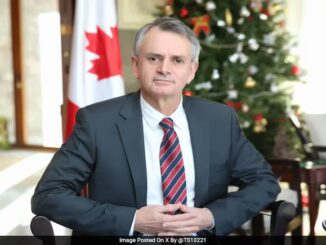
NEW DELHI / OTTAWA (TIP): In a move signaling normalization of diplomatic relations that were scuttled by the spat over the murder of a pro-Khalistan activist in 2023 in British Columbia, Canada and India on Thursday, August 28, 2025, announced the appointment of High Commissioners. The move came around two-and-a-half months after Prime Minister Narendra Modi met his Canadian counterpart Mark Carney on the sidelines of the G7 summit in Kananaskis, Canada, where both leaders agreed to appoint envoys and upgrade ties.
Canada’s Minister of Foreign Affairs Anita Anand said that Christopher Cooter, a career foreign service officer with 35 years of diplomatic experience, will be the new High Commissioner of Canada to India. Hours later, the Ministry of External Affairs in New Delhi announced that Dinesh K. Patnaik of the 1990 Indian Foreign Service cadre will take up charge of the High Commissioner of India to Canada “shortly”. Mr. Patnaik is currently the Indian ambassador to Spain.
“The appointment of a new High Commissioner reflects Canada’s step-by-step approach to deepening diplomatic engagement and advancing bilateral cooperation with India. This appointment is an important development toward restoring services for Canadians while strengthening the bilateral relationship to support Canada’s economy,” said Ms. Anand on Thursday.
India and Canada engaged in a tit-for-tat diplomatic spat after relations deteriorated over Canadian authorities blaming Indian agents for the assassination of Hardeep Singh Nijjar in Surrey, on June 18, 2023. India on October 14, 2024, withdrew its High Commissioner Sanjay Kumar Verma and other senior diplomats stationed in Canada’s capital Ottawa. Before that, last September, India had expelled Canada’s High Commissioner Cameron MacKay.
In January 2025, Liberal Party’s Prime Minister Justin Trudeau, who had made dramatic allegations in the Canadian parliament in September 2023, about India’s alleged involvement in the killing of Nijjar, resigned in the backdrop of increased political uncertainty at home. Despite facing setbacks earlier, the Liberal Party led by Trudeau’s successor Mr. Carney won the election in April defeating conservative leader Pierre Poilievre. A beginning towards restoring the relationship was made on May 25 when External Affairs Minister S. Jaishankar spoke with Ms. Anand and conveyed his best wishes for a successful tenure ahead. This was followed by Prime Minister Modi’s arrival in Kananaskis on June 16 for the G7 summit.
-

India’s Prime Minister Modi arrives in Japan on two-day visit
In his departure statement, Prime Minister Modi said his visit to Japan will be an opportunity to strengthen civilizational bonds and cultural ties between the two countries
TOKYO / NEW DELHI / NEW YORK (TIP): Prime Minister Narendra Modi arrived in Tokyo on Friday (August 29, 2025) on a two-day visit during which he will hold summit talks with his Japanese counterpart Shigeru Ishiba.
“PM Narendra Modi has landed in Tokyo, Japan. PM will be holding wide-ranging discussions with PM Shigeru Ishiba later in the evening to advance the India-Japan partnership,” the Ministry of External Affairs said in a post on X. In his departure statement, Prime Minister Modi said his visit to Japan will be an opportunity to strengthen civilizational bonds and cultural ties between the two countries.
During his visit to Japan from August 29 to 30, Mr. Modi will hold summit talks with his Japanese counterpart Ishiba.
“We would focus on shaping the next phase in our Special Strategic and Global Partnership, which has made steady and significant progress over the past 11 years,” Mr. Modi said.
“We would endeavor to give new wings to our collaboration, expand scope and ambition of our economic and investment ties, and advance cooperation in new and emerging technologies, including AI and semiconductors,” he added.
Security agreement, business pacts, bullet train ride are on Modi’s Japan agenda.From Japan, Mr. Modi will travel to China on a two-day visit to attend the annual summit of the Shanghai Cooperation Organisation (SCO) in Tianjin on August 31 and September 1.
“I am confident that my visits to Japan and China would further our national interests and priorities, and contribute to building fruitful cooperation in advancing regional and global peace, security, and sustainable development,” he said.
(Source: PTI) -

Vitamin D deficiency is widespread – but overusing supplements can be dangerous
Vitamin D has become a hot topic in recent years, largely because failure to get enough of it is associated with multiple diseases, and because much of the general population is deficient in this micronutrient.
Since 1930, when its chemical structure was first identified, significant advances have been made in research into vitamin D’s functions in the body. Initially, studies focused on the role of this compound and its metabolites in calcium homeostasis and bone metabolism. Later, with the discovery of the metabolised forms of 25-hydroxyvitamin D (25(OH)D) in 1968 and then 1,25-hydroxyvitamin D (1,25 (OH)2D), research expanded and focused on the role it plays in the onset of immunological diseases, infections and cancer, as well as chronic non-communicable diseases such as cardiovascular conditions, obesity and type 2 diabetes.
Currently, there is no doubt that vitamin D plays a role in regulating the immune system; vitamin D deficiency is actually associated with a worse prognosis for COVID-19 infection.
Epidemiological data from 2020 shows that 40 per cent of Europe’s population are not getting enough vitamin D. In the US, 24 per cent of people are lacking it, as are 37 per cent of Canadians. These high figures are cause for alarm. The population groups most at risk are pregnant women, children, the elderly, obese people, individuals with darker skin tones, and those with little exposure to sunlight. -

Lifestyle hacks that lower cholesterol better than statins
Statins are the go-to drugs for lowering LDL (“bad”) cholesterol, but for many people with mild to moderate elevations – or those who experience side effects – targeted lifestyle changes can deliver equal or greater benefits. Here are the most effective, science-backed strategies:
– Eat more soluble fiber. Oats, beans, lentils, apples, and psyllium husk bind cholesterol in the gut, cutting LDL by 5-10%.
– Choose plant-based fats. Replacing butter and fatty meats with nuts, seeds, avocados, and olive oil – rich in plant sterols – can reduce LDL by 10-15%.
– Move more. Brisk walking, cycling, or swimming for at least 150 minutes a week raises HDL (“good”) cholesterol and improves overall heart health.
– Follow the Mediterranean diet. A pattern rich in vegetables, fruits, fish, legumes, and olive oil lowers heart risk by up to 30% in major trials.
– Lose even a little weight. Shedding just 5-10% of body weight improves cholesterol and triglyceride levels significantly.
– Cut sugar and refined carbs. Processed foods lower HDL and raise triglycerides – often more damaging than dietary cholesterol itself.
– Add omega-3s and quit smoking. Fatty fish or plant sources reduce triglycerides, while quitting smoking boosts HDL within weeks.
For many, these habits can lower LDL by 20-30%, rivaling moderate statin doses – and without side effects. People with very high LDL or heart disease may still need medication, but lifestyle remains the foundation of cholesterol control. -

What is cortisol and how to quickly lower it naturally
Modern life is a whirlwind of chaos where stress lurks around every corner. As we navigate the demands of work, family and social obligations, our bodies respond by releasing cortisol, the stress hormone. While cortisol serves as a vital survival mechanism in emergency situations, its prolonged presence can wreak havoc on our well-being. Elevated cortisol levels can disrupt our mood, sleep patterns and even our physical health, increasing the risk of chronic diseases like diabetes, hypertension and heart disease. As we struggle to keep up with the relentless pace of modern life, it’s essential to acknowledge the insidious impact of stress and take proactive steps to manage it, lest we fall prey to its debilitating consequences. Here, we’ve listed some easy yet quick ways to naturally lower the cortisol levels in the body.
Ways To Lower Cortisol Naturally
Limit Caffeine
While a morning cup of coffee can be invigorating, excessive caffeine can elevate cortisol levels and impact mood. Initially, high caffeine intake may provide a boost but it can lead to a crash later on. To avoid this, consider limiting yourself to one cup a day or opting for decaf.
Take Proper Sleep
Stress and sleep deprivation can create a cycle. Prioritise a good night’s rest to lower cortisol levels and reduce stress. Cutting down on caffeine can also promote easier sleep. Aim for 7-8 hours of restful sleep to break the stress-sleep cycle and foster a healthier and more balanced lifestyle.
Exercise Regularly
Regular exercise can help mitigate cortisol levels but it’s essential to opt for low-intensity activities. While exercise initially triggers cortisol release, levels decrease after a few hours. Engage in gentle exercises like yoga or brisk walking to harness the cortisol-lowering benefits and promote a healthier stress response.
Maintain Healthy Relationship
Nurturing healthy relationships with others can significantly reduce stress and lower cortisol levels. Surrounding yourself with supportive people can help alleviate anxiety and promote a sense of calm. Conversely, toxic relationships can perpetuate stress, keeping cortisol levels elevated and negatively impacting overall well-being.
Breathing Techniques
When stress strikes, shallow breathing often follows. Counteract this by practicing deep breathing. Research highlights the benefits of deep-breathing exercises, recommending 5-minute sessions at least 3-5 times daily. This simple technique can calm the mind, slow your heart rate and reduce cortisol levels while promoting relaxation and well-being.
Cortisol-Friendly Foods
Consuming high amounts of processed sugar, refined grains and saturated fats can increase cortisol levels while a balanced diet rich in whole grains, fruits, vegetables and healthy fats can help keep its level in control. -

From sparse to stunning: Smart, natural hacks for eyebrow growth
Bold, well-shaped eyebrows frame your face and can make you look younger, but years of over-plucking, stress, or nutritional gaps can leave them sparse. Instead of relying on pencils, gels, or microblading, you can encourage your brows to grow fuller with natural methods that nourish the hair follicles and protect them from damage.
Nourish from the Inside
Healthy hair – including eyebrows – starts with proper nutrition. A diet rich in protein, biotin, omega-3 fatty acids, iron, zinc, and vitamins A, C, and E supports strong hair growth. Eggs, fish, nuts, leafy greens, and beans are excellent options. Staying hydrated also keeps follicles healthy.
Massage with Natural Oils
Applying castor oil, coconut oil, or almond oil can condition the hair and stimulate circulation in the brow area. Gently massage a few drops into your eyebrows for 3-5 minutes each night, then rinse in the morning. Castor oil is especially popular because it’s rich in ricinoleic acid, known to promote hair growth.
Avoid Over-Tweezing and Harsh Makeup
Constant plucking or waxing can damage follicles permanently. Let your brows grow naturally for at least 6-8 weeks before reshaping. Also, choose gentle makeup removers to avoid breakage caused by rubbing or harsh cleansers.
Try Aloe Vera or Onion Juice
Aloe vera gel contains enzymes that nourish hair roots, while onion juice provides sulfur to strengthen follicles. Apply a small amount to your brows for 15-20 minutes, then rinse. Use cautiously to avoid irritation.
Stay Consistent and Patient
Eyebrows grow slowly – usually just 1 mm every few days – so visible improvement may take 8-12 weeks. Consistency is key: nourish, massage, and protect your brows daily for the best results.
A healthy lifestyle, nutrient-rich diet, and natural topical care can give you naturally thicker, fuller eyebrows – no tattoo needles or expensive serums required. -

Samosa Chaat
Ingredients
2 Samosas, 6 Flat & crisp papdis, 3 Tbsp Curd, 1/4 Onion, finely chopped, 1/4 Tomato, finely chopped, Coriander leaves, finely chopped, 2 tsp Mint coriander chutney/Green chutney, 2 tsp Tamarind chutney, 1/2 tsp Red chilli powder, 1/2 tsp Chaat masala, 1 Cup Sev
Method
– Take 2 hot samosas, and roughly break it into small pieces and place in a plate.
– Crush the papdis and spread over the samosas.
– Whisk the yogurt using a fork to make sure there are no lumps. Now, pour the yogurt over the samosas. Top with the chutneys. If you like the chaat a little more sweet than spicy, then add more tamarind chutney.
– Top the plate with chopped onion and tomatoes for garnish. Sprinkle sev over the chaat. -
Chilli Garlic Noodles
Ingredients
Noodles – 1/2 cup, cooked, Onions – 1/2 cup, chopped, Carrot – 1/2 cup, grated, Ginger Garlic Paste – 1 tblsp, Chilli Paste – 1/2 tblsp, Coriander Leaves – handful, chopped, Oil – 2 tblsp, Salt – as per taste
Method
– Heat oil in a pan over moderate flame.
– Add the onions, carrot, ginger garlic paste, salt and chilli paste.
– Stir to mix well.
– Add the noodles and mix well to combine all ingredients.
– Garnish with coriander leaves. -

Is your hair losing strength? Small changes can make a big difference
We all long for flawless, beautiful tresses that effortlessly bounce and shine in those iconic hair-flip moments. It’s the dream: hair that’s full of life, strength, and movement. But while we chase this ideal, we often overlook the seemingly harmless habits woven into our daily routines habits that can silently take a toll on the overall health of our hair. From common styling missteps to overlooked care rituals, even the smallest oversights can gradually wear down your strands, causing dryness, breakage, and weakness over time. The good news is that with a little awareness and a few mindful changes, much of this damage can be undone before it becomes a long-term concern.
Let’s uncover some everyday habits that might be silently sabotaging your hairâ?? and explore how a simple, regular oiling routine can help protect and restore your strands.
HEAT STYLING ISN’T HARMLESS
Blow dryers, straighteners, and curling irons are staples for many, but frequent use can dry out hair and weaken strands. Apply a few drops of coconut-based hair oil before using heat tools. It creates a light barrier, keeping hair strong and moisturised while styling.
TIGHT HAIRSTYLES TAKE A TOLL
High ponytails, tight buns, and braids may look chic, but constant tension can strain roots. Coconut oil penetrates deep into the hair shaft, reducing breakage and improving strength. Regular oiling can make a big difference for hair under stress.
HOT WATER ISN’T ALWAYS BEST
While a steaming shower feels relaxing, hot water can strip natural oils from your scalp and weaken proteins in your hair. Oil your hair 30 minutes before washing and switch to lukewarm water. This simple habit protects strands and supports healthy growth.
BRUSHING WITH CARE
Rough or frequent brushing can stress hair shafts and cause breakage. Oiling smooths the cuticle, making detangling gentler and reducing hair damage.The Simple Solution: Regular Oiling.
Coconut oil’s medium-chain triglycerides nourish hair from within, protecting it from everyday wear and tear. A few mindful steps like pre-styling oil, gentle brushing, and lukewarm washes, can help achieve stronger, healthier hair without overhauling your routine -

Onam, the festival of Kerala
Onam is primarily a harvest festival celebrated with great fervour in Kerala. The festival marks the return of King Mahabali, and its timing is closely linked to Kerala’s agricultural cycle. It signifies the end of the monsoon and the arrival of the harvest season, making it a time of joy and prosperity.
Onam, the most popular cultural festival of Kerala, also recognized as Kerala’s Official State Festival, is being celebrated by the Malyalee community all over the world from August 26 to September 6.
Although the festival has its roots in Kerala, it has spread far beyond the state’s borders. Malayali communities in different parts of the world, especially in countries like the UAE, UK, and the United States, also celebrate Onam with equal passion. For those living outside of Kerala, Onam is a reminder of their cultural heritage, with celebrations including all the traditional elements such as feasts, Pookalam (floral decorations), and performances.
In Kerala, Onam celebrations are widespread and take place in homes, temples, and public spaces. The entire region is decorated with lights and flowers, and many villages and towns host cultural events that showcase Kerala’s unique art forms, dances, and rituals. Onam’s wide reach across the globe is a reflection of its significance in maintaining cultural ties no matter where people live.
This blog will explore the history of Onam, its cultural importance, key celebrations, and the traditional Onam jewellery sets and attire that make the festival even more special.
The Legend of King Mahabali
The heart of Onam is rooted in legend. According to Kerala’s cherished mythology, Onam commemorates the annual homecoming of King Mahabali (Maveli)-a virtuous Asura king whose reign was marked by equality, prosperity, and justice.

As the story goes, Mahabali’s growing power alarmed the Devas (gods), who sought help from Lord Vishnu. Vishnu descended as Vamana, a humble Brahmin dwarf, and requested three paces of land. Mahabali generously agreed, only to see Vamana grow into a cosmic giant: In one step, he covered the earth. In the second, he spanned the heavens. With no space left for the third, Mahabali bowed his head in surrender.
Vishnu, moved by Mahabali’s humility and devotion, granted him a boon: he could visit his beloved people once every year. Onam is this symbolic homecoming-a celebration of a golden age when no one was hungry, sad, or unfairly treated.
The Significance of Onam
The significance of Onam stems from both its mythological and agrarian origins. While the legend of King Mahabali provides a spiritual foundation, the festival is also a time of harvest, marking a season of abundance. For centuries, it has been a festival of gratitude – thanking nature for its bounty and farmers for their hard work. Beyond the agrarian importance, Onam holds social and cultural significance.
When Is Onam Celebrated?
Onam lasts ten days, beginning with Atham and ending with Thiruvonam, the most important day. The festival typically falls in August or September, based on the Malayalam calendar. Public holidays in Kerala are declared on Thiruvonam, but festivities extend well beyond.
Rituals and Celebrations of Onam
– Pookkalam: Floral Carpets of Welcome
Every morning during Onam, families create intricate pookkalams-circular floral designs laid at the entrance of homes to welcome Mahabali. Starting modestly on Atham and expanding each day with new layers and patterns, these arrangements symbolize unity and harmony.
– Onasadya: The Grand Feast
The highlight of Onam is the Onasadya, an elaborate vegetarian feast served on a banana leaf. A traditional sadya may feature 20-26 dishes, including:
– Parippu (lentils), Sambar, Avial, Kaalan, Olan
– Thoran (stir-fried vegetables with coconut), Pachadi, Kichadi
– Pappadam, banana chips (upperi), and pickles
– Payasam or Pradhaman (sweet milk or jaggery-based dessert)
– The sadya is eaten seated on the floor, reflecting Kerala’s age-old customs of simplicity, hospitality, and shared community.
Vallamkali: The Snake Boat Race
Kerala’s backwaters come alive with the thrilling Vallamkali (snake boat races), particularly at Aranmula and Allepey. Teams of rowers power long, narrow boats to the rhythmic beat of drums and songs, cheered on by thousands of spectators. These races are not just competitive sports-they embody teamwork, discipline, and the spirit of Onam.
Pulikali: The Tiger Dance
Onam streets burst into color with Pulikali, where performers paint themselves as tigers and hunters, dancing to the beat of traditional percussion instruments. This folk art dates back over 200 years and symbolizes courage, energy, and festive cheer.
Cultural Programs and Traditional Games
From Kathakali dance-drama and Thiruvathira dances to Onakalikal (traditional games like tug-of-war, archery, and ball games), Onam showcases Kerala’s artistic and athletic heritage. Temples and cultural institutions host music concerts, dramas, and processions, while villages organize sports and community feasts.
Onam: Beyond Religion and Region
Although rooted in Hindu mythology, Onam transcends religious boundaries. Christians, Muslims, and Hindus in Kerala all celebrate the festival as an expression of Kerala’s cultural identity and communal harmony. In schools, offices, and government buildings, Onam brings people together in shared celebrations, regardless of faith.
Kerala’s diaspora, spread across the world, also observes Onam with equal enthusiasm, organizing cultural programs, competitions, and traditional feasts in places as far away as Dubai, London, New York, and Singapore.
Historical and Economic Significance
– Harvest Festival: Onam coincides with the rice harvest, making it a thanksgiving festival for agrarian Kerala.
– Tourism Boost: The Kerala government organizes Tourism Week during Onam, showcasing local crafts, cuisine, and performing arts to global visitors.
– Economic Activity: Markets bustle with sales of flowers, clothing (especially kasavu saris and mundus), gifts, and festival essentials, giving a significant boost to local economies. -

A Big Bold Beautiful Journey Trailer: Margot Robbie, Colin Farrell in an epic voyage
The second trailer of ‘A Big Bold Beautiful Journey’ was recently released. The upcoming romantic fantasy features actors Margot Robbie and Colin Farrell in lead roles.
The film depicts the story of Sarah (Robbie) and David (Farrell), two strangers whose lives become mysteriously intertwined, leading them on an extraordinary journey of connection, chance, and destiny. The new trailer teases about the power of faith in the impossible and the invisible threads of destiny that connect us. Sarah and David’s captivating journey depicts the unique connections between people amid life altering experiences.
While speaking about the film Farrell shared, “The film is a heart opener. It is not afraid to look at some of the more painful aspects of life and experiences that we all share, of love and loss, but it is always angling towards light. If audiences could come out of the film feeling a sense of hope and reflecting on their own lives, that would be a really beautiful thing. Margot’s got her own very particular magic, depth, beauty of spirit. It translates to everything she does, of course. But not only that, it makes being around her and working with her the most joyful experience.”
While appreciating the stunning visuals and romantic aspects of the movie, Robbie added, “The film is a visual spectacle. It’s beautiful and magical and surreal and incredibly romantic. I think audiences will have a magical experience watching it. Kogonada is a true artist, and I’ve been dying to work with Colin for years. He’s unbelievable.”
‘A Big Bold Beautiful Journey’ is directed by Kogonada. The film also features Lily Rabe, Jodie Turner-Smith, Phoebe Waller-Bridge, Hamish Linklater, Billy Magnussen, Sarah Gadon, Brandon Perea, Yuvi Hecht, and Lucy Thomas in key roles.
Farrell last featured in the DC Comics series ‘The Penguin’. He played the titular role in the show based on the iconic arch rival of Batman. -

Kylie Jenner, Timothee Chalamet dismiss breakup rumors with Budapest coffee date
Kylie Jenner and Timothee Chalamet had been at the centre of swirling breakup rumours after fans noticed his absence from the beauty mogul’s 28th birthday celebrations and pointed to her cryptic social media music choices. However, the couple silenced the chatter when they were captured together in Budapest, where Chalamet is currently shooting for his upcoming film ‘Dune: Part Three’.
The pair was clicked, enjoying a casual coffee date in Budapest, Hungary. A local caf, Budapest Baristas, shared a selfie of Jenner and Chalamet. The caption read, “Today, Kylie Jenner and Timothe Chalamet just walked into our coffee shop at Buda. We were so in confusion, we could barely concentrate, but I think you can see on our face, Thank god everyone looks at them, not us.” The staff also praised the duo for being “super nice and kind”.
In the photo, both Chalamet and Jenner posed with fans standing between them. Chalamet kept a low profile, wearing a cap and sunglasses, even pulling his T-shirt over his head as he flashed a peace sign. Jenner, on the other hand, wore a natural look in a simple black and white tank top. Jenner and Chalamet first sparked romance speculation in early 2023 before making their relationship public at Beyonc’s Renaissance World Tour concert in September of the same year. Since then, the duo has kept their appearances low-key, only making their official red-carpet debut earlier this year at the 70th David di Donatello Awards in Rome. The rumors gained momentum after fans noticed Chalamet’s absence from Jenner’s recent birthday celebrations, where she shared photos enjoying quality time with her close circle. Adding fuel to the speculation, Jenner also posted breakup-themed tracks, including Jeff Buckley’s emotional ballad ‘Lover’ and ‘You Should’ve Come Over’. -

Millie Bobby Brown, Jake Bongiovi adopt a baby girl
Actor Millie Bobby Brown and her husband Jake Bongiovi have embraced parenthood. The 21-year-old actor and her 23-year-old husband announced in a joint Instagram statement that they have adopted a baby girl.
In their announcement, Millie and Jake wrote, “This summer, we welcomed our sweet baby girl through adoption. We are beyond excited to embark on this beautiful next chapter of parenthood in both peace and privacy.” They ended their message with, “And then there were 3. Love, Millie and Jake Bongiovi (sic).”
In March, Brown expressed her desire to start a family with Bongiovi, recalling how her own parents became parents at a young age. Speaking on the SmartLess podcast, she shared, “My mom actually had her first child at 21, and my dad was 19. This has been my dream since before I met Jake,” adding, “I wanted to be a mom in the same way my mom was to me.”
She added, “Jake knows how important it is to me. Like, of course I want to focus on really establishing myself as an actor and as a producer but I also find it’s so important to start a family for me personally.”
Brown also expressed openness to adoption, sharing, “For me, I don’t see having your own child as really any different as adopting.”
Millie Bobby Brown and Jake Bongiovi got married in a private ceremony in May 2024, followed by a lavish celebration in Italy five months later. -

Khiladi Akshay, Anaari Saif reunite after 17 years as they start Haiwaan shoot
Actors Akshay Kumar and Saif Ali Khan have reunited on screen after nearly two decades. The duo has teamed up with veteran filmmaker Priyadarshan for an upcoming thriller titled ‘Haiwaan’. The film, which officially began production today in Kochi, Kerala, is reportedly the Hindi adaptation of the 2016 Malayalam hit ‘Oppam’, which originally starred Mohanlal.
Akshay shared a behind-the-scenes video from the film’s set, playfully teasing co-star Saif. Sporting a T-shirt emblazoned with the word “Saint”, he quipped, “I know this devil very well,” hinting at the camaraderie the two actors share. The video has already sparked nostalgia among fans, who fondly remember the duo from films like ‘Main Khiladi Tu Anari’, ‘Yeh Dillagi’, ‘Tu Chor Main Sipahi’ and ‘Tashan’.
Sharing the video, Akshay wrote in the caption, “Hum sab hi hain thode se shaitaan Koi upar se Saint, koi andar se ‘Haiwaan’ :)) Starting the shoot for #Haiwaan today with my absolute favourite captain of the ship, @priyadarshan.official Sir. Great to be working with Saif after nearly 18 years. Let’s get the haiwaniyat rolling!! (sic)”
In a recent interview with Hindustan Times, the actor expressed his excitement about reuniting with both Priyadarshan and Saif Ali Khan. “It’s great that I’m working again with Priyadarshan ji. And the best part is that I’m working with Saif Ali Khan again. After such a long time, we’re teaming up once more, and I can’t wait to start shooting with him,” he said. On the film’s title, Akshay added with a laugh, “This was written in my destiny. First, I did Insaan, then Jaanwar, and now Haiwaan. So, the trilogy is complete, Insaan, Jaanwar, Haiwaan. It wasn’t planned that way.”
Produced by KVN Productions in association with Thespian Films, ‘Haiwaan’ is jointly backed by Venkat K Narayana and Shailaja Desai Fenn. The shoot will span across locations including Kochi, Ooty, and Mumbai.