Month: August 2025

  • Sonam Bajwa is Bollywood’s Akeli Laila in Baaghi 4 dance number

    Sonam Bajwa is Bollywood’s Akeli Laila in Baaghi 4 dance number

    The makers of the upcoming film ‘Baaghi 4’ released a dance number titled ‘Akeli Laila’ featuring actor Sonam Bajwa. After ‘Guzaara’ and ‘Bahli Sohni’, the song is the third track to be released from the film.
    Choreographed by Ganesh Acharya, the song features the actor dancing in a sequinned lehenga. She completed her look with wavy hair and minimal makeup.
    Singer Payal Dev has both sung and composed the track alongside Aditya Dev. The rap section of the song is performed by Paradox, who has written the lyrics with Danish Sabri.
    Along with Bajwa’s dance, the song also gives a glimpse into the high-octane action sequences by Tiger Shroff.
    Interestingly, this is the first time the actor has done a solo dance number in a glamorous avatar. Although she appeared in dance numbers in ‘Housefull 5’, Bajwa was joined by other actors in the film.
    Directed by A Harsha, ‘Baaghi 4’ has been produced and written by Sajid Nadiadwala. The film, which also stars Harnaaz Sandhu and Sanjay Dutt, is set to release in theatres on September 5. This film continues the successful ‘Baaghi’ franchise and will blend action with romance and drama.
    Bajwa is a known face in the Punjabi film industry. Some of her popular Punjabi films include ‘Punjab 1984’, ‘Sardaar Ji 2’, ‘Carry On Jatta’, ‘Guddiyan Patole’ and Honsla Rakh’.
    After ‘Baaghi 4’, the actor will be seen in the film ‘Ek Deewane Ki Deewaniyat’ opposite Harshvardhan Rane. The film is slated for release on October 21.
    She will also star in the much-anticipated film ‘Border 2’. Slated for a release later next year, the war drama will star Sunny Deol, Varun Dhawan, Diljit Dosanjh and Ahan Shetty.

  • Govinda’s wife Sunita Ahuja quashes divorce rumors

    Govinda’s wife Sunita Ahuja quashes divorce rumors

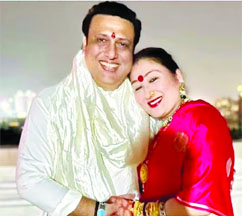
    Bollywood actor Govinda and his wife Sunita Ahuja recently grabbed headlines due to reports of trouble in their marriage. Several reports claimed that she has filed for divorce. The couple dispelled these rumours as they put up a united front on Wednesday to celebrate Ganesh Chaturthi. Speaking to the media, Sunita said that Govinda will always remain her husband and nobody can break their relationship.
    Sunita spoke to the media and said, “Aaj itna close, close… agar kuch hota toh hum itne nazdeek hotey? Humaari dooriyan hoti! Koi hum dono ko alag nahi kar sakta hain, chahe upar se koi aa jaaye bhagwan aa jaaye, koi shaitaan nahi aa jaaye. Koi nahi alag kar sakta hai. Ek picture tha na ‘Mera Pati Sirf Mera Hai’ waise hi mera Govinda sirf mera hi hai aur kisi ka nahi hai. Jab tak hum moonh na khole tab tak aap please aap log koi bhi cheez mein na boliye (If something had happened, then we would have been so close today. There would have been a distance between us. No one can separate us, not even if God comes from above… My Govinda is only mine and no one else’s. Until we open our mouths, please do not say anything on this matter).”
    On Wednesday, August 27, Govinda was seen celebrating Ganesh Chaturthi at his residence. Sunita was seen wearing a purple saree, while Govinda donned a red kurta. Their son, Yashvardhan Ahuja, was also captured in the visuals, joining in the festivities. Govinda and Sunita were seen distributing sweets to paparazzi gathered outside their residence.
    A few days ago, Govinda’s manager, Shashi Sinha, dismissed the speculation about the divorce and called it outdated and misleading.
    Sunita and Govinda tied the knot in an intimate ceremony and kept their marriage a secret until the birth of their daughter, Tina Ahuja, in 1989.

  • Teacher’s Day: Honoring Dr Sarvepalli Radhakrishnan’s legacy

    Teacher’s Day: Honoring Dr Sarvepalli Radhakrishnan’s legacy

    Every year on 5 September, India observes Teacher’s Day, a heartfelt tribute to educators who shape not only individual destinies but also the moral and intellectual fabric of the nation. The date marks the birth anniversary of Dr. Sarvepalli Radhakrishnan (1888-1975)-a revered philosopher, teacher, scholar, and statesman whose life embodied the noble ideals of education. His belief that “teachers should be the best minds in the country” continues to inspire generations of students and educators alike.
    The Origins of Teacher’s Day in India
    Unlike many countries that celebrate Teacher’s Day on 5 October (as designated by UNESCO), India’s commemoration has a distinctly personal origin. When Dr. Radhakrishnan became the second President of India in 1962, his students and friends wished to celebrate his birthday. He modestly requested, “Instead of celebrating my birthday separately, it would be my proud privilege if September 5 is observed as Teachers’ Day.”
    Thus began a tradition where students across schools, colleges, and universities express gratitude through cultural programs, speeches, and symbolic gestures-honoring not only their own teachers but also the very spirit of learning.
    Dr. Sarvepalli Radhakrishnan: The Teacher-Philosopher and Statesman

    Early Life and Education
    Dr. Sarvepalli Radhakrishnan was born on 5 September 1888 in Tiruttani, a small town in present-day Tamil Nadu. His family, though modest in means, valued learning deeply. A brilliant student from an early age, Radhakrishnan pursued philosophy at Madras Christian College, where he graduated with honors in 1906. His exposure to Western philosophical traditions blended harmoniously with his grounding in Indian scriptures, enabling him to develop a uniquely integrative worldview.
    Academic Career and Philosophy
    Radhakrishnan began his career as a philosophy lecturer at Madras Presidency College, later teaching at Mysore University and Calcutta University. His eloquence, clarity of thought, and deep scholarship won admiration from students and peers worldwide.
    His writings, including Indian Philosophy (in two volumes), The Philosophy of Rabindranath Tagore, and The Hindu View of Life, introduced the intellectual richness of Indian traditions to the West. He believed that education was not merely about imparting information, but about building character, fostering spiritual understanding, and cultivating universal values.
    Global Recognition and Public Service
    In 1931, Radhakrishnan was knighted by the British government, though he later chose to use the simple title of “Doctor” after Indian independence. He served as Vice-Chancellor of Andhra University and Banaras Hindu University, and represented India as Ambassador to the Soviet Union (1949-1952).
    In 1952, he became Vice President of India, and in 1962, President of India-yet he always insisted that his foremost identity was that of a teacher. Even as President, he opened the doors of Rashtrapati Bhavan to students and continued to lecture, reminding the nation of the moral responsibilities of educators.
    Philosophical Contributions
    Radhakrishnan was a bridge between East and West, ancient and modern, faith and reason. He emphasized that true religion is a quest for understanding, not blind ritual, and that philosophy must be relevant to human problems. His interpretation of Vedanta highlighted harmony, tolerance, and spiritual freedom, making Indian thought accessible to global audiences.
    Awards and Honors
    – Bharat Ratna (1954) – India’s highest civilian award
    – Honorary doctorates from universities worldwide, including Oxford and Harvard
    – Membership in prestigious international bodies such as the British Academy
    Teacher’s Day Celebrations Today
    – Across India, 5 September is marked by vibrant celebrations:
    – Students play the role of teachers in classrooms as a gesture of respect.
    – Cultural programs, debates, and felicitation ceremonies honor exemplary educators.
    – Schools and colleges reflect on the ideals of learning as service, not just a profession.
    – The President of India also confers National Awards to Teachers on this day, recognizing exceptional contributions to education.
    The Enduring Legacy of Dr. Radhakrishnan
    Dr. Radhakrishnan passed away in 1975, but his message remains timeless: education is the highest form of service, and teachers are its true architects. He saw learning as a continuous dialogue between teacher and student, rooted in respect, inquiry, and moral responsibility.
    In honoring him every Teacher’s Day, India reaffirms its cultural respect for gurus-those who dispel darkness and ignite the light of knowledge.
    Teacher’s Day is not merely a ceremonial event. It is a reminder that knowledge is sacred, that those who impart it deserve society’s deepest gratitude, and that education must nurture wisdom, not just skills. As India navigates the complexities of the modern world, the ideals of Dr. Sarvepalli Radhakrishnan-humility, integrity, and reverence for learning-remain guiding stars for both teachers and students.

  • India, B’desh border forces ink pact to curb infiltration

    Patna (TIP)- India and Bangladesh border forces’ chiefs on Thursday, Aug 28, signed a fresh agreement, pledging to curb infiltration and prevent airspace violations through real-time intelligence sharing as both nations seek to defuse months of escalating frontier tensions.
    The director general-level talks in Dhaka produced a Joint Record of Discussions addressing construction disputes, cross-border crime, and media propaganda that have strained relations since former Prime Minister Sheikh Hasina fled Bangladesh on August 5.

    BSF director general Daljit Singh Chawdhary led an 11-member Indian delegation including home ministry and external affairs officials, while Bangladesh fielded 21 officials under BGB chief Major General Mohammad Ashrafuzzaman Siddiqui.
    The meeting tackled mounting construction tensions, with BGB having opposed Indian projects at more than a dozen locations since the regime change. Both forces agreed to “constructively engage respective higher authorities for concurrence of pending developmental work within 150 yards” of the international boundary.
    “BSF stressed upon the agenda for early construction of Single Row Fence, which does not have defence potential and will be an important measure for curbing trans-border crimes,” the force said, with both sides agreeing to follow established procedures.
    Bangladesh raised concerns about alleged illegal push-ins of Indian and Myanmar nationals by BSF, while Indian officials reiterated that infiltrators were being repatriated through mutually agreed processes.
    BGB also questioned killings of Bangladeshi nationals, with BSF responding that personnel fire only in self-defence and now carry body-worn cameras providing video evidence.
    The joint statement, released by BGB in Dhaka, addressed media coverage, requiring both sides to “advise their respective media not to spread contradictory, misleading propaganda or rumours that may create tension along the border.”
    Additional agreements include joint action against insurgent groups, facilitation of river bank protection works approved by the Joint River Commission, and commitments to “sensitise local population in border villages” against illegal crossings and trafficking.

  • Entire village in Bihar shown residing in one house, claims Rahul

    Entire village in Bihar shown residing in one house, claims Rahul

    Congress leader Rahul Gandhi fired a fresh salvo at the Election Commission, claiming that the draft electoral rolls in Bihar show “an entire village” in Gaya district to be “residing in the same house”.
    The Leader of Opposition in Lok Sabha, who is carrying out a ‘Voter Adhikar Yatra’ across the state, shared a social media post of his party on Thursday, with the remark “see the magic of EC. An entire village has settled down in one house”.
    The Congress’s post on X said that in Nidani village of Gaya district, under Barachatti Assembly segment, “all 947 voters” of a booth have been shown to be “residents of house number six”.
    “This is about just one village. We can only imagine the scale of irregularities on the state and national level,” the party said.
    However, the office of the Chief Electoral Officer of Bihar came out with a clarification issued on the X handle of the District Magistrate of Gaya.
    The DM claimed “notional house number is given in villages or slum clusters where the houses do not have any actual serial numbers. This is done for making easy the process of enlisting voters”.
    Video clips, purportedly of residents of the village, have also been shared on the DM’s X handle in which the people can be heard saying they were satisfied with the special intensive revision of electoral rolls, but upset over “attempts to defame the area”.

  • BJP autonomous, RSS plays no role in appointments: Bhagwat

    BJP autonomous, RSS plays no role in appointments: Bhagwat

    New Delhi (TIP)- Rashtriya Swayamsevak Sangh (RSS) chief Mohan Bhagwat on Thursday, Aug 28, reiterated the autonomy of the Bharatiya Janata Party and said the Sangh has no role in determining appointments such as that of the party president. He added that he had not suggested politicians and elected representatives retire at the age of 75.
    Both comments were made as responses to questions Bhagwat took on the final day of a three-day outreach session by the RSS in which he held forth on the organisation’s past, future, and its position on various current issues. His answers to separate questions, when seen together, also shed light on the relationship between the BJP, the dominant political force across India since 2014, and its ideological fount, the RSS.
    Responding to a question about how India should respond to tariffs imposed by US President Donald Trump, Bhagwat reiterated the independence of the BJP led government and said, “We don’t tell the government how to deal with Trump; they know what to do and we will support it. We need to learn to live and die for the nation, promote entrepreneurship to become a self-reliant and developed country.”
    His comment on autonomy is particularly significant because the RSS is perceived to call the shots on key appointments in the party; as is his clarification on retirement because his comment, made in July, was widely interpreted as either an indication that he (Bhagwat turns 75 in September) would retire or a suggestion that Prime Minister Narendra Modi, who turns 75 in September (a few days after Bhagwat) should.
    “I never said I will retire or someone should retire,” Bhagwat said, clarifying that the July comment was misconstrued and that he was merely citing what Moropant Pingle, a senior RSS leader had said about his own experience.
    The comment came at an event to release a book on Pingle, one of the unheralded forces behind the Sangh’s growth. Bhagwat recounted how, when Pingle turned 75, a ceremonial shawl was draped over his shoulders , and that when his turn came to speak, Pingle said he knew what the shawl symbolised: “A polite way of telling someone their time is up and they should step aside.”
    Not just the party or the government, the RSS, does not control any of its affiliates and offshoots, Bhagwat insisted.
    He said while discussions are held (with these offshoots and affiliates) on “Achar, Vichar, Sanskar” (conduct, ideology and customs), the Sangh does not impose its view on anyone.
    “It is wrong to assume we decide everything… I have been running a shakha for 50 years, they are running a state so they are experts in that. We can give suggestions, but the decision is theirs in their field and ours in ours”
    And then, he added, referring to the long delay in appointing the President of the BJP: “Had we decided, would it have taken this long.” To underscore the autonomy of the party he said, “…Take your time…we have no say in this.”
    He said, “We have good coordination with every government, including state governments.There are systems, which have internal contradictions…but there is no quarrel anywhere.”

  • ‘Every Indian family should have 3 kids’

    Rashtriya Swayamsevak Sangh (RSS) chief Mohan Bhagwat on Aug 28 cited illegal immigration and religious conversion as key reasons behind demographic imbalance in the country, and said that while governments respond to these challenges in their own way, society too must resolve not to give jobs to illegal immigrants.
    Speaking on the concluding day of the three-day outreach organised as part of the Sangh’s centenary, Bhagwat also said every Indian family should have three children to keep the population sufficient and under control.
    “We are worried about demographic changes as we have seen what happens (because of it). It has led to partition not just in India… More than the population it is the intent of the people that is concerning,” he said.
    The RSS has been pushing the government to come up with stringent measures to check population imbalance and demographic changes.
    Bhagwat pinned the blame for population imbalance on “conversion” and said such practices are not part of Indian tradition. “… Religion is a choice, people can come and go but not through inducement and fear, it needs to be stopped,” he added.
    On illegal immigration, Bhagwat said though people of a certain geographic area have the same DNA, there are laws and processes that citizens must adhere to. “Countries have borders. If DNA is one, why not seek permission…We have experience of problems being created. The government is making efforts, but people should ensure that only our own countrymen, including Muslims, should get work,” he said.
    Claiming that the birth rate in India is falling, Bhagwat said every Indian family should have three children.

  • After tariff troubles, India hopes to resume US trade discussions

    After tariff troubles, India hopes to resume US trade discussions

    New Delhi (TIP)- India and the US are continuing discussions on several bilateral issues, and New Delhi is hopeful that the two partners will soon resume formal trade talks — once there is a resolution of the primary issue, a steep 50% tariff on Indian goods, a government official said on Thursday, August 28.
    The sixth round of negotiations, scheduled from August 25 in New Delhi, were postponed in the wake of the US government imposing a 25% secondary or punitive tariff on Indian exports because the country imports oil from Russia.
    This tariff, which came into effect on Wednesday takes the overall tariff on Indian exports to the US to 50%, among the highest for a country. “Both need to be resolved to strike the deal,” the official added, asking not to be named.
    According to the official, the impact of the US tariff measures is not severe for India because of two reasons – the Indian economy is relatively less dependent on exports and India’s domestic market is expanding very fast. “While about 10% of India’s GDP comes from exports, the share of the US is about 11-12% of that. Out of which only about half are impacted by the tariff move, which comes to 1.1-1.2%,” he explained.
    The official added that exporters are pointing to a liquidity crunch and seeking measures to infuse liquidity, similar to steps taken during the Covid period. The government is considering such measures, the official said. The official also stated that India’s domestic market is growing fast and depends on imports worth over $720 billion. “This growing market can also absorb some of the items that used to go to the US,” he said, noting that sectors affected by tariffs such as gems and jewellery have lower value additions. “Big ticket reforms (by respective ministries) and proposed GST rate rationalisation are expected to boost consumption. India is a big market, and that is our strength,” he said.
    “This does not mean the US tariff would not adversely impact. There could be some pain points and some of that would be addressed,” he added.
    Beyond liquidity support, the government is considering trade diversification, free trade agreements (FTAs), export promotion measures (EPMs), and ease of doing business (EoDB) reforms.
    Every ministry is working on big ticket reforms in their respective areas, including proposals to liberalise export-oriented units (EOU) and special economic zone (SEZ) provisions to boost the economy. “We are working on it.”
    The government is consulting stakeholders and working on short-term, medium-term and long-term measures, though nothing is finalised as yet, this person added.
    Meanwhile, US officials have continued to ratchet up their attack on India, with US Treasury Secretary Scott Bessent accusing India of “profiteering” by buying Russian oil cheap and selling the refined products; White House trade advisor Peter Navarro christening the Ukraine conflict “Modi’s war”; and Kevin Hassett, director of the National Economic Council criticising what he termed “India’s intransigence”.

  • 3 terrorists involved in Pahalgam attack, says NIA

    The National Investigation Agency (NIA) on Thursday , Aug 28, confirmed that “three terrorists” affiliated to the proscribed outfit Lashkar-e-Taiba (LeT) were directly involved in the April 22 Pahalgam terror attack, which claimed 26 lives and triggered a massive armed retaliation by India on terror infrastructures in Pakistan.
    NIA officials said the terrorists chose the picturesque Baisaran meadow in Jammu and Kashmir’s Pahalgam as the target for the attack due to its high tourist presence and relative isolation. “The terrorists assessed the relative isolation of the site and the likelihood of a delayed response from security forces before finalising it,” an NIA officer said.
    On April 22, terrorists targeted only male tourists, killing 25 of them, as well as a local pony guide.
    “The choice of location showed that the terrorists intended to maximise casualties and spread fear by targeting civilians in a popular tourist hub,” the officer added. Although initial survivor accounts suggested presence of four to five terrorists, NIA’s findings have now confirmed that the attack was carried out by three Pakistani terrorists.
    The agency also highlighted the role of two local overground workers (OGWs) who provided food, shelter and logistical support to the terrorists in exchange for Rs 3,000. “The duo —Parvaiz Ahmad Jothar from Batkote and Bashir Ahmad Jothar from Pahalgam—were arrested in June. Their disclosures helped confirm the identities of the attackers as Pakistani nationals linked to LeT,” an officer said.

  • Border issues, global economy to be in focus at Modi-Xi meet

    Border issues, global economy to be in focus at Modi-Xi meet

    New Delhi (TIP)- Further steps to normalise India-China ties, including active management of the border to ensure peace, and preserving the global economic order amid turbulence created by US trade policies will be in focus when Prime Minister Narendra Modi meets Chinese President Xi Jinping on Sunday, Aug 31.
    Modi, who is travelling to China for the Shanghai Cooperation Organisation (SCO) Summit, and Xi are set to meet in the northern city of Tianjin on Sunday afternoon for the second time since India and China reached an understanding last October on ending a military standoff on the Line of Actual Control (LAC) that began in April-May 2020. The faceoff took bilateral relations to their lowest point since the border war of 1962.
    At his departure, Modi said India is an active and constructive member of the 10-nation bloc. During India’s presidency of the SCO in 2023, the country introduced new ideas and initiated collaboration in innovation, health and cultural exchanges, he said.

    India remains committed to working with the SCO members to address “shared challenges and deepen regional cooperation”, he said. “I also look forward to meeting President Xi Jinping, [Russian] President [Vladimir] Putin and other leaders on the sidelines of the summit,” Modi said.
    This is also Modi’s first visit to China since the start of the LAC standoff, and the meeting will be an opportunity for the leaders to take stock of progress since last year in normalising ties and addressing the border dispute, especially forward movement through resumption of the Kailash Mansarovar Yatra to Tibet in April, resumption of tourist visas for Chinese nationals in July, and the decision to explore an “early harvest” in boundary delimitation during talks between the Special Representatives this month.
    The Indian side expects to move step-by-step in the normalisation process and there is a recognition on both sides of the need to keep the border peaceful through active management, the people cited above said, requesting anonymity. “The borders have been broadly stable since the events of 2020,” a person said, pointing to the need to build on this stability.
    While people-to-people contacts have been the focus of recent confidence-building measures, such as the revival of the Kailash Mansarovar Yatra after a gap of five years and resumption of tourist visas to Chinese nationals, bilateral economic ties also need to stabilise going forward, the people said. “There is a need to avoid trade barriers and restrictions so as not to hurt the fragile trust and bring in more confidence,” the person cited above said, in a reference to China’s recent curbs on exports of commodities such as fertilisers, rare earth minerals and heavy machinery.
    During a visit to India last week for talks with National Security Adviser Ajit Doval under the Special Representatives mechanism, Chinese foreign minister Wang Yi had assured his interlocutors that Beijing will address India’s key concerns related to export restrictions on fertilisers, rare earths and tunnel boring machines.
    The recent thaw in bilateral relations has apparently been spurred by the geo-economic churn caused by the trade and tariff policies of the Trump administration in the US, and the people said emerging economies such as India and China have a common interest in preserving the global economic order amid the ongoing turbulence. “Recent events have made the imperatives of multipolarity even stronger,” the person cited above said. “India’s priority is growth and development and a growing China can be a contributor, at a time when established markets are facing uncertainty.” Source: HT

  • Labor Day in the United States: A Tribute to Workers, Rights, and the American Dream

    Labor Day in the United States: A Tribute to Workers, Rights, and the American Dream

    Observed the first Monday in September, Labor Day is an annual celebration of the social and economic achievements of American workers. The holiday is rooted in the late nineteenth century, when labor activists pushed for a federal holiday to recognize the many contributions workers have made to America’s strength, prosperity, and well-being. This year, Labor Day falls on September 1.
    Early Adopters
    Before it was a federal holiday, Labor Day was recognized by labor activists and individual states. After municipal ordinances were passed in 1885 and 1886, a movement developed to secure state legislation. New York was the first state to introduce a bill, but Oregon was the first to pass a law recognizing Labor Day, on February 21, 1887. During 1887, four more states – Colorado, Massachusetts, New Jersey and New York – passed laws creating a Labor Day holiday. By the end of the decade Connecticut, Nebraska and Pennsylvania had followed suit. By 1894, 23 more states had adopted the holiday, and on June 28, 1894, Congress passed an act making the first Monday in September of each year a legal holiday.
    The First Labor Day
    The first Labor Day holiday was celebrated on Tuesday, September 5, 1882, in New York City, in accordance with the plans of the Central Labor Union. The Central Labor Union held its second Labor Day holiday just a year later, on September 5, 1883.
    By 1894, 23 more states had adopted the holiday, and on June 28, 1894, President Grover Cleveland signed a law making the first Monday in September of each year a national holiday.
    The Birth of Labor Day: Industrial
    America and the Labor Movement
    In the late 19th century, the United States was undergoing explosive economic growth. The Industrial Revolution had transformed farms into factories, railroads stitched the continent together, and cities swelled with immigrant workers seeking opportunity. But this rapid progress came at a high human cost:
    – Workdays stretched to 12-16 hours with few breaks.
    – Factory conditions were dangerous, with frequent injuries and deaths.
    – Child labor was rampant, with children as young as six working in textile mills and coal mines.
    – Wages were low, barely enough to cover basic living expenses.
    Out of these hardships emerged organized labor unions, demanding fair pay, shorter hours, and safer conditions. Groups such as the Knights of Labor and later the American Federation of Labor (AFL) led strikes, boycotts, and negotiations to protect workers’ rights.
    From Local Celebration to Federal Holiday
    Labor Day quickly spread to industrial cities across the country. By the late 1880s, several states-including Oregon, Colorado, Massachusetts, and New York-had declared it an official holiday.
    The turning point came in 1894 after the Pullman Strike:
    – The strike began when the Pullman Palace Car Company near Chicago cut wages during an economic depression but did not reduce rents in company-owned housing.
    – Railroad workers, supported by the American Railway Union under Eugene V. Debs, walked out, crippling rail traffic nationwide.
    – The federal government, citing disruption of mail delivery, sent troops to break the strike, leading to riots and over 25 deaths.
    In an effort to ease tensions with organized labor, President Grover Cleveland signed legislation on June 28, 1894, designating the first Monday in September as Labor Day, a federal holiday.
    Significance of Labor Day
    Recognition of Workers’ Contributions

    Labor Day affirms that the strength of the U.S. economy lies not only in innovation or capital investment, but in human effort-the millions of workers who built railroads, forged steel, tilled fields, staffed offices, and now code software and power digital industries.
    Tribute to Labor Reforms
    The holiday recalls the long battles for basic workplace protections, including:
    – The eight-hour day and 40-hour week
    – Overtime pay and minimum wage laws
    – The right to organize and bargain collectively
    – Workplace safety regulations (later strengthened by OSHA)
    – The end of child labor, formally outlawed by the Fair Labor Standards Act of 1938
    A Symbol of National Unity
    By honoring workers of every trade and background, Labor Day underscores a shared ideal-that all honest work is dignified and essential to the nation’s prosperity.
    How America Celebrates
    Historic Traditions
    – Parades and rallies led by labor unions remain common, particularly in cities with strong union presence such as New York, Chicago, and Detroit.
    – Speeches by civic leaders often highlight economic achievements and the importance of maintaining fair labor standards.
    Modern Customs
    – Family gatherings, picnics, and barbecues make the most of the last long weekend of summer.
    – Retail sales and back-to-school shopping have become a major part of the holiday economy.
    – Sports and culture: Labor Day weekend marks the start of college football, the climax of the U.S. Open tennis tournament, and the stretch run of Major League Baseball.
    Labor Day Today: Beyond the Barbecue
    While Labor Day began as a day of protest and advocacy, in recent decades it has also become a day of rest and celebration. Yet its deeper meaning remains vital:
    – Changing workforce: From manufacturing to service and technology, labor continues to evolve, raising new questions about gig work, automation, and job security.
    – Wage and equity debates: Issues such as stagnant wages, gender pay gaps, and workers’ rights in the digital economy keep the labor conversation alive.

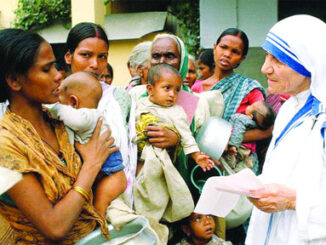
  • Remembering Mother Teresa on her 26th death anniversary: Saint who Lived for the poor

    Remembering Mother Teresa on her 26th death anniversary: Saint who Lived for the poor

    On 5 September 1997, the world mourned the passing of Mother Teresa of Calcutta, a woman whose compassion crossed every border and spoke every language. Twenty-six years later, her life continues to inspire governments, humanitarian agencies, religious groups, and ordinary people seeking to make the world more humane.
    Canonized as Saint Teresa of Calcutta in 2016, she remains an enduring symbol of unconditional love in action. Her legacy is not measured only in the institutions she built but in the countless lives she touched-one person at a time.
    Early Life and Vocation
    Born Agnes Gonxha Bojaxhiu on 26 August 1910 in Skopje (now North Macedonia), she was the youngest child in an Albanian Catholic family. Her father’s sudden death when she was eight plunged the family into hardship, yet her mother Dranafile’s unwavering faith and generosity left a profound mark. The Bojaxhiu home was known for feeding the poor regardless of their faith, a lesson Agnes carried all her life.
    At 18, she joined the Sisters of Loreto, traveling to Dublin and later to Darjeeling, India, for novitiate training. She took her first vows in 1931 and final vows in 1937, teaching at St. Mary’s High School in Calcutta. Her students remembered her as disciplined but kind, and she served as both teacher and principal.
    The “Call Within a Call”
    In September 1946, while traveling by train to Darjeeling for a retreat, she felt what she later called “a call within a call.” She believed Jesus was asking her to leave the security of convent life to live among “the poorest of the poor.”
    After two years of seeking Vatican approval, she left the Loreto convent in 1948, wearing a simple white sari with a blue border-an outfit that became the hallmark of her mission. She learned basic medicine and began working in Calcutta’s slums, teaching children under the open sky and tending to the sick in their homes.
    Missionaries of Charity
    In 1950, Mother Teresa received papal approval to establish the Missionaries of Charity (MC). Their mission was simple:
    “To quench the thirst of Jesus by loving Him in the poorest of the poor.”
    Key milestones in her work:
    – 1952: Opened Nirmal Hriday (“Pure Heart”), Kalighat Home for the Dying, where the terminally ill could die with dignity, love, and care.
    – 1955: Founded Shishu Bhavan (Children’s Home) for abandoned and orphaned babies.
    – 1960s-1970s: Established leprosy clinics, mobile dispensaries, and self-sufficient leprosy villages across India to counter stigma and provide medical care.
    – 1965: The Missionaries of Charity received official papal recognition, enabling expansion beyond India.
    – 1970s-1980s: Homes were opened in Latin America, Africa, Europe, the Middle East, and the United States to serve AIDS patients, refugees, and the homeless.
    By the time of her death, the MC had over 4,000 sisters and hundreds of brothers and volunteers serving in 120+ countries.
    Encounters with the Powerful and the Powerless
    Mother Teresa’s influence reached both slum dwellers and world leaders:
    – She met Popes, U.S. Presidents, British monarchs, and UN leaders, often using these meetings to advocate for the poor rather than seek personal recognition.
    – In 1982, she crossed the battle lines of Beirut to evacuate 37 children trapped in a hospital during civil war, demonstrating her fearless dedication.
    – In 1985, she spoke at the UN General Assembly, receiving a standing ovation for her appeal to serve “the least of these.”
    – Despite global fame, she personally tended to patients, often cleaning wounds and feeding the dying with her own hands.
    Awards and Global Recognition
    Mother Teresa received over 700 awards, including:
    – Ramon Magsaysay Award (1962) for Peace and International Understanding.
    – Jawaharlal Nehru Award (1969) for International Understanding.
    – Bharat Ratna (1980)-India’s highest civilian award.
    – Nobel Peace Prize (1979), where she redirected the prize banquet funds to feed the poor and famously said:
    Faith, Writings, and Spiritual Struggle
    While she radiated cheerfulness outwardly, letters published after her death (compiled in Come Be My Light, 2007) revealed deep spiritual darkness and a sense of distance from God that lasted for decades. Far from diminishing her sanctity, many saw this as proof of her faithfulness-serving relentlessly even without spiritual consolation.
    Her spirituality was profoundly Christ-centered, but she often framed her mission in universal terms:
    “We serve Jesus in the disguise of the poor, but anyone can do this by serving humanity with love.”
    Final Years and Canonization
    By the mid-1990s, Mother Teresa suffered from heart failure, but she continued traveling and overseeing her order. She stepped down as Superior General in March 1997 and died on 5 September 1997, just days after Princess Diana-her close friend-passed away.
    Her funeral in Calcutta was attended by dignitaries from around the world, yet she was buried simply, in keeping with her vow of poverty.
    Pope Francis canonized her as Saint Teresa of Calcutta on 4 September 2016, recognizing her life as a testimony of love in action.
    Her Living Legacy
    – Missionaries of Charity today: Over 5,000 sisters and brothers continue to operate homes, schools, hospitals, and hospices worldwide.
    – Influence on volunteers: Thousands of lay volunteers have served alongside the MC, many claiming their lives were transformed by her witness.
    – Global inspiration: Her message of “doing small things with great love” has been embraced in humanitarian projects, interfaith dialogue, and corporate social responsibility initiatives.
    On her 26th death anniversary, remembering Mother Teresa is not about idealizing her life but about learning from her courage and simplicity. She chose to live among those whom society rejected and reminded the world that dignity, compassion, and love are not luxuries-they are duties.

  • Has India been blindsided by Donald Trump?

    Has India been blindsided by Donald Trump?

    External Affairs Minister S Jaishankar is currently facing the greatest test of his career

    Why did India go so wrong in assessing that Trump 2.0 would be so inflexible on trade issues? After all, the Ministry of External Affairs and the External Affairs Minister would have had the opportunity of early feedback of what Trump and his key aides thought on trade and foreign policy, including when Jaishankar attended Trump’s inaugural in January and was a key member of Prime Minister Modi’s visit to Washington in February.”

    By Vivek Katju

    At a question-and-answer session that followed the delivery of the Ramnath Goenka lecture on November 17, 2019, External Affairs Minister S Jaishankar was asked about the problems in India-US trade relations, amidst ties that were moving forward. The Minister observed that India alone was not facing challenges in dealing with the US, and went on to add, “I think frankly in our case that is vastly overstated.”

    The Minister was right. Many countries, indeed, were facing difficulties in dealing with Trump, even at the time in his earlier avatar. In the current context, his comment is vastly ironic.

    Certainly, Jaishankar occupies a special place in the history of India-US relations. Not just because he is India’s External Affairs Minister, but also because in the annals of the Indian Foreign Service, few have had his kind of experience dealing with the subject. Today, though, as the application of 50 per cent US tariffs kicks in, the question is, ‘Could India have foreseen what was going to happen?’

    As a person given to reflection, and in light of his vast experience as a former ambassador to the US as well as to China, besides having served in Russia as a junior diplomat, many expect a clear-eyed response from my former colleague, Jaishankar. At a difficult time like the present in India’s foreign policy, would it be fair to ask, “Why has India been blindsided by Trump 2.0?”

    At the time in 2019, as part of his aforesaid Q & A following the Ramnath Goenka lecture, Jaishankar had observed that “trade frictions” often took place between trading partners. Surprisingly, he went on to claim that, in India, problems are sometimes exaggerated “beyond belief”, because people want to show how bad things are. He went on to express “reasonable confidence” that difficulties in trade would not impact other areas of India-US ties. As we all know, the situation is vastly different today. As of now, however, Jaishankar has only said that lines of communication between India and the US have not been cut. This is neither here nor there.

    The 2019 Q & A begs the question: Why did India go so wrong in assessing that Trump 2.0 would be so inflexible on trade issues? After all, the Ministry of External Affairs and the External Affairs Minister would have had the opportunity of early feedback of what Trump and his key aides thought on trade and foreign policy, including when Jaishankar attended Trump’s inaugural in January and was a key member of Prime Minister Modi’s visit to Washington in February.

    Did he and India not gauge the Trump administration’s mood at the time? The larger question is when the Modi government saw the clash coming and what it has done so far to assuage the most powerful leader in the world, Donald Trump.

    There is no question of India succumbing to the US President’s pressures on matters of vital economic and commercial significance. Clearly, agriculture and dairy come in these categories. That Trump is applying double standards on the purchase of Russian oil by exempting China is true, but the question that remains is, how does India propose to deal with this matter.

    There is bipartisan support for India in the US Congress. In the past, US industry was invoked at crucial moments to overcome obstacles in India-US ties. Moreover, no Indian ruling dispensation has put so much store on the Indian diaspora as this one has. How is the Modi government planning to invoke the three ‘brahmastras’ in its quiver?

    Trump seems obsessed with claiming that he had mediated a ceasefire between India-Pakistani armed hostilities in May and had even, potentially, averted a nuclear catastrophe. He is certainly not the first US leader to have intervened in India-Pakistan armed action, although the others were discreet because of Indian sensitivities. India has correctly taken the position that the pause in Operation Sindoor was its own decision, taken after the Pakistani DGMO approached his Indian counterpart. While maintaining this position, did the Modi government attempt to find a formulation, which while preserving India’s position would have, at least, partially satisfied Trump?

    The essence of diplomacy lies in finding such formulations. This is especially when conversations were going on between India and the US (as well as among other countries) during Operation Sindoor, as Jaishankar has himself said. It is not contradictory to firmly don the cloak of nationalism and yet find diplomatic ways to assuage even an obsessed leader like Trump.

    One can only hope that Jaishankar with his vast experience of handling the US will be able to close the chasm that has developed. Certainly, he is currently facing the greatest test of his career; crisp one-liners or long-winded clarifications about the justness of India’s position (which, of course, it is) will not do!

    (Vivek Katju is a former Secretary, Ministry of External Affairs)

  • India’s Election System in Shambles: Restore Democracy with paper ballots and audited voter rolls

    India’s Election System in Shambles: Restore Democracy with paper ballots and audited voter rolls

    By George Abraham

    The recent revelations by Rahul Gandhi, the opposition leader in India, pointing to the election irregularities in Karnataka and Maharashtra, are shocking and yet sad. Undoubtedly, the solid evidence provided to show the massive fraud orchestrated to defy voters’ will is a clear indication of the demise of a venerable institution like the Election Commission, which may prove to be a death knell for Democracy itself.

    The Election Commission has become a vassal in the hands of the BJP, infringing its independence and transforming it into a subsidiary of the government machinery, contrary to what the framers of the Constitution intended. The removal of the Chief Justice from the EC selection process, while supplanting him with the Home Minister and appointing Government bureaucrats amenable to the whims of the ruling disposition, was the beginning of the end of this great institution that was known for its independence and integrity. These explosive revelations throw into doubt not only the integrity of past elections but also their usability and value, as they have become a mockery of deceit and thievery.

    The crux of the matter here is the overreach of the Executive branch, exercising its power in any way possible to maintain control, whether the people desired it or not. Transparency and fairness in an election are no longer their concern as they are obsessed with power grab to perpetuate an ideology that has little or no sway over the average voter, who is struggling to survive in Modi’s economy.

    At a press conference on August 7, 2025, Rahul Gandhi leveled serious allegations of electoral fraud in the Mahadevapura Assembly segment (part of Bangalore Central), accusing the Election Commission (EC) of colluding with the BJP to engineer what he termed “vote chori” (vote theft). Mr. Gandhi alleges manipulation via duplicate registrations, fake addresses, misused Form 6 entries, and more and as a result 100,000 votes were stolen in Mahadevapura constituency in Bangalore via five manipulating tactics: 11,965 duplicate voter entries, 40,009 fake or invalid addresses, 10.452 bulk entries from a single or invalid address, 4132 entries with invalid photos and 33,692 misuses of form, 6 (new voter additions). Mahadevapura (SC) stands out: it recorded approximately 115,046 vote margin—the largest among all assembly segments.

    The question everyone is now asking is whether the EC is directly involved in orchestrating voter duplication to skew results and aid the BJP government. In West Bengal, Trinamool Congress identified duplicate EPIC (Electors Photo Identity Card) numbers assigned to persons across constituencies. Similar accusations have surfaced in Maharashtra and Delhi, raising concerns about “fake voters” being inserted into the rolls.

    Congress also alleges large-scale voter fraud in the recently concluded Maharashtra elections. Between the 2024 Lok Sabha and Maharashtra Assembly elections (in 5 months), approximately 40.8 lakh new voters were added to the voter rolls. Of these newly added voters, over 18 lakhs were concentrated across 78 constituencies in just 13 Lok Sabha segments. BJP and its allies won 68 of them. Congress alerted the authorities also about the arbitrary deletion of voters, about 10,000 per constituency, followed by large-scale additions, potentially disenfranchising voters who may be loyal to the opposition.

    Historical research has always shown critical vulnerabilities in EVM (Electronic Voting Machines)  hardware and software. Although VVPATS were added to allay those concerns, only a tiny fraction (0.3%) of machines get their VVPATS counted. The Election Commission has always rejected the close monitoring of EVMs and asserted that they are tamper-proof. We are living in an age where even sophisticated systems with high levels of security are under attack from cybercriminals. The Defense Department in the U.S. believes that 15% of the “specially built for Pentagon” chips that go into aircraft and missiles are counterfeit, and they have no way of finding out.  However, EC aims to convince the country that the commodity microcontroller and other electric components in an EVM pose no greater threat than the Systems in a technologically advanced country like the U.S. There may not be a machine in the world that is truly impenetrable!

    Therefore, the critical question is whether these two threads are linked – the voter roll fraud and EVM manipulation. There is a growing body of critics who also believe that voter list fraud and EVM manipulations are intrinsically linked. What is the point of adding fake or ghost voters if they are unable to vote, as they are simply non-existent? If ghost voters “vote” (or their votes are effectively pre-programmed), the EVM may record ballots favoring a particular party. Thus, even if turnout looks ‘normal’, the final vote share distribution can be tilted systematically.

    There have been sporadic and unverified reports of discrepancies between the number of votes polled and those counted by some of the defeated candidates, alleging thousands of extra votes in certain constituencies. In another instance, errors during mock polling (in Kasaragod, Kerala) saw EVMs registering extra votes for a particular party, allegedly due to VVPAT malfunction.  The design of India’s EVMs relies entirely on the physical security of the machines and the integrity of election insiders. There was a story from Madhya Pradesh about CCTV cameras being installed at a storage area after electricity was cut off, raising suspicions and creating further innuendos. All these reports fuel further speculations in this whole election process, questioning the accuracy and integrity of EVM counting.

    In the aftermath of Congress’s defeat in Madhya Pradesh, Rajasthan, and Chhattisgarh in 2023, Mr. Digvijay Singh, a senior leader of the Congress Party and former Chief Minister of Madhya Pradesh, publicly questioned the reliability of EVMs: On X (formerly Twitter), he stated, “Any machine with a chip can be hacked. I have opposed voting by EVM since 2003.” He warned: “Can we allow our Indian Democracy to be controlled by professional hackers! On ECI and Hon Supreme Court, would you please defend our Indian Democracy? “

    Even countries with advanced technology, like Germany, the Netherlands, and parts of the U.S., returned to paper ballots because trust and auditability are more critical than speed or convenience in elections. Germany introduced electronic voting in 1998 and abolished it nationwide in 2009. The Federal Constitutional Court in Germany ruled that “EVMs violated the requirements – citizens could not independently verify that voters were recorded and counted correctly. There were obvious concerns in the country over software manipulation and a lack of auditability.

    In the United States, Direct Recording Electronic (DRE) machines were introduced in early 2000. However, security researchers and election officials reported software bugs and hacking vulnerabilities. As a result, VVPAT systems were introduced to ensure audits. But today, most States require paper trails, with some phasing out pure DRE machines entirely.

    Tulsi Gabbard, the Director of National Intelligence (DNI) in the United States, has raised significant concerns regarding the security of electronic voting systems. In April 2025, she revealed that her office had uncovered evidence of vulnerabilities in these systems, which could allow hackers to manipulate election outcomes. During a Cabinet meeting, Gabbard presented this information to President Donald Trump and advocated for a nationwide transition back to paper ballots to ensure election integrity.

    Gabbard’s call for paper ballots is rooted in the belief that they provide a more secure and verifiable method of voting. She has been a vocal advocate for this cause, introducing legislation such as the Securing America’s Elections Act of 2018, which aimed to require voter-verified paper ballots in federal elections. This legislation sought to ensure that paper ballots serve as the definitive record of votes cast, especially in cases of audit or recount, and to allow voters to verify and correct any errors before their permanent paper ballot is preserved for official government record.

    The allegations raised by Rahul Gandhi, supported by detailed evidence of voter roll irregularities in Karnataka and Maharashtra, coupled with historical concerns over EVM vulnerabilities, highlight a deepening crisis of trust in India’s electoral process. When independent institutions like the Election Commission are perceived as compromised or overly influenced by the ruling party, the very foundation of democracy, free, fair, and transparent elections, is at risk.

    In an era of sophisticated cyber threats and political overreach, the push toward paper ballots or verifiable hybrid systems is not merely a technological preference; it is a defense of democratic integrity itself. Ensuring that every vote counts, every voter is represented, and every result can be audited is essential for restoring public trust and safeguarding the future of Indian Democracy.

    (George Abraham is a former UN Chief Technology Officer. He is the Vice Chair of IOC USA. He can be reached at gta777@gmail.com)

  • The Danger of Imported Nationalism: A Challenge for America’s Unity

    The Danger of Imported Nationalism: A Challenge for America’s Unity

    By Prof. Indrajit S Saluja
    By Prof. Indrajit S Saluja

    When New York Mayor Eric Adams addressed the Federation of Indian Associations (FIA) gala at Cipriani Wall Street on August 17, his words sounded celebratory but carried troubling implications. He suggested that immigrant groups should first identify with their country of origin before calling themselves American — Chinese American, Indian American, Polish American, and so on. To some, this may sound harmless, a token of multicultural pride. But to many others, it raises an uncomfortable question: at what point does celebrating one’s roots cross into promoting nationalism of one’s homeland — potentially at the expense of allegiance to the United States?

    History teaches us that the dangers of divided national loyalty are neither theoretical nor trivial. Nations that fail to integrate immigrants under a shared civic identity often find themselves grappling with sectarian divisions, imported conflicts, and, in the worst cases, outright disintegration. America, a nation forged by immigrants, must take this challenge seriously if it is to preserve its unique democratic experiment.

    Citizenship has always been more than a legal contract; it is a covenant of loyalty. When a person becomes an American citizen, they swear an oath to “support and defend the Constitution and laws of the United States of America against all enemies, foreign and domestic.” There is no clause about placing one’s country of origin alongside the United States. The allegiance is singular, not hyphenated.

    Yet in practice, many immigrant communities do carry with them not just cultural traditions — which enrich America — but also political nationalism and religious dogma that risk creating enclaves of foreign identity. The problem is not pride in one’s heritage; the problem is when that pride turns into active political nationalism, advocacy for foreign governments, or rigid adherence to imported religious ideologies that undermine the pluralism of American society.

    History is replete with examples of what happens when immigrant groups — or minorities within a nation — allow imported nationalism or sectarian loyalty to override allegiance to their new homeland.

    The Fall of the Roman Empire: Historians debate the causes of Rome’s collapse, but one recurring theme is the inability of the empire to fully integrate the diverse tribes and groups it absorbed. Instead of becoming “Romans first,” many maintained loyalty to their ancestral tribes or faiths. When barbarian groups such as the Visigoths settled within the empire, their primary allegiance remained tribal rather than imperial, ultimately contributing to Rome’s disintegration.

    The Ottoman Empire’s Decline: The Ottoman Empire thrived for centuries on a system of “millets” — self-governing religious communities. While initially pragmatic, this arrangement institutionalized difference rather than forging unity. By the 19th century, imported nationalisms — Greek, Serbian, Armenian, Arab — flourished within Ottoman lands. Rather than seeing themselves as “Ottoman citizens,” many subjects identified primarily with their ethnic or religious nation. The result was the steady fragmentation of the empire.

    Lebanon’s Civil War (1975–1990): Lebanon is a cautionary tale of sectarian identities overwhelming national identity. Imported ideologies and loyalties to external powers — whether Syrian, Palestinian, Iranian, or Western — destabilized the fragile balance of the Lebanese state. The inability to cultivate a shared national allegiance resulted in a devastating civil war that scarred the country for decades.

    The Partition of India (1947): Even in the modern era, the pull of religion and nationalism across borders can rip nations apart. India’s independence movement succeeded in uniting diverse groups against colonial rule, but when religion and imported nationalism took precedence over a shared Indian identity, the result was partition — one of the bloodiest episodes of mass migration and communal violence in human history.

    These examples highlight a common truth: when immigrants or minorities see themselves first and foremost as representatives of another nation or faith, they risk undermining the unity of their adopted homeland.

    The United States has historically managed better than most nations at integrating immigrants into a shared civic identity. The idea of the “melting pot” — later refined into the “salad bowl” — was always about one essential principle: no matter where you come from, when you adopt America as your home, you are American first.

    But recent decades have witnessed worrying trends. Political polarization, identity politics, and global migration have combined to challenge the old model of assimilation. Many immigrant communities maintain strong transnational ties, not only culturally but politically. For example, Chinese diaspora networks have been accused of promoting Beijing’s political interests, sometimes under pressure from the Chinese Communist Party. U.S. intelligence agencies have repeatedly warned of Chinese government attempts to co-opt diaspora organizations to advance Chinese state goals.

    Indian diaspora groups have actively mobilized around Indian politics — fundraising for Indian political parties, staging demonstrations in U.S. cities for or against Indian policies, and sometimes carrying communal tensions (Hindu-Muslim, Sikh-Hindu) into American streets. At one point, the Prime Minister of India, Mr. Modi, at a rally of Indians in America,  in Houston, in the presence of Trump, exhorted them to elect Trump as President. The world has not forgotten how his slogan “Abki baar Trump Sarkar” was a direct interference in the electoral process of the US.

  • “Shahidon ko Shraddhanjali” – India’s 79th Independence Day Celebrated with Pride in Long Island, New York

    “Shahidon ko Shraddhanjali” – India’s 79th Independence Day Celebrated with Pride in Long Island, New York

    UNIONDALE, NY (TIP): The Indian community of Long Island came together to celebrate the 79th Independence Day of India, organized by Navika Capital Group and Blue Sky Hospitality Solutions at the Marriott Long Island. Over 1000 community members, local leaders, and distinguished guests attended, including Bruce Blakeman, Nassau County Executive, NY, and Satnam Singh Sandhu, Member of Parliament, Rajya Sabha, India.

    The celebration opened with the American and Indian national anthems, reflecting unity, respect, and the strong bond between the two nations. County Executive Bruce Blakeman addressed the gathering, highlighting the contributions of Indian-American residents to in business, technology, and civic life. He acknowledged Indian Prime Minister Narendra Modi’s visit to Nassau County, wished India a happy Independence Day, and officially declared Independence Day for India across Nassau County.

    Mr. Sandhu, who traveled from India especially for the event, expressed heartfelt gratitude and admiration for the Indian-American community, saying he was “stunned” by their enthusiasm and patriotism and praised their efforts to keep Indian traditions alive abroad.

    Community leader Harry Singh Bola underscored the importance of unity, saying, “Our efforts will be meaningful only when we put our differences aside, represent India as one country, one people, one person equals the whole community.”

    Organizers and leadership reflected on the event’s significance. Naveen Shah, CEO, said, “I wanted to celebrate the birthday of India, our soil, our nation – this celebration shows the strength of our community, our culture, and our unity”. Haridas Kotahwala, Chairman, added, “It is our honor to celebrate India’s Independence Day with such pride. Including Janmashtami made the occasion even more special, reminding us of our national heritage and spiritual traditions.”

    The evening featured a vibrant cultural program that went beyond music and dance, presenting a theatrical storytelling of India’s independence struggle. Through songs, narration, and enactments, the performances highlighted the sacrifices of freedom fighters, revolts against colonial rule, and India’s ultimate triumph, leaving the audience deeply moved. The Nassau County Band added to the celebration by performing a parade around the Long Island Marriott, infusing the evening with energy and patriotism.

    The event opened with a powerful Sanskrit invocation led by Neha Bhansali, setting a reverent and celebratory tone for the evening and soulful performance of patriotic songs by Budh Prakash, renowned for international satsangs. The Independence Day proclamation was read by Varinder Bhalla, while Dr. Raj Bhayani and Madhu Pareek served as co-hosts, expertly guiding the program with grace and professionalism.

    Alongside Independence Day, the community also marked Janmashtami, the birth of Lord Krishna, with a special cake-cutting ceremony. Audience members whose birthdays fell on the same day were invited to join, adding a personal and heartfelt touch. A soulful bhajan session further enhanced the festive atmosphere before lively music and dance concluded the evening.

    Guests enjoyed a sumptuous dinner representing the culinary diversity of India, featuring flavors from the North, South, East, and West. Dignitaries along with our performers from India and the US were formally recognized for their contributions, underscoring the sense of community and shared pride that defined the event. As the event concluded, all attendees were presented with prasadam in the form of a sweet box for Janmashtami, generously sponsored by Dr. Deepak Nandi.

    Naveen Shah concluded the event with pride, unity, and a shared commitment to honor India’s independence while contributing positively to life in America.

    (Based on a Press Release issued by Neha Bhansali)

  • FIA Hosts Star-Studded Bharat Beyond Borders Independence Gala at Cipriani Wall Street

    FIA Hosts Star-Studded Bharat Beyond Borders Independence Gala at Cipriani Wall Street

    NEW YORK (TIP):  Federation of Indian Associations (FIA) NY-NJ-CT-NE culminated its India Day celebrations in grand style with a spectacular Bharat Beyond Borders Independence Gala at the iconic Cipriani Wall Street banquet hall on the evening of August 17th. Bharat Beyond Borders  is a tribute to the global Indian identity. It celebrates the spirit of independence, excellence, and elegance that has transcended borders. This concept captures India’s timeless legacy and the modern Indian diaspora’s impact in every sphere: business, design, food, fashion, and thought leadership. Cipriani Wall Street majestic venue, renowned for its stunning Greek Revival architecture, provided the perfect backdrop for a night of elegance, unity, and vibrant celebration.

    Over 600 members of the Indian-American community, dignitaries, and esteemed guests gathered for this prestigious event. The gala shone with star power, welcoming distinguished guests including Hon. Binaya S. Pradhan, Consul General of India in New York; New York City Mayor Eric Adams; Shri Thanedar, U.S. representative for Michigan’s 13th congressional district; Indian Member of Parliament Shri Satnam Singh Sandhu; and the hugely popular Bollywood superstars Rashmika Mandanna and Vijay Deverakonda, fresh from leading the India Day Parade as Grand Marshals.

    The evening was a feast for the senses. Attendees enjoyed a delectable and diverse traditional Indian menu, expertly curated and presented by Andaaz Restaurant, featuring what was hailed as the longest dessert table in New York City.

    Entertainment was a major highlight, blending cultures and stages. The audience was treated to captivating Indian dance performances, energetic Broadway-style acts, and the unexpected, lively rhythms of a live Mexican Mariachi band, showcasing the FIA’s embrace of global diversity.

    Bollywood superstars Vijay Deverakonda and Rashmika Mandanna

    A deeply heartfelt philanthropic gesture marked the occasion, as Indian community leaders joined forces to donate 300 wheelchairs for differently-abled children in India, demonstrating the community’s commitment to giving back to their homeland.

    The gala also featured special video messages of goodwill from Hon. Senator Chuck Schumer and Hon. New York Governor Kathy Hochul, extending their greetings and congratulations for India’s Independence Day.

    The FIA NY-NJ-CT-NE Bharat Beyond Borders Independence Gala 2025 was more than just a dinner; it was a powerful testament to the community’s pride, cultural richness, philanthropic spirit, and influential presence on the global stage, beautifully concluding a day dedicated to celebrating India’s rich heritage and the enduring bonds between India and America.

    (With inputs from  a Press release from  Rohit Korat)

    Time for recognitions.
  • A Wave of Grace Across America: Paramahamsa Vishwananda Awakens Millions of Hearts

    A Wave of Grace Across America: Paramahamsa Vishwananda Awakens Millions of Hearts

    NEW YORK, NY (TIP):  A new wave of divine grace is sweeping across America. Paramahamsa Vishwananda, the living flame of bhakti and radiant heart of the global Bhakti Marga movement, is awakening millions to the timeless truth of Divine Love. To sit in his presence is to experience the gentle yet transformative power of unconditional love — a love that heals the soul’s deepest longing and draws hearts closer to God.

    From his earliest years, immersed in prayer and temples, it was clear he was no ordinary child. Through miracles and profound simplicity, he revealed the eternal truth that the Divine dwells within all. Today, as a living Master, he continues to guide seekers back to their eternal essence and the sweetness of surrender through devotion.

    With his mission to “open the hearts of humanity to recognize eternal Divine Love,” Guruji has led over 75 sacred pilgrimages, visited 50 countries and 350 cities, offering darshan and satsang to countless seekers. The Bhakti Marga mission now thrives in 82 countries with 17 ashrams, 68 temples, and more than 220 active groups worldwide — living expressions of his grace.

    Through his blessings, over 600,000 souls have received direct darshan. Millions more continue to be inspired daily by his presence — in person, online, and through the global community of devotees. His life stands as a testament to the eternal truths of Sanatana Dharma: devotion transcends all boundaries, unites all hearts, and reveals the eternal bond between soul and the Divine.

    Western Seekers Embrace the Ancient Path

    In a remarkable sign of the times, millions of Westerners are also turning to Paramahamsa Vishwananda. Drawn by his fresh and time-appropriate expression of Sanatana Dharma, they are immersing themselves fully in the living tradition he embodies. With boundless clarity and compassion, he has founded the Hari Bhakta Sampradaya — a spiritual lineage that channels the aspirations of seekers into the unifying current of bhakti.

    For Guruji, true transformation is not in turning away from or rejecting life, but in embracing it fully — in all its abundant richness and diversity — and weaving devotion into every moment. When life is lived as an offering, the heart blossoms, awakening love, devotion, and the eternal truth of the soul, bringing harmony to both the inner and outer worlds. 

    Paramahamsa Vishwananda Emphasizes Narasimha Temple in Elmira is a Spiritual Powerhouse Here to Offer Divine Protection for a Troubled World

    Paramahamsa Vishwananda’s U.S. home is the Paranitya Narasimha Ashram and Temple in Elmira, New York — the largest Narasimha Temple in North America, consecrated in 2023.

    Once a Christian church, it has been reborn as a radiant sanctuary of Sanatana Dharma. At its heart shines the swayambhu form of Lord Narasimha — majestic, compassionate, and overflowing with grace. Towering over eight feet and weighing 3.5 tons, this awe-inspiring deity radiates protection and devotion far beyond the temple walls, making Elmira a sacred destination for seekers across the world.

    The temple unites cultures in a rare way. Murals of Christ, saints, and Gospel stories run parallel to murals of the Dashavatar, the story of Bhakta Prahlad, depictions of Krishna, Narasimha, and great bhaktas alongside murtis of Maha Lakshmi, Rukmini Panduranga, Tulsi Devi, Mahavatar Babaji, and Ramanuja Acharya.

    Across the street, the Devi Mandir houses Maha Lakshmi, Kali Ma, and Durga Ma, whose motherly presence blesses all who visit. Here, Christ and Krishna meet in many forms, creating a living tapestry where East and West, faith and devotion, converge. Behind the altar, more than 3,000 sacred Shaligrams sanctify the space, receiving abhishekam on each Ekadashi, while pilgrims perform parikrama and darshan weekly.

    Many testify to miracles, healing, and the unmistakable presence of Narasimha’s grace — guarding, uplifting, and awakening every soul. As Paramahamsa Vishwananda has revealed, Narasimha’s energy is especially vital in our times, when negativity is widespread. Known as the most merciful of avatars, Narasimha is the cosmic force of God who creates, sustains, and transforms universes. His presence in Elmira calls every heart to awaken, to return to love, and to realize the ultimate reality of the Divine.

    The Divine USA Tour

    On his way to New York City, Paramahamsa Vishwananda was warmly received at the Swaminarayan Akshardham in Robbinsville, New Jersey. The next day, on August 9, he gave his very first darshan at the iconic Riverside Church in Manhattan.

    Over 1,250 people filled the cathedral for six hours of devotion, music, and darshan. The atmosphere was electric with love; tears flowed, hearts opened, and many experienced deep peace and reconnection to their spiritual roots. Among the distinguished guests was Teja Shah of VHPA, underscoring the event’s interfaith significance.

    At its heart was a timeless reminder:

    “I am not giving you this Love — I am helping you remember and experience the Love that has always been within you.”
     — Paramahamsa Vishwananda

    Paramahamsa Vishwananda’s U.S. home: the Paranitya Narasimha Ashram and Temple in Elmira, New York — the largest Narasimha Temple in North America, consecrated in 2023.

    Festivals in Elmira: Krishna Janmashtami and More

    Back at the Elmira Ashram, nearly 500 devotees joined Paramahamsa Vishwananda for a weekend of joyous celebrations — Kali Ma Jayanti, Krishna Janmashtami, and live darshan. The sacred rituals filled the atmosphere with music, devotion, and divine joy. More than a festival, it became a living encounter with the Divine.

    Devotion in Miami

    In Miami, over 300 people gathered for satsang and darshan, where Western seekers immersed themselves in sound bath, meditation, kirtan, and Guruji’s blessings. Paramahamsa Vishwananda sang sacred chants, guided meditation, and personally blessed each attendee. The evening was filled with tears, laughter, and a tangible sense of the Divine.

    Among the guests was Syamarani Dasi, renowned disciple of Srila Prabhupada, whose devotional paintings of Radha and Krishna are cherished worldwide. Guruji also visited the Sacred Vedic Arts Temple to honor her decades of devotional service through sacred art.

    Many testify to miracles, healing, and the unmistakable presence of Narasimha’s grace

    Direct Transmission After 18 Years: A Prophetic Soul Awakening in Elmira

    The U.S. tour now reaches its most sacred moment — the Soul Awakening Retreat, September 11–14, at the U.S. Ashram in Elmira, New York. This four-day immersion is not merely a gathering, but a turning point for seekers worldwide. For the first time in 18 years, Paramahamsa Vishwananda will once again bestow the direct transmission of Atma Kriya Yoga, unveiling its eternal truth in the living fullness of a satguru’s grace.

    Passed down by the immortal Mahavatar Babaji, Atma Kriya Yoga has long been known as a path of liberation — burning karma, purifying body and mind, awakening the soul to its own eternal light. Yet what makes this moment historic is Guruji’s revelation of its deepest essence: the heartbeat of kriya is bhakti. The highest fruit of practice is not technique alone, but the flowering of Divine Love itself.

    To sit in the presence of a living Master and receive such a transmission is exceedingly rare. It is the nectar of thousands of years of lineage — distilled, embodied, and given directly in a form both timeless and practical, offered in the simple frame of a four-day retreat. Here, the ancient science of yoga meets the sweetness of devotion. What the rishis practiced in silence and what the saints poured into song is revealed to be one and the same.

    The Soul Awakening in Elmira is a radiant testament to Paramahamsa Vishwananda’s divine mission: to reawaken humanity to the eternal truth of Sanatana Dharma. Through this retreat, prophecy comes alive — the West receiving the sacred union of kriya and bhakti, opening the way for countless souls to know the Divine not as a concept, but as the Beloved dwelling in their own hearts.

    If your soul has been searching, waiting, or silently longing, consider this a sign. Such moments do not return. The call is now.

    👉 For more information and to register: HYPERLINK “http://www.bhaktimarga.us/soulawakening?utm_source=chatgpt.com”www.bhaktimarga.us/soulawakening

    (Based on a press release submitted by Neha Lohia)

  • North Hempstead Celebrates India’s Independence with Enthusiasm

    Town of North Hempstead, Town Clerk Ragini Srivastava, who hosted the Independence Day celebrations

    NEW HYDE PARK (TIP): The air in the Town of North Hempstead buzzed with patriotic fervor of unity and celebration on August 15th as the community came together to commemorate India’s Independence Day. Hosted with grace and dedication by Town Clerk Ragini Srivastava, the event was a vibrant and heartfelt tribute to the rich heritage and enduring values of the Indian-American community. The celebration, marked by an impressive turnout, showcased the strong bonds between the town’s diverse residents and its leaders.
    The program began on a solemn and unifying note. The gathering, a mix of community members, dignitaries, and families, stood together to recite the Pledge of Allegiance, a powerful affirmation of their commitment to their American home. This was followed by a moving rendition of the American National Anthem, creating a bridge between the two nations’ shared ideals of liberty and democracy. The atmosphere then shifted to a celebration of India’s legacy as the stirring notes of “Jana Gana Mana,” the Indian National Anthem, filled the air. This powerful sequence of anthems and pledges underscored a beautiful duality—pride in one’s roots and loyalty to one’s home.

    The cultural program that followed was a feast for the senses, a showcase of India’s artistic depth and diversity. Young, talented artists took to the stage with a dynamic dance performance to the patriotic song, “Namo Bharataambe,” captivating the audience with their energy and precision. The highlight of the evening, however, was a mesmerizing Bharatanatyam performance by Ankita Deepak Khanna, a celebrated dancer, who, under the mentorship of her guru Shridhar ji, presented a dance of exquisite grace and intricate storytelling. Her movements, a blend of tradition and artistry, left the audience spellbound, a testament to the dedication and talent fostered within the community.
    The event was graced by the presence of prominent local officials and representatives, underscoring the town’s recognition of its Indian-American residents’ contributions. Town Supervisor Jen DeSena and Legislator Scott Strauss were in attendance, along with Consul of Community Affairs Tsweng Gyaltson, who represented the Indian Consulate. Their presence symbolized a strong partnership and mutual respect, with each of them offering words of congratulations and support, highlighting the vital role the community plays in the fabric of North Hempstead.
    Beyond the ceremonies and cultural performances, the celebration was an opportunity for connection. Attendees mingled, sharing stories and laughter over a spread of delicious Indian cuisine. The aroma of spices and the warmth of shared meals created a relaxed and joyful environment, transforming the event from a simple gathering into a true community festival.

    Honorees and the organizers. From left to right: Jyoti Gupta, Honoree Anil Shah, Honoree Harshad Bhai Patel, Town Supervisor Jennifer DeSena, Town Clerk Ragini Srivastava, Indian Consulate representative Consul Tsewang Gyaltson, Honoree Prof. Indrajit Saluja, Dr. Bhavani Srinivasan, standing behind her Legislator Scott Strauss, Honoree Mukesh Modi, Honoree Dr. Devendra Shrivastava, Honoree Dr. Ravindra Goyal.

    A cornerstone of the celebration was the formal recognition of individuals who have made significant contributions to society. A select group of honorees, each a leader in their field, were celebrated for their valuable work. The list included Prof Saluja, a respected figure whose contribution to keep the Indian diaspora informed though the written media has influenced countless lives; Dr. Ravindra Goyal and Dr. Devender Shrivastava, who have provided invaluable medical care and leadership; Harshad Bhai Patel, recognized for his contributions to the community; and Jasbir “Jay” Singh, whose efforts have fostered greater unity and progress. Also honored were Anil Shah and for his unwavering commitment and generosity across various organizations, Mukesh Modi, whose valuable work in the cinematic realm has enriched the lives of many. Their recognition served as an inspiration, reminding everyone of the power of individual excellence and collective effort.

    Prof. Indrajit S Saluja addresses the gathering. Seen in the picture, from L to R: Town Supervisor Jennifer DeSena, Town Clerk Ragini Srivastava, and Prof. Saluja.

    The celebration, organized by Town Clerk Ragini Srivastava, served as a powerful reminder of the values of freedom and democracy shared by both India and the United States. The strong turnout and the palpable enthusiasm reflected the deep pride and unity within the Indian-American community of North Hempstead, making it a memorable and meaningful commemoration of India’s Independence Day.

    Town Clerk Ragini Srivastava (center-left) with Consul Tsewang Gyaltson from Indian Consulate (Center-right), and other members of the community.

    As the celebration drew to a close, it was clear that the event was more than just a commemoration of a historic day. It was a reaffirmation of identity, a bridge between cultures, and a testament to the strength and vibrancy of the Indian-American community in North Hempstead. It was a day where patriotism for two nations seamlessly intertwined, celebrating a past of freedom and a future of shared prosperity.
    (Based on a press release issued by Nishi Sehgal)

  • CALLING SOUTH ASIAN WOMEN & MEN AGES 30-50 TO DISCUSS TRANSITIONING HEALTH ISSUES

    Event poster (Credit: theculturetree.com)
    • By Mabel Pais

    THE CULTURE TREE is hosting a gathering of South Asian women in their 30s, 40s, 50s and their spouses to discuss unique health issues and challenges that are faced due to genetics and socio-cultural forces. This will take place on Thursday, September 11, 2025 (details below).

    Transition to menopause can be disorienting, confusing, isolating and overwhelming. At the event we will focus on conversations around menopause and peri-menopause and slew of side effects and changes that follow. We will hear from experts about the unique health issues and challenges faced by South Asian women and discuss how we can manage our side effects and symptoms better, and lead a happy, healthy and fulfilling life.

    Through this event, Culture Tree also wants to create a platform for women which is safe, supportive and informed.

    SCHEDULE

    Keynotes and Deep dive – 6-7 PM

    Keynote: Dr Heather Hirsch, M.D. – Peri menopause/Menopause and HRT

    Dr. Kanchan Koya, PhD. – Nutrition and Exercise

    Dr. Poonam Desai,  – Labs and Supplements

    Megha Rao, holiCHIC – Redefining Style After 40

    Q&A – 7-7:30 PM

    Cocktail hour – 7:45-9 PM

    After the discussion, attendees may mingle while enjoying food and drinks.

    SPEAKERS/PRESENTERS

    DR HEATHER HIRSCH, M.D. – Peri menopause/Menopause and HRT

    Dr. Hirsch will provide a clear, evidence-based overview of menopause and hormone therapy, grounded in the latest research and clinical experience, with practical insights women can actually use to navigate their care with confidence.

    KANCHAN KOYA, PhD. – Nutrition and Exercise

    Dr. Koya will share how intentional movement can enhance energy and well-being during this natural transition. She will also highlight the role of nutrient-dense eating in supporting strength and vitality. These practices together can help women feel vibrant, strong, and empowered.

    Dr. POONAM DESAI, D.O. – Labs and Supplements

    Dr. Desai will focus on South Asian women, highlighting the unique middle age experience shaped by cultural factors, genetics, and statistical predispositions. She will also cover essential health screenings and recommended supplements for this phase of life.

    MEGHA RAO, holiCHIC – Redefining Style After 40

    Megha will share how women can redefine their personal style after 40, embracing fashion as a tool for self-expression and confidence. She will discuss practical tips on updating wardrobes, adapting trends, and celebrating individuality at every stage of life. 

    TICKETS

    For tickets to the event, visit handstamp.com/e/hot-spotsouth-asian-womens-health-wellness-through-menopause-bkrzjcwg?g=theculturetree

    The Culture Tree

    The Culture Tree promotes cultural literacy about South Asia through language and educational & cultural programs. Its goal is to create empathy, respect and understanding towards all different cultures and further inclusivity, while still helping address questions about Identity with heritage cultures.

    The Culture Tree partners with museums, galleries, schools and libraries to implement its classes and programming. Its programs include celebration of key festivals and events, puppet shows, bi-lingual storytime, mindful eating, mindfulness and language classes in key South Asian languages.

    It is also a cultural & diversity consultant and advocates for cultural literacy and diversity & equity in children’s programming and education. Learn more at theculturetree.com.

    ————————————————————————

     JCC WELCOMES YOU TO FALL WELLNESS OPEN HOUSE

    Exercise class (Credit: mmjccm.org)
    • By Mabel Pais

    Join the JCC Manhattan for a free day of fitness and wellness on Sunday, September 7, 2025 (schedule below). Sample classes and workshops to launch your healthiest Fall Season yet!

    Sample fitness classes from yoga to dance, strength training, and Nia. Hear from top health experts on decluttering your life, healthy cooking, and more. Discover tips on cultivating balance in tai chi, fall prevention in Fall Stop…Move Strong, and improving your posture with Alexander Technique.

    Stop by the lobby for an assessment with a personal trainer, learn about JCC membership, and check out vendors like StretchLab.

    WHAT: FALL OPEN HOUSE

    WHEN:  Sunday, September 7, 2025, 10:30 AM – 3:30 PM

    WHERE: JCC Manhattan, 334 Amsterdam Avenue at West 76th St, New York, NY 10023; (mmjccm,org) Phone: (646) 505-4444

    ELIGIBILITY: Open to everyone

    COST:   Free

    PRE-REGISTRATION

    Pre-registration is strongly recommended. Walk-ins welcome. To register, email boxoffice@mmjccm.org or call 646.505.5708.

    SCHEDULE

    10-10:30 am

    Doors Open, Mix and Mingle Coffee/Tea Hour

    Say hello and sample nutritious snacks, and speak to the on-site nutritionist and personal trainer.

    10:30–10:55 am

    Strength Made Simple: A Circuit Workout with Nancy Burke (In-person + Virtual)

    11–11:25 am

    Tap into Well-Being Tap your troubles away with Linda Rose Iennaco (In-person + Virtual)

    11:30–11:55 am

    Walk Active Method Presented by Joanna Hall (Live-streamed from London)

    Noon–12:25 pm

    Fall Stop… Move Strong Presented by Celeste Carlucci (In-person + Virtual)

    12:30–12:55 pm

    Nia Dance Jam: Fitness and Fun Presented by Caroline Kohles (In-person + Virtual)

    1–1:25 pm

    Yoga for Back Health with Jessica Metz (In-person + Virtual)

    1:30–1:55 pm

    Cultivating Balance with Tai Chi with Fran Snyder (In-person + Virtual)

    2–2:25 pm

    Intro to the Alexander Technique with Melissa Brown

    2:30–2:55 pm

    Clutter Clearing: Declutter Your Clothes with Marilyn Mars (Live-Streamed from New Mexico)

    3–3:30 pm

    Plant-Powered Cooking Demo + Mocktails Mix and Mingle—Network with Others (In-person + Virtual)

    MEMBERSHIP

    Enjoy special promotions on personal training, massage, and membership. Don’t want to wait? Check out JCC’s current membership promotions (mmjccm.org/membership/promotions) now!

    Fall registration for fitness and wellness classes is open. Sign up (mmjccm.org/fitness-wellness/see-all-fitness/fitness-classes) today.

    The Marlene Meyerson JCC Manhattan (MMJCCM)

    Since its inception, the JCC has been committed to serving the community by offering programs, classes, and events that extend beyond neighborhood boundaries, reaching people at all stages of their lives. Learn more at mmjccm.org.

    (Mabel Pais writes on Health and Wellness, Education, Social Issues, The Arts and Entertainment, Spirituality, Business, and Cuisine)

  • ‘KASHMIR’: LED ZEPPELIN TRIBUTE BAND CELEBRATES 50TH ANNIVERSARY OF PHYSICAL GRAFFITI

    ‘KASHMIR’: LED ZEPPELIN TRIBUTE BAND CELEBRATES 50TH ANNIVERSARY OF PHYSICAL GRAFFITI

    • By Mabel Pais

    Don’t miss the opportunity to see KASHMIR featuring Jean Violet.

    The New Jersey Performing Arts Center (NJPAC) presents  KASHMIR – 50TH ANNIVERSARY OF LED ZEPPELIN’S PHYSICAL GRAFFITI  on Friday, September 12th, at 8 PM. Kashmir is one of the most popular Led Zeppelin-inspired bands, featuring vocalist Jean Violet. This group is more than just a tribute band; it offers an immersive experience that brings the iconic music of Led Zeppelin to life.

    Founded by Jean Violet in 2000, the band has evolved from performing on the streets of New York City to becoming one of the premier Led Zeppelin tribute acts, captivating audiences both nationally and internationally.

    ‘Kashmir’ Band (Credit for both: Courtesy, njpac.org)

    This concert offers a complete audio and visual experience. The members of KASHMIR not only replicate the sound of Led Zeppelin but also bear a striking resemblance to the legendary band. This visual realism, combined with their intense sound, enhances the overall experience. Attending a KASHMIR concert is like being transported back to an era when musical giants walked the Earth.

    Don’t miss the opportunity to see KASHMIR featuring Jean Violet. They embody the Spirit of Led Zeppelin Live, offering a performance that is both nostalgic and exhilarating. Whether you are a lifelong fan of Led Zeppelin or new to their music, KASHMIR promises an unforgettable experience that captures the essence of one of rock’s greatest bands.

    Experience the Epic Return of Physical Graffiti in 2025!

    Come one, come all! In 2025, witness the extraordinary live performance of Physical Graffiti in its entirety by Kashmir featuring Jean Violet. This iconic 6th album, originally released in 1975, captures Led Zeppelin at their creative zenith. With an abundance of new music that couldn’t be contained on a single album, Led Zeppelin made Physical Graffiti their only studio double album. It was both a critical and commercial triumph, debuting at #1 in the UK and #3 in the US, and has since achieved a staggering 16x Platinum status in the US. 

    A Musical Journey Like No Other

    Prepare yourself for an unforgettable evening as the band takes you on a musical journey through some of Led Zeppelin’s most celebrated songs:

    “In My Time of Dying”: Revel in the down and dirty blues.

    “Ten Years Gone”: Experience the melancholy and soul-stirring melodies.

    “Down By The Seaside”: A hymn to nature that captivates the senses.

    “Night Flight”: Feel the grinding rhythm of this song of escape. 

    Rock and Roll Majesty

    The evening will also feature straight-up rockers and eclectic tunes that define the album’s diversity:

    “Sick Again” and “The Wanton Song”: Embrace the raw energy of these rock anthems.

    “The Rover”: Another powerful rocker that promises to energize the crowd.

    “Trampled Under Foot”: Get ready to groove to the funk-infused beats.

    “In The Light”: Appreciate the mysterious interplay of light and shade.

    TICKETS

    Tickets are available at NJPAC.org or by visiting the NJPAC Box Office or calling 888.GO.NJPAC (888.466.5722).

    The Experience

    When you attend a KASHMIR concert, you are not just listening to music; you are experiencing the mythos and magic of Led Zeppelin. The band performs both the legendary hits and deep cuts that have resonated with fans for decades. The show is a visual and auditory feast, offering the dynamic stage presence and musical prowess that one would expect from a true Led Zeppelin performance.

    Meet The Band

    Jean Violet As Robert Plant

    Jean Violet embodies the spirit of a young Robert Plant with his long, golden mane and powerful, seductive vocals. His performance is a testament to Plant’s influence and charisma, capturing the essence of Led Zeppelin’s legendary frontman.

    Kevin Slover As Jimmy Page

    Kevin Slover channels the energy of a young Jimmy Page, donning the iconic black dragon suit and strutting the stage with confidence. His guitar work is a blend of power and finesse, delivering the blistering riffs and solos that defined Page’s style.

    Tommy James As John Paul Jones

    Multi-instrumentalist Tommy James takes on the role of “Jonesy” with ease, inspired by the creativity and musicianship of John Paul Jones. Having performed these songs live for many years, James is a natural fit, providing the intricate bass lines and keyboard melodies that are essential to Led Zeppelin’s sound.

    David Blampied As John Bonham

    David Blampied, the “keeper of the groove,” masterfully recreates the drumming of John Bonham. He is equally adept at delivering subtle, nuanced passages as well as the thunderous beats that drive Led Zeppelin’s powerful rhythm section, ensuring that the music remains as dynamic and engaging as ever.

    The New Jersey Performing Arts Center (NJPAC)

    NJPAC, located in downtown Newark, New Jersey, is among the largest performing arts centers in the United States.  It is the artistic, cultural, educational and civic center of New Jersey — where great performances and events enhance and transform lives every day.

    As New Jersey’s anchor cultural institution, NJPAC brings diverse communities together, providing access to all and showcasing the state’s and the world’s best artists while acting as a leading catalyst in the revitalization of its home city.

    Through its extensive Arts Education programs, NJPAC is shaping the next generation of artists and arts enthusiasts.  NJPAC has attracted more than 12 million visitors (including more than two million children) since opening its doors in 1997 and nurtures meaningful and lasting relationships with each of its constituents. Visit njpac.org for more information.

    NJPAC

    One Center Street

    Newark, New Jersey 07102

    njpac.org or 888.GO.NJPAC (888.466.5722)

    Follow NJPAC Online:

    Website:      njpac.org

    Twitter:       @NJPAC

    Instagram:      @NJPAC

    Hashtag:      #NJPAC

    Facebook:      facebook.com/NJPAC

    YouTube:       NJPACtv

    Follow NJPAC’s Standing in Solidarity Series Online:

    Website: njpac.org/takeastand

    Hashtag: #NJPACTakeAStand

    Youtube: Standing in Solidarity playlist

    (Mabel Pais writes on The Arts and Entertainment, Spirituality, Health and Wellness, Education, Social Issues, Business, and Cuisine)

  • Weekly Horoscope-September 1, 2025 to September 7, 2025

    Weekly Horoscope-September 1, 2025 to September 7, 2025

    • By Astrologer Chirag Daruwalla 

    Aries 

    Ganesha says this week, new possibilities are on the horizon for Aries people. It is time to move forward with a positive attitude towards self-reliance and confidence. Your efforts will be appreciated at work, and support from colleagues is likely. There may be some positive changes in your personal life as well. If you are worried about a relationship, then this is the right time to express your feelings openly. This can eliminate the distance between you and increase understanding. In terms of health, you need to be a little cautious this week. A balanced diet and regular exercise will help maintain your energy levels. This week, you will move ahead with better plans and can work on new ideas to achieve your goals. It will be important to self-analyze and listen to your inner voice at this time. Your creativity will come out this week. If you have started working on a creative project, you will have the opportunity to complete it. Follow your passion and be patient; success will surely kiss your feet. This week will be full of opportunities and new beginnings for you. Take every challenge as an opportunity and consider it a part of your growth. 

    Taurus 

    Ganesha says this week brings important opportunities for you. Try to balance your personal and professional life. You will get a chance to work on some new plans, which will give you a chance to put your creativity and entrepreneurship to work. It is important to show some sensitivity in maternal relationships. Spend time with family members and try to understand their feelings. This will strengthen relationships. It is time for you to be cautious in financial matters, pay attention to expenses, and avoid unnecessary expenses. This week will also allow you to improve communication skills. In terms of health, focus on exercise and a balanced diet. Practice meditation or yoga for concentration and mental peace. Overall, this week will encourage you to face new challenges and overcome struggles. Move forward by staying positive, and your efforts will be successful. 

    Gemini 

    Ganesha says this week is a time of a new beginning for Gemini natives. Your communication skills and social contacts will increase at this time, which can give you new opportunities. This week will be full of positivity and energy for you. On the work front, the words that come out of your mouth will have magic. Present your ideas with clarity, and you will attract attention among your colleagues. Promote team spirit and feel good in collaboration. Personal relationships will also improve. You will enjoy spending time with your loved ones. Family support will give you mental peace and keep your emotional state balanced. Be health conscious. Regular exercise and attention to diet will yield positive results. Adopting meditation and yoga will be beneficial in reducing mental stress. Take steps towards realizing your dreams this week. Your enthusiasm and ideas will help you reach new heights. 

    Cancer 

    Ganesha says this week indicates many new possibilities and experiences. You will enjoy spending more time with your close friends and family. This is a good opportunity to deepen emotional relationships, so do not miss sharing your heart. Some positive events can also happen at work this week. Express your ideas clearly and prove your contribution to the group. However, keep in mind that all decisions should be taken carefully, as a hasty decision can create problems for you. You have to be a little careful about your health. Stressful situations can affect your mental health. Practicing meditation and yoga will be beneficial for you. Along with this, try to get enough sleep and rest. The situation in financial matters is also going to be satisfactory. Control expenses and focus on savings. Think well before thinking about new investments. This week is also favorable for your personal development. Try to learn new things and enhance your skills. Keep in mind that your emotions and introverted nature will play an important role in your decisions. 

    Leo 

    Ganesha says this week, many new possibilities and opportunities will come for you. Your self-confidence will increase, which will help you to present your presence strongly in front of others. In the field of career, you may get a new responsibility or project, in which your leadership ability will be used properly. Emotionally, you will try to strengthen your close relationships this week. Spending time with family will give you mental peace. There will be an atmosphere of harmony and understanding in love relationships as well. You will be more sensitive towards each other. It is important to be cautious about your health. With a little hard work and exercise, you will feel energetic. This week, meditation can help you maintain your mental balance. Be careful in financial matters. Avoid unnecessary expenses and focus on your savings. By managing time properly, you will be able to fulfill all your responsibilities. Overall, this week is going to bring positive growth for you. Maintain your energy and positivity this week and take full advantage of the opportunities. 

    Virgo 

    Ganesha says this week is one of ideas and development for Virgo people. The fruits of your hard work are now visible, and you are one step closer to realizing your dreams. This week, your efficiency will improve, and you will be able to handle your tasks better. In terms of health, focus on regular exercise and proper diet to keep yourself refreshed. Mental health is also important, so follow meditation and yoga. New relationships may begin in social life, which will increase your emotional happiness. Meeting your old friends can also give you happiness. Harmony will be good in marital life, but do not forget to maintain communication. Avoid disputes over any small matter and cooperate with your partner. Stay focused this week, and keep moving towards your goal. This is the time to reap the fruits of your hard work and dedication. 

    Libra 

    Ganesha says this week, you will find a sense of balance and dedication in many areas of your life. Your efforts to establish harmony in your personal and professional life will be fruitful. The feeling of affection and trust in your relationships will strengthen, making you feel even closer to your loved ones. This week is good for you to express your feelings openly. Also, maintain patience in any situation. Regular yoga and meditation will maintain balance in the mental state. There may be some difficulty in the financial situation, but there is no need to worry; by taking the right decision, you will be able to face these challenges. Have faith in yourself and be aware of your decisions. This week will be satisfactory in terms of health. However, it is important to take some rest and give yourself time. Overall, this week indicates love, self-dedication, and personal growth for you. This is the right time to implement whatever changes you want to make in your life. 

    Scorpio 

    Ganesha says this week, the doors of some new opportunities are likely to open for you. You will excel in your work, and the fruits of your hard work will be sweet. By using the power of communication, you will be able to present your ideas effectively. Good changes can be seen in your relationships. An old friend or loved one may re-enter your life, which will give you emotional satisfaction. Do not hesitate to share your inner feelings, as it will make your relationships stronger. In terms of health, you will need some rest. A little yoga or meditation can help you stay away from stress and fatigue. This week is the right time to charge yourself. This is the right time to invest wisely in financial matters. With a little thinking, you can move towards financial stability. Remember, with positive thinking and determination, you can face any challenge. Trust your inner strength this week and move forward. 

    Sagittarius 

    Ganesha says this week, your focus will be on new and exciting opportunities. You will feel inspired to unleash your creativity, which will give you new energy and enthusiasm in your work. You will also be active in social interactions, where you will be able to build deeper relationships with new contacts. This week, communicating with an old friend or family member can bring joy to your heart. You will be able to express your thoughts clearly, which will help you establish better relationships with others. There is a need to take prudent decisions in financial matters. Some necessary expenses may come up, but you will be able to handle them with good planning. Be health conscious. Avoid minor negligence and include regular exercise in your routine. Consider this week as a golden opportunity for your growth and self-discovery. Believe in yourself and keep moving towards your goals. 

    Capricorn 

    Ganesha says this week, new opportunities for progress in various fields may knock at the door for Capricorn natives. Hard work will be rewarded in work life, and your organizing skills will prove to be more effective. Your relationship with colleagues and higher officials will strengthen, which can prove beneficial for you. In personal life, try to spend more time with your loved ones. This will bring positivity and depth to your relationships. This week, you may also get some good news in the family, which will make you happy. In terms of health, it will be beneficial to include meditation and yoga in your daily routine. This will not only improve your physical health, but will also give mental peace. Try to do self-analysis this week. This will help you re-evaluate your goals and give you more clarity on the way forward. Overall, this week will be full of possibilities for you. Try to maintain balance in all aspects and move forward with confidence. 

    Aquarius 

    Ganesha says this week will bring new opportunities for you. Your mind will be full of innovative ideas and plans, which will impress people around you. This is the right time for you to unleash your creativity. Social relations and networking will prove to be important for you this week. New doors of success are likely to open in business, especially if you turn your thinking towards progress. This is the time to focus on a new project or complete a pending task. There will be positive changes in personal life as well. You can take out proper time to spend with your loved ones, which will make your relationship even stronger. Be a little cautious from the point of view of health, especially if you have been facing health issues for a long time. Light exercise and meditation will give you mental peace. This week, your focus should remain on your goals, and you will feel that the circumstances are in your favor. This is the right time to realize your ideas and resolutions. With a little hard work and positivity, you can achieve success in every area of ​​life. 

    Pisces 

    Ganesha says this week, the doors of new possibilities are going to open for you. You will get a golden opportunity to realize your dreams. Your ideas and creativity will increase, which will enable you to engage in your work with new energy and enthusiasm. Positive changes will also be seen in your relationships. Family members will support your ideas and help improve your emotional health. Spending time with friends will improve your mood and also give you a chance to form new friendships. Keep in mind that your sensitivity is also your strength. Whenever you need someone’s opinion on an issue, express your feelings clearly. This will strengthen your relationships. The week will be normal in terms of health, but a little exercise and meditation can improve your mental health. Try to bring a little more balance to your routine, so that you remain mentally and physically healthy. In summary, this week is all about moving forward by accepting challenges. Be clear about your intentions and spread positivity around you.

  • Birthday Predictions-September 1 to September 7

    Birthday Predictions-September 1 to September 7

    • By Astrologer Chirag Daruwalla

    September 1 

    Ganesha says as the sun shines brightly on your special day, the stars predict a day of personal growth and self-discovery. You’ll find that you’re drawn to new experiences, and your spirit of adventure will drive you to places that have not been explored before. Accept the uncertainty that lies ahead and have faith that the universe has your back. 

    September 2 

    Ganesha says today, the heavens are aligned to bring you good fortune. This day is going to be characterized by increased intuitive capacity as well as emotional sensitivity. You’ll develop deeper ties with the people in your immediate environment, and your capacity for empathy will become one of your greatest strengths. Do not forget to make time for your self-care; your well-being is of the utmost importance. 

    September 3 

    Ganesha says the planets align in a way that suggests a day of creativity and innovation. Whether it is in your personal life or in your professional life, you’ll find that you’re brimming with unique ideas. Do not let fear prevent you from pursuing your goals and aspirations. Your endeavors have the backing of the cosmos.

    September 4 

    Ganesha says as you celebrate your birthday, the stars promise you a day filled with equilibrium and harmony. You’ll find yourself in predicaments that require you to act as a mediator, bringing about harmony and comprehension between two parties. Your capacity for diplomacy will be recognized, and it will be appreciated. Strive for a state of equilibrium in every facet of your life.

    September 5 

    Ganesha says it seems that today will be a day filled with leadership and initiative. You’ll find yourself in positions where you can guide and motivate people around you. Take advantage of these opportunities and don’t forget that genuine leadership is about servicing the needs of others. 

    September 6 

    Ganesha says on this very unique day, the cosmos hushes its voice and reveals secrets of love and ardor. Whether or not you are currently in a romantic partnership, today will be rife with tender and romantic moments. Keep an open heart to both giving and receiving love in its many guises. Honor the connections you already have while also remaining open to forging new ones. 

    September 7 

    Ganesha says as you cross another day off your calendar, the stars predict that you will have some time for introspection and self-reflection. Now is the time to focus within, reevaluate your objectives, and readjust your course of action. You’ll have significant new insights into the things you truly want and strive for in life. Have faith in your intuition, and allow it to direct your actions.

  • Indian cricket team to play against Pak in Asia Cup 2025: Report

    Indian cricket team to play against Pak in Asia Cup 2025: Report

    Mumbai (TIP)-Indian cricket team won’t be stopped from playing against Pakistan in Asia Cup, an insider from the Ministry of Youth Affairs and Sports (MYAS) told PTI on August 21. The ministry has announced a new policy for India’s international sports ties, with special focus on Pakistan. Officials said the policy takes effect immediately.
    “India’s approach to sports events involving Pakistan reflects its overall policy in dealing with that country,” PTI quoted the ministry policy.
    “Insofar as bilateral sports events in each other’s country are concerned, Indian teams will not be participating in competitions in Pakistan. Nor will we permit Pakistani teams to play in India,” the police says.
    India-Pakistan matches will, however, continue in the multilateral tournaments.
    “We will not stop the Indian cricket team from playing in the Asia Cup as it is multilateral,” PTI quoted the ministry source as saying.
    “But Pakistan will not be allowed on Indian soil for bilateral competitions. But we will not stop them from multilateral events as we will abide by the Olympic Charter,” he added.
    The insider was asked if Indian players would be allowed to travel to Pakistan for any multilateral tournament.
    “In that scenario, we will examine the case before deciding anything,” said the source. “Even in multi-lateral events, we can’t leave our athletes in a lurch. After all, it’s a country that has no hesitation in declaring that it’s a dumpster and can hit the shining Mercedes that is India,” he added.
    According to the ministry insider, Indian players will participate in international events that include Pakistan, and Pakistani players can also play in such events held in India.
    “The Indian team and individual players will take part in international events that also have teams or players from Pakistan. Similarly, Pakistani players and teams will be able to participate in such multilateral events hosted by India,” PTI quoted the source as saying.
    The India-Pakistan cricket match is scheduled to take place on September 14 in Dubai.

  • Right after Asia Cup squad announcement, BCCI replaces 2 national selectors

    The Indian Cricket Board (BCCI) is set to replace two of its national selectors, just two days after the announcement of India’s Asia Cup squad, which saw the return of Shubman Gill and Jasprit Bumrah to the T20I fold. The BCCI has opened applications for two spots in the men’s national selection committee. The selected members will be responsible for picking the Indian team across all formats — Tests, One-Day Internationals, T20 Internationals, and any other formats as determined by the BCCI.
    Who is Eligible for National
    Selector Positions?
    Only cricketers with first-class experience are eligible to become national selectors. A candidate must meet at least one of the following criteria:
    A minimum of 7 Test matches;
    OR 30 First-Class matches; OR 10 ODIs and 20 First-Class matches.
    Additional eligibility requirements:
    Must have retired from the game at least 5 years prior.
    Must not have been a member of any BCCI Cricket Committee for a cumulative period of 5 years.
    Earlier media reports suggested that the current selection committee — comprising Ajit Agarkar, SS Das, Subroto Banerjee, Ajay Ratra, and S Sharath — was under scrutiny. It was reported that changes to the panel could be made at the BCCI’s Annual General Meeting (AGM) in September. According to a report in Hindustan Times, Sharath is likely to be replaced by former India spinner Pragyan Ojha.