Mumbai (TIP)-Shubman Gill has made a comeback to India’s T20I squad for the Asia Cup, replacing Axar Patel as vice-captain. The 15-member squad, picked by the selection committee will be led by Suryakumar Yadav, and includes Abhishek Sharma and Sanju Samson as the two other opening candidates. With Gill as vice-captain, however, he is the frontrunner for one of the slots at the top of the order.
“We obviously see some leadership qualities in him, and his form in England was what we were hoping for. [He] exceeded all our expectations, which is a great sign when there’s so much pressure as captain,” chairman of selectors Ajit Agarkar said in Mumbai.
The middle and lower-order batting options are Suryakumar, Tilak Varma, Rinku Singh and Jitesh Sharma, who could be the first-choice wicketkeeper if India decide to open with Gill and Abhishek. There are also three allrounders in Axar, Hardik Pandya and Shivam Dube. The specialist bowling options are Jasprit Bumrah, Arshdeep Singh, Kuldeep Yadav, Varun Chakravarthy and Harshit Rana, who provides some extra batting depth too.
There was no place for Yashasvi Jaiswal, who was instead among the five reserve players, along with Prasidh Krishna, Washington Sundar, Riyan Parag and Dhruv Jurel. Shreyas Iyer, who scored 604 runs at a strike rate of 175 in IPL 2025 and led Punjab Kings to the final, also did not find a place in the 15.
“With regard to Yashasvi, it’s just unfortunate again,” Agarkar said. “There’s Abhishek Sharma: what he’s done over the last year or so – plus he can bowl a little bit – he gives us that option if required. One of these guys was going to miss out. Yashasvi just has to wait for his chance.
“With regard to Shreyas, who can he replace? No fault of his, nor is it ours. At the moment, you can just pick 15. So he will have to wait for his chance.”
Gill was vice-captain in the previous T20I series he had played – in Sri Lanka in July 2024 – but he had not been picked in any of the subsequent series as India prioritised his appearances in the Test and ODI formats. Axar was then appointed vice-captain for the home T20Is against England in January. Gill’s return to the T20I format comes on the back of his contributions to India’s Champions Trophy triumph earlier this year and his record-breaking run as batter in the five-Test series in England, where he led India to a 2-2 draw in the Anderson-Tendulkar Trophy. He also scored 650 runs for Gujarat Titans in IPL 2025 at a strike rate of 155.87. “Last time when he [Gill] played T20 for India, post T20 World Cup when we went to Sri Lanka – not Zimbabwe – when I was leading, he was the vice-captain,” Suryakumar said after the selection meeting in Mumbai. “So that’s where we started a new cycle. After that, he got busy with all the Test series, and he didn’t get an opportunity to play T20s because he was busy playing Test cricket and Champions Trophy. So he’s there in the squad, and we’re happy to have him.”
Month: August 2025
-

Shubman Gill returns to India’s T20I squad as vice-captain for Asia Cup
-

Mahabaleshwar: The queen of Sahyadris
Perched high in the Sahyadri range of Maharashtra at an elevation of around 1,353 meters, Mahabaleshwar is a hill station that has enchanted travelers for over a century. Famous for its rolling hills, strawberry plantations, historic temples, and panoramic viewpoints, this serene retreat is both a nature lover’s paradise and a cultural gem. Whether you crave mist-laden mornings, colonial-era charm, or adventurous treks, Mahabaleshwar offers a refreshing escape from the chaos of city life.
Mahabaleshwar derives its name from the ancient Mahabaleshwar Temple dedicated to Lord Shiva, believed to have origins in the 13th century during the Yadava dynasty. Later, it became a favored summer capital during British rule, with governors retreating to its cool climate. Colonial bungalows, old churches, and charming lanes still reflect its imperial past, making Mahabaleshwar as much a historical destination as a natural one.
Elephant’s Head point
Elephant’s Point is famous for the beauty and peace that one gets by being there. The greenery around is worth appreciating, and nature around is stunning and gives one a sense of comfort away from the fast moving life of the city. The rock formations at the site are present in a way that forms the trunk of an elephant. It is one of the most visited and famous attractions of Mahabaleshwar which is flocked in by tourists from near and far.
Elephant’s Point got its name from the age prevalent during the British Raj and the Governor of Bombay at the time, Sir Mount Elphinstone. It is believed that it was founded in the year 1930 by Dr Murray who also has an old mansion present nearby.
Today, only the ruins of this hotel are present in the place of which a picnic shed for the tourists is being constructed by the local authorities. The elephant’s point justifies its name and give one a picture of an elephant’s head and trunk. One must surely not miss out on the place.
Chinaman’s falls
A visit to Mahabaleshwar is less or more incomplete without witnessing the tantalizing descend of the Chinaman’s fall, one of the most significant falls in the state.
The place is named after the Chinese prison located in the vicinity. It serves as a perfect holidaying spot enthralling a bewitching experience.
Dhobi waterfall
These set of fascinating waterfalls connect Lodwick and Elphinston point and further join petit road with Old Mahabaleshwar road. Surrounded by greenery and rocks, these are ideal for a surreal experience amidst nature.
Arthur’s seat
Arthur’s seat or Suicide point is also known as the Queen of all points. It offers the most mesmerizing and fascinating view of the dense valleys of Brahma-Arayana and the Savitri river.
The point is a huge table that stands on a natural pillar. On the way up, one can also see window point and Tiger’s spring.
Venna Lake
Venna Lake is a beautiful and scenic lake in Mahabaleshwar and is frequently flocked by visitors from all over India. It is one of the most famous tourist attractions of Mahabaleshwar, and its serenity is what speaks for the place. The lake is covered with tall trees and grass all over. Venna Lake is a man-made lake and is not a natural one. It surely is one of the most eye-catching places and is a must-visit for all nature lovers out there.
Venna Lake was built by Shri Appasaheb Maharaj who was the ruler of Satara and a descendant of Chhatrapati Shivaji Maharaj, in the year 1942. Appasaheb was the leader in the 19th century, and the ancient tower which is present in the centre is a mark of the history surrounding the place. The lake is spread over an area of 28 acres with a periphery of 7 to 8 km. It was initially built with the aim of catering to the water needs of the city of Mahabaleshwar. The lake has one or two thirths (place of pilgrimage) submerged to nearly 1 to 2 km. Chhatrapati Pratapsihn Garden is present on the banks of the lake.
The lake offers exciting boat rides to the visitors and hence is usually very crowded. Tourists can even opt for horse rides nearby, which are mainly liked by children. People prefer to take a brisk walk to reach here from the market area and bus stand nearby. There are some eateries and restaurants nearby Venna Lake that attracts even more travellers.
Wilson Point
A wide plateau by the name of Wilson Point, tends to be one of the best places in the town to start your day. Catch a breathtaking view of the sunrise from any of the three watch points here. Enjoy the wide sceneries here as this also happens to be the highest points in the town.
Mahabaleshwar Temple
Located at a distance of 6 km from the city of Mahabaleshwar; Mahabaleshwar temple is an ancient shrine and an ideal example of the Maratha heritage. Popularly known as the Mahabali, the temple is flocked by tourists and devotees throughout the year to bask in the serenity and tranquillity offered here. The temple is extremely popular among the Hindus, as Lord Shiva is the presiding deity here. Set up amidst the hilly terrain, this picturesque temple glorifies the Maratha Empire and its rule during the 16th century.
The Mahabaleshwar temple near Satara is one of the ancient temples of Maharashtra. It was built by Chanda Rao More dynasty in the 16th century. The magnificent temple is guarded by a five feet wall and has two sections- the inner area and the outer area. The inner part, known as the sanctum sanctorum, has Shiva as the presiding deity. There are many belongings of Lord Shiva in the premises of this temple, like his bed, damru, Trishul, carvings of his sacred bull and Kalbhairav (his bodyguard); that aptly defines his presence here.
The main and central attraction of this temple is the 6 feet long Shiva lingam of which only the tip is visible, depicting the stone incarnation of Lord Shiva. The Mahabaleshwar Temple has a very serene and spiritual environment. Devotees visit the temple around the year to witness the calm and peaceful aura of Lord Shiva. The site has two more temples nearby, namely the Atibaleshwar temple and the Panchganga temple. Mahabaleshwar Temple is quintessential of the authentic Hemadant architectural style of South India. -

Ganesh Chaturthi
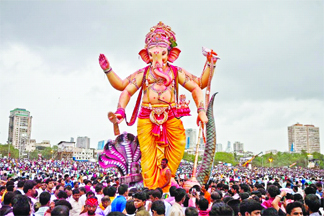
Ganesh Chaturthi also known as Vinayaka Chaturthi is one of the important Hindu festivals celebrated throughout India with a great devotion. This day is celebrated as the birthday of Lord Ganesh, the elephant-headed son of Lord Shiva and Goddess Parvati. Lord Ganesh is the symbol of wisdom, prosperity and good fortune.
Ganesh Chaturthi is celebrated on Shukla Chaturthi of the Hindu month of Bhadra (generally falls between August and September).
This year, the festival will be celebrated on August 27.
This festival is celebrated by Hindus with a great enthusiasm. People bring idols of Lord Ganesh to their homes and do worship. The duration of this festival varies from 1 day to 11 days, depending on the place and tradition. On the last day of the festival the idols are taken out in a colorful and musical procession and immersed traditionally in water.
As per Hindu mythology Lord Ganesh is considered as “Vigana Harta” (one who removes obstacles) and “Buddhi Pradaayaka” (one who grants intelligence). This festival is very important for students, they worship Lord Ganesh to illumine their minds.
The festival was celebrated as a public event since the days of Maratha King Shivaji (1630–1680). However, the public festival as celebrated in Maharashtra today, was introduced by Bhausaheb Laxman Javale in 1892 by installing first Sarvajanik (Public) Ganesh idol- Shrimant Bhausaheb Rangari Ganpati, Bhudwar Peth, in Pune. The first meeting regarding starting the Sarvajanik Ganesh utsav took place under the leadership of Bhausaheb Laxman Javale at his residence (Bhudwar Peth) now known as Bhau Rangari Bhavan. In 1893 Lokmanya Tilak praised the concept of Sarvajanik Ganesh Utsav in Kesari Newspaper. In 1894, he installed Ganesh idol in Kesari wada, Pune too and started preaching Ganesh Utsav.
While celebrated all over India, it is grandest and most elaborate of them especially in Maharashtra, Karnataka, Telangana, Tamilnadu, Kerala, Andhra Pradesh, Goa and in other parts of Western India and Southern India. Outside India, it is celebrated widely in Terai region of Nepal and by the Hindu diaspora in the United States, Canada, Mauritius, and other places.
Legend of Ganesha
Traditional Hindu about Ganesha tell that Parvati, the consort of Shiva, created Ganesha out of sandalwood paste that she used for her bath and breathed life into the figure. She then set him the task of guarding her door while she bathed. Shiva, who had gone out, returned and as Ganesha didn’t know him, didn’t allow him to enter. After the combat between Ganesha and Shiva Ganas, finally angry Shiva severed the head of the child. Parvati seeing this became enraged and Shiva then promised that her son will be alive again. The devas searched for the head of dead person facing North, but they found only the head of an elephant. They brought the head of the elephant and Shiva fixed it on the child’s body and brought him back to life. Lord Shiva also declared that from this day the boy would be called Ganesha (Gana Isha : Lord of Ganas).
According to the Linga Purana, Ganesha was created by Lord Shiva and Goddess Parvati at the request of the Devas for being a Vighnakartaa (obstacle-creator) in the path of Rakshasas, and a Vighnahartaa (obstacle-averter) to help the Devas achieve fruits of their hard work.
Celebration, rituals and tradition
Weeks or even months before Ganesha Chaturthi, artistic clay models of Lord Ganesha are made for sale by skilled artisans. They are beautifully decorated and depict Lord Ganesha in vivid poses. The size of these statues may vary from 3/4 of an inch to over 70 feet.
Ganesha Chaturthi starts with the installation of these Ganesha statues in colorfully decorated homes and specially erected temporary structures mandapas (pandals) in every locality. The pandals are erected by collecting monetary contributions and are decorated specially for the festival, by using decorative items like flower garlands, lights, etc. and at times have theme based decorations.
The priest then with the chanting of mantras invokes the presence of Ganesha using the statue as a channel, or body for his energy. This ritual is the Pranapratishhtha. After this the ritual called as Shhodashopachara (16 ways of paying tribute) follows. Coconut, jaggery, modaks, durva (trefoil) blades of grass and red flowers are offered. The statue is anointed with red unguent, typically made of kumkum and sandalwood paste. Throughout the ceremony, Vedic hymns from the Rig Veda, the Ganapati Atharvashirsa, Upanishad, and the Ganesha stotra from the Narada Purana are chanted.
History
It is not known when and how Ganesh Chaturthi was first celebrated. Ganesh festival was being celebrated as a public event in Pune since the times of Shivaji (1630–1680), the founder of the Maratha Empire. The Peshwas, the de facto hereditary administrators of the Empire from 1749 till its end in 1818, encouraged the celebrations in their administrative seat Pune as Ganesha was their family deity (Kuladevata). With the fall of the Peshwas, Ganesh festival lost state patronage and became a private family celebration again in Maharashtra till its revival by Indian freedom fighter and social reformer Lokmanya Tilak.
The public festival as celebrated in Maharashtra today, was introduced by Bhausaheb Laxman Javale in 1892 by installing first Sarvajanik (Public) Ganesh idol. This followed a meeting at his residence, which was attended by, amongst others, Balasaheb Natu, and Krishnajipant Khasgiwale. Khasgiwale on his visit to the Maratha ruled princely state of Gwalior had seen the tradition of public celebration still maintained and brought it to the attention of his friends in Pune.
In 1893 Lokmanya Tilak praised the concept of Sarvajanik Ganesh Utsav in his newspaper, Kesari, and the next year he installed a Ganesh idol in Kesari Wada too. Tilak’s efforts transformed the annual domestic festival into a large, well-organized public event. Tilak recognized the wide appeal of the deity Ganesha as “the god for everybody”, and popularized Ganesh Chaturthi as a national festival in order “to bridge the gap between Brahmins and ‘non-Brahmins’ and find a context in which to build a new grassroots unity between them”, and generate nationalistic fervour among people in Maharashtra against the British colonial rule. Tilak was the first to install large public images of Ganesh in pavilions, and also established the practice of submerging the idols in rivers, sea, or other pools of water on the tenth day after Ganesh Chaturthi.
Under Tilak’s encouragement, the festival facilitated community participation and involvement in the form of intellectual discourses, poetry recitals, performances of plays, musical concerts, and folk dances. It served as a meeting ground for people of all castes and communities in times when, in order to exercise control over the population, the British discouraged social and political gatherings. -

Lord Swraj Paul, NRI industrialist dies aged 94
Lord Swraj Paul, NRI industrialist and founder of UK-based Caparo Group, has died in London, family sources said. He was 94. Paul had taken ill and was hospitalised recently, where he died surrounded by members of his family.
The House of Lords peer was born in Jalandhar and relocated to the United Kingdom in the 1960s in pursuit of treatment for his little daughter Ambika’s cancer. After she died at the age of 4, he set up the Ambika Paul Foundation as a charitable trust that went on to donate millions to promote the well-being of children through education and health initiatives.
“The London Zoo is where she was always the happiest,” Paul had said last month, during the annual commemoration at the Ambika Paul Children’s Zoo in London—one of the major beneficiaries of the foundation.
After he lost his son Angad Paul in 2015 and his wife Aruna in 2022, he went on to undertake similar philanthropic endeavours in their memory.
“This hall is a tribute to my wonderful wife whom I miss very much. We never had an argument during our 65 years of marriage,” Lord Paul had said at the inauguration the Lady Aruna Swraj Paul Hall at the historic Indian Gymkhana Club in London in February 2023.
A regular in the annual ‘Sunday Times Rich List’, this year he was ranked 81st with an estimated wealth of £2 billion, largely derived from the steel and engineering conglomerate Caparo Group.
Headquartered in London, Caparo operates internationally from over 40 sites, with operations based in the UK, North America, India, and the Middle East. His son, Akash Paul, is the chairman of Caparo India and a director of the Caparo Group. -
Rupee falls 18 paise to close at 87.25 against US dollar
The rupee pared initial gains and settled for the day lower by 18 paise at 87.25 (provisional) against US dollar on August 21, on a strong American currency and a recovery in crude oil prices.
Forex traders said, rupee opened on a positive note with the rise in risk appetite in the global markets amid easing tensions over trade tariffs and hopes of truce between Russia and Ukraine.
However, the strength of the American currency in the overseas market and rising crude oil prices dented investor sentiments and restricted the up move in the local unit.
At the interbank foreign exchange market, the rupee opened on a positive note at 87.04, then touched an early high of 86.93 and an intraday low of 87.27 against the US dollar.
The domestic unit settled for the day at 87.25 (provisional), registering a decline of 18 paise over its previous close.
On Wednesday, the rupee settled on a higher note at 87.07 against the US dollar.
The Indian rupee lost early gains on positive crude oil prices and positive US dollar index. However, rise in the domestic markets supported the rupee at lower levels, said Anuj Chaudhary, Research Analyst, Commodities and Currencies, Mirae Asset Sharekhan.
“We expect the rupee to trade with a positive bias on improved global risk sentiments and fading worries over trade tariffs. Optimism over GST reforms may also support the rupee.
“However, dollar demand from importers capped sharp upside. Investors may now focus on the Jackson Hole Symposium. Traders may take cues from weekly unemployment claims and PMI data from the US. USD-INR spot price is expected to trade in a range of 86.90 to 87.50,” Chaudhary added.
Meanwhile, the dollar index, which gauges the greenback’s strength against a basket of six currencies, gained 0.02 per cent to 98.23.
Brent crude, the global oil benchmark, was trading 0.90 per cent higher at $67.44 per barrel in futures trade, as investors remained focused on the Ukraine peace push and sanctions on Russia remaining in place for now.
Traders are focused on whether US Fed Chief Jerome Powell will push back against market expectations for a rate cut on the September 16-17 meeting when he speaks at the Jackson Hole Symposium. -

U.S. and European Union provide fresh details of giant trade pact
Washington (TIP)- The United States and European Union say they’ve agreed on the details of a trade deal that would keep tariffs high for now on European vehicles and lower them on computer chips, but it will take weeks — or months — of additional negotiations to iron out remaining issues.
White House officials hailed a joint statement released on August 21 in Washington and Brussels as an important step toward fleshing out the commitments reached by President Donald Trump and European Commission President Ursula von der Leyen at their impromptu July summit.
The three-and-a-half page statement confirms that the U.S. will impose a 15 percent tariff on most European products, which traditionally have faced levies of little more than 2 percent.
The increased import tax is expected to mean higher prices for Americans on European medicines, French perfumes, Italian wines and other items.
The U.S. now has agreed to lower its 25 percent tariff on imported cars to 15 percent for European vehicles once the E.U. introduces legislation to eliminate its already low tariffs on American industrial products and to provide greater market access for some American farm goods, such as bison.
European semiconductors, pharmaceuticals and lumber also will face import taxes of 15 percent, far lower than levels the president is eyeing for those goods produced in other markets. European officials have pushed to get those promises in writing during weeks of back-and-forth talks.
Since the deal was announced, the 27-nation E.U. has sought to poke holes in Trump’s blanket tariffs by negotiating carve-outs for its top industries. The bloc has secured some exemptions, such as for aircraft and parts.
But wine and spirits — a flash point in trade talks and key exports for countries like France and Italy — have not been spared, E.U. officials said Thursday, much to the dismay of the industry on both sides of the Atlantic. Americans previously were able to import alcohol products from Europe without paying any U.S. tax.
The E.U.’s trade commissioner, Maros Sefcovic, said negotiators would keep trying to bring down levies on booze and other sectors, including steel and aluminum.
The agreement is “truly impactful at a time when the trade landscape has completely changed. … But this is not the end, it is the beginning,” Sefcovic said.
The White House said the E.U. deal signals the president’s determination to replace the 30-year-old global trading system helmed by the World Trade Organization with a series of government-to-government arrangements designed to shrink the chronic U.S. trade deficit, which Trump blames for hollowing out American factory towns.
“We feel like this is a really positive step forward for the U.S.-E.U. relationship, where both parties have agreed that there are certain problems, such as trade imbalances, that need to be addressed, that are no longer sustainable, and that we can address in a bilateral way outside the WTO,” said a senior administration official, who spoke on the condition of anonymity under ground rules set by the White House.
Still, the joint statement, which is not a legally binding document, was replete with provisions that will require additional bargaining. E.U. officials described it as “a blueprint.”
The two sides, for example, agreed to negotiate “rules of origin” that will determine which specific products qualify for lower tariffs. In other trade negotiations, hammering out such terms proved complex and time-consuming.
Elsewhere, the joint statement said the two sides “commit to work together” on issues such as reducing nontariff trade barriers, addressing “unjustified ” barriers to trade involving electronic transmissions and cooperating on addressing other nations’ export controls on critical minerals, a likely reference to China.
“These are ambitious things, and we expect in the coming weeks — hopefully weeks and not too many months — to fully paper over the agreement,” said the senior administration official. -

Meta AI glasses let 57-year-old blind man work again, Judi Dench calls him James Bond
A 57-year-old man from Somerset, UK, who lost his sight and was forced to stop working says new AI-powered glasses have given him back his independence, and even a new job. Andy Evans, who lives in Larkhall near Bath, became unemployed after leaving his night shift role at a Morrisons supermarket when his sight loss worsened, according to a BBC report. He was later officially registered blind.
Now, thanks to smart glasses designed by Meta, Evans says he has regained confidence in daily life. The glasses, which look like standard Ray-Bans, include a small camera in the frame and tiny speakers in the arms. They are voice-activated, meaning users can ask the built-in artificial intelligence to describe their surroundings or complete everyday tasks. For Evans, this has been a turning point. “I was really stuck doing a lot of things,” he told BBC Radio Bristol. “What you can do, you can ask them to look and tell you what’s going on around you. It’s life-changing technology.” The glasses have allowed him to return to work, this time at the charity Sight Support West of England, where he now helps others adapt to sight loss. Evans says the technology has not only made work possible but improved his quality of life, allowing him to do simple things again, from ordering food in a restaurant to detecting obstacles in his path.
Adding a touch of humour to the experience, the glasses also feature celebrity voice options in the UK. Evans chose Dame Judi Dench, who affectionately calls him “James Bond” and “007” when he speaks to the device.
The technology has been praised by advocates for its practical impact. Robin Spinks, head of inclusive design at the Royal National Institute of Blind People (RNIB), said the glasses show how AI can make a real difference.
“These glasses are an example of technology making a real tangible impact for blind and partially sighted people,” said Spinks, who is also registered blind.
He explained that he uses the same glasses in his own life. “Getting a description of a room or a scene on the beach or even a zoo enclosure is quite transformational,” he said.
Spinks added that while the market for smart glasses is still very young, the possibilities are vast. “AI is advancing rapidly, and the market for smart glasses is still in its infancy. But the potential is enormous.” For Evans, the future feels brighter. With the help of the glasses, he says he has moved from struggling with daily life to supporting others with sight loss. “I now have a much better quality of life,” he said. -

China building megaconstellation to rival SpaceX’s Starlink network
China is rapidly advancing plans to deploy a massive broadband satellite constellation in low-Earth orbit, positioning itself as a direct rival to SpaceX’s pioneering Starlink network.
The ambitious project, led by China’s state-backed aerospace sector, aims to ensure national data security, provide widespread connectivity, and stake a claim in the growing global satellite internet market. In recent years, SpaceX’s Starlink has transformed global broadband, already boasting thousands of satellites and millions of users worldwide, including in remote locations.
China’s initiative, sometimes called “Guowang” or “China’s national network,” seeks to emulate and compete with this success by launching its own megaconstellation, rumored to include up to 13,000 satellites.
Spearheaded by China Satellite Network Group, the project is part of a broader government strategy to promote digital sovereignty and technology self-sufficiency. Chinese engineers and officials have outlined a phased deployment, beginning with a demonstration network and expanding rapidly as manufacturing and launch capability ramp up.
China is using state-owned aerospace giants, such as the China Aerospace Science and Technology Corporation (CASC), to accelerate satellite production and develop powerful, reusable rockets for frequent launches.
The constellation’s key aims include providing high-speed internet to underserved parts of China, bridging connectivity gaps along the “Digital Silk Road,” and offering secure alternatives to Western-controlled networks for both civilian and military users.
Chinese broadband satellites are reported to use advanced phased-array antennas, inter-satellite laser links, and onboard processing to boost capacity and lower latency—mirroring Starlink’s technological edge.
Experts say China’s constellation could reshape the global satellite internet market, especially in the developing world, where competition with Starlink and Amazon’s Kuiper system is intensifying. The government sees success as pivotal to both economic growth and strategic security. -

AI Helps Astronomers Discover a New Type of Supernova
Astronomers have discovered what may be a massive star exploding while trying to swallow a black hole companion, offering an explanation for one of the strangest stellar explosions ever seen.
The discovery was made by a team led by the Center for Astrophysics | Harvard & Smithsonian (CfA) and the Massachusetts Institute of Technology (MIT) as part of the Young Supernova Experiment.
The blast, named SN 2023zkd, was first discovered in July 2023 by the Zwicky Transient Facility. A new artificial intelligence algorithm designed to scan for unusual explosions in real time first detected the explosion, and that early alert allowed astronomers to begin follow-up observations immediately — an essential step in capturing the full story of the explosion. By the time the explosion was over, it had been observed by a large set of telescopes, both on the ground and from space.
The scientists think the most likely interpretation is that the massive star was locked in a deadly orbit with the black hole. As energy was lost from the orbit, their separation decreased until the supernova was triggered by the star’s gravitational stress as it partially swallowed the black hole.
“Our analysis shows that the blast was sparked by a catastrophic encounter with a black hole companion, and is the strongest evidence to date that such close interactions can actually detonate a star,” said Alexander Gagliano, lead author of the study and fellow at the NSF Institute for Artificial Intelligence and Fundamental Interactions. “Our machine learning system flagged SN?2023zkd months before its most unusual behavior, which gave us ample time to secure the critical observations needed to unravel this extraordinary explosion.”
An alternative interpretation considered by the team is that the black hole completely tore the star apart before it could explode on its own. In that case, the black hole quickly pulled in the star’s debris and supernova emission was generated when the debris crashed into the gas surrounding it. In both cases, a single, heavier black hole is left behind.
Located about 730 million light-years from Earth, SN 2023zkd initially looked like a typical supernova, with a single burst of light. But as the scientists tracked its decline over several months, it did something unexpected: it brightened again. To understand this unusual behavior, the scientists analyzed archival data, which showed something even more unusual: the system had been slowly brightening for more than four years before the explosion. That kind of long-term activity before the explosion is rarely seen in supernovae.
Detailed analysis revealed that the explosion’s light was shaped by material the star had shed in the years before it died. The early brightening came from the supernova’s blast wave hitting low-density gas. The second, delayed peak was caused by a slower but sustained collision with a thick, disk-like cloud. This structure—and the star’s erratic pre-explosion behavior—suggest that the dying star was under extreme gravitational stress, likely from a nearby, compact companion such as a black hole. -

Smoking status must be recorded in cancer trials: Researchers
A group of experts from AIIMS Delhi, McMaster University in Canada and the International Agency for Research on Cancer (IARC) in France has stressed the need to record smoking status in cancer clinical trials, warning that continued tobacco use can reduce treatment efficacy and patient survival. In a commentary published in the Lancet Oncology this month, the seven authors, including Dr Abhishek Shankar from AIIMS Delhi, said knowledge of smoking status during therapy could influence clinical decisions.
They argued that addressing barriers to tobacco-use assessment and embedding smoking cessation initiatives into oncology research protocols will improve trial outcomes, enhance therapeutic efficacy and save lives.
The researchers cited the 2014 US Surgeon General’s report ‘The Health Consequences of Smoking — 50 Years of Progress’, which for the first time concluded there was a causal link between cigarette smoking and adverse cancer-related outcomes, including higher all-cause and cancer-specific mortality.
This report underscores the need to systematically capture smoking status in clinical trials, to refine estimates of efficacy of novel therapies and to better understand the impact of continued tobacco use across treatment modalities and disease sites.
Since 2014, research has increasingly shown that continued tobacco use negatively impacts patients receiving surgery, radiotherapy or systemic therapies.
The mechanisms by which tobacco smoke worsens outcomes remain unclear but may include tumour hypoxia, altered drug metabolism, stimulation of signalling pathways by nicotine and changes to the immune system, including reduced natural killer cells, the authors noted. Source: PTI -

Everyday foods to keep us going all day
Complex carbohydrates
Rice, whole wheat roti, multigrain preparations, and millets like ragi, jowar, bajra, maize, and oats, along with foods like bananas and sweet potatoes, are rich in complex carbohydrates. These not only provide sustained energy by releasing it slowly but also supply fibre to keep you fuller for longer. On average, 1 gram of carbohydrates provides 4 kcal of energy.
Protein
Proteins play a key role in muscle building, tissue growth, and repair. They also support strength and endurance, making them essential for overall health. Add protein-rich foods like whole pulses, sprouts, eggs, lean meat, chicken, fish, tofu, and paneer to your daily meals. Each gram of protein provides 4 kcal of energy.
Fats
Fats are often misunderstood, but they are essential for good health. In fact, 1 gram of fat provides 9 kcal, more than double the energy from carbohydrates. The key lies in choosing healthy fats such as nuts (almonds, walnuts), seeds (flax, chia, pumpkin), avocado, and freshwater fish. Good fats help you feel full, curb cravings, stabilize mood, and most importantly, aid in the absorption of fat-soluble vitamins A, D, E, and K.
Fruits and vegetables:
Fruits and vegetables are packed with vitamins, minerals, and fibre, making them essential for overall health. Seasonal varieties are especially rich in antioxidants that fight free radicals and strengthen immunity. Low in calories yet nutrient-dense, they make a smart choice for mid-morning snacks or fillers between meals. -

Study finds Covid may have aged blood vessels by 5 years, especially among women
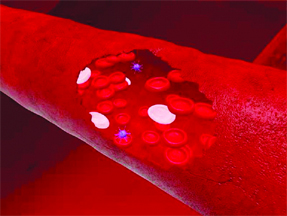
A COVID-19 infection could age one’s blood vessels by about five years, especially among women, according to a new study. The effect was found to be stronger among women who experienced persistent symptoms after recovering from COVID-19 — collectively termed ‘long Covid’ — such as shortness of breath and fatigue.
“Since the pandemic, we have learned that many people who have had (COVID-19) are left with symptoms that can last for months or even years. However, we are still learning what’s happening in the body to create these symptoms,” lead researcher Rosa Maria Bruno from Université Paris Cité, France, said.
The study, published in the European Heart Journal, looked at around 2,400 people — about half were women — from across 16 countries, including Australia, Brazil and those in Europe.
While blood vessels are known to become stiffer with age, a COVID-19 infection can accelerate the process and can heighten the risk of developing cardiovascular disease, including stroke and heart attack, the researchers said.
The participants’ vascular (blood vessel) age was measured using a device that looks at how quickly a wave of blood pressure travels between the carotid artery (in the neck) and femoral arteries (in the legs) — called ‘carotid-femoral pulse wave velocity’.
A higher value indicates more stiffness and ageing of blood vessels. Measurements were taken six months after a COVID-19 infection and again after 12 months.
An increase in pulse wave velocity of around 0.5 metres per second is clinically relevant and roughly amounts to ageing by five years, with a three per cent increased risk of cardiovascular disease, in a 60-year-old woman, the researchers said.
The study found that, on average, pulse wave velocity among women who had a mild infection was increased by 0.55 metres per second, by 0.60 metres per second in those hospitalised and by over one metre per second for women treated in intensive care.
“(Pulse wave velocity) differences were significant in women, but not in men. Among COVID-19 positive women, persistent symptoms were associated with higher (pulse wave velocity),” the authors wrote.
“A stable or improved (pulse wave velocity) after 12 months was found in COVID-positive groups, whereas a progression was observed in the COVID-negative group,” they wrote.
Explaining how COVID-19 impacts blood vessels, Bruno said that the disease-causing virus “acts on specific receptors in the body, called the angiotensin-converting enzyme 2 receptors, that are present on the lining of the blood vessels.” “The virus uses these receptors to enter and infect cells. This may result in vascular dysfunction and accelerated vascular ageing. Our body’s inflammation and immune responses, which defend against infections, may also be involved,” the lead researcher said.
Further, compared to men, women are known to produce a more rapid and robust immune response which can protect from infection but can also inflict damage on blood vessels after initial infection, Bruno said. -

Is hair anxiety real? Here’s how to stop worrying about your hair
In modern urban life, where image and personal appearance hold significant importance, many women are finding themselves grappling with a new source of anxiety: hair thinning. A healthy and vibrant mane has long been associated with beauty and confidence, making the prospect of hair loss particularly distressing. No longer a concern relegated to ageing, hair thinning has become a widespread issue affecting every second woman in urban environments. Amid the challenges of fast-paced lifestyles, the anxiety surrounding hair health is becoming increasingly hard to ignore.
What is hair anxiety?
Why are women worried? Women in bustling cities often juggle multiple roles—those of career-focused professionals, dedicated family members, and active social participants. These daily demands can be overwhelming and stressful.
How to deal with hair anxiety?
While hair anxiety is a legitimate concern, several strategies can help mitigate its effects. Here are some actionable tips:
– Balanced diet: “Focus on a nutrient-rich diet that includes plenty of protein, fruits, and vegetables. Foods like spinach, salmon, nuts, and eggs are excellent for promoting hair health”, advises Plastic Surgeon.
– Stress management: Finding effective ways to manage stress is vital. Consider incorporating activities such as yoga, meditation, or simple breathing exercises into your daily routine, as per The Yoga Institute.
– Regular exercise: Physical activity is beneficial for overall health and can enhance mood and reduce stress levels, according to the UK’s National Health Institute. Aim for at least 30 minutes of exercise most days.
– Good sleep cycle: Prioritise sleep. A good sleep cycle is vital for recovery and health, including hair health. Aim for 7-9 hours of sleep each night, as recommended by the American Heart Association.
– Nutritional supplements: Consult with a healthcare provider about taking supplements that support hair health. Biotin, iron, and omega-3 fatty acids can be beneficial additions to a healthy diet. -

Green Shrimp Pulao
Ingredients
1 cup (180 g) Basmati rice rinsed and soaked for 30 minutes, ½ lb (226 g) Shrimp peeled and deveined, ½ cup Cilantro leaves tightly packed, 2 Green chilies chopped, ½ inch piece of Ginger chopped, 3-4 large Garlic cloves, 1/2 cup Yogurt, 1 Onion thinly sliced, 2 tbsp Ghee or oil, 1 tsp Cumin seeds, 2-3 green cardamom pods, 2-3 cloves, 1 med cinnamon stick, ½ tsp Salt to taste, 2 cups Water as needed
Instructions
– Cilantro Paste – Combine cilantro leaves, green chilies, ginger, garlic, and yogurt in a blender. Blend until smooth to make a paste. Set aside.
– Sauté – Heat ghee or oil in a heavy-bottomed pan. Add cumin seeds, cardamom pods, cloves, and cinnamon stick. Sauté for a minute. Add sliced onions and sauté until they turn golden brown. Add the prepared cilantro paste and cook for 2-3 minutes.
– Combine – Drain the soaked rice and add it to the pan. Stir well to coat the rice with the cilantro mixture.
– Simmer – Add 2 cups of water and salt to taste. Bring it to a boil, then reduce the heat to low, cover the pan, and let it cook for about 15-20 minutes, or until the rice is cooked and the water is absorbed.
– Pan fry shrimps – While the rice is cooking, season the shrimp with salt and any other desired spices. Heat a little oil in a separate pan over medium-high heat. Add the shrimp in a single layer and cook for about 2-3 minutes per side, or until they are pink and opaque.
– Assemble – Once the rice is cooked, fluff it with a fork. Serve the rice in a plate or bowl, topped with the pan-fried shrimp. Garnish with fresh cilantro leaves and serve hot. -

Make co-ords look stylish and not like nightwear
Co-ord sets have emerged as a fundamental element in modern fashion, providing a stylish and hassle-free solution for those seeking a polished, yet effortless look. By definition, co-ord sets are outfits comprising two or more matching pieces, typically a top and bottom that perfectly align in terms of colour, fabric and design. However, while they may appear effortless to slip into, the reality is that co-ord sets require careful styling to avoid crossing the fine line between sleek and sloppy. If not styled thoughtfully, these matching sets can inadvertently give off a sleepwear or nightwear vibe, making it seem like you rolled out of bed and stumbled out the door. To avoid this fashion faux pas, it’s essential to focus on intentional styling. Here, we’ve listed some styling tips that you must follow to make you co-ords look stylish.
Accessorise Well
Elevate your co-ord set with thoughtful accessorising. Add a statement piece of jewellery to tie the look together paired with a cute bag and your favourite shoes for a polished appearance. For a beachy vibe, swap to a tote bag while for evening events, opt for a clutch to add a chic finish.
Layering Enhances
Layering is a game-changer for co-ord sets. Adding a blazer, longline jacket or denim jacket disrupts the monotony of the matching set while maintaining its coordinated charm. This styling trick adds structure and depth while also providing a practical solution for navigating unpredictable weather conditions.
Fit Is Everything
When it comes to co-ord sets, fit is paramount. While oversized silhouettes are on-trend, ensure that the look is intentional not sloppy. A well-fitted co-ord set can create a polished, put-together appearance, whereas an ill-fitting one can look unkempt.Mononchromatic Or Subtle Prints
For a chic and cohesive look, opt for solid colours or subtle prints when choosing a matching co-ord set. Bold patterns and bright hues can overwhelm the senses while understated designs create a sleek, sophisticated appearance. Stick to timeless neutrals or soft pastels to ensure your co-ord set exudes effortless elegance.
Footwear Helps
The right shoes can completely transform a co-ord set, taking it from a basic, everyday look to a stylish one. Choose shoes that complement the outfit’s style and colour palette. Sleek heels or loafers can add a touch of sophistication while sneakers or sandals create a relaxed, casual vibe. -
Bangladesh warns media against publicising Hasina’s statements
Bangladesh’s interim government led by Muhammad Yunus has warned the country’s media houses of legal action against any future publication or dissemination of statements from former Prime Minister Sheikh Hasina, local media reported on Aug 22.
In a statement, the Bangladesh government termed airing or promoting Hasina’s remarks on television channels, news platforms or online media a violation of law, considering her conviction for genocide and crimes against humanity, United News of Bangladesh reported.
The statement said, “We are deeply concerned that some media outlets ignored the law and court rulings by broadcasting a speech by the ousted dictator on Thursday. In that speech, she made false and inflammatory claims.” “We strongly warn media personnel involved in this type of criminal propaganda. From now on, anyone who publishes or promotes Sheikh Hasina’s statements will face immediate legal action,” it added. According to the statement, Sheikh Hasina’s party Awami League has been banned in Bangladesh and under the Anti-Terrorism Act, any individual or organisation that promotes the activities or statements of its leaders can be prosecuted. -
Pakistan ready for dialogue with India to discuss Kashmir, all other pending issues: FM Ishaq Dar
Islamabad (TIP)- Pakistan was ready for a comprehensive dialogue with India to discuss Kashmir and all other pending issues, Foreign Minister Ishaq Dar said on Aug 22.
“Talks, whenever held, will be not just on Kashmir but on all issues,” Dar said while talking to journalists outside parliament in Islamabad, where he was asked about talks with India.
India has made it clear that it will only have a dialogue with Pakistan on the return of Pakistan-occupied Kashmir and the issue of terrorism.
Dar, who is also the Deputy Prime Minister, emphasised that Pakistan had made it clear from the outset that discussions with India would not take place on any single-point agenda.
He said Pakistan had not requested any mediation but was offered a meeting at a neutral venue. “We were told to sit down at a neutral location, and I said if that is the case, we are willing to meet,” he claimed. Dar said he received a call from the US for a ceasefire with India.
“I received a call from the US for a ceasefire,” Dar said. “I had made it clear that Pakistan did not want a war.”
India carried out precision strikes under ‘Operation Sindoor’ on terror infrastructure early on May 7 in response to the April 22 Pahalgam terror attack.
Following the Indian action, Pakistan tried to attack Indian military bases on May 8, 9 and 10. The Indian forces launched a fierce counter-attack on several Pakistani military installations.
India and Pakistan reached an understanding on May 10 to end the conflict after four days of intense cross-border drone and missile strikes.
Dar said the ceasefire agreement with India is holding. Responding to a question, Dar said the US Secretary of State’s visit to Pakistan has not yet been scheduled. -

Lanka ex-Prez arrested for misusing state funds
Sri Lanka’s former president Ranil Wickremesinghe was arrested on Friday for allegedly misusing the state funds during his tenure as head of state, police said. Wickremesinghe, 76, was arrested at the Criminal Investigation Department (CID) headquarters, where he was summoned to record a statement in connection with an investigation into the alleged misuse of government funds, police said. Later, the veteran opposition leader was produced before a magistrates’ court in Colombo. Wickremesinghe, who served as president from 2022 to 2024, has been accused of using state funds to travel to England to attend a convocation ceremony of his wife, Prof Maithree, in September 2023. Wickremesinghe is the first former president to be arrested in Sri Lanka, it added.
-

Pakistan: Rights body reveals rise in violence against religious minorities
Islamabad (TIP)- The Human Rights Commission of Pakistan (HRCP) in its latest report has revealed a disturbing rise in violence against religious minorities over the past year, local media reported on August 21.
In its latest report, ‘Streets of Fear: Freedom of Religion or Belief in 2024/25’, the HRCP highlighted incidents of targetted killings, the demolition of places of worship, the forced conversion and marriage of underage Hindu and Christian girls and a rise in hate speech. The report warned that the trends pose serious threats to religious freedom in Pakistan, The Express Tribune reported.
The report sounded alarm over two cases of extrajudicial killings by police, terming them “deeply chilling”. In two cases, law enforcement officers shot the two individuals who were accused of blasphemy and had requested protection from violent mobs. The rights body stated that such incidents demonstrate the need for police reforms and stronger accountability mechanisms.
Earlier in July, the HRCP raised serious concerns over the continued persecution of religious minorities in Pakistan. The rights body highlighted that a Christian man in Sargodha district of Pakistan’s Punjab province was lynched by a violent mob, following accusations of blasphemy, while the Ahmadiyya community withdrew from the electoral process entirely in the region, citing systemic discrimination and lack of safety.
Additionally, the HRCP mentioned that Punjab continued to account for the highest number of child abuse cases in the country.
“Between January and June 2024 alone, the province reported 78 per cent of the 1,630 cases nationwide, alongside 2,506 incidents of sexual abuse, 2,189 kidnappings, 457 cases of child trafficking, and 455 instances of physical abuse. The death of 11-year-old Ayesha, a domestic worker in Faisalabad, and similar incidents in Sargodha and Lahore exposed the violence faced by underage working children in private homes,” it stated.
The human rights organisation in its State of Human Rights in 2024 report detailed a surge in sexual violence against women, including those with mental disabilities, domestic abuse resulting in fatalities, involving pregnant women, and honour killings, which continued throughout the year in Punjab. In a case involving an alleged rape at a private college in Lahore, the HRCP noted a failure by the authorities to gather conclusive evidence that the incident had occurred.
Highlighting the challenges faced by women in politics, the HRCP stated that “women Members of the Provincial Assembly (MPA) staged a walkout over inappropriate gestures” in the Punjab Assembly, while the allocation of reserved seats for women and minorities faced legal setbacks. -
Iran to hold call with European nations over nuclear program as sanctions deadline draws closer
DUBAI (TIP)- Just days away from a European deadline, Iran said Friday, Aug 22, its foreign minister would hold a telephone conference call with his French, German and British counterparts to avoid the reimposition of United Nations sanctions over Tehran’s nuclear program.
According to Iran’s state-run IRNA news agency, the call, planned for Friday by Foreign Minister Abbas Araghchi, comes as the three parties to Tehran’s 2015 nuclear deal threaten to reimpose those sanctions under a mechanism known as “snapback” in the accord. The European Union’s chief diplomat will also join the call, IRNA said.
The Europeans’ concern over the Iranian program, which had been enriching uranium to near weapons-grade levels before the 12-day Iran-Israel war in June, saw its atomic sites bombed, and has only grown since Tehran cut off all cooperation with the International Atomic Energy Agency (IAEA) in the conflict’s wake. That has left the international community further blinded to Iran’s program — as well as the status of its stockpile of uranium enriched to 60 per cent purity, a short, technical step to weapons-grade levels of 90 per cent.
Iran has long insisted its program is peaceful, though it is the only non-nuclear-armed nation enriching uranium at that level. The US, the IAEA and others assess Iran had a nuclear weapons program up until 2003.
In a letter dated August 8, the three European nations warned Iran it would proceed with “snapback” if Tehran didn’t reach a “satisfactory solution” to the nuclear issues. That deadline would be Augsut 31, in nine days, leaving little time for Iran to likely reach any agreement with the Europeans, who have grown increasingly sceptical of Iran over years of inconclusive negotiations over its nuclear program. Restoring the IAEA’s access is a key part of the talks. Iran has blamed the war with Israel in part on the IAEA, the UN’s nuclear watchdog, without offering any evidence.
The IAEA issues quarterly reports on Iran’s program and the 2015 deal gave it greater access to keep track of it. Iran has also threatened its director-general, Rafael Mariano Grossi, with arrest if he comes to Iran, further complicating talks. Grossi is considering running to become the UN’s secretary-general, something Tehran has seized on as well in its criticisms of the Argentine diplomat. -

5 out of 6 Palestinians killed by Israeli forces in Gaza were civilians: Report
Ramallah (TIP)- Even as the United Nations on Friday officially declared a famine in Gaza, a joint investigation by the Guardian, the Israeli-Palestinian publication +972 Magazine and the Hebrew-language outlet Local Call has revealed that five out of six Palestinians killed by Israeli forces in Gaza have been civilians.
The figures are from a classified Israeli military intelligence database. The database is reportedly managed by the Military Intelligence Directorate known by the Hebrew acronym “Aman.”
According to +972 Magazine, multiple intelligence sources familiar with the database said the army views it as the only authoritative tally of militant casualty figures. In the words of one of them: “There’s no other place to check.”
The apparent ratio of civilians to combatants among the dead is extremely high for modern warfare, even compared with conflicts notorious for indiscriminate killing, including the Syrian and Sudanese civil wars, the investigation revealed.
As of May, 19 months into the war, Israeli intelligence officials listed 8,900 named fighters from Hamas and Palestinian Islamic Jihad as dead or “probably dead.” At that time 53,000 Palestinians had been killed by Israeli attacks, according to health authorities in Gaza, a toll that included combatants and civilians. Fighters named in the Israeli military intelligence database accounted for just 17% of the total, which indicates that 83% of the dead were civilians, the Guardian report said.
In global conflicts tracked by UCDP since 1989, civilians made up a greater proportion of the dead only in Srebenica – although not the Bosnian war overall – in the Rwandan genocide, and during the Russian siege of Mariupol in 2022, Therése Pettersson from the Uppsala Conflict Data Program has been quoted as saying by the Guardian.
Many genocide scholars, lawyers and human rights activists, including Israeli academics and campaign groups, say Israel is committing genocide in Gaza, citing the mass killing of civilians and imposed starvation.
Israeli politicians and generals have variously put the number of militants killed as high as 20,000, or claimed a civilian-to-combatant ratio as low as 1:1.
Israeli forces have killed hundreds of people trying to get food from distribution centres in military exclusion zones.
Now starving survivors, already forced into just 20% of the territory, have been ordered to leave the north as Israel prepares for another ground operation that is likely to have catastrophic consequences for civilians.
Many Israeli soldiers have testified that all Palestinians are treated as targets in Gaza. One stationed in Rafah this year said his unit had created an “imaginary line” in the sand and fired at anyone who crossed it, including twice at children and once at a woman. They shot to kill, not to warn, he said. “Nobody aimed for their legs”.
Neta Crawford, a professor of international relations at Oxford University and co-founder of the Costs of War project, has been quoted as saying by the Guardian that Israeli tactics marked a “worrisome” abandonment of decades of practices developed to protect civilians. -

Fiji Prime Minister Sitiveni Rabuka to visit India from August 24-27: MEA
Prime Minister of the Republic of Fiji Sitiveni Ligamamada Rabuka, accompanied by his spouse, Suluweti Rabuka, will visit India from August 24 to 27, the Ministry of External Affairs said. The visit will begin in New Delhi, where the Prime Minister Rabuka will be received at IGI Airport, after which he will have a meeting with a Cabinet Minister. On August 25, Rabuka will lay a wreath at Rajghat before meeting Prime Minister Narendra Modi at Hyderabad House, which will be followed by an exchange of MoUs and press statements. He will then call on President Droupadi Murmu at Rashtrapati Bhavan.
Continuing his engagements, on August 26, the Fijian leader will deliver a lecture at Sapru House, organised by the Indian Council of World Affairs. The visit will conclude with his departure from Delhi on August 27.The upcoming engagement also followed recent high-level exchanges between the two countries.
In May, Union Minister of State of External Affairs and Textiles, Pabitra Margherita, had called on Prime Minister Rabuka after attending the 146th Girmit Day celebrations in Fiji as the Guest of Honour. The two leaders had held discussions on the deepening of ties and cooperation across key sectors.
In a post on X, the MoS had said, “Honoured to call on H.E. @slrabuka, Prime Minister of Fiji, in Labasa following the Girmit Day celebrations. Had meaningful discussions on deepening India-Fiji bilateral cooperation across key sectors.” He had also shared several engagements he was a part of during his visit to Fiji.
In his address at the celebrations, MoS Margherita had paid tribute to the enduring legacy of the ‘Girmitiyas’–whose resilience, sacrifice, and spirit laid the foundation for a vibrant and inclusive Fiji. “Honoured to join the 146th Girmit Day celebrations in Fiji as Guest of Honour, alongside Chief Guest H.E. @slrabuka, Hon. @FijianPM. In my address, I paid tribute to the enduring legacy of the Girmitiyas — whose resilience, sacrifice, and spirit laid the foundation for a vibrant and inclusive Fiji.” (agreement). -

Iraqi Kurdistan Opposition figure Lahur Sheikh Jangi arrested following clashes
SULAIMANIYAH (TIP)- Security forces in the autonomous Iraqi Kurdistan region arrested opposition figure Lahur Sheikh Jangi on Friday, Aug 22, after several hours of armed clashes, a security official told AFP. Jangi, a member of the influential Talabani family, which is one of two ruling clans in the autonomous region, “surrendered” while “his brother Bolad was injured in the leg and was arrested”, the official said, requesting anonymity due to the sensitivity of the subject. It is the second arrest of an opposition figure in Sulaimaniyah in less than two weeks, following the detention of New Generation leader Shaswar Abdulwahid on August 12.
Jangi was formerly a senior leader in the Patriotic Union of Kurdistan, one of two historic parties in the Kurdistan region, and held several top security posts. The party controls Sulaimaniyah, the region’s second-largest city.
He was sidelined in 2021 amid tensions within the family.
Shortly before dawn, as security forces launched the arrest operation, clashes erupted with dozens of armed men protecting Jangi and his brother with gunfire heard in the area.
Sulaimaniyah court spokesman, judge Salah Hassan, told AFP that an arrest warrant was issued on Thursday for Jangi and several others “for conspiracy aimed at destabilising security and stability”. Iraqi Kurdistan portrays itself as a haven of stability, but activists and opponents frequently denounce corruption, arbitrary arrests, and violations of press freedom and the right to protest. -

Israel minister hints at destroying Gaza City as UN declares famine
Gaza City (TIP)- Israel’s defence minister warned on Friday, August 22, that Gaza’s largest city would be destroyed unless Hamas yields to Israel’s terms, as the world’s leading authority on food crises said the city was gripped by famine from fighting and blockade.
A day after Prime Minister Benjamin Netanyahu said he would authorise the military to mount a major operation to seize Gaza City, Defence Minister Israel Katz warned that the enclave’s largest city could “turn into Rafah and Beit Hanoun,” areas reduced to rubble earlier in the war.
“The gates of hell will soon open on the heads of Hamas’ murderers and rapists in Gaza — until they agree to Israel’s conditions for ending the war,” Katz wrote in a post on X.
He restated Israel’s cease-fire demands: the release of all hostages and Hamas’s complete disarmament. Hamas has said it would release captives in exchange for ending the war, but rejects disarmament without the creation of a Palestinian state. Netanyahu said he had instructed officials “to begin immediate negotiations” to release hostages and end the war on acceptable terms — Israel’s first public response to the latest ceasefire proposal. With ground troops already active in strategic areas, the wide-scale operation in Gaza City could start within days. The city and surrounding areas are officially suffering from famine, and it will likely spread, a global hunger monitor determined, an assessment that will escalate pressure on Israel to allow more aid into the Palestinian territory.
The Integrated Food Security Phase Classification (IPC) system said 5,14,000 people — close to a quarter of Palestinians in Gaza — are experiencing famine, with the number due to rise to 6,41,000 by the end of September.
Some 2,80,000 of those people are in a northern region covering Gaza City — known as Gaza governorate — which the IPC said was in famine following nearly two years of war between Israel and Palestinian militants Hamas.
It was the first time the IPC has recorded famine outside of Africa, and it predicted that famine conditions would spread to the central and southern areas of Deir al-Balah and Khan Younis by the end of next month.
Israel returns to normality after drone attack from Yemen
Flights in and out of Tel Aviv’s Ben Gurion Airport have resumed tonight, having been suspended earlier due to a drone attack from Yemen. According to the IDF, the drone was downed following “several interception attempts”.
According to Magen David Adom, there have been no casualties except for some minor injuries sustained while people were running to shelters.
The police later reported that there were some impact sites. A police announcement clarified that there while there were no casualties, the public needs to stay away from those areas and urged people to follow the instructions of police officers on the ground. It added that officers and bomb disposal experts were working to isolate the impact sites.