Month: August 2025

  • SC orders status quo in Sambhal mosque case, issues notice

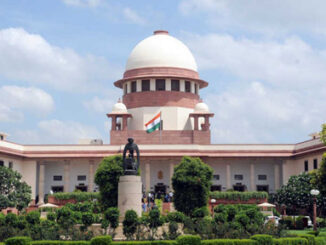
    SC orders status quo in Sambhal mosque case, issues notice

    New Delhi (TIP)- The Supreme Court on Friday, Aug 22, granted an interim stay on the proceedings in the civil suit filed by Hindu petitioners who have sought a survey of the Sambhal’s Jama Masjid in Uttar Pradesh claiming that a Hindu temple existed on the site.
    A bench of justices PS Narasimha and AS Chandurkar passed the order on a petition filed by the Sambhal mosque committee, challenging the May 19 order of the Allahabad high court which upheld the survey of the mosque as ordered by the trial court.
    The court said that the status quo will stay in force till August 25 when the matter will be taken up again to consider whether the suit proceedings could continue before the trial court. The mosque committee had claimed that the survey of the mosque cannot proceed citing Places of Worship (Special Provisions) Act, 1991.
    According to the 1991 Act, the “religious character” of places of worship as on August 15, 1947 must be maintained and bars the institution of fresh suits or legal proceedings.
    Huzefa Ahmadi, counsel for the mosque committee, mentioned that on December 12, 2024, a three-judge bench of the Supreme Court passed an interim order restraining courts across the country from entertaining any fresh suits or ordering surveys to determine existence of temple structure underneath existing mosques till the validity of the 1991 law is decided in a batch of petitions being heard by the top court.
    Ahmadi said that in light of the order, the HC could not have allowed the survey. “Let there be status quo in view of the stay granted by the three-judge bench,” he said.
    The bench said, “There will be status quo till Monday.”
    Advocate Vishnu Shankar Jain, representing the Hindu petitioners, argued that the suit is still maintainable as the structure is protected by the Archaeological Survey of India (ASI). According to him, this fact itself is sufficient to show that the 1991 Act is not applicable to the Sambhal case.
    Jain contended that the plea for deferment of proceedings was taken up in a separate case by another bench hearing the proceedings between the Shahi Idgah mosque committee and Bhagwan Srikrishna Virajman over the land claimed to be the birthplace of Lord Krishna in Mathura.
    Ahmadi submitted that Jain is unnecessarily linking the Sambhal case with that of Mathura as he is not aware of the proceedings before other bench.
    The court directed the order passed by the other bench to be produced on Monday. “Under what circumstances the order is passed, for that we need to see the order. We don’t want to pass any inconsistent orders.”
    Hindus who have filed a suit in the Sambhal case have claimed that the Mughal-era Jama Masjid has been constructed over a pre-existing Harihar temple. Against the civil court’s order directing a survey, the mosque committee had approached the top court in November last year when a stay was ordered while giving time to the committee to approach the high court on the issue.
    The court stepped in after violence erupted following the survey of the mosque ordered by a trial court on November 24 last year that left four persons dead. The survey order was passed in a suit filed by the Hindu parties seeking permission for worship at the mosque site.

  • Sant Nirankari Mission hosts spiritual event at Hofstra

    Sant Nirankari Mission hosts spiritual event at Hofstra

    • By Parveen Chopra

    HEMPSTEAD, NY (TIP): At the Sant Nirankari Mission’s well-attended Mukti Parv Samagam (Spiritual Liberation Convention) on August 17 at Hofstra University, a spiritually uplifting discourse was delivered by Nirankari Rajpita Ramit Chandana, husband of Satguru Mata Sudiksha Ji Maharaj, the current spiritual head of the Sant Nirankari Mission.

    The event at Hofstra’s John Cranford Adams Playhouse auditorium was organized by the New York-Connecticut chapter of the Nirankari Mission. It drew more than 1,200 participants, including over a dozen political and community leaders from across Long Island, according to a press release from the Mission.

    Town Clerk of North Hempstead Ragini Srivastava presented a Proclamation on behalf of the Town to Rajpita ji. Also in the picture are Tsewang Gyaltson, Consul, Indian Consulate in New York, and Renuka Malhi, Director of Public Relations of the Mission’s NY chapter.

    In his reflective discourse, the young Nirankari Rajpita Ji, who had arrived in New York after delivering back-to-back discourses in New Delhi and Birmingham, England, delivered a deeply thought-out message. He reminded participants that spiritual life is rooted in valuing human virtues. He lamented that today, people have been desensitized and inflict pain and suffering upon fellow beings. Each group tends to feel superior to others due to their religion, country, or culture. “Yes, we are free to practice our faith, but that should not restrict others’ freedom or disrespect them. Nor should we impose our faith on others,” he said in his 45-minute presentation. Dignitaries present at the afternoon event included New York State Senator Steve Rhoads, Town of North Hempstead  Supervisor Jennifer S. DeSena, and Town Clerk Ragini Srivastava, as well as Tsewang Gyaltson, Consul at the Indian Consulate in New York.

    Throughout the event, other mission speakers and devotees shared personal experiences of spiritual growth, describing how the convention deepened their understanding of faith and practice. The program also featured soulful hymns and devotional music, fostering an atmosphere of reflection, meditation, and community spirit. The New York-Connecticut Chapter of the Mission expressed gratitude to Satguru Mata Sudiksha Ji Maharaj for sending Rajpita ji to New York for the program. A langar meal followed the program even as people queued up to greet Rajpita ji individually.

    (Parveen Chopra is the Founding Editor of ALotusInTheMud.com, a premier wellness and spirituality magazine)

    NYS Senator Steve Rhoads posing in front of posters of Satguru Mata Sudiksha Ji Maharaj, the current spiritual head of the Sant Nirankari Mission. (Photos: courtesy Sant Nirankari Mission)
  • Jaswinder Bhalla: The comedian who wore two hats – a turban of laughter and a scholar’s cap

    Jaswinder Bhalla: The comedian who wore two hats – a turban of laughter and a scholar’s cap

    On the morning of August 22, 2025, Punjab woke up to silence where there was once laughter. Jaswinder Singh Bhalla, the beloved comedian, actor, and professor who lit up stages, classrooms, and cinema screens for more than three decades, passed away at Fortis Hospital, Mohali, at the age of 65. His death has left both the Punjabi entertainment world and the academic community mourning a man whose gift for humor was matched only by his commitment to education.
    The Roots of a Comic Genius
    Born in Doraha, Ludhiana district, Jaswinder Bhalla grew up in an agricultural family where rustic humour was a natural part of everyday life. The sharp wit that Punjab’s villages are known for would later become his professional trademark.
    After excelling in academics, Bhalla earned his B.Sc (Hons) Agriculture and M.Sc in Extension Education from PAU and later completed his Ph.D. from Chaudhary Charan Singh University (CCS), Meerut. His academic excellence landed him a job in the Punjab Agriculture Department, where he served for five years before joining PAU in 1989 as a faculty member.
    But even as a student, Bhalla’s love for comedy was evident. Friends recall him as the life of college functions, always ready with a witty observation or an impromptu skit. “He could turn any serious discussion into laughter without offending anyone,” says Dr. H.S. Sidhu, his contemporary at PAU.
    Chhankata: A Revolution in Punjabi Satire
    In 1988, Bhalla co-created Chhankata, a series of satirical stage and audio-video performances recorded for home distribution. Characters like Chacha Chatar Singh, Nona, Bhana, and Taya became cultural icons. These sketches lampooned political corruption, social hypocrisy, NRI culture, and generational divides.
    Long before social media, Chhankata cassettes spread like wildfire, turning Bhalla into a household name. Farmers played them in tractors during harvest season; shopkeepers kept them running in markets; families rewound punchlines so often that the tapes wore thin.
    “Chhankata wasn’t just comedy. It was commentary. He spoke truths in a language people understood-through laughter,” recalls Dr. T.S. Riar, Additional Director of Communication at PAU.
    Even today, Chhankata’s dialogues resurface as memes and reels. Bhalla’s knack for singing Punjabi song parodies gave the sketches a musical charm. In many cases, people remembered Bhalla’s parodies longer than the original songs themselves.
    From Stage to Silver Screen
    Bhalla’s transition to cinema was as seamless as his jokes. His film career started with Dulha Bhatti and Jaspal Bhatti’s satire Mahaul Theek Hai (1999). His authentic village persona made him a natural fit for Punjabi films in the 2000s and beyond.
    He went on to star in some of the biggest hits of Punjabi cinema:

    – Jatt and Juliet (2012) and Jatt and Juliet 2 (2013)
    – Sardaar Ji (2015)
    – Chak De Phatte (2008)
    – Daddy Cool Munde Fool (2013)
    – And most memorably, the Carry On Jatta trilogy (2012, 2018, 2023), where his portrayal of Advocate Dhillon became legendary.
    His catchphrases, rural humor, and impeccable timing made even his brief appearances stand out. Bhalla didn’t just deliver jokes-he delivered personalities.
    His last film appearance, Shinda Shinda No Papa (2024), with Gippy Grewal and Hina Khan, reaffirmed his ability to stay relevant even after three decades in showbiz.
    “There will never be another Jaswinder Bhalla,” says Gippy Grewal. “He made every set feel like a family gathering. Even if you were nervous, his presence would put you at ease-then he’d crack a joke and the whole crew would burst out laughing.”
    The Scholar Who Never Stopped Teaching
    Away from the limelight, Bhalla was Dr. Jaswinder Singh Bhalla, a professor and Head of the Department of Extension Education at PAU. His lectures were famous for their clarity and humor. Students remember him not only as a scholar but as a mentor who taught life lessons through anecdotes and laughter.
    “He could explain complex agricultural concepts using stories about everyday village life. We never forgot a single lesson because he made learning enjoyable,” says Ravneet Kaur, one of his former students.
    Bhalla continued to juggle films and teaching, carefully balancing his dual identity. Despite his fame, he never left academia, proving that intellect and entertainment can thrive together. He retired in 2020, but often expressed regret that the pandemic prevented him from receiving a farewell from his students-a moment he called his “lifelong sorrow.”
    A Family of Artists
    Bhalla is survived by his wife Parmdeep, a fine arts teacher in Chandigarh, and son Pukhraj Bhalla, who followed in his father’s footsteps into Punjabi cinema. Initially trained as an engineer, Pukhraj shifted to acting, appearing in both films and web series.
    The father-son duo shared screen space in Stupid 7 (2013), a cherished memory for fans who loved seeing their camaraderie on screen.
    “My father never told me to become an actor. He told me to be honest to whatever I do. He always said, ‘Comedy is serious work. If you do it casually, people won’t laugh,” recalls Pukhraj Bhalla.
    A Voice of Courage and Compassion
    What made Bhalla’s humor unique was its absence of malice. He exposed flaws in society but never mocked ordinary people. His satire had courage-pointing fingers at politicians, bureaucracy, and cultural pretensions-yet it was always compassionate.
    “He laughed with people, not at them,” says Satinder Satti, Punjabi actress and TV host. “That’s why everyone-from villagers to NRIs to big politicians-loved him. Even when he made fun of you, you couldn’t help but laugh.”
    The Legacy Lives On
    As Punjab mourns the loss of a legend, tributes are pouring in from across the globe. Former students remember the professor who taught them to think critically. Fans remember the comedian who made every festival brighter. Co-stars remember the man who brought joy even in the toughest shooting schedules.
    Bhalla’s legacy lies in his ability to blend education with entertainment, intellect with humor, and fame with humility.

  • Connecticut General Assembly and Cities of Stamford and Norwalk Honor India and Indian Americans on 78th Anniversary of India’s Independence

    STAMFORD, CT (TIP): Connecticut State Assembly has issued a citation to honor India for its 78th Anniversary of Independence. The official citation was initiated by State Representative Matt Blumenthal and Senator Sujata Gadkar-Wilcox and introduced by 13 other State Representatives and Senators. It congratulated the Connecticut Chapter of the Global Organization of People of Indian Origin (GOPIO-CT) for promoting awareness of Indian culture, customs and the substantial contribution of Indian Americans to various fields, including business and political arena. The citation also recognized GOPIO-CT for supporting many charities in Connecticut. The citation was signed by CT General Assembly’s Pro Tempore Marten M. Looney, House Speaker Matt Ritter and Secretary of State Stephanie Thomas.

    Connecticut State Assembly Citation honoring India being presented to Indian Consul Pragya Singh. From L to R: Srinivas Akarapu, Jaya Daptardar, Sonali Gannu, Zullurwar, CT Senator Bob Duff, Consul Pragya Singh, Senator Sujata Gadkar-Wilcox, Rep. Lucey Dathan, Dr. Thomas Arbaham, Sushanth Krishnamurthy, Joseph Simon, Prasad Chintalapudi and Shelly Nichani.

    Connecticut State Assembly Citation honoring India being presented to Indian Consul Pragya Singh. From L to R: Srinivas Akarapu, Jaya Daptardar, Sonali Gannu, Zullurwar, CT Senator Bob Duff, Consul Pragya Singh, Senator Sujata Gadkar-Wilcox, Rep. Lucey Dathan, Dr. Thomas Arbaham, Sushanth Krishnamurthy, Joseph Simon, Prasad Chintalapudi and Shelly Nichani.Celebrations have already started in the US cities to honor India on its 78th anniversary of Independence, being organized by the 5 million strong Indian American community GOPIO-CT had a highly successful celebration on August 10th with flag hoisting at the Stamford Government Center and a ceremony with elected Connecticut officials and dignitaries. The celebrations, with a colorful festival, then continued at the adjacent Mill River Park in Stamford.

    Stamford Mayor Caroline Simmoins and Norwalk Mayor Harry Rilling issued proclamations in recognition of India’s Independence and congratulating GOPIO-CT for its services and contributions to their cities. These citations were presented after the Indian flag hoisting by Consul Pragya Singh of the Indian Consulate in the presence of Connecticut State Senator Sujata Gadkar-Wilcox and Senator Bob Duff.

    GOPIO-CT Organizers and Dignitaries at the Flag Hoisting with Proclamations. Photo bottom right: Proclamations being presented, from L to R.: Senator Sujata Gadkar-Wilcox, GOPIO-CT Exec. VP Sushanth Krishnamurthy, GOPIO Chairman Dr. Thomas Abraham, Stamford Mayor Caroline Simmons, Norwalk Mayor Harry Rilling, Indian Consul Pragya Singh, GOPIO-CT Treasurer Srinivasa Alkarapu, India Day Program Chair Sonali Gannu Zullurwar, CT Senator Bob Duff and GOPIO-CT Board Member Ravi Nichani.

    A floating crowd of over 1,000 people attended the day-long program on August 10th starting with flag hoisting at 11.30 am followed by the India Festival and Kite flying at the Mill River Park from 12 Noon to 3.00 pm. Dressed in colorful traditional Indian attire, with melodious music from the popular Bollywood world, dances depicting the wide variety of Indian culture, music, kite flying, spicy Indian cuisine, and booths decorated with Indian symbols and face art, the festivities were a treat to the fast-growing Indian American community in the state of Connecticut and New York’s Westchester County.

    The celebration had a combination of everything that one would want, catering to the diverse needs of the attendees ranging from toddlers to seniors. Over 12 performances by over 50 performers were presented at the cultural program.

    The program then continued to the adjacent Mill River Park with an Independence Day Ceremony which was addressed by invited guests including several Connecticut state officials. The ceremony was started by the program Chair Sonali Gannu Zullurwar with rendering of India’s Natio0nal song Vande Mataram, who then introduced GOPIO-CT Executive Vice President Sushanth Krishnamurthy for his welcome remarks. Krishnamurthy in his welcome speech emphasized GOPIO-CT’s mission is to help the Indian Diaspora community and involving the community in the local activities, including supporting local charities.

    Indian Consul Pragya Singh who is the Head of the Chancery at the Indian Consulate was the honored guest. In her address, she highlighted the accomplishments and contributions of the Diaspora. Consul Singh said, “I’m very proud to say that the numbers prove that you have broken many barriers to become one of the most successful immigrant groups in the US.”

    Connecticut State Senators Sujata Gadkar-Wilcox (Senate 23rd Distrct (Bridgeport/Trumbull/Monroe) and Bob Duff (Senate 25th District Norwalk/Darien) and Representative Lucy Dathan (142nd District New Canaan/Norwalk) presented the Citation from the Connecticut Assembly recognizing India’s 78th and complimented the work of GOPIO-CT. All the elected officials who spoke at the event acknowledged India’s success as the world’s most populous and largest democracy.

    GOPIO Chairman Dr. Thomas Abraham, who also serves as Advisor/Trustee to GOPIO-CT, in his remarks said, “India made progress under a democratic rule in the 78 years, I emphasize democratic rule, in all the eight decades and now moving forward to become the Third Largest economy in the world in this decade. As we celebrate 78th anniversary of India’s Independence, let us rededicate ourselves to the cause of democracy, freedom, justice, and peace not only in India but all over the world.”

    “While India was building up in the last 8 decades, India had also sent large number of its brightest to America who have made substantial contributions in building up the economy of America and our contributions are noted very well in corporate America, healthcare, hospitality, and in science, engineering and technology as well as in political arena,” Abraham added. He then introduced all the dignitaries for their felicitations.

    Senator Gadkar-Wilcox, the first Indian American Senator in Connecticut recounted her parents’ journey as immigrants to New York City where she was born. A Professor of Legal Studies at Quinnipiac University, she was a Fulbright-Nehru scholar studying constitutional values in India. She also spoke about her grandparents’ involvement in India’s freedom movement.
    An award and several recognitions were also presented at this milestone event. Mr. Joseph Simon, an active contributing member and Trustee of GOPIO-CT, was honored with India Independence Liberty Award for community service and philanthropy. Simon who is a technology professional focused on the media sector has contributed to a variety of charitable organizations including as a board member, disbursement panelist and trustee for GOPIO-CT, Asha for education – NYC and the Community Fund of Darien

    GOPIO-CT presenting Liberty Award to Joseph Simon for Community /service and Philanthropy. From L to R: Dr. Thomas Abraham, Senator Bob Duff, Sonali Gannu Zullurwar, Dr. Jaya Daptardar, Indian Consul Pragya Singh, Award Recipient Joseph Simom, Senator Sujata Gadkar-Wilcox, Rep. Lucey Dathan and Sushanth Krishnamurthy.

    The newly selected winner of Miss Connecticut Cayla Kumar was honored at the event. Kumar, a Quinnipiac graduate and aspiring pediatric oncologist, champions her nonprofit, The Goal Driven Project, which supports pediatric cancer advocacy, will compete at the Miss America pageant in Orlando in September.

    GOPIO-CT honors Miss Connecticut Cayla Kumar (in the center) with GOPIO officials and Connecticut lawmakers.

    GOPIO-CT also honored all high school graduates from lower Fairfield County schools. The chapter also recognized Aarav Pandey, a 6th Grader at Scofield Magnet School in Stamford for his achievement as first prize winner of the Connecticut State Level Writing Competition. His winner writing topic was “Arav’s Dream Bog – Fear Not Today.”

    Graduating high school students and other students/volunteers being recognized with a certificate and Amazon gift card.

    GOPIO-CT Trustee Prasad Chintalapudi concluded the ceremony with a vote of thanks. GOPIO-CT Board Member Mirat Joshi served as the master of ceremony for the cultural program.

    The ceremony was followed by an Indian Festival with colorful Folk and Classical Dances of India, Music, and Bollywood Dances and were a treat for everyone to cherish. There were vendors, who displayed and sold Indian cuisine, Indian arts and crafts, Indian clothing, and other items. Free Carousel rides were provided for young children. Over 50 performers presented their colorful dances and other cultural programs.

    India Festival with colorful dances.

    The commemoration of India’s 78th Independence Day by GOPIO-CT was a grand success marked by a growing attendance through the day and a visually and audibly grand celebration of India’s culture, democracy, and the strong bonds between India and the United States. While reveling in India’s Independence, this event highlighted the enduring contributions, inclusivity, the pride and the positive energy shared by the Indian American community.

    Over the last 20 years, GOPIO-CT, a chapter of GOPIO International has become an active and dynamic organization hosting interactive sessions with policy makers and academicians, community events, youth mentoring and networking workshops, and working with other area organizations to help create a better future. GOPIO-CT – Global Organization of People of Indian Origin – serves as a non-partisan, secular, civic and community service organization – promoting awareness of Indian culture, customs and contributions of people of Indian origin through community programs, forums, events and youth activities. It seeks to strengthen partnerships and create an ongoing dialogue with local communities.

    (Based on a Press Release issued by GOPIO)

  • AIA Participates in the India Day Parade in New York City with a Float

    AIA Participates in the India Day Parade in New York City with a Float

    NEW YORK (TIP): The Association of Indians in America (AIA) founded in 1967 had a float in the Federation of Indians Associations (FIA) parade held on Madison Avenue in Manhattan, New York on Sunday, 17th of August 2025.
    AIA is the oldest grassroot non-profit national organization of Asian Indians with chapters spread across the United States of America. Although AIA organization has been there many years and has a lot of achievements to its credit besides an established identity for celebrating the Deepavali Festival at the iconic South Street Seaport year after year continuously for the last 37 years, it was the first time we displayed the AIA strength on Madison Ave, New York City by taking a beautifully decorated float with its members with tricolor sashes and badges waving the tricolor Indian flag.

    Consul General Binaya Srikanta Pradhan on AIA float.

    We are very thankful and fortunate to have the presence of New York Senator John Liu, as well as the Consul General of India in New York, Hon Binaya S Pradhan along with the Deputy Consul General Hon Vishal Harsh and Consul for cultural affairs Tsewang Gyaltson to grace our Float as well as be kind enough to encourage AIA members with beautiful pictures.

    The float was decorated with AIA national executive committee banners mentioning names of all our chapters in the USA as well as AIA’s resolve to: “Indian heritage and American commitment”.

    The individual names of 17 chapters in United States of America, namely; New York, New Jersey, Connecticut, Massachusetts, Pennsylvania, Maryland, Virginia, South Carolina, Georgia, Florida, Indiana, Illinois, Wisconsin, Missouri, Minnesota, Texas, California were all lined up by the railing of the Float so that all standing and watching the parade, personally or on live worldwide TV, can see the large presence of our organization in the entire United States of America.

    Congressman Thanedar on AIA float

    Enthusiastic patriotic songs were sung and played on the float for well over two hours which showcases the passion of AIA towards our mother country India.
    As the parade was moving along Madison Avenue, the announcements were being made of AIA‘s New York chapter Deepavali Festival being organized on October 11, 2025 for the first time at Overlook Beach in Babylon, Long Island instead of the South Street Seaport in Manhattan. Flyers for the same were also distributed to the crowd.

    National President Gobind Munjal said that this was being done to attract many people from the tri-state area to see this grand spectacle of Deepavali Festival with Spectacular Fireworks as a grand finale. Free food, many booths, cultural activities, arts and crafts, Naach Inferno, kids and adult activities filled with the amazing stage performances and a mega fun filled day. Raffle prizes, a Surprise Celebrity presence on the stage and Spectacular Fireworks will be major attractions. Overlook Beach in the town of Babylon is a very popular destination in the summer on Long Island and for the 38th Deepavali festival of AIA will be a spectacle not to miss!

    NY State Senator on AIA float.

    The FIA parade has always had many large organizations in America showcase their presence best done by taking a Float in the parade, hoping that well over 100,000 people that lineup the two sides of Madison Avenue right from 38th St. onwards for the next 12 blocks that the parade marches ahead and passes the VIP stand with dignitaries invited for the day.

    NYC Mayor Eric Adams and Consul General of India Binaya Pradhan along with invited Bollywood celebrities Rashmika Mandanna and Vijay Deverakonda flagged  off the parade amidst heavily guarded security prompt and NYPD securing all marching groups and the rest of the lineup continues to proceed with high security around them.

    (Based on a press release issued by AIA )

  • He denounced studies, but now he funds universities to promote education

    He denounced studies, but now he funds universities to promote education

    • By Prabhjot Singh

    TORONTO (TIP): It is the story of a man who left his home, as he did not want to pursue his post-matriculation studies. Fifty years later, he is now funding universities while promoting quality education. He is an NRI who says he earmarks more than 95 per cent of his income for charities. “Two pepper cent income is enough for me and my family for a decent living,” he says.

    He is none other than Mr. Surinderpal Singh Oberoi, a successful entrepreneur, a philanthropist, and the founder of the “Sarbat da Bhalla” trust that has been funding numerous public welfare activities. He is the man who has worked single-handedly to save nearly 150 youth from the gallows in the Middle East but also made sure of their rehabilitation back home.

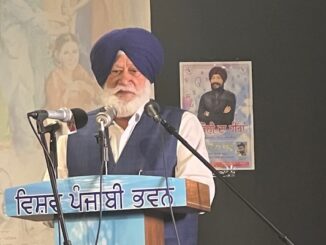
    Mr. Gurbax Singh Malhi, ex-MP, and Dr. Dalbir Singh Kathuria felicitating Mr. Surinderpal Singh Oberoi.

    He was felicitated by the Vishav Punjabi Bhavan in Brampton this weekend in recognition of his “selfless contributions” for the welfare of mankind. Mr. Gurbux Singh Malhi, who incidentally became the first “turbaned” Sikh to sit in a parliament outside India, was the guest of honor at an event that was well attended by members of the Indian diaspora.

    While narrating his story, Surinderpal Singh Oberoi recalled the days when he revolted and refused to pursue his post-matric studies. “My father wanted me to study further, but I had no interest in studies. One day, I told my parents that I have no interest in studies. They were upset. I told them that I want to do something different.

    “When I decided to leave the home and venture out in search of my world, I had 600 rupees in my pocket. My father, a strict disciplinarian, gave me some more and told me that I would show them my face only after I had achieved something.

    “I worked as a laborer on the roadside before I got a chance to work on a construction project in Dubai as a mechanic. After five years, when I returned home, my father made fun of me, saying, “What have I become—a mechanic? It pinched me, and I left home again. This time, I started my work in Dubai and worked hard.

    “The Almighty was kind. My construction business flourished.

    “The turning point in my life came on March 31, 2010, when I read in a newspaper that 17 Indian boys had been given a death sentence for the death of a Pakistani boy. How could 17 people be sent to the gallows for the death or murder of a single person? There were alarm bells in my brain. I was convinced that there must be some innocent boys being prosecuted for a crime they had not committed.

    “Since it was on my mind, I worked with law enforcement agencies, families of the boys facing the death sentences, lawyers, and others. I concluded that only three of the 17 boys were involved in the incident where a boy from Pakistan was killed. I paid the blood money to the family of the slain Pakistani boy and got all those released and deported back to India.

    “See the fate of those released. Those who, in my opinion and in stories narrated by them, were involved in the crime met unnatural ends on their return over a period, while the rest, 14, have settled down well, have families, and are living happily.

    “In all, I have got nearly 150 migrant laborers or workers facing gallows released by paying blood money to the families of the victims. The beneficiaries were not only Punjabi boys but also from other parts of India, Pakistan, Sri Lanka, and other countries as well.

    “I never took up cases where there were serious charges like murder, rape, or illicit smuggling of liquor or narcotics,” says Mr. Surinderpal Singh Oberoi.

    His “Sarbat da Bhalla” organization is now starting universities to provide quality and affordable education to vulnerable youth, besides setting up special centers for special needs. Old age pensions to deserving people, providing free rations to needy people, giving roofs over heads to a select section of people, and running highly subsidized diagnostic centers all over North India are some of the projects he runs with his own money.

    His organization does not accept donations—cash or kind.

    Even in Dubai, his organization provides free rations and food packets to needy migrant laborers. He has a big setup in India that controls and runs various charitable institutions run by the organization.

    Mr Gurbax Singh Malhi

    Mr. Gurbux Singh Malhi, who became the first turbaned Sikh to be elected to the House of Commons in 1993, eulogized the selfless contributions of Mr. Surinderpal Singh Oberoi. He also lauded Vishav Punjabi Bhavan for providing a platform for the organizations promoting Punjabi and Punjabiyat on Canadian soil.

    Dr Dalbir Singh Kathuria 

    Dr. Dalbir Singh Kathuria of Vishav Punjabi Bhavan traced the origin and growth of his organization, saying that it was working dedicatedly for the promotion of the Punjabi language and culture in Canada.

    Husnain, a folk singer from Pakistan, regaled the audience with a song dedicated to the Punjabi language. (Photographs by Prabhjot Singh)
  • Social Security Celebrates 90 Years of Service to the American People

    Social Security Celebrates 90 Years of Service to the American People

    WASHINGTON, D.C. (TIP): The Social Security Administration (SSA) commemorated its 90th anniversary on August 14, marking its unwavering commitment to the financial security and dignity of millions of Americans. Since President Franklin D. Roosevelt signed the Social Security Act into law on August 14, 1935, the program has grown into one of the most successful and trusted institutions in American history. At a ceremony in the Oval Office, President Trump signed a presidential proclamation reaffirming his commitment to protect Social Security and celebrating the customer service improvements that have occurred at the agency during his presidency.

    “For 90 years, Social Security has stood as a promise kept, ensuring that older Americans, people with disabilities, and families facing loss have the support they need,” said Commissioner Frank J. Bisignano. “As we honor this legacy, we are also building a future where service is faster, smarter, and more accessible than ever before. Through President Trump’s vision, we are protecting and preserving Social Security by delivering extraordinary customer service through technological improvements and enhanced process engineering.”

    This year, 72 million beneficiaries will receive over $1.6 trillion in payments—making Social Security a lifeline for retired workers, survivors, and people with disabilities and a cornerstone of retirement security across generations.

    Since his swearing-in on May 7, 2025, Commissioner Bisignano has led a bold digital-first transformation of SSA’s operations, guided by a vision to make the agency a premier service organization. Within 100 days as Commissioner of the agency, he has led SSA to achieve significant improvements in service delivery for the American people:

    Giving Americans 24/7 access to their personal my Social Security account, allowing more than half a million transactions to take place in the first three weeks, when previously the website was down 29 hours a week
    Reducing average wait time on the National 800 Number from 30 minutes last year to single digits last month
    Shortening field office wait times by 30%, and booking more appointments than ever before
    Upgrading phone systems in all field offices, allowing for 30% of all calls to be handled instantaneously through technology
    Enabling 90% of calls to be resolved via self-service or convenient callbacks
    Reducing the initial disability claims backlog by 26%, from 1.2 million to 940,000 cases
    Decreasing Disability hearing wait times by 60 days, reaching historic lows
    Sending over 3.1 million payments totaling $17 billion to eligible beneficiaries five months ahead of schedule under the Social Security Fairness Act

    Commissioner Bisignano’s modernization agenda emphasizes operational agility, data-driven performance, and a digital-first approach. His leadership has prioritized:
    Integration of technology to streamline phone inquiries and reduce errors
    Strengthening of data security following past breaches, with firm commitments to safeguard beneficiary information and eliminate fraud, waste, and abuse
    Workforce optimization to increase frontline capacity while maintaining service excellence

    “Our strategy is clear: serve customer needs quickly and completely, no matter how they contact us,” said Commissioner Bisignano. “We are empowering our workforce and embracing innovation to ensure Social Security properly supports the American people and remains strong for the next 90 years.”

    As SSA celebrates this milestone, it remains focused on its mission of delivering benefits accurately, efficiently, and timely. The agency continues to work with Congress, outside advocates, and the American public to strengthen Social Security, and deliver on President Trump’s mandate to protect and preserve for generations to come.

    For more information about SSA’s communications, initiatives, and accomplishments, please visit the agency’s Communications Corner at ssa.gov/news.

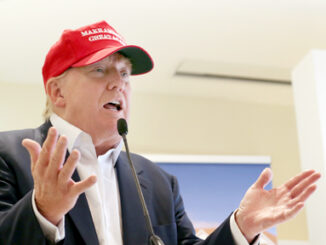
  • Donald Trump Says Chicago Is ‘Probably Next’ After Washington, DC Crackdown

    Donald Trump Says Chicago Is ‘Probably Next’ After Washington, DC Crackdown

    Chicago Immigrants Worried About ICE Raids While At Work

    WASHINGTON, D.C. (TIP): President Donald Trump said Friday, August 22, that Chicago, Illinois will “probably” be the next city the administration will deploy federal troops, officers and agents to.

    Trump announced earlier this month that he was sending federal troops to Washington, D.C., after alleging that the nation’s capital was “overtaken by violent gangs and bloodthirsty criminals, roving mobs of wild youth, drugged-out maniacs and homeless people.”

    Trump’s intervention marked an unprecedented federal crackdown in the local governance of the District of Columbia. The deployment of federal troops sparked widespread backlash over constitutional limits and home rule rights. Critics argue that it breaches democratic principles and could set a dangerous precedent, while supporters frame it as a necessary measure for public order. “Chicago’s a mess, you have an incompetent mayor, grossly incompetent,” Trump told reporters on Friday, referring to Chicago’s Democratic mayor, Brandon Johnson.

    “And we’ll straighten that one out probably next,” the president said. “That’ll be our next one after this … the people of Chicago, Mr. Vice President, are screaming for us to come. They’re wearing red hats.”
    (Source: Newsweek / Sonam Sheth )

  • The U.S.-India Relationship is Durable, Underpinned by People to People Ties

    The U.S.-India Relationship is Durable, Underpinned by People to People Ties

    NEW YORK (TIP): At Indiaspora, a nonprofit U.S. based organization of global Indian diaspora leaders across diverse professions, we take great pride in our deep bonds with both the United States—our homeland—and India—our country of origin. With over 5 million Indian Americans contributing meaningfully to the U.S. economy, culture, and civic life, the diaspora serves as a living bridge between the world’s two largest democracies. The Indian diaspora in America are key contributors to making the relationship between the countries unique, special, deep rooted and impactful.

    Over the past several decades, this community has helped cultivate vital connections across business, technology, academia, philanthropy, and the arts. At Indiaspora, we have convened high level people to people dialogues in both nations for more than a decade to foster mutual understanding and collaboration.

    We believe the U.S.-India relationship is not just important—it is essential. As global dynamics shift, this economic partnership should stand as a cornerstone for stability, innovation, and progress in the 21st century.

    We believe that the current setback in what is otherwise an enduring, robust and broad-based people to people relationship will be temporary. We remain optimistic that the ongoing discussions, when concluded, will reflect the aspirations of both nations and the global Indian diaspora that believes in them.

  • Another US military mini-shuttle takes off for secret space mission

    Another US military mini-shuttle takes off for secret space mission

    CAPE CANAVERAL, FL (TIP): Another US military mini-shuttle blasted off on Thursday, August 21 night to conduct classified experiments in space. Launched by SpaceX, the space plane with no one aboard took off from Cape Canaveral, Florida. It’s the eighth such flight for the test vehicles known as X-37B. This one will test laser communications and safe navigation without GPS, according to the US Space Force.

    It’s not yet clear how long the mini-shuttle will remain aloft. The last X-37B circled the globe for a little over a year before returning to Earth in March. Previous missions have lasted months to years.

    The Boeing-made reusable space planes were first launched in 2010 and are 9 meters long with a wingspan of almost 4.5 meters.

  • Trump names Sergio Gor as the next U.S. ambassador to India

    Trump names Sergio Gor as the next U.S. ambassador to India

    WASHINGTON, D.C. (TIP): President Donald Trump said on Friday, August 22, he would nominate Sergio Gor, one of his closest aides, to be the next U.S. ambassador to India, where he will oversee frosty relations that have worsened with the planned doubling of U.S. tariffs on India next week.

    Mr. Gor, who is currently the director of the White House Presidential Personnel Office, would also serve as a special envoy for South and Central Asian affairs.

    Mr. Trump said in a post on his Truth Social account that Mr. Gor would remain in his current position until he is confirmed for the India post by the U.S. Senate.

    “Sergio is a great friend, who has been at my side for many years. He worked on my Historic Presidential Campaigns, published my Best-Selling Books, and ran one of the biggest Super PACs, which supported our Movement,” Mr. Trump said, lauding Mr. Gor’s work in hiring staff for his second term.

    “For the most populous Region in the World, it is important that I have someone I can fully trust to deliver on my Agenda and help us, MAKE AMERICA GREAT AGAIN,” Mr. Trump wrote.

    U.S.-India ties have been strained by Mr. Trump’s trade war, with talks on lower tariff rates collapsing after India, the world’s fifth-largest economy, resisted opening its vast agricultural and dairy sectors. Bilateral trade between the two countries is worth more than $190 billion.

    Mr. Trump first imposed additional tariffs of 25% on imports from India, then said they would double to 50% from August 27 as punishment for New Delhi’s increased purchases of Russian oil. Trump has not imposed similar tariffs on China, the biggest purchaser of Russian oil.

    U.S. Treasury Secretary Scott Bessent on Tuesday, August 19, accused India of profiteering from its sharply increased purchases of Russian oil during the war in Ukraine and said Washington viewed the situation as unacceptable.

  • Rajasthan’s Manika becomes Miss Universe India 2025; will represent India on the international stage in Thailand

    Rajasthan’s Manika becomes Miss Universe India 2025; will represent India on the international stage in Thailand

    • Dr. Yashpal Goyal, TIP Special Correspondent

    JAIPUR (TIP): The grand ceremony of the beauty pageant was held at Zee Studio in Jaipur on August 18, 2025. Forty-eight contestants from across the country were able to make it to the finals for this prestigious title, and after a tough competition among them, Manika Vishwakarma of Rajasthan won and made India proud.
    Manika will now represent India on the international stage in the Miss Universe 2025 competition which will be held on November 21, 2025 at the Impact Challenger Hall of Pack Kret in Nonthaburi, Thailand.
    Tanya Sharma (#43) was declared the 1st runner-up, while Mehak Dhingra (#22) was the 2nd runner-up. Amishi Kaishik (#3) and Sarangatham Nirupama (#37) secured the 3rd and 4th runner-up positions, respectively.

    On this occasion, Miss Universe India’s owner Nikhil Anand told the media, “This is the world’s most prestigious beauty pageant. This competition is famous all over the world for its grandeur and excellence. Our winner today will definitely make India proud in the whole world; we are confident that India will win the Miss Universe 2025 crown”.
    “India’s growing influence at the global level is such that today the eyes of the whole world are on India. To bring our culture and tradition to the world stage, Jaipur has been chosen for this grand event and we are planning to organize many other international level programs in the future as well”, Dhingra elaborated.

    The jury included famous and reputed names like Miss Universe India’s Honor Nikhil Anand, Bollywood actress Urvashi Rautela, famous Bollywood stylist Ashley Robello, famous Bollywood writer and director Farhad Samji.

    The show started with a bang dance number, in which all the contestants participated. After this, the contestants introduced themselves. The next stage of the competition was the swimsuit round, in which the contestants showcased their fitness and confidence. The evening gown mesmerized the audience.

    Sashes were presented to the winners of the sub-contests and the top 20 contestants were announced. The top 20 once again spread their charm on the stage in evening gowns. After this, former Miss Universe India Riya Singha gave an inspirational speech, in which she emphasized the importance of competition and motivational things like you can achieve anything with the power of confidence.
    Miss Universe India Public Relations Officer Sarvesh Kashyap said that after the top 20, during the swim shoot round, the top 11 contestants won the hearts of the judges with their intelligence and confidence in the final question-answer round. Eventually, Manika Vishwakarma was crowned as Miss Universe India 2025, and now she will represent India on the international stage under the Miss Universe pageant, which will be held on 21 November 2025 in Nonthaburi, Thailand.

  • Excluded Bihar voters can submit online claims with Aadhaar or 11 other documents: SC

    Excluded Bihar voters can submit online claims with Aadhaar or 11 other documents: SC

    NEW DELHI (TIP): The Supreme Court on Friday, August 22, directed the Election Commission to accept online applications, supported by requisite documents or an Aadhaar card number, from those excluded from the draft electoral rolls during the ongoing special intensive revision (SIR) in poll-bound Bihar.

    A Bench of Justice Surya Kant and Justice Joymalya Bagchi clarified that the physical submission of forms or objections was not necessary, saying any of the 11 documents mentioned in the Election Commission’s notification or an Aadhaar card number could be submitted with inclusion applications. The Bench added that wherever physical forms were submitted, booth-level officers must acknowledge them. The court also asked political parties to assist people excluded from the draft electoral rolls. Hearing petitions challenging the EC’s June 24 notification on the SIR, the Bench expressed surprise that despite Bihar having over 1.68 lakh booth-level agents (BLAs) appointed by political parties, the EC reported that only two objections had been filed.

    “We are surprised at the inaction of political parties. After appointing BLAs, what are they doing? Why this distance between political workers and the local people?” it wondered even as petitioners complained that BLAs were not being permitted to submit their objections.

    The Bench issued notices to 12 registered political parties, formally making them parties to the case. It directed these recognized parties to issue specific instructions to their BLAs to assist voters, except those deceased, in submitting the requisite form and documents to get their names reinstated on the voters’ list. The court asked the political parties to file status reports on the claim forms they facilitated and posted the matter for further hearing on September 8. Representing the EC, senior counsel Rakesh Dwivedi said the EC had complied with the court’s order “in letter and spirit” and that any voter wrongly excluded could apply for re-inclusion and correction with supporting documents. He noted that not a single political party had filed an objection and said it was the duty of political parties to aid the EC.

    “There are 1.6 lakh BLAs and if each verifies 10 claims, it should be over in 5-6 days… Crores of people have been filing documents… Please wait and see. Repose some trust on the EC…not one voter will fall through the cracks,” Dwivedi submitted, seeking more time before any further directions were issued. Petitioners’ counsel, including senior advocates Kapil Sibal, AM Singhvi, Gopal Sankaranarayanan, Prashant Bhushan and Vrinda Grover, argued that many people were unaware of the process. They pointed out that the EC was asking excluded people to file Form 6 for a fresh entry with a declaration and Aadhaar, creating difficulties for migrant workers outside Bihar and those affected by floods in the state. On August 1, the EC published the “draft electoral rolls” for Bihar, enlisting 7.24 crore voters. The final electoral roll is scheduled for publication on September 30.

    Of the 65 lakh voters removed from the draft rolls, the EC stated that 22.34 lakh were dead, 36.28 lakh had permanently shifted or were absent, and 7.01 lakh were enrolled in more than one place. The Election Commission claimed that roughly 6.5 crore people from the total 7.9 crore voting population did not need to file any documents for themselves or their parents who were featured in the 2003 electoral rolls.
    (Source: TNS / Satya Prakash )

  • Amid tariff tensions, Indian envoy Vinay Mohan Kwatra, US lawmakers discuss trade

    Amid tariff tensions, Indian envoy Vinay Mohan Kwatra, US lawmakers discuss trade

    NEW YORK (TIP): Indian envoy Vinay Mohan Kwatra on Friday discussed “mutually beneficial trade engagement” and “energy security” with US lawmakers amid tariff tensions between Washington and New Delhi. The Indian Ambassador met Senator Bill Hagerty and thanked him for “consistent and strong support to the India-US partnership.”

    “Briefed him on continuing bilateral discussions for fair, balanced and mutually beneficial trade engagement,” the Indian envoy posted on social media. He also shared “perspectives on India’s energy security and the growing trade between India and the US in hydrocarbons” with Hagerty.

    Kwatra also held a “productive conversation” with Congressman Greg Landsman and briefed him on developments in bilateral trade engagement.

    “Briefed him on the recent developments in bilateral trade engagement and energy security, and the growing hydrocarbon partnership between our countries,” he posted on social media.

    Earlier, Kwatra met Representative Josh Gottheimer, Ranking Member of the National Security Agency and Cyber Subcommittee, House Intelligence Committee, and discussed “two-way trade in oil and gas” and “mutually beneficial trade ties.”

    “Shared updates on the latest developments in bilateral energy cooperation, including two-way trade in oil and gas and balanced, fair and mutually beneficial trade ties,” Kwatra stated.

    Kwatra has met 16 US lawmakers since August 9, as revealed by his social media posts.

    The series of meetings comes amid strain in the India-US relations after US President Donald Trump imposed tariffs totaling 50 per cent on India. This includes 25 per cent for New Delhi’s purchase of Russian oil that will come into effect from August 27.

    Defending its purchase of Russian crude oil, India has been maintaining that its energy procurement is driven by national interest and market dynamics.
    (Source: PTI)

  • Thousands join the 43rd India Day Parade in NYC to Celebrate India’s 79th Independence Day

    Thousands join the 43rd India Day Parade in NYC to Celebrate India’s 79th Independence Day

    Hon. Satnam Singh Sandhu, Member of Parliament, Member of the Standing Committee on External Affairs and Consultative Committee on Education, and New York City Mayor Eric Adams at the Parade

    NEW YORK CITY, NY (TIP): The Federation of Indian Associations (FIA) NY-NJ-CT-NE, the largest non-profit organization on the East Coast of USA, successfully hosted the 43rd Annual India Day Parade in New York city on Sunday, August 17. The parade drew hundreds of thousands of participants and spectators to Madison Avenue in a spectacular celebration of Indian culture and heritage. This year’s parade theme, “Sarve Bhavantu Sukhina ” (May All Be Happy and Prosperous), embodied the spirit of universal well-being and unity that defines the Indian-American community.

    At the helm of affairs as Grand Marshals were iconic stars of the Indian film industry: the immensely popular Rashmika Mandanna and the charismatic Vijay Deverakonda. Their presence electrified the crowd, with fans thronging the barricades, cheering wildly, and waving flags, many expressing overwhelming excitement to see their favorite idols in person. They were joined by a distinguished group of honorees, and together these renowned celebrities captivated audiences with patriotic songs and cultural presentations, including renditions of “Vande Mataram” and “Bharat Mata Ki Jai,” creating an atmosphere of national pride and cultural unity.

    The parade was honored by the presence of Hon. Eric Adams, New York City Mayor, who praised the Indian-American community’s significant contributions to the city. “Such a beautiful turnout, beautiful weather. We want to say keep doing the great things you’re doing in the city,” Mayor Adams remarked, congratulating organizers on a wonderful parade.

    Hon. Consul General of India New York, Amb. Binaya S. Pradhan delivered inspiring remarks, welcoming the diaspora and acknowledging the momentous celebration. “It’s a truly momentous day to see India being celebrated on Madison Avenue with hundreds of thousands of people. This only signifies the prominence of the Indian-American community and what you have achieved in this country,” Ambassador Pradhan stated.

    Consul General Binaya Srikanta Pradhan, Mayor Eric Adams, and Grand Marshal Rashmika Mandanna at the Parade.

    The event was further elevated by the special participation of Hon. Satnam Singh Sandhu, Member of Parliament, Member of the Standing Committee on External Affairs and Consultative Committee on Education, making his second appearance at the parade. He traveled specifically to attend the two-day celebration and serve as a voice connecting the diaspora with the motherland. Also participating were Shri Thanedar, U.S. representative for Michigan’s 13th congressional district, Montgomery Township Mayor Neena Singh, and Sibu Nair, Director of Asian American and Pacific Islander Affairs, New York State Executive Chamber, demonstrating strong support from local and state leadership.

    FIA President Saurin Parikh expressed his gratitude for the overwhelming community support and participation. “This parade represents the strength and unity of our community. Seeing families from across the tri-state area come together to celebrate our rich heritage fills me with immense pride. The success of this event reflects our collective commitment to preserving and sharing Indian culture with future generations.”

    FIA Chairman Ankur Vaidya emphasized the parade’s significance in strengthening cultural bonds. “The 43rd India Day Parade has once again demonstrated the vibrant spirit of the Indian-American community. This celebration honors our traditions while showcasing how beautifully our culture integrates with American values. We are proud to organize this platform that brings together diverse communities in celebration of our shared heritage.”

    A marching group at the Parade.

    The parade featured 34 spectacular floats, 21 marching groups, and 20 cultural performances representing India from east to west and north to south. Among the highlights was the majestic Divine Jagannath Rath Yatra Chariot by ISKCON NYC, adding spiritual significance to the celebration.

    The Indian Panorama float depicted the martyrdom of Guru Tegh Bahadur ji, the Ninth Master of the Sikhs who sacrificed his life to protect the Hindus from the persecution of the Mughal rulers of the time.

    The parade route stretched through Manhattan, captivating onlookers with its stunning array of culturally, religiously, and artistically significant floats, each symbolizing the incredible diversity of India’s history and regions. Participants adorned in vibrant traditional costumes moved to the energetic rhythms of Indian music, creating an immersive experience that honored India’s deep heritage while showcasing its dynamic modern contributions to global arts and entertainment.

    Title sponsor Cricmax Connect’s float reflected the American youth cricket revolution, scaling new possibilities across every American playground. A large number of children played box cricket at Madison and Park Avenue, showcasing cricket development initiatives that promote the sport among American youth and highlight the growing cricket movement in America.

    The celebration extended beyond the parade with 38 cultural booths featuring community exhibitions and interactive programs showcasing India’s rich heritage. Following the parade, the festivities continued at the Cultural Stage with a variety of captivating performances spanning both timeless traditional forms and exciting contemporary expressions of Indian music and dance, further showcasing the nation’s rich artistic tapestry. Adding a touch of festive fun was one of the main attractions: the lively Paani Puri Contest, which saw enthusiastic participation from the community.

    The parade received extensive coverage from national and international media including Times Network, Sony, and Zee TV. Crucial amplification was provided by media outlets like TV Asia, PTI, ANI, Parikh Worldwide Media, South Asian Times, The Indian Eye, New India Abroad, The Indian Panorama, Mahaa News, AVS TV, Melody Mocktail, Radio Zindagi, Radio Dil, EBC Radio, Daily Hunt and many others, providing comprehensive coverage of the festivities.

    Grand Marshals Rashmika Mandanna and Vijay Deverakonda with dance performers at the Parade

    The Federation of Indian Associations, as the organizing body, demonstrated its continued dedication to celebrating Indian culture while fostering integration within American society. The organization’s transparent, youth-oriented approach ensures efficient and impactful service to Indian individuals and families across North America.

    The 43rd India Day Parade stands as the largest celebration of Indian culture in New York City, reinforcing the strong bonds between India and America while showcasing the vibrant contributions of the Indian-American community to the cultural fabric of the United States. This massive undertaking was made possible through the generous support of numerous sponsors, including The Consulate General of India-NY, Dunkin, Mount Sinai, Axria, SBI, RWJ Barnabas, Times Network, JetBlue, ICICI Bank, Option Group, AIF, Bansal Foundation, Mehta Foundation, Tak Group, Insta Service, Faith Home Healthcare, Bombino, Andaaz, Siddhivinayak Temple-USA, BJANA, GANA, AAPI, MOCAAPI, and Empire State Building.
    (Based on a press release issued by Rohit Korat)

  • Embassy of India in Guatemala Celebrates India’s  79th Independence Day

    Embassy of India in Guatemala Celebrates India’s 79th Independence Day

    GUATEMALA CITY (TIP): The Embassy of India in Guatemala hosted the 79th Independence Day of India on 15th August 2025, celebrating the spirit of freedom, unity, and national pride. The event took place at the chancery premises and saw an enthusiastic turnout of nearly 250 members of the Indian community, along with local friends of India, reflecting the strong cultural and diplomatic ties between India and Guatemala.

    Colorful dance and music performances on patriotic songs added vibrancy to the celebrations

    The ceremony commenced with the hoisting of the Indian National Flag by Shri Ravinder Kumar, Charge d’Affaires, who also read aloud the Hon’ble President of India’s Address to the Nation. This moment provided a solemn reminder of India’s struggle for independence, the sacrifices of countless freedom fighters, and the shared values of democracy, liberty, and unity that continue to guide the nation. The Charge d’Affaires highlighted the significance of the day and encouraged the Indian community and friends of India to participate actively in fostering cultural exchange and mutual understanding.

    Colorful dance and music performances on patriotic songs added vibrancy to the celebrations.

    A highlight of the celebration was the rich display of cultural performances. Members of the Indian community and local Guatemalans presented both solo and group renditions of patriotic songs, bringing alive the fervor and resilience of the nation. Children performed vibrant dance and poem recitals, capturing the audience’s imagination and underscoring the role of the younger generation in carrying forward India’s cultural heritage. Group songs presented by the Indian community members filled the atmosphere with a vibration of patriotism.

    Guests visited the Tiranga Exhibition at the Chancery, exploring the rich history and significance of India’s National Flag.

    The Embassy also organized the popular “Selfie with Tiranga” initiative, where attendees captured photographs with the Tricolor, symbolizing personal pride and national identity. This activity encouraged community participation and strengthened the bonds between Indian expatriates and local Guatemalans, reflecting the shared respect for cultural heritage and the spirit of international friendship. The initiative was particularly well-received, with many attendees expressing their excitement and pride in being part of a collective celebration that transcended borders.

    Exhibition on ‘Partition Horrors Remembrance Day’, honoring the resilience of millions and remembering the sacrifices during one of history’s largest migration.

    As part of the commemoration, the Embassy also curated a special exhibition on ‘Partition Horrors Remembrance Day’, providing visitors with a poignant insight into one of the most tragic yet defining moments in India’s modern history. The exhibition featured photographs, narratives, and documented accounts of the immense suffering and resilience shown by millions during the Partition of 1947. The Embassy also organized a special exhibition on Tiranga to depict the history of the Indian National Flag. The Exhibition played crucial role in promoting the initiative of Har Ghar Tiranga. Visitors, including members of the Indian community and Guatemalan friends, showed great interest in learning about the journey of the Tiranga, which stands today as a powerful emblem of India’s unity and identity.

    For the first time in Guatemala, two prominent landmarks—the head office of Banco Industrial (BI) and the historic Central Post Office Palace—were illuminated in the colors of the Indian Tricolor as part of the Independence Day celebrations. This gesture, a symbol of friendship and growing bonds between India and Guatemala, evoked immense pride among the Indian community and admiration from local citizens. The vibrant illumination of these iconic buildings not only showcased India’s rich heritage but also reflected the deepening goodwill between the two nations.

    The celebration concluded with the serving of authentic Indian cuisines, offering guests a delightful culinary experience. The celebration of Independence Day at the Embassy of India in Guatemala successfully conveyed the essence of patriotism, unity, and cultural pride. By bringing together members of the Indian community and local friends of India, the event reinforced bilateral ties and showcased India’s values and traditions in a global context. It was not only a commemoration of India’s independence but also a celebration of the enduring friendship between India and Guatemala, leaving a lasting impression on all participants.

    (Based on a press release issued by the Embassy of India in Guatemala)

  • Carney announces removal of retaliatory tariffs on US goods compliant with CUSMA

    Carney announces removal of retaliatory tariffs on US goods compliant with CUSMA

    OTTAWA (TIP): Prime Minister Mark Carney said Friday, August 22, that Canada will lift many of its retaliatory tariffs on U.S. goods that fall under free trade rules, after agreeing with U.S. President Donald Trump to “intensify” stalled trade talks. Canadian counter-tariffs on U.S. autos, steel and aluminum will remain for now, Carney said, describing the move as a bid to “match” Trump’s tariffs on Canada. The change will take effect starting next week, the prime minister said. “As we work to address outstanding trade issues with the United States, it’s important — it’s vital — we do everything we can to preserve this unique advantage for Canadian workers, Canadian businesses,” Carney told reporters in Ottawa.

    “In short, the situation we’re in now is that Canada and the United States have re-established free trade for the vast majority of our goods.”

    Carney’s announcement comes a day after he held what he called a “productive” call with Trump, their first known discussion since Trump raised tariffs on Canada to 35 per cent on Aug. 1.

    Those tariffs only to apply to Canadian goods that fall outside the Canada-United States-Mexico Agreement on free trade (CUSMA), continuing an exemption Trump first announced in the spring.

    Canada had kept its counter-tariffs on nearly $30 billion of U.S. goods that fall under the free trade pact, including orange juice and microwaves, despite Trump’s CUSMA carve-out.

    Carney said those tariffs will no longer apply starting Sept. 1. “We welcome this move by Canada, which is long overdue,” a White House official told Global News on background.

    “We look forward to continuing our discussions with Canada on the administration’s trade and national security concerns.”

    Trump called the move “nice” while speaking to reporters in the Oval Office later on Friday, and said he would be speaking again with Carney “soon.”

    “We’re working on something,” he said. “We want to be very good to Canada. I like Carney a lot. I think he’s a good, good person and we had a very good talk yesterday.”

    Asked Friday if he received assurances from Trump that the move will kickstart negotiations toward a new trade and security agreement, Carney replied, “Yes.”

    U.S. Ambassador to Canada Pete Hoekstra had complained about Canada’s counter-tariffs on U.S. goods that fall under CUSMA, also known as the USMCA, in an interview with Global News last week.

    “Canada is the country that has pulled the rug out from USMCA,” Hoekstra said.

    “They also started putting tariffs on CUSMA products … We haven’t done that, but Canada has decided, ‘That’s fair game. We will call into question CUSMA.’”

    Carney says move sets stage for renewed talks with U.S.
    The removal of Canada’s counter-tariffs come after the federal government rescinded its controversial digital services tax following Trump’s threats to end trade talks altogether.

    Canada also hasn’t raised its counter-tariffs on steel and aluminum after Trump raised his global tariffs on those products to 50 per cent, despite promises from Carney to “adjust” them in the near future.

    Asked by Global News if he was appeasing Trump with these moves on Friday, Carney said the goal was to match U.S. tariff policies while setting the stage both for the current trade and security negotiations and next year’s scheduled CUSMA review.

    “The president and I had a long conversation yesterday and we see the opportunity to build on where the relationship already is,” he said.

    “We intend to advance those discussions as rapidly as possible. The foundation is very strong, the opportunity is great and we want to focus on those opportunities.”

    Carney said “I reject your characterization of what I’m saying” when pressed on whether he is asking Canadians to accept the best of a bad deal, after urging Canadians to put their “elbows up” in its dispute with the U.S.

    “We have the best deal with the United States right now,” he said. “We have the best deal. Look at the numbers. Our tariff rate is 5.5 per cent. We have 85 per cent of our goods that are free trade — it’s not what we used to have, (but) nobody has a deal with the United States that they used to have.

    “With this decision, we’re respecting our agreement with the United States and we are matching what they have done. That puts us in a good position for the next phase of these negotiations.”

    Carney added the move doesn’t conflict with his “elbows up” pledge, continuing the analogy by describing the negotiations as a long hockey game.
    “There is a time in a big game, and this is a big game, when you go hard in the corners, the elbow is up, we drop the gloves in the first period and just send a message,” he said. “And we’ve done that pretty uniquely in the world.
    “But there’s also a time in a game where you want the puck, you want to stick handle, you want to pass, you want to put the puck in the net. And we’re moving later into the game, and we’re at that time in the game, and that’s where the engagement is.”

    Conservative Leader Pierre Poilievre has accused Carney of putting his “elbows down” and “bending over backwards” to appease Trump amid the negotiations.

    He called Friday’s announcement “another climb-down and capitulation by Mark Carney,” noting Trump appeared to give no concessions in return.

    “His elbows have mysteriously gone missing,” he told reporters in Ottawa.

    “His signature promise in the last election was that he was going to put elbows up, negotiate to win and match American tariffs. … Now he’s abandoning it. So, either he admits that he was wrong all along or that he knowingly spread falsehoods to get elected. He needs to explain which of those two things it is.”

    Reaction to Carney’s announcement Friday was mixed.

    The Canadian Federation of Independent Businesses (CFIB) and the U.S.-based Consumer Choice Center welcomed the move, saying removing counter-tariffs will provide relief to small business owners and consumers.

    The CFIB released a survey of members Wednesday that suggested nearly 20 per cent of Canadian small businesses are at risk of having to shut down in as little as six months as they struggle with higher costs brought on by the tit-for-tat tariffs.

    “This is a step in the right direction and will take some of the pressure off Canadian small businesses as trade talks continue,” CFIB executive vice-president Corinne Pohlmann said in a statement Friday, while calling on Ottawa to release tariff revenues to those businesses.

    The Business Council of Canada also said removing the counter-tariffs “was a necessary step to preserve and strengthen our preferential trade relationship with our most important trading partner.”

    However, Unifor national president Lana Payne said on social media that Carney’s move “only enables more U.S. aggression” and urged Ottawa to maintain leverage until Trump drops all its tariffs.

    Ontario Premier Doug Ford, who has pushed Ottawa to step up and expand its counter-tariffs, spoke to Carney after Friday’s announcement “to stress the need for an agreement with the United States that provides relief to our tariff-impacted sectors, including steel, auto, forestry and copper.”

    “If the federal government can’t achieve that, they need to hit back hard against U.S. tariffs and provide additional supports for the workers and businesses in these sectors,” Ford said in a statement.

    The Canadian Chamber of Commerce was more reserved, saying in a statement that the focus must remain on securing a good deal between Canada and the U.S. and that tariffed sectors like steel, aluminum and agriculture are bearing the brunt of the trade dispute.

    “At a time of heightened trade tensions, it is essential these adjustments be carefully calibrated in close consultation with Canada’s business community,” senior vice president of international policy Catherine Fortin LeFaivre.

    “Decisions made today will have ripple effects for supply chains, employers and consumers, and must be managed with care to preserve long-term competitiveness.”

    Carney said Thursday that he and Trump “focused on trade challenges, opportunities, building a new economic and security relationship between Canada and the U.S., and supporting long-term peace and security for Ukraine and Europe” in a post on social media that called the discussion “substantive and lengthy.”

    A statement from the Prime Minister’s Office said Trump and Carney “agreed to reconvene shortly.”

    The White House said the duties increased because Ottawa did not do enough to curb the flow of fentanyl and pointed to Canada’s implementation of retaliatory tariffs.

    “There’s two countries that have been relatively harsh against the United States, and that’s China and Canada,” Hoekstra told Global News last week. China has also faced increased U.S. tariffs compared to other countries.

    Data from the U.S. Customs and Border Protection agency shows a minuscule amount of fentanyl is seized at the northern border compared to the border with Mexico, though seizures from Canada spiked this spring.

    Foreign Affairs Minister Anita Anand and U.S. Secretary of State Marco Rubio also held their first official meeting in Washington on Thursday, after Anand took over the portfolio in May.

    The two discussed Ukraine, Gaza, Haiti and China, according to readouts from their offices, which did not mention the ongoing trade war.
    (Source: Global News)

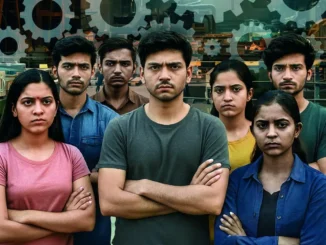
  • Viksit Bharat needs more than GDP growth

    Viksit Bharat needs more than GDP growth

    Without investing in education, health, and jobs, the 2047 dream will remain a slogan

    “A superpower is not built on abstract (and massaged) GDP numbers alone. It needs a foundation that guarantees high-quality education, health, and jobs. It needs a scaffolding of administrative efficiency and judicial responsibility. It needs a vision that believes in equality and inclusive growth. None of these prerequisites are in sight yet.”

    By Vaishna Roy

    In his August 2023 Independence Day speech, Prime Minister Narendra Modi said: “In 2047, when the country celebrates 100 years of independence, my country will be a developed India.”

    In July 2024, Martin Wolf of Financial Times referred to Modi’s quote and wrote: “Is [this] aspiration a feasible one? Yes. Is it a plausible one? No.”

    Wolf went on to compare India with Greece, which is the poorest country that the IMF ranks as “advanced”: “If [India’s] GDP per head were to match that of Greece by 2047, the rate of growth would need to rise to 7.5 per cent a year.” But, as the economist Ashoka Mody writes in our Cover Story, once statistical irregularities are stripped away, many economists estimate India’s real GDP to be hovering around 4-5 per cent only.

    More importantly, even if India were to match the US itself in economic output (GDP) and purchasing power parity, numbers achievable by India’s sheer size, it would still lag in overall productivity, technology, and human development. This is the blind spot the government deliberately refuses to acknowledge. Or address. Thus, what makes the superpower dream feasible is India’s human capital, its vast sea of people. What makes it implausible is India’s continuing neglect of its human capital.

    As the economist Dani Rodrik argued, India fell behind countries like China, Vietnam, and South Korea not because of a lack of ambition, but because sustained growth requires structural transformation, including jobs moving from agriculture to manufacturing. In India, manufacturing accounts for just 12 per cent of employment while agricultural employment is, worryingly, rising.

    A Harvard Kennedy School paper shows South Korea’s manufacturing jobs falling in 1989, when its per capita income was almost $8,000, while India’s manufacturing jobs began to drop in 2002, when its per capita income was less than $900. Thus, alarmingly, India had begun to de-industrialize long before per capita incomes were anywhere close to global standards. And nothing was created to replace those manufacturing jobs. In his interview to Frontline, former RBI Governor Raghuram Rajan speaks of multilevel responses: “We can create many more jobs, but for that we need skill building.”

    And that is the point Mody makes too, when he writes that without mass education leading to more jobs and higher productivity, and a focus on more women in the workforce leading to generational continuity, sustained economic growth (to push India into the “developed” category) is just not possible. Ironically, it took a comment by the pesky Donald Trump characterizing India as a “dead economy” to initiate sudden parliamentary attention on the subject.

    The Prime Minister’s ambition of India becoming a global superpower by 2047 is laudable, but it will need his government to rapidly upgrade the country’s education and health levels to global standards. This is unlikely to happen because of the Hindutva vision that necessarily drives his policy decisions. Ideological compulsions make the BJP a reactionary force, more interested in romanticizing the past than in crafting a new future. Look at the sharp rise in the country of an unscientific temper, the eagerness to replace history with mythology, science with mysticism, knowledge with piety. Allowing ideology to creep into the very essentials that ensure the enhancement of human capital can only push India backwards.

    A superpower is not built on abstract (and massaged) GDP numbers alone. It needs a foundation that guarantees high-quality education, health, and jobs. It needs a scaffolding of administrative efficiency and judicial responsibility. It needs a vision that believes in equality and inclusive growth. None of these prerequisites are in sight yet.

    (Vaishna Roy is the Editor of Frontline)

  • Gross domestic propaganda

    Gross domestic propaganda

    India’s growth dream rests more on political spin and statistical sleight-of-hand than on real economic fundamentals.

    “Swami Vivekananda often invoked a Katha Upanishad aphorism: “Arise, awake, and stop not till the goal is reached.” India’s policymakers and media would do well to heed this call. Continued speculations about India’s superpower status mislead and distract. The evidence paints a sobering picture of the economy. This lesson is not that investors are fickle, or policy tinkering will do the trick; it is about fundamentals India refuses to fix. Persistent structural deficiencies—rooted in weak human capital and poor job creation—have kept India from achieving shared and sustainable growth.”

    “It is past time we stopped fixating on GDP growth. It measures economic welfare poorly. Nearly 60 years ago, in May 1968, then Senator Robert Kennedy memorably said: “Gross National Product counts air pollution and cigarette advertising, and ambulances to clear our highways of carnage…. Yet the gross national product does not allow for the health of our children, the quality of their education or the joy of their play. It measures neither our wit nor our courage, neither our wisdom nor our learning… it measures everything in short, except that which makes life worthwhile”.”

    Ashoka Mody

    Sometimes a tiny number tells a big story. At $353 million in 2024-25, net foreign direct investment (FDI) is one such number. Defined as gross foreign investment inflow minus funds repatriated by foreigners and investments made abroad by Indian nationals, net FDI has plummeted to one-seventh of the previous lowest amount in the last quarter century ($2.4 billion in 2003-04). Seen from another perspective, net FDI in 2024-25 was less than one-hundredth its peak of $44 billion in 2020-21. The problem lies less with gross inflows, which fluctuate moderately but are shrouded in mystery as the island nation of Mauritius (population 1.3 million) remains India’s top foreign investor—astonishingly supplying 25 per cent of all inflows. The troubling action centers on the outflows—and here there is no mystery. Both foreign investors in India and Indians are moving money abroad, leaving behind shrinking net inflows. In 2024-25, foreigners repatriated $52 billion, and Indians invested $29 billion overseas, together totaling to about twice the outflow recorded two years earlier.

    This gush of funds out of India warrants soul-searching. We keep hearing that India is poised to replace China as the next manufacturing giant. Learned voices speak earnestly of Viksit Bharat, an advanced Indian economy by 2047. Why then is money exiting India? The Reserve Bank of India’s commentary is either cynical or illiterate. The exodus of funds, the RBI claims, signifies “a mature market where foreign investors can enter and exit smoothly”, and therefore “reflects positively on the Indian economy”. This is nonsense.

    The RBI seems to have missed an entire economics literature on the Lucas paradox, named after the University of Chicago’s Robert Lucas. His proposition was straightforward. India is a poor country, with a vast pool of surplus labor that supplies its services at pitifully low wages. Returns on investment in India are, therefore, potentially much larger than in mature, wealthy economies. In fact, the difference in returns on capital is possibly so large that we should see “no investment in wealthy countries”, Lucas wrote. Stated more starkly, all the world’s investment should occur in poor countries such as India.

    Of course, this logic does not work in practice: the vast bulk of global investment occurs in rich countries. This gap between logic and practice—the Lucas paradox—invites us to examine weaknesses that prevent poor economies from taking advantage of their low wages.

    India faces a redoubled Lucas paradox because it is, allegedly, poised for greatness. Indian and international elites, including such eminences as Jeff Bezos, indulge in happy talk about an imminent Indian decade—even an Indian century as a new superpower. If so, capital should be pouring into India, not fleeing the country, as if abandoning a sinking ship.

    The rose-tinted speculations about India have two much-hyped sources. The most tantalizing is the so-called “China-plus-one” phenomenon (the possibility that companies might avoid manufacturing solely in China and instead diversify to other low-wage economies like India). The buzz began during US President Donald Trump’s first term when, in the second-half of 2018, he imposed tariffs on Chinese exports to the US; the expectation was that foreign investors would flock to India and establish a new global manufacturing hub. To reinforce this anticipated surge, the Indian government launched its Production Linked Incentive (PLI) schemes in March 2020. The goal of these schemes was to raise the share of manufacturing in Indian GDP from 14 per cent to 25 per cent.

    Reinforcing the China-plus-one theme has been the drumbeat of India as the fastest growing among the world’s major economies. How do we reconcile the tale of India as a rapidly emerging “ economic superpower” with the exodus of capital? To unpack this contradiction, we must confront questions that are too often taboo. Is India fundamentally constrained in fostering productive manufacturing, particularly for exports, and therefore incapable of taking advantage of global opportunities? Is India’s “rapid GDP growth” a fiction, built on misreading the data and an aversion to engaging with the economy’s underlying rigidities? Honest answers to these questions could reshape how we understand the country’s economic future, its global standing, and what we can do about it.

    The China-plus-one illusion

    For over seven decades, India has struggled to gain a foothold in international manufactured exports. The unchanging cause of this struggle has been low productivity, rooted in its persistent human capital deficit. And low productivity has consistently offset any potential advantage from low wages. The unflattering premise of the China-plus-one hope is that it may be impossible to raise Indian productivity sufficiently. Hence, large tariffs on China’s exports are the only way to propel India forward. Only then can India attract foreign capital, expand global exports, and generate desperately needed low-skilled jobs.

    But such narrow-minded thinking dodges history’s lesson: only a long-term productivity-enhancing strategy can prepare a country for grabbing such opportunities and lead to lasting success. Ask the obvious question: Why did India lose the race for the exports of labor-intensive manufactured goods to Japan in the 1950s, to Korea and Taiwan in the 1960s and 1970s, to China in the 1980s and 1990s, and to Vietnam after the turn of the new millennium. It is no surprise that Vietnam has been the principal beneficiary of the China-plus-one opening. Like all the other East Asian countries that raced ahead of India, Vietnam has relied on two bedrock strengths that India perennially fails in establishing: mass education and high female labor force participation.

    Widespread education, which meets minimum international benchmarks of literacy, and high female labor force participation generate a virtuous cycle of human capital development, as the Brown University economist Oded Galor has emphasized. When women work, they place greater value on their children’s health and education, the children grow up more productive, a more productive economy creates more opportunities for female workers, which further increases the incentives to educate children.

    East Asia was no fluke; it was just a modern version of a process that all advanced industrialized nations, despite their differences in output composition and export orientation, went through. The self-reinforcing interaction between mass education, female labor force participation, and productivity growth has been the beating heart of economic progress since the Industrial Revolution 250 years ago. Without this virtuous dynamic, no country has achieved continuing and sustainable productivity gains.

    The history is so overwhelming that even a free-market economist such as Lucas highlighted the lack of human capital as the critical impediment to investment flows from rich to poor nations. As he explained, although lower uncertainty and easier business conditions help attract investment, “policies focused on affecting the accumulation of human capital surely have a much larger potential”. Without adequate human capital, low-wage workers remain unproductive and unable to generate high returns on capital.

    Bangladesh underscores this point. It succeeded as a garment exporter because a grassroots movement simultaneously promoted widespread education and female agency. However, the country did not diversify beyond garments because broader economic competitiveness was not possible without sustained investment in human capital.

    And so Trump’s September 2018 tariffs on Chinese products offered India a seemingly golden opportunity. The hype grew quickly. In February 2019, a UN report predicted that India would be among the largest beneficiaries of the US-China trade war. India’s Commerce Ministry got in on the act, prodding exporters to take advantage of the opening. And as US tariffs on Chinese products increased under the Trump and Biden presidencies, the India hype became the new received wisdom. But it was never supported by data.

    The China-plus-one opportunity had opened well before Trump’s tariffs and was already slipping away from Indian hands. China had started ceding its dominance in labor-intensive exports in the early 2010s, as an analysis by Harvard University’s Gordon Hanson shows. The shift was slow because Chinese producers moved some of their production from high-cost coastal areas to the lower-cost interior regions. Equally, China’s deep network of suppliers of components and materials was almost impossible to reproduce elsewhere. Vietnam made the most impressive progress in claiming ground that China ceded. In Europe, Poland gained. Mexico and other Latin American countries, helped by stepped-up Chinese investment, were other beneficiaries. India’s global share of labor-intensive products flattened around 2012 and then fell after 2016.

    India shifted to non-labor-intensive exports through chemical and petrochemical products. Exports of refined petroleum products from India gained a big momentum after the Russia-Ukraine war began in February 2022. Once Western nations reduced their imports of Russian crude oil, India increased its imports of discounted Russian oil, processing it into refined products that Russia could not sell directly due to sanctions. Ironically, therefore, when US tariffs opened the China-plus-one window wider, India transitioned away from labor-intensive exports to extraordinarily capital-intensive exports that relied very little on the country’s pool of surplus labor. The PLIs barely moved the needle on exports and jobs, and in early 2025, the government let the scheme die.

    In a notable exception though, India did attract subcontractors of Apple’s iPhones.

    A bite of the Apple

    Starting in May 2017, Apple’s subcontractors set up production facilities in southern Indian States. They employed female workers and housed them in dormitories close to the factories, much like in East Asia. Despite challenges, including continuing productivity lacunae, strikes for better working conditions, and worker attrition, the iPhone subcontractors have increased the numbers of workers they employ. And when Trump announced added tariffs on China in early 2025, Apple said it would speed up the expansion of iPhone production in India. As if on cue, and learning nothing from the recent past, the Indian business press repeated its mantra of six years ago: “US-China trade war to benefit Indian exporters.”

    To be sure, the optimistic prognosis has a kernel of truth. In a research paper that the economist David Wheeler and I wrote, we found that past foreign investment is the best predictor of future such investment. The logic of this finding is that when foreign investors make sizeable commitments to a country, they signal that it offers a hospitable location; alongside, they attract (domestic and international) suppliers to meet their growing need for materials and other inputs. We called these spillover investments “agglomeration effects”. The Chinese east coast is the pre-eminent modern example of such agglomerations or clusters. The critical question is not whether Apple will source more phones from India (which is still an open question) but whether iPhone-related production will attract new investors, in electronics and other product lines.

    Again, the history is not kind. Agglomerations have not bloomed in India. Quite simply, foreigners and Indians would not be taking their capital out at this moment if agglomeration economies were present. Also, seeds sown in the past have failed to sprout. Manufacturing employs just 16 per cent of Tamil Nadu’s workforce, an unimpressive figure only modestly above the all-India share of 11.5 per cent. The cell phone manufacturer Nokia had a major facility in Tamil Nadu, but even before it wound up, it generated little complementary employment. Similarly, Tamil Nadu’s automotive industry, although admirable by Indian standards, has survived largely because high tariffs have protected it from international competition. Tamil Nadu (and Indian) auto producers are minnows in the global market; they have not generated any notable upsurge in the mechanical or electrical industry. Among Apple’s subcontractors, Foxconn’s proposed investment in semiconductors has fizzled out.

    In comparison with its Indian plans, the size and longevity of Apple’s commitment to China was several orders of magnitude greater, as the journalist and author Patrick McGee has noted in his recent book, Apple in China: The Capture of the World’s Greatest Company. Apple nurtured an extraordinary Chinese ecosystem of suppliers with incredibly large capital investments and hands-on training by its California-based engineers. These investments paid off handsomely because they leveraged a deep pool of Chinese human capital, which India does not come close to possessing.

    An expert dismissively said to McGee that iPhones were assembled in China, disassembled, and then reassembled in India. Of course, this is likely an overstatement and, in any case, there is no shame in starting with basic assembly operations. The million-dollar question though is, can India build on that start? The limits are evident: high dependence on Chinese machinery and experts is an impediment to Indian growth (not just in smartphone manufacturing but even in labor-intensive industries such as footwear).

    McGee also warns that Apple may be old news. Chinese suppliers fostered by Apple have themselves become world-class smartphone producers. Their global market share has outpaced Apple’s, and they could become globally dominant if Chinese operating systems become international industry standards. While Apple will likely not be a Nokia-style casualty of global technological trends, it is sliding towards a second-tier status. India’s bite at this Apple may have come too late.

    And amid the long-relished hoopla of Trump’s tariffs giving India a new edge, the news as we go to press is unfavorable to India: India might face higher tariffs than other countries seeking the China-plus-one advantage. The question, of course, remains where and when Trump’s never-ending tariff roulette will end. Meanwhile, he has threatened the BRICS group of countries, of which India is a prominent member, with additional tariffs. He has also threatened sanctions for Indian imports of Russian oil.

    And his warning to American companies that they must not outsource jobs to India, while also embarking on possible tightening of visas for skilled (Indian and other) workers, raises more question marks on how Trump’s eccentricities will affect India. Stepping back to take a broader view of the pervasive uncertainty, no one knows how the global reallocation of production will occur, but one outcome is clear. The head-spinning announcements and reversals have already delivered a body blow to world trade. Even though India is a minor player in world trade, its growth has been highly correlated with global growth. As the world economy falters, so will India’s.

    Bluntly stated, the Trump-induced excitement about Indian prospects was always short-sighted and may now prove dangerous. Without human capital generated through quality mass education and increased female labor force participation, India will continue to flounder in global trade.

    The GDP growth myth

    Unfortunately, a domestic distraction persists: The GDP growth myth. The chatter about high Indian growth disregards an immense body of contrary evidence. Of special relevance are the stubborn structural rigidities in the economy. The share of manufacturing in GDP refuses to rise despite efforts to talk it up. Growth continues to be driven by unchanging sectors: public administration, construction, and finance. More alarming is the retrograde employment structure: not only has employment in manufacturing failed to increase, but agriculture’s share of employment, after rising during COVID, also remains above its pre-COVID level. India’s share of global manufacturing trade is still minuscule, mirroring the lost China-plus-one opportunity.

    Yet, champions of the high GDP growth mantra are puzzled: why, they ask, is net FDI shrinking if GDP is growing rapidly. There is no puzzle. India is not growing rapidly.

    The facts, as always, are plain. India’s GDP fell more severely than that of any other major economy during the COVID years. As all practicing economists know, after severe contraction, economies briefly grow at above-average rates, and so did India’s. It is a travesty to use those above-average GDP outcomes as measures of performance and potential. The right metric, the average growth rate over the years of the decline and bounceback, is 4.5 per cent a year. That is India’s realistic growth rate in the coming years rather than the over 6 per cent experienced recently.

    The same conclusion emerges when we consider the statistical problems in Indian GDP data. As I explained nearly two years ago, a startlingly large part of the high post-COVID growth was the outcome of a mysterious statistical discrepancy. Statistical agencies measure GDP as either the income earned by a country’s nationals or the expenditure on the goods and services they produce. In principle, the two measures must be identical since income earned has to equal the expenditure on output produced. But a large discrepancy between the two approaches, which first appeared just before the Delhi G20 summit in September 2023, made Indian GDP suspect. Income earned, the measure the Indian statistical Ministry uses for GDP, was much higher than the expenditure on goods and services. As I wrote then, despite much smaller discrepancies being the norm, statistical agencies around the world average the two different measures to provide a more balanced estimate of GDP growth.

    With such smoothing, we would again conclude that instead of the hyped growth rates, Indian GDP is growing at around 4.5 per cent a year. This was also the growth rate to which the economy had fallen in the year before COVID. So, from all angles, when the erratic features of the GDP series are ironed out, it appears that the Indian economy is growing at between 4 and 5 per cent, not the much higher rates often touted.

    A less appreciated but nevertheless important feature of Indian GDP growth is its composition. The composition is particularly important to help understand why domestic consumer demand for goods and services and private investment have been so weak. For decades, and continuing to the present, public administration, construction, and financial services have driven Indian growth. The share of manufacturing in income generation (value-added) has remained unrelentingly around 14 per cent through the years of so-called economic liberalization and despite the more recent PLIs intended to spur manufacturing growth.

    The fact is that India is an uncompetitive economy. The growth impetus has therefore come from the government’s spending either on itself or on construction projects; or it has come from a poorly regulated financial sector.

    The financial sector has been mired in a culture of scams since “liberalization” began in the early 1990s, and recent financial sector growth has relied on lending to households, which has led them to take on excessive personal debt, placing them at the mercy of rapacious debt collectors and heightening the risk of an Indian financial crisis.

    The frenzy continues in ever new forms. Derivatives trading has boomed, making India the world champion in this dubious activity prone to rigging without strict regulation. That unsavory ride to the top in derivatives’ trading occurred exactly during the years India missed the China-plus-one opening in manufactured goods’ trade. Today, Indian markets host over 75 per cent of the global trading volume in equities derivatives—yes, you read that right. As major global players joined India’s derivatives gold rush, domestic investors risked their paltry funds for magical gains. Ninety-three per cent of these small “retail” investors have lost money, according to the Securities and Exchange Board of India (SEBI). That dismal outcome would not be surprising in the best circumstances. In India’s financial Wild West, the retail investor is at a particular disadvantage. SEBI has only just caught up with Jane Street, a US-based trading firm that used its financial muscle to manipulate the market for extraordinary profits.

    The humongous wealth transfer from low- to high-wealth individuals that has already occurred is hard to beat, but it is only a symbol though of a broader malaise. Reportedly, SEBI is not done with Jane Street and is investigating other global hedge funds as well.

    Meanwhile, a “shell company scam” is playing out. Shell companies have virtually no assets, sales, or employees. Often they have no more than a difficult-to-trace postal address. They serve such worthy purposes as money laundering. Mysteriously, shell companies with a market value of between Rs.1-2 lakh crore are listed on Indian stock exchanges. This astonishing sum, whether measured in rupees or in dollars ($12-24 billion), has belatedly drawn SEBI’s attention. Typical SEBI, trying to close the barn doors after the horses have bolted. Who knows what other shenanigans are afoot. Cascading losses in stock portfolios could be yet another trigger for a financial crisis.

    To be sure, old-fashioned bank scams continue. The Enforcement Directorate has accused the Anil Ambani Group of companies with, among a multitude of sins, of “siphoning off public money”.

    Is it any wonder that India’s pattern of economic activity results in anemic job creation? Public administration and financial services require few jobs; construction creates low-quality, financially and physically precarious jobs. Hence, agriculture continues to employ 46 per cent of Indian workers, a share that is higher than before the onset of COVID. Because India’s population and work aspirants are increasing, an increasing share of workers in agriculture implies a breathtaking 75 million more agricultural workers today than in 2018. Meanwhile, the share of workers in manufacturing is stuck at 11.5 per cent. Among non-agricultural sectors, new workers have depended mainly on low-end services and construction.

    Even the brief boom in information technology jobs during the COVID years, which pushed the number of IT-related jobs to over five million, has tapered off. Large Indian IT service providers laid off staff in 2024 and have barely added to their payrolls this year. In fact, TCS, India’s largest IT services company, has announced that it will retrench over 12,000 employees, that is 2 per cent of its workforce, in 2025. Artificial intelligence is a further threat to Indian IT jobs: one expert predicts that AI will “crush” entry-level white-collar hiring over the next 24 to 36 months. And matters will only get worse if Trump follows through on requiring American companies to restrict employment of foreign workers. And all of these headwinds plus the poor quality of school and college education for the vast majority raises a big question mark on the aspiration of more employment through high-skilled job creation.

    It is past time we stopped fixating on GDP growth. It measures economic welfare poorly. Nearly 60 years ago, in May 1968, then Senator Robert Kennedy memorably said: “Gross National Product counts air pollution and cigarette advertising, and ambulances to clear our highways of carnage…. Yet the gross national product does not allow for the health of our children, the quality of their education or the joy of their play. It measures neither our wit nor our courage, neither our wisdom nor our learning… it measures everything in short, except that which makes life worthwhile.”

    Kennedy’s words still ring true. People’s lived reality depends on employment, health, education, environmental pollution, and access to a fair and speedy justice system. This lived reality gives them their dignity and quality of life. A growing GDP does not even measure purchasing power, being merely an arithmetical product of the deeply constrained discretionary spending of ever-increasing millions of struggling workers. The arithmetic does not add up to an attractive market for investors, another reason why foreign and Indian investors are so skittish.

    We have a choice to make. We can immerse ourselves in the narrative of high GDP growth and imminent breakthroughs from the China-plus-one opportunity; we can cheer on Trump’s tariffs despite their damaging impact on world trade and its rules. Or, we can confront reality: investors, despite proclamations of Indian greatness, have acted on an utterly different view of India’s potential. The country’s persistent, unresolved problems block progress, and the Trump-induced unravelling of global trade will harm India profoundly.

    Swami Vivekananda often invoked a Katha Upanishad aphorism: “Arise, awake, and stop not till the goal is reached.” India’s policymakers and media would do well to heed this call. Continued speculations about India’s superpower status mislead and distract. The evidence paints a sobering picture of the economy. This lesson is not that investors are fickle, or policy tinkering will do the trick; it is about fundamentals India refuses to fix. Persistent structural deficiencies—rooted in weak human capital and poor job creation—have kept India from achieving shared and sustainable growth.

    To foster genuine progress, India must prioritize quality mass education, empower its female workforce, and create a competitive, fair marketplace for investors and workers. Until policymakers wake up to the country’s long-neglected problems and rise to address them, they will have failed to honor the wisdom conveyed by the revered scriptures and sages. The rhetoric will remain hollow, and global investors will seek opportunities in more dynamic economies.

    (Ashoka Mody recently retired from Princeton University. Previously, he worked at the World Bank, and the International Monetary Fund. He is author of EuroTragedy: A Drama in Nine Acts (2018), and India is Broken: A People Betrayed, Independence to Today (2023))

    (First published in Frontline)

  • CELEBRATE HISPANIC HERITAGE MONTH AT THE NEWARK PUBLIC LIBRARY

    • By Mabel Pais

    WHAT:  HISPANIC HERITAGE CELEBRATION

    WHEN:  Saturday, September 13, 1–3 PM

    WHERE: Newark Public Library, 5 Washington Street, Newark, NJ

    COST:   Free

    Latino celebrations (Credit: Courtesy njpac.org)

    Celebrate Hispanic cultures through music, dance, poetry and art. Festivities include lively folk dances — from Ecuador, Panama, Colombia, Peru, Bolivia and Puerto Rico — and visual art by Latin American artists. ‘Dodge Poetry’ poets will share passionate words about cultural identities and life experiences.

    The annual Hispanic Heritage Celebration is co-hosted this year by the Newark Public Library and

    AC’s Latin Advisory Committee and Las Jardineras, the Latin Employee Resource Group.

    RSVP

    RSVP is required to attend the event. RSVP @ njpac.org/event/hispanic-heritage-celebration

    Light refreshments will be served.

    New Jersey Performing Arts Center (NJPAC)

    The New Jersey Performing Arts Center, located in downtown Newark, New Jersey, is among the largest performing arts centers in the United States.  It is the artistic, cultural, educational and civic center of New Jersey — where great performances and events enhance and transform lives every day.

    As New Jersey’s anchor cultural institution, NJPAC brings diverse communities together, providing access to all and showcasing the state’s and the world’s best artists while acting as a leading catalyst in the revitalization of its home city.  Through its extensive Arts Education programs, NJPAC is shaping the next generation of artists and arts enthusiasts.

    NJPAC has attracted more than 12 million visitors (including more than two million children) since opening its doors in 1997 and nurtures meaningful and lasting relationships with each of its constituents. Visit njpac.org or call 888.GO.NJPAC (888.466.5722) for more information.

    Follow NJPAC Online:

    Website:      njpac.org

    Twitter:       @NJPAC

    Instagram:   @NJPAC

    Hashtag:      #NJPAC

    Facebook:    facebook.com/NJPAC

    YouTube:      NJPACtv

    (Mabel Pais writes on The Arts and Entertainment, Social Issues, Spirituality, Education, Business, Health and Wellness, and Cuisine)

  • STAND IN SOLIDARITY WITH NJPAC’S SOCIAL IMPACT FILM SERIES

    STAND IN SOLIDARITY WITH NJPAC’S SOCIAL IMPACT FILM SERIES

    • By Mabel Pais

    In the wake of the murder of George Floyd in 2020 and other forms of injustice to the Black community, NJPAC formed a racial justice task force to address all forms of social injustice and racism in society.

    Watch Donna Walker-Kuhne speak on social justice – youtu.be/R5p2JrnkKzY

    In the past year, NJPAC’s ‘Standing in Solidarity’ (SIS) and the ‘PSEG Social Impact Film Series’ expanded its reach to a virtual audience thereby reaching homes across the country. In-person programs continued with representatives and resources from local non-profits and public agencies connected with the evening’s topic.

    SIS NEW SEASON

    The ‘Standing in Solidarity’ 2025 new season begins on Sep 22 with a virtual conversation on how voting impacts policy making and budgetary decisions. That event will include a season-long inclusion of Dodge Poetry poets at their monthly programs!

    “Listening. Learning. Sharing. Taking action. Advancing ideas and solutions to accelerate social justice demands that all of us take these simple, powerful steps. Everyone at NJPAC stands in solidarity with those fighting against structural racism, societal inequity, and police brutality, and for civil rights, multiculturalism and authentic inclusion. Changing the world requires the efforts of everyone. Now, more than ever, each of us has an indispensable part to play.

    John Schreiber, President & CEO, NJPAC

    To bring its community together, and to encourage everyone to take part in the movement to ensure civil rights for all, NJPAC has launched a series of events and initiatives focused on promoting racial equality. On the ‘Standing in Solidarity’ (njpac.org/series/standing-in-solidarity) pages, you can find resources that will help you take action, in the voting booth and elsewhere, and join the team for conversations and discussions that can help you understand the issues we’re all grappling with today. Join NJPAC to learn more, do more and help our nation achieve the more perfect union it always promised.

    SIS is honored to make NJPAC your home for resource sharing and civic engagement.

    Standing in Solidarity programming at NJPAC includes:

    PSEG Social Impact Film Series, Social Justice Learning Series and more.

    The ‘PSEG Social Impact Film Series’ begins Oct 20 and some of the themes it will be covering this year include men’s health, affordable housing, the Americans with Disabilities Act, female incarceration and the Asian-American experience.

    ARCHIVES

    In the meantime, explore the archive of recorded conversations from past SIS events @ njpac.org/series/standing-in-solidarity.

    Explore the Archives @ njpac.org/series/standing-in-solidarity for the following topics:

    The Hispanic Experience: Undoing Latino Stereotypes in the Media

    The Justice System: Reforming Our Prison Systems

    LGBTQ+ Topics: Intersex Visibility

    Transnational Adoption: Blended Families, Adopting New Identities

    Food Insecurity: Nourishing Communities, Confronting Food Insecurity

    Follow NJPAC’s Standing in Solidarity Series Online:

    Website: njpac.org/takeastand

    Hashtag: #NJPACTakeAStand

    Youtube: Standing in Solidarity playlist

  • PHOTOVOICE PRESENTS CREATIVE WORK IN SUPPORT OF THE LGBTQ+ COMMUNITY

    Collage of creative artwork (Credit: Courtesy njpac.org)
    • By Mabel Pais

    WHAT: HOPE IS AN ACTION: PHOTOVOICE 2025
    WHEN: Tuesday, August 26, 2025, 6-8 PM
    Remarks: 6:30 PM
    WHERE: NJPAC, Victoria Theater Lobby, 1 Center Street, Newark
    COST: Free

    Join NJPAC for the opening reception of ‘Hope is an Action: Photovoice 2025,’ featuring work from participants from The Pride Center and WOWCommuniTEA Center at NJCRI. The free event includes remarks from featured artists.

    Photovoice is a program that employs photography, discussion, writing and displaying creative work with the aim of empowering people to advocate through sharing their lived experiences. These photographs will serve as a focal point for discussions about issues of primary concern to the lesbian, gay, bisexual and transgender (LGBTQ+) community.

    For more information, contact artsandwellbeing@njpac.org 

    RSVP

    RSVP is required to attend. RSVP @(njpac.org/event/photovoice-exhibition-opening-reception-2025/#register)

    Refreshments will be served.

    New Jersey Community Research Initiative (NJCRI)             

    The New Jersey Community Research Initiative (NJCRI) is a leading nonprofit organization dedicated to providing comprehensive healthcare, research, and support services to under-served communities. Founded in 1988, NJCRI specializes in HIV/AIDS care, primary and preventative healthcare, LGBTQ+ services, behavioral health, and harm reduction programs.

    With a mission to promote health equity, NJCRI offers free and confidential HIV testing, STI (sexual transmitted infection) screenings, PrEP/PEP (post-exposure prophylaxis) access, transgender healthcare, substance use counseling, and housing assistance. Their holistic approach ensures that individuals receive not only medical care but also mental health support, case management, and community resources to improve overall well-being.

    Committed to innovation and advocacy, NJCRI continues to expand its services, empowering individuals to take control of their health and live healthier lives.

  • GOVERNOR MURPHY, LIEUTENANT GOVERNOR WAY & REVOLUTIONNJ ANNOUNCE ‘AN AFTERNOON WITH KEN BURNS’ WHO WILL PRESENT ‘THE AMERICAN REVOLUTION’

    GOVERNOR MURPHY, LIEUTENANT GOVERNOR WAY & REVOLUTIONNJ ANNOUNCE ‘AN AFTERNOON WITH KEN BURNS’ WHO WILL PRESENT ‘THE AMERICAN REVOLUTION’

    • By Mabel Pais

    KEN BURNS, renowned American documentary filmmaker, in ‘An Afternoon with Ken Burns’ will discuss his new six-part, 12-hour documentary, ‘The American Revolution’ at the New Jersey Performing Arts Center, Newark, NJ on Wednesday, September 17 at 1:30 PM. New Jersey Governor Phil Murphy will attend and introduce Burns at the event.

    This is a collaboration of Governor Phil Murphy and Lieutenant Governor Tahesha Way, together with RevolutionNJ – New Jersey’s official partnership between the New Jersey Historical Commission and the nonprofit Crossroads of the American Revolution National Heritage Area – commemorating America’s 250th anniversary.

    ‘An Afternoon with Ken Burns’ (njpac.org/event/an-afternoon-with-ken-burns) will feature a sneak preview of clips from the upcoming six-part documentary series, as well as a discussion moderated by journalist Brian Williams. Burns will be joined by co-director Sarah Botstein and film advisor/historian Dr. Christopher Brown from Columbia University.  The audience will include one thousand-plus students from across the state.

    In the morning, Burns and representatives from PBS Learning Media, the network’s education arm, will meet with teachers and students to discuss the materials that will be distributed to middle and high school teachers as part of the outreach and engagement for the film and the country’s 250th anniversary next year.

    The surrender of Gen Burgoyne (Credit: Courtesy, Yale University)

    The American Revolution, available on PBS starting on November 16, 2025, examines how America’s founding turned the world upside-down, reshaped a continent, and inspired democratic movements around the globe. New Jersey, known as the ‘Crossroads of the American Revolution,’ is featured prominently as its pivotal role in the nation’s founding, in the series.

    “As we highlight New Jersey’s contributions to the American Revolution ahead of our nation’s 250th anniversary, it is an honor to welcome renowned documentarian Ken Burns to the Garden State for an exclusive preview of his latest project, ‘The American Revolution,’” said Governor Murphy. “This special event, hosted at the historic NJPAC and moderated by acclaimed journalist and New Jersey native Brian Williams, will be a memorable afternoon of history and storytelling. We encourage everyone — especially parents, teachers, and students — to join us on September 17th for this unique opportunity to explore our state’s rich history.”

    “Hosting this event on National Constitution Day underscores the importance of history, public media, and education in maintaining our forefathers’ dream of a healthy and robust democracy,” said Lieutenant Governor Way, who oversees the New Jersey Historical Commission in her capacity as Secretary of State. “We are thrilled to welcome acclaimed filmmaker Ken Burns to New Jersey and to explore the Revolutionary ideals that have made this country what it is today.”

    “For the last nearly ten years, I along with my co-directors, Sarah Botstein, and David Schmidt and our incredible team, have been working on a six-part, 12-hour series on the American Revolution. New Jersey stands at the very center of that story, known as the crossroads of the American Revolution, it was the site of many battles and scrimmages, and played a decisive role in shaping the outcome of the war and the future of our nation,” said Ken Burns. “On Wednesday, September 17th, I’ll be in Newark at NJPAC for a special afternoon event. We’ll screen a sneak preview of the American Revolution, and I’ll be joined in conversation by Sarah Botstein, historian Christopher Brown of Columbia University, and moderator Brian Williams. We will be joined by more than 1,000 students from every part of the state. I hope you’ll come, too. I look forward to seeing you there.”

    “For decades Ken Burns has explored the richness of American history through unforgettable films that have been used in classrooms all over the U.S.,” said Sara Cureton, executive director of the New Jersey Historical Commission. “This is why we decided to tie this event with our Revolutionary Schools programming. Our goal is to provide both students and educators with new ways to understand New Jersey’s Revolutionary history.”

    The Declaration of Independence (Credit: Courtesy, Yale University Art Gallery)

    “As the crossroads of the American Revolution, New Jersey experienced more battles and skirmishes during the Revolutionary War than any other state,” said Carrie Fellows, executive director of Crossroads of the American Revolution National Heritage Area. “From the Crossing of the Delaware, to the Battle of Monmouth, to the signing of the Treaty of Paris, New Jersey played a critical role in America’s War for Independence, and we look forward to having these stories shared by an esteemed documentarian.”

    In collaboration with the New Jersey Department of Education (NJDOE), workshops will be provided to high school students from around the state on the morning of September 17, 2025. During this time, students will learn more about New Jersey’s role in the American Revolution and prepare for the afternoon’s event. Simultaneously, teachers will be invited to learn more about the programs and resources provided by RevolutionNJ and PBS Learning Media to bring instruction about our nation’s 250th anniversary to their classrooms.

    The much-anticipated series, which has been in production for eight years, was directed and produced by Ken Burns, Sarah Botstein, and David Schmidt and written by longtime collaborator Geoffrey C. Ward. The filmmakers and PBS scheduled the broadcast for 2025, the 250th anniversary of the start of the war, which began in the spring of 1775, more than a year before the Declaration of Independence.

    The film will premiere on Sunday, November 16, 2025, and air for six consecutive nights through Friday, November 21, 2025, on PBS stations nationally. The full series will be available to stream beginning Sunday, November 16, 2025, at PBS.org and on the PBS App (pbs.org/pbs-app).

    TICKETS

    Nearly 50% of tickets have already been committed, primarily to students and their chaperones for the afternoon event.

    Tickets are available to the general public.

    An optional luncheon with Ken Burns will precede the event for an additional cost. For more information about tickets and pricing, visit njpac.org/event/an-afternoon-with-ken-burns.

    KEN BURNS

    Burns has produced some of the most acclaimed historical documentaries ever made, with over 40 films ranging from topics such as baseball to The Civil War to the life of Leonardo da Vinci. His films have been honored with dozens of major awards, including 17 Emmy Awards, two Grammy Awards, and two Oscar nominations. Learn more at kenburns.com.

    RevolutionNJ

    Created through state legislation in 2018, RevolutionNJ is a partnership between the New Jersey Historical Commission (NJHC), a division of the New Jersey Department of State, and the nonprofit Crossroads of the American Revolution Association to plan the commemoration of the 250th anniversary of the American Revolution in New Jersey. For more information on RevolutionNJ, visit revnj.org.

    New Jersey Performing Arts Center (NJPAC)

    Learn more at njpac.org

    (Mabel Pais writes on The Arts and Entertainment, Social Issues, Spirituality, Education, Business, Health and Wellness, and Cuisine)