The world of Hollywood isn’t just buzzing about Nicole Kidman and Keith Urban’s split. Rumor has it that Tom Cruise could be ready to take his romance with actor Ana de Armas to the next level, with whispers suggesting the couple is even considering saying their “I dos” while skydiving.
As per a report by RadarOnline, Tom and Ana de want their wedding to be as “mind-blowing as a Mission: Impossible stunt”. Though the pair isn’t yet officially engaged, they are busy making their wedding plans.
“One of the things that really bonds them is how much they both love doing these daring feats, so having a wedding that leans into that really appeals to both of them,” an insider said, adding, “Tom is already thinking on a larger-than-life scale. He’s obsessed with space travel, so the idea of being the first couple to ever marry in outer space excites him. They’ve also talked about some sort of skydiving thing, saying their vows mid-air. Whatever they do they want it to be as far from ordinary as you can get.”
The Top Gun star, 63, has been very guarded about his relationship with the 37-year-old Ana de Armas. They got together earlier this year, and have been getting steady since then.
Month: October 2025
-

Tom Cruise planning to get married to Ana de Armas?
-

Thamma’s Tum Mere Na Huye stars Ayushmann, Rashmika in glam avatar
The first song from the upcoming horror comedy film ‘Thamma’, titled ‘Tum Mere Na Huye, Na Sahi’, has been released. Featuring Rashmika Mandanna and Ayushmann Khurrana, the track is an upbeat dance number with lyrics about heartbreak. The song presents Rashmika in a red outfit with smokey makeup and open hair, while Ayushmann appears in an all-black outfit.
Madhubanti Bagchi sang the song with Sachin-Jigar, who also gave the music. The lyrics of ‘Tum Mere Naa Huye’ have been penned by Amitabh Bhattacharya.
Directed by Aditya Sarpotdar, ‘Thamma’ is the latest in Maddock Films’ horror-comedy universe, following ‘Stree’, ‘Bhediya’, and ‘Munjya’. The story is rooted in a forgotten legend from our folklore, blending Indian myths with supernatural elements. It follows two main characters as they navigate both otherworldly events and personal emotions.
Ayushmann, who plays Alok, earlier said, “Becoming a part of Dinesh Vijan’s Maddock horror-comedy universe is a thrilling step in my journey as an actor. In ‘Thamma’, I play Alok—a man who never asked for the extraordinary, but is forced to confront it.”
Rashmika, playing Tadaka, expressed that the film is very special for her. “‘Thamma’ is a very special film for me because it brings together horror, comedy, folklore, and even a love story rooted in India. Playing Tadaka has been both challenging and exciting, as she’s an age-old legend brought to life anew,” she shared.
Producer Dinesh Vijan noted, “With ‘Thamma’, we aimed to take the universe to its next stage—not just in terms of story, but also in terms of scale, ambition, and technology. For us, the goal has always been to draw inspiration from Indian folklore for our characters.”
The cast also includes Nawazuddin Siddiqui, Faisal Malik, and Geeta Agrawal. The trailer has received a strong response. -

Tere Ishk Mein: Dhanush, Kriti Sanon’s love story is about loss and longing
The makers of Tere Ishk Mein, starring Dhanush and Kriti Sanon, have unveiled the official teaser of their upcoming romantic film. With a musical score by A R Rahman, the teaser promises an emotionally charged love story that dives deep into longing, loss, and surrender.
The teaser introduces audiences to Shankar and Mukti, a couple not meant to be together. Shankar is seen coming from his father’s funeral to Mukti’s wedding. An angry Shankar pours Ganga jal on Mukti, who is sitting for her Mehendi ceremony, to wash away her sins and almost curses her to have a boy child so that she realises that people who die in love are also someone’s son.
The visuals are poetic, set against the backdrop of Benaras. Director Anand L Rai paints a picture of love that isn’t all romantic but deeply human. As the teaser unfolds, it reveals a tale where passion turns painful, where Kriti is seen drowning herself in alcohol while Dhanush fights with the unknown goons.
Music maestro A R Rahman, in his third Hindi collaboration with Dhanush and Aanand, delivers a haunting melody that lingers long after the teaser ends. With lyrics by Irshad Kamil and vocals by Arijit Singh, the track featured is setting the mood of the film.
Speaking about the film, Anand said, “Ishk is only about surrender, letting it heal you, hurt you, and change you.” Meanwhile, producer Bhushan Kumar said, “Tere Ishk Mein will bring forth a love story that’s raw, intense, and emotionally charged. Dhanush and Kriti’s pairing brings a unique energy to the screen, and Rahman’s music elevates every moment. It’s a world that stays with you.” Backed by T-Series, Colour Yellow, Aanand L Rai, Bhushan Kumar, Krishan Kumar, and Himanshu Sharma, Tere Ishk Mein is scheduled to hit cinemas worldwide on 28 November, releasing in both Hindi and Tamil.
Tere Ishk Mein is a spiritual successor to Raanjhanaa. It has been twelve years since Raanjhanaa was released, with Sonam Kapoor starring opposite Dhanush.
Dhanush later collaborated with Aanand L Rai on Atrangi Re in 2021. Although the themes-unrequited love and a passionate story-remain similar, the characters and plot in this film are distinct.
The story is written by Himanshu Sharma, with music composed by Academy Award-winner A R Rahman. The lyrics are penned by Irshad Kamil, with vocals by Arijit Singh.
The film is scheduled to release in cinemas on November 28, 2025.
The makers of Tere Ishk Mein released the teaser of the Dhanush and Kriti Sanon starrer earlier today. It offers a glimpse into an intense yet passionate love story, with the two lead actors sharing screen space for the first time. -

SRK enters billionaire club for first time
Shah Rukh Khan has entered the billionaire club. Boasting a career spanning more than three decades, Shah Rukh Khan retained his first position in the Hurun India Rich List 2025, which was released on October 1. This is an annual list published by the Hurun Research Institute, assessing the wealth of celebrities across different fields in India.
Citing Shah Rukh’s wealth growth, the list mentioned: “Bollywood’s Badshah, Shah Rukh Khan (59), joins the billionaire club for the first time with a wealth of INR 12,490 crore.” As per the report, Shah Rukh Khan has emerged as the wealthiest Bollywood icon in 2025.
As per the list, Juhi Chawla and her family are next, with a net worth of Rs 7,790 crore. Hrithik Roshan ranks third, with a wealth of Rs 2,160 crore. Karan Johar and Amitabh Bachchan have bagged the fourth and fifth spots respectively.
Shah Rukh Khan made an impressive debut on the 2024 Hurun India Rich List, boasting a wealth of Rs 7,300 crore at the age of 58. Apart from being an actor, Shah Rukh Khan is the co-owner of the production house Red Chillies Entertainment. He is also the co-owner of the IPL team Kolkata Knight Riders.
He boasts 43.9 million followers on X (formerly Twitter) and 48.6 million on Instagram, making him one of the most followed Indian celebrities.
This year, Shah Rukh Khan received the Best Actor National Award for his performance in Jawan. This is his first National Award in a film career. Jawan, released in 2023, emerged as one of the biggest hits in the history of Indian cinema, minting Rs 1,000 crore at the domestic box office. -

RSS chief Mohan Bhagwat salutes ‘Hind ki chadar’ Guru Tegh Bahadur
New Delhi (TIP)- RSS chief Mohan Bhagwat on Thursday began his customary Vijayadashami address with a salutation to the ninth Sikh Guru, Guru Tegh Bahadur, calling him ‘Hind ki chadar’. “We have gathered today on Vijayadashami. Today is the centenary of the initiation of Rashtriya Swayamsevak Sangh’s activities. Coincidentally, this year also marks the 350th anniversary of Guru Teg Bahadur Maharaj’s martyrdom. He became a shield and sacrificed himself to protect the Hindu society from the atrocities of invaders from a foreign religion,” Bhagwat said, before going on to pay tributes to Mahatma Gandhi and Lal Bahadur Shastri on their birth anniversaries.
Bhagwat stresses unity, self-reliance and cultural vision
Bhagwat stressed upon unity, self-reliance and cultural vision in his annual Vijayadashami address at Nagpur’s Reshimbagh ground, marking the organisation’s centenary. Calling for India to pursue friendship with all, Bhagwat cautioned that the country “should remain vigilant and continue strengthening security capabilities”. Recalling the Pahalgam terror attack, Bhagwat said the government’s response demonstrated strong leadership, and the armed forces too demonstrated their preparedness in such times. The government responded appropriately, and during this period, “the country witnessed strong leadership, the bravery of our armed forces, and most importantly, the remarkable unity of the people”, he said. The episode, he noted, also tested who India’s true allies on the global stage were.
Speaking on internal security, Bhagwat said the extremist Naxal movement has weakened due to firm government action and growing realisation of its “hollow ideology and cruelty”. However, he cautioned that justice, development and empathy were essential in affected areas to ensure lasting peace.
He also weighed in on the US tariff row, saying, “This forces us to reconsider certain policies. While the world thrives on interdependence, we must make every effort to achieve self-reliance without making dependency a compulsion.” Bhagwat also expressed concern over the political instability in India’s backyard, in Sri Lanka, Bangladesh, and Nepal, noting that violent outbursts cannot bring meaningful change. “These neighbouring countries are linked with Bharat on the basis of both culture and long-standing ties between citizens. In one way, they are part of our own family. Peace, stability, prosperity, and ensuring comfort and well-being in these countries is a necessity arising out of our natural affinity with these countries, going beyond the consideration for protection of our interests,” he said. -

Rajnath warns Pakistan against aggressive approach towards Sir Creek
New Delhi/Bhuj (TIP)- In a stern warning to Pakistan, Defence Minister Rajnath Singh on Thursday, October 2, said any misadventure by Islamabad in the Sir Creek sector will invite a “decisive response” that will be strong enough to change both “history and geography”.
Singh’s remarks at a military base near the India-Pakistan border in Gujarat’s Bhuj came against the backdrop of the neighbouring country expanding military infrastructure in the disputed region.
The defence minister celebrated Dussehra with soldiers and performed ‘shastra puja’ (worship of weapons) on the occasion.
Singh also said that the Indian military successfully achieved all the objectives of Operation Sindoor and starting a war with Pakistan by escalating the situation was not its aim.
The operation “exposed” Pakistan’s air defence and proved India’s “decisive capability”, he said. However, his comments on the disputed Sir Creek sector drew much attention.
“If Pakistan dares to act in the Sir Creek sector, the reply will be so strong that it will change both history and geography,” the minister said.
“In 1965, the Indian Army showed courage by reaching Lahore and in 2025, Pakistan must remember that the road to Karachi also passes through the creek,” he said.
Sir Creek is a 96-km-long tidal estuary between Gujarat’s Rann of Kutch and Pakistan. It is considered a disputed region due to varying interpretations of maritime boundary lines by the two sides.
The defence minister drew attention to the fact that even after 78 years of independence, Pakistan “continues to create disputes” over the Sir Creek sector, despite India’s repeated efforts to resolve the issue through dialogue.
Pakistan’s recent expansion of military infrastructure in the Sir Creek sector reflects its ill intention, he said.
“Any misadventure by Pakistan in the Sir Creek sector will invite a decisive response,” he said.
Singh also virtually inaugurated the tidal berthing facility and a joint control centre (JCC) in the strategic sector.
The facilities will act as major enablers for integrated coastal operations while significantly enhancing joint operational capability, coastal security coordination and rapid response to any threats, according to the defence ministry.
In his remarks, Singh lauded the Indian armed forces for “successfully thwarting” Pakistan’s attempts to breach India’s defence network during Operation Sindoor.
“Pakistan tried to penetrate India’s defences from Leh to Sir Creek sector, but the swift and effective counter-action of the Indian forces not only exposed the weaknesses of Pakistan’s air defence system but also sent out a clear message to the world that India can inflict heavy damage at a time, place and manner of its choosing,” he said.
Singh underlined that despite having the capability, India demonstrated restraint as Operation Sindoor was aimed at countering terrorism and not provoking a wider conflict.
He expressed satisfaction that all military objectives of Operation Sindoor were successfully achieved and reaffirmed that India’s fight against terrorism will continue with full resolve.
“Escalating it and starting a war was not the objective of Operation Sindoor. I am happy that Indian forces have successfully achieved all the military objectives of Operation Sindoor. But our fight against terrorism continues,” he said.
In response to the Pahalgam terror attack, India launched Operation Sindoor on May 7, targeting terrorist infrastructure in territories controlled by Pakistan. The strikes triggered four days of intense clashes that ended on May 10 with an understanding on stopping military actions. -
Govt allows Sikh pilgrims to visit Pak for Guru Nanak’s birth anniversary
The Indian government has given permission to specific groups of Sikh pilgrims to visit Pakistan for upcoming celebrations marking the birth anniversary of Guru Nanak Dev, the founder of Sikhism, ANI reported citing sources. The visit will take place under the 1974 bilateral agreement between India and Pakistan, which permits religious pilgrimages to certain shrines across the border.
Only selected jathas (groups) will be allowed to travel, based on recommendations from the respective state governments. These suggestions will be reviewed by the Ministry of External Affairs (MEA) and final approval will be granted by the Ministry of Home Affairs (MHA).
“The state government concerned will recommend to the Ministry of External Affairs (MEA). Acting on MEA’s inputs, the Ministry of Home Affairs (MHA) will give further clearance for the visit, to jathas,” ANI quotes its source as saying.
This decision comes shortly after the Indian government had earlier barred Sikh pilgrims from attending the November 2025 Parkash Purab celebrations in Pakistan due to security concerns and strained relations between the two countries.
According to sources, pilgrims will cross into Pakistan via the Attari-Wagah border and visit key religious sites such as Nankana Sahib—Guru Nanak’s birthplace—and Gurdwara Darbar Sahib in Kartarpur. The pilgrimage will be organised by the Shiromani Gurdwara Parbandhak Committee in partnership with Pakistan’s Evacuee Trust Property Board.
Despite political tensions, thousands of Sikh devotees continue to travel to Pakistan each year for major religious events like Prakash Purab, Baisakhi, and Martyrdom Day of Guru Arjan Dev. -

Rahul criticizes RSS, claims Indian democracy faces threat under BJP; sparks backlash
Bogota (TIP)- Congress MP and Leader of Opposition (LoP) in the Lok Sabha Rahul Gandhi on Thursday, October 2, took a swipe at the Narendra Modi government, asserting that the biggest challenge India is witnessing is the attack on its democracy. Speaking at an event at EIA University of Colombia, Gandhi highlighted the issue of “structural flaws” and suggested that the country’s diverse traditions must be allowed to thrive.
“India has strong capabilities in areas like engineering and healthcare, so I am very optimistic about the country. But at the same time, there are also flaws in the structure that India has to correct. The biggest challenge is the attack on democracy taking place in India,” Gandhi said.
The Congress leader argued that the democratic system remains crucial for diversity, allowing different traditions, customs, and ideas, including religious beliefs, to thrive. However, he added, the democratic system in India is under attack, which is a “major risk” or threat.
“India has multiple religions, traditions, and languages — in fact, the country is essentially a conversation between all these people and cultures. Different traditions, religions, and ideas require space, and the best method for creating that space is the democratic system,” Gandhi said.
“Currently, there is a wholesale attack on this democratic system, and that is a major risk. Another big risk is the tension between different conceptions in parts of the country. With 16-17 major languages and many religions, it is crucial to allow these diverse traditions to thrive and give them the space they need,” he added.
Furthermore, Gandhi lashed out at the Rashtriya Swayamsevak Sangh (RSS) and Bharatiya Janata Party (BJP) duo, saying that “cowardice” was at the heart of their ideology.
“This is the nature of BJP-RSS. If you notice a statement of the foreign minister, he said, ‘China is much more powerful than us. How can I pick a fight with them?’ At the heart of the ideology is cowardice,” the Congress leader said.
He further cites an incident from Vinayak Damodar Savarkar’s book, where the Hindutva ideologue writes, “he and his friends beat up a Muslim man and felt happy about it”. Reacting to this, Gandhi said that RSS’ ideology is to “beat up weak people” and run away from those who are stronger than them.
Meanwhile, Union Minister Giriraj Singh on praised the role of RSS on the occasion of its 100th anniversary.
Targeting Congress leader Rahul Gandhi, Singh said, “People like Rahul Gandhi only know how to abuse. Even if he gets seven lifetimes, he still won’t be able to become a Sangh volunteer. A Sangh volunteer is not among those who insult India, but among those who work for India’s dignity and honour.”
Taking a swipe at Congress, Singh added, “When a party is led by someone like Rahul Gandhi who behaves like an urban Naxal, it’s natural that other leaders of the Congress will also speak the same language.” -
India, UK quantum computing tie-up in focus ahead of UK PM’s Mumbai visit
A research tie-up between Imperial College London and the Indian Institute of Technology (IIT) Bombay to harness quantum computing and biotechnology to help farmers grow stronger crops that are more resilient to climate change has emerged as a focus area ahead of British Prime Minister Keir Starmer’s expected visit to Mumbai next week.
The project builds on quantum as a key pillar of the India-UK Technology Security Initiative (TSI), with a mission to cultivate healthier soil microbes and unlock new strategies for protecting crops in arid and climate-vulnerable regions.
The India-UK TSI, signed last year, is scheduled to be at the top of the agenda when Starmer joins Prime Minister Narendra Modi at the Global Fintech Fest (GFF) 2025, starting in Mumbai on Tuesday. Imperial College London President, Professor Hugh Brady, will be among the members of the prime ministerial delegation headed for Mumbai on Starmer’s first visit to India as UK PM. While further partnerships between the UK university and Indian counterparts are expected, a team led by Imperial’s Dr Po-Heng (Henry) Lee and IIT-Bombay’s Dr Indrajit Chakraborty is already leveraging quantum computing to model the complex interactions between plants and bacteria in the soil. -

Indian American Srini Gopalan to Start as T-Mobile CEO on November 1
BELLEVUE, WA (TIP): T-Mobile announced that Chief Operating Officer Srini Gopalan will succeed Mike Sievert as Chief Executive Officer effective November 1, marking a carefully planned leadership transition at the nation’s second-largest wireless carrier.
Sievert, who has led T-Mobile since 2020 through the company’s merger with Sprint and a period of rapid growth, will move into a newly created role of Vice Chairman. In that capacity, he will advise the company on long-term strategy, innovation, and talent development, while also representing T-Mobile in external forums.
The company said the succession was part of a multi-year process overseen by the board. “Srini is a proven leader with a deep understanding of both telecom and technology, and he is the right person to steer T-Mobile into its next phase,” Sievert said in a statement.
Gopalan brings decades of industry experience to the role. Before joining T-Mobile as COO, he led Deutsche Telekom’s German operations and previously held senior leadership positions at Vodafone, Bharti Airtel, and Capital One. An alumnus of the Indian Institute of Management Ahmedabad, he has been credited with driving digital transformation and customer-centric strategies in competitive markets.
As CEO, Gopalan is expected to focus on expanding T-Mobile’s 5G and fiber networks, strengthening its broadband offerings, and accelerating the company’s transformation into a digital-first, AI-enabled business. The company emphasized that maintaining its “Un-carrier” culture—built on value, network quality, and customer service—will remain central to its strategy.
The leadership change comes at a time of intensifying competition in the U.S. telecom industry, as carriers race to capture market share in broadband and next-generation wireless services. -

Indian American Rahul Goyal appointed Molson Coors President and CEO
CHICAGO (TIP): Molson Coors Beverage Company has announced the appointment of Rahul Goyal as its next President and Chief Executive Officer, effective October 1. Goyal, who has been with the company for more than two decades, will also join the board of directors. The current CEO, Gavin Hattersley, will step down from his role but remain in an advisory position through the end of the year to ensure a smooth transition.
Goyal, 49, has been serving as Chief Strategy Officer since 2019 and has played a central role in Molson Coors’ expansion beyond its traditional beer portfolio. Under his leadership, the company forged partnerships with The Coca-Cola Company and Fever-Tree and acquired non-alcoholic and alternative beverage brands such as ZOA and Naked Life. His experience within Molson Coors is wide-ranging: he has served as Chief Financial Officer for the India business, Chief Information Officer in the UK, and has held senior roles in corporate strategy, mergers and acquisitions, and commercial operations.
Born and educated in India, Goyal earned a bachelor’s degree in mechanical engineering from Mysore University before moving to the United States, where he completed both an MBA and a master’s degree in information systems at the University of Denver. Before joining Molson Coors in 2001, he worked as an engineer in India.
His appointment signals the board’s preference for continuity and steady execution at a time of rapid change in the global beverage industry. Analysts note that Goyal’s record of driving “beyond beer” growth positions him to build on Molson Coors’ diversification efforts while also navigating challenges in the company’s core beer business, which faces shifting consumer preferences and rising competition from craft and non-alcoholic alternatives.
Hattersley’s decision to remain as an advisor until year-end is expected to ease the leadership handover, but investors will be watching closely as Goyal takes the reins. With compensation details including a $1.1 million base salary and a bonus target set at 150 percent of base pay, expectations are high for results.
The appointment of Rahul Goyal underscores Molson Coors’ belief that its future lies in balancing tradition with innovation. The company’s ability to maintain its core strengths while expanding into new categories will be the test of Goyal’s leadership in the years ahead. -

Indian American Mahendra Patel Files $25M Claim Against Acworth for Malicious Prosecution in ‘Walmart Kidnapping’ Case
ACWORTH, GA (TIP): Mahendra “Mick” Patel, a Kennesaw resident, has filed a formal ante litem notice through his legal counsel The Merchant Law Firm, seeking $25 million in damages from the City of Acworth. The notice says Patel was falsely arrested, wrongfully jailed for 46 days, and maliciously prosecuted after being accused of trying to kidnap a child at a Walmart store in March 2025 — charges that were later dropped.
According to the notice, Patel went to the Walmart Supercenter on Cobb Parkway on March 18, 2025, to buy Tylenol for his elderly mother. There, he briefly interacted with a woman, Caroline Miller, who was riding a motorized cart with her two children. Patel says he thought she was disabled and tried to help her steady a child she was holding. He insists the contact was brief and harmless.
Miller, however, later told police that Patel tried to “snatch her baby.” The incident led to a kidnapping charge by the Acworth Police Department (APD). Patel was arrested on March 21 by a Cobb County officer based on a warrant obtained with what his attorney calls false or misleading information from an APD detective.
Patel’s letter states that police ignored Walmart surveillance footage, which showed the two ways calmly and without any sign of distress. He says the footage was withheld from the grand jury, which indicted him on attempted kidnapping, assault, and battery.
He remained behind bars for more than six weeks, unable to secure bond. The charges were dismissed on August 6, 2025, after prosecutors filed a nolle prosequi, meaning they chose not to pursue the case.In the 12-page notice sent to Acworth officials, Patel details harsh conditions in the Cobb County Detention Center, where he says he was threatened by inmates, denied vegetarian meals, and lost 17 pounds.
He describes filthy living conditions, lack of medical care, and racial taunts.
Patel says the experience has left him with PTSD, anxiety, and nightmares.
The notice alleges that the City of Acworth and its police department acted negligently, defamed him publicly, and violated his constitutional rights. His attorney argues that the city failed to properly train and supervise its officers, leading to Patel’s false arrest and imprisonment.
In a response letter dated September 19, the city’s attorney, Douglas R. Haynie, said that after a “thorough and complete investigation,” the Mayor and Board of Aldermen voted to deny the claim.
The city “denies any and all liability” related to the matter.
The city also reserved the right to challenge whether Patel’s notice met all legal and procedural requirements under Georgia law.
An ante litem notice is a required step before suing a city in Georgia. It gives the city a chance to review and resolve claims before a lawsuit is filed. With Acworth’s denial, Patel’s attorney is expected to pursue a civil lawsuit in court.Patel’s case drew national attention earlier this year when video footage emerged contradicting the initial kidnapping allegation. His attorney, Ashleigh Merchant, maintains that Patel was an innocent man “trying to help a stranger,” and that his life and reputation were destroyed by a rush to judgment.
-
From Students to Benefactors: Indian Americans’ $3 Billion Investment in American Universities
From landmark donations to local colleges, a tradition of giving is unlocking innovation, strengthening research, and expanding access nationwide.
SAN FRANCISCO (TIP): For years, Indiaspora has examined the far-reaching impact of Indian Americans in the United States, most recently highlighted in the 2024 Impact Report produced in collaboration with the Boston Consulting Group. Building on that work, Indiaspora has taken a closer look at the vital role Indian American philanthropy plays in strengthening higher education across the United States. New research conducted by Indiaspora, reveals a powerful pattern: Indian Americans, many of whom credit their undergraduate and graduate experiences at U.S. universities as the foundation of their professional success, are giving back in transformative ways. Through landmark donations to higher education institutions across the country, the Indian American community is not only honoring the institutions that shaped their lives but also ensuring future generations have access to the same opportunities for learning, innovation, and leadership development. Notable findings include:- 78% of Indian Americans hold a bachelor’s degree or higher—far exceeding the national average.
- Approximately 270,000 Indian students are currently enrolled in American universities.
- Indian students contribute nearly $10 billion annually to the U.S. economy, supporting an estimated 93,000 American jobs.
“By investing in universities, Indian American donors who value education are “putting their money where their mouth is. They are also demonstrating a larger commitment to America, supporting Americans of all races, ethnicities and backgrounds to thrive.”- MR Rangaswami, Founder & Chairman of Indiaspora.
Yet, the most enduring influence of Indian Americans may be their remarkable tradition of philanthropy. Since 2008, Indian Americans have donated over $3 billion to U.S. universities, creating a powerful “flywheel effect” that strengthens the U.S. educational ecosystem while reinforcing professional and cultural ties between India and America.
“Through philanthropic donations to US-based educational institutions, Indian Americans are not only transforming lives today—they are building a meaningful legacy in and for this country and the world: one that multiplies across generations and ensures that American universities will continue to shape future leaders, foster innovation, and advance knowledge for the benefit of all.” – Sanjeev Joshipura, Executive Director of Indiaspora.
These philanthropic pathways often reflect donors’ professional roots, creating a self-reinforcing cycle that builds research capacity and strengthens workforce development in healthcare, engineering, and business sectors where Indian Americans excel. Beyond the major universities, Indian Americans are quietly supporting community colleges, state schools, and city universities, demonstrating a deep commitment to broadening access to education nationwide.
The vast majority of publicly known donations have gone towards Medical & Health Sciences, Engineering and Business Education. In addition to professional fields, $140 million has been directed toward cultural programming. This includes a substantial donation by Sumir Chadha to Princeton University, which established the Chadha Center for Global India. Endowments for South Asian, Hindu, and Indian studies symbolize the community’s dedication to preserving their cultural heritage while enriching America’s academic landscape.
The scale of these contributions reflects not just financial investment, but a deep belief in the power of education to inspire innovation and uplift communities. As Indian Americans continue to emerge as leaders in academia, industry, and philanthropy, the collective impact on higher education is set to endure for generations to come.
Substantial philanthropic impact is visible across the Midwest and South, exemplified by major donors such as Monte Ahuja, who has championed Ohio universities, and Satish & Yasmin Gupta, whose generosity has benefited institutions throughout Texas. Dr. Kiran and Pallavi Patel have emerged as leading philanthropists in Florida, making transformative contributions that have reshaped medical education in the state.
In the Northeast, Chandrika and Ranjan Tandon’s historic $100 million donation to New York University’s School of Engineering represents a milestone in higher education philanthropy. Indian American entrepreneur and philanthropist Desh Deshpande established an early benchmark in 2002 with his $20 million gift to MIT, creating the Center for Technological Innovation, enabling America’s leading scientists to pursue innovative research resulting in breakthrough technologies and new companies. More recently, Indra Nooyi’s landmark $50 million contribution to the Yale School of Management stands as one of the largest business school donations in history. Indiaspora is particularly proud to recognize substantial contributions from Indiaspora members to educational institutions, including those from Deepak Raj, Niraj Shah, Raj Gupta, and Venky Harinarayan.
For more information, please visit: https://indiaspora.org/impact/from-migration-to-endowment-diaspora-support-for-education/
About Indiaspora:
Indiaspora (www.indiaspora.org) is a nonprofit community of powerful global Indian leaders from diverse backgrounds and professions who are committed to inspiring the diaspora to be a force for positive impact by providing a platform to collaborate, engage, and catalyze social change.
-

Indian-Origin Doctor Neil K Anand Jailed For 168 Months In US For Fraud, Drug Distribution
NEW YORK (TIP): An Indian-origin doctor has been sentenced to 168 months in prison for “orchestrating conspiracies to commit health care fraud, wire fraud, and unlawful distribution” of controlled substances and money-laundering related offenses, US Department of Justice has said.
Neil K Anand, 48, of Bensalem, Pennsylvania, was also ordered to pay over USD 2 million in restitution and over USD 2 million in forfeiture, the Department of Justice said in a statement.
Anand was convicted in April this year for conspiring to submit false and fraudulent claims to Medicare, health plans provided by the US Office of Personnel Management (OPM), Independence Blue Cross (IBC) and Anthem for ‘Goody Bags’ of medically unnecessary prescription medications.
These medications were dispensed to patients by in-house pharmacies owned by Anand, the Department of Justice statement said on Tuesday.
“In total, Medicare, OPM, IBC, and Anthem paid over USD 2.4 million in reimbursements. To entice patients to take the unwanted Goody Bags, Anand also conspired to distribute oxycodone outside the usual course of medical practice and without a legitimate medical purpose,” it said.
In furtherance of the conspiracy, unlicensed medical interns wrote prescriptions for controlled substances using blank prescriptions that were pre-signed by Anand, it added.
As part of the scheme, Anand prescribed 20,850 oxycodone tablets for nine different patients, but after learning that he was under investigation, Anand “concealed the proceeds of the fraud by transferring approximately USD 1.2 million into an account in the name of a relative and for the benefit of a minor relative,” the Department said.
In April 2025, Anand was convicted of conspiracy to commit health care fraud and wire fraud, three counts of health care fraud, one count of money laundering, four counts of unlawful monetary transactions, and conspiracy to distribute controlled substances. -

‘It’ll be big insult to US if we don’t get Nobel Peace Prize’: Trump
WASHINGTON, D.C. (TIP): US President Donald Trump has said it will be a “big insult” to America if the Nobel Peace Prize is not awarded to him even though he has ended over seven global conflicts.
Referring to his plan to end the Gaza conflict, Trump said Tuesday, September 30, in remarks to military leaders in Quantico: “We got it, I think, settled. We’ll see. Hamas has to agree, and if they don’t, it’s going to be very tough on them. But all of the Arab nations, Muslim nations, have agreed. Israel has agreed. It’s an amazing thing. It just came together.”
Trump said that if his plan, announced Monday, September 30, to end the Gaza conflict works out, he would have solved eight conflicts in as many months.
“That’s pretty good. Nobody’s ever done that. ‘Will you get the Nobel Prize?’ Absolutely not. They’ll give it to some guy that didn’t do a damn thing. They’ll give it to a guy that wrote a book about the mind of Donald Trump and what it took to solve the war… The Nobel Prize will go to a writer, yeah, but we’ll see what happens,” Trump said.
“But it’ll be a big insult to our country. I will tell you that. I don’t want it. I want the country to get it. It should get it because there’s never been anything like it. Think of it. So if this (plan to end the Gaza conflict) happens, I think it will. I don’t say that lightly because I know more about deals than anybody. This is what my whole life was based on,” he said.
(Source: PTI) -

Indian legal system governed by rule of law, not by rule of bulldozer: CJI Gavai
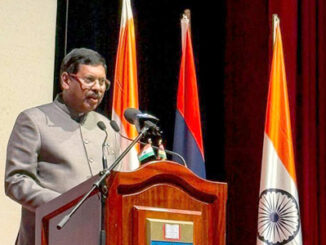
PORT LOUIS (TIP): Chief Justice of India B R Gavai on Friday, October 3, said the Indian legal system is governed by rule of law and not by “rule of the bulldozer”. Delivering the inaugural Sir Maurice Rault Memorial Lecture 2025 in Mauritius on ‘Rule of Law in the Largest Democracy’, he referred to his own verdict deprecating ‘bulldozer justice’.
Sir Maurice Rault, a noted jurist, was the Chief Justice of Mauritius from 1978 to 1982.
Highlighting the principle of rule of law and its expansive interpretation by the Supreme Court of India, Justice Gavai, who is on a three-day official visit to the island nation, said, “The judgment sent a clear message that the Indian legal system is governed by the rule of law, not by the rule of the bulldozer.”
In the judgement in the ‘bulldozer justice’ case, the apex court held that demolition of houses of accused in response to alleged offenses bypasses legal processes, violates the rule of law and infringes upon the fundamental right to shelter under Article 21.
“It was further held that the executive cannot assume the roles of judge, jury, and executioner simultaneously,” the CJI said.
He delivered the lecture in the presence of President of Mauritius Dharambeer Gokhool, Prime Minister Navinchandra Ramgoolam and Chief Justice Rehana Mungly Gulbul among others.
In his address, the CJI referred to various landmark judgments of the apex court, including the 1973 Kesavananda Bharati verdict that had brought the basic structure doctrine and clipped the powers of Parliament to amend every bit of the Constitution.
“Over the past 75 years since the adoption of the Indian Constitution, the concept of the Rule of Law has evolved far beyond legal texts, permeating social, political, and constitutional discourse alike,” he said.
Justice Gavai said in social sphere, laws have been enacted to redress historical injustices and marginalized communities have frequently invoked them, and the very language of rule of law to assert their rights against entrenched systems of oppression.
“In the political arena, the rule of law serves as a benchmark of good governance and societal progress, standing in stark contrast to misgovernance and lawlessness, where institutions and public officials might otherwise evade accountability,” he said.
Referring to the contributions of Mahatma Gandhi and B R Ambedkar, Justice Gavai said their vision demonstrated that in India “the Rule of Law is not a mere set of rules”.
“It is an ethical and moral framework designed to uphold equality, protect human dignity, and guide governance in a diverse and complex society,” he said.The CJI referred to recent notable verdicts including the one which abolished the practice of instant triple talaq among Muslims.
He also highlighted the judgments in the case challenging the law on adultery and the electoral bond scheme.
“Taken together, these four judgments demonstrate how the Supreme Court has developed the rule of law as a substantive principle, using it to strike down laws that are manifestly arbitrary or unjust,” he said.
Justice Gavai also emphasized the importance of the judgment which held right to privacy as a fundamental right.
“This articulation underscores that, when understood as a core principle of constitutionalism, the rule of law operates on both procedural and substantive levels: it restrains arbitrary action by the State, guarantees equality before the law, and embeds democratic accountability across all branches and levels of governance,” he said.
Justice Gavai said the principle has animated the legal discourse as the apex court repeatedly invoked the language of rule of law to both legitimize and explain its constitutional role, as well as the constitutional roles of other branches of the state.
“The rule of law is thus not a rigid doctrine but a conversation across generations, between judges and citizens, parliaments and peoples, nations and their histories. It is about how we govern ourselves in dignity, and how we resolve the inevitable conflicts of liberty and authority in a democratic society,” he said.
(Source: PTI) -

Hamas Agrees to Release All Hostages After Trump’s Ultimatum
‘Israel must immediately stop the bombing of Gaza, so that we can get the hostages out safely and quickly,’ Trump said.
WASHINGTON, D.C. (TIP): Gaza-based terrorist group Hamas said Friday it has agreed to release all hostages in accordance with U.S. President Donald Trump’s 20-point peace plan.
The group also said it has accepted parts of the peace proposal to end its war with Israel, including giving up power over Gaza, but noted that other provisions would require further consultations among Palestinians.
Trump responded on social media to Hamas’s statement.
“Based on the Statement just issued by Hamas, I believe they are ready for a lasting PEACE.
“Israel must immediately stop the bombing of Gaza, so that we can get the Hostages out safely and quickly… this is about long sought PEACE in the Middle East.”Trump followed up with a video message on Truth Social later that same day, thanking the Middle Eastern nations that worked with the United States on this deal, including Qatar, Turkey, Saudi Arabia, Jordan, and Egypt.
“We’ll see how it all turns out,” Trump said in the video message. “We have to get the final word down in concrete. Very importantly, I look forward to having the hostages come home to their parents.”The U.S. president said it was “a very special day, maybe unprecedented in many ways.”
“Everybody was unified in wanting this war to end and seeing peace in the Middle East, and we’re very close to achieving that,” he said. “Thank you all, and everybody will be treated fairly.”
The announcement came after Trump gave Hamas until Oct. 5 to accept a deal to end the war and release all the hostages the terrorist group took during its Oct. 7, 2023, surprise attack on Israel. Trump announced the deadline in a post on Truth Social on Oct. 3.
“If this LAST CHANCE agreement is not reached, all HELL, like no one has ever seen before, will break out against Hamas. THERE WILL BE PEACE IN THE MIDDLE EAST ONE WAY OR THE OTHER,” Trump wrote in his post.
“As retribution for the October 7th attack on civilization, more than 25,000 Hamas ‘soldiers’ have already been killed. Most of the rest are surrounded and MILITARILY TRAPPED, just waiting for me to give the word, ‘GO,’ for their lives to be quickly extinguished. As for the rest, we know where and who you are, and you will be hunted down, and killed.”Hamas said it welcomed Trump’s proposal but sought clarification on certain provisions, adding that it would release all living hostages and hand over the bodies of those who have died. It also said it’s ready to immediately engage in negotiations through mediators to discuss the details.
Sen. Lindsey Graham (R-S.C.) voiced disappointment with Hamas’s response, calling it “unfortunately predictable.”
“Hamas’ recent response to President Trump’s plan to end the war—which Israel had accepted—is unfortunately predictable. A classic ‘Yes, but,’” Graham wrote on X.
“No disarmament, keeping Gaza under Palestinian control, and tying hostage release to negotiations, along with other problems. This is, in essence, a rejection by Hamas of President Trump’s ‘take it or leave it’ proposal.”
The war in Gaza has raged since Oct. 7, 2023, when a number of groups led by Hamas attacked Israel, killing about 1,200 people, mostly civilians, and capturing more than 250 hostages. Today, an estimated 20 hostages are still believed to be alive in captivity.
“Hamas must choose peace or its own destruction. Send the hostages home, now,” Sen. John Fetterman (D-Pa.) wrote on X. “Politics aside, credit to @POTUS’ peace plan to get to this encouraging point.”
Trump’s 20-Point Peace Plan
Early last week, the Trump administration unveiled a peace plan for Gaza, presenting it to Arab leaders on the sidelines of the U.N. General Assembly in New York City.
Israel approved Trump’s plan earlier this week during Prime Minister Benjamin Netanyahu’s visit to the White House, and leaders across the Middle East and Europe have also voiced support for the peace proposal.The deal included Israel’s withdrawal to an agreed line, a suspension of all military operations in Gaza, and the release of 250 prisoners serving life sentences, along with 1,700 Gazans detained after Hamas’s October 2023 terrorist attack on Israel. “Israel will not occupy or annex Gaza,” according to the agreement.
The peace plan also states that when the Palestinian Authority completes its reform program, it could prepare the conditions for “a credible pathway to Palestinian self-determination and statehood.”
The plan includes deradicalizing Gaza and making it a terror-free zone so that it does not pose a threat in the future. The Gaza Strip will receive full aid when hostilities end.
Both Trump and Netanyahu have made it clear that Hamas will play no role in the governance of Gaza.
“All military, terror, and offensive infrastructure, including tunnels and weapon production facilities, will be destroyed and not rebuilt,” according to the plan.
“No one will be forced to leave Gaza, and those who wish to leave will be free to do so and free to return.”
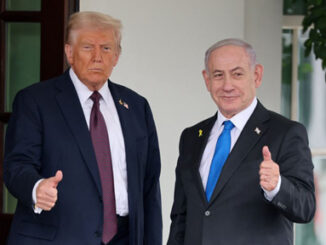
Trump touted the plan during a joint press conference with Netanyahu at the White House on Sept. 29.
“Working with the new transitional authority in Gaza, all parties will agree on a timeline for Israeli forces to withdraw in phases. They’ll be withdrawing in phases,” the U.S. president said.
Details of Hamas Statement
In its statement, Hamas said it “has conducted in-depth consultations within its leadership institutions, broad consultations with Palestinian forces and factions, and consultations with brothers, mediators and friends, in order to reach a responsible position in dealing with the U.S. President Donald Trump’s plan.”
After consultations, Hamas said it agreed to release the hostages according to the exchange formula contained in the peace plan if the necessary conditions for the exchange are met. Hamas expressed readiness to begin negotiations, through mediators, to finalize the details of the exchange.Hamas also agreed “to hand over the administration of the Gaza Strip to a Palestinian body of independents (technocrats), based on Palestinian national consensus and supported by Arab and Islamic backing,” according to the statement.
The groups said other parts of Trump’s proposal concerning Gaza’s future and Palestinian rights will be addressed through a unified national process in line with international law.
They will be “discussed within a comprehensive Palestinian national framework, in which Hamas will be included and will contribute with full responsibility,” Hamas said.
Meanwhile, the White House has highlighted the “global support”, including from Prime Minister Narendra Modi, for President Donald Trump’s “visionary” plan for peace in war-battered Gaza.
President Trump’s “groundbreaking plan for peace in Gaza has galvanized a chorus of international praise as the potential pivotal turning point after years of devastating war,” the White House said in a statement on Wednesday, October 1.
“Hailed as a game changer by nations across continents, President Trump’s comprehensive framework emphasizes an urgent end to hostilities, the full liberation of all hostages, sustained humanitarian relief, and Gaza’s transformation into a beacon of prosperity,” it said. It said the visionary plan has been embraced by key leaders from the Arab world to the West. The statement lists reactions and comments of world leaders, including Prime Minister Modi, on Trump’s plan to end the conflict in Gaza.
“We welcome President Donald J. Trump’s announcement of a comprehensive plan to end the Gaza conflict. It provides a viable pathway to long term and sustainable peace, security and development for the Palestinian and Israeli people, as also for the larger West Asian region. We hope that all concerned will come together behind President Trump’s initiative and support this effort to end conflict and secure peace,” Modi had posted on social media.
The statement includes remarks by other world leaders including the joint statement by Foreign Ministers of Saudi Arabia, Jordan, UAE, Indonesia, Pakistan, Türkiye, Qatar, and Egypt.Australian Prime Minister Anthony Albanese; Canadian Prime Minister Mark Carney; China; European Commission President Ursula von der Leyen; French President Emmanuel Macron; Italian Prime Minister Giorgia Meloni; Japanese Prime Minister Shigeru Ishiba; British Prime Minister Keir Starmer; Palestinian Authority and Pakistani Prime Minister Shehbaz Sharif.
Trump’s ‘Comprehensive Plan to End the Gaza Conflict’, announced on Monday, entails that Gaza will be a deradicalized, terror-free zone that does not pose a threat to its neighbors and will be redeveloped.
(With inputs from Agencies and the White House) -

Canadian envoy presents credentials to Murmu, year after diplomatic row
NEW DELHI (TIP): President Droupadi Murmu on Friday, October 3, accepted credentials from Canadian High Commissioner Christopher Cooter, who has taken charge of the diplomatic post nearly a year after bilateral ties broke down over the allegations of Indian links in the killing of Khalistani separatist Hardeep Singh Nijjar.
In October last year, India recalled its high commissioner and five other diplomats after Ottawa attempted to link them to the Nijjar case. India had also expelled an equal number of Canadian diplomats.
Prime Minister Narendra Modi and his Canadian counterpart Mark Carney in June this year agreed to pursue “constructive” steps to restore stability in India-Canada ties, including the early return of envoys to each other’s capitals.
Following this, both countries appointed envoys to each other’s capitals in August, signaling their efforts to mend ties. While India named seasoned diplomat Dinesh K Patnaik as the next high commissioner to Ottawa, Canada appointed Cooter as its new envoy to New Delhi.Patnaik presented his credentials to Canada’s Governor General Mary Simon on September 25.
Cooter has 35 years of diplomatic experience, having served most recently as Canada’s charge d’affaires to Israel and as Canada’s high commissioner to South Africa, Namibia, Lesotho, Mauritius and Madagascar. He also served as first secretary at the Canadian High Commission in New Delhi from 1998 to 2000.
(Source: PTI) -

Lawrence Bishnoi gang designated terrorist outfit in Canada

By Prabhjot Singh TORONTO (TIP): Canada has formally designated the Lawrence Bishnoi gang as a terrorist entity under its criminal code, citing the group’s violent activities, intimidation tactics and threats to diaspora communities.
The announcement was made in Ottawa on Monday, September 29, by Public Safety Minister Gary Anandasangaree. It has come just days after India and Canada’s National Security Advisers held talks in New Delhi, signaling possible cooperation in addressing concerns related to gangsterism and extremism.
On September 22, the Canadian authorities had arrested Inderjit Singh Gosal, a close aide of banned outfit Sikhs for Justice (SFJ) chief Gurpatwant Singh Pannun, on multiple firearms-related charges in Ottawa. As per sources, Gosal was later released on bail, though he is learnt to be on the radar of authorities. Following the assassination of Hardeep Singh Nijjar in Surrey in June 2023, Gosal took a more prominent role in coordinating diaspora mobilization, including the controversial “Khalistan referendum” campaigns promoted by the SFJ.
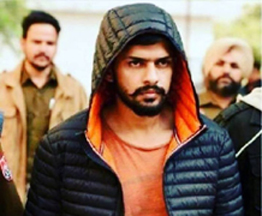
The Bishnoi gang is led by Lawrence Bishnoi, who is currently lodged in Sabarmati Central Jail in Gujarat. He is accused in numerous charges, including murder, extortion and high-profile assassinations, including of famous Punjabi singer Sidhu Moosewala.
The Canadian Public Safety Minister said the decision to designate Bishnoi gang as a terror entity would give law enforcement “powerful and effective tools” to curb the gang’s activities.
With the addition of Bishnoi gang, there are now 88 entities listed as terrorist groups under Canadian law. The government emphasized that the move reflected Ottawa’s commitment to tackling transnational threats and ensuring public safety. “The Bishnoi gang is not just a criminal network but a terrorist organization that thrives on fear and violence. This designation makes it clear that Canada will not tolerate their crimes,” Anandasangaree said.
After the listing, all property, vehicles and financial assets linked to the Bishnoi gang in Canada can now be frozen or seized. It also becomes a criminal offence for anyone in Canada or Canadians abroad to knowingly provide funds, services or resources to the gang.
“This group has targeted communities, cultural figures, businesses and prominent individuals through murder, shootings, arson and extortion. Canadians deserve to feel safe in their homes and neighborhoods. Today’s decision is about protecting them,” Anandasangaree said.
Originating in India, the Bishnoi gang has grown into a transnational crime syndicate with a footprint in Canada, particularly in areas with significant diaspora population. Security agencies say the outfit uses fear, extortion, and targeted killings to spread terror, often reaching across borders to execute its designs.
Canadian officials said the designation would help border and immigration authorities make decisions on the admissibility of individuals linked to the gang, while also strengthening the Royal Canadian Mounted Police’s ability to prevent and disrupt terrorism-related crimes.
(Source: TNS)(Toronto based Prabhjot Singh is an award-winning journalist recognized for investigative journalism, environment and business reporting, sports and feature writing. A Media Consultant, he has remained associated with various news agencies, including Reuters, and media houses like PTC News (India/Canada), Parvasi Media (Canada) the Liberal World (India), and The Indian Panorama, New York. He is interested in Indian Diaspora and the Sikh Diaspora in particular. His work has appeared in various international and national newspapers, magazines and journals.)
-

Canadian, Indian foreign ministers meet on the sidelines of the United Nations

By Prabhjot Singh NEW YORK / TORONTO (TIP): A couple of months after they talked to each other on the phone, foreign ministers of India, Subrahmanyam Jaishankar, and Canada, Anita Anand, met on the sidelines of the United Nations General Assembly in New York.
It was an Ottawa-based diplomat-cum-journalist, Bhupinder Singh Liddar, who put up a picture of the two foreign ministers on his social media page yesterday.
Both Indian and Canadian foreign ministers held a wide range of discussions with foreign ministers of many other countries. Canadian PM Mark Carney also addressed the General Assembly of the United Nations.
During their meeting, the ministers discussed strengthening Canada and India’s bilateral ties, following productive discussions between Prime Minister Mark Carney and Prime Minister Narendra Modi at the G7 Leaders’ Summit in Kananaskis, Alberta, in June this year. The ministers also agreed to advance shared priorities, including economic prosperity, security and global governance.
The ministers acknowledged recent progress in the two countries’ relationship through the appointment of high commissioners in India and Canada. Minister Anand noted that Canada’s high commissioners play a key role in promoting Canadian trade and investment, providing services to Canadians abroad and enabling dialogue between countries.
Minister Anand emphasized that Canada remains committed to supporting and growing the well-established commercial ties shared by Canada and India, including agricultural products, critical minerals and energy products.
The Indian Foreign Minister expressed the hope that he would greet his Canadian counterpart in India soon. There are speculations on social media that she may visit India next month. In June, Prime Minister Narendra Modi had at the invitation of Canadian PM Mark Carney, visited Canada to attend the G7 summit.
The two ministers agreed to remain in contact.
-

Canadian couple coauthor illustrious 3-volume series on Golden Temple with Raghu Rai, wife

By Prabhjot Singh NEW DELHI / TORONTO (TIP): For Mr. Baljit Singh Chadha, a leading businessman of Montreal, and his wife, Mandeep Kaur (Roshi) Chadha, the experience of working on an important illustrated book related to Sikhism with two of the top contemporary photojournalists – Raghu Rai and Gurmeet Kaur Sangha Rai – was like a dream come true.
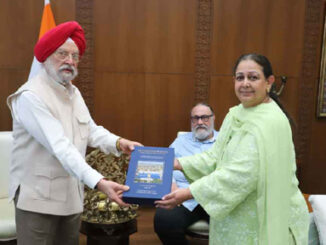
Mr. Baljit Singh Chadha was one of the first businessmen of Indian origin who organized an introductory party for Mark Carney in his election as the leader of the Liberal Party for the post of Prime Minister after Justin Trudeau had announced his decision to quit.Their efforts bore fruit as they travelled all the way from Montreal in Canada to New Delhi in India this week to present a first set of their books to none other than the Union Minister of Petroleum and Natural Gas, Hardeep Singh Puri.The books, says Baljit Singh Chadha, “are a comprehensive study of heritage, significance and conservatism.”
Raghu Rai is India’s top photojournalist who worked for some of the top media houses in the country, and his wife, Gurmeet Kaur Sangha Rai, is a leading architect.
Gurmeet, who got married at the age of 23, balanced her family and her architectural goals with Raghu Rai. Interestingly, she managed to balance work and family obligations while working on important UNESCO projects, including the GT road project and the Sri Harmandir Sahib project.
-

41st Free Eye Checkup and Cataract Surgery Camp September 14
SOS/SKRM 41st Free Eye Camp helps restore vision for several hundreds
New Delhi: Continuing its mission to eradicate avoidable blindness and work toward the betterment of the society, Science of Spirituality (SOS)/Sawan Kirpal Ruhani Mission (SKRM) organized the 41st Free Eye Checkup and Cataract Surgery Camp at Kirpal Bagh, Delhi, from September 14 to 21, 2025. Held under the divine guidance of SOS/SKRM head Sant Rajinder Singh Ji Maharaj, the camp helped hundreds of people regain their vision, transforming lives across Delhi NCR and northern India.

Cataract remains one of the major causes of visual impairment, particularly in underserved communities, impacting both livelihoods and quality of life. This year’s camp brought the precious gift of sight to 1,200 patients. The humanitarian effort was made possible through the collective service of volunteer physicians from the United States, who travel to India twice a year for this cause, along with expert doctors from ICARE Hospital, Noida, a leading institution with advanced eye care facilities.

The eight-day camp was made possible through the tireless dedication of volunteers from India and the US — all coming together to bring this noble cause to successful completion.
The medical camp identified, assessed and treated patients in need of cataract surgery, who would otherwise be unable to afford such treatment. These camps are a long-standing tradition of SOS/SKRM, conducted twice a year as part of the International Human Unity Conference (February) and the Global Conference on Mysticism (September).
Compassion in Action
On the opening day, large numbers of patients lined up at Kirpal Bagh grounds, where dedicated volunteers and medical teams carefully screened each individual. A total of 2,771 people were assessed with 1,685 found eligible for cataract surgeries. Patients received complimentary housing, nutritious meals, transportation, reading glasses and essential provisions to ensure holistic care.

During the camp, SKRM volunteers assisted with patient registration and oversaw logistical arrangements to ensure smooth operations. Patients scheduled for surgery were provided complimentary accommodation and meals at Kirpal Bagh. Transportation to the ICARE Eye Hospital in Noida was facilitated through buses arranged by the hospital, where an in-house team of highly skilled doctors and staff, along with volunteer eye surgeons from the United States, performed cataract-removal surgeries utilizing advanced-quality lenses.
In addition, SKRM volunteers worked diligently throughout the camp to manage on-ground requirements and administrative tasks. Following surgery, patients were provided with reading glasses and other essential amenities, ensuring continued support in their recovery.
Restoring Dignity, Renewing Lives
For the patients, it marked the beginning of a new chapter in their lives.
Delhi’s Jogender Pal shared how a successful cataract surgery will “help him lead an independent life.” He explained, “I came to know about the Free Eye Camp through my relatives and decided to visit. I had cataract in both eyes and was unable to see clearly, particularly from the left eye. I am happy that I will no longer be dependent on anyone and can now lead a better quality of life.”

Sheela, another patient from Delhi, expressed joy in finding a “new lease of life”, saying the surgery will help her live independently. “I live all alone and this surgery will help me enhance my quality of life,” she said.
Narang Devi from Delhi, who was going through a traumatic experience as she often tripped on the roads and struggled to take care of her basic needs, expressed relief. “Now, I will be self-reliant,” said a beaming Narang Devi.
For many others, the initiative offered a path to confidence, independence and the ability to resume their livelihoods with renewed vigor.
Hands that Heal
For the doctors, too, it was a fulfilling experience. “It is a blessing to be able to serve others with the skills God has given me,” said one of the US-based volunteer physicians.
Added another, “Light is God’s first gift to the world; restoring sight lets that light shine again.”
Highlighting the larger impact, another doctor emphasized: “Volunteering reminds me that sometimes, the simplest gift — the ability to see — can change a life forever.”

A Tradition of Selfless Service
Over the years, SKRM/SOS have helped more than 21,000 people regain their eyesight through such initiatives. All medical and eye camps are offered entirely free of charge, rooted in the spirit of selfless service and compassion for humanity.
-

Modi’s Poll Pragmatism And Revdi Culture
“Worried about a Karnataka-like impact, Modi dropped his ideological opposition to freebies and launched a long list of Modi Guarantees, which were nothing but a copycat version of opposition parties’ schemes. Ladli Behan was launched in MP. People perhaps found PM Modi’s guarantees of freebies more credible. The freebies/ ‘revdis’ guaranteed by Modi helped the BJP romp home in the elections in all the three states of Rajasthan, Madhya Pradesh and Chhattisgarh.
Modi’s anti-revdis rhetoric started disappearing from his speeches and the BJP campaign. Instead, the creditworthiness of his guarantees began to be highlighted.”

By Subhash Chandra Garg AS Chief Minister of Gujarat, Narendra Modi was dead against individual beneficiary schemes. He even berated the employment safety-valve programme, the Mahatma Gandhi National Rural Employment Guarantee Act (MGNREGA). As Prime Minister, Narendra Modi ran a blistering campaign, most stridently in 2022, against providing cash and other free benefits to people, contemptuously terming them freebies and ‘revdis’.
PM Modi then gradually turned more tolerant towards the freebies and ‘revdis’, particularly those distributed by his party and ally chief ministers, including the Ladli Behan (Madhya Pradesh), Ladki Bahin (Maharashtra) schemes. He also quietly moderated his rhetoric against the ‘revdi’ culture.
On September 26, PM Modi transferred Rs 10,000 in the bank accounts of 75 lakh women under election-bound Bihar’s scheme, the Mukhyamantri Mahila Rojgar Yojana (MMRY). This programme promises cash assistance of Rs 2 lakh to more than 1.5 crore women and is likely to ultimately cost the government Rs 3 lakh crore! Undoubtedly, the MMRY is the mother of all freebies. How has this total transformation come about? Let me relate the story.
I joined as Secretary, Department of Economic Affairs in the Ministry of Finance, Government of India, in July 2017. At that time, PM Modi’s strong views against populist expenditure by the states, the MGNREGA and other benefits programs were widely known. Yet, I was taken aback when the Prime Minister’s Office (PMO) wanted the draft Terms of Reference (ToRs) for the Fifteenth Finance Commission (FFC) proposed by the Finance Ministry to be modified to include an unprecedented ToR that deprived funds to states spending money on populist schemes before elections.
While the sentiment was understandable, it was not the job of the FC to use such a factor for determining the shares of states in the sharable pool of Central taxes. I managed to figure out a compromise solution to accommodate the PMO’s directive. A measurable, performance-based incentive scheme was designed for incentivizing and disincentivizing states. It had nine criteria, including control or lack of it in incurring expenditure on populist measures.
In 2022, PM Modi launched a blistering attack against the prevalent populist and freebies culture, using the ‘revdis’ metaphor. He castigated governments led by opposition parties for “indulging in the revdi culture to secure votes” and patted his own back by highlighting that “the double engine government is working towards creating new expressways and rail routes.” He lamented that the revdi culture would take “India towards darkness.”
Modi’s lead was followed by party functionaries and sympathetic narrative-builders. PILs were filed in the Supreme Court challenging the practice of political parties promising freebies during elections and requesting directions to the Election Commission of India (ECI) to “seize election symbols and deregister political parties that promise to distribute freebies using public funds during election campaigns.” The mission against populist expenditure, freebies and revdi culture went full blast.
The opposition parties, most unabashedly Congress and Aam Aadmi Party, were stridently in favor of delivering freebies to the people —both in kind (eg free electricity) and cash (direct transfer to beneficiaries).
The Congress promised many freebies, pushed as guarantees, in Karnataka and Telangana, which seemingly helped it to wrest power in these two states. The Congress governments in Rajasthan and Chhattisgarh also embarked on many populist schemes for the poor, government servants, unemployed and others before the 2023 elections.
Worried about a Karnataka-like impact, Modi dropped his ideological opposition to freebies and launched a long list of Modi Guarantees, which were nothing but a copycat version of opposition parties’ schemes. Ladli Behan was launched in MP. People perhaps found PM Modi’s guarantees of freebies more credible. The freebies/ ‘revdis’ guaranteed by Modi helped the BJP romp home in the elections in all the three states of Rajasthan, Madhya Pradesh and Chhattisgarh.
Modi’s anti-revdis rhetoric started disappearing from his speeches and the BJP campaign. Instead, the creditworthiness of his guarantees began to be highlighted.
Subsequent state elections in Maharashtra, Haryana and Jharkhand confirmed that PM Modi had adopted ‘revdis’ as the big instrument of winning election politics, in addition to the Hindutva agenda.
The freebies became the center of a cut-throat competition between PM Modi, the BJP and its allies on one side and the Congress and other opposition parties on the other side.
The ‘revdis’ promised by the ruling party tend to appear more credible to the voters unless there is serious anti-incumbency against it. In Haryana and Maharashtra, the ruling BJP (with Shiv Sena) won; in Jharkhand, the ruling Jharkhand Mukti Morcha (JMM) won.
Bihar’s MMRY is the mother of all ‘revdi’ schemes. It is also a classic populist scheme, launched just before elections. The scheme promises a payment of Rs 2 lakh over a period of time to every Bihar woman who registers with the government, promising to start some ‘rojgar’. On registration, she gets Rs 10,000 in her bank account. The rest (Rs 1.90 lakh) has been promised to be delivered after the elections. The declaration of elections in Bihar is only a few days away. Reportedly 1.5 crore women have registered already. Rs 10,000 has been paid in the accounts of 75 lakh women. On October 3, the remaining registered women will get Rs 10,000 each.
The Bihar MMRY is a state scheme. Yet, PM Modi delivered the transfer of Rs 10,000 in the accounts of 75 lakh women. These women will be casting their votes soon. Modi used the occasion to launch the ruling party alliance’s election campaign in Bihar.
Prime Minister Modi is distributing ‘revdis’ now. What will it mean for India’s politics? Time will tell is a favorite cliche. Let us see.
(Subhash Chandra Garg is Administrator, Policy Strategist (Economy, Finance and Fiscal) & Author, and a former Finance Secretary.)
-

Saints, Sadhvis, and the State: How Political Hinduism is Rewriting India’s Democracy
The danger is no longer in the future—it’s already here. As rituals replace reason, and holy men replace elected representatives in moral authority, India risks becoming a de facto Hindu nation in all but name.

By Dave Makkar India has long been a land of saints and sages—a civilization nurtured by its spiritual heritage. But today, the sacred and the secular are merging in unprecedented ways. Gurus, babas, sadhvis, and self-styled godmen—once relegated to the spiritual margins—have become central actors in the political theater of the world’s largest democracy.
No longer just spiritual guides, these religious figures now wield real influence over public policy, elections, state institutions, and even India’s international diplomacy. From the dusty ashrams of Uttar Pradesh to the plush auditoriums of Davos, India’s holy men and women are reshaping the contours of power.
Back in 2009, scholar Meera Nanda sounded the alarm in The God Market, warning that Hindu nationalism’s “tolerant façade” was cracking under the weight of growing intolerance cloaked in religiosity. Over a decade later, her warnings have proved eerily prescient.
From Ashrams to Assemblies: The Historical Arc
Religion and politics have always intersected in India, but the last three decades have seen that relationship transform into an institutionalized axis of power. In the 1970s, Swami Dhirendra Brahmachari’s influence over Indira Gandhi was well-known. But it was the 1990s Ram Janmabhoomi movement that marked a seismic shift.
Sadhvi Ritambhara, Uma Bharti, and other saffron-robed leaders emerged as the religious vanguard of an increasingly politicized Hindu nationalism. The campaign to build a Ram temple in Ayodhya was not just about reclaiming a religious site—it was about defining Indian identity in Hindu terms.
What followed was a surge in the visibility and power of godmen and godwomen. Liberalization, satellite TV, and later social media provided them platforms to build empires. Baba Ramdev turned yoga into a billion-dollar business and nationalist brand. Sri Sri Ravi Shankar exported “peace” and “well-being” while acquiring prime real estate from the state. Sadhguru Jaggi Vasudev reinvented mysticism as eco-conscious modernity. This was the birth of a new market—what Nanda aptly called “The God Market.”
The Political Power of Godman
Godmen today are more than spiritual advisors—they are kingmakers. Their massive followings are political capital, often mobilized to sway elections and public opinion. In return, they are offered state protection, land, and legitimacy.
The most striking case is that of Yogi Adityanath—a former mahant (head priest) of the Gorakhnath Math, now serving as the saffron-clad Chief Minister of Uttar Pradesh. His rise reflects a new archetype in Indian politics: the monk-politician. Adityanath’s rhetoric blends religious symbolism with hardline nationalism, making him a formidable figure both within and outside the BJP. Despite past criminal charges ranging from incitement to attempted murder, his ascent to power saw most cases against him quietly vanish.
Another key figure is Uma Bharti, who became the first sadhvi to head a state government in 2003 when she became Chief Minister of Madhya Pradesh. Though forced to resign over pending legal issues, she returned to national politics as a union minister, proving that saffron-robed politicians are no longer fringe—they are the mainstream.
The pantheon is ever-growing. Alongside established figures like Ramdev and Sri Sri, new spiritual celebrities have emerged:
- Dhirendra Shastri of Bageshwar Dham draws tens of thousands to his events, claiming supernatural powers and publicly blessing political leaders.
- Sadhvi Prachi, linked with the Vishwa Hindu Parishad, regularly makes headlines for incendiary, ultra-nationalist speeches.
- Jaggi Vasudev (Sadhguru) mixes yoga and ecological activism with sharp political alignments—often soft-selling state narratives as spiritual truths.
- Swami Avdheshanand Giri of Juna Akhara plays a key mobilizing role in religious mega-events like the Kumbh Mela.
- Even controversial figures like Radhe Maa and Nirmal Baba have acquired cult-like followings. Meanwhile, Gurmeet Ram Rahim Singh, despite being jailed for rape and murder, continues to influence politics in Haryana, Punjab, and Rajasthan—parties openly courted his support before elections.
This new crop of spiritual leaders is media-savvy, multilingual, and politically plugged in. Many enjoy celebrity status, giving interviews on primetime television, hobnobbing with politicians, and drawing larger crowds than mainstream political rallies.
The most disturbing trend is the seepage of Hindu rituals and symbolism into the core of India’s secular institutions. The line separating state and faith is no longer blurred—it is being actively erased.
In the Armed Forces, warships and aircraft are inaugurated with Vedic chants and coconut-breaking ceremonies. Senior officers, in full uniform, have been seen visiting ashrams and performing religious rituals.
In the Judiciary, judges—including those in the Supreme Court—have publicly participated in temple inaugurations and religious functions. In 2023, Chief Justice D.Y. Chandrachud hosted PM Modi for a Ganesh Puja at his residence, sparking concerns about impartiality.
In Education, BJP-ruled states have mandated rituals like Surya Namaskar, Vedic chants, and Sanskrit prayers in public schools, pushing a Hindu-centric cultural curriculum.
In Governance, state events increasingly begin with Hindu rituals. When PM Modi laid the foundation stone for the new Parliament building in 2020 and inaugurated it in 2023, the ceremonies were led exclusively by Hindu priests—no interfaith representation, no secular symbolism.
These acts are not symbolic anomalies—they represent a calculated positioning of Hinduism as the de facto national religion, in stark contrast to the constitutional promise of secularism.
The Triumph of Faith over Reason
India now boasts over 3.01 million places of worship—more than double the number of schools and nearly 40 times the number of hospitals. That statistic alone is staggering. The country has roughly one shrine for every 450 people, yet only 1.5 hospital beds per 1,000 people. The message is clear: while spiritual infrastructure flourishes, healthcare and education suffer.
Over 50% of domestic tourism is religious in nature. Temples, pilgrimages, and spiritual festivals dominate travel patterns. And yet, rationalist voices who question blind faith are marginalized, often at great personal risk.
Prominent rationalists and activists—Narendra Dabholkar, Govind Pansare, and M.M. Kalburgi—were assassinated in chillingly similar patterns, allegedly by extremist Hindutva groups. Their deaths underscored a rising tide of intolerance against those challenging superstition and theocratic dominance.

Chief Minister Yogi Adityanath at the Virat Sant Sammelan in Prayagraj. (File Photo : X/@myogiadityanath) What we are witnessing is not just the rise of a few influential religious figures. It is the structural entrenchment of political Hinduism—a transformation of India’s secular democracy into a religio-political state.
The paradox is cruel: Hindu nationalism claims to be uniquely tolerant, yet its triumphalist form has fueled growing intolerance toward minorities, dissenters, and secular values. Victims of communal violence frequently find justice elusive. Critics of religious extremism are labeled anti-national or worse.
As Meera Nanda argues, the corporate-temple-state nexus is real—and growing. Religious organizations receive land, tax exemptions, media amplification, and legal immunity in ways no secular entity can rival. Hindu religiosity is now part of the “official culture,” often even in states where the BJP is not in power.
India today stands at a profound crossroads. The rise of godmen and sadhvis is not simply a cultural trend—it’s a redefinition of what the Indian state stands for.
The critical questions are not just legal or political—they are civilizational:
Can the constitutional ideal of secularism survive in a country where religious symbolism dominates public life?
Can rationalist thought and scientific temper find space in a society overwhelmed by spiritual consumerism?
Can social justice movements take on not only caste and class hierarchies but also the growing hold of blind religiosity on the popular imagination?
These are not abstract questions. The answers will shape India’s future—whether it remains a secular, pluralist democracy or slides into a soft theocracy powered by saffron robes and loudspeakers.
The danger is no longer in the future—it’s already here. As rituals replace reason, and holy men replace elected representatives in moral authority, India risks becoming a de facto Hindu nation in all but name.
This is not about religion versus irreligion. It is about power masquerading as piety. It is about a state that now bends before spiritual entrepreneurs while rational voices are silenced, exiled—or worse.
India’s battle today is not just political—it is a battle of ideas, of what kind of republic the nation wants to be. And whether that republic still has room for dissent, diversity, and democracy.
If not, the gods may indeed have won—but the people may have lost the Republic.
References Used:
- Bose, S. (2019). The yogic empire: Baba Ramdev, Patanjali and the making of modern India. HarperCollins.
- Economic Times. (2016, January 12). Madhya Pradesh introduces Surya Namaskar in schools. The Economic Times. https://economictimes.indiatimes.com
- Government of India. (2011). Cultural infrastructure report: Census of India 2011. Office of the Registrar General & Census Commissioner, Ministry of Home Affairs.
- Malhotra, Inder (2001). Indira Gandhi: A political biography. Penguin Books.
- Hindustan Times. (2015, June 10). Sadhvi Prachi stirs controversy with provocative remarks. Hindustan Times. https://www.hindustantimes.com
- Indian Express. (2021, November 21). INS Visakhapatnam commissioned with Vedic rituals. The Indian Express. https://indianexpress.com
- Jaffrelot, C. (2007). Hindu nationalism: A reader. Princeton University Press.
- Jaffrelot, C. (2021). Modi’s India: Hindu nationalism and the rise of ethnic democracy. Princeton University Press.
- Ministry of Tourism. (2022). India tourism statistics 2022. Government of India. https://tourism.gov.in
- Nanda, Meera (2009). The god market: How globalization is making India more Hindu. Random House India.
- The Hindu. (2005, February 14). Art of Living ashram given 99 acres of land. The Hindu. https://www.thehindu.com
- The Print. (2023, January 25). Bageshwar Dham’s Dhirendra Shastri and the politics of faith. The Print. https://theprint.in
- Times of India. (2020, March 2). Sadhguru on nationalism, ecology and spirituality. The Times of India. https://timesofindia.indiatimes.com
- The Wire. (2019, October 5). Should judges attend religious ceremonies? The Wire. https://thewire.in
(Dave Makkar is a social activist. He can be reached at davemakkar@yahoo.com)