Month: October 2025

  • READERS WRITE

    Dear Editor

    Gobind Munjal

    Apropos of your editorial comment “Save America From Its Guns and Its Wars”, here are my thoughts.
    The recent assassination of Charlie Kirk is a tragic reminder of the devastating impact of gun violence in the United States. Each year, firearms are responsible for the deaths of approximately 40,000 to 50,000 Americans. Despite the urgency of this crisis, the issue of gun control remains highly polarized and politically gridlocked—largely due to the powerful influence of the gun lobby.
    The debate over gun control touches on constitutional rights, evolving public policy, and varied interpretations of data. While the Second Amendment protects the right to bear arms, even the U.S. Supreme Court has acknowledged limits to this right. In the 2008 District of Columbia v. Heller decision, the Court made clear that the right is not absolute and does not prohibit reasonable regulation.
    I strongly believe that implementing more robust gun safety regulations is both necessary and effective in saving lives. Evidence supports this: States with stronger gun licensing laws tend to have significantly lower rates of firearm-related deaths, including both suicides and homicides. Research from the Johns Hopkins Center for Gun Violence Solutions highlights the effectiveness of policies such as universal background checks, extreme risk protection orders (ERPOs), and secure firearm storage requirements.
    To address the national scope of the problem, we urgently need federal legislation to close loopholes that allow certain gun sales to occur without background checks. These loopholes make it easier for individuals who are legally prohibited from owning firearms to acquire them, putting lives at risk.
    Gun violence is not a partisan issue—it’s a public safety crisis. Thoughtful, evidence-based reform is essential if we are to protect American lives.

    (Gobind Munjal)
    New York

  • A Ray of Hope in Gaza: Hamas Move Opens Door to Peace

    By Prof. Indrajit S Saluja
    By Prof. Indrajit S Saluja

    The announcement by Hamas that it is prepared to release all remaining Israeli hostages, and that it is willing in principle to accept a ceasefire under the terms laid out by President Trump, is a remarkably hopeful development in a conflict too long drenched in blood and suffering. While serious obstacles remain, this gesture deserves cautious optimism: it opens a door, however narrow, toward renewed negotiation — and possibly toward peace in a land that has known too little of it.

    To be sure, these terms are far from trivial. Hamas has committed to a full exchange, stipulating that Israeli hostages — both living and deceased — be released in accordance with Trump’s formula.
    In exchange, Israel would free large numbers of Palestinian detainees.
    Hamas also signals readiness to relinquish administrative control of Gaza in favor of a neutral Palestinian entity.
    And it has voiced openness to a ceasefire.

    If carried through, this would mark a pivot from open warfare to negotiation. Such a transition cannot come soon enough: the human and material toll of the Israeli-Hamas conflict has been catastrophic. Since the Hamas attack of October 7, 2023, Israeli sources report over 1,000 deaths on the Israeli side (many civilians) , while Gaza’s health authorities and independent studies put the Palestinian death toll in Gaza at tens of thousands — often cited figures range from 46,000 to over 60,000, with some research estimating at least 64,000 deaths from traumatic injury alone by mid-2024.
    Many more have been wounded — over 100,000 in some official counts — and the destruction in Gaza has devastated infrastructure, housing, public services and agriculture.
    One recent assessment found that some 78 percent of buildings have been damaged or destroyed.
    The displacement of Gazans is nearly universal: in many rounds of conflict, up to 80-90 percent of the population have been uprooted or forced to relocate, with grievously inadequate shelter, sanitation, healthcare, and food security.

    But this is not the first such cycle of violence. The Israeli–Palestinian conflict spans back many decades, with wars, uprisings, occupations, intifadas, and repeated attempts at peace (Oslo Accords, Camp David, etc.) that yielded painful compromises and often relapse into conflict.
    Gaza in particular has endured multiple wars over the past two decades, including in 2008–09 (Operation Cast Lead), 2014, and subsequent flareups, each one imposing fresh trauma, loss, and demolition.
    Over the years, civilian populations — especially in Gaza — have borne disproportionate burdens of blockade, resource deprivation, displacement, and infrastructure collapse.

    Thus, the possibility that Hamas might release hostages and consent to a ceasefire under credible terms is not only welcome — it is urgent. It represents an opening, albeit tentative, to break the cycle of military escalation. World leaders must seize this moment. They should urge both Hamas and Israel to uphold their commitments, to verify compliance, and to build confidence toward a lasting peace. Mediators, regional states, and international institutions should facilitate transparency, verification, and phased steps toward disarmament, reconstruction, and reconciliation.

    Above all, the most vulnerable in this conflict have long been the Palestinians — ordinary civilians, women and children — who have repeatedly suffered displacement, loss of homes and livelihoods, limited access to water, power, medical care, and education. Any peace must place their dignity and aspirations at its center. A deal that merely halts violence temporarily without addressing the underlying injustices will likely fail. Therefore, this moment should not be wasted: if world leaders encourage and support real negotiation rather than maximalist rhetoric, perhaps a path may yet emerge toward coexistence, reconstruction, and healing in a region that so sorely needs it.

    In welcoming Hamas’s statement, one cautiously hopes that both sides are ready — with international support — to turn a page, and that successive steps will bring stability, relief, and justice to millions who have waited too long.

  • Need to block ‘inexpensive’ tech consultants: Lutnick hints at more H-1B curbs

    Need to block ‘inexpensive’ tech consultants: Lutnick hints at more H-1B curbs

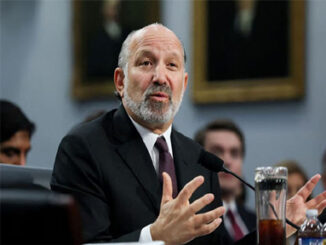
    WASHINGTON, D.C. (TIP): US Commerce Secretary Howard Lutnick has strongly defended the Trump administration’s proposed overhaul of the H-1B visa system, arguing that the United States should only admit the “most highly skilled and highly paid” foreign professionals, while blocking the entry of low-cost technology consultants. He termed the entry of “inexpensive” tech consultants into the US as “wrong” and insisted that it “should be eliminated”.

    Speaking on the administration’s proposed $100,000 one-time H-1B application fee, set to take effect from February 2026, Lutnick said the move was aimed at curbing abuse of the system, which is currently oversubscribed “seven to 10 times”. He added that there would be a significant number of changes in the H1B visa process when it goes into effect next year.

    The Commerce Secretary, while speaking to a US news channel, argued that visas should prioritize highly paid, highly skilled workers such as doctors, educators and engineers, not low-cost technology consultants.

    “I find this idea that inexpensive tech consultants should be coming into this country and bringing their families simply wrong,” Lutnick said, adding that both he and President Trump shared the same view.

    The US Commerce Secretary stressed that priority should go to doctors, educators and highly trained engineers, rather than cheaper contract workers. “If you want to hire engineers, you should hire highly paid ones,” he remarked.

    The proposed changes in the H-1B visa rules have already triggered intense debate. While sections of the ‘MAGA (Make America Great Again) base’ view the crackdown as necessary to protect American jobs, critics argue these measures will hurt innovation and the tech sector’s ability to recruit global talent.

    Lutnick also hinted that broader reforms were under discussion, including whether the US should scrap the lottery system altogether and move to a merit-based framework.

    “The process, which was set up in 1990 and sort of butchered along the way, needs to change,” he added.

  • Indian Embassy in Washington Celebrates Gandhi Jayanti

    Indian Embassy in Washington Celebrates Gandhi Jayanti

    Srimati Karuna, Director of the Gandhi Memorial Center, Bethesda, Maryland, delivered a talk on “Gandhi’s life and Message”.

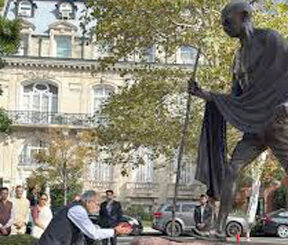
    WASHINGTON, D.C. (TIP): On the occasion of Mahatma Gandhi Jayanti, Ambassador Shri Vinay Kwatra and other embassy officials paid floral tributes to the Father of the Nation in Washington D.C. The Embassy also organized an event on 30th September, 2025 to celebrate Mahatma Gandhi Ji’s legacy with the participation of Indian diaspora, students, professionals, and friends of India. At the event Srimati Karuna, Director of the Gandhi Memorial Center, Bethesda, Maryland (USA) delivered a talk on “Gandhi’s life and Message”. She shared anecdotes from Mahatma Gandhi Ji’s life, his inspirations and his vision for the world. The talk was followed by rendition of beautiful bhajan and songs that Bapu was fond of, by differently abled young Indian artists– Ms. Anusha Manjunath and Ms. Vasundhara Raturi.

    Differently abled young Indian artists– Ms. Anusha Manjunath and Ms. Vasundhara Raturi-gave a beautiful rendition of bhajans and songs that Bapu was fond of. (Photos : Instagram)
  • AAPI Announces 2026 Global Healthcare Summit in Bhubaneshwar, India

    AAPI Announces 2026 Global Healthcare Summit in Bhubaneshwar, India

    Focus on Tuberculosis Eradication, Diabetes, Ayurveda, and Healthcare Technology

    CHICAGO, IL (TIP): The American Association of Physicians of Indian Origin (AAPI) has unveiled plans for its 19th Annual Global Healthcare Summit (GHS), scheduled for January 9–11, 2026, in Bhubaneshwar, Orissa. The event is set to address urgent health issues including Tuberculosis (TB), Diabetes, and the role of Ayurveda in contemporary medicine, alongside showcasing advancements in artificial intelligence and healthcare technology.

    AAPI President Dr. Amit Chakrabarty stated that the summit aims to confront some of India’s most significant healthcare challenges while encouraging collaboration and innovation among medical professionals. “This summit will bring together expertise from India and the global diaspora to tackle critical issues and foster new research,” Dr. Chakrabarty said.

    Summit Priorities: TB Eradication, Diabetes, Ayurveda, and Technology

    The summit’s agenda spotlights three main themes: eradicating Tuberculosis, managing Diabetes, and integrating Ayurveda into mainstream medical practice. Following a meeting with Indian President Droupadi Murmu, AAPI pledged support to the national effort for a TB-Free Tribal India, led by Dr. Manoj Jain. Diabetes management initiatives will be directed by Dr. Smitha Joshi, while Ayurveda Consortium activities will be coordinated by Dr. Amit Shah and Dr. Arti Prasad.

    “AAPI’s Global Healthcare Summit is dedicated to making quality healthcare both affordable and accessible in India,” said Dr. Amit Chakrabarty, President of AAPI. This year, the summit also emphasizes cutting-edge technology and artificial intelligence as transformative tools for patient care.

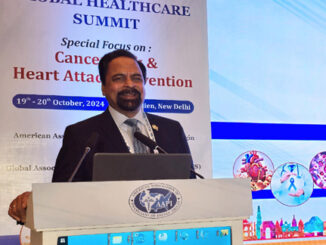
    The AAPI leadership at the 18th Global Healthcare Summit held in 2024

    Academic Excellence and Distinguished Participation

    The summit will feature keynote speeches and academic sessions led by top physicians and researchers from India and abroad. Topics will include new medical advancements, Continuing Medical Education (CME), Evidence-Based Learning (ELS), research methodology, and scientific writing. Medical Jeopardy competitions and research poster presentations are expected to draw participation from leading Indian medical schools, with panel discussions led by international experts and officials from the National Medical Council Board.

    Global and National Health Challenges on the Agenda

    GHS 2026 expands its focus to chronic disease prevention, rural health, climate change, and global health concerns. The CEO Forum will address equity, ethics, and physician burnout, while the Women’s Forum will discuss gender bias and leadership in medicine. Dr. Manoj Jain will present ongoing efforts of the CETI (Collaboration to Eliminate TB in India), with support from the CDC and USAID, offering updates on TB elimination projects and strategies for future engagement. Additional activities include CPR training, mental health awareness campaigns, and initiatives to combat childhood obesity and non-communicable diseases.

    Networking, Collaboration, and Strategic Engagement

    The summit also provides opportunities for alumni networking, strategic engagement between AAPI and Indian partners, and recognition of outstanding contributions through AAPI Awards. Efforts in diabetes prevention and TB eradication will be highlighted, reinforcing AAPI’s commitment to public health initiatives.

    “AAPI GHS is an unmatched opportunity to connect with leaders shaping the future of healthcare,” said Dr. Meher Medavaram, President-Elect of AAPI. “We look forward to launching new initiatives and continuing the legacy of our organization’s leaders.”

    Leadership, Legacy, and India’s Healthcare Growth

    AAPI’s membership includes prominent medical professionals holding leadership roles worldwide. Vice President Dr. Krishan Kumar noted, “Collaborative relationships fostered by AAPI have paved the way for an exceptional event, with over 300 Indian-origin physicians and surgeons expected to attend.”

    Secretary Dr. Seema Arora emphasized AAPI’s mission to advance healthcare delivery in both the US and India by promoting partnerships and sharing knowledge. Treasurer Dr. Soumya Neravetla highlighted the importance of support from international and Indian medical associations in driving the summit’s evolution.

    India’s healthcare sector is undergoing rapid expansion with growing investments and medical tourism. The summit’s international attendance and participation from hundreds of US-based physicians underscore the importance of global collaboration for advancing healthcare in India. Since its inception in 2007, the Global Healthcare Summit has been instrumental in building alliances and driving medical progress across the country.

    “We anticipate active involvement from international healthcare industry leaders in research, development, and philanthropy,” said Dr. Chakrabarty. “GHS 2026 will be a milestone event for exchanging ideas, influencing policy, and shaping next year’s healthcare agenda.”

    Registration and additional information are available at www.aapiusa.org. Physicians and healthcare professionals worldwide are invited to attend the summit in Bhubaneshwar, Orissa, January 9–11, 2026, to help define the future of global health.

    For more details, please visit: www/aapiusa.org

    (Based on a Press Release issued by Ajay Ghosh, Media Coordinator, AAPI)

  • India Day celebrated at Gates Foundation on the occasion of Gandhi Jayanti

    India Day celebrated at Gates Foundation on the occasion of Gandhi Jayanti

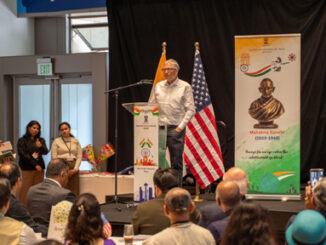
    SEATTLE, WA (TIP): In partnership with Gates Foundation, Consulate General of India in Seattle hosted a special celebration showcasing Indian culture, arts and cuisine at the Gates Foundation today (October 2). The event was graced by Mr. Bill Gates, Chair and Board Member of Gates Foundation, along with senior leadership of Washington State and Seattle City government.

    Mr. Bill Gates, Chair and Board Member of Gates Foundation, being presented a special publication on Gandhi ji by Mr. Prakash Gupta, Consul General of India in Seattle, at Gandhi Jayanti celebrations , October 2, 2025.

    Addressing the gathering, Mr. Bill Gates said “It’s fitting that we’re coming together on the birthday of Mahatma Gandhi. The ideals he championed, the equality and dignity of every person, are foundational to the work we do. Today, India stands as a global leader in innovation and is pioneering solutions with the potential to save and improve millions of lives across the Global South. We look forward to continuing to partner with India on its journey toward Viksit Bharat 2047.”

    “Natyam – A Dance Mosaic of Bharat” – a specially curated dance performance on various states of India being performed at Gandhi Jayanti celebrations

    The event also coincided with the Gandhi Jayanti and International Day of Non-Violence celebrations in the Greater Seattle area and also featured a special address on the ‘Relevance of Gandhian Values in Contemporary World Order’ by Mr. Jonathan Granoff, President of the Global Security Institute.

    Dignitaries at Gandhi Jayanti celebrations

    Earlier in the day, a commemorative event was also held at the Statue of Mahatma Gandhi near the Bellevue Public Library, where Bellevue City Council leadership joined in honoring the legacy of the Mahatma. In addition, another commemorative function was hosted in the afternoon at the Seattle Center (near the base of Space Needle) and floral tributes were offered at the bust of Mahatma Gandhi by Washington State Senator Vandana Slatter in the presence of Eddie Rye, Chairman and Founder of the Martin Luther King (MLK) – Gandhi Foundation. A large cross-section of Indian-American leadership attended these events in Seattle and Bellevue respectively, which also featured a special rendition of Gandhi Ji’s favorite hymns by young school children.

    Commemoration of Gandhi Jayanti at Seattle Center next to Space Needle on October 2,2025.
  • DOC SOCIETY CLIMATE STORY UNIT LAUNCHES INDIGENOUS-LED DOCUMENTARY FILMS SCREENING TOUR TO CREATE A BIO-DIVERSE FUTURE FOR ALL

    DOC SOCIETY CLIMATE STORY UNIT LAUNCHES INDIGENOUS-LED DOCUMENTARY FILMS SCREENING TOUR TO CREATE A BIO-DIVERSE FUTURE FOR ALL

    • By Mabel Pais

    The Screening Tour has begun! It launched on September 30, 2025.

    This pilot initiative empowers communities to work together and shift how impact distribution is shaped and shared.

    In a move that prioritizes collective impact through collaboration, five critically acclaimed Indigenous-led documentaries are joining forces for a shared or joint   impact screening tour that launched on September 30.

    “This initiative is about more than just bringing powerful films to new audiences—it’s about honoring the collective strength of Indigenous storytellers and reimagining how impact can be built through kinship, not competition,” said Megha Agrawal Sood, Co-Director of Doc Society. “The Indigenous Impact Alliance represents a shift toward community-led strategies where filmmakers, impact producers, and partners move together, not alone. We’re proud to support this pilot and to learn alongside these visionary teams as they chart new paths for distribution, engagement, and sovereignty.”

    Megha Agrawal Sood (USA), Co-Director – Doc Society; Director – Head of Climate Story Unit. (Credit: docsociety.org.)

    With the support of Doc Society’s Climate Story Unit, the Indigenous Impact Alliance the global screening tour brings together the award-winning films ‘YINTAH,’ ‘SINGING BACK THE BUFFALO,’ ‘SUGARCANE,’ ‘REMAINING NATIVE,’ and ‘BRING THEM HOME’ to amplify Indigenous voices and stories through a distribution strategy focused on aligned efforts. These films tackle crucial issues facing Indigenous communities while celebrating resilience, healing, and cultural resurgence.

    “Our film, ‘Remaining Native,’ shows the power of community when it comes to creating spaces for joy, healing, and collective sharing, so to be able to align with a strategy that mirrors that level of collaboration gives us hope that we can reach a lot of people and create meaningful impact,” said Paige Bethmann, Director, Remaining Native.

    The films are available for screening from Sept 30, marking Truth and Reconciliation Day in Canada, through November 21, to coincide with the end of COP 30, the largest environmental gathering in the planet, offering communities an opportunity to curate their own screening experiences and choose which films to screen based on their specific needs and interests. This audience-led approach ensures accessibility and cultural relevance while empowering local organizations to contextualize screenings within their own communities.

    Making the screening tour available beyond North America will connect international audiences who may be unfamiliar with the films’ subjects, providing crucial context and fostering cross-cultural understanding of Indigenous issues and experiences.

    The tour will prioritize in-person scheduled events, ensuring broad accessibility while maintaining the powerful communal experience of shared film viewing, discussion, and lead to action and engagement.

    The Indigenous Impact Alliance launched with a gathering in New Mexico in January of 2025 , where participating teams defined the cohort’s core objectives around two primary goals: expanding Indigenous creative power and narrative sovereignty, and amplifying Indigenous stories through strategic, community-driven distribution and engagement.

    This year-long pilot initiative, running through December 2025, is designed to enhance the impact of independent Indigenous films by coordinating strategies among film teams working on shared issues. By fostering collaboration, the program aims to build collective momentum in documentary impact work and address longstanding resource challenges in the independent film space. This cohort’s first goal centers on strengthening kinship among Native filmmakers, impact producers, and strategists, while developing support systems grounded in decolonization, land connection, and Indigenous creative sovereignty. A key component includes Indigenous/Native Impact Production workshops—hands-on, in-person trainings tied to festivals or existing events—that encourage earlier and deeper integration of impact strategy across the filmmaking process, from directors to producers and beyond.

    The approach also represents a paradigm shift in independent documentary distribution, where film teams working on similar issues have chosen collaboration over competition to maximize their collective impact and reach diverse audiences across Turtle Island / North America, and beyond.

    The Films

    The five participating documentaries each offer unique perspectives on Indigenous experiences while sharing common themes of resilience, cultural preservation, and resistance to colonial systems:

    Film, Sugarcane. (left) Directors Emily Kassie and Julian Brave NoiseCat after filming at the Williams Lake Stampede. (Credit: Sugarcane Film LLC.)
    • YINTAH, meaning “land”, is a feature-length documentary on the Wet’suwet’en nation’s fight for sovereignty. Spanning more than a decade, the film follows Howilhkat Freda Huson and Sleydo’ Molly Wickham as their nation reoccupies and protects their ancestral lands from several of the largest fossil fuel companies on earth.
    • SINGING BACK THE BUFFALO tells the story of Indigenous visionaries, scientists and communities rematriating buffalo to the heart of the plains they once defined, signaling a turning point for Indigenous nations, the ecosystem, and our collective survival.
    • SUGARCANE – A groundbreaking investigation exposes a shocking cover-up of cultural genocide perpetrated by the church and government, and illuminates the enduring love, beauty and courage of an Indigenous community.
    • REMAINING NATIVE is a coming-of-age story told through the perspective of Ku Stevens, a young Native American runner navigating college athletics while the memory of his great-grandfather’s 50 mile escape from an Indian boarding school begins to connect past, present, and future.
    • BRING THEM HOME tells the story of a small group of Blackfoot people and their mission to establish the first wild buffalo herd on their ancestral territory since the species’ near-extinction a century ago, an act that would restore the land, re-enliven traditional culture and bring much needed healing to their community.

    Doc Society

    Doc Society is a global impact organization that supports documentary films and filmmakers to create change. Through innovative programs and collaborative initiatives, Doc Society helps independent filmmakers maximize their social impact while building sustainable careers in documentary storytelling. Learn more at docsociety.org.

    The Doc Society Climate Story Unit

    The Doc Society Climate Story Unit is dedicated to supporting transformative storytelling to advance a climate just and biodiverse future. Across the Unit’s programs, artists, impact producers, and movement builders collectively envision, experiment and share how we can create an abundant world for all.

    Learn more about The Indigenous Impact Alliance at indigenousimpactalliance.org.

    Mabel Pais writes on The Arts and Entertainment, Spirituality, Social Issues, Health and Wellness, Education, Business, and Cuisine.

  • WORLD MUSIC INSTITUTE CELEBRATES FORTY YEARS

    WORLD MUSIC INSTITUTE CELEBRATES FORTY YEARS

    • By Mabel Pais

    World Music Institute turns milestone 40!

    Join the World Music Institute (WMI) to celebrate 40 years of presenting world music and dance in New York City on October 16, 2025. WMI will honor those whose artistic vision and long-standing financial and Board service support have most significantly contributed to WMI’s success.

    Food and drinks as well as live music will amplify the celebration.

    All proceeds will benefit the next 40 years of bringing patrons the very best in music and dance from around the world.

    PROGRAM

    WHAT:  WMI 40th Anniversary Celebration

    WHEN:  Thursday, October 16, 2025, 6:30 – 9:30 PM

    WHERE: 150 West 17th Street, New York, NY

    COST:   For tickets to the event, visit ci.ovationtix.com/35721/production/1244870?performanceId=11661457

    WMI HONOREES

    Robert and Helene Browning (The Founders of WMI)

    Robert Browning has promoted world music concerts in New York City since 1976. He co-founded the Alternative Center for International Arts in 1975, providing a platform for under-represented artists. By 1985, growing interest in world music led Robert and his wife, Helene, to establish the World Music Institute (WMI), which, under their leadership, organized more than 1,500 concerts over 25 years. Browning retired from WMI in 2011 but he and Helene continue their legacy through Robert Browning Associates, remaining committed to high-quality traditional music and community collaboration. Learn more at robertbrowningassociates.com.

    Kamala Cesar and Thomas Buckner

    Kamala Cesar and Thomas Buckner have been long-time supporters as well as substantial artistic contributors to WMI over the past 40 years.

    Kamala Cesar, a disciple of T. Balasaraswati in Bharata Natyam, is of Native American (Mohawk) and Filipino descent, born in Brooklyn, NY. She received the National Endowment for the Arts Folk Art Apprenticeship in 1986. In 1994, WMI presented her Indian Dance performance during the Navaratri Festival. Learn more at lotusmusicanddance.org.

    Thomas Buckner has championed avant-garde music for five decades as a singer, producer, and promoter and WMI is proud to have teamed up with him as early as 1990 in introducing innovative programs showcasing contemporary music by American composers and performers.

    For more than 40 years baritone Thomas Buckner has dedicated himself to the world of new and improvised music. In collaboration with a host of prominent composers and improvisers, Buckner continues to commission and perform numerous chamber works, orchestral pieces and song cycles, as well as improvisations, electronic constructions, and multi-media theater pieces. Learn more at thomasbuckner.com.

    Daisy and David Paradis

    Daisy Paradis has served on WMI’s Board of Directors since 1991 and between 2018 and 2024 co-chaired the Board with Andrew Faulkner. She is an accomplished musician and teacher and was a disciple of Maestro Ali Akbar Khan since 1966. She studied sitar with Krishna Bhatt and attended workshops with Pandit Ravi Shankar and Nikhil Banerjee. She is a co-founder of the Ali Akbar College of Music in California with Maestro Ali Akbar Khan and performed extensively on both the East and West Coasts as well as in India, with Maestro Ali Akbar Khan, Steve Gorn, and Pandit Samir Chatterjee, among others.

    Daisy’s husband David Paradis is a writer and an amateur jazz drummer. He graduated from Boston College and has a master’s degree from The University of Iowa, where he was in the Iowa Writers’ Workshop. He founded and for ten years published and edited the literary journal ‘Pequod.’ He has published one novel, ‘Flew Away.’ Follow him @ instagram.com/daparadisedrums.

    Rajika Puri and the late Anupam “Tino” Puri
    Rajika Puri
    is a distinguished performer in the Indian classical dance forms of Bharata Natyam and Odissi, having gracefully exhibited her artistry throughout Europe, the U.S., Latin America, and India during her illustrious career, which includes a command performance for the President of Mexico. She has also studied Western music, American Modern Dance and flamenco. She earned an MA in the Anthropology of Human Movement from NYU, contributing her writings to both academic journals and dance publications. Learn more at rajikapuri.com.

    Rajika is the visionary behind WMI’s critically acclaimed ‘Festival of Indian Dance: Dancing The Gods,’ which she expertly curated over 14 seasons, receiving accolades from The New York Times for its ability to attract “some truly god-like dancers”.

    The late Anupam “Tino” Puri, aside from being a successful and respected business leader, mentor, and philanthropist, was a true connoisseur and lover of the arts. He was the first Indian American hired by McKinsey & Company and founded McKinsey’s India practice in 1990. From 1996 onwards, he was an elected member of McKinsey’s Board of Directors, and from 1998 onwards oversaw all of McKinsey’s Asian, Middle Eastern and Latin American practices. His wisdom, humility, and generosity are missed by all who have known him. Tino passed away in 2025 at the age of 79.

    Javier Limón (WMI Honorary Board Member)
    Javier Limón
    is a renowned composer, music producer, and guitarist specializing in flamenco, jazz, and world music. Educated at the Royal Conservatory in Madrid, he has collaborated with over 1,000 musicians, including notable artists including Paco de Lucía, Caetano Veloso, Mariza, and Anoushka Shankar, among others. A Grammy and 10 Latin Grammy Award winner, Limón has also garnered over 20 gold and platinum records. Learn more at javierlimon.net.

    Farah Siraj (WMI Honorary Board Member)
    Farah Siraj
    , named Jordan’s Musical Ambassadress, has an extensive international career performing at prestigious venues like the United Nations, Carnegie Hall, and MTV. She advocates for humanitarian issues, including women’s rights and refugee rights, and has performed at the UN Humanitarian Awards. Farah uses music as a medium for peace, having toured globally with her album NOMAD, which blends various musical styles. Learn more at www.farahsiraj.com.

    MUSICIANS

    Musicians Yacouba Sissoko and Arun Ramamurthy, Merhnam Rastegari with Roshni Samlal and Camila Celin, and DJ Nickodemus will perform.

    World Music Institute

    Founded in 1985, World Music Institute (WMI) has served as one of the leading presenters of world music and dance within the United States. WMI is committed to presenting the best in traditional and contemporary music and dance from around the world to enrich lives through the arts, promote awareness and appreciation for the world’s rich cultural traditions, and encourage cross-cultural dialogue and exchange. WMI presents at venues throughout the city and depends on both public and private funding to accomplish its mission. For more information, contact WMI @ info@worldmusicinstitute.org or call (212) 545-7536.

    Follow the World Music Institute online!

    Tiktok:     @wminyc

    Facebook:   @worldmusicinstituteNYC

    Instagram: @worldmusicinstitute

    Youtube:   @WorldMusicInstitute

    Linktree:   @wmi

    Mabel Pais writes on The Arts and Entertainment, Spirituality, Social Issues, Health and Wellness, Education, Business, and Cuisine.

  • Women Empowerment in India: A Journey of Progress and Promise

    Women Empowerment in India: A Journey of Progress and Promise

    Women empowerment in India continues to be a dynamic journey marked by significant progress and ongoing challenges. Across sectors-education, politics, business, and social spheres-Indian women are reshaping narratives, breaking stereotypes, and driving change. For us in the diaspora, understanding this evolution matters deeply as it reflects both homeland developments and the broader quest for gender equity globally. This blog explores key trends, statistics, and insights that illuminate the vibrant story of women empowerment in India today, welcoming readers to engage with a fresh perspective.

    Understanding Women Empowerment in India: A Contemporary Overview

    Women empowerment is about enabling women to take control of their lives and make decisions freely. In India, this concept, long weighed down by cultural norms, is actively transforming. Today, laws protecting women from violence, initiatives promoting education, and increasing female workforce participation signal change. According to a UN Women report, India’s female labor force participation rose to 21% in 2024-still low globally but on a steady incline. Recognizing the multifaceted nature of empowerment helps frame our discourse around real progress.

    Education and Economic Inclusion: Pillars of Progress

    Education is the cornerstone of women empowerment in India. Government schemes like ‘Beti Bachao Beti Padhao’ have increased girl child enrollment in schools. Private sectors and NGOs partner in skilling programs tailored for women, creating pathways into tech, healthcare, and entrepreneurship.

    Economic inclusion follows education. Women-led startups and women entrepreneurs are becoming a powerful force. The government’s push for financial inclusion-with 80% of women having bank accounts as per World Bank data-creates new opportunities. We see women becoming breadwinners and decision-makers, further shifting societal frameworks.

    Political Participation and Legal Reforms Empowering Women

    Political involvement is crucial for long-term empowerment. Women’s representation in local governance bodies has surged after the 73rd and 74th constitutional amendments mandating 33% reservation for women in Panchayats. At the national level, notable political figures are changing perceptions and policies.

    Legal reforms addressing domestic violence, sexual harassment, and workplace rights add layers of protection that encourage women to participate confidently in public life. These changes form the backbone of a society taking women’s rights seriously, embedding equality into everyday governance and justice systems.

    Women’s Rights in India and USA: A Comparative Insight

    For many of us living or working in the USA, women’s rights in India and USA offer a study in contrasts and common goals. Both countries grapple with challenges like gender-based violence, pay gaps, and underrepresentation in leadership. However, the frameworks differ; while India combines ancient cultural values with modern legal reforms, the USA relies heavily on civil rights law and advocacy.

    This dual perspective enriches our understanding and fuels cross-cultural advocacy. It opens avenues for dialogue and cooperation aimed at uplifting women’s status globally while respecting diverse socio-cultural contexts.

    Cultural Shifts and Changing Mindsets Toward Gender Equality

    Empowerment also depends on changing attitudes. Media, education, and community dialogues help dispel regressive stereotypes and promote gender sensitivity. Young Indian women are more vocal about rights and opportunities, challenging expectations in families and workplaces.

    Initiatives promoting shared domestic responsibilities and celebrating women’s achievements build a positive momentum. This cultural shift is essential, as laws and programs alone cannot change hearts-societal acceptance is key.

    In Conclusion: Empowerment as a Collective Journey

    Women empowerment in India is more than policy or progress statistics-it’s a story of collective aspiration and cautious triumph. For us in the diaspora, it’s a reminder that our journeys, too, are linked across continents by shared struggles and successes.

    At Indian Panorama, we take pride in spotlighting these stories with clarity and empathy-because firmly rooted in every policy and achievement are women whose lives are transformed. Our commitment is to inform, inspire, and engage, turning empowerment from an ideal into a lived reality for generations.

    Let’s celebrate, learn, and act together-because when women thrive, so does society. And in that belief, we find the heart of empowerment.

    People Also Ask

    Q1: What is the status of women empowerment in India today?
    It is improving steadily with enhanced education, legal protections, and economic roles.

    Q2: How does India compare with the USA on women’s rights?
    Both face challenges but differ in cultural context and legal frameworks.

    Q3: What government schemes support women empowerment in India?
    Beti Bachao Beti Padhao, financial inclusion initiatives, and reservation policies.

    Q4: Why is education pivotal for women’s empowerment?
    It enables economic independence, informed decision-making, and societal participation.

    Q5: How can Indian diaspora contribute to gender equality conversations?
    By sharing best practices, supporting advocacy, and fostering cross-cultural exchanges.

  • What’s New? Exploring the Latest Indian News in the USA for Our Community!

    What’s New? Exploring the Latest Indian News in the USA for Our Community!

    Staying connected to home while building a life abroad is a balancing act we all understand well. For the Indian diaspora in the USA, timely and relevant news is the thread that weaves together our stories, aspirations, and concerns. The landscape of latest Indian news in the USA is ever-changing-filled with political shifts, cultural highlights, community events, and spiritual opportunities. This blog dives deep into the trends shaping our lives and highlights how we, as a community, can stay informed, engaged, and empowered in today’s world.

    Why We Need Authentic Indian News in the USA

    The need for credible, diaspora-focused news is stronger than ever. Traditional media often overlooks or simplifies issues vital to our experience-from immigration policy updates to cultural celebrations. For us, relevant news is not just information; it is a lifeline that guides decisions about education, work, health, and community involvement.

    Media that reflects our complex identity and addresses our unique circumstances enhances our ability to plan, connect, and thrive in new environments. This is why trusted sources that prioritize latest Indian news in the USA become indispensable companions on our journey abroad.

    Recent Trends in Community and Cultural Coverage

    The pulse of our community beats strongly in cultural events like Diwali celebrations, Ganesh Chaturthi processions, and India Day parades. These vibrant occasions are receiving unprecedented attention in diaspora newspapers and digital platforms, reflecting our growing presence and unity abroad. In 2025, celebrations such as the India Day Parade in New York City and the Independence Day events across cities like Broward Centre in Florida and Anaheim in California have drawn thousands, showcasing traditional dances, music, and cuisine, while celebrating our rich heritage.

    Diaspora news outlets provide live updates, interviews, and comprehensive event coverage that weave our individual stories into a collective narrative. This creates a valuable space where we share triumphs, challenges, and cultural pride. Moreover, the blending of Indian traditions with American customs creates new, vibrant cultural expressions. Festivals like Diwali are now celebrated with a fusion of classic rituals and contemporary gatherings, involving all generations across the community.

    Our news sources track these evolving trends closely. They spotlight youth initiatives-such as community volunteering and cultural education programs-entrepreneurship ventures, and even cross-cultural art projects that fuse Indian motifs with Western creativity. Events like the Festival of India and Bollywood Fever USA have become signature occasions that amplify this cultural diversity.

    News on Politics, Economy, and Diaspora Affairs

    Beyond festivals and cultural life, political and economic news heavily impacts our diaspora. Visa changes, U.S.-India trade talks, business opportunities, and healthcare policies directly influence our lives. Keeping tabs on these evolving stories is central to personal and family planning.

    For instance, recent updates on H-1B visa processing times shared on official USCIS.gov pages echo daily concerns across community forums. Understanding such technical news through diaspora media’s informed lens helps us translate policy jargon into action-whether it means applying for a green card or seeking legal advice.

    The Rise of Spiritual Retreats in the USA and What It Means

    Many among us seek not just news but soulful connection. The growing popularity of spiritual retreats in the USA among Indian expatriates signals an increased desire for mental peace and cultural rootedness. These retreats blend ancient practices like yoga, meditation, and Ayurveda with modern wellness trends, addressing stress, fatigue, and identity questions common to diaspora life.

    As one participant shared, “These retreats help me slow down and reconnect with both myself and my heritage-even miles from home.” Indian Panorama profiles such offerings, helping readers find spaces that nurture well-being and cultural pride.

    Technology’s Role in Connecting the Indian Diaspora

    Our community’s news sources are evolving digitally with video, podcasts, and social media-tools that make staying updated convenient and interactive. Apps and websites bring Indian news into our hands instantly, with notifications about breaking stories or local events.

    Even long-distance family connections thrive thanks to these technologies. Interactive webinars on immigration, virtual pujas, and global cultural live streams reduce the diaspora’s sense of distance. Indian Panorama embraces this digital shift to deliver timely, engaging content that fits our busy, connected lives.

    Final Remarks: Indian Panorama-Your Digital Bridge to Home and Community

    We, at Indian Panorama, recognize the vital role that trustworthy news plays in our shared diaspora experience. It’s not just about reporting stories but creating a platform where our diverse voices converge. Our mission is to bring you the latest Indian news in the USA with clarity, relevance, and heart.

    As we move forward, let’s value these narratives-spanning politics, culture, spirituality, and community-that bind us. Stay close, stay informed, and stay inspired with Indian Panorama, your digital bridge to home and a vibrant diaspora life.

    People Also Ask

    Q1: Where can NRIs find authentic Indian news in the USA?
    Indian Panorama and similar diaspora-focused platforms provide community-centered news.

    Q2: How do spiritual retreats benefit Indian expatriates?
    They offer relaxation, cultural connection, and mental wellness tailored to our heritage.

    Q3: Are Indian cultural events widely covered in diaspora media?
    Yes, festivals and community gatherings receive extensive and immersive coverage.

    Q4: What key economic news affects Indians living in the USA?
    Updates on visas, trade policies, and remittances are crucial and regularly reported.

    Q5: How has digital media transformed Indian diaspora news consumption?
    It enables instant access to news, interactive engagement, and virtual cultural participation.