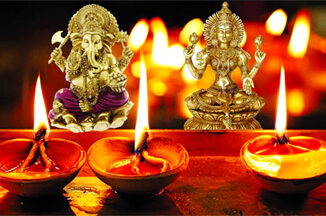
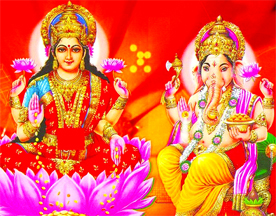
On the moonless night of Diwali, when darkness seems most complete, millions of homes across India come alive with shimmering lamps. Amidst the radiance, devotees welcome the presence of Goddess Lakshmi-the eternal embodiment of prosperity, abundance, and grace. As bells ring and prayers rise, her golden form, seated upon a blooming lotus, symbolizes the triumph of purity over greed, effort over chance, and wisdom over material illusion. Lakshmi is not merely the goddess of wealth-she is the divine feminine principle that sustains life’s harmony, balance, and beauty.
The Radiant Origin of Lakshmi
The story of Lakshmi’s birth is as luminous as the goddess herself. According to the Puranas, during the Samudra Manthan-the cosmic churning of the ocean by gods and demons in search of amrita (nectar of immortality)-Lakshmi emerged from the depths of the ocean, radiant and resplendent, seated on a lotus and holding a lotus in her hand. Her appearance was the manifestation of divine equilibrium, born of effort, faith, and cooperation between opposing forces.
Her emergence signified that wealth and prosperity-spiritual and material-arise only when there is harmony, diligence, and alignment with cosmic law. In that moment, the universe revealed that beauty, abundance, and fortune are not accidental gifts but the fruits of balance and devotion.
The Vishnu Purana describes her as the eternal consort of Lord Vishnu, the Preserver in the Hindu Trinity, symbolizing that prosperity (Lakshmi) can only endure where preservation, order, and righteousness (Vishnu’s dharma) prevail.
The Symbolism of Lakshmi
Every aspect of Lakshmi’s iconography speaks in layers of symbolism.
– Lotus Seat: Lakshmi is always depicted seated or standing upon a lotus-symbolizing purity that blooms even in the muddiest waters. It represents spiritual detachment, reminding devotees that true wealth flourishes when the soul remains unstained by greed or ego.
– Four Hands: Her four arms denote the four aims of human life (Purusharthas): Dharma (righteousness), Artha (wealth), Kama (desire), and Moksha (liberation). Together, they teach that material prosperity must harmonize with virtue, pleasure with discipline, and abundance with enlightenment.
– Gold Coins: Flowing from her palm are golden coins, the symbols of endless generosity and the divine cycle of giving and receiving. They remind us that wealth is not meant to stagnate, but to circulate-to nurture, to serve, and to uplift.
– Elephants Showering Water: Often depicted beside her are elephants pouring water from their trunks, symbolizing royal power, wisdom, and the ceaseless flow of auspicious energy. They represent spiritual strength that sustains prosperity.
– Owl (Ulooka): Her vehicle, the owl, signifies vigilance and wisdom, teaching that wealth without awareness can lead to downfall. The owl sees through darkness-just as one must remain awake amidst the illusions of material life.
Lakshmi and the Feminine Principle
Lakshmi is more than a goddess-she is Shakti, the vital energy that animates creation. As the consort of Vishnu, she complements the principle of preservation with the power of sustenance. Without her, the universe would lack beauty, nourishment, and order. In philosophical terms, Lakshmi represents Sri, the subtle cosmic force that pervades everything-from the rhythm of the cosmos to the flow of prosperity in a household. Her presence in mythology and life signifies the divine feminine’s indispensable role in maintaining balance between spirit and matter.
She is both gentle and powerful-Saumya in form, yet Mahashakti in essence. In her, tenderness meets resilience, grace meets purpose, and compassion meets discipline.
Lakshmi in the Scriptures
The Rig Veda, one of the oldest known scriptures, extols her as Sri-the radiant goddess of abundance, light, and auspiciousness. The Sri Sukta, a hymn of 15 verses, venerates her as the giver of both material prosperity and spiritual illumination. In these verses, she is invoked not just for wealth, but for health, strength, fame, and purity of mind.
Later texts such as the Padma Purana and Devi Bhagavata Purana expand her stories, linking her with the cyclical nature of existence-ever manifest, ever renewing. In the Vishnu Sahasranama, Vishnu is called Lakshmipati, emphasizing that divine wealth belongs to those aligned with truth and righteousness.
The Lakshmi of Diwali Night
Among the five days of Diwali, Lakshmi Puja on the third day is the most auspicious. It falls on the new moon night of Kartika Amavasya-a time when the absence of natural light calls forth the need for inner and outer illumination.
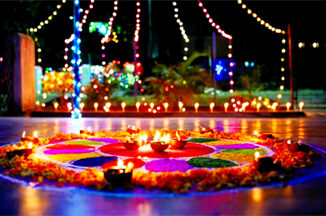
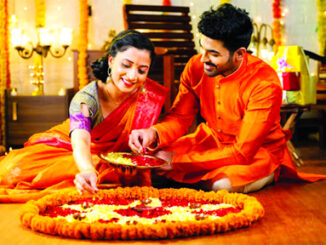
As dusk falls, homes are cleaned, purified, and adorned with lamps, flowers, and rangolis. The act of sweeping and decorating symbolizes the clearing of negative energies and inviting the divine into one’s space. Doors are kept open to welcome the goddess, while lamps are placed on thresholds and windowsills so that no corner remains in darkness.
In business households, ledgers and accounts (bahi-khatas) are ritually opened and offered to the goddess, marking the start of a new financial year. Families chant Lakshmi Ashtottara Shatanamavali-the 108 names of the goddess-and offer sweets, fruits, and coins. The belief is that on this night, Lakshmi visits the earth and blesses homes that are clean, peaceful, and full of devotion.
The quiet reverence of Lakshmi Puja contrasts beautifully with the noise of fireworks outside-it is a reminder that true abundance arises from calmness, gratitude, and integrity.
Stories and Myths of Lakshmi’s Grace
Lakshmi’s myths reflect the human relationship with wealth-its promise, peril, and potential. One legend tells how she once left the gods due to their arrogance, plunging heaven into darkness and despair. Only when humility and cooperation were restored did she return, bringing abundance with her. Another story describes her test of King Bali. When Vishnu, in his Vamana avatar, asked the demon king for three paces of land, Bali gave away everything he possessed. Moved by his sacrifice, Lakshmi declared that wherever humility and generosity dwell, there she would reside eternally.
These stories underline a timeless truth: prosperity follows righteousness, not the other way around.
Lakshmi and the Human Spirit
Lakshmi’s worship is not merely about the accumulation of wealth but about cultivating the right relationship with it. She embodies the idea that prosperity must be earned through effort, maintained through ethics, and shared through compassion.
The lotus she stands upon teaches spiritual detachment-live amidst abundance, but remain rooted in purity. Her calm demeanor amidst opulence reminds us that true wealth is inner peace. Her ever-smiling face reflects that joy flows not from possession but from gratitude.
In the Bhagavad Gita, Krishna says, “Wherever there is wealth, glory, or power, know it to be a manifestation of my divine Lakshmi.” Thus, Lakshmi is not confined to rituals; she dwells wherever there is harmony, charity, and beauty of thought.
Lakshmi in Today’s World
In today’s fast-paced, material-driven world, Lakshmi’s message feels more relevant than ever. Her ancient wisdom challenges modern excess, reminding us that prosperity is not merely a number in a bank account but a state of balance-between giving and receiving, work and rest, ambition and peace.
Month: October 2025
-

Lakshmi: The divine feminine power of prosperity
-

The changing face of Diwali: From earthen diyas to LED glitz
As twilight descends and the first lamps of Diwali flicker to life, India transforms into a glowing mosaic of radiance. Yet, if one looks closely, the light that fills today’s homes and streets carries a new hue. Once, Diwali’s charm was rooted in the soft, trembling glow of clay diyas filled with mustard oil, their flicker a prayer whispered to the heavens. Today, it dances in the steady, electric pulse of LED strips, fairy lights, and digital fireworks. The festival of lights has evolved-from sacred simplicity to modern spectacle-reflecting the changing face of India itself.
From Earth and Oil: The timeless Glow of the Diya
For centuries, the humble earthen diya has been the heart of Diwali. Made by village potters, dried in the sun, and filled with oil and cotton wicks, it symbolized purity, devotion, and connection to the earth. Lighting a diya was an act of faith-a ritual of awakening the soul, dispelling darkness within, and invoking prosperity.
Every flicker of that handmade lamp carried meaning. It embodied the five elements-earth (clay), water (used to mold it), fire (the flame), air (that sustains the flame), and ether (the space in which light spreads). When families lit hundreds of such diyas, their homes glowed with a golden warmth, the same light said to have welcomed Lord Rama to Ayodhya, heralding the triumph of dharma over evil.
The diya was not merely an object; it was a living symbol of India’s agrarian roots, of handmade artistry, and of spirituality grounded in simplicity.
The Arrival of Modern Light
The 20th century brought electricity into Indian homes-and with it, a new era of Diwali celebration. The first recorded use of electric illumination for Diwali dates back to early 1900s Bombay, when wealthy traders began stringing incandescent bulbs along their balconies. What began as novelty soon became aspiration.
By the 1970s and 80s, electric bulbs had become a common sight-multicolored garlands decorating markets, temples, and public buildings. Cities gleamed with neon signs proclaiming “Shubh Deepavali,” and electricity replaced oil as the dominant source of festival light.
The symbolism shifted subtly but significantly. The electric bulb, steady and powerful, contrasted with the organic fragility of the diya. The festival’s aesthetic grew brighter, grander, and more urban.
LEDs, Lasers, and the Era of Glitz
The 21st century has taken Diwali into a new visual age. With the LED revolution, energy-efficient lighting has made it possible to illuminate entire cities with minimal cost. Streets, malls, and temples now blaze in synchronized color displays, often choreographed to music or animations.
Homes no longer rely solely on traditional lamps. Instead, LED curtains cascade from balconies, sensor-lit diyas glow automatically at dusk, and programmable lights mimic the dancing of flames. Urban skylines twinkle not just with fireworks, but with digital light shows and drone spectacles.
In metropolitan India, the festival has merged with technology-driven aesthetics: eco-friendly laser shows replacing noisy crackers, 3D projection mapping on heritage buildings, and “smart diyas” powered by solar cells. The modern Diwali is as much about design and innovation as devotion.
A Shift in Mood and Meaning
With these transformations, Diwali’s sensory palette has changed. The rustic fragrance of clay lamps mingled with mustard oil has given way to the faint hum of circuitry and the sterile glow of LEDs. The festival, once deeply rooted in ritual and simplicity, now often mirrors urban consumerism-defined by shopping festivals, gadget launches, and social media sparkle.
Yet, this change is not merely about aesthetics-it also reflects a larger shift in India’s rhythm. The traditional Diwali was intimate, family-centered, and inward-looking. Today’s Diwali, while still joyous, is expansive, outward, and performative. Neighborhood competitions for the brightest house, Instagram-perfect rangolis, and influencer-led Diwali décor trends speak of a celebration that has adapted to a hyperconnected world.
Still, amid the glitter and technology, the essence remains-every lamp, whether clay or LED, still symbolizes hope. The medium has changed; the message endures.
The Environmental Awakening
One positive outcome of modernization has been an awakening toward sustainability. As awareness grows about pollution and waste, many urban households have begun to embrace eco-friendly celebrations. LEDs, despite their commercial glitz, are more energy-efficient and safer than traditional bulbs. Similarly, clay diyas have made a comeback in green-conscious homes that seek to support local artisans and reduce plastic waste.
The modern Diwali is thus evolving into a fusion-where tradition and technology coexist. Solar-powered diyas and biodegradable decorations embody this new balance, proving that innovation need not erase heritage, only illuminate it differently.
Artisans in Transition: The Potters’ Plight
However, the changing face of Diwali has not been without consequence. For generations, potters (kumhars) across India earned their living by crafting earthen diyas. But with the rise of mass-produced plastic and electric lamps, their livelihoods have been threatened.
In towns like Khurja (Uttar Pradesh) and Molela (Rajasthan), artisans now struggle to sell their handcrafted wares against the flood of imported LED decorations. Some have adapted, creating designer diyas, painted lamps, and eco-friendly terracotta products for urban markets. Others, sadly, have faded into economic obscurity.
The diya’s decline, therefore, is not just about changing aesthetics-it’s about the silent dimming of traditional craftsmanship.
Balancing Tradition and Modernity
India’s Diwali today straddles two worlds-the ancient and the futuristic. In many homes, grandmothers still insist on lighting the first oil diya before switching on the fairy lights. The old and the new coexist, often on the same threshold: clay lamps glowing softly beneath LED garlands, firecrackers replaced by laser shows, paper lanterns alongside digital décor.
This hybrid Diwali is perhaps India’s truest reflection-a civilization constantly reinventing itself without losing its soul. The festival’s transformation mirrors the nation’s journey from rural simplicity to technological sophistication, from handmade to high-tech.
The Light That Endures
Whether cast by an earthen diya or an LED bulb, Diwali’s light continues to embody humanity’s eternal yearning-to overcome darkness, to celebrate life, and to renew faith. The mediums may change, but the meaning endures.
In the end, the most radiant Diwali is not the one that dazzles with brightness, but the one that kindles warmth-the glow of togetherness, compassion, and hope.
So, as India lights up once again-some with clay lamps, others with neon brilliance-what truly matters is not how we illuminate our homes, but how we illuminate our hearts. -

How India celebrates Diwali from North to South
As the new moon of Kartika approaches, India begins to shimmer. From the ghats of Varanasi to the temples of Madurai, from the palaces of Jaipur to the beaches of Goa, the subcontinent bursts into a symphony of light, color, and devotion. Diwali-known variously as Deepavali, Dipotsav, or the Festival of Lights-is perhaps the only festival that truly unites India’s vast cultural mosaic, even as every region celebrates it in its own distinctive way. Each lamp lit tells a local legend, each ritual reflects a unique ethos, yet the underlying message remains the same: light conquers darkness, good triumphs over evil, and hope renews the human spirit.
Northern India: The Return of Rama and the Kingdom of Light
In the northern plains, Diwali is inseparable from the epic tale of Lord Rama. After 14 years of exile and the defeat of Ravana, Rama returned to Ayodhya with Sita and Lakshmana. To welcome their king, the people illuminated the entire city with oil lamps, symbolizing the triumph of virtue.
Ayodhya’s Deepotsav today is a breathtaking reenactment of that ancient homecoming. Millions of earthen lamps-over 24 lakh in 2024-are lit along the Sarayu River and throughout the city, creating a sea of flickering gold visible from the skies. Temples resound with chants of “Jai Shri Ram,” while tableaux and processions recreate episodes from the Ramayana. The event has earned a Guinness World Record for the largest display of lamps, but beyond its scale, it remains a devotional spectacle of light reclaiming darkness.
In Varanasi, the spiritual capital of India, Diwali blends seamlessly into Ganga Mahotsav-a five-day cultural and devotional celebration on the ghats. Thousands of diyas are floated on the sacred Ganges, turning the river into a shimmering ribbon of light. The Ganga Aarti on this night is a sight to behold-priests in saffron robes performing synchronized rituals with giant brass lamps as conch shells echo across the twilight. Fireworks, classical music, and handicraft fairs add to the city’s festive pulse, where spirituality and artistry flow together like the river itself.
Further north in Punjab, Diwali coincides with Bandi Chhor Divas, marking Guru Hargobind Sahib’s release from Gwalior Fort. The Golden Temple in Amritsar glows with thousands of lamps reflected in its serene waters. Sikhs commemorate the day with kirtan, charity, and fireworks, symbolizing liberation from both physical and spiritual bondage.
In Delhi, Haryana, and Uttar Pradesh, families celebrate with traditional Lakshmi Puja, lighting rows of diyas at doorsteps, exchanging sweets, and bursting firecrackers. New clothes, rangolis, and community feasts complete the night of joy and togetherness.
Western India: Prosperity, Worship, and Community
In Gujarat, Diwali marks the end of the financial year for traders and business families. It is primarily a festival dedicated to Goddess Lakshmi, the divine mother of wealth and abundance. On Chopda Pujan day, new account books (bahi-khatas) are opened, and prayers are offered for prosperity and ethical success in the year ahead. Homes are decorated with torans of mango leaves, intricate rangolis, and lamps at every entrance to invite Lakshmi’s grace.
In Maharashtra, Diwali extends over five days, each with a distinct meaning. It begins with Vasu Baras-honoring cows for their nurturing role-followed by Dhanteras and Naraka Chaturdashi (Chhoti Diwali). On this day, people take oil baths before sunrise, a tradition symbolizing purification after Narakasura’s slaying by Krishna. The main Lakshmi Puja follows, and then Bali Pratipada or Padwa celebrates the bond between husbands and wives, recalling the victory of King Bali’s devotion over Indra’s pride. The festival concludes with Bhau Beej, a day of sibling affection.
Rajasthan’s cities, especially Jaipur and Udaipur, are transformed into wonderlands of illumination. Every market, haveli, and palace glows in colorful lights. The Johari Bazaar in Jaipur is famed for its dazzling decorations and vibrant trade, while Udaipur’s City Palace hosts grand fireworks over Lake Pichola, reflecting the opulent beauty of Rajputana tradition.
In Goa, Diwali takes on a unique and fiery character. Here, the night before the festival is marked by the burning of massive effigies of Narkasura, the demon slain by Krishna. These effigies, crafted weeks in advance and paraded through villages, represent the destruction of arrogance and evil. With shouts of “Narakasura Mardini ki Jai!” (Victory to the Destroyer of Narakasura), locals greet dawn with oil baths, sweets, and joy.
Eastern India: The Night of Kali
In West Bengal, Diwali is celebrated as Kali Puja, dedicated to the fierce and compassionate Goddess Kali. The night sky fills with incense and devotion as temples and homes are transformed into shrines of divine energy. Idols of Kali, adorned with hibiscus flowers and skull garlands, are worshipped with offerings of rice, sweets, and symbolic rituals that signify the destruction of ego and ignorance. The air vibrates with the rhythm of drums and chants of “Jai Maa Kali!” While northern India’s Diwali is about prosperity and Rama’s return, Bengal’s version is about inner liberation and the triumph of the divine feminine.
In Odisha, lamps are lit not only for Lakshmi but also to guide the souls of ancestors back to heaven-a tradition known as Badabadua Daka. People stand in front of their homes with torches made of jute sticks, chanting, “Badabadua ho andhaara e asa, alua e jaa”-a prayer inviting ancestral blessings.
Assam celebrates Diwali with Shakti Puja and lighting of earthen lamps in shrines dedicated to Kamakhya Devi. The festival also coincides with the harvest season, blending devotion with gratitude for nature’s bounty.
Southern India: Dawn of Light
In the south, Deepavali (as it is locally called) is a celebration that begins at dawn rather than dusk. It commemorates Lord Krishna’s victory over the demon Narakasura and the restoration of righteousness.
In Tamil Nadu, people wake before sunrise, anoint themselves with fragrant oil, and bathe before lighting lamps and bursting crackers-a ritual symbolizing the destruction of negativity. Elders bless the young with new clothes, sweets, and tokens of love. The day is marked by offerings of Deepavali marundhu-a special herbal concoction believed to cleanse the body and protect against seasonal ailments.
In Karnataka and Andhra Pradesh, Deepavali spans several days. The first day is Naraka Chaturdashi, followed by Amavasya Lakshmi Puja, and then Balipadyami, honoring King Bali’s devotion. In rural areas, cattle are washed, adorned with garlands, and worshipped, reflecting gratitude to animals that sustain livelihood.
In Kerala, Deepavali is a quieter affair compared to Onam, yet homes still sparkle with small lamps and sweets are shared. The emphasis is on family togetherness and purity of thought, echoing the festival’s pan-Indian message of inner light.
The Himalayan and Island Diwalis
Even in the mountains, Diwali finds its glow. In Himachal Pradesh, it marks not just the worship of Lakshmi but also the return of deities to their shrines after autumnal processions. Kullu Dussehra flows into Diwali celebrations, creating a seamless blend of devotion and festivity.
In Nepal, the festival is called Tihar and spans five days-each devoted to animals, wealth, and family. Crows, dogs, cows, and oxen are honored for their roles in human life. -

Diwali: The festival of renewal
As the monsoon clouds recede and the air grows crisp, India awakens to the luminous embrace of Diwali-the festival of lights. Streets glow with rows of diyas, homes are adorned with fresh paint and fragrant flowers, and hearts, too, prepare for renewal. While Diwali is often seen as a celebration of prosperity and joy, its deeper essence lies in the renewal of the human spirit-a sacred opportunity to cleanse the mind, forgive the past, and awaken the inner light of consciousness.
The Light Within: Beyond Lamps and Fireworks
The outward spectacle of Diwali-its fireworks, sweets, and glittering lamps-symbolizes a greater inner illumination. According to ancient Hindu philosophy, the Deepa or lamp represents the Atman, the inner self. Lighting a diya is not merely a ritual but a meditation-a reminder that every human being carries a divine spark within, a flame that can dispel the darkness of ignorance and ego.
The Katha Upanishad declares, “The Self is smaller than the smallest and greater than the greatest, hidden in the hearts of all beings.” Diwali, then, becomes a sacred moment to rekindle that awareness-to let the light of understanding and compassion burn brightly against the shadows of anger, greed, and fear.
Cleansing the Home, Cleansing the Soul
Every year, as Diwali approaches, homes across India undergo a massive transformation. Dust is swept away, old clutter is discarded, and every corner is scrubbed until it shines. Traditionally, this act of physical cleaning was never just about beautification-it was symbolic of an inward purification.
To prepare for Diwali is to prepare for Lakshmi, the goddess of wealth and well-being. But Lakshmi’s blessings flow only to spaces-and hearts-that are pure. The cleaning of one’s home mirrors the cleansing of one’s thoughts, attitudes, and memories. It is an invitation to let go of emotional residues-the grudges, regrets, and resentments that dim our spiritual light.
Forgiveness, therefore, becomes a sacred act of Diwali. To forgive is to sweep the cobwebs from the soul, to make space for peace to dwell.
The Renewal of Relationships
In ancient times, Diwali was also the beginning of a new financial year for traders and artisans. Accounts were balanced, debts settled, and old transactions closed with blessings. This practical renewal carried a profound moral lesson: just as one clears financial accounts, one must also clear emotional accounts.
Diwali invites us to start anew-with our loved ones, friends, and even ourselves. Lighting a lamp together, exchanging sweets, or simply wishing peace upon someone you’ve wronged-all become acts of renewal. In the words of the poet Rabindranath Tagore, “Faith is the bird that feels the light and sings when the dawn is still dark.” Diwali encourages that faith-to rebuild bonds and trust even when life feels uncertain.
Silence Amidst the Celebration
While Diwali is marked by joyous noise-the crackle of fireworks, the laughter of families-its true spirit is found in silence. In many traditional households, the night of Amavasya (new moon) is spent in quiet meditation or Lakshmi Puja, invoking not only material wealth but inner prosperity.
In spiritual traditions, the dark night of Diwali represents the mind shrouded by ignorance. Lighting a lamp within signifies the awakening of wisdom. Saints and sages have long taught that the real Diwali happens when the soul kindles awareness, when compassion replaces judgment, and when humility illuminates pride.
The Five Lamps of Renewal
Diwali’s spiritual renewal can be understood through five metaphorical lamps that we light within ourselves:
– The Lamp of Gratitude – For all that life has given, and for the lessons hidden in what it has taken away.
– The Lamp of Forgiveness – To release the heavy burden of resentment and restore the heart’s peace.
– The Lamp of Faith – To trust in the divine order, even in times of darkness and change.
– The Lamp of Compassion – To extend kindness toward others, seeing the divine spark in every being.
– The Lamp of Self-Knowledge – To seek the truth of who we are, beyond titles, possessions, and fears.
When these five lamps are lit, Diwali’s radiance transcends the physical and becomes a living experience of awakening.
The Inner Lakshmi: Awakening Abundance
In Hindu philosophy, Goddess Lakshmi is not merely the goddess of material wealth but of Sri-the subtle beauty and grace of life itself. She represents abundance in thought, purity in action, and harmony in the environment. To invoke Lakshmi during Diwali, therefore, is to awaken these qualities within.
A mind that is generous, a heart that forgives, and a spirit that serves-all these are forms of Lakshmi. True wealth is not measured in gold or possessions but in the lightness of being that comes from a peaceful heart.
From Darkness to Light: The Eternal Message
The Upanishadic prayer-“Tamaso m? jyotir gamaya” (Lead me from darkness to light)-encapsulates the essence of Diwali. Darkness, in this context, is not merely the absence of light but the presence of ignorance, ego, and fear. Light is awareness, self-realization, and truth. Every diya we light is a promise-to walk the path of righteousness, to illuminate our surroundings with goodness, and to be bearers of peace in a fragmented world. The act of lighting lamps on the darkest night of the year reminds us that no darkness is ever too deep for light to overcome.
Diwali for the Modern Soul
In today’s fast-paced world, Diwali’s message of inner renewal is more relevant than ever. Amid consumerism and digital overload, it offers a pause-a moment to reflect on what truly matters. Whether one spends the evening meditating, volunteering, or simply sitting quietly with family, the essence remains the same: to reconnect with one’s higher self.
More than a festival, Diwali is a philosophy-a call to awaken, to forgive, to transform. It asks us to light a lamp not only on our doorstep but in our conscience.
The Light That Never Dies
When the last firecracker fades and the final lamp flickers out, what remains is the stillness of night-the silence in which the soul can finally listen. That is where Diwali’s true magic lies.
For the festival of lights is, ultimately, a festival of awakening. A reminder that renewal is not something we seek once a year-it is a continual process of cleansing, forgiving, and becoming. As the lamp burns steadily through the darkness, it whispers an eternal truth: the real Diwali happens not outside, but within. -

The many lights of Diwali: From Ramayana to the modern world
Every autumn, as the monsoon retreats and a crisp brightness fills the air, India transforms into a spectacle of radiance. Lamps flicker in courtyards, fireworks paint the skies, and the fragrance of sweets mingles with the sound of laughter. It is Diwali-the festival of lights, of joy, and of renewal. Yet, behind its glittering façade lies a rich and layered history that stretches across millennia, faiths, and philosophies. From the epic of Ramayana to the age of industrial India, Diwali has continuously evolved-its lights adapting to the changing contours of civilization while retaining their ancient glow of hope and righteousness.
Mythological Origins: The Triumph of Light over Darkness
At its heart, Diwali celebrates Deepa (light) as a symbol of dispelling Avidya (ignorance) and Adharma (evil). Its most widely known origin lies in the Ramayana. After fourteen years of exile and the epic battle in Lanka, Lord Rama, accompanied by Sita and Lakshmana, returned to Ayodhya. The citizens lit rows of clay lamps to illuminate the path of their beloved king. The flickering flames symbolized the victory of virtue over vice, of dharma over arrogance. Thus, Deepavali-literally “a row of lights”-became an eternal metaphor for human aspiration to overcome darkness within and without.
Krishna and the Slaying of Narakasura: Joy after Darkness
In South India, Diwali is deeply associated with Lord Krishna’s triumph over the demon king Narakasura. According to legend, Narakasura, swollen with power, had imprisoned 16,000 celestial maidens and tormented the world. With Satyabhama’s assistance, Krishna slew the tyrant, liberating his captives. The day of Narakasura’s death-Naraka Chaturdashi-came to be celebrated with cleansing baths at dawn, symbolic of purification, and the lighting of lamps to commemorate the restoration of righteousness. This tale embodies the same spiritual victory that Diwali across India represents, but through Krishna’s divine compassion and valor.
Mahavira’s Nirvana: The Jain Light of Liberation
For the Jain community, Diwali holds a profoundly different but equally luminous significance. It marks the Nirvana or final liberation of Lord Mahavira, the 24th Tirthankara, in 527 BCE at Pawapuri, Bihar. On that moonless night of Kartika, Mahavira attained moksha, and the cosmos was said to glow with a divine radiance. His disciples, led by Gautam Swami, lit lamps to symbolize the light of wisdom that would continue to guide humanity in his absence. Even today, Jains observe Diwali with meditation, charity, and recitation of scriptures, emphasizing the inner illumination of the soul over external festivity.
Goddess Lakshmi: The Radiant Mother of Prosperity
In the Vaishnava tradition and much of northern India, Diwali is primarily devoted to Mahalakshmi, the goddess of wealth and fortune. The night of the new moon in the month of Kartika is considered her chosen time to bless homes that are clean, pure, and illuminated. The story intertwines with the Samudra Manthan-the churning of the cosmic ocean-when Lakshmi emerged resplendent, seated on a lotus, symbolizing the birth of abundance through divine effort. Thus, Diwali became a festival of renewal, of new beginnings in trade and life. Business ledgers are opened afresh, coins are worshipped, and prayers are offered for prosperity in the year ahead.
Sikh Light: Bandi Chhor Diwas and Guru Hargobind’s Return
Among Sikhs, Diwali resonates as Bandi Chhor Divas-the Day of Liberation. In 1619, Guru Hargobind Sahib, the sixth Sikh Guru, was released from imprisonment in Gwalior Fort by Emperor Jahangir. Refusing to leave without freeing 52 detained kings, the Guru ensured their liberation too. As he returned to Amritsar, the Golden Temple was illuminated in celebration. Since then, the festival’s spiritual meaning for Sikhs has been one of freedom from bondage, compassion, and divine justice. The illuminated Harmandir Sahib on Diwali night continues to be one of India’s most breathtaking spiritual sights.
Regional Legends and Rituals: Unity in Diversity
Diwali’s beauty lies in its plurality-it is not a single-day event but a pan-Indian festival spanning five days, each carrying its own symbolism. In Gujarat and Maharashtra, it begins with Vasu Baras and Dhanteras, days for honoring cattle and wealth. In the north, Govardhan Puja commemorates Krishna lifting the mountain to protect the villagers of Gokul from Indra’s wrath, teaching the value of humility and faith. In Bengal, Kali Puja coincides with Diwali night, where Goddess Kali-the fierce mother who annihilates ignorance-is worshipped with tantric rituals and devotion. In the south, homes glow with Deepams, bursting crackers symbolize the destruction of evil, and sweets embody life’s sweetness renewed.
Evolution through the Centuries: From Lamps to Lanterns
The Diwali of ancient times was intimate-a family and village affair where lamps made of clay and ghee lit up dark rural nights. As trade flourished under the Mauryas and Guptas, Diwali also became an occasion for merchants to close their accounting year and start anew, linking religion with commerce. During the Mughal era, even emperors like Akbar and Shah Jahan are said to have participated in Diwali festivities, appreciating its cultural inclusiveness. Colonial India saw Diwali evolve further, with fireworks, electric lights, and printed greeting cards becoming symbols of modern celebration. Today, in the age of LEDs and social media, Diwali has become both local and global-a festival celebrated in Times Square as much as in Ayodhya, uniting the diaspora with ancestral light.
The Spiritual Core: Lighting the Inner Lamp
Beyond rituals, gifts, and grandeur, Diwali’s essence remains profoundly spiritual. The lamp represents the human soul-the flame of consciousness that must remain unwavering amidst life’s winds. The cleaning of homes signifies purging negativity, while the exchange of sweets symbolizes sharing goodwill. Every diya lit is a prayer for enlightenment-not only for oneself but for society at large. In the words of the Upanishads, “Tamaso m? jyotir gamaya”-from darkness, lead us to light.
Diwali in the Modern World: Sustainability and Social Spirit
In recent years, awareness around environmental impact has reshaped the way Diwali is celebrated. Eco-friendly lamps, organic colors, and community feasts have replaced excessive fireworks and waste. Many now use the occasion to light not just their homes but lives-through charity drives, education funds, and acts of kindness. Urban India’s Diwali is increasingly about illumination that uplifts both the spirit and society.
The Eternal Flame
Whether one sees it as Rama’s homecoming, Krishna’s victory, Mahavira’s liberation, or Lakshmi’s grace, Diwali’s enduring message is clear-the human yearning for light, harmony, and goodness transcends time and creed. Its many lamps may burn differently in each region, but together they weave a luminous tapestry of faith and festivity. As long as there is darkness to overcome, ignorance to dispel, and hope to renew, the lamps of Diwali will continue to burn-reminding us that light, in all its forms, is humanity’s truest heritage. -

Bhai Dooj – The festival of sibling love
As the lamps of Diwali slowly fade and the fragrance of sweets still lingers in the air, India celebrates one of its most tender and heartfelt festivals-Bhai Dooj, the Festival of Sibling Love. Marking the fifth and final day of the Diwali celebrations, Bhai Dooj (also known as Bhaiya Dooj, Bhau Beej, or Yama Dwitiya) honors the timeless bond of affection, trust, and protection between brothers and sisters.
If Raksha Bandhan is the thread that ties brothers and sisters together, Bhai Dooj is the reaffirmation of that bond through blessings, prayers, and gratitude. It is a day when sisters pray for the long and prosperous lives of their brothers, while brothers, in turn, promise to protect and cherish them forever.
The Mythological Origins: The Tale of Yamuna and Yama
The origins of Bhai Dooj lie in a deeply symbolic and touching legend from Hindu mythology involving Yamuna, the sacred river, and her brother Yama, the god of death and justice.
According to ancient texts, Yama had been away for a long time, carrying out his divine duties in the underworld. His sister Yamuna missed him dearly and often invited him to visit her home. After many years, Yama finally accepted her invitation and came to see her on the second day of the Shukla Paksha in the Hindu month of Kartika.
Yamuna joyfully welcomed her brother with a grand feast, applied a tilak (vermilion mark) on his forehead, and performed aarti, praying for his happiness and immortality. Touched by her affection and devotion, Yama was moved and granted her a boon-that on this day, any brother who visits his sister and receives a tilak from her would be blessed with a long, prosperous, and fearless life.
From that day, the festival of Bhai Dooj or Yama Dwitiya came to be celebrated as a sacred occasion symbolizing the loving bond between brothers and sisters and the triumph of affection over separation.
Symbolic Meaning of the Rituals
The essence of Bhai Dooj goes beyond the simple exchange of gifts and sweets-it is rooted in love, protection, and gratitude. The tilak ceremony symbolizes a sister’s heartfelt prayers for her brother’s well-being and the divine shield of her blessings. The brother’s visit, in return, reflects his respect, affection, and protective duty toward his sister.
The five dots often drawn on the brother’s forehead during the ritual represent Panchatatva-the five elements of life (earth, water, fire, air, and space)-invoking harmony and balance. The aarti performed by the sister signifies illumination and divine guidance in the brother’s life, while the exchange of sweets reflects the wish for sweetness and peace in their relationship.
Celebrations Across India: Diverse names, Shared Emotions
While the sentiment of Bhai Dooj is universal, its name, customs, and flavors vary beautifully across India’s regions.
– In North India, the festival is widely known as Bhai Dooj or Bhaiya Dooj. Sisters prepare festive dishes, apply tilak to their brothers’ foreheads, and pray for their long lives. Brothers give gifts, clothes, or money as tokens of love.
In Maharashtra, Goa, and Karnataka, it is called Bhau Beej. Sisters perform the ritual by drawing a square on the floor where the brother sits, symbolizing a sacred protective space. In some communities, brothers who cannot visit send symbolic gifts or even coconuts as a token of remembrance.
– In Bengal, it is known as Bhai Phonta, and the rituals are especially elaborate. Sisters observe a fast until they perform the phonta (tilak) ceremony, and brothers are treated to special Bengali delicacies like sandesh and mishti doi.
– In Nepal, the festival is celebrated as Bhai Tika, one of the most important festivals after Dashain. The sisters apply multi-colored tikas on their brothers’ foreheads and place garlands of marigolds around their necks, praying for their safety and longevity.
In every version, the essence remains the same-a reaffirmation of love and mutual respect between siblings, transcending distance and time.
The Modern Meaning: Beyond Rituals
In today’s times, as families become more dispersed and lifestyles more demanding, Bhai Dooj carries an even deeper significance. It is a day to pause, reconnect, and celebrate familial bonds that often get overshadowed by modern life’s pace. Even if brothers and sisters are separated by distance, they mark the occasion virtually-exchanging video calls, gifts, and heartfelt messages, proving that love transcends physical presence.
Beyond blood relations, the festival also celebrates chosen family-many people now extend the spirit of Bhai Dooj to cousins, friends, or even colleagues who share sibling-like affection and trust.
It’s not just a festival-it’s a reminder of the emotional and spiritual balance that the relationship between a brother and sister brings into one’s life: the nurturing care of the sister and the reassuring protection of the brother.
Spiritual and Social Symbolism
Bhai Dooj carries a universal spiritual symbolism that mirrors the larger philosophy of Diwali itself-the victory of light over darkness, love over isolation, and connection over indifference. The brother, representing strength and duty, and the sister, representing compassion and nurturing, together symbolize the harmony of masculine and feminine energies that sustain family and society.
The festival also conveys a moral message: that no matter how powerful one becomes (like Yama, the god of death), the bonds of affection, respect, and humility must always guide one’s heart.
As the Diwali festivities draw to a close, Bhai Dooj serves as the perfect emotional epilogue-an intimate reminder that beneath the glitter of lamps and sweets lies the enduring light of human relationships. It is a celebration of love that protects, and protection that loves.
From the mythic meeting of Yama and Yamuna to the laughter shared between modern-day siblings, Bhai Dooj continues to weave hearts together across generations. Whether through a simple tilak, a heartfelt blessing, or a cherished memory, the message remains timeless-that the bond of a brother and sister is among life’s purest and most enduring gifts. -

Govardhan Puja, Annakut, Padwa: A celebration of faith, gratitude and renewal
Honoring Lord Krishna, Nature’s Bounty, and the Bonds of Prosperity and Love
The fourth day of Diwali, following the radiant night of Lakshmi Puja, holds a profound blend of devotion, gratitude, and renewal. Known by various names across India-Govardhan Puja, Annakut, and Padwa (Bali Pratipada)-this day represents different yet harmoniously connected aspects of the human experience: faith in the divine, thankfulness to nature, and celebration of relationships and new beginnings.
The Legend of Govardhan Puja: When Krishna Lifted the Mountain
The most celebrated story associated with this day comes from the Bhagavata Purana and centers on Lord Krishna’s miraculous lifting of the Govardhan Hill. In the idyllic village of Vrindavan, the people once worshipped Lord Indra, the rain god, offering him rituals and feasts to ensure abundant rains and rich harvests. Young Krishna, seeing this practice, asked the villagers to instead worship Govardhan Hill, which provided them with fertile pastures, food, and shelter. He taught that nature itself is divine and should be revered with sincerity and gratitude.
Convinced by Krishna’s wisdom, the villagers offered their prayers and food to the Govardhan Hill instead of Indra. Enraged by this defiance, Indra unleashed torrential rains and storms over Vrindavan. To protect the people and animals, Krishna lifted the Govardhan Hill on his little finger, holding it like a vast umbrella for seven days and nights.
Defeated, Indra realized Krishna’s supreme divinity and humbly sought forgiveness. From that day, the people of Braj began celebrating Govardhan Puja, honoring Krishna’s protection and the nurturing power of nature.
Spiritual Meaning: Worshipping the Sustainer of Life
Govardhan Puja is not merely a celebration of a mythological event-it is a spiritual lesson in humility, ecology, and gratitude. Lord Krishna’s act symbolizes the victory of devotion over arrogance, faith over fear, and nature’s grace over human pride.
The Govardhan Hill represents Mother Earth, the ultimate giver of sustenance. Worshipping the hill is an acknowledgment that every grain of food, drop of water, and blade of grass is a divine blessing. Krishna’s message remains timeless: true worship lies not in hollow rituals but in reverence for the living world and in acts of service, protection, and compassion.
Annakut – The Mountain of Food
The day is also celebrated as Annakut, meaning “mountain of food.” This ritual is one of the most visually delightful and spiritually fulfilling parts of the festival. Devotees prepare an enormous array of vegetarian dishes-sweets, fruits, snacks, rice, pulses, and milk products-and arrange them in the form of a hill, symbolizing Govardhan Mountain.
The offering, known as Chhappan Bhog (56 dishes), is made to Lord Krishna to express gratitude for the year’s harvest and the abundance bestowed by nature. In many temples, especially in Mathura, Vrindavan, Nathdwara, and ISKCON centers, the food is beautifully displayed before the deity and then distributed as prasadam to devotees, representing the sharing of divine blessings and communal joy.
The Annakut feast also carries the message of charity and community sharing-reminding that wealth and food gain true sanctity only when distributed selflessly.
Padwa or Bali Pratipada: Renewal and Relationships
In many parts of India, especially in Maharashtra, Gujarat, and South India, the same day is celebrated as Padwa or Bali Pratipada, each with its own cultural significance.
– In Maharashtra, Padwa is observed as Gudi Padwa of the Diwali cycle (not to be confused with the spring New Year festival). It celebrates the bond between husband and wife. Wives perform rituals and apply tilak on their husbands’ foreheads, praying for their long life and prosperity, while husbands present gifts as tokens of love and respect. This exchange reinforces marital harmony and gratitude within family life.
– In Gujarat, the day marks the beginning of the new financial year, known as Bestu Varas. Business communities perform Chopda Pujan, worshipping their account books and ledgers before Lord Ganesha and Goddess Lakshmi. It symbolizes a fresh start guided by honesty, diligence, and divine blessings for prosperity.
– In the Vaishnavite tradition, this day also honors King Bali, the generous demon ruler who was sent to the underworld by Lord Vishnu in his Vamana avatar, with a promise that he would return once a year. Bali Pratipada thus symbolizes selfless devotion and eternal faith.
Regional and Cultural Diversity
Across India, the celebrations of this day take on varied hues:
– In Braj, Mathura, and Vrindavan, devotees perform Govardhan Parikrama-circumambulating the sacred Govardhan Hill, chanting Krishna’s name, and offering food, incense, and flowers.
– In Gujarat and Rajasthan, people decorate cow dung models of the hill and worship cows, recognizing their sacred role in agrarian life.
– In South India, the day marks Bali Pratipada, symbolizing the return of righteousness and devotion through Lord Vishnu’s blessing.
Despite the regional differences, the underlying message remains the same-gratitude to nature, reverence for divinity, and celebration of togetherness.
Symbolism: Lessons for Modern Life
The story of Govardhan Puja holds a timeless message for today’s world. As humanity faces ecological challenges, Krishna’s act reminds us that nature is not to be exploited but revered. The hill he lifted is a symbol of environmental balance, while his protection of the villagers embodies compassion and responsibility toward all living beings.
The Annakut offering teaches the virtue of contentment and sharing, and Padwa highlights love, renewal, and integrity in relationships and enterprise. Together, they form a holistic message for modern living-anchored in faith, gratitude, and sustainability.
Govardhan Puja, Annakut, and Padwa together form a sacred triad of spiritual, material, and emotional renewal within the Diwali cycle. They remind us to bow not only before gods but also before the gifts of the Earth-to live with humility, to share what we receive, and to begin each new year with integrity and love.
As the fragrance of fresh food mingles with the sound of prayers and the glow of diyas, this day celebrates the essence of life itself-gratitude for what sustains us, devotion to what guides us, and love for those who walk beside us.
In honoring Govardhan, we honor the Earth; in celebrating Annakut, we honor abundance; and in observing Padwa, we honor relationships. Together, they illuminate a path where faith, prosperity, and compassion coexist in divine harmony. -

Lakshmi Puja: The radiant heart of Diwali
Welcoming the Goddess of Wealth, Wisdom, and Inner Illumination
Diwali, the grand Festival of Lights, reaches its spiritual and emotional crescendo on Lakshmi Puja, the main day of the celebration. It is the evening when homes shimmer with a thousand diyas, the air hums with prayers and laughter, and hearts glow with a shared sense of abundance and gratitude. Dedicated to Goddess Lakshmi, the divine embodiment of wealth, prosperity, and fortune, this day symbolizes not only material well-being but also the inner light that dispels the darkness of ignorance and negativity.
The Sacred Essence of Lakshmi Puja
Lakshmi Puja, celebrated on the Amavasya (new moon) night of the Hindu month of Kartika, is the most significant and auspicious day of Diwali. It marks the triumph of light over darkness, virtue over vice, and hope over despair. According to tradition, Goddess Lakshmi roams the Earth on this night, visiting clean, beautifully decorated homes to bless them with prosperity and happiness for the coming year.
The puja holds a deep philosophical meaning. The dark night of Amavasya symbolizes the human mind shrouded in ignorance. Lighting diyas represents invoking the divine light of knowledge and wisdom to guide one’s life. Inviting Goddess Lakshmi is, thus, not merely about attracting wealth, but also about invoking clarity, contentment, and purity of intention.
The Legend and Mythological Significance
The roots of Lakshmi Puja are intertwined with ancient Hindu legends. One of the most celebrated stories connects it to Lord Vishnu’s Vamana avatar and the defeat of King Bali, symbolizing the restoration of dharma and balance. Another legend tells that on this very night, Goddess Lakshmi emerged from the cosmic ocean during the great churning of the ocean (Samudra Manthan), bringing along with her the gifts of prosperity, beauty, and abundance to bless the world.
For devotees of Lord Rama, Diwali also commemorates his triumphant return to Ayodhya after fourteen years of exile and his victory over Ravana. The people of Ayodhya welcomed him by lighting rows of oil lamps, symbolizing the return of light, righteousness, and divine grace. Thus, the worship of Goddess Lakshmi became inseparably linked with the celebration of Diwali night.
Rituals and Ceremonies of Lakshmi Puja
– Preparation for Lakshmi Puja begins days in advance. Homes are cleaned, repaired, and decorated-believed to attract the Goddess, who abhors disorder and impurity. Doorsteps are adorned with rangoli designs and tiny footprints of Goddess Lakshmi drawn with rice flour or vermilion to symbolize her entry into the home.
– On the evening of the Puja, devotees create an altar decorated with flowers, candles, and lamps. Idols or images of Goddess Lakshmi, Lord Ganesha (the remover of obstacles), and Lord Kubera (the treasurer of the gods) are placed together, representing the harmony of prosperity and wisdom.
The rituals typically include:
– Sankalpa (invocation) – A vow to perform the puja with devotion and sincerity.
– Kalasha Sthapana – Setting up a sacred pot representing abundance and fertility.
– Lakshmi Aarti and Bhajans – Hymns and prayers sung in praise of the Goddess, invoking her grace.
– Offering of sweets, fruits, and gold/silver coins – Symbolizing gratitude for blessings received and faith in future prosperity.
After the puja, diyas are placed in every corner of the house, balconies, and courtyards-illuminating not only the physical space but also symbolically driving away the shadows of greed, ego, and ignorance.
Cultural and Regional Expressions
While the essence of Lakshmi Puja remains universal across India, regional customs add beautiful diversity to the celebration. In North India, it is the main Diwali night when families perform elaborate pujas, exchange sweets, and burst fireworks. In Gujarat, the day marks the beginning of the new financial year, with business communities performing Chopda Pujan-worshipping their account books and ledgers to seek blessings for prosperity.
In West Bengal, Odisha, and Assam, the day coincides with Kali Puja, where the fierce Goddess Kali is worshipped as the destroyer of darkness and evil. In Maharashtra and South India, the rituals are often performed alongside the worship of Lord Ganesha and Kubera, focusing on invoking both material and spiritual wealth.
Symbolism: Wealth Beyond Gold
True wealth, in Hindu philosophy, extends far beyond material riches. Lakshmi represents eight forms of prosperity, collectively known as Ashta Lakshmi-spanning areas like knowledge, courage, fertility, patience, and victory. The lighting of diyas and the chanting of mantras symbolize the aspiration to awaken these virtues within.
Lakshmi Puja reminds devotees that prosperity attained through honesty, effort, and righteousness leads to enduring happiness. The festival teaches that wealth should circulate-benefiting family, society, and the greater good-just as the Goddess blesses those who share their abundance selflessly.
The Night of Inner Illumination
As diyas flicker gently in every window and the air fills with the scent of incense and sweets, Lakshmi Puja becomes an occasion for introspection and gratitude. It invites one to cleanse not only the home but also the heart-to let go of greed, ego, and resentment, and make space for love, compassion, and contentment.
Lakshmi Puja, therefore, is not merely an act of worship but a spiritual reaffirmation. It is a reminder that true prosperity lies in harmony-between wealth and wisdom, success and humility, outer beauty and inner light.
On the sacred night of Lakshmi Puja, as families gather around glowing lamps and offer prayers, they participate in a timeless ritual that unites generations, regions, and faiths in a shared celebration of light, love, and life itself. Amidst the sparkle of diyas and the echoes of aartis, one realizes that Diwali is not only about inviting Goddess Lakshmi into our homes but also about awakening her divine grace within our hearts. -

Chhoti Diwali: Cleansing the self, welcoming the divine
The soft glow of oil lamps, the fragrance of freshly applied ubtan, and the gentle hum of festive anticipation fill the air-this is Chhoti Diwali, also known as Naraka Chaturdashi, the second day of the five-day Diwali festival. Often overshadowed by the grandeur of the main Diwali night, Chhoti Diwali holds its own quiet significance-a day that marks not just preparation for celebration, but purification before illumination.
While Diwali is the festival of lights, Chhoti Diwali is the dawn before the light, a symbolic victory of good over evil, light over darkness, and knowledge over ignorance. Its rituals and legends remind us that true celebration begins only when the inner shadows are dispelled.
The Legend of Narakasura
The roots of Chhoti Diwali lie deep in Hindu mythology, in the dramatic tale of Narakasura, the demon king of Pragjyotishpur (present-day Assam). Narakasura, the son of Bhudevi (Mother Earth) and Varaha, an incarnation of Lord Vishnu, was a powerful ruler. But with time, arrogance overtook righteousness. He became cruel and tyrannical, imprisoning celestial maidens and seizing the precious earrings of Aditi, the mother of the gods.
Unable to bear his atrocities, the gods turned to Lord Krishna for help. In response, Krishna mounted his celestial vehicle Garuda, with his consort Satyabhama, and attacked Narakasura’s fortress. A fierce battle ensued, and in the end, it was Satyabhama-an incarnation of Bhudevi herself-who killed Narakasura, thus redeeming her son from his sins.
Before dying, Narakasura repented and requested that his death be celebrated with joy and lights, symbolizing the end of evil and the triumph of virtue. His wish was granted, and ever since, Naraka Chaturdashi has been observed as a day of victory, renewal, and cleansing-a precursor to Diwali’s light.
The Day of Cleansing and Renewal
Unlike the opulent celebrations of the following day, Chhoti Diwali is marked by quiet rituals of purification. It is believed that Lord Krishna took a bath after slaying Narakasura, washing away the dirt and blood from battle. Emulating this divine act, devotees perform the Abhyang Snan, an early-morning ritual bath believed to purify body and soul.
The Abhyang Snan Ritual
Before dawn, people apply fragrant oils such as sesame or coconut infused with herbs, followed by a cleansing ubtan made of gram flour, turmeric, and sandalwood. This ritual is said to remove fatigue, impurities, and negative energies accumulated over the year. Bathing before sunrise on this day is believed to bring health, protection, and prosperity.
After the bath, homes are decorated with rangolis, marigold garlands, and diyas. The soft radiance of lamps fills every corner, symbolizing the illumination of wisdom after cleansing. In many families, traditional sweets are prepared, and the mood is one of gentle joy rather than grandeur.
Yamadeepdaan: Lamps for Longevity
Another beautiful custom observed on Chhoti Diwali is Yamadeepdaan-the lighting of lamps dedicated to Yamraj, the god of death. According to a popular legend, the sixteen-year-old son of King Hima was destined to die by a snake bite on the fourth day of his marriage. His clever wife, determined to save him, placed shining gold ornaments and lamps at the doorway and kept her husband awake through the night with stories and songs. When Yama arrived in the form of a serpent, he was dazzled by the brilliance of the lamps and spent the night listening to her songs instead of taking the boy’s life.
Since then, small diyas are placed outside homes facing south (the direction associated with Yama) on Chhoti Diwali night to ward off untimely death and invite longevity and well-being. Symbolically, it teaches that the light of love and devotion can overpower even the shadow of death.
Regional Celebrations Across India
Though commonly known as Chhoti Diwali in North India, this day carries different names and practices across regions, each reflecting a unique cultural tone.
– North India: The day is celebrated with small-scale fireworks, oil baths, and lighting of lamps. Markets are lively, homes glow with early diyas, and preparations for the main Diwali night intensify.
– Maharashtra: People rise early for Abhyang Snan, offer prayers to Krishna, and enjoy traditional delicacies like poha, ladoo, chakli, and karanji. It is a time for relaxation before the grandeur of Lakshmi Puja the next evening.
– South India: In Tamil Nadu, Andhra Pradesh, and Karnataka, Naraka Chaturdashi is celebrated with great fervor. Temples are adorned, conch shells resound at dawn, and devotees burst crackers in remembrance of Krishna’s victory. In many households, it is regarded as even more sacred than the main Diwali night.
– Gujarat: The day marks the second phase of Diwali celebrations, where lamps are lit and prayers are offered to Goddess Lakshmi. The festive atmosphere begins to peak as the New Year approaches.
In essence, no matter the region, the theme of Chhoti Diwali remains constant-cleansing, protection, and the awakening of light.
On a spiritual level, the demon Narakasura represents the darker instincts within human nature-ego, greed, lust, and ignorance. His defeat by Lord Krishna symbolizes the triumph of divine consciousness over the lower self.
Chhoti Diwali thus becomes a day of introspection and purification. Lighting lamps signifies illuminating the mind; taking the oil bath reflects washing away inner impurities; and discarding old clutter symbolizes letting go of mental and emotional baggage.
Before celebrating Diwali-the festival of light-Chhoti Diwali reminds us to first conquer the darkness within. It teaches that to welcome Goddess Lakshmi, the goddess of prosperity, one must first cleanse the heart of negativity.
Modern Relevance: Reclaiming the Forgotten Day
In modern urban life, Chhoti Diwali is often treated merely as a day for early fireworks or Diwali preparation. Yet, its spiritual message feels more urgent than ever. Amidst the stress of daily living, this day invites people to pause-to detox not only their homes but their minds.
Eco-friendly rituals like using natural oils, clay lamps, and herbal ubtans have revived the day’s original essence of harmony with nature. Yoga practitioners often dedicate the morning to surya namaskar (sun salutations) after the ritual bath, aligning with the festival’s theme of renewal.
Chhoti Diwali can be reimagined as a festival of mindfulness-a reminder to disconnect from chaos and reconnect with the self.
As dusk descends and lamps begin to flicker along verandahs and courtyards, Chhoti Diwali ushers in an air of peace and quiet preparation. It is the calm before the storm of celebration-the moment when darkness yields to light, and silence gives way to joy.
More than a festival, Chhoti Diwali is a state of mind-a reminder that before we seek external prosperity, we must first achieve inner purity. Before we light the world, we must light ourselves.
It whispers a timeless truth from the heart of Indian tradition:
The greatest victory is not over others, but over the darkness within. -

What’s Brewing in Indian Startups-Fresh Insights into a Booming Ecosystem!
How often do we stop to ask what’s really happening with Indian startups today? For many of us, whether living in India or part of the diaspora abroad, these ventures are more than business, they are stories of innovation, risk, and cultural pride. With global eyes on India’s tech explosion, the pulse of Indian entrepreneurship races faster than ever. This blog explores Indian startups news through a fresh lens, weaving in vibrant threads of the food and culture of Indian diaspora to offer an engaging and relatable narrative for our community.
The Current Landscape of Indian Startups
India’s startup ecosystem has been nothing short of a revolution. According to a 2025 report by NASSCOM, India hosts over 110,000 startups, employing millions and attracting record funding worth over $50 billion. These numbers symbolize more than scale, they reflect a vibrant imagination tackling everything from fintech to health tech, edtech to sustainable innovations. For us, reading Indian startups news isn’t just about companies; it’s about tapping into the pulse of modern India, dynamic, youthful, and determined.
Amid this, we find startups led by women entrepreneurs, second-generation NRIs, and fresh graduates, highlighting a diverse range of voices and visions. Their innovations offer pathways not only for financial success but also for social impact, raising the bar for what business can be.
From Idea to Impact: Inspiring Startup Journeys
Every startup has a story, and many narratives resonate particularly with our diaspora readers. Take Byju’s, a beacon in edtech, which began in a small classroom and now educates tens of millions globally. Or Zomato, which originated as a food guide and became a global restaurant discovery platform.
Closer to home, startups founded by Indian diaspora members are making waves internationally. These stories are more than business wins; they are tales of perseverance, cultural bridges, and the spirit of “Make in India” evolving into “Innovate for All.” When we hear such success stories, it’s easy to feel inspired and part of a collective pride.
How Startups Reflect the Food and Culture of Indian Diaspora
What’s fascinating about many Indian startups is their rootedness in the food and culture of Indian diaspora. From subscription-based spice boxes that bring authentic masalas to American kitchens, to apps showcasing regional recipes and culinary traditions, these startups preserve and reinvent heritage in accessible new formats.
Fashion, wellness, and entertainment startups also amplify cultural expression by melding tradition with contemporary needs. This fusion echoes our diaspora’s own balancing act, honoring roots while adapting to new worlds. In essence, startups are not only economic engines but cultural ambassadors.
The Role of Technology and Investment Trends
Technology is the driving force behind India’s startup rise, but investment hangs tightly on its wings. Venture capital in India has grown tenfold over the past decade, with leading investors like Sequoia and Tiger Global fueling innovation. The ecosystem encourages bold ideas, rapid scaling, and international outreach.
Government initiatives like Startup India continue to provide support, simplifying processes and granting incentives. Meanwhile, increasing digital adoption, 150 million new internet users expected in 2025 alone (IAMAI report), creates fertile ground for tech-driven ventures.
These trends shape what we see reported in Indian startups news, showing a promising horizon for entrepreneurs and investors alike.
Where Indian Startups Are Heading: Predictions and Potentials
Looking forward, emerging sectors like green energy, health tech, and AI promise to fuel the next wave of startups. Global collaborations will likely deepen, leveraging diaspora networks to expand innovation hubs.
Experts speculate a rise in impact investing, with startups addressing climate change and social equality gaining prominence. The startup economy is morphing into a smarter, more inclusive ecosystem that is as much about values as valuation.
For all of us watching and participating from afar or near, this evolving landscape offers ample reasons to stay optimistic and engaged.
Indian Panorama-Your Insider to Innovation Stories
At Indian Panorama, we see ourselves as your front-row seat to the startup stage, bringing you stories that go beyond numbers to capture the spirit and grit powering Indian entrepreneurship globally. We blend business insights with cultural narratives so that every reading connects on both professional and emotional levels.
Whether you’re a budding entrepreneur, a student hungry for inspiration, or simply a proud member of the Indian diaspora, we weave these stories to keep you informed, motivated, and connected. Our shared journey is colorful, challenging, and deeply rewarding, just like the startups we celebrate.
Let’s innovate, inspire, and grow together, with Indian Panorama lighting the way.
People Also Ask
Q1: What sectors are booming in the Indian startup ecosystem?
Edtech, fintech, health tech, and sustainability are leading sectors.Q2: How do Indian diaspora startups contribute globally?
By bringing cultural insights and technological innovation to international markets.Q3: What government support exists for Indian startups?
Programs like Startup India offer funding, mentorship, and regulatory ease.Q4: How does the food culture influence Indian startups?
Many startups innovate around spices, cuisine delivery, and culinary education.Q5: Where can I stay updated on Indian startups news?
Indian Panorama offers reliable, timely news and inspiring success stories. -

AIA-NY’s 38th Iconic Deepavali Festival Makes History on Long Island
BABYLON, NY (TIP) : The Association of Indians in America, New York (AIA-NY) celebrated its 38th iconic Deepavali Festival at Overlook Beach here on October 11, marking a milestone as the first-ever festival of its kind on Long Island.
An estimated 2,000 people enjoyed cultural performances, spiritual presentations, traditional Indian food, and community celebration throughout the day. A spectacular live fireworks display lit up Long Island’s south shore, creating unforgettable memories.

Honorees Sunita Sadhnani, Dr Gurmohan Syali, Dr Abhay Malhotra, and Justice Karen Gopee with the AIA team, guests, and dignitaries, including Congressman Suhas Subramanyam. Amid fulsome compliments for staging a grand show and maneuvering the annual event’s move from South Street Seaport in Manhattan, AIA-NY President Beena Kothari said, “This event was a dream come true… promoting culture, unity, and community engagement.”

New York State Assemblywoman Jenifer Rajkumar said generations of school children in New York will know what Diwali is when they get a holiday for the festival. Many lawmakers and dignitaries greeted the audience and congratulated AIA-NY and its President, Beena Kothari, for organizing a colorful extravaganza. US Senate Minority Leader Chuck Schumer sent a video-recorded message. Town of Babylon Supervisor Rich Schaffer, impressed by the teeming crowds despite forecasts of bad weather, announced that his Town will also support the Deepavali Festival next year.

Pt S.N. Charka of East-West School of Dance with the cast of Ramayan dance drama choreographed by him. Emmy-nominated filmmaker Tirlok Malik (2nd from left) played Bharat. US Congressman Suhas Subramanyam came all the way from Virginia to grace the event. New York State Assemblywoman Jenifer Rajkumar said that the Empire State’s lead in making Diwali a public holiday has been followed by other states, including California and Pennsylvania.
Consul General of India in New York Amb. Binaya Srikanta Pradhan was represented by Consul, Community Affairs, Shri Tsewang Gyaltson.
Highlights of the daylong program included Kirtan Concert by Bhakti Marga, founded by Paramahamsa Vishwananda, and Ramayan Live Dance Drama choreographed by the renowned Pt S.N. Charka of East-West School of Dance in Monroe, Upstate New York. A Cultural Fashion Show by celebrity designer Prashant Goyal added a touch of glamor in the evening. Later, Manpreet Komal and Amit Sharma from Rang de Bollywood in San Francisco had the audience dance to their Garba beats.

A half-hour devotional Kirtan Concert was presented by Bhakti Marga devotees. Standing behind the performers are Beena Kothari, Neha Lohia, and Dr Tarun Wasil. Four people were honored for their achievements and contributions to community and society: Justice Karen Gopee, Dr Gurmohan Syali, Dr Abhay Malhotra, and Sunita Sadhnani. Ruma Devi, visiting from India, and Kamal Sabri were also honored. The community celebration opened with the American and Indian national anthems amid a flag ceremony.
The carefully curated programming had something for each age group. The first segment saw classical and folk-dance performances on stage by kids, young adults, and adults. Rangoli and art competitions were keenly contested. Health & Wellness Zone had Yoga & Zumba in another enclosure.

AIA-NY President Beena Kothari thanked celebrity designer Prashant Goyal and his models for the Cultural Fashion Show. The event kicked off with an auspicious Ganesh Vandana and concluded with Lakshmi Ji Aarti, symbolizing light, prosperity, and togetherness.
Sponsors, presenters, and VIP guests were served a sumptuous vegetarian meal before the fireworks show. About 25 stalls and 5 food vendors were seen doing brisk business.
Main sponsors of the celebration included Bolla Oil, Mount Sinai Health System, New York Cancer and Blood Specialists, Cheap-o-Air, Northwell Health System, Amneal, Navika Group, ICICI Bank, NEC-AIA, and Ranju & Ravi Batra.

Children, young adults, and adults gave colorful classical and folk-dance performances. Media partners included Zee Group, Sony, Parikh Worldwide Media, TV Asia, Radio Zindagi, Jus TV, The South Asian Times, The Indian Panorama, The Indian Eye, Hum Hindustani, South Asian Insider, ALotusInTheMud.com, The World Voice, and Bollywood Insider.
Many past Presidents of AIA National and AIA-NY were in attendance.
The organizers have thanked the Town of Babylon, local partners, sponsors, and volunteers for their support in making this historic celebration possible.

Crowds dance with abandon. President Beena Kothari has expressed heartfelt gratitude to the evening program’s emcee and culture ambassador, Neha Lohia, and to Gautam Chopra, Kulbhushan Sharma, and culture director Jyoti Gupta for conducting the afternoon shows. “A big shoutout to Dr. Tarun Wasil, Harsh Vyas, Nilima Madan, Anita Thakkar, Dr. Sharad Kothari, and Dr. Bal Gilja,” added Beena Kothari, for their support. “Thank you also to our Past Presidents and NEC President Gobind Munjal for their guidance and support. And DJ Parminder for the energetic beats.”

Exquisite Fireworks About the Association of Indians in America
AIA is the oldest Indian community organization in America, established in 1967 with the motto ‘Indian Heritage American Commitment’.
AIA-NY’s achievements include New York City’s official recognition of Diwali as a holiday, starting in 2024, and the 2013 release of the USPS Diwali stamp.
AIA-NY celebrates Diwali as the festival of joy and happiness, which is common among Hindus, Jains, Sikhs, Buddhists, and people from many different countries, including Indo-Caribbeans.
Contact for more information: Mrs Beena Kothari, Ph: +1 631 988 1280, theaianypresident@gmail.com, website: aia-ny.org
(Based on a press release issued by AIA)
-

Apple teases new MacBook with M5 chip, says something powerful is coming soon
Apple has dropped a fresh teaser that has set the tech world buzzing. In a post on X, Greg Joswiak, Apple’s senior vice president of marketing, hinted at an imminent launch, writing, “something powerful is coming.” The message was paired with an animation showing the sleek outline of a MacBook Pro, immediately sparking speculation about the company’s long-rumoured M5-powered laptop.
The teaser itself seems to carry more meaning than it first appears. The MacBook’s silhouette is styled in a “V” shape, a subtle nod to the Roman numeral for five, while Joswiak’s caption included five consecutive “M”s, which many interpret as a wink at the upcoming M5 chip. The device shown in the animation also carries a hint of blue, raising questions about whether Apple could bring its new Sky Blue finish, first seen on the MacBook Air and iPhone Air, to the MacBook Pro lineup.
Rumors about Apple’s fall hardware refresh have been swirling for weeks. Reports from Bloomberg and other outlets suggest that the company is readying several devices for launch, including a 14-inch MacBook Pro with the new M5 processor, an updated iPad Pro, and the Vision Pro headset powered by the same chip. Apple is expected to first introduce the standard M5 MacBook Pro model, while more advanced versions with M5 Pro and M5 Max processors may not arrive until next year.
For those hoping for a complete design overhaul, this MacBook Pro may look familiar. Current leaks indicate that aside from the new silicon, Apple is unlikely to make big changes to the chassis. The focus, at least for this round, appears to be all about performance and efficiency gains delivered by the M5 chip.
Apple’s teasers often set the stage for bigger announcements, and this one feels no different. With multiple new products in the pipeline — from laptops to tablets and possibly even refreshed Apple TV and HomePod mini models, the company seems ready to close out the year with a strong hardware lineup.
While Apple hasn’t confirmed dates, Joswiak’s words make it clear that the wait won’t be long. For now, the promise of “something powerful” has left fans watching closely, especially those considering upgrading to Apple’s next generation of MacBook Pro. -
China moves WTO against EV, battery subsidies in India
China has filed a complaint against India in the World Trade Organization (WTO) over New Delhi’s subsidies for electric vehicles (EVs) and batteries. Commerce Secretary Rajesh Agrawal said that the ministry will look at the detailed submissions made by China.
Confirming the move, an official said that China has also filed similar applications against Turkiye, Canada and the EU. “They have sought consultations with India,” the official said.
Seeking consultation is the first step of the dispute settlement process as per WTO rules.
If the consultations requested with India do not result in a satisfactory solution, the EU can request that the WTO set up a panel in the case to rule on the issue raised. China is the second-largest trading partner of India.
In the last fiscal, India’s exports to China contracted 14.5 per cent to USD 14.25 billion against USD 16.66 billion in 2023-24. The imports, however, rose by 11.52 per cent in 2024-25 to USD 113.45 billion against USD 101.73 billion in 2023-24. India’s trade deficit with China has widened to USD 99.2 billion during 2024-25
-

Five days of Diwali: A journey from darkness to light
Diwali, often called the Festival of Lights, is not merely a single day of celebration but a grand five-day festival that encapsulates the essence of Indian culture-victory of light over darkness, knowledge over ignorance, and good over evil. Each day of Diwali has its unique significance, rituals, and stories, weaving together a magnificent tapestry of faith, tradition, and festivity. From the quiet preparation of Dhanteras to the jubilant Govardhan Puja and the tender bonds celebrated on Bhai Dooj, Diwali is a journey through gratitude, devotion, renewal, and love. Let’s explore the five auspicious days that make this festival so radiant and spiritually fulfilling.
Dhanteras – The Day of Prosperity and Preparation
As autumn’s golden dusk deepens and homes across India begin to gleam with the flicker of oil lamps, a special anticipation fills the air. The sound of new utensils being unwrapped, the sparkle of freshly purchased ornaments, and the fragrance of incense herald the arrival of Dhanteras-the first and perhaps most symbolic day of the five-day Diwali festival. Dhanteras, which literally translates to ‘wealth on the thirteenth day’ (Dhan meaning wealth and Teras referring to the thirteenth lunar day of Krishna Paksha in the month of Kartik), sets the tone for the grand festivities that follow. But beyond its association with gold and silver shopping, Dhanteras is deeply rooted in ancient mythology, spiritual symbolism, and timeless Indian customs that celebrate health, prosperity, and divine grace.
Mythological Origins: The Descent of Dhanvantari and the Ocean of Immortality
The origins of Dhanteras go back to one of the most magnificent legends in Hindu mythology-the Samudra Manthan, or the Churning of the Cosmic Ocean. According to the Puranas, the Devas (gods) and Asuras (demons) churned the ocean in search of Amrit, the nectar of immortality. During this celestial event, several divine treasures emerged from the ocean-among them was Lord Dhanvantari, the celestial physician and the incarnation of Lord Vishnu, holding in his hands a golden pot filled with the elixir of life.
His emergence symbolized the dawn of Ayurveda, the ancient science of holistic healing and longevity. Hence, Dhanteras became a day associated not only with material wealth but also with Arogya-good health and well-being. In many homes, prayers are offered to Lord Dhanvantari, seeking freedom from ailments and the blessings of vitality.
The day, therefore, beautifully unites two fundamental desires of human life-wealth and health, material prosperity and physical well-being-echoing the Vedic ideal that true prosperity is incomplete without wellness.
The Legend of King Hima and the Origin of the ‘Diya’ Ritual
Another popular legend associated with Dhanteras tells of Prince Hima, the sixteen-year-old son of King Hima, who was fated to die on the fourth day of his marriage due to a snake bite. However, his clever and devoted wife refused to surrender to destiny. On the night foretold for his death, she placed all her ornaments and heaps of gold and silver coins at the entrance of their chamber and lit countless lamps around the palace. When Yama, the god of death, arrived in the form of a serpent, his eyes were dazzled by the brilliance of the lights and the precious metals. The serpent, blinded and enchanted, could not enter the chamber and spent the night listening to the princess singing devotional songs. By dawn, the danger had passed, and the prince’s life was spared.
From this tale was born the custom of lighting earthen lamps (diyas) on Dhanteras night, not just as a gesture of welcome for prosperity but also as a symbolic act of warding off death and negativity. Even today, Hindus light a Yamadeep-a small diya placed outside the home, facing south (the direction associated with Yama)-as an offering for longevity and protection.
Rituals and Traditions: The Auspicious Call of Wealth
Dhanteras marks the beginning of Diwali preparations in earnest. In the days leading up to it, homes are cleaned, repainted, and decorated-symbolizing the removal of stagnation and negativity. On the evening of Dhanteras, people decorate their thresholds with colorful rangolis, adorn their entrances with marigold garlands and mango leaves, and place lamps in every corner to invite auspicious energies.
Buying Gold, Silver, and Utensils
The act of purchasing precious metals is not mere extravagance; it is deeply symbolic. Gold and silver are considered forms of Goddess Lakshmi herself, embodiments of abundance and purity. It is believed that whatever new possession one brings home on this day multiplies manifold.
Utensils, too, are favored purchases-representing nourishment, family togetherness, and the promise of good meals to come. In modern times, people also buy new clothes, appliances, vehicles, and even digital assets, adapting the spirit of Dhanteras to contemporary life while retaining its sacred essence.
The Dhanteras Puja
As dusk falls, families gather for Lakshmi and Dhanvantari Puja. Devotees light 13 diyas (symbolizing the date of Trayodashi) and place them at the entrance, windows, and sacred altars. Offerings include flowers, sweets, puffed rice, coriander seeds, and coins placed before idols of Goddess Lakshmi, Lord Ganesha, and Lord Kubera-the treasurer of the gods.
The mantra “Om Dhan Dhanvantaraye Namah” is chanted to invoke Lord Dhanvantari’s blessings, while Lakshmi Aarti fills the home with devotional fervor. In business communities, especially in Gujarat and Maharashtra, Chopda Pujan is performed-new account books are opened and sanctified, marking the beginning of a new financial year under divine auspices.
The Spiritual Essence: Cleansing, Renewal, and Abundance
At its heart, Dhanteras is about purification and preparation-the mental, spiritual, and physical readiness to welcome the goddess of fortune into one’s home. Just as we clean and beautify our surroundings, this day invites us to cleanse our inner world-our thoughts, intentions, and energies.
Lighting lamps is not only an act of devotion but a spiritual metaphor: it is the illumination of wisdom, the triumph of light over darkness, and hope over despair. Buying something new is a token gesture that honors life’s constant renewal and reminds us that prosperity, like light, must circulate freely.
Regional Variations and Local Customs
Across India, Dhanteras is celebrated with diverse hues and customs:
– In North India, especially in Uttar Pradesh, Bihar, and Delhi, people perform Yamadeepdaan and decorate their homes with marigolds and diyas. Markets brim with shoppers buying utensils and jewelry, and goldsmiths witness their busiest day of the year.
– In Gujarat, the day holds special importance for traders who conduct Chopda Pujan, offering prayers to Lord Ganesha and Goddess Lakshmi for success in the coming financial year.
– In Maharashtra, families decorate the floor with intricate rangolis, and women purchase new metal utensils, believing it attracts household prosperity.
– In South India, the day is linked more closely to Dhanvantari Puja, with devotees performing rituals to ensure good health and longevity.
– In rural India, farmers and craftsmen polish their tools and machinery, seeking blessings for productivity and protection in the coming season. -

Ajmer and beyond: The soul of Rajasthan wrapped in heritage
Hills on all sides, the sun rising and setting behind a serene valley, and a glimmering lake right in the heart of the city – this picturesque town is what I proudly call home. Ajmer, nestled amid the ancient Aravalli hills, is one of Rajasthan’s most soulful destinations. Known to the world for the Dargah of Khwaja Moinuddin Chishti, this city beautifully blends spirituality, history, and hospitality. But beyond its famous shrine, Ajmer opens up a world of hidden charms – lakes, forts, ghats, and desert trails that whisper stories of centuries gone by.
Pushkar: The Sacred Oasis
Just 11 km from Ajmer, separated by the serpentine Nag Pahar (Snake Mountain), lies Pushkar – a town where myth and mysticism blend effortlessly. Believed to be among the oldest cities in India, legend has it that Lord Brahma, the Creator, himself founded it.
Pushkar sits on the edge of the Thar Desert, and its spiritual skyline is dotted with over 500 temples, the most iconic being the Brahma Temple. Though the current structure dates back to the 14th century, locals believe it is over 2,000 years old. The temple’s simple yet powerful aura, coupled with the rhythmic chants and fragrance of incense, creates an atmosphere of divine calm. For those who love panoramic views, the Savitri Temple, perched atop a hill, is a must-visit. You can trek the steep route – an hour-long climb that tests your endurance – or take the ropeway for a breezy six-minute ride. Once at the top, the view of the Pushkar valley at sunrise or sunset is breathtaking.
Surrounded by 52 ghats, the Pushkar lake is believed to have sprung from a lotus dropped by Lord Brahma. Devotees believe that taking a dip here on Kartika Purnima washes away all sins and grants salvation. At dusk, the lake shimmers like molten gold. Head to the Sunset Café nearby, sip on a cup of tea, and listen to local musicians play the ravanahatha, a traditional string instrument, as the sun melts into the horizon.
For a more rustic experience, drive to Budha (Old) Pushkar, around 5 km away. Though urbanization has crept in, you can still spot camels, sand patches, and village folk that give you a glimpse of desert life.
Being a sacred town, Pushkar offers only vegetarian fare and no alcohol. But foodies need not worry – Pink Floyd Café, Doctor Alone Café, and La Pizzeria serve delicious meals with stunning views and bohemian charm.
Ajmer Sharif Dargah
Back in Ajmer, the heart of the city beats inside the Ajmer Sharif Dargah, one of India’s holiest Islamic pilgrimage centres. The shrine of Khwaja Muinuddin Chishti, the revered Sufi saint who brought the Chishti order to India, draws millions of devotees each year – Hindus, Muslims, Sikhs, and people of all faiths.
The complex is a stunning display of Indo-Islamic architecture: gleaming white marble domes, intricately carved arches, a massive gate gifted by the Nizam of Hyderabad, and the Akbari Mosque built by Mughal Emperor Shah Jahan. Inside, the air is filled with qawwalis, rose petals, and the hum of devotion.
A few practical tips: avoid carrying valuables, as the area is always crowded. Public transport is a smarter choice, as parking can be difficult. And ladies, do carry a scarf to cover your head before entering the sanctum.
Anasagar Lake: The City’s Heartbeat
Right in the middle of Ajmer lies the shimmering Anasagar Lake, an artificial lake built in the 12th century by Anaji Chauhan. In the evenings, locals and tourists flock here for a stroll, a boat ride, or simply to watch the sunset. The lake’s banks come alive with vendors selling spicy chaat and cold drinks, while children chase pigeons along the promenade.
Adjacent to the lake is Daulat Bagh, a garden laid out by Emperor Jahangir. Its shady trees and marble pavilions offer a peaceful escape from the bustle of the city.
Taragarh Fort: Echoes from the Hills
Overlooking the entire city, Taragarh Fort stands as a sentinel of Ajmer’s regal past. Built in 1345, it is considered one of the world’s oldest hill forts. A steep two-hour trek takes you to its gates, rewarding you with panoramic views of Ajmer’s rooftops, lakes, and the rolling Aravallis.
Once the seat of the Chauhan rulers, the fort has seen countless battles and has stories carved into its crumbling walls. While it’s often deserted, it makes for a perfect early-morning adventure – just don’t go alone.
Other Must-Visits Around Town
To experience Ajmer like a traveller rather than a tourist, make sure to explore:
– Lake Foy Sagar, a serene picnic spot
– Mayo College, one of India’s most prestigious schools
– Adhai Din Ka Jhonpda, an ancient Indo-Islamic marvel
– Soniji Ki Nasiyan, the intricately carved Jain temple
– Nareli Jain Temple, a modern architectural gem
If you have time to venture a little farther, visit Kishangarh for its marble artistry and the famed Kishangarh-style miniature paintings; Tilonia for the Barefoot College that champions sustainable rural innovation; and Merta City, the birthplace of the mystic poet-saint Meera Bai, Lord Krishna’s eternal devotee.
Food and Finds
No trip to Ajmer is complete without its flavours. Begin your day in Purani Mandi with spicy kachoris, crisp jalebis, and a glass of creamy lassi. For lunch or dinner, head to Mango Masala or Ambrosia, two local favourites. And when in Pushkar, indulge in the melt-in-the-mouth maalpua – a heavenly dessert-pancake best enjoyed hot.
Shopping here is an experience in itself – pick up marble artefacts and paintings from Kishangarh, handmade garments from Tilonia, vibrant kurtis, sundresses, and jewellery from Pushkar, or camel trinkets, bangles, and antiques from Ajmer’s bustling bazaars.
The Spirit of Ajmer
Ajmer isn’t just a place – it’s a feeling. It’s the call of the qawwals from the dargah mixing with temple bells across the hills; it’s the golden sunset over the Anasagar Lake; it’s the warmth of people who open their hearts and homes to every traveller. Whether you seek spirituality, adventure, art, or simply peace, Ajmer and its surroundings promise a journey that lingers long after you’ve left.
-

When Lakshmi adopted Ganesha: The divine bond behind Diwali’s twin worship
On the night of Diwali, homes across India shimmer with lamps, prayers, and devotion. Amid the joyous sparkle, one sacred ritual unites every household-the worship of Goddess Lakshmi and Lord Ganesha together.
Goddess Lakshmi, the divine embodiment of wealth, fortune, luxury, and prosperity-both material and spiritual-is invoked to bring abundance into the home. Lord Ganesha, revered as the remover of obstacles, the patron of arts and sciences, and the ‘Deva’ of intellect and wisdom, is invoked for guidance and success.
The belief is clear: wealth without wisdom can lead to downfall, while intelligence without resources limits progress. Therefore, the two deities are worshipped together to welcome prosperity tempered by prudence.
No Hindu celebration is considered complete without invoking Lord Ganesha first, and Diwali is no exception. His presence ensures that obstacles are removed and the path ahead remains auspicious. Following Him, the forms of Goddess Mahalakshmi are worshipped with reverence, for it is said that on Diwali night, the Goddess visits every home that is clean, bright, and filled with faith to bless its inhabitants with wealth and happiness.
But beyond ritual lies a beautiful mythological story-one that reveals the deep spiritual and symbolic connection between the two divine beings.
The Mythological Tale: When Lakshmi Yearned for Completeness
According to ancient scriptures, there came a time when Goddess Lakshmi grew proud of her powers and riches. She often praised herself in front of her consort, Lord Vishnu, saying that she alone was worthy of worship, for it was by her grace that people attained happiness, luxury, and prosperity.
Lord Vishnu, smiling at her words, decided to teach her a gentle lesson about humility. He said, “Devi, you indeed possess every divine quality. Yet, despite your splendor, you remain incomplete-you have not experienced the joy of motherhood, which is considered the highest fulfillment for a woman.”
The words struck Goddess Lakshmi deeply. Though she was the source of all abundance, she felt a void in her heart. Seeking to experience the bliss of motherhood, she turned to her divine friend, Goddess Parvati, the mother of two sons-Kartikeya and Ganesha.
Lakshmi’s Request to Parvati
Lakshmi approached Parvati and confided her sorrow. “Devi,” she said, “you are blessed with two sons, while I have none. Kindly allow me to adopt one of your sons so that I too may experience the joy of being a mother.”
Parvati, though compassionate, was hesitant. She replied, “I have two sons-Kartikeya, who is ever hungry because of his six faces, and Ganesha, who is mischievous and playful. You, dear Lakshmi, never stay in one place for long. How will you care for a child who needs constant attention?”
Lakshmi, moved by longing, assured her, “I will take care of him with all my love and devotion. The attendants of heaven will serve him day and night. Please grant me this blessing.”
Touched by Lakshmi’s sincerity, Parvati agreed to let her adopt Lord Ganesha.
A Divine Adoption and a Sacred Vow
Overjoyed, Goddess Lakshmi embraced Ganesha as her own son and promised to bestow upon him all her riches and virtues. She declared,
n “From this day forth, all my accomplishments, luxury, and prosperity shall belong to my son Ganesha.
– Whoever wishes to seek my blessings must first worship him.
– Those who do not honor Ganesha before me shall never receive my grace.”
Hearing these words, Goddess Parvati was deeply moved. She gladly entrusted her beloved Ganesha to Lakshmi’s care.
Thus began the eternal association between wealth and wisdom, prosperity and intellect-represented by Goddess Lakshmi and Lord Ganesha respectively. From that moment, it was ordained that Lakshmi Puja would always include Ganesha Puja, for one without the other would be incomplete.
The Spiritual Meaning Behind the Union
Beyond the charm of the legend lies a profound spiritual truth. Wealth, when guided by wisdom, leads to growth and harmony, but wealth without discernment can bring arrogance and downfall. Lakshmi symbolizes material abundance and divine grace, while Ganesha represents intelligence, clarity, and the ability to overcome challenges.
Together, they embody a perfect balance-a reminder that prosperity should always be managed with humility and insight. Their joint worship on Diwali signifies this unity of fortune and foresight.
On a deeper level, the story also reflects the ideal of divine motherhood-Lakshmi’s desire for completeness through love and care rather than mere power. It transforms Diwali from a festival of material gain into a celebration of spiritual fulfillment and gratitude.
The Tradition That Shines Bright
This is why, during Diwali night, after the lamps are lit and prayers are offered, the first invocation is made to Lord Ganesha-to remove all hindrances and open the way for success. Then, the household welcomes Goddess Lakshmi in her three forms-Mahalakshmi (wealth), Mahasaraswati (knowledge), and Mahakali (strength). Together, they bring prosperity, learning, and power to the devotees’ lives.
Images and idols of Lakshmi and Ganesha are always placed side by side, signifying that material success and mental clarity must coexist. The ritual is completed with offerings of sweets, flowers, diyas, and prayers for a future illuminated by both abundance and wisdom.
The Eternal Message
The story of Lakshmi and Ganesha reminds us that life’s true prosperity lies not merely in accumulating wealth but in using it wisely, compassionately, and ethically. Ganesha teaches us to remove the inner obstacles of ego and ignorance, while Lakshmi inspires us to cultivate generosity and gratitude.
Thus, on the radiant night of Diwali, as lamps flicker across thresholds and prayers fill the air, the divine union of Lakshmi and Ganesha reminds us of a timeless truth-
that wealth finds meaning only when guided by wisdom, and wisdom flourishes best when supported by prosperity.
-

When Lakshmi adopted Ganesha: The divine bond behind Diwali’s twin worship
On the night of Diwali, homes across India shimmer with lamps, prayers, and devotion. Amid the joyous sparkle, one sacred ritual unites every household-the worship of Goddess Lakshmi and Lord Ganesha together.
Goddess Lakshmi, the divine embodiment of wealth, fortune, luxury, and prosperity-both material and spiritual-is invoked to bring abundance into the home. Lord Ganesha, revered as the remover of obstacles, the patron of arts and sciences, and the ‘Deva’ of intellect and wisdom, is invoked for guidance and success.
The belief is clear: wealth without wisdom can lead to downfall, while intelligence without resources limits progress. Therefore, the two deities are worshipped together to welcome prosperity tempered by prudence.
No Hindu celebration is considered complete without invoking Lord Ganesha first, and Diwali is no exception. His presence ensures that obstacles are removed and the path ahead remains auspicious. Following Him, the forms of Goddess Mahalakshmi are worshipped with reverence, for it is said that on Diwali night, the Goddess visits every home that is clean, bright, and filled with faith to bless its inhabitants with wealth and happiness.
But beyond ritual lies a beautiful mythological story-one that reveals the deep spiritual and symbolic connection between the two divine beings.
The Mythological Tale: When Lakshmi Yearned for Completeness
According to ancient scriptures, there came a time when Goddess Lakshmi grew proud of her powers and riches. She often praised herself in front of her consort, Lord Vishnu, saying that she alone was worthy of worship, for it was by her grace that people attained happiness, luxury, and prosperity.
Lord Vishnu, smiling at her words, decided to teach her a gentle lesson about humility. He said, “Devi, you indeed possess every divine quality. Yet, despite your splendor, you remain incomplete-you have not experienced the joy of motherhood, which is considered the highest fulfillment for a woman.”
The words struck Goddess Lakshmi deeply. Though she was the source of all abundance, she felt a void in her heart. Seeking to experience the bliss of motherhood, she turned to her divine friend, Goddess Parvati, the mother of two sons-Kartikeya and Ganesha.
Lakshmi’s Request to Parvati
Lakshmi approached Parvati and confided her sorrow. “Devi,” she said, “you are blessed with two sons, while I have none. Kindly allow me to adopt one of your sons so that I too may experience the joy of being a mother.”
Parvati, though compassionate, was hesitant. She replied, “I have two sons-Kartikeya, who is ever hungry because of his six faces, and Ganesha, who is mischievous and playful. You, dear Lakshmi, never stay in one place for long. How will you care for a child who needs constant attention?”
Lakshmi, moved by longing, assured her, “I will take care of him with all my love and devotion. The attendants of heaven will serve him day and night. Please grant me this blessing.”
Touched by Lakshmi’s sincerity, Parvati agreed to let her adopt Lord Ganesha.
A Divine Adoption and a Sacred Vow
Overjoyed, Goddess Lakshmi embraced Ganesha as her own son and promised to bestow upon him all her riches and virtues. She declared,
n “From this day forth, all my accomplishments, luxury, and prosperity shall belong to my son Ganesha.
– Whoever wishes to seek my blessings must first worship him.
– Those who do not honor Ganesha before me shall never receive my grace.”
Hearing these words, Goddess Parvati was deeply moved. She gladly entrusted her beloved Ganesha to Lakshmi’s care.
Thus began the eternal association between wealth and wisdom, prosperity and intellect-represented by Goddess Lakshmi and Lord Ganesha respectively. From that moment, it was ordained that Lakshmi Puja would always include Ganesha Puja, for one without the other would be incomplete.
The Spiritual Meaning Behind the Union
Beyond the charm of the legend lies a profound spiritual truth. Wealth, when guided by wisdom, leads to growth and harmony, but wealth without discernment can bring arrogance and downfall. Lakshmi symbolizes material abundance and divine grace, while Ganesha represents intelligence, clarity, and the ability to overcome challenges.
Together, they embody a perfect balance-a reminder that prosperity should always be managed with humility and insight. Their joint worship on Diwali signifies this unity of fortune and foresight.
On a deeper level, the story also reflects the ideal of divine motherhood-Lakshmi’s desire for completeness through love and care rather than mere power. It transforms Diwali from a festival of material gain into a celebration of spiritual fulfillment and gratitude.
The Tradition That Shines Bright
This is why, during Diwali night, after the lamps are lit and prayers are offered, the first invocation is made to Lord Ganesha-to remove all hindrances and open the way for success. Then, the household welcomes Goddess Lakshmi in her three forms-Mahalakshmi (wealth), Mahasaraswati (knowledge), and Mahakali (strength). Together, they bring prosperity, learning, and power to the devotees’ lives.
Images and idols of Lakshmi and Ganesha are always placed side by side, signifying that material success and mental clarity must coexist. The ritual is completed with offerings of sweets, flowers, diyas, and prayers for a future illuminated by both abundance and wisdom.
The Eternal Message
The story of Lakshmi and Ganesha reminds us that life’s true prosperity lies not merely in accumulating wealth but in using it wisely, compassionately, and ethically. Ganesha teaches us to remove the inner obstacles of ego and ignorance, while Lakshmi inspires us to cultivate generosity and gratitude.
Thus, on the radiant night of Diwali, as lamps flicker across thresholds and prayers fill the air, the divine union of Lakshmi and Ganesha reminds us of a timeless truth-
that wealth finds meaning only when guided by wisdom, and wisdom flourishes best when supported by prosperity. -

Dust devils on Mars: Raging winds can reach up to 160 kmph on the Red Planet
Powerful, swirling dust devils on Mars have stunned researchers by reaching speeds up to 160 km/h, far exceeding previous estimates and revealing the Red Planet’s atmosphere is more dynamic than scientists once believed.
Despite being over 100 times thinner than Earth’s, the Martian atmosphere is capable of generating these raging whirlwinds, which play a crucial role in shaping Martian climate and surface features.
What Are Dust Devils?
Dust devils are rotating columns of dust and air that sweep across the Martian surface, visible in satellite imagery as moving streaks and plumes. Unlike the invisible winds themselves, dust devils act as natural indicators, letting scientists track powerful gusts otherwise hidden from view.
Their movement and visibility provide clues to the underlying wind speeds and directions.
A recent study led by Dr. Valentin Bickel of the University of Bern harnessed cutting-edge deep learning techniques to identify dust devils in more than 50,000 images from ESA’s Mars orbiters, CaSSIS aboard the ExoMars Trace Gas Orbiter, and HRSC onboard Mars Express.
By assembling stereo images, multiple photos of the same spot taken seconds apart, the team measured the velocity and trajectory of about 300 dust devils.
The analysis revealed that these dust devils, along with their surrounding winds, frequently reach speeds of 160 kmph, much higher than the previously assumed maximum of 100 kmph.
Such powerful winds are believed to drive most of the dust uplift on Mars, injecting vast quantities of dust into the atmosphere and influencing weather and climate across the planet. This has far-reaching consequences: dust storms can engulf large regions, affect temperatures, and even alter sunlight reaching the surface.
For future Mars missions, including robotic and human landings, understanding these wind dynamics is vital. Accurate models of Martian winds will help engineers design safer landers, rovers, and habitats and avoid risks posed by dust-laden gusts.
-

OpenAI to let ChatGPT engage in sexually explicit conversations with verified users
OpenAI is looking to ease restrictions in order to allow ChatGPT users access to a broader range of content, including adult-themed and erotic content
The move is part of OpenAI’s push to “treat adult users like adults,” according to CEO Sam Altman. “We made ChatGPT pretty restrictive to make sure we were being careful with mental health issues. We realize this made it less useful/enjoyable to many users who had no mental health problems, but given the seriousness of the issue we wanted to get this right,” Altman said in a post on X on Tuesday, October 14. The AI startup will also be issuing a new behavioural update to ChatGPT that would enable it to act in a more human-like way. The update is expected to be rolled out in the coming weeks.
“If you want your ChatGPT to respond in a very human-like way, or use a ton of emoji, or act like a friend, ChatGPT should do it (but only if you want it, not because we are usage-maxxing),” Altman said. The decision to permit erotic content generated by ChatGPT could help OpenAI attract more subscribers. Elon Musk’s xAI followed a similar move and introduced two sexually explicit role-playing characters within its Grok chatbot.
However, the AI industry is also facing increasing scrutiny on ensuring the online safety of children.
Meta’s AI policies allowed its chatbots to engage in provocative behaviour, including engaging in “conversations that are romantic or sensual” with underage users, according to a report by Reuters. Even ChatGPT accounts registered as minors were previously allowed to prompt and generate erotic content via the AI chatbot, as per TechCrunch. Concerns regarding the use of chatbots as therapists have also been raised.
Most recently, OpenAI was sued by a family in Colorado, United States, who filed a lawsuit alleging that their 13-year-old daughter had died by suicide following a series of problematic and sexualised conversations with ChatGPT. One in five students reported that they or someone they know has had a romantic relationship with AI, according to a survey published by the nonprofit Centre for Democracy and Technology (CDT) earlier this month.
Tech companies have scrambled to implement safeguards designed to protect children over the past few months.
For instance, OpenAI has announced that it is creating a “different ChatGPT experience,” specifically for teenagers, that will be rolled out later this year. The upcoming ‘teen-friendly’ version of ChatGPT will include stricter content filters that block flirtatious conversations and discussions of self-harm, regardless of whether they are in a fictional or creative-writing context.
Meta has said it is adding new teen safeguards to its AI products by training systems to avoid flirty conversations and discussions of self-harm or suicide with minors.
-

India’s wholesale inflation eases to 0.13% in Sept
NEW DELHI (TIP)- India’s wholesale inflation eased in September after a sharp rise in the previous month, helped by a decline in food and fuel prices, provisional data from the commerce and industry ministry showed. The wholesale price index (WPI)-based inflation fell to 0.13% in September, from 0.52% in August, after staying in negative territory in July -0.58% and June -0.19%. Economists polled by Reuters had projected the wholesale price index to rise 0.50% year-on-year in September.
A year earlier, WPI inflation stood at 1.91%. Food inflation, a key driver of the index, turned negative at -1.99% in September, compared with 0.21% in August, -2.15% in July, and -0.26% in June. The fall in September was led by lower prices of vegetables, wheat, pulses, and oilseeds. Prices of cereals and paddy also declined from the previous month.
Overall, food articles saw prices fall 5.22% in September, compared with a 3.06% decline in August.
Non-food articles rose 3.14%, down from 5.56% growth a month earlier. Fuel and power prices slipped 2.58% in September, compared with a 3.17% drop in August, while prices of manufactured products increased 2.33%, compared with a rise of 2.55% in the prior month.
“A sharp decline in food prices, down 2% year-over-year in September 2025, was a significant factor in pulling down wholesale inflation. Vegetable prices saw the steepest drop within the food segment, plummeting 24.4% year-over-year in September 2025 (August 2025: up 0.2% year-over-year). The fuel and power segment also recorded deflation of 2.6% in September 2025, marking the sixth consecutive month of decline,” said Paras Jasrai, associate director at India Ratings and Research.
-
Exports to US dip by 31.7% in Sept compared to July
India’s exports to the US saw a dip of 31.7 per cent in September compared to July as 50 per cent tariffs on Indian goods came into effect from August.
According to the data released by the Commerce and Industry Ministry, the exports to the US in September were $5.4 billion, a contraction of 11.93 per cent compared to the same period last year and 20.3 per cent down from August. In July, India exported goods worth $8 billion to the US while in shipments were $6.87 billion in August. Despite the tariffs, the US remained the top export destination in September. September marked the first full month under US’50 per cent tariffs.
Commerce Secretary Rajesh Agarwal said India was open to buying more crude oil and gas from the US, subject to it being at the right price. “Currently, we are at an average of $12 to $13 billion annually. There is a headroom for $14 to $15 billion,” he said.
-

UK targets Russian oil market in fresh sanctions
London (TIP) – Britain is targeting Russia’s largest oil companies and the country’s “shadow fleet” of oil tankers in a bid to cut off Vladimir Putin’s ability to fund the war in Ukraine.
The UK government is also pursuing a major Indian oil refinery and four Chinese oil terminals in a package of 90 new sanctions.
Chancellor Rachel Reeves said the move was expected to have a significant impact on Russia’s economy and its ability to sustain military operations in Ukraine.
“We are sending a clear signal: Russian oil is off the market,” she said ahead of a meeting in Washington DC with global counterparts to discuss Russian sanctions.
Reeves said the government was “significantly stepping up the pressure on Russia and Vladimir Putin’s war effort.”
Russia’s two largest oil companies – Lukoil and Rosneft – will be hit with sanctions, Reeves said on the sidelines of the International Monetary Fund’s (IMF) annual meeting.
The IMF is an international organisation with 190 member countries. They work together to maintain global economic stability.
“At the same time, we are ramping up pressure on companies in third countries, including India and China, that continue to facilitate getting Russian oil onto global markets,” Ms Reeves said.
“There is no place for Russian oil on global markets and we will take whatever actions are necessary to destroy the capability of the Russian government to continue this illegal war in Ukraine.”
The government was also sanctioning 44 tankers that operate in Russia’s “shadow fleet” transporting oil around the world, Reeves said in a joint statement with the Foreign Secretary Yvette Cooper.
The two Russian oil firms export 3.1 million barrels of oil per day. Rosneft is responsible for nearly half of all Russian oil production, which makes up 6% of the global output, according to the government.
Also on the sanction list is India’s Nayara Energy Limited, which the government said imported 100 million barrels of Russian crude oil worth more than $5bn (£3.75bn) in 2024 alone.
Rosneft partly owns Nayara Energy Limited, which it acquired in 2017 in a deal with other partners.
Cooper said: “Today’s action is another step towards a just and lasting peace in Ukraine, and towards a more secure United Kingdom.”
The announcement comes as the G7, a grouping of some of the world’s most advanced economies, prepares to consider a plan to effectively seize hundreds of billions from the proceeds of Russian investments, frozen since the invasion of Ukraine.
A vast bulk of Russia’s assets are held as cash at the European Central Bank, after its underlying bond investments matured.
The European Union (EU), where the bulk of funds are held, had been reluctant to pursue the wider plan, but appears to be developing a way round legal concerns. It will be considered at an EU summit next week.
Ukraine has significant funding needs as the war continues, both in arms and reconstruction.
Earlier this year, the UK joined the US in directly sanctioning energy companies Gazprom Neft and Surgutneftegas.
At the time the then Foreign Secretary, David Lammy, had said it would “drain Russia’s war chest – and every ruble we take from Putin’s hands helps save Ukrainian lives”.
The US separately has discussed putting additional tariffs on goods from China, up to 500%, tied to Beijing’s purchases of Russian oil.
But Treasury Secretary Scott Bessent said on Wednesday that the US would not take that step unless Europe agreed to do something similar.
“We will respond if our European partners will join us,” he said.
-

Alcaraz defends playing exhibitions amid criticism over gruelling schedule
Riyadh (TIP)
World number one Carlos Alcaraz has defended his participation in exhibition tournaments, insisting that players are often misunderstood when they choose to play alongside the demanding professional tennis calendar.
Alcaraz, 22, is currently in Riyadh, Saudi Arabia, for this year’s edition of the Six Kings Slam, a lucrative exhibition event that began in 2024. The Spaniard has previously voiced concerns about the intense workload in Asia, where several players struggled physically, and said he would consider skipping mandatory events to prioritise his health.
The Six Kings Slam, scheduled from 15 to 18 October, features six top players: Alcaraz, Jannik Sinner, Novak Djokovic, Alexander Zverev, Taylor Fritz, and Stefanos Tsitsipas. The event offers a reported $4.5 million (£3.4 million) in prize money, with some players reportedly receiving seven-figure sums simply to appear. Reports suggest the winner could take home as much as $6 million (£4.5 million).
Despite the high stakes, Alcaraz believes that shorter-format exhibitions like the Six Kings Slam are far less demanding than official tour competitions.
He said: “A lot of players are talking about the calendar, how tight it is with a lot of tournaments, tournaments of two weeks, and then making excuses with exhibitions. It’s a different format, different situation playing exhibitions than the official tournaments, 15, 16 days in a row, having such a high focus and demanding physically. We’re just having fun for one or two days and playing some tennis, and that’s great, and why we choose the exhibitions. I understand [the criticism], but sometimes people don’t understand us, our opinions. It’s not really demanding mentally [compared with] when we’re having such long events like two weeks or two and a half weeks.”
Alcaraz claimed his eighth title of the season in Tokyo last month, despite an ankle injury in his opening match that forced him to withdraw from the Shanghai Masters. He will compete in Saudi Arabia despite the injury not being fully healed. “Everything’s OK,” he said. “I’ve been recovering the ankle as much as I can. I don’t feel 100% – the doubts are there when I’m moving on court, but it improved a lot and I’m going to compete and perform well in the Six Kings Slam.”
Alcaraz has a bye to the semi-finals, which will be broadcast on Netflix, and is set to face Fritz on Thursday after the American defeated Zverev 6-3, 6-4 in the quarter-finals. In the other quarter-final, world number two Sinner beat Tsitsipas 6-2, 6-3 and will face Djokovic in the semi-finals.
-

Team India arrives in Perth for ODI series against Australia
Prominent members of the Indian ODI team, including star batters Virat Kohli and Rohit Sharma and new captain Shubman Gill, arrived here early on Thursday, October 16, for a three-match series against Australia starting on October 19.
Apart from Kohli, Rohit and Gill, the others to land here after a delayed flight were K L Rahul, Yashasvi Jaiswal, Arshdeep Singh, Harshit Rana, and Nitish Kumar Reddy, along with some members of the support staff.
Head coach Gautam Gambhir and the rest of the coaching staff will join the squad later in the day as they had boarded an evening flight from Delhi on October 15.
The series will begin here on Sunday before moving to Adelaide (October 23), and Sydney (October 25). It will be followed by a five-match T20 International series starting October 29. The one-dayers have generated a buzz as it is Rohit and Kohli’s first international outing after India’s Champions Trophy triumph in March earlier this year. The future of the two stalwarts has become a subject of intense speculation especially after Gill’s elevation to ODI captaincy.