Thiruvananthapuram (TIP)- Sanju Samson would expect passionate home support to lift his game even as India fret over Axar Patel’s fitness when they wind up their T20 World Cup preparations in the fifth and final T20 International against New Zealand here on Saturday, Jan 31.
India were in experimental mode in the fourth T20I at Visakhapatnam, sticking to five front-line bowlers without resorting to all-rounders Hardik Pandya and Shivam Dube. The plan didn’t yield the desired result as the hosts lost even though the result does not alter the series outcome, which India has already sealed.
As has been the case through this series, the bowling department might see some shake-up again and the management could give a chance to mystery spinner Varun Chakravarthy after resting him from the previous two matches.
The batting department might not see too many changes, but the management will keep an eye on Samson. A free-flowing batsman, Samson now appears to be holding the weight of the world on his shoulders. More than the drying up of runs, the think-tank will be worried about technical discrepancies that have crept into his batting of late, and the subsequent draining of confidence.
A laden back-foot, and improper bat swing might require some deep correction ahead of the ICC showpiece starting February 7.
Since Samson is a contender for the pivotal opening slot at the marquee event, the lean patch cannot be allowed to enter a terminal phase.
But in his home town, backed by adoring fans, Samson might just find the lost rhythm. That he is a superstar in this part of the country was evident from a video that the BCCI shared after the team’s arrival.
Skipper Suryakumar Yadav was seen playfully clearing the way for ‘Chetta’ (elder brother) at the airport exit where hundreds of fans had lined up to catch the glimpse of the local favourite and his teammates.
Ishan Kishan is a crucial backup option for Samson and has been in fine fettle in this rubber, but the wicketkeeper batter had to sit out of the previous match with an unspecified injury.
All-rounder Axar too has not played since suffering a finger injury in the first T20I at Nagpur. The left-arm spinner, though, had bowled a few deliveries at nets ahead of the fourth match in Visakhapatnam.
Beyond the individual scenarios, there are team goals to be achieved. In modern cricket, turnaround time between matches or series is quite tight, and India will play their first game of the T20 World Cup on February 7 in Mumbai.
Month: January 2026
-

5th T20: Samson’s form, Axar’s fitness concerns for India
-
De Kock’s hundred in his 100th T20 leads South Africa to series win over West Indies – A
Quinton de Kock celebrated his 100th Twenty20 international with a century as he powered South Africa to a seven-wicket victory over the West Indies on January 29.
De Kock hit a career-best 115 off 49 balls with a borrowed bat from Dewald Brevis. Ryan Rickelton finished the rout with a career-best 77 not out off 36.The left-handers battered the West Indies for 162 runs in 11.5 overs. Together, they had South Africa flying at 12 runs per over.
“Special to watch,” South Africa captain Aiden Markram said. “Quinny put on a great show for the crowd. Ricks flies under the radar but to get us home back to back is a good effort from him.” The West Indies made a hefty 221-4 but South Africa cruised to 225-3 with 15 balls to spare.
The target didn’t faze the Proteas. They chased down 258 against the West Indies on the same ground in 2023, led by de Kock’s 100, his only previous T20 century.
After losing five straight bilateral T20 series, South Africa gave coach Shukri Conrad his first T20 series win as they clinched it 2-0 with a match to spare. That third match is on Saturday, then both teams head to the T20 World Cup starting next week in India and Sri Lanka. De Kock was rested from the first T20, where Markram hit 86 not out in a nine-wicket win chasing 174. The captain made only 15 this time but de Kock, who was on 6, took up the mantle and launched sixes against five of the six West Indies bowlers. -

Djokovic & Alcaraz win 5-set epics to reach Australian Open final
Melbourne (TIP)- The 38-year-old Djokovic will have his latest shot at a record 25th major triumph – the sole unfulfilled ambition of his illustrious career – after the Serb came from behind to beat two-time defending champion Jannik Sinner 3-6 6-3 4-6 6-4 6-4 at 01:30 local time.
Spain’s Alcaraz earlier came through 6-4 7-6 (7-5) 6-7 (3-7) 6-7 (4-7) 7-5 after an enthralling five hours and 27 minutes against Alexander Zverev.
But the scorelines barely hint at the drama that occurred in both semi-finals. The men’s singles final takes place on Sunday, after world number one Aryna Sabalenka and former Wimbledon champion Elena Rybakina meet in Saturday’s women’s showpiece.
After what was undoubtedly one of the greatest performances of his 20-year career, Djokovic thanked all who had stayed until late into the night to provide support – including Australian great Margaret Court, with whom he shares the overall Grand Slam record at 24.
A staggering success was founded in near-perfect ball striking in key moments, but defined by the remarkable resilience he showed to twice level the match against world number two Sinner, saving eight break points in the fifth set as he battled to victory after four hours and nine minutes.
Having looked physically fatigued as he conceded the third set, Djokovic grew in strength and refused to fold under sustained pressure as another thrilling conclusion unfolded on Rod Laver Arena.
A 10-time winner in Melbourne, Djokovic produced a remarkable recovery from 0-40 down to move a game from victory after striking the first blow for a 4-3 lead, eventually ending Sinner’s resistance with a third match point to become the oldest man in the professional era to reach the Australian Open final.
This will be his first Grand Slam final appearance since Wimbledon in 2024, while success would bring Djokovic his first major title since the 2023 US Open.
Standing in his way of a historic triumph is world number one Alcaraz, who fell to the floor in complete disbelief after sealing a victory which kept alive his bid to become the youngest man to complete the career Grand Slam.
The 22-year-old had clinched the first two sets against Zverev and was cruising when, serving at 4-4 in the third, he suddenly pulled up and struggled to move.
The world number one took a medical timeout – leaving third seed Zverev irate – and looked a shadow of his former self as his German opponent forced a decider.
Zverev went an early break up in the fifth set and served for the match at 5-4, before Alcaraz produced a scarcely believable comeback to reach a first Australian Open final. -

Kausani: Where the Himalayas pause to breathe
Perched at an altitude of about 1,890 meters in Uttarakhand’s Bageshwar district, Kausani is a hill town defined by stillness. Wrapped in pine forests, terraced fields, and endless Himalayan skies, it offers travelers not excitement but elevation-of thought, of breath, of perspective.
Often called the “Switzerland of India,” Kausani’s beauty lies in its restraint. It does not compete for attention; it invites contemplation.
A Himalayan Panorama
Kausani is famed for its sweeping 300-kilometre-wide view of the Greater Himalayas. On clear days, majestic peaks-Nanda Devi, Trishul, Panchachuli, Chaukhamba, and Nanda Kot-rise in flawless alignment, their snowbound silhouettes glowing at sunrise and fading gently at dusk.
The experience is less about photography and more about presence. Many visitors find themselves returning to the same viewpoint repeatedly, watching the light shift, the clouds drift, and the mountains quietly assert their timelessness.
Echoes of History and Thought
Kausani’s tranquil landscape once offered refuge to Mahatma Gandhi, who stayed here in 1929. Enchanted by its serenity, he described it as the “Switzerland of India.” The Anasakti Ashram, where he spent time reflecting on the Bhagavad Gita, continues to embody the ideals of simplicity, self-restraint, and inner freedom.
Today, the ashram stands not as a monument but as a pause-an invitation to step away from noise and return to essentials.
Places to Visit In and Around Kausani
While Kausani itself is a destination for stillness, its surroundings offer quiet explorations that deepen the travel experience.
Anasakti Ashram
A place of reflection rather than sightseeing, this ashram overlooks the Himalayan range and houses a small museum, prayer hall, and library. The silence here feels intentional, echoing Gandhi’s belief in mindful living and spiritual discipline.
Kausani Tea Estate
Set against rolling hills and misty skies, this is the only tea estate in Uttarakhand. A walk through its neatly lined bushes reveals the region’s lesser-known colonial heritage. Visitors can learn about tea processing and sample aromatic organic brews that capture the flavour of the mountains.
Baijnath Temple
Located about 17 kilometres from Kausani, the Baijnath Temple complex is a significant 12th-century shrine dedicated to Lord Shiva. Built by the Katyuri kings on the banks of the Gomti River, the temple blends spiritual reverence with architectural grace, making it both a pilgrimage and heritage site.
Someshwar
Approximately 20 kilometres away, Someshwar is known for its ancient Shiva temple and serene valley setting. Surrounded by orchards and farmland, it offers a glimpse into rural Kumaon life and serves as a peaceful excursion from Kausani.
Rudradhari Falls and Caves
A short drive from Kausani leads to this natural retreat, where a forest trail opens to cascading waterfalls and ancient rock-cut caves. Associated with legends of Lord Shiva, the area is ideal for short treks, meditation, and quiet communion with nature.
Pinnath
Situated atop a hill and surrounded by dense forests, Pinnath is a revered Shiva shrine and a panoramic viewpoint. On clear days, the vistas extend across valleys and distant Himalayan peaks, making the journey as rewarding as the destination.
Life at a Gentler Pace
Kausani’s charm reveals itself in small moments-mist lifting from valleys at dawn, the distant clang of temple bells, the scent of pine and wood smoke. Village life unfolds quietly, rooted in agriculture, tradition, and seasonal rhythms. Local Kumaoni cuisine reflects this simplicity. Dishes prepared with mandua (finger millet), bhatt (black soybean), and fresh mountain greens are wholesome, warming, and deeply tied to the land.
Why Kausani Lingers in Memory
Kausani is not about rushing from one attraction to another. It is about slowing down, listening to the mountains, and rediscovering the luxury of unhurried time. In a world driven by speed, Kausani stands still-and in doing so, teaches the art of balance. To leave Kausani is to carry a quietness within, long after the road winds away from the hills. -

Magha Purnima: The sacred full moon of purification, charity and inner awakening
Magha Purnima, the radiant full-moon day of the Hindu month of Magha (January-February), is not merely a date on the religious calendar-it is a deeply transformative spiritual threshold. Marking the culmination of the sacred Magha Snan period, this auspicious Purnima is believed to dissolve accumulated karmas, sanctify human life, and gently guide the soul toward liberation.
Across India, especially along the banks of the Ganga, Yamuna, Godavari, Narmada, and Kaveri, Magha Purnima awakens rivers into living altars. Millions of devotees gather in quiet devotion, turning faith into action and ritual into realisation.
The Sacred Aura of the Month of Magha
The spiritual greatness of Magha finds repeated affirmation in the Padma Purana, Skanda Purana, and Narada Purana. Scriptures declare Magha to be the most meritorious month for spiritual practices, dear above all to Lord Vishnu. It is believed that during this month, divine energies descend into sacred waters, rendering every bath, prayer, and act of charity extraordinarily potent.
Magha Purnima represents the completion of this holy cycle, a moment of fulfillment when discipline ripens into grace. For those observing Kalpavasa-a month-long vow of austerity, restraint, prayer, and simplicity-this full moon is the spiritual harvest of sustained effort.
Brahma Muhurta Snan
The observance of Magha Purnima begins in the stillness of Brahma Muhurta, before sunrise. Devotees rise early to perform the sacred bath (snan), ideally in holy rivers. This ritual bath is considered the heart of Magha Purnima, believed to cleanse not only the body but also the subtle layers of the mind and soul. Before entering the water, devotees offer prayers to the river deity, acknowledging water as the primal purifier. Those unable to travel sanctify the ritual at home by adding Ganga jal, sesame seeds, or tulsi leaves to their bath water, transforming the household space into a sacred tirtha.
Spiritually, the act symbolises surrender-immersing ego, regrets, and attachments into the eternal flow of divine consciousness.
Sankalpa: Aligning Will with the Divine
After bathing, devotees take a sankalpa, a sacred verbal resolve. By stating their intention to observe Magha Purnima with purity, devotion, and charity, the ritual becomes a conscious spiritual commitment. In Hindu thought, intention (bhava) is as powerful as action, and the sankalpa aligns human will with cosmic order.
Worship of Lord Vishnu
Magha Purnima is especially sacred to Lord Vishnu, the sustainer of the universe. Homes and temples resonate with the chanting of Vishnu Sahasranama, Narayan Sukta, and verses from the Bhagavad Gita. Many households perform Satyanarayan Puja and Katha, offering tulsi leaves, bananas, sweets, and yellow flowers.
The narratives of the Satyanarayan Katha reinforce timeless virtues-truthfulness, faith, humility, and gratitude-values believed to dissolve suffering and restore harmony in life.
Upavasa: Fasting as Inner Discipline
Fasting on Magha Purnima is observed as an act of inner restraint rather than physical denial. Devotees may observe a complete fast, consume fruits and milk, or partake of a single sattvic meal after moonrise. The discipline of upavasa redirects energy inward, quietens sensory distractions, and prepares the mind for reflection and prayer.
Dana: Charity as a Path to Liberation
Charity (dana) performed on Magha Purnima holds exceptional spiritual merit. Scriptures declare that donations made on this day never diminish but multiply across lifetimes. Devotees offer food grains, warm clothes, blankets, sesame seeds, jaggery, ghee, utensils, and symbolic gold. Go-dana and feeding the poor, pilgrims, saints, and animals are considered especially sacred.
Dana on Magha Purnima is not transactional-it is transformational. By loosening attachment to possessions, the heart expands, making space for compassion and divine grace.
Magha Purnima at the Sangam
Magha Purnima is one of the most significant bathing days during the Magh Mela and Kumbh Mela at Prayagraj. At the Triveni Sangam-the confluence of Ganga, Yamuna, and the unseen Saraswati-millions bathe together, momentarily dissolving social identities in shared spiritual purpose.
Ascetics, householders, and seekers stand side by side in silence and prayer, embodying the ancient truth that liberation is open to all.
Deepa Dana and the Offering of Light
As dusk approaches, devotees light oil lamps (deepa dana) in temples, homes, and along riverbanks. Floating lamps upon flowing waters symbolise the offering of ego and ignorance into divine will. The flickering flame becomes a prayer-fragile yet luminous-trusting the river of life to carry it forward.
Chandra Puja
At moonrise, devotees perform Chandra Puja, offering water, milk, rice, and white flowers to the full moon. The moon, ruler of the mind in Vedic cosmology, is worshipped for emotional balance, clarity, and inner peace.
Meditation under the Magha Purnima moon is considered especially powerful, as lunar energies are believed to heighten awareness and calm mental turbulence.
Completion of Kalpavasa
For Kalpavasis, Magha Purnima marks the formal conclusion of their month-long spiritual retreat. Final prayers, charity, and ceremonial offerings signify a return to household life-carrying forward the wisdom of restraint, simplicity, and devotion into everyday existence.
The Full Moon of Inner Completion
The Purnima moon symbolises fullness, balance, and illumination. On Magha Purnima, it reflects not just light upon the world, but clarity within the seeker. It gently asks: What has been purified? What is ready to be released?
A Day of Spiritual Realignment
At its core, Magha Purnima is a day of realignment-of body through purity, speech through truth, and mind through devotion. Every ritual, from bathing to charity, serves as a bridge between the external act and internal awakening.
As the full moon rises over sacred waters, Magha Purnima reminds humanity of an eternal promise: that through sincerity, compassion, and faith, the path to liberation flows quietly within reach-like a river under moonlight. -

Gold, silver plunge as wild swings, record losses rattle metals markets
Gold suffered its biggest slide in four decades and silver posted a record intraday decline in a stark reversal of the rally that lifted prices to all-time highs.
Gold fell more than 12 percent to slump below $5,000 an ounce in its biggest intraday decline since the early 1980s. Silver plunged as much as 36 per cent, a record intraday decline, as the selloff swept through the broader metals markets. Copper fell 3.4 per cent in London, retreating from Thursday’s record high. The dollar jumped, boosted by a selloff commodity currencies including Australian dollar and Swedish krona.
A wave of investor demand for precious metals over the past year has clocked record after record, shocking seasoned traders and driving exceptional price volatility. That accelerated in January, as investors piled into the time-honored havens amid concerns about currency debasement and the Federal Reserve’s independence, trade wars and geopolitical tensions.
Friday’s selloff is the biggest shock to the rally, outdoing the slump in October. It was triggered by the dollar rebounding after a report the Trump administration was preparing to nominate Kevin Warsh for Fed chair, a move later confirmed. The greenback’s rally undercut sentiment among investors who had been piling into metals after the US president signaled a willingness to let the currency weaken.
Traders regard Warsh as the toughest inflation fighter among the finalists, raising expectations of monetary policy that would underpin the dollar and weaken greenback-priced bullion.
“Trump announcing Warsh as his pick for next Fed Chair has been a US dollar positive and precious metals negative,” said Aakash Doshi, global head of gold and metals strategy at State Street Investment Management. “This has probably been exacerbated by month-end rebalancing as both short dollar and long precious metals has been the consensus macro trade over the past two to three weeks.”
Gold’s move “validates the cautionary tale of fast-up, fast-down,” said Christopher Wong, a strategist at Oversea-Chinese Banking Corp. While reports of Warsh’s nomination were a trigger, a correction was overdue, he said. -

India to retain fastest growing economy tag with 6.8-7.2% expansion next fiscal: Eco Survey
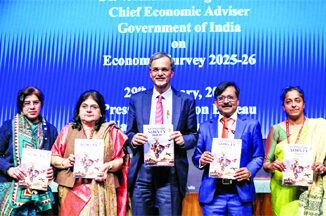
New Delhi (TIP)- India’s economy is projected to grow by 6.8-7.2 per cent in the fiscal year starting April, the government’s pre-Budget Economic Survey said on Thursday, January 29, reaffirming the country’s status as the world’s fastest-growing major economy despite trade risks and global volatility clouding the outlook.
The forecast for 2026-27 is slower than the 7.4 per cent projection for the current financial year, driven by consumption and investment.
“The cumulative impact of policy reforms over recent years appears to have lifted the economy’s medium-term growth potential closer to 7 per cent”, from the 6.5 per cent estimated three years back due to efficiency gains from reforms, the annual report card on the economy said.
“The outlook, therefore, is one of steady growth amid global uncertainty, requiring caution, but not pessimism.” While the current year GDP growth estimate of 7.4 per cent is higher than the 6.3-6.8 per cent range that the survey had forecast last year, the projection for the next year retains India’s world-beating economic expansion despite trade tensions with the US. India, which has been slapped with the highest 50 per cent tariffs on goods it sends to the US, remains one of the few large economies that is yet to sign a trade deal with Washington.
In response to the labour-intensive sector-hurting tariffs, the Modi government has unleashed policy and tax reforms, including cutting GST rates, raising the bar for levy of income tax, an overhaul of labour laws to ease compliance burden on businesses, and concluded four free trade agreements since May 2025, including a mega deal with the European Union.
While inflation is low, balance sheets of firms and households are healthier, and consumption demand remains resilient, US tariffs have led to the rupee falling 5 per cent, and it is now “punching below its weight”.
“The rupee’s valuation does not accurately reflect India’s stellar economic fundamentals,” the survey said, even though the “undervalued” currency “offsets, to some extent, the impact of higher American tariffs on Indian goods”. The macroeconomic conditions, however, “provide resilience against external shocks and support the continuation of growth momentum”, it said.
The International Monetary Fund forecasts 6.2 per cent growth in the coming financial year, if steep tariffs remain in place.
The Economic Survey, authored by Chief Economic Adviser V Anantha Nageswaran, said the “ongoing trade negotiations with the United States are expected to conclude during the year, which could help reduce uncertainty on the external front”.
Commenting on the Survey, Prime Minister Narendra Modi said it highlights strong macroeconomic fundamentals, sustained growth momentum and the expanding role of innovation, entrepreneurship and infrastructure in nation-building.
“The economic survey tabled today presents a comprehensive picture of India’s Reform Express, reflecting steady progress in a challenging global environment. It highlights strong macroeconomic fundamentals, sustained growth momentum and the expanding role of innovation, entrepreneurship and infrastructure in nation-building,” he said in a post on X.
Finance Minister Nirmala Sitharaman, who tabled the Survey in Parliament on Thursday, in a post on X said India’s “macroeconomic fundamentals are stronger than ever”. “We have successfully navigated global headwinds to place India on a high-growth trajectory, improving our potential GDP growth to 7 per cent,” she said.
Stating that domestic inflation averaged 1.7 per cent during April-December 2025, the survey said core inflation stickiness was largely due to precious metals prices and excluding this, inflation remains muted. Outlook is favourable due to strong agricultural output and gradual GST pass-through.
One of the tools the survey suggested to counter global trade and other headwinds was the implementation of ‘Swadeshi’ as a disciplined strategy – moving from self-reliance to strategic indispensability.
Stating that while not all import substitution is either feasible or desirable, it said Swadeshi is inevitable and necessary in the wake of export control and technology denials by developed nations.
It called for a ‘National Input Cost Reduction’ strategy.
From a revenue buoyancy standpoint, both direct and indirect tax collections been robust for the current FY26, in particular growth of non-corporate tax collections (within that, individual tax collections) is notably growing faster than other components of overall mix, and that clearly underlines the changing dynamics of tax collection buckets, administrative reforms and even the measure of success for future tax reforms.
The survey also emphasises the significance of the new Income tax legislation, due to take effect from April 1st, with the aim to provide for simplicity and structural clarity for taxpayers, and encourage voluntary compliance.
The document unveiled before Sitharaman presents the annual Budget for 2026-27 on February 1, flagged shortcomings in India’s export policies, particularly for agriculture. -

Indian Consulate in New York Celebrated Republic Day despite of inclement weather

Ambassador Pradhan reading out the President of India’s Address to the Nation. NEW YORK (TIP): The Indian Consulate celebrated the 77th Republic Day with Flag Hoisting by Consul General Binaya Srikanta Pradhan. He read the Hon’ble President of India’s Address to the Nation, highlighting the timeless values of the Constitution and the vital role of citizens at home and the Indian diaspora abroad in building a Developed India by 2047 when India celebrates hundred years of independence.
Ambassador Pradhan thanked members of the diaspora for joining the celebrations despite extreme weather conditions.
Mr. Rohit Karki is being felicitated for his commendable accomplishments. The Consulate recognized the outstanding achievements and contributions of the 2nd generation Indian diaspora members across diverse fields, felicitating Mr. Ronit Karki and Ms. Jiya Jadhav for their commendable accomplishments.

Ms Jiya is being given a commendation certificate for her commendable accomplishments. The celebrations concluded with a graceful Odissi dance by Ms. Shalini Basu and mesmerizing performances of “Vande Mataram” by Khushi Dance Academy, New Jersey marking 150 years of the iconic national song.

Ms Shalini Basu mesmerized the gathering with her graceful Odissi dance performance. 
Khushi Dance Academy, New Jersey dancers gave a performance of “Vande Matram”. 
A View of the full room gathering -

India Celebrates 77th Republic Day with Grand Display of Military Strength, Culture and Global Engagement
NEW DELHI (TIP): India marked its 77th Republic Day on January 26 with a spectacular parade along Kartavya Path, blending military strength, rich cultural heritage and diplomatic symbolism. The ceremonial event unfolded before an audience of nearly 77,000 people, including the chief guests—European Commission President Ursula von der Leyen and European Council President Antonio Costa—underscoring India’s expanding global partnerships.

Display of military power As in previous years, the parade was a powerful expression of national pride, with special emphasis this time on Operation Sindoor, India’s targeted military action against terror infrastructure in Pakistan following last year’s deadly attack in Pahalgam. The operation featured prominently through a tri-services tableau and a distinctive arrowhead formation during the flypast, highlighting jointness among the armed forces.

A Fly past by Indian Air Force aircraft. The theme of the cultural segment revolved around the 150th anniversary of “Vande Mataram,” India’s national song. About 2,500 artists from across the country performed a meticulously choreographed dance presentation, fusing folk and classical traditions to celebrate the enduring legacy of the song penned by Bankim Chandra Chattopadhyay in 1875. The musical composition for the performance was created by Oscar-winning composer M.M. Keeravani and extended beyond the customary two stanzas.
Prime Minister Narendra Modi, in a message on social media platform X, said the Republic Day parade showcased India’s robust security apparatus, technological capabilities and commitment to national defense, while also celebrating the country’s cultural diversity and unity.The celebrations began with Prime Minister Modi paying homage to the fallen soldiers at the National War Memorial. Soon after, President Droupadi Murmu arrived at Kartavya Path with the chief guests in a ceremonial carriage drawn by six horses. The national flag was unfurled, followed by a 21-gun salute fired by the Army’s 172 Field Regiment using 105 mm light field guns.

The Vande Mataram tableau featured the Father of the Indian Nation, Mahatma Gandhi. Before the parade commenced, President Murmu conferred the Ashoka Chakra, India’s highest peacetime gallantry award, on astronaut and Indian Air Force officer Group Captain Shubhanshu Shukla for his role as pilot in last year’s historic Axiom Mission to the International Space Station.
The military segment of the parade highlighted India’s growing emphasis on modern warfare and indigenous capabilities. Unmanned systems took Centre stage for the first time, reflecting their increasing role in surveillance, reconnaissance and precision strikes, particularly in the backdrop of Operation Sindoor. The parade adopted a phased battle array format, demonstrating how various platforms are deployed in real combat scenarios.
Among the systems on display were new additions such as the Suryastra universal rocket launcher and a long-range anti-ship hypersonic missile capable of travelling at speeds exceeding Mach 5. Other showcased equipment included BrahMos and Akash missile systems, T-90 and Arjun tanks, Dhanush and ATAGS artillery guns, BMP-II infantry combat vehicles, and a range of all-terrain and light strike vehicles.
In a first, the ceremonial procession also included double-humped Bactrian camels, Zanskar ponies, black kites used for surveillance and anti-drone roles, and five indigenous dog breeds—symbolizing both tradition and innovation within the armed forces.
The flypast featured 29 aircraft and was conducted in two phases—during the parade and at its conclusion—aligning with the Indian Air Force’s role in the battle order. A special formation named “Sindoor”, comprising Rafale, MiG-29, Sukhoi-30 and Jaguar fighter jets, paid tribute to the Air Force’s contribution during Operation Sindoor.
The tri-services tableau titled “Operation Sindoor: Victory Through Jointness” depicted coordinated air strikes, naval maneuvers, and ground offensives, reflecting India’s evolving doctrine of integrated military command.
The tableaus displayed India’s culture. Adding a strong diplomatic dimension to the celebrations was the presence of a large delegation from the European Union. A small EU military contingent also participated in the parade, carrying flags associated with the bloc’s naval missions. Prime Minister Modi described the visit as a reflection of the growing India–EU partnership and shared democratic values, with the engagement expected to give momentum to cooperation across multiple sectors, including trade.
Visually enriching Kartavya Path were reproductions of rare paintings created in 1923 by artist Tejendra Kumar Mitra, illustrating verses of Vande Mataram. Several state and ministry tableaux also echoed the national song, aligning with the parade’s overarching theme, “Swatantrata Ka Mantra – Vande Mataram.”
The celebrations came amid renewed public discourse on the historical and political significance of Vande Mataram, a debate that had resonated in Parliament in the past year. Against that backdrop, the Republic Day parade stood as a reaffirmation of India’s democratic ideals, cultural continuity, and strategic resolve on the world stage. -

Former CNN Anchor Don Lemon Arrested
MINNESOTA(TIP): The Trump administration charged former CNN anchor Don Lemon and eight others with civil rights violations, after he and other reporters covered a protest at a church where an ICE official is a pastor. The journalist’s lawyer said he was taken into custody in Los Angeles overnight, adding that his work covering the protest “was no different to what he has always done.” He faces two charges of conspiracy to deprive rights and interfering with First Amendment rights, a Department of Homeland Security spokesperson told AFP, referencing the constitutional protection for freedom of expression, including religion.
Political figures and media advocates condemned Lemon’s arrest, with Democratic House Minority Leader Hakeem Jeffries calling for his immediate release.
“This is an egregious attack on the First Amendment and on journalists’ ability to do their work,” said Committee to Protect Journalists CEO Jodie Ginsberg.
Lemon was released from custody after a short court hearing in Los Angeles, media reported. His next hearing is in Minneapolis on February 9.
-

Thousands rally in Minneapolis as immigration anger boils
The crowd gathered in freezing temperatures after Bruce Springsteen performed at an anti-ICE concert in the city
MINNEAPOLIS (TIP): Thousands of protesters took to the streets of Minneapolis on Friday, January 30, 2026, in the latest show of anger over President Donald Trump’s immigration crackdown, as a prominent U.S. journalist was charged over his coverage of protests in the northern city. People marched with signs blasting Immigration and Customs Enforcement (ICE), the agency leading Mr. Trump’s mass deportation drive, in response to a call for a “national shutdown” across the United States.
Minneapolis has become the epicenter of the immigration policy backlash after two protesters, both U.S. citizens, were shot dead by federal agents this month.
“I don’t think our Federal Government should be terrorizing our people like this,” Sushma Santhana, 24, told AFP as protesters chanted “our streets!” around her.
The crowd gathered in freezing temperatures after Bruce Springsteen performed at an anti-ICE concert in the city. The U.S. rock legend recently released “Streets of Minneapolis,” a tribute to the two killed protesters.
Another protester, 24-year-old Max Maffor, said he was demonstrating “to conserve what we would consider our democracy and all the liberties that we get from living in America.”
Rallies were also underway across Los Angeles, where immigration raids last year sparked protests, with thousands carrying signs outside City Hall.
Trump meanwhile walked back his conciliatory tone to describe Alex Pretti, the 37-year-old nurse gunned down on Saturday, January 23, as an “agitator and, perhaps, insurrectionist” after new footage allegedly of Pretti emerged.
AFP could not immediately verify the video, in which a man said to be Pretti is seen kicking and breaking the taillight of the agents’ car before they emerge and tackle him to the ground.
Some Minneapolis residents were unstirred by the footage.
“So the guy kicked a car’s light, does that mean he deserved to die?” Pedro Wolcott, a Latino sandwich shop owner, told AFP.
The Justice Department has opened a civil rights investigation into Pretti’s death, Deputy Attorney General Todd Blanche told reporters on Friday, January 30. There is no similar probe for Renee Good, also fatally shot by agents in January.
(Source: AFP) -
Map of dark matter’s distribution in universe unveiled
Using observations from the James Webb Space Telescope (JWST) in a patch of the sky covering almost three times the area of the full moon, scientists have created the most detailed cosmic map to date of the mysterious substance called dark matter that accounts for most of the stuff that populates the universe.
Ordinary matter makes up stars, planets, people and everything else we can see. But it represents only about 15% of all the matter in the cosmos. The rest is dark matter, which does not emit or reflect light, making it invisible to the human eye and to telescopes.
Scientists infer its existence based on the gravitational effects it exerts on a large scale such as how quickly galaxies rotate, how galaxy clusters are held together and how light from distant objects bends as it passes through massive cosmic structures.
The new map of the distribution of dark matter was based on this phenomenon of light bending — causing subtle distortions in the shape of roughly 2,50,000 distant galaxies as observed by Webb — thanks to the gravitational effects of matter along the line of sight.
A previous map of dark matter was based on observations by the Hubble Space Telescope. The new map, powered by Webb’s greater capabilities, offers double the resolution of the previous map, spans more parts of the cosmos and peers further back in time — effectively looking to roughly 8 to 10 billion years ago, a key period for galaxy formation.
“This allows us to resolve finer dark matter structures, detect mass concentrations that were previously unseen, and extend dark-matter mapping into earlier epochs of the universe,” said observational cosmologist Diana Scognamiglio of NASA’s Jet Propulsion Laboratory in California, lead author of the research published on Monday in the journal Nature Astronomy.
The map reveals with unprecedented clarity new details of the macrostructure of the universe called the cosmic web – galaxy clusters, immense filaments built of dark matter along which galaxies and gas are distributed, as well as regions with less density of mass. Webb, an infrared telescope possessing about six times the light-gathering power of Hubble, was launched in 2021 and became operational in 2022.
“The James Webb Space Telescope is like putting on a new pair of glasses for the universe,” Scognamiglio said. “It sees fainter and more distant galaxies with much sharper detail than ever before. That effectively gives us a much denser grid of background galaxies to work with, which is exactly what you want for this kind of study. -

Earth 2.0 discovered outside Solar System. But, there is a bad news
Astronomers have unearthed a tantalising exoplanet candidate that could mirror Earth in size and orbit, orbiting a Sun-like star just 146 light-years away.
Dubbed HD 137010 b, this rocky world, slightly larger than our planet, sits at the chilly outer edge of its star’s habitable zone, where liquid water might exist under the right atmosphere.
Detected in archival data from NASA’s retired Kepler Space Telescope, it represents a rare find: the first potential Earth twin transiting a nearby, bright, Sun-like star ideal for follow-up studies.
The discovery, detailed in a paper in The Astrophysical Journal Letters, comes from lead author Alexander Venner, a postdoctoral researcher at Germany’s Max Planck Institute for Astronomy.
Previously a Ph.D. student at Australia’s University of Southern Queensland, Venner and his international team mined Kepler’s K2 mission data, spotting a single 10-hour transit, the planet’s shadow eclipsing its star’s face.
With an orbital period around one year, much like Earth’s 13-hour transit duration, HD 137010 b tantalises as “Earth 2.0.”
WHAT IS THE BAD NEWS?
Its star, HD 137010, a cooler, dimmer K-dwarf, delivers less than a third of the heat and light Earth gets from the Sun.
Surface temperatures could plunge to minus -68°C, colder than Mars’ average -65°C, evoking a perpetually frozen world.
Confirmation remains pending. A lone transit demands repeats for validation, a challenge given the year-long orbit that spaces events far apart. NASA’s TESS or ESA’s CHEOPS satellites might catch more, but next-gen telescopes may be needed.
Modelling offers hope: a CO2-rich atmosphere could warm it into the conservative habitable zone (40% chance) or optimistic one (51%), potentially yielding a temperate or watery oasis. Odds are 50-50 it lies entirely beyond habitability. This frigid contender points to exoplanet hunting’s highs and hurdles.
As Venner notes, such Earth-like orbits evade easy detection, but HD 137010 b’s precision single transit breakthroughs that barrier. Follow-up could redefine habitable worlds, or reveal another icy also-ran. -

OpenAI is secretly building a social network, master plan to catch bots leaked
OpenAI may be quietly preparing its boldest consumer-facing experiment yet, and it has little to do with chatbots answering questions. People familiar with the matter told Forbes that the company is working on an early version of a social network designed around a single promise, which is basically conversations led by real people and not automated accounts pretending to be human.
The idea comes at a time when many popular platforms feel increasingly crowded with fake profiles, spam replies and AI-generated chatter. Insiders say OpenAI wants to tackle that problem at the root by building a space where every account belongs to a verified person. The project is still in its infancy and is reportedly being built by a very small team of fewer than ten people, with no public launch plan in sight yet.
What makes OpenAI’s approach different is how seriously it is considering identity checks. Unlike existing social apps that rely on phone numbers, email IDs or behavioural patterns, this network could ask users to prove they are human through biometric verification. Options discussed internally include Apple’s Face ID and the World Orb, a device that scans a person’s iris to create a unique digital identity. The World project is run by Tools for Humanity, a company founded and chaired by OpenAI CEO Sam Altman.
Such a system would make it extremely difficult for bot networks to exist on the platform. At the same time, it has already raised alarms among privacy advocates, who warn that biometric data cannot be changed if misused and could create serious risks if leaked or mishandled. Sources say these concerns are part of ongoing internal discussions.
While details about the app’s features remain limited, people aware of the project say users would likely be able to use AI tools to create content such as images or videos. That would place OpenAI in direct competition with platforms like Instagram and TikTok, both of which are already leaning heavily into AI-powered creation tools. Instagram alone has over three billion monthly active users, underlining just how crowded the space already is.
The motivation behind the project appears closely tied to the current state of social media, particularly X. Bot activity has long been an issue across platforms, but it became far more visible after Elon Musk took over Twitter, renamed it X, and drastically reduced its trust and safety workforce. Although the company removed around 1.7 million bot accounts in 2025, spam and automated replies continue to frustrate users.
Altman has spoken openly about this problem. In posts on X, he has said that discussions around AI on social platforms now feel strangely artificial, filled with accounts that do not seem human. He has even pointed to the so-called dead internet theory, noting that large language model–run accounts appear to be far more common than they were just a couple of years ago. -

8 hrs of sleep and still drained? What your body is trying to tell you
You go to bed on time. You clock a full eight hours. Yet morning arrives-and instead of feeling refreshed, you wake up groggy, heavy-eyed, and already exhausted. By mid-afternoon, fatigue creeps back in, coffee becomes a necessity, and by evening you’re drained all over again.
If this sounds familiar, you’re not alone. Feeling tired despite adequate sleep is one of the most common modern health complaints-and the reasons often go far beyond “not sleeping enough.”
Sleep Duration vs Sleep Quality
Eight hours of sleep doesn’t automatically mean restful sleep. True restoration depends on sleep quality, not just quantity.
Your body cycles through different sleep stages-light sleep, deep sleep, and REM sleep. Deep sleep repairs muscles, strengthens immunity, and restores energy, while REM sleep rejuvenates the brain and regulates emotions. If these stages are frequently interrupted, your body never fully recharges, even if you spend enough time in bed.Poor sleep quality can be caused by stress, screen exposure, irregular sleep schedules, or underlying health issues-many of which quietly sabotage rest.
Chronic Stress
Living in a constant state of mental alertness keeps stress hormones like cortisol elevated. High cortisol interferes with deep sleep, leaving the body stuck in a shallow, half-resting state. You may fall asleep easily but wake up feeling unrefreshed, tense, or mentally foggy. Over time, this stress-sleep imbalance leads to persistent fatigue, irritability, and burnout-no matter how many hours you sleep.
Nutrient Deficiencies
Low energy is often linked to hidden nutritional gaps, especially in:
– Iron – essential for oxygen transport in the blood
– Vitamin B12 – vital for nerve function and energy metabolism
– Vitamin D – influences muscle strength, immunity, and mood
– Magnesium – supports muscle relaxation and quality sleep
Deficiencies are common, particularly among women, vegetarians, people with digestive issues, or those with limited sun exposure. Fatigue caused by nutrient imbalance doesn’t disappear with sleep alone-it lingers throughout the day.
Blood Sugar Imbalance and Energy Crashes
What you eat plays a major role in how energetic-or exhausted-you feel. Diets high in refined carbohydrates and sugar cause rapid spikes and crashes in blood sugar, leading to sudden fatigue, sleepiness, and brain fog. Skipping meals, irregular eating patterns, or relying heavily on caffeine can further disrupt energy stability, making you feel tired even after rest. -

Where your body stores fat may affect your brain more than your weight
Obesity affects the human body in various ways, and one among them is its impact on brain function. A recent study has revealed that the impact on brain function depends not only on how much fat the body carries, but also on where it is stored. This links pancreatic fat and ‘skinny fat’ body types to accelerated brain aging, cognitive decline, and higher neurological disease risk.
“Our work leveraged MRI’s ability to quantify fat in various body compartments, especially internal organs, to create a classification system that’s data-driven instead of subjective. The data-driven classification unexpectedly discovered two previously undefined fat distribution types that deserve greater attention,” said study co-author Kai Liu, an associate professor at The Affiliated Hospital of Xuzhou Medical University in China.
Although earlier studies have linked obesity with a decline in brain health, the latest study highlights the specific risks tied to different fat storage patterns.
As per the researchers, data of nearly 26,000 individuals from the UK Biobank were analysed and the brain health outcomes were compared with patterns in how body fat was distributed.
The analysis “revealed distinct patterns of body fat distribution, where pancreatic-predominant and skinny-fat patterns, in particular, were associated with adverse neurologic outcomes.”
Experts revealed that the body fat profiles were mostly associated with extensive gray matter shrinking, an accelerated brain aging, cognitive decline and an increased risk of neurological disease, with risks present in both men and women.
It was also found that people with ‘skinny fat’ profiles showed the highest fat burden in nearly all areas except the liver and pancreas, unlike a balanced ‘high obesity’ profile, skinny fat tends to be more concentrated in the abdomen. -

Health impacts due to plastics worldwide may double by 2040: Lancet study
Adverse effects on health due to emissions from the world’s plastics system, including greenhouse gases, air-polluting particles and toxic chemicals released from production, could more than double by 2040, compared to levels in 2016, if current trends continue, according to a study.
The study, published in The Lancet Planetary Health journal, also highlighted that the global production of plastics may not peak until beyond 2100, worsening environmental and health burdens in an already overwhelmed system.
Plastic pollution and emissions released across its lifecycle are increasingly recognised for their potential impacts on human health, yet the overall scale of the impact is only beginning to be fully quantified, researchers from the London School of Hygiene and Tropical Medicine and institutes in France, said.
Quantifying health impacts throughout plastics’ lifecycles can inform global action against pollution, promoting sustainability across the environment, economy and health, they said.
The team added that a non-disclosure of the chemical composition of plastics is “severely limiting” lifecycle assessments in informing effective policy.
The plastics lifecycle assessment study is the first global-scale one to estimate health impacts in terms of ‘disability-adjusted life-years’ related to greenhouse gases, air pollutants and chemicals released, the researchers said. Lifecycles of plastic products analysed include raw material extraction to polymer production to post-consumption waste collection, recycling technologies, dumpsites and open burning and environmental pollution.
The model put forth in the study contributes a flexible framework that can be expanded to include new data and methods and improve precision in health impact estimates associated with plastics, their alternatives and substitutes – the information can contribute towards a rapidly changing policy landscape, the authors said. -

Healing after a toxic relationship: How to let go, reclaim yourself
Walking away from a toxic relationship is not weakness-it is courage in its quietest, bravest form. Whether the bond was emotionally draining, controlling, dismissive, or manipulative, leaving it often marks the beginning of a deeper struggle: how to heal, how to trust again, and how to find yourself after losing pieces along the way.
For many women, toxic relationships do not end cleanly. They linger in self-doubt, guilt, anxiety, and the haunting question-Was it really that bad? Healing is not linear, but it is possible. And it begins with choosing yourself, again and again.
Recognise That It Was Toxic-Without Minimising It
One of the hardest steps is acknowledging the truth. Toxic relationships often disguise themselves as intense love, concern, or dependency. Emotional manipulation, gaslighting, constant criticism, silent treatment, or control over choices can quietly erode self-worth. You do not need dramatic abuse for your pain to be valid. If the relationship made you feel small, anxious, unheard, or afraid to be yourself, it was harmful. Naming it honestly is not about blaming-it’s about freeing yourself from denial.
Allow Yourself to Grieve-Even If You Left
Ending a toxic relationship does not mean you won’t miss the person. You may grieve the version of them you hoped they would become, the future you imagined, or the effort you invested. Give yourself permission to mourn without shame. Grief does not mean you made the wrong decision. It means you are human, and attachment does not vanish the moment clarity arrives.
Break the Cycle of Self-Blame
Many women carry the burden of responsibility long after a toxic relationship ends. Why didn’t I leave sooner? Why did I tolerate it? Why didn’t I see the red flags? The truth is: toxic dynamics are designed to confuse. They thrive on emotional imbalance and gradual erosion of boundaries. What matters is not how long you stayed, but that you chose to leave when you could. Compassion toward yourself is a crucial part of healing.
Create Emotional and Digital Distance
Healing cannot begin in constant contact. This includes resisting the urge to check social media, reread old messages, or replay conversations in your mind. Distance is not cruelty-it is self-preservation. Silence creates space for clarity. Each day without re-engagement weakens the emotional hold and strengthens your sense of independence.
Rebuild Boundaries-With Others and Yourself
Toxic relationships blur boundaries. You may have become used to over-explaining, apologising excessively, or putting others’ comfort above your own.
Start small:
– Say no without justification
– Pause before responding to emotional demands
– Honor your instincts when something feels off
Healthy boundaries are not walls-they are filters that protect your peace.
Reconnect With Who You Were-and Who You’re Becoming
Toxic relationships often distance women from their passions, friendships, and inner voice. Healing means rediscovering what brings you joy without validation from anyone else. Return to activities you abandoned. Nurture friendships that feel safe. Spend time alone without guilt. Slowly, confidence rebuilds-not as loud assurance, but as quiet self-trust.
Redefine Love and Self-Worth
One of the most lasting impacts of a toxic relationship is distorted belief systems-confusing intensity with love, control with care, or suffering with commitment. -

Sambhar Idli: A South Indian comfort classic
Soft, fluffy idlis soaked in hot, aromatic sambhar-Sambhar Idli is a wholesome dish that brings together protein, lentils, vegetables, and gentle spices in one satisfying bowl. Light on the stomach yet full of flavor, it’s loved by all ages.
Ingredients
Idli batter – as required (store-bought or homemade)
For Sambhar
Toor dal (arhar dal) – ½ cup, Mixed vegetables (carrot, drumstick, potato, pumpkin, beans) – 1½ cups, Tamarind pulp – 1½ tablespoons, Sambhar powder – 2 tablespoons, Turmeric powder – ½ teaspoon, Salt – to taste, Water – as needed
For Tempering
Oil or ghee – 1 tablespoon, Mustard seeds – 1 teaspoon
Dry red chillies – 2, Asafoetida (hing) – a pinch, curry leaves – a few
Method
Grease idli moulds lightly and pour batter into each cavity. Steam for 10-12 minutes until soft and cooked. Set aside.
Wash and pressure cook toor dal with turmeric and water until soft and mushy. Mash well and keep aside.
In a pot, add vegetables with water and cook until tender. Add tamarind pulp, sambhar powder, and salt. Simmer for 5-7 minutes.
Add the mashed dal to the vegetable mixture. Adjust consistency with water and let it boil gently for another 8-10 minutes until flavours blend.
Heat oil or ghee in a small pan. Add mustard seeds and let them splutter. Add dry red chillies, curry leaves, and hing. Pour this tempering into the sambhar and mix well. -
From Dull to Dewy: Simple ways to wake up tired skin
If your skin has been looking dull, flat, or exhausted lately, it’s trying to tell you something. Long hours, stress, changing weather, poor sleep, and inconsistent skincare can quietly drain the skin of its natural glow. The good news? You don’t need complicated routines or expensive treatments to bring it back. A few mindful habits can help transform tired skin into fresh, dewy radiance.
Cleanse Gently, Not Aggressively
Over-cleansing and harsh face washes strip the skin of its natural oils, leaving it dry and lifeless. Switch to a mild, hydrating cleanser that cleans without tightening your skin. Washing twice a day is enough-anything more can do more harm than good.
Exfoliate to Let Fresh Skin Shine
Dead skin cells are one of the biggest reasons skin looks dull. Gentle exfoliation once or twice a week helps remove this layer and reveals smoother, brighter skin underneath. Choose mild exfoliants and avoid scrubbing too hard, which can irritate the skin and dull it further.
Hydration Is the Real Glow Secret
Dewy skin starts with hydration. Drinking enough water matters, but topical hydration is just as important. Use a lightweight serum with hydrating ingredients like hyaluronic acid, followed by a moisturizer that seals it in. Well-hydrated skin reflects light better, instantly looking healthier.
Never Skip Sunscreen
Sun exposure is a major cause of dullness, uneven tone, and premature ageing. Daily sunscreen protects your skin barrier and prevents long-term damage. Even indoors or on cloudy days, SPF is essential if you want your glow to last.
Feed Your Skin From the Inside
What you eat shows on your skin. Fresh fruits, vegetables, nuts, seeds, and healthy fats support skin repair and radiance. Cutting down on excess sugar and processed foods can also help reduce inflammation and dullness.
Sleep Is Non-Negotiable
No skincare product can replace good sleep. Your skin repairs and renews itself while you rest. Aim for 7-8 hours of quality sleep to wake up with naturally refreshed skin. Consistent sleep patterns can visibly improve texture and tone.
Add a Simple Face Massage
Facial massage boosts blood circulation and gives skin an instant glow. Spend a few minutes daily massaging your face upward using a facial oil or moisturizer. It relaxes facial muscles and helps skincare products absorb better. -

Exiled leader Hasina denounces upcoming Bangladesh election after party ban
New Delhi (TIP)- Bangladesh’s toppled leader Sheikh Hasina has denounced her country’s election next month after her party was barred from participating in the polls, raising fears of wider political division and possible unrest.
In a message published by The Associated Press news agency on Thursday, Jan 29, Hasina said “a government born of exclusion cannot unite a divided nation.”
Hasina, who was sentenced to death in absentia for her crackdown on a student uprising in 2024 that killed hundreds of people and led to the fall of her 15-year government, has been sharpening her critique of the interim government of Nobel Peace winner Muhammad Yunus in recent days, as the election that will shape the nation’s next chapter looms.
“Each time political participation is denied to a significant portion of the population, it deepens resentment, delegitimises institutions and creates the conditions for future instability,” the former leader, who is living in exile in India, warned in her email to the AP.
She also claimed that the current Bangladesh government deliberately disenfranchised millions of her supporters by excluding her party – the former governing Awami League – from the election. More than 127 million people in Bangladesh are eligible to vote in the February 12 election, widely seen as the country’s most consequential in decades and the first since Hasina’s removal from power after the mass uprising.
Yunus’s government is overseeing the process, with voters also weighing a proposed constitutional referendum on sweeping political reforms.
Campaigning started last week, with rallies in the capital, Dhaka, and elsewhere. Yunus returned to Bangladesh and took over three days after Hasina fled to India on August 5, 2024, following weeks of violent unrest. -
Pakistan security forces kill 5 TTP terrorists in Khyber Pakhtunkhwa
Pakistan’s security forces killed five terrorists belonging to the banned Tehreek-e-Taliban Pakistan (TTP) in a joint operation in northwestern Khyber Pakhtunkhwa province, police said.
Three civilians, including two women, were also killed and several others were injured during the operation, which lasted around ten hours, local police confirmed late night.
The operation was carried out jointly by security forces and police in Domel tehsil of restive Bannu district, during which five terrorists, including a TTP commander, were killed, it added. The slain commander was identified as Zewaran alias Al-Badri, who was wanted in several cases. The security forces targeted the terrorists’ hideouts with more than 25 quadcopter strikes, while a heavy exchange of fire continued throughout the clashes. -
Pakistan-Bangladesh direct flights resume after 14 years
Direct air connectivity between Pakistan and Bangladesh resumed after 14 years, with Biman Bangladesh Airlines operating its inaugural Dhaka-Karachi flight, Dawn reported.
The Pakistan Airports Authority (PAA) said in a statement that the Bangladeshi carrier landed at Karachi’s Jinnah International Airport on Thursday, Jan 29, night, after more than a decade and received a traditional water cannon salute on arrival.
Flight tracking data cited by Dawn showed that Biman Bangladesh Airlines flight BG341 arrived in Karachi at 11.03 pm after departing Dhaka’s Hazrat Shahjalal International Airport at 8.15 pm.
Speaking to reporters at the airport, Sindh Governor Kamran Tessori said cooperation with Bangladesh would extend beyond aviation to other sectors.
Earlier, Pakistan’s High Commission in Dhaka said the “fully packed” inaugural flight departed Hazrat Shahjalal International Airport and was seen off by Bangladesh Civil Aviation and Tourism Adviser Sheikh Bashiruddin, Pakistan High Commissioner to Bangladesh Imran Haider and other officials, Dawn reported.
Addressing the inaugural ceremony, Bangladesh’s adviser for civil aviation and tourism said the Dhaka-Karachi route was aimed at “enhancing connectivity, promoting tourism and strengthening people-to-people links”. The statement quoted him as saying, “Bangladesh Airlines will gradually increase flight frequency and reduce airfares to make travel affordable for the people.” -

Pakistan’s military undergoing major transformation: Asim Munir
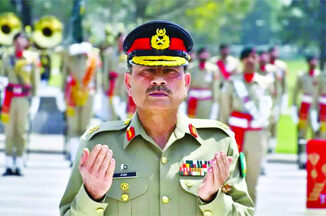
Islamabad (TIP)- Pakistan’s military is undergoing a major transformation in multiple domains, Chief of Defence Forces Field Marshal Asim Munir said on Jan 29, reaffirming that they remain fully prepared to defend the country’s territorial integrity against all threats.
Munir made the remarks during a visit to Bahawalpur Garrison, where he was briefed on various operational, training and administrative aspects of the Corps, with a special focus on preparations for multi-domain warfare, according to a statement issued by the army.
While addressing the troops, Munir lauded their high morale, professional competence and operational preparedness. Munir, who is also the army chief, reaffirmed that the armed forces remain fully prepared to defend Pakistan’s sovereignty and territorial integrity against all threats, emphasising the need to maintain optimum readiness to meet the requirements of future battlefield and security challenges.
“COAS & CDF highlighted that Pakistan Armed Forces are undergoing major transformation in multiple domains,” the army said. “In future, technological manoeuvres will replace physical manoeuvres and will fundamentally alter the way offensive and defensive operations are undertaken. Therefore, the Pakistan Armed Forces are embracing and absorbing technology at a rapid pace.
In this process innovation, indigenisation and adaptation shall remain fundamental,” he said. Munir also witnessed a high-intensity Field Exercise “Steadfast Resolve,” at Khairpur Tamewali, encompassing integration of niche technologies like unmanned aerial systems, advanced surveillance assets, Electronic Warfare assets and modern command-and-control mechanisms. Earlier, he inaugurated the ROHI eSkills Learning Hub (STP) aimed at promoting digital skills and learning opportunities for students, particularly from southern Punjab and across the country.
He also visited the EME Regional Workshop, where he was briefed on the maintenance regime to sustain modern platforms through advanced technologies, indigenisation and other combat support measures. Chief of Defence Forces Field Marshal Asim Munir.
‘Hybrid’ Confession: PM Sharif Admits Military Is Pak’s True Economic Engine
In a stunning departure from traditional diplomatic rhetoric, Pakistan Prime Minister Shehbaz Sharif has openly admitted that a “hybrid regime” is the engine driving the country’s current survival. Addressing a gathering of eminent exporters and business leaders in Islamabad on Friday, the Prime Minister credited the military leadership—specifically Field Marshal Syed Asim Munir—for bailing out the civilian government and steering the nation away from the precipice of economic default.
The Prime Minister’s remarks come in the wake of a significant constitutional overhaul in late 2025, which saw General Asim Munir elevated to the rank of Field Marshal and appointed as the country’s first Chief of Defence Forces (CDF). This new role grants him overarching control over all three branches of the military and the nuclear command, effectively institutionalising the military’s role in civil governance.
“I can say without hesitation that without the help of Field Marshal Syed Asim Munir, many of our most pressing problems could not have been solved,” Sharif stated. He specifically lauded the military’s “one-hundred-per-cent role” in eliminating petrol smuggling and stabilising the sugar industry. By describing the current setup as a “partnership”, Sharif essentially acknowledged that the civilian administration now operates in a subservient, though collaborative, role to the military high command.
The most provocative segment of the Prime Minister’s speech was directed at New Delhi. Vowing to transform Pakistan into a global economic power, Sharif claimed that the unprecedented level of civil-military unity would soon leave India “astonished” and “puzzled”. -

Ukraine will reciprocate if Russia halts attacks on energy sectors, says Zelensky
Kyiv (TIP)- Ukrainian President Volodymyr Zelenskyy on Friday said that his country is ready to cease strikes on Russian energy infrastructure if Moscow also adheres to such a halt proposed by US President Donald Trump.
During a conversation with journalists reported by Ukrainian media outlets, Zelenskyy said that the topic of an energy truce between Kyiv and Moscow was raised during trilateral peace talks in the Emirati capital Abu Dhabi on Jan. 23-24 by the American side and is a personal initiative of US President Donald Trump.
“If Russia heard the signal from the American side the same way we heard it, then we will definitely have some result and will be able to evaluate it,” Zelenskyy told reporters, according to state news agency Ukrinform.
Noting there was no direct dialogue or agreements between Russia and Ukraine on the topic, Zelenskyy said that his country would “maintain a mirror attitude towards such steps.”
“If Russia does not attack our energy (infrastructure) … we will not attack their energy (infrastructure). I think this is the answer that the mediator of the negotiations, namely the United States of America, was counting on,” Zelenskyy added, expressing Ukraine’s readiness for de-escalation steps.
The Ukrainian president’s remarks come as Trump said during a Cabinet meeting on Thursday that he “personally asked” Russian President Vladimir Putin not to fire on Kyiv and various Ukrainian cities amid “extreme cold” weather conditions.
Zelenskyy thanked his US counterpart in a later statement on the US social media company X, saying the topic was discussed in the UAE and that they “expect the agreements to be implemented.”