Month: January 2026

  • Indian American Sanjay Desai announced as Johns Hopkins Medicine vice dean for education

    Indian American Sanjay Desai announced as Johns Hopkins Medicine vice dean for education

    BALTIMORE (TIP) : Dr. Sanjay Desai, chief academic officer of the American Medical Association (AMA), has been named the vice dean for education at the Johns Hopkins University School of Medicine.
    In this role, the Indian American physician leader will oversee all education and training programs across the school of medicine, including MD, PhD, residency, postdoctoral and online, and will partner with institutional leaders to drive innovation, advance educational excellence and enhance the learner experience.
    An accomplished physician leader, educator, clinician and researcher, Desai has helped shape medical education nationally, according to a media release from the Baltimore, Maryland-based institution.
    At the AMA, he oversees a broad innovation portfolio with a focus on precision education using AI, in collaboration with a consortium of medical schools and health systems. He also leads accreditation-related activities with sponsorship of the Liaison Committee on Medical Education, national policy development across the educational continuum, and the credit system for continuing medical education.
    Desai previously served as the Johns Hopkins Myron L. Weisfeldt Professor of Medicine, director of the Osler Medical Residency and vice chair for education in the Department of Medicine — roles he held at the Johns Hopkins University School of Medicine prior to joining the AMA in October 2021.
    “We are delighted to welcome Dr. Desai back to Johns Hopkins in this critical role,” said Theodore L. DeWeese, dean of the medical faculty and CEO of Johns Hopkins Medicine. “Dr. Desai is a visionary educator and leader whose record of innovation, collaboration and excellence will strengthen our educational mission and prepare the next generation of physicians and scientists to lead in medicine’s evolving landscape.”
    Widely recognized for his accomplishments across academic medicine, policy, clinical practice and health systems administration, his research focuses on generating high-quality data to inform policy and practice in medical education.
    Desai has authored over 60 peer-reviewed publications, including articles in the New England Journal of Medicine and JAMA. Among his honors, he received the Professors’ Award for Excellence in Teaching from the Johns Hopkins University School of Medicine.
    Desai graduated summa cum laude from the University of Pennsylvania with a Bachelor of Science degree in bioengineering and a Bachelor of Science degree in economics with a concentration in health care management from the Wharton School of Business.
    He earned his medical degree from Harvard Medical School and completed his residency and subspecialty fellowship at The Johns Hopkins Hospital, where he also served as chief resident.


  • Two Indian-origin Singapore residents to be nominated MPs in Singapore parliament

    Two Indian-origin Singapore residents to be nominated MPs in Singapore parliament

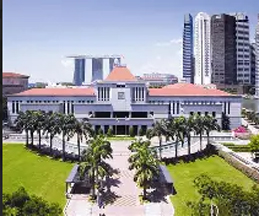
    SINGAPORE (TIP) : Two Indian-origin personalities in Singapore, notable for their contributions in work, community and society, are set to be nominated as Members of Parliament next week, a media report said Friday.
    The duo is part of the nine names announced to be Nominated Members of Parliament (NMPs) by President Tharman Shanmugaratnam on January 8 and take their oaths at the next sitting of Parliament this month, local media said.
    Dr Haresh Singaraju, family physician at National University Polyclinics, and Sanjeev Kumar Tiwari, general secretary of the Amalgamated Union of Public Employees, have been named as the proposed NMPs.
    The names were released by the Office of the Clerk of Parliament on Friday, the channel said.
    Among the nine, CEO of apparel company Sing Lun Holdings Mark Lee Kean Phi is to return for a second term.
    “They (new NMPs) have made notable contributions in work, community and society, and excelled in their respective fields.
    “I am confident that their diverse expertise and experience will enrich the discussions in Parliament as we chart Singapore’s path forward in an uncertain and disrupted world,” said Leader of the House Indranee Rajah, an Indian-origin political veteran of the ruling People’s Action Party, in welcoming the new cohort to the 15th Parliament.
    Earlier, a Special Select Committee had invited the general public and functional groups to submit names for its consideration.
    The NMP scheme aims to ensure a wide representation of views in Parliament, and nominees should have performed distinguished public service, brought honor to Singapore or distinguished themselves in their respective fields. There can be up to nine NMPs each term, which lasts two-and-a-half-years.
    Among other requirements, he or she should also be able to take an active part in Parliament proceedings, according to media reports.
    The others six in the list of nominated persons are Azhar Othman, Executive Chairman of Enercon Asia; Associate Professor Goh Toh Chuan Kenneth, President of Singapore Aquatics; Associate Professor Terence Ho Wai Luen, academic/university administrator at the National University of Singapore; Kuah Boon Theng SC, managing director of Legal Clinic LLC; Dr Neo Kok Beng, Founder and CEO of NEO Aeronautics Pte Ltd, and Professor Kenneth Poon Kin Loong, professor at the National Institute of Education, Nanyang Technological University.
    The last parliament had three Indian-origin NPMs.

  • Remembering the Young Martyrs: How the Sahibzadas’ martyrdom was observed in India and abroad

    Remembering the Young Martyrs: How the Sahibzadas’ martyrdom was observed in India and abroad

    The martyrdom of the Sahibzadas-Baba Zorawar Singh and Baba Fateh Singh, the younger sons of Guru Gobind Singh Ji-stands as one of the most heart-rending yet inspiring episodes in world history. In December 1705, the two children, aged just nine and seven, were executed at Sirhind for refusing to abandon their faith. Their sacrifice, along with the earlier martyrdom of the elder Sahibzadas, Baba Ajit Singh and Baba Jujhar Singh, has come to symbolise unshakeable faith, moral courage and resistance against tyranny. In India and across the global Sikh diaspora, the remembrance of this supreme sacrifice is observed with deep solemnity, reflection and collective resolve.
    In recent years, the observance has acquired renewed national and global visibility through Veer Bal Diwas, commemorated annually on December 26, marking a moment of shared remembrance beyond the Sikh community. In 2025, the martyrdom of the Sahibzadas was remembered with particular intensity in India and abroad, blending traditional Sikh religious practices with broader civic and educational engagement.
    India: Sacred Remembrance Rooted in History
    In India, the observance of the Sahibzadas’ martyrdom is deeply intertwined with sacred geography and collective memory. Key historical sites associated with the events of 1705-06 became centres of prayer and reflection. At Fatehgarh Sahib in Punjab, where Baba Zorawar Singh and Baba Fateh Singh were martyred, thousands of devotees gathered for *shaheedi samagams*, Akhand Paaths and kirtan darbars. The atmosphere was solemn rather than celebratory, with hymns and discourses focusing on sacrifice, steadfastness and faith in the face of cruelty.
    Gurdwaras across Punjab, Haryana, Uttar Pradesh, Delhi and Bihar organised special religious congregations, during which the life stories of the Sahibzadas were narrated in detail. Katha and Gurbani recitations emphasised not just the tragedy of their deaths, but the moral clarity and spiritual courage displayed by the young martyrs. Langars were organised as acts of seva, reinforcing the Sikh belief that remembrance must be accompanied by service.
    Veer Bal Diwas: National Recognition of Courage
    The observance of Veer Bal Diwas on December 26 has added a national dimension to the remembrance of the Sahibzadas. In 2025, schools, cultural institutions and government bodies across India marked the day through commemorative programmes, exhibitions and educational events. Special assemblies were held in schools, where students learned about the Sahibzadas as symbols of fearlessness, moral strength and youthful heroism.
    National and state-level events highlighted the relevance of the Sahibzadas’ sacrifice in contemporary society, particularly in the context of standing up for truth and conscience. Speeches and cultural presentations portrayed the Sahibzadas not merely as historical figures, but as role models whose lives challenge modern notions of courage and resilience. Veer Bal Diwas thus functioned as a bridge-bringing a deeply Sikh historical memory into the broader national narrative of sacrifice and ethical courage.
    As part of the national observance, Prime Minister Narendra Modi paid heartfelt tribute to the Sahibzadas on Veer Bal Diwas, underscoring the profound moral and historical significance of their sacrifice. Speaking at the national programme in Bharat Mandapam, New Delhi, Modi described Veer Bal Diwas as “a day of reverence, dedicated to remembering the sacrifice of the brave Sahibzades,” and highlighted how their courage, conviction and steadfast adherence to righteousness continue to inspire generations across India. He recalled the unshakeable faith of Mata Gujri Ji and the immortal teachings of Sri Guru Gobind Singh Ji, and called on the youth to draw strength from the Sahibzadas’ indomitable spirit as they pursue their dreams and responsibilities for the nation’s future. Modi observed that the legacy of their bravery not only reflects the Sikh tradition of sacrifice but also embodies values of courage and moral clarity that are vital for all Indians today, affirming that such examples will continue to motivate people for generations to come.
    Spiritual Observances and Community Participation
    Across India, the martyrdom observances were marked by a distinctive spiritual tone. Unlike festive gurpurabs, these days were characterised by quiet devotion, contemplation and humility. Many gurdwaras observed early-morning prayers, followed by kirtans that dwelt on themes of *chardi kala*-the Sikh principle of remaining spiritually elevated even in suffering. Gatka displays, where organised, were restrained and symbolic, underscoring discipline and readiness rather than spectacle.
    Community participation extended beyond religious spaces. Sikh organisations arranged blood donation camps, charity drives and free medical camps in memory of the Sahibzadas, translating remembrance into social responsibility. These acts reflected the Sikh understanding that martyrdom is honoured not by mourning alone, but by living according to the values for which the martyrs stood.
    Canada: Diaspora Remembrance and Youth Engagement
    In Canada, the martyrdom of the Sahibzadas was observed with deep emotional resonance, particularly among Sikh youth. Gurdwaras in Ontario and British Columbia held special shaheedi samagams, where kirtan and katha focused on the historical events at Sirhind and the spiritual maturity displayed by the young Sahibzadas. Educational sessions were organised in Punjabi schools and Sikh study circles, ensuring that younger generations born abroad remained connected to this foundational episode of Sikh history.
    Veer Bal Diwas was also acknowledged through community-led initiatives, including seminars, storytelling sessions and youth-centric discussions on courage, identity and ethical decision-making. In some cities, Sikh organisations collaborated with local institutions to present the story of the Sahibzadas as a universal lesson in standing firm against injustice, irrespective of age or circumstance.
    United States: Faith, Memory and Interfaith Awareness
    Across the United States, Sikh communities marked the martyrdom with religious solemnity and outreach. Gurdwaras in New York, New Jersey, California and Texas organised Akhand Paaths and special kirtan programmes dedicated to the Sahibzadas. Religious leaders used the occasion to explain the historical context of Mughal persecution and the Guru’s uncompromising stand for religious freedom.
    Veer Bal Diwas observances in the U.S. often included interfaith components, with Sikh organisations inviting educators, students and civic representatives to learn about the Sahibzadas’ sacrifice. Youth groups played a central role, using presentations, dramatizations and discussions to communicate the message of fearless integrity to wider audiences.
    Australia and Other Global Communities
    In Australia, where Sikh communities continue to grow, the martyrdom of the Sahibzadas was observed with reverence and educational focus. Gurdwaras in Melbourne, Sydney and Adelaide held prayer services and katha sessions, while community leaders emphasised the relevance of the Sahibzadas’ sacrifice in nurturing moral strength among children and youth in modern societies.
    Similar observances took place in the United Kingdom, Europe and Southeast Asia, where Sikh diaspora communities used the occasion to reaffirm collective identity and pass on historical memory through oral narration, devotional music and community service.

  • A global salute to the Tenth Guru: Guru Gobind Singh’s Birth Anniversary in 2025

    A global salute to the Tenth Guru: Guru Gobind Singh’s Birth Anniversary in 2025

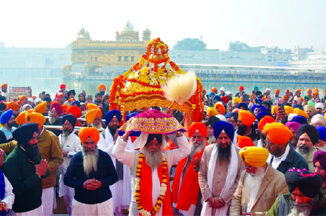
    Guru Gobind Singh Ji, the tenth Sikh Guru, occupies a unique and exalted place in world history as a spiritual master, warrior-poet and social reformer. Born in 1666 at Patna Sahib, he reshaped the moral and spiritual consciousness of his time by founding the Khalsa Panth in 1699 and by articulating a vision of fearless devotion, equality and righteous resistance to injustice. His birth anniversary, known as Prakash Parv or Guru Gobind Singh Jayanti, is therefore observed not only as a religious festival but as a global reaffirmation of ethical courage and human dignity. In 2025, the anniversary was commemorated across continents, uniting Sikh communities in India and the diaspora in a shared expression of faith and service.
    India: The Heartland of Devotion and Remembrance
    In India, where the physical and spiritual landmarks of Guru Gobind Singh Ji’s life are deeply embedded, the birth anniversary was marked with profound devotion and large-scale participation. Major gurdwaras across Punjab, Bihar, Uttar Pradesh and Delhi became centres of continuous prayer and reflection. The Golden Temple in Amritsar witnessed an unbroken flow of devotees who gathered for Akhand Paaths, kirtans and special ardaas, while langars served thousands without distinction, reflecting the Guru’s uncompromising belief in equality.
    At Takht Sri Harmandir Sahib in Patna, the Guru’s birthplace, the Prakash Parv unfolded as a multi-day spiritual celebration. Prabhat pheris echoed through the city streets in the days leading up to the main observance, building an atmosphere of reverence and anticipation. On the day of the anniversary, Nagar Kirtans led by the Panj Pyaras moved through Patna, accompanied by Gatka performances that symbolised the martial and spiritual synthesis central to the Guru’s teachings. Religious congregations, historical narrations and community service activities continued throughout the day, reinforcing Patna Sahib’s enduring significance in Sikh memory.
    Canada: Faith, Identity and Multicultural Harmony
    In Canada, home to one of the world’s largest Sikh diasporas, Guru Gobind Singh Jayanti in 2025 was celebrated with deep devotion and visible cultural pride. Major gurdwaras in Ontario, particularly in Mississauga, Brampton and Toronto, organised extended Akhand Paaths, kirtan samagams and spiritual discourses that drew large congregations. Families gathered in significant numbers, and Sikh youth played a central role in organising programmes, performing devotional music and participating in Gatka demonstrations.
    Nagar Kirtans in several Canadian cities transformed public spaces into vibrant expressions of Sikh faith, with processions moving through neighbourhoods accompanied by hymns and community kitchens offering langar to all. These celebrations reflected the integration of Sikh religious life within Canada’s multicultural ethos, where public observance of faith is both accepted and encouraged.
    United States: Devotion, Education and Community Outreach
    Across the United States, Sikh communities marked Guru Gobind Singh Ji’s birth anniversary through prayer, education and service. Prominent gurdwaras in New York, New Jersey, California and Texas held day-long religious congregations featuring Gurbani recitation, kirtan and discourses on the Guru’s role as the founder of the Khalsa Panth. Special emphasis was placed on educating younger generations about Sikh history, the Guru’s poetry and his vision of a disciplined yet compassionate community.
    Youth organisations across American cities organised Gatka displays, storytelling sessions and seva activities, reinforcing the Guru’s teachings through lived practice. In several locations, interfaith guests and civic representatives joined the observances, highlighting the universal appeal of Guru Gobind Singh Ji’s message of standing up for truth and defending human dignity.
    Australia: A Growing Community and Living Tradition
    In Australia, where the Sikh population has grown steadily over recent decades, Guru Gobind Singh Jayanti in 2025 was observed with devotion and quiet grandeur. Gurdwaras in Melbourne, Sydney, Adelaide and other cities organised Akhand Paaths, kirtan programmes and langar services in accordance with the Sikh calendar. Though smaller in scale compared to India or Canada, these gatherings reflected a strong sense of spiritual continuity and communal belonging.
    Community leaders used the occasion to reflect on the Guru’s relevance in modern multicultural societies, emphasising his teachings on courage, equality and ethical responsibility. The celebrations also served as moments of cultural visibility, strengthening understanding between Sikh Australians and the wider society.
    Shared Themes Across Continents
    Across India, Canada, the United States and Australia, the 2025 observances were united by common themes. Devotional practices such as Akhand Paath and kirtan formed the spiritual core of the celebrations, while langar remained a powerful symbol of equality and collective service. Gatka performances and youth participation highlighted the dynamic transmission of Sikh tradition across generations, while interfaith and civic engagement underscored the universal relevance of the Guru’s ideals.
    A Legacy That Transcends Borders
    Guru Gobind Singh Ji’s birth anniversary in 2025 emerged as a truly global moment of remembrance and renewal. From the sanctified precincts of the Golden Temple and Patna Sahib to the gurdwaras of Toronto, New York and Melbourne, the celebrations reaffirmed a shared spiritual heritage rooted in courage, compassion and justice. More than three centuries after his birth, the Tenth Guru continues to inspire millions worldwide, reminding humanity that faith, when guided by truth and service, remains a powerful force for unity and moral strength.

  • Sikkim: Himalayan jewel of nature, spirituality and sustainable travel

    Sikkim: Himalayan jewel of nature, spirituality and sustainable travel

    Tucked away in the eastern Himalayas, Sikkim is one of India’s most enchanting destinations-small in size, yet vast in natural beauty, cultural depth, and spiritual calm. With snow-capped peaks, emerald valleys, pristine lakes, ancient monasteries, and a deeply eco-conscious way of life, Sikkim offers a travel experience that feels both intimate and transformative. It is not merely a place to visit, but a landscape to feel, absorb, and remember.
    A Land Sculpted by Nature
    Sikkim’s geography is dramatic and breathtaking. Dominated by the mighty Mount Kanchenjunga, the third-highest peak in the world, the state unfolds in layers of alpine forests, rhododendron-covered hills, glacial lakes, and cascading waterfalls. From subtropical lowlands to icy high-altitude deserts, the diversity of terrain within a few hundred kilometers is astonishing.
    Places like Yumthang Valley, often called the “Valley of Flowers,” burst into colour during spring, while Gurudongmar Lake, one of the highest lakes in the world, stuns visitors with its icy blue stillness. Rivers such as the Teesta and Rangeet carve their way through the mountains, adding rhythm and life to the landscape.
    Gangtok: The Cultural Heart
    The capital city Gangtok blends tradition with modernity effortlessly. Clean, organised, and surprisingly cosmopolitan, it offers panoramic views of the Himalayas alongside bustling markets, cafés, and cultural centres. The MG Marg promenade is the city’s social hub, lined with shops, eateries, and a relaxed mountain vibe. Gangtok is also home to significant spiritual sites such as the Enchey Monastery and the Namgyal Institute of Tibetology, which preserves rare manuscripts, thangkas, and artefacts that chronicle Tibetan Buddhism and Sikkim’s royal past.
    Monasteries and Spiritual Heritage
    Sikkim is deeply rooted in Buddhist traditions, and its monasteries are both spiritual sanctuaries and architectural marvels. The iconic Rumtek Monastery, seat of the Karmapa lineage, stands as a symbol of Tibetan Buddhism outside Tibet. Pemayangtse Monastery, one of the oldest and most sacred in Sikkim, offers sweeping views of the Himalayas and a profound sense of peace.
    Prayer flags fluttering in the wind, the rhythmic chanting of monks, and the scent of incense lend Sikkim a meditative atmosphere that appeals to spiritual seekers and travellers alike.
    North Sikkim: Raw, Remote, and Majestic
    North Sikkim represents the state in its most untouched form. Snowbound villages like Lachen and Lachung serve as gateways to surreal landscapes. Here, nature dominates, and human presence feels humbling. Roads wind through rugged terrain, opening up to frozen lakes, high mountain passes, and endless skies. This region is ideal for travelers seeking solitude, adventure, and a deeper connection with the natural world.
    Adventure and Eco-Tourism
    Sikkim is a paradise for adventure enthusiasts. Trekking routes such as the Goecha La Trek offer close-up views of Kanchenjunga and pass through forests, meadows, and glacial terrain. River rafting on the Teesta, mountain biking, paragliding, and yak safaris add excitement for thrill-seekers.
    Equally important is Sikkim’s commitment to sustainable tourism. As India’s first fully organic state, Sikkim prioritises environmental protection, bans plastic bags in many areas, and promotes eco-friendly travel practices. Homestays, community tourism, and responsible trekking are encouraged to preserve the fragile Himalayan ecosystem.
    A Mosaic of Cultures and Festivals
    Sikkim’s population is a harmonious blend of Lepchas, Bhutias, and Nepalis, each contributing to the state’s rich cultural fabric. This diversity is reflected in local customs, architecture, music, and festivals.
    Celebrations such as Losar, Saga Dawa, Pang Lhabsol, and Dasain are marked with vibrant rituals, masked dances, and communal feasts. These festivals offer visitors a rare glimpse into Sikkim’s living traditions and spiritual worldview.
    Cuisine: Simple, Warm, and Soulful
    Sikkimese cuisine mirrors its climate and culture-comforting, wholesome, and flavourful. Dishes like momos, thukpa, phagshapa, gundruk, and sel roti are staples, often prepared with locally sourced, organic ingredients. Fermented foods and warm soups are common, reflecting the region’s Himalayan heritage. Food in Sikkim is not about extravagance but nourishment, hospitality, and balance.

  • Paush Purnima: A sacred full moon of purity, devotion, and spiritual awakening

    Paush Purnima: A sacred full moon of purity, devotion, and spiritual awakening

    Among the many spiritually significant days in the Hindu calendar, Paush Purnima holds a special place as a festival of inner cleansing, devotion, and sacred resolve. Falling on the full moon day (Purnima) of the month of Paush-usually in December or January-this auspicious occasion marks a transition from material indulgence toward spiritual discipline. Bathed in the serene glow of the winter full moon, Paush Purnima invites seekers to purify the body, calm the mind, and elevate the soul.
    Origin and Scriptural Roots
    The origins of Paush Purnima are deeply embedded in ancient Hindu scriptures and Puranic traditions. The month of Paush is named after the Pushya Nakshatra, one of the most spiritually nourishing lunar constellations, symbolising growth, sustenance, and divine grace. When the full moon aligns with this sacred period, it is believed that spiritual energies reach their peak.
    References to Paush Purnima appear in texts such as the Padma Purana, Skanda Purana, and Narada Purana, which extol the merits of ritual bathing, charity, fasting, and devotional practices on this day. Traditionally, Paush Purnima also marks the beginning of Kalpavas at sacred riverbanks like Prayagraj, where devotees live a life of austerity, simplicity, and continuous prayer for an entire month.
    Spiritual Significance of Paush Purnima
    Paush Purnima is primarily associated with purification-both external and internal. The winter season in Hindu thought is considered ideal for spiritual sadhana, as the senses are naturally restrained and the mind more inclined toward introspection. The full moon on this day symbolises completeness, illumination, and the awakening of higher consciousness.
    A sacred bath taken at dawn in holy rivers such as the Ganga, Yamuna, Saraswati, Godavari, or Narmada is believed to wash away accumulated sins and negative karmic impressions. Scriptures state that bathing on Paush Purnima yields spiritual merit equivalent to performing great yajnas, as the devotee aligns personal discipline with cosmic rhythms.
    Equally important is the act of daan (charity). Offering food, warm clothes, blankets, grains, ghee, or money to the poor and needy during Paush Purnima is said to bring divine blessings, prosperity, and spiritual upliftment. Charity performed in winter, when suffering is more visible, is considered especially meritorious.
    Paush Purnima and the Path of Bhakti
    From a devotional perspective, Paush Purnima is closely associated with Lord Vishnu and Lord Krishna, the preservers of dharma. Devotees observe fasts, recite Vishnu Sahasranama, Bhagavad Gita, or perform Satyanarayan Katha to seek harmony, protection, and spiritual clarity.
    The full moon night is also ideal for japa, dhyana, and kirtan, as lunar energy is believed to stabilise emotions and enhance concentration. Many spiritual traditions consider Purnima nights powerful for mantra siddhi and inner awakening.
    Kalpavas and Paush Purnima
    One of the most distinctive traditions linked with Paush Purnima is Kalpavas, particularly observed at Prayagraj. Beginning on Paush Purnima and concluding on Magh Purnima, Kalpavas involves living by the river in tents or simple shelters, following strict vows of truth, celibacy, non-violence, minimal food, and constant remembrance of the divine.
    Kalpavas symbolises a temporary renunciation of worldly comforts to rediscover spiritual priorities. It is believed that sincere observance of Kalpavas purifies lifetimes of karma and brings the seeker closer to moksha.
    Symbolism of the Paush Full Moon
    The Paush Purnima moon shines in the cold winter sky with a gentle, soothing brilliance. Spiritually, this represents inner illumination amid life’s austerities. Just as the moon reflects the sun’s light, the human soul reflects divine consciousness when cleansed of ego, desire, and distraction.
    The chill of the season reminds devotees of discipline, restraint, and endurance-qualities essential for spiritual growth. Paush Purnima thus teaches that true warmth comes not from external comforts, but from inner devotion and self-awareness.
    A Day of Renewal and Sacred Resolve
    In essence, Paush Purnima is not merely a ritualistic observance but a spiritual invitation-to pause, purify, and realign life with dharma. It encourages individuals to let go of accumulated impurities, renew vows of righteousness, and cultivate compassion through charity and service. As the full moon rises on Paush Purnima, it illuminates not just the night sky but the spiritual path ahead, reminding humanity that even in the coldest season, the light of devotion, discipline, and divine grace can guide the soul toward peace and liberation.

  • India’s manufacturing sector activity falls to 2-year low in Dec

    India’s manufacturing sector activity falls to 2-year low in Dec

    New Delhi (TIP)- India’s manufacturing sector activity witnessed the weakest improvement in the sector in two years in December on account of softer expansions in new orders, prompting firms to limit input purchases and job creation, a monthly survey said on Friday, January 2.
    The seasonally adjusted HSBC India Manufacturing Purchasing Managers’ Index (PMI) — an indicator of sector performance — fell from 56.6 in November to 55 in December.
    In the PMI parlance, a print above 50 means expansion, while a score below 50 denotes contraction.
    “Even with growth momentum easing, India’s manufacturing industry wrapped up 2025 in good shape. The sharp rise in new business intakes should keep companies busy as we head into the final fiscal quarter, and the lack of major inflationary pressures could continue to support demand,” said Pollyanna De Lima, Economics Associate Director at S&P Global Market Intelligence.
    The end of the 2025 calendar year was characterised by a loss of growth momentum across several measures tracked by the HSBC India Manufacturing PMI survey. Production growth slowed to a 38-month low amid the weakest upturn in new orders for two years. Part of the slowdown in total sales reflected a softer increase in international orders. New export orders rose to the least extent in 14 months. Where growth was signalled, panellists cited better demand from clients in Asia, Europe and the Middle East.
    “We have seen a steady spell of softer growth in new export orders. In fact, the share of companies signalling higher international sales in December was about half of the average for 2025. The survey’s anecdotal evidence has also pointed to a narrower range of export destinations, with goods mainly heading to Asia, Europe and the Middle East,” Lima said. A softer increase in new business intakes prompted companies to limit the extent to which inputs were purchased. Moreover, amid a general lack of pressure on operating capacity, factory employment increased only marginally in December.
    “The pace of job creation was the lowest in the current period of growth that began in March 2024,” the survey said.
    On the price front, the survey said input costs rose at a historically negligible pace. Concurrently, the rate of ‘charge inflation’ eased to a nine-month low.

  • Tobacco stocks continue to slide; ITC shares drop over 5%

    Shares of cigarette and tobacco product makers ITC, Godfrey Phillips and VST Industries dropped on Friday morning, extending their previous day’s decline, after the government imposed an additional excise duty on such products effective February 1.
    ITC’s stock tumbled 5.11 per cent to Rs 345.35 — its 52-week low—on the BSE.
    The stock of Godfrey Phillips India declined 4.58 per cent to Rs 2,184.60.
    Shares of VST Industries also dipped by 2.56 per cent to Rs 248.60.
    On Thursday, January 1, Godfrey Phillips India tanked 17.09 per cent to settle at Rs 2,289.65 on the BSE. Shares of ITC tumbled 9.69 per cent to end at Rs 363.95 and VST Industries dipped 0.60 per cent to Rs 255.15.
    The finance ministry has notified amendments to the Central Excise Act imposing an excise duty of Rs 2,050-8,500 per 1,000 sticks based on cigarette length, effective February 1. This duty will be over and above 40 per cent GST.
    The ministry has also notified the Health and National Security Cess Act, levying cess on the manufacturing capacity of pan masala-related businesses from February 1.
    The total tax incidence on pan masala, after taking into account 40 per cent GST, will be retained at the current level of 88 per cent.
    The revised tax structure replaces the existing regime of 28 per cent GST, along with a compensation cess on tobacco and related products.

  • Asian markets sparkle in 2026 debut

    Asia stock markets kicked off the new year on a high note on Friday, Jan 2, defying the late-December slump seen on Wall Street. The regional optimism was mirrored in global energy markets and U.S. stock futures, both of which trended higher in early trading. The Hang Seng Index was the region’s standout performer, jumping 2.7% to close at 26,189.79. Gold rose to around $4,360 per ounce on the first trading day of 2026, extending its bullish momentum from its strongest annual performance in more than four decades.
    The South Korean won held steady around 1,440 per dollar on the first trading day of 2026, as investors digested remarks from the BOK Governor Rhee Chang-yong. He said the won remains “misaligned” with economic fundamentals and signaled the central bank’s renewed determination to support FX stability. Singapore’s economy expanded 5.7% year-on-year in Q4 2025, up from an upwardly revised 4.3% in Q3, marking the strongest growth since the third quarter of 2024, preliminary data showed.
    Japan (NKY:IND) market closed. The Japanese yen stabilized around 156.6 per dollar on Friday after two consecutive sessions of losses, though it remained near ten-month lows, intensifying calls for intervention.

  • Birthday Predictions-January 5 to January 11

    Birthday Predictions-January 5 to January 11

    By Astrologer Chirag Daruwalla

    January 5

    Ganesha says that you will constantly desire a respectable, prosperous existence and will want to make a place for yourself both in society and at work. To achieve all your goals and aspirations in life, you will have to work tirelessly and continuously. Matters related to money and property will be good in the coming times. You will be able to increase your wealth by adding a second source of income or a family member who will help you. Your position will improve, and you will get a generous compensation package.

    January 6

    Ganesha says that in important matters, you are encouraged not to trust others. Revealing private details will not be in your best interest. The strong influence of a spiritual person will bring significant changes in your life. Your partner and family will understand your concerns and show you love and affection. Long-distance travel, even foreign travel, for some people, will give positive results. You will need to take more responsibility for important tasks at the workplace due to the environment.

    January 7

    Ganesha says that everyone will be mesmerized by your charming nature. You should do your best in your field of endeavor. The energy graph showed a declining trend before suddenly rising. The ideas and opinions of your business plan will probably make your wallet bigger. Be careful of any extra expenses you incur. You will move ahead if you continue to talk about your company. You may experience some pressure to maintain your relationships. You always believe in using your freedom to uplift and bless others.

    January 8

    Ganesha says you are about to embark on an adventure that has been in your dreams for a long time. You are a useful and successful resource for your business. Your employees will always be pleased with you wherever you go. When you talk to your blood relatives, you need to be open and expressive. Doing so will avoid all kinds of resentment among family members. Your sensible and practical approach will serve as a role model for others. You have a deep affection for the destitute people.

    January 9

    Ganesha says your friends and family will be charmed by your kindness, and at the same time, they will be attracted to you. There is a possibility of getting favor from the government and the judiciary in the coming times. If someone of the opposite sex suddenly enters your life, your life will take a new and interesting turn. Avoid strangers who are too friendly and give everyone the benefit of the doubt when they ask you for a short-term loan or financial help. Long-standing disagreements will be resolved, and important relationships will play a vital role in improving your financial situation.

    January 10

    Ganesha says you will always have faith in yourself and rely largely on the choices you make for yourself. You will be in a good financial position, and you will not need parental encouragement. Actions speak louder than words, which means your actions speak for you. There will be happiness at home, but you may feel stressed due to a slight change in the health of others. Even though you have to spend more time alone, the possibility of an affair at work will help you feel better. This is the time to take advantage of your openness and clear concentration. You can become a good advisor.

    January 11

    Ganesh says that you can change your behavior according to the situation. You spend too much time in your boring job, which gives you very little time to achieve your goals. You have a strong desire for acceptance, and you will make plans to achieve your goals. You need to mold your family’s pessimistic attitude into a different one before it is too late. The love and affection of your loved ones towards you will increase day by day. If your medications are unbalanced, you may need to get your health checked again. You constantly ask yourself what more you can do to make your relationship more passionate.

  • Sjoerd Marijne named head coach of Indian women’s hockey team

    Sjoerd Marijne named head coach of Indian women’s hockey team

    New Delhi (TIP)- Hockey India (HI) on Friday, January 2, announced the appointment of Sjoerd Marijne as the head coach of the Indian women’s hockey team. The Dutchman replaces Harendra Singh, who reigned last month due to “personal reasons”.
    Marijne returns to the Indian setup after a historic performance at the Tokyo Olympic Games in 2021 when the team finished fourth in only their second appearance at the quadrennial event in more than 36 years.
    He will be supported by Matias Vila as analytical coach. Vila is a former midfielder from Argentina who made his international debut in 1997 and competed in the 2000 Sydney and the 2004 Athens Olympics for Argentina. He has been involved in coaching over the past two decades.
    Also making his return to the Indian hockey setup is Wayne Lombard, as scientific advisor and head of athletic performance. He will be supported by Rodet Yila and Ciara Yila, both in the role of scientific advisors.
    On his return to India, after a stint between 2017 to 2021 where the Indian women’s team rose in world ranking making it to top 10, Marijne said: “It’s great to be back. After 4.5 years, I return with fresh energy and a clear vision to support the team’s growth and help the players achieve their full potential on the world stage.”
    Marijne’s first big challenge as chief coach will be the FIH World Cup Qualifiers in Hyderabad from March 8-14. Marijne will arrive in India on January 14 while the national coaching camp begins on January 19 in SAI, Bengaluru.
    Speaking about his appointment, HI president Dilip Tirkey said, “We welcome Sjoerd Marijne, and the entire support staff to the Indian hockey family. We extend our gratitude to the Ministry of Youth Affairs and Sports (MYAS) and Sports Authority of India (SAI) for expediting the appointment in order to ensure the team’s preparations for the upcoming World Cup Qualifiers is not hampered. Emphasis has been laid on fitness of the team which was one of the key reasons for Indian women’s historic performance in Tokyo. We look forward to a fruitful stint.”
    Marijne’s last stint with the team was from 2017 to 2021, and he will be supported by Matias Vila as analytical coach. Meanwhile, South African Wayne Lombard also returns to the side, as scientific advisor and athletic performance head.
    Marijne is credited with changing the belief of the women’s hockey team in India. He changed hope to expectation, which led to them putting in better performances. Before him, India would employ a defensive approach, but after his arrival, it began to attack first, even if it meant defeat. Also, conceding an early goal didn’t lead to panic.
    He also focused on fitness and physical conditioning, which was key to his tactical shift to high press and compact defence.

  • Drop Bangladesh pacer Mustafizur Rahman from IPL squad: BCCI directs KKR

    The BCCI has asked Kolkata Knight Riders to release Bangladesh pacer Mustafizur Rahman from its squad ahead of the Indian Premier League’s 2026 edition amid the growing strain in bilateral ties between the two countries.
    KKR had acquired the services of the 30-year-old left-armer for Rs 9.20 crore from a base price of Rs 2 crore after an intense bidding war with Chennai Super Kings and Delhi Capitals at the players’ auction last month. The BCCI said KKR will be allowed to name a replacement player if required.
    “The BCCI has asked Kolkata Knight Riders to release Mustafizur Rahman from its squad. They can ask for replacement, if needed. And upon request, BCCI will allow a replacement player,” BCCI secretary Devajit Saikia told PTI here on Saturday.
    Asked why the BCCI has asked Kolkata Knight Riders to do so, he replied, “Because of recent developments all across.” The pressure had been mounting on the BCCI over the participation of the Bangladesh cricketer amid recent killing of a Hindu man in the country and India’s expression of concern for the safety of minorities there.
    Shah Rukh Khan, co-owner of the IPL franchise, also found himself at the centre of the controversy surrounding Rahman’s signing. Several political leaders had criticised the decision, citing alleged atrocities against Hindus in Bangladesh.


  • New Zealand ODIs: Siraj, Pant’s ODI future in focusv

    New Zealand ODIs: Siraj, Pant’s ODI future in focusv

    New Delhi (TIP)- The indefatigable duo of Rishabh Pant and Mohammed Siraj is expected to be the big talking point on Saturday when the selectors pick a 15-member Indian ODI squad for a three-match series against New Zealand starting January 11 in Vadodara.
    While no major shake ups can be foreseen in the squad that beat South Africa in a preceding series a few weeks ago, two specific concerns could be addressed by the Ajit Agarkar-chaired selection committee.
    The first point could be Pant’s position as the second wicketkeeper with Ishan Kishan showing his hitting prowess in the middle order for Jharkhand and Dhruv Chand Jurel also smashing a ‘Daddy Hundred’ for UP in the domestic circuit.
    Whether it is Agarkar or head coach Gautam Gambhir, both have shown an inclination to select personnel based on team combination.
    Therefore, in T20 Internationals, they have gone for keepers who are openers in Sanju Samson and Kishan.
    In ODIs, the same keeper is needed to primarily be a middle-order batter, coming in at No.5 or 6.
    To be fair to Pant, since the arrival of Gambhir as head coach, he has played just one ODI between July 2024 to December 2025.
    Only 31 ODI games in eight years with an average of less than 35 isn’t a true reflection of the resilient Rourkee man’s potential.
    In terms of impact, even his greatest detractors would agree that he is scores over Kishan and Jurel.
    However, his shot selection in the recent lost Guwahati Test against South Africa neither impressed the head coach nor the selection committee. But dropping him without giving a fair run could also raise a few uncomfortable questions.
    The second aspect to be discussed is the selection of pacers for the three-match series.
    While Hardik Pandya and Jasprit Bumrah are likely to be rested keeping the T20 World Cup in mind, it will be interesting to see if the selectors opt to give a break to the other two speedsters — Harshit Rana and Arshdeep Singh.
    Both played in the recent series against South Africa.
    But Siraj, who wasn’t picked for the Champions Trophy based on conditions, played in the away series against Australia before being overlooked for the South Africa assignment. He hasn’t played in the first four rounds of the ongoing Vijay Hazare Trophy either but might appear for Hyderabad in two of the last three rounds.
    His omissions from the 50-over set up after being a regular feature till the 2023 World Cup, has been baffling.
    In case of Mohammed Shami, he has played for Bengal across formats but there is a school of thought that he is past his prime as far as international cricket is concerned.
    The communication between Shami and the selection committee has also not been particularly clear.
    Among the Vijay Hazare Trophy performers, two genuine contenders are Sarfaraz Khan (for the number four slot) and Devdutt Padikkal (opener).
    However, with Shubman Gill, Rohit Sharma and Yashasvi Jaiswal already guaranteed a place, it will be difficult to fit in Padikkal.
    Sarfaraz Khan has been brilliant in the domestic circuit but Ruturaj Gaikwad has already surged ahead of him among contenders with a hundred against South Africa.
    In the end, all selection debates would be nothing more than a storm in the tea cup if the five wise men decide to maintain status quo.

  • Weekly Horoscope-January 5, 2026 to January 11, 2026

    Weekly Horoscope-January 5, 2026 to January 11, 2026

    By Astrologer Chirag Daruwalla

    Aries

    Ganesha says this week, Aries natives will be filled with new energy. After the challenges you have faced recently, you are now likely to reap the fruits of your hard work. Your ideas will be appreciated at the workplace, which may lead to new responsibilities. Personal relationships will also improve. Spending time with family and friends will make you happy. Your feelings will be respected, and communication will strengthen the relationship. If you are in a relationship, making plans with your partner will be wonderful for you. This week, it is important to focus on health. Include regular exercise and a balanced diet in your routine. Also, do meditation or yoga to maintain mental balance. This is the time to spend some time for yourself and your soul. If you feel the need, you can also plan a short trip, which will give you mental freshness. In short, this week will bring positive energy and opportunities for you. Focus on your goals and maintain a positive attitude.

    Taurus

    Ganesha says this week will give mixed results for Taurus natives. There may be an increase in your work and the beginning of new responsibilities. This is the time for you to make some important decisions towards your livelihood. Your financial condition will remain stable, but you may have to face some unexpected expenses. There may be both joy and tension in relationships. Talking openly with your loved ones and listening to them will help you establish a better relationship. In terms of health, focus on keeping yourself active and positive. Yoga or light exercise will improve your mental and physical health. This weekend will feel like a new beginning. You may get an opportunity to work on a special project or plan, which will give you satisfaction and achievement. You will get the fruits of your hard work.

    Gemini

    Ganesha says this week is a time of many possibilities and new experiences for Gemini. There will be a stir in your social life, you will get an opportunity to meet friends. Talking to people around you will bring new energy and enthusiasm to you. Your communication abilities will be strong at this time, so express the things you want to say with clarity and confidence. There will be a sense of novelty and freedom in your thoughts, which may inspire you to start new projects or hobbies. This week will bring many opportunities to satisfy your curiosity. This is the right time to gain knowledge on new subjects. However, keep in mind that your quick thinking may sometimes complicate things. So, think and make decisions with a cool head as much as possible. If you are with a partner, this week will bring an opportunity to add depth to the relationship. Communicate and share your feelings.

    Cancer

    Ganesha says this week’s prediction for Cancer focuses on your emotions. At this time, you will feel the desire to spend more time with your family and close ones. This is a good time for you to spend high-quality time with your loved ones. In work life, your hard work will start bearing fruits now. The efforts you have made will be appreciated, and you may also get some new responsibilities. Incorporate creativity in your work, as your latest ideas will get recognition. In terms of health, it is important to take care of your mental and physical well-being. With the help of yoga or meditation, you will feel refreshed. Understand the importance of conversation and express your feelings clearly to maintain harmony in the family. This week, maintain a positive attitude to make your dreams come true. Remember that you will reap what you sow, so pay attention to your thoughts and words.

    Leo

    Ganesha says this week brings the message of new possibilities and opportunities for Leo natives. Your confidence will increase and you will be able to understand your abilities better. This week, you will be looking forward to expanding your social circle and making new friends. Your hard work and dedication are likely to bear fruit in the work field. New information or opportunities related to an old project may come to you, which will help you strengthen your position. Be careful and avoid taking any decision in excitement. Try to maintain mutual understanding and harmony in married life. Have a heart-to-heart talk with your partner and try to understand their feelings. This is the time to spend with each other and enjoy good times. Health-wise, take care of yourself. Try doing yoga or meditation to get some physical activity and mental peace.

    Virgo

    Ganesha says many positive opportunities will come your way this week. Your hard work and dedication will be rewarded in your workplace, which may give you a chance for promotion or new responsibilities. You will find clarity in your thinking, which will help you make the right decisions. Social life will also see growth. Meeting old friends or making new contacts will be beneficial for you. Spending time with family and listening to their problems will further strengthen your relationship. In terms of health, it is advisable to focus on regular exercise and a balanced diet. Give priority to mental health; meditation and yoga will give you peace. The most important thing for you this week will be to enjoy small joys and look at life around you with a positive attitude. Hope this week will witness improvement and progress for you.

    Libra

    Ganesha says this week is the time for a new beginning for you, Libra. The search for balance in life has become more important now than ever. Try to create the right balance between your work and personal life. Some new possibilities may arise in your social life, where meeting old friends or interacting with new people will be very beneficial. This week there will be clarity in your thoughts, so if you are considering any important decision, this is the right time. Trust your inner voice and move forward according to your insights. You will get inspiration this week, so try your hand at creative work. However, you should also take care of your health. Avoid excessive stress and take time to participate in physical activities. Meditation and yoga can help improve your mental health. Your financial matters are also likely to improve but spend wisely. Consider every aspect before investing anywhere. Overall, this week will bring you an opportunity for self-realization and harmony.

    Scorpio

    Ganesha says many new possibilities are going to open up for you this week. The time has come to showcase your hidden skills and talents. Your hard work and dedication will be recognized at the workplace, which will boost morale. Relationships will deepen, so try to establish communication with people close to you. Your intuition will be very strong this week, using which you will be able to make the right decisions. An old financial issue is likely to be resolved, which will give you relief. You will feel better in terms of health but try to stay away from any kind of stress. Regular exercise and meditation will help maintain your mental balance. This week is the time for self-reflection and planning. Focus on your desires and goals, as it will help you in your future direction. Be optimistic and face every challenge with enthusiasm and strength.

    Sagittarius

    Ganesha says this week has brought many opportunities and challenges for Sagittarius natives. Your confidence will increase, which will keep you motivated to achieve your goals. In the field of work, some new projects may come before you, which will require your creativity. Activity will also increase in social life. Conversations with friends and family will lighten your mind. During this time, there will also be possibilities for new friendships. However, keep in mind to stay away from any kind of dispute, as it can hurt your mental health. From a financial point of view, it is time to be a little cautious while investing. Avoid making hasty decisions and think carefully about financial matters. In terms of health, adding yoga or exercise to your daily schedule will give you energy. Practice meditation to maintain mental balance. The overall message of this week is: move forward with enthusiasm and restraint and use your opportunities properly.

    Capricorn

    Ganesha says this week is a positive and progressive time for Capricorn people. Your hard work and dedication are expected to yield results now. Your commitment and diligence at the workplace will attract your superiors towards you. Your ideas and plans will be recognized, which will increase your confidence. Progress will also be seen in personal relationships. Harmony with family members will remain complete, and you will try to spend more time with each other. You can plan a special event, which will create an atmosphere of happiness and gaiety. There is a need to be cautious in terms of health. You can do meditation or yoga to relieve mental stress. Make sure to take time for yourself, so that you can feel fresh. This week marks the beginning of new possibilities for you. Focus and move forward toward your goals.

    Aquarius

    Ganesha says this week, the door to new possibilities will open for Aquarius people. It is time for you to make a new identity in your social and professional life. You have to have the courage to share your ideas, and your unique perspective will be appreciated. Keep in mind that communication plays an important role in your relationships. Talk openly with your partner and share your feelings honestly. This is the time when you can make your long-term relationship stronger. Take special care of your health this week. Take some time out for exercise and meditation; this will not only help improve your physical condition but also bring mental peace. Be cautious in financial matters and try to avoid unnecessary expenses. If you are thinking of investing, it would be better to consult experts. Overall, this week will be full of challenges as well as opportunities for you. Move forward with positive thinking and courage.

    Pisces

    Ganesha says this week will be very positive and progressive for Pisces natives. You will need to strike a balance between your thoughts and emotions. During this week, people around you will inspire you, and you will get a chance to pursue your creativity. This time is suitable for personal and professional growth. On the work front, it is time to start some new projects. If you are part of a team, your colleagues will appreciate your work and encourage you to give better results. Also, it is the right time to present your ideas. This time will be very good in personal relationships as well. There will be better coordination with your partner and your relationship will be strengthened. Spending time with family will give you happiness and satisfaction. In terms of health, take care of yourself and take time to play sports or practice yoga. It is also important to maintain mental balance, so practice meditation. This week, you will feel self-reliant and experience your inner strengths. Let your spark shine and welcome new opportunities!

  • UK market milestone: FTSE 100 hits 10,000 mark for first time

    UK market milestone: FTSE 100 hits 10,000 mark for first time

    London (TIP)- The FTSE 100 index has climbed above 10,000 points for the first time, passing a significant stock market milestone, on the first trading day of the year. Shares included in the index performed strongly in 2025, leaving the benchmark more than 21% higher than a year ago, when it stood at just over 8,260.
    Rising share prices are good news for investors, including anyone with a pension or other savings that are invested in the stock market.
    But the London index is dominated by large international companies, so is not a direct reflection of the UK economy’s performance.
    Share prices on the FTSE 100, which tracks the performance of the 100 largest companies listed on the London Stock Exchange, have surged over the past year, thanks to strong gains in some sectors including precious metal mining, defence and financial services.
    Rising gold and silver prices boosted firms such as Rio Tinto, while increased global defence spending lifted contractors including Babcock and Rolls-Royce – amid economic uncertainty and geopolitical tensions.
    The British benchmark set a new all-time intraday record as trading resumed after the new year holiday, rising more than 1% within the first hour to reach 10,046.3 points – up 114.9 from its previous level, before falling back below the threshold.
    Susannah Streeter, an independent financial commentator, said the 10,000-point marker was “a psychologically important milestone” and showed London’s blue-chip index was “back in favour” with investors.
    “Concerns continue to swirl about the super-high valuation of US tech sector,” she said, making the UK market more appealing.
    Dan Coatsworth, head of markets at AJ Bell, said crossing the 10,000-point was a New Year’s gift for the chancellor, Rachel Reeves, who has been calling for more investment in the share market to boost economic growth.
    “She has been banging the drum about the merits of investing over parking cash in the bank.
    “The FTSE 100’s achievements just go to show what’s possible when buying UK shares,” he said.
    The FTSE 100’s had outperformed US’s S&P index in 2025, he added.
    While some London-quoted companies were sometimes considered “old and boring” its mix of industries, including mining and banking, appealed to investors seeking stability during uncertain times, he said.

  • 2026 could be Apple’s biggest year yet: foldable iPhone, OLED MacBook, AI glasses and more

    2026 could be Apple’s biggest year yet: foldable iPhone, OLED MacBook, AI glasses and more

    Apple had a hectic 2025. The Cupertino giant launched a host of products, be it the new MacBook Pro, the latest Apple Watch Ultra 3, and of course, the new iPhones. The iPhone 17 series came with major upgrades and some big design changes for the Pro models, with Apple also debuting the slimmest iPhone ever, the iPhone Air. However, if you thought that the tech giant was going to take things easy after such a busy year, you may be wrong.
    As per reports, Apple may have an even busier 2026, with several upgrades planned across its product lineup. As always, India Today Tech will bring you all the updates as they happen. But for now, let’s take a look at what the Cupertino giant may have in store for this year.
    1. iPhone fold
    Let’s start with the elephant in the room. Apple is the only major phone maker left to enter the foldable smartphone market. And in 2026, the Cupertino giant is expected to finally join this race. As per reports, the first-ever foldable iPhone will make its debut in fall 2026, and may look like two iPhone Air devices stacked on one another.
    The iPhone fold is expected to come in a book-like form factor, something we originally saw on the Pixel fold. The foldable iPhone is rumoured to come with a 5.25-inch cover screen, coupled with a 7.6-inch inner display. Both screens are said to be AMOLED panels. Apple is expected to ditch Face ID for the iPhone fold to keep the device thin, and use a side-mounted Touch ID sensor instead. The iPhone fold is tipped to be priced at $2,400 (roughly Rs 2,15,000) in the US
    2. OLED MacBook
    The MacBook Pro is one of the most powerful machines out there. But there was one aspect where Apple seemed to be falling behind – the display. The MacBook Pro still comes with an IPS LCD display, and Apple may finally change it this year. As per Bloomberg, the next-generation MacBook Pro devices could get OLED displays with touch support, just like the iPhones. However, it is believed that only the M6 Pro and M6 Max variants of the MacBook Pro will get a new OLED screen, while the base M6 MacBook may still use an IPS panel.
    The OLED MacBook Pro models are expected to launch in late 2026.
    3. AI glasses
    AI glasses have become increasingly popular over the last couple of years, and now Apple may want a piece of this pie. The rumoured Apple AI glasses would likely compete with the Meta Ray-Bans. The headset is expected to come with built-in cameras, speakers with AI integration. You will likely be able to make phone calls, click pictures, and get answers via voice commands. Though you may not get a display.
    Apple is expected to unveil the AI glasses by the end of this year. But a release may only happen by 2027.
    4. iPhone 17e
    Now, let’s look at the device Apple is likely to launch first this year, the iPhone 17e. The iPhone 17e would be the second device in the company’s e-series of iPhones. As per reports, the device will get the new A19 chipset from the iPhone 17 and slimmer bezels for the display. However, it is unclear if Apple will retain the notch from its predecessor.
    Though the iPhone 17e is likely to come with MagSafe support, something the iPhone 16e lacked. Apple is expected to launch the iPhone 17e in February this year. The pricing of the iPhone 17e may remain unchanged from the iPhone 16e, which was launched in India for Rs 59,900.
    5. iPhone 18 Pro and iPhone 18 Pro Max
    The iPhone 17 Pro models came with big design changes and performance improvements. For the next Pro models, Apple is not expected to deliver the same magnitude of upgrades, but there is still plenty in store. The iPhone 18 Pro and iPhone 18 Pro Max will likely come in new colours with a unified design, instead of the dual-tone look on their predecessors. Recent leaks also suggest that Apple may go for under-display scanners for Face ID and remove the Dynamic Island.

  • Voyager 1: Most distant human object from Earth to cross 1 light-day mark in 2026

    Voyager 1: Most distant human object from Earth to cross 1 light-day mark in 2026

    Nasa’s Voyager 1, the most distant human-made object in history, is about to cross a symbolic finish line that defines the true scale of our universe. By mid-November 2026, the venerable probe will reach a distance of one light-day from Earth. This milestone is not just a number; it is a profound testament to a journey that has lasted nearly half a century. It represents the furthest our technological voice has ever reached into the silent expanse of the cosmos, marking a new chapter in interstellar exploration.
    WHAT IS ONE-LIGHT DAY?
    A light-year refers to the distance travelled by light in one year, and a light-day represents the distance light travels in 24 hours through a vacuum. One can also say that one light-year has 365.25 Julian days. Light moves at roughly 3,00,000 kilometres per second.
    One light year is equal to 9.46 trillion kilometres, and by dividing it by 365.25, the number of days in a Julian year, we get 25.9 billion kilometres, or approximately 26 billion kilometres.
    The fact that Voyager 1 will be one light-day away from Earth in mid-November 2026 means it will be at a distance of 26 billion kilometres from us.
    Similarly, the calculation of the distance of a light-day in kilometres can be made by multiplying the speed of light with the number of seconds in a day, which is 86,400 seconds.
    REACHING THE 26-BILLION-KM MARK
    At a staggering distance of 26 billion kilometres, any radio command sent from mission control in California will take a full day to reach the spacecraft.
    Its response, carrying data from the edge of our solar system, will take another 24 hours to return. This 48-hour round trip highlights the extreme isolation of our deepest interstellar scout.
    Voyager 1 is currently so far away that the Sun appears as nothing more than an exceptionally bright star in its dark sky, yet it remains tethered to us by these invisible threads of data.
    Launched on September 5, 1977, Voyager 1 was originally designed for a four-year mission to study Jupiter and Saturn.
    It exceeded all expectations, revealing volcanic activity on Jupiter’s moon Io and the intricate structure of Saturn’s rings.

  • January 2 New York & Dallas E – Edition

    [vc_row][vc_column][vc_custom_heading text=”E-Edition” font_container=”tag:h2|text_align:center” google_fonts=”font_family:Istok%20Web%3Aregular%2Citalic%2C700%2C700italic|font_style:700%20bold%20regular%3A700%3Anormal” css=”” link=”url:https%3A%2F%2Fwww.theindianpanorama.news%2Fwp-content%2Fuploads%2F2026%2F01%2FTIP-January-2-E-Edition.pdf”][vc_single_image image=”268626″ img_size=”full” alignment=”center” onclick=”custom_link” css=”” link=”https://www.theindianpanorama.news/wp-content/uploads/2026/01/TIP-January-2-E-Edition.pdf”][/vc_column][/vc_row][vc_row][vc_column width=”2/3″][vc_custom_heading text=”Lead Stories This Week” google_fonts=”font_family:Istok%20Web%3Aregular%2Citalic%2C700%2C700italic|font_style:700%20bold%20regular%3A700%3Anormal” css=”” link=”url:https%3A%2F%2Fwww.theindianpanorama.news%2F”][vc_wp_posts number=”5″ show_date=”1″][/vc_column][vc_column width=”1/3″][vc_single_image image=”82828″ img_size=”medium” alignment=”center” onclick=”custom_link” css=”” link=” https://www.theindianpanorama.news/advertising-media-kit-portal-indian-panorama/”][vc_single_image image=”82829″ img_size=”medium” alignment=”center” onclick=”custom_link” css=”” link=” https://www.theindianpanorama.news/advertising-media-kit-portal-indian-panorama/”][/vc_column][/vc_row]

  • LOOK NO FURTHER THAN MANTENA GLOBAL CARE FOR FAMILY FUN

    LOOK NO FURTHER THAN MANTENA GLOBAL CARE FOR FAMILY FUN

    • By Mabel Pais

    Look no further than Mantena Global Care (mantenaglobalcare.org/en/quem-somos) and NJPAC Community Engagement for entertaining (and free) activities to enjoy with your family. Mantena’s monthly programs educate and nurture the creativity of participants of all ages. Activities range from dance and crafts to storytelling, painting and percussion. Mantena can’t wait to have fun with you!

    All of the activities take place at Mantena Global Care located at 294 Ferry Street in Newark, NJ.

    ACTIVITIES – UPCOMING

    JANUARY 17, 2026

    KIDS IN MOVEMENT

    11:30 AM to 12:30 PM

    Activities include:

    • Dance and Movement

           Focus: motor development and coordination

    RSVP @ https://formstack.io/_wdlMrbzMDtkatoapnuBR94r99mSt8M8dGgjOKHtHm-_OUMLVc1lNYqfccz-m2ymAnjYdXE-5xyrW7ca9Ujc_w

    JANUARY 31, 2026

    11:30 AM to 12:00 PM

    An engaging musical experience for rhythm, coordination, and fun!

    RSVP @ https://formstack.io/_wdlMrbzMDtkatoapnuBR94r99mSt8M8dGgjOKHtHm-_OUMLVc1lNYqfccz-m2ym3b16cNCiPlx85dp4ijnvHQ

    Mantena Global Care offers various services that facilitate integration with American society, stimulating a sense of community and promoting the appreciation of native and local culture. Focusing on the areas of health, education, community and cultural services, and through the support of volunteers and donors. Mantena Global Care plans to expand its programs to accommodate growing demand.

    Services Offered

    HEALTH

    •   SAVE Program UMDNJ – Workshop on cancer prevention in partnership with the University of Medicine and Dentistry [now Rutgers Biomedical and Health Sciences (RBHS)]
    •   Making Strides – workshop and support group for cancer survivors
    •   Male cancer prevention assistance program
    •   HIV, cholesterol and diabetes prevention test
    •   CPR and first aid training
    •   Blood donation in partnership with the American Red Cross
    •   Registration of bone marrow donors in partnership with the Icla da Silva Foundation
    •   Readings and information about healthy eating

    EDUCATION

    •   English classes
    •   Portuguese classes
    •   Computing classes
    •   Craft classes
    •   Painting classes
    •   Classes for taking the citizenship test
    •   Technical and professional courses
    •   Distance undergraduate and graduate courses in partnership with IPETT
    •   Preparation courses for the virtual supplementary supplement in partnership with IBESI
    •   Online professional courses in partnership with Instituto Monitor and IBDI (Brazilian Institute of Interior Design)

    COMMUNITY SUPPORT

    •   Personalized service for children with special needs
    •   Food Stamp registration in partnership with “Community Food Bank of New Jersey”
    •   GAEP – Educational and Psychological Support Group – Counseling with mental health and parent education professionals about the New Jersey state education system.
    •   Legal assistance
    •   Collection of donations
    •   Itinerant Brazilian Consulate
    •   Support Commission for Deported Immigrants
    •   Course on safety at work offered by OSHA (Occupational Health and Safety Administration)

    CULTURE

    •   Children’s orchestra (music class)
    •   Cultural trips
    •   Art exposition
    •   Book launch
    •   Brazilian Library
    •   Art Fair
    •   Cultural celebration and Brazilian festivities (music, dance, art and typical foods)

    Mantena Global Care

    The Newark Community Needs Your Help.

    Mantena is a non-profit organization operating here in the United States in Newark, NJ, helping people in need within the community.
    Be part of this force, be a volunteer!

    Mabel Pais writes on The Arts and Entertainment, Spirituality, Social Issues, Education, Business, Health and Wellness, and Cuisine.

  • NJPAC CONTINUES TO ‘STAND IN SOLIDARITY’ WITH THE COMMUNITY IN 2026

    NJPAC CONTINUES TO ‘STAND IN SOLIDARITY’ WITH THE COMMUNITY IN 2026

    • By Mabel Pais

    The topic of affordable housing is back in 2026 by popular demand from participants in last year’s ‘Standing in Solidarity’ season.

    In 2024, new legislation was introduced that requires every town in New Jersey to build its fair share of low-income housing. But what does this mean for families — will they find a warm welcome, and viable housing options, in every municipality? Or might local politics in some towns potentially stymie the building of affordable homes?

    The evening includes a screening of the PSEG Social Impact film ‘City Rising: Gentrification and Displacement,’ a PBS documentary series exploring the impact of discriminatory laws on the country’s housing crisis.

    PROGRAM

    Opening Poem

    In partnership with Dodge Poetry, the program will open with a poem by Mia X, the City of Newark’s inaugural Poet Laureate.

    PANELISTS & MODERATOR

    MODERATOR

    AMOL SINHA

    Executive Director at ACLU of New Jersey and curator of the program.

    PANELISTS

    Adam Gordon, Executive Director, Fair Share Housing Center

    Samra Haider, President and CEO, Geraldine R. Dodge Foundation
    Taiisa Kelly, CEO, Monarch Housing Associates
    DaWuan Norwood, Policy Counsel, ACLU of New Jersey

    Amber Randolph, Associate Vice President, Robert Wood Johnson Foundation

    SCHEDULE

    WHAT:  A ROOF OVER EVERY HEAD: AFFORDABLE HOUSING CRISIS

              Resource Tables, Film Screening & Panel Conversation

    WHEN:  Jan 27

               Resource Tables available at 5 PM

               Film at 6 PM,         

               Panel Conversation at 7 PM

    WHERE:  NJPAC’s Chase Room, 2nd Floor

    RSVP

    RSVP, required, @ njpac.org/event/a-roof-over-every-head-affordable-housing-crisis-part-ii/#register

    Mabel Pais writes on The Arts and Entertainment, Spirituality, Social Issues, Education, Business, Health and Wellness, and Cuisine.

  • Rich Tributes paid to the Younger Sahibzadas Zoravar Singh ji and Fateh Singh ji  on Veer Bal Divas

    Rich Tributes paid to the Younger Sahibzadas Zoravar Singh ji and Fateh Singh ji on Veer Bal Divas

    NEW YORK CITY (TIP): The Consulate General of India on Thursday, December 26, paid rich tributes to the younger Sahibzadas of Guru Gobind Singh—Sahibzada Zorawar Singh and Sahibzada Fateh Singh—who were bricked alive on the orders of the Mughal governor of Sirhind for refusing to renounce their faith and convert to Islam. The solemn commemoration was held as part of Veer Bal Divas, a day declared by the Government of India to honor the extraordinary courage, sacrifice, and moral fortitude of the Sahibzadas.

    Group photo of the participants with Consul General, Binaya Pradhan, at Veer Baal Diwas photo exhibit organized by the Indian Consulate in New York City. (Photo : Jay Mandal/On Assignment)

    Continuing its tradition of commemorating the supreme sacrifice of the Sahibzadas through art and culture, the Consulate General of India once again organized a photo exhibition depicting the martyrdom of the Sahibzadas of Guru Gobind Singh as part of the Veer Bal Divas observances this year.

    Young visitors to the Veer Bal Divas speak with Prof. Indrajit Saluja, Chief Editor of The Indian Panorama (Photo : Jay Mandal/On Assignment)

    The exhibition showcased a poignant collection of paintings portraying the courage, steadfast faith, and ultimate sacrifice of the younger Sahibzadas—Sahibzada Zorawar Singh and Sahibzada Fateh Singh—who were bricked alive at Sirhind for refusing to convert to Islam. The artworks, rendered in diverse styles, vividly captured the historical tragedy as well as the timeless values of bravery, sacrifice, and resistance to oppression.

    The exhibition drew a steady stream of visitors from the Indian diaspora and the wider community. Among the prominent visitors was the Gatka team led by Sardar Daler Singh, whose presence underscored the living martial and spiritual traditions inspired by Sikh history. Members of the Gatka team spent considerable time viewing the artworks and interacting with organizers, appreciating the role of visual art in educating younger generations about the legacy of the Sahibzadas.

    Consulate officials noted that exhibitions such as these serve as a powerful medium to connect history with contemporary audiences, especially youth born and raised overseas. “Through paintings, history speaks directly to the heart,” an official observed, adding that the annual exhibition has become an integral part of the Consulate’s Veer Bal Divas programming.

    Veer Baal Diwas photo exhibit organized at the Indian Consulate in New York City. (Photo : Jay Mandal/On Assignment)

    Visitors described the exhibition as moving and educative, praising the Consulate’s effort to blend remembrance with cultural outreach. The exhibition reinforced the message that the sacrifice of the Sahibzadas remains a universal symbol of moral courage, religious freedom, and the triumph of conscience over coercion.

    Speaking on the occasion, Consul General of India in New York, Ambassador Binaya Srikanta Pradhan recalled the defining moment in Sikh history when the two young sons of Guru Gobind Singh chose death over submission, standing firm in their beliefs despite severe coercion. “Their martyrdom is not merely a Sikh legacy; it is a universal testament to courage, conscience, and the inviolable right to faith,” he said, adding that Veer Bal Divas is observed to inspire younger generations to uphold ethical values and moral courage in the face of injustice.

    Consul, Community Affairs, Tsewang Gyaltson welcomed the visitors to the photo exhibition and answered their questions about the photo exhibits.

    Addressing the gathering, a former President of Gurdwara Baba Makhan Shah Lobana in New York, Sardar Daler Singh movingly narrated the inspiring story of the Sahibzadas, highlighting their exceptional courage, unwavering faith, and fearless defiance of oppression despite their tender age. He said the martyrdom of Sahibzada Zorawar Singh and Sahibzada Fateh Singh remains one of the most powerful examples of moral strength and spiritual resilience in world history, and continues to inspire generations of Sikhs to stand by truth and righteousness.

    A particularly heartening aspect of the event was the enthusiastic participation of young boys and girls who had accompanied Sardar Daler Singh. Several of them engaged in thoughtful interaction with Prof. Indrajit Singh Saluja, Chief Editor of The Indian Panorama, sharing their understanding of the martyrdom of the Sahibzadas and reflecting on the lessons of bravery, sacrifice, and faith they had drawn from the exhibition and the narrations.

  • From Principled Left to Power Without Purpose: The CPM’s Crisis in Kerala

    From Principled Left to Power Without Purpose: The CPM’s Crisis in Kerala

    By George Abraham

    The people of Kerala have spoken decisively in the recent Panchayat and Municipal elections, delivering a clear rebuke to the corrupt and authoritarian style of governance under Pinarayi Vijayan and his close coterie within the CPM. As one surveys the damage inflicted on a party that was once a credible voice for the poor and the disadvantaged, it is evident how far it has fallen and reduced to an empty shell, stripped of ideological coherence and moral authority.

    It is therefore worth revisiting whether the CPM’s past misjudgments continue to haunt it today, accelerating its steady decline and pushing the party toward political irrelevance. Once a formidable force in West Bengal since Independence, the CPM governed the state uninterrupted for 34 years. The turning point came during the final phase of its rule, when land acquisition controversy severely undermined its credibility. The violence in Nandigram proved to be a fatal blow, exposing a governance model increasingly associated with intimidation, favoritism, and corruption at both local and state levels.

    At the national level, the CPM remained a powerhouse even as the UPA-1 wrested power from the NDA in 2004. Together, the CPI and CPM commanded more than 61 seats in the Lok Sabha. With such significant representation, the Left could have demanded key portfolios in the Manmohan Singh cabinet, strengthening its national influence while delivering transformative projects to its strongholds in West Bengal and Kerala. Instead, the party squandered this historic opportunity by staying on the sidelines and ultimately withdrawing support from the government over the Indo–U.S. Civil Nuclear Agreement, a landmark deal that legitimized India’s entry into the global nuclear order.

    Prakash Karat, then General Secretary of the CPM, will likely be remembered as one of the principal architects of the party’s marginalization in national politics, having presided over decisions that sacrificed strategic influence at the altar of ideological rigidity. His insistence on party discipline culminated in the unfortunate and widely criticized action against a leader of immense stature, the then Speaker of the Lok Sabha, Mr. Somnath Chatterjee, an episode many viewed as a display of political arrogance that further eroded the party’s credibility. What we are witnessing today appears to be a continuation of that decline, now unfolding under the stewardship of Pinarayi Vijayan, with the CPM steadily losing its remaining footholds and diminishing its relevance in contemporary Indian politics.

    The Pinarayi Vijayan regime is not only eroding the party’s legacy as a populist force but is also widely perceived as one of the most corrupt administrations in Kerala’s history. It is a striking paradox that a leader who rose from modest beginnings is now seen as embracing luxury and fostering a culture of nepotism. Power is widely believed to be heavily centralized in the Chief Minister’s Office, with cabinet ministers and party functionaries frequently sidelined, thereby weakening collective decision-making. Critics further argue that transparency and accountability have been severely compromised, and that dissent or questioning of authority is met with little tolerance, marking a sharp departure from the Left’s traditional democratic ethos.

    Over time, a series of controversies have significantly dented the public image of the Pinarayi Vijayan administration. The gold smuggling case, which involved individuals with alleged links to the Chief Minister’s Office, raised serious questions about oversight and accountability. The LIFE Mission controversy further called attention to possible procedural violations, while irregularities in cooperative banks—allegedly involving party cadres—have reinforced perceptions of entrenched corruption within the system.

    Adding to these concerns, T. Veena, the Chief Minister’s daughter, has been named in an ongoing corporate fraud case linked to Cochin Minerals and Rutile Limited (CMRL). The Serious Fraud Investigation Office (SFIO) has alleged that Veena and her firm, Exalogic Solutions, received approximately ₹2.7 crore from CMRL without providing corresponding services, amounting to alleged fraudulent payments under the Companies Act. The Enforcement Directorate has also reportedly registered a case under the Prevention of Money Laundering Act (PMLA) in connection with these transactions. These matters remain under investigation.

    Equally troubling for the people of Kerala is what critics describe as economic mismanagement by the current government. Rising public debt and increasing dependence on borrowing point to a growing fiscal strain. The administration is accused of showing limited regard for fiscal discipline and offering little clarity on sustainable revenue generation. Despite repeated announcements of memoranda of understanding (MoUs), private investment, outside the consumer sector, has remained limited, resulting in inadequate job creation and continued migration of young Keralites in search of better opportunities elsewhere.
    Over the years, the CPM has been the principal nemesis of the BJP in Kerala, with youth cadres from both sides frequently engaging in violent clashes that have tragically resulted in loss of life. The CPM also positioned itself as the foremost proponent and defender of secularism, often castigating the Congress for what it perceived as ideological laxity. CPM leaders routinely and vociferously criticized the BJP’s policies and its Hindutva-driven politics.

    However, what has unfolded during the Pinarayi Vijayan regime has given rise to troubling accusations and narratives suggesting informal or tactical understandings, and even collaboration between the CPM and the BJP. Despite multiple corruption allegations involving Pinarayi Vijayan and his family, the BJP has adopted a noticeably soft approach, raising serious questions among political observers. Even the long-pending Lavalin case involving Pinarayi Vijayan has been deferred repeatedly, not at the behest of the defense but reportedly at the request of the prosecution. These developments prompt an uncomfortable question: whether knowingly or otherwise, the CPM has aligned itself with the BJP’s broader objective of creating a Congress-mukt Bharat.
    Such short-sightedness is deeply concerning. History shows that the BJP has consistently absorbed or marginalized its partners once it secures a foothold. A compromised and vulnerable Pinarayi Vijayan thus becomes a liability for Kerala, a complacent collaborator who risks opening the door for the BJP to inject communal poison into a state long known for its social harmony. Reports of closed-door meetings between CPM and BJP leaders have further fueled these suspicions. There is widespread speculation that vote transfers or tacit understandings may emerge in the upcoming Assembly elections, serving the interests of both parties. Similar patterns have been observed in West Bengal, where historical accounts from local and panchayat elections describe tactical cooperation between BJP and CPM workers at the grassroots level to counter the Trinamool Congress.
    Until now, BJP’s failure to gain a strong foothold in Kerala has largely been due to a vigilant electorate that instinctively shifts support between the UDF and the LDF whenever communal politics appears to gain ground. This delicate voter equilibrium, however, is being severely undermined by the CPM’s alleged attempts to protect the private interests of the Vijayan family.
    Pinarayi Vijayan and the present CPM leadership have strayed far from the values and principles upheld by stalwarts such as E. M. S. Namboothiripad and A. K. Gopalan, leaders who dedicated their lives selflessly to the upliftment of the poor and the marginalized without seeking personal gain. While I am not an admirer of communist philosophy, I have always respected those leaders for their idealism, personal sacrifice, and moral integrity, which deserve universal admiration. Pinarayi Vijayan, however, has rewritten that script, sacrificing ideological purity for personal and political survival, pushing the party toward irrelevance and plunging the state into deep uncertainty.

    The CPM today stands at a crossroads. Socialism in its classical form has failed across much of the world, and in Kerala the party appears increasingly devoid of a coherent political philosophy. Instead, it seems intent on perpetuating power through policies that erode the state’s financial stability, disturb social peace, and foster opportunistic alliances with communal forces for short-term gains, often accompanied by reckless populism and vote-oriented freebies.

    The verdict delivered by the people of Kerala in recent local body elections is not merely an electoral setback; it is a moral indictment. The people of Kerala are no longer blind to these ploys. History offers the CPM a sobering lesson. In West Bengal, prolonged rule bred arrogance, intolerance of dissent, and ultimately collapse. In national politics, ideological inflexibility squandered historic opportunities and hastened marginalization. Kerala now stands at a similar inflection point. The persistence of alleged compromises, whether ideological, ethical, or tactical, threatens not only the party’s future but also the delicate secular and social fabric of the state.
    (George Abraham is a former chief technology officer, United Nations. He is Vice-Chair of IOCUSA. He can be reached at gta777@gmail.com

  • January 31, 2026: A Date That will Give Sight to the Future

    January 31, 2026: A Date That will Give Sight to the Future

    NEW YORK (TIP): On January 31, 2026, history will be made at the House of Lords, London—not through legislation alone, but through conscience, compassion, and collective global resolve. On this landmark day, world leaders, visionaries, humanitarians, and institutions will unite to commemorate and formally launch the International Day for a World Without Childhood Blindness (IDWWCB)—a movement anchored in hope and driven by one unshakable belief: no child should be denied sight because of where they are born.

    The choice of January 31 is profoundly symbolic. It traces back to January 31, 1977, when a young ophthalmologist, Dr. V. K. Raju, conducted his first eye camp in Vijayawada, India—unknowingly igniting a mission that would span continents, generations, and millions of lives. Nearly five decades later, that humble act of service has evolved into a global moral movement.

    Presiding over this historic commemoration is Lord Rami Ranger, Member of the UK House of Lords and Chair of IDWWCB, whose lifelong commitment to equity, inclusion, and humanitarian causes brings unmatched moral authority and global visibility to the movement. Standing alongside him as Co-Chair is Dr. V. K. Raju, Founder President of the Eye Foundation of America (EFA)—the lighthouse of inspiration whose life’s work has proven that childhood blindness is not inevitable, but preventable. 

    Global Leadership at the Highest Level

    Underscoring the global importance of this movement, the Chief Guest for the commemoration will be Mr. Siddharth Chatterjee, United Nations Resident Coordinator in China—a senior UN leader and a globally respected voice on sustainable development, equity, and human dignity.

    In his address, Mr. Chatterjee will reaffirm the United Nations’ commitment to childhood blindness elimination as a core development priority, emphasizing that:

    > “Preventing childhood blindness is among the most powerful and cost-effective interventions in global development—protecting not only sight, but education, dignity, productivity, and generational hope.”

    His presence powerfully aligns IDWWCB with the United Nations Sustainable Development Goals, particularly SDG-3 (Good Health and Well-Being) and SDG-4 (Quality Education), reinforcing that vision care is not charity—it is nation-building and future-building.

    A Visionary Patron and Humanitarian Icon

    Adding further gravitas to the occasion is the presence of Padma Bhushan Dr. Vara Prasad Reddy, Founder Chairman of Shantha Biotechnics, global healthcare pioneer, and Patron of the Eye Foundation of America, who will attend as Guest of Honour.

    A towering figure in India’s public health and pharmaceutical revolution, Dr. Reddy’s association reflects the movement’s deep commitment to scalable, affordable, and sustainable healthcare solutions. His journey—bringing life-saving vaccines to millions at affordable costs—mirrors the very philosophy of IDWWCB: high impact, low cost, global equity.

    Dr. Reddy’s message will echo a powerful truth:

    > “If the world could democratize vaccines, it can democratize vision. Childhood blindness is solvable—what we need is collective will and institutional commitment.” 

    A Convergence of Global Forces

    The gathering at the House of Lords represents a rare and powerful convergence. Leaders from the United Nations, Lions Clubs International, Rotary International, Eye Foundation of America, Eye Foundation UK, global medical institutions, CSR champions, philanthropists, and youth movements—including the Rotaract Club of World Without Childhood Blindness—will stand united under one shared conviction. 

    Helen Keller’s immortal words resonate through the hall:

    > “Alone we can do so little; together we can do so much.”

    Why This Movement Matters Now

    Globally, an estimated 1.4 million children are blind, with millions more suffering from preventable or treatable visual impairment. Conditions such as refractive errors, congenital cataracts, vitamin A deficiency, and Retinopathy of Prematurity (ROP) continue to steal sight at the very start of life. The real tragedy lies not in the statistics—but in the fact that over 75% of childhood blindness is preventable or curable.

    Vision is foundational to learning. Over 90% of a child’s learning happens through sight, directly linking childhood eye health to education, employability, and social inclusion. When a child cannot see, the consequences ripple across families, communities, and economies—often for a lifetime. Restoring sight, by contrast, delivers one of the highest returns on investment in global health.

    Proof That Change Is Possible

    Through the Eye Foundation of America and its partners, millions of children across India, Africa, the United States, the UK, and beyond have already been screened and treated. National ROP programs, school eye health initiatives , and community-based care models have demonstrated that eliminating childhood blindness within a generation is not aspirational—it is achievable, much like the eradication of polio.

    The leadership of Lions International , Rotary’s Unite for Good platform, visionary donors like Dr. Sam Maddula, and the disciplined stewardship of Dr. Leela V. Raju, President of EFA, ensure that this movement remains accountable, scalable, and results-driven.

    Equally important is the leadership of youth—because this is not only a legacy movement, but a future-defining one.

    A Global Moral Commitment

    As the lights of the House of Lords illuminate this defining moment, January 31, 2026 will stand as more than a date—it will mark a global moral commitment.

    A commitment that geography should not decide destiny.

    That poverty should not determine sight.

    That every child, everywhere, has the right to see, learn, and dream.

    The International Day for a World Without Childhood Blindness is not the culmination of a journey—it is the beginning of global acceleration.

    Because when the world comes together for sight, the future becomes brighter—for all.

  • Free speech and media control

    Free speech and media control

    Freedom of speech and its consequent dissent-and-control argument just took a whole new turn

    “The RWB makes two points about media freedoms, both of them obvious, but which bear repeating. The first, that there is a direct relationship between freedom of speech and democracy. A feisty press flourishes around the cut and thrust of argument between the ruling party and the Opposition and especially revels in a David-Goliath situation, when a small but plucky Opposition won’t let a majoritarian ruling party rest.”

    By Jyoti Malhotra

    As we all wish each other a joyous new year, 2026, two bits of information cannot have escaped the mind’s eye. The first, that India has overtaken Japan to become the fourth largest economy in the world, a fact that should certainly push each of us towards a self-congratulatory pat on the shoulder even as we sing, in unison, all the stanzas of Vande Mataram — no matter the uneven data glares at you as you look a bit deeper, for example the rising coefficient of inequality.

    The second bit of news, somewhat more worrying, is the staggering 14,875 instances of free speech violations recorded through 2025, including nine killings (eight journalists and one social media influencer), 117 arrests, including eight journalists, and 11,385 instances of Internet censorship.

    This report, compiled by the Mumbai-based Free Speech Collective, is a sobering description of India’s free speech landscape. I’ve written about this in these columns before — which is, that Article 19, a fundamental right in the Constitution which guarantees freedom of speech and expression, gives with one hand but takes away with the other. So, for example, while Article 19(1)(a) grants citizens the right to freely express their thoughts, opinions and ideas via speech, writing, printing, visual representations or any other means, “reasonable restrictions can be imposed on this right” in the interest of sovereignty and integrity of India, public order, decency or morality etc.

    Question is, who is to decide what is “public order”?

    We know why these restrictions were placed in 1950 when the Constitution was born, when India was still emerging from the fires of the Partition. Over these past decades, some of those fires have been replaced by others, both real and make-believe. That’s why journalists have always been at the frontlines of courage, pushing establishments to reveal more and more information in the interest of the people. Isn’t that what democracy is about, anyway. Even Napoleon — or especially, Napoleon — knew that information is power.

    Closer home, ruling parties have never shied away from controlling the narrative. The BJP is clearly the master of this universe. The Free Speech Collective in its report went on to add that in May 2025, the Centre asked X, the social media giant, to withhold over 8,000 accounts and another 2,354 in July. X also told the Karnataka High Court that it had received 29,118 requests from the government to remove content from January-June 2025 and had complied with 26,641.

    Blocking orders from the Union Ministry of Information Technology, shutdowns and bans on apps have been rampant.

    Nor are ruling parties in non-BJP-ruled states exempt from the temptation. The Ludhiana police have filed an FIR against 10 persons, of which nine are journalists, for posting “distorted and unverified content” about stories that Punjab Chief Minister Bhagwant Mann’s helicopter was being used when he was on an official visit to Japan and South Korea from December 1-10. It is not known who was using the official chopper. Instead of clarifying what is going on, the sledgehammer has fallen on social media influencers and YouTube news channels.

    And then of course there was the unusual threat last year by Telugu Desam MLA Gummanur Jayaram who said he would make reporters sleep on train tracks if they published “false information” on him.

    In fact, 2025 began with the news that the body of an independent journalist from Chhattisgarh, Mukesh Chandrakar, 33, was found in a septic tank in Bijapur. Mukesh would often report on the “violence from the Naxal heartland”, the Indian Express said, an indication of the threat from both sides of the fence.

    Punjab’s journalists are familiar with that situation, during the terrorism years and after.

    The World Press Freedom Index that is put together by the international NGO Reporters Without Borders (RWB) illustrates why India’s press freedoms teeter between the devil and the deep blue sea. The good news is that India’s media freedom rank has fallen from 159 (out of 180 countries) in 2024 to 151 in 2025. In South Asia, only Pakistan and Afghanistan fare worse. India, the world’s largest democracy, finds itself in the company of Saudi Arabia, Iraq, Sudan, Syria and North Korea — as well as Russia. (India’s fast friend, Vladimir Putin, has been in power in one way or another for the last 26 years.)

    The RWB makes two points about media freedoms, both of them obvious, but which bear repeating. The first, that there is a direct relationship between freedom of speech and democracy. A feisty press flourishes around the cut and thrust of argument between the ruling party and the Opposition and especially revels in a David-Goliath situation, when a small but plucky Opposition won’t let a majoritarian ruling party rest.

    The RWB’s second finding is that there is a direct relationship between media censorship and funding. That “serious funding cuts” are a real blow to the media economy, already grappling with the expansion of influence of tech giants like Facebook and Google — and now AI. It’s a no-brainer that the media is far freer in a market economy, which allows the diversification of its funding.

    And then there’s AI. The X handle of the Punjab unit of the Aam Aadmi Party @AAPPunjab has broken new ground with an AI video that mimics — and criticizes — Opposition leaders, ending with Chief Minister Mann’s real persona “speaking for Punjab”. It’s not a cartoon. Congress leaders Charanjit Channi and Amrinder Raja Warring as well as Akali Dal leader Sukhbir Badal — almost — look like the way they do in real life. Worse, there are no disclaimers.

    This deepfake mixing of truth with fiction is already familiar in the non-political space — we saw its use in media stories during Op Sindoor last year. But if political parties are also going to start employing AI video in the pursuit of influence, then it’s clear that not just the rules, the nature of the game is being fundamentally changed.

    The task to separate truth from fiction in the free speech Lakshman Rekha just became tougher. The freedom of speech and its consequent dissent-and-control argument just took a whole new turn.

    (Jyoti Malhotra is Editor-in-Chief of The Tribune group of newspapers. She has worked with India’s top newspapers, across print, TV and digital, both in English and Hindi media, and is a regular contributor on BBC Radio. Her X & Insta handles are @jomalhotra & email is jyoti.malhotra@tribunemail.com)


  • Study finds anti-cholesterol drugs may reduce risk of death in diabetes

    Study finds anti-cholesterol drugs may reduce risk of death in diabetes

    Statins, which help treat high cholesterol, may significantly reduce risk of death and major cardiovascular events in adults with type 2 diabetes, including among those considered at low cardiovascular risk, according to a study.
    The findings published in the journal Annals of Internal Medicine challenge a long-standing uncertainty about whether patients at the lowest risk benefit from preventive statin therapy, and suggest that the drugs may have a broader protective value than previously assumed, researchers said.
    Statins are primarily prescribed for patients with high levels of ‘bad’ cholesterol.
    The team, including researchers from the University of Hong Kong, analysed data of people in the UK with type 2 diabetes aged 25 to 84 and were followed for up to 10 years. None of them had serious heart or liver problems before the study began.
    Individuals who began taking statins were compared to those who did not, across varied levels of participants’ predicted risk of heart disease.
    “Statin use in T2DM (type 2 diabetes) for primary prevention was associated with reductions in all-cause mortality and major CVD (cardiovascular disease) across the full spectrum of predicted cardiovascular risk,” the authors wrote.
    Statins were found to lower the chances of dying from any cause and reduced the risk of major cardiac events for all patients, even those considered at low risk, they said.
    They added that the data suggests clinicians should consider the benefits of using statins in all adults with type 2 diabetes even when short-term predicted cardiovascular disease risk is low.
    Is Makki Ki Roti Safe for Diabetics?
    The short answer is yes, but there are essential safety guidelines to consider. Unlike refined flour (maida), which is not recommended for blood sugar management, maize flour is a whole grain. This ancestral grain can provide multiple health benefits for those who are pre-diabetic or managing their health condition. Here are some specific ways maize flour roti can help diabetics:
    The Glycaemic Index (GI) factor
    The GI measures how quickly a food raises blood glucose levels. Maize flour has a GI ranging from 52 to 60, placing it in the low-to-medium category for blood sugar spikes. According to research published in the Indian Journal of Endocrinology and Metabolism, substituting high-GI foods like white rice and refined wheat with medium-GI grains like maize can significantly improve long-term glycaemic control.
    Fibre content
    Maize flour is naturally high in dietary fibre, which acts as a “speed bump” for sugar, slowing its absorption into the bloodstream. This prevents the sharp insulin spikes that diabetics strive to avoid.