Do you enjoy spending winter afternoons snacking on peanuts while soaking up some sun? Peanuts are a popular choice during the colder months for several reasons. Their satisfying crunch and rich, nutty flavour make them a comforting snack on chilly days. They are also an excellent source of energy, which can be particularly beneficial in the winter. Peanuts are packed with essential nutrients, including protein, healthy fats, fibre, and various vitamins and minerals. Although they are high in calories and often associated with weight gain, several studies suggest that peanuts can actually assist with weight management.
Can snacking on peanuts lead to weight gain?
While peanuts are nutrient-dense, it’s essential to be mindful of portion sizes since they are also calorie-dense. Consuming them in excess can lead to weight gain. However, when eaten in moderation, peanuts can fit into a healthy diet without necessarily contributing to weight gain.
“Eating excessive amounts of peanuts may lead to weight gain (aside from the calorie density of their healthy fat content). While peanuts provide many healthy nutrients, including protein and fibre, which help people feel satisfied, they don’t directly contribute to fat accumulation if consumed in controlled portions. In fact, weight gain typically occurs when an individual’s daily total-calorie consumption exceeds what is required by the body on an ongoing basis,” explains Dr. Vivek Bindal, Senior Director & Head – Max Institute of Minimal Access, Bariatric & Robotic Surgery, Max Super Speciality Hospital, Vaishali.
“The maximum daily consumption of peanuts should be limited to 25g, either roasted or boiled with no added sugars or salt. The ideal way to consume peanuts is as a snack or part of a meal right before lunch (before noon). Do not consume them mindlessly or eat varieties that are fried or coated with oil. Diabetics, people with kidney disease, or persons with obesity will need to follow specific guidelines from their physician or dietitian,” Dr. Bindal advised.
– Watch your portions: A handful (about 1 ounce or 28 grams) is typically a good serving size. This amount helps you enjoy their benefits without overindulging.
– Opt for unsalted versions: Choosing unsalted peanuts can help you avoid excess sodium, which can raise blood pressure and lead to other health issues.
Month: January 2026
-

How to consume peanuts without gaining weight
-
Hormone-free male contraceptive pill moves closer to reality
For decades, contraceptive responsibility has largely rested with women, with men having only two reliable options-condoms or vasectomy. That imbalance may now be on the verge of change. A hormone-free male contraceptive pill called YCT-529 has successfully completed its first human safety trial, marking an important milestone in the global effort to expand birth-control options for men.
The pill is being developed by YourChoice Therapeutics, a San Francisco-based biotechnology company focused on non-hormonal contraceptive solutions.
The scientific work behind YCT-529 emerged from years of academic research led by Professor Gunda Georg at the University of Minnesota College of Pharmacy, with contributions from researchers at Columbia University.
YourChoice Therapeutics was formed to translate this university-led research into a viable contraceptive product for men-something scientists have long struggled to achieve safely.
The company’s stated aim is to expand contraceptive choice by offering a reversible, oral, non-hormonal option for men, comparable in convenience to the female contraceptive pill.
YCT-529 is an oral, non-hormonal male contraceptive designed for daily use.
Unlike earlier experimental male contraceptives that attempted to suppress testosterone and were often associated with side effects such as mood changes, weight gain and reduced libido, this pill avoids altering male sex hormone levels.
Instead, it targets a biological pathway that is essential for sperm production and is largely specific to the testes.
Sperm production depends on retinoic acid, a metabolite of vitamin A that plays a critical role in initiating and sustaining spermatogenesis.
Retinoic acid functions by binding to a protein known as retinoic acid receptor alpha, or RAR-a, in the testes, which then activates genes required for sperm development. -

Secrets to glossy legs: Simple habits for radiant shine
Shiny, glowing legs are often seen as a sign of healthy, well-cared-for skin, and achieving that luminous look does not require expensive treatments or complicated routines. The secret lies in consistent care, gentle grooming, and proper nourishment of the skin. When the legs are smooth, hydrated, and evenly toned, they naturally reflect light, creating a soft, healthy shine.
The journey to glossy legs begins with exfoliation. Dead skin cells tend to accumulate on the legs, especially around the knees and ankles, making the skin look dull and rough. Regular exfoliation, done two to three times a week, helps remove this layer and reveals fresher skin underneath. Gentle scrubs made with sugar, coffee, or oatmeal improve circulation and enhance natural radiance without irritating the skin.
Hair removal also plays an important role in achieving shine. Smooth, hair-free skin reflects light better and looks more polished. Whether you choose shaving, waxing, or epilation, using the right technique and following up with moisturiser is essential. Shaving with a sharp razor and a hydrating gel prevents dryness, while waxing provides longer-lasting smoothness when paired with calming aftercare.
Moisturising is the most crucial step in maintaining shiny legs. Well-hydrated skin appears plump and radiant, while dryness causes dullness and uneven texture. Applying a nourishing body lotion immediately after bathing, when the skin is still slightly damp, helps lock in moisture. Ingredients like shea butter, glycerin, ceramides, and natural oils deeply condition the skin and enhance its glow. For an extra sheen, layering a light body oil over the lotion adds a subtle, healthy gloss. Body oils are especially effective when used correctly. A few warmed drops applied from the ankles upward can instantly give the legs a smooth, luminous finish. The key is moderation-too much oil can look greasy, while the right amount gives a soft shine. -

Moong Dal Kachori
INGREDIENTS
– 2 cup all purpose flour, 1/2 teaspoon salt, 2 cup refined oil
– 5 teaspoon refined oil, For Filling, 2 tablespoon chopped coriander leaves, 1 teaspoon coriander powder, 1/4 teaspoon red chilli powder, 1/2 teaspoon ginger powder, 1/4 teaspoon garam masala powder, 1/2 cup soaked moong dal, 2 cup chopped green chilli, 1 teaspoon fennel seeds powder, 1 gm asafoetida
– 1/2 teaspoon salt, 1/2 tablespoon cumin seeds
Method
– Take all purpose flour in a big bowl, add salt and oil. Mix well.
– Add little water at a time and knead soft dough. Cover the dough and keep it aside for 15-20 minutes.
– Preheat a pan and add 3-4 tbsp oil in it. Add cumin seeds, cumin seeds, asafoetida, green chilly, coriander powder, fennel powder and saute the spices for few minutes.
– Now add soaked dal, salt, garam masala, ginger powder and red chilly powder.
– Stir constantly and cook dal until it dries up. Allow it to cool and keep it separate.
– Now take one dough ball and flatten it with help of your fingers. Fill it with dal stuffing and make kachori. Repeat the process with other dough balls.
– Preheat oil in a wok. Fry the kachori till it turns golden brown.
– Crunchy moong dal kachori is ready.
– Serve hot with green coriander chutney or sweet chutney. -

Hair contouring: Right hairstyle can make your face look slimmer
In the world of beauty and grooming, makeup is no longer the only tool used to contour and define facial features. Enter hair contouring-a clever, non-invasive styling technique that uses strategic haircuts, coloring, and styling to visually slim down the face. Much like makeup contouring enhances bone structure with light and shadow, hair contouring reshapes perception, drawing attention to your best features while softening or minimizing others.
What Is Hair Contouring?
Hair contouring is the art of using lengths, layers, volume placement, parting, and colour tones to balance facial proportions. By playing with dimension and movement, hairstylists can create the illusion of a longer, narrower, or more sculpted face-without scissors near your cheekbones or filters on your camera. This technique is especially popular for those who want a slimmer-looking face without drastic changes, making it ideal for everyday elegance as well as red-carpet-ready transformations.
Understanding Face Shape: The Foundation of Contouring
Effective hair contouring begins with understanding your face shape. Whether round, square, heart-shaped, oval, or diamond, each shape responds differently to volume and length.
– Round faces benefit from vertical lines, longer layers, and off-centre partings to elongate the face.
– Square faces look softer with textured layers and gentle waves that blur sharp jawlines.
– Heart-shaped faces balance well with volume near the jaw and chin, reducing emphasis on a wider forehead.
– Oval faces, already well-proportioned, can experiment freely but still gain definition through subtle contouring.
– Diamond faces are flattered by styles that soften cheekbones and add fullness near the crown or jaw.
Knowing your face shape allows hair contouring to work with your natural structure rather than against it.
The Power of Strategic Haircuts
The right haircut can instantly make the face appear slimmer. Long layers that start below the chin create length, while face-framing layers soften fullness around the cheeks. Avoid blunt cuts at jaw level if you’re trying to slim your face, as they tend to widen it visually.
Asymmetry is another powerful tool. Side-swept bangs or uneven partings break the symmetry of a round face, adding angles and dimension that naturally create a slimming effect.
Hair Color as Contour: Light and Shadow at Work
– Color plays a surprisingly important role in facial contouring. Darker shades recede, while lighter tones bring areas forward-just like makeup.
– Darker roots and shades near the face help slim the cheeks and jawline.
– Lighter highlights around the crown or mid-lengths draw the eye upward, elongating the face.
– Techniques like balayage, face-framing highlights, and shadow roots add depth without harsh contrast.
– ubtlety is key. Natural transitions create a seamless, sculpted look rather than stark color blocks.
Styling Tricks That Instantly Slim the Face
Daily styling choices can dramatically influence how slim or full your face appears. Soft waves, loose curls, and movement around the face reduce the appearance of width. Sleek, flat styles pressed tightly against the cheeks can do the opposite, exaggerating roundness.
A deep side part is one of the easiest ways to contour with hair. It creates asymmetry, adds height at the crown, and visually narrows the face. Volume should be concentrated at the top and ends, not at cheek level. -

Pak court sentences journalists to life over links to 2023 protests after Imran Khan’s arrest
Islamabad (TIP)- An anti-terrorism court in Pakistan has sentenced seven people — including journalists, YouTubers and former military officials — to two life terms each over cases linked to the violence that followed the 2023 arrest of former Prime Minister Imran Khan. The verdict relates to the nationwide unrest on May 9, when Khan’s detention triggered large-scale protests by supporters of his Pakistan Tehreek-i-Insaf party. Protestors torched army installations and vandalised state property in several cities, prompting a sweeping crackdown by authorities.
Those convicted include YouTuber Adil Raja; journalists Wajahat Saeed Khan, Sabir Shakir and Shaheen Sehbai; television anchor Haider Raza Mehdi; analyst Moeed Pirzada; and former army official Akbar Hussain. Cases were registered at Islamabad’s Ramna and Aabpara police stations.
Prosecutors accused the seven of engaging in what they termed “digital terrorism against state institutions”, alleging they used online platforms to incite violence and unrest during and after the protests, according to news agency PTI.
Islamabad-based Anti-Terrorism Court Judge Tahir Abbas Sipra announced the verdicts after reserving judgment earlier. As all the accused were abroad and did not return to face trial, the proceedings were conducted in absentia under Pakistan’s anti-terrorism laws. The court sentenced each convict to rigorous life imprisonment on two counts: waging or attempting to wage war against Pakistan, and criminal conspiracy. Each was also fined 500,000 Pakistani rupees per offence. In addition to the life terms, the court also imposed a combined 35 years of further imprisonment under other legal provisions and an additional fine of 1.5 million rupees on each individual. Failure to pay any of the fines would result in an extra six months in prison, according to the court orders.
Each judgment noted that the convicts have the right to appeal before the Islamabad High Court within seven days.
Among those sentenced are three former army officials — Raja, Mehdi and Hussain — with Raja and Mehdi also active as YouTubers. The remaining convicts are journalists known for views sympathetic to Imran Khan. All left Pakistan after his government was removed from power and did not return to contest the charges. -

Pakistan archaeologists discover ancient coins and decorative stones at Unesco site near Taxila
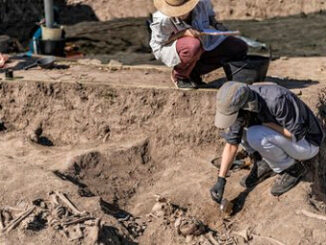
Rawalpindi (TIP)- Pakistani archaeologists have uncovered rare decorative stones and ancient coins during excavations at a UNESCO-listed site near the historic city of Taxila, offering fresh insight into the earliest urban settlement of the vast ancient civilisation.
The finds were made at the ancient Bhir Mound, where experts discovered decorative stones dating back to the 6th century BC along with coins from the 2nd century AD.
According to Dawn, officials described the discovery as the most significant at the site in the past decade.
The report said archaeologists recovered fragments of metamorphic decorative stone identified as lapis lazuli, along with rare bronze coins attributed to the Kushan dynasty, significantly advancing the material understanding of ancient Gandhara.
Aasim Dogar, deputy director of the Punjab Department of Archaeology and head of the excavation team, confirmed the preliminary assessment of the artefacts. “The decorative stones are lapis lazuli, a prized semi-precious stone, while the coins belong to the Kushan period,” Dogar said.
The excavation team sought specialised forensic support to date the metal artefacts. Dogar said detailed numismatic analysis carried out by experts from the University of Peshawar confirmed that the coins bear the image of Emperor Vasudeva, whom historians recognise as the last of the ‘great Kushan rulers’ to govern the region.
Dogar explained that the obverse side of the recovered coins depicts Vasudeva, while the reverse shows a female religious deity. He described this imagery as a defining feature of Kushan-era religious pluralism, which frequently integrated diverse theological traditions.
The artefacts were unearthed on the northern side of the site, specifically in the B-2 trench — one of 16 trenches currently under excavation. Dogar said surrounding evidence indicates that the area functioned as a residential zone.
The latest discoveries reinforce the view that Taxila reached the height of its political, cultural, and economic prominence during Kushan rule, particularly between the 1st and 3rd centuries AD. “Under emperors such as Kanishka the Great, Taxila emerged as a major administrative, commercial, and intellectual centre,” Dogar said.
He added that extensive Kushan patronage of Buddhism during this period resulted in the construction of stupas, monasteries, and large religious complexes. The era also witnessed the flourishing of Gandharan art — a unique fusion of Greek, Roman, Persian, and Indian influences — with Taxila at its centre.
Malik Tahir Suleman, a leading numismatist, told Dawn that Kushan coins are among the most important historical sources for studying ancient South and Central Asia. -
Family of Hindu man attacked in Bangladesh in shock
The family of Khokon Chandra Das on Friday recounted the horrors of the brutal attack on him, saying that the motive of the mob behind the attack was unclear as he was a peaceful man.
Das is currently undergoing treatment in Dhaka after suffering 30 per cent burns in the attack.
His wife, Seema Das, was inconsolable as she spoke to ANI. Carrying her infant in her arms, she lamented how Das was caught hold off by miscreants as he was about to enter the house and was attacked.
“My husband, who is a businessman, was entering the house when he was attacked by a mob with gasoline and was set on fire. He is a patient man who leads a peaceful life. He has no enmity with anyone, and we are unable to understand the motive behind the attack,” she said.
Anjana Rani Das, the sister of the victim, said that Das was left bloodied after he was attacked with sticks on his head. “The attack occurred at 8.30 pm. The crowd hit him on the head and poured gasoline on him before setting him on fire. He tried to jump in the water while crying for help,” she said, recounting the gruesome attack.
Sourabh Das, nephew of Khokon Das, told ANI that he rushed to the hospital soon after knowing of the attack and his uncle was critical.
“I reached the hospital as soon as I got the call about my uncle being attacked. The police reached the scene and is investigating the matter. My uncle’s face and hands were burnt,” he said.
Pranto Das, another nephew of the victim, demanded thorough investigation into the attack. -

Yemen separatists announce plan to split country after 20 killed in Saudi-led strikes
Sanaa (TIP)- Yemen’s separatists have announced a two-year transition to independence despite reporting 20 deaths in air strikes from a Saudi-led coalition in the south of the country. A military official from the separatist group — which is backed by the United Arab Emirates — announced on Friday, local time, that the fighters had been killed in air raids by the coalition on two military bases, an airport and other sites. Mohammed Abdulmalik, head of the separatist Southern Transitional Council’s (STC) in Wadi Hadhramaut and Hadhramaut Desert, said seven air strikes hit the Al-Khasha military camp. Further strikes targeted other sites in the region and the airport and military base in Seiyun, STC military sources and eyewitnesses told Agence France-Presse.
The bombardment and surprise independence bid followed weeks of tensions between Saudi Arabia and the UAE over the STC’s land-grab last month.
STC forces took much of resource-rich Hadhramaut, bordering Saudi Arabia, and neighbouring Mahra province on the Omani frontier, in a largely unopposed advance.
Yemen, which was divided into North and South from 1967 to 1990, could again be split in two years if the STC’s independence plan comes to fruition.
It would call the new country “South Arabia”.
STC President Aidaros Alzubidi said the transitional phase would include dialogue with Yemen’s north — controlled by Iran-backed Houthi rebels — and a referendum on independence.
But he warned the group would declare independence “immediately” if there was no dialogue or if southern Yemen was attacked again.
“The Council calls on the international community to sponsor dialogue between the concerned parties in the South and the North,” Mr Alzubidi said in a televised address.
“This constitutional declaration shall be considered immediately and directly effective before that date [January 2, 2028] if the call is not heeded or if the people of the South, their land, or their forces are subjected to any military attacks,” he added.
Meanwhile, the head of the country’s Saudi-backed presidential council, Rashad al-Alimi, has asked Saudi Arabia to hold a forum with all factions in Yemen’s south in a bid to ease tensions.
Saudi Arabia’s foreign ministry welcomed the request, calling on the factions — including the STC — to “formulate a comprehensive vision for fair solutions to the southern cause”.
Both Saudi Arabia and the Emirates intervened in Yemen’s civil war in 2015 as the major players in a coalition fighting the Houthis in the north.
But after a brutal, decade-long civil war, the Houthis remain in place, and the Saudis and Emiratis are backing different factions in the government-held territories. Yemen’s Aden-based government comprises a fractious coalition of groups, including the STC, united by their opposition to the Houthis.
The UAE, which withdrew most of its troops from Yemen in 2019, pledged to pull out the remainder after the coalition’s air strikes earlier this week on an alleged weapons shipment at Mukalla port, despite denying it contained arms. -

U.S. urges China to halt military pressure on Taiwan, days after Japan and others
Taipei (TIP)- The United States urged China to cease military pressure on Taiwan on Jan 1, days after Japan and Western countries voiced concern over escalating tensions in the Taiwan Strait following two days of large-scale military exercises around the democratic island. “China’s military activities and rhetoric toward Taiwan and others in the region increase tensions unnecessarily,” State Department spokesman Thomas Pigott said in a statement. “We urge Beijing to exercise restraint, cease its military pressure against Taiwan, and instead engage in meaningful dialogue.”
The United States, Pigott added, “supports peace and stability across the Taiwan Strait and opposes unilateral changes to the status quo, including by force or coercion.”
The State Department’s criticism was the first public response by the administration of U.S. President Donald Trump to this week’s Chinese military exercises.
Taiwanese Foreign Minister Lin Chia-lung welcomed the U.S. government’s statement, saying that Taipei “will continue to work with the United States and all like-minded nations to defend the rules-based international order.”
But under Trump, Washington — which is bound by law to provide Taiwan with the means to defend itself, despite the lack of formal diplomatic ties — has taken a softer approach to Chinese pressure on the island than its predecessors, as the White House looks to avoid friction with Beijing in a bid to seal a broad trade deal with the Asian powerhouse.
Trump, who is scheduled to make a state visit to the Chinese capital in April for talks with leader Xi Jinping, on Monday downplayed the exercises and the possibility of Xi ordering an invasion of Taiwan.
Beijing views the self-ruled island as its “core of core issues” and regards it as a renegade province that must be unified with the mainland, by force if necessary.
“I have a great relationship with President Xi. And he hasn’t told me anything about it. I certainly have seen it,” Trump said when asked about the exercises. “I don’t believe he’s going to be doing it,” Trump said in apparent reference to a Chinese invasion of the island.
Asked if the exercises concerned him, he replied, “No, nothing worries me.”
“They’ve been doing naval exercises for 20 years in that area,” he added. “Now people take it a little bit differently.”
Japan’s Foreign Ministry said Wednesday that Tokyo had presented its concerns to the Chinese side over the drills, which it said “constitute actions that increase tensions across the Taiwan Strait.” Japan, Australia, Britain, France, Germany, New Zealand and the European Union all voiced concern over the exercises before the U.S. On Friday, China called the exercises “completely legitimate, necessary and beyond reproach.”
“No one cherishes peace across the Taiwan Strait more than we do, yet we will never allow any individual or force to tie our hands in curbing ‘Taiwan independence’ separatist activities in the name of safeguarding cross-Strait peace,” Chinese Defense Ministry spokesperson Zhang Xiaogang said.
Taiwanese President Lai Ching-te said in a New Year’s speech Thursday in Taipei that the island is determined to defend its sovereignty and pledged to boost its defenses — something the Trump administration has demanded — in response to China’s growing pressure. -
China taxes condoms, contraceptive drugs in bid to spur birth rate
China removed a three-decade-old tax exemption on contraceptive drugs and devices from January 1 in new steps to spur a flagging birth rate. Condoms and contraceptive pills now incur value-added tax of 13%, the standard rate for most consumer goods.
The move comes as Beijing struggles to boost birth rates in the world’s second-largest economy. China’s population fell for a third consecutive year in 2024 and experts have cautioned the downturn will continue.
China exempted childcare subsidies from personal income tax and rolled out an annual childcare subsidy last year, following a series of “fertility-friendly” measures in 2024, such as urging colleges and universities to provide “love education” to portray marriage, love, fertility and family in a positive light. Top leaders again pledged last month at the annual Central Economic Work Conference to promote “positive marriage and childbearing attitudes” to stabilise birth rates. China’s birth rates have been falling for decades as a result of the one-child policy China implemented from 1980 to 2015, and rapid urbanisation. The high cost of childcare and education as well as job uncertainty and a slowing economy have also discouraged many young Chinese from getting married and starting a family. -

Russia asks US to stop pursuit of fleeing oil tanker, NY Times reports
New York (TIP)- Russia has formally asked the United States to stop chasing an oil tanker that was headed to Venezuela and is now fleeing a U.S. Coast Guard vessel in the Atlantic Ocean. Russia’s request was first reported by The New York Times, which quoted two people familiar with the matter. They said the diplomatic note was delivered to the State Department late on New Year’s Eve and was also sent to the Homeland Security Council at the White House.
Meanwhile, Venezuelan President Nicolás Maduro said he’s open to negotiations with Washington on combating drug trafficking.
“The U.S. government knows, because we’ve told many of their spokespeople, that if they want to seriously discuss an agreement to combat drug trafficking, we’re ready,” Maduro said in a taped interview that aired Thursday on state television channel teleSUR, according to NBC News.
Tanker dispute intersects Trump’s Ukraine talks and Venezuela oil blockade
The dispute comes as President Donald Trump is trying to negotiate a peace deal between Russia and Ukraine. During a recent meeting with Ukrainian President Volodymyr Zelenskyy at Mar-a-Lago, both leaders projected hope for a resolution. However, The Times noted that complex negotiations regarding territory and security assurances remain unresolved.
At the same time, the tanker confrontation is tied to Trump’s effort to pressure Maduro by imposing what The Times described as a quasi-blockade on some oil tankers, and what Trump called a “total and complete” maritime blockade of Venezuela’s oil exports.
Energy Intelligence reported that the U.S. seized the Skipper and boarded the Centuries, and that Venezuelan crude is piling up on ships and in limited onshore storage. US calls tanker ‘stateless’ as Russia rushes flag registration
American forces have been tracking the very large crude carrier, originally named Bella 1, for nearly two weeks. U.S. officials said that the tanker began its voyage in Iran and was headed to Venezuela to load oil when the Coast Guard tried to stop and board it in the Caribbean Sea.
According to The Times, American authorities determined the ship was not displaying a legitimate national flag during the initial encounter, giving the Coast Guard legal authority to board and inspect the vessel. U.S. authorities reportedly held a court-approved seizure warrant based on the vessel’s history of transporting Iranian oil that the United States alleges is sold to finance terrorism.
The crew, however, refused to allow the Coast Guard to board the ship and steered back toward the Atlantic. In the following days, U.S. officials said the crew painted a Russian flag on the hull and radioed the Coast Guard to claim they were sailing under Russian authority. -

Swiss bar fire that killed 40 likely caused by champagne sparklers: Officials
Bern (TIP)- Sparklers attached to champagne bottles and held too close to the ceiling likely sparked the deadly fire at the “Le Constellation” bar in Crans-Montana, Switzerland, during a New Year’s party, killing at least 40 people, CNN quoted officials as saying.
The blaze reportedly spread rapidly due to a flashover, and Swiss prosecutors have opened an investigation into possible criminal responsibility. Earlier, at a press conference in Crans-Montana, Valais Cantonal Police Commander Frederic Gisler said authorities responded swiftly after a fire was reported at a bar in the area. According to Gisler, smoke was first seen coming from the bar in the centre of the Swiss ski resort at around 1:30 am. Moments later, a witness contacted the emergency call centre to report the incident. A red alert was immediately issued to mobilise firefighting services, he added. The first teams from the Crans-Montana intercommunal police and the gendarmerie reached the scene at 1:32 am, and were soon joined by additional emergency responders, CNN reported.
“Their initial assignment was obviously to take care of the victims, to provide them emergency help,” Gisler said. He noted that firefighters managed to extinguish the blaze quickly. “Following that, the initial investigations were able to start,” he said. Reception centres were later set up to assist those affected by the incident, and a helpline was launched at 4:14 am to provide information and support to families. “All of the injured people had received care by shortly after 5 am, thanks to this widescale mobilisation,” CNN quoted Gisler as saying.
Families of those who lost their lives in the fire at Crans-Montana are facing a painful wait, as local authorities said it could take several days to identify all of the approximately 40 victims, CNN reported.
“Currently and in the days to come, the priority will be identifying the people who have died so that their bodies can be returned quickly to their families,” Gisler said in a press conference.
Swiss bar fire was like ‘hell’: Survivors recount ski resort blaze
Ringing in the new year with a night of drinking and dancing high in the Swiss Alps, Ebenezer Mehari, 17, decided to take a breather outside the packed Constellation Bar.
As he turned to go back inside, he told NBC News at the scene Friday, “hell” erupted as a deadly fire broke out. “I heard a big boom, and everybody was screaming,” he said.
Mehari said a thick smoke enveloped the venue and the crowd, blinding him. He fell to the ground as people rushed to escape the bar, he said, but a man pulled him away to safety. His friends were not so lucky, he says. “I have four friends who died,” he said, still struggling to process the loss. “For me, it’s not real.”
Axel Clavier, 16, from Paris, told The Associated Press that he lost his jacket, shoes and phone while fleeing, though he was grateful to have made it out. “I am still alive and it’s just stuff,” he said. “I’m still in shock.”
Samuel Rapp said he was at a restaurant next door when the fire broke out.
“A lot of people were screaming and it was horrible,” Rapp told NBC News’ British broadcasting partner Sky News. “People were walking on everybody,” he said, adding that he “saw a lot of people on the floor, and I think these people were dead because someone put jackets on their faces.” -
South Koreans now free to read North’s newspaper, once banned as seditious
In a quiet but symbolically significant shift, South Korea has eased long-standing restrictions on access to North Korea’s official newspaper, Rodong Sinmun, reflecting a renewed effort to reduce tensions and promote understanding between the two Koreas.
For decades, the publication known for its strong propaganda, missile coverage, and praise of North Korea’s leadership was considered so inflammatory that South Koreans were barred from reading it without special permission.
Under the current administration of President Lee Jae Myung, however, citizens can now view the newspaper at select public libraries without prior approval, marking a departure from Cold War-era controls.
President Lee has downplayed fears surrounding the move, suggesting that exposure to the paper would not sway public ideology but could instead help people better understand the realities of life and politics in the North.
While opinions in Seoul remain divided, some citizens see the change as unnecessary or unsettling, while others believe few people will actively seek out a state-controlled publication in an era where print media is already declining. -

Jennifer Lopez opens up on life after divorce: In my happy era
Actor-singer Jennifer Lopez opened up about her life and relationships, including her divorce from Ben Affleck, during the first night of her Las Vegas residency, Up All Night, at The Colosseum at Caesars Palace. She reflected on how much her life has changed and said that she is in her “happy era.” Jennifer spoke to the audience, discussing the significant ways her life has transformed since her previous Las Vegas residency a decade ago at Planet Hollywood’s Zappos Theatre, as reported by People. She said, “It’s such a huge honour to be asked back. Do you know it’s been 10 years since my last residency here? Almost 10 years to the day. It was in January. That went by in a blink, didn’t it?”
And in that time, I’ve only been married twice. That’s not true. It was only once. It felt like twice. I’m just kidding. It’s over and we just it’s fine. The good news is that I’m learning, and I’m growing, and we’re in our happy era. I’m in my happy era.Jennifer and Ben initially dated between 2002 and 2004, having first met while working on the film Gigli. They rekindled their relationship in 2021, leading to their marriage in July 2022. However, the Kiss of the Spider Woman (2025) actor filed for divorce in August 2024, which coincided with the timing of their second wedding anniversary in Georgia.
In an earlier interview with CBS News Sunday Morning, Jennifer called the separation transformative, saying, “Because it changed me. It helped me grow in a way that I needed to grow.” However, Jennifer and Ben have maintained an amicable relationship. They recently attended the premiere of Jennifer’s film, Kiss of the Spider Woman (which Ben produced), and were observed shopping together in Los Angeles in December 2025 alongside Affleck’s son, Samuel.
Jennifer directly confronted trolls from the stage about her bold fashion choices and age during the launch of her Up All Night residency in Las Vegas. -

Will Smith sued for sexual harassment, ex-tour violinist seeks damages
A case of sexual harassment has been filed against actor Will Smith, with a violinist from his Based on a True Story 2025 tour accusing the Hollywood star and his management company of misconduct and wrongful termination.
Brian King Joseph, who performed with Smith during the tour, has filed a lawsuit against the actor and his management firm, Treyball Studios Management, in a Los Angeles court. The suit, filed on December 31, alleges sexual harassment, retaliation and wrongful dismissal following an incident that reportedly took place during the tour’s Las Vegas stop in March. According to the complaint reviewed by Variety, Joseph claims he returned to his hotel room—booked by Smith’s company—to find signs that someone had entered without his consent. He alleges discovering a sexually suggestive message, wipes, a beer bottle, HIV medication prescribed to another individual, and hospital discharge paperwork. Among the items was a handwritten note that read, “Brian, I’ll be back no later [sic] 5:30, just us,” followed by a heart symbol and the name “Stone F.”
Joseph states that he immediately informed hotel security and alerted representatives from Smith’s team. He also reported the matter to a non-emergency police line. -

Gwyneth Paltrow admits nepo baby privilege landed her role in Spielberg’s Hook
Actor Gwyneth Paltrow admitted that receiving one of her first movie roles was a case of being a Hollywood “nepo baby,” sharing that the part wasn’t secured through an audition — but rather during a relaxed car ride with her famous godfather, director Steven Spielberg. Discussing the topic of privilege, she opened up about how she secured her role in Spielberg’s 1991 film, Hook.
Paltrow, during SAG-AFTRA Foundation Conversations event earlier this month, when asked about how the casting process of Hook looked like said, “You know there are certain advantages to being a nepo baby, which were that Steven very close with Steven and Kate.” Spielberg’s wife, actor Kate Capshaw, has long been close to Paltrow’s inner circle.
“Kate was actually my father’s best friend. They were best friends. Kate Capshawso I grew up with themthey’re really our family,” Paltrow highlighted. The actor then mentioned that the offer for the film came as a surprise when she was in the back seat of a car, heading out with the group to watch the movie The Silence of the Lambs.
“I remember we were going, my father and I were going to see The Silence of the Lambs with Kate and Steven,” the 53-year-old added. “We were going to the movie theatre and Steven was driving I was in the back seat and he kept like looking in the rearview mirror and squinting at me I was like, ‘Do I have something on my face? Like what,’” the Marty Supreme actor emphasised.
The pivotal question that launched her screen career followed. According to Paltrow, who was 18 at the time, Spielberg simply asked, “And then he said, ‘Gwenny, will you do me a favor?’”
“‘Would you play young Wendy in ‘Hook’ in this movie that I’m doing about Peter Pan?’” the The Fabelsman (2022) director questioned. The actor’s immediate response was one of disbelief, a reaction she quickly retracted.
“I said, ‘Oh, f**k off’. You know, no,” she initially recalled, before quickly correcting herself: “Oh, I did not say that I said, ‘Yes, I will. I will do that.’” Although the role was brief, the moment remains a significant and lasting memory in her acting journey. Paltrow features in Marty Supreme, alongside Timothee Chalamet. Chalamet features in and has produced Josh Safdie’s upcoming sports comedy-drama, a fictionalised story about a professional ping pong player. Although the film is not a biopic, it’s speculated to be inspired by the life of table tennis champion Marty Reisman. -

‘Bollywood distorting facts’: Chinese media targets Salman Khan’s ‘Battle of Galwan’
China’s state-run newspaper Global Times has strongly criticised the Salman Khan-starrer Battle of Galwan, just days after the film’s teaser was released. Although the film is scheduled to hit cinemas next year, it has already sparked debate and backlash, especially among Chinese audiences online.
Battle of Galwan is based on the 2020 clash between Indian and Chinese troops in the Galwan Valley. In the film, Salman Khan plays Colonel Bikkumalla Santosh Babu.
The teaser, released on December 27, shows Salman Khan addressing his soldiers before moving towards the opposing side, gripping a stick as clashes unfold. The teaser ends with his character striking an individual, a sequence that has drawn sharp reactions.
According to Global Times, Chinese commentators have accused the film of presenting distorted facts. A Chinese military expert quoted by the publication said Bollywood films often focus on emotional storytelling and entertainment rather than accuracy. The expert added that no level of cinematic exaggeration can change historical facts or weaken the People’s Liberation Army’s resolve to defend China’s sovereign territory.
The film has also faced online criticism for its visuals. Some social media users compared scenes to Game of Thrones, questioning originality. Others pointed out issues with costumes, hairstyles and the portrayal of extreme weather conditions. Many Chinese netizens argued that the events shown do not match what they describe as the facts of the 2020 clash.
While Indian media outlets promoted the film as showing Indian soldiers bravely defending their territory, Chinese users pushed back against this narrative. On Chinese microblogging website, Weibo, one user said the film seriously contradicts the facts, while another mocked the hype by saying, “When history falls short, Bollywood steps in.” -

‘Grave Sin’: Nushrratt Bharuccha faces backlash over Mahakal Temple visit
Nushrratt Bharuccha recently visited the Shri Mahakaleshwar Jyotirlinga Temple in Ujjain, Madhya Pradesh. The actress participated in the sacred Bhasma Aarti and was honored with a stole by the temple priests.
Nushrratt’s temple visit, intended to seek blessings ahead of the New Year 2026, became a subject of discussion due to her Muslim faith and religious tolerance. Some people questioned her decision to visit a Hindu temple, while one Muslim leader criticised her actions as a “grave sin”.
Maulana Shahabuddin Razvi Barelvi, the National President of the All India Muslim Jamaat, stated that her acts of performing puja and applying sandalwood are a “grave sin”, according to Sharia law. He asserted that such actions are against the fundamental principles of Islam. The Maulana demanded that the actress must offer repentance and recite the Kalma.
Nushrratt Bharuccha has been open about her liberal views on faith. In an interview with Shubhankar Mishra, the actress shared that she believes in finding peace in various places of worship, whether it’s a temple, mosque, or church. “For me, my faith is real. Unreal things happen, and that’s what strengthens my belief. That’s why I’m still connected, still strong, and I know I have to follow this path,” she said.
“Wherever you find peace, whether it’s in a mandir, a gurudwara, or a church, you should go there. I even say this openly: I pray namaz. If I get time, I pray five times a day. I even carry my prayer mat while travelling. Wherever I go, I find the same peace and calm. I’ve always believed there’s one God, and different paths to connect with Him. And I want to explore all those paths,” Nushrratt Bharuccha added.
On the work front, Nushrratt Bharuccha was last seen in the silent film Ufff Yeh Siyapaa. Her next major upcoming project is the film Bun Tikki, scheduled for a 2026 release. -

Hrithik Roshan in talks to lead Don 3 after Ranveer Singh’s exit: Report
Hrithik Roshan is reportedly being considered as the new lead of Don 3 following Ranveer Singh’s reported exit from the film. According to industry buzz, the makers are exploring the possibility of bringing Hrithik on board to take forward the iconic franchise.
The idea of Hrithik stepping into the Don universe isn’t entirely new for fans. Many will recall his stylish cameo in Don 2, where Shah Rukh Khan’s character used advanced technology to disguise himself as Hrithik during a crucial heist sequence. While it is still unclear if Farhan Akhtar and his team plan to connect that moment to the new storyline, the possibility has certainly fuelled excitement among audiences.
According to a source quoted by Filmfare, the makers are actively considering Hrithik Roshan as a strong option to lead the franchise forward. “Following Ranveer’s exit, Hrithik has emerged as a strong contender for the role. While discussions are still at a very early stage, it will be interesting to see whether Hrithik ultimately comes on board,” the source revealed.
The pressure surrounding Don 3 is understandably high. The franchise carries a powerful legacy, having been led by Amitabh Bachchan in the 1978 original and later redefined by Shah Rukh Khan in the 2006 and 2011 films. The makers are reportedly keen on choosing someone with proven stardom and a solid body of work to live up to that legacy.
Reports suggest that the search for a new lead began after Ranveer Singh moved on from the project following the massive success of Dhurandhar. While there has been no official confirmation from either the actor or the makers, it is believed that Ranveer is now focusing on Jai Mehta’s upcoming film Pralay.
As speculation continues, all eyes are now on whether Hrithik Roshan will officially step into the role or if the makers will surprise audiences by introducing a completely new face to carry the Don legacy forward. -

Haters and bigots disrupt Christmas celebrations across India
Even as Prime Minister Narendra Modi extended Christmas greetings to the nation, several states across India reported disruptions of Christmas celebrations, vandalism of decorations and protests outside churches in the days leading up to and including December 25. The incidents were reported from Madhya Pradesh, Chhattisgarh, Uttar Pradesh, Assam, Kerala, Gujarat, Rajasthan and Uttarakhand.
On December 25, Prime Minister Modi wished citizens “hope, warmth and a renewed commitment to kindness” and shared a video of himself attending a Christmas service at a church. However, reports from multiple regions described confrontations involving individuals and groups associated with Hindutva organizations, with police intervention in some cases.
Madhya Pradesh: Jabalpur Incident
One of the most widely reported incidents occurred in Jabalpur, Madhya Pradesh, where a BJP leader and others disrupted a Christmas-related luncheon a few days before Christmas. The Jabalpur city BJP vice-president, Anju Bhargava, was seen in videos verbally abusing attendees from a blind school and physically heckling a visually impaired woman for attending a church event.
Following public backlash on social media, the BJP issued a show-cause notice to Bhargava.
Chhattisgarh: Bandh and Violence

In Chhattisgarh, Hindutva groups had called for a state-wide bandh on December 24, citing alleged illegal religious conversions. The bandh followed communal clashes in Bade Tewada village of Kanker district earlier this month.
In Raipur, a group chanting “Jai Sri Ram” entered Magneto Mall on Christmas Eve and vandalised property after alleging that the mall had not supported the bandh. Police registered a complaint against more than 40 unidentified individuals based on video evidence circulating on social media.
Abha Gupta, marketing head of the mall, told the media that 50 to 100 people entered the closed premises carrying sticks and hockey sticks and questioned staff members about their religion and caste.
In Kanker district, more than 30 people allegedly attacked homes of families who had converted to Christianity several years ago. According to residents interviewed by television channels, the affected tribal families said they had adopted Christianity voluntarily.
Uttar Pradesh: Protests Outside Churches
In Bareilly, members allegedly linked to Bajrang Dal and Vishva Hindu Parishad gathered outside St. Alphonsus Cathedral Church on December 24 and recited the Hanuman Chalisa. Police were deployed at the site. The groups later submitted a memorandum to the police alleging that church activities during Christmas were intended to defame Hinduism.
On December 25, Bajrang Dal workers staged a protest outside the Kotwali police station in Bareilly, demanding that a case be registered against the church.
In Ghaziabad, a video circulated online showing a group chanting “Jai Sri Ram” near worshippers praying at St. Thomas Orthodox Maha Idavaka Church. Fact-checkers later confirmed the incident took place in Ghaziabad and not in Delhi, as initially claimed on social media.
Assam: Decorations Vandalised
In Assam, Christmas decorations at St. Mary’s School in Panigaon were vandalised on December 24. Videos showed installations being destroyed and set on fire while slogans were raised. In a separate incident in Nalbari, individuals were seen removing Christmas decorations from shops and burning them.Nalbari SSP Bibekananda Das confirmed that four people were arrested in connection with the vandalism and said they were affiliated with Bajrang Dal and Vishva Hindu Parishad.
Kerala: Attack on Carolers
In Palakkad, Kerala, a group of Christmas carolers was allegedly attacked on December 21. According to police, one person, identified as Ashwin Raj, was arrested after a case was registered.
Gujarat: Mall Installation Removed
In Ahmedabad, alleged members of Hindutva outfits entered Palladium Mall on December 27 and dismantled Christmas installations. Mall authorities said staff members were threatened during the incident.
Rajasthan and Uttarakhand:
Events Restricted
In Rajasthan’s Sriganganagar district, the additional district education officer issued a directive asking private schools not to ask students to wear Santa Claus costumes. The directive followed a letter from an organisation named Bharat-Tibet Sahyog Manch. State authorities later clarified that the decision was taken at the local level without instructions from the education minister or education directorate. In Haridwar, Uttarakhand, a Christmas programme scheduled at a hotel run by the Uttar Pradesh tourism department was cancelled following objections raised by Hindutva groups.
Police Response
Police action was reported in several cases, including arrests in Assam and registration of cases in Chhattisgarh and Kerala. Authorities said investigations were ongoing in other incidents. -
HC GRANTS BAIL TO FORMER CM BAGHEL’S SON IN EXCISE CASES
The Chhattisgarh High Court on Friday, Jan 2, granted bail to Chaitanya Baghel, son of former chief minister and senior Congress leader Bhupesh Baghel, in two cases related to the alleged liquor scam.
The high court granted him bail in a case lodged by the Enforcement Directorate and another by Chhattisgarh Anti Corruption Bureau/Economic Offence Wing, ED counsel Saurabh Kumar Pande said. ED arrested Chaitanya Baghel in July last year in connection with its money laundering probe in the alleged scam, while ACB/EOW placed him under arrest, while he was in jail, in September in its case linked to the corruption probe. The liquor “scam” in the state, according to ED, was orchestrated between 2019 and 2022 when Chhattisgarh was governed by the Bhupesh Baghel-led Congress government. -
‘Understanding Sangh by looking at BJP is a huge mistake’: RSS chief
New Delhi (TIP)- Rashtriya Swayamsevak Sangh (RSS) chief Mohan Bhagwat said on Friday, January 2, that trying to understand the Sangh by looking at the Bharatiya Janata Party (BJP) would be a “huge mistake”, as the RSS is a unique organisation and was not born as a “reaction or opposition” to anything.
Bhagwat was speaking at a gathering in Bhopal as part of the Sangh’s centenary-related activities being held across the country.
RSS cannot be understood by looking at BJP: Mohan Bhagwat
During the gathering, he said the RSS is not a paramilitary organisation and that it would be a mistake to view it through the lens of the BJP.
Notably, the RSS is generally considered the parent organisation of the Jana Sangh and its successor, the BJP. “If you want to understand the Sangh by looking at the BJP, it will be a huge mistake. The same mistake will happen if you try to understand it by looking at Vidya Bharti (an RSS-affiliated organisation),” he was quoted as saying by news agency PTI.
The Rashtriya Swayamsevak Sangh works to bring society together and instil values and discipline to ensure that India does not once again fall under foreign domination, he said.
“We wear a uniform, take out marches and do stick exercises. But if someone thinks it is a paramilitary organisation, it will be a mistake,” he said, adding that the Sangh is a unique body.
Bhagwat also said that a “false narrative” was being created about the RSS. “Nowadays, people do not go deep to gather the right information. They do not go to the origin. They go to Wikipedia. Everything is not true there. Those who go to reliable sources will get to know about the Sangh,” he said.
Because of these misunderstandings, it had become important to explain the RSS’ role and purpose, Bhagwat said, referring to his visits across the country during the Sangh’s centenary year.
“There is a common feeling that the Sangh was born as a reaction or opposition to the prevailing forces. This is not the case. The Sangh is not a reaction or opposition to anything. The Sangh is not competing with anyone either,” the RSS chief said.
Bhagwat on Swadeshi goods
He also advocated the use of Swadeshi products and said that to “become ‘Atmanirbhar’ (self-reliant), you need to have Atma Gaurav (self-pride)”.
“Only buy and use what is made in your land and which provides employment to people of your country. However, being Swadeshi does not mean that you cut trade with the world. Import only essentials such as medicines that are not produced in India,” he said.
The RSS chief added that trade should never be carried out under pressure or fear of tariffs, and should take place only on India’s own terms. -

Degree in hand, RDX in pocket: Rajnath flags white-collar terror threat
Udaipur (TIP)- Union Defence Minister Rajnath Singh on Friday flagged what he described as a disturbing rise of “white-collar terrorism” in the country, warning that higher education without values can turn dangerous for society.
Speaking at the 104th foundation day of Bhupal Nobles’ University, Singh cited the November 10 car bomb blast near Delhi’s Red Fort to underline his point. He noted that the accused in the attack were qualified doctors, calling it a stark example of how education alone does not guarantee ethical conduct.
“Today, an alarming trend of white-collar terrorism is emerging in the country. Highly-educated people are working against society and the country. The perpetrators of the (Delhi) bomb blast were doctors – those who had degree in hand and RDX in their pockets. This highlights the need for knowledge to be accompanied by values and character,” he said.
The explosion involved an explosives-laden i20 car driven by Dr Umar-un-Nabi and resulted in the deaths of 15 people. Officials later uncovered a white-collar terror module, leading to the arrest of three doctors — Muzammil Ganai, Adeel Rather and Shaheena Saeed — among others.
“The purpose of education is not only professional success but also the development of morality, ethics and human character. Any education system that cannot fulfil this objective, which does not impart humility, a sense of character and ‘dharma’ (righteousness) along with knowledge, is incomplete,” the Defence Minister said.
Singh said terrorists are not necessarily illiterate and can hold university degrees, but often lack wisdom and values.
“When I talk about religion, it should not be associated with going to the temple, mosque or church for prayer. Religion is a sense of duty. Education devoid of religion and morality will not be useful to society, and sometimes it can even prove fatal. This is why educated people are sometimes found to be involved in crimes,” he added.
Singh also spoke about India’s economic and technological trajectory, saying the country is currently the world’s fourth-largest economy and is on course to become the third-largest by 2030. Universities, he said, have a critical role to play in this journey.
‘India to become fully self-reliant in weapons in next 15–20 years’
Defence Minister Rajnath Singh on Friday said that over the next 15-20 years, India will become fully self-reliant in weapons.
Defence Minister praised the growing trend of startups in the defence sector.
“Today, many startups in the defence sector are doing remarkable work. Whatever our startups are building is close to the ground reality and also meets the global standards,” he said.
Rajnath Singh said that society has to remain informed about evolving innovations, which can help in country’s progress. Defence Minister also said that, “India has risen from 76th place in 2014 to 39th place in 2024 in the Global Innovation Index. The digital economy’s contribution to national income has also increased. Today, India has become the world’s third-largest startup ecosystem. Through public use of changing technology, we can give a new direction to India’s progress. We must stay continuously informed about rapidly evolving innovations. Today, the shortage is not of knowledge, data, or information, but of wisdom. Terrorists are not illiterate; they, too, have high degrees, but they lack wisdom. When there is knowledge without discernment, a person works in ways that are divisive for society,” he said. -
Over 12 Naxalites gunned down in encounters in Chhattisgarh’s Bastar region
More than 12 Naxalites were killed in separate encounters with the security forces in Chhattisgarh’s Bastar region on Saturday, Jan 3, police said. More than 10 ultras were gunned down in Sukma, while two were eliminated in the adjoining Bijapur district in the early hours of the day, they said.
An exchange of fire broke out in the forest of the southern region of Sukma district, where a team of security personnel was out on an anti-Naxalite operation, a senior police official said.
“More than 10 cadres have been neutralised so far. The operation is still underway, and more details will be shared later,” he said.
In Bijapur, a gunfight took place in a forest in the southern region of the district when a team of the District Reserve Guard, a unit of the state police, was out on a similar operation around 5 am, another official said.
The bodies of two Naxalites were recovered from the scene, he said.
The intermittent exchange of fire was still underway, and further details were awaited, the official said.
As many as 285 Naxalites were gunned down in separate encounters with security forces in Chhattisgarh last year.