Month: January 2026

  • Govt clears 22 E-projects, eyes Apple manufacturing boost

    Govt clears 22 E-projects, eyes Apple manufacturing boost

    New Delhi (TIP)- The ministry of electronics and information technology (MeitY) has approved 22 new proposals under the third tranche of the Electronics Components Manufacturing Scheme (ECMS), involving a projected investment of Rs 41,863 crore, according to a note shared with select media on Thursday. This takes the total approved projects to 46.
    Earlier, the ministry had approved seven projects worth Rs 5,532 crore in the first tranche on October 27, followed by 17 projects worth Rs 7,172 crore in the second tranche on November 17.
    “In continuation to the approvals of 24 applications for an investment of Rs 12,704 crore announced earlier, MeitY has further approved 22 proposals under the ECMS,” the background note said.
    The 22 projects approved in the third tranche are expected to generate production worth Rs 2,58,152 crore and create 33,791 direct jobs. This is more than double the combined production value of Rs 1,09,517 crore projected from the first two tranches. The ECMS, notified in April 2025 with a budget outlay of Rs 22,919 crore for six years, received a strong response from both domestic and global investors, with 249 applications proposing total investments of Rs 1.15 lakh crore, projected production worth Rs 10.34 lakh crore, and potential employment generation for 1.42 lakh people, according to MeitY data from early October.
    According to the media note, the latest approvals cover manufacturing across 11 different product segments that are used in mobile phones, telecom equipment, consumer electronics, automobiles, IT hardware and strategic electronics.
    Approved products include five bare components like PCB, capacitors, connectors, enclosures and Li-ion cell, along with three sub-assemblies like camera module, display module and optical transceiver, and three supply chain items like aluminium extrusion, anode material and laminate.
    The projects will be set up across eight states, namely Andhra Pradesh, Haryana, Karnataka, Madhya Pradesh, Maharashtra, Tamil Nadu, Uttar Pradesh and Rajasthan. The approvals are aimed at “reinforcing the Government’s focus on geographically balanced industrial growth and expansion of electronics manufacturing across the country.”

  • Indore water contamination

    Indore water contamination

    MP CM fires top officials after 10 dead, Uma Bharti calls for ‘repentance’

    Indore (TIP)- The water crisis in Indore’s Bhagirathpura area has claimed at least 10 lives, while more than 1,400 people have been affected by vomiting and diarrhoea, officials said, as contaminated drinking water triggered a major public health crisis in Madhya Pradesh. Amid the outrage and opposition’s attack, Madhya Pradesh chief minister Mohan Yadav said he had ordered strict action against erring civic officials and the Additional Commissioner from Indore and Superintending Engineer in-charge.
    In a post on X, he wrote, “…I issued directions to the Indore Municipal Corporation Commissioner and Additional Commissioner to issue a show-cause notice in this regard, to immediately remove the Additional Commissioner from Indore, and to relieve the In-Charge Superintending Engineer of the charge of the Water Distribution Works Department. I also issued directions to immediately fill the necessary positions in the Indore Municipal Corporation with effect from now.”
    Chief Medical and Health Officer (CMHO) of Indore, Madhav Prasad Hasani, said senior doctors and district administration officials were closely monitoring the situation to ensure proper treatment of affected patients.
    “Currently, senior doctors and district administration officials are continuously monitoring the situation at the hospitals and keeping a check that proper treatment is being ensured to the patients. I am going for the hearing of a case regarding this contaminated water issue and give further details later. Till now, as per records, four deaths occurred though we will revise and update if we received additional data and evidence in this regard,” Hasani told ANI.
    Earlier, HT had reported that preliminary findings of an inquiry into the deaths of at least nine people in Bhagirathpura confirmed the presence of bacteria typically found in sewage in drinking water samples, three days after residents were first hospitalised with symptoms of vomiting and diarrhoea.
    Cabinet Minister and Indore-1 MLA Kailash Vijayvargiya described the incident as “unfortunate” and said the number of patients admitted to hospitals had fluctuated. “It was increasing yesterday [Tuesday] but has reduced today,” he said. While Vijayvargiya remained stationed in the affected locality, Chief Minister Mohan Yadav visited several hospitals to meet patients undergoing treatment.
    IMC Commissioner Dileep Yadav told The Hindu that the suspended and dismissed officials failed to identify leakages in time. “A main leakage from a toilet drainage over the main supply line has been repaired and the toilet has been dismantled. Various other leakages were also found and repaired. We will test the water supply tomorrow and check for any leakages and water quality. The supply will be resumed once everything is fine,” Mr. Yadav said. He added that more than 100 water tankers had been deployed to meet residents’ immediate needs.
    Meanwhile, the Madhya Pradesh High Court issued notices to the State authorities and sought a status report on the matter by January 2. Hearing two petitions, the court also directed that patients be provided treatment free of cost after a Bhagirathpura resident alleged that private hospitals were refusing care without payment. Advocate Abhinav Dhanodkar, appearing for the petitioner, said: “We have also requested the court to form a probe committee headed by a retired High Court judge to ensure such incidents are not repeated.”

  • Air India pilot removed from plane under influence of alcohol; Canada seeks investigation

    Canada’s transport regulator has asked Air India to investigate an incident of a pilot who was removed from a plane before it was due to take off and found to be under the influence of alcohol, a person familiar with the matter said.
    Two breathalyser tests conducted by Canadian police at Vancouver International Airport showed the pilot was unfit for duty, the person said on Friday. The incident was labelled as a “serious matter” by Transport Canada in a letter to Air India and authorities are likely to pursue enforcement action, the person added.
    The person requested anonymity as they were not authorised to speak to the media. In a statement on Saturday, Transport Canada said it would engage with Air India and India’s aviation regulator to ensure “appropriate follow-up actions” are taken.
    In a statement, Air India said the flight from Vancouver to Delhi on December 23 experienced a last-minute delay due to the incident, adding that an alternate pilot was brought in to operate the flight. The airline said Canadian authorities raised concerns about the pilot’s fitness for duty but did not provide details. “The pilot has been taken off flying duties during the process of enquiry. Air India maintains a zero-tolerance policy towards any violation of applicable rules and regulations,” Air India said.
    “Pending the outcome of the investigation, any confirmed violation will attract strict disciplinary action in line with company policy.”

  • Indo-Canadian Sikh taxi driver in Calgary helps deliver baby during winter storm

    Indo-Canadian Sikh taxi driver in Calgary helps deliver baby during winter storm

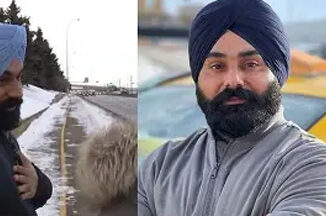
    CALGARY (TIP) : A Sikh taxi driver from Calgary is being hailed as a hero after helping deliver a baby during a late-night ride to the hospital. Hardeep Singh Toor was dispatched last Saturday for what he thought was a routine urgent trip, as per media reports.
    Upon arrival, he discovered the woman was in active labor. With temperatures around –23 °C, stormy weather, and icy roads, Toor focused on getting the couple to the hospital safely and quickly.
    The ride to Peter Lougheed Centre, usually about 29 minutes, took a dramatic turn just blocks from the hospital when the baby was born in the back seat.
    Toor said he was relieved when the newborn began crying, signaling that both mother and child were okay.
    Upon arrival, he alerted hospital staff, who immediately took over care. The baby’s father expressed immense gratitude, and Toor learned the child was a healthy baby girl.

  • Indian-Origin Adviser Ranjot “Ricky” Singh Gill Rewarded over Trump’s “India-Pakistan Truce” Claim

    Indian-Origin Adviser Ranjot “Ricky” Singh Gill Rewarded over Trump’s “India-Pakistan Truce” Claim

    WASHINGTON, D.C. (TIP): Ranjit ‘Ricky’ Singh Gill, an Indian-origin adviser to US President Donald Trump, is grabbing headlines after being awarded for his supposed role in “India-Pakistan ceasefire negotiations” following Operation Sindoor earlier this year. US Secretary of State Marco Rubio presented the National Security Council’s ‘Distinguished Action Award’ to thirty-eight-year-old Gill earlier this week in Washington.
    The development comes even as New Delhi has consistently rejected the third-party mediation claims made by Donald Trump after the May conflict.
    The Distinguished Action Award is among the National Security Council’s highest internal recognitions, acknowledging exceptional service in advancing US national security objectives.
    The recognition was for Gill’s contribution to “internal coordination and diplomatic outreach” related to the India-Pakistan ceasefire framework during 2025, the US media reported, citing US officials.
    Ricky Gill was born in Lodi, New Jersey, to parents Jasbir and Param Gill. He holds a bachelor’s degree from Princeton University’s Woodrow Wilson School of Public and International Affairs and a law degree from UC Berkeley, according to his LinkedIn profile.
    In 2011, he ran for the US Congress from California’s District 11 seat against Democrat Jerry McNerney but lost the tightly fought contest. He tried again four years later when the seat became the 9th District, but lost again.
    In the first Trump administration, Gill served as   Director for Russia and European Energy Security at the NSC and earlier as Senior Adviser at the U.S. State Department’s Bureau of Overseas Buildings Operations. Currently, he oversees the India, Pakistan, Afghanistan, and broader South and Central Asia portfolio at the department.
    Since May 10, the US leader has repeated his claim of Washington mediating a “full and immediate” ceasefire between India and Pakistan over 70 times, saying that he ended the conflict between nuclear-powered South Asian neighbors.
    Trump has taken credit for ending the conflict between New Delhi and Islamabad during his meetings with world leaders and repeated the claim during his travels abroad.
    India has consistently denied any third-party intervention. New Delhi has maintained that the understanding on cessation was reached after Pakistan’s Director General of Military Operations (DGMO) reached out to his Indian counterpart regarding the issue.
    Prime Minister Narendra Modi has also told Parliament that no world leader asked India to halt Operation Sindoor, underscoring India’s position that decisions were taken independently.
    India launched Operation Sindoor on May 7, targeting terror infrastructure in Pakistan and Pakistan-occupied Kashmir in retaliation for the April 22 Pahalgam attack that killed 26 civilians. India and Pakistan reached an understanding on May 10 to end the conflict after four days of intense cross-border drone and missile strikes.

  • Indian American student Adithi Garood wins first Future of Architecture Scholarship instituted by Projio

    Indian American student Adithi Garood wins first Future of Architecture Scholarship instituted by Projio

    WASHINGTON, D.C. (TIP): Indian American student Adithi Garood has won the first annual Future of Architecture Scholarship instituted by Projio, a digital marketing agency for architects and building professionals, for her ability to connect architectural vision with digital storytelling.
    Garood is currently pursuing a master’s degree in environmental building design at the University of Pennsylvania’s Stuart Weitzman School of Design. She was selected from a pool of applicants across the U.S. who were tasked with exploring the theme of “Storytelling Through Digital Presence,” according to a media release from the Port Washington, New York-based firm.
    The scholarship was designed to support tech-forward students who bridge the gap between physical design and digital representation. Applicants were required to submit a written essay and a visual presentation detailing a strategy for presenting architectural work online, with a focus on experience, layout, and SEO.
    “We were incredibly impressed by Adithi’s ability to connect her design vision across both written and visual formats,” said Victoria Silecchia, CMO of Omnizant. “Her submission demonstrated how digital platforms can help people truly understand and connect with architectural projects they may never experience firsthand. Adithi highlighted how this kind of storytelling is especially powerful for sustainable and net-zero design, where broader understanding can drive meaningful, widespread impact.”
    Projio stated that it launched this annual scholarship to empower the next generation of architectural visionaries who blend aesthetics with modern technology. By highlighting the importance of a digital presence, Projio aims to help future architects effectively communicate their value in an increasingly online world.
    Garood is from Bangalore and has professional experience working with architecture practices in India prior to beginning her graduate studies in the United States. She previously worked as a junior architect with Arun Nalapat Architects in Bangalore and has also completed internships and freelance assignments in India. She holds a Bachelor of Architecture degree from RV College of Architecture, Bangalore.
    “The incredibly niche program of merging sustainability along with building analysis and human centric design led me to the EBD program” at Penn, she says. “I found that it was a perfect blend between technicality and creative design freedom, where merging the two gave innovative ideas of how buildings could be shaped soon.”
    Garood sees herself working at a firm that focuses on high-performance building design, while also exploring new ideas in materials, circular economy, and large-scale energy solutions that can shape the future of architecture.

  • ‘New York vich munda rehnda’: Punjabi performance goes viral at Zohran Mamdani’s NYC inauguration

    ‘New York vich munda rehnda’: Punjabi performance goes viral at Zohran Mamdani’s NYC inauguration

    Toronto-based Punjabi artist Babbulicious takes the stage to perform his track ‘Gaddi Red Challenger’

    NEW YORK CITY (TIP): In a moment celebrated by many across the global Punjabi diaspora, the inauguration of New York City’s first Indian-origin mayor, Zohran Mamdani, concluded with a high-energy Punjabi music performance that has since gone viral on social media.

    Toronto-based Punjabi artist Babbulicious, also known as Babbu Singh, took the stage on January 1 to perform his track “Gaddi Red Challenger”, bringing a distinct South Asian flavor to the close of the formal ceremony. Wearing a striking fuchsia turban, the singer led the crowd in a chant of the chorus, “New York vich munda rehnda, sohniye Punjabi aayi ae”. Mamdani, the son of filmmaker Mira Nair, who has Punjabi roots, was seen dancing to the beats alongside his wife, artist Rama Duwaji.

    The moment quickly gained traction online after Babbulicious shared a photograph with the mayor on X, captioned with the lyric: “NEW YORK VICH MUNDA REHNDAAAAA”.

    While the performance was widely praised as a celebratory nod to Mamdani’s South Asian heritage, it also drew polarized reactions on social media. A video posted on X attracted Islamophobic commentary, with one user falsely framing the event as an “Islamic takeover of America”. Republican politician Josh Barnett echoed the criticism in a reply to the post, questioning whether New Yorkers would “put up with this”.

    Supporters, however, were quick to push back, with many using the viral moment to highlight Sikh identity, Punjabi culture and New York City’s long-standing multicultural nature.

    The Punjabi performance marks the latest in a series of cultural references embraced by Mamdani, who had earlier used the Bollywood track “Dhoom Machale” during his victory speech.

  • Trump, top Iranian officials exchange threats over protests roiling Iran

    Trump, top Iranian officials exchange threats over protests roiling Iran

    Trump warns Iran against killing peaceful protesters as demonstrations enter sixth day, escalating tensions after US strikes on Iranian nuclear sites

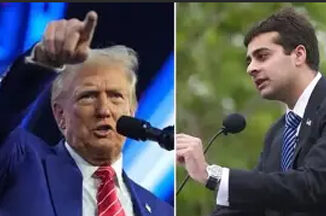
    WASHINGTON, D.C. (TIP): US President Donald Trump and top Iranian officials exchanged dueling threats on Friday, January 2, as widening protests swept across parts of the Islamic Republic, further escalating tensions between the countries after America bombed Iranian nuclear sites in June, reports AP.

    At least eight people have been killed so far in violence surrounding the demonstrations, which were sparked in part by the collapse of Iran’s rial currency but have increasingly seen crowds chanting anti-government slogans.

    The protests, now in their sixth day, have become the biggest in Iran since 2022, when the death of 22-year-old Mahsa Amini in police custody triggered nationwide demonstrations.

    However, the protests have yet to be as widespread and intense as those surrounding the death of Amini, who was detained over not wearing her hijab, or headscarf, to the liking of authorities.

    Trump post sparks quick Iranian response

    Trump initially wrote on his Truth Social platform, warning Iran that if it “violently kills peaceful protesters,” the United States “will come to their rescue.”

    “We are locked and loaded and ready to go,” Trump wrote, without elaborating.

    Ali Larijani, a former parliament speaker who serves as the secretary of Iran’s Supreme National Security Council, alleged that Israel and the US were stoking the demonstrations. He offered no evidence to support the allegation, which Iranian officials have repeatedly made during years of protests sweeping the country.

    “Trump should know that intervention by the US in the domestic problem corresponds to chaos in the entire region and the destruction of the US interests,” Larijani wrote on X, which the Iranian government blocks.

    “The people of the US should know that Trump began the adventurism. They should take care of their own soldiers.”

    Larijani’s remarks likely referenced America’s wide military footprint in the region. Iran in June attacked Al Udeid Air Base in Qatar after the US strikes on three nuclear sites during Israel’s 12-day war on the Islamic Republic. No one was injured, though a missile did hit a structure there.

    As of Friday, no major changes had been made to US troop levels in the Middle East or their preparations following Trump’s social media posts, said a US official, who spoke on condition of anonymity to discuss sensitive military plans.

    In a letter late Friday to United Nations Secretary-General António Guterres and the UN Security Council, Iran’s envoy asked the world body to condemn the rhetoric and reaffirm the country’s “inherent right to defend its sovereignty, territorial integrity, and national security, and to protect its people against any foreign interference.”

    “The United States of America bears full responsibility for any consequences arising from these unlawful threats and any ensuing escalation,” said Amir Saeid Iravani, Iranian ambassador to the UN.

    Ali Shamkhani, an adviser to Supreme Leader Ayatollah Ali Khamenei who previously was the council’s secretary for years, separately warned that “any interventionist hand that gets too close to the security of Iran will be cut.”

    US signals support for protesters
    Trump’s online message marked a direct sign of support for the demonstrators, something other American presidents have avoided out of concern that activists would be accused of working with the West. During Iran’s 2009 Green Movement demonstrations, President Barack Obama held back from publicly backing the protests — something he said in 2022 “was a mistake.”

    But such White House support still carries a risk.

    “Though the grievances that fuel these and past protests are due to the Iranian government’s own policies, they are likely to use President Trump’s statement as proof that the unrest is driven by external actors,” said Naysan Rafati, an analyst at the International Crisis Group.

    “But using that as a justification to crack down more violently risks inviting the very US involvement Trump has hinted at,” he added.

    Iran’s Foreign Ministry spokesperson Esmail Baghaei recently cited a list of Tehran’s longtime grievances regarding US intervention, including a CIA-backed coup in 1953, the downing of a passenger jet in 1988 and the strikes in June.

    Protests continue on Friday
    Protests continued Friday in various cities in the country, even as life largely continued unaffected in the capital, Tehran. Demonstrations have reached over 100 locations in 22 of Iran’s 31 provinces, the US-based Human Rights Activists News Agency reported. It said the death toll in the demonstrations rose to eight with the death of a demonstrator in Marvdasht in Iran’s Fars province.

    Demonstrators took to the streets in Zahedan in Iran’s restive Sistan and Baluchestan province on the border with Pakistan. The burials of several demonstrators killed in the protests also took place on Friday, sparking marches.

    Videos purported to show mourners chasing off security force members who attended the funeral of 21-year-old Amirhessam Khodayari. He was killed Wednesday in Kouhdasht, over 400 kilometers (250 miles) southwest of Tehran in Iran’s Lorestan province.

    Footage also showed Khodayari’s father denying his son served in the all-volunteer Basij force of Iran’s paramilitary Revolutionary Guard, as authorities claimed. The semiofficial Fars news agency later reported that there were now questions about the government’s claims that he served. Iran’s civilian government under reformist President Masoud Pezeshkian has been trying to signal it wants to negotiate with protesters.

    However, Pezeshkian has acknowledged there is not much he can do as Iran’s rial has rapidly depreciated, with USD 1 now costing some 1.4 million rials. That sparked the initial protests.

    The protests, taking root in economic issues, have heard demonstrators chant against Iran’s theocracy as well. Tehran has had little luck in propping up its economy in the months since the June war.

    Iran recently said it was no longer enriching uranium at any site in the country, trying to signal to the West that it remains open to potential negotiations over its atomic program to ease sanctions. However, those talks have yet to happen as Trump and Israeli Prime Minister Benjamin Netanyahu have warned Tehran against reconstituting its atomic program.

  • No water for sponsor of terror: India’s EAM slams ‘bad neighbor’  Pak

    No water for sponsor of terror: India’s EAM slams ‘bad neighbor’ Pak

    NEW DELHI (TIP): External Affairs Minister S Jaishankar on Friday asserted that India “has every right to defend its people against neighbors that persist with terrorism”, underlining that no country can expect the benefits of cooperation, including water-sharing, while simultaneously pursuing violence against India.

    Speaking at an interaction with students at IIT Madras, Jaishankar, without naming Pakistan, said India’s neighborhood challenges were aggravated by the “deliberate, sustained and unrepentant” use of terrorism as state policy by one of its western neighbors.

    “India’s growth is a lifting tide for the region, and most of our neighbors recognize that if India grows, they grow with us. But when it comes to bad neighbors who persist with terrorism, India has every right to defend its people and will do whatever is necessary. You cannot ask us to share our water with you and also spread terrorism in our country,” he said.

    Referring obliquely to the Indus Waters Treaty, Jaishankar said good neighborliness could not exist in the presence of decades of cross-border terrorism. “Many years ago, we agreed to a water-sharing arrangement, but if you have decades of terrorism, there is no good neighborliness. If there is no good neighborliness, you don’t get the benefits of that good neighborliness. You can’t say, ‘Please share water with me, but I will continue terrorism with you.’ That’s not reconcilable,” he said.

    The minister said while countries could have difficult neighbors, India’s case was unique because terrorism had been weaponized as a conscious policy choice. “If a country decides that it will deliberately, persistently and unrepentantly continue with terrorism, we have a right to defend our people against terrorism. We will exercise that right,” he said.

    At the same time, Jaishankar drew a sharp contrast between India’s approach to “bad neighbors” and its engagement with cooperative ones. With “good neighbors”, he said, India had consistently invested, helped and shared resources — citing vaccine supplies during the Covid pandemic, fuel and food support amid the Ukraine conflict, and nearly $4 billion in assistance extended to Sri Lanka during its recent financial crisis.

    Jaishankar said he had been in Bangladesh earlier this week to represent India at the funeral of former PM Khaleda Zia, underscoring India’s continued diplomatic engagement in the region.“More broadly, our approach to the neighborhood is guided by common sense. With good neighbors, India invests, helps and shares,” he said.

    The External Affairs Minister also emphasized the importance of clear communication in foreign policy to prevent India’s intentions from being misread. “How to prevent people from misreading you is to communicate — clearly and honestly. If you do that, other countries respect it and accept it,” he said.
    (Source: ANI)

  • Marriage to a US citizen no longer guarantees Green Card

    Marriage to a US citizen no longer guarantees Green Card

    While spouses of American citizens are eligible to apply as immediate relatives, officials now focus on whether the marriage is genuine and entered into in good faith

    NEW YORK (TIP): Marriage to a US citizen no longer guarantees a Green Card, as US immigration authorities are applying stricter scrutiny to marriage-based applications. While spouses of American citizens are eligible to apply as immediate relatives, officials now focus on whether the marriage is genuine and entered into in good faith.

    Immigration experts stress that cohabitation is a key factor, and couples who do not live together face a higher risk of investigation or denial, regardless of the reason for living apart. These measures are part of broader efforts to tighten US immigration policies and prevent marriage fraud.

    Below are the key points

    Marriage alone is not enough to secure a US Green Card, warns immigration attorney Brad Bernstein.

    Spouses of US citizens are classified as “immediate relatives” and are eligible to apply, but approval is not automatic.

    USCIS is applying stricter scrutiny to marriage-based Green Card applications under the Trump administration.

    Genuine marriage is the main focus, not just legal documentation.

    Cohabitation is crucial: Couples are expected to live together full-time as husband and wife.

    Living separately raises red flags, even if separation is due to work, education, or financial reasons.

    US immigration officers do not consider reasons for living apart, only whether the couple actually shares a home.

    Marriages without daily cohabitation are more likely to face investigations, tough interviews, or denial.

    USCIS evaluates the “totality of the relationship” to determine if the marriage was entered in good faith.

    Legally valid marriages can still be denied if officials believe the intent was to bypass immigration laws.

    Broader immigration tightening includes suspension of the Diversity Visa Lottery and reduced work permit duration.

    Married couples living apart are advised to seek legal guidance before filing a Green Card application.

    Homeland Security Secretary Kristi Noem said: “At President Trump’s direction, I am immediately directing USCIS (United States Citizenship and Immigration Services) to pause the DV1 program to ensure no more Americans are harmed by this disastrous program.”


  • UN chief calls on Israel to reverse NGOs ban in Gaza

    UN chief calls on Israel to reverse NGOs ban in Gaza

    Israel says the new regulation aims to prevent bodies it accuses of supporting terrorism from operating in the Palestinian territories

    UNITED NATIONS (TIP): UN Secretary General Antonio Guterres called on Friday, January 2, 2026, for Israel to end a ban on humanitarian agencies that provided aid in Gaza, saying he was “deeply concerned” at the development, a Reuters report says.

    Mr. Guterres “calls for this measure to be reversed, stressing that international non-governmental organizations are indispensable to life-saving humanitarian work and that the suspension risks undermining the fragile progress made during the ceasefire,” his spokesperson Stephane Dujarric said in a statement.

    “This recent action will further exacerbate the humanitarian crisis facing Palestinians,” he added.

    Israel on Thursday suspended 37 foreign humanitarian organizations from accessing the Gaza Strip after they had refused to share lists of their Palestinian employees with government officials.

    The ban includes Doctors Without Borders (MSF), which has 1,200 staff members in the Palestinian territories — the majority of whom are in Gaza.

    NGOs included in the ban have been ordered to cease their operations by March 1.

    Several NGOS have said the requirements contravene international humanitarian law or endanger their independence.

    Israel says the new regulation aims to prevent bodies it accuses of supporting terrorism from operating in the Palestinian territories.

    On Thursday, January 1, 18 Israel-based left-wing NGOs denounced the decision to ban their international peers, saying “the new registration framework violates core humanitarian principles of independence and neutrality.”

    A fragile ceasefire has been in place since October, following a deadly war waged by Israel in response to Hamas’s unprecedented October 7, 2023, attack on Israel.

    In November, authorities in Gaza said more than 70,000 people had been killed there since the war broke out. Nearly 80 percent of buildings in Gaza have been destroyed or damaged by the war, according to UN data, leaving infrastructure decimated.

    About 1.5 million of Gaza’s more than two million residents have lost their homes, said Amjad Al-Shawa, director of the Palestinian NGO Network in Gaza.

  • Mamdani vows to “govern as a democratic socialist”

    Mamdani vows to “govern as a democratic socialist”

    Revokes executive orders issued after former mayor Eric Adams had been indicted on corruption charges

    • I.S. Saluja

    NEW YORK CITY (TIP): Zohran Mamdani was formally sworn in as New York City’s 112th Mayor in a private ceremony held just moments into the New Year in an old subway station here. The 34-year-old Indian-descent Queens state assemblyman became the first South Asian and Muslim elected to helm the largest city in the US. Mamdani was sworn in at the old City Hall subway station at a private ceremony attended only by his family and close advisers, held around the stroke of midnight as the city ushered in the New Year.

    He was sworn in on a Quran as the city’s 112th mayor — and its second-youngest — by state Attorney General Letitia James on Thursday, January1 morning below City Hall Park in a grand, abandoned old subway stop with his wife, artist Rama Duwaji, by his side.

    On the choice of the old subway station as the venue for his historic swearing-in, the New York Times quoted Mamdani as saying that when the Old City Hall Station first opened in 1904 — one of New York’s 28 original subway stations — “it was a physical monument to a city that dared to be both beautiful and build great things that would transform working people’s lives.” “That ambition need not be a memory confined only to our past, nor must it be isolated only to the tunnels beneath City Hall: it will be the purpose of the administration fortunate enough to serve New Yorkers from the building above.”

    The New York Public Library announced on Wednesday that Mamdani will use a Quran from the collections of the Schomburg Centre for Research in Black Culture to take the oath of office at the midnight swearing-in ceremony on New Year’s Eve.

    “This marks a significant moment in our city’s history, and we are deeply honored that Mayor-elect Mamdani has chosen to take the oath of office using one of the Library’s Qurans,” said Anthony W. Marx, President and CEO of The New York Public Library.

    “This specific Quran, which Arturo Schomburg preserved for the knowledge and enjoyment of all New Yorkers, symbolizes a greater story of inclusion, representation, and civic-mindedness.”

    NYPL termed the selection of the Quran by the incoming administration as highly symbolic, both because of its connection to one of NYC’s most groundbreaking scholars and for its simple, functional qualities.

    “The black and red ink, as well as the small, portable size, indicate this Quran was intended for an ordinary reader and everyday use. Although neither dated nor signed, the Quran’s minute naskh script and its binding, featuring a gilt-stamped medallion filled with a floral composition, suggest it was produced in Ottoman Syria in the 19th century,” it said.

    After working part of the night in his new office, Mamdani returned to City Hall in a taxicab around midday Thursday, January 1, for a grander public inauguration where US Sen Bernie Sanders, one of the mayor’s political heroes, administered the oath for a second time.

    “Beginning today, we will govern expansively and audaciously. We may not always succeed, but never will we be accused of lacking the courage to try,” Mamdani told a cheering crowd.

    “To those who insist that the era of big government is over, hear me when I say this: No longer will City Hall hesitate to use its power to improve New Yorkers’ lives,” he said.

    Throngs turned out in the frigid cold for an inauguration viewing party just south of City Hall on a stretch of Broadway known as the “Canyon of Heroes,” famous for its ticker-tape parades. Mamdani wasted little time getting to work after the event.

    He revoked multiple executive orders issued by the previous administration since September 26, 2024, the date federal authorities announced former mayor Eric Adams had been indicted on corruption charges, which were later dismissed following intervention by the Trump administration.

    Then he visited an apartment building in Brooklyn to announce he is revitalizing a city office dedicated to protecting tenants and creating two task forces focused on housing construction.

    ‘I will govern as a democratic socialist’

    Throughout the daytime ceremony, Mamdani and other speakers hit on the theme that carried him to victory in the election: Using government power to lift up the millions of people who struggle with the city’s high cost of living.

    Mamdani peppered his remarks with references to those New Yorkers, citing workers in steel-toed boots, halal cart vendors “whose knees ache from working all day” and cooks “wielding a thousand spices.”

    “I was elected as a democratic socialist and I will govern as a democratic socialist,” Mamdani said. “I will not abandon my principles for fear of being deemed radical.’”

    Before administering the oath, Sanders told the crowd that most of the things Mamdani wants to do — including raising taxes on the rich — aren’t radical at all.

    “In the richest country in the history of the world, making sure that people can live in affordable housing is not radical,” he told the crowd. “It is the right and decent thing to do.”

    Mamdani was accompanied on stage by his wife, Rama Duwaji. Adams was also in attendance, sitting near another former mayor, Bill de Blasio.

    Actor Mandy Patinkin, who recently hosted Mamdani to celebrate Hannukah, sang “Over the Rainbow” with children from an elementary school chorus. The invocation was given by Imam Khalid Latif, the director of the Islamic Center of New York City. Poet Cornelius Eady read an original poem called “Proof.” In addition to being the city’s first Muslim mayor, Mamdani is also its first of South Asian descent and the first to be born in Africa. At 34, Mamdani is also the city’s youngest mayor in generations.

    Mamdani insisted in his inaugural address that he will not squander his opportunity to implement the policies he promised in his election campaign.

    “A moment like this comes rarely. Seldom do we hold such an opportunity to transform and reinvent. Rarer still is it the people themselves whose hands are on the levers of change. And yet we know that too often in our past, moments of great possibility have been promptly surrendered to small imagination and smaller ambition,” he said.

    In his speech, Mamdani acknowledged the task ahead, saying he knows many will be watching to see whether he can succeed.

    “They want to know if the left can govern. They want to know if the struggles that afflict them can be solved. They want to know if it is right to hope again,” he said. “So, standing together with the wind of purpose at our backs, we will do something that New Yorkers do better than anyone else: We will set an example for the world.”
    Mamdani was born in Kampala, Uganda, the son of filmmaker Mira Nair and Mahmood Mamdani, an academic and author. His family moved to New York City when he was 7, with Mamdani growing up in a post-9/11 city where Muslims didn’t always feel welcome. He became an American citizen in 2018.

    He worked on political campaigns for Democratic candidates in the city before he sought public office himself, winning a state Assembly seat in 2020 to represent a section of Queens.

    Now that he has taken office, Mamdani and his wife will depart their one-bedroom, rent stabilized apartment in the outer-borough to take up residence in the stately mayoral residence in Manhattan.

    The new mayor inherits a city on the upswing, after years of slow recovery from the COVID-19 pandemic. Violent crime has dropped to pre-pandemic lows. Tourists are back. Unemployment, which soared during the pandemic years, is also back to pre-COVID levels.

    Yet deep concerns remain about high prices and rising rents.

    In opening remarks to the crowd, U.S. Rep. Alexandria Ocasio-Cortez praised New Yorkers for choosing “courage over fear.”

    “We have chosen prosperity for the many over spoils for the few,” she said.

    During the mayoral race, President Donald Trump threatened to withhold federal funding from the city if Mamdani won and mused about sending National Guard troops to the city.

    But Trump surprised supporters and foes alike by inviting the Democrat to the White House for what ended up being a cordial meeting in November.

    “I want him to do a great job and will help him do a great job,” Trump said.

    Still, tensions between the two leaders are almost certain to resurface, given their deep policy disagreements, particularly over immigration.

    Several speakers at Thursday’s inauguration criticized the Trump administration’s move to deport more immigrants and expressed hope that Mamdani’s City Hall would be an ally to those the president has targeted.

    Mamdani also faces skepticism and opposition from some members of the city’s Jewish community over his criticisms of Israel’s government.

    Still, Mamdani supporters in Thursday’s crowd expressed optimism that he’d be a unifying force.

    “There are moments where everyone in New York comes together, like when the Mets won the World Series in ‘86,” said Mary Hammann, 64, a musician with the Metropolitan Opera. “This feels like that — just colder.”
    (With inputs from PTI, AP)

  • FBI says it disrupted a potential New Year’s Eve attack inspired by Islamic State group

    Christian Sturdivant, 18, was charged with attempting to provide material support to a foreign terror organization after officials say he communicated his attack plans to an undercover FBI employee

    The FBI has foiled several alleged attacks through sting operations in which agents posed as terror supporters, supplying advice and equipment.

    CHARLOTTE, N.C (TIP): Associated Press quoted the FBI as saying on Friday , January 2, 2026, that it had disrupted a plot to attack a North Carolina grocery store and fast-food restaurant on New Year’s Eve, arresting a man who officials said was inspired by the Islamic State group and had pledged loyalty to the extremist militants.

    Christian Sturdivant, 18, was charged with attempting to provide material support to a foreign terror organization after officials say he communicated his attack plans to an undercover FBI employee who was posing as an encouraging confidant.

    He was arrested by federal agents on Wednesday (December 31, 2025). He remained held following a Friday morning court appearance. Another hearing is set for Jan. 7. The lawyer representing Sturdivant in federal court on Friday didn’t immediately respond to an email seeking comment.

    An FBI affidavit filed in the case said Mr. Sturdivant came under investigation last month following information that a social media account, which officials connected to Mr. Sturdivant, had made posts supportive of IS. Those included posts that depicted a ballistic vest and appeared to promote violence, the affidavit said, and the display name for the account referenced the name of the late IS leader, Abu Bakr al-Baghdadi.

    Mr. Sturdivant began communicating on social media with someone who he thought was supportive of his plans but who was actually an undercover FBI employee, the affidavit said.

    Russ Ferguson, the U.S. Attorney for western North Carolina, declined to name the grocery store and fast-food restaurant that were allegedly targeted, citing the ongoing investigation. But he said both were in Mint Hill, a small bedroom community of Charlotte.

    The affidavit says Sturdivant had been on the FBI’s radar in January 2022, when he was a minor, after officials learned that he had been in contact with an IS member in Europe and had received instructions to dress in all black, knock on people’s doors and commit attacks with a hammer. Mr. Sturdivant did actually set out for a neighbor’s house armed with a hammer and a knife but was restrained by his grandfather, the affidavit says.

    The North Carolina attack would’ve come a year after 14 people were killed in New Orleans by a U.S. citizen and Army veteran who had proclaimed his support for IS on social media.

    Other IS-inspired attacks over the past decade include a 2015 shooting rampage by a husband-and-wife team who killed 14 people in San Bernardino, California, and a 2016 massacre at a gay nightclub in Orlando, Florida, by a gunman who fatally shot 49 people.

    The FBI has foiled several alleged attacks through sting operations in which agents posed as terror supporters, supplying advice and equipment. Critics say the strategy can amount to entrapment of mentally vulnerable people who wouldn’t have the wherewithal to act alone.
    (Source: AP)

  • Round Rock Mayor Honors Mohammed Kashif at Launch of Free IT Bootcamp 2025

    Round Rock Mayor Honors Mohammed Kashif at Launch of Free IT Bootcamp 2025

    By Murtaza Ali Khan

    DALLAS, TX (TIP): The launch of the Free IT Bootcamp 2025 at the Round Rock Public Library marked a significant milestone for the city’s ongoing efforts toward digital inclusion and workforce development. The inaugural event witnessed strong participation from the community, including youth, students, early-career professionals, and working adults seeking to build or transition into careers in information technology.
    A major highlight of the event was the presence of the Honorable Mayor of Round Rock, Texas, Mr. Craig Morgan, who formally inaugurated the program and publicly honored and recognized the organizer, Mohammed Kashif, for his outstanding hard work, dedication, and commitment to serving the Round Rock community.
    While addressing the gathering, Mayor Morgan applauded Kashif’s vision and initiative, emphasizing that the free and open-to-the-public IT Bootcamp 2025 will play a vital role in equipping individuals with essential computer and IT skills needed to secure employment. He further noted that the program would help participants enhance their existing technical capabilities through structured mentoring, ranging from basic computer skills to advanced IT concepts.
    The Free IT Bootcamp 2025 has been thoughtfully designed to bridge the gap between academic learning and real-world industry requirements. Many students and early-career professionals, despite possessing strong theoretical knowledge, often face difficulties in job interviews due to limited practical exposure. At the same time, individuals from non-IT and blue-collar backgrounds who aspire to enter the technology sector frequently encounter financial constraints and a lack of access to proper guidance.
    To address these challenges, Mohammed Kashif conceptualized the Free IT Bootcamp as a community-driven initiative focused on practical, industry-relevant training at no cost. The program covers a comprehensive range of IT fundamentals, including programming, databases, cybersecurity, cloud technologies, career readiness, and mentoring sessions aimed at building confidence and employability.
    The Mayor’s public recognition of Kashif was met with warm appreciation from attendees, many of whom have registered to participate in the upcoming bootcamp sessions. Community members described the initiative as timely and impactful, highlighting its role in democratizing access to technology education and creating meaningful pathways to employment.
    With strong community support and the endorsement of city leadership, the Free IT Bootcamp 2025 is set to become a transformative platform for Round Rock—empowering individuals with digital skills, professional guidance, and new opportunities in an increasingly technology-driven economy.

    (Murtaza Ali Khan is Critic | Curator | Journalist | Historian. An award-winning journalist, he has been covering art, culture, music, and entertainment for a decade and a half. He can be reached at murtaza.jmi@gmail.com / Phone: +91 9717554334)

  • After Sikh group lawsuit, California delays revocation of 17,000 truckers’ licenses

    After Sikh group lawsuit, California delays revocation of 17,000 truckers’ licenses

    State postpones action until March as US transportation officials warn of a January 5 deadline, potential $160 million funding loss

    SACAMENTO (TIP): A week after a group of immigrant truckers sued California’s Department of Motor Vehicles, California said Tuesday that it will delay revocation of 17,000 commercial driver’s licenses until March, giving authorities more time to ensure that truckers and bus drivers who legally qualify for the licenses can retain them.

    According to HT, citing an Associated Press report, US Transportation Secretary Sean Duffy said the state could lose $160 million in federal funding if it fails to meet a January 5 deadline to revoke the license. He has already withheld $40 million, saying California is not enforcing English proficiency requirements for truck drivers.

    California sent notices invalidating the license after pressure from Duffy to ensure that immigrants who are in the country illegally are not granted commercial licenses. “California does NOT have an ‘extension’ to keep breaking the law and putting Americans at risk on the roads,” Duffy posted on the social platform X.

    “Our number one mission is to ensure that every American gets home safely. We’re backing aggressive enforcement and empowering states to keep unqualified, unvetted drivers off the road with over $118 MILLION in grants. 2026 is the year of safer roads!” he said in another post.

    Concerns about immigrant truck drivers gained attention after a tractor-trailer driver who was not authorized to be in the US made an illegal U-turn and caused an August crash in Florida that killed three people. A fiery California crash that also killed three people in October and involved a Sikh truck driver in the country illegally added to the worries.

    The Sikh Coalition, a national civil rights group, and the San Francisco-based Asian Law Caucus filed a class-action lawsuit on behalf of affected California drivers, arguing that immigrant truck drivers were being unfairly targeted.

    Immigrants make up about 20% of all truck drivers, while non-domiciled licenses available to immigrants account for about 5% of all commercial driver’s licenses, or roughly 200,000 drivers, the report said.

    Munmeeth Kaur, legal director of the Sikh Coalition, said the delay “is an important step towards alleviating the immediate threat that these drivers are facing to their lives and livelihoods.”

    The federal government had threatened to withhold millions of dollars in funding from California, Pennsylvania, Minnesota and New York after audits found major problems, including licenses remaining valid long after immigrant truck drivers’ work permits expired.

  • Strengthening India-Romania Economic and Technology Partnerships

    Strengthening India-Romania Economic and Technology Partnerships

    BUCHAREST (TIP): In a key highlight last week, the Embassy hosted prominent Romanian business leaders for a special presentation on India’s rising economy, delivered by Mr. Bhuvnesh Kumar, Deputy Secretary, Department for Promotion of Industry and Internal Trade (DPIIT), Ministry of Commerce and Industry. Ambassador Manoj Kumar Mohapatra delivered the opening remarks, underscoring India’s dynamic growth trajectory, projected at over 7% GDP growth in 2025, followed by an interactive Q&A session. The event advanced discussions on trade, investment, and collaboration opportunities between the two nations.

    Mr. Bhuvnesh Kumar, Deputy Secretary, Department for Promotion of Industry and Internal Trade spoke about the GDP growth of India over the years

    ICC Country Head Mr. Gheorghe Dinu, Mr. Naimish Kumar Patel from Dimar Recruitment & Immigration Services, Mr. Morten Reimers of Falcon Defense, and Ms. Adriana Radu of RIZ highlighted emerging opportunities for Romanian companies to engage with the Indian market. These partners played a pivotal role in fostering stronger India-Romania business ties.

    Ambassador conducted an interactive question-and-answer session.

    Spotlight on IT & ITES Collaboration: A Strategic Pillar of Bilateral Growth

    Complementing this initiative, the Embassy, in collaboration with the Federation of Indian Chambers of Commerce & Industry (FICCI) and the Electronics and Computer Software Export Promotion Council, successfully organized a Business-to-Business (B2B) Meeting focused on Information Technology and Communications (IT&C), including IT Enabled Services (ITES). The event brought together over more than 100 leading Indian and Romanian companies, creating a dynamic platform for interaction, knowledge exchange, and the exploration of new partnership opportunities.

    ICC Country Head Mr. Gheorghe Dinu spoke about the opportunities for Romanian companies to engage with the Indian market.

    The India-Romania IT & ITES partnership has evolved naturally from shared strengths. India’s global leadership in software exports and its vast talent pool of over 5 million IT professionals complement Romania’s highly skilled workforce of 200,000+ IT specialists and its position as one of Europe’s fastest-growing technology hubs. This synergy has already delivered tangible results.

    Mr. Naimish Kumar Patel from Dimar Recruitment & Immigration Services spoke about opportunities for Romanian companies to engage with the Indian market.

    Indian companies operating in Romania, including Tata Consultancy Services (TCS), Infosys, Wipro, and HCL Technologies, have generated over 10,000 high-quality jobs for Romanian professionals as of 2025, primarily in cities such as Bucharest, Cluj-Napoca, and Timișoara. These roles span software development, cybersecurity, cloud computing, artificial intelligence, and BPO services, contributing significantly to Romania’s economy through direct employment, skill development, and technology transfer.

    Mr. Morten Reimers of Falcon Defense spoke about opportunities for Romanian companies to engage with the Indian market.

    The B2B meeting further amplified these achievements by facilitating targeted matchmaking sessions, enabling participants to identify immediate opportunities in AI-driven solutions, digital transformation projects, and nearshoring services for EU markets.

    Ms. Adriana Radu of RIZ spoke about opportunities for Romanian companies to engage with the Indian market.

    Future Horizons: Building Momentum Towards India’s AI Summit and Localized Initiatives

    These engagements serve as important lead-up activities to the Government of India’s landmark AI Summit, scheduled for February 2026. This flagship national event will bring together global leaders, innovators, and policymakers to shape ethical AI governance, promote inclusive deployment, and advance transformative applications across sectors, closely aligning with shared India-Romania priorities in IT and ITES.

    Attendees at the B2B Meeting.

    Building on this momentum, the Embassy of India plans to organize “AI for All” Conferences in key Romanian technology hubs: Brașov on January 14, 2026, and Timișoara in the first week of February 2026. Organized in association with leading Indian companies such as Global Logitech and Wipro, these events will focus on democratizing access to AI, fostering hands-on workshops, and exploring collaborative R&D in areas including AI ethics, healthcare applications, and smart cities.

    Ambassador Dr. Manoj Kumar Mohapatra at the IT&C event held at the embassy spoke about India’s development in the industry.

    By convening local startups, universities, and industry experts, these conferences aim to accelerate technology transfer, strengthen bilateral talent pipelines, and position Romania as a co-innovation partner within India’s expanding AI ecosystem.

    FICCI highlighted their reach on a global level.

    These initiatives underscore the shared commitment of India and Romania to deepening economic and technological cooperation, leveraging India’s growth momentum and Romania’s strategic position within Europe. The Embassy remains fully committed to nurturing these partnerships to ensure sustained and mutually beneficial prosperity.

    (Based on a Press Release issued by the Embassy of India in Bucharest)


  • A multipolar world with bipolar characteristics

    A multipolar world with bipolar characteristics

    The three great powers understand that the world is no longer organized around a single center of authority

    By Stanly Johny

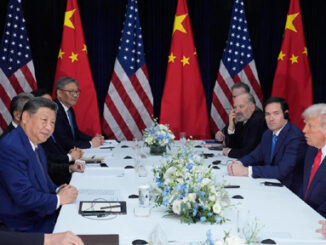
    As 2025 draws to a close, a highlight is that the United States has undertaken its largest troop mobilization in the Caribbean in decades. Its Navy has deployed its most advanced aircraft carrier, along with fighter jets, amphibious vessels, attack submarines and tens of thousands of troops, as it intensifies its pressure on Venezuela in an effort to force President Nicolás Maduro from power.

    The Trump administration’s National Security Strategy (NSS), released in early December 2025, identifies Latin America and the Caribbean as a strategic priority. Reviving the 19th century Monroe Doctrine, the document asserts that the U.S. must deny influence or control by outside powers (read China) in Latin America and ensure that the Western Hemisphere remains under American political, economic and military influence.

    The push to reinforce American primacy in Latin America coincides with U.S. President Donald Trump’s waning interest in Europe, another long-standing U.S. sphere of influence. Since the end of the Second World War, the U.S. has served as Europe’s primary security guarantor. If Washington kept western Europe together through a tightly knit alliance during the Cold War, it expanded this security umbrella to eastern Europe after the disintegration of the Soviet Union, creating a large transatlantic bloc. Under Mr. Trump, however, the U.S. is no longer interested in shouldering the burden of European security — a position explicitly articulated in the NSS. Why is America, at a moment when Russia and China are seeking to overturn the U.S.-built and U.S.-led security and economic order, stepping back from Europe while moving to consolidate its influence in the Western Hemisphere?

    It is difficult to discern a cohesive doctrine in Mr. Trump’s foreign policy, marked by the President’s impulses and unpredictability. Yet, even these impulses, this unpredictability and his ideological orientation rooted in Christian nationalism and America’s might cannot ignore the structural shifts reshaping the international order. Mr. Trump is not the ‘President of peace’ that he claims to be — he has already bombed six countries, even if he has stopped short of a full-scale war.

    At the same time, Mr. Trump, despite his rhetoric about American military and economic dominance, recognizes that he no longer lives in a unipolar world. His reluctant aggression and strategic recalibration are reflections of the changes now taking shape in the global balance of power.

    Three great powers

    When the Soviet Union disintegrated in 1991, a new order emerged with the U.S. at its center. There was no other great power positioned to challenge American primacy. The unipolar moment, however, has since passed. While future historians may better identify the precise point of rupture, one such moment was Russia’s annexation of Crimea in 2014. The ensuing conflict in eastern Ukraine, the tepid western response, and Russia’s ability to endure despite sanctions reinforced the limits of the ‘rules-based order’.

    The end of unipolarity, however, does not mean the end of American dominance. The U.S. remains, and will remain, for the foreseeable future, the world’s pre-eminent military and economic power. What has changed is that Washington is no longer the sole great power shaping geopolitical outcomes. China and Russia now occupy that space as well, deepening what Realist thinkers describe as the inherently anarchic nature of the international system.

    During the Cold War, the Soviet Union was America’s principal rival, and in the 1970s, Washington reached out to China to exploit fissures within the communist bloc. Today, the U.S. identifies China as its principal and systemic challenger. This, in turn, leaves open the possibility of a reset in ties with Russia — an idea embraced by Mr. Trump’s MAGA (Make America Great Again) ideologues, who frame Russia as part of a shared ‘Christian civilization’.

    The reigning power versus the rising power

    The U.S. faces a unique challenge in China. The Soviet economy, in its prime in the early 1970s, reached about 57% of the U.S. GDP, before it began slowing down. China’s economy, now the world’s second largest, already amounts to about 66% of the U.S. economy. China continues to grow at a faster pace, steadily narrowing the gap.

    As China’s economic power expands, it is being converted into military capability (it has already built the world’s largest Navy, by number of ships). Like other great powers, Beijing is seeking to establish regional hegemony and global dominance. So, a prolonged contest between the U.S., the reigning power, and China, the rising power, appears unavoidable. The situation is comparable to 19th century Europe, when a rising imperial Germany threatened to upstage Britain during Pax Britannica, unsettling the ‘Concert of Europe’.

    Russia is the weakest link among the three powers. It is a relatively smaller economy with a shrinking sphere of influence. But Russia’s nuclear arsenals, expansive geography, abundant energy and mineral resources and its demonstrated willingness to use force to achieve its strategic objectives keep it in the great power constellation. From Moscow’s perspective, the country drifted into the wilderness in the 1990s before announcing its return in 2008 with the war in Georgia. Since then, it has sought to rewrite the post-Soviet security architecture in Europe. As the West, having expanded the North Atlantic Treaty Organization into the Russian sphere of influence, responded to Vladimir Putin’s war in Ukraine with sweeping sanctions on Russia and military support for Kyiv, Moscow moved ever closer to China. Russia and China have found common ground in opposing the western ‘rules-based order’ — Russia thinks that the order denies it its rightful place in the world and seeks to revise it accordingly, while China, by contrast, as Rush Doshi argues in The Long Game, wants to replace it with a China-centric order. 

    Fluid multipolarity

    All three great powers today understand that the world is no longer organized around a single center of authority. In that sense, the world is already multipolar. But unlike the post-Second World War and post-Cold War transitions, the structures of the new order have yet to fully emerge. During the Cold War, the world was divided into two ideological blocs and two largely separate economic systems. Today, China lacks the kind of satellite state networks that characterized the 20th century superpowers, while the U.S. is reassessing the sustainability of its alliance frameworks, including its commitment to Europe.

    Russia, with its own great power ambitions, is wary of being seen as a Chinese ally irrespective of its close strategic partnership with Beijing. This opens a window for a Washington-Moscow reset. But the war in Ukraine remains a stumbling block. Russia may not want to challenge America’s global leadership, but it certainly wants to re-establish its primacy in its sphere of influence.

    Thus, there are three great powers with divergent interests that are pulling the global order in different directions, rendering the emerging multipolarity fluid rather than as a structured system akin to the post-Second World War order. This also means that middle powers, including superpower allies such as Japan and Germany, and autonomous actors such as India and Brazil, would continue to hedge their bets.

    Mr. Trump wants Europe to shoulder greater responsibility for its own security, reset relations with Russia and reassert American primacy in its immediate neighborhood even as Washington prepares for a prolonged great power competition with China. The idea is to return to the classic offshore balancing. Even if Mr. Trump fails in executing it, future American Presidents may not be able to ignore the shifts that he has initiated. Russia, for its part, seeks to carve out a sphere of influence. China aims to preserve its close strategic partnership with Russia to keep the Eurasian landmass within its orbit, while establishing regional hegemony in East and Southeast Asia — moves that would cement its status as a long-term superpower, much as the U.S. did by asserting its hegemony in the Western Hemisphere in the 19th century, and across the Atlantic in the 20th century. In this fluid landscape, Russia has emerged as the new ‘swing great power’ between the two superpowers, paradoxically lending the emerging multipolar order a distinctly bipolar character.

    (Stanly Johny is editor with The Hindu. Article republished courtesy The Hindu) 

  • Silence, Spectacle, and Suffering: The Reality of Christmas 2025

    Silence, Spectacle, and Suffering: The Reality of Christmas 2025

    By George Abraham

    One of the most tragic developments of the Christmas season of 2025 was the spate of targeted attacks, vandalism, and intimidation faced by Christians across India, allegedly carried out by elements affiliated with the Sangh Parivar. These incidents shocked freedom-loving people around the world and raised serious concerns about the state of religious liberty in the country.

    The duplicity of the BJP government was starkly on display when Prime Minister Narendra Modi attended a Christmas prayer service at the Cathedral Church of the Redemption in New Delhi, even as such acts of violence and intimidation were being orchestrated elsewhere by his ideological faithful. The Prime Minister’s appearance at the service appeared less an act of solidarity and more a carefully crafted publicity gesture aimed at the international audience.

    His continued silence in the face of these attacks has emboldened those seeking to normalize hatred, undermine India’s pluralistic traditions, and marginalize a community that has made immense contributions to the nation’s social, educational, and economic development. Christianity in India is not a colonial import but a faith with a rich and continuous presence dating back to A.D. 52. Yet today, the actions and rhetoric emanating from Modi and his ideological cohort suggest a deliberate attempt not merely to erase Christmas from public life, but to push Christians out of visible civic space altogether, systematically marginalizing them and constraining their role and influence in Indian society at large.

    Prior to the Christmas Day attacks, BJP governments at both the Centre and in several states had undertaken a series of provocative actions that lend credence to the pattern of events that followed. In 2014, Prime Minister Narendra Modi declared December 25 as “Good Governance Day,” a move widely perceived as an attempt to dilute the public recognition of Christmas. More recently, in Uttar Pradesh, schools were kept open on December 25, 2025, to commemorate the birth centenary of Atal Bihari Vajpayee rather than observe Christmas as a holiday. Such measures reflect a growing hostility toward Christianity and a deliberate effort to marginalize its public presence.

    Under the current BJP government, Chhattisgarh has emerged as a testing ground for policies aimed at suppressing Christian life. Christian families have been denied even the most basic right to bury their dead, an egregious illustration of entrenched discrimination and communal hostility. Credible reports indicate that local councils in districts such as Kanker and Sukma have passed resolutions, or exerted intense social pressure, to prevent Christians from residing in villages or freely practicing their faith. Against this backdrop, it is hardly surprising that masked men were able to enter Magneto Mall in Raipur and vandalize Christmas decorations, including trees and other festive displays, with apparent impunity.

    The targeted cancellation and non-renewal of FCRA licenses for thousands of Christian NGOs constitutes another grave assault on a community that runs mission hospitals, schools, and colleges, plays a vital role in disaster relief, and contributes enormously to charitable work nationwide. In many cases, authorities freeze FCRA bank accounts even before inquiries are concluded, preventing hospitals from purchasing medicines, schools from paying staff, and charities from providing food and essential services often without any proven wrongdoing.

    The delayed issuance of a visa to prominent American Christian leader Rev. Franklin Graham, issued only after the scheduled event had passed, is another troubling example of how India treats Christian leaders from the West. For more than a decade, India has routinely deported American Christian visitors, alleging missionary intent. Those associated with churches or Christian charities are often instructed to apply for missionary visas, yet nearly all such applications are rejected, effectively barring Christian engagement.

    And yet, we celebrated every Christmas remembering a Christ marked by simplicity and humility—born not in the luxury of a palace but in a manger. He was welcomed by the lowly and soon faced the threat of violence from the powerful. From its very beginning, the Christmas story has been intertwined with suffering, displacement, and quiet courage: God fully immersed in humanity, yet revealing a divine gift to the world.

    Across the globe today, countless Christians mark this sacred season amid untold suffering and persecution. In many parts of the Middle East, Asia, and Africa, professing the Christian faith invites harassment, imprisonment, or even death. Churches are burned or shuttered, Bibles are confiscated or destroyed, and families are displaced or torn apart simply for confessing the name of Christ.

    Across Europe, the persistent threat of Islamic terrorism has further stifled public celebrations, from France to Germany and Austria. A continent rich in Christian heritage appeared to have surrendered its traditions under mounting security concerns. In Germany, Christmas markets are ringed with concrete barriers and guarded by heavily armed police. In Salzburg, Austria, the famed Christmas market was monitored by extensive surveillance systems and round-the-clock security personnel. In Paris, authorities canceled Christmas–New Year celebrations along the Champs-Élysées this year out of fear of potential violence.

    Chinese Communist authorities have been reportedly raiding homes and makeshift churches during the Christmas season, arresting hundreds of believers and subjecting them to interrogation, sanctions, or imprisonment. Prominent clergy have been detained alongside ordinary worshippers. Official government statements describe these actions as routine law enforcement against illegal gatherings or unauthorized communications, while human rights and religious freedom organizations characterize them as systematic persecution of faith communities.

    In Nigeria, genocide against Christians is being perpetrated by Islamist militias. Rapes, mutilations, and murders occur with alarming regularity. The attacks on Christians in northern Nigeria are not isolated incidents but part of a brutal daily reality. Villages are burned, people are killed or kidnapped, and countless survivors are displaced with little protection or hope for peace. It is estimated that at least 125,000 Christians have been killed over the past decade, yet the world remains largely silent in the face of this continuing tragedy.

    Syria, once known as a cradle of Christianity, now faces the grim possibility of erasing what remains of its Christian heritage. A former terrorist leader, once carrying a multi-million-dollar bounty, now presides over the new Islamic order. The questionable policies of the United States, supporting extremist factions such as the Al-Nusra Front and facilitating the fall of the Assad regime, have had dire consequences for religious minorities. The bombing of the Mar Elias Greek Orthodox Church near Damascus and other targeted killings point to a bleak future for Christians, who have become collateral damage in broader geopolitical calculations.

    Despite these trials and tribulations, Christian faith has never depended on safety or privilege. The earliest believers worshipped in catacombs and homes, sustained not by power but by hope. The persecuted Church today stands firmly in that same tradition, bearing witness through endurance, forgiveness, and an unshakable belief that light shines brightest in darkness.

    For those of us who were fortunate to celebrate Christmas freely in 2025, this season calls us to remembrance and responsibility. Our response must go beyond sentiment, beyond candlelight and carols, toward prayer, advocacy, compassion, and a refusal to grow indifferent to injustice. Christmas proclaims that the Light has come into the world, and though darkness may resist it with violence and fear, it will not overcome it. That is the enduring hope of Christmas and the quiet strength of the persecuted Church.
    (George Abraham is a former Chief Technology Officer, United Nations. He is Vice Chair of IOCUSA. He can be reached at gta777@gmail.com)

  • Seminar on Ayurveda & Holistic Healing and Celebration of World Meditation Day organized in Bucharest

    Seminar on Ayurveda & Holistic Healing and Celebration of World Meditation Day organized in Bucharest

    BUCHAREST (TIP): Embassy of India in collaboration with Indo-Moldova Business and Cultural Organisation (IMBCO) and Jiva Yoga, successfully organized a Seminar on Ayurveda and Holistic Healing on 20 December in Chisinau, highlighting the timeless wisdom of India’s traditional system of medicine.

    Dr. Kapil Bharadwaj spoke about the relevance of Ayurveda in modern lifestyles.

    The seminar was conducted by renowned Ayurvedic expert Dr. Kapil Bharadwaj, who provided an insightful overview of Ayurvedic principles and therapeutic practices. During the interactive session, Dr. Bharadwaj explained the foundational concepts of Ayurveda, emphasizing the balance of mind, body, and spirit as the key to overall well-being. He elaborated on various Ayurvedic treatment methods and offered a comprehensive understanding of Panchakarma therapies, underlining their role in detoxification, rejuvenation, and preventive healthcare.

    The event was well received by the participants.

    Dr. Bharadwaj also highlighted how Ayurveda contributes to maintaining both physical and mental health by addressing the root causes of ailments rather than merely treating symptoms. The seminar shed light on the relevance of Ayurveda in modern lifestyles, particularly in managing stress, improving immunity, and promoting long-term wellness through natural and holistic approaches. The event witnessed enthusiastic participation, with visitors showing keen interest in natural healing systems and preventive care.

    Group picture : Seminar on Ayurveda and Holistic Healing.

    Participants appreciated the practical insights shared during the seminar and gained valuable knowledge about adopting Ayurvedic practices for a healthier and more balanced life. The seminar reaffirmed the growing global interest in Ayurveda as a holistic and sustainable healthcare system and marked another successful initiative by Indian Embassy, IMBCO and Jiva Yoga in promoting traditional knowledge and wellness practices.

    Celebrations of World Mediation Day.

    In another event, Embassy of India, in collaboration with the Brahma Kumaris, organized a special meditation session to mark World Meditation Day. The event was attended by Friends of India and members of the Indian diaspora. The session highlighted the importance of meditation for inner peace, mental well-being, and harmonious living. Participants actively engaged in the guided meditation and later shared their personal experiences and insights, reflecting on the positive impact of meditation on daily life.

    Participants shared their personal experiences and insights about meditation.

    The Embassy appreciated the valuable contribution of the Brahma Kumaris in promoting mindfulness and well-being and thanked all participants for their enthusiastic participation.

    (Based on a press release issued by the Embassy of India in Bucharest)

  • Ambassador Dr. Manoj Kumar Mohapatra Visits Romanian Municipalities to Explore Cooperation Opportunities

    Ambassador Dr. Manoj Kumar Mohapatra Visits Romanian Municipalities to Explore Cooperation Opportunities

    BUCHAREST (TIP): Dr. Manoj Kumar Mohapatra, Ambassador of India to Romania, undertook visits to the Romanian municipalities of Caracal, Râmnicu Vâlcea and the commune of Dobrosloveni, with a view to exploring opportunities for cooperation in economic, educational, cultural and people-to-people domains.

    Ambassador met Mayor of Dobrosloveni, Mr. Gheorghe Tudorașcu

    In Caracal, Ambassador Mohapatra met with the city’s leadership, including Mayor Mr. Ion Doldurea and Deputy Mayor Ms. Lari Pătran, to discuss prospects for foreign investment. The Mayor highlighted Caracal’s strategic advantages, including the availability of a skilled workforce, strong road connectivity through the express road linking to the A1 motorway, proximity to Craiova Airport, and rail freight transport potential. The Ambassador was also taken on a tour of the city’s prominent cultural landmarks, including the “Ion Hagiescu Miriște” Museum of Ethnography and Urban History and the National Theatre. The local administration reiterated its openness to dialogue and cooperation aimed at sustainable development.

    Ambassador Mohapatra and Mayor of Dobrosloveni, Mr. Gheorghe Tudorașcu spoke about future collaboration opportunities for foreign investment and long-term economic cooperation.

    The Ambassador also visited the commune of Dobrosloveni, where he was received by Mayor Mr. Gheorghe Tudorașcu and representatives of the local administration. Discussions focused on opportunities for foreign investment and long-term economic cooperation for the sustainable development of the community. A symbolic highlight of the visit was the planting of a tree at the cultural site Casa Malvei in Romula, signifying the deepening roots of friendship and cooperation between India and Dobrosloveni, while also promoting the Prime Minister Shri Narendra Modi’s campaign “Ek Ped Maa Ke Naam”. Further discussions were held at the Dobrosloveni Cultural Center in a warm and friendly atmosphere.

    Ambassador Dr Manoj Kumar Mohapatra and Mayor of Dobrosloveni, Mr. Gheorghe Tudorașcu planting a tree at the cultural site Casa Malvei in Romula.

    In Râmnicu Vâlcea, Ambassador held a meeting at the City Hall with Mayor Mr. Mircia Gutău. The discussions focused on strengthening collaboration between Indian institutions and entities in Râmnicu Vâlcea in areas such as economic cooperation, investment, education and wellness tourism, and cultural exchanges. The meeting, attended by Deputy Mayors Ms. Carmen Preda and Mr. Eusebiu Vețeleanu, as well as Public Administrator Ms. Andreea Iordache, took place in a cordial and constructive atmosphere. At the conclusion of the meeting, Ambassador Mohapatra proposed convening a follow-up interaction with Indian business leaders in Bucharest in January 2026, expressing optimism about establishing mutually beneficial partnerships.

    Discussion with Mayor of Ramnicu Valcea Mr. Mircia Gutău.

    During interactions with the local community, Ambassador Mohapatra noted the shared cultural values between India and Romania, particularly hospitality, traditional dance, and the joy of sharing meals together, underscoring the strong people-to-people connect between the two cultures. The Ambassador also extended invitations to the Mayors to lead business delegations to India at mutually convenient dates.

    Ambassador Mohapatra with Mr. Mircia Gutău, Mayor of Ramnicu Valcea , and others.

    The visits reflected India’s commitment to strengthening engagement with Romanian local administrations and promoting decentralized cooperation, investment partnerships, and cultural exchanges, thereby further deepening the India–Romania bilateral relationship.

    (Based on a press release issued by the Embassy of India in Bucharest)

  • Three scientists of Indian descent among 80 appointed to Order of Canada

    Three scientists of Indian descent are among 80 appointed to Order of Canada
    By Prabhjot Singh

    OTTAWA (TIP): When Canada talks about taking “brains” or top “scientists” under its refabricated program, it probably refers to the likes of thoracic surgeon Shaf Keshavjee, inventor and electrical engineer Praveen Jain, and professor of public health Chandrakant Padamashi Shah, who have over the years not only made a name in their respective fields but have also contributed immensely to the country they opted to make their home.

    They figure in the list of 80 appointed to the Order of Canada by the Governor General, Mary Simon, on the last day of the last year. Also in the list is the top Canadian sprinter, Andre de Grasse, winner of seven Olympic medals.

    Mary Simon made these new appointments to the Order of Canada that include 6 Companions, 15 Officers, and 59 Members. Six appointments are promotions within the Order, and another represents an honorary appointment.

    The Order of Canada is the cornerstone of the Canadian Honours System. Since its creation in 1967, more than 8,250 people from all sectors of society have been appointed to the Order. The contributions of these trailblazers are varied, yet they have all enriched the lives of others and made a difference to this country.

    “The Order of Canada fosters a sense of pride and cohesion in our country. Every appointment celebrates not only the talent, expertise, and dedication of individuals but also the countless lives they have touched through their work, vision, and contributions. Their commitment extends beyond borders, inspiring progress in our communities, our country, and around the world. I offer my heartfelt congratulations to each new appointee on this well‑deserved recognition,” says Mary Simon while making the appointments.

    The Order of Canada is one of the country’s highest honors. It recognizes people across all sectors of society who have made extraordinary and sustained contributions to our nation. Its motto, Desiderantes Meliorem Patriam, translates to “They desire a better country.”

    A member or an officer of the Order of Canada can be promoted to a higher level if he or she demonstrates further exceptional achievement. Nominations for a promotion can be considered a minimum of five years after the last appointment.

    Thoracic surgeon Shaf Keshavjee

    Thoracic surgeon Shaf Keshavjee is a world-renowned lung transplant specialist whose groundbreaking work has transformed transplant surgery globally. He continues to expand possibilities within regenerative medicine, particularly through advancements in lung preservation during critical transplant procedures. He also excels as an educator and hospital administrator, shaping the future of health care through innovation and leadership. Currently, he is the Surgeon-in-Chief of the Sprott Department of Surgery, the Director of the Toronto Lung Transplant Program and Latner Thoracic Research Laboratories at UHN, and a Professor of Thoracic Surgery at the University of Toronto.

    Furthermore, he is a member of the Order of Ontario and has been awarded two Queen Elizabeth II Diamond Jubilee Medals. In 2020, he received the prestigious Governor General of Canada’s Innovation Award. Other notable recognitions include UHN’s Inventor of the Year Award, Canada’s Top 40 Under 40, and the Lifetime Achievement Award from the Canadian Society of Transplantation.

    Keshavjee was 12 when he moved to Toronto from Kenya with his mother and his businessman father. The young Shaf was drawn to the sciences at North Toronto Collegiate. “I always knew I wanted to be a surgeon,” he recalls. “Not just a doctor, but a surgeon.”

    As a dedicated student, he hardly faced any problems getting into medical school at the University of Toronto. Though transplant surgery was never a consideration until the afternoon of November 7, 1983, when he was driving over a bridge on Mount Pleasant Avenue and heard on the radio that surgeon Dr Joel Cooper and his team had conducted the world’s first successful single lung surgery at Toronto General Hospital (TGH).

    “I thought, wow, that’s cool,” media quoted him saying about his early days.

    The risky procedure had been tried 44 times before without success. Three of those failures had been in Toronto. Most patients did not survive for more than two weeks

    Three years later, Keshavjee was on hand when history was made the second time at TGH. He was a surgery resident when he scrubbed into the operating room to witness the world’s first successful double lung transplant surgery on November 26, 1986. That day, Keshavjee stayed mostly on the sidelines, watching the “giants” of thoracic surgery in action. On the operating table lay Canadian Ann Harrison, whose lungs had been virtually destroyed by emphysema.

    Doctors told her that without surgery, she could just survive for a few months. Intriguingly, they also told her that even with the surgery, she may not be able to make it beyond the surgery table. She did and lived on for another 14 years.

    “By this time, all the other organs had been transplanted, but the lungs hadn’t,” says Keshavjee. “The first kidney and heart transplants were done in the ‘50s.”

    He completed his medical training at the University of Toronto in 1985 and specialized in general surgery, cardiac surgery, and thoracic surgery. He participated in the world’s first successful double lung transplant at Toronto General Hospital in 1986. Dr Keshavjee completed fellowships at Harvard University and the University of London. During his master’s studies, Dr. Keshavjee developed a lung preservation solution for donor lungs that has now been translated into clinical use around the world. Since then, he has led the development and translation of many innovations to the clinic, including the Ex Vivo Lung

    Inventor and electrical engineer Praveen Jain

    Another appointee to the Order of Canada is Praveen Jain, a leading inventor in electrical energy processing who has advanced efficient power generation, transmission, and use through electronics. A Queen’s University professor and founder of its Centre for Energy and Power Electronics Research, he has shaped the field while mentoring more than 100 trainees, earning recognition as an outstanding educator and innovator.

    For the past 24 years, Praveen Jain has been actively involved in the research and development of high-frequency power conversion technologies. He is considered one of the leading authorities in the world in the practical applications of power electronics.

    Jain has a natural ability to envision simple solutions to complex technical problems and then transfer these solutions into new designs. This ability has made him a tremendous asset to both academe and industry, to which he has successfully transferred technology from the university laboratory.

    His work has resulted in 25 patents and over 200 publications. His designs have been successfully applied to telecom power supplies, induction melting, computers, and space systems throughout the world.

    At Queen’s University, where he is a professor of electrical and computer engineering and Canada research chair in power electronics, Jain was able to attract millions of dollars in funding to conduct research and develop Canada’s first high-frequency power electronics laboratory. He has also supervised and guided over 50 graduate students, postdoctoral fellows, and power electronics engineers in academic and industrial research.

    He has received many awards and honors for his work, including a prestigious Tier 1 Canada Research Chair in Power Electronics at Queen’s University, an Innovation Award from the Canada Foundation for Innovation, and an Ontario Distinguished Researcher Award from the Ontario Innovation Trust. He has also been named a Fellow of the Institute of Electrical and Electronics Engineers (IEEE).

    Public health professor Chandrakant Padamashi Shah

    The third appointee of Indian descent, Chandrakant Padamashi Shah, Professor Emeritus at the University of Toronto’s Dalla Lana School of Public Health, transformed public health education nationwide and championed Indigenous health throughout his career. He reshaped Canada’s citizenship exam and established the country’s first endowed Indigenous health chair, leaving a profound legacy of inclusion, scholarship, and systemic reform.

    “The ninth of fifteen children in a small town in Maharashtra, India, Chandrakant Shah managed to attend medical school through diligent study, sometimes under an oil lamp. Like many others of his age, he went abroad for better opportunities, finally arriving in Canada, where he joined the School of Public Health at the University of Toronto. In Canada, he was immediately struck by the inequities in health and social services for the poor and the Aboriginal populations.

    Through the University of Toronto, he became involved with the Sioux Lookout Zone Program in Northwestern Ontario by volunteering his pediatric services to the remote and isolated First Nations communities. This sparsely populated region became his second home for a number of years. Throughout his professorship at the university, he worked tirelessly to draw attention to existing inequalities and to rectify them. In addition, he made important contributions to the teaching of public health in Canada and wrote the first comprehensive textbook on the subject that is now in its sixth edition. He retired in 2001 and was invited to work as a primary care physician at Anishnawbe Health Toronto (AHT), an Aboriginal community health center.

    (Prabhjot Singh, is a Toronto-based senior journalist. He can be reached at Prabhjot416@gmail.com)

  • Looking ahead: Challenges galore for those seeking immigration

    Looking ahead: Challenges galore for those seeking immigration

    By Prabhjot Singh

    TORONTO (TIP): “Poaching the best and ignoring the rest” appears to be the new immigration mantra of the developed and flourishing West that it wants to portray and implement in 2026. Conveying a strong message to the nations overflowing with manpower resources, both raw and skilled, the elite group of nations—most sought after by prospective immigrants—has been gradually barricading the borders to minimize the “infiltration.” To cap it, member nations of this group have set in motion both legal and inhumane deportation processes to get rid of what they call “dead wood,” as most of their ageing sections of society have met their requirements of the workforce.

    When the new Liberal government, led by Mark Carney, assumed office in April this year and presented its maiden budget in November, it clearly indicated that it would “look for the best of brains” to head new groups of scientific research. Bowing to the pressures, the Liberal government not only scaled down immigration levels but also introduced drastic cuts to the intake of international students. This major shift in the immigration rigmarole spells doom for hundreds of thousands of youngsters who want or aspire to make one of the developed Western nations their new home. Those with no skills find the immigration doors closed for them for now.

    Donald Trump, soon after starting his second term in office in January of the outgoing year, started sending through full loads of US Air Force aircraft, bereft of basic passenger facilities, with immigration seekers without proper documents to the countries of their origin, including India. And the process has been continuing unabated since then. Hundreds of thousands have already been sent home unceremoniously. Aircraft loads of “unwanted immigrants” are even now leaving the shores of various North American ports for destinations in South Asia, Africa, and other parts of the world regularly. Incidentally, those being deported exclude the brain doctors, engineers, and scientists.

    It is not only the closure of a channel that was taking a lot of loads off the governments of developing nations, but it has now started rebuilding the pressure on shrinking job opportunities and resources in these immigration feeder nations. While their best talent would be leaving the shores of the country, they would be left with numbers that they would find extremely difficult to adjust to under the tightening global economic norms.

    The brain drain would continue unabated, thus putting additional pressure on these fund- and resource-starved nations. Producing a doctor with six to eight years in a government medical institution in India costs the state a minimum of Rs 20 lakh. The same is the case with an engineer or IT specialist groomed at a government institution; the money spent by the state is no less than that of a doctor. And once these young, bright doctors, engineers, and IT experts step out of their institutions, the developed nations are out poaching for them. Instead of repaying the society that spent on their training and grooming, they leave their homelands, lured by green pastures overseas.

    The result is obvious. Their home turfs suffer from a shortage of doctors, engineers, technocrats, and other professionals. A simple case to illustrate this dilemma is the acute shortage of mental health officers in the country. Despite directions from the Apex Court that each district in the country must have a mental hospital, not even 20 per cent of districts in the country have such a facility. There is an acute shortage of super specialists in a country like India. Many medical colleges fake figures to show specialists and super specialists on their faculties, while in fact their services are requisitioned mostly from the private sector at the time of inspections.

    It is not health care. Other areas, especially information technology, science and research, engineering, and related areas, would continue to be impacted by the changed immigration policies of Western nations.

    Other than these technical or scientific “brains,” countries like India are also facing an acute shortage of middle-rung officers in their defense forces. One foremost reason is that pay packages are perhaps not as attractive as their counterparts’ pass-outs from IITs. Then some of the perks associated with jobs in the defense sector have been spiked so much that their added attractions have vanished in recent years. Even a lifetime career in the defense forces is not guaranteed under the Agnipath Yojana. Intriguingly, some of the able-bodied youth, looking for green pastures overseas and shirking jobs in uniform at home, were forced to join the armed forces overseas, as it happened in the case of Russia.

    There is an urgent need for a fresh look at the immigration policies of the nations abundant with manpower or human resources. A country like India needs to regulate its brain drain as well as the outflow of its raw human resources. It also comes with a need to audit the education and healthcare infrastructure in the country. India, for example, can market both its education and health care potentials as a retort to the Western world.

    Otherwise, developing economies would continue to lose the best to the West and keep the rest for their own use.

    (Prabhjot Singh is a Toronto based senior journalist. He writes on sports, politics and culture. He can be reached at prabhjot416@gmail.com)

  • Canadian Minister for Identity and Culture Greets Tamil Community on their Heritage Month

    Canadian Minister for Identity and Culture Greets Tamil Community on their Heritage Month

    By Prabhjot Singh

    OTTAWA (TIP): On January 1, 2026, Marc Miller, Minister of Canadian Identity and Culture, issued a formal statement to mark the beginning of Tamil Heritage Month. Canada’s rich diversity is reflected in the number of communities that dot its territory making it a true multiethnic and multicultural society. These communities add to the rich cultural heritage of Canada as they celebrate their festivals and hold their cultural events from time to time.

    Starting with the New Year, it is Tamil community that celebrates its Heritage month. To mark the celebrations, Marc Miller, Minister of Canadian Identity and Culture and Minister responsible for Official Languages, congratulated the community and its leaders.

    In a statement, he said “As Tamil Heritage Month begins today, I join all Canadians in wishing a wonderful month to Tamil communities across the country.

    “Home to one of the largest Tamil diasporas outside Asia, Canada has been a welcoming destination since 1983 for communities fleeing violence and instability. Through their resilience, determination, and commitment, Canadians of Tamil origin have helped build vibrant communities and strengthen our country’s cultural mosaic.

    “The contributions of the Tamil diaspora are felt in all areas: the arts, education, entrepreneurship, science, and beyond. Carried by one of the oldest languages still spoken today, Tamil heritage is a living legacy, rich in knowledge, traditions, and creativity, which continues to enrich our national heritage and shape our collective future.

    “As we celebrate this richness, we recognize that racism and discrimination remain a reality for too many racialized people in Canada. Our government is committed to building a society where everyone can live, express themselves, and celebrate their culture in safety. That is why the Government of Canada launched Changing Systems, Transforming Lives: Canada’s Anti-Racism Strategy 2024–2028 in 2024 and developed the first-ever Canada’s Action Plan on Combatting Hate to fight racism, celebrate our diversity, and give communities the resources they need to prevent and stand against hate and intolerance.

    “Throughout January, I invite all Canadians to discover the diversity and vitality of Tamil communities and their cultures across the country. I also wish a happy Thai Pongal (Lohri for Punjabis) celebrated in mid-January, to all people of Tamil origin here in Canada and around the world,” he added.

    Tamil community is well represented in local, provincial and federal politics. The Canadian Minister for Public Safety, Gary Anandasangaree, is of the Tamil descent.

    (Prabhjot Singh is a Toronto based senior journalist. He writes on sports, politics and culture. He can be reached at prabhjot416@gmail.com)

  • A Familiar Drumbeat of War: On President Trump’s post-the US is “locked and loaded”

    A Familiar Drumbeat of War: On President Trump’s post-the US is “locked and loaded”

    By Prof. Indrajit S Saluja
    By Prof. Indrajit S Saluja

    At the very dawn of a new year—when churches, synagogues, mosques, and homes across the world were praying for peace, restraint, and renewal—an ominous note intruded into the global conscience. In a post on Truth Social dated January 1, President Donald Trump reacted to the killing of protesters in Iran by declaring that the United States was “locked and loaded” and ready to enter Iran to protect the protesters against the Iranian regime.

    Those words—casual, combative, and chilling—reawakened an old American fear: that the United States, yet again, may be sleepwalking toward another unnecessary, costly, and morally troubling foreign war.

    For those of us old enough to remember, the language has an unsettling familiarity. It echoes the rhetoric that once drew America into the long, painful quagmire of Vietnam—a war we regret not because we stayed out of it, but because we ever went in at all. Vietnam was supposed to be about containing communism and protecting freedom. What it became was a tragedy measured in body bags, shattered lives, and a lasting scar on America’s moral standing and national psyche. Have we learned nothing since?

    The Dangerous Allure of Regime Change

    Let us speak plainly. The idea that America can—and should—reshape the internal political destiny of other nations through military force is not new. It has been tried repeatedly, often with soaring rhetoric and noble-sounding intentions. And it has failed us time and again.

    Did regime change help Afghanistan? After two decades of war, trillions of dollars spent, and countless lives lost, the Taliban returned to power almost exactly as they were before America entered the conflict. Young American soldiers died far from home, believing they were building a stable future—only for that future to collapse in a matter of weeks.

    Did it help Iraq? The removal of Saddam Hussein unleashed sectarian violence, destabilized the region, fueled extremism, and directly contributed to the rise of ISIS. Iraq remains fractured, and the Middle East more volatile than before.

    Did it help Libya? The overthrow of Muammar Gaddafi plunged that nation into chaos, civil war, and lawlessness. Libya today is not a beacon of democracy; it is a cautionary tale of what happens when bombs replace diplomacy.

    Did it help Syria? Years of conflict, millions of refugees, and widespread human suffering have yielded no clear moral or strategic victory.

    And now, we are to believe that Iran will somehow be the exception—that this time, intervention will be clean, limited, and successful? History argues otherwise. Experience shouts a warning.

    Not Every Tragedy Is America’s War

    No decent human being can remain unmoved by images of protesters being killed for demanding dignity and freedom. The suffering of ordinary Iranians is real, and it demands international attention. But compassion does not automatically translate into bombs and troops.

    There is a profound difference between standing for human rights and assuming the role of global enforcer. When America rushes in militarily, the moral clarity often blurs. Protest movements are discredited as foreign-backed. Nationalist sentiments harden. Civilians—those we claim to protect—end up paying the highest price.

    Every war begins with claims of urgency and righteousness. Rarely do leaders dwell on the aftermath: the coffins draped in flags, the veterans struggling with trauma, the taxpayer-funded military hardware reduced to smoldering wreckage. Wars are easy to start and painfully hard to end.

    The Price Paid by Ordinary Americans

    What do we gain from these interventions? Not peace. Not stability. Not gratitude. What we gain are grieving families, broken veterans, ballooning deficits, and a military stretched thin across the globe.

    America’s sons and daughters do not enlist to fight vague, open-ended wars with shifting objectives. They enlist to defend the nation when it is truly threatened. Iran’s internal repression, tragic as it may be, does not constitute an immediate threat to American soil that justifies armed intervention.

    We are the world’s number one nation economically, militarily, technologically, and culturally. Our influence is unmatched. Yet we so often choose the blunt instrument of force instead of the patient tools of diplomacy, sanctions, international pressure, and moral leadership.

    Strength is not measured by how quickly a nation reaches for the trigger. True strength lies in restraint.

    A Moral Argument for Peace

    There is also a deeper moral dimension that must not be ignored—especially by a nation that so often invokes faith in its public life. The Bible speaks unambiguously about the sanctity of life—from the womb onwards—and about peace as a divine ideal. The same scriptures that many cite to argue against abortion also warn against bloodshed, pride, and vengeance.

    The central figure of Christianity, Jesus Christ, did not choose the sword even when confronted with injustice. He spoke of turning the other cheek, of loving one’s neighbor, and of peacemaking so radical that he willingly submitted to crucifixion rather than endorse violence.

    If these teachings mean anything beyond rhetoric, they must inform our foreign policy as much as our domestic debates.

    Peace is not passive. It requires effort, creativity, and courage. It means engaging allies, empowering international institutions, applying sustained diplomatic pressure, and offering asylum and support to victims of repression—without turning their homelands into war zones.

    A New Year’s Plea

    At the start of this new year, humanity does not need another war. It needs healing. It needs leaders who pause before posting, who weigh words knowing that markets, armies, and lives respond to presidential statements.

    America should lead—but lead toward peace. Toward dialogue. Toward de-escalation. Let our aircraft carriers be symbols of deterrence, not invitations to conflict. Let our influence be used to cool tempers, not inflame them.

    We have tried the game of regime change too many times to plead ignorance. We know how it usually ends. Another generation should not have to learn the same cruel lesson at the cost of blood and tears.

    The choice before us is stark. We can build a world ordered by love, cooperation, and respect—or one driven by hatred, suspicion, and endless conflict. For the sake of our soldiers, our conscience, and our shared humanity, let us choose peace.