Month: January 2026

  • Invest India Business Forum in Seattle showcases Indian Pomegranates, Araku Coffee

    • Investment opportunities in AI, Ag-Tech, Quantum, Photonics, Higher Education and Healthcare Discussed
    • Largest Trade Mission from State of Washington to visit India
    A collage of photographs of the occasion.

    SEATTLE, WA (TIP): In partnership with Montana World Affairs Council and ZOHO, Consulate General of India in Seattle hosted the second edition of Invest India Business Forum at the Bell Harbor International Conference Center today.
    CEOs and senior executives of several multinational companies from the Greater Seattle area, along with local dignitaries attended, which included representatives from Microsoft, Salesforce, Amazon, T-Mobile among others. Leading Industry experts from the fields of Artificial Intelligence, Photonics, Quantum Computing, Ag-Tech, Healthcare and Higher Education made detailed presentation on the investment opportunities and the presented on the successful state of progress in those sectors in India and their investment potential.

    As a follow up from today’s Invest India Business Forum (IIBF), Greater Seattle Partners (GSP), along with Seattle Metropolitan Chamber of Commerce will be leading Washington State’s largest trade mission ever to visit India from 28 January to 07 February 2026. The delegation includes nearly 30 plus members from Port of Seattle, City of Bellevue Economic Development, Mayor of Redmond, and senior leadership of Microsoft, Amazon and Boeing. Ms. Rebecca Lovell, Interim President & CEO of GSP addressed the gathering and looked forward to developing stronger commercial and investment ties between Seattle and India.

    The event also showcased various experiential Indian products on display for tasting and exports to the US Pacific Northwest, which included the premium Indian “Bhagwa Variety” pomegranates for tasting and these would be very soon available at local retail stores in USA. These Bhagwa variety of Indian pomegranates produced in Maharashtra, Gujarat and Karnataka, are renowned worldwide for their rich flavor, deep red color and high nutritional value. Since India is one of the leading producers of pomegranates in the world, there has been an increased demand in recent years after US granted market access to Indian pomegranates in 2023. Other items on display included ODOP (One District One Product) cultural heritage items from all 28 States of India, Araku coffee from the foothills of eastern ghats of Southern India and some of India’s finest wines and hand-crafted spirits.

    Addressing the gathering, Mr. Eric Wexler, CEO of Providence, commended India’s healthcare potential and highlighted Providence’s recently inaugurated Global Capability Center in Hyderabad, which is projected to create more than 2000 new jobs. The facility will focus on building AI-enabled advanced healthcare technology solutions by leveraging India’s talent pool.

    Representative of ZOHO showcased how AI driven locally developed data models were being utilized in India, as it pushes for digital self-reliance (Atmanirbhar Bharat) and data sovereignty. It may be noted that Government of India has recently adopted Zoho’s technology solutions such as its Office Suite, sending a positive signal of encouragement to Indian startups.

    The Invest India Business Forum was also attended by a large delegation of senior business leaders from the Montana World Affairs Council. It may be noted that a youth delegation led by Montana World Affairs Council had recently visited India and Montana State Governor Greg Gianforte had hosted a welcome reception at the State Capitol in Helena.

    The Invest India Business Forum (IIBF) aimed to deepen economic ties between US Pacific Northwest and India by presenting India’s investment potential in key priority sectors. Additionally, the Forum also served as a platform to showcase Indian export-ready products with strong potential in the Greater Seattle market. As such, IIBF aimed to complement Consulate’s ongoing efforts to advance 3Ts – Trade, Tourism & Technology by promoting investments, industry linkages and exports.

    For any further clarifications/ details, please contact Press Officer Consul Soumith Raju, Phone: 206-412-0448, Email: pic.seattle@mea.gov.in.

    (Based on a Press Release issued by Press Officer Consul Soumith Raju)

  • OSCAR WILDE’S ‘AN IDEAL HUSBAND’ PLAYS IN NY THEATRE

    OSCAR WILDE’S ‘AN IDEAL HUSBAND’ PLAYS IN NY THEATRE

    • By Mabel Pais

    ‘AN IDEAL HUSBAND,’ OSCAR WILDE’s classic play, will be played at The Jeffrey and Paula Gural Theatre at A.R.T./New York Theatres  of The Storm Theatre Company (stormtheatre.com) (Peter Dobbins, Artistic Director). The performance will take place at 502 West 53rd Street, New York, NY 10019 (@ 10th Avenue). Performances begin on Thursday, February 5, 2026 at 7:30pm and continue through Saturday evening, February 21.

    Peter Dobbins, artistic director, was hailed by The New York Times for the 2012 production of ‘The London Merchant,’ calling it one of “The Most Galvanizing Moments of 2012.”

    A glittering comedic classic, ‘An Ideal Husband’ is as timely as it is timeless, blending blackmail, political scandal and looming personal disgrace in a story that’s both deeply moving and irresistibly funny. It promises to be a joyous theatrical experience you won’t want to miss.

    CREDITS: CAST AND CREATIVE TEAM

    Directed by Peter Dobbins, the cast includes Chase Bishop as Lord Goring, David Bodenschatz as Mason, Connie Castanzo as Mrs. Chevely, Evangelia Kingsley as Lady Markby, Madelyn Monaghan as Lady Gertrude Chiltern, Heather Olson as Mabel Chiltern, Carl Pasbjerg as Lord Caversham, Jed Peterson as Sir Robert Chiltern, and Ed Prostak as Phipps.

    The creative team is Daniel Prosky (set design), Michael Abrams (lighting design), Sandrina Sparagna (costume design), and Andy Evan Cohen (sound design). The assistant director is Joe Danbusky. The production stage manager is Michelle Pomponio. The Associate Artistic Director is Fleur Phillips Dobbins.

    PERFORMANCE SCHEDULE

    February 5 – 21. Wednesday-Saturday at 7:30pm; Saturdays and Sundays at 2pm.

    TICKETS

    Tickets may be purchased online at https://stormtheatre.ludus.com

    BIOS

    PETER DOBBINS (Director) is a cofounder of The Storm Theatre, and has directed such Storm productions as T.S. Eliot’s ‘Murder in the Cathedral,’ Dion Boucicault’s ‘The Shaughraun,’ John Regis’s ‘Stavrogin’s Confession,’ Stewart Parker’s ‘Spokesong,’ William Shakespeare’s ‘As You Like It,’ ‘The Tempest,’ ‘A Midsummer Night’s Dream’ and ‘Twelfth Night,’ Karol Wojtyla’s ‘The Jeweler’s Shop,’ ‘Job, Jeremiah, and Our God’s Brother,’ the North American Premiere of ‘’House of Desires’ by Sor Juana Ines de la Cruz, and the world premieres of  ‘The Last Starfighter’ by Skip Kennon and Fred Landau and ‘’Linnea’ by John Regis. As an actor, he has been seen as T.E Lawrence (Ross) in ‘Ross’ by Terrence Rattigan, and Mesa in Paul Claudel’s Noon Divide_ and has played leading roles in various regional theatres. Learn more at www.facebook.com/peter.dobbins.56.

    FLEUR PHILLIPS DOBBINS (Associate Director) has been working for 30+ years in the entertainment industry as actress, director and playwright. She has appeared on and off Broadway as well as regionally in the US. Storm productions include ‘The Surprise’ (2015), ‘The Fight & Deconstruction’ (2017) and ‘The Rainmaker’ (2018). Most recently she performed her one woman musical, ‘Who’s My Girl?,’ at the Fort Worth Int’l Fringe Festival and her play, ‘Home,’ was accepted to ‘Missed The Boat’ New Works Festival in Fall ’25. Fleur studied Shakespeare at the Royal Academy of Dramatic Art and has a BFA in acting from Southern Methodist University. Learn more @fleuralysdobbins  and www.fleuralysdobbins.com

    The Storm Theatre Company

    The Storm Theatre Company’s 1997 inaugural production of ‘Murder in the Cathedral’ by T.S. Eliot was staged on the altar of the Church of the Holy Cross on 42nd Street in New York City for virtually no money. Since that rather modest beginning, ‘The Storm’ has produced over 60 plays of astonishing scope and audacious breadth.

    The name “Storm” was chosen to represent a journey through catharsis and regeneration. Inspired by Elizabethan Theatres such as Shakespeare’s ‘The Globe’ and ‘The Rose,’ The Storm Theatre Company proved an apt name for its mission – to reawaken audiences to the awe-inspiring truths of our shared humanity: its beauty and potential.

    Such aspirations have led The Storm Theatre Company to produce quite a varied selection of plays over the last quarter century. Our second show, Dion Boucicault’s ‘The Shaughraun,’ was the first production in New York City in over 100 years, and subsequently led to a resurgence of this neglected nineteenth century theater genius’s work. The Storm rediscovered other forgotten gems such as Edward Bulwar Lytton’s ‘Money’ (1840); Thomas Dekker’s ‘The Shoemaker’s Holiday’ (1599); Sor Juana Inés de la Cruz’ ‘The House of Desires’ (1683); and George Lillo’s ‘The London Merchant’ (1731), all produced to great critical success.

    In addition, The Storm Theatre Company produced three plays by the French playwright, Paul Claudel. While Claudel is one of France’s most revered, his work is rarely staged in the United States. Storm Theatre produced the epic work ‘The Satin Slipper’ as well as the mysterious and intriguing ‘Noon Divide’; the haunting play, ‘The Tidings Brought to Mary,’ and had three successful Storm Theatre productions.

    In 2007, The Storm Theatre Company produced a festival of the work of Polish playwright and actor Karol Wojtyła, including ‘Our God’s Brother,’ ‘The Jeweler’s Shop,’ ‘Jeremiah,’ and ‘Job’. Wojtyła seemed destined to become a major theatrical force but instead went on to become canonized Pope John Paul II.

    In its 24th season, The Storm Theatre Company mission has inspired productions of an unusual assortment of plays including ‘Marius’ by Marcel Pagnol (part of his Marseilles trilogy); Terrence Rattigan’s ‘Ross’ (about Lawrence of Arabia); a rare NYC revival of Saroyan’s ‘The Time of Your Life;’ a staged version of Graham Greene’s novel ‘The Power and The Glory;’ ‘Le Cid’ by Pierre Corneille in a new verse translation by Richard Wilbur; ‘Gillette’ by William Hauptman; Stewart Parker’s, ‘Spokesong;’ Jim Nolan’s ‘The Salvage Shop;’ Stavrogin’s ‘Confession’ by John Regis (adapted from Dostoevsky’s ‘The Demons’); and much more. With ‘Antigone,’ The Storm Theatre Company returned to Jean Anouilh having produced his  ‘Eurydice’ in May/June of 2000. Interspersed throughout the years, The Storm Theatre Company has delighted audiences with productions of ‘As You Like It,’ ‘The Tempest,’ ‘Twelfth Night’ and ‘A Midsummer Night’s Dream,’ featuring of all things, a former Miss America and an NFL Hall of Famer.

    Most recently The Storm Theatre Company has produced original productions of new plays: ‘The Believers’ by Robert Carroll, ‘Deconstruction’ and ‘The Fight’ by Jonathan Leaf; The New York premiere ‘Sister Calling My Name’ by Buzz McLaughlin and the North American premiere of ‘Collaborators’ by John Hodge. Learn more at https://stormtheatre.ludus.com.

    A.R.T./New York Theatres (The Alliance of Resident Theatres/New York)

    Established in 1972 by an innovative collective, A.R.T./New York has matured into an indispensable cornerstone for over 475 theatres and more than 150 individual producers and artists throughout all five boroughs of New York City and across the state. As the singular membership organization dedicated to encompassing New York’s entire not-for-profit theatre sector, A.R.T./New York’s reach extends from playwriting collectives and developmental labs to producing organizations and pioneering independent artists. A.R.T./NY continues to serve the field through four essential service areas — Funding, Space, Professional Development and Advocacy — in order to help theatremakers put their creative ideas on stage. Learn more at https://art-newyork.org.

    Mabel Pais writes on The Arts and Entertainment, Spirituality, Social Issues, Education, Business, Health and Wellness, and Cuisine.

  • When the Fourth Pillar Is Shackled: Don Lemon’s Arrest and the Alarming Erosion of American Democracy

    When the Fourth Pillar Is Shackled: Don Lemon’s Arrest and the Alarming Erosion of American Democracy

    By Prof. Indrajit S Saluja
    By Prof. Indrajit S Saluja

    The arrest of Don Lemon, a former CNN anchor and one of the most recognizable faces of American broadcast journalism, is far more than an isolated legal episode involving an individual reporter. It is a moment of deep national reckoning. It forces Americans to confront an uncomfortable but unavoidable question: Is the United States drifting away from its foundational commitment to free speech and press freedom?

    In a democracy, free speech is not merely a right, it is the very strength of the nation. The Founding Fathers understood this with remarkable clarity. That is why the First Amendment to the United States Constitution, adopted in 1791, begins not with conditional language but with an unequivocal command: “Congress shall make no law… abridging the freedom of speech, or of the press.” These words were written not to protect agreeable speech, but to safeguard dissent, criticism, and voices that question those in power.

    The arrest of a journalist in this context—particularly one engaged in reporting on public protest—cuts to the heart of that constitutional promise.

    Journalists as the Conscience Keepers of the Nation

    In every functioning democracy, journalists serve as the conscience keepers of society. They are entrusted with the responsibility of informing the public, scrutinizing authority, exposing injustice, and amplifying voices that would otherwise remain unheard. This role is neither optional nor ornamental. It is essential.

    A free press does not exist to please governments. It exists to question them.

    When journalists analyze policies, investigate abuses, or report from sites of protest and dissent, they do so in service of the people. That is precisely why the media has often been described as the Fourth Pillar of democracy—standing alongside the Legislature, the Executive, and the Judiciary as a guardian of accountability. When that fourth pillar is weakened or intimidated, the entire democratic structure begins to wobble.

    The criminalization of journalistic work, whether overt or veiled in legal technicalities, sends a dangerous signal. It tells reporters that certain subjects are best avoided, that certain truths come with a cost, and that dissent may invite punishment. The chilling effect of such actions spreads far beyond one individual. It seeps into newsrooms, editorial meetings, and ultimately into public discourse itself.

    Free Speech Muzzled: The First Sign of Fascist Drift

    History offers sobering lessons. Democracies rarely collapse overnight. They erode gradually—through the normalization of extraordinary measures, through the selective application of law, and through the steady silencing of critical voices. One of the earliest and most reliable indicators of authoritarianism is the suppression of free speech, especially the silencing of independent media.

    When an administration begins to view journalists not as watchdogs but as adversaries to be subdued, alarm bells must ring. When the machinery of the state is turned against the press, the danger is no longer hypothetical, it is real and immediate.

    The arrest of a journalist for doing his professional duty fits a troubling global pattern. Around the world, authoritarian regimes routinely cloak repression in the language of law and order, public safety, or national interest. Democracies must be held to a higher standard. When America, the nation that once lectured the world on press freedom—begins to resemble those it once criticized, the consequences are profound.

    Trump’s Second Term and the Shadow of Authoritarianism

    The second term of President Donald Trump has been marked by an unmistakable hardening of attitudes toward dissent, criticism, and institutional independence. While the rhetoric of “law and order” is invoked frequently, its application has too often appeared selective and politically charged.

    Domestically, America has witnessed increasing pressure on the media, legal harassment of critics, and an atmosphere in which journalists are portrayed as enemies rather than participants in a democratic system. Internationally, the United States has displayed a troubling tendency toward bullying—coercing allies, undermining international institutions, and favoring forceful unilateralism over diplomacy and consensus.

    Such behavior is not merely unbecoming of a democratic leader; it is dangerous to the democratic fabric itself. America has long been regarded as the epitome of the free world beacon whose moral authority rested not on military might alone, but on its constitutional values. When those values are compromised, America’s global standing weakens, and its credibility erodes.

    Why This Moment Demands Vigilance from Citizens 

    The Founding Fathers did not design democracy as a self-sustaining machine. They assumed vigilance. They expected citizens to guard their rights zealously, to challenge overreach, and to resist the concentration of unchecked power.

    What is at stake today is not only the freedom of one journalist, but the future of free expression in the United States. If journalists can be arrested for covering protests, if commentary can be reframed as criminality, then the boundaries of permissible speech will continue to shrink.

    Americans must remember that rights lost are rarely regained easily. Silence today becomes precedent tomorrow.

    This vigilance must extend beyond partisan loyalties. The defense of free speech cannot depend on whether one agrees with the speaker. The First Amendment protects conservatives and liberals, critics and supporters alike. Once its protections are weakened for one group, they are weakened for all.

    The Danger of Normalizing Repression

    Perhaps the greatest danger lies not in any single arrest, but in the temptation to normalize it. Democracies die not only through coups and revolutions, but through apathy—when citizens accept the unacceptable as routine.

    When journalists are arrested and the public shrugs, democracy suffers quietly but deeply. When fear replaces debate, when caution replaces courage, the marketplace of ideas begins to close. And when that happens, the nation envisioned by America’s Founding Fathers—bold, free, argumentative, self-correcting—begins to fade.

    The United States was imagined as a republic where power fears the people, not the other way around. Any administration that seeks to invert that relationship undermines the republic itself.

    It Must Stop—Before the Damage Is Irreversible

    The arrest of Don Lemon should serve as a wake-up call. It must compel Americans to ask whether the country is still faithful to its constitutional soul. Free speech is not an inconvenience to be managed; it is the lifeblood of democracy.

    The intimidation of the press, the silencing of dissent, and the misuse of state power against journalists are hallmarks of authoritarian regimes—not of free societies. If America is to remain true to its founding ideals, such tendencies must be confronted and reversed.

    This is a moment for citizens, lawmakers, judges, and institutions to reaffirm that no administration, no matter how powerful, stands above the Constitution. The freedoms guaranteed by the First Amendment are not gifts from the government; they are inalienable rights entrusted to the people.

    For the sake of this generation—and those yet to come—this slide toward repression must stop. Now. God Bless America!

  • India-RI ‘gotong royong’: Persevering geopolitical storms together

    India-RI ‘gotong royong’: Persevering geopolitical storms together

    “As India and Indonesia march toward our common vision of Developed India 2047 and Golden Indonesia 2045, we do so as comprehensive strategic partners. By strengthening our bilateral ties and leading the Global South through economic performance and social inclusion, we will brave the current geopolitical storm with greater resolve and fortitude.”

    Much like Indonesia, India has exhibited unwavering adherence to its reform agenda. Over the past year, the Modi government has rationalized taxation, consolidated 29 disparate laws in four streamlined labor codes and adopted an enlightened approach to trade.

    By Sandeep Chakravorty

    Exactly one year ago, President Prabowo Subianto was the chief guest at India’s Republic Day Parade at the invitation of Prime Minister Narendra Modi. A 352 Strong Indonesian marching and hand contingent marched down the majestic Kartavya Path – Delhi’s most magnificent promenade.

    This marked the first time an Indonesian contingent participated in a national day parade abroad. The occasion was deeply symbolic and poignant, commemorating the culmination of 75 years of diplomatic relations and echoing the moment 75 years ago when President Sukarno served as the chief guest at India’s very first Republic Day.

    In January 2025, Indonesia further deepened these tires by joining BRICS. As India Holds the BRICS chair in 2026, it looks forward to warmly receiving President Prabowo for the BRICS Summit later this year, focused on theme: “Building for Resilience, Innovation, Cooperation and Sustainability.”

    As a year has passed since that momentous visit, it is time to take stock of our ties and outline the roadmap our leaders have charted. The decisions and actions taken by India and Indonesia, the world’s largest and fourth-largest countries, carry significant weight for the international community, particularly the Global South. In an era of acute geopolitical contestation and a shifting international order, our partnership is vital.

    As non-bloc, nonaligned nations with a firm belief in multipolarity, the India-Indonesia partnership is more than a bilateral benefit; it is a balancing force for global good. By doing more together, we reduce dependencies on outside powers, thereby preserving out respective sovereignty and strategic autonomics.

    Despite challenges from adverse global economic conditions, including the weaponization of tariffs and investment wariness, both nations have prioritized domestic reform and perseverance.

    Both countries have launched initiatives to increase the share of manufacturing in their respective gross domestic products (GDPs).

    In Indonesia, the establishment of Danantara, the new sovereign wealth investment’ agency, stands as remarkable and courageous reform with far reaching potential. Another bold initiative, the free Nutritious Meal program, is already proving to be transformational and generational in its impact. Furthermore, the Merah-Putih Co-operatives, once fully operational will serve as hubs for rural economic growth.

    Since President Prabowo assumed office just over a year ago, Indonesia has made immense strides in food security, making perennial rice imports a thing of the past. Indonesia has also finalized several free trade agreements (FTAs), signaling a commitment to dismantling artificial trade barriers. India is delighted to partner with Indonesia across several of the government’s Asta Cita (eight goals) initiatives, particularly in food security and digitalization.

    Parallel to Indonesia’s transformation, the Indian growth story is gaining significant steam. While it took India 60 years post-independence to reach a GDP of US$1 trillion, the pace has accelerated dramatically. The $2 trillion mark was achieved in 2014, $3 trillion was achieved in 2021, $4 trillion was reached in 2025 and $5 trillion is projected within the next two years.

    Recently, India surpassed Japan to become the fourth-largest economy in the world; by 2028. It is projected to surpass Germany to become the third largest.

    This internal transformation is fueled by structural reforms, infrastructural spending, digital expansion, and surge in startups and R & D. The recent promulgation of the Sustainable Harnessing and Advancement of Nuclear Energy for Transforming India (SHANTI) Act has also opened new pathways for nuclear energy through small modular reactors (SMRs) and private sector participation.

    Much like Indonesia, India has exhibited unwavering adherence to its reform agenda. Over the past year, the Modi government has rationalized taxation, consolidated 29 disparate laws in four streamlined labor codes and adopted an enlightened approach to trade.

    By finalizing FTAs with the United Kingdom and New Zealand and dismantling protectionist barriers like certain Quality Control Orders (QCOs), India has created a landscape from which Indonesian exports directly benefit.

    As of now, India is nearing an FTA with the European Union, shortly after Indonesia concluded the Comprehensive Economic Partnership Agreement with eurozone. A key remaining task for both nations is finalizing the revision of the ASEAN- India Trade in Goods Agreement (AITIGA) and initiating bilateral trade agreement discussions. Amid global tariff narratives, it is often overlooked that India is Indonesia’s third or fourth largest export destination, while Indonesia remains India’s eighth largest trading partner.

    Following the Presidential visit, forward-looking exchanges have taken place across eight primary pillars; digital, health, financial integration, energy, food sufficiency; defense, education and culture. In the digital and AI space, we expect strong Indonesian participation in the AI Impact Summit, with Indonesia cochairing the Working Group on Economic Growth and Social Good.

    Together, we can shape a global AI discourse centered on People, Planet and Progress”. In 2026, we anticipate greater integration through the UPIQRIS tie-up, collaborations between capital markets and local currency settlements between our central banks.
    In the healthcare sector, India’s Apollo Hospitals has teamed up with Mayapada Hospitals to provide, international standard care within Indonesia, helping the nation conserve valuable foreign exchange. Several Indian pharmaceutical companies will commence local production in 2026, and India remains committed to establishing a world-class liver transplant facility in Indonesia.

    Our cooperation extends to the grassroots as well; Indian entrepreneurs are supporting the rollout of the nutritious meal program and the Merah Putih cooperatives, sharing branding insights from the successful Amul movement.

    From the Indian Institute of Management (IIM) Bangalore’s proposed tie-up with the Singhasari Special Economic Zone to the Archaeological Survey of India’s upcoming restoration of the Prambanan Temple, our partnership spans the modern and ancient.

    As India and Indonesia march toward our common vision of Developed India 2047 and Golden Indonesia 2045, we do so as comprehensive strategic partners. By strengthening our bilateral ties and leading the Global South through economic performance and social inclusion, we will brave the current geopolitical storm with greater resolve and fortitude.
    (Sandeep Chakravorty is India’s Ambassador to Indonesia)

  • Litmus test for India-EU bonhomie

    Litmus test for India-EU bonhomie

    Sustaining deeper ties will entail compromises on both sides in the long run

    “It is not just Brussels that is investing heavily in new relationships. New Delhi is also looking to diversify markets in the wake of the punitive tariffs imposed by the US. There is a mutual recognition of the value of a close partnership. This is being expressed in the conclusion of not just a trade agreement but also a security and defense partnership. It would be only the third such pact signed by the EU, the other two being with Japan and South Korea. As such, it sends a powerful message in an era of fast-changing global alliances.”

    It is thus worthwhile to recognize that the present bonhomie in India-Europe relations will be tested on the ground in the coming days.

    By Sushma Ramachandran

    India and Europe seem poised to bridge a gap that has yawned for decades. There has been greater confluence with the UK, given the colonial history and ease of communication in the English language. A shared language has equally helped in promoting a close relationship with the US, along with a highly educated diaspora.

    As for Europe, there have been sizeable investments from multinationals, but the inflows have been far lower than to China. Economic ties have also faced the hurdles of the European Commission’s complex bureaucracy and rigid regulations. Even so, trade between India and the European Union (EU) has grown rapidly over the years.

    Latest official data shows that the annual India-EU merchandise trade was $136 billion in 2024-25. This is even higher than the $132-billion trade recorded with the US. The EU is India’s biggest trading partner, yet there has been far more media hype over the much-awaited pact with the US than over the one with the EU. This is primarily due to the tariff drama of US President Donald Trump, who has been using a trade instrument as a blunt weapon of foreign policy.

    At the World Economic Forum summit in Davos last week, the buzz was over Trump’s summary dismissal of Europe over a wide range of issues, from Greenland to the role of NATO. Equally, there was buzz over Canadian Prime Minister Mark Carney’s call to middle powers to create a new world order. It is at this juncture when the post-WWII rules-based international system seems to be overturning that EU leaders descended on New Delhi for a high-profile summit along with being honored guests on Republic Day. The unveiling of a free trade agreement (FTA) at this stage could not have been more timely as Europe is clearly looking to reduce its economic dependence on the US. New ties are being forged rapidly as the India trade pact comes on the heels of the EU tying up a deal with Latin America’s biggest trade bloc, Mercosur.

    It is not just Brussels that is investing heavily in new relationships. New Delhi is also looking to diversify markets in the wake of the punitive tariffs imposed by the US. There is a mutual recognition of the value of a close partnership. This is being expressed in the conclusion of not just a trade agreement but also a security and defense partnership. It would be only the third such pact signed by the EU, the other two being with Japan and South Korea. As such, it sends a powerful message in an era of fast-changing global alliances.

    At the same time, sustaining deeper India-EU ties will entail compromises on both sides in the long run. The newfound warmth has emerged after many years of frostiness. It must be recalled that the current FTA has been under discussion for as long as 18 years. Talks were even suspended in 2014 and then resumed in 2022. The reason has been rigidity on both sides, with red lines being drawn firmly without any effort at flexibility.

    Going forward, the first area of conflict could be the European Commission’s bureaucracy, legendary for its tangled web of rules. In fact, some Brexit supporters had cited the EU’s regulatory complexity as a reason to exit the economic bloc. There is no doubt that in contrast, the FTA with the UK moved much more quickly despite several changes at the top during the negotiations. Boris Johnson was the Prime Minister when the talks commenced, while it was Keir Starmer who ultimately signed the pact.

    Thus, there are potential irritants, especially over a wide range of non-tariff barriers. The most contentious is the carbon border adjustment mechanism (CBAM) that could affect the ultimate cost of myriad Indian exports, particularly steel, aluminum, and cement. This runs counter to studies showing that the environmental impact of such emissions is minimal. According to an UNCTAD report, the value of the CBAM in mitigating climate change is limited as it would cut only 0.1 per cent of global CO2 emissions.

    Another issue that is critical for India is greater ease of movement for skilled professionals. While the US has benefited greatly from relaxed entry policies for highly educated personnel, Europe has fallen behind in this respect. This is despite the fact that countries like Germany are now keen to lure high-tech professionals, especially in the wake of the curbs on H-1B visas. The new mobility agreement that is being put in place may ultimately correct this lacuna, though the focus is largely on students and research.

    The need to appreciate India’s red lines in terms of market access will also be an important factor in expanding economic ties. Dairy and agriculture have always been contentious issues between the two sides. The EU has often taken a sharply divergent position at the World Trade Organisation on agriculture, including the need to protect livelihoods of farmers surviving at subsistence levels, even though huge subsidies are given to rich farmers in developed economies. A greater understanding of these issues is needed on multilateral platforms.

    It is thus worthwhile to recognize that the present bonhomie in India-Europe relations will be tested on the ground in the coming days. Among the positives, the free trade pact has been finalized due to a determined effort to be more flexible, considering the external headwinds on the trade front. Even India has had to recognize that providing greater market access can yield rich dividends in terms of enabling matching access to a huge market of developed economies.

    Yet both sides must reduce the red tape for which Brussels and New Delhi have a well-deserved reputation. In the backdrop of a changing world order, one hopes efforts will be made to do everything needed to upgrade the economic and strategic relationship. It is only this firm resolve that will ensure a brighter outlook for India-Europe ties.
    (Sushma Ramachandran is a columnist at The Tribune)

  • There’s more to growth than GDP

    There’s more to growth than GDP

    India cannot afford to continue with the urban-industrialization model that has created global crises

    “The key reform the Indian economy requires is a reform of the design and governance of a business enterprise. Workers, whether on farms or in factories, must be the owners of the enterprises in which they work so that they earn the profits made from their work and increase their own wealth, rather than passing on the profits to increase the wealth of financial investors. The capital assets required in the production process — machines in the manufacturing enterprise and the land for farms — must belong to the workers in the enterprise. Workers should be their own employers and not be compelled to become employees in factories and farms owned by stock market investors and feudal landlords.”

    Faster GDP growth will not improve the well-being of India’s billion-plus citizens. For the past 25 years, the Indian economy has created less employment with each unit of GDP growth than other large countries. We have the largest population of youth in the world, seeking employment with good wages.

    By Arun Maira

    India’s policymakers are in a dilemma. Too many people, they say, are working in the agriculture sector. Therefore, according to them, the productivity of India’s farm sector, measured by the number of people employed in it, is also too low. They would rather have more people being moved out of rural areas and farms — and small, ‘informal’, manufacturing and service enterprises — into cities, and into large, ‘formal’ factories and service enterprises.

    The problem is that large formal enterprises are not creating enough secure jobs with decent wages. They are unwilling to absorb more people, pay them higher wages and provide them with social security. Instead, they want more ‘flexible’ labor laws to keep wage costs down. The core problem of the Indian economy is that employers in all sectors (manufacturing, services and agriculture) are using more machinery, and more technology — instead of human beings — to increase their output and productivity.

    The key reform the Indian economy requires is a reform of the design and governance of a business enterprise. Workers, whether on farms or in factories, must be the owners of the enterprises in which they work so that they earn the profits made from their work and increase their own wealth, rather than passing on the profits to increase the wealth of financial investors. The capital assets required in the production process — machines in the manufacturing enterprise and the land for farms — must belong to the workers in the enterprise. Workers should be their own employers and not be compelled to become employees in factories and farms owned by stock market investors and feudal landlords. They should have the choice of how they will use profits from their work: whether to invest further in their enterprise or invest in their family welfare and their children’s education.

    Reforms of land ownership that transferred land from landlords to the erstwhile workers on farms caused small farmers’ incomes to grow much faster in Japan, South Korea, Taiwan and China than in India in the last 50 years, explains Mike Bird in The Land Trap: A New History of the World’s Oldest Asset. Bird explains why reforms progressed faster in other countries than in India. Vested interests came in the way of reforms in all countries. However, the leaders in those nations supported the rights of farmer-workers not the capitalist-owners. With reforms, small farmers’ incomes and wealth increased, and they invested more in the education of their children. It is noteworthy that farm output and agricultural productivity also increased without forcing people off farms.

    Economists and business people must rethink the value of ‘scale’ in enterprises. Large-scale production of a standardized commodity — whether widgets in a factory or a monocrop on a large farm — increases economic efficiency by enabling the use of large machines and employment of low-skill workers to perform repetitive tasks. Large-scale enterprises can afford to deploy capital in machines and artificial intelligence. Thereby, they need less human labor and intelligence. While their efficiency and output may go up, and productivity too (measured as output per human being employed), such enterprises employ fewer humans. They contribute to the ‘jobless’ GDP growth of the economy.

    Small farms that grow a variety of food organically have a greater ‘scope’ of production on the farm. Waste becomes a useful input on the farm itself, especially on farms that also have animals. Farms with more scope are naturally more sustainable. Materials and energy circulate within and around such small farms which have less scale but more scope.

    Environmental scientist Vaclav Smil has computed the total system requirements of hydrocarbon energy and other non-renewable inputs in modern industries, food production and distribution systems, and in global transportation systems. In his book, How the World Really Works, he explains that the modern and technologically intensive large-scale food production and distribution system is the largest polluter of the soil, water and the atmosphere. He also explains that small-scale farms with more scope are the best scientific solutions for environmental sustainability.

    The problem, he points out, is that this solution requires more people to live and work in rural areas, and engage in smaller agriculture, manufacturing and service enterprises. This will require a reversal of migration from urban/formal enterprises to rural/informal ones. Citizens in advanced countries will not accept this. India should not have as much of a problem as other nations, because it already has the largest number of people living and working in rural areas — the very problem our economists are struggling to solve!

    Faster GDP growth will not improve the well-being of India’s billion-plus citizens. For the past 25 years, the Indian economy has created less employment with each unit of GDP growth than other large countries. We have the largest population of youth in the world, seeking employment with good wages.

    With the present pattern of growth, India’s GDP must grow at 12 per cent per annum for the next few years to generate enough employment. Each unit of GDP growth is also causing more pollution and environmental degradation than in other countries. Therefore, India cannot afford to continue following the urban-industrialization model of growth that has created global environment and inequality crises.

    The pattern of growth must change for our nation to become a livable and sustainable ‘Viksit Bharat’. Rather than the goal of climbing higher than other countries on the GDP ladder, India’s economic reformers should reform the process of economic growth itself.

    We must find our own way; a more inclusive and environmentally sustainable way; a more ‘family’ and ‘community’ way — a more ‘Gandhian way’ — to build our nation and strengthen our economy for it to deliver poorna swaraj (complete political, social and economic freedom) for all citizens. This was the ‘tryst with destiny’ towards which we had set out on August 15, 1947, when India became a sovereign nation responsible for its own future.

    (Arun Maira is a management consultant and former member of Planning Commission of India. He is also a former chairman of Boston Consulting Group, India)

  • Weekly Horoscope-January 26, 2026 to February 1, 2026

    Weekly Horoscope-January 26, 2026 to February 1, 2026

    • By Astrologer Chirag Daruwalla  

    Aries

    Ganesha says this week, you will face some new experiences in your life. Your sensitivity and deep thinking will prove to be important for you at this time. At the workplace, the importance of teamwork will increase. Collaboration with colleagues will give you many new possibilities. In your personal life, you will deepen your close relationships. This time is suitable for sharing ideas with them and clarifying feelings. Pay attention to your health this week, regular exercise and following a proper diet will be beneficial for you. Experience more positive energy and keep your intentions strong. Be mentally prepared to face challenges, and remember that every problem has a solution. Your insight and unique perspective will become a source of strength for you now.

    Taurus

    Ganesha says this week symbolizes prosperity and balance for Taurus. During this time, positive changes will be seen in your personal and professional life. Your efforts made with patience and dedication will bear fruit. This week you should pay special attention to your health. Resting and meditating for a while will be beneficial to overcome mental exhaustion. Your emotional state will remain strong, but it is important for you to take some time for yourself. Personal relationships will become sweeter; time spent with family will improve your close bonds. If you think of sharing your feelings with someone special, this is the right time. It will be beneficial to be alert to new opportunities in business. Strengthen relationships with colleagues, and working together as partners can give positive results. Maintain politeness and respect towards close individuals, so that cooperation increases in organizations and relationships. Overall, this week is a time of growth and development for you. Have faith in yourself and be ready to face every situation.

    Gemini

    Ganesha says this week will be full of variety for Gemini natives. The brilliance of your ideas and communication skills will pave the way for new opportunities. Your partners and friends will be ready to listen to your ideas now, so do not be afraid to share your feelings. Your creativity will be at its peak, which will encourage you to start new projects. This is a perfect time for career progress; Focus on building good relationships with your colleagues. Pay special attention to health this week. Regular exercise and a balanced diet will keep your energy up. The role of communication will also be important in relationships. Talking about family and personal issues will strengthen your position. Meeting or talking to an old friend can inspire you. At the end of this week, take some time for yourself. Meditation and spiritual activities will give you mental peace. Your emotions will be deep inside you, so it will be necessary to identify and balance them. Try to be happy and keep positivity around you.

    Cancer

    Ganesha says this week many positive changes will come in your life. Family relationships will be strong and the atmosphere at home will be pleasant. You will get an opportunity to spend more time with your loved ones, which will make your relationships even deeper. Your emotional state will also be strong during this time. You will recognize the possibilities within you and try to take your creativity to new horizons. Morale will also be high in the workplace, due to which you will move fast towards your goal. However, sometimes you may feel a little sensitive. Therefore, take care not to let negative emotions overwhelm you. Practicing meditation or yoga will be beneficial for you. This week you are likely to find a solution to an old problem, which will restore your mental peace. The time will also be appropriate to work on a new project or idea. Keep in mind that it is important to have faith in yourself from a personal point of view. Listen to your intuition and move in the direction your heart says.

    Leo

    Ganesha says many opportunities can be expected for you this week. Your self-confidence and positive energy will attract people around you. In the work sphere, your relationship with the team will be strong and you will focus on an important project. You will be able to present your point effectively, so attend a meeting and share your thoughts. In personal life, this is a great time to spend time with your loved ones. An old conversation can strengthen your relationships. Do not be afraid to express your feelings openly. In terms of health, a little physical activity and meditation will improve your mental health. Try to include it in your daily routine. Some unexpected events may also happen this week, so be tolerant and face the situation with full patience. Take special care that you keep your thoughts positive. Keep moving forward, as this week is going to bring a new turn for you.

    Virgo

    Ganesha says this week, many opportunities and challenges will come up for Virgo natives. You will feel yourself full of new energy and inspiration. At work, your hard work will pay off and your plans will achieve success beyond expectations. It is time to increase harmony with colleagues, and teamwork can get you the expected results. In personal relationships, it is time to spend more time with your family and friends. Establishing communication will strengthen relationships. Love life will also bring excitement and novelty, which will help you increase mutual understanding. On the health front, try to adopt a balanced and healthy lifestyle. Consider yoga and meditation for mental peace. Do not forget to enjoy small joys. This week your hard work and positive attitude will show you new possibilities, just keep faith in yourself and keep moving forward.

    Libra

    Ganesha says this week, many important changes are indicated for Libra people. In work life, you need to establish better coordination with colleagues. Your harmony and communication skills will prove to be especially useful this week. In personal relationships, do not hesitate to express your feelings. Your loved ones will understand your sensitivities and this is an important time to strengthen relationships. In terms of health, this week it is advisable to focus on regular exercise and proper diet. Yoga and meditation will be beneficial for you to maintain mental health. Social life will also increase; you will get an opportunity to spend time with friends and family, which will increase your positive energy. This week, your positive thinking and cooperation will help you face many difficulties. Keep your focus and keep moving forward.

    Scorpio

    Ganesha says this week, there are possibilities of positive changes in various areas for the people of the Scorpio zodiac. Your confidence and determination will increase, which will enable you to move faster towards your goals. Some new opportunities may knock at your door in professional life. Try to express your thoughts clearly, so that your hard work gets results quickly. Personal relationships will also improve. Try to spend time with your family and friends; this will make you mentally strong. In matters of love, you will be able to establish better communication with your partner, which will further increase your intimacy. Keep trying in terms of health. Regular exercise and a balanced diet will help maintain your energy. Control your emotions and try to stay away from negativity. Use your time wisely and focus on your goals. Your hard work is likely to yield positive results this week.

    Sagittarius

    Ganesha says this time of the week is going to open the doors of new possibilities for you, Sagittarius. You will be more willing to share your ideas and plans. This week is favorable for social interaction. Spending time with friends and family will make you happy. New opportunities in personal and professional spheres will attract you at this time. Express your ideas clearly, as there will be a special charm in your style. You will be appreciated for the work you do, which will increase your confidence. In terms of health, focus on regular exercise and a balanced diet. Doing meditation or yoga can be beneficial to maintain mental peace. Your creativity will be at its peak this week, so do not miss working on new projects. Be patient while making plans and take care of the little things. This week will be especially fruitful for you.

    Capricorn

    Ganesha says this week marks a new beginning for Capricorn people. Some positive changes may be seen in your workplace. You will get the fruits of your hard work soon and experience rapid progress towards your goal. In personal life, harmony and understanding will increase in relationships. Time spent with family will give you mental peace. Your thoughts and feelings will be clear this week, which will enable you to communicate better with your loved ones. In terms of health, it is advisable to take care of regular exercise and a balanced diet this week. A little caution will help in maintaining your health better. Participating in social activities will allow you to make new contacts and strengthen your social status. Be full of confidence, and welcome new opportunities. This week your organized approach and discipline will help you reach new heights. At the same time, wishes are likely to be fulfilled. Make good use of this time and focus on your goals.

    Aquarius

    Ganesha says this week many new opportunities will come to you. Your creativity and ideology will get a new direction, which will enable you to bring newness to your work. Relationships will be stable and you will enjoy spending time with your loved ones. This week also looks favorable from the economic point of view. Your investments may improve, so make decisions wisely. Your efforts will be appreciated in the work field and you may get a chance to work on an important project. From a health point of view, keep in mind that you should resort to yoga or meditation to reduce stress. This will strengthen your mental health. Spending time with family will give you mental peace. Trust your intuitions this week and try to adopt new things. This is the time to move forward with positivity and self-confidence.

    Pisces

    Ganesha says this week is a sign of a new beginning for the people of Pisces. Your creativity and sensitivity will be of special importance to you this week. You may have to face some new responsibilities in the workplace, but your hard work and patience will bring you success. There may be a lack of communication in personal relationships, so spending time with your loved ones will be important. Focus on yoga and meditation this week, it will be extremely beneficial for your mental health. Take steps thoughtfully in financial matters, and think well before taking any major financial decision. In terms of health, light exercise and a balanced diet will be beneficial for you. Overall, this week is going to bring positive changes for you, just make sure that you listen to your conscience and move forward accordingly.

  • Mahakumbh: A Mighty Event, A Mighty Book

    Mahakumbh: A Mighty Event, A Mighty Book

    • Book Review by Usha Akella

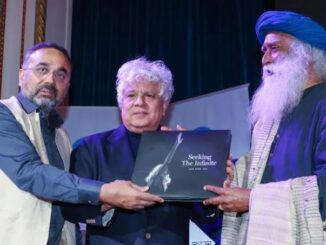
    “Mega events such as the Mahakumbh… bring upon us the realization that humankind has one unifying divine core,” writes Yakub Mathew in his recently released coffee table book, ‘Seeking the Infinite’.

    In our times, wherein one feels pressured to cast her/his lot with Left or Right—and other fractured polarities—and be damned either way, a bold book arrived shining and fearless at the IAAC ((Indo-American Arts Council)) Literary Fest 2025 last November to announce the possibilities of reconciliation—and harmony. A mighty event rooted in a myth of nectar, and a mighty book exploring the infinite, no less—Seeking the Infinite redefines the Mahakumbh as one of humanity’s heritages, not solely Indian or Hindu. The book draws our attention to water as a fundamental metaphor of purification, unity, and surrender. In its pages the Mahakumbh is recognized as a clarion call from India of the truth of one ultimate religion—humanity. As a reader you can position yourself on the shore of this book, and marvel at the timeless ripples of faith ignited by hope for a healed world.

     Immortalizing the Mahakumbh in a book

    ‘Dedicated to the journey within’, Yakub Mathew’s book aims to capture the gravitas of the Mahakumbh—a once in 144 years riverine confluence termed Triveni Sangam (reflected in the skies by a rare astronomical configuration of Jupiter, Sun and Moon/the orbital revolution of Jupiter around the sun) in Prayagraj that welcomed an estimated 640 million devotees in 2025. The three rivers whose waters become a single stream are read symbolically in various fashions but mostly as an emblem of unity.

    Yakub Mathew with his book.

    That one of these rivers is mythical (Saraswati) does not hamper faith. And that a gathering of such staggering numbers rolled off peacefully, across nearly two months, is a miracle. A coffee table book with stunning photographs laid across 246 pages and lit by luminous quotes and narratives, Seeking the Infinite has immortalized the Mahakumbh as never before.

    The very dedication states the resolution and celebration of paradoxes—the outward pilgrimage is veritably the turning within to touch an ineffable shore we carry in our souls. The book in its scope, aim and production is a Mahakumbh of an undertaking unafraid to boldly go toward impeccable standards of production and embark on an archaeology of semantics of the event. Turning the pages of this book feels like mimicking the journey, by entering the preliminary waters of the first chapter of ‘Blessings’ by a mystic, Hindu yogis and a Cardinal (Sadhguru, Swami Avdeshanand Giri Maharaj, Maharaj Radhanath Swami and His Eminence Cardinal Oswald Gracias), onward to deeper waters of musings and explorations. Finally, the reader emerges refreshed by India’s eternal reverberating spiritual current, and  is reminded of a tenacious civilization that has neither been afraid to ask the deepest questions, nor hesitated to attempt to answer them. Answers that have buffeted along seemingly contradictory banks of form and formless, faith and agnosticism, ritual and dhyana—finally averring the human soul as the ultimate anthem of mystery. The overlapping waters of three rivers continue to transfer to the pages of this book asking for awakening from narrow and bigoted definitions of religion.

    Yakub Mathew states his vision early on casting the Mahakumbh as an inter-national heritage not constrained by geographical borders. Though he describes himself as an accidental author, Mathew is not an accidental seeker. The journey undertaken by a Syrian Christian New York-based banker with his beloved wife, and a bevy of 18 friends to celebrate his 60th birthday and life after a dire illness has spawned what will be an everlasting tribute to the Mahakumbh. That he sought such an experience to define a rite of passage in human life is an indicator of the predilections of his soul.

    Yakub has straddled temporal and spiritual worlds

    Raised by a mother widowed young in Delhi, his childhood is reminiscent with interactions and mentorship by Mother Teresa and His Holiness Bishop Paulos Gregorios. Perhaps the first seeds of faith were laid at this time. Also, raised by uncles (P.C. Alexander and P.M. Thomas) who were public servants brought Yakub into the ken of the political and powerful—thus the two worlds of temporal and spiritual spanned the orb of his growing years. Yakub Mathew was never to forget that a delicate balance of human and cosmic forces shapes a life. Schooled in St. Xavier’s and St Stephen’s College, a typical brand of Indian Christianity contoured by an Indian world view shaped his humanist values, and global perspective. After some world travels, he finally went on to navigate his worldly role as a banker in New York City, abiding also by his inner yearnings. A privileged life has not tainted his wonder of existence or barred his unceasing engagement with subtler mysteries.

    Sadhu blowing a conch: a picture from the book. (Photos / courtesy Yakub Mathew)

    The Kumbh till this visit was seared in his memory only as a theatrical event of human drama, but in 2025 it alchemized spiritually into an experiential landmark expressed as, “I was just an insignificant speck of dust on the soap bubble of universe.” The riotous burgeoning of sounds and sights around him during the two days were not cacophony but the very pulsations of his own soul; as he dipped into the waters as one of the multitudes, he felt blessed for the opportunity to offer prayers ‘for peace in this turbulent world.’ The mammoth spectacle of humanity and human endeavor brought forth an utterance, “Shakti in Bhakti!” from him, and the Mahakumbh translated into a riveting passage of transformation too deep for words—reaffirming the knowledge that the microcosm and the macrocosm vibrate together: My soul too sang along with the music of the spheres.

    A delightful potpourri of profound impressions rooted in personal experience, literary penmanship, academic scholarship, and spiritual insight suffuse the book. The musings uncover multi dimensions of the Mahakumbh from mythic to astronomic by luminaries in various fields such as spirituality, fashion, religion, administration, medicine, journalism, business, politics, theater, academia, sports, film, art, and music.

    The scintillating writerly roster

    The scintillating writerly roster of 55 names includes Pujya Swami Chidanand Saraswati, Ayaan Ali Bangash, Kabir Bedi, Harish Parvatheni, Satya Hinduja, Dr. Shashi Tharoor, George Mathew, Lord Meghnad Desai, Rev. Victor Lobo, Rev. Father Thomas V. Kunnukal, Dr. Navin Mehta, Farokh Engineer, Dr. Jagdish Bhagwati, Muzaffar Ali, Didi Krishna Kumari, Rakesh Kaul, Ashi Sonam Choden Dorji, Sadhvi Bhagwati Saraswati, Haji Syed Salman Chisty, Swami Swaroopananda, Anupam Kher, Swami Sarvapriyananda, Dr. Subramanian Swamy, Mokshapriya, Suhel Seth, Yogmata Keiko Aikawa, Radhe Jaggi, Barkha Dutt, and Ustad Hidayat Khan.

    Even technology played its part in the 2,750 AI driven CCTV cameras monitoring the festivities as we are reminded by Amitabh Kant. Dr. Dinesh Singh creatively interprets the legendary River Saraswati as the flow of humanity itself. Dr. Achintya Moulick brilliantly perceives his surgical work to be his own Mahakumbh—he understands it as another kind of confluence of science and faith where he has witnessed miracles; the ‘hospital a temple, every heartbeat a mantra’. Such creative and profound writerly narratives mark the book as a treasure house of fresh insights.

    Message of unity in diversity

    Usha Akella- reviewer of the book (Photo : Courtesy Usha Akella)

    But the book must not mistakenly be read as a page turner of the famous, high or mighty but rather viewed as the melding of voices to form one voice of homage to capture the mightiest sacred geo-astronomical occurrence in India—which in turn ignites a reexamination of India’s role in the world, and her eternal/everlasting (Sanatan) message of unity in diversity.

    Even though the tumult has quietened down, millions have returned home and the waters lap on in all those who dipped into the sangam. The pluralistic waters of the Mahakumbh are representative of the eternal seeking for the divine of various religious voices fired by the single current of—yearning for the transcendental. Water has no boundary, it surges and flows, turns corners, and erodes hardened hearts. The Mahakumbh demands all masks and attire are surrendered to her waters, to find a single skin underneath — humanity. It is a purification rite that restores the truth underlying all human narratives.

    Symbolically we can still dip in the pages of this book to relive the thrill of the event. For those such as myself, who could not attend the event early last year, reading the book is a reenactment of the ritual to experience its excitement and energy. The book has done a great service immortalizing the Mahakumbh, making it tangible for posterity. Finally, we grasp that Prayagraj, a holy site of pilgrimage like Mecca, Jerusalem or Kashi is the human heart where we discover the reconciliation of all contradictions and paradoxes. Where Love finally is the beginning, remainder, and the destination in all our inner and outer journeys. As is expressed so beautifully by His Eminence Cardinal Oswald Gracias: “This book will help us listen more deeply—to the longings of our own heart, to the silent music of creation, and to the voice of the One who speaks through both.”

    Author bio

    Usha Akella, Austin-based poet, has authored 11 books that include poetry and spiritual musical dramas. She has been invited to numerous international poetry festivals. She is the founder of the decade-old Matwaala (www.matwaala.com) that amplifies South Asian diasporic poets.

    Her editorial works include a ‘A House of Words’, a festschrift dedicated to Keki Daruwalla published by the Sahitya Akademi of India. Her travel articles have appeared in Indian Express, Swagat, etc., and she has also won acclaim for her astute interviews of various people in The Hindu, Parabola and on her own website of curated interviews www.the-pov.com.

  • Inderjit Singh Bindra, a multifaceted bureaucrat who built Punjab, cricket and sports

    Inderjit Singh Bindra, IAS Retd. and a former BCCI president has passed away aged 84 in New Delhi. Prabhjot Singh, a former Sports editor with The Tribune who has had a long association with Mr. Bindra pays him his tribute. 

    Inderjit Singh Bindra, the visionary administrator who transformed Indian Cricket and Punjab’s sports landscape passed away at 84 in New Delhi.

    He was not only a doyen of Indian cricket, an administrator par excellence who commanded respect across multiple institutional domains, but also a gentleman, a keen golfer, a wonderful human being, and a trustworthy friend whose prime love was sports.

    Inderjit Bindra and cricket were like two sides of a coin. No history of this modern-day sport would ever be considered complete without a substantial recognition of the immense contribution of this rarest of rare bureaucrats who served the Punjab Government after joining his parent cadre in 1966. (He had a brief stint as an IPS officer before getting into the elite service.)

    He was a bureaucrat with a difference. Known for his quick decisions, he belonged to the rare band of civil servants who left little or no pendency files at the end of the day. In his death, Punjab has lost one of its illustrious sons, an administrator par excellence and a custodian of institutional integrity.

    I had a very long association with him. When the Punjab Cricket Association Stadium (PCA stadium) was coming up, I used to accompany him on his evening “inspection-cum-evaluation” walk around the complex. He would follow the progress meticulously and hold regular meetings with both the architect and the construction company. No Deadlines were compromised.

    He always took his criticism well. As captain of the Chandigarh Golf Club, he ordered the chopping off of the green tops of most of the trees. I came out with a front-page story in The Tribune, “Killing trees for their sport.” The next morning, when he called me, I told him that my respect notwithstanding, his action of wreaking havoc with the ecology could not be ignored in the public interest. He, instead of getting agitated, agreed with me to admit that it was a “wrong decision” and “chopping off green tops could have been avoided.” He kept his promise throughout, even while the PCA Stadium was being constructed. He was a regular at the golf club, where his immediate playmates used to be flying Sikh Milkha Singh and bureaucrat RS Mann. He was one of the first few to use a cart on the course.

    Better known as a cricket administrator, he not only transformed a mediocre Punjab team into prestigious national Ranji Trophy champions but also brought the sleepy township of Sahibzada Ajit Singh Nagar—Mohali—on the world map with one of the best cricket stadiums, the PCA Stadium. In fact, if Punjab could renovate, upgrade, and modernize its sports infrastructure after the reorganization of the state in 1966, it was all because of his astute planning and farsightedness.

    Not many would know about his love for sports other than cricket.  Convinced that the public sector undertakings have a social role to play, he conceived, planned, and raised a hockey team in the public sector. Led by then Olympian—now an MLA from Jalandhar Cantonment—Pargat Singh and coached by international Sukhvir Singh Grewal, the team under the banner of Punjab Alkalis and Chemicals brought laurels to the state by winning several prestigious tournaments. His experiment of using public sector undertakings for checking sports drain from the state did not survive for long. The Alkalis team was disbanded after he was shifted from the Industries Department. This team had given Punjab and the country several outstanding players, most of whom later got absorbed into the Punjab police.

    Inderjit Singh Bindra belonged to a vanishing category: the senior administrator who commanded respect across multiple institutional domains and whose work transcended the narrow bounds of his formal portfolio. Few civil servants transition successfully into sports administration at such rarefied levels; fewer still leave an indelible institutional legacy in both spheres.

    KBS Sidhu, also a retired civil servant, while paying tribute to his senior colleague, wrote that Punjab has lost not merely a cricket administrator but a custodian of institutional integrity. India has lost a figure whose strategic vision helped position the nation as a cricketing superpower. And the broader world of cricket governance has lost one of its architects—a man whose tenure in positions of authority coincided with cricket’s globalization and the assertion of non-Anglo spheres of influence over the sport’s direction.

    “Bindra’s death marks the conclusion of an extraordinary institutional career spanning more than four decades, during which he moved seamlessly between the senior echelons of the civil service and cricket administration, bringing to both spheres a rare combination of decisive leadership, legal acumen, and entrepreneurial vision,” wrote KBS Sidhu.

    “My memories of Mr Bindra are still vivid and fresh in my mind. It was he who got the infamous Chaura Bazar of Ludhiana cleared of its encroachments. He refused to bow under any pressure,” recalls Dronacharya hockey coach Baldev Singh of Ludhiana, who incidentally figures in the list of recipients of Padam Shri this year.

    During his career as a civil servant, Inderjit Bindra held several prestigious positions, including as Deputy Commissioner of Ludhiana from 1972 to 1974 and Patiala from 1975 to 1975, during which he established a reputation for swift, legally sound decision-making and administrative efficacy.

    When the Rajiv-Longowal accord was reached in 1985, wherein a provision was made to transfer the administrative control of Chandigarh to Punjab, Inderjit Bindra’s reputation as administrator par excellence made him the automatic choice for the position of Administrator of Chandigarh. Not only the merger of Chandigarh, but the whole accord was subsequently cold-shouldered.

    He was a bureaucrat who remained glued to the happenings in the state. Between 1982 and 1987, when Punjab was going through its critically turbulent times, he was positioned as Special Secretary to the President of India, Giani Zail Singh.

    He probably had the first-hand account of events leading to both Operation Blue Star (June 1984) and the subsequent assassination of the then Prime Minister Indira Gandhi (October 1984), as he played a delicate balancing act between the president and the new prime minister, Rajiv Gandhi, while the country witnessed unprecedented violence, the worst after the 1947 partition. The violence was heaped on a minority to which he and the president belonged. At this crucial juncture, Inderjit Bindra played the role expected of a mature bureaucrat to maintain the institutional equilibrium so that constitutional propriety and political stability were not impacted by the rising tensions and sectarian violence.

    Coming to his passion, cricket, Inderjit Bindra set for himself the arduous task of reviving and rejuvenating the game in the state. He not only brought together some of the promising youngsters after some stalwarts like Bishan Singh Bedi, the Amarnath brothers, and Madan Lal had packed their bags and moved to Delhi and other cricketing centers, but he also tried to rectify the poor institutional management and the absence of competitive infrastructure. He initially built a team with MP Pandov and GS Walia as his working hands.

    In 1978, he formally took over as president of the Punjab Cricket Association. Punjab started quickly ascending on the national scene and climaxed in 1992-93 when the state won for the first time the prestigious Ranji Trophy title. A state that was still then known for its supremacy in hockey, football, athletics, and other sports had arrived on the cricket scene as well.

    Besides upgrading the existing infrastructure, including Gandhi Park in Amritsar and Burlton Park in Jalandhar, the PCA sent money for modernizing its infrastructure; it was his vision that saw the Punjab Cricket Association coming up with a world-class facility at Mohali. As a tribute to his yeoman service to the game, the PCA stadium was named after him after he formally retired from his active association with the administration of the game in that state in 2014.

    Inderjit Bindra is credited with marketing sport in a big way. It was he who roped in big companies for the live telecast of the game at various levels. Beyond tournament hosting, Bindra played a pivotal role in television rights monetization. He recognized, with prescient clarity, that satellite television represented an unprecedented revenue opportunity for Indian cricket. His tenure as president (1993-96) marked a period of administrative and financial rejuvenation of the BCCI that made it the cash-rich sports body of the country.  It was he who played a stellar role in pulling the World Cup Cricket out of England to bring it to India and South Asia through the 1987 Reliance Cup. In 1996, it was India, Pakistan, and Sri Lanka that played joint host to the World Cup, all because of his coordination and efforts.

    He never worked for honors and awards. Commitment and perfection were his passions, as he was a man who never compromised and always stood by people he liked and admired.

    (Prabhjot Singh is a Toronto-based senior journalist. For a better part of his journalistic career, he worked at The Tribune, Chandigarh, from where he retired as Sports Editor of the publication)

  • Embassy of India and Global Logitech Host Successful AI Pre-Event in Brașov

    Embassy of India and Global Logitech Host Successful AI Pre-Event in Brașov

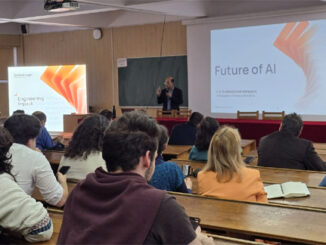
    BUCHAREST (TIP): The Embassy of India in Bucharest, in collaboration with Global Logitech, an innovative Indian company based in Brașov, organized a dynamic pre-event on 14 January 2026 at the prestigious University of Transylvania in Brașov, Romania. This forum served as an inspiring prelude to the upcoming AI Summit in India, scheduled for February 2026.

    The event gathered leading innovators, policymakers, industry experts, and academicians from Romania and beyond to delve into cutting-edge advancements in artificial intelligence. Discussions centered on ethical AI deployment, robust digital infrastructure, and sustainable innovation, highlighting AI’s transformative role in driving economic growth and societal progress. Key highlights included keynote addresses, insightful panel discussions, and hands-on interactive workshops that sparked collaborative ideas.

    Costin Badici of GlobalLogic addressed participants during the AI Impact Summit pre-event.

    A standout moment featured Mr. Costin Badici, who delivered a compelling presentation on “AI for All,” illuminating the future applications of AI for humankind’s benefit, from enhancing everyday accessibility to solving global challenges.

    Dr. Manoj Mohapatra, Ambassador of India to Romania, inaugurated the proceedings. He underscored India’s pioneering role in AI through flagship initiatives like the India AI Mission, which aims to democratize technology for inclusive development. “This partnership with Global Logitech exemplifies the deepening India-Romania ties in emerging technologies,” the Ambassador remarked. “As we prepare for the AI Summit in India, gatherings like this lay the groundwork for groundbreaking joint ventures that will forge a brighter, tech-driven future for both nations.”

    The participants at the pre-event of AI Impact Summit during the speech of the Ambassador.

    Global Logitech representatives reaffirmed their dedication to bridging Indo-Romanian tech ecosystems. They announced promising opportunities for research and development (R&D) partnerships, talent exchange programs, and co-innovation hubs. Over 100 participants, including startups, university researchers, and government officials, engaged in lively exchanges on critical topics such as AI for smart cities, healthcare diagnostics, and cybersecurity resilience.

    The event culminated in a captivating showcase of Indian innovation, with live demonstrations of AI-enabled solutions developed by Global Logitech. These displays reinforced the strong technological affinities between India and Romania, blending cutting-edge expertise with shared visions for progress.

    The Embassy of India remains committed to nurturing such collaborative platforms that advance bilateral relations. It extends a warm invitation to stakeholders to join the forthcoming AI Summit in India for even deeper engagements and opportunities.
    (Based on a Press Release issued by the Embassy of India in Bucharest)

  • Ambassador Dr. Manoj Mohapatra Strengthens India-Moldova Ties During Official Visit to Chișinău

    Ambassador meets with Moldovan Education Minister Dan Perciun,

    BUCHAREST (TIP): Dr. Manoj Mohapatra, Ambassador of India to Romania and concurrently accredited to the Republic of Moldova, concluded a highly productive official visit to Chișinău from January 11 to 13, 2026. Amid a dynamic series of high-level meetings, the Ambassador fortified bilateral relations across agriculture, finance, infrastructure, environment, culture, energy, education, economy, and labor sectors. These engagements aligned seamlessly with shared Global South priorities, signaling a new chapter in India-Moldova cooperation as both nations navigate geopolitical shifts and economic opportunities in Eastern Europe.

    Ambassador meets with Moldovan Economy Minister Eugeniu Osmochescu.

    The visit commenced on a high note with a resounding cultural event at the Medical University of Chișinău. This gathering illuminated India’s rich, multifaceted heritage, from classical music to contemporary expressions, while solidifying cultural diplomacy. Key programs included structured student engagements, all designed to enhance understanding of their concerns, amplify soft power, and weave enduring people-to-people bonds.

    Ambassador meets with Moldovan Labor Minister Natalia Plugaru.

    Turning to economic and financial pillars, discussions with Secretary General Mr. Sergiu Gherciu of the Ministry of Agriculture and Food Industry, and State Secretary Mr. Ion Gumene of the Ministry of Finance, yielded a comprehensive roadmap. Highlights encompassed technology transfers for sustainable farming practices, Moldovan exports of premium plums and wines to the vast Indian market, and joint ventures tackling food security challenges.

    Ambassador meets with Moldovan Deputy PM Vladimir Bolea.

    Financial accords further enabled co-financed development projects, digital payment interoperability, and robust investment protections, positioning Moldova as a strategic gateway for India’s expanding footprint in Central European markets and fostering economic resilience.

    Ambassador meets with Moldovan Culture Minister Cristian Jardan.

    Infrastructure, energy, and environmental dialogues proved equally transformative. With Deputy Prime Minister and Minister for Infrastructure Mr. Vladimir Bolea, State Secretary for Environment Ms. Aliona Rusnac, and Minister of Energy Mr. Dorin Junghietu, commitments emerged for discussion and studies on road-rail links, smart city initiatives, and Moldova’s integration into India’s International Solar Alliance. These pacts promised renewable technology infusions, grid modernization, and Indian firm participation in Moldovan renewable projects, diversifying energy sources, combating climate vulnerabilities, and advancing shared green stewardship.

    Ambassador meets with Moldovan Energy Minister Dorin Junghietu.

    Cultural, educational, and human capital exchanges rounded out the agenda. Meetings with Minister of Culture Mr. Cristian Jardan, Minister of Education and Research Mr. Dan Perciun, and State Secretary for Labour Ms. Felicia Bechtoldt expanded scholarships and film co-productions on shared histories; frameworks for mutual degree recognition, AI-driven research hubs, and teacher exchanges; plus mobility partnership agreements, skilling academies inspired by India’s Industrial Training Institutes (ITIs), and streamlined remittances, equipping Moldovan youth for global success and nurturing future bilateral leaders.

    Ambassador meets with Moldovan Labor State Secretaries

    The economic crescendo came in talks with Minister of Economy Mr. Eugeniu Osmochescu, who endorsed ambitious trade targets through e-commerce platforms, SME linkages, tariff eliminations, and dedicated forums in IT and pharmaceuticals. The visit culminated in dynamic interactions with potential investors and business houses, where reflections on India’s robust growth story underpinned invitations for Moldovan ministerial visits and joint participation in premier Indian trade fairs.

    Ambassador meets with Moldovan Energy Minister Dorin Junghietu and the State Secretaries.

    This visit exemplifies the maturing India-Moldova strategic partnership, translating diplomatic goodwill into actionable, high-impact collaborations that promise sustained prosperity, security, and cultural enrichment for generations ahead.

    (Based on a Press Release issued by the Embassy of India in Bucharest)

  • India and Romania to host Regional Hindi Conference at Romanian American University

    India and Romania to host Regional Hindi Conference at Romanian American University

    BUCHAREST (TIP): The Embassy of India in Bucharest, in collaboration with the Romanian American University, will organize a Regional Hindi Conference on 28–29 January 2026 at the Romanian American University (RAU), Bucharest. The two-day academic and cultural event will bring together eminent Hindi scholars, academics, and experts from across Asia and Europe to deliberate on the growing global relevance of the Hindi language and its role in strengthening international cultural and academic cooperation.

    The Conference aims to provide a high-level platform for intellectual exchange and scholarly dialogue, fostering new ideas and future pathways for cooperation in the promotion and study of Hindi at regional and global levels. A delegation led by Smt. Anju Ranja, Joint Secretary, RRB-I&T, Ministry of External Affairs, Government of India, will also participate in the event, reflecting India’s strong commitment to the promotion of Hindi and cultural diplomacy in Europe and beyond.

    The Conference will feature a series of thematic panel discussions, focusing on key contemporary and strategic dimensions of Hindi and its global outreach. The major discussion topics include:

    “Hindi: Global Identity and Cultural Unity”, highlighting Hindi as a unifying cultural and linguistic force across regions;
    “Hindi Bhasha Vigyan ki Vastavik Samasyaen” (Contemporary Linguistic Challenges of Hindi), examining structural, pedagogical, and usage-related issues of the language;
    “Hindi Bhasha Sikhane ke Tarike” (Methods of Teaching Hindi), focusing on innovative and effective approaches to Hindi language instruction; and
    “Hindi, AI, and the Indian Workforce in Romania: New Frontiers of Cooperation”, exploring the intersection of Hindi, emerging technologies, and India–Romania professional and educational collaboration .

    The Opening Ceremony of the Conference will be held on 28 January 2026 at 10:00 AM in the Senate Room, while the Closing Ceremony will take place on 29 January 2026 at 7:00 PM in the Aula Magna of the Romanian American University. The Closing Ceremony will also feature cultural performances by artists from Romania and Moldova, showcasing the shared appreciation of Indian culture in the region.

    The Regional Hindi Conference is expected to serve as an important milestone in strengthening India–Romania academic and cultural cooperation, particularly in the fields of language, literature, higher education, and people-to-people exchanges.

    (Based on a Press Release issued by Embassy of India in Bucharest)

  • Dr. Avinash Gupta of Lakewood, NJ, Achieves Board Certification in Lifestyle Medicine

    Dr. Avinash Gupta of Lakewood, NJ, Achieves Board Certification in Lifestyle Medicine

    LAKEWOOD, NJ (TIP): Dr. Avinash C. Gupta, MD, FACC, a senior cardiologist practicing in Lakewood, New Jersey, has been board-certified by the American Board of Lifestyle Medicine (ABLM), marking a significant milestone in his commitment to preventive and holistic patient care. Lifestyle Medicine is an evidence-based medical specialty that focuses on the treatment, reversal, and prevention of chronic diseases—including cardiovascular disease, type 2 diabetes, and obesity—by addressing their root causes. It emphasizes six interconnected pillars: optimal nutrition, regular physical activity, restorative sleep, stress management, social connectedness, and avoidance of risky substances. Research shows that lifestyle medicine interventions can positively impact up to 80% of chronic diseases, offering patients sustainable, long-term health benefits.

    Dr. Gupta is already board-certified in Cardiovascular Diseases, Nuclear Cardiology, and Lipidology, and has practiced cardiology in Lakewood for over 30 years. He currently serves as Chief of Cardiology at Monmouth Medical Center–Southern Campus (MMC-SC) and is a past President of the Medical Staff.

    Deeply committed to community service, Dr. Gupta serves as Chairman of the Shree Siddhivinayak Temple in Toms River, Regional Director of the American Association of Physicians of Indian Origin (AAPI), and past President of the Federation of Indian Associations (FIA), BJANA, and MOCAAPI. He is also the Director of PRAN-BJANA clinics, which have conducted over 100 charitable health clinics in India, treating thousands of underserved patients. In recognition of his public health leadership, he has been appointed to the Ocean County Board of Health.

    Dr. Gupta expressed enthusiasm about his new certification, stating that he looks forward to integrating the principles of Lifestyle Medicine into his own life, his family, his community, and his patients’ care, reinforcing his lifelong mission of promoting health, prevention, and wellness.

  • FIA – New England organized Free Healthcare Camp to honor the memory of Dr. Martin Luther King, Jr. during the MLK Day weekend

    The camp organized at the Academy of Creative Arts in Burlington, Massachusetts, drew people from all walks of life

    BURLINGTON (TIP): The Foundation of Indian Americans (FIA) – New England along with all its partner organizations held a free community health camp at the Center of Creative Arts in Burlington, Massachusetts, to commemorate MLK Day, by honoring the memory of Dr. Martin Luther King, Jr. through community service.

    Over 300 members of the community were served with medical, dental and vision checks at no cost, thanks to several healthcare professionals of Indian origin, including: Dr. Anahita Dua, Director of the Vascular Laboratory and Associate Leader of Advanced Vascular Surgery at Massachusetts General Hospital; Mr. Ravindra Zende of Jatan Foundation for Inclusion (Social worker with focus on vision care); Dr Shivkumar, Senior Psychiatrist and Dementia Specialist; Dr Sapna Agarwal, Primary Care Physician;Dr. Nirav Patel, USCIS-Designated Civil Surgeon; Dr. Bijal Patel, Cardiologist; Dr. Sarju Ganatra, Cardio-Onco-Metabolic Medicine Physician; Dr. Ram Yadav, Dentist; Dr Shezan Fouzdar; Dr. Radha Bansal; Dr. Sweschha Bhatt; Mrs. Shalu Yadav, Physical Therapist; Mrs. Punithavathy, Clinical Dietitian; and Mrs. Pooja Arrora, Attorney specializing in Estate Planning, Wills & Trusts. The event was emceed by Mrs. Jyoti Singh ( FIA-Director) with brief description of Dr. Martin Luther king Jr. and his legacy for the pursuit of equality and social harmony. Mrs. Sahana Purohit, a social worker, was the chief guest of the event.

    Mr. Sanjay Gokhale, Vice President of FIA – New England, welcomed all the Physicians and other volunteer healthcare workers, and explained the motivation and agenda for the medical camp.

    Mr. Abhishek Singh, President of FIA – New England said, “we are inspired by Dr. Martin Luther King, Junior’s dream of equality and social harmony, and wanted to honor his memory by organizing free community healthcare camp with free vision checks and dispensing of reading glasses at no cost”.

    FIA – New England was blessed by the presence and support of many prominent community leaders at this healthcare camp, including Mr. Nilesh and Mrs. Deepa Agarwal and Mr. Dipak Garg of the India Association of Greater Boston; Mr. Devendra Patil, Owner of The Treasury/Rassa/Bombay Launch Restaurant Chain; Mr. Rakesh and Mrs. Aditi Soni, Prominent entrepreneur and Saheli Executive; Mr. Hetal and Mrs. Java Joshi, Founders of the Academy of Creative Art; Mrs. Manisha Jain, Executive Director of Ekal Vidyalaya; Mr. Mohan Nannapannei, Founder& President of Team Aid; Mr. Vikas Deshpande of HSS; Dr. Monie and Mr. Arun Malhotra; Dr. Ranjani and Mr. Anil Saigal, Founders of Lokvani; Mr. Rakesh and Mrs. Deepti Kavsari and Mr. Anand Sharma, FIA-NE Executives; and Mrs. Sonal Limbachia.

    The healthcare camp was successful due to the tireless effort of our young volunteers including Mr. Mitesh Soni, Mr. Mahesh Chilka, Mr. Rasik Mehta, Ms. Tisha Singh, Ms. Saisa Sharma, Ms. Pragna Kavsari, Mr. Abhuday Singh and Mr. Ranuday Singh, Mr. Amol Penshanwar and Mrs. Shova Sharma thanked all the partners, including Jatan foundation, RestoringVision, Academy of Creative Arts, The Treasury, Lynn & Woburn Urgent Care & Happy Life Adult Day Care, as well as all the participating healthcare professionals, supporters and volunteers for making this healthcare camp a grand success.

  • January 23 New York & Dallas E – Edition

    [vc_row][vc_column][vc_custom_heading text=”E-Edition” font_container=”tag:h2|text_align:center” google_fonts=”font_family:Istok%20Web%3Aregular%2Citalic%2C700%2C700italic|font_style:700%20bold%20regular%3A700%3Anormal” css=”” link=”url:https%3A%2F%2Fwww.theindianpanorama.news%2Fwp-content%2Fuploads%2F2026%2F01%2FTIP-January-23-E-Edition.pdf”][vc_single_image image=”288021″ img_size=”full” alignment=”center” onclick=”custom_link” css=”” link=”https://www.theindianpanorama.news/wp-content/uploads/2026/01/TIP-January-23-E-Edition.pdf”][/vc_column][/vc_row][vc_row][vc_column width=”2/3″][vc_custom_heading text=”Lead Stories This Week” google_fonts=”font_family:Istok%20Web%3Aregular%2Citalic%2C700%2C700italic|font_style:700%20bold%20regular%3A700%3Anormal” css=”” link=”url:https%3A%2F%2Fwww.theindianpanorama.news%2F”][vc_wp_posts number=”5″ show_date=”1″][/vc_column][vc_column width=”1/3″][vc_single_image image=”82828″ img_size=”medium” alignment=”center” onclick=”custom_link” css=”” link=” https://www.theindianpanorama.news/advertising-media-kit-portal-indian-panorama/”][vc_single_image image=”82829″ img_size=”medium” alignment=”center” onclick=”custom_link” css=”” link=” https://www.theindianpanorama.news/advertising-media-kit-portal-indian-panorama/”][/vc_column][/vc_row]

  • Australian Open – Alcaraz beats Moutet in straight sets to cruise into round of 16

    An ominous Carlos Alcaraz wasted little energy in his 100th Grand Slam match to sweep into the last 16 of the Australian Open on January 23 with a straight-sets mauling of French showman Corentin Moutet.
    The 22-year-old six-time major winner was at a different level on Rod Laver Arena to book his passage with a score of 6-2, 6-4, 6-1 in two hours and five minutes.
    Victory thrust him into a clash for a place in the quarterfinals with American 19th seed Tommy Paul, who progressed when Spanish opponent Alejandro Davidovich Fokina retired hurt.
    Alcaraz has never gone past the last eight in his four previous trips to Melbourne Park, with the Australian Open the only Grand Slam missing from his burgeoning collection.
    He will become the youngest man to win all four majors should he push on and make his breakthrough.
    “It wasn’t easy. To be honest, when you play someone like Corentin you don’t know what’s going to be next,” said the Spaniard.
    “So that’s really difficult, you know, to approach the match. But I had fun on the court. I think we both pulled off great shots, great points.”
    The win against Moutet came in his 100th Slam match with Alcaraz having a remarkable 87-13 win-loss record — matching the legendary Bjorn Borg at the same stage of his career.

  • Kishan’s statement knock, Surya’s welcome fifty give India 2-0 lead

    Kishan’s statement knock, Surya’s welcome fifty give India 2-0 lead

    Raipur (TIP)- Ishan Kishan justified his national recall with a sensational 32-ball-76 while captain Suryakumar Yadav scored his first fifty after 23 innings as India decimated New Zealand by seven wickets for a 2-0 lead in the five-match T20 series here on Friday, January 23.
    Ahead of the all important T20 World Cup, it all seems to be falling in place for India with Suryakumar (82 not out off 37) overcoming a prolonged lean patch and Kishan emerging as a destructive top-order enforcer. India were expected to chase 209 on a belter of a pitch but not with such ease after losing Abhishek Sharma and Sanju Samson by the second over of the chase.
    Suryakumar and Shivam Dube (36 not out off 18) closed out the game in a canter as India gunned down the target in 15.2 overs. Kishan, back in the side after a gap of more than two years, went berserk from ball one and ended with 11 fours and four sizzling sixes.
    Kishan’s knock actually would keep Sanju Samson on tenterhooks after back-to-back failures as Tilak Varma, when fit would take that number three position. In such a situation, Kishan stacking up necessary numbers could spell doom for the Kerala man.
    His special knock included a flurry of pick up shots, pulls and even a reverse sweep. Such was the timing and impact of the innings that Kishan got a hug from his skipper after mistiming a slog sweep off Ish Sodhi’s bowling.
    Suryakumar maintained the momentum generated by Kishan in the able company of Dube, who too collected his fair share of sixes.
    At the start of the chase, Samson could not carry on for long despite being dropped at deep square leg on the second ball of the innings. The pressure piled up on India when trump card Abhishek’s mistimed flick off Jacob Duffy to be holed out at deep square leg. The counter attack from Kishan tilted the game in favour of India.
    The captaincy of Mitchell Santner left a lot to be desired as his decision to give Zak Foulkes the third over after two tight overs by Henry and Duffy, left a lot to be desired.
    Earlier, Kuldeep Yadav regained form with two timely strikes in the middle overs as India limited New Zealand to 208 for 6.
    Rachin Ravindra (44 off 26) and skipper Mitchell Santner (47 not out off 27) took the attack to India in different phases of the game to ensure New Zealand got past 200-run mark.
    Expecting heavy dew, skipper Suryakumar Yadav predictably opted to bowl with Harshit Rana and Kuldeep Yadav playing instead of injured Axar Patel and rested Jasprit Bumrah.
    Devon Conway (19 off 9) and Tim Seifert (24 off 13), fresh off BBL, got the Black Caps off to a flying start before falling in quick succession. Conway, who has been caught in the slip cordon multiple times on the white ball tour thus far, went on the offensive in the first over against Arshdeep Singh despite being beaten by an outswinger on the very first ball of the match.
    Conway dispatched the left-arm seamer for three crisp fours and a sliced six over backward point for an 18-run over.
    Seifert smashed four boundaries off Arshdeep’s following over that also went for 18 runs. Harshit Rana was introduced in the fourth over and he struck off his second ball, dismissing Conway for the fourth time in as many innings including his dominance over the left-handers in the ODI series.

  • Bangladesh to face ICC action for skipping T20 World Cup

    Bangladesh to face ICC action for skipping T20 World Cup

    Mumbai (TIP)– Amid a failed last-ditch attempt to overturn the International Cricket Council’s (ICC) decision to stage Bangladesh’s group games of the 2026 T20 World Cup in India, a fresh media report has claimed that ICC chairman Jay Shah is contemplating strict consequences if Bangladesh pull out of the tournament.
    According to news agency ANI, Shah is currently in Dubai, where a final call on the matter is expected to be taken.
    Tensions escalated after the Board of Control for Cricket in India (BCCI) directed IPL franchise Kolkata Knight Riders to remove Bangladesh fast bowler Mustafizur Rahman from their squad amid rising regional concerns. The decision did not go down well in Bangladesh, where the government responded by banning the broadcast of the IPL. Soon after, the Bangladesh Cricket Board (BCB) wrote to the ICC, requesting that their T20 World Cup group matches be shifted out of India on security grounds. As per the tournament schedule, Bangladesh are slated to play their group games in Kolkata and Mumbai.
    The ICC rejected the request following an independent security assessment that classified the threat level as “low to moderate”. The ICC Board of Directors subsequently voted 14-2 in favour of retaining Bangladesh’s matches in India.
    As reported by PTI, the BCB then approached the ICC’s Dispute Resolution Committee (DRC) in an attempt to overturn the decision. However, Clause 1.3 of the DRC’s Terms of Reference states that the committee cannot function as an appellate body against decisions taken by the ICC or its authorised committees.
    As a result, the DRC declined to hear Bangladesh’s plea, ruling that it fell outside its remit under ICC by-laws.
    The report further added that a formal announcement on Bangladesh’s replacement at the World Cup is expected by Saturday.
    “The ICC Board members are extremely unhappy with Aminul Islam Bulbul over holding a press conference before informing the global body. Asif Nazrul is a persona non grata for the ICC, but Bulbul should not have allowed a press conference without first communicating with the ICC,” a source told PTI.
    Scotland in line to replace Bangladesh
    With the Bangladesh Cricket Board (BCB) refusing to change their stand over their team’s participation in the upcoming T20 World Cup, Scotland are in line to take their place. Cricket Scotland have been informally alerted about the developments and a final decision of the International Cricket Council (ICC) is awaited. ICC Chairman Jay Shah was in the Dubai headquarters on Friday, charting out the next course of action.
    Scotland are likely to replace Bangladesh in Group C to be placed with England, Italy, Nepal and the West Indies. Bangladesh were scheduled to play three matches in Kolkata and one in Mumbai.
    On Friday, to have their way in getting Bangladesh’s T20 World Cup matches moved from India to Sri Lanka, the Bangladesh Cricket Board wrote to the ICC seeking the intervention of the governing body’s Dispute Resolution Committee, but the appeal would not pass muster, it is learnt.

  • Varkala: Kerala’s cliffside paradise by the Arabian Sea

    Varkala: Kerala’s cliffside paradise by the Arabian Sea

    Nestled along the sun-kissed coast of Kerala, Varkala is a hidden gem that blends natural splendor, spiritual tranquility, and vibrant culture. Unlike the bustling beaches of Kovalam or Goa, Varkala offers a serene cliffside landscape, stunning sunsets, and a uniquely laid-back charm, making it a must-visit for travelers seeking relaxation, adventure, and spiritual rejuvenation.
    Varkala is a coastal town in the southern part of Kerala known for the unique 15m high ‘Northern Cliff’ adjacent to the Arabian Sea. It is popular for its hippie culture, shacks on the cliff serving great seafood and playing global music and the samadhi of Kerala’s saint Sree Narayana Guru. Varkala is also known for Jardana Swami Temple, also known as Dakshin Kashi.
    Varkala has some of the best pristine beaches, hills, lakes, forts, lighthouses, natural fisheries and springs – all of this together makes this town a little paradise. You will also find a lot of shops with signboards in Hebrew selling Yoga mats, oxidised silver jewellery and harem pants made of cotton. Ayurvedic spas, affordable resorts, hostels, clean beaches make it a must-visit city of Kerala.
    Varkala’s most striking feature is its cliffside coastline, known as the Varkala Cliff, which stretches for about 3 km along the Arabian Sea. These red laterite cliffs rise dramatically above the pristine beaches, providing panoramic views of the ocean, perfect for photography, meditation, or simply watching the waves crash below.
    Water Sports in Varkala
    Varkala is a beautiful coastal town in Thiruvananthapuram district. It lies in the southern part of Kerala. It is the only place in Kerala where the hills come close to the sea. The uniqueness of the place is the merging of cliffs with the Arabian Sea. Varkala Beach is a popular beach where you can enjoy various water sports activities such as para-sailing and paragliding.
    The Geological Survey of India calls it as the Varkala Formation. The Discovery Channel has named Varkala as one of the top ten seasonal beaches.
    Several water sports operators are to be found along the beaches, and travellers can easily do a lot of water activities with good fun. The Kapil Lake, situated close to the beach, is another famous destination to enjoy moments of peace. The Chilakkoor Beach which is close to the Varkala town is a perfect destination to view the sunset. Though the beach is not developed commercially, it is an ideal place for leisurely evening walks.
    Varkala Beach
    Set amid a beautiful setting about 10 km away from the calm and quiet hamlet of Varkala in Kerala, Varkala Beach, also known as Papanasam Beach, is a beautiful stretch of sand renowned for its solitude unlike other commercial beaches of Thiruvananthapuram, Kerala. The backdrop Arabian Sea against the cliffs of Kerala is a unique one since these sedimentary formation peaks are not found anywhere in the otherwise flat coastline of Kerala.
    The beach itself is divided into two parts, the southern area of the beach lying at the end of the road leading from Janardhana Swamy Temple regarded as sacred by Hindus. However, if you are a tourist, the north part of the beach right at the bottom of the cliff is worth going renowned for its natural mineral spring.
    The water of Varkala Beach is regarded to own medicinal and curative properties. A dip in the hoy water is said to cleanse the body of impurities and all sins and thus the name Papanasam Beach meaning ‘Destroyer of Sins’.
    Sunsets at the Varkala Beach are especially pristine and call for a serene walk along the beach. Also if you are a seafood lover, then the place is a paradise for you. The eating joints nearby offer some of India’s best moth watering and affordable food.
    Edava Beach
    Untouched and unspoilt by tourist activities, the Edava beaches are the virgin stretches circling a blue lagoon where sea and backwaters run parallel divided by a more-than-one km of straight road. There is also an estuary that connects the sea with the backwaters here.
    Thiruvambadi Beach
    Lying 1 km off Thiruvamdabi road, this black sand beach adjacent to the North cliff is an ideal picnic spot amidst lush coconut groves to relax and unwind.
    Anjengo Fort
    Anjengo Fort, situated 12 km off Varkala at Anjengo, is believed to have been built in 17th century. Presently the fort is protected by the National Heritage monuments.
    The cemetery in the fort shelters the deceased occupants of the fort. The popular Muthalapuzhi Lake is situated very close to the Fort. Autos or cabs can be taken to reach the fort.
    Sivagiri Mutt
    Located at Varkala in Thiruvananthapuram district of Kerala is the one of the popular ashrams of Shri Narayana Guru, Sivagiri Mutt. This ashram celebrates Guru Deva Jayanti (in August) and the Guru Deva Samadhi (in September) every year.
    Janardhana Swami Temple and Varkala Beach are some nearby attractions which one should never miss during their visit to Sivagiri Mutt. Sree Narayana Guru (1855-1928), a saint, social reformer, philosopher and a leader of Ezhava community, made Varkala his headquarters. Sivagiri mutt, instituted by Sree Narayana Guru, is another major pilgrim centre here. The ‘Sivagiri Pilgrimage’ is usually conducted between 30th December and 1st January every year. Even decades after the Guru breathed his last breathe here in 1928; his Samadhi (resting place) continues to be thronged by thousands of pilgrims. The Sivagiri Mutt is also the headquarters of the Sree Narayana Dharma Paripalana Sangham, a religious organization established by the Guru to propagate his concept of ‘One Caste, One Religion, One God’.
    Ponnumthuruthu
    Ponnumthuruthu, also known as Golden Island is located 20 km from Varkala. It is popular for its 100 year old Shiva Parvathi temple situated amidst thick coconut groves stretched over the sandy beaches.
    Boats from Nedunganda can be taken through a 30 minute backwater ride to Ponnumthuruthu which offers a perfect getaway from the bustle of city life.

  • Ratha Saptami: Celebrating the Sun God, harbinger of light, life, and spiritual awakening

    Ratha Saptami: Celebrating the Sun God, harbinger of light, life, and spiritual awakening

    Ratha Saptami, also widely known as Surya Saptami, is one of the most revered solar festivals in Hindu tradition. Observed on the seventh day (Saptami) of the bright half (Shukla Paksha) of the month of Magha (January-February), it symbolizes the Sun’s northward journey (Uttarayana) and the renewal of energy, prosperity, and spiritual enlightenment. It is celebrated with devotion across India, often referred to as the birthday of the Sun God, who sustains all life and illuminates the cosmos with divine light.
    Mythological Origins and Legends
    Ratha Saptami is steeped in Vedic and Puranic lore. According to the Skanda Purana, Vishnu Purana, and Bhavishya Purana:
    The Chariot of Surya
    Surya, the Sun God, travels across the sky in a divine chariot (Ratha) drawn by seven horses, representing the seven days of the week and the seven colors of the rainbow, which symbolize the spectrum of knowledge, energy, and spiritual awakening. On Ratha Saptami, his chariot is said to turn towards the northern hemisphere, marking the change of season and the start of longer, brighter days.
    Surya as a Life-Giver
    Hindu cosmology portrays Surya as the father of all beings and the source of life on Earth. Ancient texts describe him as Aryaman, Savitr, Mitra, and other Vedic forms, highlighting his dual role as a physical source of energy and a spiritual illuminator.

    Legend of Sage Mandavya
    A popular story recounts how Sage Mandavya’s devotion and penance pleased Surya, who granted him long life, health, and prosperity. This legend emphasizes that devotion to the Sun purifies the mind and body, leading to material and spiritual benefits.
    Symbolic Significance
    The day also marks the beginning of agricultural preparation in many regions, as farmers pray to Surya for bountiful crops, reflecting the cosmic connection between humans and nature.
    Spiritual Significance
    Ratha Saptami is much more than a festival of light. It is a day to honor energy, health, vitality, and spiritual wisdom:
    – Health and Vitality: Sun worship is believed to strengthen the body, boost immunity, and energize the mind.
    – Removal of Ignorance: Surya symbolizes knowledge and truth. Devotees seek his blessings to eradicate negativity and spiritual darkness.
    – Prosperity and Growth: The festival is considered highly auspicious for career growth, financial stability, and overall prosperity.
    – Spiritual Awakening: It encourages inner reflection, meditation, and aligning oneself with cosmic rhythms and dharma.
    Observing Ratha Saptami:
    Rituals and Practices
    The rituals of Ratha Saptami are both elaborate and symbolic, reflecting the deep connection between human life, nature, and the cosmos.
    Early Morning Rituals and Surya Arghya
    – Devotees wake up before sunrise to bathe and purify themselves.
    – Facing the east, they offer water (Arghya) to Surya, usually mixed with milk, turmeric, and sacred leaves, reciting mantras like *Om Suryaya Namah* or the Gayatri Mantra.
    – The water offering is said to remove sins, strengthen the heart, and energize the nervous system.
    Chariot Symbolism and Puja
    – A Ratha (chariot) is drawn on the floor or altar, using turmeric, rice, or colored powders. This represents Surya’s cosmic journey and reminds devotees of the movement of time, energy, and life cycles.
    – Flowers, red cloth, and lamps are offered to the Sun, red being the color of vitality and life force.
    Fasting and Offerings
    – Many observe a partial or full fast, consuming milk, fruits, and light vegetarian meals.
    – Special dishes include til (sesame) laddoos, kheer, halwa, or rice-based sweets, symbolizing warmth, sustenance, and sweetness in life.
    – Charity (dana) is encouraged, reflecting the Sun’s universal generosity.
    Astrological and Medicinal Practices
    – In Ayurveda, Sun exposure in moderation is believed to boost metabolism, vitamin D, and energy.
    – Devotees sometimes apply herbal pastes or turmeric during morning baths to strengthen the skin and purify the body.
    – Astrologically, the Sun governs the soul (Atma), authority, and mental clarity. Worship on this day is said to reduce malefic effects of Surya in one’s horoscope.
    Yoga and Surya Namaskar
    – Practicing Surya Namaskar (Sun Salutations) at dawn is highly auspicious.
    – Each posture is a meditation in movement, aligning the body with solar energy and cosmic rhythm.
    Regional Celebrations
    – Maharashtra and Gujarat: Devotees perform Ratha Saptami Puja near rivers or temples, offering bilva leaves, flowers, and water to Surya.
    – Tamil Nadu and Karnataka: Temples hold processions of Surya idols on chariots, and devotees offer til and jaggery-based sweets.
    – Odisha: Sun temples, especially in Konark, see ritual baths and recitation of Surya stotras.
    – North India: Devotees often observe fasts and perform early morning Surya Arghya, followed by charity and feeding the needy.
    Symbolism and Spiritual Lessons
    The Chariot with Seven Horses
    – Represents seven days of the week, seven chakras, and seven colors of light, symbolizing balance, energy, and spiritual awakening.
    Rising Sun and Uttarayana
    – The northward movement of the Sun signifies knowledge, positivity, and victory of light over darkness, reflecting the inner journey toward self-realization.
    Offering Water (Arghya)
    – Symbolizes purification, devotion, and surrender to the divine. The water is both literal and metaphorical, cleansing body, mind, and soul.
    Spiritual Practices for Devotees
    – Morning Meditation: Sit facing the rising sun, visualizing divine energy entering the body and cleansing the mind.
    – Chanting Mantras: Reciting Surya Gayatri, Aditya Hridayam, or simple Om Suryaya Namah infuses vitality and mental clarity.
    – Yoga & Sun Salutations: Enhances physical stamina, spiritual awareness, and inner balance.
    – Charity and Good Deeds: Aligns personal life with cosmic generosity, spreading warmth and light to others. Even today, Ratha Saptami reminds us to:
    – Align our daily routines with natural cycles for health and mental clarity.
    – Express gratitude to the Sun as the universal giver of life and energy.
    – Recognize that spiritual growth requires devotion, discipline, and balance between material and inner life.

  • Fed’s preferred inflation gauge ticks up, denting rate-cut hopes

    Fed’s preferred inflation gauge ticks up, denting rate-cut hopes

    Washington (TIP)- The Federal Reserve’s preferred inflation gauge ticked up in November in the latest sign that prices remain stubbornly elevated, while consumers spent at a healthy pace.
    Consumer prices rose 2.8% in November from a year earlier, the Commerce Department said, up from a 2.7% annual pace in October.
    Excluding the volatile food and energy categories, core prices also increased 2.8% in November from a year ago, slightly higher than October’s 2.7%.
    Consumer spending climbed 0.5% in November from the previous month, the report also showed, a solid increase that hits at an economy growing at a healthy pace in the final three months of last year.
    The figures point to a mostly strong economy with inflation still elevated, but down sharply from a four-decade peak in June 2022. Hiring has slowed to a crawl, however, leaving job-seekers frustrated even as the unemployment rate stays low.
    January 22 figures suggest that the Federal Reserve will be less likely to reduce its key interest rate when it meets next week, a tact typically used if it is worried about a stumbling economy.
    “Today’s data should reassure the Fed that the economy remains on a solid footing, despite a cooler labor market,” said James McCann, an economist at Edward Jones. “Indeed, there looks to be little urgency to cut rates at next week’s meeting, and the central bank could stay on hold for longer should growth remain robust into 2026 and inflation continue to run at above target rates.”
    On a monthly basis prices, were milder: Both overall inflation and core inflation moved up just 0.2% in November from October.
    The figures suggest that the Federal Reserve, headed by Jerome Powell, will be less likely to reduce its key interest rate when it meets next week, a tact typically used if it is worried about a stumbling economy. ZUMAPRESS.com
    At that pace, over time inflation would move closer to the Federal Reserve’s target of 2%. The data was delayed by the six-week government shutdown last fall.
    The solid figures on consumer spending follow a separate report Thursday which showed that the economy expanded at a healthy 4.4% annual rate in the July-September quarter, the fastest growth in two years.
    The data points to continued solid growth in the final quarter of 2025.
    Though inflation subsided in October and November, that was because the government shutdown injected a downside bias to prices. The government was unable to collect most of the data to compile ?the Consumer Price Index report for October. Similarly most data was unavailable for October’s import prices report.
    These data gaps also impacted reports for November CPI and import prices. But the government was able to publish the Producer Price Index report for October. The Personal Consumption Expenditures price indexes, tracked by the U.S. central bank for its 2% target, are calculated using some of the data from the CPI, PPI and import prices reports.
    “To replace the missing CPIs, BEA derived seasonally adjusted price indexes for October using the geometric mean of the September and November CPIs,” the BEA said. “BEA derived non-seasonally adjusted price indexes by applying seasonal adjustment factors from October 2024 to the imputed seasonally adjustedc values for October 2025.”
    The PCE price index increased 0.2% in November, matching October’s gain. In the 12 months through November, the PCE Price Index climbed 2.8% ?after rising 2.7% in October.
    Excluding the volatile food and energy components, the PCE price index 0.2% after by the same margin in October. In the 12 months through November, the so-called core inflation increased 2.8% after advancing 2.7% in October.
    December CPI data have suggested core PCE picked up last month, with economists’ estimates as high as a 0.4% increase, which would translate to a year-on-year rise of 3.1%. December’s PCE inflation data will be released on February 20. The Fed is expected to keep interest rates unchanged later this month. Source: Reuters

  • Gold and silver hit new highs again

    Gold and silver hit new highs again

    New Delhi (TIP)- Gold and silver are once again powering ahead on the Multi-Commodity Exchange (MCX), with buyers jumping in at every small dip and momentum showing no signs of cooling.
    While the domestic trend remains sharply bullish, experts say understanding the broader backdrop can help investors think about why the rally is persisting and what it could mean for portfolios this year.
    Ponmudi R, CEO of Enrich Money, notes that MCX gold continues to trade in a strong rising channel, with the Rs 1,57,000–1,58,000 zone acting as reliable support.
    Every decline in gold is being absorbed swiftly, signaling dominance by buyers. Ponmudi says a sustained breakout above Rs 1,59,000–1,60,500 could accelerate the rally toward Rs 1,63,000–Rs 1,65,000. The overall structure, he adds, remains “strongly bullish” with momentum clearly on the upside.
    MCX silver has been even more energetic, maintaining firm ground above Rs 3,40,000. Its rising channel is steeper and the 20-day EMA near Rs 3,24,000 is providing solid dynamic support.
    Ponmudi sees immediate upside for silver toward Rs 3,50,000–Rs 3,60,000, with potential for further extension to Rs 3,70,000–Rs 3,75,000 in the months ahead. Even a pullback to Rs 3,28,000–Rs 3,20,000 is being viewed by some traders as a strong accumulation zone rather than a breakdown.
    Analysts tracking the broader precious metals cycle say this kind of rally reflects more than just short-term positioning.
    In 2025, both gold and silver delivered some of their strongest annual returns in decades, with silver in particular seeing historic gains as it crossed the Rs 3,00,000 per kg mark domestically.
    That run has continued into 2026, driven in part by investors seeking alternatives when equities have appeared less attractive at certain points, and by robust industrial demand for silver in sectors like solar energy, electric vehicles and electronics that have surged even when traditional markets have softened.
    Some market watchers see silver as carrying a higher beta profile compared with gold, meaning it tends to swing more sharply on both upside and downside.

  • TikTok finalises US spin-off deal to maintain operations

    TikTok finalised a deal to spin off its United States operations into a new joint venture, ensuring the video application remains accessible to its 200 million American users. The move concludes a multi-year legal and political dispute regarding national security and data privacy. According to a press release, the new entity includes significant equity stakes from a consortium of global investors and the original parent company.
    The agreement specifies that tech giant Oracle, UAE-based MGX, and investment firm Silver Lake each hold a 15 per cent stake in the new venture. ByteDance, the Chinese parent company, retains a 19.9 per cent share.
    This restructuring follows a 2024 law passed by Congress with bipartisan support that mandated TikTok divest from ByteDance or face a total ban in the United States. While the Supreme Court upheld the law, the current administration provided a window for the deal to materialise after a brief 14-hour service interruption in early 2025.
    The company stated in its press release that the new joint venture “will operate under defined safeguards that protect national security through comprehensive data protections, algorithm security, content moderation, and software assurances for U.S. users.”
    Beyond the flagship video platform, the scope of this deal extends to other assets within the ByteDance ecosystem. The TikTok press release says the joint venture “will also cover other apps in the ByteDance portfolio, including CapCut and Lemon8.” This inclusion ensures that the secondary applications used for video editing and social sharing also comply with the newly established security protocols and ownership structure required by United States regulators.

  • AI not just about creating content, it can predict road crashes too!

    AI not just about creating content, it can predict road crashes too!

    Artificial Intelligence is not just about creating text, images, graphics and videos online; it can make a big change in the physical life and for humanity by even predicting road crashes. The assertion was made by SaveLife Foundation Founder and CEO Piyush Tewari here during the World Economic Forum Annual Meeting.
    Tewari, who ventured into the area of working on road safety after losing a young family member in a road crash, said his organisation is looking at using AI in a big way for predictive analysis.
    He also lauded the Government of India for a big push around AI in road safety.
    Union Transport Minister Nitin Gadkari recently announced an initiative where AI is going to be used to interpret the road crash data that is coming out and provide faster insights.
    “Can we predict road crashes by bringing some data points together? So, there’s definitely a huge amount of application, and the signs are very much positive.
    “At SaveLife, we have used AI for the last 7-8 years. We’ve trained cameras using AI, fixed with drones to preemptively identify parked vehicles on highways, for example, because rear-end collisions are a big issue when it comes to road safety.
    “Similarly, we have used AI-trained cameras on intersections to identify conflicts and to create a heatmap of such intersections. We’ve defined conflicts on the basis of proximity, etc.,” he said.
    Tewari, who is participating in AI and social innovation sessions at WEF, said there’s a significant amount of application of AI in this whole space of road safety.
    “I hope to be contributing with regard to our experience of using it in India at a very, very grassroots level,” he said.
    “AI has the ability to transform lives. The decisions and the thought process that might take months sometimes can be done in hours or minutes using AI. We have to make AI more accessible to the public, and the Government of India’s mission is also to make it more accessible.
    “So we are very much aligned with the idea of using AI to make mobility safer,” he said. Source: PTI

  • After years of saying no, Apple is turning Siri into an AI chatbot called Campos

    After years of saying no, Apple is turning Siri into an AI chatbot called Campos

    Apple is working on a major upgrade to Siri that could change how users interact with their iPhones, iPads and Macs. Later this year, the company plans to turn Siri into a full conversational AI assistant, a move that puts Apple directly into the fast-growing chatbot space led by OpenAI and Google.
    The new version of Siri, internally called Campos, is designed to behave more like a chatbot than a traditional voice assistant. Instead of giving short replies or failing at follow-up questions, Siri will be able to hold proper conversations, understand context and complete complex requests. Users will activate it the same way they do today, either by saying “Siri” or pressing the side button, but the experience after that is expected to feel far more natural.
    People familiar with the development told Bloomberg this chatbot is separate from the Siri update Apple plans to release soon as part of iOS 26.4. That earlier update will keep the current Siri layout and add features shown last year, such as reading on-screen content, using personal data when allowed, and offering improved web searches. The chatbot experience will arrive later and will replace the existing Siri interface entirely.
    This project is a key part of Apple’s effort to improve its standing in artificial intelligence. Apple Intelligence, introduced in 2024, struggled to impress due to delayed features and limited usefulness at launch. News of the chatbot plans was welcomed by investors, with Apple’s stock moving up after the report.
    Apple is expected to show the new Siri at its Worldwide Developers Conference in June, followed by a public release around September. The chatbot will be the main addition to iOS 27, iPadOS 27 and macOS 27. Apart from AI-related changes, these software updates are said to focus mostly on speed improvements and fixing long-standing bugs, rather than introducing new designs.
    Inside Apple, engineers have tested the chatbot as a standalone Siri app, similar to ChatGPT or Gemini. However, the company does not plan to release it that way. Instead, Siri will remain built into the system and available across apps and settings, just like it is today.
    For years, Apple avoided launching a chatbot, arguing that users prefer tools that work quietly in the background. But with Samsung, Google and several Chinese phone makers already offering built-in conversational AI, Apple faced growing pressure to act.
    Once launched, the new Siri will be able to search the web, write text, generate images, summarise documents and analyse uploaded files. It will also use personal data, with permission, to find messages, calendar events, music and files more quickly. Unlike third-party chatbots, Siri will be able to see open apps and content on the screen, allowing it to take actions such as changing settings, opening apps, placing calls or starting the camera.
    Apple plans to connect Siri deeply with its own apps, including Mail, Photos, Music, Podcasts, TV and Xcode. For example, users could ask Siri to find a photo based on what’s in it and then edit it using voice commands, or request help writing an email using details from upcoming calendar events.
    Privacy remains a sensitive topic inside the company. While many chatbots remember past conversations to personalise responses, Apple is considering tight limits on how much the new Siri can remember, keeping privacy concerns in mind.