Month: January 2026

  • Editorial – Gunjan P Rastogi

    Gunjan P Rastogi
    Chairwoman – National Indo-American Association for Seniors (NIAASC)
    Vice President – National Federation of Indian Associations (NFIA)

    Republic Day of India is celebrated every year on 26th January to mark the adoption of the Indian Constitution in 1950. For me, this day holds a very special meaning because my father served in the Indian Air Force. Growing up in a defense family made me deeply respect the discipline, courage, and sacrifices of our armed forces.

    From 8th grade until my second year in college, I always went to watch the beautiful Republic Day parade. We lived close to India Gate, where the parade concluded, so being there felt truly magical. The atmosphere was filled with patriotism, pride, and excitement. While the marching contingents and tableaux were impressive, my favorite part was the air show. Watching the fighter planes fly in perfect formation across the sky filled me with awe and pride, especially knowing my father was part of the Air Force.

    Republic Day reminds me not only of our Constitution but also of the dedication of those who protect our nation.

  • Comment – Hema Virani

    Hema Virani
    Licensed Associate Broker,
    Unique Properties, Global Connections

    A Daughter’s Heartfelt Tribute from Across the Ocean

    On January 26, 1950, India embraced its destiny as a sovereign republic, guided by a Constitution born from sacrifice and vision. Seventy-seven years later, that spirit still pulses through every Indian heart—at home and abroad.

    Though I now live in the U.S., India remains my soul. I was born there, but it was my father—who came from Gujarat with just $50 and pumped gas in the freezing Chicago winter—who gave us a future here. India is my Mother. The U.S. is my Father. Both shaped me.

    Each Republic Day, we gather with our Indian community—dressed in tricolor, singing the national anthem, sharing food and stories that keep our roots alive. Nostalgia fills the air: memories of school parades, jalebis, and patriotic songs.

    At 77, India may not be perfect, but she is strong. Her legacy lives in all of us who carry her in our hearts, no matter where we are.

    Jai Hind.

  • Comment – Gobind Bathija

    Gobind Bathija
    Founder and President of the Hindu Community Center in Hicksville, New York

    On this proud occasion of India’s 77th Republic Day, I extend my warmest greetings and heartfelt congratulations to our entire community. January 26 is more than a date in history—it is a reminder of the values, sacrifices, and vision that shaped the world’s largest democracy. It is a day that honors the Constitution of India, a document that enshrines justice, liberty, equality, and fraternity for all.
    As we celebrate this important milestone, we also reflect on the remarkable journey of the Indian diaspora. Whether in India or across the globe, our community continues to uphold the spirit of unity, cultural pride, and service. Here in the United States, we remain deeply connected to our heritage while contributing meaningfully to the social, cultural, and economic fabric of this nation.
    Republic Day inspires us to renew our commitment to these shared ideals. It reminds us that progress is built through collective effort, mutual respect, and a dedication to the greater good. Let us continue to support one another, celebrate our traditions, and pass on our rich cultural values to the next generation.
    Today, we honor the visionaries who drafted the Constitution, the brave individuals who defended our freedoms, and the countless citizens who continue to strengthen India’s democratic foundation.
    May this Republic Day bring pride, unity, and renewed purpose to every member of our community.
    Jai Hind.

  • Comment – Dave Makkar

    Dave Makkar
    Social & Political Activist,
    New Jersey

    As India marks 77 years of independence, its democratic foundations face profound erosion. Critics describe a transition to an elected autocracy, sustained by an oligarchy of state-made billionaires. This elite has thrived on acquiring public assets—natural resources, spectrum, infrastructure—at concessional rates, financed by public-sector bank loans.

    Social inequality now exceeds British-era levels. Public investment in healthcare, education, and employment remains inadequate, while spending on monumental statues and temples garners focus. Minorities, particularly Muslims and Christians, along with marginalized castes, report escalating persecution.

    The nation faces a severe environmental crisis, hosting the world’s highest number of polluted cities and widespread water insecurity. Concurrently, a perceived lack of governmental accountability contrasts with displays of political opulence. The republic stands at a precipice, its democratic promise challenged by centralization of power, rising majoritarianism, and acute socio-economic disparity.

    At 77, India no longer functions as a full democracy but as an elected autocracy sustained by an oligarchic alliance. Political power is concentrated, institutions are weakened, and accountability has steadily eroded. India’s billionaires are largely state-made, having accumulated extraordinary wealth through preferential access to public assets—land, natural resources, minerals, oil, gas, spectrum, and infrastructure built with public funds—often acquired at throwaway prices and financed by massive loans from public-sector banks funded by citizens’ savings. Inequality today exceeds even that of the British Raj. Despite this, there is no comparable national investment in education, healthcare, or employment generation; public money flows instead toward grand statues, spectacles, and temple projects. Minorities—especially Muslims and Christians—as well as lower-caste Hindus face open discrimination and violence with little consequence. India hosts some of the world’s most polluted cities, unsafe drinking water, and deep environmental stress. Meanwhile, rulers live in opulence unprecedented even under colonial rule, detached from the lived reality of most citizens.

  • Comment – Ashok Arora

    Ashok Arora, LL.M US Laws
    New York

    We the people of India constituted India into sovereign socialist secular democratic republic to secure to all citizens: Justice social economic and political, and also fraternity assuring the dignity of the individual. Unfortunately, many of those having taken oath to ensure achieving of this noble mission, have been ignoring it with utmost impunity. Sant Kabir always evokes us with his famous couplet; ‘Barda hua to kya hua—’, which means; so what if you are big if no one is benefitted by your wealth. Five trillion economy is meaningless if a common man is at number 136 of poverty index, and also at the bottom of human rights, happiness, women safety, judicial independence, and freedom of press index, respectively. Sahir Ludhianvi stirred our souls in film Payasa, with his song; ‘Zara mulq ke rehbaron ko bulao—-’, which meant please call the rulers and show them the pitiable condition of the poor. However, unfortunately, the Political class has been totally insensitive and irresponsible, especially during the last eleven years. Millions of dollars are spent on advertisements, and celebrations of Republic Day. We must make sincere efforts to achieve the real mission to secure Justice for all, instead of going through the ritual every year.

  • Comment – Anu Jain

    Anu Jain
    Real Estate Broker
    Long Island, New York

    Today’s Bharat is growing and changing very quickly. As an NRI living in the USA, we visit from time to time and also observe Bharat from another country, which makes me feel proud of its progress. Life in Bharat has become easier because of mobile phones, the internet, and online payment systems. Roads, airports, and cities are improving, and more people are getting access to good education and better job opportunities.

    At the same time, Bharat continues to preserve its rich culture. Festivals like Diwali, Holi, and Eid are celebrated with great joy, not only in India but also across the world. Indian regional foods and traditions are now being recognized globally. Respect for elders, strong family values, and cultural traditions remain an important part of daily life. This balance between modern development and traditional values makes India truly special.

    The youth of India play a very important role in shaping the country’s future. They are energetic, hardworking, and eager to learn new skills. Many Indian students and professionals are successful in other countries, which makes Indians living abroad feel proud of their roots.

    India still faces challenges such as pollution, traffic, and poverty. These issues will take time, planning, and collective effort to overcome. Even so, today’s India is full of hope. It is moving forward with confidence while staying connected to its traditions and cultural values

  • Comment – Avinash Gupta

    Avinash Gupta, MD
    Lakewood, NJ

    As India celebrates its 77th Republic Day, we pause to reflect with pride on how far our great nation has come. From the challenges of a newly independent country to becoming one of the world’s fastest-growing major economies, India’s journey has been remarkable. Our achievements in science and technology, space exploration, digital innovation, infrastructure, healthcare, and global diplomacy stand as testimony to the resilience and talent of our people.

    Yet, this is only a milestone—not the destination. The road ahead calls for a stronger, more inclusive, and self-reliant India. Becoming Aatmanirbhar must remain a national mission that empowers our youth, strengthens manufacturing, fosters innovation, and ensures economic security. On this day, let us all pledge to work collectively toward Viksit Bharat by 2047. Equally important is our moral responsibility to treat all 1.4 billion Indians with dignity and equality, and to include every citizen on the path of development so that growth is both inclusive and just.

    Having spent four decades in the United States, I sincerely hope that India and America continue to nurture a strong, friendly, and strategic partnership. Together, these two great democracies can help lead the world toward peace and shared prosperity, truly embodying India’s timeless philosophy of Vasudhaiva Kutumbakam—the world is one family.

    A very Happy Republic Day to all the readers of The Indian Panorama.

  • India at 77: The Republic’s Journey, Its Promises, and Its Tests

    India at 77: The Republic’s Journey, Its Promises, and Its Tests

    By Prof. Indrajit S Saluja
    By Prof. Indrajit S Saluja

    On January 26, 2026, India will mark the 77th anniversary of its Republic—a moment not merely of celebration, but of reflection. Republic Day is not about pomp alone; it is a reminder of a constitutional promise made to nearly one-sixth of humanity. It invites Indians—and friends of India—to ask a fundamental question: How far has the Indian Republic traveled, and how faithfully has it adhered to the ideals enshrined in its Constitution?

    The Indian Republic was born not out of conquest or revolution, but out of reasoned deliberation. On January 26, 1950, India chose to govern itself under a Constitution that was democratic, federal, secular, and transformative. It was a bold experiment—perhaps the boldest democratic experiment the world had ever seen—given the country’s poverty, illiteracy, social stratification, and sheer diversity at the time of independence.

    The Foundational Vision

    The principal architect of India’s Constitution, B. R. Ambedkar, was acutely aware of the enormity of the task. Having studied law and political science at Columbia University, Ambedkar was deeply influenced by Western constitutionalism, particularly the principles of liberty, equality, and due process embedded in American democracy. Yet, he also understood India’s unique civilizational context, where social hierarchies were far more entrenched than in most Western societies.

    In his famous Constituent Assembly speech on November 25, 1949, Ambedkar warned: “Political democracy cannot last unless there lies at the base of it social democracy.” This insight remains as relevant today as it was then.

    Early Republic: Stability Against the Odds

    When India became a Republic, its challenges were staggering. Life expectancy hovered around 32 years, literacy was under 18 percent, and the economy was fragile. Yet, unlike many post-colonial states, India did not lapse into authoritarianism. It held regular elections, respected judicial independence, and upheld parliamentary supremacy.

    Between 1950 and the late 1960s, the Indian Republic laid strong institutional foundations: a functioning Election Commission, an independent judiciary, a professional civil service, and a robust Parliament. The democratic transition occurred peacefully—an achievement unmatched in scale.

    Economic growth, however, was modest. The so-called “Hindu rate of growth” averaged about 3–3.5 percent annually until the 1980s. Centralized planning, excessive regulation, and state dominance limited enterprise. Yet, this period also saw the building of core national assets—public sector industries, scientific institutions, and higher education centers—that later generations would rely upon.

    The Turning Point: Reform and Expansion

    A decisive shift came in 1991 with economic liberalization. Market reforms dismantled the license raj, opened India to global trade, and unleashed private entrepreneurship. The results have been transformative. India today is the world’s fifth-largest economy by nominal GDP and among the fastest-growing major economies.

    Poverty has declined significantly. According to World Bank estimates, extreme poverty fell sharply from over 45 percent in the early 1990s to well below 10 percent in recent years. Literacy rates have crossed 77 percent, life expectancy has doubled since independence, and a vast middle class has emerged.

    Democracy, too, has deepened in some respects. The right to vote is universal, participation in elections remains high, and marginalized groups have gained greater political representation through affirmative action and grassroots democracy.

    The Present Republic: Strengths and Strains

    At 77, the Indian Republic stands stronger than many believed possible in 1950—but it also faces new and serious challenges.

    On the positive side, India enjoys political continuity, rising global influence, and technological advancement. Its digital public infrastructure, from Aadhaar to digital payments, has improved service delivery at a scale few countries can match. India is increasingly seen as a key voice of the Global South.

    However, concerns persist regarding institutional balance, freedom of expression, and social cohesion. The concentration of executive power, pressures on federalism, and growing political polarization raise questions about the health of democratic checks and balances. Inequality—economic and social—remains sharp, with wealth concentration accelerating even as overall prosperity grows.

    Ambedkar’s caution about social democracy is particularly relevant. While legal equality exists, social inequities based on caste, religion, and gender continue to test the Republic’s moral foundations.

    Comparing Two Democracies: India and the United States

    A comparison between the Indian Republic and American democracy is instructive—not to elevate one above the other, but to understand democratic diversity.

    The United States Constitution, drafted in 1787, emphasized negative liberties—freedom from state interference. The Indian Constitution, framed in the mid-20th century, went further by embracing positive rights: equality, affirmative action, socio-economic justice, and directive principles aimed at uplifting the disadvantaged.

    While American democracy evolved gradually over two centuries, often denying rights to minorities well into the 20th century, India adopted universal adult franchise from day one—an unprecedented move. In this sense, India was, paradoxically, more radical at birth than older democracies.

    Yet, the U.S. system benefits from a long tradition of institutional restraint, judicial precedent, and decentralization. India’s challenge has been to uphold similar restraints amid mass politics and developmental pressures.

    Both democracies today confront populism, polarization, and distrust in institutions—reminding us that democracy is not a destination, but a continuous process.

    Pluses and Minuses: A Balanced Assessment

    The pluses of the Indian Republic are undeniable: constitutional resilience, peaceful transfers of power, social mobility, and economic progress. Few nations of India’s size and diversity have managed to remain democratic for so long.

    The minuses lie in uneven development, institutional stress, and periodic erosion of civil liberties. The gap between constitutional ideals and everyday reality remains a work in progress.

    Importantly, India has corrected itself in the past—after the Emergency of 1975–77, for instance, when democratic rights were restored through the ballot. This capacity for self-correction remains one of the Republic’s greatest strengths.

    A Republic Still in the Making

    As India celebrates its 77th Republic Day, patriotism must be accompanied by introspection. The Constitution is not a mere document; it is a living covenant between the state and its citizens. Ambedkar described it as “a vehicle of life,” capable of growth but also vulnerable to misuse.

    For the common citizen, the message is simple yet profound: the Republic survives not because of rulers, but because of institutions—and institutions endure only when citizens defend them.

    The Indian Republic, like American democracy, is imperfect but invaluable. Its journey from 1950 to 2026 is a testament to human aspiration, collective effort, and democratic faith. The task ahead is not to rewrite the constitutional promise, but to realize it more fully—so that liberty, equality, and fraternity remain not just words in a Preamble, but lived realities for every Indian.

    At 77, the Indian Republic does not ask for uncritical applause. It asks for informed participation, moral courage, and renewed commitment—precisely what a true Republic deserves.

    Happy 77th Republic Day of India!

  • BC delegation talks more business and less politics

    BC delegation talks more business and less politics

    By Prabhjot Singh

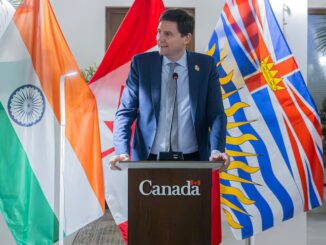
    TORONTO (TIP): A high-powered British Columbia delegation led by Premier David Eby has been concentrating on business and technological cooperation with India rather than getting trapped in politics and straying away from its main objective of ensuring the standard of living of its people is not impacted by the U.S. trade war.

    Midway on its six-day Indian sojourn, David Eby and his team members may be patting their backs at the grounds they have covered by advancing key partnerships with government and business leaders in Bengaluru, Karnataka, India’s largest innovation Center, to attract investment, foster collaboration in innovation, and build long-term relationships.

    These partnerships will help B.C.’s technology and life-sciences sectors pursue joint opportunities that leverage B.C.’s research excellence and Karnataka’s deep pools of engineering talent, entrepreneurship and global scale. In Bengaluru, a letter of intent (LOI) was signed between the Province and the state government of Karnataka. The LOI expresses mutual interest to collaborate in life sciences, biotechnology, medical technology, medical devices and digital health.

    “B.C.’s technology and life sciences businesses are second to none, and in the face of U.S. tariffs, we are strengthening our economy by deepening trade and investment relationships with diverse, reliable partners,” Kahlon said. “Bengaluru is the tech capital of India. Its rapid growth and innovation ecosystem make it an important partner for B.C.’s emerging sectors. These relationships create new opportunities for collaboration, investment and shared success.”

    After meeting with officials in Bengaluru, it was agreed to share research and collaboration between Bengaluru and B.C. companies, and foster relationships and investments between Bengaluru and B.C. In addition, a delegation from Bengaluru agreed to explore travelling to Web Summit Vancouver 2026.

    Critics of the trade mission have been skeptical of a warming relationship with India, years after former prime minister Justin Trudeau talked in the House of Commons about credible allegations that Indian agents were linked to an extrajudicial killing of Sikh activist Hardeep Singh Nijjar on Canadian soil in 2023.

    Nijjar was a known advocate for an independent Sikh state called Khalistan. Back home, pro-Khalistan groups of Sikhs accused Eby of choosing trade interests over justice for Nijjar in a statement before he left for India. India’s government has denied ordering extrajudicial killings in Canada. Four men, all Indian nationals who arrived in Canada several years ago, have been accused of carrying out the killing of Nijjar.

    Eby expressed support for the trial process currently underway in that case, saying there was a need to ensure justice for Nijjar and for the community.

    Amid a spike in extortion-related crimes in B.C.’s Lower Mainland in the first two weeks of 2026 — with 16 reports of extortion in Surrey in the first fortnight of the New Year — Eby also said that the province’s extortion task force would provide an update to the community next week. He said there have been important developments in dealing with the rash of extortions — including deportations, an arrest in India and co-operation between Canadian and Indian law enforcement agencies. “But bluntly, we need better results. We need to see more arrests, and whatever we can do to support the police to be able to get the job done, we will do so,” he told the media in Mumbai.

    “At the same time, we can’t sit around while our standard of living is eroded and our economy is eroded by the decisions of the president of the United States,” Eby said, in reference to the U.S. trade war. “India is going to be the third largest economy in the world, and Canadians and British Columbians will only benefit from a close relationship with India, ” said David Eby at a media conference.

    The BC Government had claimed ahead of the Indian trip that B.C.-origin goods exports to India were worth $1.3 billion in 2024, while Kahlon said B.C. had “the highest share of exports to India of any province.”. David Eby and Ravi Kahlon will be in India till January 17, making stops in New Delhi and Chandigarh to meet with government and business leaders.

    The president and CEO of the Business Council of British Columbia, Laura Jones, says India is a big market that could help diversify growth in the local economy.

    Ravi Kahlon, during his meetings with business and industry leaders, strengthened partnerships in Karnataka, India’s Silicon Valley, to advance collaboration in life sciences, technology and innovation. Roundtables with B.C. and Indian companies identified opportunities for trade and investment, and the promotion of Web Summit Vancouver 2026 positioned B.C. as a global tech hub. He advanced key partnerships with government and business leaders in Bengaluru, Karnataka, India’s largest innovation Center, to attract investment, foster collaboration in innovation, and build long-term relationships.

    These partnerships will help B.C.’s technology and life-sciences sectors pursue joint opportunities that leverage B.C.’s research excellence and Karnataka’s deep pools of engineering talent, entrepreneurship and global scale. In Bengaluru, a letter of intent (LOI) was signed between the Province and the state government of Karnataka. The LOI expresses mutual interest to collaborate in life sciences, biotechnology, medical technology, medical devices and digital health.

    “B.C.’s technology and life sciences businesses are second to none, and in the face of U.S. tariffs, we are strengthening our economy by deepening trade and investment relationships with diverse, reliable partners,” Kahlon said. “Bengaluru is the tech capital of India. Its rapid growth and innovation ecosystem make it an important partner for B.C.’s emerging sectors. These relationships create new opportunities for collaboration, investment and shared success.”

    India’s scale, talent pool and fast-growing technology sector create major opportunities for joint innovation that complements B.C.’s world-class strengths in life sciences and technology. Together, B.C. and Karnataka offer highly compatible innovation ecosystems that can accelerate growth for both regions.

    “Global collaboration drives commercial success in life sciences,” said Wendy Hurlburt, president and CEO, Life Sciences BC. “Strengthening trade and investment ties with high-growth markets like India, one of the world’s largest economies, is critical to accelerating innovation, scaling our companies internationally and ensuring the long-term competitiveness of Canada’s life-sciences sector.”

    In Bengaluru, Kahlon met with Sharath Kumar Bache Gowda, chairman of Karnataka State Electronics Development Corporation Limited (KEONICS). Discussions focused on expanding economic collaboration between B.C. and Karnataka’s life sciences, technology and innovation ecosystems.

    Kahlon also held roundtables with B.C. companies doing business in India, including Telus Digital Services, Lululemon, Earth Daily Analytics and Yactraq Online, to discuss accomplishments, opportunities and challenges to operating in India, and potential supports from the Province. Kahlon also called on Indian technology companies to position B.C. as a global hub for innovation and technology, and to promote Web Summit Vancouver 2026 as a gateway for international collaboration. The discussion further strengthened ties with India’s fast-growing technology sectors, and showcased B.C.’s strengths in academic-industry leadership, government support programs and innovation ecosystems.

    It was agreed to share research and collaboration between Bengaluru and B.C. companies, and foster relationships and investments between them. In addition, a delegation from Bengaluru agreed to explore travelling to Web Summit Vancouver 2026.

    The agenda of the visit supports British Columbia’s Look West industrial and economic plan, and aligns with its trade diversification strategy, which focuses on delivering major projects more quickly, diversifying markets and growing targeted sectors, such as technology, life sciences, aerospace, marine, artificial intelligence (AI) and quantum, agriculture and construction innovation.

    B.C. is home to a thriving innovation ecosystem, including more than 12,000 tech companies and leadership in AI, quantum computing and clean technology. Information technology is B.C.’s top investment sector in India. Leading B.C. companies, such as TELUS, Lululemon and Pani Energy, operate in Bengaluru, creating more than 1,400 high-paying jobs. B.C. currently has four trade and investment offices in India, attached to Canadian missions in New Delhi, Mumbai, Bengaluru and Chandigarh.

    The “Silicon Valley of India” Bengaluru, contributes more than 43% to Karnataka’s economy and hosts more than 40% of India’s Global Capability Centres. Its economy is driven by information technology, biotechnology, aerospace and electric-vehicle manufacturing. The letter of intent commits the governments to: Life sciences and biotechnology collaboration. Facilitating collaboration in biotechnology, biopharma, medical technology, medical devices, digital health and related emerging areas through exchanges, partnerships and ecosystem linkages.

    Innovation, trade and investment linkages: Encouraging two-way trade, investment and industry development by supporting business-to-business connections and startup engagement, as well as participation in relevant innovation and technology events.

    Knowledge exchange and ecosystem engagement: Promoting knowledge-sharing through workshops, delegations, policy dialogues and institutional linkages between innovation ecosystems, research institutions, startups and industry stakeholders in both regions

    David Eby says that finding new trade partners is critical to ensure British Columbians’ standard of living doesn’t deteriorate amid the U.S. trade war.

    Eby spoke to India’s energy minister, giant conglomerates like Tata and Reliance, and oil companies like Indian Oil and Hindustan Petroleum. “I’ll have to say the big winner so far has been [B.C.’s] mining sector. The belle of the ball, really,” he told reporters. “There hasn’t been a meeting with one of these companies that hasn’t included an extensive discussion about the mining opportunities in the province, the more than 20 mines that are in various stages of development.”

    The premier added that the province’s energy sector — and ongoing attempts to expand liquefied natural gas (LNG) production — was also being received well in India. He said that every company and politician were convinced that India would continue to grow at seven or eight per cent annually, and would become the world’s third-largest economy. “That means they need dramatic and increased amounts of energy,” the premier argued. B.C. Premier David Eby is making a big sales pitch in India while trying to find new customers outside the U.S. for the province’s natural resources, especially minerals.

    “They’re doing a huge internal push to reduce reliance on imported petroleum products like oil and gas and diesel and so on,” he added. “But in the meantime, they are looking strongly to LNG as one of their major ways of reducing carbon intensity as well as reducing smog in the country.”

    Eby said that the Woodfibre LNG project in Squamish, LNG Canada Phase 2 in Kitimat and the Ksi Lisims project near Prince Rupert are among those with interest from Indian investors.

    (Prabhjot Singh is a Toronto based senior journalist. He can be reached at prabhjot416@gmail.com)

  • Indian Consulate hosts India-Canada AI Dialogue 2026 ahead of India AI Impact Summit

    Indian Consulate hosts India-Canada AI Dialogue 2026 ahead of India AI Impact Summit

    TORONTO (TIP): The Consulate General of India in Toronto hosted the ‘India-Canada AI Dialogue 2026’ in partnership with the University of Waterloo, Canada India Tech Council, and Zoho Inc, as a precursor to one of the biggest AI Summits in Global South – the ‘India AI Impact Summit 2026’.

    A Panel discussion.

    The event gathered over 600 leaders from industry, academia, and government to advance bilateral AI collaboration, focusing on responsible, ethical, and impact-driven technology ahead of the upcoming India AI Impact Summit 2026.

    Another Panel Discussion

    Honorable Evan Solomon (Minister of Artificial Intelligence and Digital Innovation, Canada) was the Keynote Speaker: The high level dialogue was addressed, among others, by Mr. Dinesh K. Patnaik (High Commissioner of India to Canada), Mr. Kapidhwaja Pratap Singh (Acting Consul General of India in Toronto), Honorable Victor Fedeli (Minister of Economic Development, Job Creation & Trade, Ontario), Prof. Vivek Goel (President & VC, University of Waterloo) and several distinguished speakers and leaders across the AI ecosystem.

    Yet another panel discussion.

    Ontario Premier Doug Ford sent a message that framed the dialogue within a broader relationship across trade, investment and research.
    “India and Canada share a deep and 1 longstanding partnership, one built on robust trade and investment, people-to-people ties and research partnerships in emerging technologies such as artificial intelligence,” said Doug Ford, Premier of Ontario, Canada.

    A view of the gathering

    Ford also addressed the consulate’s convening role in Toronto.
    “Many thanks to the Consulate General of India in Toronto for convening this important gathering and for its continued leadership in fostering collaboration between our jurisdictions,” said Ford.

    The discussions focused on ethical, inclusive AI for societal benefit, with potential partnerships in MedTech, logistics, and operations, as highlighted by Aliza Lakhani and LinkedIn users.

    Another view of the gathering.

    The event aimed to bridge the Canadian research ecosystem with India’s data scale to drive AI innovation.

    The organizers said the dialogue set out themes for continued bilateral work and that the Canadian delegation expected to travel to the New Delhi summit and co-chair a working group on science.
    (Based on a Press Release issued by the Indian Consulate General in Toronto)

  • Embassy of India in Romania Organizes B2B on Information Technology & Communications

    Embassy of India in Romania Organizes B2B on Information Technology & Communications

    BUCHAREST (TIP): The Embassy of India successfully organized a Business-to-Business (B2B) meeting on Information Technology & Communications (IT&C) with Romanian companies to explore avenues for collaboration and partnership in the IT sector. The event witnessed enthusiastic participation from the Romanian IT industry and served as an important platform for strengthening India-Romania cooperation in the technology domain.

    Two eminent industry leaders from India participated as lead speakers: Mr. Sandeep Narula, Chairman (Global Outreach), and Mr. Gurmeet Singh, Director & CEO of the Electronics and Computer Software Export Promotion Council (ESC India). Their presence added significant value to the discussions and provided industry-driven insights into India’s rapidly growing IT ecosystem.

    Presentation shown during the B2B.

    The B2B meeting was held in a physical format, with more than 30 potential Romanian IT companies participating actively and demonstrating strong interest in exploring partnerships with Indian counterparts. The session commenced with special remarks by the Ambassador of India to Romania, Dr. Manoj Kumar Mohapatra, who highlighted the robust growth of India’s IT sector and its emergence as a global technology and innovation hub. The Ambassador also expressed his appreciation to the special guests who travelled from India to participate in the B2B meeting and formally honored them for their contributions.

    Addressing the participants, Ambassador Dr. Manoj Kumar Mohapatra emphasized India’s strengths in IT services, software development, digital innovation, and skilled human resources. He expressed confidence that Romanian companies would explore concrete trade and investment opportunities with Indian firms. The Ambassador reiterated India’s position as a reliable global partner in the IT sector and encouraged Romanian companies to consider sourcing, collaboration, and joint ventures with Indian IT enterprises. Indian companies, in turn, invited Romanian firms to visit India to gain firsthand exposure to their IT infrastructure and facilities. Impressed by the presentations and discussions, several Romanian companies expressed keen interest in visiting India.

    Questions were answered by the lead speakers of the event.

    During the session, Mr. Sandeep Narula briefed participants on the rapid expansion of India’s IT industry, driven by key Government of India initiatives and digital transformation projects that are positioning the country at the forefront of global technology development. He delivered a detailed presentation on the achievements and role of ESC India in promoting electronics and software exports with strong government support. He also addressed numerous questions raised by Romanian IT companies and extended a formal invitation to the Romanian IT industry to participate in India Soft 2026, a major international technology exhibition scheduled for March 23-25 in New Delhi, to experience Indian IT capabilities firsthand and forge concrete partnerships.

    Mr. Gurmeet Singh highlighted the sustained growth trajectory of India’s IT sector and its potential to emerge as one of the leading global IT hubs in the years to come. He emphasized the opportunities available for international collaboration and underlined ESC India’s commitment to facilitating partnerships between Indian and Romanian companies.

    One of the enthusiastic participants from ANIS Romania (@ANIS_RO), Mr. Edward Creescu, President, addressed the gathering and shared data-driven insights highlighting the robust and rapidly expanding Romanian IT sector. He expressed strong interest in visiting India to gain firsthand exposure to India’s dynamic IT ecosystem and conveyed his keen willingness to participate in India Soft 2026 (March 23-25, New Delhi), further strengthening avenues for India-Romania collaboration in the technology sector.

    A group photo taken during the event.

    The Embassy of India reaffirmed its continued commitment to strengthening economic and commercial ties between India and Romania, particularly in priority sectors such as information technology and communications. The Embassy assured participants of its full support in facilitating future engagements, exchanges, and business collaborations between stakeholders from both countries.

    The event concluded with productive and forward-looking discussions, reflecting strong mutual interest and laying the groundwork for deeper cooperation in the IT & Communications sector between India and Romania.

    (Based on a Press Release issued by the Embassy of India in Bucharest, Romania)

  • Embassy of India in Romania Organizes Virtual B2B on Home Appliances

    Opening remarks by Ms. Bavleen Kaur, Sr. Director, FICCI.
    Remarks by Ms. Mihai Chelbi, Com Director, Marelvi Impex SRL.

    BUCHAREST (TIP): The Embassy of India organized a Virtual B2B Meeting on Home Appliances between a Romanian company and four leading Indian companies – IFB, Dixon Technologies, Crompton Greaves, and Havells India. The meeting witnessed active and enthusiastic participation from the Indian side and was organized in coordination with Ms. Bavleen Kaur, Senior Director, Federation of Indian Chambers of Commerce & Industry (FICCI).

    Remarks by Ms. Mihai Chelbi, GM, Marelvi Impex SRL.
    Presentation by Mr. Anil Arora, VP, Dixon Technologies

    The meeting was organized in a virtual format as the Romanian company, Marelvi Impex SRL, is located in Suceava County, approximately 500 kms from Bucharest. This virtual engagement followed the visit of Ambassador of India, Dr. Manoj Kumar Mohapatra, to Suceava County, during which he met with the company’s management. During this interaction, the Romanian company expressed strong interest in establishing trade relations with India. Consequently, the Embassy facilitated this virtual B2B meeting with potential Indian companies that are already exporting globally and are keen to expand their presence in the Romanian market.

    Presentation by Mr. Rajan Rahi, Head of IFB.
    Presentation by Mr. Rahul Murgai, Head of Havells India.
    Presentation by Mr. Durgesh Buxy, AVP & Head of Crompton Greaves.

    The meeting commenced with opening remarks by Ms. Bavleen Kaur, Senior Director, FICCI, who highlighted the importance of institutional support in facilitating international business partnerships. This was followed by presentations from Marelvi Impex SRL and the participating Indian companies, which led to constructive and meaningful discussions.

    H.E. Dr. Manoj Kumar Mohapatra Ambassador of India, gives his remarks.
    H.E. Ambassador Dr. Mohapatra and Ms. Mihai Chelbi, GM, Marelvi Impex SRL engage in the discussion.

    Addressing the participants, Ambassador Dr. Manoj Kumar Mohapatra highlighted India’s strengths and capabilities in the home appliances sector and expressed confidence that Marelvi Impex SRL would explore concrete trade opportunities with India. The Indian companies also invited the Romanian company to visit India to gain firsthand exposure to their manufacturing facilities. The Romanian company, impressed by the presentations, expressed keen interest in visiting India. The Ambassador reiterated India’s position as a global manufacturing hub for high-quality products and encouraged Romanian companies to explore sourcing and partnership opportunities with Indian firms.

    The Embassy of India reaffirmed its continued commitment to strengthening economic and commercial ties between India and Romania, particularly in priority sectors such as home appliances and manufacturing, and assured participants of its support in facilitating future engagements.

    The event concluded with a fruitful discussion.

    (Based on a Press Release issued by the Embassy of India in Romania)

  • Martin Luther King Jr.: When History Became a Life, and a Life Became History

    Martin Luther King Jr.: When History Became a Life, and a Life Became History

    By Prof. Indrajit S Saluja
    By Prof. Indrajit S Saluja

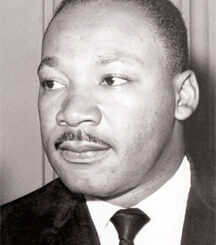
    In three days, America will once again commemorate Martin Luther King Jr.,a man whose life became inseparable from the moral history of the United States. King is remembered not merely as a charismatic speaker or a skillful organizer, but as one of the true leaders of the masses who emerged from among ordinary people and led them with extraordinary moral courage.His greatness lay not in the power he wielded, but in the conscience he awakened;not in authority imposed,but in dignity restored.In his case,history did not merely record a life-it flowed through it. King stepped onto the national stage at a moment when America was struggling to reconcile its founding ideals with its lived realities. The Constitution proclaimed equality, liberty, and justice, yet millions of citizens-particularly African Americans-were systematically denied these promises. Segregation was law in many states; discrimination was normalized; exploitation was an everyday condition. For Black Americans,the legacy of slavery had not ended with emancipation; it had taken new and insidious forms through Jim Crow laws, voter suppression, economic deprivation,and social exclusion. This was the America King confronted-not with bitterness or vengeance, but with moral clarity and disciplined hope. What distinguishes King from many other leaders is the path he consciously chose. Deeply influenced by Christian ethics and inspired by Mahatma Gandhi’s philosophy of nonviolence, King believed that injustice could not be defeated by hatred and that violence could never cleanse a society of oppression. His movement was a Gandhian experiment on American soil-one that sought to rid the nation of inequality through moral force rather than brute strength. King understood that violence might secure temporary concessions, but only nonviolence could achieve lasting transformation by changing hearts as well as laws. King did not invent the civil rights movement, but he gave it focus, coherence, and a unifying moral language. Through the Montgomery Bus Boycott, the Birmingham Campaign, the Selma marches, and the historic March on Washington, he helped turn localized protests into a national moral awakening. He compelled America to look unflinchingly into the mirror-and to confront the gulf between its professed ideals and its daily practices. He made the suffering of the marginalized visible, and he did so in a way that appealed to the nation’s highest values rather than its lowest instincts.
    Perhaps King’s most enduring contribution was his insistence on the universality of justice.Though he emerged as a leader of the Black community, he never confined his message to one race or one grievance. His dream was not of one group’s ascendancy over another, but of a shared humanity bound by equal dignity. When he spoke of a nation where people would be judged not by the color of their skin but by the content of their character, he articulated a moral ideal that transcended race while directly confronting racial injustice.In doing so,he transformed the civil rights struggle from a sectional demand into a national moral imperative.
    It must be acknowledged-honestly and without evasion-that America still suffers from many of the ailments King sought to remove.Inequality persists;discrimination has not vanished but often changed form; economic disparities remain stark;and the wounds of racial injustice continue to reopen with troubling regularity. The realities of unequal policing, voter disenfranchisement, unequal educational opportunities, and disproportionate incarceration serve as reminders that the journey King began remains unfinished.
    Yet these truths do not diminish King’s achievement;they magnify it.Before King, segregation was defended openly as tradition and law. After King, discrimination became morally indefensible-even when it persisted in practice. Before King, vast sections of America accepted inequality as inevitable. After King, equality became a shared national aspiration, however imperfectly realized. He shifted the moral center of gravity of the nation.
    King’s leadership lifted a large section of the American population-particularly the Black community-from the quagmire of invisibility and institutionalized exploitation. His efforts helped secure landmark legislative victories such as the Civil Rights Act of 1964 and the Voting Rights Act of 1965, reshaping the legal architecture of American democracy. These were not mere statutes; they were declarations that the nation would no longer legitimize exclusion as policy.
    Crucially, King’s moral vision widened toward the end of his life.He spoke not only against racial injustice, but also against economic exploitation and militarism. He recognized that poverty was a form of violence and that endless war abroad eroded justice at home. His opposition to the Vietnam War-controversial and costly to his popularity-flowed from a consistent belief that a society cannot value human life selectively. Justice, for King, was indivisible.
    King paid dearly for his convictions. He was surveilled, harassed, and maligned. Ultimately,he was assassinated.Yet even in death, his voice did not fade. It gained permanence. His legacy took root not only in laws and institutions, but in the American conscience itself-where it continues to question, challenge, and inspire. As America prepares to honor Martin Luther King Jr., it must resist the temptation to reduce him to a ceremonial figure adorned with safe quotations. To honor King authentically is to engage his life as a challenge, not a comfort. It is to reckon honestly with progress achieved and failures endured, and to accept responsibility for the work that remains. The Unfinished Trust: A Charge to Today’s Leaders This is where the present generation of leaders must be addressed-plainly and directly. The responsibility of carrying King’s mission forward now rests squarely on their shoulders. King did his part. He showed the path,bore the burden,and paid the price. What remains unfinished is not due to a lack of vision,but to an erosion of moral courage among those entrusted with power. King’s dream was never meant to be preserved as an artifact of history. It was meant to be practiced and advanced. Today’s leaders-elected officials, policymakers, judges, educators, and civic voices-must rise above partisan advantage and ideological trench warfare.Leadership worthy of the name unites people; it does not profit from their division. America today stands dangerously polarized along racial, economic, ideological,and cultural lines.Much of this division is cultivated, amplified, and weaponized. King warned against such temptations. He believed power was legitimate only when it served justice; authority authentic only when it uplifted the vulnerable;governance honorable only when it respected human dignity. The question for leaders today is stark: are they builders of bridges or architects of walls? Are they healers or amplifiers of grievance? King understood that America’s diversity was not a liability to be managed but a strength to be honored. Unity, as he envisioned it, did not require uniformity, fairness, empathy, and a shared commitment to justice. To carry forward King’s mission is not to recite his words but to embody his values.It is to reject politics of fear and embrace politics of hope; to ensure that the law protects the powerless as faithfully as it serves the powerful; and to guarantee that no American feels excluded from the nation’s promise because of race, faith, or economic circumstance. Above all, it is to practice leadership that elevates the moral tone of public life. King believed that the arc of the moral universe bends toward justice-but only if people are willing to bend it.His life proves that progress is neither automatic nor inevitable; it is earned through sacrifice, restraint, and moral resolve. If today’s leaders can summon that spirit-if they can rise to King’s standard rather than merely praise it-then his dream can live on not as memory,but as reality. A nation united by justice is a nation nothing can divide. That was Martin Luther King Jr.’s faith.It must now become America’s resolve.

  • Embassy of India Hosts Successful Hybrid B2B Meeting on Medical Devices and Equipment

    Embassy of India Hosts Successful Hybrid B2B Meeting on Medical Devices and Equipment

    Remarks by Mr. Praveen Mittal, MD, EPCMD

    BUCHAREST, ROMANIA (TIP): The Embassy of India in Bucharest successfully organized a Hybrid Business-to-Business (B2B) Meeting on Medical Devices and Equipment, fostering robust engagement between leading Indian and Romanian companies. Held on January 15, 2026, the event drew active and enthusiastic participation from both sides, underscoring the deepening economic ties between India and Romania. It was coordinated in close partnership with Mr. Rajiv Nath, Forum Coordinator of the Association of Indian Medical Device Industry (AiMeD), and Mr. Praveen Mittal, Managing Director of the Export Promotion Council for Medical Devices (EPCMD). This collaboration highlighted the Embassy’s proactive role in bridging bilateral trade opportunities in high-priority sectors.

    In-person Romanian participation in the B2B

    Several prominent and emerging companies from the medical devices and equipment sector participated, signaling strong mutual interest. Indian firms expressed keen eagerness to export innovative products to Romania, showcasing their advanced manufacturing capabilities, diverse product portfolios, and proven track record in international markets. These included diagnostics tools, surgical instruments, imaging equipment, and consumables, positioning India as a reliable partner amid global supply chain shifts. Romanian companies reciprocated with equal enthusiasm, recognizing India’s rapid ascent as a global manufacturing powerhouse in healthcare. With India’s medical devices industry projected to reach $50 billion by 2030, driven by initiatives like Make in India and Production Linked Incentives (PLI), Romanian participants saw immense potential for cost-effective sourcing, technology transfers, and joint ventures.

    Leading Indian companies presented their presentations.

    The hybrid format maximized accessibility and reach: over 35 Romanian companies attended in person at the Embassy premises, while approximately 20 Indian companies joined virtually from across India. This innovative setup ensured seamless interactions despite geographical distances, enabling real-time discussions on regulatory alignments, certification standards (such as EU MDR compliance), and logistics for exports to the European market. Indian participants presented detailed overviews of their offerings, including quality certifications like ISO 13485 and CE marking, and shared case studies of successful exports to Europe.

    Romanian companies interacted with their counterparts from India.

    The meeting commenced with insightful opening remarks from Mr. Rajiv Nath and Mr. Praveen Mittal. They positioned India as a premier global hub for high-quality, affordable medical devices, emphasizing the sector’s resilience post-COVID and government support through schemes like Ayushman Bharat Digital Mission. They urged Romanian firms to explore sourcing partnerships, R&D collaborations, and co-development opportunities to address Romania’s growing healthcare demands.

    A photograph of participants taken during the event.

    Throughout the sessions, Romanian participants voiced specific interests in areas like orthopedic implants, cardiology devices, and digital health solutions. Productive one-on-one meetings followed, leading to promising leads for trials, MOUs, and sample shipments. The Embassy of India reaffirmed its steadfast commitment to bolstering economic and commercial relations between the two nations, with a special focus on healthcare and medical technology as pillars of bilateral cooperation. This aligns with ongoing initiatives under the India-Romania Joint Commission on Economic Cooperation and efforts to enhance trade, which reached €1.2 billion in 2025.

    The event concluded with a heartfelt vote of thanks from the Embassy, acknowledging all participants and coordinators. It marked a highly successful and productive B2B engagement, paving the way for sustained partnerships that will benefit both economies. Follow-up actions, including virtual follow-ups and trade delegations, are already in motion to convert discussions into tangible outcomes.

    (Based on a Press Release issue by the Embassy of India in Romania)

  • January 16 New York & Dallas E – Edition

    [vc_row][vc_column][vc_custom_heading text=”E-Edition” font_container=”tag:h2|text_align:center” google_fonts=”font_family:Istok%20Web%3Aregular%2Citalic%2C700%2C700italic|font_style:700%20bold%20regular%3A700%3Anormal” css=”” link=”url:https%3A%2F%2Fwww.theindianpanorama.news%2Fwp-content%2Fuploads%2F2026%2F01%2FTIP-January-16-E-Edition.pdf”][vc_single_image image=”280703″ img_size=”full” alignment=”center” onclick=”custom_link” css=”” link=”https://www.theindianpanorama.news/wp-content/uploads/2026/01/TIP-January-16-E-Edition.pdf”][/vc_column][/vc_row][vc_row][vc_column width=”2/3″][vc_custom_heading text=”Lead Stories This Week” google_fonts=”font_family:Istok%20Web%3Aregular%2Citalic%2C700%2C700italic|font_style:700%20bold%20regular%3A700%3Anormal” css=”” link=”url:https%3A%2F%2Fwww.theindianpanorama.news%2F”][vc_wp_posts number=”5″ show_date=”1″][/vc_column][vc_column width=”1/3″][vc_single_image image=”82828″ img_size=”medium” alignment=”center” onclick=”custom_link” css=”” link=”https://www.theindianpanorama.news/advertising-media-kit-portal-indian-panorama/ “][vc_single_image image=”82829″ img_size=”medium” alignment=”center” onclick=”custom_link” css=”” link=”https://www.theindianpanorama.news/advertising-media-kit-portal-indian-panorama/ “][/vc_column][/vc_row]

  • Embassy of India Celebrates World Hindi Day with Vibrant Community Participation in Romania and Moldova

    Embassy of India Celebrates World Hindi Day with Vibrant Community Participation in Romania and Moldova

    BUCHAREST (TIP): The Embassy of India celebrated World Hindi Day on 10th January with active and enthusiastic participation from members of the Indian diaspora and friends of India, highlighting the global relevance of the Hindi language and India’s rich cultural heritage. The programme commenced with the message of Hon’ble Prime Minister of India, Shri Narendra Modi, underscoring the significance of Hindi as a global language and a powerful medium for cultural connection and people-to-people engagement.

    Poetry recitation by the members of Indian Community and friends of India.

    On the occasion, Ambassador Dr. Manoj Kumar Mohapatra shared his thoughts on the importance of Hindi in daily life and emphasized the vital role played by the Indian diaspora in promoting and preserving the Hindi language across the world. He noted that the diaspora serves as an important bridge in spreading India’s linguistic and cultural values globally. As part of the celebrations, participants took part enthusiastically in Sulekhan and poetry recitation sessions, showcasing the creativity, beauty, and emotional depth of the Hindi language. The performances reflected the richness of Hindi literature and its expressive power.

    Ambassador sharing his thoughts on the importance of Hindi in daily life.

    The Embassy also hosted a special movie night featuring the screening of the film “Chhaava”, which brought together members of the Indian community and friends of India for an engaging evening of Indian cinema and storytelling. The screening highlighted India’s rich historical narratives and vibrant film tradition, offering an immersive and enriching cultural experience. On the occasion, the Ambassador announced that the next film screening will feature “Dhurandhar”, which will be showcased in cinema halls in both Romania and Moldova, further expanding the Embassy’s cultural outreach initiatives.

    Ambassador interacted with Indian diaspora at the Open House held in Embassy.

    In addition, the Embassy organized an Open House event, providing an open platform for members of the community to interact directly with Ambassador Mohapatra. Participants engaged in meaningful discussions, shared their views, and sought clarifications on a wide range of topics, further strengthening dialogue, mutual understanding, and community engagement.

    Embassy hosted movie night – screening of the film “Chhaava”

    In addition, the Embassy of India in collaboration with the Indo Moldova Business and Cultural Organization (IMBCO) and ASRM, organized a vibrant cultural event titled “Rhythm India” at USMF, Chisinau on 11 January, with enthusiastic participation from members of the Indian diaspora and friends of India. The programme featured mesmerizing Indian dance performances by artists from the Sitara Dance Group and Varenya Kala Kshetra, beautifully showcasing India’s rich cultural heritage, artistic diversity, and rhythmic traditions. The performances were warmly received by the audience and reflected the vibrancy and depth of Indian classical and folk-dance forms. Ambassador appreciated the artists for their valuable contribution to the propagation of Indian culture abroad. He congratulated the performers and distributed prizes in recognition of their artistic excellence and dedication.

    Cultural event “Rhythm India” was organized at USMF, Chisinau(Moldova)

    As part of the celebrations to mark World Hindi Day, students enthusiastically participated in Sulekhan (Hindi calligraphy) activities, celebrating the beauty, elegance, and cultural richness of the Devanagari script. The event provided a wonderful expression of language, learning, and cultural harmony, highlighting Hindi’s enduring appeal among younger generations.

    Students of ASRM enthusiastically took part in Sulekhan (Hindi calligraphy) activity

    On 12 January, the Embassy of India, in collaboration with IMBCO, also celebrated World Hindi Day in Chisinau. Members of the Indian diaspora and friends of India actively participated by reciting Hindi poetry, making the celebration a meaningful and engaging literary gathering. Ambassador Dr. Manoj Kumar Mohapatra commended the participants for their enthusiasm and commitment to promoting the Hindi language and presented prizes to encourage their continued engagement.

    Celebrations of World Hindi Day at Chisinau with participation of members of Indian diaspora and friends of India.

    The cultural presentations and literary activities together made the celebrations colorful, memorable, and reflective of India’s rich linguistic and cultural traditions, while further strengthening people-to-people ties between India and Moldova. During his visit, Ambassador Dr. Manoj Kumar Mohapatra also met with several important dignitaries in Moldova. A separate press release detailing these meetings will be issued.

    Cultural performances presented during the celebrations of World Hindi Day at Chisinau.

    The World Hindi Day celebrations reinforced the Embassy’s commitment to promoting the Hindi language, fostering cultural exchange, and deepening people-to-people ties between India and Romania.

    (Based on a Press Release issued by the Embassy of India in Bucharest)

  • Eminent oncologist Dr Jatin Shah honored by The South Asian Times as its Person of the Year 2025

    Eminent oncologist Dr Jatin Shah honored by The South Asian Times as its Person of the Year 2025

    • By Parveen Chopra

    WOODBURY, NY (TIP): Dr Jatin Shah, the leading head and neck surgeon in the world, was felicitated as The South Asian Times – Person of the Year 2025 at a gala function at Crest Hollow Country Club here on January 9, 2026. The gala was attended by who’s who of the Indian American community and many distinguished professionals.

    Dr Jatin Shah making his acceptance speech

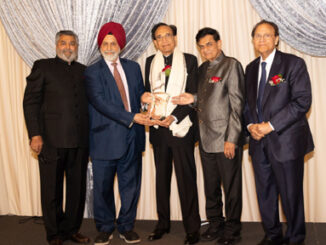
    Kamlesh Mehta, Chairman and Publisher of The South Asian Times, along with three Padma Awardees — Padma Bhushan Sant Singh Chatwal, Padma Shri Dr Sudhir Parikh, Chairman of Parikh Worldwide Media, and Padma Shri Dr Dattatreyudu Nori, an eminent oncologist,  presented the POY crystal plaque to Dr Shah.

    Dr Parikh, a family friend of Dr Shah, wished him more achievements and honors, good health and a long life.

    Dr Shah, who is 85 and completed 50 years of service at Memorial Sloan Kettering Cancer Center in New York last year, including over two decades as Chief of Head and Neck Service, said in his acceptance speech, “I am honored and feel privileged to be chosen by The South Asian Times as the Person of the Year for 2025. Being recognized by your own – family, community or society – is a unique honor that is hard to come by, and even harder to achieve than any award or recognition from a professional or academic organization. For that, I am grateful to The South Asian Times. I will cherish this high honor for the rest of my life.”

    Dr Shah, who is world renowned for transforming the medical discipline in his specialty with research, innovations and fostering collaborations worldwide, was introduced by Dr Ashok Shaha, Attending Surgeon on the Head and Neck Service at Memorial Sloan Kettering for the past 35 years.

    Unveiling The South Asian Times Person of the Year Special Edition featuring Dr Jatin Shah: Kamlesh Mehta, Nimmi Mehta, Dr Jatin Shah, Dr Ivana Shah, Deputy Consul General Vishal Harsh, Jori Kohli and Parveen Chopra.

    Dr Jatin Shah was also felicitated by eminent doctor friends of his – Doctors J. Ganesh Bhat, Nitin and Leena Doshi, Shashi Shah, Narinder Kukar, and Bhupi Patel.

    A video message from Nassau County Executive Bruce Blakeman congratulating Dr Shah and The South Asian Times was played at the event.

    The honorees of The South Asian Times – Person of the Year from previous years – Chintu Patel (2017), Naveen Shah (2018), Ranju & Ravi Batra (2019), Ravishankar Bhooplapur (2020),  Mohan Wanchoo (2021) and Mukund Padmanabhan (2024) – spoke and congratulated Dr Jatin Shah.

    Honoring Dr Jatin Shah with a shawl: (from left) Kamlesh Mehta, Dr J. Ganesh Bhatt, Dr Leena Doshi, Dr Jatin Shah, Dr Shashi Shah, Dr Narinder Kukar, Dr Bhupi Patel and Dr Nitin Doshi.

    The South Asian Times has been honoring a Person of the Year since 2010 with a special pull-out section coinciding with the New Year edition.

    Mrs Nimmi Mehta, Kamlesh Mehta’s wife, gave the welcome speech and felicitated Dr Ivana Shah, Jatin Shah’s orthodontist wife, with a shawl and bouquet.

    The special edition of The South Asian Times recognizing and featuring Dr Jatin Shah as Person of the Year 2025 was unveiled on the occasion. Joining Kamlesh Mehta and Dr Shah for the unveiling were Vishal Harsh, Deputy Consul General at the Indian Consulate in New York, Dr Ivana Shah, Nimmi Mehta, Parveen Chopra, Founding Editor of The South Asian Times and Founder of A Lotus In The Mud, and Jori Kohli, an entrepreneur.

    The Dr Jatin Shah POY Special carries an intensive and extensive interview with him, as well as over 50 congratulatory messages from his colleagues at Memorial Sloan Kettering, eminent head and neck surgeons, his peers and former trainees as well as friends and family. They include Hollywood superstar Michael Douglas and Bollywood actor-director Rakesh Roshan.

    Distinguished personalities including previous Person of The Year honorees congratulated Dr Jatin Shah – (from left) Naveen Shah, Kamlesh Mehta, Ravi Batra, Nimmi Mehta, Sant Chatwal, Dr Ivana Shah, Dr Jatin Shah, Dr Sudhir Parikh, Dr Dattatreyudu Nori, Ravishankar Bhooplapur, Ranju Batra, DCG Vishal Harsh, Chintu Patel, Mukund Padmanabhan and Mohan Wanchoo.

    The program concluded with the cutting of the cake, where all the key people joined in to congratulate Drs Jatin and Ivana Shah.

    The program was EmCeed  by Jori Kohli, who kept it soulful and energetic. Sneh ‘Sunny’ Thakkar, Artistic Director of Music for the Indo-American Arts Council, curated and presented a Sitar recital by Radhika Samson, who was accompanied by Ramanan Venkatraman (on Hansaveena), Manav Khurana (Tabla) and Joseph Costello (Ghatam). Ganesh Vandana and Kathak performance was by Aiyana Begani, Arya Gosalia, Aranya Kathpal, Zara Lakhani and Nina Patel, students of Preya Patel of Vivarta Arts.

    A sumptuous, elaborate dinner was catered by Benares. The elegant gala event, attended by over 150 elite guests, was held at the exquisitely-decorated Grand Ballroom of Crest Hollow Country Club, one of the most beautiful venues on Long Island.

    (Parveen Chopra is the former founder editor of the South Asian Times and the founder editor of  ALotusInTheMud.com, the premier wellness and spirituality web magazine)

  • Tirlok Malik to Lead “Happy Life Yoga” Workshop at Bhakti Marga New York on Jan 24

    Tirlok Malik to Lead “Happy Life Yoga” Workshop at Bhakti Marga New York on Jan 24

    NEW YORK, NY (TIP):  Emmy-nominated filmmaker and wellness advocate Tirlok Malik will conduct a one-hour Happy Life Yoga workshop on Saturday, January 24, from 6:00 PM to 7:00 PM, at the Bhakti Marga New York Center, located at 243 West 30th Street, 10th Floor, New York, NY 10001.

    The Happy Life Yoga workshop offers simple, practical tools to live a happier and healthier life. Unlike conventional yoga sessions, this workshop requires no yoga mats and is designed as a “yoga of life”—focusing on how to live well through eating right, thinking right, and moving right. The session is entertaining, inspiring, and deeply engaging, blending practical exercises, affirmations, laughter, and reflection on the beauty of life.

    Speaking about the workshop, Malik says, “Happy Life Yoga shows you tools to live happier and healthier. It’s about understanding life better—simple wisdom that anyone can apply, anywhere.”

    The knowledge shared in Happy Life Yoga is drawn from Ayurveda, Indian philosophy, yoga traditions, and Malik’s own lived experiences. The workshop is suitable for people of all ages and backgrounds and is conducted in the spirit of philanthropy, reminding people from all walks of life that true happiness lies within.

    Tirlok Malik has conducted over 100 workshops and programs across New York, including landmark public spaces such as Central Park and Times Square. He has also spoken at Central Park Uplift, New York (International Yoga Day 2025), founded by Meera Gandhi, and at the Times Square Peace Day event, among many others. Through these initiatives, Malik continues to spread joy, laughter, and happiness. 

    About Tirlok Malik

    Tirlok Malik is an Emmy-nominated filmmaker, restaurateur, entrepreneur, and the founder and speaker of Happy Life Yoga. He is known for his significant contributions to both Hollywood and Bollywood, and for pioneering the portrayal of the immigrant experience in America through films such as Lonely in America and Khushiyaan. His work has earned numerous awards and global recognition for highlighting cultural connections and human stories. Through Happy Life Yoga, Malik actively promotes Ayurveda, yoga, and Indian philosophy as a holistic way of living in balance. 

    About Bhakti Marga

    Bhakti Marga, founded by Satguru Paramahamsa Vishwananda, is a global spiritual path rooted in devotion and love. Satguru Paramahamsa Vishwananda is a spiritual living master (Satguru) whose presence and guidance lead seekers to the direct experience of divine love.

    Bhakti Marga New York Center is a sacred space for busy New Yorkers to find inner peace and renewal, offering daily programs and a wide range of spiritual and wellness-based activities led by experienced practitioners.

    The event is hosted by conscious filmmaker Neha Lohia, fondly known as the Chief Happiness Officer for Happy Life Yoga. 

    For more information about Happy Life Yoga, visit: www.happylifeyoga.org

    Media Contact:

    Happy Life Yoga

    Website: www.happylifeyoga.org

  • Suozzi Joins Bipartisan Letter Expressing Outrage at SAMHSA Cuts

    Suozzi Joins Bipartisan Letter Expressing Outrage at SAMHSA Cuts

    NEW YORK (TIP): The Trump Administration, yesterday, suddenly and without warning, notified several agencies across Long Island and throughout America of the immediate termination of grants. Several Long Island institutions quickly reported to Congressman Suozzi’s office that nearly $2 million in SAMHSA grants have been cut, and possibly more. Nationwide, 2000 organizations have been cut off from $2 billion in funding.

    Congressman Suozzi reached out to the affected organizations. He joined more than 100 colleagues in the House of Representatives, both Democrats and Republicans, on the attached letter to Health and Human Services Secretary Kennedy to express bipartisan outrage at these sudden cuts.

    “We strongly urge you to rescind all of the terminations immediately. Too many people across the country are suffering without the necessary resources. We must ensure that SAMHSA programs serve their congressionally intended purpose of getting lifesaving resources to our communities,” the letter reads.

    That evening, the cuts were reversed.

    “This pattern and practice of cutting programs without warning that not-for-profits are counting on, in the middle of the fiscal year, is unfair, unproductive, and maddening. While I’m relieved these cuts were reversed, we can’t keep doing this,” said Suozzi.

    “Without warning, grants were terminated. It’s a reckless and awful move that undermines efforts to deliver drug treatment, alcohol counseling, and mental health care,” said Suozzi. “These programs are how we save lives and help our neighbors and loved ones escape the grip of opioids and other addictive drugs. Cutting off already-awarded grants throws organizations into chaos and puts patients at risk. Addiction and mental health crises do not stop mid-year, and neither should the support systems people depend on.”

    Nearly $2 million in funding cuts would have impacted organizations in the 3rd Congressional District. CN Guidance has reported $1,250,000 in cuts to programs to address child trauma, drug addiction, and mental health first aid training. The Family and Children’s Association has reported $125,000 in cuts to mental health first aid training. The YES Community Counseling Center has reported $544,970 in cuts to its Bridge Program to curb addiction in young adults.

    Suozzi’s office is in contact with local organizations and will ensure their funding cuts are reversed.

  • RITESH SHAH NAMED AMONG THE 50 MOST INFLUENTIAL PEOPLE IN PHARMACY

    RITESH SHAH NAMED AMONG THE 50 MOST INFLUENTIAL PEOPLE IN PHARMACY

    RED BANK, NJ (TIP): Ritesh Shah has been recognized as one of the 50 Most Influential People in Pharmacy, a prestigious national honor celebrating leaders whose work is shaping the future of the profession through innovation, advocacy, and service.

    This distinction highlights Shah’s impact as a community pharmacist and healthcare innovator, as well as his leadership in advancing patient access, medication affordability, and the sustainability of independent pharmacies. His efforts have elevated the role of pharmacists as essential frontline healthcare providers and trusted community partners.

    Shah is best known as the founder of the Ritesh Shah Charitable Pharmacy, a pioneering model that provides free medications to uninsured and underinsured patients. The initiative demonstrates how mission-driven pharmacy practice can be both scalable and sustainable, influencing policy discussions and reinforcing the importance of equity and compassion in healthcare delivery.

    “Ritesh’s influence goes far beyond traditional pharmacy practice,” said Joe Howe, President of the Ritesh Shah Charitable Pharmacy. “He has shown that pharmacists can lead systemic change by expanding access, strengthening communities, and proving that innovation and compassion are not mutually exclusive. This recognition is incredibly well deserved.”

    “I’m deeply honored by this recognition,” Shah said. “Pharmacy is ultimately about people—meeting patients where they are and ensuring access to life-saving medications. This work is only possible because of the dedicated partners, volunteers, and communities we serve.”

    The 50 Most Influential People in Pharmacy list, curated by Pharmacy50, highlights professionals whose leadership is driving meaningful change across the pharmaceutical and healthcare landscape. Shah’s inclusion underscores his continued commitment to strengthening independent pharmacies, improving patient outcomes, and redefining the role of pharmacy in advancing public health.

    About Ritesh Shah Charitable Pharmacy

    The Ritesh Shah Charitable Pharmacy is a nonprofit organization dedicated to providing free medications to uninsured and underinsured patients. Founded on the principles of equity, compassion, and sustainability, the pharmacy serves as a model for mission-driven healthcare delivery that strengthens communities and expands access.

    Mission:

    Increase access to medications, immunizations, health education, and pharmacy services for uninsured and underserved patients, to reduce clinical and social health inequities in our community.

    For more information, visit www.pillstopurpose.com or www.rscprx.org.

    24 Shrewsbury Avenue, Red Bank, NJ 07701

    www.RSCharityPharmacy.org

  • Overseas Friends of India Canada urges Canadian government to expedite CEPA

    Overseas Friends of India Canada urges Canadian government to expedite CEPA

    By Prabhjot Singh

    TORONTO (TIP): As mutual exchange of visits between trade missions of India and Canada has been set in motion with an official delegation of British Columbia arriving in India on Manday, January 12, the Overseas Friends of India Canada – Ottawa (OFIC) has written a letter to strongly urge the Government of Canada to advance negotiations toward the conclusion of a Comprehensive Economic Partnership Agreement (CEPA) between the two long-time trade partner nations.

    Talks and negotiations on a Free Trade Agreement have been pending for more than a decade. Hopes of the two countries signing the CEPA got a boost with the recent exchange of ministerial and trade delegations between India and Canada.

    “We welcome and commend Global Affairs Canada’s recent positive re-engagement with India at this strategically important moment,” say Shiv Bhasker, President and Hemant Shah, President and Trade Director of Overseas Friends of India Canada – Ottawa (OFIC), respectively.

    A trade delegation of the Canadian Hindu Chamber of Commerce has completed its 11-day visit to India by visiting Assam, Uttar Pradesh, Haryana, Delhi and Chandigarh.

    The Canadian Prime Minister, Mark Carney, is also expected to lead a strong delegation to India early next month. In an endeavor to strengthen trade links with Asia, Mark Carney is also leaving for China this week. After China, he will visit Qatar before returning to the continent next month on his first official visit to India.

    The mood is upbeat as Indian industry, trade and business houses await the arrival of the first official trade delegation from Canada. Led by the Premier of British Columbia, David Eby, and Jobs Minister and Olympian Ravi Kahlon, this is the first official trade commission from any Canadian province to visit Chandigarh, New Delhi, Mumbai and Bengaluru to showcase its leadership and capabilities in sustainable forestry, clean energy and responsible mining. The Premier-led mission builds on the province’s Look West industrial and economic plan.

    The mission will arrive on Monday and stay in India till January 17. Both Premier David Eby and Ravi Kahlon will meet with government and business leaders in major centers of commerce and technology, as it will promote British Columbia’s businesses, critical minerals and sustainable wood products, supporting work to build a more independent economy and creating more good jobs for people in British Columbia.

    “With unjustified tariffs from the U.S. impacting B.C. workers and businesses, it’s more important than ever to deepen strategic relationships with international partners to attract new investment and support good-paying jobs in British Columbia,” Premier Eby said. India is a key market for B.C. with enormous trade opportunities. This trade mission is about deepening our relationships, supporting good jobs in B.C. and strengthening our position as the economic engine of the new Canadian economy.”

    As India moves toward becoming the world’s third-largest economy, the Premier will highlight opportunities for sustainable forestry, clean energy and responsible mining through new partnerships that are available only in B.C.

    India is the world’s third-highest energy consumer and has a growing demand for clean technology and clean energy. British Columbia has both to offer.

    The mission is part of Look West: Jobs and Prosperity for BC and Canada and aligns with the Look West goal of doubling exports to non-U.S. markets over 10 years.

    “British Columbia has the highest share of exports to India of any province,” Kahlon said. “Building on our Look West plan, the trade mission to India will showcase B.C.’s strengths in clean energy, sustainable forestry, responsible mining and clean technology. By attracting investment and reducing our reliance on U.S. markets through diversified trade partnerships, we will create good jobs and prosperity for all British Columbians.”

    “Diversifying trade and investment, securing supply chains, retaining customers and opening new markets have always been important, but are now more urgent due to the chaotic and unjustified tariffs from the U.S.,” Premier Eby said. “As we move forward, our government will continue to leverage B.C.’s strengths to create more opportunities for our businesses to export and attract investment, which means jobs, opportunity and prosperity for British Columbians.”

    In 2024, B.C.-origin exports of goods to India amounted to $1.3 billion. In early 2023, the B.C. government launched the Trade Diversification Strategy to strengthen and expand the province’s trading base. The province benefits from a network of more than 50 trade and investment representatives across 14 key markets in North America, Europe and Asia. This network includes trade and investment representatives in India in Chandigarh, New Delhi, Mumbai and Bengaluru (Bangalore). With 18 operating mines and two smelters, B.C. produces or has the potential to produce at least 19 of the critical minerals on Canada’s list and the U.S. 2025 draft critical minerals list, including copper, germanium, nickel and rare-earth elements.

    Within Canada, British Columbia is the second-largest producer of natural gas. If viewed independently, B.C. is the world’s 12th-largest natural gas producer, with substantial reserves that could allow the industry to expand further. Forestry Innovation Investment, B.C.’s market development agency for forest products, has been promoting B.C. wood species in India through the Canadian Wood brand.

    Meanwhile, Overseas Friends of India and Canada said in a letter to the Canadian Minister for International Trade, Maninder Sidhu, that Canada and India share a deep and enduring economic relationship founded on trust, mutual respect, and long-term cooperation. Canada has consistently supported India’s development—beginning with CIDA-led initiatives in the late 1970s that promoted Canadian mining, drilling, and engineering expertise, and extending to landmark collaborations such as the Canadian feasibility study for the New Mumbai Sea Port (Nhava Sheva). Canada remained an active and reliable partner even during India’s pre-liberalization period, as demonstrated by the 1985–86 Canadian trade mission and the widely recognized “Canada Week” trade fair in New Delhi.

    Shiv Bhasker and Hemant Shah said in their letter to Maninder Sidhu that the Canadian strengths continue to add value across priority sectors, including mining,

    agricultural storage, grains and pulses, aerospace, helicopters, and aviation maintenance. These sectors align closely with India’s development priorities and present significant opportunities for Canadian firms.

    Education remains a cornerstone of the bilateral relationship, dating back to Prime Minister Shri Lal Bahadur Shastri’s visit to Ottawa in the late 1960s and the establishment of the Shastri Indo-Canadian Institute. Since 2006, flight schools in Western Canada, including Winnipeg, have trained Indian commercial pilots who now serve India’s rapidly expanding aviation sector—an example of people-to-people ties translating into tangible economic benefit, Bhasker and Shah said in their letter.

    “CEPA is more than a trade agreement; it is a strategic instrument to expand market access, strengthen supply-chain resilience, and secure Canada’s long-term economic presence in one of the world’s fastest-growing major economies. The Indo-Canadian business community has played a critical role in sustaining bilateral trade for decades and will continue to serve as a vital bridge and driving force in this renewed partnership.

    “OFIC therefore strongly recommends moving forward decisively with CEPA negotiations. We fully support the conclusion of a Comprehensive Economic Partnership Agreement between Canada and India and firmly believe it will deliver lasting economic and strategic benefits for both nations.

    “OFIC stands ready and willing to assist the Government of Canada, Global Affairs Canada, and your office in any manner necessary to help make CEPA a reality, “ they said while concluding the letter.

    (Prabhjot Singh is a Toronto-based profusely awarded senior journalist who specializes in Sports and Political reporting)

  • Venezuela’s Machado presented her Nobel Peace Prize to Trump during their meet

    Venezuela’s Machado presented her Nobel Peace Prize to Trump during their meet

    WASHINGTON, D.C. (TIP): Venezuelan opposition leader María Corina Machado said she presented her Nobel Peace Prize medal to President Donald Trump at the White House on Thursday, January 15, even as he has questioned her credibility to take over her country after the US ousted then-President Nicolás Maduro, reports AP.

    The Nobel Institute has said Machado could not give her prize to Trump, an honor that he has coveted. Even if it the gesture proves to be purely symbolic, it was extraordinary given that Trump has effectively sidelined Machado, who has long been the face of resistance in Venezuela. He has signaled his willingness to work with acting President Delcy Rodríguez, who had been Maduro’s second in command.


    “I presented the president of the United States the medal, the Nobel Peace Prize,” Machado told reporters after leaving the White House and heading to Capitol Hill. She said she had done so “as a recognition for his unique commitment with our freedom.” Trump confirmed later on social media that Machado had left the medal for him to keep, and he said it was an honor to meet her.

    “She is a wonderful woman who has been through so much. María presented me with her Nobel Peace Prize for the work I have done,” Trump said in his post. “Such a wonderful gesture of mutual respect. Thank you María!” Trump has raised doubts about his stated commitment to backing democratic rule in Venezuela, giving no timetable on when elections might be held. Machado indicated that he had provided few specifics on that front during their discussion.

    After the closed-door meeting, Machado greeted dozens of cheering supporters waiting for her near the White House gates, stopping to hug many.

    “We can count on President Trump,” she told them without elaborating, prompting some to briefly chant, “Thank you, Trump.” Before her visit to Washington, Machado had not been seen in public since she traveled last month to Norway, where her daughter received the peace prize on her behalf. She had spent 11 months in hiding in Venezuela before she appeared in Norway after the ceremony.

    The jubilant scene after her meeting with Trump stood in contrast to political realities in Venezuela. Rodríguez remains in charge of day-to-day government operations, along with others in Maduro’s inner circle. In her first state of the union speech Thursday, the interim president promoted the resumption of diplomatic ties between the historic adversaries and advocated for opening the state-run oil industry to more foreign investment after Trump pledged to seize control of Venezuelan crude sales.

    Trump has said it would be difficult for Machado to lead because she “doesn’t have the support within or the respect within the country.” Her party is widely believed to have won 2024 elections rejected by Maduro.

    White House press secretary Karoline Leavitt called Machado “a remarkable and brave voice” but also said the meeting didn’t mean Trump’s opinion of her changed, calling it “a realistic assessment.” Leavitt told reporters that Trump supported new Venezuelan elections “when the time is right” but did not say when he thought that might be.

    A frank and positive discussion’ about Venezuela

    Leavitt said Machado had sought the face-to-face meeting without setting expectations for what would occur. She spent about two and a half hours at the White House.

    “I don’t think he needs to hear anything from Ms. Machado,” the press secretary said while the meeting was still going on, other than to have a ”frank and positive discussion about what’s taking place in Venezuela.” After leaving the White House, Machado went on to a closed-door meeting with a bipartisan group of senators.

    Sen. Chris Murphy, D-Conn., said Machado told them that “if there’s not some progress, real progress towards a transition in power, and/or elections in the next several months, we should all be worried.” “She reminded us that Delcy Rodríguez is, in many ways, worse than Maduro,” he added.

    Asked if Machado had heard any commitment from the White House on holding elections in Venezuela, Murphy said, “No, I don’t think she got any commitment from them.” Sen. Bernie Moreno, an Ohio Republican, was exultant following the meeting, saying Machado “delivered a message that loud and clear: What President Trump did was the most important, significant event in Latin America. That getting rid of Maduro was absolutely essential.” Machado’s Washington stop coincided with US forces in the Caribbean Sea seizing another sanctioned oil tanker that the Trump administration says had ties to Venezuela. It is part of a broader US effort to take control of the South American country’s oil after US forces captured Maduro and his wife less than two weeks ago at a heavily guarded compound in the Venezuelan capital of Caracas and brought them to New York to stand trial on drug trafficking charges.

    Leavitt said Venezuela’s interim authorities have been fully cooperating with the Trump administration and noted that Rodríguez’s government said it planned to release more prisoners detained under Maduro. Among those released were five Americans this week.

    Trump said Wednesday that he had a “great conversation” with Rodríguez, their first since Maduro was ousted.

    Machado doesn’t get the nod from Trump

    Just hours after Maduro’s capture, Trump said of Machado that “it would be very tough for her to be the leader.” Machado had steered a careful course to avoid offending Trump, notably after winning the peace prize, and had sought to cultivate relationships with him and key administration voices like Secretary of State Marco Rubio.

    The industrial engineer and daughter of a steel magnate, Machado began challenging the ruling party in 2004, when the nongovernmental organization she co-founded, Súmate, promoted a referendum to recall then-President Hugo Chávez. The initiative failed, and Machado and other Súmate executives were charged with conspiracy.

    A year later, she drew the anger of Chávez and his allies again for traveling to Washington to meet President George W Bush, whom Chávez considered an adversary.

    Almost two decades later, she marshaled millions of Venezuelans to reject Chávez’s successor, Maduro, for another term in the 2024 election. But ruling party-loyal electoral authorities declared him the winner despite ample credible evidence to the contrary. Ensuing anti-government protests ended in a brutal crackdown.

  • Greenland’s defence is ‘common concern’ for Nato, Danish PM says as European troops fly in

    Greenland’s defence is ‘common concern’ for Nato, Danish PM says as European troops fly in

    NEW YORK (TIP): The Danish prime minister, Mette Frederiksen, has said Greenland’s defence is a “common concern” for the whole of Nato, as troops started arriving from across Europe as a result of Donald Trump’s threats to take the Arctic island by force.

    AP reported that troops from France, Germany, the UK, Norway and Sweden, among others, were on their way to Greenland, a largely autonomous territory of the kingdom of Denmark, on Thursday, January 15. Denmark also announced it would be increasing its military presence.

    People walk along a snow-covered street in Nuuk city, Greenland
    ‘Are they going to bring their violence here?’: Fear – but little preparation – as threat of invasion looms over Greenland

    As well as providing a show of political support, the European troops were said to be on a short scoping mission, according to one country involved.

    The aim was to establish what a more sustained ground deployment in Greenland could look like, partly to reassure the US that European Nato members were serious about Arctic security.

    It comes after a difficult meeting in Washington on Wednesday between the foreign ministers of Greenland and Denmark, Vivian Motzfeldt and Lars Løkke Rasmussen, and the US vice-president, JD Vance, and secretary of state, Marco Rubio. The visit was intended to smooth relations between Denmark and Greenland and the US, but it did not appear to have had the desired effect. Afterwards, Trump reiterated his previous comments that the US “needs” Greenland for national security, adding that Denmark could not be relied on to protect the island and that “something will work out”.

    In a statement released on Thursday, Frederiksen said it had not been an easy meeting and that a working group was being set up to discuss how Arctic security could be improved.

    “However, that does not change the fact that there is a fundamental disagreement because the American ambition to take over Greenland is intact,” she said. “This is obviously serious and therefore we continue our efforts to prevent that scenario from becoming a reality.”

    There was, she said, agreement within Nato that “a strengthened presence in the Arctic is crucial for European and North American security”.

    She said Denmark had “invested significantly in new Arctic capabilities”, while a number of allies were taking part in joint exercises in and around Greenland. “The defence and protection of Greenland is a common concern for the entire Nato alliance,” she said.

    Greenland’s prime minister, Jens-Frederik Nielsen, said the first meeting marked an important step, but that dialogue with the US was dependent on “respect for our constitutional position, for international law, and for our right to our own country”.

    Nielsen also reiterated several points including that Greenland was “not for sale”, would not be owned by, governed by or be part of the US, and was a “democratic society with self-government”, part of the kingdom of Denmark and, in turn, a member of Nato.

    The French president, Emmanuel Macron, announced on Wednesday, January 14, that the first members of the French military were already en route and that others would follow. About 15 French soldiers from the mountain infantry unit were already in Nuuk, Greenland’s capital, for a military exercise, French authorities said.

    Germany said on Thursday, January 15, that it would deploy a reconnaissance team of 13 personnel. The Netherlands and the UK have also said they will take part in the joint exercises led by Denmark under the name Operation Arctic Endurance.

    It is a significant moment in terms of symbolism, but the total number of troops will be in the dozens and the duration of the deployment is unknown.

    Discussions are also being held within Nato about creating an air-policing mission for the Arctic, along the lines of the existing Eastern Sentry operation, on the alliance’s eastern flank.

    Though the talks go back to last year, when Trump first mooted acquiring Greenland as president, they have gained impetus in the past few days, a senior diplomat from a European Nato member said.
    “We have to keep Trump happy on Greenland,” they said.

    The Danish defence minister, Troels Lund Poulsen, said on Thursday, January 15, that he planned to establish a more permanent military presence on Greenland “with a larger Danish contribution”. Military personnel from various Nato countries would be in Greenland on a rotation system, he said.

    After the high-stakes meeting in Washington, Rasmussen said there continued to be a fundamental disagreement over the island, and that it remained “clear that the president has this wish of conquering over Greenland”.

    Trump said: “We really need it … If we don’t go in, Russia is going to go in and China is going to go in. And there’s not a thing Denmark can do about it, but we can do everything about it.”

    Danish and Greenlandic politicians gathered in Copenhagen on Thursday, January 15, to celebrate Greenlandic New Year’s Eve. Members of the Danish parliament and a Greenlandic committee will meet a delegation of members of the US Congress at the Danish parliament on Friday to talk about cooperation.

    A series of protests is planned across Denmark and in Nuuk on Saturday.

    A CNN poll found that three-quarters of Americans opposed the US trying to take control of Greenland, of whom 52% strongly oppose such a move.

    Meanwhile, AP has quoted Trump as saying that less than having Greenland is US hands ‘unacceptable’.
    In a post on his social media site, Trump reiterated his argument that the US “needs Greenland for the purpose of National Security.” He added that “NATO should be leading the way for us to get it” and that otherwise Russia or China would — “AND THAT IS NOT GOING TO HAPPEN!” “NATO becomes far more formidable and effective with Greenland in the hands of the UNITED STATES,” Trump wrote. “Anything less than that is unacceptable.”
    (Agencies)

  • UN chief on ‘erosion’ of international law: ‘Charter not à la carte menu’

    UN chief on ‘erosion’ of international law: ‘Charter not à la carte menu’

    In the wake of the US military action in Venezuela, the 2022 Russian invasion of Ukraine as well as other geo-political challenges, UN Secretary General António Guterres said the world is brimming with conflict, impunity, inequality and unpredictability

    UNITED NATIONS (TIP): Asserting that the UN Charter is not “à la carte menu”, UN chief denounced nations for brazenly violating international law, saying when leaders “pick and choose” which rules to follow, they undermine global order and set a “perilous” precedent.

    As Guterres enters the final year of his tenure as UN Secretary General, he told the 193-member General Assembly on Thursday , January 15, that he will make every day of 2026 count and remains fully committed and determined to keep working, fighting, and pushing for a better world.

    Against the backdrop of the recent US military action in Venezuela, the 2022 Russian invasion of Ukraine as well as other geo-political challenges, Guterres said the world is brimming with conflict, impunity, inequality and unpredictability.

    “A world marked by self-defeating geopolitical divides… brazen violations of international law… and wholesale cuts in development and humanitarian aid. These forces and more are shaking the foundations of global cooperation and testing the resilience of multilateralism itself,” he said.

    “That is the paradox of our era: at a time when we need international cooperation the most, we seem to be the least inclined to use it and invest in it. Some seek to put international cooperation on deathwatch. I can assure you: we will not give up,” the UN chief said.

    UN Secretary General’s second five-year term at the helm of the world body comes to an end on December 31, 2026.

    He made the remarks in his traditional address to the General Assembly on his priorities for the year ahead.

    Guterres has expressed deep alarm at the escalation between the United States and Venezuela culminating in the capture of the country’s President Nicolas Maduro, and had said that the developments constitute a “dangerous precedent” and expressed concern that rules of international law have not been respected.

    Guterres, who has also consistently spoken out against the Russian invasion of Ukraine, told the General Assembly that no effort must be spared to stop the fighting in Ukraine and achieve a just and lasting peace in line with the UN Charter, international law and UN resolutions.

    He, however, strongly criticized nations for violating international law and not adhering to the UN Charter, which he said is a “compact” that “binds us all.”

    Underlining that the UN Charter is not an “à la carte menu” but is “prix fixe”, Guterres said, “We must adhere to the UN Charter – fully and faithfully. No ifs … no ands … no buts.”

    “The Charter is the foundation of international relations – the bedrock of peace, sustainable development, and human rights,” he said.

    Emphasizing that while he is honored to serve as custodian of the Charter, Guterres told the 193 UN Member States and their leaders that “each one of you has signed up to be a custodian of the Charter, too.

    “When leaders run roughshod over international law – when they pick and choose which rules to follow – they are not only undermining global order, they are setting a perilous precedent,” he said.

    Guterres expressed concern that the erosion of international law is not happening in the shadows but is “unfolding before the eyes of the world, on our screens, live in 4K.”

    He said people everywhere are witnessing, in real time, the consequences of impunity – “the illegal use and threat of force; attacks on civilians, humanitarian workers and UN personnel; unconstitutional changes of government; the trampling of human rights; the silencing of dissent; the plundering of resources.”

    The UN chief also lamented that the dangers do not stop with states or warring parties but are being amplified by “bottomless” greed and inequality in a world where the top one per cent holds 43 per cent of global financial assets and the richest 500 individuals added $2.2 trillion to their fortunes in the last year alone.

    “Increasingly, we see a world where the ultra-wealthiest and the companies they control are calling the shots like never before – wielding outsized influence over economies, information, and even the rules that govern us all.

    “When a handful of individuals can bend global narratives, sway elections, or dictate the terms of public debate, we are not just facing inequality – we are facing the corruption of institutions and our shared values,” he said.

  • US Ambassador Sergio Gor presents credentials to President Droupadi Murmu

    US Ambassador Sergio Gor presents credentials to President Droupadi Murmu

    Envoy pledges to deepen India-US cooperation amid challenges over trade and tariffs

    NEW DELHI (TIP): US Ambassador to India Sergio Gor on Wednesday, January 14, formally presented his credentials to President Droupadi Murmu at an official ceremony held at Rashtrapati Bhavan. With this, Gor has assumed charge as the 27th United States Ambassador to India.

    Following the ceremony, the US Embassy in New Delhi quoted Ambassador Gor as saying that he looked forward to working closely with the Government of India and the Indian people to advance shared priorities in defense, trade, technology and critical minerals. He added that his efforts would focus on further strengthening the partnership between the world’s two largest democracies.

    “It is an honor to serve in India at a time of such promise and opportunity in the US-India relationship,” Gor said.

    Before taking up his posting in New Delhi, Gor served as Assistant to US President Donald Trump and Director of Presidential Personnel at the White House.

    Earlier this week, after arriving in India, the ambassador described India-US ties as a relationship where “real friends can have disagreements but can resolve them.”

    Gor assumes office at a challenging time, with bilateral ties under strain following the imposition of a 50 per cent tariff on Indian goods entering the US market, a move that has impacted trade relations between the two countries.
    (Source: Tribune)