Month: January 2026

  • Clock’s ticking on Jadeja’s ODI career as Axar waits on sidelines

    Clock’s ticking on Jadeja’s ODI career as Axar waits on sidelines

    New Delhi (TIP)- India’s defeat in the second ODI against New Zealand was more than just a routine loss. It was a reality check. Under the floodlights, on a surface that offered assistance to bowlers, the Men in Blue faltered – first with the bat and then with the ball – allowing the visitors to roar back into the series. What unfolded was not merely an off day at the office but a match that exposed deeper concerns within the Indian camp.
    At the centre of all that scrutiny stood Ravindra Jadeja. For years, the left-handed all-rounder has been one of India’s most reliable cricketers, a man capable of turning games with bat, ball and brilliance in the field.
    But in recent months, that aura has begun to fade in the 50-over format. In the second ODI, Jadeja walked in with India in trouble at 118/4, a familiar situation that once would have suited him perfectly.
    Instead, he laboured to 27 off 44 deliveries before falling to Michael Bracewell, leaving India without the late surge they desperately needed. His struggles were not confined to batting. With the ball, Jadeja looked equally ineffective, going wicketless and conceding 44 runs from his eight overs.
    It was a continuation of a worrying trend. In the first ODI, he had leaked 56 runs in nine overs and managed only four runs with the bat. Performances that were once out of character for Jadeja are now becoming alarmingly frequent.
    The numbers paint an even grimmer picture. In his last five ODIs, Jadeja has managed just one wicket, averaging a staggering 257 with the ball and conceding runs at an economy rate of 6.11.
    With the bat, he has scored 87 runs from four innings at a modest strike rate of 90.62. These are hardly the returns expected from a premier all-rounder who has long been considered indispensable to India’s white-ball plans.
    Such a dip in form would have gone relatively unnoticed in the past, but times have changed. Axar Patel, Jadeja’s natural competitor, is no longer just a like-for-like replacement – he is fast becoming India’s preferred option. Over the last two ICC events, the contrast between the two has been stark.
    In the T20 World Cup 2024, Patel claimed nine wickets while Jadeja managed only one. With the bat, Axar played a defining knock of 47 off 31 in the final, an innings that helped rescue India from a precarious position and eventually end their 11-year ICC trophy drought.
    The Champions Trophy 2025 told a similar story. Patel once again outscored Jadeja; the latter didn’t get many opportunities with the bat, while their bowling returns remained largely identical. Since then, the trajectory of both players has only diverged further. Jadeja has struggled to make an impact, whereas Patel has gone from strength to strength.

  • India Open: Sindhu knocked out in opening round

    It was a result that no one saw coming. PV Sindhu was ousted by Vietnam’s Nguyen Thuy Linh in the first round. The India Open was her second major tournament after returning from a toe injury. With the home crowd backing the two-time Olympics medal winner, Nguyen was expected to be a small hurdle. Instead, the 68-minute match-up showed how Sindhu has a lot to work on, if she has to sustain another year on the tour.
    After a laborious first game, the errors started to pile up and she lost 22-20 12-21 15-21. She was very critical of her game on Wednesday, Jan 14.
    “It was not my day; that much I can tell you. There were good rallies and she is not an easy player either despite the ranking. When you come to a top level tournament everybody does play well and you can’t expect easy points or wins,” she said.
    She was complimentary of her opponent who made it very hard for her to make a comeback, despite starting the second game with a lead.
    “She has good strokes and she has nothing to lose, but overall in terms of a tricky player she has good skills. There were long rallies, 10, 15, 20 shots or 30 shots so it’s just that you know you have to keep the tempo going and keep the shuttle in the court. Sometimes you know small mistakes might be the most important point,” she said.
    While Sindhu exited, young Tanvi Sharma played out of her skin to stun the fans as she took China’s world No. 2 Wang Zhi Yi to the third game before losing 20-22 21-18 13-21.

  • Mitchell, Young help New Zealand level ODI series with India

    Mitchell, Young help New Zealand level ODI series with India

    Rajkot (TIP)- Indian spinners were out-bowled on home turf once again and KL Rahul’s unbeaten ton was eclipsed by Daryl Mitchell’s splendid 131 not out as New Zealand levelled the three-match series 1-1 with a seven-wicket win in the second ODI at Rajkot on Wednesday, January 14.
    New Zealand not only adapted but also executed better than India on a sluggish wicket here at the Niranjan Shah Stadium to keep the hosts to 284/7 despite Rahul’s 91-ball 112 not out (9 fours, 1 six), and overhauled the target in 47.3 overs to end at 286 for three.
    The series-deciding third ODI will be played in Indore on Sunday, January 18.
    Young and Mitchell, among the architects of New Zealand’s 3-0 Test series win over India on their previous visit, batted with poise and control even as the asking rate hovered over six an over.
    They cruised at a little above five during their second-wicket association which consumed 152 balls for 162 runs, and there wasn’t any late hiccup to prevent a turnaround.
    Young’s (87 from 98 balls; 7 fours) solidity in the middle was complemented by the adroitness of Mitchell, who brought out almost all kinds of sweep shots to notch up his third ton against India and overall eighth, finishing at 131 not out from 117 balls (11 fours, 2 sixes).
    New Zealand’s triumph in a 50-overs match also took the spotlight back onto a problem which India have faced in Tests for about two years now, with the home team’s spin attack being outmatched by that of the visitors, albeit that’s been mostly in red-ball cricket.
    Debutant left-arm spinner Jayden Lennox, summoned on this trip as a replacement for Mitchell Santner, kept a tight leash on Indian batters, returning 10-0-42-1 while Kuldeep Yadav (10-0-82-1) kept bowling short and failed to give the ball a flight despite repeated messages from Rahul behind the wickets.
    And when Kuldeep did give it a flight and forced a mishit, Prasidh Krishna dropped a regulation chance at long-on in the 36th over to give Mitchell a lifeline on 80.
    Kuldeep finally broke the third-wicket stand, dismissing Young and Mohammed Siraj pinned Mitchell leg-before soon after, but the decision was overturned via DRS as there was an inside edge.
    With Michael Bracewell also returning a tidy 1/34 from his 10 overs earlier, the collective return from visiting spinners was of 89 runs for two wickets in 23 overs, including Glenn Phillips’ 3-0-13-0.
    On their part, Kuldeep and Ravindra Jadeja (8-0-44-0) gave away 1/126 from their collective 18 overs.
    New Zealand also held their ground firm when Harshit Rana (1/52) and Siraj steamed in with the new ball to create immense pressure, reaching 34/1 after the powerplay.
    In particular, Rana asked the Kiwis a lot of questions and also dismantled Devon Conway, who had cracked three fours early on for a positive start.
    Earlier, KL Rahul held a faltering innings together on a sluggish surface with a gutsy hundred.
    Rahul produced a gritty unbeaten 112 off 92 balls, which included 11 fours and two sixes, forging vital partnerships in the second half and snatching control from the Kiwis who had run through India’s formidable batting line-up earlier.

  • Vrindavan: Where devotion breathes in every street and eternity dances with time

    Vrindavan: Where devotion breathes in every street and eternity dances with time

    Nestled on the banks of the sacred Yamuna in Uttar Pradesh’s Mathura district, Vrindavan is not merely a destination-it is a living spiritual experience. Revered as the land of Lord Krishna’s divine leelas, Vrindavan is one of Hinduism’s most sacred pilgrimage centers and a place where mythology, bhakti, culture and everyday life flow seamlessly into one another. For devotees and travelers alike, Vrindavan offers a rare journey-one that is inward as much as it is outward.
    Often described as the heartland of Krishna consciousness, Vrindavan attracts millions of pilgrims, saints, spiritual seekers and tourists from across India and the world. Its narrow lanes echo with the sound of kirtans, temple bells and chants of “Radhe Radhe”, creating an atmosphere that feels timeless and transcendental.
    Mythological and Spiritual Significance
    Vrindavan holds unparalleled importance in Hindu tradition as the playground of Lord Krishna’s childhood and youth. According to the Bhagavata Purana, Harivamsa and other Vaishnav scriptures, this is where Krishna spent his formative years, enchanting the world with his flute, divine mischief and boundless love.
    The forests (vanas) of Vrindavan-once lush with kadamba, tamal and banyan trees-were witness to Krishna’s Raas Leela, his playful stealing of butter (Makhan Leela), and his divine love with Radha, the eternal embodiment of devotion. Every corner of Vrindavan is believed to be sanctified by Krishna’s presence, making the town itself a sacred living shrine.
    Banke Bihari Temple
    One of the most revered temples in Vrindavan, the Banke Bihari Temple is dedicated to Lord Krishna in his childlike form. The temple is unique for its intimate darshan style-there are no bells or loud aartis, as it is believed that the deity is a child who should not be disturbed. The curtain before the idol opens and closes repeatedly, creating a deeply emotional and personal experience for devotees.
    ISKCON Temple (Krishna Balaram Mandir)
    A global spiritual landmark, the ISKCON Temple attracts devotees from all over the world. With its serene architecture, melodious kirtans and well-maintained premises, it offers a tranquil space for meditation and spiritual learning. The temple complex also houses guesthouses, a museum and a Vedic study centre.
    Prem Mandir
    A relatively modern marvel, Prem Mandir is a grand white marble temple dedicated to Radha-Krishna and Sita-Ram. Famous for its intricate carvings and illuminated evening displays, the temple narrates Krishna’s leelas through beautifully sculpted tableaux, making it a major attraction for tourists.
    Radha Raman Temple
    This ancient temple holds special significance as the deity here manifested self-manifestedly (Swayambhu). The temple follows traditional Vaishnav rituals and is revered for its spiritual authenticity.
    Nidhivan
    Among the most mysterious places in Vrindavan, Nidhivan is believed to be the site where Krishna and Radha perform the Raas Leela every night. Locals firmly believe that divine activities continue here after dusk, and no one is allowed to stay inside at night. The aura of Nidhivan is deeply mystical and awe-inspiring.
    Sacred Ghats and the Yamuna
    The Yamuna River is inseparable from Vrindavan’s spiritual identity. Ghats like Keshi Ghat, Chir Ghat and Kaliya Ghat are associated with legendary episodes from Krishna’s life. Evening aartis on the Yamuna, with oil lamps floating on the river, create a spellbinding spiritual spectacle that leaves a lasting impression on visitors.
    Festivals and Cultural Experiences
    Vrindavan comes alive most vibrantly during its festivals, which are celebrated with unmatched devotion and colour.
    – Holi: Vrindavan’s Holi is world-famous. The Phoolon Ki Holi (Holi with flowers) and Lathmar Holi nearby in Barsana attract global tourists.
    – Janmashtami: The birth of Lord Krishna is celebrated with midnight rituals, dramatic enactments of Krishna’s life and all-night bhajans.
    – Radhashtami: Celebrating the birth of Radha, this festival highlights the philosophy of divine love.
    – Kartik Month: The entire town glows with lamps, devotional singing and spiritual observances during this sacred month.
    – Vrindavan is home to numerous ashrams and spiritual centres, offering yoga, meditation, bhajan sessions and scriptural discourses. These ashrams attract seekers who wish to stay longer and immerse themselves in a disciplined spiritual routine. The town has also become a hub for Bhakti Yoga, attracting international followers of Vaishnav traditions.
    Local Culture, Food and Markets
    Vrindavan’s culture is deeply devotional. Simple living, vegetarian food and spiritual music dominate daily life. Popular local delicacies include kachori-sabzi, peda, lassi and makhan mishri. The markets around temples sell devotional items, tulsi malas, incense, paintings of Radha-Krishna and traditional attire.
    Best Time to Visit and Travel Tips
    – Best Time: October to March is ideal due to pleasant weather. Festivals offer rich cultural experiences but also draw heavy crowds.
    – How to Reach: Vrindavan is well connected by road and rail, with Mathura Junction as the nearest major railway station. Agra and Delhi airports serve as convenient air gateways.
    – Travel Tip: Visitors are encouraged to dress modestly, respect temple customs and be mindful of the town’s spiritual atmosphere.

  • Mauni Amavasya: The sacred confluence of silence, self-restraint & supreme awakening

    Mauni Amavasya: The sacred confluence of silence, self-restraint & supreme awakening

    Mauni Amavasya is not merely a date in the Hindu lunar calendar; it is a profound spiritual threshold where silence transforms into sadhana, restraint becomes revelation, and the human soul is gently guided toward self-realisation. Observed on the Amavasya (new moon) of Krishna Paksha in the sacred month of Magha, Mauni Amavasya is revered as one of the most spiritually charged days in Sanatan Dharma. On this day, the external world fades, and the inner cosmos begins to speak.
    The very essence of Mauni Amavasya lies in Mauna-silence-not as absence of speech, but as mastery over the senses, thoughts and ego. It is a day when seekers consciously step away from noise, desire and distraction, choosing instead the subtle language of the soul.
    Etymology and Philosophical Meaning
    The term “Mauni” originates from Mauna, which in yogic philosophy signifies inner silence, not just verbal restraint. A Mauni is one who has subdued the turbulence of mind and speech. Hindu scriptures describe Mauna as a higher form of tapasya, superior even to ritualistic sacrifices, because it purifies consciousness itself.
    Mauni Amavasya is also known as Manu Amavasya, connecting it to Manu, the primordial sage and progenitor of mankind. Manu is regarded as the first lawgiver who received divine knowledge through deep contemplation and silence, establishing the moral and social order (Manusmriti). His spiritual attainment through Mauna gives this day its timeless sanctity.
    Mythological Origins and Scriptural References
    Ancient Puranic literature accords Mauni Amavasya exceptional merit. According to the Padma Purana and Skanda Purana, Manu undertook intense penance on this Amavasya, observing complete silence and austerity to receive divine wisdom from Lord Vishnu. It was through this disciplined silence that the foundations of dharma were laid for humanity.
    Another legend associates Mauni Amavasya with Lord Vishnu’s cosmic rest, symbolising the withdrawal of divine energy from manifestation back into stillness. The new moon represents dissolution, introspection and renewal-making this Amavasya ideal for spiritual rebirth.
    The Mahabharata and Dharma Shastras repeatedly emphasise that charity, fasting and holy baths performed on Mauni Amavasya yield inexhaustible spiritual merit, equivalent to performing Ashwamedha Yajnas.
    Astrological and Cosmic Significance
    From an astrological perspective, Mauni Amavasya occurs during Magha month, considered one of the holiest periods in the Hindu calendar. The Sun remains in Capricorn (Makara Rashi), while the Moon merges with the Sun, symbolising the union of mind and soul.
    Spiritual traditions believe that on this day, cosmic energies are inward-moving, aiding meditation, detachment and karmic cleansing. Silence harmonises the individual with these subtle vibrations, making spiritual efforts immensely fruitful.
    The Profound Spiritual Significance
    Mauni Amavasya represents the highest spiritual discipline of restraint. It teaches that silence is not emptiness but awareness, not withdrawal but refinement.
    Mauna as Inner Yajna
    Speech is considered a powerful force capable of both creation and destruction. Observing silence conserves spiritual energy (ojas) and channels it inward. Yogic texts describe Mauna as an internal yajna, where ego, anger and desire are symbolically offered into the fire of awareness.
    Liberation from Karmic Burdens
    Fasting, charity and silence on this day are believed to neutralise accumulated karmas. The new moon symbolises a blank slate-an opportunity to release past impressions (samskaras).
    Gateway to Moksha
    Mauni Amavasya is regarded as especially auspicious for those seeking liberation. Scriptures affirm that sincere observance of Mauna with devotion brings the seeker closer to Vishnu, Shiva and the eternal truth (Brahman).
    Rituals and Sacred Observances
    Holy Bath (Mauni Amavasya Snan)
    The most significant ritual is bathing in sacred rivers. A dip at dawn in rivers like the Ganga, Yamuna, Saraswati (Triveni Sangam), Godavari, Narmada and Shipra is believed to cleanse sins accumulated over lifetimes. This snan holds special importance during the Magh Mela and Kumbh Mela, where Mauni Amavasya marks one of the holiest bathing days.
    Silence (Mauna Vrat)
    Devotees observe silence from sunrise to sunset, and ascetics often maintain Mauna for several days. Silence is practiced not only verbally but mentally-avoiding negative thoughts and emotional turbulence.
    Fasting and Self-Discipline
    Fasting ranges from fruit-based diets to complete nirjala vrat. Food restraint symbolises control over cravings, reinforcing spiritual focus.
    Charity and Compassion
    Donations made on Mauni Amavasya are believed to yield eternal merit. Offering food, clothes, blankets, sesame seeds, ghee and money to the needy, saints and Brahmins is considered highly auspicious. Feeding cows, birds and the poor reflects the spirit of universal compassion.
    Worship and Meditation
    Devotees worship Lord Vishnu, Lord Shiva and Pitrs (ancestors). Mantra japa, meditation, scriptural reading and contemplation form the spiritual core of the day. Gayatri Mantra, Vishnu Sahasranama and Om Namah Shivaya are commonly recited.
    Mauni Amavasya and the Kumbh Tradition
    Mauni Amavasya holds extraordinary significance during the Kumbh, Ardh Kumbh and Magh Mela, especially at Prayagraj. The Shahi Snan on this day witnesses the majestic procession of Naga sadhus, akharas and ascetics-symbolising renunciation, silence and supreme detachment. Millions of pilgrims gather, making Mauni Amavasya the largest spiritual congregation on Earth, united by faith, silence and sacred immersion.
    The Inner Symbolism of Silence
    Spiritually, Mauni Amavasya teaches that truth reveals itself only in silence. The Upanishads declare that ultimate reality cannot be spoken-it must be experienced. Silence dissolves ego, sharpens awareness and allows divine wisdom to emerge naturally.
    In a world overwhelmed by noise, Mauni Amavasya serves as a reminder that inner stillness is the highest form of prayer. It encourages humanity to pause, purify and realign with cosmic order.
    Mauni Amavasya transcends ritualistic observance. It is a spiritual reset, urging seekers to embrace silence, simplicity and self-restraint. By withdrawing from excess and noise, one rediscovers the sacred presence within. In essence, Mauni Amavasya is a sacred dialogue between the soul and the infinite-where silence becomes wisdom, restraint becomes liberation, and the human spirit moves closer to eternal truth.

  • India’s exports to China rise 9.7%, trade deficit hits record high of $116 bn

    India’s exports to China rise 9.7%, trade deficit hits record high of $116 bn

    Beijing (TIP)- India’s exports to China posted a $5.5 billion increase compared to last year bucking the declining trend even as the trade deficit hit a record $116.12 billion, as per the annual trade data released by Chinese customs.
    Bilateral trade, too, surged to an all-time high to $155.62 billion in 2025, according to the data. Indian exports to China that over the years struggled to make headway climbed to $19.75 billion between January and December last year, posting a 9.7 per cent increase, amounting to $5.5 billion, according to the data.
    At the same time, Chinese exports to India increased 12.8 per cent to $135.87 billion last year. While trade is picking up from both countries, the total bilateral trade surged to a record high of $155.62 billion in 2025, the year in which both countries faced US President Donald Trump’s tariff hikes. The trade deficit — a constant problem in India-China trade — touched a record high of $116.12 billion, crossing the $100-billion for the second time since 2023.
    In 2024, the trade deficit was $99.21 billion with China’s exports totalling to $113.45 billion, and India’s outbound shipments to China stagnating at $14.25 billion. China’s annual trade data covers from January to December while India releases its figures from March to April. Observers said the $5.5 billion increase in Indian exports, though modest, is significant, pointing to a structural shift with items such as oil meals, marine products, telecom instruments and spices, making headway into the tough Chinese market, which is struggling to expand its domestic consumption.
    Also, India over the years has been demanding China to open its IT, pharma, and agricultural produce, which are India’s strong areas. China’s overall global trade continues to grow, defying trade tensions with the US. Customs data showed that the surplus surged to a record of almost $1.2 trillion in 2025 an increase of 20 per cent compared to 2024, with exports at $3.77 trillion and imports at $2.58 trillion.

  • As US tariff threat looms, officials say India-Iran trade ‘minuscule’

    India’s trade with Iran is minuscule and primarily involves supplies of food and pharmaceuticals essential for inflation-ravaged Iranian citizens, people aware of the matter said, adding that any implication of new American tariffs for those who export to Iran will depend on the specifics of Washington’s decisions.
    US President Donald Trump said in a social media post on Monday that “effective immediately, any Country doing business with the Islamic Republic of Iran will pay a Tariff of 25% on any and all business being done with the United States of America. This Order is final and conclusive…”
    His comments were in response to a crackdown on protests by the regime in Tehran, which has reportedly led to the deaths of 2,000 people.
    India’s external affairs minister S. Jaishankar separately said he discussed trade, critical minerals, nuclear cooperation, defence and energy with his US counterpart Marco Rubio during a phone call on Tuesday. “Just concluded a good conversation with @SecRubio. Discussed trade, critical minerals, nuclear cooperation, defence and energy. Agreed to remain in touch on these and other issues,” Jaishankar wrote in a post on X.
    People familiar with the matter, who asked not to be named, said the specifics of any US executive order over such a tariff would clarify the status of the bulk of India’s exports to Iran, which overall make for a minuscule proportion of India’s overall merchandise exports. If any additional levies are to kick in, they would apply on exports to America, where Indian goods are already subject to 50% duties, including a 25% punitive levy over Russian energy purchases.

  • Trump’s 10 percent cap on credit cards may hurt more than some imagine

    Trump’s 10 percent cap on credit cards may hurt more than some imagine

    Washington (TIP) – President Donald Trump’s call for putting a one-year, 10 percent cap on credit card rates certainly catches the eye — and no surprise, has caught the wrath of bankers.
    Consumers are fed up with the outrageously high interest rates being charged on their credit cards. Banking experts say 10 percent is way too low to keep lending to riskier consumers with weak credit histories.
    In his speech to the Detroit Economic Club on Tuesday, Jan. 13, at the MotorCity Casino Hotel, Trump called “affordability” a fake word that Democrats like to use. He said many prices, such as gas prices, already have come down to help consumers.
    At the same time, though, Trump noted in his Detroit speech that he soon will provide a slew of proposals to lower consumer costs, including his effort to drive credit card companies to cap interest rates at 10 percent for one year.
    “The rates are way too high,” Trump said at the Detroit Economic Club. Trump indicated that he would outline his agenda during a speech at the World Economic Forum’s annual meeting in Davos, Switzerland, next week.
    Trump posted on Jan. 9 on Truth Social that “we will no longer let the American Public be ‘ripped off’ by Credit Card Companies that are charging Interest Rates of 20 to 30 percent, and even more.” He stated that he wants the cap to start as of Jan. 20. Trump knows he has hit a sore spot.
    The average rate being offered on credit cards now is 19.65 percent — which is down slightly from 20.18 percent a year ago and up sizably from 17.35% in early January in 2020, according to data from Bankrate.com.
    Roughly 61 percent of cardholders with credit card balances have been in debt for at least a year, up from 53 percent in late 2024, according to a Bankrate survey.
    And, according to the survey, 47 percent of credit cardholders report carrying a credit card balance and being charged interest. About 1 in 5 debtors don’t think they’ll ever pay it off.
    The last thing you want to do is charge anything on your credit card — and not pay the bill in full each month — at these absurdly high rates. Reason: You’re losing a ton of money to interest alone.
    Take a charge of $1,000 on a credit card with an annual rate of 20 percent.
    You ultimately could be in debt for 40 months and pay nearly $370 in interest with a 20 percent rate if you only make a minimum payment, assuming the credit card issuer requires that you pay at least $35 a month.
    If the rate drops to 10 percent on $1,000 in credit card debt, you’d be in debt for 33 months and pay $147 in total interest. Yet, remember, the Trump proposal right now calls for the cap to last one year. Your interest rate likely would be higher once that cap is removed.
    Either way, spending $1,000 on an iPhone ultimately could end up costing you way more than you’d imagine if you only made the required minimum payment.
    Either way, I’d argue credit card debt is a great way to waste of a lot of money.
    Many items you buy on a credit card — think shirts, socks, shoes, sweaters, soup — decline in value over time. You’re not investing for the long haul, as you might be when taking on a mortgage or student loan debt.
    Ted Rossman, senior industry analyst for Bankrate.com, gave another example: If you make minimum payments toward the average credit card balance of $6,523 at 20 percent, you’re in debt for 219 months and your total interest expense is $9,448.
    At 10 percent, that’s 196 months and $4,492 in interest. Again, it is questionable how long you’d benefit from a 10 percent rate since the Trump proposal is calling for a one-year cap.
    A 10 percent annual rate isn’t something many consumers have seen for years on their credit cards. You’d have to go back to late January 2009 when the average rate that credit card issuers were marketing was 10.63 percent, according to Bankrate.com, which has been tracking credit card rates since 1985. The average rate was around 18.88 percent for much of December 1985.

  • Humanoid robots or human connection? What Elon Musk’s Optimus reveals about our AI ambitions

    Humanoid robots or human connection? What Elon Musk’s Optimus reveals about our AI ambitions

    When Elon Musk talks about robotics, he rarely hides the ambition behind the dream. Tesla’s Optimus is pitched as an all-purpose humanoid robot that can do the heavy lifting on factory floors and free us from drudgery at home. Tesla is targeting a million of these robots in the next decade. But is Musk likely to succeed? A few years ago, the thought of a friendly, capable household robot belonged in science fiction. We could imagine machines that danced, shifted boxes or played chess, but not ones that understood us well enough to be genuinely helpful. Then came generative artificial intelligence, or gen AI.
    Whether your first encounter was with ChatGPT, Gemini or Copilot, many of us felt the same jolt of surprise. Here was a bot that seemed to understand us in a way we didn’t expect. That has made Musk’s dream of a robot companion feel if not close then certainly closer.
    Imagine leafing through a catalogue of robots the way we browse for home appliances. If a personal robot still feels too expensive, perhaps we might hire one part time. Maybe a dance instructor that doubles as a therapist. Families could club together to buy a robot for an elderly relative. Some people might even buy one for themselves.
    The future Musk describes isn’t just mechanical, it’s emotional.
    Why the humanoid shape matters
    The idea of robots that look like us can seem creepy and threatening. But there’s also a practical explanation for the drive to make robots that look like us.
    A dishwasher is essentially a robot but you have to load it yourself. A humanoid robot with hands and fingers could clear the table, load the dishwasher and then feed the pets too. In other words, engineers create humanoid robots because the world is designed for human bodies.
    But the humanoid form also carries an emotional charge. A machine with a face and limbs hints at something more than functionality.
    It’s a promise of intelligence, empathy or companionship. Optimus taps into that deep cultural imagery. It is part practical engineering, part theatre and part invitation to believe we are close to creating machines that can live alongside us. There are moments when a personal robot might be genuinely welcoming. Anyone who has been ill, or cared for someone who is, can imagine the appeal of a helper that preserves dignity and independence.

  • Astronomers spot white dwarf star creating a colourful shockwave

    Astronomers have observed a white dwarf — a highly compact Earth-sized stellar ember — that is creating a colorful shockwave as it moves through space, leaving them searching for an explanation.
    The highly magnetized white dwarf is gravitationally bound to another star in what is called a binary system. The white dwarf is siphoning gas from its companion as the two orbit close to each other. The system is located in the Milky Way about 730 light-years from Earth — relatively nearby in cosmic terms – in the constellation Auriga.
    A light-year is the distance light travels in a year, 5.9 trillion miles (9.5 trillion km).
    The shockwave – more specifically a bow shock – caused by the white dwarf was observed using the European Southern Observatory’s Chile-based Very Large Telescope. The shockwave was seen in an image released by the scientists glowing in various colors produced when material flowing outward from the white dwarf collided with interstellar gas.
    “A shockwave is created when fast-moving material plows into surrounding gas, suddenly compressing and heating it. A bow shock is the curved shock front that forms when an object moves rapidly through space, similar to the wave in front of a boat moving through water,” said astrophysicist Simone Scaringi of Durham University in England, co-lead author of the study published on Monday in the journal Nature Astronomy.
    “The colours come from interstellar gas that is being heated and excited by the shock. Different chemical elements glow at specific colors when this happens,” Scaringi added.
    In this shockwave, a red hue represented hydrogen, green represented nitrogen and blue represented oxygen residing in interstellar space.
    A handful of other white dwarfs have been observed creating shockwaves. But all of those were surrounded by disks of gas siphoned from a binary partner. Although this white dwarf is siphoning gas from its companion, it lacks any such disk and is releasing gas into space for unknown reasons.

  • OpenAI smart device could be a computer in shape of earphones, may challenge Apple AirPods

    OpenAI smart device could be a computer in shape of earphones, may challenge Apple AirPods

    OpenAI has some big plans for 2026. Most important of them involves a smart computer, which will be tiny, without screen and will work with voice commands. It will be ChatGPT rolled into a very small device. That is the expectation and now rumours around the device have started to hint at some of its features. According to leaks, OpenAI has codenamed the device “Sweetpea” and it is going to be launched in 2026, which means this year.
    The device has been in the works for couple of years now. It all started in 2023 when OpenAI partnered with Johny Ive’s company. Ive, if the name doesn’t ring a bell, is the famed designer behind the iPhone and other iconic Apple devices. Now rumours hint that OpenAI and Ive are inching closer to the goal of creating a new type of computer that will entirely be voice-driven and will be powered by ChatGPT. The device is likely to be in shape of an earbud, similar to TWS buds, and is likely to challenge Apple AirPods.
    According to an X post by well-known leaker Pikachu, OpenAI is working on a product internally codenamed “Sweetpea”, a special audio gadget that would function like a tiny computer worn on the ears.
    While it may look like a device that you can wear in ears, Sweetpea is rumoured to be significantly more powerful than something like AirPods. “Hearing fresh detail on OpenAI to-go hardware project. Now confirmed it is a special audio product to replace AirPod, internal code name is Sweetpea… It is now front of the line due to priority of Johnny Ive team,” Pikachu wrote on X.
    According to reports, OpenAI has partnered with manufacturing giant Foxconn. The manufacturer has been asked to prepare for up to five different OpenAI hardware products by late 2028. The leak adds that Sweetpea may launch around September, the same month when Apple is also likely to launch its iPhone 18 and iPhone Fold. The OpenAI goal for Sweetpea is likely to be ambitious with the company hoping to sell around 40 to 50 million units in first year.
    Earbuds that work like a computer
    If OpenAI is indeed working on this project, it is clearly not aiming for conventional earbuds. The leak suggests Sweetpea would be a “computer in the shape of earphones.”
    On the design front, Sweetpea is said to have a “unique, unseen before,” look with the main body made of metal and shaped like an “egg stone.” Inside it would be two capsule-like modules that users will be able to remove and wear behind the ear. This behind-the-ear design will allow the device to offer a more secure fit and also make space for advanced internal components.
    Rumors suggest that a 2nm smartphone-class processor, most likely Samsung Exynos chip, will power the device. There is also a talk of OpenAI developing a custom chip to allow the device to “replace iPhone actions by commanding Siri,” suggesting Sweetpea could act as an AI-powered control layer over Apple devices.

  • How much cooking oil is good for health daily, weekly, monthly?

    How much cooking oil is good for health daily, weekly, monthly?

    Cooking oil is essential for our meals, but excessive intake can impact heart health over time. Dr. Gajinder Kumar Goyal, Program Clinical Director–Cardiology, Marengo Asia Hospitals, Faridabad, explains that moderation is key. “As per guidelines, one can consume up to 3 to 4 teaspoons of cooking oil per day, which is around 15–20 ml,” he says. “That amounts to 500–600 ml of edible oil per person per month.” For families of four, this works out to no more than 2 liters of edible oil per month.
    TYPES OF HEART-FRIENDLY OILS
    Dr. Goyal advises that mustard oil, sunflower oil, and olive oil are good choices for overall well-being. Mustard oil, especially cold-pressed (Kachi Ghani) or wood-pressed, is ideal due to its high smoke point of around 250°C. Sunflower oil is also acceptable. Olive oil is technically healthy but not ideal for Indian cooking due to its low smoke point.
    Refined oils should be avoided because they are processed at high temperatures and with chemicals, generating toxic products that can raise LDL (“bad cholesterol”) over time.
    OIL CONSUMPTION FOR HEART PATIENTS
    For individuals with heart disease, stricter limits apply. “A heart patient should not consume more than 750 ml of any oil per month,” Dr. Goyal says. He recommends a mix of 80% mustard oil and 20% butter or ghee to balance taste and nutrition.
    For individuals with heart disease, stricter limits apply. “A heart patient should not consume more than 750 ml of any oil per month,” Dr. Goyal says. He recommends a mix of 80% mustard oil and 20% butter or ghee to balance taste and nutrition.
    SAFETY LIMITS AND WEEKLY INTAKE
    – Daily limit: 15–20 ml per person (3–4 teaspoons)
    – Weekly limit: Approximately 105–140 ml
    – Monthly limit: 500–600 ml for healthy adults
    Exceeding these limits occasionally is not immediately harmful, but habitually consuming more oil can impact cholesterol and heart health over time.
    Choosing the right type of oil and moderating quantity is crucial for long-term heart health. Dr. Goyal emphasizes:
    “Focus on mustard or sunflower oil, avoid refined oils, and stick to recommended limits. Your heart health depends on these small, daily choices.”

  • A brain region that controls breathing possibly responsible for high BP: Study

    A brain region that controls breathing possibly responsible for high BP: Study

    The lateral parafacial (pFL) region of the brain, responsible for controlling breathing, may also connect to nerves that tighten blood vessels, leading to a rise in blood pressure, according to a study, findings from which could present a new treatment target for hypertension.
    The pFL region — located in the brainstem, which connects the cerebrum in the brain to the spinal cord — controls automatic functions, including digestion, breathing and heart rate.
    Forced exhalations while laughing, exercising or coughing are driven by powerful abdominal muscles, which are not required during a normal exhalation, lead researcher Julian Paton, director of the centre for heart research at the University of Auckland in New Zealand, said.
    “The lateral parafacial region is recruited into action, causing us to exhale during a laugh, exercise or coughing,” Paton said.
    In rats induced with hypertension, the study published in the journal Circulation Research found that the pFL region also connects to nerves that tighten blood vessels, a mechanism that raises blood pressure.
    “Researchers discovered that, in conditions of high blood pressure, the lateral parafacial region is activated and, when our team inactivated this region, blood pressure fell to normal levels,” Paton said.
    Changes in breathing patterns, especially those involving strong abdominal muscle contractions, can therefore trigger high blood pressure in patients, the researchers said.
    “The heightened sympathetic activity inducing hypertension triggered by chronic intermittent hypoxia is caused, in the most part, by the emergence of pFL expiratory oscillations driving rostral ventrolateral medulla and A5 sympathetic vasomotor neurons (both in the brainstem) and active expiration simultaneously,” the authors wrote.
    They “propose that suppressing pFL neurons would have therapeutic potential.”

  • Injection turns sleeping tumor immune cells into cancer fighters

    Injection turns sleeping tumor immune cells into cancer fighters

    The Korea Advanced Institute of Science and Technology (KAIST) researchers have developed a way to reprogram immune cells already inside tumours into cancer-killing machines. A drug injected directly into the tumour is absorbed by macrophages, prompting them to recognise and attack cancer cells while activating nearby immune defences.
    This eliminates the need for lab-based cell extraction and modification. In animal models, the strategy significantly slowed tumour growth and sparked strong anticancer immune responses.
    KAIST (President Kwang Hyung Lee) announced that a research team led by Professor Ji-Ho Park from the Department of Bio and Brain Engineering has developed a new treatment approach.
    When a drug is injected directly into a tumour, macrophages already present in the body absorb the drug and begin producing CAR (a cancer-recognising device) proteins. This process converts them into anticancer immune cells known as “CAR-macrophages.”
    Solid tumours, including gastric, lung, and liver cancers, form dense structures that block immune cells from entering or functioning effectively because of this physical and biological barrier, many existing immune cell therapies struggle to work well against these types of cancers.
    CAR-macrophages have emerged as a promising next-generation immunotherapy. Unlike some immune cells, macrophages can directly engulf and destroy cancer cells. They also stimulate nearby immune cells, helping to amplify the body’s overall anticancer response.
    Despite their potential, current CAR-macrophage therapies rely on extracting immune cells from a patient’s blood, growing them in the lab, and genetically modifying them before reinfusion. This process is slow, expensive, and difficult to scale, which limits its practicality for many patients.
    To bypass these challenges, the KAIST team focused on “tumour-associated macrophages” that naturally gather around tumours. The researchers developed a method to reprogram these cells directly inside the body rather than modifying them outside it.
    Their approach uses lipid nanoparticles — engineered to be easily taken up by macrophages — loaded with both mRNA that carries cancer-recognition instructions and an immune-activating compound.

  • Mixed sauce pasta

    Mixed sauce pasta

    Ingredients
    – 2 cups pasta (penne, fusilli or farfalle work best) Water (for boiling), Salt (to taste)
    – 2 tablespoons butter or olive oil, 1 tablespoon oil (optional, for richness), 1 teaspoon garlic, finely chopped, 1 small onion, finely chopped (optional), 1 cup tomato puree or pasta sauce, ½ cup fresh cream, 2 tablespoons cheese spread or grated cheese, ½ teaspoon red chilli flakes (adjust to taste), ½ teaspoon dried oregano, ½ teaspoon dried basil or mixed herbs, Salt and black pepper to taste, Grated cheese, Fresh basil or parsley
    Method
    – Boil water in a large pot and add salt once it starts bubbling. Add the pasta and cook until al dente as per packet instructions. Drain and keep aside. Reserve some pasta water for adjusting the sauce later.
    – Heat butter and oil in a pan over medium flame. Add chopped garlic and sauté until fragrant. If using onions, add them now and cook until soft and translucent.
    – Lower the flame and add tomato puree. Cook for 2-3 minutes until the raw smell disappears. Stir in fresh cream and mix well. Add cheese spread or grated cheese and let it melt into the sauce, creating a smooth, creamy texture.
    – Add red chilli flakes, oregano, basil, salt and black pepper. Mix well and adjust seasoning as needed. If the sauce feels too thick, add a little reserved pasta water. Add the cooked pasta to the sauce and toss gently until every piece is well coated. Let it cook for another 1-2 minutes so the flavours come together beautifully.

  • Small drops, big impact: Why serum is essential for healthy skin

    Small drops, big impact: Why serum is essential for healthy skin

    In a time when skincare has moved beyond basic cleansing and moisturizing, serums have emerged as a non-negotiable step for anyone serious about skin health. Light in texture yet powerful in performance, serums are designed to address specific skin concerns with precision. Whether you are dealing with dryness, dullness, acne or early signs of ageing, a well-chosen serum can significantly transform your skin’s appearance and texture.
    Unlike creams and lotions, serums are formulated with smaller molecules and a higher concentration of active ingredients, allowing them to penetrate deeper into the skin. While cleansers remove impurities and moisturisers create a protective barrier, serums work at a cellular level to repair, restore and rejuvenate the skin. Their lightweight nature ensures quick absorption without leaving a greasy residue, making them suitable for all skin types.
    One of the biggest advantages of incorporating a serum is its targeted action. Hydrating serums replenish moisture and improve skin elasticity, while brightening serums help reduce pigmentation and uneven skin tone. Anti-ageing serums support collagen production, soften fine lines and improve firmness. For acne-prone or oily skin, serums regulate excess oil, calm inflammation and prevent breakouts-without clogging pores.
    How Serums Improve Skin Over Time
    Regular use of a serum strengthens the skin barrier and enhances its ability to repair itself. Ingredients such as vitamin C protect against environmental damage, while hyaluronic acid plumps the skin from within. Over time, this results in clearer, smoother and more radiant skin, proving that serums are not just quick fixes but long-term skincare investments.
    How to Use a Serum the Right Way
    For best results, a serum should be applied after cleansing and before moisturizing. A few drops are enough-gently press the product into the skin rather than rubbing it aggressively. This allows the actives to absorb fully and work effectively. During the daytime, always follow up with sunscreen, especially when using active ingredients.
    Choosing the Right Serum for Your Skin Type
    Selecting the right serum is essential. Dry skin benefits from hydrating ingredients, while oily or acne-prone skin responds well to oil-balancing formulas. Ageing skin shows visible improvement with collagen-boosting serums, and sensitive skin requires soothing, barrier-repairing actives. Matching your serum to your skin concern ensures visible and lasting results.
    Why a Serum Is More Than Just an Extra Step
    Many people believe moisturizers alone are enough, but moisturizers mainly hydrate and protect the surface of the skin. Serums work deeper, correcting issues at the root. This makes them an essential, not optional, part of a modern skincare routine.
    A Small Step with Powerful Results
    Adding a serum to your skincare routine may seem like a minor change, but its impact is anything but small. With consistent use, serums help unlock healthier, brighter and more resilient skin. In a world where skin is constantly exposed to stress, pollution and ageing, a serum acts as your skin’s strongest ally-delivering results, one drop at a time.

  • When being single feels right: Signs you’re not ready to date yet

    When being single feels right: Signs you’re not ready to date yet

    One of the clearest signs that you are single but not ready to mingle is that you genuinely enjoy spending time with yourself. Quiet evenings, solo plans and personal routines bring comfort rather than loneliness. You are not waiting for someone to fill a void because, at this stage, there is no void to fill.
    When friends bring up dating apps, blind dates or “putting yourself out there,” your first reaction is exhaustion rather than curiosity. The thought of small talk, emotional effort and starting from scratch feels overwhelming. This emotional fatigue often signals that you need more time to recharge before inviting someone new into your life.
    If memories from a past relationship still surface-whether with unresolved emotions, lessons or lingering hurt-it may be a sign you’re not fully healed yet. Being single becomes a space for reflection and growth, not a phase to rush through. Emotional closure matters more to you than moving on quickly.
    You Value Peace Over Romance
    Right now, inner peace ranks higher than butterflies or late-night conversations. You protect your mental and emotional space carefully and avoid anything that feels disruptive. If drama-free days feel more appealing than romantic possibilities, it’s a sign you’re prioritizing stability over attraction.
    Your Personal Goals Come First
    Career ambitions, personal growth, fitness, creativity or self-care routines take centre stage in your life. Relationships feel like a distraction rather than an enhancement. This doesn’t mean you’ve given up on love-it simply means your focus is firmly on building yourself first.
    You Have Strong Boundaries
    You’ve become clear about what you want, what you won’t tolerate and where your limits lie. The idea of adjusting your lifestyle, schedule or emotional energy for someone else feels unnecessary at the moment. Strong boundaries often signal self-awareness, not emotional unavailability. Compliments, attention or romantic interest no longer define your self-worth. You feel secure without external reassurance, which reduces the urgency to date. When you are content without validation, the desire to mingle naturally takes a back seat.

  • Can India harm Pakistan by restricting Indus waters?

    Can India harm Pakistan by restricting Indus waters?

    A full account of how much water India is losing because of the Indus treaty should be made public by the government

    “The IWT was negotiated with the help of the World Bank. The process took nine years. India generously gave Pakistan waters of the Indus, Jhelum and Chenab (called the western rivers in the treaty). It only retained the right to use a small portion of their waters for irrigation and run-of-the-river power generation. India retained full use of the Ravi, Sutlej and Beas. That meant that its “share” of the waters of the Indus Rivers System (IRS) remained only 20 per cent; the rest was given up to Pakistan.”

    By Vivek Katju

    During an interaction with students of IIT-Madras on January 2, External Affairs Minister S Jaishankar turned his attention to India’s “bad neighbor to the west”. He made the valid point that India had the right to defend its people against a country which perpetrated terrorism “deliberately, persistently and unrepentantly”.

    He went on to emphasize that it was up to India to decide how it would “exercise that right”. He recalled that “many years ago”, India had, as a measure of goodwill, agreed to a “water-sharing arrangement” with the western neighbor. However, as Pakistan had been involved in terrorism against India over the decades, it could not ask for sharing of waters. Jaishankar was essentially reiterating Prime Minister Narendra Modi’s point that “blood and water cannot flow together”.

    Both Modi’s and Jaishankar’s comments relate to the river waters that flow from India to Pakistan. Both are general expressions of anger and dismay against Pakistan’s pursuit of cross-border terrorism. However, they lack specificity and precision. They also do not take into account to what extent India can control the rivers that flow from India to Pakistan.

    The “water-sharing arrangement” is the India-Pakistan Indus Waters Treaty (IWT) of 1960. Pakistan had from the outset raised the apprehension that India had the capacity to deny it water. This is because the rivers that sustained life in Pakistan — Indus, Jhelum, Chenab, Ravi, Beas and Sutlej — flowed through India and Pakistan-occupied Kashmir (PoK) before entering its territory.

    Pakistan’s fears were unfounded because in the case of the Indus, Jhelum and to a large extent Chenab, India simply could not, wholly or substantially, hold back their waters. That was true then and it is so now as well. India could stop the waters of the Ravi, Beas and Sutlej from flowing into Pakistan, but they hold only 20 per cent of the waters of these six rivers taken together. Hence, Pakistan’s real desire was that India should not impede the flow of the Indus, Jhelum and Chenab. The waters issue was also used in Pakistan to fuel anti-India sentiment.

    The IWT was negotiated with the help of the World Bank. The process took nine years. India generously gave Pakistan waters of the Indus, Jhelum and Chenab (called the western rivers in the treaty). It only retained the right to use a small portion of their waters for irrigation and run-of-the-river power generation. India retained full use of the Ravi, Sutlej and Beas. That meant that its “share” of the waters of the Indus Rivers System (IRS) remained only 20 per cent; the rest was given up to Pakistan.

    India has held the IWT in abeyance since the Pahalgam terror attack in April last year. Earlier, in September-October 2024, there were reports that India had asked Pakistan for a renegotiation of the treaty because the situation concerning the use of waters and the generation of power had changed since 1960. Pakistan had responded by suggesting that the matter be raised in the India-Pakistan Indus Waters Commission under the IWT. India had rejected this approach. It wanted a Pakistani commitment for renegotiating the treaty. Now, this has become academic because India has held the treaty in abeyance. Pakistan has warned that restricting the flow of water into its territory would be “an act of war”, but it’s unlikely that the threat would prevent India from undertaking actions to use the IRS’s waters where it can for the benefit of its people.

    The terrain through which the Indus flows in India before it enters PoK is such that a large dam cannot be constructed. Certainly, its waters cannot be diverted meaningfully in Ladakh or elsewhere. Large dams cannot be constructed on the Jhelum too. But its waters can be used for navigation, and limited irrigation possibilities exist.

    Pakistan prevented the construction of the Tulbul Navigation Project for decades. Now it can be completed. The IWT has always been unpopular in J&K because it circumscribes the use of the erstwhile state’s rivers. The Chenab can be utilized for power generation and perhaps its water can be diverted for irrigation, but dams with large pondages cannot be constructed because of the terrain. And, the eastern rivers are with India in any case.

    All in all, it is difficult to foresee how India can utilize the waters of the western rivers in large measure beyond what is already provided in the IWT. Hence, can India really trouble Pakistan through restricting the flow of river waters? Perhaps not. In any event, a full account of how much water India is losing because of the IWT should be made public by the government.

    Pakistan has followed an obstructive approach to the IWT and desperately wants it to continue. The reasons are two-fold. First: it does not wish to lose even a small quantity of water because it has become a water-scarce country. Pakistan’s water management has been terrible, but it does not wish to acknowledge this fact. Second: Pakistan does not want India to ever disrupt the flow of water, especially during the agricultural season, because that may negatively impact crop yields.

    Pakistan has agreed to discuss the IWT modification, although under the Indus Waters Commission, because it may feel that India would not agree to use the mechanism for these discussions.

    However, there is a section in Pakistan which wants to engage India in sub-surface water management. This section believes that India and Pakistan share aquifers and that their joint management would benefit Pakistan. They would like the IWT to extend to sub-surface waters too. India should never agree to expand the scope of cooperation to sub-soil water in view of Pakistan’s obstructionism in IWT management.

    India is both an upper riparian state and a lower one, as in the case of the Brahmaputra. This reinforces the need for the government to provide greater clarity to the comments Modi and Jaishankar have made on sharing of waters. People deserve not to be confused on vital issues such as water.
    (Vivek Katju is a retired Indian Foreign Service officer.)

  • Trumpism and the way forward for India

    “Trump’s ego-driven decision-making has influenced major global events, such as trade negotiations and alliances. If his ego is hurt, he becomes very vengeful. I think India is discovering this grim and sad reality about Trump. During Donald Trump’s first term (2017-2021), India-US relations were marked by a high-profile personal chemistry between Prime Minister Narendra Modi and President Trump and significant advancements in defense and strategic cooperation despite persistent friction over trade and immigration. The period was highlighted by massive joint rallies: the “Howdy Modi” event in Houston (2019) and the “Namaste Trump” rally in Ahmedabad (2020), which showcased a unique personal rapport between the two leaders.”

    By Prabhu Dayal
    President Donald Trump. (File photo: Reuters)

    Indian-American Congressman Suhas Subramanyam recently said that President Donald Trump has ‘completely messed up’ the India-US relationship, warning that deteriorating ties between the world’s two largest democracies are hurting both countries’ economic and strategic interests. What is the way forward for India under Trumpism?

    Trumpism is described as a right-wing political ideology, movement, and communication style associated with US President Donald Trump and his political base. It is characterized by an “America First” agenda, which fuses elements of right-wing populism, economic nationalism, and neo-nationalism, often featuring illiberal and authoritarian leanings. It is also characterized by anti-globalism and a distrust of traditional institutions.
    Trumpism is linked to slogans like “Make America Great Again” and aims to challenge the liberal world order. Some of the core tenets and characteristics of Trumpism are prioritizing nationalism and America First over international cooperation, populism, economic protectionism and anti-globalism, which means skepticism towards international organizations.

    There is an important aspect which should not be overlooked. Trumpism is highly personality-driven, and a very important part of Trump’s personality is his big ego. His ego is a central factor in his decision-making and his policies. In a 1995 New York Times opinion piece which he authored, Trump himself said that ego plays a major role in his life. The title of the article was ‘What My Ego Wants, My Ego Gets’. Trump discussed the role of his ego in his business transactions.There can be no doubt that Trump’s ego plays a big role in shaping his approach and policies as the President of the United States of America, which is perhaps the most powerful position in the world. Many observers, including mental health professionals, have described President Trump as displaying traits consistent with egotism, which is a personality trait marked by a sense of self-importance and an excessive need for self-admiration. His behavior is characterized by inflated self-esteem, self-centeredness, and a tendency to talk about himself too much, often viewing himself as superior or better than others.

    Trump’s behavior is also characterized by an extreme intolerance for criticism. His typical response to criticism involves lashing out, blaming others, or attempting to discredit the source of the criticism. Trump frequently uses personal insults and derogatory nicknames to belittle critics, whether they are political opponents, journalists, or even fellow Republicans. He often blames others (such as the “fake news media”, the “deep state”, or previous administrations) for problems or negative outcomes to deflect attention from his own actions.

    Trump has often attempted to silence dissent by threatening legal action against media organizations, revoking press credentials, and surrounding himself with loyal individuals who are unlikely to challenge him.

    Trump rarely admits mistakes and instead makes excuses, rationalizes his actions, and vehemently denies having made certain statements, even when there is video or audio evidence to the contrary.

    Analysts suggest Trump is “notoriously thin-skinned” and reacts with anger or rage to perceived challenges to his authority or self-image, often responding disproportionately to the original criticism.

    Thus, a craving for admiration and loyalty is a key aspect of Trump’s presidential style. Trump needs constant admiration, and this has an effect on all his interactions. Playing to Trump’s ego is often seen as advantageous for those who deal with him, leading not just his own cabinet members but also foreign leaders to offer him praise and unwavering support. World leaders have massaged Trump’s ego to manage diplomatic relations. His ego-driven decision-making has influenced major global events, such as trade negotiations and alliances.

    Leaders like Nato Secretary General Mark Rutte publicly referred to Trump as “Daddy” in a jocular but calculated manner and sent private, fawning texts predicting “BIG” success at summits, which Trump then made public. Multiple leaders, including Israeli Prime Minister Benjamin Netanyahu and officials from Pakistan, nominated Trump for the Nobel Peace Prize, knowing his desire for the award, in an effort to curry favor.

    When Prime Minister Keir Starmer of the UK paid a visit to the White House in February 2025, he brought a letter tucked in his jacket pocket. It was a formal invitation from King Charles III for a rare second state visit. Starmer presented it to Trump with rhetorical flourish in the Oval Office, saying, “This is really special. This has never happened before. So, this is a very special letter.” Trump was very flattered.

    Trump’s ego-driven decision-making has influenced major global events, such as trade negotiations and alliances. If his ego is hurt, he becomes very vengeful. I think India is discovering this grim and sad reality about Trump. During Donald Trump’s first term (2017-2021), India-US relations were marked by a high-profile personal chemistry between Prime Minister Narendra Modi and President Trump and significant advancements in defense and strategic cooperation despite persistent friction over trade and immigration. The period was highlighted by massive joint rallies: the “Howdy Modi” event in Houston (2019) and the “Namaste Trump” rally in Ahmedabad (2020), which showcased a unique personal rapport between the two leaders.

    Not surprisingly, the India-US relationship thrived in Trump’s first term. The defense partnership was the strongest pillar of the relationship, with India being elevated to a major defense partner. Key defense pacts were signed to enhance military interoperability, including the Comcasa (2018) for secure communications and the Beca (2020) for sharing geospatial intelligence.

    The relationship was cemented by a shared concern over China’s growing influence. The Trump administration revived the Quad (US, India, Japan, and Australia) and renamed the Pacific Command as the Indo-Pacific Command to signal a broader strategic focus on a partnership with India. A Strategic Energy Partnership was launched in 2018, making the US a significant supplier of crude oil and LNG to India.

    The first Trump administration (2017-2021) was widely characterized by a “tough” and often confrontational stance toward Pakistan, marked by significant aid cuts and public rebukes over terrorism.

    Trump famously began 2018 with a tweet accusing Pakistan of giving the US “nothing but lies & deceit” while providing “safe haven to the terrorists we hunt in Afghanistan”. In January 2018, the Trump administration suspended nearly $1.3 billion in annual security assistance. The US adopted a tougher stance on Pakistan-based terrorism, supporting the designation of Jaish-e-Mohammad chief Masood Azhar as a global terrorist and backing Pakistan’s “grey-listing” by the FATF. However, the relationship shifted toward tactical cooperation by 2019 to facilitate the US withdrawal from Afghanistan.

    In Trump’s second term, things are quite different. The India-US relationship is currently defined by sharp economic friction and a significant recalibration of strategic priorities. The starkest departure from the first term is the use of high tariffs as a central policy tool. Trade relations between India and the United States have reached a point of acute tension due to a series of steep tariffs imposed and threatened by President Trump. Trump has frequently labelled India a “trade abuser” and the “king of tariffs”, publicly calling India’s economy “dead” or “one-sided”.

    Donald Trump seen with his extended family – as well as Elon Musk who is holding his son, Techno Mechanicu. (File Photo:kaitrumpgolfs)

    There have been several instances where PM Modi’s refusal to massage Trump’s ego reportedly “hurt” or frustrated Trump’s personal ambitions and public image. First, in September 2024, during the US presidential election campaign, Trump publicly stated that PM Modi would be meeting with him during his US visit.

    However, despite PM Modi’s three-day visit to the United States from September 21 to 23, no meeting between the two leaders took place. The Indian Ministry of External Affairs (MEA) and the Prime Minister’s Office (PMO) were reportedly surprised by the claim, as no such meeting had been included in the official itinerary.

    Second, following a ceasefire between India and Pakistan in 2025 (linked to “Operation Sindoor”), Trump repeatedly claimed credit for de-escalating the conflict, as he wanted to bolster his case for a Nobel Peace Prize. Modi flatly rejected this, stating the ceasefire was settled directly between the two nations without US mediation.

    Third, when Modi went to Canada for the G7 Meeting in June 2025, he declined an invitation from President Trump for a Washington stopover on his way back from the G7 Meeting. Modi himself said, “The President of the United States called me, saying, ‘Since you are in Canada, please come over. We will have a meal and talk’.”

    PM Modi said that he declined President Trump’s invitation as he did not want to miss his scheduled visit to the “land of Lord Jagannath” (Odisha). However, insiders say that Pakistan’s Army Chief Asim Munir was going to meet Trump over lunch, and PM Modi reportedly feared a “photo trap” where Trump might engineer a staged handshake between Modi and Munir to use as a publicity prop for his pitch to get the Nobel Peace Prize.

    In April 2025, the Trump administration imposed a 25 per cent baseline reciprocal tariff on Indian goods to address trade deficits. In August 2025, Trump put an additional 25 per cent punitive penalty specifically for India’s continued purchase of Russian crude oil. These tariffs heavily affect labor-intensive industries such as textiles, gems and jewelry, pharmaceuticals, auto parts, and seafood. Nearly 55 per cent of India’s annual exports to the US (valued at approximately $87 billion) are directly threatened.

    A pivotal ruling is expected regarding the legality of Trump’s use of the International Emergency Economic Powers Act (IEEPA) to bypass Congress in levying these broad-based tariffs. A ruling against the administration could provide immediate relief to Indian exporters, though White House officials have signaled they have “other tools” to reimpose duties if necessary.

    India’s Ministry of External Affairs criticized the US tariffs as “unfair, unjustified, and unreasonable”. India said that its energy sourcing is guided by the need to secure affordable fuel for its 1.4 billion citizens and is a matter of strategic autonomy. This criticism has further annoyed Trump, who has threatened further tariffs.

    Recently, in early January 2026, President Trump gave the green light for the Russia Sanctions Bill proposed by Republican Senator Lindsey Graham. The legislation authorizes the US President to impose secondary tariffs of up to 500 per cent on any country that continues to purchase Russian petroleum or uranium products. This bill explicitly targets China, India and Brazil. A vote in the US Senate is possible soon. This has placed India’s $85 billion export market to the US at risk of becoming commercially unviable.

    The Trump administration’s H-1B policies have negatively impacted India by disrupting the Indian IT industry’s business model, limiting opportunities for Indian professionals and students, and potentially slowing India’s economic growth. The primary mechanism of this impact is the increased cost and stricter eligibility criteria for the visa, which Indian nationals largely dominate.

    The H-1B visa changes, particularly the steep $100,000 fee for new applications, directly challenge the business model of Indian IT giants like Tata Consultancy Services, Infosys and Wipro, which have historically deployed large numbers of Indian engineers in the US. The new fee, a massive increase from the previous $1,000-$5,000 range, significantly raises the cost of sending employees to the US, eroding their profit margins.

    Indian nationals make up over 70 per cent of all H-1B visa recipients, making them the most affected demographic group by the policy changes. The prohibitive costs and stricter eligibility criteria (favoring higher salaries) mean fewer opportunities for entry- to mid-level Indian professionals and recent Stem graduates from US universities to secure H-1B sponsorships. India’s tech sector contributes significantly to its GDP (around 7 per cent), with the US accounting for a large portion of tech exports.

    While the tariffs and high H1B visa fees have caused acute diplomatic tension, many US experts believe the long-term trajectory remains unchanged because Washington still views India as an essential counterweight to China in the Indo-Pacific. They argue that the core geopolitical reasons for engagement are overwhelming, as Washington views partnering with India as critical to sustaining its own long-term leadership and successfully navigating competition with China. In late 2025, the two nations signed an expansive new defense framework to strengthen their “Major Defense Partnership” over the next decade. However, Trump’s ego problem will continue to be an obstacle.

    As things stand, the relationship between Trump and Modi is characterized by a “blow hot, blow cold” dynamic. While both continue to profess a “very good relationship”, significant policy friction—particularly over trade and energy—has led to public disagreements and reports of personal tension. Their personal chemistry appears to have eroded.

    Recent statements from the Trump administration suggest that a significant trade deal with India collapsed due to a lack of direct personal communication between the two leaders, rather than a policy disagreement.

    US Commerce Secretary Howard Lutnick publicly said in an interview that a nearly finalized trade deal stalled in late 2025 because PM Modi did not personally call President Trump to close it. Lutnick stated that while the deal was “all set up”, the Indian side appeared “uncomfortable” making the final call, which Trump viewed as a necessary step for finalizing agreements.

    The US applied a “staircase” model to these negotiations, rewarding countries that acted quickly. The UK finalized a deal first, followed by Indonesia, the Philippines, and Vietnam. Lutnick said that because India missed its specific “three Fridays” window, the previous favorable terms offered are no longer available.

    The Spokesman of India’s Ministry of External Affairs (MEA) rejected the US Commerce Secretary’s remarks as “not accurate” and said that PM Modi and Trump had spoken on the phone eight times last year, covering “different aspects of our wide-ranging partnership”. However, the phone call issue which US Commerce Secretary Howard Lutnick spoke about is a bit different from how the MEA spokesman has explained it.

    While Modi and Trump may have spoken eight times, Lutnick is saying that PM Modi did not call Trump to request him to close the trade deal. Lutnick said in his interview that the US side wanted PM Modi to call Trump when the deal was nearing finalization. He said, “India’s reluctance to set up the phone call between Modi and Trump meant the agreement ran into trouble.”

    In other words, the US side wanted PM Modi to massage Trump’s ego for securing the deal, but PM Modi did not make the call. Of course, many people in India feel that deal or no deal, Modi did the correct thing by refusing to massage Trump’s ego.

    Summing up, there are currently very big challenges in India-US relations due to economic friction and Trump’s transactional foreign policy approach. Donald Trump’s ego will continue to be a primary driver, making his foreign policy highly personal, transactional, and unpredictable. This represents a significant departure from the institutional, rules-based approach of previous US administrations. The highly personal and transactional nature of Trump’s foreign policy also makes the relationship susceptible to sudden shifts based on Trump’s whims or immediate domestic political considerations, making long-term planning difficult for India. The relationship has soured over the implementation of 50 per cent tariffs on Indian goods and general aggressive trade policies, which have caused economic friction.

    The US is considering 500 per cent tariffs on countries doing business with Russia, but India has continued to import Russian crude, highlighting a conflict in priorities that clashes with US pressures. Strategic cooperation in defense remains good, and both governments maintain that the relationship is too important to be entirely derailed. The future trajectory of relations will depend heavily on how both nations manage their divergent economic and foreign policy priorities.
    (First published in First Post)
    (The writer is a retired Indian diplomat and had previously served as Ambassador in Kuwait and Morocco and as Consul General in New York. Views expressed in the above piece are personal and solely those of the author. They do not necessarily reflect The Indian Panorama’s views.)

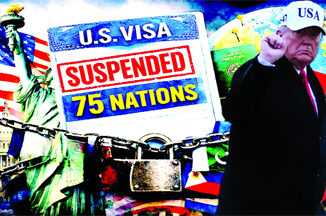
  • ‘Hope processing of immigrant visas will resume soon’: Pakistan as US visa suspension hits 75 nations

    ‘Hope processing of immigrant visas will resume soon’: Pakistan as US visa suspension hits 75 nations

    Islamabad (TIP)- Pakistan on Thursday, Jan 15, said it expects the United States to resume immigrant visa processing “soon” for its citizens, framing Washington’s move to pause applications as part of an internal policy review rather than a permanent clampdown. The pause, announced by the Trump administration on Wednesday, affects immigrant visa processing for applicants from 75 countries, including Pakistan, as part of a broader effort targeting foreigners deemed likely to rely on public benefits in the US.
    Responding to the decision, Foreign Office spokesperson Tahir Andrabi said Islamabad is seeking clarity from Washington and remains hopeful of an early restart. “We are in touch with the US authorities to ascertain further details. This is evolving news that we are following,” he said at his weekly press briefing.
    While no timeline has been given for restoring services, Andrabi reiterated Pakistan’s expectation that the disruption would be temporary. “We understand that this is an internal ongoing process of review of US immigration policies and system, and hope that the routine processing of immigrant visas will resume soon,” he said.
    The suspension could upend travel, study and employment plans for thousands of Pakistanis who apply for US visas each year, officials said.
    Andrabi also addressed wider regional developments, saying Pakistan is closely monitoring rising tensions between Iran and the United States. He said Pakistan attaches “great importance” to Iran as a neighbouring country and a key member of the international community, and expressed hope that peace and stability would prevail.
    Reaffirming Islamabad’s support for diplomatic efforts, Andrabi said Pakistan backs “all efforts aimed at the peaceful resolution of the situation,” adding that a stable Iran free from domestic unrest is in Pakistan’s interest. He also voiced confidence that the Iranian nation would overcome current challenges and emerge stronger.
    Separately, Andrabi urged India to refrain from what he called “baseless” allegations against Pakistan and instead focus on “growing extremism” within its own territory.

  • Pak security forces kill 13 terrorists in overnight raids in Khyber Pakhtunkhwa

    Pakistan’s security forces said they struck twice during the night in the country’s restive northwest, killing 13 terrorists in separate intelligence-led operations as Islamabad presses. In a statement issued on Thursday, Jan 15, the military’s media wing, the Inter-Services Public Relations, said the operations were carried out in Khyber Pakhtunkhwa during the intervening night of January 13 and 14, according to a news agency PTI.
    “Thirteen khawarij belonging to Fitna Al Khawarij were killed in two separate engagements in Khyber Pakhtunkhwa province,” the Inter-Services Public Relations (ISPR) said, using the term employed by Pakistani authorities for militants of the Tehreek-e-Taliban Pakistan. According to the statement, eight terrorists were killed in an intelligence-based operation in the Bannu district after security forces acted on reports of their presence. In a second operation in the Kurram district, five more terrorists were “neutralised.” “Sanitisation operations are being conducted to eliminate any other terrorist found in the area,” the ISPR said. The latest actions follow another operation earlier this week in Balochistan’s Kalat district, where four militants were killed, underscoring the scale of Pakistan’s ongoing counterterror campaign. Despite sustained military pressure, terrorist violence has surged.
    Taliban rule faces threat of collapse in Afghanistan
    The internal situation within Afghanistan’s Taliban regime appears increasingly fragile, with signs that the government’s unity is under serious strain. A leaked audio clip, cited in a recent BBC report, has brought long-suspected internal divisions into the open, raising concerns about the stability of the Taliban government.According to the report, the Taliban is now divided into two main factions. One is led by Supreme Leader Hibatullah Akhundzada, who operates largely from Kandahar and advocates a hardline, isolationist vision of an Islamic Emirate. The other faction, centered in Kabul and led by Interior Minister Sirajuddin Haqqani, supports strict Islamic rule but also favors limited engagement with the international community, economic revival, and at least some access to education for girls and women. The leaked audio features Akhundzada warning Taliban fighters that internal clashes within the government could lead to the collapse of the Islamic Emirate.

  • India isolated, Bangladesh with us: Lashkar terrorist resurfaces, boasts on camera

    India isolated, Bangladesh with us: Lashkar terrorist resurfaces, boasts on camera

    Islamabad (TIP)- Lashkar-e-Taiba (LeT) commander Hafiz Abdur Rauf, who led funeral prayers for slain terrorists in Muridke in the presence of Pakistani Army officers following the destruction of hideouts during Operation Sindoor, has resurfaced and made sweeping claims that global alignments have shifted in Pakistan’s favor.
    A US-designated terrorist and close associate of LeT founder Hafiz Saeed, Rauf asserted that Turkey and Bangladesh are now backing Islamabad.
    “Until yesterday, we were alone, and the whole world was with India. Today, the situation has changed. Turkey is with Pakistan, Bangladesh’s army chief was in Islamabad. Now, the whole world is leaning towards Pakistan,” he said, adding that a “new era of the Mujahideen” has begun, in which Pakistan is winning.
    Last year, when images of the LeT commander leading the funeral prayers went viral on social media, Pakistan Army dismissed he was a terrorist and instead described him as a “cleric” and “family man.” In his new video, the terrorist also claimed that India had “learned its lesson and would not dare to attack Pakistan for the next 50 years.”
    In an inflammatory statement, the Pakistan-based terrorist said events in Bahawalpur and Muridke on May 6 and 7 had run their course, but alleged that Pakistan delivered a decisive response on May 10 “with the help of Allah,” leaving India unable to even “look at Pakistan.”
    Security analysts note that the statements appear aimed at propaganda and morale-building, coming from the same terrorist commander who was seen frightened and distressed in the immediate aftermath of Operation Sindoor. The Pakistan-based terrorist’s fresh warning comes a month after he was seen in a video delivering an inflammatory speech in which he openly called for attacks on India, including a provocative threat that “Delhi will be made a bride.”

  • UK is watering down plans for mandatory digital ID cards after a backlash

    UK is watering down plans for mandatory digital ID cards after a backlash

    London (TIP)- The British government has watered down plans for mandatory digital identification cards, a contentious idea it had touted as a way to help control immigration.
    It’s the latest policy U-turn by Prime Minister Keir Starmer’s embattled center-left government, which is under fire from both opposition politicians and governing Labour Party lawmakers.
    Officials confirmed Wednesday that it won’t be compulsory for citizens and residents to show a digital ID card in order to get a job, ditching a key plank of the policy announced in September.
    “The digital ID could be one way you prove your eligibility to work,” Transport Secretary Heidi Alexander told the BBC, alongside other documents such as biometric passports.
    The government said detailed plans for digital ID cards will be “set out following a full public consultation which will launch shortly.”
    Starmer announced in September that “you will not be able to work in the United Kingdom if you do not have digital ID. It’s as simple as that.”
    He said the plan would help reduce unauthorized immigration by making it harder for people to work in the underground economy. He said it would also make it simpler for people to access health care, welfare, child care and other public services. He faced an immediate backlash, with polls suggesting support for digital ID plummeted after Starmer backed the idea. Britain has not had compulsory identity cards for ordinary citizens since shortly after World War II, and the idea has long been contentious. Civil rights campaigners argue it infringes personal liberty and puts people’s information at risk.
    Former Prime Minister Tony Blair tried to introduce biometric ID cards two decades ago as a way of fighting terrorism and fraud, but the plan was abandoned after strong opposition from the public and Parliament.
    After the latest policy shift, opposition Conservative Party chairman Kevin Hollinrake said that “Labour’s only consistent policy is retreat.” Liberal Democrat spokeswoman Lisa Smart said Starmer’s office “must be bulk-ordering motion sickness tablets at this rate to cope with all their U-turns.”

  • Trump says Zelenskiy, not Putin, is holding up a Ukraine peace deal

    Trump says Zelenskiy, not Putin, is holding up a Ukraine peace deal

    WASHINGTON (TIP)- U.S. President Donald Trump told Reuters that Ukraine – not Russia – is holding up a potential peace deal, rhetoric that stands in marked contrast to that of European allies, who have consistently argued Moscow has little interest in ending its war in Ukraine.
    In an exclusive interview in the Oval Office, Trump said Russian President Vladimir Putin is ready to wrap up his nearly four-year-old invasion of Ukraine. Zelenskiy, the U.S. president said, was more reticent.
    “I think he’s ready to make a deal,” Trump said of the Russian president. “I think Ukraine is less ready to make a deal.”
    Asked why U.S.-led negotiations had not yet resolved Europe’s largest land conflict since World War Two, Trump responded: “Zelenskiy.” Trump’s comments suggested renewed frustration with the Ukrainian leader. The two presidents have long had a volatile relationship, though their interactions seem to have improved over Trump’s first year back in office.
    At times, Trump has been more willing to accept Putin’s assurances at face value than the leaders of some U.S. allies, frustrating Kyiv, European capitals and U.S. lawmakers, including some Republicans.
    In December, Reuters reported that U.S. intelligence reports continued to warn that Putin had not abandoned his aims of capturing all of Ukraine and reclaiming parts of Europe that belonged to the former Soviet empire. Director of National Intelligence Tulsi Gabbard disputed that report at the time.
    After several fits and starts, U.S.-led negotiations have been centered in recent weeks on security guarantees for a post-war Ukraine to ensure that Russia does not invade it again after a potential peace deal. In broad terms, U.S. negotiators have pushed Ukraine to abandon its eastern Donbas region as part of any accord with Russia. Ukrainian officials have been deeply involved in recent talks, which have been led on the U.S. side by special envoy Steve Witkoff and Jared Kushner, Trump’s son-in-law. Some European officials have cast doubt on the likelihood of Putin agreeing to some terms recently hashed out by Kyiv, Washington and European leaders.
    Trump told Reuters he was not aware of a potential upcoming trip to Moscow by Witkoff and Kushner, which Bloomberg reported earlier on Wednesday.
    Asked if he would meet Zelenskiy at the World Economic Forum in Davos, Switzerland, next week, Trump said he would but implied no plans were set.
    “I would – if he’s there,” Trump said. “I’m going to be there.”
    Asked why he believed Zelenskiy was holding back on negotiations, Trump did not elaborate, saying only: “I just think he’s, you know, having a hard time getting there.” Source: Reuters

  • Japan and Philippines sign new defence pact as they face growing China aggression

    Japan and the Philippines signed a defense pact on Thursday that would allow the tax-free provision of ammunition, fuel, food and other necessities when their forces stage joint training to boost deterrence against China’s growing aggression in the region and to bolster their preparation for natural disasters.
    Japan has faced increasing political, trade and security tensions with China, which was angered by Prime Minister Sanae Takaichi’s remark that potential Chinese action against Taiwan could spark Japanese intervention.
    Japan and the Philippines have also had separate territorial conflicts with Beijing in the East China Sea and South China Sea that have continued to flare and threaten to draw in the United States, a treaty ally of the two Asian nations.
    Japanese Foreign Minister Toshimitsu Motegi signed the Acquisition and Cross-Servicing Agreement with Philippine Foreign Secretary Theresa Lazaro in Manila. During the ceremony, Japan also announced new security and economic development assistance to the Philippines.
    The military logistical agreement, which has to be ratified by Japanese legislators before it takes effect, is the latest key defense pact to be forged between Japan and the Philippines to deepen their security alliance.
    Aside from facilitating joint combat drills, it would also help Japan and the Philippines jointly respond to natural disasters, a mutual concern, and participate in peacekeeping operations by the United Nations, according to Japanese and Philippine officials.
    In mid-2024, both countries signed the Reciprocal Access Agreement, which allows the deployment of forces of either country to the other’s territory for joint and larger combat exercises, including live-fire drills. The RAA took effect in September.
    Japanese and Philippine officials are still negotiating another agreement that aims to boost the security of highly confidential defense and military information the countries could share. When Philippine President Ferdinand Marcos Jr. and then-Japanese Prime Minister Shigeru Ishiba jointly announced the start of negotiations for the Acquisition and Cross-servicing Agreement in Manila in April last year, Ishiba underscored the opposition by their countries of “any attempt to unilaterally change the status quo through force or coercion in the East and South China seas.”