Star shuttler PV Sindhu produced an impressive performance, defeating Japan’s Tomoka Miyazaki to book her spot in the women’s singles quarterfinals but India’s challenge ended in the men’s singles at the Malaysia Open Super 1000 badminton tournament in Kuala Lumpur on Thursday, January 8.
Former world champion Sindhu, returning after a long injury lay-off, defeated the eighth-seeded Miyazaki 21-8, 21-13 in 33 minutes.
Sindhu, a two-time Olympic medallist, will take on third-seeded Japanese Akane Yamaguchi, a three-time world champion, who defeated China’s Gao Fang Jie 21-11 4-21 21-17 in another match.
Top men’s pair of Satwiksairaj Rankireddy and Chirag Shetty, who won a second bronze at world championships last year, also sailed into the quarterfinals with a 21-18 21-12 win over Malaysia’s World No. 17 Junaidi Arif and Roy King Yap in 39 minutes.
The former World No. 1 Indians, who reached the finals of Hong Kong Open and China Masters in 2025, thus extended their head-to-head record against the Malaysian pair to 4–0.
The Asian Games champions will next face the winners of the clash between Chinese Taipei’s Chen Zhi Ray/Lin Yu Chieh and sixth seeds Fajar Alfian/Fikri Muhammad of Indonesia.
However, it was curtains for ace Indian men’s player Lakshya Sen and young Ayush Shetty who both lost at the pre-quarterfinal stage.
Month: January 2026
-
Malaysia Open: Sindhu, Satwik-Chirag secure quarterfinal spots
-

After Tilak Varma’s injury setback, BCCI left with no choice but to turn to Shreyas for T20 World Cup squad
New Delhi (TIP)- Tilak Varma’s surgery has dropped an uncomfortable question into India’s T20 World Cup build-up: What if he can’t medically be cleared in time, and who then could be his replacement? Reports quoting a BCCI official claim that Tilak reported acute pain in Rajkot while with the Hyderabad team for the Vijay Hazare Trophy, was diagnosed with testicular torsion, and underwent successful surgery.
The issue isn’t only that India loses a left-handed batter in the top three for the series against New Zealand. If Tilak’s recovery is delayed, it may force India to make a last-minute change to the squad for the marquee tournament.
Who can replace Tilak Varma and why?
The most sensible argument for replacing Tilak Varma should be a ready-made top middle-order batter who can handle pressure and allow India to keep their existing batting plan intact. In that brief, Shreyas Iyer fits the best. Tilak’s strongest value is how he keeps India functional in the overs 7-15, the phase that decides most T20s, when teams throw matchups, and boundary riders at you. The replacement India pick must be comfortable living in that phase, not just visiting it. Shreyas Iyer is naturally a No.3/ 4 operator, someone who has built his career around reading fields, managing spin-heavy stretches, and then shifting gears. Even if he doesn’t replicate Tilak’s handedness, he replicates a far more important thing: a top-four batter who can keep the innings from stalling in the middle overs.
Iyer’s inclusion avoids the extra opener trap
Several alternative names being floated in the ecosystem are top-order specialists, excellent players, but often openers by design. The issue with picking a specialist opener as a squad replacement in this case is simple: it quietly pushes India into an unwanted reshuffle. Someone must move, roles change, and suddenly the replacement becomes the centre of the batting order. Iyer does the opposite. He allows India to keep their template intact because he is already shaped for the same functional lane Tilak occupies: a top-four responsibility with middle-overs weight. That reduces decision-making friction in-game, which is what teams strive for in World Cups.
Form and readiness without role confusion
If India has to make a late squad switch, they will prefer a player who walks in with clarity. Iyer ticks that box, and he has recent, tangible evidence of rhythm too, returning to competitive cricket with 82 off 53 balls for Mumbai in the Vijay Hazare Trophy.
He has also been declared fit after clearance from the BCCI’s Centre of Excellence, which is significant because it removes the grey area around availability and allows selectors to focus purely on cricketing fitness. -

Madhya Pradesh: Where India’s many worlds meet
Madhya Pradesh occupies a unique place on India’s map and in its cultural imagination. Located at the geographical centre of the country, the state derives its name from its position, yet its true identity is far more layered. Popularly known as “The Heart of Incredible India,” Madhya Pradesh is a microcosm of the nation itself-where ancient history, sacred traditions, artistic brilliance, wildlife, cuisine, and modern life converge within a single landscape.
Surrounded by other Indian states on all sides, Madhya Pradesh lies largely across fertile plains and forested plateaus that form part of one of the oldest inhabited regions of the subcontinent. Much of this land was once known as Gondwana, the ancestral homeland of the Gond tribes, whose cultural legacy continues to shape the state’s rural and forest communities. Spiritually significant and historically rich, Madhya Pradesh is also one of the four sites of the Kumbh Mela, held every twelve years in the holy city of Ujjain.
The state’s vast cultural canvas includes everything from medieval temples and Buddhist monuments to royal palaces and colonial-era structures. Indore’s rare glass temple, Ujjain’s revered Mahakaleshwar Jyotirlinga, the sculpted marvels of Khajuraho, and the serene Sanchi Stupa near Bhopal collectively narrate India’s spiritual and architectural journey across centuries. Complementing this heritage is the state’s extraordinary natural wealth, with dense forests and wildlife reserves that rank among the finest in Asia.
Khajuraho: Stone Poetry of a Bygone Era
The temple town of Khajuraho, a UNESCO World Heritage Site, stands as one of India’s most extraordinary artistic achievements. Located in the Bundelkhand region, Khajuraho is renowned for its intricately carved Hindu and Jain temples built between 950 and 1050 AD under the Chandela dynasty. These temples depict not only religious devotion but also everyday life, music, dance, and human intimacy.
The famed erotic sculptures-often misunderstood-are deeply symbolic, reflecting ancient Indian philosophies that viewed desire as an integral part of existence and spiritual evolution. Once home to nearly 85 temples, the complex today preserves around 25, having survived centuries of invasions and natural decay. Yet what remains continues to astonish visitors with its boldness, symmetry, and artistic finesse.
Pachmarhi: The Quiet Charm of Satpuras
Tucked away in the Satpura range, Pachmarhi is the only hill station in Madhya Pradesh and its highest point. Known affectionately as “Satpura ki Rani,” the town sits at an altitude of about 1,067 metres and forms part of a UNESCO-recognised Biosphere Reserve. Dense forests, waterfalls, and ravines create a tranquil environment that contrasts sharply with the plains below.
According to legend, the Pandavas spent part of their exile here, leaving behind five sandstone caves that continue to attract pilgrims. Discovered in the 19th century by British officer Captain James Forsyth, Pachmarhi also retains colonial-era churches and bungalows, blending myth, nature, and history into a peaceful retreat.
Gwalior: Echoes of Royalty and Ragas
The city of Gwalior rises dramatically around its magnificent hilltop fort, one of the most formidable and visually striking forts in India. Founded by King Surajesan, Gwalior has long been associated with power, culture, and royal patronage. Its palaces and temples reflect centuries of architectural grandeur and strategic importance.
The opulent Jai Vilas Palace is among its most remarkable landmarks, famed for housing the world’s largest carpet and two massive chandeliers weighing nearly 3.5 tonnes each. Gwalior also holds a special place in India’s musical heritage as the birthplace of Tansen, one of the greatest exponents of Hindustani classical music. The annual Tansen Music Festival, held near his tomb, draws musicians and connoisseurs from across the country.
Bandhavgarh National Park: Realm of the Royal Tiger
Once the private hunting grounds of the Maharajas of Rewa, Bandhavgarh National Park is today one of India’s most celebrated tiger reserves. Known for having one of the highest densities of Bengal tigers, the park offers exceptional opportunities for wildlife sightings. In addition to tigers, it shelters over 22 species of mammals and nearly 250 species of birds.
The park derives its name from the ancient Bandhavgarh Fort, perched atop towering cliffs. Though now in ruins, the fort provides sweeping views of the surrounding forests. Jeep safaris remain the primary way to explore this rich and dynamic ecosystem.
Kanha National Park: Into
the Wild Heart of Central India
Sprawling across nearly 940 square kilometres, Kanha National Park is the largest national park in central India and ranks among the finest wildlife reserves in Asia. Established in 1955 and designated a Project Tiger Reserve in 1974, Kanha has been instrumental in wildlife conservation efforts, particularly in saving the rare Barasingha from extinction.
The park’s diverse landscapes-lush meadows, sal forests, and water bodies-are home to tigers, leopards, wild dogs, sloth bears, jackals, hyenas, deer, and a variety of reptiles. Immortalised through Rudyard Kipling’s The Jungle Book, Kanha continues to attract nature lovers, photographers, and wildlife enthusiasts from across the globe. -

Lord Shiva: The infinite reality beyond form, time and thought
Lord Shiva-Mahadeva-is undoubtedly the most profound, complex, and philosophically expansive deity within Hindu thought. He is Shiva, the Auspicious One; Rudra, the Terrible and Fierce; Nataraja, the Lord of the Cosmic Dance; Vishwanatha, the Lord of the Universe; and Mahakala, the Master of Time itself. He is the Destroyer, yet never merely destructive-rather, he is the great Transformer, dissolving forms so that renewal and regeneration may occur. Shiva is limitless and transcendent, unchanging and eternal, formless yet manifest, without beginning and without end. He is not simply a deity to be worshipped but the very metaphysical foundation upon which existence rests.
The word “Shiva” itself means that which is auspicious, benevolent, and eternally pure. Yet Shiva simultaneously embodies ferocity and detachment, reminding humanity that auspiciousness does not always appear gentle. In Sanatana Dharma, destruction is not chaos but a sacred necessity, for without dissolution there can be no transformation. Just as the universe cannot be fully grasped by the human intellect, Shiva too eludes complete description. Still, guided by scriptural wisdom and philosophical inquiry, humanity has continually attempted to understand his infinite nature.
From a Vedantic perspective, Shiva is the reality from which Brahman arises, in which it abides, and into which it ultimately dissolves. Brahman here does not merely denote the visible universe but the eternal, self-existing substratum-the supreme consciousness that is both the cause and support of all creation. It is the principle that sustains existence itself. Shiva is thus revered as Sarva-karana-karanam-the cause behind all causes. To perceive Shiva as a human-like god with limited attributes is a fundamental misunderstanding. The scriptures describe him as both Nirguna Brahman, beyond qualities and attributes, and Saguna Brahman, manifesting attributes for the sake of creation and devotion.
The Three Existential States of Shiva
Shiva’s infinite nature is traditionally understood through three interrelated states, each revealing a deeper dimension of ultimate reality.
In his Nirguna state, Shiva is entirely formless, attribute-less, and beyond sensory perception. In this state, the whole cosmos exists within him, yet he remains untouched by it. There is no division, no name, no form-only pure, undifferentiated consciousness. This is Shiva as the Absolute Truth, transcending time, space, causation, and individuality.
In his Saguna state, Shiva becomes immanent within creation. He manifests as the universe itself, with his divine essence (ansha) present in every atom, tree, insect, animal, and human being. All life forms-male and female alike-carry his presence. Although countless forms arise from him, none can fully define or limit him. He is simultaneously the creator, the creation, and the indwelling consciousness within all beings. The bridge between these two realities is the Nirguna-Saguna state, in which Shiva is worshipped as the Shivalingam. The term Shivalingam originates from the Sanskrit roots Shiva (the Lord) and Lingam (sign, symbol, or mark). The Shivalingam thus represents the symbolic presence of the formless divine within the manifested world. Philosophically, it signifies the cosmic source from which all forms arise. Everything in existence originates from a rounded or condensed source-a seed, a cell, a cosmic body. Even the planets and galaxies follow this primordial geometry. This universality of form is seen as the signature of Shiva’s creative principle. Since Shiva cannot be fully conceptualized, devotees worship his mark-the totality of Brahman symbolized through the Shivalingam. Thus, Shiva remains essentially formless, though he lovingly accepts every form through which devotees approach him. All images belong to him, yet no image can ever contain him.
The Sacred Symbolism of Lord Shiva
Symbolism has been central to Hindu spiritual expression since the earliest Vedic period. Each symbol associated with Shiva carries profound metaphysical, ethical, and spiritual meaning, guiding seekers toward deeper realization.
The crescent moon (Ardha-Chandrama) adorning Shiva’s forehead symbolizes mastery over time. In ancient civilizations, the lunar cycle governed the measurement of days, months, and seasons. By wearing the moon, Shiva demonstrates that he stands beyond temporal limitations. The moon’s influence over tides further illustrates that control over time is also control over natural forces. As Chandrashekhara, Shiva transcends time itself, existing eternally in the present moment.
The ashes (Bhasma) smeared upon Shiva’s body signify the ultimate truth of existence-impermanence. These ashes, drawn from cremation grounds, remind humanity that all material forms inevitably dissolve into dust. Ash represents renunciation, detachment, and transcendence over ego and bodily identity. As the god of dissolution, Shiva teaches that liberation lies not in clinging to form but in realizing the eternal beyond birth and death.
Shiva’s matted hair (Jata) reflects his ascetic nature and supreme mastery over vital energies. Symbolically, it represents his dominion over Vayu-the life force or breath. Every living being breathes because of him. As Pashupatinath, Shiva is the compassionate lord of all creatures, both wild and domesticated, embodying guardianship over life itself.
The sacred river Ganga, flowing from Shiva’s matted locks, symbolizes divine grace, purification, and cosmic balance. According to tradition, the celestial river would have shattered the earth with its force had Shiva not restrained and moderated its descent. By allowing it to flow gently through his hair, Shiva made the divine accessible to humanity. As Gangadhara, he is revealed not only as a destroyer but also as a sustainer-one who channels purity, fertility, peace, and spiritual renewal.
The third eye, for which Shiva is known as Trinetra or Tryambakam, represents inner wisdom and higher perception. Human vision, limited to two eyes, often fails to grasp truth. The third eye symbolizes spiritual insight, discernment, and the annihilation of ignorance and desire. Ethically, it teaches restraint, balance (samata), purity of conduct (sadhuta), and expansive vision (doordrishti). From a yogic perspective, the awakening of the third eye-or pineal center-elevates consciousness beyond space-time limitations, enabling profound spiritual realization.
The serpent coiled around Shiva’s neck represents time in its three dimensions-past, present, and future. Its cyclical coiling signifies the repetitive nature of existence. Shiva’s calm adornment of the serpent indicates his complete mastery over time and death. The snake also symbolizes Kundalini Shakti, the dormant spiritual energy residing within every being, awaiting awakening through discipline, devotion, and awareness. -

Union Budget to be presented on Feb 1; Economic Survey on Jan 29
New Delhi (TIP)-The Union Budget for the financial year 2026–27 will be presented in the Lok Sabha on February 1, while the Economic Survey will be tabled on January 29. Union Finance Minister Nirmala Sitharaman will present the Union Budget for a record ninth time.
The Budget Session of Parliament will kick off on January 28 with President Droupadi Murmu’s address to a joint sitting of both Houses in the Central Hall. Prime Minister Narendra Modi, Union Home Minister Amit Shah, Defence Minister Rajnath Singh, all the other top ministers, and Members of Parliament are set to attend the presidential address.
This will be only the second time the Union Budget will be presented on a Sunday. The previous occasion was on February 28, 1999, when then Finance Minister Yashwant Sinha presented the Budget for 1999–2000.
As Union Budget 2026 approaches, those income tax changes continue to shape how individuals assess relief, choose between tax regimes, and plan their finances.
Investor and entrepreneur Amit Baid commented, “Budget 2025 marked an inflection point in India’s personal tax framework. It reshaped the new tax regime through revised slabs and a higher rebate, effectively exempting income up to Rs 12 lakh and up to Rs 12.75 lakh for salaried taxpayers after the standard deduction”.
Budget 2025 delivered meaningful relief to a large section of salaried taxpayers, sharply narrowed the gap between the old and new tax regimes, and set the direction for how personal taxation would evolve going forward.
Expectations from Budget 2026, however, are more measured.
“With substantial relief already extended in the previous Budget and recent GST reductions easing consumer costs, the government is unlikely to introduce additional cuts to income tax slabs this year,” Baid said. He added that only limited tweaks may be possible.
“Some incremental adjustments such as a modest increase in the standard deduction under the new regime remain possible, particularly to offset inflation,” he said.
Santhosh Sivaraj, Partner – Global Mobility Services, Tax and Regulatory Advisory at BDO India, said certain old-regime deductions may come up for review. -

Oil prices recover, stocks ease as investors weigh geopolitics: US data
Singapore (TIP)- Oil prices have steadied after their recent slide, while stocks retreated as investors assessed the implications of deepening geopolitical tensions and mixed U.S. labour market data.
Top U.S. officials said on Wednesday the country needs to control Venezuela’s oil sales and revenue indefinitely to stabilise the latter’s economy, rebuild its oil sector and ensure it acts in America’s interests.
That came as the U.S. seized two Venezuela-linked oil tankers in the Atlantic Ocean the same day, one sailing under Russia’s flag, as part of President Donald Trump’s aggressive push to dictate oil flows in the Americas.
Developments in Venezuela continue to dominate headlines following the toppling of Nicolas Maduro, with most of the market reaction thus far playing out in commodities.
Oil prices have slid this week on the prospect of higher Venezuelan crude output, though they recovered on Thursday, with U.S. crude rising 0.54% to $56.29 a barrel, while Brent crude futures advanced 0.55% to $60.29 per barrel.
“The market’s negative reaction to the Trump comments on controlling Venezuela’s oil looks a little misplaced,” said Daniel Hynes, ANZ’s senior commodity strategist.
“U.S. control of oil sales could actually mean ongoing sanctions or restrictions remaining in place in the short term, which would be bullish for oil prices. I suspect that is why prices are recovering this morning.”
Elsewhere, stocks mostly traded lower in the Asian session, following a strong start to the New Year that lifted markets to fresh highs despite geopolitical fractures globally.
“It seems the Asian markets are just taking a breather after a strong start to 2026,” said Charu Chanana, chief investment strategist at Saxo.
“Geopolitical headlines are in the driver’s seat. China’s dual-use export ban to Japan, and talk of potential rare earth risk, is making investors trim Japan beta.”
Shares in Japanese chemical manufacturers fell on Thursday while those of their Chinese rivals jumped after China’s commerce ministry said it is launching an anti-dumping probe into imports of chemicals used in chipmaking, as tensions between the two nations escalate.
U.S. NONFARM PAYROLLS UP NEXT
Geopolitics aside, investors also had their eye on the U.S. jobs report due on Friday, which could provide further clarity on the Federal Reserve’s rate outlook.
Analysts at Goldman Sachs said they are forecasting an above-consensus 70,000 rise in nonfarm payrolls in December, while expecting the unemployment rate to edge down to 4.5%.
Overnight, a slew of data releases painted a mixed picture of the U.S. labour market, which appears stuck in a “no hire, no fire” state.
“The November JOLTS report signals that labor turnover remains muted. The low churn environment has underpinned a tenuous balance between labor demand and labor supply,” said economists at Wells Fargo in a note.
“With firms still cautious about expanding headcount, we expect job growth to remain subdued.”
The readings did little to alter market expectations of two more Fed cuts this year and in turn kept currency moves muted on Thursday, with the euro little changed at $1.1681 while sterling last bought $1.3458.
The yen rose slightly to 156.67 per dollar, while the dollar index was little changed at 98.71.
Elsewhere, spot gold was down 0.71% at $4,420.43 an ounce.
U.S. oil companies want “serious guarantees” from Washington before they make large investments in Venezuela, as President Donald Trump urges them to back his bid to reshape energy markets. U.S. officials held talks with top energy executives in Miami, the FT reported, citing people familiar with the matter.
The talks come as Washington and Caracas progress in negotiations to supply up to 50 million barrels of Venezuelan oil to the United States and President Donald Trump presses American oil companies to invest in the South American country’s energy sector. -
Nifty 50 likely to deliver modest 7.6% returns by end-2026 as valuations remain high: Bernstein
The Nifty 50 index is expected to deliver only around 7.6 per cent returns by the end of 2026 as India enters the year as one of the most expensive equity markets globally, according to a report by Bernstein.
The report said that even after assuming steady earnings growth, returns from Indian equities are likely to remain modest due to high valuations. Bernstein highlighted that while 2025 was a moderate year for earnings, its estimates still point to limited upside for the benchmark index in 2026.
It stated “we reach our Nifty target of 28,100 by the end of 2026 – which is a modest 7.6 per cent returns in the year”
According to the report, assuming a 13.5 per cent earnings compound annual growth rate (CAGR) up to FY28 and applying a 19 times multiple on two-year forward earnings per share (EPS), the Nifty 50 target comes to 28,100. This implies a return of around 7.6/7.5 per cent, which Bernstein described as modest.
Based on this outlook and its focus on absolute returns, the brokerage said it has cut its stance on India to “neutral”.
At the end of 2025, with the Nifty at 26,150, the index was trading at 20.4 times one-year forward earnings. Bernstein assumed a 15 per cent EPS growth for 2026/FY27, after adjusting for exceptional items, and 12 per cent growth for the following year.
Based on these assumptions and a 19 times two-year forward P/E, the Nifty target of 28,100 by the end of 2026 implies returns of about 7.6 per cent, much lower than the 11 per cent returns seen in 2025. -

Arattai vs WhatsApp: Features that might make you switch today
Zoho’s messaging platform, Arattai, had a big 2025. The homegrown messaging app skyrocketed in popularity and even topped the charts on app stores. Now, the company has shared its 2025 ‘Wrapped,’ detailing the major new features it introduced in the past twelve months, which may even entice you to ditch WhatsApp in favour of the Indian app.
The official Arattai X handle shared the list in a thread. The thread covers the entire year, listing each update pushed by the platform in an effort to bring more convenience to users.
The list includes –
– End-to-end encryption: While E2E encryption was rolled out later in the year, it was arguably the most important Arattai update. End-to-end encryption ensured that direct chats on the platform remain secure.
– Share screen during calls: Arattai allows users to share their screen when on a call on the platform.
– Start meetings without an account: Users on Arattai can start meetings without having to create an account.
– Quick reactions: You can react to a message on Arattai by simply double-tapping.
– Add captions to GIF: Ever wanted to give context to your GIF? On Arattai, you can add a caption to make your friends better understand why you sent a GIF.
– Chat list filters: Arattai comes with chat filters, allowing you to find the chat you are looking for with ease.
– Lock meetings: To ensure your meeting on Arattai is not disturbed, you can lock the meeting and prevent anyone else from joining in.
– Display picture updates: Get notified when your close ones change their profile picture.
– Message-based reactions: React to any message as you want with different emojis.
– Reaction alert: Be notified when someone reacts to your message
– Story likes: You can like someone’s story on Arattai to let them know you appreciate what they posted.
– Story notifications: You can get notified when someone posts on a story on the app
– Repeat meetings: You can schedule recurring meetings on the platform.
– Language support: Arattai supports 17 different languages. -
Finland working on transmitting electricity without wires
Finland continues to make progress in the field of wireless electricity transmission, an area of research that aims to send power through the air without the use of traditional cables or plugs.
Recent demonstrations and experiments by Finnish researchers have highlighted steady advancements in technology that could one day reshape how devices are powered, though widespread commercial deployment remains distant.
In controlled experiments, engineers have shown that electricity can be transmitted through the air using highly controlled electromagnetic fields and resonant coupling techniques, conceptually similar to the way data is sent via Wi-Fi but tailored for energy transfer. These approaches build on decades of research into magnetic resonance and inductive power transfer, which seek to send energy efficiently across short distances without physical contact between transmitter and receiver.
Studies conducted at Finnish institutions such as Aalto University have contributed to the theoretical and experimental foundation of the technology. Past research from the university demonstrated that magnetic loop antennas can transfer power wirelessly at relatively high efficiency over short ranges, offering insights into how to optimize coupling and reduce energy losses. -

Humans might have left Earth by the time Voyager-I reaches another Solar System
In September 1977, Nasa launched a message in a bottle into the cosmic ocean. Today, Voyager 1 is no longer just a planetary scout; it is a silent ambassador drifting through the cold, dark void of interstellar space.
After a 35-year journey, Voyager 1 reached interstellar space in 2012.
Having long since bid farewell to our solar system, the 48-year-old probe is now on a journey so vast that human history seems like a mere blink in comparison.
The most distant human-made object is currently moving at approximately 61,155 kilometres per hour, yet even at this breakneck speed, the Milky Way galaxy is a very big place.
While many imagine Voyager 1 heading straight for a specific target, space is mostly empty. It is not exactly aiming for a “new Earth,” but rather drifting where gravity and its initial momentum take it.
In about 40,000 years, the spacecraft will make its closest approach to a star called Gliese 445. Located in the constellation Camelopardalis, this star is actually moving toward our solar system while Voyager moves toward it. Despite this mutual “handshake,” the probe will still be 1.6 light years away from the star at its closest point.
THE OORT CLOUD AND BEYOND
Before it can even dream of meeting Gliese 445, Voyager 1 must navigate the Oort Cloud. This is a massive, spherical shell of icy debris that surrounds our solar system. It is so large that it will take the probe about 300 years just to reach the inner edge, and perhaps 30,000 years to fly out the other side. This highlights the sheer scale of the “final frontier” that pop culture so often makes look easy.
Voyager 1 is effectively a ghost ship, as its power sources will likely die out long before it reaches the next star.
Ultimately, Voyager 1 represents the ultimate endurance test for human engineering. By the time it reaches the vicinity of Gliese 445, the Earth it left behind will be unrecognisable. Whether humanity still exists to track its progress is a question for philosophers, but for now, the gold-plated record on its side carries the sounds of our world into infinite silence. It remains a testament to our desire to be known, even if the “hello” takes 40,000 years to arrive. -

Protein, fiber rich meals help you lose weight faster
Weight loss isn’t just about eating less, it’s about eating smarter. Research consistently shows that meals rich in protein and fibre help people lose weight faster by improving satiety, stabilising blood sugar, and reducing overall calorie intake without extreme dieting.
Weight loss is often reduced to counting calories or skipping meals, but growing evidence suggests that what you eat matters as much as how much you eat. Nutrition research over the past decade has shown that building meals around protein and fibre can significantly improve weight loss outcomes without extreme dieting or hunger. These two nutrients work together to control appetite, stabilise blood sugar levels and support metabolism, making weight loss more sustainable in the long run.
Protein is known to increase satiety, meaning it helps you feel full for longer after a meal. It also requires more energy to digest compared to fats and carbohydrates, which slightly boosts calorie burn. Fibre, especially soluble fibre found in fruits, vegetables, legumes and whole grains, slows digestion and delays stomach emptying. This helps prevent sudden spikes and crashes in blood sugar that often trigger cravings and overeating.
When meals are low in protein and fibre, people tend to feel hungry sooner and snack more frequently, often choosing ultra-processed foods high in sugar and refined carbs. In contrast, diets that prioritise protein and fibre-rich foods have been consistently linked to better portion control, improved gut health and gradual fat loss. Rather than focusing on restriction, this approach shifts attention to nourishment, helping people lose weight in a healthier, more realistic way.
Protein takes longer to digest and keeps you full for longer. Studies show high-protein meals reduce hunger hormones while increasing satiety hormones, helping people naturally eat fewer calories through the day.
Fibre slows digestion and improves gut health. Soluble fibre forms a gel-like substance in the gut, delaying stomach emptying and reducing cravings. High-fibre diets are consistently linked with lower body weight.
When protein and fibre are combined in meals, such as dal with vegetables or eggs with whole grains, they stabilise blood sugar, prevent energy crashes, and reduce snacking, making weight loss more sustainable. -

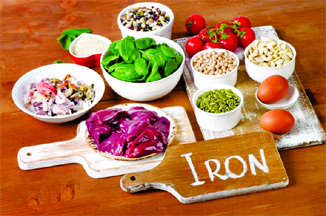
Iron rich foods for anaemia: What to eat to boost haemoglobin
Anaemia, often caused by low iron levels, is a common nutritional concern, especially among women and children in India. Iron is essential for making haemoglobin, the protein in red blood cells that carries oxygen throughout the body. The good news? A balanced diet with iron-rich foods can significantly help improve iron levels and reduce symptoms like fatigue, dizziness and weakness.
WHY IRON IS IMPORTANT FOR THE BODY
Iron plays a key role in oxygen transport, energy production and immune function. When iron intake is inadequate, the body cannot produce enough healthy red blood cells, leading to iron-deficiency anaemia.
BEST PLANT-BASED IRON-RICH FOODS
Vegetarian sources of iron are widely available and effective when paired with vitamin C.
– Spinach, amaranth and beetroot leaves
– Lentils, chickpeas, kidney beans and soybeans
– Jaggery, dates and raisins
– Pumpkin seeds, sesame seeds and peanuts
Tip: Combine these foods with lemon, amla or oranges to enhance iron absorption.
BEST ANIMAL-BASED
IRON-RICH FOODS
Animal sources contain heme iron, which is more easily absorbed by the body.
– Chicken and turkey
– Fish and shellfish
– Eggs
These foods are especially beneficial for people with moderate to severe anaemia.
FRUITS AND VEGETABLES THAT
SUPPORT IRON ABSORPTION
While some fruits are not iron-rich, they help the body absorb iron better.
– Oranges, guava and kiwi
– Amla and berries
– Tomatoes and bell peppers
FOODS TO AVOID WITH IRON-RICH MEALS
Certain foods can reduce iron absorption if consumed together.
– Tea and coffee
– Excess dairy
– Highly processed foods
It’s best to consume these at least one to two hours away from iron-rich meals. -

Researchers develop AI model that predicts disease risk from sleep data
Researchers have developed an artificial intelligence model that can predict one’s risk of developing over a hundred different health conditions using sleep data.
Named ‘SleepFM’, the model was developed by researchers, including those from the US’ Stanford University, and trained on nearly six lakh hours of sleep data, collected from 65,000 participants.
The AI system, described in a paper in the journal Nature Medicine, was initially tested on standard tasks involving sleep analysis, such as tracking different stages of sleep or diagnosing severity of sleep apnoea.
The model was then used to predict the future onset of disease by analysing sleep data, with health record data sourced from a sleep clinic.
More than 1,000 disease categories in the health records were looked at and 130 could be predicted with reasonable accuracy using a patient’s sleep data, the researchers said.
“We record an amazing number of signals when we study sleep. It’s a kind of general physiology that we study for eight hours in a subject who’s completely captive. It’s very data rich” senior author Emmanual Mignot, professor in sleep medicine at Stanford University’s department of psychiatry and behavioural sciences, said.
Polysomnography — considered the gold standard in sleep studies — is a common means of collecting sleep data that uses sensors to record brain activity, heart function, respiratory signals and eye movements, among other aspects. The AI model was able to incorporate multiple streams of data — such as electroencephalography (electrical activity of brain), electrocardiography, electromyography (electrical activity of muscles), pulse reading and breathing airflow — and glean how they relate to each other, the researchers said. The team developed a new technique for training the AI, called ‘leave-one-out’ contrastive learning. This essentially hides one modality or stream of data and challenges the model to reconstruct the missing piece based on the other signals. -

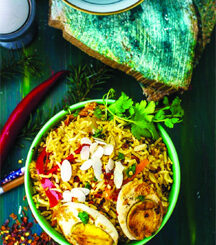
Egg Fried Rice
Ingredients
– Basmati Rice – 2 cups, Eggs – 10, Onions – 2 Spring, Onions – 1 bunch, Beans – 10, Carrot – 2, Capsicum – 2, Cabbage – 100 gms
– Pepper Powder – 1/2 tblsp, Green Chillies – 2, Tomato Puree – 2 to 3 tblsp (or as required), Ajinomoto – 3 tsp (optional), Soy Sauce – 4 tblsp, Salt as per taste, Oil – 3 tblsp, Coriander Leaves – few, chopped
Method
– Pressure cook the rice until 1 whistle and remove.
– Chop all the vegetables finely and keep aside.
– Grind together the green chillies and mix well 2 tblsp water.
– Heat oil in a pan.
– Saute the onions for a minute.
– Add the chopped vegetables one by one and cook for a minute or two.
– Add the green chilli paste and tomato puree.
– Add salt and ajinomoto.
– Mix well and add soy sauce.
– Break the eggs into the pan and stir-fry for 3 to 4 minutes.
– Add the cooked rice and mix until all ingredients are combined.
– Garnish with coriander leaves.
– Serve. -
Home remedies to help advance menstruation
Delayed or irregular menstruation is a common concern among women and can be influenced by stress, hormonal fluctuations, travel, lifestyle changes, or dietary imbalance. Across cultures, especially in traditional Indian households, certain home remedies have long been believed to help stimulate or regulate menstrual flow. These remedies are generally aimed at improving circulation, warming the body, and supporting hormonal balance rather than forcefully inducing periods.
Parsley
Parsley has been traditionally used for inducing menstruation for centuries. Apiol and myristicin, two substances contained in parsley, stimulate contractions of the uterus.
Cumin
Cumin seeds, also known as jeera in Hindi, belong to the same family as parsley and also have a similar effect.
Carom seeds (Ajwain)
A concoction of carom seeds and jaggery will help in inducing periods besides relieving menstrual cramps. You can boil 1 tsp carom seeds with 1 tsp jaggery in 1 glass of water and consume it empty stomach in the morning.
Papayas
It’s the most effective home remedy available to prepone periods. Raw papaya stimulates contractions in the uterus and can help in inducing periods. The carotene present in papaya stimulates the estrogen hormone thereby inducing early period.
Ginger
Ginger tea is one of the most powerful emmenagogue (herbs with magical properties that stimulates menstrual flow, resulting in promotion of menstruation), but unlike parsley it can have some side effects, like acidity. For extremely delayed periods, a combination of parsley and ginger tea is recommended. Ginger is thought to increase the heat around the uterus, thus promoting contraction.
Coriander seeds
Coriander seeds are said to be the most effective home remedy for irregular periods because of its emmenagogue properties. You can boil 1 tsp. of coriander with 2 cups of water and wait until the water reduces to just one cup. Use a strainer to remove the seeds and drink the concoction thrice a day for a couple of days before your monthly period.
Fennel seeds (Saunf)
Fennel seeds can be boiled in water to make a fragrant tea that should be consumed every morning on an empty stomach in order to regulate your period and have a healthy flow. -

Scented by nature: Essential oils you can wear like perfume
As people move toward cleaner beauty and more conscious lifestyle choices, essential oils are emerging as elegant alternatives to synthetic perfumes. Drawn from flowers, woods, resins, and citrus peels, these oils offer natural, layered fragrances that evolve gently on the skin. Worn alone or blended, essential oils not only smell exquisite but also carry subtle emotional and therapeutic benefits-making them timeless aromatic companions.
Here is a detailed look at some essential oils that effortlessly double up as aromatic perfumes, along with their fragrance profiles and emotional resonance.
Sandalwood (Chandan)
Sandalwood essential oil is among the most revered fragrance materials in the world, particularly in India. Its aroma is soft, creamy, woody, and deeply grounding, with a lingering warmth that feels both sacred and sensual. Traditionally used in spiritual rituals and classical perfumery, sandalwood acts as an excellent base note, helping lighter scents last longer on the skin.
As a natural perfume, sandalwood conveys calmness, depth, and quiet confidence. It is especially suited for evening wear and meditative moods, and blends beautifully with floral oils like rose and jasmine, as well as spicy notes like cardamom.
Rose (Gulab)
Rose essential oil-often called the “queen of oils”-offers a rich, romantic, slightly sweet floral fragrance with subtle green and honeyed undertones. Highly prized in both Ayurveda and perfumery, rose oil unfolds gradually on the skin, making it a luxurious natural perfume. Beyond its scent, rose carries emotional symbolism associated with love, balance, and emotional healing. When worn as a perfume, it feels elegant and timeless, suitable for both day and evening. It pairs exquisitely with sandalwood, patchouli, and citrus oils for a modern floral blend.
Jasmine
Jasmine essential oil is intoxicating, sensual, and deeply floral, with warm, almost animalic undertones. Often described as heady and hypnotic, jasmine has been a cornerstone of traditional attars and high-end perfumes for centuries. As a standalone natural perfume, jasmine feels bold yet feminine, making it ideal for special occasions or nighttime wear. It also has uplifting and confidence-enhancing properties, making it as emotionally potent as it is aromatic.
Vetiver (Khus)
Vetiver essential oil has a deep, earthy, smoky, and slightly sweet aroma that evolves beautifully over time. Extracted from the roots of the vetiver grass, it is grounding, cooling, and remarkably long-lasting-qualities that make it a prized base note in perfumery. Worn as a natural perfume, vetiver feels understated, elegant, and androgynous. It is particularly popular in warm climates due to its cooling effect and blends well with citrus oils, lavender, and sandalwood.
Lavender
Lavender essential oil is instantly recognizable for its fresh, herbal, floral aroma with soft woody undertones. While often associated with relaxation and sleep, lavender also works wonderfully as a light, everyday natural perfume. Its clean and calming scent makes it ideal for daytime wear, especially for those who prefer subtle fragrances. Lavender blends effortlessly with citrus oils, rosemary, patchouli, and bergamot, allowing for easy customization.
Patchouli
Patchouli essential oil is bold, earthy, and musky, with sweet and woody nuances that deepen with age. Once associated with counterculture movements, patchouli has re-emerged as a sophisticated perfume ingredient in modern niche fragrances. As a natural perfume, patchouli exudes warmth, mystery, and sensuality. It lasts exceptionally long on the skin and works well as a base note. -

Pakistan air force chief meets Saudi military leadership discusses ways to expand military ties
Islamabad (TIP)- Pakistan’s air chief met Saudi Arabia’s top air force commander and discussed opportunities to expand military cooperation between the two longtime allies, the military said here on Thursday.
Pakistan Air Force (PAF) Chief, Air Chief Marshal Zaheer Ahmed Baber Sidhu, this week visited the Gulf Kingdom, where he met Commander of the Royal Saudi Air Force Lt Gen Turki bin Bander bin Abdulaziz and Chief of the General Staff General Fayiadh bin Hameed Al-Rowaily.
According to a statement by the Pakistan military on Thursday, bilateral cooperation, regional security dynamics and future defence collaboration were discussed during the meetings.
It said that the Saudi defence leadership praised the robust bond of fraternity between the two brotherly nations and commended the close, enduring cooperation that exists between their respective Air Forces.
“Acknowledging the growing significance of Multi Domain Operations in addressing the complexities of modern warfare, the military leadership of the Kingdom of Saudi Arabia conveyed strong interest in leveraging Pakistan Air Force’s rich operational experience through enhanced joint training and operational collaboration,” the statement said.
“They also appreciated Pakistan’s constructive role in promoting regional peace and stability,” it added.
“Both sides expressed satisfaction over the existing level of cooperation and agreed to further enhance engagement through joint training, operational collaboration and exchange of professional expertise,” the statement said.
Sidhu highlighted the historic, time-tested and fraternal relations between Pakistan and Saudi Arabia, founded on shared religious values, mutual respect and strategic alignment.
He reiterated his unwavering commitment to enhancing existing ties in the realm of military-to-military cooperation through bilateral and multilateral exercises. He underscored the profound transformation of the PAF in recent years, with particular emphasis on its evolution into a robust Multi-Domain Force.
Sidhu emphasised that this enhanced capability, seamlessly integrating space, electronic warfare, cyber, niche technologies and artificial intelligence domains, was decisively manifested during the May conflict in 2025, reflecting PAF’s operational prowess, adaptability and combat effectiveness, the statement said.
It further said that his visit “underscores the depth of the enduring strategic partnership between Pakistan and the Kingdom of Saudi Arabia and reflects the shared commitment of both nations to further strengthen cooperation in the defence and aviation sectors”. -

Pakistan bows to China, lets Beijing set up security posts on its soil
Islamabad (TIP)- Pakistan has quietly conceded unprecedented security space to China, agreeing to allow the establishment of Chinese-controlled “security posts” inside its territory amid mounting pressure from Beijing over repeated attacks on Chinese nationals. According to senior security sources cited by CNN-News18, the move marks a significant erosion of Pakistan’s sovereignty and reflects Islamabad’s deepening strategic dependence on China as it struggles to control militant violence on its own soil.
The decision follows sustained Chinese anger over Pakistan’s failure to protect workers and assets linked to the China-Pakistan Economic Corridor, despite years of military deployment. Nearly 90 Chinese citizens have been killed in Pakistan since 2014, exposing what Beijing sees as a chronic security breakdown. With Islamabad unable to guarantee safety, China has now pushed its way deeper into Pakistan’s internal security architecture.
China pushes for inner security posts inside Pakistan
Sources told CNN-News18 that Pakistan’s commitments were finalised during a recent China-Pakistan Strategic Dialogue in Beijing, where Chinese officials raised sharp concerns over continuing militant attacks on Chinese engineers, technicians, and construction workers.
During the visit, Pakistan’s Interior Minister Mohsin Naqvi reportedly signed a confidential agreement with China’s Ministry of Public Security. Under this arrangement, Pakistan has agreed to allow the creation of Chinese “inner-posts” or security nodes located close to Chinese personnel and assets, going well beyond conventional perimeter protection.
Islamabad has also agreed to expand Special Protection Units that will operate exclusively for Chinese nationals. These SPUs are being deployed across Islamabad, Lahore, Karachi, Quetta, Sukkur, Peshawar, Gwadar, and Gilgit-Baltistan, supplementing the military forces already guarding major CPEC projects.
Sources say Beijing has been blunt in its assessment that Pakistan’s existing security framework has failed. China has therefore demanded layered, localised protection closer to Chinese sites, along with joint police training, deeper intelligence sharing, and a coordinated counter-terrorism mechanism involving both countries’ security agencies.
Pakistan’s Deputy Prime Minister Ishaq Dar and Interior Minister Naqvi have assured Chinese officials that Islamabad is taking “strong measures at all levels” to plug security gaps. Both sides have also agreed to conduct joint security reviews every 90 days, effectively institutionalising Chinese oversight of Pakistan’s internal security arrangements.
Beijing’s non-negotiable terms and Pakistan’s vulnerability
Despite pumping nearly $60 billion into Pakistan’s infrastructure, China remains deeply dissatisfied with the security environment. Sources told CNN-News18 that Beijing placed just two non-negotiable demands before Islamabad.
The first is absolute security for Chinese nationals operating in Pakistan. The second is a one-window operational system that allows Chinese investments, logistics, and financial flows to bypass Pakistan’s slow and opaque bureaucracy.
For Pakistan, the concessions underline its growing inability to say no to its primary economic lifeline. Analysts say the expanding Chinese security footprint raises uncomfortable questions about transparency, civilian oversight, and how much control Islamabad is willing to surrender in exchange for financial survival.
The developments carry serious implications for India. The expansion of Chinese security infrastructure in Pakistan, particularly in Gilgit-Baltistan, brings Chinese personnel closer to India’s sensitive northern frontiers. It also deepens China’s physical presence in territories that India considers illegally occupied by Pakistan.
More importantly, the growing integration of Chinese and Pakistani security mechanisms strengthens the strategic nexus between Beijing and Islamabad. This risks turning Pakistan into a forward operating zone for Chinese interests in South Asia, with potential spillover effects for regional stability. -
Another BNP leader Azizur Rahman Musabbir shot dead in Dhaka
Former Swechchhasebak Dal leader Azizur Rahman Musabbir was shot dead by unidentified assailants in Bangladesh’s capital Dhaka on Tuesday, January 6, night, police and party sources said, in the latest incident of political violence ahead of elections.The killing comes amid increasing violence in Bangladesh, with the model code of conduct in force ahead of voting scheduled for February 12. Just days ago, a Jubo Dal leader was shot in a separate incident. Earlier, on December 12, Osman Hadi, a prominent anti-India leader, was also shot dead.
Musabbir, who previously served as general secretary of Dhaka Metropolitan North Swechchhasebak Dal, the volunteer wing of the Bangladesh Nationalist Party, was targeted in the Dhaka’s Karwan Bazaar area around 8.30 pm (local time).
Police said the attack took place near the Super Star Hotel, close to the Bashundhara City Shopping Complex, a crowded commercial zone in central Dhaka. According to initial accounts, assailants opened fire at close range, killing Musabbir at the scene.
Another person was wounded in the shooting and rushed to hospital for treatment. Authorities said the injured individual’s condition was stable.
Additional Deputy Commissioner of Tejgaon Division of the Dhaka Metropolitan Police, Fazlul Karim, confirmed to local media that two people were shot in an alley beside Star Kabab in Karwan Bazaar. Musabbir later succumbed to his injuries at a private hospital in the Panthapath area, Karim said, adding that he had suffered a gunshot wound to the abdomen. -

Venezuela’s Interim Prez says citizens did not deserve ‘vile aggression’
Caracas (TIP)- Venezuela’s Interim President Delcy Rodriguez said in a message to the US that Venezuelans “did not deserve this vile, warmongering aggression,” El Cooperante reported.
Rodriguez also announced the upcoming construction of a monument in honor of all citizens who died in the US military incursion into Venezuela on January 3.
“No one surrendered here; there was a fight for this homeland, for our liberators, for Chavez, and for Venezuela. That is our greatest satisfaction, and that is our answer. We will face them, one-on-one, and we will show them what the children of Bolivar are made of,” she said as quoted by the Spanish El Cooperante news outlet.
Rodriguez emphasized that weapons in Venezuela are used to “defend” the population, country, sovereignty and dignity, and not for acts of “aggression” against other nations.
She added that Venezuela will give the US a “lesson” in diplomacy, because, he said, the country has a universal legacy dating back to Simon Bolivar. “Our liberator never taught our men and women in arms to be warmongers or to use supremacy to humiliate anyone.”
Rodriguez stressed that the Venezuelans and Cubans who died during the US incursion are “children of the homeland,” asserting that they gave their lives for humanity.
She also announced the creation of a commission for the families of the deceased citizens, as per El Cooperante.
Meanwhile, Nobel Peace Prize recipient Maria Corina Machado asserted this Thursday that she will not rest until all “political prisoners” in the country are freed, following the government’s announcement regarding the release of a group of Venezuelans, as per El Cooperante.
“Today, the truth that was persecuted and silenced for years is finally breaking through, despite the arbitrariness, the cruelty, and the fear. For many months, many years, even decades, their families have borne the fierce weight of a sentence that wasn’t in any file, the sentence of waiting, of silence, of the home that remained standing while the country seemed to be collapsing around them,” she said.
Machado acknowledged the strength and determination of the detainees’ families and asked them to see this moment as an “act of moral restitution,” confirmation that their fortitude was not in vain. “Dignity knows how to wait without surrendering and ultimately triumph,” as reported by El Cooperante. -

New clashes hit Iran as opposition urges protests, strikes
PARIS (TIP)- Security forces used tear gas and live fire to disperse protesters in Iran, rights groups said on Thursday (Jan 8), as people angered by economic crisis kept up their challenge to the authorities and exiled opposition groups urged new protests as well as strikes.
Twelve days of protests have shaken the clerical authorities under Ayatollah Ali Khamenei already battling economic crisis after years of sanctions and recovering from the June war against Israel.
The movement, which originated with a shutdown on the Tehran bazaar on Dec 28 after the rial plunged to record lows, has spread nationwide and is now being marked by larger scale demonstrations.
Authorities have blamed unrest on “rioters” and the judiciary chief has vowed there would be “no leniency” in bringing them to justice.
On Wednesday, Jan 7, an Iranian police officer was stabbed to death west of Tehran “during efforts to control unrest”, the Iranian Fars news agency said.
Reza Pahlavi, the son of the shah ousted by the 1979 Islamic revolution and a key exiled opposition figure, said the turnout on Wednesday had been “unprecedented” in this wave of demonstrations and called for major new protests Thursday evening. He said in a message on social media he had received reports the “regime is deeply frightened and is attempting, once again, to cut off the internet” to thwart the protests.
Iraq-based Iranian Kurdish opposition parties, including the Komala party which is outlawed by Tehran, called for a general strike on Thursday in Kurdish-populated areas in western Iran which have seen intense protest activity.
SOLEIMANI STATUES ATTACKED
The HRANA monitor published a video of protesters in Kuhchenar in the southern Fars province cheering overnight as they pulled down a statue of the former foreign operations commander of the Revolutionary Guards Qassem Soleimani, who was killed in a US strike in January 2020 and is hailed as a national hero by the Islamic republic.
Persian-language TV channels based outside Iran also posted images of a statue of Soleimani in the central city of Kashan being set on fire. It was not immediately possible to verify the images.
HRANA said according to its count protests had taken place in 348 locations over the last 11 days in all of Iran’s 31 provinces.
It also published a video of people massing late at night in the Tehran satellite city of Karaj and lighting fires in the streets and also images of security forces using tear gas to disperse a protest in the Caspian Sea town of Tonekabon.
Images it said were taken Wednesday, Jan 7, in the western city of Abadan showing security forces firing on protesters.
The Norway-based Iran Human Rights group said security forces on Wednesday “opened fire on protesters, used tear gas and violently assaulted civilians” during a protest in the key southeastern hub of Kerman. -

China hacked e-mails of US Congress staff: Report
New York (TIP)- China has hacked e-mails used by staff members of committees in the US House of Representatives as part of a cyberespionage campaign known as Salt Typhoon, the Financial Times reported on Wednesday, citing people familiar with the matter.
China accessed e-mail systems used by some staffers on the House China committee, as well as aides on panels covering foreign affairs, intelligence and the armed services, the report said.
One person familiar with the alleged hacking told the Financial Times that it was unclear whether the attackers had accessed lawmakers’ e-mails in the intrusions, which were detected last month. Reuters could not immediately verify the report.
The White House had no immediate comment.
In November last year, the US Senate sergeant at arms notified multiple congressional offices of a “cyberincident,” in which hackers might have accessed communications between the Congressional Budget Office, which provides key financial research data to lawmakers, and some Senate offices.
US officials have previously alleged that the hacking group is prepositioning itself to paralyze critical US infrastructure in case of a conflict with China.
Beijing has repeatedly denied being behind the intrusions.
Early last year, the US imposed sanctions on alleged hackers, accusing them of being involved in Salt Typhoon.
China yesterday said that it was against “politically motivated disinformation” in relation to the report.
“We have always opposed and lawfully combated hacker activities, and we are even more opposed to spreading false information related to China for political purposes,” Chinese Ministry of Foreign Affairs spokeswoman Mao Ning told a news conference when asked about the cyberattack. -
100 died in US attack that ousted Maduro, says Venezuela’s minister
Venezuela’s interior minister Diosdado Cabello said late on Wednesday that 100 people died in the US attack which removed President Nicolas Maduro from power.
Caracas have not previously given a number for those killed, but the army posted a list of 23 names of its dead. Venezuelan officials have said a large part of Maduro’s security contingent was killed “in cold blood,” and Cuba has said 32 members of its military and intelligence services in Venezuela were killed. Maduro’s wife Cilia Flores, detained alongside him, suffered a head injury during the US raid, Cabello said, and Maduro an injury to his leg.
Venezuela’s interim President Delcy Rodriguez, who Cabello praised during his weekly show on state television as “courageous”, on Tuesday declared a week of mourning for members of the military killed in the raid.
As tensions escalated, the White House confirmed that the United States plans to control Venezuela’s oil sales “indefinitely”. The move follows the US military’s seizure of an estimated 50 million barrels of Venezuelan crude stranded in tankers and storage facilities, as well as the capture of vessels linked to Russia and Iran. The administration has already signalled it intends to sell up to $3 billion worth of Venezuelan oil into the global market. US Energy Secretary Chris Wright said Washington would oversee all future crude sales, with proceeds ostensibly earmarked for the Venezuela. -

Russia says any foreign forces in Ukraine would be ‘legitimate targets’, after UK and France pledge troops
Moscow (TIP)- Russia doubled down on its longstanding position of declaring Western forces in Ukraine “legitimate targets” on Thursday, days after France and the UK pledged to send troops there in the event of a peace deal.
“The Russian Foreign Ministry warns that the deployment of military units, military facilities, warehouses, and other infrastructure of Western countries on the territory of Ukraine will be classified as foreign intervention,” spokesperson Maria Zakharova said in a statement.
She was responding to a “declaration of intent” signed by UK Prime Minister Keir Starmer and French President Emmanuel Macron on Tuesday at the latest meeting of the so-called Coalition of the Willing, where they agreed to deploy a multinational force to guarantee Ukraine’s security.
Russia has long opposed the presence of any Western troops in Ukraine. “These warnings have been voiced repeatedly at the highest level and remain relevant,” Zakharova said, characterizing the agreement reached by Ukraine’s allies as a “new militaristic declaration.”
Ukrainian President Volodymyr Zelenksy has long insisted his Western allies provide robust security guarantees as part of any peace deal to deter a future Russian invasion.
The precise nature of the guarantees that Europe and the US are willing to offer has gradually taken shape following months of meetings. Tuesday’s agreement set out the legal framework for allowing British and French troops to operate in Ukraine, Starmer said, after the two countries had previously stated their willingness to deploy troops there.
Zelensky said Thursday that the agreement reached on security guarantees is now “essentially ready for finalization at the highest level with the president of the United States,” after further negotiations in France on Wednesday.
But, even if the US, Europe and Ukraine reach their own agreement, Moscow’s statement underlines just how far apart the two blocs remain in these negotiations.
Russia has only intensified its attacks in recent weeks, targeting Ukraine’s energy infrastructure to take out power with the winter cold at its most intense.
Authorities in Kyiv warned residents Thursday to stock up on water, batteries and warm clothing in anticipation of further attacks, as temperatures plunge as low as -20 degrees Celsius (-4 degrees Fahrenheit).
“We can only get to a peace deal if Putin is ready to make compromises,” said Starmer on Tuesday. “For all Russia’s words, Putin is not showing that he’s ready for peace.” -

The MAGA turn: Global fallout and India’s dilemma
India cannot blame Western xenophobia while succumbing to it at home
“Normally, domestic and foreign policies of countries are inter-related. The Trump administration demonstrates that by aligning its foreign policy with its MAGA supremacism. The BJP managed to largely insulate domestic politics from foreign policy, except in South Asia. While adopting nationalist-majoritarian politics at home, with boundaries between religion and politics removed, its foreign policy continued the old secular line, at least superficially. The US State Department’s reports on human rights practices in India berated the constriction of religious, individual and press freedoms. The 2024 report listed the Citizenship Amendment Act and anti-conversion laws as raising concerns. It, however, ignored the BJP’s non-liberal political trajectory weakening democracy. India-US relations were considered more crucial to the global American strategy.”

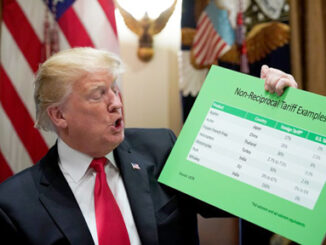
By KC Singh US President Donald Trump completes one year in office on January 20. The Economist magazine says he has “turned domestic and international politics on its head”. During the campaign, he looked past Project 2025, produced by the conservative Heritage Foundation. However, in office his barrage of executive orders began implementing Project 2025. This included mass, forceful deportation of suspected aliens without hearing, domestic military involvement (now halted by the Supreme Court), dismantling of the bureaucracy, outsourced to Elon Musk, whose Department of Government Efficiency failed drastically.
The external policy changes began with the April “Liberation Day” arbitrary tariffs on imports. Then emerged a closer alignment with Israel, a pro-Russia tilt in handling the Ukraine war, an escalated trade standoff with China and a transitory compromise. European NATO allies played along, preferring non-confrontation while examining self-reliance, to manage the US pullback from defense commitments. The National Security Strategy (NSS) of December 4-5 confirmed major US policy mutations.
The new foreign policy priorities list the “Western Hemisphere” on the top. It refers to the Americas — North and South — resurrecting the 19th century’s Monroe Doctrine, which barred European rivals from interfering in Latin-American affairs. Next comes Asia, with focus on the Indo-Pacific. Unlike the past NSS documents, China is not named as a threat, though it colors the Asian strategy. On December 8, the US allowed the sale to China of Nvidia’s advanced H200 chips.
India figures as a subtext, expected to help ensure Indo-Pacific security. Then follows Europe. Under the subtitle “Promoting European Greatness”, the NSS document argues that the European challenge exceeds economic stagnation and low military spending. The “real and more stark” prospect is of “civilizational erasure” due to migration policies. Europe’s loss of self-confidence is attributed to the regulatory check on the “growing influence of patriotic parties”. This refers to the far-right’s ascendancy in major European nations. This theory is MAGA-inspired, with the US administration desiring a “new Western order”, dominated by governments led by white Christian nationalist-populists.
In the UK, the Nigel Farage-led Reform UK is polling 30 per cent support; while in France, Marine Le Pen’s National Rally is at 33.4 per cent and Germany’s AfD is scaling 26 per cent. Europeans saw this support-signaling as regrettable interference in their internal affairs. German Foreign Minister Johann Wadephul retorted that they did not “need to get advice from any other country or party”. German intelligence sees AfD as an extremist group.
In this disrupted post-1945 global order, where does India fit? Normally, domestic and foreign policies of countries are inter-related. The Trump administration demonstrates that by aligning its foreign policy with its MAGA supremacism. The BJP managed to largely insulate domestic politics from foreign policy, except in South Asia. While adopting nationalist-majoritarian politics at home, with boundaries between religion and politics removed, its foreign policy continued the old secular line, at least superficially. The US State Department’s reports on human rights practices in India berated the constriction of religious, individual and press freedoms. The 2024 report listed the Citizenship Amendment Act and anti-conversion laws as raising concerns. It, however, ignored the BJP’s non-liberal political trajectory weakening democracy. India-US relations were considered more crucial to the global American strategy.
The BJP would welcome the NSS document now, recommending non-interference in the internal affairs of other nations. The US bureaucracy handling those issues stands disbanded. But domestically, the rising xenophobia in the US is impacting the Indian diaspora, especially their religious practices. The New York Times wrote about the troubles of Sikh truck drivers in the US after two August accidents. Sikhs in the trucking business, many on asylum-related visas, number 1,50,000, probably a quarter of the Sikh diaspora. Federal authorities have asked states like California to review their driving license policy. Canada and Australia have capped student visas, raised fees, heightened scrutiny of forms, etc. The transition to work visas may also be tightened. In New Zealand, a Sikh religious procession was last month disrupted by a far-right Christian group.
The rising xenophobia in Christian Anglophone and western nations raises concerns. The BJP surely realizes that Hindu groups in India targeting Christians, particularly this year, can provoke retaliation against the Hindu diaspora. Occasional lynchings of Muslims did not impact India’s relations with the Islamic world because the Modi government had successfully engaged the principal Gulf-ruling families. Pakistan only had Turkey and an isolated Iran to join the condemnation. A divided Organisation of Islamic Conference (OIC) lacked the thrust to target India. But Pakistan stands diplomatically revived after wooing Trump and engaging Saudi Arabia and the UAE. It is now better positioned for India-baiting.
Plus, Bangladesh may elect next month a right-wing government, probably under Islamist Jamaat-e-Islami’s influence. Pakistan and its ISI would celebrate that. Simultaneously, Assam and West Bengal face elections. Communal polarization helps the BJP electorally, especially by brandishing Bangladeshi illegal migration. Can India blame the western xenophobia while succumbing to it internally?
Punjab may suffer if deportations from the US mount. Narrowing opportunities abroad will block the Punjabi youth’s escape route. Thus, Punjab must develop economic opportunities. Green Revolution 2.0 is overdue. The agricultural and dairy sectors need production and supply chain modernization. If over two lakh Sikhs could salvage the Italian dairy industry and parmesan cheese production, why not the same in Punjab? Similarly pioneering work exists in turning rice stubble into biofuel and organic fertilizer. The chemical fertilizer lobby suppresses such new approaches.
Punjab needs pro-innovation leadership. Delhi requires non-partisan statesmanship.
(K.C. Singh is a retired diplomat)