

The Sports Column By The Indian Panorama Staff
The spectacle of elite athleticism in India has traditionally been viewed through a single, crimson-stitched lens: the cricket ball. However, as the curtain falls on the India Open 2026 in New Delhi and the first serves land at the Mumbai Open, a fundamental shift in the nation’s cultural hierarchy is becoming undeniable. These events are no longer mere “alternative” programming; they are the high-decibel declarations of a nation recalibrating its identity as a multi-sport titan.
At The Indian Panorama, we observe this transition not as a trend, but as a structural re-coding of the Indian sporting DNA. India is trading its singular obsession for a sophisticated, diversified portfolio where the “shuttle” and the “baseline” carry as much strategic weight as the “pitch.”
The India Open 2026: A Super 750 Strategic Anchor
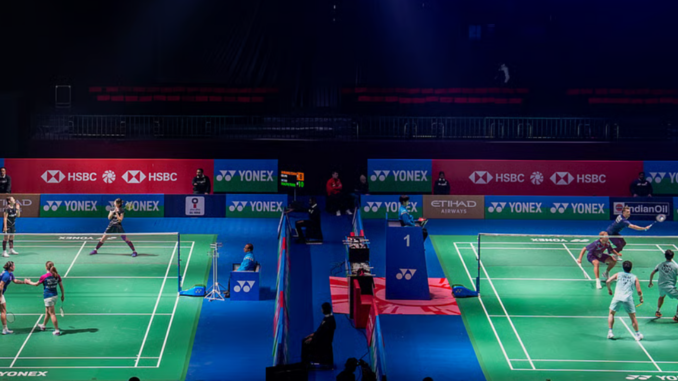
Held at the Indira Gandhi Indoor Stadium in mid-January, the India Open 2026 (Yonex-Sunrise India Open) proved that badminton is now India’s second national language. As a BWF World Tour Super 750 event with a $950,000 prize pool, it served as a critical dress rehearsal for the BWF World Championships scheduled for August in New Delhi—the first time the event returns to India in 17 years.
The “fresh insight” of 2026, however, isn’t just about the scoreboards—it’s about the accountability of the host. When Danish player Mia Blichfeldt criticized the “unhealthy” cleanliness and bird-droppings on the warm-up courts, it sparked a national debate that reached the floors of Parliament. This friction is a sign of maturity. India is no longer content with just “hosting”; it is now being audited by the global elite. In response, the Union Budget 2026 provided a record ₹4,479.88 crore allocation to the Sports Ministry, including a specific ₹500 crore initiative for sports goods manufacturing to ensure that world-class talent meets world-class home-grown equipment.
The Mumbai Open: Tennis as an Urban Aspiration
If New Delhi’s India Open is the “heartland” of Olympic pursuit, the Mumbai Open WTA 125 represents the “aspirational” edge of the digital economy. The 2026 edition, held at the MSLTA courts, has seen a total dominance of international seeds like Darja Semenistaja. While the Indian singles challenge—led by Sahaja Yamalapalli and the 16-year-old sensation Maaya Rajeshwaran Revathi—faced early exits, the victory was in the stands.
The Mumbai Open is successfully tapping into a demographic that views sport as a lifestyle. According to recent market analysis, India’s spectator sports market is estimated at $1.88 billion in 2026, with individual sports on track for a 16.1% CAGR through 2031.
The 2026 Multi-Sport Economic Snapshot:
- Total Industry Value: India’s sports industry is currently estimated at $19 billion, projected to reach $40 billion by 2030.
- Manufacturing Hubs: The new ₹500 crore budget allocation aims to turn hubs like Meerut and Jalandhar into global suppliers of high-quality, affordable gear.
- Athlete Economy: Over 1,000 Khelo India Centres are now operational, creating a professional “middle class” of athletes and coaches.
| Event Metric | India Open (Badminton) | Mumbai Open (Tennis) |
| Category | BWF Super 750 | WTA 125 |
| Prize Pool | $950,000 | $115,000 |
| Key Narrative | Gateway to World Championships | Urban Professional Circuit |
| Strategic Focus | Olympic Podium Pipeline | Commercial Viability & Lifestyle |
| Technology | Real-time “Shuttle-Telemetry” | AI-driven “Court-Analytics” |
From ‘Pundits’ to ‘Players’: The Narrative Reset
The most profound nuance of these events is the shift in Indian fandom. Historically, India has been a nation of “sports pundits”—millions of armchair selectors fluent in strike rates but rarely touching a racket. In 2026, the crowds are different. They are technically literate fans who understand the “split-step” in tennis and the “flick-serve” in badminton.
As PV Sindhu noted during the India Open, “It’s a privilege to call ourselves Indians on the global stage, but we must match our ambitions with our discipline.” This “discipline” is being fueled by a “Mat-Science” approach—where the Ministry is using biometric data to scout talent in the Northeast for badminton and in Maharashtra for tennis.
The Policy Pivot: Launching the ‘Khelo India Mission’
A defining moment of 2026 was Finance Minister Nirmala Sitharaman’s announcement of the “Khelo India Mission.” This is a decade-long roadmap that elevates sports from a “programme” to a “mission.” Unlike previous iterations that focused primarily on identifying talent through competitions, the 2026 Mission focuses on:
- Integrated Talent Pathways: Foundational, intermediate, and elite-level training centers inter-linked via digital athlete IDs.
- Systematic Coaching Development: A centralized portal for certifying 50,000 new coaches by 2028.
- Sports Science Integration: Mandatory sports science labs at every SAI (Sports Authority of India) regional center.
Sports Minister Dr. Mansukh Mandaviya emphasized this shift on February 3, 2026, stating: “Sports today is a profession. The Government has to stay one step ahead in creating systems that allow young talent to progress from grassroots to elite levels.”
What’s Next in Line
The “noise” surrounding the India and Mumbai Opens is fundamentally different from the roar of a cricket stadium. It is a more discerning, demanding sound. It is the sound of a $52 billion sports economy building the scaffolding of greatness.
The real victory of early 2026 isn’t a trophy in the hands of an Indian shuttler; it is the fact that India has committed to a mission that treats sports as a means of “employment, skilling, and job opportunities” rather than just a hobby. India is no longer the “underdog” looking for a fluke medal; it is a global sporting superpower in the making, and the courts of New Delhi and Mumbai are its new Parliament.
Be the first to comment