

The court has provided relief to only the plaintiffs — two small companies in the U.S. and Washington State — with the tariff remaining on all other importers
WASHINGTON, D.C. (TIP): The U.S. Court of International Trade (CIT) has ruled that the 10% temporary tariff President Donald Trump imposed on all U.S. trade partners, including India, was “unauthorized by law”, striking a further blow to his attempts at using tariffs as tools to advance his policy priorities.
However, while the ruling sets a precedent, it does not translate into immediate relief for exporters around the world. The court on Thursday, May 7, 2026, provided relief to only the plaintiffs — two small companies in the U.S. and Washington State — with the tariff remaining on all other importers.
The U.S. government is expected to appeal the judgment at the federal level, which could extend the process by several months.
Trump had, on February 24, 2026, used Section 122 of the Trade Act of 1974 to impose a 10% tariff on imports from around the world for 150 days. This was in response to the U.S. Supreme Court striking down his country-wise reciprocal tariffs, which were based on the International Emergency Economic Powers Act (IEEPA) of 1977.
Limited relief
The CIT, in a 2-1 decision, ruled that, although the U.S. Congress had originally passed Section 122 to give the President the authority to address balance of payments deficits, this did not include the trade deficit and current account deficits cited by Mr. Trump when he levied the 10% tariff.
The court ordered the U.S. government to stop collecting the tariff from the plaintiffs — Washington State, spice importer Burlap & Barrel, and toy maker Basic Fun! — and to refund the amount collected. It stopped short, however, of ordering the same for all U.S. importers.
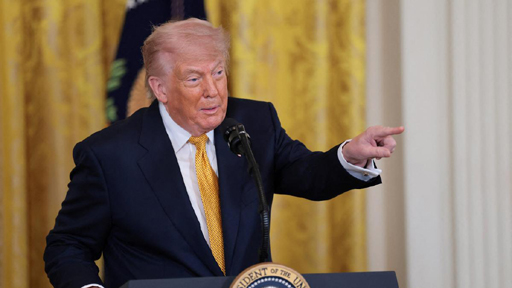
Reacting to the judicial setback on Thursday night, President Donald Trump remained defiant, suggesting he would circumvent the ruling. “Nothing surprises me with the courts,” Trump told reporters. “Nothing surprises me, so we always do it a different way. We get one ruling, and we do it a different way.” The ongoing legal battles underscore the atmosphere of “chaos and uncertainty” surrounding the administration’s economic direction. Following the Supreme Court’s February decision that a broad portion of the initial tariffs were illegal, the President pivoted to these now-disputed global duties, relying on the then-untested authority of the 1974 Act.
As reported by CNN, the landscape for businesses remains volatile. Although importers are now eligible to seek refunds for payments made under the tariffs previously invalidated by the Supreme Court, the reimbursement process is expected to be slow and tiered. Furthermore, the timeline for the full opening of the refund system remains murky, and payments could face additional delays if the administration introduces new measures that alter the calculation of these returns.
(With inputs from ANI)
Be the first to comment