

From the Iran war to trade, the U.S. president failed to secure major concessions from his counterpart

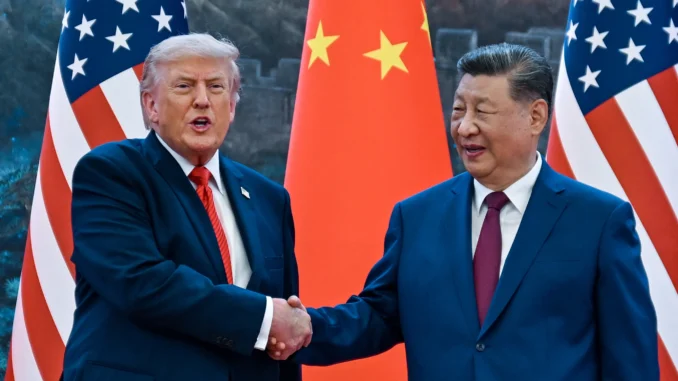
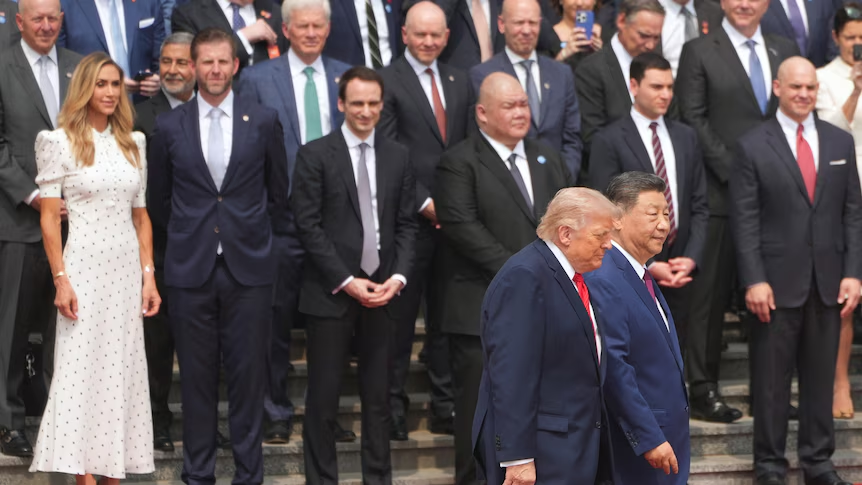
“Partners, not adversaries” was the theme of high stakes talks between U.S. President Donald Trump and Chinese President Xi Jinping on Thursday, May 14. Set against the backdrop of Beijing’s opulent Great Hall of the People, both leaders expressed the desire to bolster economic ties to create what Xi called a “new vision” for the U.S.-China relationship. However, thinly veiled threats about Taiwan alongside Trump’s weakened position at home overshadowed the summit’s veneer of cooperation.
Xi warned Trump on Thursday, May 14, that any disagreement over Taiwan could harm bilateral relations—and even lead to conflict. “If [the Taiwan question] is handled properly, the bilateral relationship will enjoy overall stability,” a Chinese readout of the meeting said. “Otherwise, the two countries will have clashes and even conflicts, putting the entire relationship in great jeopardy.”
China does not recognize Taiwan’s sovereignty and has repeatedly denounced Washington’s support for Taipei. Experts expected Xi to push Trump on Thursday to delay a promised $14 billion arms package for Taiwan. The deal, passed in January and awaiting the U.S. president’s approval, comes after Trump already signed off on another massive package worth $11.1 billion the month before.
Ahead of the summit, analysts suspected that Trump would try to downplay U.S. ties with Taiwan to secure favorable trade deals with China. High fuel prices due to the Iran war have tanked Trump’s approval ratings back home. Coupled with several U.S. court rulings against the president’s ability to impose sweeping tariffs on China and other countries, Trump faced extra pressure going into the summit to secure big economic wins.
But U.S. Secretary of State Marco Rubio dismissed these concerns on Thursday, stressing that the U.S. position on Taiwan had not changed. The Chinese “always raise it on their side, we always make clear our position, and we move on to the other topics,” Rubio told NBC News.
The White House readout of the meeting did not mention Taiwan at all and instead focused heavily on trade. “The two sides discussed ways to enhance economic cooperation between our two countries, including expanding market access for American businesses into China and increasing Chinese investment into our industries,” it said.
Yet no major trade deals were announced, including a potential deal on rare earths or investments in artificial intelligence. Trump did say Xi had agreed to buy 200 Boeing jets, and the White House readout said the two leaders pledged to work toward ending the flow of fentanyl precursors from China into the United States.
Chinese purchases of U.S. agricultural products were a key focus of the talks. In what was seen as a gesture of goodwill ahead of the Trump-Xi meeting, Beijing on Thursday restored beef trade with Washington, issuing new import licenses for hundreds of U.S. slaughterhouses to resume shipments to China. However, the licenses do not necessarily mean that China will actually purchase significant amounts of U.S. beef.
The Iran war also took priority during the summit. According to the White House, both Xi and Trump agreed that the Strait of Hormuz must remain open and demilitarized and that Tehran cannot be allowed to have a nuclear weapon. “President Xi also made clear China’s opposition to the militarization of the Strait and any effort to charge a toll for its use, and he expressed interest in purchasing more American oil to reduce China’s dependence on the Strait in the future,” the U.S. readout said.
Beijing has long supported the Iranian regime. Speaking to Fox News’s Sean Hannity after the meeting with Xi, Trump said the Chinese leader had told him that Beijing wouldn’t give Tehran military equipment. “But at the same time, he said, you know, they buy a lot of their oil there [in Iran], and he’d like to keep doing that,” Trump added.
Trump has one more day in China before he flies back to Washington, and he has already invited Xi to visit the White House on Sept. 24.
(Alexandra Sharp is the World Brief newsletter writer at Foreign Policy)


Be the first to comment