

Tomorrow (July 4), America will celebrate its 250th Independence Day. It should have been a moment of national celebration, but instead it has become a time of self-reflection and concern.
For the world, the United States has long represented a prosperous and powerful nation. Yet, many Americans themselves are worried about the country’s current condition.
According to a Pew Research Center survey, around 55% of Americans in 2000 believed that future generations would be better off than their parents. Today, that number has dropped sharply to only about 19%. This reflects a significant decline in confidence about America’s future.
At first glance, many people may blame former President Donald Trump for the political upheaval. However, the situation is much more complex. Trump is only one symptom of deeper divisions within American society.
The country is increasingly divided between nationalist (“America First”) and socialist/progressive political forces.
Trump’s supporters include many people who once backed mainstream Republican leaders but now strongly support his policies. Even figures who previously supported aid to Ukraine and criticized Russia have shifted positions and now oppose those policies. Prominent Republican leaders who opposed Trump in the past, such as former Vice President Mike Pence and Senator Ted Cruz, have either reconciled with him or now support many of his policies.
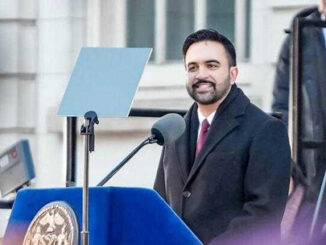
On the other side, the Democratic Party faces growing pressure from progressive and socialist groups. The recent victory of Zohran Mamdani in New York City’s Democratic mayoral primary is seen as evidence of this shift. His campaign proposed measures such as freezing rents and imposing higher taxes on wealthy residents. Polls also suggest that younger Americans increasingly favor democratic socialism, with support especially high among people under 30.
Technology and Economic Anxiety
Another factor behind the growing political divisions is rapid technological change.
For decades, Silicon Valley supported both Democratic and Republican candidates. But things are changing. Around 60% of Americans believe that artificial intelligence (AI), which is replacing nearly 80% of entry-level IT jobs, is creating new social and economic divisions.
The debate over regulating AI has also become politically polarized. Technology companies and venture capitalists are increasingly aligning with Trump because they view AI as a key driver of productivity and economic growth. Meanwhile, many labor unions and environmental organizations oppose the rapid expansion of AI, data centers, and new power plants. People fear that these developments will increase electricity costs and environmental damage.
These divisions have created an atmosphere of uncertainty, weakening public trust. For decades, Americans believed their country was the world’s leading power and that each generation would enjoy a better standard of living than the previous one. That belief is now fading.
Although wages have increased, they have not kept pace with the rising cost of housing and healthcare. Many young people are burdened with student debt, making it difficult to build wealth.
America at 250
The America that reaches its 250th anniversary is neither in irreversible decline nor entirely healthy.
It is passing through a period of intense political and social upheaval, while the rest of the world watches with concern.
Those who possess wealth and assets have become even richer, while the middle class—the traditional backbone of American democracy—has continued to shrink. An entire generation is weighed down by student loans, rising healthcare costs, and soaring housing prices.
What we are witnessing today is the result of a disruptive political process that Trump helped unleash. He strengthened populist forces, which are now challenging both Democratic and Republican establishments.
Thus, at the age of 250, America stands at an uncertain crossroads—not facing certain collapse, but clearly undergoing profound political, economic, and social transformation as the world looks on with interest and concern.
(Manoj Joshi is an Indian journalist who specializes in Foreign Affairs. This is an opinion column (“Nazariya”) published in the Indian Hindi Daily Dainik Bhaskar. It reflects the author’s analysis rather than an objective news report)

Be the first to comment