
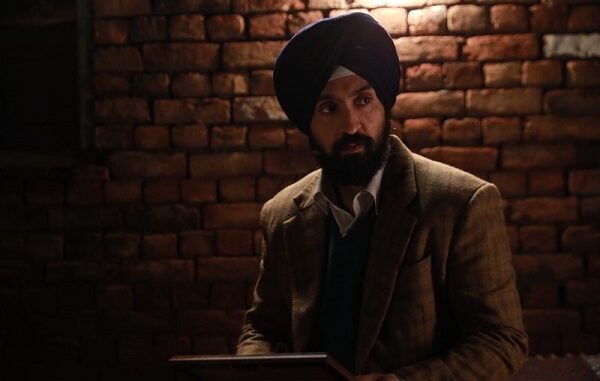

The widespread outrage over Satluj takedown reflects poorly on artistic freedom in India
“Satluj is the powerful story of State tyranny that convulsed Punjab for a decade and a half, beginning in the early 1980s. Equally repulsive and self-destructive was terrorism, culminating in the assassination of Chief Minister Beant Singh in August 1995.”
In a country that ranks 110th out of 165 nations on the global Human Freedom Index, the removal of a film from a digital platform should not be surprising. The surprise, if any, was the sudden, quiet release of Satluj, a film highlighting unpalatable truths.
It requires a special disconnect from reality to believe that once a movie is released, it can be banned. Diljit Dosanjh has noted with satisfaction that the movie has reached the people it was meant for. However, the financial setback is enormous for the filmmakers, who had to fight the censor board and legal wrangles.
As the outrage on social media indicates, the movie has a special appeal for youngsters. For those aged 50 or above, it is a revisit of a horrid chapter from Punjab’s history.
Satluj is the powerful story of State tyranny that convulsed Punjab for a decade and a half, beginning in the early 1980s. Equally repulsive and self-destructive was terrorism, culminating in the assassination of Chief Minister Beant Singh in August 1995.
The CM paid the price for giving then DGP, KPS Gill, a free hand to stamp out terrorism. The police ultimately succeeded, partly by resorting to lawless methods and partly because Punjabis had got tired of living with daily bloodshed.
Khalistanis abroad tend to portray Punjab militancy as a movement for a separate state. Actually, it started as a reaction to systemic injustices. The Parkash Singh Badal government, ignoring intelligence warnings, allowed a risky “Vaisakhi Samagam” in 1978 at Amritsar where a dozen Sikhs were killed in a clash with Nirankaris. The killings went unpunished. This infuriated young Sikhs. Subsequently, Punjab saw the emergence of militancy and the rise of Jarnail Singh Bhindranwale.
Police repression was let loose and rural Sikhs provided food and shelter to gun-wielding youth. Coming of age in a society that had a flexible rule of law, dysfunctional institutions and bleak prospects for meaningful economic participation, young people turned to terrorist gangs in growing numbers.
The film is based on the life of a bank employee from Khalra, a village near Bhikhiwind in Tarn Taran district. Jaswant Singh Khalra began investigating mysterious disappearances of his friends and acquaintances and discovered, to his horror, extrajudicial killings of about 25,000 Sikh youths.
Majha in general and Tarn Taran district in particular were the worst hit by militancy. Having spent my growing-up years in Majha, I remember some of the brutal killings, both by terrorists and the police, that happened in the area.
In October 1993, a few terrorists had crossed over from Pakistan. An encounter ensued and two youths were killed. Their bodies were sent to the Patti Civil Hospital, where one of them turned out to be alive. Valtoha SHO Sita Ram took him away, shot him again and returned the body to the hospital.
There was a communal flare-up when Hindu passengers were pulled out of buses, lined up and shot. Being clean-shaven, I was told by my relatives either to grow my hair and wear a turban or stop visiting them and stay in Chandigarh. Such killings led to the migration of some of my friends from Hindu families.
Such was the environment of fear that terrorists ruled Punjab at night. After dark, police stations were locked up. There was no night patrolling. Bus services were suspended after sunset.
When asked about staged encounters, a police officer who was close to Sumedh Singh Saini, then Ludhiana SSP, told me: “If we don’t kill them, they will kill us”. Then DGP Julio Ribeiro’s “bullet-for-bullet” statement was taken seriously.
One officer who had earned particular notoriety in abductions, torture and extrajudicial killings was Ajit Singh Sandhu, then SSP of Tarn Taran. In the film, the character named SSP Sugga is based on him. Sandhu allegedly committed suicide by jumping in front of a speeding train in 1997.
Some reports attributed to Amnesty International say that he was murdered because his testimony could have revealed big names. In the movie, Diljit Dosanjh talks about the killings of around 2,000 policemen for refusing to take part in fake encounters.
In those days, the Press played it safe. The Jalandhar-based vernacular Press was divided on religious lines. Militants sent press notes followed by telephonic threats. There was hardly any independent investigation of encounters.
It is in this context that Khalra’s work stands out. When journalists hesitated and few dared to challenge the police version, he stepped out bravely in search of truth. Investigating complaints of mass cremations, Khalra happened to access municipal records containing names and addresses of those whose bodies were legally or illegally disposed of.
His revelations brought national and international attention to human rights violations in Punjab. It was this courageous venture that ultimately resulted in his disappearance and subsequent killing in 1995. SSP Sandhu was the principal accused in this case.
While Khalra exposed the ugly face of the State, militancy produced another brave heart from this area who almost single-handedly fought terrorism. He was a CPM activist, Comrade Balwinder Singh, of Bhikhiwind. He survived 42 terrorist attacks and was awarded the Shaurya Chakra in 1993 for showing unmatched courage.
When Operation Blue Star took place in June 1984, a blanket curfew was imposed in Chandigarh and Punjab. Newspapers protested by leaving blank space wherever news reports or editorials were removed. Then Editor-in-Chief of The Tribune, Prem Bhatia, arranged food for the night shift. The newsroom was surprised to hear him speak rustic Punjabi on the phone while lodging a protest with the Lt Governor of Chandigarh. Later, he led a march by Chandigarh journalists against Press censorship.
The widespread righteous fury at the disappearance of Satluj within 48 hours of its release speaks volumes about Khalra’s iconic status in Punjab and beyond. A government leaning towards authoritarianism cannot be expected to take kindly to such a film.
(Nirmal Sandhu is a senior journalist)


Be the first to comment