
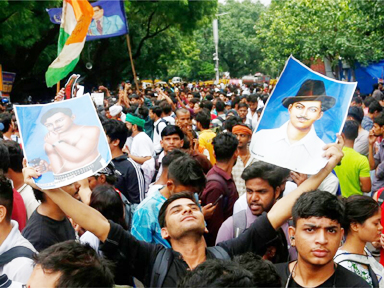

Brutal beating of peaceful protesters invites universal condemnation of Modi government
- I.S. Saluja
NEW DELHI (TIP): What began as an online satirical movement has exploded into the most formidable public challenge to Prime Minister Narendra Modi’s government in his third term. Tens of thousands of Gen Z student protesters have taken to the streets of New Delhi and major urban hubs, attracting intense international attention and sparking demonstrations among the global Indian diaspora.
At the center of this sudden uprising is the Cockroach Janta Party (CJP), a political pressure group formed after remarks attributed to India’s chief justice compared unemployed youth to “cockroaches”. The insult became a lightning rod for an entire generation trapped in an education and employment crisis.
The spark that lit the fuse was the catastrophic leak and subsequent cancellation of the National Eligibility cum Entrance Test (NEET) in May, a hyper-competitive medical entrance exam taken by over two million aspiring students. For young Indians who spend years studying under grueling conditions, the leaks shattered any illusion of structural fairness. Outrage turned to absolute despair following reports that at least 20 students tragically died by suicide out of academic desperation.
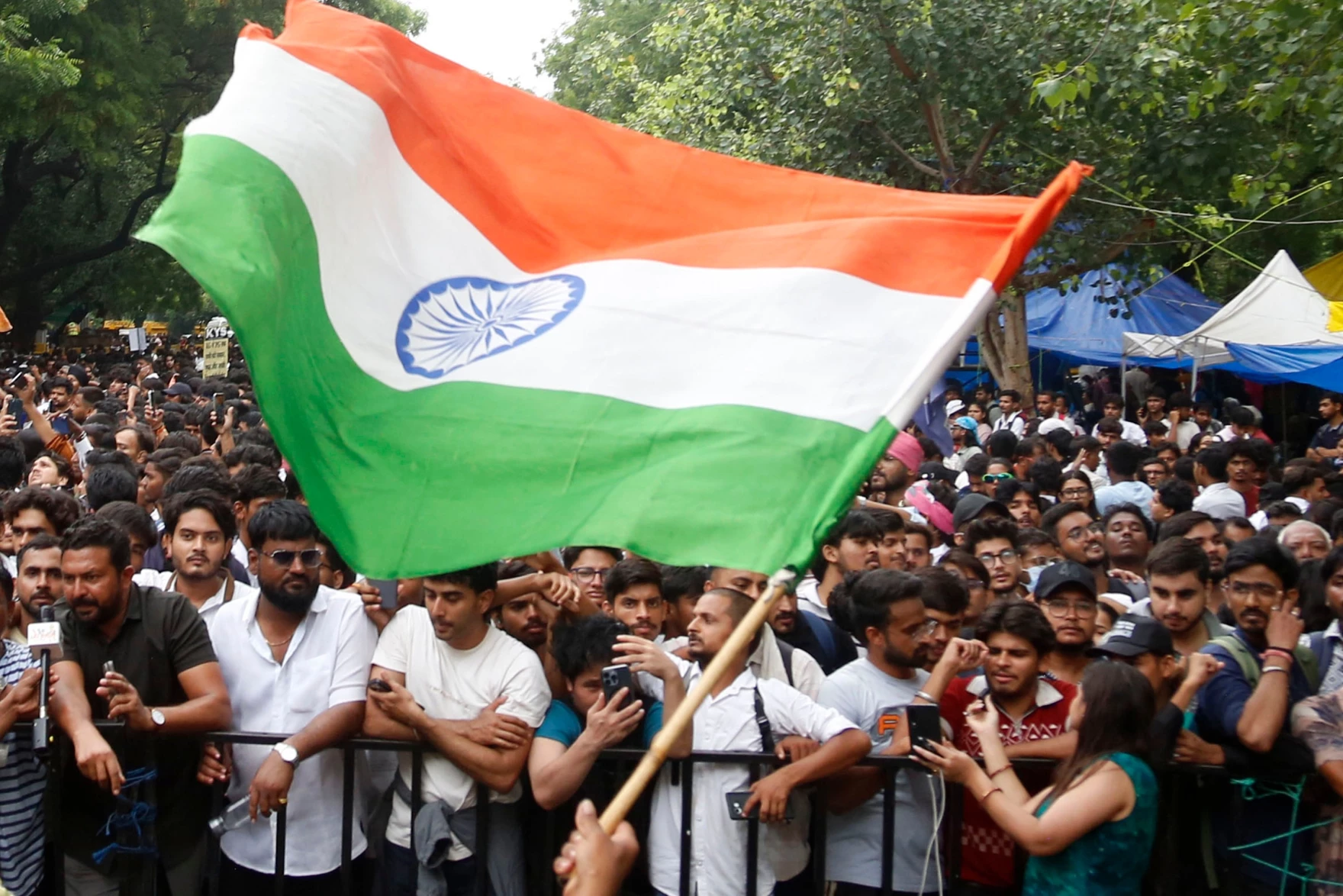
The student collective has put forth three non-negotiable criteria: The immediate resignation of Union Education Minister Dharmendra Pradhan. A firm written assurance that no criminal cases or police First Information Reports (FIRs) will be pursued against peaceful protesters. Financial compensation of ₹1 crore (approx. $105,000) for the families of the victims who died by suicide.
On Monday, tension boiled over during the opening day of the parliamentary monsoon session when thousands of students marched toward Parliament, Delhi Police launched a heavy-handed crackdown, firing tear gas and violently beating teenagers with batons. More than 150 demonstrators were hospitalized.
In a bid to stop footage from going viral, the home ministry suspended mobile internet services around the primary protest site at Jantar Mantar.
However, the state’s hardline reaction backfired. Gen Z has deftly flipped the script online, utilizing digital platforms to broadcast the police actions in real time. When internet blockades tightened, tech-savvy student leaders pivotally turned to peer-to-peer, Bluetooth-based mesh communication apps to bypass the network bans.
Showing unified local solidarity, residents have used online food-delivery apps to flood the Jantar Mantar campsite with massive quantities of fresh water and meals.
Parallel strikes have since mushroomed in Mumbai, Bengaluru, and Kolkata. The unrest has quickly reverberated across the globe.
The Indian diaspora has held prominent rallies and solidarity vigils in major international cities, including London’s Trafalgar Square, Berlin, Toronto, and New York.
International watchdogs like Human Rights Watch have firmly weighed in, formally condemning the Indian state’s “excessive force” and calling for immediate independent investigations into the internet shutdowns.
For the Modi administration, the political implications are severe. For years, the government has safely relied on strongman tactics to tire out political opponents. Yet, this organic, leaderless movement of disillusioned youths cannot easily be dismissed or labeled as “anti-national” without severe electoral blowback.
Young voters constitute an essential demographic in India, and their current anger taps directly into deeper economic anxieties regarding a severe lack of quality, high-paying jobs.
On Thursday, July 23, Prime Minister Modi broke his silence, stating on social media that “nothing is more important than the welfare and future of our youth” while promising fast-track judicial tribunals to penalize exam leakers.
Student leaders quickly dismissed the proposal as a superficial distraction, reiterating that the movement will completely block the capital until Education Minister Pradhan steps down. As lines remain drawn, India’s tech-driven youth have demonstrated they are prepared for a prolonged standoff with Modi government.

Be the first to comment