

Islamabad (TIP): Two decades ago, President George W Bush stood at a joint news conference with President Pervez Musharraf on the grounds of the presidential palace, the Aiwan-e-Sadar, in Islamabad. Ducks splashed in a flower-filled pool on the lawns and giant US and Pakistani flags hung vertically behind the dais. The US president was on his way back from a state visit to New Delhi. The high point of Bush’s visit was a landmark Indo-US civil nuclear deal that allowed India to buy uranium and nuclear reactors for its civilian nuclear program. Bush was asked whether Pakistan could get a similar nuclear deal.
“Both countries have different histories,” he said. “As we proceed further, our strategy will take into effect those well-known differences”. There was a reason Bush firmly slammed the door on Musharraf standing next to him.
Two years earlier, the Bush administration had submitted to Musharraf incriminating evidence about a Pakistani nuclear scientist running the biggest nuclear proliferation network in history.
Dr AQ Khan had sold nuclear materials, bomb designs and centrifuges to Libya, North Korea and Iran. Khan was a modern-day Johnny Appleseed, the legendary American missionary nurseryman who planted apple orchards in the 19th-century American frontier. Khan sold uranium enrichment centrifuges to Iran in the 1980s, which Iran reverse-engineered (which the US is now trying to destroy with airstrikes).
North Korea tested its first nuclear bomb just seven months after the Bush-Musharraf press conference. Only Libya voluntarily gave up its nuclear weapons program in 2003 — which is when IAEA investigators uncovered the Khan network. The nuclear blueprints Muammar Gaddafi had surrendered were for a Chinese nuclear bomb, the CHIC-4. The drawings were wrapped in shopping bags for Good Looks Tailors, Islamabad, where the nattily dressed Khan got his suits stitched.
The Pakistani establishment maintains to date that Khan, who passed away under house arrest in 2021, was a rogue individual acting on his own. This, interestingly, is the same doublespeak Islamabad has used for years to justify terrorists operating on its soil. The facts strain credibility. Khan took centrifuges and nuclear material from a heavily surveilled military-run nuclear program. He used the resources of the state, including Pakistani Air Force transport aircraft, to ship nuclear material to the three countries thousands of miles apart.
Despite Pakistan’s protestations, the perfidious shadow of AQ Khan looms over all its nuclear activities. It is unlikely to get a peaceful nuclear cooperation deal of the kind Saudi Arabia signed with the United States on July 22 for now. The deal allows Saudi Arabia to enrich its own nuclear fuel without the international oversight that would prevent it from converting the know-how into weapons-grade uranium. Saudi Arabia has publicly stated its intent to get a nuclear weapon.
“Saudi Arabia does not want to acquire any nuclear bomb, but without a doubt, if Iran developed a nuclear bomb, we will follow suit as soon as possible,” Crown Prince Mohammed bin Salman told Al Jazeera in 2018.
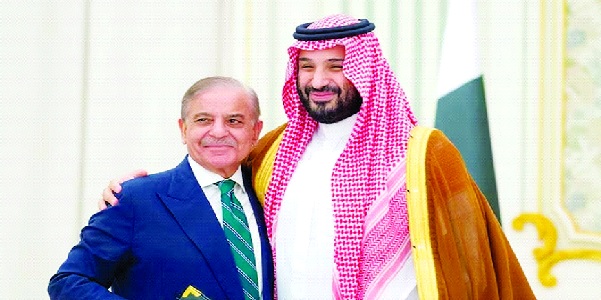
Saudi Arabia can become a nuclear weapon state only with Pakistani assistance. In September 2025, as war clouds loomed over West Asia, Saudi Arabia and Pakistan signed a mutual defence pact. Source: India Today


Thanks, I’ve just been looking for information approximately this topic for a while and yours is the best I have found out till now. But, what in regards to the conclusion? Are you positive in regards to the source?
I simply wanted to appreciate you once again. I am not sure the things that I could possibly have tried without the entire methods revealed by you on this field. It was actually a troublesome circumstance in my circumstances, however , looking at the expert approach you handled the issue took me to leap for joy. Now i am happier for this help and in addition pray you recognize what a powerful job you happen to be providing teaching people today via a web site. I know that you have never got to know all of us.
Its such as you learn my mind! You appear to grasp a lot about this, such as you wrote the guide in it or something. I believe that you simply could do with some percent to pressure the message house a little bit, however other than that, this is great blog. An excellent read. I will certainly be back.
Appreciate it for helping out, wonderful info .
You actually make it appear really easy along with your presentation but I in finding this matter to be actually something that I think I’d by no means understand. It kind of feels too complex and very extensive for me. I am looking forward to your subsequent submit, I will try to get the hold of it!
I was very pleased to find this web-site.I wanted to thanks for your time for this wonderful read!! I definitely enjoying every little bit of it and I have you bookmarked to check out new stuff you blog post.
It’s really a nice and helpful piece of info. I am glad that you shared this helpful information with us. Please keep us informed like this. Thanks for sharing.
Aw, this was a really nice post. In thought I wish to put in writing like this moreover – taking time and actual effort to make an excellent article… but what can I say… I procrastinate alot and not at all seem to get one thing done.
Hi there very nice website!! Guy .. Beautiful .. Amazing .. I will bookmark your site and take the feeds also…I am happy to search out a lot of helpful information here in the submit, we want develop extra techniques in this regard, thank you for sharing. . . . . .
Great tremendous issues here. I am very glad to see your article. Thank you a lot and i am looking forward to touch you. Will you kindly drop me a e-mail?
Lovely just what I was searching for.Thanks to the author for taking his clock time on this one.
Greetings! I’ve been reading your web site for a while now and finally got the bravery to go ahead and give you a shout out from Atascocita Texas! Just wanted to say keep up the good work!
I have been exploring for a little bit for any high-quality articles or blog posts on this kind of area . Exploring in Yahoo I at last stumbled upon this web site. Reading this info So i am happy to convey that I’ve an incredibly good uncanny feeling I discovered just what I needed. I most certainly will make certain to don’t forget this web site and give it a glance on a constant basis.
It is the best time to make some plans for the long run and it is time to be happy. I’ve learn this submit and if I could I desire to counsel you some attention-grabbing things or tips. Perhaps you can write subsequent articles relating to this article. I wish to learn more things approximately it!
I love it when people come together and share opinions, great blog, keep it up.
I have to express some appreciation to the writer for rescuing me from this particular scenario. After looking out throughout the the web and meeting solutions which were not pleasant, I was thinking my life was well over. Being alive without the presence of approaches to the issues you’ve resolved by means of your main site is a serious case, as well as the ones which might have badly damaged my entire career if I had not discovered the website. Your actual natural talent and kindness in handling the whole lot was very helpful. I’m not sure what I would’ve done if I had not discovered such a solution like this. It’s possible to now look ahead to my future. Thank you very much for the expert and amazing guide. I will not be reluctant to propose your web blog to anyone who needs to have assistance about this subject.
Very interesting subject , thankyou for putting up.
Very efficiently written story. It will be helpful to anybody who employess it, as well as myself. Keep doing what you are doing – for sure i will check out more posts.
This web site is really a walk-through for all of the info you wanted about this and didn’t know who to ask. Glimpse here, and you’ll definitely discover it.
But wanna remark on few general things, The website design is perfect, the articles is very wonderful. “All movements go too far.” by Bertrand Russell.