

“America did not begin with independence. It began with people.”
A CONTINENT BEFORE A COUNTRY
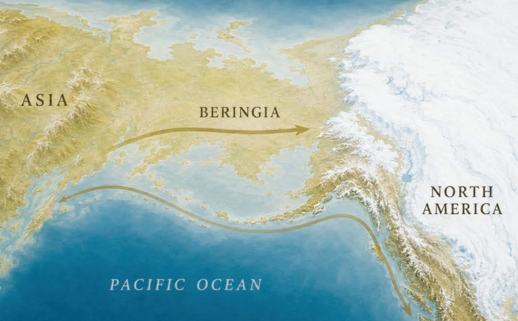
Long before there was a United States, before the thirteen colonies, before the Mayflower, and before Europeans called these lands a “New World,” people lived, traveled, cultivated, traded, governed, prayed, created, and raised families across the vast continent we now call North America. Their story reaches back thousands of years. The precise chronology of the earliest human arrival remains a subject of continuing research. For many years, the familiar explanation held that people traveled from northeastern Asia into present-day Alaska during the last Ice Age, when lower sea levels exposed a broad region known as Beringia. The movements did not necessarily occur in one migration. Different groups may have traveled at different times along inland passages and coastal routes. Archaeological discoveries continue to deepen-and sometimes challenge-our understanding. Indigenous peoples also preserve creation stories and oral histories expressing relationships among people, ancestors, animals, waters, mountains and sacred places. These are living sources of identity and cultural memory. Over generations, communities flourished in Arctic tundra, Pacific forests, eastern woodlands, river valleys, deserts, mountains, grasslands and coastal regions. The first Americans did not inhabit an empty wilderness. They inhabited homelands.
“The land Europeans encountered was new to them-not new to humanity.”



Be the first to comment