
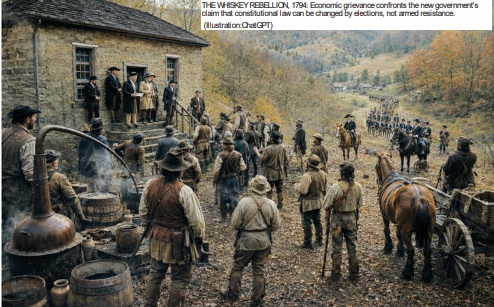

Hamilton’s excise tax on distilled spirits fell heavily upon western farmers, for whom whiskey was a marketable form of grain and sometimes a medium of exchange. Many viewed the tax and distant federal collectors as echoes of the imperial system they had resisted. Protest in western Pennsylvania escalated into intimidation, attacks and organized defiance. Washington called forth a militia force of nearly 13,000 and personally accompanied it partway west-the only sitting president to take the field in that manner. The rebellion largely dissolved before major violence. Two men were convicted of treason and later pardoned by Washington. The episode showed that the federal government could enforce its laws, unlike the Confederation. It also raised a lasting question: when does vigorous protest become unlawful rebellion, and how should republican government respond without crushing legitimate dissent?
“The Revolution had resisted authority without representation. The republic now had to distinguish resistance to tyranny from resistance to constitutional law.”


Be the first to comment