
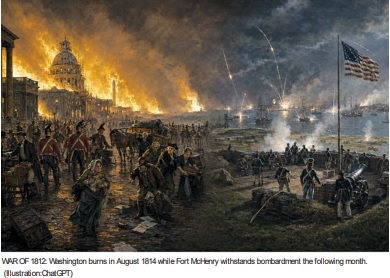

War Hawks in Congress demanded action against British impressment, interference with trade and support for Native resistance. President James Madison asked for war in June 1812. The nation entered divided and militarily unprepared. New England Federalists opposed the conflict; invasions of Canada failed; regional militias resisted federal control. American naval victories on the Great Lakes and single-ship actions provided morale, but British forces burned public buildings in Washington in 1814. Dolley Madison became famous for ensuring that a portrait of George Washington and other valuables were removed from the presidential residence. At Baltimore, Fort McHenry survived a British bombardment, inspiring Francis Scott Key’s poem that later became “The Star-Spangled Banner.” The Treaty of Ghent restored prewar boundaries and resolved none of the central maritime issues, which faded as the European wars ended. Andrew Jackson’s victory at New Orleans occurred after the treaty was signed but before news arrived. It produced a powerful story of triumph and helped make Jackson a national figure.
WHO WON?
The United States gained no Canadian territory and suffered major failures, yet preserved independence and emerged with intensified nationalism. Britain defended Canada. Indigenous nations suffered the greatest strategic loss: Britain abandoned demands for a Native while Fort McHenry withstands bombardment the buffer state, leaving American expansion less restrained.
“The war changed few borders. It transformed confidence-and devastated Native hopes for a protected homeland.”



Be the first to comment