

India’s Gen Z is gaining political attention, but is yet to consolidate into a viable electoral bloc
In the text of the Union government’s vision of a developed India by 2047, the youth are regarded as the Amrit Peedhi (the generation of the nectar). But in realpolitik, the forthcoming State elections may show which side the nectar sweetens or whether it does so at all. Swami Vivekananda spoke of the power of youth, but in an electoral sense, that power may only now be crystallizing in India.
It is the season of youth in India, without any formal commemorative event to mark it. They are being courted like never before. Political parties across the aisle, Ministries, Departments, think tanks and media organizations of every kind are engaging with the theme of youth. Education and examination systems are being reassessed; skills and coaching processes are under scrutiny; unemployment is being scanned and nuanced.
The whole nation seems occupied with the subject. Political parties are ramping up their conversations on digital platforms, where young people are assumed to reside. Leaders are recasting their hitherto successful models of communication to capture the attention and gain the confidence of Generation Z — the 14-to-29-year-olds — while mimicking their candid vocabulary. College and school campuses are crowded by political personalities. The overstretch almost suggests a desperation to connect.
There have been youth initiatives.
Not that the youth have never been cared for. Governments, past and present, have taken up initiatives for youth development. The last 12 years have witnessed a plethora of schemes directed at them, covering employment, entrepreneurship, skill enhancement, education, internships, sports and volunteering. The National Education Policy (NEP) 2020, while facing flak in certain respects, has managed to focus on quality learning geared towards innovation and the empowerment of young citizens. The proposed National Youth Policy 2026 seeks to prepare those in the 15-29 age group for the new digital age.
But beyond the good schemes, there is a lag in understanding Gen Z and Gen A (those born after 2010), who have begun to demand accountability. A NITI Aayog report speaks of 8.7 crore people in the 15-29 age group who are ‘not in education, employment or training’ (NEET). Despite clarifications from the government that NEET does not necessarily mean joblessness, a staggering amount of youthful energy still awaits an anchor. The yawning gap between formal degrees and job prospects remains a daunting problem. In the wake of the recent street protests, the Opposition has built a narrative that the ruling dispensation is hostile to younger generations. The question is: do they have a blueprint for the country’s youth, or are they only making political capital out of the current ferment?
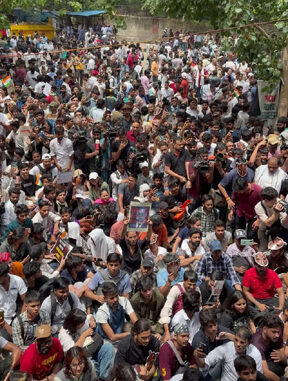
Not taking away from the goodwill of political entities towards the nation’s future generations, the overwhelming context is the chorus orchestrated by the country’s youth in Delhi and other places in recent weeks. While the youth furor and its consequences in India bear no comparison with the cataclysmic happenings in parts of the South Asian neighborhood, a wake-up call has been sounded to those in power and those seeking to get there. The response, however exaggerated, is welcome. Parties and leaders now appear to be grappling with issues concerning the youth, regardless of whether they are motivated by electoral politics.
More an elusive vote
India has the largest youth population in the world; 65% of its nearly 1.5 billion people are below 35 years of age. About 23% of the country’s electorate falls in the 18-29 age category. In elections in recent years, including the latest Assembly elections in Tamil Nadu, Assam, West Bengal, Keralam and Puducherry, there was no discernible trend of young people voting in any political direction. The outcome in Tamil Nadu showed some hints of youth consolidation, but it was far from being based on any alternative youth agenda. In last year’s Bihar election, noticeable efforts by political groups to advance a youth agenda did not generate much appeal. Certain studies, however, suggest that young voters partly influenced the verdicts in the 2014 and 2019 general elections.
In the 75-year electoral history of India, while votes have been garnered under labels such as community, caste, class, farmers, industrial workers and even government employees, there has been no block identification of the youth as yet. There are steady references to the votes of Dalits, minorities, Scheduled Castes, Scheduled Tribes and Other Backward Classes, as well as the Yadav vote in Uttar Pradesh and the so-called M-Y vote in Bihar — patterns that have held steady over decades.
To these has now been added, in good measure, the women’s vote. A house for shelter, a toilet on the premises, gas in the kitchen and electricity at home can capture the imagination of women across regions, besides cash delivered directly into their wallets. Gratitude is then expressed through the ballot.
For reasons yet to be overcome, caste and community continue to abide as assured aggregators in the electoral arena. These, along with gender identity, have considerably subsumed youth identity. Critical issues such as employment and education constitute only a loose overhang.
Youth participation in India’s elections has remained low-key compared with other demographic categories, despite an improvement in recent years, and largely due to the mobilization efforts of the Election Commission of India (ECI). The ECI has recently galvanized its electoral literacy campaigns to orient students in schools and colleges to the electoral system, processes and practices, and to secure their informed participation.
The upcoming Assembly elections in Uttarakhand, Uttar Pradesh, Punjab, Manipur and Goa will be the earliest test case to determine whether the noisy voice of the streets gets organized into a political preference, including the amount of youth candidature. A quarter of the Assembly seats in these States, especially in politically muscular Uttar Pradesh, were won roughly by margins of around 5% and could, hence, easily be swung by Gen Z voters. The comparison ends there. The youth of Uttar Pradesh and Punjab do not share a common predicament; neither do the Gen Z in Goa and Manipur, or, for that matter, the youth of Gujarat and Himachal Pradesh, which go to the polls later in 2027. Electorally speaking, the current political attention on the youth can be interpreted as an attempt to cut possible losses while making a moderate investment.
Old equations do matter.
Political parties cannot abandon time-tested voting blocs for an undependable, heterogeneous multitude that may or may not walk out of its Instagram residency. Old social calculations and booth management may still hold good in actual polls, while the youth awakening may remain a story on the side. Political parties and poll campaigners have a professional finger on the pulse of the people; they will carefully watch the emergence of a real Gen Z vote from the cradle, while they adjust their plans and campaigns just that bit for now.
In the text of the Union government’s vision of a developed India by 2047, the youth are regarded as the Amrit Peedhi (the generation of the nectar). But in realpolitik, the forthcoming State elections may show which side the nectar sweetens or whether it does so at all. Swami Vivekananda spoke of the power of youth, but in an electoral sense, that power may only now be crystallizing in India.
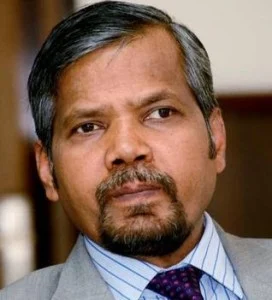
(Akshay Rout is a former Director General, Election Commission of India, and a public policy commentator. The views expressed are personal)


Be the first to comment