
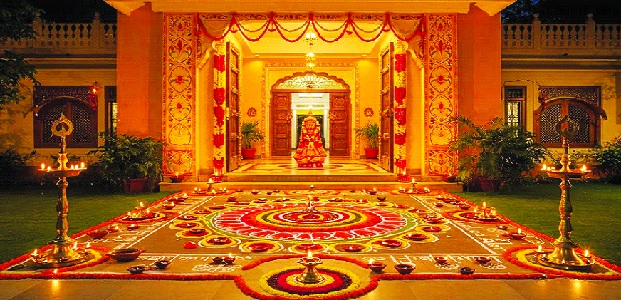

As autumn deepens and the first lamps begin to flicker outside Indian homes, a special festive energy fills the air. Markets sparkle with gold jewellery, silver coins and gleaming utensils. Shopkeepers prepare for auspicious purchases, families clean and decorate their homes, and the fragrance of incense mingles with fresh marigolds. Across India, the five-day festival of Diwali begins with a day dedicated to prosperity, good fortune and well-being: Dhanteras.
Also known as Dhantrayodashi or Dhanvantari Trayodashi, Dhanteras falls on the thirteenth lunar day, or Trayodashi, of Krishna Paksha in the Hindu month of Kartika. It generally occurs two days before Diwali, although the exact Gregorian date varies according to the Hindu lunar calendar. The word combines dhan, meaning wealth, with teras, referring to the thirteenth lunar day.
At first glance, Dhanteras may appear to be a celebration of material abundance. Jewellery stores brim with customers, households purchase new utensils, and gold and silver are considered auspicious acquisitions. Yet beneath the glitter lies a deeper cultural and spiritual message. Dhanteras honours wealth in its many forms: health, knowledge, meaningful relationships and the resources that enable us to live with dignity.
It is a festival that invites people to welcome prosperity while remembering that true abundance begins with gratitude, good health and a generous heart.
The Ancient Origins of Dhanteras
The roots of Dhanteras are closely connected with Hindu mythology, Ayurveda and the ancient Indian understanding of prosperity. Its most important religious association is with Lord Dhanvantari, revered as the divine physician and a manifestation of Lord Vishnu. According to Hindu tradition, Dhanvantari emerged from the cosmic ocean during Samudra Manthan, the celebrated churning of the ocean of milk. Described in Hindu scriptures including the Bhagavata Purana, the Vishnu Purana and the Mahabharata, this event represents a monumental undertaking by the devas, or celestial beings, and the asuras, their powerful counterparts.
Seeking amrita, the nectar of immortality, the two groups joined forces to churn the ocean. Mount Mandara served as the churning rod, while the serpent Vasuki became the rope. Lord Vishnu guided the undertaking, assuming different forms to support the cosmic effort.
As the ocean was churned, extraordinary treasures emerged from its depths. Among them were the divine cow Kamadhenu, the celestial horse Uchchaihshravas, Goddess Lakshmi and, ultimately, Dhanvantari, carrying a vessel of amrita.
His appearance came to symbolize divine healing, medical knowledge and the possibility of overcoming suffering. In traditional depictions, Dhanvantari is shown holding a pot of nectar, sometimes accompanied by medicinal herbs and other symbols associated with healing.
This story gives Dhanteras a distinctive place among India’s festivals. While Lakshmi represents prosperity and abundance, Dhanvantari represents health and the knowledge needed to preserve life. Their associations complement one another, suggesting that wealth without well-being is incomplete.
The festival’s connection with Dhanvantari is especially meaningful in Ayurveda, India’s traditional system of medicine. Dhanteras is observed in many communities as Dhanvantari Jayanti, honouring the divine source of Ayurvedic healing and encouraging respect for physicians, medicinal knowledge and healthy living.
Although the historical development of Dhanteras cannot be traced to a single origin story, its religious associations convey a powerful principle: prosperity is most valuable when it supports life itself.
The Legend of King Hima and the Lamp That Defied Death
Among the most beloved stories associated with Dhanteras is the tale of King Hima’s son, a young prince whose destiny appeared to be sealed by a prophecy.
According to the traditional legend, astrologers foretold that the prince would die from a snakebite on the fourth day after his marriage. When the young man married, his bride learned of the prediction. Rather than surrender to fear, she decided to challenge fate with courage, ingenuity and an extraordinary display of light.
On the fateful night, she gathered gold and silver ornaments, precious objects and coins, arranging them near the entrance of their chamber. She illuminated the surroundings with rows of lamps, filling the darkness with their radiant glow. She then kept her husband awake throughout the night with songs, stories and conversation.
As the story goes, Yama, the god of death, arrived in the guise of a serpent to claim the prince’s life. However, the brilliance of the lamps and the glitter of the precious metals dazzled him. Unable to proceed as intended, Yama lingered at the entrance, listening to the bride’s songs. By morning, the destined hour had passed, and the prince was spared.
This tale is traditionally associated with Yama Deepam or Yama Deepdaan, the custom of lighting a lamp in honour of Yama on Dhanteras.
The legend is not merely about escaping death. It celebrates courage in the face of uncertainty, devotion and the determination to protect those we love. The bride becomes the central figure because she refuses to surrender hope.
The lamp becomes a symbol of resilience. Darkness may represent fear, uncertainty or mortality, but even a small flame can transform the atmosphere around it. In a world marked by uncertainty, Dhanteras reminds us that hope, care and courage remain invaluable forms of wealth.
Goddess Lakshmi, Lord Kubera and the Promise of Prosperity
Although Dhanvantari represents health, Dhanteras is equally associated with Goddess Lakshmi, the Hindu goddess of wealth, fortune, beauty and abundance.
Lakshmi occupies a central place in Diwali celebrations, and many families begin worshipping her on Dhanteras. Her presence is believed to bring prosperity, harmony and auspicious beginnings to homes and businesses.
Another deity frequently worshipped on this occasion is Lord Kubera, regarded as the treasurer of the gods and custodian of wealth. Together, Lakshmi and Kubera represent complementary aspects of prosperity: the blessing of abundance and the responsible stewardship of material resources.
Traditional folk narratives also tell of Lakshmi visiting humble households where she is welcomed with sincerity and devotion. Such stories inspire the custom of cleaning homes and lighting lamps in anticipation of her arrival.
These traditions help explain why Dhanteras is not simply a day for acquiring valuable possessions. Its deeper promise is that prosperity should be accompanied by humility, hospitality and responsible living. Wealth is not merely something to accumulate; it is something to honor, nurture and use wisely.
Why Buying Gold and Silver Is Considered Auspicious
Perhaps no custom captures the public imagination of Dhanteras quite like the purchase of gold, silver or new household utensils. Jewelry stores and markets across India often experience a surge in activity as families shop for ornaments, coins, utensils and gifts.
The practice is rooted in the belief that purchasing something valuable on an auspicious day symbolizes welcoming prosperity into the home. Gold is associated with enduring value, silver with auspiciousness and purity, and metal utensils with nourishment and domestic well-being.
For generations, families have used Dhanteras to purchase items they consider meaningful investments. A gold coin may mark a family’s savings tradition; a silver bowl may become a treasured wedding gift; a new cooking vessel may be used during the festive season.
In this way, a purchase can become more than a financial transaction. It can mark a milestone, express hope for the future or connect younger generations with family customs.
The tradition also has an economic dimension. Jewelrs, artisans, metalworkers, traders and small businesses participate in the festive season, supporting livelihoods and strengthening the relationship between religious celebrations and local commerce.
Yet the essence of Dhanteras does not depend on the size or price of a purchase. For some households, it may mean buying a small silver coin; for others, a modest steel utensil or another useful item. Many people choose books, tools or appliances according to their needs and family traditions.
There is no need for extravagance to make the day meaningful. A thoughtful purchase made within one’s means can carry the same spirit of hope and renewal as a more expensive acquisition.
Ultimately, Dhanteras celebrates the intention behind welcoming prosperity, not a competition over who can spend the most.
Rituals and Traditions: Preparing to Welcome Good Fortune
The observance of Dhanteras begins well before sunset. Homes are cleaned, courtyards are decorated and families prepare for worship, creating an atmosphere of anticipation ahead of Diwali.
Although customs differ across regions and communities, several practices are widely recognised.
– Cleaning and decorating the home: Families clean rooms, polish utensils and organize their homes as a symbolic gesture of renewal. Doorways may be decorated with mango leaves, flowers and colorful rangoli designs. Footprints associated with Goddess Lakshmi are sometimes drawn towards the entrance, symbolising the welcoming of prosperity.
– Worshipping Dhanvantari: Devotees offer prayers to Lord Dhanvantari, seeking health, healing and longevity. Flowers, incense, lamps, fruits and other customary offerings may be placed before the deity. The occasion also provides an opportunity to express gratitude for medical practitioners and the knowledge that helps preserve life.
– Lakshmi-Kubera Puja: Many households worship Goddess Lakshmi and Lord Kubera, offering flowers, sweets, incense and prayers for prosperity. Businesses may also worship their account books, cash boxes or tools of their trade, expressing hopes for an honest and successful year ahead.
– Lighting the Yama Deepam: A traditional lamp is lit in honor of Yama, often outside the home in the evening. In some traditions, it is placed facing south. The ritual expresses a prayer for protection from untimely death and for the well-being of family members. The precise method varies according to regional and household customs.
n Sharing sweets and festive gifts: Families exchange sweets, greet neighbors and distribute gifts to relatives and friends. These gestures strengthen bonds and turn the festival into a collective celebration of goodwill, gratitude and togetherness.
For many families, the rituals conclude with prayers and aarti. The precise sequence depends on regional customs and household traditions. The common thread is the intention to welcome the festive season with a clean home, a peaceful mind and a spirit of gratitude.
Dhanteras Across India: One Festival, Many Expressions
Dhanteras is celebrated throughout India, but its expression varies with regional traditions, local customs and family beliefs.
In northern India, the day is often marked by shopping for precious metals, performing Lakshmi puja and lighting lamps outside homes. Markets are decorated with colorful lights, and families begin preparations for the main Diwali festivities.
In Gujarat, Dhanteras forms part of the vibrant festive period surrounding Diwali and the Gujarati New Year. Business communities may place particular emphasis on prosperity, financial well-being and auspicious beginnings.
In Maharashtra and other parts of western India, families observe traditional prayers and purchase utensils, jewelry or other useful household items. In many communities, the religious association with Dhanvantari also receives special attention.
Across southern India, customs vary considerably between states and households, with Dhanvantari worship observed alongside wider Deepavali preparations. In some places, the festival is particularly significant to practitioners of Ayurveda and those who honour traditional healing.
Among business families, Dhanteras can be an occasion to worship account books, cash registers, machinery and other instruments of livelihood. These rituals acknowledge the work, skill and enterprise through which prosperity is created.
Such differences demonstrate the richness of Indian festival traditions. There is no single way in which every household must celebrate Dhanteras. The rituals may change, but the central aspiration remains the same: a life enriched by good health, material security, meaningful relationships and spiritual well-being.
The Modern Meaning of Dhanteras
In contemporary India, Dhanteras occupies an interesting space where faith, family, commerce and modern aspirations intersect. Shopping malls and online marketplaces join traditional bazaars in promoting festive purchases. Digital payments make transactions easier, while families continue to follow customs passed down through generations.
This modern celebration also invites a more thoughtful interpretation of wealth.
Financial security is important. Savings, investments, a stable livelihood and the ability to provide for loved ones can bring peace of mind. However, Dhanteras offers an opportunity to consider how wealth is acquired, how it is used and whether it contributes to a meaningful life.
The festival’s association with Dhanvantari places health at the heart of this reflection. A person may possess valuable jewelry and substantial savings, yet find little joy in them without physical and emotional well-being. Similarly, material comfort can feel incomplete when relationships are strained or when success comes at the cost of peace of mind.
Dhanteras can therefore be a reminder to invest in preventive healthcare, care for ageing family members, cultivate healthy habits and appreciate the professionals who help us recover from illness.
It can also inspire responsible financial choices. Rather than treating auspicious shopping as an obligation, families can use the occasion to review their savings, set realistic goals, support local artisans and purchase what they genuinely need.
The festival’s spiritual message is not that wealth should be rejected, but that it should be balanced with wisdom and compassion.
A Festival That Lights the Way to Diwali
Dhanteras marks the opening of the familiar sequence of Diwali celebrations, followed in many traditions by Naraka Chaturdashi, the main Lakshmi puja day, Govardhan Puja and Bhai Dooj. The precise sequence and names vary by region.
As the first lamps are lit, the festival sets the tone for the days ahead. Homes begin to glow, kitchens fill with festive preparations, relatives arrive, and the anticipation of Diwali grows.
The small earthen lamp is perhaps the most enduring symbol of this transformation. Its light represents more than decoration: it evokes hope in uncertain times, gratitude for life’s blessings and the possibility of renewal.
The story of Dhanvantari reminds us to cherish health. The legend of the courageous bride teaches us to meet fear with determination. The worship of Lakshmi and Kubera reflects our hopes for abundance and stability. The custom of buying something new gives physical expression to the desire for a fresh beginning.
Together, these traditions form a rich cultural tapestry in which material and spiritual prosperity are understood as dimensions of a fuller life.



Be the first to comment