
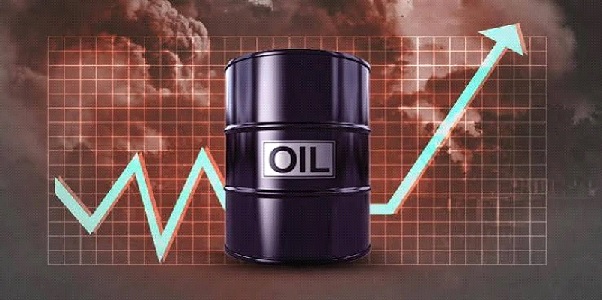

HOUSTON (TIP): Global crude oil prices continued their upward march on Friday, with international benchmark Brent crude crossing the $115-per-barrel mark as escalating attacks on Saudi Arabia’s energy infrastructure and mounting security risks to shipping in the Gulf intensified fears of supply disruptions.
The latest rally has placed oil markets on course for a fourth consecutive monthly increase, raising concerns among governments, energy companies and consumers about the potential economic consequences of prolonged geopolitical tensions in the Middle East.
According to market data, Brent crude futures rose 0.75 per cent to $115.74 per barrel, while US West Texas Intermediate (WTI) crude advanced 0.71 per cent to $102.72 per barrel during early trading. Both benchmarks were heading towards their strongest monthly gains since July, with Brent poised for an increase of nearly 14 per cent and WTI around 15 per cent in October.
The US benchmark was also on track to settle above $100 per barrel for the first time since April, highlighting the scale of the recent rally.
Saudi energy infrastructure under threat
The latest surge in prices followed claims by Yemen’s Iran-aligned Houthi group that it had attacked several major Saudi energy installations, including the Ras Tanura and Rabigh refineries and an Aramco facility at Abqaiq.
Saudi-led forces separately reported intercepting a cruise missile launched towards the kingdom’s western region.
The developments have heightened concerns about the vulnerability of critical oil production and processing facilities in one of the world’s most important energy-producing regions. Any significant damage to these installations could affect crude production, refining capacity and international supply chains.
Market participants are increasingly factoring geopolitical risks into oil prices, as uncertainty surrounding further attacks continues to cloud the global energy outlook.
Hormuz adds to shipping concerns
Apart from attacks on energy facilities, growing security threats to commercial shipping in the Gulf have emerged as another major concern for international oil markets.
The Strait of Hormuz, a narrow waterway connecting the Persian Gulf with the Gulf of Oman, is one of the world’s most strategically important oil transportation routes. A substantial share of globally traded crude passes through this passage, making it particularly vulnerable to regional conflicts.
According to reports, a tanker in the Strait of Hormuz was struck by explosive devices attached to a small boat, although responsibility for the incident remained unclear. Such developments have increased concerns about the safety of vessels transporting crude oil and other energy products.
Any prolonged disruption to shipping through the strait could delay deliveries, increase transportation and insurance costs, and place additional pressure on already elevated oil prices.
Despite attempts to reopen diplomatic channels between Washington and Tehran, markets have received little reassurance that tensions will ease in the immediate future.
US President Donald Trump said Vice President JD Vance had contacted Iran regarding medical supply assistance, amid reports of renewed efforts to restart peace negotiations.
Iran confirmed receiving a communication but had yet to respond, according to reports. Tehran has maintained that any diplomatic progress would depend on Washington addressing its conditions.
The uncertainty surrounding negotiations has prevented investors from reducing the geopolitical risk premium currently built into crude oil prices.
The sustained rise in international crude prices could pose significant challenges for major oil-importing economies, particularly India, which depends heavily on overseas supplies to meet its energy requirements.
Higher crude prices can increase the country’s import bill, put pressure on the rupee and contribute to inflationary pressures. Transportation, manufacturing, aviation and several other sectors could face higher operating costs if elevated prices persist.
Sensex, Nifty trade flat as IT gains counter crude oil concerns
October 30, 2026
Mumbai (TIP): Stock market traded largely flat on Friday, October 30, as gains in IT stocks and select heavyweight shares helped offset pressure from elevated crude oil prices and weakness in broader markets. Investors also remained focused on quarterly earnings from key companies, including Reliance Industries and Sun Pharma, due later in the day.
At around 10.23 am, the BSE Sensex was trading at 74,157.19, up just 6.15 points or 0.01%. The NSE Nifty 50 was at 22,921, down 15.75 points or 0.07%.
The benchmarks recovered from a muted opening but struggled to build on the gains made in the previous session, when both indices advanced more than 1% following strong quarterly results from key constituents and the US Federal Reserve’s decision to keep interest rates unchanged.
Dr. V K Vijayakumar, Chief Investment Strategist, Geojit Investments Limited, said, “The crude oil headwind is getting stronger with Brent rising above $117. There are reports of the US likely resuming strikes against Iran after the mid-term elections which is due on November 3rd. Even though FII selling has turned weak with occasional buys in recent days, the market construct appears unfavourable for a rally.”
IT stocks were among the key supports for the market. The Nifty IT index gained 1.60%, with Infosys rising 1.91%, Tech Mahindra advancing 1.88%, TCS gaining 0.81% and HCLTech up 0.94%.


Be the first to comment