

From the opening declaration of Ik Onkar to the profound teachings of Japji Sahib, Guru Nanak Dev Ji’s compositions offer a path of spiritual awareness, humility, truthful living and harmony with the Divine
The spiritual legacy of Guru Nanak Dev Ji is preserved not only through historical accounts of his life and travels but, above all, through his Bani. His compositions form a central part of Sikh scripture and continue to guide people in understanding the nature of God, the purpose of human existence and the responsibilities of living a truthful life.
Written in poetic forms and composed in musical measures known as Raags, Guru Nanak Dev Ji’s Bani speaks to the human condition with remarkable depth. It addresses questions of life and death, ego and humility, justice and compassion, worldly attachment and spiritual liberation.
His words challenge people to look beyond outward appearances and discover the Divine presence within creation. They also insist that spiritual understanding must be reflected in everyday conduct.
For Guru Nanak Dev Ji, devotion was not an escape from the world. It was a way of living in the world with honesty, compassion and awareness of the Creator.
His compositions, preserved in Sri Guru Granth Sahib Ji, remain among the most important sources of Sikh spiritual guidance.
The foundation: Ik Onkar and the Mool Mantar
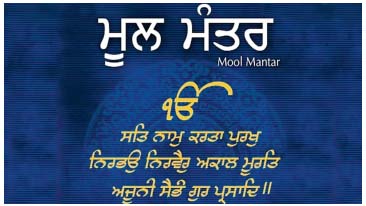
The opening of Sri Guru Granth Sahib Ji begins with the Mool Mantar, the foundational declaration of Sikh belief.
It begins with Ik Onkar, affirming the existence of one universal Creator.
The Mool Mantar describes the Divine as:
- One.
- The ultimate truth.
- The Creator.
- Without fear.
- Without hatred.
- Beyond time and birth.
- Self-existent.
- Known through the grace of the Guru.
These descriptions offer a profound understanding of the nature of God.
The Divine is not limited by physical form, geographical boundaries or religious identity. God is eternal, beyond human fear and hostility, and present throughout creation.
The Mool Mantar establishes the spiritual foundation for the teachings that follow. It directs the seeker towards a relationship with the Divine based on remembrance, humility and grace.
Japji Sahib: A spiritual guide to human existence
Among Guru Nanak Dev Ji’s most celebrated compositions is Japji Sahib, which appears at the beginning of Sri Guru Granth Sahib Ji.
It is recited by Sikhs as part of the daily morning prayer known as Nitnem.
Japji Sahib consists of the opening Mool Mantar, an introductory Salok, 38 Pauris or stanzas, and a concluding Salok.
Its importance lies in the depth of the questions it raises and the spiritual direction it offers.
What is truth? How can human beings overcome ego? What is the relationship between the individual and the Creator? How can a person live in accordance with Divine will?
Japji Sahib explores these questions through a combination of spiritual reflection, poetic expression and philosophical insight.
One of its most widely remembered lines states:
Sochai soch na hova-ee je sochi lakh vaar.
It conveys that truth cannot be attained merely through repeated intellectual thinking or speculation, even if one thinks countless times.
The line encourages seekers to recognise the limitations of human reasoning when it is disconnected from spiritual awareness.
Another central teaching is:
Hukam rajaa-ee chalnaa, Nanak likhiaa naal.
This expresses the importance of living in accordance with Hukam, the Divine order or will.
Hukam is a central concept in Sikh philosophy. It reminds human beings that existence is governed by a larger Divine order and that spiritual maturity involves accepting this reality with humility.
Japji Sahib also describes different spiritual stages through which a seeker develops understanding.
The five Khands are:
Dharam Khand: The realm of righteousness and moral responsibility, where human actions and accountability are central.
Gian Khand: The realm of knowledge, where understanding expands beyond the limitations of ordinary perception.
Saram Khand: The realm of spiritual effort and refinement, where the mind and consciousness are shaped.
Karam Khand: The realm of grace and spiritual strength.
Sach Khand: The realm of Truth, associated with the highest spiritual realisation and awareness of the Divine.
These descriptions are not simply geographical destinations. They represent dimensions of spiritual understanding and development.
Japji Sahib therefore provides a framework for examining one’s own life, recognising the influence of ego and moving towards a deeper relationship with the Creator.
Asa Di Var: A call for ethical and truthful living
Asa Di Var is another important composition of Guru Nanak Dev Ji, found in Sri Guru Granth Sahib Ji.
Traditionally sung in the morning, it addresses the relationship between religious practice and ethical conduct.
The composition challenges hypocrisy and questions the value of rituals performed without inner transformation.
It reminds people that devotion cannot be separated from truthfulness, compassion and justice.
One of its most celebrated verses addresses the dignity of women:
So kio manda aakhiye jit jammeh raajaan.
Why call her inferior, from whom even kings are born?
The verse challenges attitudes that treat women as inferior and asks society to recognise their dignity and contribution.
Asa Di Var also questions social arrogance, empty displays of piety and the tendency to judge people through external appearances.
Its message is especially relevant in societies where religious identity can sometimes become more important than the values that religion is meant to encourage.
Barah Maha: Finding the Divine through the changing seasons
Barah Maha, meaning twelve months, is a poetic composition that uses the changing months of the year to describe the soul’s longing for union with the Divine.
The cycle of nature becomes a metaphor for the spiritual journey.
Each month brings a different atmosphere, and the changing seasons reflect the emotional and spiritual condition of the seeker.
The composition presents human life as a journey marked by longing, separation, hope and fulfilment.
In this imagery, the soul is often understood through the language of a bride longing for the Divine Beloved.
The changing seasons remind the seeker that time is constantly moving and that human life should not be wasted in ego, distraction and worldly attachment.
Barah Maha encourages people to cultivate devotion throughout the year rather than limiting spiritual awareness to particular occasions or ceremonies.
Its poetic treatment of nature also reveals Guru Nanak Dev Ji’s sensitivity to the rhythms of the world around him.
Sidh Gosht: A dialogue on the purpose of spiritual life
Sidh Gosht is a significant composition in which Guru Nanak Dev Ji engages in a spiritual dialogue with Siddhas, ascetics associated with yogic traditions.
The composition explores questions concerning meditation, renunciation, spiritual discipline and the nature of liberation.
A central theme is the relationship between spiritual understanding and everyday life.
Some spiritual traditions placed great emphasis on withdrawing from society and abandoning worldly responsibilities. Guru Nanak Dev Ji, however, presented a different understanding of spiritual maturity.
He emphasised that one could live a spiritually meaningful life while remaining engaged with family, work and society.
The important task was to overcome ego, remember the Divine and act truthfully.
This was a distinctive aspect of his teaching. Spirituality did not require people to abandon their responsibilities. Instead, it required them to transform the way they lived.
Sidh Gosht therefore reinforces the Sikh understanding that devotion and social responsibility are not opposing paths.
Shabad: The power of Divine wisdom
The term Shabad occupies a central place in Sikh spiritual thought.
It refers to the Divine Word or revealed spiritual wisdom communicated through the Guru’s Bani.
For Sikhs, the Shabad is not merely a collection of poetic verses. It provides guidance for understanding the Divine and transforming the human mind.
Listening to Gurbani, singing it and reflecting upon its meaning are important aspects of Sikh spiritual practice.
The purpose is not simply to repeat words but to absorb their message and allow them to influence one’s conduct.
A person may recite sacred verses regularly, but their deeper significance is realised when the teachings become part of everyday behaviour.
This is why Guru Nanak Dev Ji’s compositions repeatedly connect remembrance of God with truthful living and compassion.
Naam Simran: Remembering the Divine
Naam Simran, or remembrance of the Divine Name, is one of the central themes in Guru Nanak Dev Ji’s Bani.
It encourages a continuous awareness of the Creator rather than limiting devotion to specific moments of prayer.
Naam Simran is not merely the repetition of a word or phrase. It involves cultivating a state of consciousness in which the Divine remains present in one’s thoughts and actions.
This remembrance helps the individual overcome ego, anger, greed and attachment.
It also encourages humility because the person begins to recognise that human existence is part of a much larger Divine order.
For Guru Nanak Dev Ji, remembrance of God should influence the way people interact with others. A spiritually aware person should be more compassionate, honest and responsible.
Haumai: Understanding the obstacle of ego
One of the recurring concerns in Guru Nanak Dev Ji’s Bani is Haumai, or ego.
Ego creates the illusion that the individual is separate from the Divine and superior to others.
It encourages pride in wealth, status, education, family background and social position.
Haumai also leads to jealousy, anger, greed and conflict.
Guru Nanak Dev Ji’s teachings encourage people to recognise the influence of ego and overcome it through humility, remembrance and the Guru’s guidance.
The aim is not to erase individuality but to free the mind from arrogance and self-centredness.
When ego becomes less dominant, a person is better able to recognise the dignity of others and live in harmony with creation.
Hukam: Living in harmony with the Divine order
Hukam is another fundamental concept in Guru Nanak Dev Ji’s teachings.
It refers to the Divine order through which the universe operates.
Human beings often attempt to control every aspect of life and become distressed when events do not unfold according to their expectations.
Guru Nanak Dev Ji’s teachings encourage acceptance of Hukam, not as passive resignation but as an expression of humility and spiritual understanding.
Living in accordance with Hukam means recognising the limits of individual control while fulfilling one’s responsibilities with sincerity.
It encourages people to respond to life’s circumstances with patience, wisdom and trust in the Divine.
The music of Gurbani
Guru Nanak Dev Ji’s compositions are closely connected with music.
The Bani in Sri Guru Granth Sahib Ji is arranged according to Raags, or musical frameworks that shape the expression and emotional character of the compositions.
This relationship between poetry and music is central to Sikh devotional practice.
Kirtan, the singing of Gurbani, allows the teachings to reach people through melody, rhythm and collective participation.
At a Gurdwara, the sound of Shabad Kirtan creates an atmosphere of reflection and devotion.
The musical tradition also demonstrates that Gurbani is not intended merely for private reading. It is meant to be sung, heard, contemplated and lived.
A message that transcends time
Guru Nanak Dev Ji’s Bani continues to speak to the concerns of contemporary society.
In a world marked by competition, anxiety, material ambition and social divisions, its teachings encourage a different understanding of success.
Success is not measured only by wealth or influence but by the quality of one’s conduct.
The emphasis on Naam Simran offers a path towards inner awareness. The teachings on Haumai encourage humility. The principle of Hukam promotes acceptance and wisdom. Asa Di Var challenges discrimination and hypocrisy, while Sidh Gosht reminds people that spiritual growth is possible within the responsibilities of everyday life.
These teachings are not restricted to a particular generation or geographical region. Their central message concerns the universal human search for truth, meaning and connection with the Divine.
The eternal relevance of the Guru’s words
More than five centuries after Guru Nanak Dev Ji composed his Bani, his words continue to be recited in Gurdwaras and homes across the world.
They accompany Sikhs through the beginning of the day, moments of celebration, periods of difficulty and the most important milestones of life.
The compositions remind people that spirituality must be reflected in their treatment of others and in the choices they make every day.
The 557th Parkash Purab offers an opportunity not only to remember the life of Guru Nanak Dev Ji but also to return to the wisdom preserved in his words.
His Bani asks people to look beyond the distractions of the material world, recognise the oneness of creation and live with humility.


Be the first to comment