Tag: Aadhaar

  • Excluded Bihar voters can submit online claims with Aadhaar or 11 other documents: SC

    Excluded Bihar voters can submit online claims with Aadhaar or 11 other documents: SC

    NEW DELHI (TIP): The Supreme Court on Friday, August 22, directed the Election Commission to accept online applications, supported by requisite documents or an Aadhaar card number, from those excluded from the draft electoral rolls during the ongoing special intensive revision (SIR) in poll-bound Bihar.

    A Bench of Justice Surya Kant and Justice Joymalya Bagchi clarified that the physical submission of forms or objections was not necessary, saying any of the 11 documents mentioned in the Election Commission’s notification or an Aadhaar card number could be submitted with inclusion applications. The Bench added that wherever physical forms were submitted, booth-level officers must acknowledge them. The court also asked political parties to assist people excluded from the draft electoral rolls. Hearing petitions challenging the EC’s June 24 notification on the SIR, the Bench expressed surprise that despite Bihar having over 1.68 lakh booth-level agents (BLAs) appointed by political parties, the EC reported that only two objections had been filed.

    “We are surprised at the inaction of political parties. After appointing BLAs, what are they doing? Why this distance between political workers and the local people?” it wondered even as petitioners complained that BLAs were not being permitted to submit their objections.

    The Bench issued notices to 12 registered political parties, formally making them parties to the case. It directed these recognized parties to issue specific instructions to their BLAs to assist voters, except those deceased, in submitting the requisite form and documents to get their names reinstated on the voters’ list. The court asked the political parties to file status reports on the claim forms they facilitated and posted the matter for further hearing on September 8. Representing the EC, senior counsel Rakesh Dwivedi said the EC had complied with the court’s order “in letter and spirit” and that any voter wrongly excluded could apply for re-inclusion and correction with supporting documents. He noted that not a single political party had filed an objection and said it was the duty of political parties to aid the EC.

    “There are 1.6 lakh BLAs and if each verifies 10 claims, it should be over in 5-6 days… Crores of people have been filing documents… Please wait and see. Repose some trust on the EC…not one voter will fall through the cracks,” Dwivedi submitted, seeking more time before any further directions were issued. Petitioners’ counsel, including senior advocates Kapil Sibal, AM Singhvi, Gopal Sankaranarayanan, Prashant Bhushan and Vrinda Grover, argued that many people were unaware of the process. They pointed out that the EC was asking excluded people to file Form 6 for a fresh entry with a declaration and Aadhaar, creating difficulties for migrant workers outside Bihar and those affected by floods in the state. On August 1, the EC published the “draft electoral rolls” for Bihar, enlisting 7.24 crore voters. The final electoral roll is scheduled for publication on September 30.

    Of the 65 lakh voters removed from the draft rolls, the EC stated that 22.34 lakh were dead, 36.28 lakh had permanently shifted or were absent, and 7.01 lakh were enrolled in more than one place. The Election Commission claimed that roughly 6.5 crore people from the total 7.9 crore voting population did not need to file any documents for themselves or their parents who were featured in the 2003 electoral rolls.
    (Source: TNS / Satya Prakash )

  • India’s journey of triumphs, trials and transformation

    India’s journey of triumphs, trials and transformation

    When the clock struck midnight on August 15, 1947, a newly free India stepped into the unknown-scarred by Partition, burdened by poverty, yet fuelled by an unyielding spirit. As Pandit Nehru spoke of the nation’s “tryst with destiny,” few could have imagined that within eight decades, this struggling colony would emerge as a global powerhouse-economically dynamic, technologically advanced, and democratically resilient.
    But progress has not been even. India’s post-independence journey has been a tale of two realities: extraordinary achievements on one hand, and stubborn challenges on the other.
    Achievements: Building a Modern Nation
    Democracy: India’s Greatest Triumph
    Universal Adult Franchise from Birth: Unlike many new nations that restricted voting to the educated or wealthy, India trusted its citizens fully. Every adult, regardless of caste, gender, or literacy, had a vote.
    Stable Democratic Institutions: Over seventeen general elections and hundreds of state polls, India has witnessed peaceful transfers of power-even after deeply divisive campaigns.
    Robust Judiciary and Free Press: The Supreme Court’s power of judicial review and an independent media have kept governments in check. Historic judgments-from Kesavananda Bharati (1973) protecting constitutional supremacy to Navtej Johar (2018) decriminalizing homosexuality-reflect India’s evolving social contract.
    Innovation in Electoral Processes: Electronic Voting Machines, Voter ID programs, and massive voter awareness drives have made India’s electoral process both efficient and inclusive.
    Agricultural Transformation:
    From Famine to Surplus
    Green Revolution (1960s-70s): Led by M. S. Swaminathan and supported by Prime Minister Lal Bahadur Shastri’s call to “Jai Jawan, Jai Kisan,” India introduced high-yield crop varieties, irrigation expansion, and fertilizer use.
    Result: India went from importing food under PL-480 aid programs to self-sufficiency in grain production by the 1970s, and today is a leading global exporter of rice and wheat.
    White Revolution: Operation Flood, spearheaded by Verghese Kurien, transformed India into the largest producer of milk, empowering rural farmers.
    Economic Growth and Global Integration
    Planned Economy to Liberalization: Post-independence India followed Nehruvian socialism, building public-sector heavy industries, dams, and premier institutions (IITs, AIIMS).
    – 1991 Economic Reforms: Facing a severe foreign exchange crisis, PM P. V. Narasimha Rao and Finance Minister Manmohan Singh dismantled the License Raj, liberalized trade, and attracted foreign investment.
    – Results: GDP growth accelerated, millions entered the middle class, and India emerged as a hub for IT, outsourcing, and software exports. By 2023, India became the fifth-largest economy globally.
    – Digital India Revolution: In the 2010s, Aadhaar biometric ID, UPI payment systems, and massive telecom penetration brought financial inclusion to millions, changing everyday life.
    Science, Technology and Strategic Power
    Space Achievements:
    – Aryabhata (1975)-first satellite launch.
    – Mangalyaan (2014)-world’s lowest-cost Mars mission.
    – Chandrayaan-3 (2023)-soft landing on Moon’s south pole.
    – Nuclear and Defense Programs: India developed indigenous nuclear capability (Smiling Buddha test in 1974, Pokhran-II in 1998) and built advanced missiles under the Integrated Guided Missile Development Program.
    – Healthcare and Pharma: India became known as the “pharmacy of the world”, supplying affordable medicines and vaccines globally, particularly during the COVID-19 pandemic.
    Social Justice and Inclusion
    – Abolition of Untouchability (Article 17): Legal equality laid the foundation for social reforms.
    – Affirmative Action: Reservations in education and employment uplifted Scheduled Castes, Tribes, and OBCs.
    – Education Expansion: Literacy rose from 12% in 1947 to over 77% today, driven by schemes like Sarva Shiksha Abhiyan and Mid-Day Meals.
    – Women in Leadership: From Indira Gandhi to President Droupadi Murmu, women have assumed the highest offices, while legal reforms improved inheritance, workplace equality, and political participation.
    Challenges: The
    Unfinished Agenda
    – Poverty, Inequality, and Unemployment
    – Progress but Uneven: Extreme poverty dropped sharply-from 45% in 1983 to under 10% today-yet income inequality has widened, with wealth concentrated among a few.
    – Jobless Growth: While GDP has surged, employment generation has lagged, creating frustration among India’s vast youth population.
    Population Pressure and
    Infrastructure Deficit
    – Demographic Dividend at Risk: India’s young workforce (median age \~28) could fuel economic growth-but only with adequate jobs, skills, and infrastructure.
    – Urban Overcrowding: Cities like Delhi and Mumbai face congestion, housing shortages, and pollution, reflecting planning gaps.
    Governance and Corruption
    – Institutional Weaknesses: Despite RTI laws and digital transparency, high-profile scams (Bofors, 2G spectrum, coal allocations) have eroded public trust.
    – Bureaucratic Inefficiency: Delays, red tape, and inconsistent policies continue to discourage investment and reforms.
    Social Harmony Under Strain
    – Caste, Religious, and Regional Tensions: Violence, discrimination, and political polarization challenge the vision of “unity in diversity.”
    – Need for Inclusive Nationalism: Social cohesion must rise above divisive rhetoric to ensure long-term stability.
    Environmental and Climate Crisis
    – Pollution and Resource Stress: India is home to some of the most polluted cities, and rivers like the Ganga remain under stress despite cleanup efforts.
    – Climate Vulnerability: Erratic monsoons, droughts, and heatwaves threaten agriculture and health. Sustainable energy and urban planning are critical for the future.
    The Road Ahead: Vision for 2047
    As India approaches its centenary of independence in 2047, the nation has set an ambitious goal: to become a developed country. Achieving this vision requires a multi-pronged strategy:
    Inclusive Economic Growth
    – Invest heavily in education, vocational training, and entrepreneurship to turn the youth bulge into a demographic dividend.
    – Strengthen manufacturing through initiatives like Make in India and build global supply chain integration.
    Good Governance and
    Institutional Strengthening
    – Deepen transparency using e-governance, AI-powered services, and judicial reforms.
    – Ensure federal balance, empowering states to innovate while maintaining national cohesion.
    Sustainable Development
    – Aggressively expand renewable energy (solar, wind) to meet climate goals.
    – Implement urban reforms to create smart, liveable cities with better public transport and waste management.
    Social Harmony and Equality
    – Expand affirmative action into quality education and skill-building programs, not just quotas.
    – Promote dialogue, cultural exchange, and inclusive nationalism to reduce caste and communal divides.
    Global Leadership
    – Use India’s position in G20, BRICS, and the Quad to shape global economic, security, and climate policies.
    – Leverage India’s soft power-Bollywood, yoga, diaspora, IT leadership-for cultural diplomacy.
    A Nation Still in Motion
    India’s journey since 1947 is a testament to resilience. From a country battling famine to a spacefaring power and global economic leader, its achievements are undeniable. Yet, poverty, inequality, and social divisions remind us that independence is not a destination but an ongoing project.
    As the world’s largest democracy marches toward its centenary, India must marry growth with justice, modernity with tradition, and power with compassion. The promise of 1947 still shines bright-waiting to be fully realized by 2047.

  • NRIs, PIOs don’t need to link bank a/c, PAN with Aadhaar: UIDAI

    NRIs, PIOs don’t need to link bank a/c, PAN with Aadhaar: UIDAI

    NEW DELHI (TIP):  NRIs and PIOs are not required to link bank accounts and other services with Aadhaar, the Unique Identification Authority of India (UIDAI) said on Friday, November17, while instructing various implementation agencies to work out a mechanism to verify the status of such individuals.

    It said the Prevention of Money laundering Rules 2017 and the Income Tax Act clearly stipulate that the linking of bank accounts and PAN respectively, “is for those persons who are eligible to enroll for Aadhaar”.

    It said all central ministries and departments, state governments and other implementation agencies should bear in mind that Aadhaar as an identity document can be sought only from those eligible for it under Aadhaar Act, and that most NRIs/PIOs/ OCIs may not be eligible for its enrolment.

    The Aadhaar-issuing body said several representations had been received about problems faced by Non-Resident Indians (NRIs), Person of Indian Origin (PIOs) and Overseas Citizens of India (OCI) where Aadhaar was being demanded with regard to various services and benefits.

    It said that some Departments and implementing agencies were asking NRIs/OCIs/PIOs to submit or link their Aadhaar for availing services and benefits, despite the fact that they were not entitled for the 12-digit biometric identifier.

    “The laws regarding submitting/linking of Aadhaar for availing the services/benefits applies to the residents as per the Aadhaar Act 2016… Most of the NRIs/PIOs/OCIs may not be eligible for Aadhaar enrolment as per Aadhaar Act…,” the UIDAI said in a note dated November 15 to central ministries and states.

    It has further instructed the implementing agency to device a mechanism “to ascertain the genuineness of status of such NRIs/PIOs/OCIs”.

    (Source: PTI)

  • Aadhaar gets praise at global forum for financial inclusion

    Aadhaar gets praise at global forum for financial inclusion

    HAMBURG (TIP): As the world debates use of big data and analytics to improve financial inclusion, India’s Aadhaar system has come in for praise by a global body on financial reforms for expanding banking reach and lesser use of cash.

    In a progress report on efforts to assess and address decline in correspondent banking, the Financial Stability Board (FSB) said its action plan in this regard is making good progress but the fall in numbers is continuing.

    “A decline in the number of correspondent banking relationships remains a source of concern for the international community,” it said, while flagging issues like problems in international payments and some payment flows being driven underground.

    This may have adverse consequences for financial inclusion, as well as the stability and integrity of the financial system, it added. The FSB has submitted its action plan in this regard to the G20 Summit, which begins here tomorrow and is being attended by Prime Minister Narendra Modi along with the leaders of the world’s other largest economies.

    The FSB has been established to coordinate at the international level the work of national financial authorities and global standard-setting bodies in order to develop and promote the implementation of effective regulatory, supervisory and other financial sector policies.

    It has established a Correspondent Banking Coordination Group (CBCG) to coordinate and maintain impetus in the implementation of the action plan.

    On potential applications of financial technologies, the FSB said the CBCG had an initial discussion on whether advances in big data and analytics might be usefully combined with KYC utilities, better information in payment messages and the LEI (Legal Entity Identifier) to facilitate due diligence on correspondent banks and transaction monitoring.

    Source: PTI

  • I-T Dept launches new facility to link PAN with Aadhaar

    I-T Dept launches new facility to link PAN with Aadhaar

    I-T Dept launches new facility to link PAN with Aadhaar

    NEW DELHI (TIP): The Income Tax Department has launched a new e-facility to allow a taxpayer link in “easy” steps one’s Aadhaar and Permanent Account Number (PAN), a mandatory requirement for filing IT returns now.

    An official statement said responding to grievances of taxpayers regarding difficulties in linking PAN with Aadhaar as their names did not match in both systems (for instance names with initials in one and expanded initials in another), the I-T Department has come out with a new arrangement.

    The department’s e-filing website — https:// incometaxindiaefiling.gov.in/ — now has a new link on its homepage for connecting the two unique identities of a taxpayer. The link requires a person to punch in his PAN number, Aadhaar number and the “exact” name as mentioned on the Aadhaar card. “After verification from the UIDAI (Unique Identification Authority of India), the linking will be confirmed.

    In case of any minor mismatch in Aadhaar name provided by the taxpayer as compared to the actual data in Aadhaar, a One Time Password (Aadhaar OTP) will be sent to the mobile registered with Aadhaar.

    Taxpayers have been asked to ensure that the date of birth and gender in PAN and Aadhaar are exactly the same. In a rare case where Aadhaar name is completely different from name in PAN, then the linking will fail and taxpayer will be asked to change the name in either Aadhaar or in PAN database.

    There is no need to login or be registered on e-filing website. This facility can be used by anyone to link their Aadhaar with PAN. This facility is also available after login on the e-filing website under Profile settings and where the taxpayer has to choose Aadhaar linking.

  • Payment via Aadhaar card to be a reality soon

    Payment via Aadhaar card to be a reality soon

    NEW DELHI (TIP): Looking to make Aadhaar a more powerful financial tool, the government has instructed all banks across the country to launch Aadhaar Pay by the end of the month. It will facilitate financial transactions by using fingerprints. Reports said the banks would also have to enable ‘Pay to Aadhaar’ facility on the BHIM app by March 31.

    SBI and Punjab National Bank have been asked to provide the facility by the end of this week. This feature on BHIM app will help in making payments by simply entering the 12-digit Aadhaar number.

    Officials said this move would encourage the use of online payments among the poor and illiterate in rural areas and help the country move forward towards digitisation.

    The government has already prodded all banks to move to the Aadhaar Pay platform at the launch of IDFC Aadhaar Pay — the first Aadhaar-linked cashless merchant solution, offered by IDFC Bank Ltd. “All other banks must follow IDFC in adopting this model. If they don’t follow this lead, technology will make them redundant,” said Amitabh Kant, CEO, NITI Aayog.

    Aadhaar Pay is a service for merchants which will enable them to receive payments from customers without any physical payment instrument.

    The Aadhaar Pay app has to be downloaded by merchants on their phones and linked to an Aadhaar biometric reader. Once the merchant has this infrastructure in place, consumers can start transacting.

    To use this service, the customer has to first link his/her bank account to the Aadhaar number. To make a payment, the consumer just has to select the bank’s name and enter the Aadhaar number. The fingerprint is the password to authenticate the transaction.

    Aadhaar Pay works on any android-based phone, even a low-cost one, with an attached finger biometric device. A top government official said banks have been directed to take merchants on board for using BHIM, fitted with ‘Pay to Aadhaar’ feature and Aadhaar Pay.

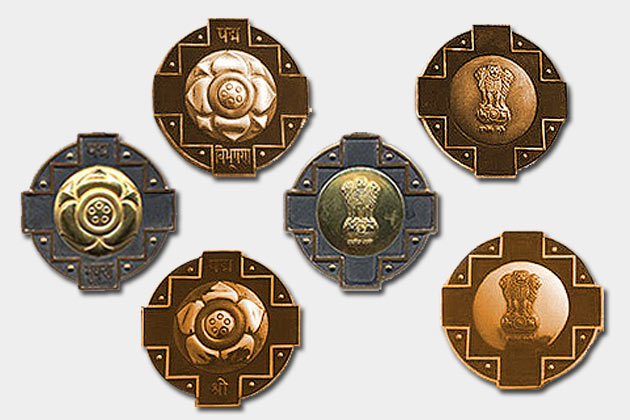
  • Padma Awards nomination process now open for general public

    Padma Awards nomination process now open for general public

    For the first time ever, the government of India has decided to involve the general public in the process of selecting nominees for the prestigious Padma Awards.

    In an attempt to transform the national awards into a truly people’s award, the government has invited the people of India to nominate a person of their choice as a nominee for the award.

    The nominations can be made online on the URL http://padmaawards.gov.in/. The nominators would be required to furnish their Aadhaar details for authenticity and accountability.

    Sources have said that this way, people of excellence who are not well known would also come to light with this step.

    The government has already received over 1700 nominations and the last date of nomination is September 15.

  • LOK SABHA PASSES AADHAAR BILL IN ORIGINAL FORM

    LOK SABHA PASSES AADHAAR BILL IN ORIGINAL FORM

    NEW DELHI (TIP): Aadhaar is set to receive statutory backing after Parliament passed a bill that will make the unique identification project the central plank for delivering government subsidies and welfare benefits.

    Only the President’s signature is now required for the bill to become law, which will enable the government to reset the subsidy regime and deliver state benefits directly to their intended beneficiaries, plugging leakages.

    The money will go into the bank or post-office accounts of beneficiaries linked to the 12-digit biometric identity number provided by the Unique Identification Authority of India (UIDAI).

    Late on Wednesday evening, the Lok Sabha rejected five amendments proposed by the Rajya Sabha earlier in the day and passed the bill in its original form.

    The lower House passed the Aadhaar (Targeted Delivery of Financial and Other Subsidies, Benefits and Services) bill, 2016, as a money bill on Friday.

    A money bill cannot be rejected by the Rajya Sabha, which can only suggest changes the Lok Sabha is free to reject. The ruling National Democratic Alliance is vastly outnumbered by the opposition in the upper House.

    The opposition has voiced concerns that the privacy of individuals may be compromised by Aadhaar and that a provision that allows the government to access the biometric information in cases pertaining to national security may be misused.

    The amendments to the bill moved by Congress MP Jairam Ramesh sought to replace the term ‘national security’ with ‘public emergency and public safety’ and limit the use of Aadhaar to delivery of subsidies. He also suggested that the use of Aadhaar be made optional so that subsidies can be accessed even without the unique identity number.

  • HIGHLIGHTS | BUDGET SPECIAL | UNION BUDGET 2016-17

    HIGHLIGHTS | BUDGET SPECIAL | UNION BUDGET 2016-17

    Rs 1,000 crore allocated for new EPF (Employees’ Provident Fund) scheme

    Rs 38,500 cr allocated for MNREGA in 2016-17, the highest ever if entire amount is spent

    Rs 2.87 lakh crore will be given as grants-in-aid to village panchyats and municipalities to boost rural economy

    Govt to spend Rs 850 crore in a few years on animal husbandry, cattle and livestock breeding

    States will be encouraged to take up decentralised procurement of foodgrains

    Record agri credit target of Rs 9 lakh crore in 2016-17 set

    Rs 19,000 crore allocated for Pradhan Mantri Gramin Sadak Yojana in 2016-17. In all, Rs 27,000 cr after state contribution

    Rs 2.87 lakh crore to be given grant-in-aid for gram panchayats and municipalities; it is quantum jump of 228%

    Rs 60,000 crore for recharging of ground water recharging

    Govt will work for passage of insolvency and bankruptcy laws. We will undertake significant reforms

    Govt will enact a law to confer benefits on deserving sections on Aadhaar platform

    Next financial year will cast an additional burden due to implementation of 7th Pay Commission and OROP

    CPI inflation was 9.4% in the last 3 years of previous government. It has come down to 5.5% now

    Growth has acclerated to 7.6% in 2015-16 notwithstanding contraction of global exports

    Our external situation is robust, CAD has declined to $14.4 bn this year, will be 1.4% of GDP at the end of fiscal

  • ‘FOR GOOGLE, INDIA TO BE BIGGER MARKET THAN US’

    ‘FOR GOOGLE, INDIA TO BE BIGGER MARKET THAN US’

    NEW DELHI (TIP): Sundar Pichai, global chief executive at Goggle, the giant search engine, believes India will become a bigger market for the company than the US sometime in the middle of 2016.

    In an interaction with half a dozen journalists here on Wednesday, he said it was not only with regard to the use of Android-based phones that India would scale ahead of the US. There were also many areas of technological development where India would become Google’s first market for experimentation and trial, before launch in other markets.

    “We developed the offline version of YouTube in India, tried it here, and are now taking it to other countries,” Pichai said in his first media address since taking over as Google global head in August this year.

    Alumnus of IIT-Kharagpur, who joined Google in April 2004 within days of the company launching Gmail, he said it was an emotional experience to come to India and launch these initiatives here.

    Elaborating on the Google Loon project, which envisages the use of floating balloons to transmit data to devices using the internet, Pichai said the company was working with data carriers like phone service providers to roll out the new facility. Google believes in a systems approach and would follow through the processes in India as well, he said. Google Loon would essentially derive its advantage from these balloons, which would be like floating towers and naturally work more effectively in less densely populated areas.

    Innovation would continue to be the platform on which Google would work, he said making payments more effective was now a big focus area. He hoped India, too, could exploit its potential as an innovation hub. For this, he emphasised the need for an education system to encourage creativity, and taking the risks. Aadhaar, the biometrics-based identity system launched by former Infosys CEO Nandan Nilekani, he said, was foundational.

    On net-neutrality, Pichai said the principle was critical for growth and innovation. Google endorsed it, since it underlined the core internet principle of a free and open environment.

    The values of diversity were universal and applied to the US as much as to India. Pichai said this in response to a question on what he felt about the intolerance debate in India, amid his recent comments criticising anti-Muslim views coming from some US leaders.

    Earlier in the day, Pichai announced Google would work with the Indian Railways to provide free Wi-Fi at rail stations, launching the first such service at Mumbai Central  next month. Pichai also said his company was making Google products work better for Indians.

    New initiatives would include a lighter version of search results on webpages, creation of a virtual keyboard, making it easy to type in 11 Indian languages, launch of offline maps providing real-time navigation of roads and searches for locations without a data connection, and adding the facility of panoramic images for 250 Indian monuments.

    Pichai also announced that in the first quarter of 2016, Google would release a feature called ‘Tap to Translate’ that would allow instant translation of any text on an Android phone.

  • Voters to be authenticated by linking their database to Aadhaar

    NEW DELHI (TIP): The Election Commission will launch a nationwide drive on March 1 to purify electoral rolls through linking of Aadhaar number with the electors’ database. The rolls authentication and purification mission will strive to stop duplication in voters’ list by allowing an elector to feed his/her Aadhaar number for attaching it with Electoral Photo Identity Card (EPIC) data. The project, to be launched by chief election commissioner H S Brahma, is expected to weed out fraudulent EPIC card holders, including duplicates, bogus, ineligible and voters who have moved house, from the electors’ database. The commission hopes to complete the project by August 15 this year.

    The launch of the rolls cleaning mission follows the successful execution of a pilot project in GHMC area in Nizamabad district of Telangana. Voters can opt for online seeding of their Aadhaar numbers with EPIC database by using the dedicated EPIC-Aadhaar seeding portal or through mobiles, SMS or call centre. Voters can link the EPIC number with Aadhaar number using the online portal after receiving a one-time password on their mobile number. Seeding may also be done on mobile phones with the help of an Android or iOS application that may be downloaded from the concerned state CEO’s website. SMS-based seeding may also be undertaken by sending the Aadhaar number and voter I-card number to a designated number in a given format. The last option includes making a call to a call centre and giving one’s EPIC and Aadhaar number to the operator.

  • RBI SIMPLIFIES KYC NORMS AHEAD OF JAN DHAN YOJANA LAUNCH

    RBI SIMPLIFIES KYC NORMS AHEAD OF JAN DHAN YOJANA LAUNCH

    MUMBAI (TIP): The Reserve Bank of India announced simplified ‘know your customer’ (KYC) norms for low-risk customers ahead of the launch of the Prime Minister’s Jan Dhan Yojana on Thursday. Under the new norms low-risk customers can provide KYC documents within six months of opening the account.

    The Pradhan Mantri Jan Dhan Yojana will be launched by Prime Minister Narendra Modi on completion of 100 days of the new government. The scheme envisages financial inclusion by initially providing every household with a bank account. Subsequently through this account the underprivileged will get subsidies, insurance cover, and overdraft facilities.

    Those persons who do not have any of the ‘officially valid documents’ can open ‘small accounts’ with banks. A ‘small account’ can be opened on the basis of a selfattested photograph and either a signature or thumb print in the presence of an official of the bank. Such accounts have limitations regarding the aggregate credits (not more than Rupees one lakh in a year), aggregate withdrawals (not more than Rupees ten thousand in a month) and balance in the accounts (not more than Rupees fifty thousand at any point in time). “These small accounts would be valid normally for a period of twelve months.

    Thereafter, such accounts would be allowed to continue for a further period of twelve more months, if the account holder provides a document showing that she/he has applied for any of the officially valid document, within twelve months of opening the small account,” RBI said. Earlier RBI had clarified that there is no requirement of submitting two separate documents for proof of identity and proof of address.

    If the officially valid document submitted for opening a bank account has both, identity and address of the person, there is no need for submitting any other documentary proof. Officially valid documents (OVDs) for KYC purpose include: passport, driving licence, voters’ ID card, PAN card, Aadhaar letter issued by UIDAI and Job Card issued by NREGA signed by a State Government official. “Since migrant workers and transferred employees often face difficulties while submitting a proof of current address for opening a bank account, such customers can submit only one proof of address (either current or permanent) while opening a bank account or while undergoing periodic updation.

    If the current address is different from the address mentioned on the proof of address submitted by the customer, a simple declaration about current address would be sufficient,” RBI said.

  • SUBSIDISED LPG CYLINDER HIKED TO 12

    SUBSIDISED LPG CYLINDER HIKED TO 12

    NEW DELHI (TIP): The Union Cabinet has approved raising the quota of subsidised LPG (cooking gas) to 12 cylinders per household in a year from current nine, Petroleum Minister Veerappa Moily announced at a press conference on January 30.

    The Cabinet Committee on Political Affairs decided to allow households to get one subsidised LPG cylinder a month from February. The government currently spends Rs 46,000 crore on LPG subsidy every year. This increase in subsidised LPG quota will cost the exchequer Rs 5,000 crore more in subsidy.

    The decision comes soon after Congress vice president Rahul Gandhi demanded an increase in the quota of subsidized cooking gas cylinders to 12 from 9 at the party’s conclave in New Delhi. “We cannot do with only nine cylinders, we need 12 cylinders per family,” he had said, addressing Prime Minister Manmohan Singh. The Cabinet also put on hold the Aadhaar-linked transfer of LPG subsidy to bank accounts, Moily said.

  • WILL SUPPORT NILEKANI IF HE FIGHTS ELECTIONS, SAYS INFOSYS VICE-CHAIRMAN GOPALAKRISHNAN

    WILL SUPPORT NILEKANI IF HE FIGHTS ELECTIONS, SAYS INFOSYS VICE-CHAIRMAN GOPALAKRISHNAN

    Media reports indicate the possibility of Nilekani as a wild card entry to political arena as the Prime Ministerial candidate of Congress
    NEW DELHI (TIP): Infosys vice-chairman and CII president S Gopalakrishnan on Thursday said he would support Nandan Nilekani if his former colleague decides to fight elections. “Of course, if he stands for elections I will support him,” Gopalakrishnan said when asked for comments on reports of Nilekani’s political entry. Media reports recently spoke of the possibility of Nilekani as a wild card entry to political arena as the Prime Ministerial candidate of Congress in the next general elections, given his background as a successful technocrat with clean image.

    The Congress had on Wednesday dismissed as “hypothetical” the talk of Nilekani being made the PM candidate. Nilekani, one of the co-founders of Infosys along with N R Narayana Murthy, Gopalakrishnan, S D Shibulal among others, is now Chairman of Unique Identification Authority of India, which gives 12-digit unique number (Aadhaar) for every Indians. Media also quoted Infosys chairman Murthy as saying that he would vote for Nilekani if his former colleague contests polls.

  • DOGS, TREES AND CHAIRS HAVE AADHAAR CARDS

    DOGS, TREES AND CHAIRS HAVE AADHAAR CARDS

    BANGALORE (TIP): In hilarious slip-ups in the Aadhaar card enrolment process, some cards have ended up with pictures of an empty chair, a tree or a dog instead of the actual applicants. Asked about the cases, where data collected from applicants were not reflected on the cards, Unique Identity Authority of India (UIDAI) deputy director general Ashok Dalwai said no system was foolproof.

    “There have been some errors,” he said. “We had even come across an empty chair printed as the applicant’s photo on an Aadhaar card. This could have happened due to the operator’s mistake. We look for accuracy in the fingerprints and photograph. The operator might have copied a wrong photo, but it may have matched only because of a lack of clarity. To avoid such errors, we have in place another team to go through the printed Aadhaar cards, to check for manual duplication.”

    Acknowledging slip-ups in the Aadhaar enrolment process, UIDAI deputy director general Ashok Dalwai said there have been cases where an operator’s fingerprints had been registered instead of the applicant’s. “This could have happened while the operator was guiding the applicant on where and how to put his finger during data enrolment,” he said. “We have four attempts in which the right data has to be fed into the system. In some cases, the operators have registered their own fingerprints by mistake,” he added.

    In such cases, Aadhaar enrolment is rejected and the applicant informed about the rejection. Such applicants have to undergo fresh enrolment. Dalwai said no one should apply more than once for an Aadhaar card unless he/she receives a rejection letter from the UIDAI. “Please don’t reapply for the card,” he said. “The applicant can reapply only in the case of rejection of the accuracy of data and only on getting a rejection letter. Otherwise, it’s a waste of time for us and the applicant.”