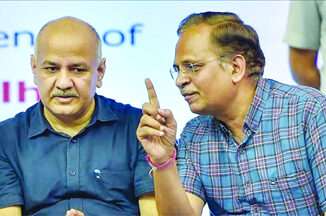
New Delhi (TIP)- President Droupadi Murmu on Thursday, March 13, granted sanction to Delhi’s Anti-Corruption Bureau (ACB) under Section 17A of Prevention of Corruption Act, to initiate a formal probe against Manish Sisodia and Satyendar Jain in connection with irregularities in the construction of school rooms/buildings by the Delhi government. Sisodia was the education minister, while Jain was the PWD minister of Delhi.
Section 17A was inserted in the Prevention of Corruption Act by the Centre in July 2018 through an amendment, making it mandatory for police, CBI or any other agency dealing with corruption offences to seek prior approval for conducting any “enquiry” or “inquiry” or “investigation” into any corruption-related offences.
The Central Vigilance Commission (CVC), in a report dated February 17, 2020, highlighted “glaring irregularities” in the construction of over 2,400 classrooms in Delhi government schools by the Public Works Department (PWD).
According to a PTI report, the Delhi government’s vigilance directorate in 2022 recommended a probe into the alleged scam and submitted a report to the chief secretary.
On February 18, President Droupadi Murmu granted the sanction to prosecute Jain in a money-laundering case being investigated by the Enforcement Directorate, PTI reported.
The sanction against the 60-year-old former Delhi health minister was sought under section 218 of the Bharatiya Nagarik Suraksha Sanhita.
The Ministry of Home Affairs had requested the President for providing sanction to prosecute Jain based on an Enforcement Directorate (ED) investigation and the presence of “adequate proof”.
The CBI filed a chargesheet in December 2018, stating that the alleged disproportionate assets were to the tune of Rs 1.47 crore, about 217 per cent more than Jain’s known sources of income during 2015-17.
The ED had earlier said its probe found that “during 2015-16, Satyendar Jain was a public servant and four companies (beneficially owned and controlled by him) received accommodation entries (hawala) to the tune of Rs 4.81 crore from shell (bogus) companies against cash transferred to Kolkata-based entry operators through the hawala route”.
Tag: AAP
-

President approves filing of FIR against AAP’s Sisodia, Satyendar Jain in classrooms ‘scam’
-
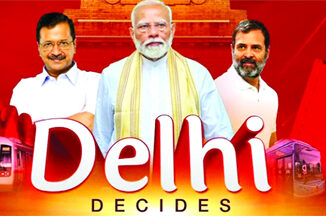
The Recent Delhi Assembly Elections: A Shift in Power Dynamics

By Indrajit S. Saluja In any democratic election, one of the most consistent patterns observed globally is the desire for change. Voters often seek a fresh government, hoping for a better deal, more responsible leadership, and greater responsiveness to their needs. This trend is universal, whether in the US, UK, Canada, India, or any other democracy. As a result, the incumbency factor — the tendency of voters to vote against the party in power — plays a significant role in shaping electoral outcomes. The longer a government remains in power, the greater the chances it will face defeat unless it has consistently delivered exceptional governance.
This pattern was evident in the recent Delhi Assembly elections, which saw a significant shift in the political landscape of the capital. For years, the Aam Aadmi Party (AAP) has been in power in Delhi, having won a historic majority in 2015 and retaining power in 2020. However, in the latest election, the Bharatiya Janata Party (BJP), which had been out of power in Delhi for over 30 years, managed to achieve a sweeping victory, ending AAP’s reign.
AAP’s victory in the 2015 election was nothing short of an upset. The party defeated the Congress, a long-standing political powerhouse, and emerged as a major force in Delhi politics. AAP’s success was fueled by a combination of factors: a public sentiment against the Congress, the party’s promise of corruption-free governance, and its focus on improving basic services like education and healthcare. AAP’s leader, Arvind Kejriwal, became a prominent figure and Delhi’s Chief Minister, with the party securing a resounding 67 out of 70 seats in the Delhi Assembly.
However, by the time of the most recent elections, the political climate had shifted. AAP’s time in power had led to some degree of complacency, and many voters began to feel that the promises made by the party were no longer being fulfilled. The incumbency factor began to work against them. Despite having delivered several significant reforms, such as improvements in education and healthcare, AAP faced growing criticism over issues such as the cost of living, unfulfilled promises, and its inability to deal with the rising challenges in governance.
On the other hand, the BJP, under the leadership of Prime Minister Narendra Modi, had been steadily building its influence in Delhi. The party’s rise to power was not just about local issues but also about its increasing prominence at the national level. The BJP’s success was bolstered by its image as a party that promotes Hindutva and its commitment to creating a Hindu nation, which resonated with a significant portion of the electorate. The consolidation of Hindu votes worked strongly in the BJP’s favor, helping it win over a large section of the population that felt disconnected from AAP’s secular rhetoric.
One of the significant factors behind BJP’s victory was the party’s ability to promise financial allurements and freebies. While AAP had initially made its mark in the 2020 elections with promises of free electricity and water, the BJP capitalized on this by offering even more attractive schemes. Voters, often swayed by such promises, found these assurances hard to resist, despite the fact that the BJP had not always delivered on its past promises, such as the return of black money from abroad or providing a “pucca house” for every family by 2022. Nonetheless, the allure of “Acche Din” (Good Days) continued to hold strong among many voters, echoing Modi’s 2014 slogan that resonated with the hopes of millions.
The BJP’s victory in Delhi can also be attributed to the diminishing influence of the Congress party, which has been in disarray in recent years. Once a dominant force in Indian politics, the Congress has now been relegated to irrelevance in Delhi. With the Congress struggling to find its footing, voters turned to the BJP as the only viable alternative to AAP, despite any reservations they might have had about the BJP’s past record.
The electoral outcome in Delhi serves as a reminder of the fickle nature of politics and the complex dynamics at play. While AAP’s defeat signals the end of an era of governance in Delhi, it also presents a challenging future for the party. With leaders like Arvind Kejriwal and Manish Sisodia facing legal battles, the AAP may struggle to regain its footing in the short term.
For the Congress, this defeat of AAP could serve as an opportunity to rebuild itself. The party once ruled Delhi for many years and has a deep-rooted connection with the electorate. While it may currently be on the backfoot, it still holds the potential to regroup and emerge as a force in the future.
However, how the BJP governs Delhi will play a crucial role in determining the next chapter in Delhi’s politics.
-

AAP, BJP promise the moon: Delhi assembly elections prove freebies now a staple of electoral campaigns
New Felhi (TIP)- In 1985, when the Tamil Nadu chief minister MG Ramachandran met the then deputy chairman of the Planning Commission, Manmohan Singh, to discuss expenditure for a three-year-old mid-day meal scheme for children in his state, it would have been difficult to foretell that four decades hence, such plans would become the mantra to win elections.
In 2025, political sops – disparagingly referred to as freebies – have morphed into the biggest tool for wooing the electorate. The high-stakes Lok Sabha and assembly elections in the country have seen the mainstreaming of freebies as political parties compete in making promises in their manifestos—from mass employment to free electricity and free bus travel for women to cash benefits and subsidised gas cylinders – you name it.
Women-centric schemes seem the favourite of politicians: assembly poll results in Chhattisgarh, MP, Haryana and in Odisha, prompted the BJP-led Mahayuti government in Maharashtra to do the same, gaining convincingly.
The ruling BJP, once opposed to distributing election freebies, has now outdone the others. After a 63-seat loss in the Lok Sabha in June last year, the party has had a change of heart.
With the 70-strong Delhi assembly elections due early February, it’s raining sops in the national capital. A bird eye’s view of India’s welfarist state.
In Delhi, the AAP has a virtually unbeatable record. Now, in its quest for a third term, the party’s list of welfarism includes raising Mahila Samman Yojana from Rs 1,000 to Rs 2,100 per month and a Sanjeevani scheme to provide free health care to those above 60. The party said 1.3 million people had registered for the first and 15,000 for the second.
For autorickshaw drivers, AAP has promised life and accident insurance for Rs 15 lakh, annual uniform allowance of Rs 2,500 and Rs 1 lakh for their daughters’ weddings.
Other promises include a monthly allowance of Rs 18,000 for pujaris and granthis. For Delhi’s residents’ welfare associations, the AAP has promised an unspecified amount as security financing. Waving off ‘inflated’ water bills is another pledge.
The Congress has its own assurances: Rs 8,500 for skill training of the unemployed, Rs 2,500 as pyaari didi yojana and Rs 25 lakh insurance under Jeevan Raksha Yojana for Delhi.
If official announcements were not enough, charges are flying fast and thick: AAP leaders allege that the BJP is `buying’ votes in Delhi. Allegations of cash-for-votes have already begun.
In the Haryana assembly elections, the BJP announced Rs 2,100 monthly allowance for women, scooters for girl students, free dialysis for patients and two lakh government jobs. For the Maharashtra assembly polls, as many as 146 freebies were given out by the BJP-led NDA. These included a monthly payment of Rs 2,100 to a woman per month costing Rs 46,000 crore to the exchequer, a monthly stipend for students, increased benefit for farmers and a new Akshay Anna Yojana for providing kitchen essentials every month to families.
In Jharkhand, the ruling JMM’s attempt to target 12.8 million women voters in the 2024 November’s assembly elections worked. Source: Livemint -

4 Delhi schools receive bomb threat emails, 2nd time this week
Chandigarh (TIP)- Bomb threats were emailed to four schools in Delhi early on Friday December 13, leading to a multi-agency search of the premises. This follows a similar incident on December 9, when at least 44 schools received bomb threat emails, which police later deemed hoaxes.
Former Delhi chief minister and Aam Aadmi Party (AAP) national convenor Arvind Kejriwal expressed concern over the second instance of bomb threats to schools within a week, questioning the potential impact on children and their studies.
A Delhi Fire Services official said that call regarding the threat emails were received from Bhatnagar International School, Paschim Vihar (4.21 am), Cambridge School, Shri Niwas Puri (6.23 am), DPS Amar Colony, East of Kailash (6:35 am), South Delhi Public School, Defence Colony (7.57 am), Delhi Police Public School, Safdarjung (8.02 am), Venkateshwar Global School, Rohini (8.30 am).
The fire department, police, bomb detection teams, and dog squads reached the schools to conduct thorough searches. Authorities also alerted parents, advising them to keep children at home or collect them if they had already arrived at school. The emails were sent at 12.54 am, mentioning “parent-teachers’ meeting” and “sports day” activities, followed by a warning that the schools would face bomb blasts on Friday and Saturday, PTI reported quoting sources.
Cambridge School principal Madhavi Goswami found the email during her routine check and immediately informed the police. She assured parents that the situation was under control and announced online classes for the day.
AAP leader Kejriwal, who had criticised Delhi Police and Union Home Minister Amit Shah over the earlier threats, raised the issue again on social media. He stressed the seriousness of repeated threats, saying in Hindi, “If this continues, how badly will it affect the children? What will happen to their studies?”
Delhi Police confirmed that checks and investigations were underway to ensure the safety of students and staff. A guard at South Delhi Public School shared that parents were asked to return with their children after the school administration decided to send all students home.
On Monday, December 9, at least 44 schools across Delhi received an email warning about explosives being placed at their premises, causing panic and confusion.
The schools quickly evacuated thousands of worried students during their classes, while security forces conducted extensive checks at multiple campuses.
Delhi Police confirmed that the emails were declared a hoax by Monday afternoon after no incendiary devices were found during the search operations. Nevertheless, security was heightened across the capital, with cordons set up and emergency response vans stationed outside major schools.
Bomb threats at Guwahati rail station, Gauhati University
Bomb threats were received at the Guwahati railway station and seven locations on the Gauhati University campus on Thursday, December 12, police said.
Guwahati Police Commissioner Diganta Barah said the Meghalaya Police Control Room in Shillong received a call stating that a bomb might be planted at the Guwahati railway station. “Accordingly, we started the investigation with Meghalaya Police and also carried out precautionary measures at the station. We have so far not found any such object,” he told PTI.
-

Oppn parties in Punjab slam Centre’s land ‘allotment’ for Haryana Assembly
New Delhi (TIP)- Punjab’s ruling AAP and opposition parties on Thursday, Nov 14, clear the allotment of 10 acres of land in Chandigarh to Haryana for the construction of its assembly building. The AAP accused the BJP-led central government of conspiring against the state while the Shiromani Akali Dal (SAD) claimed any decision to allocate land to Haryana in the union territory would be unconstitutional. The Congress said the Centre’s clearance is “a calculated move to undermine Punjab’s rightful share over its capital”. The Union Ministry of Environment, Forest and Climate Change has reportedly granted environmental clearance for the land offered by the Haryana government to the Chandigarh administration in exchange for land to build the second assembly building.
The Haryana government offered 12 acres of land in Panchkula in exchange for 10 acres of land near IT Park Road in Chandigarh.
At present, Punjab and Haryana share the Vidhan Sabha complex which is next to the Punjab and Haryana Civil Secretariat in Chandigarh, the joint capital of the two states.
Punjab AAP spokesperson Neel Garg said Chandigarh is not just a piece of land but a matter tied to the emotions of three crore Punjabis.
“The BJP-led central government is conspiring against Punjab,” he charged.
Chandigarh belongs to Punjab in every sense as it was built by displacing 22 villages from Kharar and is politically, socially, economically and culturally linked to Punjab, he said.
Garg accused the BJP government of deliberately creating a dispute with its environmental clearance. “The people of Punjab will never tolerate this,” he said.
When Haryana was carved out of Punjab as a separate state, there was a promise that Chandigarh would eventually be handed over to Punjab after Haryana developed its own capital. Until then, Chandigarh would remain a union territory, the AAP spokesperson said.
He also warned the central government not to “toy” with the emotions of Punjabis and demanded that this decision be revoked immediately.
The SAD said any decision to allocate land to Haryana in Chandigarh would be unconstitutional as it would violate Article 3 whereby Parliament alone can change state boundaries.
Senior SAD leader Daljit Singh Cheema urged Union Home Minister Amit Shah to rescind the decision and asserted that it was in violation of the Punjab Reorganisation Act, 1966.
He said the Centre’s decision to allocate land to Haryana is a design to end Punjab’s right over Chandigarh.
“It is clear that the Haryana government is colluding with the Centre against Punjab,” he added.
Cheema also accused the AAP of being hand in glove with Haryana and the central government.
“The AAP did not object when Home Minister Amit Shah made this announcement at a meeting of the North Zone Council meeting (in 2022)”, he claimed. -

Maliwal ‘assault’ case: Police register FIR, Delhi CM Kejriwal’s aide named as accused
New Delhi (TIP)- The Delhi Police on Thursday, May 16, registered an FIR in connection with the alleged assault on AAP MP Swati Maliwal by an aide of Chief Minister Arvind Kejriwal, even as the BJP hit out at the AAP supremo for maintaining silence over the incident.
Bibhav Kumar, the personal assistant of Kejriwal, has been named as an accused in the case, officials said. He has also been summoned by the National Commission for Women (NCW) on Friday over the matter. The FIR was registered after Maliwal’s statement was recorded by a two-member team, led by Additional Commissioner of Police P S Kushwaha. It was at the Rajya Sabha member’s residence in Central Delhi for nearly four and a half hours since around 1.50 pm. Officials said the FIR has been registered at the Civil Lines police station against Kumar under Indian Penal Code sections 354 (assault or criminal force on a woman with intent to outrage her modesty), 506 (punishment for criminal intimidation), 509 (word gesture or act of intent to insult) and 323 (assault). The development comes two days after Maliwal went to the police station and alleged that a member of Chief Minister and Aam Aadmi Party (AAP) national convener Kejriwal’s personal staff “assaulted” her at the CM’s official residence. According to the contents of the statement given by Maliwal to police, an official source said, she was sitting in the drawing room when Kumar came and allegedly slapped her multiple times. She ran out of the CM’s residence and called police, the MP stated in her complaint, the sources said and added that she also claimed that Kejriwal was present at his residence when the incident took place. An official said police took Maliwal for medical examination to the All India Institute of Medical Sciences here. In a post on X after the police team left her house, Maliwal said she has recorded her statement with the Delhi Police on what happened with her and urged the BJP to not indulge in politics. “Hope appropriate action is taken. Whatever happened with me was extremely bad,” said the MP.
She also said, “The past days have been very difficult for me. I thank those who prayed. Those who tried to indulge in character assassination, said that I was doing it at the behest of the other party, God bless them too.” According to sources, in her police complaint, Maliwal has named Kumar as the “main person” who allegedly assaulted her when she had gone to meet Kejriwal on Monday.
The BJP attacked Kejriwal after he refused to comment on the Maliwal “assault” matter during a press conference in Lucknow. He was flanked by Samajwadi Party (SP) chief Akhilesh Yadav and AAP Rajya Sabha member Sanjay Singh.
Kejriwal avoided a question on the issue and it was fielded by Singh who said his party has already made its stand clear on the issue. -

Entering my fitted clothes era, Parineeti on pregnancy rumors
Parineeti Chopra has debunked rumours of her pregnancy by sharing a video of herself wearing ‘fitted clothes’. Recently, during the trailer launch of her upcoming streaming movie Amar Singh Chamkila, Parineeti wore a loose black coloured kaftan dress.
Rumor mills were abuzz with the speculation around the actress’ pregnancy, after her recent wedding with AAP Rajya Sabha MP Raghav Chadha. However, the actress had earlier put all rumours to rest, as she took to Instagram stories and wrote a note: “Kaftan dress = pregnancy, Oversized shirt = pregnancy, Comfy Indian kurta = pregnancy.”
Parineeti took to Instagram and shared a reel, wherein she can be seen wearing a white top, matching pants and blazer. The Ishaqzaade actress is giving major boss lady vibes in the outfit.
The video includes a caption that reads: “POV – wearing well fitted clothes today, because when I tried a kaftan dress…,” then the video shows several news headlines stating ‘Is Parineeti Chopra pregnant?’ Source: IANS -

ED arrests Delhi Chief Minister Arvind Kejriwal
AAP says it has moved Supreme Court court to quash the arrest; Plans nationwide protests
NEW DELHI (TIP): Delhi Chief Minister Arvind Kejriwal, who was arrested by the Enforcement Directorate (ED) on March 21, will be produced before a special court on March 22. A high-paced drama that ensued for a couple of hours after the ED team arrived at Mr. Kejriwal’s residence, culminated in his arrest. ED then took him to its headquarters in central Delhi.
The ED has arrested him on charges of corruption and money laundering in the formulation and execution of the Delhi government’s excise policy for 2021-22, which was later scrapped.
Two AAP leaders, Manish Sisodia, former deputy chief minister and MP Sanjay Singh have already been arrested in the same case. Telangana Chief Minister’s daughter Kavitha has also been arrested in the case .
The Aam Aadmi Party (AAP) said that it has moved the Supreme Court to quash the arrest of Kejriwal and has asked for an urgent hearing after the Delhi High Court declined to grant him immediate protection.
AAP plans a big protest in Delhi. In order to foil the protest, Delhi Police on Friday, March 22 morning beefed up security with heavy personnel deployment and multi-layer barricading on roads leading to BJP headquarters where AAP leaders and workers will stage protest against the arrest of Chief Minister Arvind Kejriwal.
Paramilitary personnel in anti-riot gear have also been deployed to maintain law and order situation in the area.
The traffic police have requested commuters to avoid routes leading to central Delhi in anticipation of huge gathering of AAP workers. Roads leading to the BJP headquarters and ED office in central Delhi have been closed.
AAP leaders have asked party workers to reach the BJP headquarters and commence a protest at 10 am on Friday against Kejriwal’s arrest. In Punjab, Aam Aadmi Party plans big protests against Arvind Kejriwal’s arrests on March 22. Party has asked its supporters to reach Amb Sahib Gurdwara by 12 noon, to start the protests. Amb Sahib Gurdwara is in Mohali. Chief Spokesperson of AAP, Punjab, Malvinder Singh Kang, said that volunteers have already started reaching Mohali for the protests. The protest will be led by the state unit’s working president, Budh Ram. Punjab Chief Minister Bhagwant Mann is leaving for Delhi to participate in protest there.
It is a developing story. -
AAP, Cong finalise 4:3 seat-sharing formula for Lok Sabha seats in Delhi
The Aam Aadmi Party (AAP) is likely to contest four of the seven Lok Sabha seats in Delhi and leave the remaining three to its alliance partner, the Congress, as part of a seat-sharing agreement being finalised by leaders of the two parties, people aware of the matter said.
Citing the discussions between the two sides, a Congress leader said an agreement had been arrived between the two sides on the formula and the talks on the seats to be contested by the two parties were in the final stages. According to one arrangement being discussed, the Congress may contest East, Chandani Chowk and North East Lok Sabha seats; while AAP may contest New Delhi, West Delhi, South Delhi and North West Lok Sabha seats.
AAP minister Atishi declined to comment on the details of the negotiations. “The talks are on and we are hopeful of closing the deal,” she said.
A senior Delhi Congress leader said the 4-3 formula was final but there could be some changes to the seats contested by the two sides.
All of the seven Lok Sabha seats in Delhi are currently held by the Bharatiya Janata Party (BJP) which has been winning all the seats since 2014.
In 2019 when the AAP and the Congress contested the Lok Sabha elections separately, the Congress was second on five seats and the AAP was second on two.
The AAP had come to the negotiating table with an offer of just one seat for the Congress, citing its alliance partner’s track record in previous assembly and municipal elections.
“Congress has zero Lok Sabha seats in Delhi, it has zero seats in Delhi assembly. Out of 250 wards, the Congress won only 9 seats in the (2022) MCD election,” AAP national general secretary (organisation) Sandeep Pathak said on February 13.
Source: HT -

The season of defections is here
- Structural weakness in Indian democracy needs to be addressed urgently
“Poaching legislators is not new to our democracy. The terms ‘Aaya Ram’ and ‘Gaya Ram’ were coined decades ago when political leaders of Haryana adopted the method of enticing elected members of rival parties to cross over to bring down governments. Some sense of shame must have seeped in because there was a lull in such shenanigans for some time till Congress lawmakers shifted en masse to the BJP in Goa in 2019, tempted by the lure of office.”

By Julio Ribeiro Very soon, the BJP ranks will be stacked with Congress leaders seeking a lucrative future. After former Maharashtra Chief Minister Ashok Chavan left the Congress and joined the BJP, former Madhya Pradesh CM Kamal Nath seems ready to jump the ‘sinking ship’.
The inability of INDIA parties to look beyond their noses has virtually sealed their fate.
Nath had handed over Madhya Pradesh to the BJP on a platter due to his misreading of the voters’ preferences and mishandling of other anti-BJP parties.Chavan’s standing in Maharashtra politics was visibly on the decline. He had even lost his Nanded seat to the BJP’s Prataprao Govindrao Chikhalikar in the 2019 Lok Sabha elections. His father, Shankarrao Chavan, was a highly respected politician who had served as the CM and Union Home Minister. Shankarrao had scruples about corruption which his son did not share.
Chavan has been nominated to the Rajya Sabha by his new-found friends. He will have to compete for a ministership with other turncoats from Maharashtra like Narayan Rane, who was another ‘candidate’ for probes by investigation agencies had he not crossed over a few years ago.
The migration of the inglorious from the Opposition to the ruling party has picked up steam before the Lok Sabha polls. Is the BJP’s goal a Congress-mukt polity or an Opposition-mukt one? Starting with those with skeletons in their cupboards, others who hanker for the spoils of office or just want to feel important will gravitate to the winning side. Greed is the guide. The BJP capitalizes on this.
Recently, the AAP-Congress combine was assured of victory in the Chandigarh mayoral poll with 20 votes out of 36. The returning officer invalidated eight votes to ensure the BJP’s win. The Supreme Court had to intervene and order the prosecution of the returning officer. It declared the AAP-Congress candidate as the winner. Before the SC verdict, the BJP, the party that had once proclaimed that it was ‘different’, carried out ‘Operation Lotus’ to make three AAP councilors switch camps.
Poaching legislators is not new to our democracy. The terms ‘Aaya Ram’ and ‘Gaya Ram’ were coined decades ago when political leaders of Haryana adopted the method of enticing elected members of rival parties to cross over to bring down governments. Some sense of shame must have seeped in because there was a lull in such shenanigans for some time till Congress lawmakers shifted en masse to the BJP in Goa in 2019, tempted by the lure of office.
The BJP has sharpened this unethical method to a fine art after tasting blood. In Karnataka, it displaced the Congress government by successfully luring a good number of its legislators to change sides. In Maharashtra, this game is being played out even today. The voters who voted against the BJP have been short-changed. They vote for a particular party on ideological grounds but cannot be sure that those whom the party has chosen to represent them will continue to reflect their aspirations, once elected.
This is a structural weakness of Indian democracy. It needs to be urgently addressed. No legislator or corporator should be allowed to cross over mid-term. If he has concerns about the policies of the party on whose ticket he was elected, he should resign from the Assembly and re-contest on the ticket of his new party. If he is popular in his constituency, he may well win again, but at least those who voted for him or her on ideological grounds will not be let down.
Since the BJP’s new tactic of remaining in power at any cost, fair or foul, has obviously kicked in, it is urgent to restore our good name in the democratic world by devising a mechanism to combat this menace of ‘Aaya Rams’ coming and ‘Gaya Rams’ going for reasons far removed from dissatisfaction with the policies followed by the party which they have decided to discard.
The inability of INDIA parties to look beyond their noses has virtually sealed their fate. After the votes are counted and Modi is back in North Block for another term of five years, expect Opposition leaders to face the music in a much more defined degree. The ED, the CBI and other Central agencies will make their lives uncomfortable. Only those who cross over can expect to be absolved of their sins.
If the BJP gets a two-thirds majority in Parliament, the Constitution will be subject to revision. Women, in particular, will have to conform to a rigid standard of morality. Live-in relationships, which are now common among the urban liberated youth, will be frowned upon, like we have seen in Uttarakhand, whose holier-than-thou Chief Minister Pushkar Singh Dhami has introduced the Uniform Civil Code (UCC), which restricts choices in love and marriage.
I have no objection to the UCC as long as the objective is to ensure that women are treated on a par with men. The rights of the woman in inheritance of her father’s property and her right to choose her life partner should be upheld. There are myriad related issues like divorce and adoption, but the right to inheritance and the right to choose one’s spouse are paramount.
It is not wise to advise the BJP to desist from accepting tainted members of Opposition parties in its fold. The BJP is on a roll. Modi consecrated the Ram Mandir at Ayodhya, secured the release of eight former Navy personnel sentenced to death by a court in Qatar for alleged spying, and inaugurated a Hindu temple in a Muslim-majority country (UAE).
Unfortunately, there are counter-balancing issues. The farmers’ agitation for legal guarantee for procurement at the MSP is one such issue. If the demand is conceded, it will compromise fiscal responsibility. The unabated violence in Manipur is another. The BJP knows the people responsible for the raging fire, but its hands are tied. If the incompetent CM Biren Singh is replaced, the Meitei vote will be in doubt. Reservation for Marathas is yet another issue that defies accepted solutions. It is not going to be an easy ride!
There are many other such problems that Modi will have to solve, but he is postponing action till the Lok Sabha polls are over.
(The author is a former governor, and a highly decorated Indian Police Service officer) -
Victory for democracy: Supreme Court of India overturns Chandigarh mayoral poll result
Exercising its power under Article 142 of the Constitution to do ‘complete justice’, the Supreme Court on Tuesday, February 20, overturned the result of the January 30 Chandigarh mayoral poll — which had witnessed BJP nominee Manoj Sonkar being declared the winner under controversial circumstances — and named AAP-Congress candidate Kuldeep Kumar as the mayor. Ruling that the result declared by returning officer (RO) Anil Masih, a nominated councillor of the BJP, was contrary to law, the court ordered his prosecution for making the ‘false’ statement before the Bench that he had invalidated eight ballot papers because they had been ‘defaced’. With these eight AAP-Congress votes not being counted at that time, the poll outcome had gone the BJP’s way, prompting the alliance to accuse the RO of ballot-tampering.
The Bench headed by Chief Justice DY Chandrachud asserted that in such a case, the top court was duty-bound to ensure that the process of electoral democracy was not allowed to be thwarted by subterfuge. The court’s commendable intervention has undone a grave wrong. The development is a major embarrassment for the BJP, whose attempt to engineer a victory has been scuttled. The INDIA bloc, beset by differences among its constituents, finally has something to cheer about. The AAP-Congress candidate’s victory has underscored the dire need for the Opposition to get its act together in the run-up to the Lok Sabha elections.
The verdict is a stark reminder to all stakeholders — political parties, the electorate and the poll authorities at all levels — that the sanctity and fairness of the electoral exercise must always be ensured. Efforts to subvert the mandate are a blot on our democracy and should not be tolerated. Hopefully, the Chandigarh case will serve as a deterrent against the use of unfair means in elections.
(Tribune, India) -
SC agrees to consider AAP petition over chandigarh mayor polls
The Supreme Court on Friday, Feb 2, agreed to consider an AAP councillor’s request seeking urgent hearing of his plea challenging a Punjab and Haryana High Court order that refused to grant any interim relief to the party seeking fresh mayoral polls in Chandigarh.
The matter was mentioned before a bench headed by Chief Justice D Y Chandrachud by senior advocate Abhishek Singhvi, appearing for councillor Kuldeep Kumar, a candidate for the mayor’s post. Abhishek Singhvi submitted that the returning officer was caught on video smudging the ballots. “We will list it… we will look at it,” the bench, also comprising Justices J B Pardiwala and Manoj Misra, said.
The BJP swept the Chandigarh mayoral polls, retaining all three posts, a setback to the Congress-AAP alliance that alleged tampering with ballot papers by the presiding officer.
On Wednesday, January 31, division bench of Justices Sudhir Singh and Harsh Bunger of the high court denied interim relief the Aam Aadmi Party (AAP), which alleged that ballot papers had been tampered with and sought fresh polls under the supervision of a retired judge of the court. The high court issued notices to the Chandigarh administration, the municipal corporation, presiding officer Anil Masih and newly-elected mayor Manoj Sonkar, among others, asking then to file their replies within three weeks. -

Takeaways from the Ayodhya spectacle
Prime Minister should follow in Lord Rama’s footsteps to ensure justice for all
“Ram Mandir has succeeded in restoring Hindus’ pride in their religion. That is a positive development. What’s left is for Modi to follow the principles of good governance associated with Lord Rama for dispensing justice to all. There were no Muslims and Christians in Bharat in those ancient times. But they are there now. Their only prayer to Modiji is that they be counted as equal citizens of Bharat, as Lord Rama, the epitome of justice and good governance, would have done.”

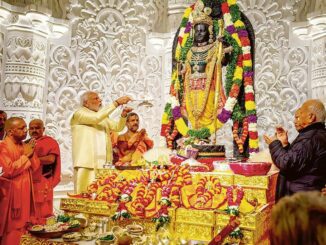
By Julio Ribeiro It was awe-inspiring to watch the consecration of the Ram Janmabhoomi temple in Ayodhya. PM Narendra Modi stole the show with his march to the spot where the idol of Ram Lalla was installed and his unforgettable address to the 7,000-odd guests.
I was moved to instruct my domestic help to light a diya, as our Prime Minister had requested. Even I, normally a critic of the government, was carried away by the moment!
The sheer magic of the occasion, the unmistakable devotion on the faces of the invitees and the pride in being a Hindu that was reflected on the countenance of the diaspora worldwide lent a new dimension to the dharma of our people and our ancestors. I was moved to instruct my domestic help to light a diya, as our Prime Minister had requested. Even I, normally a critic of the government, was carried away by the moment!
The temple will be completed in a year or so, but it has been consecrated ahead of the Lok Sabha elections. It is expected to play the role that the Balakot airstrikes did for the BJP in the 2019 Lok Sabha elections. PM Modi is expected to win a third term.
If the INDIA bloc does not get its act together soon, the ‘mother of democracy’ (our PM’s words) will metamorphose into an autocracy. Even after Rahul Gandhi hinted that Congress chief Mallikarjun Kharge would lead the coalition, Mamata Banerjee announced that the Trinamool Congress would fight the Lok Sabha polls in West Bengal on its own.
Nitish Kumar had expected himself to be anointed as ‘primus inter pares’ (first among equals). He is frustrated because he has to share the honor with Kharge. Arvind Kejriwal wants an all-India footprint for AAP. He demands seats in Gujarat, Haryana and Goa, where his party has a small presence.
Even Akhilesh Yadav, who has been eclipsed by CM Yogi Adityanath in Uttar Pradesh, thought that his Samajwadi Party was entitled to representation in Madhya Pradesh. All in all, the INDIA bloc is hopelessly placed against the BJP’s juggernaut. And with the Ram Temple being projected as Modi’s baby instead of Lal Krishna Advani’s, to whom it legitimately belongs, the battle can be written off as far as INDIA is concerned.
Yogi has captured the imagination of the residents of Uttar Pradesh (which has 80 Lok Sabha seats) with one major achievement — he has brought the state’s criminals to heel. In the beginning of his reign, he encouraged the use of unconventional, even illegal, methods to instill fear in the minds of the law-breakers. Wiser counsel later advised him to change tack. To all appearances, it seems that conventional methods (except the bulldozer) are currently at play.
A newspaper article by a young IPS officer, Vrinda Shukla, currently SP of Bahraich (UP), quotes figures from the National Crime Records Bureau to show that because of “scaled-up monitoring at all levels”, conviction was obtained by the UP police in 71 per cent of the cases of crimes against women in which the trial was completed. The corresponding figures for Rajasthan and Maharashtra are 37.2 per cent and 11.2 per cent, respectively. Public prosecutors, who had stopped taking ownership of the cases and become unaccountable, have begun feeling the heat generated by Yogi, says Vrinda.
Those who dream of forming a government in any state will need to adopt the UP CM’s attitude to corruption and the legal steps he has put in motion to control crime and criminals. More than ‘development’ that our Prime Minister harps on, citizens want security of life and property. He or she who can provide this will win.
In the meantime, Modi will milk the devout Hindu’s devotion to Lord Rama for electoral gains. A politician can hardly be blamed for exploiting public sentiment to influence voters. The only regret a sensitive BJP follower can possibly have is that the originator of the Rath Yatra, Advani, was left out in the cold. But these are games ambitious politicians play. They dump their rivals in their own party when the opportunity beckons. Politics, after all, is a cut-throat enterprise. Only one who is adept at the game comes out on top.
The media shows Modi feeding cows at his home and visiting temples in Kerala and Andhra Pradesh, both southern states where he is keen to open his party’s account. Public memory is notoriously short. The voter may forget our PM’s piety and opt for the communists or the Congress in Kerala and for CM Jagan Mohan Reddy or his sister YS Sharmila, who has taken on the responsibility of resuscitating the Congress in Andhra Pradesh.
A group of 200-odd retired diplomats, civil servants and police officers, called the Constitutional Conduct Group (of which I am a part), had drafted an open letter to the PM, lamenting that he involved his high constitutional office and government agencies in the run-up to the idol’s installation in the Ayodhya temple. A secular country, constitutionally mandated to strictly separate religion from the State, had been subjected to the spectacle of its PM performing puja in South Indian temples and finally in Ram Mandir.
There is no objection to the PM visiting and praying to his god as an individual. But to do so as the country’s pre-eminent elected leader and committing government resources to such an event is neither constitutionally acceptable nor ethical or moral. The Election Commission should decide whether this is permissible under the election laws on the use of religion for garnering votes.
The founders of Pakistan used religion to secure for the Muslims a separate country. The military regime of Gen Zia-ul-Haq Islamized it to the hilt. The results of such religiosity are for all of us to see. Pakistan today needs the US and China to keep itself functioning. There are not many nations today that incorporate religion into governance. Those that follow this path have not prospered.
Ram Mandir has succeeded in restoring Hindus’ pride in their religion. That is a positive development. What’s left is for Modi to follow the principles of good governance associated with Lord Rama for dispensing justice to all. There were no Muslims and Christians in Bharat in those ancient times. But they are there now. Their only prayer to Modiji is that they be counted as equal citizens of Bharat, as Lord Rama, the epitome of justice and good governance, would have done.
(The author is a former governor and a highly decorated retired Indian Police Service (IPS) officer )
-

BJP on a roll, Opposition needs to regroup
-
The least resilient among the INDIA members are in danger of disappearing from the political scene
“PM Modi’s most urgent task is to lift millions of his countrymen from the poverty in which they are mired. The affluent are certainly much better off since 2014. The stock market is booming. Those who have invested in stocks will become even richer if he is re-elected in 2024. The freebies now given away to the rural poor will eventually have to be stopped. The youth of those poor households, belonging mainly to the lower castes, must be equipped with skills to enable them to fend for themselves. Industrialists and entrepreneurs, who have prospered in the last 10 years, should be motivated to enter less-profitable segments of the economy so that jobs are created for our unemployed youth.”

By Julio Ribeiro I write this piece as a member of a minority community — just 2 per cent of the country’s population. In a ‘first past the post’ system of electing people’s representatives, the BJP has swept the Assembly polls in the Hindi heartland. The Congress lost the tribal and women’s votes. The shift in votes from the Congress to the BJP catapulted the latter to power in Madhya Pradesh, Rajasthan and Chhattisgarh.
‘Sabka Saath, Sabka Vikas, Sabka Vishwas’ needs to be put into practice instead of being merely parroted every now and then.
The difference in the overall vote share of the BJP and the Congress was roughly 2 percentage points in Rajasthan and 4 in Chhattisgarh. It was 8 percentage points in Madhya Pradesh, where the winner garnered 48 per cent of the votes as against 40 per cent by the Congress.
It was a resounding victory for the BJP and Modi in particular. Not even his bitterest critic can say that he is not the most popular and charismatic of all political leaders in the country. It looks certain that he will be elected for a third term. The Hindi heartland is with him and that should tilt the scales in his favor. The South is not with him, but the West is his for the taking. What is in store for the country after the 2024 Lok Sabha elections? In the past decade, India has been divided on communal lines. The consolidation of the Hindu vote was what the Hindutva forces strived for. It succeeded to the extent of ensuring the BJP’s poll victories. Muslims and Christians together make up just 16 per cent of the population. The Sikhs account for less than 2 per cent.
After the 2024 polls, the forward castes in the Hindu fold will be the chosen ones, like the Christian Brahmins and Kshatriyas were in Goa during the Portuguese rule. The BJP under Modi, influenced by the RSS, will placate the OBCs and the Scheduled Castes/Scheduled Tribes, counting them within the 80 per cent whose pride in being Hindu has to be ‘created’.
The Muslims were in the doghouse in Modi’s first two terms. Beef-related lynchings, ‘love jihad’ accusations and the fear generated by the CAA-related NRC had stifled their quest for equality as citizens of India. Now, I envisage that they and the Christians, who are next in line on the extremists’ hit list, will have to adjust to second-class citizenship like Hindus and Christians in Pakistan have done in that religion-influenced country.
Delivering his victory speech at the BJP’s headquarters in Delhi, PM Modi mentioned ‘appeasement’, besides corruption and dynastic politics, as the evils that he has been fighting. I do not know what he means by ‘appeasement’. If he is referring to the Muslims, it is only the mullahs who were appeased by the Congress, and that too in religious matters. That is not the mandate of a democratically elected government. Muslims should be ‘appeased’ like all poor communities, such as the Scheduled Castes and the Scheduled Tribes, in terms of education and healthcare. Religious issues should be sorted out by the community itself or by the courts.
Extremist elements in the Hindutva camp have consistently railed against the Muslim minority. There have even been calls to exterminate Muslims and boycott their traders selling vegetables and fruits in Hindu localities. Modi should rein in these extremists by ordering penal action against them as ordained by law. He hesitates to do that for fear of losing their support. They, in turn, misinterpret this silence as tacit approval.
PM Modi’s most urgent task is to lift millions of his countrymen from the poverty in which they are mired. The affluent are certainly much better off since 2014. The stock market is booming. Those who have invested in stocks will become even richer if he is re-elected in 2024. The freebies now given away to the rural poor will eventually have to be stopped. The youth of those poor households, belonging mainly to the lower castes, must be equipped with skills to enable them to fend for themselves. Industrialists and entrepreneurs, who have prospered in the last 10 years, should be motivated to enter less-profitable segments of the economy so that jobs are created for our unemployed youth.
The possible re-election of Modi and the BJP in 2024 will consolidate the right-wing economic trend in the country. All left-of-center parties, like the Congress, TMC and the AAP, should come together to form an effective Opposition. If they fail to do so, the least resilient among the INDIA members are in danger of disappearing from the political scene. Many leaders of those parties, such as Arvind Kejriwal, will find themselves targeted by the ED, the CBI and other Central agencies with ruthless precision just before the elections.
Nearly a century ago, writer-philosopher Aldous Huxley, in his futuristic work Brave New World (1932), prophesied: “By means of ever more effective methods of mind manipulation, the democracies will change their nature; the quaint old forms — elections, parliaments, Supreme Courts and all the rest — will remain. The underlying substance will be a new kind of non-violent totalitarianism. Democracy and freedom will be the theme of every broadcast and editorial… Meanwhile, the ruling oligarchy and its highly trained elite of soldiers, policemen, thought-manufacturers and mind-manipulators will quietly run the show as they see fit.” Does that ring a bell? An Opposition-mukt democracy is no democracy.
PM Modi has often stated: “India is the mother of democracy.” If he really believes what he says, we, members of the minority in our own land, will be reassured if ‘Sabka Saath, Sabka Vikas, Sabka Vishwas’ is put into actual operation instead of being merely parroted every now and then.
(The author is a highly decorated Indian Police Service (IPS) Officer and a former governor) -
-

Cong MLA arrested in AAP ruled Punjab; rift likely to widen in INDIA bloc
Chandigarh (TIP)- Punjab Congress MLA Sukhpal Singh Khaira was on Thursday, September 28, arrested in connection with a case surrounding the Narcotic Drugs and Psychotropic Substances (NDPS) Act, pertaining to the year 2015, even as the Congress party reacted sharply, terming the move as ‘politically motivated’ by the ruling Aam Aadmi Party (AAP), indicative of widening rift between the Indian National Development Inclusive Alliance (INDIA) partners. The AAP justified the arrest of the Congress MLA and dismissed the allegation of any ‘political vendetta’. The arrest of the Congress leader is being seen as a jolt to the INDIA bloc unity in the run-up to the 2024 parliamentary election as the relations between the Congress and the AAP could sour as their leaders have been vocal against any political alliance with each other in Punjab.
While as at the national level, the AAP and the Congress party have got together as a part of the INDIA bloc, in Punjab the state units of both the parties have expressed their reservations surrounding any political alliance for the general election. Since the outset, senior leaders of Congress’s Punjab unit have been critical of the alliance with the AAP. The Congress leaders have been consistently pointing out to the party’s ‘high command’ that the AAP had unleashed a ‘witch-hunt’ campaign against the Congress leaders and workers by allegedly misusing the police and investigation agencies.
The AAP’s state leadership has also clearly dismissed the possibility of an alliance with the Congress. Punjab Tourism Minister Anmol Gagan Maan recently stated there would be no alliance of the Aam Aadmi Party with the Congress party in Punjab, and that the party’s state unit has taken the decision not to have the alliance in Punjab.
A Special Investigation Team (SIT) team of the Punjab Police team led by Superintendent of Police Manjeet Singh raided the Chandigarh residence of Khaira in the early hours of Thursday morning. Khaira, MLA from Bholath constituency had been relentlessly attacking the AAP government, accusing it of failing to fulfil its pre-poll promises and time and again questioned Chief Minister Bhagwant Mann’s style of working asserting he was being “remote controlled” by “Delhi Durbar” and his actions were against the interests of Punjab.
Terming the arrest of Khaira as an act of ‘political vendetta’, the leader of the Opposition in Punjab, Congress’s Partap Singh Bajwa said “The arrest of Senior Congress Leader and Bolath MLA Sukhpal Khaira is extremely deplorable. The AAP-led Punjab government has stooped to an all-time low and resorted to vendetta politics. Sukhpal Singh Khaira has been outspoken and raised his voice against the wrongdoings and irregularities committed by Chief Minister Bhagwat Mann’s government. The Punjab Congress under the ambit of law will leave no stone unturned to get him released,” he said. Justifying the arrest of Khaira, the AAP said that the SIT had found enough evidence during the investigation that Sukhpal Khaira had been involved in drug smuggling, and hence he was arrested.
AAP Punjab Chief Spokesperson Malvinder Singh Kang said that the AAP government is working rigorously to eliminate the drug mafia from Punjab and free our youth from drug addiction. He said that Sukhpal Khaira’s arrest has no political vendetta behind it. His arrest was made on the basis of evidence found against him during the SIT investigation.
Kang said that in 2022, the Supreme Court had given relief to Mr. Khaira in the case, but the court had clearly written in its order that the Punjab Police could re-investigate the case. Based on the order of the Supreme Court, an SIT of Punjab Police started re-investigation of this case, he said. Senior Shiromani Akali Dal leader Daljit Cheema also reacted sharply, saying there’s nothing happening in Punjab apart from vendetta politics.
Source: The Hindu -
PM’s push for UCC: Code should be reformatory, not a Hindutva plank
With less than a year to go for the Lok Sabha elections, Prime Minister Narendra Modi has made a strong pitch for the implementation of the Uniform Civil Code (UCC), even as he has accused Opposition parties of inciting minority communities against it. Hitting back at the PM, the Congress has said that a ‘divisive’ code cannot be forced on people by an ‘agenda-driven majoritarian government’. The UCC continues to be a key poll plank of the ruling BJP, which kept its core-agenda promises of abrogating Article 370 months after it won the 2019 General Election and is on course to get the Ram Mandir ready by early next year.
The UCC envisages a common set of personal laws dealing with matters such as marriage, divorce, inheritance and adoption, applicable to all citizens of India irrespective of their religion. The Law Commission had on June 14 initiated the process of inviting views from stakeholders, including the public and recognized religious organizations, on the contentious issue. The BJP-ruled Uttarakhand is spearheading the UCC campaign, even as the Supreme Court had observed in January this year that state governments had the power to examine the feasibility of implementing the common code. The Constitution’s Article 44, which is one of the directive principles of state policy, says that ‘the State shall endeavor to secure for the citizens a uniform civil code throughout the territory of India’.
The Union government faces the onerous task of building consensus on the UCC, even as AAP has extended ‘in principle’ support to the code. The perception that it would be Hindu-centric has triggered doubts and apprehensions among the minorities. The UCC can gain credibility and acceptability only if it encapsulates the spirit of Article 25, which guarantees freedom of religion, and is aimed at doing away with regressive practices in various religions. An ideal code ought to be reformatory. It’s hoped that the Centre will take into consideration the views of all stakeholders while drafting the UCC.
(The Hindu) -

Congress not a team player, must clear ordinance stance: AAP after Patna Opposition meet
New Delhi (TIP)- The Aam Aadmi Party (AAP) on Friday, June 22, said that it will find it difficult to attend future meetings of opposition parties where the Congress is present if the latter does not publicly denounce a controversial ordinance granting the Centre control over Delhi’s bureaucracy, highlighting fissures within the opposition camp.
Four leaders from the AAP – Delhi chief minister Arvind Kejriwal, his Punjab counterpart Bhagwant Mann, and parliamentarians Raghav Chadha and Sanjay Singh – attended the meeting at Bihar chief minister Nitish Kumar’s residence, but hours later, the party released a statement strongly criticising the Congress.
The statement said that in the meeting, many political parties urged the Congress to publicly denounce the ordinance. “However, the Congress refused to do so,” added the statement that was issued even as other opposition leaders were speaking in a joint press conference in Patna, which the AAP leaders skipped. “In personal discussions, senior Congress leaders have hinted that their party might informally or formally abstain from voting on it in the Rajya Sabha. The Congress’ abstention from voting on this issue will help the BJP immensely in furthering its attack on Indian democracy. It is high time that Congress decides whether it stands with the people of Delhi or the Modi government,” the statement said.
In the meeting, people aware of developments said that Kejriwal insisted that the Congress must clarify its stand on the ordinance in this meeting. But Congress president Mallikarjun Kharge maintained that any such decision could only be taken after the Congress discussed the issue in its parliamentary party meeting. “We have a system in place,” Kharge said, according to the people cited above.
While the issue of the ordinance is important given that it has wider ramifications and is not limited to one state, the meeting was also a moment where opposition parties rose above their differences to forge a national political strategy and narrative.
Last month, the Centre promulgated an ordinance restoring to itself the power over services in Delhi by making a raft of major amendments in the Government of National Capital Territory of Delhi (GNCTD) Act, 1991. The ordinance effectively rolled back a Constitution bench judgment of the Supreme Court that handed over control of the bureaucracy in the Capital to the elected government, excluding those connected to police, public order and land.
The ordinance is likely to be brought before Parliament in the upcoming monsoon session for approval, presenting a key challenge for Opposition unity. While several parties such as the Trinamool Congress, Left parties and Bharat Rashtra samithi have assured the AAP of support, the Congress is yet to make a public declaration. -
ED names Sisodia accused in excise ‘scam’ for 1st time
The ED on May 4 filed its fourth supplementary chargesheet in the Delhi excise policy “scam” case, naming former Delhi Deputy CM Manish Sisodia as an accused for the first time, officials said. Sisodia was arrested by the ED on March 9 from Tihar jail. The AAP leader was first arrested by the CBI, which is also probing the case and already named him as an accused. Sisodia is currently under judicial custody. The ED filed the chargesheet (termed as prosecution complaint under the PMLA) with a designated special court in Delhi. The 270-page chargesheet has annexures running into 2,000 pages, the officials said. The ED has called Sisodia a “key conspirator” in the case. The ED alleged the “scam” was initiated with the drafting of the excise policy by AAP leaders, led by Sisodia, to generate illegal funds through a nexus/understanding between key players of the “South Group”.
-

Four reasons the Sikhs are hurting. And it’s not about the K-word
‘Causes’ of anger are dera threat to Sikhism, incarceration of ‘Bandi Singhs’, inaction in sacrilege cases, & ‘if BJP-RSS want Hindu Rashtra, what’s wrong with Sikh Rashtra?’

By Shekhar Gupta There are two most important similarities between the mood in Punjab today and at the peak of the earlier crisis in the early 1980s. The first similarity is the good one. If you walk around Punjab and ask a random sample of Sikhs if they believe in creating a state separate from India — or what is loosely called Khalistan — the chances are that a very, very large majority will say no. It will be unanimous unless you run into an oddball.
Many may even ask you to get your head examined. The fact is — although many in these new nationalist times elsewhere in the country might find it difficult to believe it — that’s how it was in the Bhindranwale era too.
The second similarity is the tough one. You ask the very same people who laugh at the fantasy of a nation separate from India if they think Sikhs are victims of multiple, serious, and egregious injustices, and the answer — you’d be surprised from how many — will be yes. That’s precisely how it was in that past.
The sense of injustice is, and was, righteous and deep. The line you heard then was the same as what you’d hear now: that the Sikhs are victims of dhakka or grave injustice.
The ‘causes’ of the current anger and alienation are broadly four: sectarian deras (let’s say seminaries-cum-permanent congregations) as an existential threat to Sikhism, the continued incarceration of ‘Bandi Singhs’ (imprisoned Sikhs, as in the nine convicted on terror and assassination charges and held on long jail sentences). Third, that those guilty of sacrilege at Sikh shrines and for alleged desecration haven’t been caught or punished. And the fourth is a rhetorical one, that if the BJP and RSS say they’re building a Hindu Rashtra, what’s wrong with a Sikh Rashtra?
Each one of these has nuances and arguments. And while I know it’s easy to respond to these with irritation and anger, it won’t serve any purpose. In fact, if we accept that there is a challenge in Punjab today, any realistic progress can only be made if the rest of the country, especially the government and the ruling party, engage with this sense of grievance. This is no call for appeasement. Just that debate and an open mind never hurt anybody.
Two of these four, impunity for perpetrators of sacrilege, and deras, are to be read together. The larger fear, as in the 1980s, is that Sikhism is greatly threatened by ‘blasphemers’ pretending to be Sikh Gurus. In the past, the target was the Nirankari sect, now it is the heads of the deras. The first targeted attacks in the past were aimed at the leaders of the Nirankari sect, including its chief.
Now the anger is with the various new babas who claim to be religious teachers but are seen by the devout Sikh as packaging themselves as modern-day Gurus. This is blasphemy in Sikhism. They are seen to dress and turn out like the Gurus and attract vast populations of Sikhs into their fold.
The foremost of these is the rape/murder convict Gurmeet Ram Rahim Insan. The last three words of his name were added hurriedly as he faced heat from devout Sikhs for pretending to be a Guru. That’s why the suffixes of a Hindu and a Muslim name to assert a secular view, and Insan (human being) to deny any claim to divinity.
On the ground, however, it makes no difference. His followers are increasing, his deras are being run as if he isn’t missing. And is he missing at all, in spite of his conviction and sentencing for rape and murder? These are the questions the Sikhs ask with a sense of hurt and anger.If he’s guilty of rape and murder, how does he seem to get more time out of jail on parole than inside? How does he get these long spells of parole as any election in the region, especially in Haryana, approaches? And so many political leaders, especially of the BJP, paying obeisance to him. The widespread belief among the Sikhs is that his followers were responsible for the incidents of ‘sacrilege’ and his political clout is the reason no government — Akalis, Congress, or AAP — has dared to catch and punish the guilty. He owns transferable vote banks.
You want to know how strong this sentiment is, think about the recent lynchings — including one in the Golden Temple — of people caught by the devotees on mere suspicion of sacrilege. The once formidable Punjab Police have drawn as much of a blank in catching and punishing those guilty of these lynchings as in the earlier ‘sacrilege’ incidents. Of course, you haven’t seen any popular revulsion among devout Sikhs or the clergy at the lynchings.
An added feature of the same insecurity that others are creeping in to convert Sikhs to other faiths and sects is the new wave of Christian evangelism. The most recent fight Amritpal Singh picked was with Christian pastors, who pushed back with protests. A lot of Sikhs, especially from the Scheduled Castes, patronize these new churches just like many more go to the deras. In each case, it is seen as a threat to traditional Sikhism. Just how popular these churches and pastors are becoming, you can read in this fine story by Chitleen Sethi. What triggers the Sikh conservatives even more is the fact that many of these pastors still dress in traditional Sikh attire.
For any political party or coalition ruling Punjab, it would’ve been easier to handle these if the state, or more precisely its electorate, was as homogenous as many outsiders think it is. The state is a bit less than 60 per cent Sikh (2011 census). Among the Sikhs also, there are wide divisions. The most dominant and visible class and caste, Jatt Sikhs, make up barely 20 per cent of the total population. The state also, counterintuitively, has the largest percentage of Dalits of any state in the country, at almost 33 per cent. Or one in three. They are the ones among whom evangelists — whether of the deras or Christianity — find the most purchase. The third grievance, over what is called the ‘Bandi Singh’ issue, needs a close look. Again, we might all benefit from reading this story Chitleen had written explaining the problem.
Briefly, however, this is about just nine prisoners, serving time for about 25-32 years after conviction on terror charges. Six of them were convicted for the assassination of then Punjab chief minister Beant Singh on 31 August, 1995. The remaining three were convicted for terror bombings.
These include Beant Singh’s assassin Balwant Singh Rajoana, who told journalists outside a dental clinic where he had been taken for treatment that he doesn’t even want to be released. Among the bombers, the most prominent is Devinder Pal Singh Bhullar, convicted for the 11 September 1993 bombing in Delhi where the Congress’s Maninderjeet Singh Bitta survived, albeit with a battered body, and nine others died. His death sentence was commuted to life by the Supreme Court. A campaign has raged for more than a year now for their release.
While it is true that even the Sikh clergy and the SGPC hailed Beant Singh’s assassins, and that the Akali Dal keeps fielding Rajoana’s sister as a candidate in elections, Sikhs you speak with won’t by and large go into whether what they did was right or wrong. They ask a more searching question.
Rajiv Gandhi, they say, was assassinated at around the same time. His convicted assassins, serving life sentences, have been released on compassionate grounds. Why is this compassion reserved only for non-Sikhs? No political leader in Punjab has the intellect or spine to engage with the protesters on this. On the other hand, they’ve been trying to set the ‘Bandi Singh’ protesters against Amritpal Singh’s support base. That’s some political ‘genius’, isn’t it!
The last point: If Modi, the BJP and the RSS can proudly say that India is a Hindu Rashtra, why can’t we have a Sikh nation? It will bring us back to the old point: the deep BJP/RSS belief that the Sikhs are Hindus who look different and follow one of the many ways of prayer and worship in Hinduism, so why should they complain. That’s a fundamental misreading, and serious errors of judgement flow from it. Muslims aren’t the only fellow Indians triggered by the talk of a Hindu Rashtra.
(Republished from The Print, March 25, 2023 )
(The author is Editor-in-Chief and Chairman, The Print) -
Sisodia’s arrest
- Transparent & fair probe a must to refute vendetta charge
The arrest of Delhi’s Deputy Chief Minister Manish Sisodia by the CBI in connection with alleged irregularities in the formulation and implementation of the now-scrapped excise policy is a major setback for the ruling Aam Aadmi Party (AAP), which showcased corruption-free governance among its main planks to record thumping poll victories in Delhi and Punjab in recent years. The development has worsened the conflict between the state government and the BJP-ruled Centre, with the former accusing the latter of misusing Central agencies for political vendetta.
The contentious Delhi Excise Policy was scrapped in July last year after the Lieutenant Governor recommended a CBI inquiry into the allegations. Officials are accused of receiving kickbacks from liquor traders to grant licenses, extending undue favors to the licensees, waiving/reducing license fee and renewing L-1 license without due approval. It is apparent that the policy was withdrawn due to some anomalies in its execution; AAP needs to do the answering about what had gone wrong. Meanwhile, the onus is on the CBI to come up with irrefutable evidence to establish that Sisodia was directly or indirectly involved in any wrongdoing and whether the money trail leads to him. If any inconsistency or lacuna is detected in the case against the Deputy CM, it will lend credence to AAP’s allegation that he is being victimized.
At stake here is the credibility of the CBI as well as of the AAP government, particularly Sisodia, who has been entrusted with 18 of the 33 state departments by CM Arvind Kejriwal. Central probe agencies have repeatedly been accused of targeting ministers in Opposition-ruled states and turning a blind eye to irregularities in states where the BJP is in power. The CBI needs to allay apprehensions over its ‘pick-and-choose’ approach by bringing details of the excise policy case into the public domain and looking into the L-G’s role as well. A transparent and fair probe is a must to serve the interests of truth and justice; otherwise, the growing perception of vindictiveness will undermine the Centre’s credentials and offer a lifeline to AAP and the beleaguered Opposition a year ahead of the Lok Sabha polls.
(Tribune, India)
-

225,620 Indians gave up citizenship in 2022: Govt tells Rajya Sabha
New Delhi (TIP)- A total of 225,620 Indians renounced their citizenship in 2022, the highest in the past 12 years, and more than 1.66 million people have given up their nationality since 2011, according to figures provided by the government in Rajya Sabha on Thursday, February 9.
The figures were given by external affairs minister S Jaishankar in a written reply to a question from Aam Aadmi Party (AAP) lawmaker Narain Dass Gupta, who sought the number of Indians who relinquished their citizenship during the last three years.
Jaishankar’s reply provided year-wise figures for Indians who had renounced their citizenship since 2011. For the period from 2011 to 2019, the annual figure ranged between 120,000 and 144,000, before falling to 85,256 in 2020 when the coronavirus pandemic broke out and led most countries to restrict the movement of people.
In 2021, the figure almost doubled to 163,370, and continued to rise to 225,620 in 2022, according to the written reply. Citing information available with the external affairs ministry, Jaishankar said 122,819 Indians renounced their citizenship in 2011, 120,923 in 2012, 131,405 in 2013, 129,328 in 2014, 131,489 in 2015, 141,603 in 2016, 133,049 in 2017, 134,561 in 2018, 144,017 in 2019, 85,256 in 2020, 163,370 in 2021 and 225,620 in 2022.
The written answer also included a list of 135 countries whose citizenship was acquired by Indians. The list, however, didn’t give specific numbers for each country or specify the period during which these nations granted citizenship to Indians. In reply to a specific query from Gupta, Jaishankar said five Indian nationals obtained citizenship of the United Arab Emirates (UAE) during the past three years.In a written response to a separate question from Gupta, minister of state for external affairs V Muraleedharan said specific data on the number of businessmen and professionals who have settled abroad during the past four years is not available. “There are no restrictions on Indian nationals regarding travelling to foreign countries for tourism or employment. Some of them settle down in their country of employment and acquire foreign nationality for personal reasons,” the reply said.
Muraleedharan said the government has brought about a “transformational change” in its engagement with the Indian diaspora around the world.
“A successful, prosperous, and influential diaspora is an asset for India. India stands to gain a lot from tapping its diaspora networks and productive utilisation of the soft power that comes from having such a flourishing diaspora,” he said. The government’s efforts are also aimed at harnessing the diaspora potential, including through the transfer of technology and expertise, he added.
Source: HT
-

The Hindenburg Report on Adani conglomerate –
Uproar in Parliament, Opposition seeks JPC probe: Houses adjourned without transacting business
- RBI asks banks for details of exposure to Adani Group
- Boris Johnson’s brother quits linked firm; B’desh questions ‘expensive’ power deal
I.S. Saluja
NEW DELHI (TIP): The Hindenburg-Adani issue rocked Parliament with both Houses adjourned for the day without transacting any substantial business. The Congress-led Opposition raised allegations of irregularities against the Adani Group, demanding a probe into the matter by a Joint Parliamentary Committee (JPC) or by a sitting judge of the Supreme Court.
Both Houses were adjourned until 2 pm after presiding officers of the Lok Sabha and the Rajya Sabha rejected calls for deferment of proceedings to discuss the matter, prompting the Congress-led Opposition to demand a JPC probe or a day-to-day judicial probe headed by a Supreme Court judge. When the two Houses again met at 2 pm, the ruckus over the issue did not abate, and Parliament was adjourned for the day, a Tribune News Service report said. Leader of the Opposition in Rajya Sabha and Congress president Mallikarjun Kharge led the demand for the JPC or a Supreme Court-monitored probe, with the DMK, TMC, SP, JD(U), Shiv Sena (Uddhav), CPI(M), CPI, NCP, IUML, NC, AAP and Kerala Congress joining the issue. The decision to press for an investigation came after a meeting at Kharge’s chambers in the morning which was attended by opposition parties. Rajya Sabha Chairman Jagdeep Dhankhar had earlier said the notices were not in order, but Opposition leaders vowed to keep raising the matter till they were allowed a discussion. Kharge later told reporters that nine party leaders, including him, had given notices for adjournment of proceedings in the Rajya Sabha to discuss the issue but the proposal was rejected by Dhankhar.
Derek O’Brien of the TMC said: “Opposition leaders are being continuously harassed for no reason by the ED and the CBI. Now, the government must take action against the perpetrators of this monumental scam and ensure that they do not flee the country. The hard-earned money of millions of Indians is in peril.”
Ram Gopal Yadav of the SP said the matter was very serious as “people were being sent home by the SBI in several districts, saying that there’s no money.”
The Opposition has been alleging that public money of the LIC and SBI invested in Adani firms is in danger of sinking.
AAP’s Sanjay Singh asked: “Why is the government silent on this mega scandal? Adani is the scandal kingpin and the treasurer of the BJP. He has formed shell companies abroad, overvalued his shares and looted people’s money.”
Keshav Rao of the BRS questioned the RS Chairman’s rejection of the adjournment notices. “The Chairman says the notices are not in order. There’s no pro forma as far as adjournment notices are concerned,” he noted.
Shiv Sena (Uddhav) MP Priyanka Chaturvedi and DMK’s Kanimozhi also demanded a probe.
Meanwhile, Parliamentary Affairs Minister Pralhad Joshi said, “We have to run the House smoothly. A good Budget has been presented under the guidance of PM Modi. If they have constructive suggestions about the President’s Address, they should give. I urge them to run the House smoothly and put forth their arguments.”
Congress: Why govt mum?
Modi govt is maintaining silence on the Hindenburg report. We will not remain quiet if you cheat Indian investors, consisting of 29 crore LIC policy holders and 45 crore SBI account holders.
Meanwhile, the RBI has asked banks for details of exposure to Adani Group.
As the Reserve Bank of India (RBI) on Thursday, February 2, sought details about lenders’ exposures to the Adani Group, chairman Gautam Adani cited market volatility for the decision to withdraw the follow-on public offer (FPO) of its flagship firm Adani Enterprises. His companies continued to lose on the stock market with the cumulative rout nearing USD 108 billion in a week — one of the biggest wipeouts in India’s history.
The RBI is seeking details both from private and public banks with the total exposure to the group estimated at Rs 75,000 crore. It has also sought to know special arrangements extended to the companies such as collaterals in the form of bonds.
The National Stock Exchange (NSE) too has put shares of three group companies under the additional surveillance mechanism (ASM). The move indicates the company’s shares are in trouble and require special monitoring. In a media message, Adani claimed the fundamentals of the company were strong.
A day after Swiss lender Credit Suisse stopped accepting bonds by Adani Group companies as collaterals for margin lending, Norges Bank Investment Management from Norway followed suit. Citigroup also stopped extending margin loans against securities of the group.
Boris Johnson’s brother quits linked firm
Meanwhile, Lord Jo Johnson, younger brother of former British PM Boris Johnson, quit his non-executive directorship of a UK-based investment firm linked with the Adani Group’s now-withdrawn FPO. Johnson junior had taken the position in June last year and said he sat on the board after having been assured that the company “is compliant with its legal obligations and in good standing with regulatory bodies”.
Bangladesh questions ‘expensive’ power deal
Bangladesh too has sought a revision of a 2017 power purchase agreement with Adani Power after local media said the price was high and the issue had been earlier raised by PM Sheikh Hasina. The Bangladesh power company is seeking a 40 per cent downward revision in the price.
(Source: Agencies)
-
MCD House adjourned without electing Mayor after AAP, BJP clash
Amid a clash between the councillors of the Aam Aadmi Party (AAP) and the Bharatiya Janata Party (BJP), the maiden meeting of the newly elected Municipal Corporation of Delhi House on Friday, January 6, was adjourned without electing the mayor and the deputy mayor. The Arvind Kejriwal-led party also accused the BJP of trying to win the mayoral polls through “wrong means”. The BJP, in response, said that “AAP doesn’t have faith in the established rules and norms.” According to NDTV, AAP and BJP workers were seen hitting and pushing each other, falling and climbing on desks inside the MCD Civic Centre, at the meeting.
The protests on Friday erupted after BJP councillor Satya Sharma, the presiding officer overseeing the process, invited an alderman – a person over the age of 25 who is nominated to the corporation by the Lieutenant Governor (L-G) – to take oath. AAP MLAs and councillors rushed to the centre of the House, saying that elected councillors should have been sworn in before the nominated members.
-

Looking Ahead : Punjab needs a big push

By Prabhjot Singh Challenges, if taken seriously, are often productive as they determine the path of progress. The turn of the year is the time not only to look back but also to set new challenges and targets ahead.
Punjab, once the sword and sports arm of the country, is at a crossroads. Its economy is tottering at the brink. Problems of drug addiction, suicides, unemployment, continuous exodus of youth, gangsterism, pollution, diversification of agriculture and poor delivery of civic services are aggravating day by day. Though AAP, the new ruling party in the State, has been in the saddle for more than nine months, long standing problems continue to elude solutions. The State needs a perestroika to be back on its footing as a dynamic and prosperous leader.
The Bhagwant Mann Government in the State has been patting its back for a number of revolutionary decisions it has taken in the first nine months of its governance. These include “zeero electricity bills”, start of 100 Mohalla clinics besides starting bus service to Indira Gandhi International Airport in New Delhi from various district headquarters, it has taken in the first nine months. It is also claiming credit for introducing “single pension for MLAs”, regulate supply of sand and gravel at affordable rates, control corruption in public offices and improving school education. The less said the better.
Intriguingly The State government was concerned more for wowing voters in Gujarat and Himachal Pradesh in its party fold than redress the chronic problems facing the State. Inserting full page advertisements in newspapers not read in the State and on TV channels that have larger viewership outside the geographical terrains of the State have evoked severe criticisms, both from the political opponents as well as eminent social scientists. These extra ventures in far off “greener” pastures even failed to get the ruling party mileage it was expecting to get. The only gain, as it claims, has been in its status of becoming a national party with its nominees sitting in four Assemblies. The progress on the national political horizon may be commendable for a party that made its debut less than a decade ago. Still, it falls far short of expectations of the people who have been posing their electoral trust in hoping it to be a harbinger of change in a country that has primarily been ruled by two parties – Congress and Bharatiya Janata Party – with brief spells of rule by alliances.
AAP may be working for a larger agenda as it has set its eyes to be a major political opponent to Narendra Modi’s BJP. It has been preparing itself for its bigger political challenge, the 2024 general elections. To succeed, it has to keep its already acquired flock together. Punjab and Delhi will be its biggest testing grounds. It has additional challenges and issues confronting the State. Farmers are still up in arms. Industry is facing a plethora of problems. Health care and basic civic infrastructure, including provision of safe potable water and disposal of solid garbage have been engaging the attention of the State but without much reprieve.
One of the major challenges facing the State is shortage of funds. It keeps looking towards the Centre for special packages rather than cutting down its wasteful expenditure, including its publicity budget besides rationalizing its security expenditure. Growing budget of subsidies and diminishing channels generating revenue coupled with rapidly increasing expenditure on maintenance of establishment, including the security of Chief Minister and other VIPs, are all contributing factors for the deteriorating fiscal health of the State.
Strong statesmanship and all-out effort to redress some of the chronic problems of the State are the minimum the people of the State expect from the incumbent government in the New Year. Looking for help from outside, including investments, is laudable but the State cannot be dependent upon others and the doles from the Centre. Punjab needs a hard and strong push as it will have to fight its own battle. Think more of Punjab than Delhi or Gujarat should be the motto of Bhagwant Mann government.
(Prabhjot Singh is a senior journalist. He can be reached at prabhjot416@gmail.com
Phone: +1 647 241 3806/+91 98140 02189
visit probingeye.com or follow him on Twitter.com/probingeye)
-

AAP needs to restore democratic credentials
“Experienced in public affairs, Kejriwal should know that as long as the party concentrates only on him it will never be able to spread its wings to the rest of the country. Democracy imposes responsibilities on political parties in many ways, but, above all, a party cannot be democratic unless it practices inner-party democracy. The results in Himachal Pradesh and Gujarat show up the limits of a one-man party. A party needs cadres. It also needs ideology so that its members know what they stand for and what they stand against. Before we vote for a political party, we must know what its worldview is. A democratic party has to be committed to human emancipation from domination and oppression.”
Apart from service delivery, the AAP’s initiatives such as report cards and polls on who the CM should be, carry appeal. Untrammeled by any kind of ideology, the leadership adjusts its rhetoric according to the mood of the country — from publicly reciting Hanuman Chalisa to demonstrating patriotism through flags. The party should tell us unequivocally what it stands for or against.

By Neera Chandhoke In the 1970s and 1980s, the reinvention of civil society in eastern Europe re-catalyzed a powerful debate on what was called the ‘crisis of representation’. Citizens turned their back on Stalinist states and began to connect with each other in civil society through organizations ranging from discussion groups to soup kitchens. The future belonged to citizen groups and social movements linked through coalitional politics and ideologies.
In India, the crisis of representation took hold of the political imagination after the Emergency and escalated in the years that followed. Indians looked for an alternative to a moribund party system. Over time, political disenchantment led to the consolidation of two sorts of political formations. In the 1980s, the Hindutva movement extended the ideological commitment of its parent organization — the Rashtriya Swayamsevak Sangh — into every arena of collective life.
In 2012, a new party was created out of the 2011 ‘India Against Corruption’ movement which took the country by storm. Interestingly, the campaign against corruption had a place for everyone — from the religious right to the left. Ideology was done away with.
After spectacularly winning the Delhi elections in 2015 and 2020, Arvind Kejriwal set his sights on transforming the Aam Aadmi Party (AAP) into a national party. In the recent elections in Gujarat, the AAP secured 12 per cent of the votes — after having got the required vote share in the Assembly elections in Delhi, Punjab and Goa. It has become a national party in 10 years. This is remarkable considering that experienced regional leaders from Lalu Prasad Yadav to Chandrashekar Rao have not been able to secure this status for their parties.
Apart from service delivery, the AAP’s initiatives such as report cards and polls on who the CM should be, carry appeal. Untrammeled by any kind of ideology, the leadership adjusts its rhetoric according to the mood of the country — from publicly reciting Hanuman Chalisa to demonstrating patriotism through flags.
We are caught between a highly ideological party and a party that disdains ideology. The cadres of the BJP intend to rework every institution/practice in the country, from marriage to schools, to universities, to renaming and restructuring of spaces, to rewriting of history, and to refashioning of the nationalist imagination. The AAP prefers to concentrate on pragmatic solutions to issues such as education and healthcare, reduction of power bills and promotion of mohalla clinics. Has the AAP failed to transcend its original avatar as a civil society organization? Perhaps. Consider the implications of concentrating on issues that are civic, rather than wholly political, such as democracy. Citizens have the right to well-being for which quality education, healthcare, employment, housing and income are essential components. More significantly, citizens have the right to civil liberties, the right to not be imprisoned without due cause, the right to freedom of thought and expression, the right to protest, and the right to not be harmed.
Whether it was the anti-CAA agitation in December 2019-January 2020, the assault on Jamia Millia Islamia and JNU faculty members and students in January 2020, communal violence in north-east Delhi in February 2020, protests at Shaheen Bagh or the indiscriminate arrests of journalists, academics, civil society activists and students, the AAP has preferred to sit on the fence. Presumably, the AAP does not support violation of rights, but acts of omission are as complicit with infringements of basic rights as acts of commission. As long as the AAP shies away from taking a stand on basic democratic rights, the party will remain a service provider which also fights elections.
Experienced in public affairs, Kejriwal should know that as long as the party concentrates only on him it will never be able to spread its wings to the rest of the country. Democracy imposes responsibilities on political parties in many ways, but, above all, a party cannot be democratic unless it practices inner-party democracy. The results in Himachal Pradesh and Gujarat show up the limits of a one-man party. A party needs cadres. It also needs ideology so that its members know what they stand for and what they stand against. Before we vote for a political party, we must know what its worldview is. A democratic party has to be committed to human emancipation from domination and oppression.
To argue that a political platform of a party intends to fix political predicaments through improving schools and hospitals — noble as these objectives might be — is to decontextualize the whole issue of what citizens want. We need healthcare and education, but we also need rights. Rights come in packages; they are indivisible. We also need freedom of thought, action and expression.
The AAP is a party many of us have invested in, but it must not stop at limiting its notions of a good life to schools and clinics. These are components of a good life, but ultimately it is rights that defend the dignity of human beings. It is rights that mark out the agenda of a party from cynical power-grabbing platforms. The AAP should tell us unequivocally what it stands for or against. It should not be reduced to a service provider. The party should restore its democratic credentials to avoid this fate.
(The author is a political scientist)