Tag: Abhijit Bhattacharyya

  • It’s time Trump introspects, is shown the mirror

    It’s time Trump introspects, is shown the mirror

    Trump has been equally unsparing and insulting to India, despite his avowed friendship with PM Modi.

    “Whatever has happened thus far (the bewildering variety of utterances and actions of absurdity) under the POTUS can be compared, to an extent, with the 26-year chapter (1325-1351) of Indian history’s Delhi Durbar monarch Muhammad-bin-Tughlaq. Historians have graciously judged Tughlaq as “an amazing compound of contradictions” for making the impossible possible, even if for a fleeting moment, and then trying to unscramble the scrambled egg (like scenario) through equally fancy actions of ethereal fiction.”

    By Abhijit Bhattacharyya

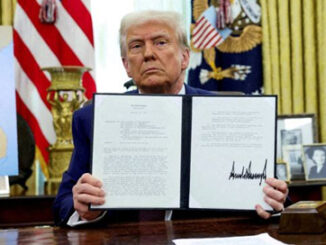
    The President of the US (POTUS) is deeply aggrieved over what he describes as global attempts to fleece America through tariffs on US goods that are going to foreign countries. Consequently, he has taken a vow to retaliate with tariff-for-tariff in equal measure to make his mission to “Make America Great Again” (MAGA) a grand success during his tenure in the White House itself. In the process, a multi-front strategy is being implemented at battle speed, affecting the entire country and shaking large sections of the populace.

    To suggest that the US today is in turmoil would be an understatement because of the unexpectedly astonishing opposition to a broad spectrum of Trump’s policy and against a few of his favorite high-profile personnel. The opposition is by no less than some people who were once either close to the POTUS or important officials implementing state policy decisions in the recent past.

    The developments in the US today appear far from refreshing or reassuring to assuage the feelings of either Trump or the common people. Consequently, mission MAGA of the POTUS is creating a headache every day owing to Trump’s uncontrollable and uncontrolled lack of appropriate vocabulary. It is, thereby, putting both friends and foes alike under psychological stress. Trump thinks that his method would succeed in making people all around to kowtow to him and make them succumb to his whims and fancies during his four-year occupancy of the White House.

    Not exactly. Today, the POTUS, too, needs to do some self-introspection and reflect on his acts through a full-sized mirror to reassess whether he is overstretching himself to put his pet MAGA to an acute angle of futility and resorting to an act of no return.

    Psychologically, therefore, Trump has made himself an enigma; a classic case study of a grievously make-belief wounded soul who has managed to pile loads of pending unaddressed grievances during his days of being a common American, without the glitz and glamour of the official paraphernalia.

    Whatever has happened thus far (the bewildering variety of utterances and actions of absurdity) under the POTUS can be compared, to an extent, with the 26-year chapter (1325-1351) of Indian history’s Delhi Durbar monarch Muhammad-bin-Tughlaq. Historians have graciously judged Tughlaq as “an amazing compound of contradictions” for making the impossible possible, even if for a fleeting moment, and then trying to unscramble the scrambled egg (like scenario) through equally fancy actions of ethereal fiction.

    In fact, Trump’s every move and management style seems to be taking his unpredictably predictable course of absurdity to a new height of diplomatic embarrassment. From Panama to Canada, Denmark to Germany, each friendly state is feeling hurt, being insulted, ridiculed and snubbed by the POTUS.

    Also, the growing list of impossible demands being claimed by Trump gives the impression of an urban land mafia don on the prowl to possess immovable property in prime locations.

    However, one thing glitters amidst this gloom. Trump is “honestly” non-discriminatory about his indiscriminate howling at all, however mighty or muscular he/she may be, belittling or ridiculing (officially invited) foreign Heads of Government or State. Thus, all foreign dignitaries are under pressure when face to face with the POTUS, notwithstanding its being unlikely to be good news for the USA in the long run.

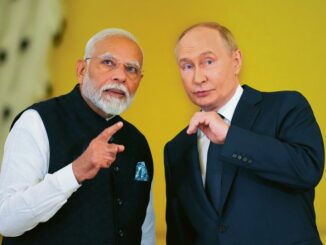
    Thus, Trump has been equally unsparing and insulting to India, notwithstanding his avowed personal friendship with the Prime Minister, Narendra Modi. “I have exposed India on tariff,” declared a condescending Trump and followed it up with a unilateral declaration that “India has reduced tariff”.

    What absurdity! No meeting, no talks, no discussion between India and America, but the ordained verdict arrives from the White House! Is it a delusion of grandeur? The gross act of the POTUS amounts to the humiliation of successive Indian establishments.

    His command of demands is reaching an intolerable height, hence unacceptable to this Indian, at least. So, let Trump recall his own country’s tariff saga which put the USA on the road to prosperity.

    Alexander Hamilton, the first US Treasury Secretary (1789), wanted his country to be on “firm commercial basis”. In 1791, he defended the “protection” of the local US manufacturing industry as a fundamental prerequisite. “Not only wealth, but independence and security of country were materially connected to prosperity of manufacturers.” Hamilton laid the foundation of the subsequent belief of Americans in their “manifest destiny”, whatever that means, internally or otherwise.

    The US soon became a strongly protectionist country throughout the second half of the 19th century as the victorious Republicans post US Civil War, in 1865, emerged as a party of “national economic might” with a very high level of protection and very low-income tax.

    The “high priest of high protection” was the Republican, William McKinley, the 25th POTUS. Before becoming President, his 1890 McKinley tariff raised import duties to an average of 49.5 per cent because he was convinced that “tariff created jobs, generated revenue for the government and preserved the US industrial power”.

    Consequently, the story of US unilateralism in economics, commerce and tariffs developed a long narrative of its own. It has usually been extremely self-centered through the ages, but for the two World Wars, which turned tariff protection into free trade, owing to the mobilization of vast resources and an equally vast investment in the US’ war economics.

    Trump, therefore, must stop slighting India at every step — from handcuffing its deportees to using abusive language on everything about New Delhi tariffs. Indian tariffs, good or bad, are for the 1.4 billion Indians. Let Trump deal with China, which finished the US industry, led by the Republican Nixon-Kissinger duo. Incidentally, was Kissinger right or wrong to suggest “it may be dangerous to be US’ enemy but to be US’ friend is fatal”? Is India’s US friendship destined to be fatal? Was Indira Gandhi prophetic to push back the USA in 1971?

    (Abhijit Bhattacharya is a Supreme Court lawyer, ex IRS Officer, Author and Columnist, Defense and Security Analyst and a China specialist)

  • Why the Anglo-Saxon West hates Russia

    Why the Anglo-Saxon West hates Russia

    “The short of the long story, therefore, is the revival of Anglo-Saxon versus Russia rivalry on the fringe of Europe. The imperial sea powers of the West would prefer to continue with the proxy conventional war in land owing to their inherent discomfiture to take a direct fight with a monstrous land power which has traditionally thrived on protracted conflict away from the water. The Anglo-Saxons may like to think that the long war on land would weaken the Slav Russia both economically and demographically, but that may not turn out to be so.”

    Biden inherited the Trump legacy of the Afghan war end-game. And August 2021 is a bad dream come true for the new POTUS. The retreat after the 20-year war made Biden a bitter man. The October 2024 escalation of the present Ukraine war is the right punch for Biden to deliver as a revenge trophy to Trump, his 2021-predecessor-cum-2025-successor.

    By Abhijit Bhattacharyya

    This is the taunting remark made by the then UK Defense Secretary Ben Wallace on February 23, 2022, even before Russia had invaded Ukraine: “The Scots Guards kicked backside of Tsar Nicholas-I in 1853 in Crimea and we can always do it again.” He was referring to the 170-year-old Crimean War between Moscow and the tripartite forces of London, Paris and Ankara’s Ottoman Empire which defeated Russia to conclude with the Treaty of Paris in 1856. The palpable hatred of the West’s Anglo-Saxon people towards Russia is unmistakable.

    Fast forward one month, to March 22, 2022, and one finds Joe Biden, President of the US (POTUS), blurting out another verbal bullet in Warsaw: “For God’s sake, this man Putin cannot remain in power.”

    What message was POTUS giving to the world? Was he in charge of the regime change of Moscow and judge, jury and arbitrator, with powers of the world supercop on the prowl? Or, was he heading the sole superpower state? For a minute, however, POTUS acted like a non-state actor of a tinpot dictatorship!

    True, Biden was referring to the wrong and illegal Russian invasion of the sovereign Ukraine. But, did he remember the plethora of worse wrongdoings of his own country committed in the 21st century? Again, it’s true that two wrongs cannot make one right, yet one has to be rational, restrained and reticent while uttering words to make a point on an international platform dealing with such crisis situations as the Russia-Ukraine conflict.

    Russia was wrong on all counts to invade Ukraine on February 24, 2022, and under no stretch of the imagination can the Moscow aggression be defended. It’s a naked 18th -20th century imperial-type aggression by the powerful to conquer the weak. Moscow had no business to trample upon Ukraine’s sovereignty.

    Nevertheless, on closer scrutiny, it is seen that the Russian invasion of Ukraine was born of a ceaseless two-decade-plus shameless US-led NATO and EU provocation, which posed a dire and direct existential threat to Moscow’s geography through her underbelly of Kiev.

    Hence, despite Russian President Vladimir Putin being wrong, he had reason to be wrong, and reason to be not right. It’s the blatant West-plotted expansion towards the East that Russia couldn’t have ignored beyond a point. All the more so because the once-sovereign USSR had already been broken into 15 states in December 1991, with Russia being one of the new states.

    The shrunkened and weakened Russia, thus, constituted a fresh opportunity for the traditional imperialist powers of the West to get back to their favorite pastime: Of expanding territory, controlling resources and subjugating local manpower to subservience to bolster their own economy and multiply their growth chart, the way it zoomed from the 17th to the 20th century.

    Today, the Russia-Ukraine war is more than a local conflict of the Balkan-Black Sea belt. The outgoing POTUS, Biden, has suddenly escalated the war, which could be potentially disastrous for Europe if it remains just a conventional conflict. However, in the unlikely event of the use of nuclear wares, one cannot predict the conflict’s outcome.

    Indeed, whatever the future course of the Ukraine war, Biden (the Anglo-Saxon who hates Russia), for sure, will go down as a would-have-been hero who fell as a tragic villain in the history of the USA in general and the history of European warfare in particular for escalating the war zone into a potential Armageddon. Ironically, the villain should have been Putin for initiating the war. But the role has been diametrically reversed as Biden seems to have taken over the mayhem mantle from the Moscow man.

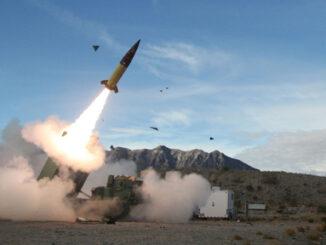
    Thus, Biden has perfectly fitted into Putin’s shoes by allowing US-made lethal weapons to be targeted deep into Moscow’s land. Obviously, Moscow will react and go for reprisals on the source of the weapons’ launch pads.

    And the launch pads may be any country, but certainly not the US or the UK, the two Anglo-Saxon nations whose hatred for the eastern state of Russia constitutes permanent chapters of world history.

    Where, then, do things go from here? The biggest puzzle at this point in time to the world in general and the West in particular is US president-designate Donald Trump, whose dislike for Biden is too conspicuous to be ignored.

    Biden inherited the Trump legacy of the Afghan war end-game. And August 2021 is a bad dream come true for the new POTUS. The retreat after the 20-year war made Biden a bitter man. The October 2024 escalation of the present Ukraine war is the right punch for Biden to deliver as a revenge trophy to Trump, his 2021-predecessor-cum-2025-successor.

    The short of the long story, therefore, is the revival of Anglo-Saxon versus Russia rivalry on the fringe of Europe. The imperial sea powers of the West would prefer to continue with the proxy conventional war in land owing to their inherent discomfiture to take a direct fight with a monstrous land power which has traditionally thrived on protracted conflict away from the water. The Anglo-Saxons may like to think that the long war on land would weaken the Slav Russia both economically and demographically, but that may not turn out to be so.

    The dynamics of political alignments are changing rather fast, with land powers uniting to take on the comparatively smaller sea powers with diminishing demography and challenging economy.

    In fact, that’s the reason the Anglo-Saxons are emphatically propounding the importance of long-range high-tech weapons to target deeper into the unending land of Moscow. Unfortunately, perhaps, it’s a tad late to be successful. The vastness of Moscow is far too much and way superior than the proximity of Europe for Putin.

    The West’s hatred for Moscow has made things too complicated to be untied any time soon, it appears. Biden’s hatred for both Putin and Trump may have tied the latter’s hands to the military industrial complex of California, Texas and Kansas and the US Mid-West corporations of combat weapons for a longer-than-expected haul.
    ( The author is Advocate, Supreme Court of India. Defense Analyst, Ex Civil Servant)

  • Western pressure no deterrent to India-Russia ties

    Western pressure no deterrent to India-Russia ties

    The US should remember that globalization and sanctions are contradictory and mutually self-defeating

    “This is a bizarre and childish mindset, especially if one recalls the statement made by US Deputy Treasury Secretary Wally Adeyemo in July, when he wrote to three of India’s top business organizations, warning them that “any foreign financial institution that does business with Russia’s military industrial base risks being sanctioned itself.” Perhaps the White House fails to see the irreparable damage being inflicted on America’s global interests and the implacable hatred and hostility being generated towards Washington. This reckless business of sanctions will not lead US very far. It is instantly turning even a traditional friend into a potential foe. It smacks of unacceptable duplicity, hateful hypocrisy and inherent insincerity of the US of yore; the post-World War II Washington of Bretton Woods and the Marshall Plan — the mastermind and financier for the reconstruction of Europe.”

    By Abhijit Bhattacharyya

    Austrian Chancellor Klemens von Metternich said two centuries ago: “When France sneezes, the rest of Europe catches a cold.” The prolonged Russia-Ukraine conflict has made the whole of Europe catch a cold. Does the West now expect even faraway neutral countries like India and other non-partisan, non-Western nations to follow suit? Else, why should the democracy-championing West betray an imperialistic impulse to forcibly draw sovereign nations into Europe’s conflict? Why do these countries need to toe the line and pay obeisance to the West?

    The message was loud and clear in a recent Financial Times report claiming that Russia had built a covert trade channel with India. The report said: “Russia has been secretly acquiring sensitive goods in India and explored building facilities in the country to secure components for its war effort.” Elaborating on the modus operandi, the story obviously tried to show India’s ‘wrongdoing’, thereby implying that it was damaging the ‘just cause’ of Western support to Ukraine against Russia. It was obvious that India was expected to mend its ways and do what the West wanted it to do.

    The report, which implied that India and Russia had formed an ‘unholy nexus’, looked like an open threat with dire consequences for New Delhi. India is being painted as a villain for doing business with Moscow at a time when, in the eyes of the West, Russia is a pariah state. Hence, India is expected to choose between the US-led West and Russia. It is “my way or the highway”. And the West wants India to discard Moscow.

    This is a bizarre and childish mindset, especially if one recalls the statement made by US Deputy Treasury Secretary Wally Adeyemo in July, when he wrote to three of India’s top business organizations, warning them that “any foreign financial institution that does business with Russia’s military industrial base risks being sanctioned itself.” Perhaps the White House fails to see the irreparable damage being inflicted on America’s global interests and the implacable hatred and hostility being generated towards Washington. This reckless business of sanctions will not lead US very far. It is instantly turning even a traditional friend into a potential foe. It smacks of unacceptable duplicity, hateful hypocrisy and inherent insincerity of the US of yore; the post-World War II Washington of Bretton Woods and the Marshall Plan — the mastermind and financier for the reconstruction of Europe.

    How would US arms company General Dynamics (the original maker of F-16 fighter aircraft from the 1970s) and the supplier of Patton tanks have reacted if they had got an ‘open threat’ from India with regard to defense contractors doing business with military dictators of Pakistan?

    One wonders how the US or Europe could not be aware that over the past seven decades, the Moscow-Delhi defense partnership has flourished in the best and worst of times. Logically, therefore, if India keeps buying defense equipment from Russia, what stops Moscow from purchasing military hardware from Delhi? Is India party to the Russia-Ukraine conflict? Is Delhi instigating and playing one against another? Can India’s bona fide bilateral economic, commercial and military transactions with a friendly Russia be scuttled by the US, which is also a friend of Delhi?

    The Joe Biden administration must not forget the catastrophic damage done by Richard Nixon and Henry Kissinger to the India-US ties in the 1970s and beyond. Let the sordid past remain buried in the annals of history. Do not reopen it. Mutual trust and respect are a must. It took several years to heal the wounds of humiliation — the American duo had used abusive language while referring to then Prime Minister Indira Gandhi — and revive robust relations between two great democracies.

    True, the ongoing conflict in Europe is a matter of grave concern for the world. But the primary responsibility to stop the bloodshed lies with the nations that are members of NATO and/or EU, and not with distant neutral nations. It again boils down to the fundamental folly being repeated by the West. Sanctions are proving to be the prime cause for the decimation of a globalized economy and the interlinked chain of economics assiduously built over five decades through the ‘free trade’ theory.

    The US should remember that globalization and sanctions are contradictory and mutually self-defeating. The former is a boon, the latter a bane. It will be most damaging for the globalized dollar and the universally accepted Belgium-based bank transaction system SWIFT (Society for Worldwide Interbank Financial Telecommunication). Yet, the US treasury “routinely orders banks to freeze wire transfers that look suspicious or in breach of sanctions,” resulting in Russian President Vladimir Putin’s prescient 2018 statement: “We are not aiming to ditch the dollar. The dollar is ditching us.” Thus arises the need to skirt the greenback. Either way, time will reveal the repercussions of the story that could be anything but positive for ‘the dollar that once was’. In the long term, the US is fairly and squarely creating a self-goal scenario.

    Today, SWIFT handles 40 per cent of its payments in USD. Yet, it has to follow the diktats of America, thereby disrupting its business. The “business of the US threat” to India is also a bad omen. New Delhi is a friend of Washington. And Russia does not object to India’s bonhomie with the US. Did Moscow express displeasure when India opted for Boeing, Lockheed or the Raytheon weapon system? Why, then, does the US employ archaic gunboat diplomacy of threats, sanctions and boycott of allies? Is America going against its own interests? Is the arm-twisting era of Kissinger back to hunt and haunt India?

    (The author is a Supreme Court lawyer, ex IRS Officer, Author and Columnist, Defense and Security Analyst and a China specialist)

  • Europe loath to learn from past disasters

    Europe loath to learn from past disasters

    Europe’s combat cacophony is reaching a crescendo. No one is interested in ceasefire and peace talks

    “It seems that be it the US or the UK, France, Poland and Russia, all are bent on escalating the Russo-Ukraine ‘local’ war into an international conflict. Does Europe want to repeat its history and now kill 60 crore, 10 times more than the death toll in the 1939-45 war? Deplorably, the influential and powerful Europeans appear to be in a trance and, hence, unable to comprehend the mistakes of their predecessors, whose collective stupidity and arrogance arguably resulted in the most gory and bloodcurdling chapter in the history of Europe, which globalised the business of murder for money.”

    By Abhijit Bhattacharyya

    In the second half of the 19th century, seven aggressive European imperial states (Portugal, Spain, France, Italy, Britain, Germany and Belgium) divided Africa through ‘botanists, buccaneers, the Bible, bureaucrats, bankers and businessmen’. In 1875, less than one-tenth of Africa was colonised by Europeans; by 1895, one-tenth remained unappropriated. In 1916, Lenin termed it ‘imperialism, the highest stage of capitalism’.

    Before the 19th-century partition of Africa, 5 million sq km of Indian territory was usurped (through the 18th century and later) by the British. State power and responsibility were brazenly bequeathed to a band of businessmen, accompanied by machine-gunners, who forced South Asia to succumb to the lords of London. The operation was outsourced to a private corporation, which went on the rampage on behalf of the Crown through the state-backed ‘might is right’ policy, supplemented by the unabashed assertion of native panegyrists that the ‘King does no wrong’.

    Europe of yore also tried proving that whereas non-Europeans are always wrong, Europe is always right because the West is the king and the rest are subservient subjects. Thus, whereas the global expansion of Europe constituted the ‘white man’s burden’ to civilise the non-white, the opposite is strictly ‘no-no’ and a ‘no-go’ for ‘others’ without the pleasure of the King.

    Then came the 20th century, and Europe’s power started waning despite the fruits of the Industrial Revolution. The faultlines emerged fast and furious in the European mainland. With opportunities for overseas expansion drying up, colony-championing Western imperialists fought the bitter intra-Europe World War I of 1914-18 (like today’s Russia-Ukraine war and the divided Europe). Though World War I exhausted, crumbled and shrank Europe, it couldn’t stop another savage civil war, euphemistically referred to as World War II (1939-45), which dragged all continents into one continent’s issues. Thus, both wars proved to be a true precursor of globalisation, reflected in global violence because of interdependence and interconnection between the biggest and the smallest and the richest and the poorest nations.

    Ironically, despite being a conglomeration of a handful of small duchies and dukes and princes and principalities — possessing limited land with few feudal landlords, serfs, bourgeoisie and proletariat — Europe, with its bloody past, still mesmerises most Third-World rulers. Hence, whatever the economic, political or diplomatic proposals emanate from there, many non-Europeans are overawed, little realising that the imperial grandeur of the West has faded and it’s now in decay.

    Nevertheless, mainland Europe’s rulers also fear the East. Anything from there is looked upon with scepticism. This inexplicable psyche could be caused by the fear of the ethnically different and robust Mongols’ short-lived presence in the West. Hence, Russophobia exists in the official blue book of the West, and the mutual suspicion and hatred gave birth to war in eastern Europe in February 2022.

    Two years of intra-Slav manslaughter have already created multiple crises, ranging from economic to agricultural, military, industrial and political. The 27-member European Union (EU) is against Moscow, but perhaps no longer unanimously. There are differences between France and Germany. Besides, whereas farmers of EU nations are on the streets, fighters of non-EU Ukraine face bullets from the EU’s ‘common enemy’, Russia. Thus, amid the war between two belligerent non-EU Slav states, the business of firearm-makers prospers.

    Owing to the declining demography of virtually all 27 EU nations, none of them today can join Ukraine on the ground. Further, NATO’s ‘common security threat’ clause makes it well-nigh impossible for anyone to join the fight because that is bound to result in an all-out intra-Europe war — the fire will burn all, from Madrid to Moscow, Stockholm to Stalingrad, London to Leningrad. But still, the EU is yelling and itching for war from outside the battlefield.

    Surely, Europe hasn’t learnt any lesson from its past disasters and the colossal loss of around 6 crore people in six years (1939-45). Russia lost three crore soldiers, Germany 70 lakh, Poland 62 lakh, Yugoslavia 17 lakh, Hungary 8.5 lakh, France 8.2 lakh, Austria 4.8 lakh and the UK four lakh. Even distant India lost around one lakh soldiers fighting abroad under British masters, who created a man-made famine, conniving and conspiring with a section of native traders to kill lakhs of Indians at home through forced starvation.

    Today, Europe’s orchestrated cacophony for combat is reaching a crescendo. No one is interested in ceasefire and peace talks. The situation has reached such a sorry state that even United Nations Secretary-General Antonio Guterres deplored the deadlock over the Russia-Ukraine war and Israel’s pounding of Gaza since October 2023. He publicly concedes that the 194-member world arbitration organisation is now ‘fatally undermined’. Can it then be said that the two non-EU combatants are more powerful than the 194-member UN club? Let the UN then at least give its tacit approval to a European civil war to push the whole world into the jaws of a nuclear Armageddon. It seems that be it the US or the UK, France, Poland and Russia, all are bent on escalating the Russo-Ukraine ‘local’ war into an international conflict. Does Europe want to repeat its history and now kill 60 crore, 10 times more than the death toll in the 1939-45 war? Deplorably, the influential and powerful Europeans appear to be in a trance and, hence, unable to comprehend the mistakes of their predecessors, whose collective stupidity and arrogance arguably resulted in the most gory and bloodcurdling chapter in the history of Europe, which globalised the business of murder for money.
    (Abhijit Bhattacharyya is an author and columnist)