
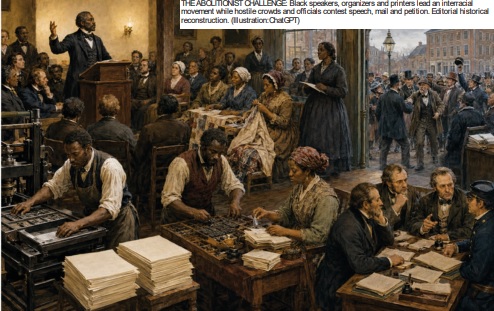

new immediatist abolition movement demanded an end to slavery without gradual delay or compensation to enslavers. William Lloyd Garrison published The Liberator beginning in 1831, but Black abolitionists supplied indispensable leadership, institutions and intellectual power. David Walker’s Appeal had already condemned slavery and racial hypocrisy; Frederick Douglass emerged during the 1840s as a commanding voice shaped by his escape from bondage. Women organized antislavery fairs, petition drives and societies, developing public skills that would feed the women’s-rights movement. Sarah and Angelina Grimké linked abolition to women’s equality. Anti-abolition mobs attacked meetings and presses; in 1837, editor Elijah Lovejoy was killed defending his press in Illinois. Southern officials pressured the postal system to suppress abolitionist mail. In Congress, the “gag rule” automatically tabled antislavery petitions without discussion from 1836 until 1844. Former president John Quincy Adams became a persistent opponent of the rule, arguing that the right to petition belonged even to those whose views Congress despised.
“A democracy proves its commitment to liberty not by protecting popular speech, but by protecting speech that power wishes to silence.


Be the first to comment