Tag: ACLS

  • Ex-minister, Bihar stalwart Sharad Yadav dies aged 75

    Ex-minister, Bihar stalwart Sharad Yadav dies aged 75

    Former Union minister and once the Janata Dal (United)’s chief Sharad Yadav died at a hospital in Gurugram late on Thursday, January 12, with tributes pouring in for the 75-year-old veteran politician who was regarded as an impactful orator. Yadav is survived by his wife, a daughter, and a son. A statement from the Fortis Memorial Research Institute said Yadav was brought to the emergency ward in an unconscious and unresponsive state.

    “On examination, he did not have any pulse or recordable blood pressure. He underwent CPR as per ACLS protocols. Despite best efforts, he could not be revived and was declared dead at 10.19pm,” the statement said.

    Yadav’s daughter Subhashini Sharad Yadav posted on Facebook: “Papa nahi rahe (Papa is no more)”.

    “Pained by the passing away of Shri Sharad Yadav Ji. In his long years in public life, he distinguished himself as MP and Minister. He was greatly inspired by Dr. Lohia’s ideals. I will always cherish our interactions. Condolences to his family and admirers. Om Shanti,” Prime Minister Narendra Modi tweeted on Thursday night.

  • Indian American Professor Brinda Sarathy Receives ACLS Fellowship

    Indian American Professor Brinda Sarathy Receives ACLS Fellowship

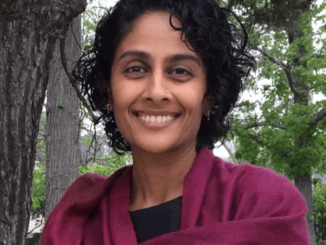
    CLAREMONT, CA  (TIP): Pitzer College Professor of Environmental Analysis and the Director of the Robert Redford Conservancy for Southern California Sustainability at Pitzer College Brinda Sarathy has received The American Council of Learned Societies (ACLS) fellowship for her project on Laid to Waste: The Stringfellow Acid Pits and Making of Place in Southern California.

     This project examines the history of the first Superfund site in California, the Stringfellow Acid Pits, to better understand how places are produced in the context of invisible flows: of toxics, of groundwater, and less told stories of social mobilization. Drawing on archival material and interviews with community activists and government officials, this research explores how hazardous wastes are understood, rationalized, and managed by scientific experts to justify dumping; why policy makers overlooked groundwater contamination in spite of prevailing scientific knowledge; and how to make sense of the often heterogeneous and contradictory nature of local resistance to, and mobilization against, contamination by industrial waste. Significantly, this work considers how institutions of expertise often exclude the experiences of those most exposed to harm and, despite deep and persistent uncertainties, authority figures have been called on to minimize concerns about hazardous substances, thus facilitating industrial, military, and economic expansion.

    The ACLS Fellowship Program awards fellowships to individual scholars working in the humanities and related social sciences.