Tag: Afghanistan

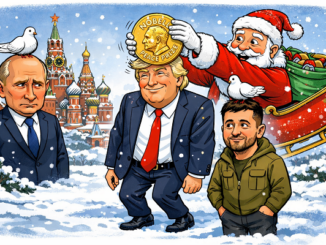
  • A Christmas Wish for a World at Peace

    A Christmas Wish for a World at Peace

    By Prof. Indrajit S. Saluja

    As the world prepares to merrily celebrate Christmas on December 25, with carols, candles, gifts and gatherings my kids have been so enthusiastic about, my thoughts drift, inevitably and uneasily, to people across continents who will mark this season not with joy, but with fear, deprivation and grief. When one surveys the globe today, a grim common thread binds distant lands and diverse societies: conflict. It manifests in many forms—economic, political, ethnic, ideological and military—but its consequences are uniformly cruel. Peace, despite humanity’s bitter experiences, continues to elude us.

    History offers no shortage of warnings. The twentieth century alone witnessed two World Wars whose scale and savagery reshaped the world. World War I, sparked by nationalism, imperial rivalries and diplomatic failure, left nearly 20 million dead and shattered empires. Instead of ushering in lasting peace, it sowed the seeds of resentment and economic despair that gave rise to fascism and World War II. That second conflagration, the most destructive in human history, claimed over 60 million lives, devastated Europe and Asia, and culminated in the nuclear annihilation of Hiroshima and Nagasaki, grim reminders of humanity’s capacity for self-destruction.

    In the aftermath of World War II, leaders vowed “never again.” Institutions such as the United Nations were created to resolve disputes through dialogue, not arms. Yet the decades that followed tell a sobering story. The Cold War divided the world into hostile blocs, bringing proxy wars in Korea, Vietnam, Afghanistan, Africa and Latin America. While nuclear deterrence prevented direct confrontation between superpowers, millions perished in regional conflicts fueled by ideological rivalry.

    The end of the Cold War briefly raised hopes for a “peace dividend.” Instead, the world entered a new phase of instability. Ethnic conflicts tore apart Yugoslavia. Genocide scarred Rwanda. The Middle East remained trapped in cycles of war and retaliation. The US-led interventions in Iraq and Afghanistan, launched in the name of security and democracy, produced long wars whose human and economic costs far outweighed their gains. Terrorism emerged as a global threat, feeding on unresolved grievances and failed states.

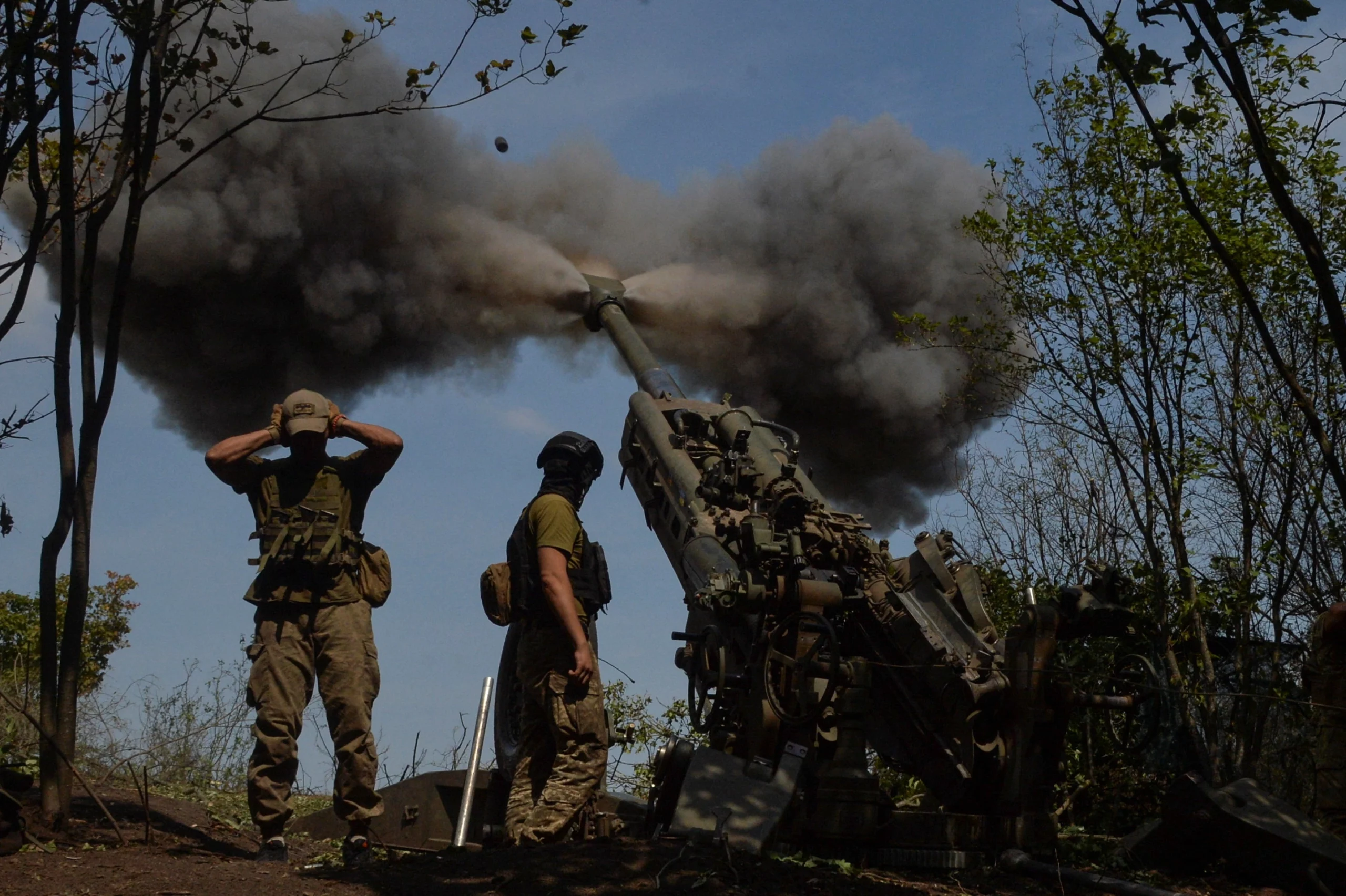
    Today, conflict has returned with alarming intensity to Europe itself, a continent that once prided itself on having learned the lessons of history. The war between Russia and Ukraine has inflicted immense suffering on ordinary people: cities reduced to rubble, millions displaced, families torn apart, and an entire generation growing up amid sirens and uncertainty. Whatever the geopolitical arguments advanced by either side, the human cost is undeniable and indefensible.

    This is not an isolated tragedy. From Gaza to Sudan, from the Sahel to Myanmar, violence continues to uproot lives. Economic conflict, too, is pervasive: trade wars, sanctions, debt crises and widening inequality pit nations and classes against one another. Even societies not directly at war feel the consequences through inflation, refugee flows, energy shortages and a growing sense of global insecurity.

    One might ask: how, after centuries of bloodshed, does humanity still fail to learn? Part of the answer lies in the persistence of ego, power politics and short-term thinking among leaders. War is often justified in the language of national interest, honor or security, yet it is invariably paid for by civilians. Children lose schools, the sick lose hospitals, and the poor lose whatever fragile stability they possess. Reconstruction takes decades; trauma lasts generations.

    Christmas, at its core, is a celebration of peace, compassion and goodwill. The image of a child born in a manger has endured precisely because it speaks to humility and humanity, not conquest. At this moment, therefore, it is worth articulating a simple, perhaps unfashionable wish: that this Christmas brings wisdom to leaders who command armies and shape destinies.

    In particular, one hopes that Russia’s President Vladimir Putin and Ukraine’s President Volodymyr Zelensky pause, even briefly, to reflect not on strategy or prestige, but on their people, the soldiers in trenches, the civilians in bomb shelters, the parents who bury their children. History will not judge them by how long they fought, but by whether they found the courage to stop.

    Peace, contrary to popular belief, is not weakness. It requires moral strength to shed ego, to compromise, and to accept that no victory built on ruins can truly be called a triumph. Europe learned this lesson after 1945; it must not be forgotten now.

    In this context, any genuine effort toward peace deserves encouragement, regardless of who undertakes it. If President Donald Trump seeks to play a role in ending the conflict, one can only wish him success. The world has seen enough failed wars and broken promises. A negotiated settlement, however imperfect, is infinitely preferable to endless bloodshed. If peace were to come to a ravaged region through such efforts, it would indeed be a gift worthy of global recognition.

    One might even indulge in a Christmas metaphor: Santa Claus, bearer of goodwill, presenting the Nobel Peace Prize not as a personal accolade, but as a symbol of what humanity values most, the saving of lives. Such symbolism matters, because it reminds leaders that history honors peacemakers long after warriors are forgotten.

    Ultimately, however, responsibility does not rest with leaders alone. Citizens, media and institutions must resist the idea that war is something normal. We must question narratives that glorify violence and demand accountability for decisions that destroy futures. Future generations will inherit the world we leave behind. They should not look back on us as idiotic warmongers who knew the costs of conflict yet chose it anyway.

    As candles are lit this Christmas, let them illuminate not just homes, but consciences. Let the season renew our collective commitment to dialogue over destruction, empathy over enmity, and peace over pride. For without peace, no celebration—Christmas or otherwise—can ever be complete.

    Merry Christmas, and may it bring the world closer to the peace it so desperately deserves!

  • Afghanistan to send 2,000 workers to Qatar amid rising joblessness, refugee return

    Afghanistan to send 2,000 workers to Qatar amid rising joblessness, refugee return

    Kabul [Afghanistan] (TIP): Afghanistan’s Ministry of Labor and Social Affairs has announced the planned deployment of 2,000 Afghan workers to Qatar, offering legal employment opportunities amid growing unemployment and an influx of returning refugees, Khaama Press reported.
    According to a statement issued by the Taliban-run ministry on Wednesday, July 23, and posted on its official X account, “Qatar has allocated an additional 1,300 job opportunities for Afghan workers,” bringing the total to 2,000 laborers set to be deployed in the upcoming phases.
    Khaama Press reported that the initiative marks the beginning of a broader program aimed at facilitating the legal deployment of Afghan workers abroad. The ministry noted that the number of job opportunities is expected to rise significantly in the future.
    Coordination has already taken place between Kabul and Qatari officials to implement the labor deployment in stages. Khaama Press cited the ministry as saying that registration centers and application criteria will be announced soon for Afghan citizens interested in applying.
    Afghanistan is currently grappling with a deepening humanitarian crisis, including widespread poverty, food insecurity, and the collapse of public services. The crisis has been compounded by the large-scale return of Afghan refugees from neighboring countries, especially Pakistan and Iran, where many had sought work and shelter.
    With limited employment prospects at home, thousands of returnees and local residents are struggling to support their families. Khaama Press highlighted that the lack of formal work programs has left many Afghans in economic distress, exacerbating the country’s instability.
    As the program rolls out, Afghan authorities say it could ease some of the burden on the domestic labor market, while also offering hope to job seekers seeking legal and safe employment abroad, Khaama Press added.
    Yet even as Afghanistan looks outward for employment solutions, its global mobility remains severely limited. Afghanistan’s passport has been ranked the least powerful in the world in 2025, offering visa-free access to just 26 countries, reflecting the country’s deepening global isolation, as reported by Khaama Press.
    According to the Henley Passport Index for 2025, Afghanistan was ranked 106th, at the bottom of the global list, making it the most restricted passport worldwide.
    The annual index, based on exclusive data from the International Air Transport Association (IATA), ranks passports according to the number of destinations their holders can enter without a visa.
    Khaama Press reported that Afghanistan’s travel freedom continues to shrink. In 2024, the country ranked 104th.
    The two-rank drop in 2025 highlights a further erosion in the country’s global mobility, leaving Afghan citizens increasingly cut off from the rest of the world. (ANI)

  • D.R. Mehta: A Revolutionary Force of Compassion, Innovation, and Social Justice

    D.R. Mehta: A Revolutionary Force of Compassion, Innovation, and Social Justice

    By Prem Bhandari

    In a world often dominated by personal ambition and fleeting recognition, few individuals leave behind a legacy that truly transforms millions of lives. One such revolutionary figure is Mr. D.R. Mehta – the visionary founder and Chief Patron of Bhagwan Mahaveer Viklang Sahayata Samiti (BMVSS), the parent body of the world-renowned Jaipur Foot.

    A Jaipur Foot camp was organized at Mhow, Madhya Pradesh, on April 14, 2016, to commemorate the 125th birth anniversary of Bharat Ratna Dr. Bhimrao Ambedkar. Prime Minister Modi inaugurated.
    In the picture, among others, from L to R: Prem Bhandari, D.R. Mehta, differently-abled Kamala- recipient of an artificial limb, Union Minister Shivraj Singh Chauhan, Narendra Modi.

    Founded in 1975, BMVSS under Mr. Mehta’s leadership has become the world’s largest organization for the rehabilitation of the physically challenged. It has provided dignity and mobility to more than 2.4 million beneficiaries, offering artificial limbs, calipers, and other aids – all completely free of cost to those in need, 95% of whom live below the poverty line.

    What sets Mr. Mehta apart is his patient-first, humane approach. With an open-door policy and same-day prosthetic fittings, BMVSS operates around the clock to ensure that patients don’t just get help – they get it with dignity, speed, and compassion. His model has not only inspired millions but has also caught the attention of prestigious institutions. Both Harvard Business School and IIM Bangalore have written case studies on BMVSS and Jaipur Foot. Renowned management guru Prof. C.K. Prahalad even featured BMVSS in his iconic book The Fortune at the Bottom of the Pyramid.

    A Jaipur Foot camp was organized at Nagpur-Diksha Bhoomi- on October 14, 2016.
    Seen in the picture, among others, from L to R: D.R. Mehta, Prem Bhandari, Maharashtra Chief Minister Devendra Phadnavis. Seated is a differently-abled boy who received an artificial limb.

    Mr. Mehta’s impact is international. He has spearheaded 114 limb-fitment camps across 44 countries, including conflict-ridden areas like Afghanistan, Iraq, Syria, and Palestine. His model blends technology with empathy, partnering with institutions such as Stanford University, MIT, and IITs to continuously upgrade BMVSS’s innovation. TIME Magazine recognized the Jaipur Knee, developed with Stanford, as one of the 50 Best Inventions of the World in 2009.

    A staunch Gandhian, Mr. Mehta practices what he preaches. Through initiatives in remote, violence-hit areas like Sukma and Dantewada, he has brought hope where it was long lost. His literary work includes over 70 books on Gandhism and peace, and he holds key positions in Gandhian institutions.

    A Jaipur Foot camp was organized at Mahudi, Ahmedabad. It was hosted by Ajay Patel, President, BRUHUD Seniors, in memory of his late father Shashikant Bhai Patel. D.R. Mehta addressed the gathering. Seen in the picture, among others, from L to R: Ajay Patel, Prem Bhandari, Harsh Vardhan Shringla, former Foreign Secretary of India, S.J. Haider, Chief Secretary, Gujarat

    In recognition of his unparalleled service, Mr. Mehta has received numerous awards, including the Padma Bhushan (2008), Rajiv Gandhi Sadbhavna Award (2012), and international honors such as the TECH Museum Innovation Award (USA).

    Before his social work journey, Mr. Mehta was a distinguished IAS officer (1961 batch), holding critical positions in both state and central governments. He served as Deputy Governor of the Reserve Bank of India, and later as Chairman of SEBI, where he oversaw landmark reforms in India’s capital market from 1995 to 2002.

    Born in 1937, Mr. Mehta is an alumnus of Rajasthan University, Royal Institute of Public Administration (London), and the Alfred Sloan School of Management, MIT. He has also served on MIT’s board for Asia, Europe, and Africa.

    Jaipur Foot and its Founder& Chairman, D.R. Mehta stand tall at Times Square, New York

    In a time when the world searches for authentic leadership, Mr. D.R. Mehta stands tall as a true hero- a revolutionary who turned empathy into action, and vision into global impact.

    (Prem Bhandari is the Founding Chairman,  Jaipur Foot USA (subsidiary of BMVSS); President of Rajasthan Association of North America (RANA); Co-founder & Chairman, Rescuing Every Distressed Indian Overseas (REDIO); Chief Advisor, BRUHUD NY Seniors & Team Aid)

  • Trump imposes sanctions on International Criminal Court

    Trump imposes sanctions on International Criminal Court

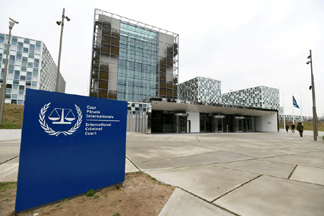
    WASHINGTON, D.C. (TIP): US President Donald Trump on Thursday, February 6, authorized economic and travel sanctions targeting people who work on International Criminal Court investigations of US citizens or US allies such as Israel, repeating action he took during his first term, a Reuters report says. ICC condemned the sanctions on Friday, February 7, and called on its 125 member states to support its staff.

    “The court stands firmly by its personnel and pledges to continue providing justice and hope to millions of innocent victims of atrocities across the world, in all situations before it,” it said in a statement.

    Trump’s move coincided with a visit to Washington by Israel’s Prime Minister Benjamin Netanyahu, who — along with his former defense minister and a leader of Palestinian militant group Hamas — is wanted by the ICC over the war in the Gaza Strip.

    It was unclear how quickly the US would announce names of people sanctioned. During the first Trump administration in 2020, Washington imposed sanctions on then-prosecutor Fatou Bensouda and one of her top aides over the ICC’s investigation into alleged war crimes by American troops in Afghanistan.The sanctions include freezing any US assets of those designated and barring them and their families from visiting the United States.

    The Netherlands, the host nation of the court based in The Hague, said it regretted the sanctions. “The court’s work is essential in the fight against impunity,” Dutch Foreign Minister Caspar Veldkamp said in a post on X. But Hungarian Prime Minister Viktor Orban, a staunch ally of Trump, said the sanctions showed it might be time to leave the ICC. The ICC is a permanent court that can prosecute individuals for war crimes.

  • How India flexed its global power muscles in 2024

    How India flexed its global power muscles in 2024

    India’s foreign policy in 2024 showcased a bold stance, with India asserting its influence not only in its immediate neighbourhood but also on the global stage. External Affairs Minister S. Jaishankar in December highlighted a decade-long shift toward prioritizing economic diplomacy, a trend that continued to define India’s strategic engagements this year.
    As per Jaishankar, India’s foreign policy today is based on three principles. “Active engagement with countries, nation’s interests first under any circumstance and humanitarian approach with ethics”.
    Here’s how India flexed its global power muscles in 2024:
    India stares down China
    It took India and China 21 rounds of Corp Commander-level talks on disengagement to end the military impasse that plagued the relationship for five years. While military disengagement had been achieved earlier at four points, the same remained elusive in Depsang and Demchok, the two friction points.
    China maintained that the impasse in these areas were legacy issues that predated the 2020 standoff and should not be allowed to block resumption of normal bilateral exchanges. However, India too steadfastly maintained there couldn’t be any progress in ties till the time disengagement is completed in the remaining areas, calling it an essential basis for peace in the border areas.
    Patient and persevering diplomacy helped clinch the disengagement agreement with China, Jaishankar said.
    Both the countries agreed to return to the patrolling agreements along the Line of Actual Control (LAC) in eastern Ladakh that were in place before the Galwan clashes in 2020 after several negotiations.
    Chabahar port powerplay
    India’s agreement with Iran in May to manage the strategic Chabahar Port for the next decade marked a significant milestone, as it was the first time India assumed management of a port overseas and that too amid Iran’s tensions with the US and Israel. This move underscores Prime Minister Narendra Modi’s emphasis on using strategic ports to bolster regional connectivity and influence.
    Chabahar port is a vital link in India’s efforts to enhance connectivity with Afghanistan, Central Asia, and the broader Eurasian region. It also serves as a counterbalance to Pakistan’s Gwadar Port and China’s expansive Belt and Road Initiative.
    The pact with Iran was signed despite the looming threat of US sanctions. Although the sanctions were never imposed, External Affairs Minister S. Jaishankar addressed concerns raised by the US about the “potential risk” to companies involved in the India-Iran joint venture. Jaishankar stressed that India would “work at” explaining Chabahar’s importance as a project serving the region’s broader interests.
    Maldives comes back
    India’s relationship with Maldives faced turbulence after Mohamed Muizzu, known for his pro-China and anti-India stance, assumed office as president. Mere hours after his swearing-in, Muizzu demanded the withdrawal of Indian military personnel stationed to operate three aviation platforms gifted by India. Following negotiations, the Indian military personnel were replaced with civilian operators.
    Tensions escalated further when three Maldivian deputy ministers made controversial remarks about India and Prime Minister Modi on social media. The Maldivian Foreign Ministry swiftly distanced itself from the comments, leading to the suspension of the three junior ministers.
    Amid these strained ties, President Muizzu made his first bilateral visit to India in October, as Maldives grappled with an economic crisis. The financial challenges facing his country were likely a key topic in discussions with India. Before the visit, Muizzu adopted a conciliatory tone, stating that he has never opposed India and acknowledging that New Delhi was aware of Maldives’ financial difficulties and willing to assist.
    Sri Lanka sides with India
    Sri Lankan President Anura Kumara Dissanayake on his inaugural foreign visit since taking office in September assured Prime Minister Modi that Sri Lanka would not permit its territory to be “used in any way that is detrimental to the interest of India.
    The assurance from Sri Lankan president came at a crucial point as China is intensifying its presence in the Indian Ocean region, particularly targeting Indian interests.
    China’s control over Hambantota Port, acquired through Sri Lanka’s debt default, has enabled Beijing to station vessels like the Yuan Wang 5, a 25,000-tonne satellite and missile tracking ship. This development concerns India due to Sri Lanka’s geographical proximity.
    Despite India’s initial objections in August 2022, Sri Lanka eventually permitted Chinese vessels to dock for ‘replenishment’ at Hambantota. Meanwhile, Chinese surveillance vessels keep on patrolling the Indian Ocean region and using the Hambantota port.
    China secured a 99-year lease on Hambantota port after Sri Lanka struggled with loan repayments. The $1.7 billion project, with phase one completed in 2010, required annual payments of $100 million, which Colombo failed to meet.
    The Canadian challenge
    India in October this year expelled six Canadian diplomats and announced withdrawing its high commissioner and other targeted officials from Canada after strongly dismissing Ottawa’s allegations linking the envoy to a probe into the killing of Sikh extremist Hardeep Singh Nijjar, in a major downturn in already frosty ties between the two nations. India’s decision to recall High Commissioner Sanjay Verma and some other diplomats came shortly after the Canadian Charge d’Affaires Stewart Wheelers was summoned to the Ministry of External Affairs (MEA). Wheelers was bluntly told that baseless “targeting” of the Indian envoy and other officials was “completely unacceptable”.
    India is not neutral in Russia-Ukraine war
    Despite opposition of the West, India has managed to find a middle way on the Russia-Ukraine conflict while also constantly underlining its strong relations with Russia. During the BRICS summit in October, when Prime Minister Modi visited Russia, President Vladimir Putin remarked that he believed Modi would understand his comments without translation, highlighting the strong relationship between the two nations. Modi responded with a hearty laugh. India’s approach to the Russia-Ukraine conflict has been shaped by its steadfast commitment to peace, dialogue, and diplomacy. This year, Modi visited Ukraine and met with President Volodymyr Zelenskyy, reaffirming India’s stance. During the meeting, Modi emphasized that India has never been neutral in the conflict but has consistently sided with peace.
    India’s role in the conflict has drawn international attention. Italian Prime Minister Giorgia Meloni, after her meeting with Zelenskyy, pointed out the potential roles India and China could play in resolving the crisis. Following his visit to Kyiv, Modi telephoned Putin to share his perspectives. Apart from the BRICS summit visit, Modi visited Russia in July, holding extensive talks with President Putin. While India has not proposed a peace formula like those of Brazil or China, it has maintained contact with all stakeholders, advocating for negotiations and emphasizing the importance of Russia’s involvement in peace summits for a sustainable resolution to the conflict.
    Diplomatic win in Qatar
    In a significant diplomatic win for India in February, eight former Indian Navy personnel, who were initially sentenced to death in Qatar on charges of spying, were released, marking a crucial turn of events in a case that had garnered international attention and led Modi critics to make it a test case for his global diplomatic clout.
    India’s diplomatic efforts led to the commutation of the capital punishment to extended prison terms for the eight veterans, who had been facing severe charges in Qatar. This decision came after sustained diplomatic intervention by India, showcasing the effectiveness of bilateral engagements in resolving complex legal matters. Expressing gratitude for the release of the Indian nationals, the Indian government welcomed the decision made by the Amir of the State of Qatar to facilitate their return. The swift resolution of this sensitive issue underscores the significance of diplomatic dialogue and cooperation between nations in addressing challenges faced by their citizens abroad.

  • 52 killed in two bus accidents in central Afghanistan

    KABUL (TIP): Two bus accidents involving a fuel tanker and a truck on a highway through central Afghanistan killed 52 people and injured 65, the Taliban government spokesmen said on December 19. The accidents happened in Ghazni province on the same highway between the capital Kabul and southern Kandahar city late Wednesday, provincial head of information and culture Hamidullah Nisar said on X, without specifying how many people were killed and injured in each accident. “We learned with great regret that two fatal traffic accidents occurred on the Kabul-Kandahar Highway, in which 52 of our compatriots were killed and 65 others were injured,” said chief government spokesman Zabihullah Mujahid. Nisar said one bus collided with a fuel tanker near Shahbaz village in central Ghazni, while the other hit a truck in the eastern district of Andar. He added that rescue teams rushed to the site and transported the injured to the hospital, with some in “serious condition.”
    Traffic accidents are common in Afghanistan, due in part to poor roads after decades of conflict, dangerous driving on highways, and a lack of regulation.
    In March, more than 20 people were killed and 38 injured when a bus collided with a fuel tanker and burst into flames in southern Helmand province.
    Another serious accident involving an fuel tanker took place in December 2022, when the vehicle overturned and caught fire in Afghanistan’s high-altitude Salang Pass, killing 31 people and leaving dozens more with burns. (AFP)

  • Women’s rights under threat in Bangladesh amid growing radicalism, intolerance

    Women’s rights under threat in Bangladesh amid growing radicalism, intolerance

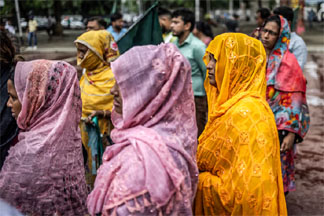
    Dhaka (TIP): Bangladesh is not going to become another Iran or Afghanistan, as far as the rights of women are concerned. Nevertheless, it’s women who are bearing the brunt of the recent political upheaval in the country.
    The radical elements which have the support of the present interim government seem to be on a mission to muffle the freedom that women have had until now.
    “I have never covered my head or face with a scarf and never will. I am a woman and enjoy being one, why should anyone object to what I wear? Things have changed for the worse. A woman wearing western clothes is often subject to cat calls, threatened or looked down upon,’’ Naseem Rahat Bano*, a writer in Dhaka told TNIE.”
    “We will not give in to the radicals who seem to be getting comfortable inside our once tolerant country,” added Bano. She is most comfortable wearing western dresses and enjoys having a glass of wine while socializing.
    It is not just older women but even teenage girls who are now being sermonized and admonished.
    “My teenage daughter is under peer pressure to cover up as she fears being bullied and trolled. When we are at home she is fine, but the world has changed outside though we are optimistic that this would not be a permanent feature,’’ said Bano.
    There is a lot of concern and fear, which is also experienced by men who support women for the choices they make.
    “I am ok with whatever the women in my family want to wear but get extremely worried when they are out of the house and fear their being bullied, scoffed at and even attacked in public. Our country has gone offtrack. Our history is being denied, Pakistan has become a friend from being a foe and India is viewed as an enemy even though it has been a supporter all through,’’ said Rafik who works with a publishing house in Dhaka.
    Interestingly, when there was a regime change, the narrative was against the former Prime Minister of Bangladesh Sheikh Hasina. Four months since then, the narrative appears to be changing yet again but in her favour.
    Whether the situation on the ground changes or remains the same is yet to be seen, but until then women like Bano will continue resisting the radical forces to protect their rights which include the freedom to wear what they want. (AFP)

  • Jalaluddin Haqqani’s brother killed in Kabul suicide blast

    Kabul (TIP): The Afghan Taliban’s acting minister for refugees, Khalil Rahman Haqqani — the brother of Jalaluddin Haqqani, the founder of insurgent group Haqqani network — and six other people were killed in an explosion in the capital Kabul on December 11, his nephew said. A Taliban spokesperson said that Khalil Haqqani had been killed by the Islamic State militant group, who did not immediately claim responsibility for the attack.
    The suicide bombing occurred inside the ministry, killing Khalil Haqqani, officials said. His last official photo showed him at a meeting chaired by the deputy prime minister, Mullah Abdul Ghani Baradar, earlier Wednesday. Khalil Haqqani is the uncle of Sirajuddin Haqqani, the acting interior minister who leads a powerful network within the Taliban. Haqqani was the most high-profile casualty of a bombing in Afghanistan since the Taliban returned to power and the first Cabinet member to be killed since the takeover. There was no immediate claim of responsibility for the blast. The government’s chief spokesman, Zabihullah Mujahid, said in a post on X that Haqqani’s death was a great loss and described him as a tireless holy warrior who spent his life defending Islam.
    Haqqani’s killing may be the biggest blow to the Taliban since their return to power given his stature and influence, according to Michael Kugelman, director of the Wilson Centre’s South Asia Institute. It also comes at a time when the Taliban have staked their legitimacy on restoring peace after decades of war, he added.
    “The killing of a top Haqqani leader inside one of its own ministries undercuts that core narrative,” he said.
    Former President Hamid Karzai and Haqqani’s nephew, Anas, also paid tribute to the minister. Taliban security personnel blocked the road leading to the blast site and barred filming and photography.
    Pakistan’s Foreign Minister Ishaq Dar condemned the killing as a “terrorist attack.”
    “Pakistan unequivocally condemns terrorism in all its forms and manifestations,” Dar said, adding his government was in touch with Kabul. Daesh’s affiliate, a major rival of the ruling Taliban, has carried out previous attacks across Afghanistan. In early September, one of its suicide bombers in a southwestern Kabul neighbourhood killed at least six people, wounding 13 others. (Agencies)

  • Four survivors in Russian air ambulance crash in Afghanistan, fate of 2 others unknown

    NEW DELHI (TIP): Four people survived and two are unaccounted for after a Russian plane crashed in mountainous northeastern Afghanistan, the air transport agency Rosaviatsia said.
    The Falcon 10 business jet was believed to be carrying six people on a hospital flight to Uzbekistan and Russia before communication was lost on Saturday evening.
    “Of the six people on board the aircraft, tentatively, four are alive. They have various injuries. The fate of two people is being clarified,” Rosaviatsia said, citing the Russian embassy in Afghanistan. The ministry of airport transport and aviation in Afghanistan said that the aircraft crashed in Koof-Aab district of Badakhshan province, and claimed that four passengers survived the crash. A provincial government official in Afghanistan told AFP the aircraft came down in Badakhshan province, which borders China, Tajikistan and Pakistan. The aircraft had taken off from Thailand and had made a brief technical stopover in Gaya airport for refueling,’’ according to the Ministry of Civil Aviation. (AFP)

  • A spiritual leader in Nepal known as ‘Buddha Boy’ arrested on charges of rape and kidnapping

    A spiritual leader in Nepal known as ‘Buddha Boy’ arrested on charges of rape and kidnapping

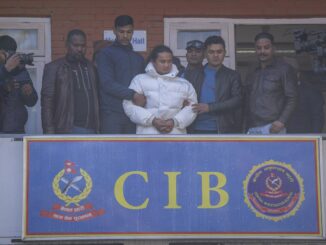
    KATHMANDU (TIP): Nepal police said January 10 they had arrested a spiritual leader whose followers believe him to be a reincarnation of Buddha over allegations of disappearances and rape at his ashrams. Ram Bahadur Bomjan, known as “Buddha Boy” among devotees, became famous as a teenager after followers said he could meditate motionless for months without water, food or sleep. The 33-year-old guru has a devout following but has long been accused of physically and sexually assaulting his followers, and has been hiding from authorities for several years.

    “He was arrested after absconding for several years,” police spokesman Kuber Kadayat told AFP.

    Police apprehended Bomjan in Kathmandu on a warrant issued for his alleged rape of a minor at an ashram in Sarlahi, a district south of the capital.

    They said he was caught with bundles of cash amounting to 30 million Nepali rupees ($225,000) and another $22,500 in foreign currency.

    Accusations of abuse and misconduct against Bomjan stretch back more than a decade.

    Dozens of assault complaints were filed against Bomjan in 2010. He said he beat the victims because they disturbed his meditation.

    An 18-year-old nun accused the guru of raping her at a monastery in 2018.

    Police opened another investigation against him the following year after family members reported the disappearance of four of his devotees from one of his ashrams.

    The whereabouts of the four are still unknown, Dinesh Acharya of the Central Investigation Bureau told reporters on Wednesday.

    “Unless we know what situation the missing are in we are not in a position to call it murder,” he said.

    Before he went on the run, Bomjan still commanded a legion of followers as the allegations against him mounted. At one point tens of thousands of people had gathered to witness his reputed miracles of meditation deep in the jungle.

    While aged 16, Bomjan disappeared for nine months to wander the wilderness of eastern Nepal, prompting a round-the-clock vigil by Buddhist monks who prayed for his safe return. (AFP)

    6.1 magnitude earthquake jolts Afghanistan, tremors in north India

    kabul / NEW DELHI (TIP): An earthquake of magnitude 6.1 struck Afghanistan on January 11 with tremors rippling through parts of north India, the National Centre for Seismology said.

    The epicentre for the quake, which struck at 2.50 pm IST, was 241 kilometres north-northeast of Kabul, it said. It further noted that its depth was registered at 220 kilometres.

    The NCS shared a post on X, stating, “Earthquake of Magnitude:6.1, Occurred on 11-01-2024, 14:50:24 IST, Lat: 36.48 & Long: 70.45, Depth: 220 Km, Location: Afghanistan.”

    The quake triggered panic among people, with many in Delhi and the National Capital Region reporting shaking of furniture. (PTI)

  • China formally accords diplomatic recognition to Taliban govt in Afghanistan

    China formally accords diplomatic recognition to Taliban govt in Afghanistan

    BEIJING (TIP): China has become the first country to confer diplomatic status to a Taliban-nominated official as Afghanistan’s Ambassador to Beijing, thereby formally recognising the Taliban-run administration as a legitimate government in Kabul.
    “As a long-standing friendly neighbour of Afghanistan, China believes that Afghanistan should not be excluded from the international community,” Chinese Foreign Ministry spokesman Wang Wenbin told a media briefing on Tuesday when asked whether China recognised the Taliban as the legitimate government of Afghanistan.
    Earlier reports from Kabul said China has given Bilal Karimi, a Taliban nominee the status of Ambassador and he has submitted his credentials to the foreign ministry here.
    China along with Pakistan and Russia maintained its embassy in Kabul after the Taliban took control of Afghanistan in August 2021 following the withdrawal of American troops from the war-ravaged country.
    While maintaining close contact with the Taliban interim administration, Beijing withheld recognition, especially over global criticism of the Taliban’s treatment of women and girls, excluding them from educational institutions.
    No other country has formally recognised the Taliban government, which has been criticised over human rights violations and crushing women’s rights.
    Defending China’s move, Wang said, “We hope Afghanistan will further respond to the expectations of the international community, build an open and inclusive political structure, adopt moderate and prudent domestic and foreign policies, firmly combat all forms of terrorist forces, develop friendly relations with other countries, especially with its neighbours, and integrate itself into the world community.”
    “We believe that diplomatic recognition of the Afghan government will come naturally as the concerns of various parties are effectively addressed,” Wang said. China, which shares borders with Afghanistan, also has serious concerns over the regrouping of the East Turkistan Islamic Movement (ETIM), a banned outfit comprising Uighur militants from the volatile Xinjiang province, and pressing the Taliban administration to crack down on the outfit.
    Significantly, China’s diplomatic recognition comes at a time when Pakistan, Beijing’s all-weather ally, is having serious problems with the Taliban which it once nurtured.
    Pakistan is now blaming the Taliban government for recurring terrorist attacks in the country and criticised it for not cracking down hard on Pakistan Islamic militant groups, especially the Pakistani Taliban, operating from Afghanistan. In retaliation, Islamabad has ordered forceful evacuation of thousands of Afghan refugees living in the country for decades. (pti)

  • Pakistan’s Ex-Prez Musharraf laid to rest; several including military officers attend funeral

    Pakistan’s Ex-Prez Musharraf laid to rest; several including military officers attend funeral

    KARACHI (TIP): Pakistan’s divisive former military ruler Pervez Musharraf was buried on February 7 in a muted funeral that was never officially announced. The country’s serving army chief, the prime minister and the president all stayed away from the event, with media blocked from covering it and local television not airing the service.

    Musharraf, who became a key US ally during Washington’s “war on terror” after the September 11 attacks, died exiled in Dubai on Sunday aged 79, having suffered a long illness.

    In Pakistan, where the military is supremely powerful, Musharraf remains a controversial figure who left many Pakistanis with a deep distaste for direct military rule.

    Prayers were held at the grounds of a military compound in Karachi in a funeral ceremony attended by around 10,000 people, mostly retired and serving military officers, an AFP reporter observed.

    “He was not given the honour that he deserved… the government has done nothing — it should have arranged the funeral at the national stadium,” Rubina Mazhar, a herbal medicine doctor, told AFP after the prayers.

    Wajid Noor, a 71-year-old retired government official, said “thousands of people wanted to participate in the funeral but no details were provided.”

    The body was later transported to a nearby military graveyard where the coffin, draped in the national flag, was buried as hundreds of people watched surrounded by tight security. A junior army officer at the site who asked not to be named said a gun salute was given to the former leader.

    Economic boom, democratic decline

    The four-star general seized power in a 1999 bloodless coup and was acting simultaneously as Pakistan’s army chief, chief executive, and president when the 9/11 attacks on the United States took place.

    He became Washington’s chief regional ally during the invasion of neighbouring Afghanistan, a decision which put him in the crosshairs of Islamist militants, who made several attempts on his life. But it also brought a huge influx of foreign aid, which bolstered the economy and helped modernise Pakistan.

    The general twice suspended the constitution and was accused of rigging a referendum shoring up his power as well as rampant rights abuses including rounding up opponents during his nearly nine-year rule.

    In 2007, Musharraf ordered troops to storm a mosque in Islamabad where more than a hundred students calling for the imposition of sharia law were killed, sparking a major militant backlash.

    In the same year, he attempted to challenge the independence of the judiciary, leading to widespread protests and was accused of involvement in the assassination of opposition leader Benazir Bhutto. He became increasingly isolated before ultimately losing power in 2008. In an editorial published by Pakistan’s leading English-language newspaper on Monday, Musharraf was described “as something of an enigma as his authoritarian rule was also interspersed with liberal reforms.”

    “Yet the late general’s mistakes were considerable, the biggest and most unforgivable being the derailing of the constitutional order.” (AFP)

  • Ukraine War, Chinese Protest, Imran Khan’s Ouster; top global Events in 2022

    The year 2022 has been a tumultuous one, with many uprisings, new faces coming to prominence and dictators losing hold of power. It has been a year of economic shockers, from the West to the East. Needless to say, it has been a year of clashes and of new alliances.

    This year saw a significant rise of leaders like Ukraine President Zelensky, French President Macron and Chinese leader Xi Jinping. On the other hand, prominent international leaders, considered to have clout, including former US President Trump and Brazilian President Bolsonaro lost their power.

    There were several prominent events which shaped 2022 in their own ways. To name a few, the Ukraine War, Sri Lankan Economic crisis and the unprecedented protests in China defined the year in their unusual ways.

    UKRAINE WAR

    The Russian invasion of Ukraine, which began earlier this year in February, has entered its 300th day this month, proving to be a tough challenge for both Russia and Ukraine. Russian President Vladimir Putin, who began a blitzkrieg assault on Kyiv taking over the eastern and southern part of the country, is now facing challenge to keep the war going amid reports of ailing health and internal strife.

    So far, over 100,000 Russian and 100,000 Ukrainian soldiers have been killed or injured in the war in Ukraine. For the Ukrainians, this winter is going to be tough with Russian attacks on Ukrainian power plans and consecutive Russian missile attacks. However, the war has shaped the hero out of Ukraine’s President Zelensky, who not only stood against the Russian aggression, but also managed to forge a western unity.

    SRI LANKAN CRISIS

    The Sri Lanka protests which started in April had led to the ouster of President Gotabaya Rajapaksa and two-time President and former Prime Minister Mahinda Rajapaksa. The Sri Lankan crisis, which started as a protest in Colombo, spread across the country with the people demanding reforms in the government.

    Ranil Wickremesinghe was elected President through a parliamentary vote, in which the Rajapaksas’ party backed him in July. The government blamed the Covid pandemic, which badly affected Sri Lanka’s tourist trade, and later led to a shortage of fuel and foreign dollars. However, many experts blame President Rajapaksa’s poor economic mismanagement.

    The country continues to remain under crisis with Colombo anticipating the IMF loan to secure the country’s economy.

    OUSTER OF IMRAN KHAN

    Former Pakistan Prime Minister Imran Khan, who came to power in 2018, is the only Pakistani Prime Minister to be ousted in a no-confidence vote in Parliament earlier this year.

    Khan was ousted from power in April after losing a no-confidence vote in his leadership, which he alleged was part of a US-led conspiracy targeting him because of his independent foreign policy decisions on Russia, China, and Afghanistan.

    Since he lost the vote in Parliament, Khan has mobilized mass rallies across the country, whipping up crowds with claims that he was a victim of a conspiracy by his successor, Prime Minister Shahbaz Sharif, and the United States.

    IRAN PROTESTS

    Iran has been rattled by protests over opposition to the mandatory hijab law as thousands of common citizens have taken to the streets.

    Iran has been rocked by protests since September 16, with the death of 22-year-old Mahsa Amini, who died after being detained by the morality police. The protests have since morphed into one of the most serious challenges to Iran’s theocracy installed by the 1979 Islamic Revolution.

    So far, the country’s police have arrested renowned actresses, footballers, actors and influencers for supporting the protests. It has also executed two protestors for participation in the protests.

    RARE PROTEST IN CHINA

    China saw two major developments this year- Xi Jinping becoming President for the third time and rare protests weeks after against tough anti-Covid restrictions.

    In November, thousands of people took to the streets in several major cities across China, including Beijing and Shanghai, to call for an end to lockdowns and greater political freedoms, in a wave of protests not seen since pro-democracy rallies in 1989 were crushed.

    Despite heavy crackdown, surveillance and censorship, the protests expanded into calls for broader political freedom and left a major negative impact on the reputation of Xi and the Party.

    US MIDTERM ELECTIONS

    The midterm elections in the US, which is usually seen as a mandate against the ruling government, failed to make a Republican sweep as the Democrats gained razor-thin control of the Senate, while the Republicans got a narrow margin against the dems in the House of Representatives.

    However, the misterms was special in the sense that it rained down on the ambitions of former President Donald Trump, who was looking forward to run for the second term, his “Make America Great Again” movement and the broader Republican agenda.

    A silver lining which came out of the midterm elections for the Republicans has been the victory of Florida Governor Ron DeSantis. DeSantis is seen as the possible challenger to Trump and a possible source of revival for the GOP.

    Surging inflation, ongoing strikes, economic crisis and war in Europe: the new UK Prime Minister Rishi Sunak faces these major challenges. Sunak came to Power after his predecessor Truss resigned after just 44 days in power.

    After 12 years in power, the Conservative party is more divided than ever. Earlier this year, Boris Johnson had resigned as PM in July after losing the confidence of some 60 ministers.

    Sunak has become the fifth Tory prime minister since 2016 — following David Cameron, Theresa May, Johnson and Truss. The challenges continue to mount for Sunak, who hopes to get his country out of the economic and political mess.

    BOLSONARO’S EXIT

    Brazilian President Jair Bolsonaro, lost election in October in a nail-biting presidential vote count against Luiz Inacio Lula da Silva.

    Almost from the start of his controversial mandate in 2019, Bolsonaro racked up accusations and investigations for everything from spreading disinformation to crimes against humanity. He survived more than 150 impeachment bids — a record.

    Most of these were over his flawed management of the coronavirus pandemic, which claimed the lives of more than 685,000 people in Brazil — the world’s second-highest toll after the United States.

    On January 1, 2023, Bolsonaro’s arch-rival, leftist ex-president Luiz Inacio Lula da Silva will take over the reins once more and Bolsonaro loses his presidential immunity.

    COP27 SUMMIT

    The UN COP27 climate summit in Egypt had some success and some failures. While the summit achieved a landmark deal on funding to help vulnerable countries cope with devastating climate impacts, the talks stalled on key issues and failed to secure commitments to stop greenhouse gas emissions.

    Though the participating nations agreed to contribute to the cost of the harm an overheated planet causes to developing nations, but they concluded the talks without doing anything more to address the burning of fossil fuels, which is the primary cause of these catastrophes.

  • Jay Mandal

    More worried today than in last 50 years

    (As told by Jay Mandal to Priyanka Khanna)

    Asked to put my thoughts together about India, my home country, and global affairs – I simply could not get myself to see the silver lining.

    Those who know me, know that I am rarely downcast. And when I managed to circumvent the world on a rickety bicycle, traversing the length and breadth of 154 countries back in 1970s  and 1980s, I developed a deep sense of hopefulness for the human race. So often I had no place to sleep in the 17 years that I rode my cycle solo but somehow, I always found food and water to sustain me even in God forsaken places.

    And I did grow more hopeful than most people when I was helped by perfect strangers on countless occasions, survived accidents, even facing wild elephants in southern Africa that few feel were survivable, besides facing the full fury of nature during my cycling days. So, when I ended my tour and began covering Indian and global affairs from my base in New York, I did so through my lenses and with the heart of a survivor.

    But after spending the year 2021 waiting for the promised recovery post the COVID-19 pandemic, the year 2022 made me truly sad. Starting from revelations of how deep corruption is steeped in the State where I come from – West Bengal – to Russia’s war on Ukraine, the state of women in Afghanistan, Iran and so many other places, to the lack of specific actions against Climate Change – which is already a reality and not a possibility – left me wondering if I have seen any similarly bad phase while chronologizing global and Indian affairs over the last five decades.

    I have covered the UN and the White House here in the US just as well as I have witnessed history in the making at 7 Racecourse in Lutyens’ Delhi for half-a-century, but I haven’t heard so much collective bad news from all corners of the world in such a short time.

    What bewilders me more is that the pandemic showed us the importance of working together swiftly to contain a contagious pathogen. Yet, the hope that coming out of 2020 we will learn lessons and work more closely together seems dashed. Yes, there is a lot of good that is happening as well but on the whole I feel this year we had more misses than hits.

    Beyond the more obvious attention-grabbing headlines, this year saw collapse of entire economies  right at India’s southern Island Nation of Sri Lanka as well as global tensions raising over Algeria, Belarus, Morocco, Turkey, Taiwan, South China Sea, Korean peninsula, Gaza, Iran’s nuclear programme, the opening up of Arctic routes, the escalation of tensions in India’s own backyard with Pakistan and China and of course the ongoing global trade wars.

    While India has actually done very well on many fronts in 2022, did well on Sri Lanka front, is now on at the helms of the influential G20 and is set to become the most populous country in the world in 2023, I am entering 2023 worrisome and apprehensive. My only hope really is that this too shall pass so I end by wishing for more consensuses in Indian and global affairs.

    (Jay Mandal is a Veteran photo-journalist and world Traveler)

  • Countering narco terror

    • State-of-the-art anti-drone technology is a must

    Reiterating the Centre’s zero-tolerance policy on the drug menace, Home Minister Amit Shah has announced that big criminals involved in narcotic trafficking would be put behind bars in the next two years. He has admitted that profits from the drug trade are being used to finance terrorism, while expressing concern that the ‘dirty money’ thus generated is hurting the country’s economy. According to the minister, the mapping of drug routes has been done in 472 districts, even as narcotic contraband is entering the country from across the border through drones, tunnels, ports and airports. Shah’s statement in the Lok Sabha came hours after the Border Security Force (BSF) recovered around 26-kg heroin from a field in Fazilka, a border district of Punjab. Suspected Pakistani smugglers had abandoned the drug packets and escaped after the troops opened fire. On the intervening night of December 20-21, the BSF had shot down a drone near Amritsar and seized over 4 kg of narcotics.

    Attempts by smugglers to push narcotics and weapons into India through drones and other means have increased during the ongoing winter season, when dense fog envelopes the region. The BSF says it has stepped up vigil near the India-Pakistan border in Punjab, but the frequent seizures don’t seem to be deterring drug traffickers. Most of the drugs smuggled into India originate from the ‘Golden Crescent’ (comprising Afghanistan and parts of Pakistan) and the ‘Golden Triangle’ (including areas of Myanmar, Laos, Vietnam and Thailand). There are reports that the illicit drug trade continues to flourish in Afghanistan under the Taliban regime, which had promised a crackdown on narcotics after it grabbed power in August last year. India has proactively used multilateral platforms this year to push for a joint fight against terror funding.

    There is a need to up the ante and call out nations aiding or abetting narco terror. On the ground, the security forces should be equipped with state-of-the-art counter-drone technology to block the aerial route of drug supply. Synergy among agencies and governments holds the key to breaking the back of drug cartels.

    (Tribune, India)


  • Russia-Ukraine war unlikely to end soon

    Russia-Ukraine war unlikely to end soon

    The rise in Russia’s industrial output in recent months has foxed western analysts. As long as the conflict continues, Russia can continue to sell its massive gas reserves — on which there are no sanctions yet — and make tidy profits. Besides, the US is in no hurry to end the conflict for its own strategic reasons. Its aim is to deplete Russia’s military capabilities.

    The ongoing war has given the American arms industry a new market.

    Russian President Vladimir Putin is an old master of the strategy of “escalating to de-escalate.” It means that by threatening a nuclear retaliation, he plans to continue fighting a long war of attrition to serve his strategic agenda. These could be: First, prolong the conflict to wear down the Ukrainian resistance, as he steadily absorbs the border regions of Donetsk, Luhansk, Mariupol and Kherson, with a referendum followed by annexations. These territories give Russia the land buffer against a NATO-EU-led expansion towards Russia’s borders. Secondly, it shows the impotency of the US and NATO, whatever the sanctions.

    In fact, the rise in Russia’s industrial output in recent months has foxed western analysts. Thirdly, as long as this conflict continues, Russia can continue to sell its massive gas reserves — on which there are no sanctions yet, for EU’s sake — and make tidy profits over it. Finally, the US in particular also is in no hurry to end the conflict for its own strategic reasons. And it is for these reasons, the conflict in Ukraine isn’t likely to end soon, even as the expectations rose that Russia would sue for peace after the recent Ukrainian counter-offensive and its success around Kharkiv.

    Few, if at all, had explained why the Russians allowed their forces to be pushed back or did they pull back as part of a bigger battle plan of Moscow? One cannot rule out that the Russians had pulled back to regroup their forces for another fight elsewhere on another day. It is for this reason that President Putin has ordered the largest ever post-war mobilization of three hundred thousand reservists. From the early days of Russia’s offensives in Ukraine, its approach smacked of hubris, an excessive confidence in their ability to steamroll over Ukraine. However, Ukraine’s defenses were strengthened by its ability to quickly mobilize its population and its reservists, that more than matched the numbers of Russian troops on its land, and additional US and NATO troops — over 1,00,000 — deployed in various forms in Ukraine and on Russia’s borders with the NATO. But it is the reported deployment of an estimated 100 nuclear gravity bombs in NATO bases that Russia has had eyes on, and, hence, the threat of using nuclear arsenal by Putin, when he renews his offensive next month before Europe’s harsh winter sets in.

    Here, it is important to understand the essentials of the nuclear strategy. First, the history of nuclear threats is based on non-use of nuclear weapons. And the only occasion nuclear weapons were used, as was the case in August 1945, was done with the devastating effect on Hiroshima and Nagasaki in Japan. It led to Japan’s surrender and checked Soviet plans to capture Japan in World War-II. Moscow hasn’t forgotten that. Secondly, the use of nuclear weapons is not the first option of a nuclear-weapon state. It’s in fact their last option, when their survival — as a nation-state — is at stake. And even then, as massive nuclear bombings would lead to a simultaneous counter-force response from the other side, the fear of mutually assured destruction is enough to withhold even a deranged dictator from using his nukes.But finally, there is still the possibility that ‘tactical nukes’ — small bombs to be used in battles — could be used to prevent major reverses in battles. Here the warnings by the US may not stop the Russians, because the Americans hadn’t in the past enforced their threats if their ‘red line’ was crossed, as was done with the use of chemical weapons in Syria during Obama’s days.

    So, Russia isn’t likely to buckle down that easily. For one, a superpower of the size of Russia with the scale of resources it has — being the largest producer of oil and gas — outside the Organisation of the Petroleum Exporting Countries, can last out much longer than the US expects.

    Remember, the US was stuck in Afghanistan for two decades and is still raring to go. The immediate impact of the US-led sanctions was mitigated by the Russian Central Bank with capital control measures and hikes in interest rates. It is estimated that the Russian state controls more than 60 per cent of the large businesses that influence the GDP and 25 per cent of its MSMEs. This imbalance does restrict growth, but it also insulates the economy in a crisis. And as the Russians have faced financial challenges in the past — this is their fifth since 1991 — they could tide over this one for longer than the West assumes. Most importantly, President Putin still holds the keys to the “gas supplies” to Europe and gives them the taste of a freezing winter, regardless of the claims of the EU that they’ll be prepared for a gas supply crunch by early December. In reality, the Europeans are buying gas from wherever they can, even China, as China doesn’t come under the sanctions initiated by the US. So, Beijing buys Russian gas and is selling it with a tidy profit in containers to the Europeans, since the Chinese economy has currently slowed down, and China has surplus of gas for now. By knowledgeable accounts, Russia has made over $175 billion with the sales of oil and gas since the sanctions were announced.

    Finally, what is less talked about is why the US wants to let the conflict in Ukraine continue. For one, its aim is to deplete Russia’s military capabilities, and thus decrease the threat to Europe, since the leadership of Europe has given the US a new purpose in geopolitics after its humiliation in Afghanistan.

    The other is that the conflict in Ukraine (being fought by proxy) unites the Americans and spares them the return of body bags, as they witnessed in the past two decades of wars in Asia. And finally, it gives the US’s arms industry new market — in Ukraine and Europe — to arm and test their new weapon systems, with sales and lend-lease debt agreements.In short, the US has turned the Cold War strategy on its head: earlier, the purpose was to exhaust the Soviet Union economically with an arms race; and now, it is to exhaust the Russians by getting them to pour their man-machine mix into the quagmire that is Ukraine.

    (The author is a Strategic Affairs Analyst)

  • CIFF MARKS 18TH EDITION

    Weckuwapok (The Approaching Dawn) (Photo: pointsnorthinstitute.org)By Mabel Pais

    Featuring

    • SHAUNAK SEN’S All That Breathes
    • GEETA GANDBHIR & SAM POLLARD’S Lowndes County And The Road To Black Power
    • NEHAL VYAS’S Dapaan
    • SOHIL VAIDYA’S Murmurs Of The Jungle
    • SHRUTIMAN DEORI’S My Courtyard (Ne Sotal)
    • KAVITA PILLAI’s Weckuwapok (The Approaching Dawn)

    The Camden International Film Festival (CIFF) for its 18th edition presents feature and short films and documentaries. The festival takes place in person from September 15-18 at venues in Camden and Rockland, Maine, and online from September 15-25 for audiences across North America.

    A program of the Points North Institute, CIFF remains widely recognized as a major platform championing the next generation of nonfiction storytellers and one of the hottest documentary and industry festivals on the festival and awards calendars. This year’s edition is the most international and formally adventurous to date and includes 34 features and 37 short films from over 41 countries. Over 60% of the entire program is directed or co-directed by BIPOC filmmakers and this is the 6th consecutive program the festival has reached gender parity within the program and across all competitions. Nearly half of the feature program will be US or North American premieres, including several new titles fresh from Venice, Locarno, and TIFF premieres, alongside award-winning films from Sundance, Rotterdam, Cannes, and Visions du Reel.

    This year’s program celebrates the diversity of voices and forms in documentary and cinematic nonfiction,” says Ben Fowlie, Executive and Artistic Director of the Points North Institute, and Founder of the Camden International Film Festival. “These films help us make sense of an ever-changing world, and do everything we expect from great art – they ask provocative questions and interrogate the form. This year’s program emphasizes the international that represents the ‘I’ in CIFF, and reminds us time and again of the limitless creative potential and potency of the documentary form. Just as we have been for each of the past seventeen years, we are grateful to the filmmakers who have made these works of art and shared these stories.”

    CIFF 2022 FEATURES

    5 DREAMERS AND THE HORSE

    Dirs: Aren Malakyan & Vahagn Khachatryan | Armenia, Georgia, Germany |

    US Premiere

    A COMPASSIONATE SPY 

    Dir: Steve James | USA, United Kingdom

    AFTER SHERMAN

    Dir: Jon-Sesrie Goff | USA

    ALL OF OUR HEARTBEATS ARE CONNECTED THROUGH EXPLODING STARS

    Dir: Jennifer Rainsford | US Premiere

    ALL THAT BREATHES

    Dir: Shaunak Sen | India, USA, UK

    BURIAL

    Dir: Emilija Škarnulytė | Lithuania, Norway | US Premiere

    COWBOY POETS

    Dir: Mike Day | UK, Scotland, US | World Premiere

    CROWS ARE WHITE

    Dir: Ahsen Nadeem | Japan, Ireland, USA

    DAY AFTER…

    Dir: Kamar Ahmad Simon | Bangladesh, France, Norway

    DESCENDANT

    Dir: Margaret Brown | USA

    DETOURS

    Dir: Ekaterina Selenkina | Russia, Netherlands | US Premiere

    DOS ESTACIONES

    Dir: Juan Pablo González | México, with France, USA

    EAMI

    Dir: Paz Encina | Paraguay, Argentina, Mexico, USA, Germany, France, The Netherlands | North American Premiere

    FORAGERS

    Dir: Jumana Manna | Palestine | North American Premiere

    GEOGRAPHIES OF SOLITUDE

    Dir: Jacquelyn Mills | Canada

    Dir: Carlos Pardo Ros | Spain | North American Premiere

    HERBARIA

    Dir: Leandro Listorti | Argentina, Germany | North American Premiere

    I DIDN’T SEE YOU THERE

    Dir: Reid Davenport | USA

    IN HER HANDS

    Dirs: Tamana Ayazi, Marcel Mettelsiefen | USA, Afghanistan | US Premiere

    IT IS NIGHT IN AMERICA (É Noite na América)

    Dir: Ana Vaz | Italy, Brazil, France | North American Premiere

    LOWNDES COUNTY AND THE ROAD TO BLACK POWER

    Dirs: Geeta Gandbhir, Sam Pollard | USA

    MATTER OUT OF PLACE

    Dir: Nikolaus Geyrhalter | Austria | North American Premiere

    MY IMAGINARY COUNTRY (Mi País Imaginario)

    Dir: Patricio Gúzman | Chile, France | Sneak Preview

    NOTHING LASTS FOREVER

    Dir: Jason Kohn | USA

    POLARIS

    Dir: Ainara Vera | Greenland, France | North American Premiere

    REWIND & PLAY

    Alain Gomis | France, Germany

    All That Breathes. (Photo: pointsnorthinstitute.org)

    Dir: Chris Smith | USA

    SUBJECT

    Dir: Jennifer Tiexiera, Camilla Hall | USA

    TERRANOVA

    Dirs: Alejandro Alonso & Alejandro Pérez | Cuba | North American Premiere

    THE AFTERLIGHT

    Dir: Charlie Shackleton | UK

    THE TERRITORY

    Dir: Alex Pritz | Brazil, Denmark, USA

    THIS MUCH WE KNOW

    Dir: Lily Frances Henderson | USA | World Premiere

    WHAT WE LEAVE BEHIND (LO QUE DEJAMOS ATRÁS)

    Dir: Iliana Sosa | USA, Mexico

    CIFF 2022 SHORTS

    ARALKUM

    Dirs: Daniel Asadi Faezi, Mila Zhluktenko | Germany, Uzbekistan |

    North American Premiere

    THE ARK

    Dir: Amira Louadah | Algeria, France | North American Premiere

    THE ARTISTS

    Dirs: Noah David Smith, Elizabeth L. Smith | USA | World Premiere

    BELONGINGS

    Dir: Alex Coppola | USA

    BIGGER ON THE INSIDE

    Dir: Angelo Madsen Minax | USA | Sneak Preview

    BRAVE

    Wilmarc Val | France | US Premiere

    CALL ME JONATHAN

    Dir: Bárbara Lago | Argentina | US Premiere

    CONGRESS OF IDLING PERSONS

    Dir: Bassem Saad | Lebanon, Germany

    CONSTANT

    Dir: Beny Wagner, Sasha Litvintseva | Germany, United Kingdom

    DAPAAN

    Dapaan. (Photo: pointsnorthinstitute.org)

    Dir: Nehal Vyas | USA

    DEERFOOT OF THE DIAMOND 

    Dir: Lance Edmands | USA | World Premiere

    ECHOLOCATION

    Dir: Nadia Shihab | USA

    EVERYTHING WRONG AND NOWHERE TO GO

    Dir: Sindha Agha | USA, United Kingdom | World Premiere

    THE FAMILY STATEMENT

    Dir: Grace Harper, Kate Stonehill | USA

    FIRE IN THE SEA

    Dir: Sebastián Zanzottera | Argentina | North American Premiere

    THE FLAGMAKERS

    Dirs: Cynthia Wade, Sharon Liese | USA | World Premiere

    LA FRONTIÉRE (THE BORDER)

    Dirs: Katy Haas, Megan Ruffe | USA, Canada | Sneak Preview

    HANDBOOK

    Dir: Pavel Mozhar | Germany, Belarus

    IRANI BAG

    Dir: Maryam Tafakory | Iran, Singapore, United Kingdom

    LA FRONTIÉRE

    Dirs: Katy Haas & Megan Ruffe | USA |  work in progress

    LIFE WITHOUT DREAMS

    Dir: Jessica Bardsley | USA, France

    LUNGTA

    Dir: Alexandra Cuesta | Mexico, Ecuador | North American Premiere

    MASKS

    Dir: Olivier Smolders | Belgium | North American Premiere

    MOUNE 

    Dir: Maxime Jean-Baptiste | Belgium, French Guiana, France

    MURMURS OF THE JUNGLE

    Dir: Sohil Vaidya | India

    MY COURTYARD (NE SOTAL)

    Dir: Shrutiman Deori | India | North American Premiere

    NAZARBAZI

    Dir: Maryam Tafakory | Iran

    ONE SURVIVES BY HIDING

    Dir: Esy Casey | USA, Philippines

    PACAMAN

    Dir: Dalissa Montes de Oca | Dominican Republic

    PARADISO, XXXI, 108

    Dir: Kamal Aljafari | Palestine, Germany | North American Premiere

    SEASICK

    Dir: João Vieira Torres | Brazil, France | North American Premiere

    SOLASTALGIA

    Dir: Violeta Mora | Cuba, Honduras | North American Premiere

    SOMEBODY’S HERO

    Dir: Morgan Myer | USA

    THE SOWER OF STARS (EL SEMBRADOR DE ESTRELLAS)

    Dir: Lois Patiño | Spain | US Premiere

    SUBTOTALS

    Dir: Mohammadreza Farzad | Poland, Germany, Iran | North American Premier

    SWERVE

    Dir: Lynne Sachs | USA

    UNSINKABLE SHIP

    Dir: Lamia Lazrak, Josie Colt | USA | North American Premier

    WECKUWAPOK (THE APPROACHING DAWN)

    Dirs: Jacob Bearchum, Taylor Hensel, Adam Mazo, Chris Newell, Roger Paul, Kavita Pillay, Tracy Rector, and Lauren Stevens | USA

    WECKUWAPASIHIT (THOSE TO COME) Weckuwapasihtit (Those Yet to Come)

    Weckuwapok (The Approaching Dawn) (Photo: pointsnorthinstitute.org)

    Dir: Geo Neptune, Brianna Smith | USA

    WHEN THE LAPD BLOWS UP YOUR NEIGHBORHOOD

    Dir: Nathan Truesdell | USA

    TICKETS

    For Tickets and Passes, visit pointsnorthinstitute.org/ciff/box-office

    Online registration for pass holders began on September 1. General tickets for screenings will open on September 8.

    POINTS NORTH INSTITUTE

    To learn about the Points North Institute, visit pointsnorthinstitute.org.

    (Mabel Pais writes on Social Issues, The Arts and Entertainment, Health & Wellness, Cuisine and Spirituality.)

  • 8 killed, 18 injured in blast in Afghanistan’s Kabul; Islamic State claims responsibility

    Kabul (TIP) : The Islamic State (IS) militant group on August 5 claimed responsibility for a deadly blast in a Shi’ite residential area in Afghanistan’s capital Kabul, the group said.

    The Afghan police said at least eight people were killed and 18 wounded in the blast. The militant group said in a statement that 20 people were killed and injured in an attack launched in western Kabul. “The explosion happened in a crowded place,” said Khalid Zadran, the city’s police spokesman. Video shared on social media purportedly of the blast site showed men rushing to help the injured after the incident. The hardline militant group has claimed recent attacks, mainly on the minority Shi’ite community. The IS affiliate operating in Afghanistan since 2014 is seen as the country’s most serious security challenge since the Taliban took control of the country in August last year. (Reuters)

  • The world in 2022: Another year of living dangerously

    The world in 2022: Another year of living dangerously

    On the brink of a new year, the world faces a daunting array of challenges: the resurgent Covid-19 pandemic, the climate emergency, the struggle between democracy and authoritarianism, humanitarian crises, mass migration, and trans-national terrorism. There is the risk of new inter-state conflicts, exacerbated by the breakdown of the rules-based international order, and the spread of lethal autonomous weapons. All in all, for most people on Earth – and a handful in space – 2022 will be another year of living dangerously.

    Middle East

    Events in the Middle East will make global headlines again in 2022 – but for positive as well as negative reasons. A cause for optimism is football’s World Cup, which kicks off in Qatar in November. It’s the first time an Arab or a Muslim country has hosted the tournament. It is expected to provide a major fillip for the Gulf region in terms of future business and tourism – and, possibly, more open, progressive forms of governance.

    But the choice of Qatar, overshadowed by allegations of corruption, was controversial from the start. Its human rights record will come under increased scrutiny. Its treatment of low-paid migrant workers is another flashpoint. The Guardian revealed that at least 6,500 workers have died since Qatar got the nod from Fifa in 2010, killed while building seven new stadiums, roads and hotels, and a new airport.

    Concerns will also persist about Qatar’s illiberal attitude to free speech and women’s and LGBTQ+ rights in a country where it remains dangerous to openly criticise the government and where homosexuality is illegal. But analysts suggest most fans will not focus on these issues, which could make Qatar 2022 the most successful example of “sports-washing” to date.

    More familiar subjects will otherwise dominate the regional agenda. Foremost is the question of whether Israel and/or the US will take new military and/or economic steps to curb Iran’s attempts, which Tehran denies, to acquire capability to build nuclear weapons. Israel has been threatening air strikes if slow-moving talks to revive the 2015 nuclear deal fail. Even football fans could not ignore a war in the Gulf.

    Attention will focus on Turkey’s authoritarian president, Recep Tayyip Erdogan, whose neo-Islamist AKP party will mark 20 years in power in 2022. Erdogan’s rule has grown increasingly oppressive at home, while his aggressive foreign policy, rows with the EU and US, on-off collusion with Russia over Syria and chronic economic mismanagement could have unpredictable consequences.

    Other hotspots are likely to be Lebanon – tottering on the verge of becoming a failed state like war-torn Yemen – and ever-chaotic Libya. Close attention should also be paid to Palestine, where the unpopular president, Mahmoud Abbas’s postponement of elections, Israeli settler violence and West Bank land-grabs, and the lack of an active peace process all loom large.

    Asia Pacific

    The eyes of the world will be on China at the beginning and the end of the year, and quite possibly in the intervening period as well. The Winter Olympics open in Beijing in February. But the crucial question, for sports fans, of who tops the medals table may be overshadowed by diplomatic boycotts by the US, UK and other countries in protest at China’s serial human rights abuses. They fear the Games may become a Chinese Communist party propaganda exercise.

    The CCP’s 20th national congress, due towards the end of the year, will be the other headline-grabber. President Xi Jinping is hoping to secure an unprecedented third five-year term, which, if achieved, would confirm his position as China’s most powerful leader since Mao Zedong. There will also be jostling for senior positions in the Politburo and Politburo standing committee. It will not necessarily all go Xi’s way.

    Western analysts differ sharply over how secure Xi’s position truly is. A slowing economy, a debt crisis, an ageing population, huge environmental and climate-related challenges, and US-led attempts to “contain” China by signing up neighbouring countries are all putting pressure on Xi. Yet, as matters stand, 2022 is likely to see ongoing, bullish attempts to expand China’s global economic and geopolitical influence. A military attack on Taiwan, which Xi has vowed to re-conquer by any or all means, could change everything.

    India, China’s biggest regional competitor, may continue to punch below its weight on the world stage. In what could be a symbolically important moment, its total population could soon match or exceed China’s 1.41 billion, according to some estimates. Yet at the same time, Indian birth rates and average family sizes are falling. Not so symbolic, and more dangerous, are unresolved Himalayan border disputes between these two giant neighbours, which led to violence in 2020-21 and reflect a broader deterioration in bilateral relations.

    The popularity of Narendra Modi, India’s authoritarian prime minister, has taken a dive of late, due to the pandemic and a sluggish economy. He was forced into an embarrassing U-turn on farm “reform” and is accused of using terrorism laws to silence critics. His BJP party will try to regain lost ground in a string of state elections in 2022. Modi’s policy of stronger ties with the west, exemplified by the Quad alliance (India, the US, Japan, Australia), will likely be reinforced, adding to China’s discomfort.

    Elsewhere in Asia, violent repression in Myanmar and the desperate plight of the Afghan people following the Taliban takeover will likely provoke more western hand-wringing than concrete action. Afghanistan totters on the brink of disaster. “We’re looking at 23 million people marching towards starvation,” says David Beasley of the World Food Programme. “The next six months are going to be catastrophic.”

    North Korea’s nuclear brinkmanship may bring a showdown as Kim Jong-un’s paranoid regime sends mixed signals about war and peace. The Philippines will elect a new president; the foul-mouthed incumbent, Rodrigo Duterte, is limited to a single term. Unfortunately this is not the case with Scott Morrison, who will seek re-election as Australia’s prime minister.

    Europe

    It will be a critical year for Europe as the EU and national leaders grapple with tense internal and external divisions, the social and economic impact of the unending pandemic, migration and the newly reinforced challenges, post-Cop26, posed by net zero emissions targets.

    More fundamentally, Europe must decide whether it wants to be taken seriously as a global actor, or will surrender its international influence to China, the US and malign regimes such as Vladimir Putin’s Russia.

    The tone may be set by spring elections in France and Hungary, where rightwing populist forces are again pushing divisive agendas. Viktor Orbán, the authoritarian Hungarian leader who has made a mockery of the EU over rule of law, democracy and free speech issues, will face a united opposition for the first time. His fate will be watched closely in Poland, the Czech Republic, Slovenia and other EU member states where reactionary far-right parties flourish.

    Emmanuel Macron, the neo-Gaullist centrist who came from nowhere in 2017, will ask French voters for a second term in preference to his avowedly racist, Islamophobic rivals, Marine Le Pen and Éric Zemmour. Polls put him ahead, although he also faces what could be a strong challenge from the centre-right Republicans, whose candidate, Valérie Pécresse, is the first woman to lead the conservatives. With the left in disarray, the election could radicalise France in reactionary ways. Elections are also due in Sweden, Serbia and Austria.

    Germany’s new SPD-led coalition government will come under close scrutiny as it attempts to do things differently after the long years of Angela Merkel’s reign. Despite some conciliatory pledges, friction will be hard to avoid with the European Commission, led by Merkel ally Ursula von der Leyen, and with France and other southern EU members over budgetary policy and debt. France assumes the EU presidency in January and Macron will try to advance his ideas about common defence and security policy – what he calls “strategic autonomy”.

    Macron’s belief that Europe must stand up for itself in a hostile world will be put to the test on a range of fronts, notably Ukraine. Analysts suggest rising Russian military pressure, including a large border troop build-up and a threat to deploy nuclear missiles, could lead to renewed conflict early in the year as Nato hangs back.

    Other trigger issues include Belarus’s weaponising of migration (and the continuing absence of a humane pan-European migration policy) and brewing separatist trouble in Bosnia-Herzegovina and the Balkans. The EU is planning a China summit, but there is no consensus over how to balance business and human rights. In isolated, increasingly impoverished Britain, Brexit buyers’ remorse looks certain to intensify.

    Relations with the US, which takes a dim view of European autonomy but appears ambivalent over Ukraine, may prove tense at times. Nato, its credibility damaged post-Afghanistan, faces a difficult year as it seeks a new secretary-general. Smart money says a woman could get the top job for the first time. The former UK prime minister Theresa May has been mentioned – but the French will not want a Brit.

    South America

    The struggle to defeat Jair Bolsonaro, Brazil’s notorious rightwing president, in national elections due in October looks set to produce an epic battle with international ramifications. Inside Brazil, Bolsonaro has been widely condemned for his lethally negligent handling of the Covid pandemic. Over half a million Brazilians have died, more than in any country bar the US. Beyond Brazil, Bolsonaro is reviled for his climate change denial and the accelerated destruction of the Amazon rainforest.

    Opinion polls show that, should he stand, Luiz Inácio Lula da Silva, the former president who was jailed and then cleared on corruption charges, would easily beat Bolsonaro. But that assumes a fair fight. Concern is growing that American supporters of Donald Trump are coaching the Bolsonaro camp on how to steal an election or mount a coup to overturn the result, as Trump tried and failed to do in Washington a year ago. Fears grow that Trump-style electoral subversion may find more emulators around the world.

    Surveys in Europe suggest support for rightwing populist-nationalist politicians is waning, but that may not be the case in South America, outside Brazil, and other parts of the developing world in 2022. Populism feeds off the gap between corrupt “elites” and so-called “ordinary people”, and in many poorer countries, that gap, measured in wealth and power, is growing. In Cuba, Nicaragua, Haiti and Venezuela, supposed champions of the people have become their oppressors, and this phenomenon looks set to continue. In Chile, the presidential election’s first round produced strong support for José Antonio Kast, a hard-right Pinochet apologist, though he was ultimately defeated by Gabriel Boric, a leftist former student leader, who will become the country’s youngest leader after storming to a resounding victory in a run-off.

    Argentina’s president, Alberto Fernández, faces a different kind of problem in what looks like a tough year ahead, after elections in which his Peronists, one of the world’s oldest populist parties, lost their majority in Congress for the first time in nearly 40 years. Mexico’s president, Andrés Manuel López Obrador, will face ongoing tensions with the US over trade, drugs and migration from Central America. But at least he no longer has to put up with Trump’s insults – for now.

    North America

    All eyes will be on the campaign for November’s mid-term elections when the Democrats will attempt to fend off a Republican bid to re-take control of the Senate and House of Representatives. The results will inevitably be viewed as a referendum on Joe Biden’s presidency. If the GOP does well in the battleground states, Donald Trump – who still falsely claims to have won the 2020 election – will almost certainly decide to run for a second term in 2024.

    Certain issues will have nationwide resonance: in particular, progress (or otherwise) in stemming the pandemic and ongoing anti-vax resistance; the economy, with prices and interest rates set to rise; and divisive social issues such as migration, race and abortion rights, with the supreme court predicted to overrule or seriously weaken provisions of the landmark 1973 Roe v Wade decision.

    The Democrats’ biggest problem in 2022 may be internal party divisions. The split between so-called progressives and moderates, especially in the Senate, undermined Biden’s signature social care and infrastructure spending bills, which were watered down. Some of the focus will be on Biden himself: whether he will run again in 2024, his age (he will be 80 in November), his mental agility and his ability to deliver his agenda. His mid-December minus-7 approval rating may prove hard to turn around.

    Also under the microscope is Kamala Harris, the vice-president, who is said to be unsettled and under-performing – at least by those with an interest is destabilising the White House. Pete Buttigieg, the transportation secretary who sought the Democratic nomination in 2020, is a man to watch, as a possible replacement for Harris or even for Biden, should the president settle for one term.

    Concern has grown, meanwhile, over whether the mid-terms will be free and fair, given extraordinary efforts by Republican state legislators to make it harder to vote and even harder for opponents to win gerrymandered congressional districts and precincts with in-built GOP majorities. One survey estimates Republicans will flip at least five House seats thanks to redrawn, absurdly distorted voting maps. This could be enough to assure a Republican House majority before voting even begins.

    Pressure from would-be Central American migrants on the southern US border will likely be a running story in 2022 – a problem Harris, who was tasked with dealing with it, has fumbled so far. She and Biden are accused of continuing Trump’s harsh policies. Belief in Biden’s competence has also been undermined by the chaotic Afghan withdrawal, which felt to many like a Vietnam-scale humiliation.

    Another big foreign policy setback or overseas conflagration – such as a Russian land-grab in Ukraine, direct Chinese aggression against Taiwan or an Israel-Iran conflict – has potential to suck in US forces and wreck Biden’s presidency.

    In Canada, Prime Minister Justin Trudeau is expected to push new policy initiatives on affordable childcare and housing after winning re-election in September. But in 2021’s snap election his Liberals attracted the smallest share of the popular vote of any winning party in history, suggesting the Trudeau magic is wearing thin. Disputes swirl over alleged corruption, pandemic management, trade with the US and carbon reduction policy.

    Africa

    As befits this giant continent, some of 2022’s biggest themes will play out across Africa. Among the most striking is the fraught question of whether Africans, still largely unvaccinated, will pay a huge, avoidable price for the developed world’s monopolising of vaccines, its reluctance to distribute surpluses and share patents – and from the pandemic’s myriad, knock-on health and economic impacts.

    This question in turn raises another: will such selfishness rebound on the wealthy north, as former UK prime minister Gordon Brown has repeatedly warned? The sudden spread of Omicron, first identified in South Africa, suggests more Covid variants could emerge in 2022. Yet once again, the response of developed countries may be to focus on domestic protection, not international cooperation. The course of the global pandemic in 2022 – both in terms of the threat to health and economic prosperity – is ultimately unknowable. But in many African countries, with relatively young populations less vulnerable to severe Covid harms, the bigger problem may be the negative impact on management of other diseases.

    It’s estimated 25 million people in Africa will live with HIV-Aids in 2022. Malaria claims almost 400,000 lives in a typical year. Treatment of these diseases, and others such as TB and diabetes, may deteriorate further as a result of Covid-related strains on healthcare systems.

    Replacing the Middle East, Africa has become the new ground zero for international terrorism, at least in the view of many analysts. This trend looks set to continue in 2022. The countries of the Sahel, in particular, have seen an upsurge of radical Islamist groups, mostly home-grown, yet often professing allegiance to global networks such as al-Qaida and Islamic State.

                    Source: Theguardian.com

  • Most significant events in 2021

    One good thing can be said about 2021: it wasn’t as tumultuous as 2020, which put in a claim to be the worst year ever. That, however, may be damning with faint praise. Yes, the past twelve months did bring some good news. Indeed, for a moment in early summer it seemed that COVID-19 was in the rearview mirror. However, it isn’t. And 2021 brought other bad news. So here are my top ten world events in 2021. You may want to read what follows closely. Several of these stories will continue into 2022 and beyond.

    The AUKUS Deal Debuts

    On September 15, President Joe Biden, Australian Prime Minister Scott Morrison, and British Prime Minister Boris Johnson jointly announced a new trilateral security partnership named AUKUS. The most significant part of the deal was the U.S. pledge to provide Australia with technology to build eight nuclear-powered (but not nuclear-armed) submarines. The only other country to receive similar access to U.S. technology is the United Kingdom. The statement announcing the pact justified it as necessary to “preserve security and stability in the Indo-Pacific.” Although none of the three leaders mentioned China by name, AUKUS was widely seen as a response to growing Chinese assertiveness. Not surprisingly, Beijing denounced the pact as “extremely irresponsible” and “polarizing.” But China wasn’t the only country unhappy with deal. France fumed because AUKUS terminated a $37 billion agreement it struck with Australia in 2016 to build a dozen diesel-electric powered submarines. As a result, Paris recalled its ambassadors to Canberra and Washington, a move without precedent in bilateral relations with either country.

    Migration Crises Test Rich Countries

    The downturn in international migration flows in 2020 triggered by COVID-19 continued into 2021. That didn’t translate, however, into the end of migration crises. A case in point was the southern U.S. border. By October, the number of people entering the United States illegally had hit 1.7 million over the prior year, the highest number since 1960. COVID-19, economic hardship, and political and natural events—the assassination of Haiti’s president and a subsequent earthquake sent thousands of Haitians abroad—drove the surge. But so too did the expectation that the Biden administration would be more welcoming than the Trump administration. To stem the inflow of migrants the Biden administration continued many of its predecessor’s harsh anti-immigration policies. Where it didn’t, the Supreme Court ordered it to. The European Union saw a 70 percent rise compared to 2020 in the number people entering illegally, with critics arguing that the EU was failing its duty to help migrants. A surge in migrants crossing the English Channel from France triggered a diplomatic row between Paris and London.

    Iran’s Nuclear Program Advances

    The year began with optimism that the Iran nuclear deal might be revived three years after President Donald Trump quit the agreement. Joe Biden came to office calling Trump’s Iran policy a “self-inflicted disaster” and pledging to return to the deal if Iran returned to compliance. Making that happen was easier said than done, however. In February the Biden administration accepted an invitation from the European Union to rejoin negotiations. Diplomatic jockeying between Tehran and Washington delayed the start of talks until April. An explosion at an Iranian nuclear facility in mid-April, likely the result of Israeli sabotage, prompted Iran to announce it had begun enriching uranium to 60 percent, a level that has no civilian use though it is below the threshold required for a weapon. Five more rounds of negotiations took place before Iran’s presidential election in June, which saw hardliner Ebrahim Raisi emerge victorious. He immediately dampened speculation that an agreement was near, saying “that the situation in Iran has changed through the people’s vote.” Negotiations finally resumed in late November, but Iran walked away from the concessions it made in earlier rounds and restated its initial demand that the United States lift all the sanctions the Trump administration imposed. As 2021 came to a close, the talks were on the verge of collapse, with Iran by some estimates just a month away from acquiring weapons-grade uranium and the Biden administration facing the question of what to do should diplomacy fail.

    The Taliban Return to Power

    The U.S. war in Afghanistan ended as it started twenty years earlier: with the Taliban in power. In 2020, President Donald Trump struck a deal with the Taliban that required withdrawing all U.S. troops by May 1, 2021. Two weeks before that deadline, President Joe Biden ordered that a complete U.S. withdrawal be concluded by no later than September 11, 2021—the twentieth anniversary of the 9/11 attacks. As the withdrawal proceeded, the Afghanistan national army collapsed and the Taliban overran the country. Kabul fell on August 15, trapping thousands of foreigners in the capital city. The United States launched a massive effort to evacuate stranded Americans by August 31, a deadline set by the Taliban. The U.S. withdrawal ended on August 30, leaving behind more than one hundred U.S. citizens and as many as 300,000 Afghans who may have qualified for expedited U.S. visas. Biden called the withdrawal an “extraordinary success.” Most Americans disagreed and his public approval ratings hit new lows. Allied dignitaries called the withdrawal “imbecilic” and a “debacle” among other things. The United States spent more than $2.3 trillion on Afghanistan over two decades, or roughly $300 million a day for twenty years. More than 2,500 U.S. service members and 4,000 U.S. civilian contractors died in Afghanistan. The number of Afghans who lost their lives likely topped 170,000. Despite claiming to be different, the new Taliban government so far has looked and acted just like the one that horrified the world twenty years ago and a massive humanitarian crisis looms.

    Joe Biden Becomes President

    “America is back.” Joe Biden made that point repeatedly in 2021. He moved quickly upon taking office to fulfill his promise to strengthen relations with America’s allies. He returned the United States to the Paris Climate Agreement and the World Health Organization, renewed New START for five years, sought to revive the Iran nuclear deal, and ended U.S. support for offensive military operations in Yemen. These moves away from former President Donald Trump’s America First policies drew applause overseas; initial polls showed a sharp improvement in the U.S. image abroad. As the year progressed, however, many foreign capitals openly wondered just how different, and how sustainable, Biden’s foreign policies were. On critical issues like China and trade, Biden’s policies differed from his predecessor’s more in tone than in substance. Biden also alarmed many allies, especially in Europe, with his penchant for unilateral action. He canceled the Keystone XL pipeline, withdrew from Afghanistan, supported a waiver for intellectual property rights for vaccines, and created AUKUS without significant consultations with critical partners. The bungled Afghanistan withdrawal, the clumsy AUKUS rollout, and the slow pace of announcing ambassadors also raised doubts about the Biden administration’s competence, which had been presumed to be its strength. With Biden’s approval rating sinking at home and the odds improving that Republicans will retake one or both houses of Congress in the 2022 midterm elections, U.S. allies have to entertain the thought that Trump and America First might return to the White House in 2025.

    United States Capitol attack

    On January 6, 2021, a mob of supporters of President Donald Trump attacked the United States Capitol in Washington, D.C.[note 1][28] They sought to overturn his defeat in the 2020 presidential election by disrupting the joint session of Congress assembled to count electoral votes that would formalize then President-elect Joe Biden’s victory.  The Capitol Complex was locked down and lawmakers and staff were evacuated, while rioters assaulted law enforcement officers, vandalized property and occupied the building for several hours. Five people died either shortly before, during, or following the event: one was shot by Capitol Police, another died of a drug overdose, and three died of natural causes. Many people were injured, including 138 police officers. Four officers who responded to the attack died by suicide within seven months.

  • Woman now thought to be Afghanistan’s last Jew flees country

    Woman now thought to be Afghanistan’s last Jew flees country

    Jerusalem (TIP): For years, Zebulon Simentov branded himself as the “last Jew of Afghanistan,” the sole remnant of a centuries-old community. He charged reporters for interviews and held court in Kabul’s only remaining synagogue. He left the country last month for Istanbul after the Taliban seized power. Now, it appears he was not the last one. Simentov’s distant cousin, Tova Moradi, was born and raised in Kabul and lived there until last week, more than a month after Simentov departed in September. Fearing for their safety, Moradi, her children and nearly two dozen grandchildren fled the country in recent weeks in an escape orchestrated by an Israeli aid group, activists and prominent Jewish philanthropists. “I loved my country, loved it very much, but had to leave because my children were in danger,” Moradi told The Associated Press from her modest quarters in the Albanian town of Golem, whose beachside resorts have been converted to makeshift homes for some 2,000 Afghan refugees.

    Moradi, 83, was one of 10 children born to a Jewish family in Kabul. At age 16, she ran away from home and married a Muslim man.

    She never converted to Islam, maintained some Jewish traditions, and it was no secret in her neighbourhood that she was Jewish.

     “She never denied her Judaism, she just got married in order to save her life as you cannot be safe as a young girl in Afghanistan,” Moradi’s daughter, Khorshid, told the AP from her home in Canada, where she and three of her siblings moved after the Taliban first seized power in Afghanistan in the 1990s.

    Despite friction over her decision to marry outside the faith, Moradi said she stayed in touch with some of her family over the years.

    Her parents and siblings fled Afghanistan in the 1960s and 1980s. Her parents are buried at Jerusalem’s Har Menuhot cemetery, and many of her surviving siblings and their descendants live in Israel.

    But until this week, she had not spoken to some of her sisters in over half a century.

     “Yesterday, I saw my sisters, nieces and nephews after around 60 years through a video call. We spoke for hours,” Moradi said. “I was really happy, I saw their children and they met mine.”

    “They said it’s like she came back from the grave,’” Khorshid said.

    During the first period of Taliban rule, from 1996 until the 2001 US-led invasion, Moradi tried to maintain a low profile.

    But she risked her life by hiding Rabbi Isaak Levi, one of the few remaining Afghan Jews, from the Taliban.

    Levi and Simentov lived together for years in the decrepit synagogue in Kabul but famously despised one another and fought often.

    The Taliban usually left them alone, but intervened during one such dispute, arresting them, beating them and confiscating the synagogue’s ancient Torah scroll, which went missing after the Taliban were driven from power.

    . AP

  • Top US generals recommended having 2,500 troops in Afghanistan; White House defends withdrawal

    Top US generals recommended having 2,500 troops in Afghanistan; White House defends withdrawal

    WASHINGTON, DC (TIP): Top American generals on Tuesday, September 28, told lawmakers that they had recommended having 2,500 troops in Afghanistan to which President Joe Biden disagreed.

    The White House, however, defended the presidential decision, acknowledging that it was a split recommendation from Biden’s advisors and generals.

    US Defiance Secretary Lloyd Austin, Chairman of US Joint Chief of Staff General Mark Milley and Gen Frank McKenzie, Commander of US Central Command told members of the Senate Armed Services Committee that the Pentagon had recommended Biden about the need to keep 2,500 American troops in Afghanistan post-withdrawal.

    “I won’t share my personal recommendation to the president, but I will give you my honest opinion, and my honest opinion and view shaped my recommendation. I recommended that we maintain 2,500 troops in Afghanistan. And I also recommended earlier in the fall of 2020 that we maintain 4,500 at that time. Those are my personal views,” McKenzie told the senators.

    Milley told the lawmakers that he also agreed with the recommendations that the US maintain 2,500 troops in Afghanistan.

    “Their input was received by the president and considered by the president, for sure…. In terms of what they specifically recommended, as they just said, they are not going to provide what they recommended in confidence,” Austin told the lawmakers as the furious senators grilled the top Pentagon leadership on the nature of withdrawal of US troops from Afghanistan.

    “I always keep my advice to the president confidential, but I am very much satisfied that we had a thorough policy review and I believe that all of the parties had an opportunity to provide input and that input was received,” he said.

    The White House defended the presidential decision in this regard.

    “There was a range of viewpoints, as was evidenced by their testimony today, that were presented to the president and his national security team as would be expected. The president asked for a clear-eyed – did not ask them not to sugarcoat it, what their recommendations were,” White House Press Secretary Jen Psaki told reporters at her daily news conference.

    “It was also clear that would not be a long-standing recommendation, that there would need to be an escalation, an increase in troop numbers. It would also mean war with the Taliban. And it would also mean the potential loss of casualties. The president was just not willing to make that decision,” she said. “He did not think it was in the interest of the American people or the interest of our troops,” the press secretary asserted.

    Responding to another question, Psaki said there were recommendations made by a range of Biden’s advisers, something he welcomed, something he asked them to come to him clear-eyed about, to give him candid advice.

    “Ultimately, it is up to the commander- in-chief to make a decision. He made a decision that it was time to end a 20-year war,” Psaki said.

    The official further explained that it is a risk assessment for every president about what is in the interest of the United States of America, its military and national interests.

    “And if we had kept 2,500 troops there, we would have increased the number of troops, we would have been at war with the Taliban, and we would have had more US casualties,” she said.

    “That was a reality everybody was clear-eyed about. There are some, as is evidenced by people testifying today, who felt we should have still done that. That is not the decision the president made,” Psaki added.

    (Source: PTI)

  • Drone strike against ISKP not the ‘last’ response, says Biden

    Drone strike against ISKP not the ‘last’ response, says Biden

    We will continue to hunt down, says the U.S. President

    WASHINGTON (TIP): U.S. President Joe Biden said that a retaliatory drone strike he ordered to be carried out against the Islamic State group’s affiliate in Afghanistan would not be his “last” response to the group for carrying out a deadly attack against U.S. troops and Afghan civilians near the Kabul airport.

    Mr. Biden said in a statement on August 28, 2021, that he discussed the strike with top military commanders, who briefed him on the ongoing evacuation of Afghans and U.S. citizens from the airport, which is set to wind down on Tuesday, August 31.

    The U.S. President said commanders told him that another attack “is highly likely in the next 24-36 hours.” Two IS members were killed and another was wounded in the drone strike early Saturday in eastern Afghanistan. “I said we would go after the group responsible for the attack on our troops and innocent civilians in Kabul, and we have,” Mr. Biden said. “We will continue to hunt down any person involved in that heinous attack and make them pay.”

  • Afghanistan low on dollars with currency reserves stuck abroad

    Afghanistan low on dollars with currency reserves stuck abroad

    SINGAPORE (TIP): Afghanistan’s currency reserves are mostly held in foreign accounts and are probably inaccessible to Taliban rulers, leaving the country desperately low on dollars, Ajmal Ahmady, who led the central bank until the capture of Kabul, said. Da Afghanistan Bank (DAB) controlled about $9 billion, some $7 billion of which was held as a mixture of cash, gold, bonds and other investments at the U.S. Federal Reserve, Ahmady, the acting governor, who has now fled Afghanistan, said on Twitter.

    Most of the rest is in other international accounts and at the Bank for International Settlements, a bank for central banks based in Switzerland, and not physically in DAB vaults, he said – leaving about 0.2% or less of the total accessible to the Taliban.

    “Given Afghanistan’s large current account deficit, DAB was reliant on obtaining physical shipments of cash every few weeks,” he said.

    “The amount of such cash remaining is close to zero due a stoppage of shipments as the security situation deteriorated.”

    No international reserves were “ever compromised” and “no money was stolen from any reserve account,” Ahmady added. Afghan currency dives on Taliban takeover

    A U.S. administration official has also told Reuters that no assets of the Afghan government held in the United States would be made available to the Taliban.

    The Taliban, who now control Kabul, have said treasury, public facilities and government offices were the property of the nation. Ahmady said he had been told Taliban were asking bank staff about the location of assets, but added that they should have foreseen it would be impossible to access them.

    He now expects the local currency, the Afghani, to fall as the central bank cannot supply enough dollars to local banks and for the Taliban to use capital controls to prevent outflows.

    “Inflation will rise as currency pass-through is very high,” he said. “This will hurt the poor as food prices increase.”

    ‘Taliban will not get access to Afghan reserves held in US’

    Earlier, AFP reported that Taliban will be denied access to any Afghan reserves held in US accounts, quoting a US administration official on Monday.

    As US forces were evacuating Afghanistan’s capital after the Taliban’s swift takeover, the official said: “Any Central Bank assets the Afghan government have in the United States will not be made available to the Taliban.”

    The central bank’s gross reserves totaled $9.4 billion at the end of April, according to the IMF.

    But most of those funds are held outside of Afghanistan, according to a person familiar with the matter.

    The Taliban’s seizure of power comes after NATO withdrew its 9,500-strong mission on the back of a decision from US President Joe Biden to pull out his troops.

    Source: Reuters/AFP