Tag: Afghanistan

  • Afghanistan avalanche toll rises to 165 amid rescue efforts

    KABUL, AFGHANISTAN (TIP): The number of people killed in a massive avalanche in a mountain-bound valley in northeastern Afghanistan rose on Februayr 26 to 165 as lack of equipment and the sheer depth of snow that buried entire homes and families hampered rescue efforts.

    “We’re facing a real crisis because of the depth of the snow,” said Mohammad Aslam Syas, deputy chief of the Afghanistan National Disaster Management Authority.

    So far, 165 deaths had been confirmed in the Panjshir Valley, in Panjshir province, which is about 100 kilometers (60 miles) from the Afghan capital, Kabul, he said.

    “We can only speculate on how many people are buried beneath destroyed houses. It’s possible that if houses have not collapsed beneath the weight of the snow, we can still find people alive,” he said.

    The Afghan army deployed 1,000 soldiers form the Kabul Corps to the Panjshir Valley, to help in the rescue efforts.

    Gen Kadam Shah Shahim, Kabul Corps commander, said he expected the death toll to rise. Rescue efforts are painstaking and slow, and can only take place during daylight hours because of the lack of power for lighting the disaster zone. Rescuers were using shovels and their hands to scoop away snow from the estimated 100 homes destroyed or damaged in the avalanche, which followed heavy snow storms on Tuesday and Wednesday, said Abdul Rahman Kabiri, the acting governor of the province.

    Roads remained impassable on Thursday, blocked by fallen trees and snow more than 1 meter (3 feet) deep in many places. Conditions made it difficult for teams to reach the disaster sites in the north of the province, said agency chief Mohammad Daim Kakar.

    Panjshir was just one province badly hit by the sudden and ferocious interruption to what had been a mild and dry winter. At least four northeastern provinces were hit by deadly avalanches and flooding.

    Disaster relief — food, clothing and shelter — was being sent to districts in the far north of the country, many parts of which are often cut off for months by snowfall. The Salang Tunnel linking the north and south closed and power supply to Kabul was badly curtailed.

    More snow and rain was predicted for central Afghanistan, with temperatures expected to drop as low as minus-12 degrees Celsius (10 degrees Fahrenheit) in the central mountain belt. Afghanistan has suffered through some three decades of war since the Soviet invasion in 1979. But natural disasters such as landslides, floods and avalanches have also taken a huge toll on a country with little infrastructure or development outside of its major cities.

  • India and Pak’s perennial problem – AS I SEE IT – Editorial

    India and Pak’s perennial problem – AS I SEE IT – Editorial

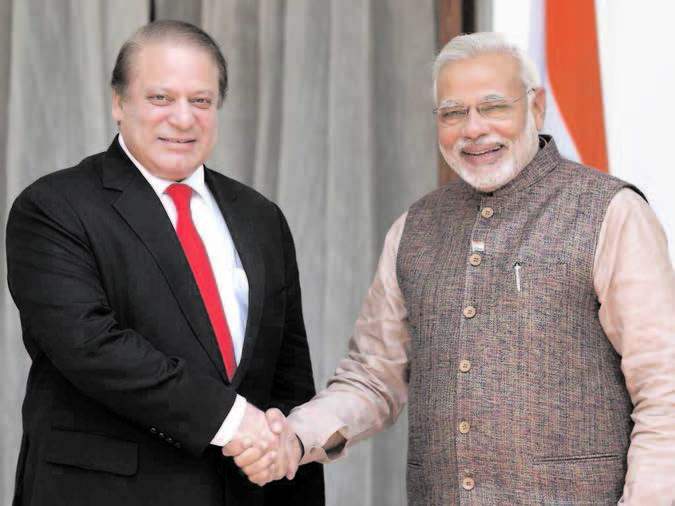
    The most important country for Pakistan is India. How? It is an adversary with which we have very poor relations. We see each other as major threats. We cannot even sustain a dialogue. We have a far warmer, more trustworthy and strategic relationship with China. We have a less warm but equally important relationship with the United States.

    So how is India so important? We have 80 per cent of our population in proximity with it. Indian forces are deployed against us. A dangerous neighbour is more important than a friendly one. If Pakistan is to develop it will need a peaceful neighbourhood. Our relations with India determine our input in Afghanistan.

    To improve relations with India shall we have to accept its hegemony?Abandon our support for the people of Kashmir? Or downgrade our relations with China? Certainly not! But we shall need to implement rational and realistic India and Kashmir policies, while deepening our relations with China and improving mutual understanding with the US.

    We need to transform Pakistan from a state of chaos and dysfunction to a modern and participatory development state governed by law and accountable and effective institutions. Policies and priorities that are inconsistent with this transformation will be self-defeating.

    Those inclined towards confrontation with India, no matter what the social and diplomatic costs, are no friends of the people. A security state will ultimately minimise security and maximise risk. Only a functioning and inclusive state can maximise Pakistan’s options, raise its international standing and ensure its views are taken seriously in the main capitals of the world.

    The Prime Minister talks about prioritising relations with India. But he is yet to develop credibility for his stance. Of course, we can blame India. It is not interested in any serious dialogue on Kashmir except on the basis of the territorial status quo. The US has no interest in pressing India for a compromise settlement with Pakistan. According to an American analyst, “The US sees Pakistan through an Af-Pak prism while it sees India through an Asia-Pacific prism. It does not see anything through an Indo-Pak prism”.

    We were within touching distance of an interim agreement with India on Kashmir during the 2004-7 back-channel talks. The Mumbai bombings of 2008 intervened. Can and should these talks be revived? There are a variety of views. Some regard them as a national betrayal. Others consider them as the only way forward towards a just and mutually acceptable settlement.

    We need to develop a realistic public consensus on what our strategies on Kashmir and policies towards India should be. They should be part of a national vision that includes space for initiatives towards India even when they seem premature and unlikely to be immediately reciprocated. Indian obduracy and Pakistani impatience will, however, need to be moderated for mutual trust to develop and longer-term and broad-spectrum progress to become feasible.

    For this we shall need a Prime Minister prepared to take on powerful lobbies and vested interests, and to systematically and effectively communicate his vision and strategies to the people. Given that the current incumbent has surrendered much of his authority in order to stay in office, it is not clear whether he can be persuaded to implement his own preferred India policies.

    If he shies away from making the effort he will inevitably lose credibility at home and abroad. His personal policy inclinations will be irrelevant. In that event, Narendra Modi may consider Ashraf Ghani’s example of preferring to deal with the real rather than the formal chief executive in Pakistan.

    There are other issues on the India-Pakistan agenda that have their own history and dynamic. But they all unfold within the general state of the bilateral relationship. Accordingly, so-called “low hanging fruit” (relatively easier to resolve issues) have in recent years become more difficult. The bilateral agenda, moreover, needs to be expanded to include more regional and environmental issues such as an Afghanistan settlement, water and energy as well as security and development. Longer term perspectives have become indispensable.

    Given the requisite commitment and leadership on both sides there is no India-Pakistan issue on which progress cannot be made. Under no circumstances can conflict, confrontation or tension with India benefit Pakistan, except in response to Indian threats and aggression. Nor can such policies ever politically benefit the Kashmiris. Moreover, it is our duty to ensure that our policies do not worsen their already terrible human rights situation.

    Conversely, India cannot benefit from unilaterally provoking a nuclear-armed Pakistan beyond its tolerance. India is territorially the satisfied or status quo power. It may seek to undermine Pakistan’s ability to obstruct its regional and big power ambitions. It does not need war. Ironically, Indian aspirations have been facilitated by our own irrational and irresponsible policies.

    China has a number of long-standing issues with its neighbours and with the US. It will not allow “red lines” to be crossed. Neither will it permit any issue to derail its comprehensive internal development and national transformation policies. These require a peaceful neighbourhood and a facilitating external environment. We need to take a page out of our great neighbour’s policy playbook.

    But without a fundamental vision of human development and a national transformation strategy, the mere presentation of possible initiatives will not address our perennial problem. We will continue to fail the challenge of India-Pakistan relations in the 21st century and pay the higher price. Accordingly, India represents not just a policy challenge for us; it also represents a test of our sincerity towards our own people. We have, instead, preferred to posture and deny our people their right to a better life. Ta ba kay?

  • AFGHAN TALIBAN TO MEET US OFFICIALS FOR PEACE TALKS IN QATAR: SOURCES

    KANDAHAR, AFGHANISTAN (TIP): Taliban representatives are to meet US officials in Qatar for possible peace talks on Afghanistan, sources from the militant group told AFP on february 19.

    There have been several fruitless attempts at dialogue in recent years between the Taliban and the United States, the Kabul government’s chief supporter, aimed at ending the 13-year conflict in Afghanistan.

  • Pakistan’s new military courts prepare to launch the first terrorist hearings

    Pakistani lawmakers have voted to try terror suspects in military courts in a bid to tackle insurgents after last month’s school massacre. But legal experts suggest this could become a reason for concern.

    As Pakistan’s new military courts prepare to launch the first terrorist hearings, new questions emerge for US-India relations over how to press Pakistan for the trials of anti-Indian terrorists.

    As the US continues to bolster relations with India, the Obama administration faces pressure to heighten its push for a Pakistani crackdown on groups like Lashkar-e-Taiba (LeT), which is believed to have carried out the 2008 attacks in Mumbai that killed 166 people, Jaish-e-Mohammed (JeM), which has focused attacks on the Jammu and Kashmir state, and the Haqqani Network, which bombed the Indian Embassy in Afghanistan in 2008 killing 58 people.


    These groups have traditionally been protected by Pakistan, but US Secretary of State John Kerry said he reached a “strong consensus” with Pakistani leaders during a recent visit to Islamabad. Kerry said they agreed to combat “all forms of terrorism,” indicating that groups such as Let, JeM, and the Haqqani Network would be subject to a similar military crackdown by the Pakistani military that up until now has largely focused on Taliban factions in the country, known as Tehrik-i-Taliban Pakistan (TTP).

    But Bruce Riedel, who served for 30 years in the Central Intelligence Agency and has been a senior advisor to the last four US presidents on South Asia and Middle Eastern affairs, said that he doesn’t expect Pakistan’s military courts to take on LeT. Riedel added that any concerted US push for Pakistan to do so will likely be ineffective, saying that LeT enjoys the protection of the country’s military. “The US has put lots of pressure on Pakistan to no avail,” said Riedel in an e-mail.


  • Senate confirms Ashton B. Carter as secretary of defense

    Senate confirms Ashton B. Carter as secretary of defense

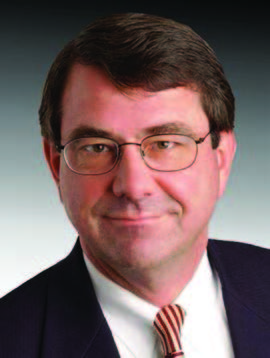
    WASHINGTON (TIP): Ashton B. Carter, a physicist with long experience in national security circles, handily won Senate confirmation Thursday, February 12, as secretary of defense, becoming President Obama’s fourth pick in six years to lead the Pentagon.

    The Senate voted 93 to 5 to approve Carter’s nomination, paving the way for him to be sworn into office sometime in the next few days.

    Voting against him were five Republicans senators: Roy Blunt (Mo.), Mike Crapo (Idaho), Mark Kirk (Ill.), James E. Risch (Idaho) and John Boozman (Ark.).

    Carter, 60, will replace Chuck Hagel, the former Republican senator from Nebraska who agreed in November to step down after Obama lost confidence in his leadership. The White House has said it wanted a new Pentagon chief to oversee the fight against the Islamic State in Syria and Iraq, as well as the continued drawdown of U.S. troops from Afghanistan.

    “With his decades of experience, Ash will help keep our military strong as we continue the fight against terrorist networks, modernize our alliances, and invest in new capabilities to keep our armed forces prepared for long-term threats,” said Obama in a statement.

    A Rhodes scholar with eclectic interests – he wrote an undergraduate thesis at Yale on the Latin writings of 12th-century Flemish monks – Carter will return to the Pentagon just 14 months after he resigned as deputy secretary of defense. He previously served as the Pentagon’s chief weapons buyer and also as a senior defense official during the Clinton administration.

    During testimony before the Senate Armed Services Committee last week, Carter pledged to keep an independent voice and demonstrated a willingness to differ with the White House. For example, he said he was “inclined” to support arms deliveries to Ukraine and that he would be open to reviewing the timetable for withdrawing troops from Afghanistan.

    Sen. Jack Reed (D-R.I.), said Carter would have to focus on existing problems such as the fighting in Ukraine, Syria, Iraq and Afghanistan but also longer-term challenges such as China’s military buildup.

    Even more daunting crises, he added, could emerge in the near future. For example, if negotiations with Iran over its nuclear program fail this year, he noted, “the consequences could alter the face of the region for generations and generations to come.”

    Sen. John McCain (R-Ariz.), the committee chairman, praised Carter on Thursday as a “committed public servant” who has drawn bipartisan support. But he questioned how much sway he would have with the White House.

    “When it comes to much of our national security policy, I must candidly express concern about the task that awaits Dr. Carter and the limited influence he may have,” McCain said. He said he had “sincere hope, but sadly little confidence, that the president who nominated Dr. Carter will empower him to lead and contribute to the fullest extent of his abilities.”

  • TALIBAN SUICIDE ATTACKERS ASSAULT AFGHAN POLICE STATION

    KABUL (TIP): Taliban suicide attackers assaulted an Afghan police station February 10, killing one officer as a separate roadside bombing targeted a prominent female politician in the country’s east, authorities said.

    The attack on a police headquarters in Afghanistan’s northern Kunduz province saw insurgents first detonate a suicide car bomb followed by a suicide bomber on foot, Interior Ministry spokesman Sediq Sediqqi said. Three more gunmen attacked following the bombings and died in a shootout with police, Sediqqi said.

    A statement from President Ashraf Ghani condemned the attack, saying it killed one police officer.

    Taliban spokesman Zabihullah Mujahid claimed the attack in a message on Twitter.

    Meanwhile, the roadside bomb in Jalalabad near a school exploded as Angeza Shinwari, a Nangarhar province councilwoman, drove past. The blast killed her driver and severely wounded Shinwari and another person, said Ahmad Zia Abdulzai, a spokesman for the provincial governor.

    No group immediately claimed responsibility for that attack.

    Taliban insurgents have stepped up their attacks on Afghan soldiers and police in recent months. US and NATO forces formally ended their combat mission at the end of last year, leaving Afghan security forces in charge of public safety in the country.

  • Taliban attack on checkpoint in Kandahar kills 5 Afghan policemen

    Taliban attack on checkpoint in Kandahar kills 5 Afghan policemen

    KABUL, AFGHANISTAN (TIP): An Afghan official has confirmed that an attack on a police checkpoint in the southern province of Kandahar has killed five policemen. The Taliban have claimed responsibility for the attack. Zia Durani, the spokesman for the provincial police chief, says the attack happened late on Sunday in Maiwand district and that an investigation is underway.


    Durani says there are indications one or more of the attackers wore a police uniform.


    Taliban spokesman Qari Yousaf Ahmadi claimed responsibility for the attack in a message to the media. The Taliban have stepped up their attacks on Afghan soldiers and security forces in recent months. U.S. and NATO forces concluded their combat mission at the end of last year and Afghan troops took full charge of the country’s security.

  • ISIS EXPANDING ‘INTERNATIONAL FOOTPRINT’

    ISIS EXPANDING ‘INTERNATIONAL FOOTPRINT’

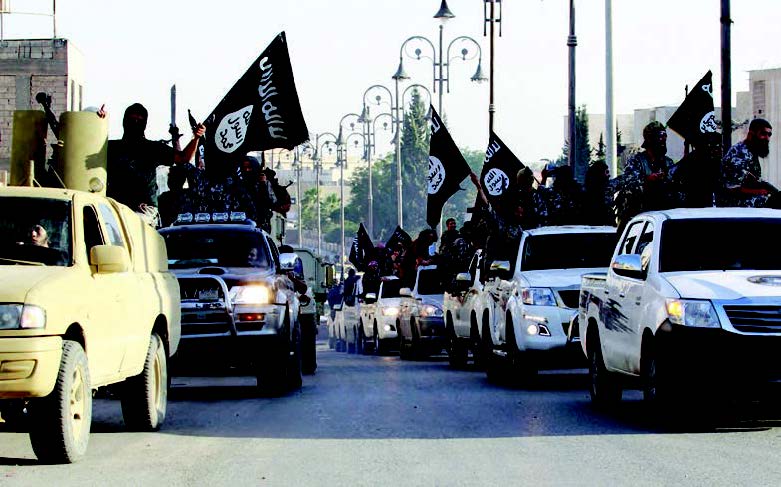
    The Islamic State, despite being driven by Kurdish fighters from its one-time Syrian stronghold in Kobani last week, nevertheless is extending its reach well beyond Iraq and Syria, military officials and analysts warn — represented, by some estimates, in nearly a dozen countries.

     ISIS History

    The Islamic State, despite being driven by Kurdish fighters from its one-time Syrian stronghold in Kobani last week, nevertheless is extending its reach well beyond Iraq and Syria, military officials and analysts warn — represented, by some estimates, in nearly a dozen countries.


    Lt. Gen. Vincent Stewart, director of the US Defense Intelligence Agency, delivered a grim assessment earlier this week in testimony to the House Armed Services Committee, as he described how the group was surfacing in North Africa.


    “With affiliates in Algeria, Egypt, Libya, the group is beginning to assemble a growing international footprint that includes ungoverned and under governed areas,” Stewart said.


    ISIS continues to hold a wide swath of territory, bigger than the state of Pennsylvania, in its home base spanning parts of Iraq and Syria, propped up by more than 20,000 foreign fighters from at least three dozen countries. But the terror network’s tentacles, as Stewart indicated, are creeping into other nations; largely those with fragile governments.


    “ISIS, like Al Qaeda, has thrived in the failed states where there is a vacuum of power,” said James Phillips, Middle East senior research fellow with the Heritage Foundation.


    A key worry is the group’s potential ambitions in Afghanistan, where the U.S. combat mission just ended and Afghan security forces are in control.


    Defense secretary nominee Ashton Carter, who had his confirmation hearing Wednesday, told Congress he is aware of reports that ISIS may try to expand into Afghanistan, and vowed to work with coalition partners to stop the group. He said he would consider changing plans for withdrawing the remaining 10,600 U.S. troops from Afghanistan by the end of 2016 if security conditions further deteriorate.


    The Islamic State’s ambitions do not stop at Afghanistan, the so-called Graveyard of Empires. Militant groups in Pakistan, the Philippines, Israel and the Gaza Strip, Lebanon, Indonesia and Jordan, among other areas, reportedly have pledged formal support for ISIS. New York Magazine, in a recent report, wrote, “Think of them as ISIS’s self-appointed foreign bases.”


    It’s impossible to know precisely how many members are involved in these groups, but analysts say the biggest groups generally are still affiliated with Al Qaeda, while others are starting to stand with ISIS – and execute attacks.


    An ISIS-tied group in Egypt, for instance, claimed responsibility for a series of coordinated attacks on Jan. 30 that killed at least two dozen security officers in restive Sinai.


    The Caliphate Soldiers Group in Algeria, which pledged loyalty to ISIS in September, kidnapped and beheaded a French tourist the same month. Terrorists posted a video of the beheading, saying it was in response to French airstrikes in Iraq. Algerian Special Forces killed the terror leader late last year, which analysts say dealt a morale blow to the small group.


    In Libya, the Islamic State’s Tripoli Province took credit for a hotel attack on Feb. 1 which killed nine people, including an American.


    Published reports tie other groups to ISIS including The Jundallah militant group and the Tehreek-e-Khilafat groups in Pakistan; the Philippines’ Abu Sayyaf group; Sinai Province in Egypt; Lebanon’s The Free Sunnis of Baalbek Brigade; Indonesia’s Jama’ah Ansharut Tauhid; and Sons of the Call for Tawhid and Jihad in Jordan.


    The Heritage Foundation’s Phillips said it’s not just groups like these that have declared loyalty. “There are an unknown number of self-radicalized militants in many different countries that may self-identify with ISIS and carry out ‘lone wolf ’ terrorist attacks in its name, without necessarily being members of the group,” he said. He cited the hostage crisis in Sydney, Australia, last December as an example.


    ISIS continues to get pounded by coalition airstrikes in Iraq and Syria, where Kurdish forces recently took back the vital city of Kobani. Those strikes are likely to increase following the brutal execution of a captured Jordanian pilot (though the coalition is down a member, with the United Arab Emirates having suspended airstrikes after the pilot’s capture in December.)


    Phillips said the purpose of the group’s grisly propaganda videos – including of the Jordanian pilot being burned alive in a cage — is to change the subject, from recent setbacks in Kobani as well as some areas in Iraq, through “jihadist pornography.” He said the point is to show the group as an
    “invincible army,” psychologically attractive to European teenagers who might join the fight.


    Raymond Stock, a Shillman-Ginsburg writing fellow at the Middle East Forum, argued the message carries more weight with Muslims worldwide than most realize. He told Fox News the propaganda videos are “so well-produced and so well-targeted –extremely effective. We have nothing counteracting that.”


    Stock, who spent 20 years living in Egypt, sees the group’s ambitions as limitless and argues it is a mistake to believe the Islamic State is an organization seeking to control limited territory.


    He also suggested Al Qaeda and ISIS are not necessarily direct competitors. He cited an Arabic proverb, which he translates as: “Me and my brother against my cousin; me and my cousin against the outsider.”


    In Senate Armed Services Committee confirmation hearing for defense secretary, Sen. John McCain, R-Ariz., pressed Carter on the need to have a strategy against ISIS.


    “I believe I understand our strategy at this time,” Carter explained. “I also have the intention, again if confirmed, to make it my first priority to go there, to talk to our military leaders there, to confer with you …I think a strategy connects ends and means, and our ends with respect to ISIL needs to be its lasting defeat.”


    McCain retorted: “Well, it doesn’t sound like a strategy to me, but maybe we can flesh out your goals.”


    (Source: AP)

  • AF TALIBAN NOT A TERROR GROUP: WHITE HOUSE

    AF TALIBAN NOT A TERROR GROUP: WHITE HOUSE

    WASHINGTON (TIP): The US does not consider the Afghan Taliban as a terrorist outfit, describing it as “an armed insurgency”. It called the Islamic State as a “terrorist” group, drawing a controversial distinction between the two outfits.


    “The Taliban is an armed insurgency. ISIL (Islamic State of Iraq and Levant) is a terrorist group. So we don’t make concessions to terrorist groups,” White House deputy press secretary Eric Schultz told reporters on January 28.


    When asked for a second time whether the Taliban is a terrorist group, he replied, “I don’t think that the Taliban, —the Taliban is an armed insurgency.” 


    Asked whether the Jordanian government’s decision to swap prisoner with the ISIL was similar to the US trading five Taliban members for Army Sgt. Bowe Bergdahl, he said, “As you know, this was highly discussed at the time and prisoner swaps are a traditional end-of-conflict interaction that happens.” 


    “As the war in Afghanistan wound down, we felt like it was the appropriate thing to do. The president’s bedrock commitment as commander in chief is to leave no man or woman behind. That is the principle he was operating under,” the White House press secretary said.


    “This was the winding down of the war in Afghanistan and that’s why this arrangement was dealt,” Schultz added, referring to the prisoner swap deal with the Taliban brokered through Qatar.


    Though the US state department has not designated the Afghan Taliban as a foreign terrorist organization, it has designated its two allies — the Tehreek-e-Taliban Pakistan and the Haqqani Network.


    The US is offering up to US $10 million for information leading to the capture of Afghan Taliban leader Mullah Omar. ISIL or ISIS (or IS) is an al-Qaida splinter group and it has seized hundreds of square miles in Iraq and Syria, declaring an Islamic caliphate.

  • US SAYS TALIBAN ‘ARMED INSURGENCY’, ISIS ‘TERRORIST’ GROUP

    US SAYS TALIBAN ‘ARMED INSURGENCY’, ISIS ‘TERRORIST’ GROUP

    WASHINGTON (TIP): The United States has described the Afghan Taliban as “an armed insurgency”, while the Islamic State as a “terrorist” group, drawing a controversial distinction between the two militant organizsations.


    “The Taliban is an armed insurgency. ISIS or ISIL (Islamic State of Iraq and Levant) is a terrorist group. So we don’t make concessions to terrorist groups,” White House deputy press secretary Eric Schultz told reporters in response to questions at the daily press briefing on January 28.


    Asked whether the Jordanian government’s decision to swap prisoner with the ISIS was similar to the US trading five Taliban members for Army Sgt. Bowe Bergdahl, he said, “As you know, this was highly discussed at the time and prisoner swaps are a traditional end-of-conflict interaction that happens.” 


    “As the war in Afghanistan wound down, we felt like it was the appropriate thing to do. The president’s bedrock commitment as commander in chief is to leave no man or woman behind. That s the principle he was operating under,” he said.


    When asked for a second time whether the Taliban is a terrorist group, Schultz replied, “I don’t think that the Taliban, – the Taliban is an armed insurgency.”


    “This was the winding down of the war in Afghanistan and that’s why this arrangement was dealt,” he added, referring to the prisoner swap deal with Taliban brokered through Qatar.


    Though the US State Department has not designated the Afghan Taliban as a Foreign Terrorist Organisation, it has designated its allies – the Tehreek-e-Taliban Pakistan and the Haqqani Network.


    The US is offering up to $10 million for information leading to the capture of Afghan Taliban leader Mullah Omar.


    ISIS is an al-Qaida splinter group and it has seized hundreds of square miles in Iraq and Syria, declaring an Islamic Caliphate.

  • INDIA’S RELATIONS WITH THE US MUST NOT BE ONE-SIDED

    INDIA’S RELATIONS WITH THE US MUST NOT BE ONE-SIDED

    ‘It is in the interest of both sides that the visit is seen as being successful. Both sides have invested considerable political capital in it…….This rapid exchange of visits and the decisions taken have to be justified, beyond the symbolism, which is no doubt important in itself. This opportunity to impart a fresh momentum to ties should not be missed………. What we need is a pragmatic approach by both sides. On the side this is assured by Modi. He has shown that he is essentially pragmatic. The only principle he is attached to is India First”, says the author. 


    Prime Minister Narendra Modi’s ready acceptance of United States President Barack Obama’s invitation to visit Washington in September 2014 came as a surprise against the background of the visa denial humiliation heaped on him for nine years.


    Modi’s invitation to Obama to visit India as chief guest at our 2015 Republic day celebrations came as an equal surprise, as did Obama’s acceptance at such short notice.


    The messaging from both sides is clear. Modi wants to give a fresh impetus to the India-US relationship, seen as languishing for some time now. Obama has conveyed that he is ready to respond.


    Now that Obama is coming and the two sides want to reinvigorate the relationship, the outcome of the visit will be watched closely not only in India and the US, but internationally too.


    To look ahead, we should look backwards a little bit so that the potential for the future can be seen through a better understanding of the past.


    There are no instant solutions to the issues in India-US relations. The US demands in many cases require policy, legislative and administrative responses by India, not to mention care by us that a balance in our external relations is maintained.


    Obama had said during his visit to India in 2009 that he saw the India-US relations as potentially a ‘defining partnership of the 21st century.’ It is very hard to define what a defining partnership is, but what he meant presumably is that relations between the oldest and the largest democracy, between the world’s foremost economic power and, in time, the third biggest economy will define the contours of international relations in the decades ahead.


    Our leaders say that India and the US are natural partners. This is not borne out objectively by the history of the relationship, the differences that currently exist on a whole host of issues and the inherently unequal nature of the relationship.


    The US is the world’s only superpower with global interests whose contradictory pulls and pressures they have to manage even in our region, and we are not even a credible regional power yet.


    If the argument is that it is the shared values of democracy, pluralism and respect for human rights make us natural partners, then the US relationship with Pakistan and China — often at our cost — which are not democracies, has to be explained. US interests often take precedence over its declared values.


    Even if rhetoric does not measure up to realities, the fact remains that improvement of India-US ties has been the most important development in India’s external relations in the last decade.


    It is the 2005 nuclear deal that opened the doors to a transformative change in bilateral ties. Reflecting the new intensity of bilateral engagement, about 28 dialogues were set up between the two sides covering the fields of energy, health, education, development, S&T, trade, defence, counter-terrorism, nonproliferation, high technology, innovation etc.


    The US now supports India’s permanent membership of the UN Security Council in principle. It is backing India’s membership of the four international export control organisations — the Nuclear Suppliers Group, the Missile Technology Control Regime, the Wassenaar Arrangement and the Australia Group.


    Trade in goods and services between the two countries has grown to almost $100 billion (about Rs 620,000 crore).


    A big breakthrough has been made in defence. In the last five or six years the US has bagged defence orders worth about $10 billion (about Rs 62,000 crore). These include C-130, C-17 and P-80 I aircraft and heavy lift, attack and VIP helicopters. The US has emerged as the biggest supplier of arms to India in this period.


    The US has proposed joint manufacture of several defence items in India under its Defence Trade and Technology Initiative. While India has overcome its mistrust of the US and fears that at critical moments the US may cut off spares for its equipment as part of its liberally used sanctions instrument, India has been reticent in its response to the DTTI, possibly because it is still not convinced that the US will transfer the technologies that India would want or not tag unacceptable conditions to it.


    The US proposed at one time three ‘foundational’ agreements covering the areas of logistics, interoperability and access to high technology equipment, but India has been cautious, presumably because it was concerned about slipping into the US defence orbit and losing its autonomy.


    To balance this, India and the US have been conducting a large number of military exercises, far more than with any other country. The naval exercises in the Indian Ocean to protect the sea lanes of communication are particularly important because of their geopolitical implications. Trilateral India-US-Japan naval exercises have obvious significance.


    In Obama’s second term, however, the ties lost momentum for various reasons. Economic reforms in India slowed down, its growth rates fell, India was seen as reluctant to deepen the strategic partnership, it was lukewarm to the US pivot towards Asia, US nuclear firms saw their business opportunities in India blocked because of our Nuclear Liability Act, major US corporations began campaigning against India’s trade, investment and intellectual property rights policies in the US Congress and instigated investigations into them by the US International Trade Commission and the US Trade Representative.


    The US began criticising India for being a fence sitter, a free-loader on the international system because of its reluctance to uphold it even at the cost of its interests as other Western powers were supposedly doing. This was the sense of the ‘burden sharing’ demand of the US.


    India had its own complaints against the US regarding the implications of the new US immigration legislation for India’s IT industry, the movement of its professionals, the increase in cost of H1B and L1 visas, the totalisation agreement and outsourcing.


    During his Washington visit, Modi struck an unexpectedly good rapport with Obama who accompanied him personally to the Martin Luther King Jr Memorial and later in Myanmar described him as a ‘man of action.’


    Modi clearly signalled during the visit that he intends to reinvigorate bilateral ties and that he views them as vital for his development agenda at home.


    The joint press conference by the two leaders and their joint statement set an ambitious agenda, with many positives, if all goes according to plan.


    The two leaders agreed to increase the bilateral trade five-fold to $500 billion (about Rs 36 lakh crore).


    Modi asked publicly for more openness and ease of access to the US market for Indian IT companies, even if Obama failed to give any response.


    In order to raise investment by institutional investors and corporate entities, it was agreed to establish an Indo-US Investment Initiative led by India’s finance ministry and the US department of treasury, with special focus on capital market development and financing of infrastructure.


    It was also agreed to establish an Infrastructure Collaboration Platform convened by the ministry of finance and the US department of commerce to enhance participation of US companies in infrastructure projects in India.


    Modi invited the US to send two trade missions to India in 2015 focused on India’s infrastructure needs with US technology and services.


    It was decided to activate the Trade Policy Forum that had not been convened for a long time. An empowered annual working group was approved for addressing IPR issues and it was agreed to set up a contact group for implementing the India-US civil nuclear deal.


    US involvement was sought in the railways sector and in smart city projects (Ajmer, Visakhapatnam and Allahabad).


    It was also agreed that USAID will serve as knowledge partner to support Modi’s 500 Cities National Urban Development Mission and Clean India Campaign.


    Obama offered to reinvigorate the higher education dialogue, which has languished. He welcomed India’s proposal to establish the Global Initiative of Academic Networks under which India would invite and host up to 1,000 American academics each year to teach in centrally-recognised Indian universities, at their convenience.


    The decisions and understandings reflected in the joint statement on the energy front are potentially problematic as they could give the US more handle to put pressure on India on climate change issues.


    Both leaders expressed their commitment to work towards a successful outcome in Paris in 2015 of the conference of the UN Framework Convention on Climate Change, including the creation of a new global agreement on climate change.


    The two leaders, in recognition of the critical importance of reducing greenhouse gas emissions and improving resilience in the face of climate change, agreed to ‘a new and enhanced strategic partnership’ on energy security, clean energy, and climate change, to further which a new US-India Climate Fellowship Programme to build long-term capacity to address climate change-related issues in both countries was launched.


    A MoU was concluded between the Export-Import Bank and the Indian Renewable Energy Development Agency, which would make up to $1 billion (about Rs 6,200 core) in financing available to bolster India’s transition to a low-carbon and climate-resilient energy economy, while boosting US renewable energy exports to India.


    Modi and Obama stated their intention to expand defence cooperation to bolster national, regional, and global security. This broad-based formulation has important geopolitical implications. They agreed to renew for ten more years the 2005 Framework for the US-India Defence Relationship with plans for more ambitious programs and activities.


    They welcomed the first meeting under the framework of the DTTI in September 2014 and its decision to establish a task force to expeditiously evaluate and decide on unique projects and technologies for enhancing India’s defence industry and military capabilities.


    To intensify cooperation in maritime security, the two sides considered enhancing technology partnerships for India’s Navy, besides upgrading their existing bilateral exercise Malabar.


    They committed to pursue provision of US-made mine-resistanta ambush-protected vehicles to India.


    On terrorism, they stressed the need for dismantling of safe havens for terrorist and criminal networks, to disrupt all financial and tactical support for networks such as Al Qaeda, Lashkar-e-Tayiba, Jaish-e-Mohammad, the D-Company, and the Haqqani Network.


    The two countries also expressed the intention to start a new dialogue on space situational awareness.


    Obama affirmed that India met MTCR requirements and was ready for NSG membership. Noting India’s ‘Act East’ policy and the United States’ rebalance to Asia, the leaders committed to work more closely with other Asia Pacific countries through consultations, dialogues, and joint exercises. They underlined the importance of their trilateral dialogue with Japan and decided to explore holding this dialogue among their foreign ministers.


    Modi spoke of great convergence on the issue of peace and stability in Asia-Pacific and more joint exercises with Asia-Pacific countries.


    Very significantly, he stated that the US was intrinsic to India’s Look East and Link West policies, according thus a central role for the US in India’s foreign policy.


    They agreed to continue close consultations and cooperation in support of Afghanistan’s future.


    The principal points agreed during Modi’s visit will serve as a guide to what can be realistically achieved during Obama’s visit. To assess that, we should take into account some limitations and negatives that mark the India-US relationship.


    Already, what was agreed to is mostly not capable of quick implementation or rapid results. These are largely medium term objectives and not always clear in implications. In the course of implementation, many issues will provoke internal political debates, will require detailed processing and negotiations, parliamentary approval and intensive diplomatic effort on the international front by both parties. In some cases real differences have been glossed over by use of diplomatic language.


    On IPR issues it will not be easy to reconcile US demands on IPRs and our position that our IPR policies are in conformity with the World Trade Organisation’s Trade-Related Aspects of Intellectual Property Rights agreement. Legal issues involving our courts are involved.


    The USTR decided to put unilateral pressure on India by investigating India’s IPR policies under Section 301, but this has been halted in November 2014 in view of some forward looking announcements by the Modi government. The USTR’s ‘cautiously optimistic’ statements during his Delhi visit in November suggest that the US will wait and watch what the Modi government actually delivers.


    The US Congress has extended the investigation of India’s investment, trade and IPR policies by the USITC by another year.


    On climate change issues, under cover of its ‘political’ agreement with China, the US seems determined to put pressure on India to agree to some reduction commitments. In actual fact, this is political pressure unrelated to the merits of India’s case. Climate change is a multilateral issue, but the US is making it a bilateral one, with the commercial interests of its companies in mind.


    While the US claims that what it is offering under the DTTI has the green light from all those in the US who control technology exports, it can be doubted whether the US will be as liberal in transfer of technologies as it would have us believe. The US record in this regard with even its allies and partners is not inspiring.


    The US has shown no activism in pushing for India’s membership of NSG or MTCR as a start. It is to be hoped that it is not looking


    for a resolution of the nuclear liability issue and the finalisation of the vexed question of ‘administrative arrangements’ that is needed to complete the India-US nuclear deal before


    it does the heavy lifting again to promote India’s membership of the cartels in question.


    Surprisingly, the list of terror organisations against whom US and India have agreed to work together excludes the Taliban, pointing to a crucial difference between the two countries on the issue of accommodating this extremist force with its close Pakistani links into the power structure in Afghanistan.


    In reaching out to the Taliban the US gives priority to orderly withdrawal of its forces from Afghanistan, treating India’s concerns as secondary. The language on Afghanistan in the Modi-Obama joint statement in Washington was remarkably perfunctory.


    Worse, the US wants to retain complete freedom of action in dealing with Pakistan, irrespective of India’s concerns about its continuing military aid to that country. General Raheel Sharif, the Pakistani army chief, was accorded high level treatment during his recent visit to the US, meeting Secretary John Kerry who indirectly endorsed the role of the Pakistani army in nation building and politics by terming it as a truly binding force.


    It is worth recalling that after accepting the invitation to visit India, Obama felt diplomatically obliged to phone Premier Nawaz Sharif to say he could not visit Pakistan now and would do so later.


    The US involvement in developing our inadequate infrastructure — our ports, airports, railways highways etc — seems unrealistic as its companies are hardly likely stand up to international competition in India.


    As regards our nuclear liability legislation, it appears that the US government may be moving away from its fundamentalist position that supplier liability cannot be accepted and may be open to some practical solution to the issue in terms of limiting the liability in time and costs. The lawyers at Westinghouse and General Electric will, of course, have to be convinced.


    This is a highly charged issue politically and it is doubtful whether the decks can be cleared before Obama’s visit. The larger question of the economic viability of US-supplied nuclear power plants remains, not to mention the fact that GE does not have as yet a certified reactor.


    Work on a bilateral investment treaty will take time It appears that our side wants to be able to announce a couple of projects under the DTTI during Obama’s visit. In this connection anti-tank missiles, naval guns, pilotless aircraft and magnetic catapult for our aircraft carrier are being mentioned as possibilities.


    The US would want at least one project to be announced. Defence Minister Manohar Parrikar has let it be known publicly that US proposals are being seriously examined.


    The announcement of a more ambitious Defence Cooperation Framework Agreement valid for another 10 years is a certainty.


    The government’s decision on the GST, raising the FDI ceiling in insurance, the amendment to the land acquisition law are advance signals of its commitment to reform and attracting FDI, which is a positive from the US point of view.


    The emphasis on Make in India and developing India’s manufacturing sector, coupled with a commitment to ease doing business in India, have begun to change investor sentiment towards India, and this creates a better atmosphere for Obama’s visit.


    It is in the interest of both sides that the US President’s visit is seen as being successful. Both sides have invested considerable political capital in it.


    This rapid exchange of visits between the two leaders, leaving little time to process the decisions taken in Washington in September, has to be justified, beyond the symbolism, which is no doubt important in itself. This opportunity to impart a fresh momentum to ties should not be missed.


    But there is need also to be clear-headed about the relationship that is not easy to manage given US power, expectations, impatience and constant endeavour to do things the way it wants.


    It is a bit disturbing that an atmosphere has been created in which the focus is on what we can do for the US and Obama and not what the US must do to meet our needs and concerns. The agenda has become one-sided.


    The US should not expect India to support all its demands and polices, however questionable. India does not have to prove it is a responsible country by supporting even irresponsible US policies. Of course, India too should not expect the US to always adjust its policies to suit us.


    What we need is a pragmatic approach by both sides. On the side this is assured by Modi. He has shown that he is essentially pragmatic. The only principle he is attached to is India First.


    (By Kanwal Sibal who is a former Foreign Secretary of India)
    (British English)

  • TOO MANY HOLES IN 2015 ODI WORLD CUP FORMAT

    TOO MANY HOLES IN 2015 ODI WORLD CUP FORMAT

    NEW DELHI (TIP): A close look at the format of the 2015 ODI World Cup shows a series of lacunae. Much of the tournament will be played for largely inconsequential games. That apart, the teams playing the last group games will enjoy unfair advantage over their rivals.

    Here’s a more detailed analysis of the format:.
    How and why the pool stage is of little importance

    The teams are divided into two groups of seven countries each. In Pool A, there’s Australia, England, Sri Lanka, New Zealand, Bangladesh, Afghanistan and Scotland. In Pool B, we have South Africa, India, Pakistan, West Indies, Zimbabwe, Ireland and UAE. All teams play each other in their respective groups. Four teams from both pools proceed to the quarters.

    Obviously, the tournament has been designed to ensure that the big guns don’t get knocked out early.

    Take India, for instance. Even if the Men in Blue lose three of the six group games to South Africa, Pakistan and West Indies, they can still qualify for the quarters by defeating the minnows: Zimbabwe, UAE and Ireland. The same is true for the other three biggies. An upset can never be ruled out in ODI cricket but can you imagine any of the four minnows totalling more points at the end of the group stage than the Big Boys?

    It’s a similar story in Pool A too. Bangladesh might pull off the odd upset butlack the muscle to finish among the top four. Few would wager a bet on Australia, England, Sri Lanka and New Zealand not making to the next stage. One wonders if the early exit of cash-cow India and Pakistan in 2007 has something to do with this format. The truth is that for the top eight teams, the real tournament begins only at the knock-out stage starting on March 18. That’s almost five weeks after the 2015 ODI World Cup commences on Feb 14. Wow!

    What’s the incentive to win a game or top the group?

    There is one motivation, though, for every team to win every match at the group stage. As per rules, “If a quarterfinal is tied, abandoned or if the match is a no result, then the team that finished in the higher position in the Pool stage shall proceed to the semifinals.” Similarly, “if a semifinal is tied, abandoned or if the match is a no result, then the team that finished higher in the Pool stage shall proceed to the final.”

    The possibility of an abandoned tie cannot be entirely ruled out. In 1992, rain played a key role in South Africa’s tragic exit. A Super Six format after the group stage, as in 1999 and 2003, could have created a far more competitive event.

    Unfair advantage to teams playing last game at the group stage

    Since all teams are not playing the last group game on the same day, it is entirely possible that those playing the last group match can plan who they are going to face. For example, Pakistan are scheduled to play the last match in Group B (Match No. 42) against Ireland. The 1992 champions will know the number of points and run rates of their rivals before they step on the field. It is possible for them to play the game accordingly and choose a rival of their choice in the next stage. At the moment, this seems to be a trivial point. On March 17, it could become a major talking point, if the points tally and run rates of top teams in Group B run close. Football has eliminated such a possibility by playing all last group games together. Cricket is yet to learn.

    The real World Cup begins only in the knock-out stage

    That’s when the first two quarterfinalists meet on March 18 in Sydney. The seven games – four quarters, two semis and one final – played over the next 12 days is all that really matters in terms of consequence. This is a format dark horses will love. The larger question, therefore, is: why such an elaborate tamasha over six weeks?

    Even the football World Cup involving 32 countries and 64 games is held over a month. Why does a World Cup involving just 14 countries and 49 games need six weeks?

  • Pak bans Hafiz’s JuD, Haqqani network

    Pak bans Hafiz’s JuD, Haqqani network

    ISLAMABAD (TIP): Within 48 hours of US secretary of state John Kerry leaving Pakistan’s shores, the government here banned 12 organizations, including the Jamaat-ud Dawa (JuD), a front for the banned Lashkar-e-Taiba, as well as the Haqqani network. India blames JuD chief Hafiz Saeed for the 2008 Mumbai attacks for which the UN had banned his organization in December 2008.

    The move is seen as part of its renewed anti-terror efforts in the wake of last month’s Peshawar school attack. The decision also comes a day after the US State Department declared Tehreek-e-Taliban Pakistan chief Mullah Fazlullah, sheltered in Afghanistan, a “specially designated global terrorist” on Islamabad’s insistence. Last year the State Department had named JuD as a “foreign terrorist organization”.

    Fazlullah had claimed responsibility for the December 16 attack on the Army Public School, Peshawar, in which 150 people, mostly children, were mowed down in cold blood.

    Amir Rana, executive director, Pakistan Institute for Peace Studies, Islamabad, said the banning of an organization means freezing of its assets, blocking of its funding sources and proper monitoring of its activities.

    “In the next move, the offices, infrastructures and networks of the proscribed groups will be banned,” he said. Pakistan was said to have taken over JuD’s educational institutions and other properties after the UN ban.

    “It’s our first step towards execution of the National Action Plan. The nation will see more positive steps towards dismantling militant groups. Both civilian and military leadership decided to ban the Haqqani Network and JuD,” The Express Tribune quoted a senior intelligence official as saying.

    While JuD continues to operate openly in Pakistan, and its leader, Hafiz Saeed, holds public rallies and often gives TV interviews, the Haqqani Network, a yesteryear friend of Pakistan’s spy agency, Inter Services Intelligence (ISI), was using the tribal region of North Waziristan as its springboard.

    The US State Department had last year named the JuD as a “foreign terrorist organization”, while India blames its leader Hafiz Saeed for the 2008 Mumbai attacks. Asif Khursheed, JuD Islamabad’s spokesperson, revealed that last week the “home department sent us a letter informing us that the Jamaat is being kept on the watch-list with some two dozen other organizations. “Jamaat-ud-Dawa is a purely welfare and charity organization and has never been involved in bad motives. Even, the Supreme Court of Pakistan has justified our stance in the past,” he told media.

    According to Amir Rana, the executive director of the Pakistan Institute for Peace Studies, the banning of an organization means freezing its assets, blocking its funding sources and proper monitoring of its activities. “In the next move, the offices, infrastructures and networks of the proscribed groups will be banned,” he reportedly said. Pakistan had banned 12 organizations days before US Secretary of State John Kerry visited Pakistan this week. With this latest addition of 12 more outfits, they the number of proscribed organizations in Pakistan has reached 72.

    Harkat-ul-Jihad Islami, the organization accused of conducting terrorist attacks in Pakistan and India is also among the newly banned groups. Its operational commander, Ilyas Kashmiri, was killed in a US drone strike in South Waziristan in 2011.

    The list also features Harkat-ul-Mujahidin, the group accused of operating in Kashmir, and Falah-e-Insaniat Foundation, a welfare wing of the JuD.

  • IMPLICATIONS OF AMERICAN WITHDRAWAL FROM AFGHANISTAN

    IMPLICATIONS OF AMERICAN WITHDRAWAL FROM AFGHANISTAN

    “The Taliban attacks within Afghanistan reached unprecedented levels in 2014. Moreover, while Washington proclaims that any process of “reconciliation” between the Taliban and the Afghan Government will be “Afghan led and Afghan driven,” the reality is that Rawalpindi will ensure that the entire “reconciliation” process will be controlled and driven by the ISI”, says the author.

    American military interventions in recent times – be these in Vietnam, Somalia, Lebanon, Libya, or Iraq -have undermined regional stability and left deep scars on the body politic of these countries. The society and the body politic of America have felt the tremors of these misadventures. The American military intervention in Afghanistan, code-named
    “Operation Enduring Freedom”, commenced in the aftermath of 9/11. Its combat role ended 13 years later on December 31, 2014. The Americans tried to win “Operation Enduring Freedom” cheaply, outsourcing many operations to the erstwhile Northern Alliance. Adversaries comprising the Mullah Omar-led Afghan Taliban, Al-Qaida, thousands of Islamic radicals from the Arab world, Chechnya, Uzbekistan, Tajikistan, China’s Xinjiang province and ISI-linked Pakistani terrorist groups escaped across the Durand Line, to safe havens under ISI protection, in Pakistan.

    The US has paid a heavy price for this folly. Some 2,200 of its soldiers were killed in combat, suffering heavy losses in the last four years after it became evident that it was pulling out. As the US was winding down its military presence and transferring combat responsibilities to the Afghan National Army (ANA), an emboldened Taliban and its Chechen, Uzbek, Uighur and Turkmen allies have emerged from their Pakistani safe havens and moved northwards. In subsequent fighting 4,600 Afghan soldiers were killed in combat in 2014 alone. The Afghan army cannot obviously afford such heavy casualties continuously, if morale is to be sustained. Its available tactical air support and air transport infrastructure are woefully inadequate. The Afghans do not have air assets which were available to the NATO forces.

    Apart from what is happening in southern Afghanistan, Taliban-affiliated groups are now increasing their activities in northern Afghanistan, along its borders with Turkmenistan, Uzbekistan, Tajikistan and China’s Xinjiang province. Afghanistan’s northern provinces like Kunduz, Faryab and Takhar have seen increased attacks by the Taliban allies, from Tajikistan, Turkmenistan and Uzbekistan. These Central Asian countries are getting increasingly concerned about the security situation along their borders. American forces are scheduled to be halved in 2015 and reduced to a token presence, just sufficient to protect American diplomatic missions by the end of 2016. Not surprisingly, President Ashraf Ghani has asked the US to review its withdrawal schedule.

    Afghanistan’s southern provinces, bordering the disputed Durand Line with Pakistan, are increasingly ungovernable. Following Gen Raheel Sharif’s assault on the Pashtuns in Pakistan’s tribal areas, over one million Pashtun tribals have fled their homes in Pakistan, with an estimated 2, 50,000 fleeing into neighboring Afghanistan. If Mullah Omar, his Taliban associates and Sirajuddin Haqqani’s terrorist outfit are finding safe havens in Pakistan, Mullah Fazlullah and his followers in the Pakistani Taliban (TTP) appear to have disappeared into the wilderness, in Afghanistan. Senator Kerry will likely secure a waiver on legislative requirements that Pakistan has stopped assistance to terrorist groups operating against Afghanistan and India, to enable the flow of American aid to Pakistan. The reality, however, is that even after the Peshawar massacre of schoolchildren, terrorist groups like the Haqqani network, Jaish e Mohammed and Lashkar e taiba receive safe haven and support in Pakistan.

    Despite professed American understanding of a “change of heart” in Islamabad and Rawalpindi, the reality remains that Mullah Omar is still leading the Afghan Taliban from a safe house in Karachi. The day-to-day conduct of operations in Afghanistan has reportedly been transferred by the ISI to one of his deputies, Mullah Akhtar Muhammad Mansour. The Taliban attacks within Afghanistan reached unprecedented levels in 2014. Moreover, while Washington proclaims that any process of
    “reconciliation” between the Taliban and the Afghan Government will be “Afghan led and Afghan driven,” the reality is that Rawalpindi will ensure that the entire
    “reconciliation” process will be controlled and driven by the ISI. China, now endorsed by the US as the new “Good Samaritan” to facilitate Afghan “reconciliation,” has maintained ISI-facilitated links with Mullah Omar’s Quetta Shura. Beijing will naturally endorse the wishes of its “all-weather friend,” Pakistan.

    Afghanistan’s Central Asian neighbors, which are members of the Shanghai Cooperation Organization (SCO), to which India was recently admitted, can expect little from this organization to deal effectively with their concerns, given the fact that China has been now joined by Pakistan as a member of the SCO. Given its growing economic woes and sanctions imposed by the US and its allies, Russia will have little choice, but to fall in line with China, though its special envoy Zamir Kabulov has expressed Moscow’s readiness to supply weapons to Kabul “when it will be necessary to supply them”. Past Russian policy has been to supply weapons to Kabul on strictly commercial terms.

    Adding to the prevailing uncertainty is the fact that Afghanistan is today ruled not by the provisions of its Constitution, but by a patchwork coalition of two formerly implacable political foes, President Ashraf Ghani and Chief Executive Abdullah Abdullah. The political gridlock in Kabul is tight. After the presidential elections, which were internationally regarded as neither free nor fair, the ruling duo, stitched together by Senator John Kerry, took months just to agree on the names of new ministers.

    India can obviously not countenance the return of an ISI-backed Taliban order in Afghanistan. The US-Afghanistan Bilateral Security Agreement envisages the possibility of a US military presence “until the end of 2024 and beyond.” Will it be realistic to expect a war-weary US and its NATO partners, now heavily focused on combating ISIL and radical groups across the Islamic world ranging from Iraq, Syria, Libya and Lebanon, to Somalia and Nigeria, to continue to bail out a politically unstable Afghanistan? Will the Americans and their allies continue providing Afghanistan adequate air support, weapons and financial assistance amounting to $5-10 billion annually?

    These are realities we cannot gloss over. A thorough review of issues like safety and security of Indian nationals and our missions in Afghanistan, access and connectivity through Iran and completion of assistance projects like Salma Dam and Afghan Parliament, has to be undertaken.

    By G Parthasarathy (The author is a career diplomat and author. He remained envoy of India to many countries, including Pakistan and was spokesperson of the Ministry of External Affairs and the Prime Minister’s Office)

  • Taliban kill 7 Afghan policemen at checkpoint

    Taliban kill 7 Afghan policemen at checkpoint

    KABUL (AFGHANISTAN (TIP)): An Afghan official says seven policemen were killed in a northern province after their checkpoint came under attack by insurgents.

    Abdul Manan Raoufi, police operational chief of Jawzjan province, says that along with the seven killed, five other policemen were wounded in the attack late Saturday in a village in the province’s Qashtepa district.

    He says police reinforcements were sent to the location and a gunbattle ensued in which five insurgents died.

    The Taliban claimed responsibility for the attack.

    The militants have been stepping up their attacks against Afghan security forces in a bid to undermine the Western-backed government as foreign combat troops prepare to withdraw from the country by the end of the month.

  • US gives Pakistan a free pass — and $1 billion — by ignoring LeT, LeJ

    US gives Pakistan a free pass — and $1 billion — by ignoring LeT, LeJ

    WASHINGTON (TIP): The United States may well have subscribed to Pakistan’s policy of “bad terrorists” (from its Afghan front, who mostly attack Pakistan and US) versus “good terrorists” (from West Punjab, who mostly attack India).

    A defence authorization bill signed by President Barack Obama last week that provides for $1 billion in aid to Pakistan in 2015 conditions it on Islamabad taking steps to disrupt the Haqqani Network and eliminating safe havens of al-Qaida and Tehrik-i-Taliban Pakistan.

    However, it makes no mention of the Punjab-centric terror groups such as the Laskar-e-Taiba (LeT) aka Jamaat-ul-Dawa (JuD), Lashkar-e-Jhangvi (LeJ) and others that are considered proxies of the Pakistani state.

    A review of the 1640-page text of S.1847, formally known as the Carl Levin and Howard P ‘Buck’ McKeon National Defense Authorization Act for Fiscal Year 2015, shows US emphasis on calling Pakistan to account for terrorist activity on its western flank, mainly through the Taliban, which impacts the US drawdown in Afghanistan.

    It makes the $1 billion US aid contingent on Pakistan taking steps that have “demonstrated a commitment to ensuring that North Waziristan does not return to being a safe haven for the Haqqani network.” It also seeks a description of any strategic security objectives that the US and Pakistan have agreed to pursue and an assessment of the effectiveness of any US security assistance to Pakistan to achieve such strategic objectives.

    But missing from the legislation is any concern, let alone any conditions, about Pakistan’s fostering of the Punjabi terror groups such as LeT that not only attacked Mumbai on 26/11 (an incident in which six Americans were also killed), but also the Lashkar-e-Jhangvi, a sectarian outfit that has killed hundreds of Pakistani Shias.

    Both groups are patronized by Pakistan’s military and political establishments, which derive their power from the country’s heartland of west Punjab, much like the terror groups themselves.

    A charitable explanation for the legislative oversight (or lack of it) maybe to take into account the broad and fleeting reference to “other militant extremist groups” in the text of the legislation. But in a remarkable coincidence, the Pakistan establishment began freeing its so-called “good terrorists” from Punjab even as President Obama signed the defense authorization bill on December 19. The easing up also followed the Pakistani army chief Gen Raheel Sharif’s visit to Washington DC last month.

    In a series of moves demonstrating the Pakistani establishment was easing up on its own terrorist proxies in return for acting on US concerns, the Pakistani courts first released 26/11 planner Zaki-ur Lakhvi from prison, temporarily holding him back following Indian outrage; Islamabad then dawdled over filing replies in court in the case against JuD chief Hafiz Mohammad Saeed and his deputy Hafiz Abdur Rehman Makki, saying it is yet to get response to its questions from the US; most recently, it released LeJ head Malik Ishaq, who is accused of scores of sectarian murders inside Pakistan, before extending his incarceration for two weeks following outrage within Pakistan.

  • Why this massacre of the innocents?

    Why this massacre of the innocents?

    It was a massacre of the innocents. Every report must admit this – because it’s true. But it is not the whole truth. The historical and all-too-real connections between the Pakistan army, the Inter-Services Intelligence (ISI) security police and the Taliban itself – buoyed by the corruption and self-regard of the political elite of the country – may well explain just how cruel this conflict in the corner of the old British Empire has become. And the more ferocious the battle between the military and the Islamists becomes in Waziristan, the more brutal the response of the Islamists.

    Miltary barbarity

    Thus when stories spread of Pakistani military barbarity in the campaign against the Taliban in Pakistan – reports which included the execution of Taliban prisoners in Waziristan, whose bodies were left to lie upon the roads to be eaten by animals- the more certain became the revenge of the Taliban. The children of the military officers, educated at the army school just down the road from the famous Edwardes College in Peshawar – were the softest and most obvious of targets. For many years, the ISI and the Pakistani army helped to fund and arm the mujaheedin and then the Taliban in Afghanistan.

    Saudis & weapons

    Only a few months ago, the Pakistani press was reporting that the Saudis were buying weapons from the Pakistani army to send to their rebel friends in Syria. Pakistan has been the tube through which America and its Arab allies supplied the anti-Russian fighters in Afghanistan, a transit route which continued to support the Taliban even after America decided that its erstwhile allies in that country had become super-terrorists hiding Osama bin Laden. Turkey is today playing much the same role in Syria.

    David Gosling, who was the principal of Edwardes College for four years until his return to Britain in 2010, believes that while individuals in the Pakistani army may wish for revenge after the Peshawar schoolchildren atrocity, the military may well now
    “soft-peddle their activities in Waziristan”. The Taliban, he says, “has always reacted to the army’s campaigns in Swat and Waziristan with bombs. The Pakistan army is going to be very disturbed by all this. Attacking civilian targets has a powerful effect on the population. These are soft targets. The army is going to be furious – but you have these close links between the ISI, the army and the Taliban…”

    Old loyalties

    For years, the Pakistani authorities have insisted that the old loyalties of individual military and security police officers to the Taliban have been broken – and that the Pakistani military forces are now fully dedicated to what the Americans used to call the “war on terror”. But across the Pakistan-Afghan border, huge resentment has been created by the slaughter of civilians in US drone attacks, aimed – but not necessarily successfully targeted – at the Taliban leadership. The fact that Imran Khan could be so successful politically on an anti-drone platform shows just how angry the people of the borderlands have become. Pakistani military offensives against the Taliban are now seen by the victims as part of America’s war against Muslims.

    But if the Pakistan security forces regard the Taliban as their principal enemy, they also wish to blunt any attempt by India to destroy Pakistan’s influence in Afghanistan; hence the repeated claims by the Afghan authorities – if such a term can be used about the corrupted institutions of Afghanistan – that Pakistan is assisting the Taliban in its struggle against the pro-American regime in Kabul. The army hates the Taliban – but also needs it: this is the terrifying equation which now decides the future of Pakistan.

    It may well be that the Taliban, knowing the dates of the American withdrawal in Afghanistan, now wishes to extend its power in Pakistan. More seriously, the greater the extension of Islamist rule in the Muslim Middle East – in Algeria and Libya, as well as in Syria, Iraq and Yemen, even in Lebanon – the more encouraged the Taliban becomes. As Sunni Muslims, they have often inflicted enormous carnage on their fellow Shia citizens in Pakistan -although without the headlines devoted to yesterday’s massacre.

    “You must remember,” Gosling says, “how enraged people were with the Israeli attacks on Gaza this year. People in Pakistan were furious at the casualty toll – more than 2,000 people, many of them children.” Needless to say, the phrase “massacre of the innocents” was not used about those children.

    Eight deadly years

    2014

    2 NOVEMBER: Taliban suicide bomber kills 60 people in an attack on a paramilitary checkpoint close to the Wagah border crossing with India.

    8 JUNE: A suicide bomber in the country’s south-west killed at least 23 Shia pilgrims returning from Iran.

    2013

    22 SEPTEMBER: Twin suicide bomb blasts in a Peshawar church kill at least 85 people.

    3 MARCH: Explosion in Karachi kills 45 Shia outside a mosque.

    10 JANUARY: Bombing in Shia area of Quetta kills 81 people.

    2012

    22 NOVEMBER: A Taliban suicide bomber struck a Shia procession in the city of Rawalpindi, killing 23.

    5 JANUARY: Taliban fighters kill 15 Pakistani frontier police after holding them hostage for more than a year.

    2011

    20 SEPTEMBER: Militants kill at least 26 Shia on a bus near Quetta.

    13 MAY: A pair of Taliban suicide bombers attack paramilitary police recruits in Shabqadar, killing 80, in retaliation for Osama bin Laden’s killing.

    2010

    5 NOVEMBER: A suicide bomber strikes a Sunni mosque in Darra Adam Khel, killing at least 67 during Friday prayers.

    1 SEPTEMBER: A triple Taliban suicide attack on a Shia procession kills 65 in Quetta.

    9 JULY: Two suicide bombers kill 102 people in the Mohmand tribal region.

    2 JULY: Suicide bombers attack Pakistan’s most revered Sufi shrine in Lahore, killing 47 people.

    29 MAY: Two militant squads armed with hand grenades, suicide vests and assault rifles attack two mosques of the Ahmadi minority sect in Lahore, killing 97.

    1 JANUARY: A suicide bomber drives a truckload of explosives into a volleyball field in Lakki Marwat district, killing at least 97 people.

    2009

    28 DECEMBER: Bomb blast kills at least 44 at a Shia procession in Karachi.

    9 OCTOBER: A suicide car bomber hits a busy market area in Peshawar, killing 53.

    2008

    20 SEPTEMBER: A suicide bomber devastates the Marriott Hotel in Islamabad with a truck full of explosives, killing at least 54.

    2007

    27 DECEMBER: Former Prime Minister Benazir Bhutto and 20 other people are killed in a suicide bombing and shooting attack in Rawalpindi.

  • Pak political class shows division and denial over Peshawar massacre

    Pak political class shows division and denial over Peshawar massacre

    NEW DELHI (TIP): The division and denial in Pakistan’s political class on terror was evident once again when former PPP minister Sherry Rehman said those engaged in the apologist narrative on terrorist attacks would be considered terrorists as well, and former president Pervez Musharraf and 26/11 mastermind Hafiz Saeed blamed India for the horrific killing of 132 children in Peshawar’s Army Public School.

    This was soon after a leading Pakistani security analyst Zahid Hamid tweeted, “India, we will NOT forgive you for this atrocity! You chose the day of December 16th to rub it in. We stand firm, united & will crush you!”

    Joining Zahid Hamid’s tirade, Musharraf told media, “The Taliban commander was supported by Afghanistan and India to carry out the attack,” Musharraf told TV channels, adding that the perpetrators were trained by India. “Taliban’s commander was supported by Afghanistan and India to carry out terrorist attack in Pakistan.”

    Saeed said in Lahore that India was behind the massacre and threatened to send terrorists to create havoc on the Indian soil. “If India can send troops to Afghanistan to help the US, then Mujahideen have every right to go to Kashmir and help their brethren. Kashmiris are clamouring for help and it’s our duty to respond to their call,” Saeed said.

    A fortnight back, Twitter had suspended Hafiz Saeed’s account. He had then urged Pakistanis to help Kashmiris get “freedom” from India. Saeed’s JuD was declared terrorist organisation by the UN in 2008 and Saeed himself is a designated terrorist, and has a bounty of $10 million on his head. However, he roams free. And his Twitter account is back under a new account.

  • Afghan couple given 100 lashes for pre-marital sex

    Afghan couple given 100 lashes for pre-marital sex

    KABUL (TIP): An Afghan man and his girlfriend were each given 100 lashes in public for having sex outside of marriage, officials in the eastern Afghan province of Kapisa told media persons.

    Dozens of people witnessed the punishment of the couple, aged 19 and 21, according to governor of Kohistan region, Mohamed Osman Haqyar Ahmadi. They were arrested a month ago and sentenced after a lengthy trial, he said Tuesday.

    “The punishment was applied to both in accordance with the rules of Islamic Sharia law, because they are of legal age to be punished,” Ahmadi said.

    He stressed that both the guilty parties accepted the sentence imposed on them and declined to file an appeal. After submitting to their court-ordered punishment, they got married to legalize their relationship.

    The Afghan constitution includes provisions for the strict interpretation of Islamic law, which allows for the prosecution and sentencing of persons having relations outside of marriage. Lashings and public executions were common punishments in Afghanistan under the hardcore fundamentalist Taliban regime, which was ousted during the US invasion of 2001.

  • Pak political class shows division and denial over Peshawar massacre

    Pak political class shows division and denial over Peshawar massacre

    NEW DELHI (TIP): The division and denial in Pakistan’s political class on terror was evident once again when former PPP minister Sherry Rehman said those engaged in the apologist narrative on terrorist attacks would be considered terrorists as well, and former president Pervez Musharraf and 26/11 mastermind Hafiz Saeed blamed India for the horrific killing of 132 children in Peshawar’s Army Public School.

    This was soon after a leading Pakistani security analyst Zahid Hamid tweeted, “India, we will NOT forgive you for this atrocity! You chose the day of December 16th to rub it in. We stand firm, united & will crush you!”

    Joining Zahid Hamid’s tirade, Musharraf told media, “The Taliban commander was supported by Afghanistan and India to carry out the attack,” Musharraf told TV channels, adding that the perpetrators were trained by India. “Taliban’s commander was supported by Afghanistan and India to carry out terrorist attack in Pakistan.”

    Saeed said in Lahore that India was behind the massacre and threatened to send terrorists to create havoc on the Indian soil. “If India can send troops to Afghanistan to help the US, then Mujahideen have every right to go to Kashmir and help their brethren. Kashmiris are clamouring for help and it’s our duty to respond to their call,” Saeed said.

    A fortnight back, Twitter had suspended Hafiz Saeed’s account. He had then urged Pakistanis to help Kashmiris get “freedom” from India. Saeed’s JuD was declared terrorist organisation by the UN in 2008 and Saeed himself is a designated terrorist, and has a bounty of $10 million on his head. However, he roams free. And his Twitter account is back under a new account.

  • 423 criminals from India living in Britain

    423 criminals from India living in Britain

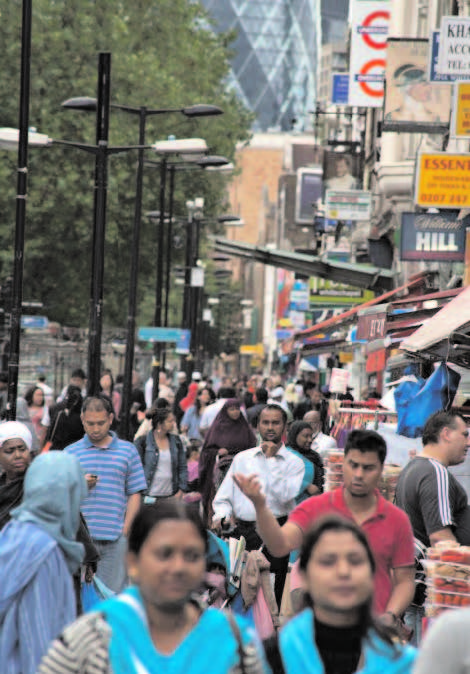
    LONDON ()TIP): Around 423 criminals from India are presently living in Britain. Data revealed by Britain’s National Audit Office has shown that as of March 2014, 10,650 criminals from overseas have been living in UK. Shockingly, between January 2009 and March 2014, 151 foreign national offenders (FNOs) left prison without being considered for deportation. One in six FNOs in the community – 760 convicted criminals – had absconded with 400 of them had been missing since before 2010.

    Around 58 of them have been classed as “high harm” individuals including rapists, murderers and pedophiles. Poland dominated the list of top 10 nationalities of foreign offenders living in UK – 898 followed by Ireland 778, Jamaica 711, Romania 588, Pakistan 522, Lithuania 518 and Nigeria 468. India stands next with the number of offenders living in UK increasing from 402 to 423 between 2013 and 2014. Figures from the Home Office show that there are more than 700 murderers and 500 rapists among nearly 12,000 foreign offenders in UK. The full list, entitled the Foreign National Offender Caseload include 775 murderers, 587 rapists, 155 child rapists and 15 convicted terrorists.

    Also in the category of most serious offences are 99 other killers convicted of manslaughter and 228 paedophiles. The list also includes 88 criminals found guilty of attempted murder, 1,022 of serious violent assaults, 497 burglars, and 43 arsonists. NAO said “Removing FNOs from the UK continues to be inherently difficult and public bodies involved have been hampered in their efforts by a range of barriers, although poor administration has still played a part. The number and speed of removals can be restricted by law – typically the European Convention on Human Rights and EU law on the free movement of persons.” “Until recently, FNOs had 17 grounds for appeal that could delay removal.

    Administrative factors also form barriers with some FNOs exploiting legal and medical obstacles to removal. Many overseas countries are unwilling to receive FNOs back home. However, lack of joint working and administration errors have often led to missed opportunities for removal.” Just over half of the 2,710 persons arrested for terrorism-related offences since September 11, 2001 self-declared their nationality as British or of British dual nationality (1,420, or 52%). Of the remaining persons arrested and excluding those who declared a dual nationality, the most frequently selfdeclared nationalities were: Algeria (156 persons), Pakistan (135), Iraq (117), Afghanistan (75), Iran (63), India (59), Turkey (50) and Somalia (49). The most frequent principal offences for persons convicted since September 11, 2001 under terrorism legislation were preparation for terrorist acts (25% of persons convicted), collection of information useful for an act of terrorism (16%) and failing to comply with duty at a port or border controls (12%).

    In recent years the proportion of persons arrested who self-defined as either British or British dual nationality has been higher than the proportion since September 11, 2001. Of the 239 persons arrested for terrorismrelated offences in the year ending June 30, 2014, 181 (76%) self-defined as either British or British dual nationality.

  • Recognizing Taliban govt in

    Recognizing Taliban govt in

    Afghanistan was blunder: Musharraf

    KARACHI (TIP): Former military ruler General Pervez Musharraf on December 4 admitted that recognizing the Taliban regime in Afghanistan was a “blunder” on part of Pakistan, but he blamed the West and the US for the birth of al-Qaida. Speaking to the Youth Parliament here, Musharraf pointed out that Pakistan was the only country that recognized the Taliban government in Afghanistan from 1996 to 2001 as Saudi Arabia and the UAE later also backed out. The 71-year-old leader admitted that recognising the Taliban regime was a blunder on Pakistan’s part.

    The Soviet Invasion of Afghanistan in 1979 changed the political climate worldwide and “three blunders” were created by the US who left the region after withdrawal of Soviets, said Musharraf, who ruled over Pakistan from 1999 to 2008. The “first blunder was not to rehabilitation the 25,000 Afghan Mujahideen who fought in the war against USSR and they then came to Pakistan which led to the formation of al-Qaida,” he said. “The second blunder was the West’s refusal to recognize Taliban.” He said Pakistan was looked at negatively by the world because of recognizing the Taliban regime and conceded that in 2000 the then US President Bill Clinton came to Pakistan to reprimand the government for recognizing the Taliban.

    Moving on to the third blunder, the former president said the invasion of US-led NATO forces in Afghanistan pushed militants to mountainous areas. “A vacuum was created in Afghanistan which had to be overcome by changing military victory into a political victory,” he said, explaining an ethnically balanced government representing Pakhtuns was needed. “But because this did not happen, the Taliban started reviving in 2003.” Musharraf said the Taliban was selfcreated because of the environment that existed in Afghanistan at that time. “Some say Taliban are our children and we created them … but it’s not true,” the former president said. “During this tumultuous period, frankly, not one civilian government performed socio-economically for Pakistan.

    Not one. Other than the military government,” he claimed. Taking a jab at the current government, he said, “The economy is nose-diving and terrorism is prevalent in all provinces.” Musharraf also said tensions between Pakistan and India will always exist until the Kashmir issue is not resolved. “Political parties do not take better decisions in the greater interest of the nation and democratic governments have never performed well in Pakistan,” he claimed. “Progress was only made during Ayub Khan’s regime besides mine,” he said, adding that the Army must have a constitutional role in .

  • Suicide attack at Afghan funeral kills nine: Police

    Suicide attack at Afghan funeral kills nine: Police

    KUNDUZ (AFGHANISTAN) (TIP): A suicide attack at a funeral in northern Afghanistan killed at least nine people on December 2, officials said, underlining nationwide insecurity as Nato troops end their 13-year war this month. The blast followed a series of attacks in the capital Kabul which have heightened concerns that Afghanistan could tip into a spiral of violence as the US-led military presence declines.

    The embattled Kabul police chief who tendered his resignation on Sunday will stay on in the role, a spokesman said, as Afghanistan struggles to respond to rising militant unrest. Nato’s force in Afghanistan will change on December 31 from a combat mission to a support role, with troop numbers cut to about 12,500 — down from a peak of 130,000 in 2010. “A suicide bomber on foot detonated his explosives among people who were attending a funeral ceremony in Burka district this morning,” Aminullah Amarkhil, police chief of Baghlan province, told AFP. “Initial reports show nine people, including two police, were killed and around 18 wounded.” Amarkhil said the funeral was for a tribal elder in Baghlan, a province on the main road from Kabul to Mazar-e-Sharif that has suffered worsening security in recent years.

    Taj Mohammad Taqwa, the district chief of Burka, confirmed the death toll to AFP. “The target was probably a number of high-ranking police officials and provincial council members who were attending the ceremony,” he said. “They are unharmed.” There was no immediate claim of responsibility. A Taliban attack on Saturday in Kabul killed a South African father running an education charity and his two teenage children.

  • SAARC SUMMIT: ENERGY PACT SEALED, ROAD AND RAIL PACTS ON ANVIL

    SAARC SUMMIT: ENERGY PACT SEALED, ROAD AND RAIL PACTS ON ANVIL

    KATHMANDU (TIP): The 18th SAARC Summit concluded on November 27 in this scenic Nepalese capital with the eight South Asian nations signing a pact on energy cooperation and adoption of the Kathmandu Declaration that called for deeper regional cooperation in core areas of trade, investment, finance, energy, infrastructure and connectivity.

    The two-day South Asian Association for Regional Cooperation summit started on a discordant note on November 26 with Pakistan blocking three proposed agreements. But it ended on a bright and positive note on Thursday with the eight countries signing the Saarc Framework Agreement on Energy Cooperation and promising to sign two other deals — the SAARC Motor Vehicles Agreement for the Regulation of Passenger and Cargo Vehicular Traffic, and the SAARC Regional Agreement on Railways — within three months. The energy agreement will enable greater cooperation in the power sector among South Asian countries.

    It is expected to improve power availability in the entire SAARC region and would facilitate integrated operation of the regional power grid. According to the Kathmandu Declaration adopted at the closing ceremony Thursday, the summit decided to accelerate the process of creating free trade in the region and formulation and implementation of projects, programmes and activities of SAARC in a prioritised, focused and result-oriented manner. Similarly, the summit also agreed to launch regional and sub-regional projects in the agreed areas of cooperation, especially in the area of poverty alleviation, infrastructure building, connectivity and energy.

    Strengthening the SAARC Development Fund, effective implementation of the SAARC Action Plan on Poverty Alleviation with a view to making South Asian free from poverty and hunger and enhancing regional connectivity through building and upgrading roads, railways, waterways infrastructure, energy grids, communications and air links, was also agreed on. The declaration called for combating terrorism in all its forms and manifestations and having effective cooperation among the member states for preventing the trafficking of people, arms and drugs and exploitation of children for forced labour.

    Increasing agricultural productivity and ensuring food and nutritional security is also the part of the Kathmandu Declaration. Providing quality education, eliminating illiteracy, providing vocational education and training, and making South Asia an attractive common tourist destination by promoting public-private partnership, are also mentioned in the declaration. In the opening ceremony on Wednesday, Indian Prime Minister Narendra Modi, who was the cynosure of all eyes, exhorted the eight SAARC member states nations to “walk in step” as he proposed a slew of measures, including ease for business travel, a level playing field in trade, and initiatives in healthcare and tourism.

    He referred to terrorism, especially the 26/11 Mumbai terror attack, in which 10 Pakistani terrorists unleashed mayhem in India’s commercial capital in 2008. “Today, as we remember the horror of the terror attack in Mumbai in 2008, we feel the endless pain of lost lives. Let us work together to fulfill the pledge we have taken to combat terrorism and trans-national crimes,” he said, without naming Pakistan. Urging for seamless connectivity in the region, Modi said “for India, our vision for the region rests on five pillars — trade, investment, assistance, cooperation in every area, and contacts between our people”. “There is a new awakening in South Asia; a new recognition of inter-linked destinies; and a new belief in shared opportunities,” he said. Host of the summit, Nepal Prime Minister Sushil Koirala, said that SAARC would focus on connectivity, security and eradicating extreme poverty.

    While Bangladesh Prime Minister Sheikh Hasina sought implementation of the SAARC free trade agreement (FTA) that was signed nearly a decade ago, Pakistan’s Nawaz Sharif called for a dispute-free South Asia. Afghan President Ashraf Ghani asserted that his country would not endanger regional security. While Maldivian President Abdulla Yameen sought a common SAARC platform on climate change, Bhutan’s Prime Minister Tshering Tobgay called for greater integration among South Asian countries to bolster growth. Sri Lanka President Mahinda Rajapaksa called for a common voice among South Asian nations on international issues and cooperation on eradicating terrorism. The heads of state and government also held bilateral meetings on the sidelines of the summit.

    After having met Nepal Prime Minister Koirala soon after his arrival here on Tuesday, Prime Minister Modi met his Bangladeshi and Bhutanese counterparts Hasina and Tobgay, and later the presidents of Afghanistan, Sri Lanka and Maldives — Ghani, Rajapaksa and Yameen. Though there was no meeting scheduled between the Indian Prime Minister and Pakistan’s Sharif, the two eventually greeted and informally spoke with each other at the retreat organised for the delegates at the Dhulikhel hill resort near Kathmandu on Thursday. Modi and Sharif shaking hands on the podium in the closing ceremony was the lasting image of the summit.

  • Afghan couple given 100 lashes for pre-marital sex

    Afghan couple given 100 lashes for pre-marital sex

    KABUL (TIP): An Afghan man and his girlfriend were each given 100 lashes in public for having sex outside of marriage, officials in the eastern Afghan province of Kapisa told EFE news agency. Dozens of people witnessed the punishment of the couple, aged 19 and 21, according to governor of Kohistan region, Mohamed Osman Haqyar Ahmadi. They were arrested a month ago and sentenced after a lengthy trial, he said Tuesday.

    “The punishment was applied to both in accordance with the rules of Islamic Sharia law, because they are of legal age to be punished,” Ahmadi said. He stressed that both the guilty parties accepted the sentence imposed on them and declined to file an appeal. After submitting to their court-ordered punishment, they got married to legalize their relationship. The Afghan constitution includes provisions for the strict interpretation of Islamic law, which allows for the prosecution and sentencing of persons having relations outside of marriage. Lashings and public executions were common punishments in Afghanistan under the hardcore fundamentalist Taliban regime, which was ousted during the US invasion of 2001.