Tag: Afghanistan

  • New Balance of Power in Asia? India is challenging China’s assertiveness

    New Balance of Power in Asia? India is challenging China’s assertiveness

    “India must increase investments in education and infrastructure, achieve more equitable economic development if it is to emerge as a major driver of the global economy. Only then will it be able to make a significant contribution to Asian and international security and contribute to a new peace-promoting balance of power in Asia”, says the author.

    By Anita Inder Singh

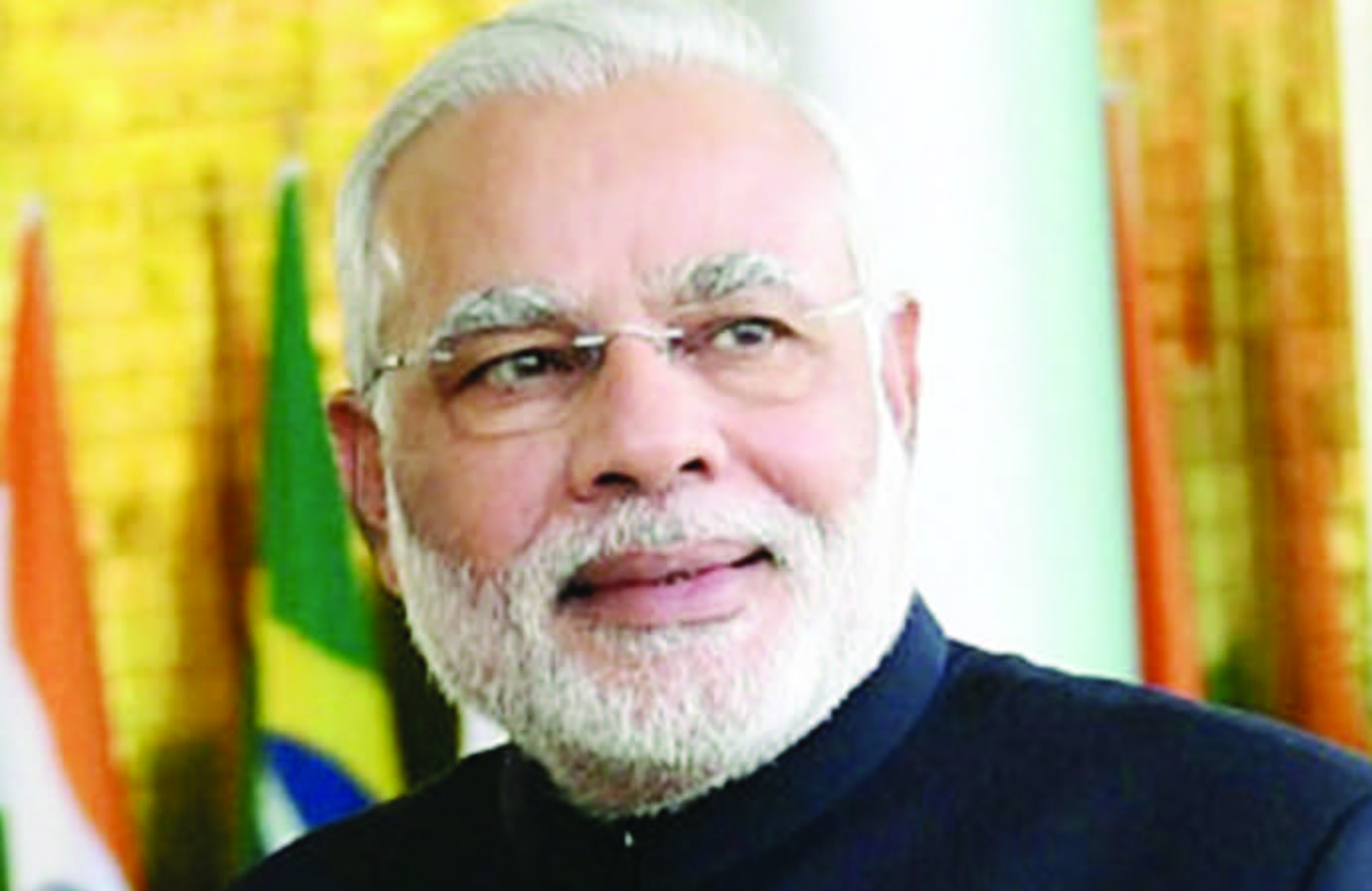
    India’s decision to help Vietnam boost its defense modernization – against China’s wishes – raises yet again the question whether a new balance of power is emerging in Asia. India, Vietnam and Japan will try to coordinate security and economic policies. That suggests India is challenging China’s assertiveness in the Asia-Pacific region and staking a claim to explore the energy-rich resources of the South China Sea. Economic and strategic diplomacy were intertwined when Prime Minister Modi visited Japan and the US – and when Chinese President Xi Jinping visited India in mid-September.

    India needs investment to improve its rickety infrastructure and Japan, China and the US have come forward with offers to help India renew it. Companies in all three countries seek new investment destinations and potentially India is one of the biggest. Mutual economic interests are not enough for India to increase its contribution to Asian and global security. The simultaneous interest of Japan and the US in India’s development and its greater role in Asian security only highlight India’s economic weakness and the blunt fact that its ability to enhance its regional role will hinge on its economic performance improving quickly and steadily.

    India has much to gain – and learn – from closer ties with Japan, which is Asia’s oldest democracy. Neither history, nor political/territorial disputes divide India and Japan. As Asia’s post-1945 economic wunderkind Japan had surpassed India, China and many west European countries by the early 1960s. India and Japan are already collaborating on maritime security, counter-terrorism, and energy security. At their summit talks, Modi and Prime Minister Shinzo Abe decided to strengthen defense ties and forge a special strategic global partnership, emphasizing that a developed India and a prosperous Japan were important for Asia and for global peace and security.

    Economics and strategy mixed again when Modi met Japanese business leaders. The 21st century, Modi asserted, would belong to Asia – exactly how would depend on “how deep and progressive” the Indo-Japanese relationship is. This is the immediate context in which he deplored the “expansionist” tendencies among countries, caught in an 18th-century time-warp, to “engage in encroachment” and “intrude” into the seas of others. Evidently Modi was not letting trading interests blur the real political differences with such countries. These comments, made before President Xi Li Ping visited India, were widely interpreted as anti-China. The state-steered Chinese Global Times has downplayed any idea that China counted less than Japan with India.

    “China’s GDP is five times that of India’s. Mutual trust between Beijing and New Delhi, facing strategic pressure from the north, is difficult to build as there is also an unresolved border conflict between the two,” its editorial said. That appeared more of a threat than an olive branch to India. Modi carefully avoided running China down. Before leaving for the US he stated that the world should trust China to observe international law. But Xi’s visit did not enhance trust between New Delhi and Beijing. Even as Xi assured Modi of $20 billion in investment in Gujarat Chinese troops made one of their frequent forays into north-eastern Indian territory, which Beijing claims belongs to China.

    Those forays followed a pattern. China unilaterally invokes “history” (its version) when referring to territorial conflicts with India – and other neighbors. China’s attitude to India echoes that with its Asian neighbors, including Japan, Vietnam and the Philippines. By claiming a territory in the name of history it creates a dispute, dispatches its ships or aircraft – (or in India’s case, troops) – to back up that claim. That is how it unilaterally outlined last November an “air-defense identification zone” over an area of the East China Sea covering Senkaku islands that are also claimed by Japan (and Taiwan). Strong trading ties have not stopped China from using history to make claims on neighboring territories.

    In fact Japan is the largest foreign investor in China. And China is ASEAN’s largest trading partner. In New Delhi Xi’s reference to historical ties between ancient civilizations was marred by the assertion that the Sino-Indian border dispute had historical roots. Such statements imply that the border disputes will remain unsettled; more importantly, that Beijing will continue to lay claim to the Arunachal Pradesh and Ladakh regions. In that case India – like Japan and Vietnam – may find itself simultaneously taking up the politicalstrategic gauntlet and engaging in much-needed trade with China.

    China does nothing to dispel the fears of its neighbors and insists on bilateral solutions. Its claims to un-demarcated maritime waters, including the East and South China Seas (Beijing defines the latter as a ‘core’ interest) are contested by its neighbors, who want the disputes those claims give rise to be settled through international arbitration. That explains why, without naming China, the Obama-Modi communiqué, called on all parties to avoid the use, or threat of use, of force in advancing their claims. It also urged a resolution of their territorial and maritime disputes through all peaceful means, in accordance with the international law, including the UN Convention on the Law of the Sea. At another level, China has taken advantage of America’s planned withdrawal from Afghanistan and is increasing investments there. It is also securing its energy supplies in the oil and gas fields of Central Asia. Moreover, it is India’s main competitor for influence in the Indian Ocean area, which is bounded by Asia on the north, on the west by Africa, on the east by Australia, and on the south by the Southern (Antartic) Ocean.

    There is nothing improper about these activities. But they alarm China’s neighbors and the US, none of whom wants China to gain primacy in Asia. Unsurprisingly, Obama and Modi stressed the need to accelerate infrastructure connectivity and economic development corridors for regional economic integration linking South, Southeast, and Central Asia. The US and India want to promote the India- Pacific Economic Corridor, which will link India to its neighbors and the wider Asia-Pacific region, with a view to facilitating the flow of commerce and energy. That will not be lost on China. Meanwhile uncertainty hovers over the nature of America’s rebalance or pivot to Asia since it has been announced at a time when Washington is cutting defense expenditure. India must increase investments in education and infrastructure, achieve more equitable economic development if it is to emerge as a major driver of the global economy. Only then will it be able to make a significant contribution to Asian and international security and contribute to a new peace-promoting balance of power in Asia.

    (The author is a visiting professor at the Centre for Peace and Conflict Resolution, New Delhi)

  • Pakistan army chief renews offer to train Afghan troops

    Pakistan army chief renews offer to train Afghan troops

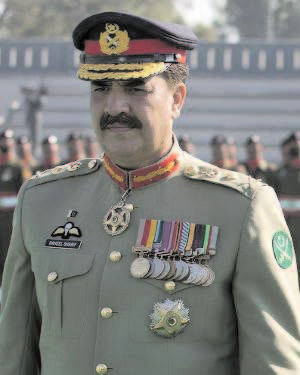
    ISLAMABAD (TIP): Pakistan army chief general Raheel Sharif has renewed the offer to train Afghan military during his meeting with the new President Ashraf Ghani in Kabul and promised weapons for an infantry brigade. Raheel paid a day-long visit to Kabul Thursday and met Afghan President, chief executive officer Abdullah Abdullah and senior military leaders. The military chief offered the training courses and facilities in Pakistan’s training institutions to Afghan security forces.

    “The COAS also offered the capacity enhancement of an infantry brigade, including provision of equipment,” military spokesman said. He discussed a host of issues with Afghan leaders including the Pak- Afghan relations post-2014. Pakistan has made the offer to train the military earlier but former Afghan president Hamid Karzai refused it saying that they do not want to get training form neighbouring countries. Pakistan is keen to train the Afghanistan military to counter India who is already training them. Raheel also briefed about operations against Taliban militants.

  • Afghan presidential rivals sign pact for ‘unity government’

    Afghan presidential rivals sign pact for ‘unity government’

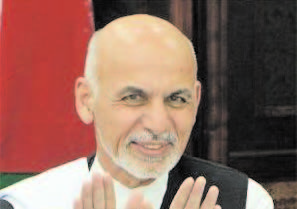
    KABUL (TIP): Afghanistan’s rival presidential candidates signed a deal to share power in a unity government on Sunday, capping months of turmoil over a disputed election that destabilised the nation at a crucial time as foreign troops prepare to leave. Ashraf Ghani, a former finance minister who will be named president under the deal reached on Saturday night, embraced rival Abdullah Abdullah after they signed the agreement. The ceremony at the presidential palace, still occupied by outgoing leader Hamid Karzai, was broadcast live on television. Karzai spokesman Aimal Faizi said Ghani is expected to be sworn in as president within a week. He said one of Ghani’s first acts would be to sign a long-delayed bilateral security agreement with the United States to allow a small force of foreign troops to remain in Afghanistan after 2014.

  • E-VISA SYSTEM LIKELY TO BE ROLLED OUT NEXT

    E-VISA SYSTEM LIKELY TO BE ROLLED OUT NEXT

    NEW DELHI (TIP): The Government will roll out by next week the muchawaited electronic-visa system for tourists from select countries including US and Japan. Home minister Rajnath Singh along with tourism minister Sripad Naik will unveil the first phase of e-visa system for tourists from two dozens countries including US and Japan at a function here shortly, a senior Tourism Ministry official said.

    While Australia is likely to be accorded the e-visa facility during Prime Minister Narendra Modi’s visit Down Under, some countries belonging to BRICS and African region are likely to be announced in the first phase. The e-visa is expected to give a big boost to the foreign tourist arrivals in the country. While in January about 4.95 lakh foreign tourists arrived in India, there were a total of 51.79 lakh during January-September this year. All the arrangements including the software for this system is ready now and will be operational at nine international airports including Delhi, Mumbai, Chennai, Kolkata, Hyderabad, Bengaluru, Kochi, Thiruvananthapuram, and Goa.

    The official said though there are certain issues yet to be resolved for the Goa Airport, the Government has decided in principle to extend it to Goa as well. According to the official, about 25 countries including the 13 countries which are currently having the Visaon- Arrival (VoA) facility in India to be covered under e-visa regime. US, Japan, South Korea, Thailand, Vietnam, the Philippines, Singapore are among the countries which will be given e-visa facility in the first phase. Barring a few countries like Pakistan, Sudan, Afghanistan, Iran, Iraq, Nigeria, Sri Lanka and Somalia, all 180 countries will be covered under e-visa regime in phases, the official said.

    He said China is definitely on the list of countries to be provided e-visa facility, but not in the first list. China is a big-thrust market for India and Tourism Ministry has taken various steps to woo maximum Chinese tourists. While the Incredible India website is being translated into the Chinese language and an infoline will also be established in that language. Besides guides are being trained in Chinese language to help tourists from that country. In order to get e-visa, one would need to apply in the designated website along the required fees. They would be granted an electronic version of the visa within 96 hours.

  • Pakistan’s Military Adventurism

    Pakistan’s Military Adventurism

    Right environment to turn the heat on Islamabad

    Pakistan’s military adventurism on three fronts across its borders with India, Afghanistan and Iran has created just the right environment to turn the heat on Islamabad and Rawalpindi. Apart from mounting a media offensive, it is time for India to get world attention focused on Pakistan-sponsored terrorism and the plight of Baluchis, Shias and other minorities in that country”, says the author who was a career diplomat.

    Just over a year ago Mr. Nawaz Sharif was swept back to power, prompting expectations that he would tackle the country’s security and economic crises, and improve relations with India. But one year is an eternity in the politics of Pakistan. The US is refusing to pledge additional aid beyond what was promised earlier under the Kerry-Lugar legislation. Even “allweather friend” China has expressed disappointment that Sharif’s government has not done the requisite preparatory work for utilizing aid that Beijing had promised for the development of Pakistan’s ailing power sector.

    The only silver lining is the increased remittances from Pakistan’s workers in the Gulf despite calls by Imran Khan to workers to halt such inward remittances. Instead of acting circumspectly in such a situation, Pakistan has chosen to escalate tensions on its borders with Iran, Afghanistan and India. The tensions with these three neighbors with whom Pakistan shares land boundaries have arisen because of support to cross-border terrorism. This support is rendered by state agencies to extremist Sunni groups, ranging from Lashkar e taiba to the Afghan Taliban and Jaish e Adl.

    The tensions with Iran have risen because of the support that the extremist Sunni group Jaish ul Adl receives in Pakistan’s Baluchistan Province, where the Pakistan army is simultaneously engaged in a bloody conflict against Baluchi separatists. Tensions with Iran escalated last year when Jaish e Adl mounted cross-border ground and missile attacks in Iran, resulting in Iranian casualties.

    An Iranian spokesman warned that the Iranian forces would enter Pakistani territory if Pakistan “failed to act against terrorist groups operating on its soil”. Virtually coinciding with this was an incident when Jaish e Adl kidnapped five Iranian border guards and moved them into Pakistan. Iran not only warned Pakistan of cross-border retaliation, but also brought repeated incursions from Pakistan soil to the notice of the UN Security Council in writing. Ever since the pro-Saudi Nawaz Sharif, whose links with radical Sunni extremist groups are well documented, assumed power, Pakistan has moved towards rendering unstinted support to Saudi Arabia, even in the Syrian civil war.

    It has also unilaterally annulled the Pakistan-Iran oil pipeline project, prompting action by Iran, seeking compensation. While Nawaz Sharif was commencing negotiations for a peace deal with Tehriq e Taliban in the tribal areas of North Waziristan, bordering Afghanistan, the Army Chief, Gen Raheel Sharif, disregarded the views of the Prime Minister. He launched a massive military operation, involving over 50,000 military and paramilitary personnel, backed by artillery, tanks, helicopter gunships and fighter jets. An estimated one million Pashtun tribesmen have fled their homes.

    They are now homeless and facing barriers, preventing their entry into the neighboring provinces of Punjab and Sind. Not surprisingly, ISI “assets” like the Mullah Omar-led Afghan Taliban and the Haqqani network have been quietly moved out from the battle zone, quite obviously into ISI safe houses. Unrest is brewing amidst the displaced Pashtun tribals as the army is unwilling to coordinate its operations with civilian relief agencies. The displaced and homeless Pashtun tribals, will inevitably, in due course, resort to terrorist violence across Pakistan.

    The special treatment meted out to ISI assets like Mullah Omar and the Haqqani network would have been carefully noted by the new Ashraf Ghani dispensation in Afghanistan, as a prelude to more serious attacks by the Afghan Taliban acting out of the ISI and army protected safe havens in Pakistan. Pakistan’s western borders will be neither peaceful nor stable in the coming years. The escalating tensions with Iran, the partisan stance on Saudi Arabia-Iran rivalries and the military action in North Waziristan have invited criticism within Pakistan. The escalation of tension with India across the Line of Control and the international border has to be seen in this
    context.

    What better way for the army to divert attention from its misadventures in the west than to revive the “India bogey” in Pakistan? Such an action would also test the resolve of the Narendra Modi dispensation in India to deal with crossborder terrorism. Moreover, with state assembly elections due in J&K in December, the Pakistan army would strive to ensure that the credibility of these elections is questioned by ensuring a low turnout. Hurriyat leaders like Shabir Shah and Yasin Malik have already been commissioned to stir up discontent and discredit the Indian Army during the floods.

    What Pakistan had not bargained for, as it attempted to test India’s resolve from August onwards, was the robust response that it received not only from the Indian Army, but also from the Border Security Force. This was accompanied by an ill-advised diplomatic effort to seek UN intervention in Jammu and Kashmir. Both Nawaz Sharif and his otherwise realistic NSA Sartaj Aziz seem to forget that the world changed dramatically after 9/11. The Western world led by the United States has come to realize that Pakistan-backed terrorist groups are as much a threat to their security as to that of India.

    Pakistan also seemed to ignore Mr. Modi’s unambiguous stance that dialogue and terrorism cannot go hand in hand. They also evidently misread the significance of the Obama- Modi Joint Declaration averring action for “dismantling of safe havens for terrorist and criminal networks, to disrupt all financial and tactical support for terrorist and criminal networks such as Al Qaida, Lashkar e Taiba, Jaish e Mohammed, the DCompany, and the Haqqanis.”

    Pakistan’s military adventurism on three fronts across its borders with India, Afghanistan and Iran has created just the right environment to turn the heat on Islamabad and Rawalpindi. Apart from mounting a media offensive, it is time for India to get world attention focused on Pakistan-sponsored terrorism and the plight of Baluchis, Shias and other minorities in that country. In any case, there should be no question of a sustained dialogue process till Pakistan fulfils its January 2004 assurance that territory under its control will not be used for terrorism against India.

    (The author is a former diplomat.)

  • NEED FOR A LONG-TERM PLAN NOW

    NEED FOR A LONG-TERM PLAN NOW

    It can be considered the biggest strategic failure of Indian diplomacy that even after more than six decades, India has not found a way to neutralize the malevolence of a neighbor one-eighth its size”, says the London based author.

    Pakistan has a way of making its presence felt in India’s foreign policy and national security matrix that, much to New Delhi’s chagrin tends to steal India’s diplomatic thunder. At a time when Prime Minister Modi was trying to project himself as a global statesman with a successful visit to Japan, a visit to Gujarat and then Delhi by the Chinese President, and a ‘rock-star’ reception in the US, Pakistan decided it must get some attention.

    So the Pakistani Army did what it does best. It escalated tensions along the border in an attempt to ratchet up pressure on India. It started with unprovoked mortar shelling on forward Indian positions along the Line of Control (LoC) and over the next few days, the firing spread to the international border and intensified.

    Accusing India of “deliberate and unprovoked violations of the ceasefire agreement and cross-border firing,” Pakistan promptly shot off a letter to the UN Secretary General asking for an intervention by the United Nations Military Observer Group in India and Pakistan, a body for which India sees little role after the signing of the 1972 Simla Pact.

    The UN decided to ignore Pakistani shenanigans and has merely reiterated that India and Pakistan need to resolve all differences through dialogue to find a long-term solution to the dispute. Pakistan is facing multiple crises. Its global isolation is increasing by the day. US forces are withdrawing from Afghanistan starting December 2014 and Beijing is increasingly dissatisfied with Islamabad’s attempts at controlling the flow of Islamist extremists into its restless Xinjiang province.

    Tensions are rising also on Pakistan’s borders with Iran where Pakistani Sunni extremists are targeting Iranian border posts, forcing Iranian policymakers to suggest that if Pakistani authorities “cannot control the common border, they should tell us so that we ourselves can take action.” And the new government in Afghanistan under Ashraf Ghani is likely to go even further in developing close ties with New Delhi.

    Domestically, the Kashmir issue is once again becoming a political football with Bilawal Bhutto Zardari bombastically declaring that Pakistan People’s Party (PPP) would get back entire Kashmir from India. Imran Khan is breathing down Nawaz Sharif’s neck and the Pakistan Army’s struggle against domestic Taliban seems to be going nowhere. All this is happening at a time when there is renewed confidence in India about its future as a major global player under the Modi government and when the world is ready to look at the Indian story afresh.

    No wonder, the Pakistani security establishment is nervous about its growing irrelevance – and what better way to come into global prominence once again than to try to create a crisis in Kashmir! Despite the election season in India in the last fortnight, the Modi government’s reaction has been creditable so far. Rahul Gandhi came out of hibernation to attack the Prime Minister for ceasefire violations by Pakistan. The government, however, ignored the opposition’s many taunts and confidently made clear to Pakistan that Indian forces would “make the costs of this adventurism unaffordable.”

    This gave the Indian military much-needed operational space to carve out a response which was swift, sharp and effective. Together, the Indian government and the nation’s military have underlined the costs of Pakistan’s dangerous escalatory tactics by massive targeted attacks on Pakistani Ranger posts along the border. Now the Modi government needs a long-term plan to handle Pakistan. It can be considered the biggest strategic failure of Indian diplomacy that even after more than six decades, India has not found a way to neutralize the malevolence of a neighbor one-eighth its size.

    Business-as-usual has never been an option for India, and yet India’s Pakistan policy in recent years has struggled to move beyond cultural exchanges and cross-border trade. Pakistan has continued to train its guns at India and drain India’s diplomatic capital and military strength, while India has continued to debate whether Pakistani musicians should be allowed to enter India. This disconnect between Pakistan’s clear strategic priority and India’s magnificently shortsighted approach will continue to exact its toll on India unless Delhi makes it a priority to think outside the box on Pakistan.

    Pakistan has a revisionist agenda and would like to change the status quo in Kashmir while India would like the very opposite. India hopes that the negotiations with Pakistan would ratify the existing territorial status quo in Kashmir. At its foundation, these are irreconcilable differences and no confidencebuilding measure is likely to alter this situation. India’s premise largely has been that the peace process will persuade Pakistan to cease supporting and sending extremists into India and start building good neighborly ties. Pakistan, in contrast, has viewed the process as a means to nudge India to make progress on Kashmir, a euphemism for Indian concessions. The debate in India on Pakistan has long ceased to be substantive.

    The choice that India has is not between talking and sulking. Pakistan has continued to manage the façade of talks with India even as its support for separatism and extremism in India continues unabated. India should also continue to talk (there is nothing to lose in having a low-level diplomatic engagement after all) even as it needs to unleash other arrows in its quiver to manage Pakistan. Smart policy for India means not being stuck between the talking/not talking binary.

    It’s not talking that matters but under whose terms and after years of ceding the initiative to Pakistan, it is now for India to dictate the terms for negotiations. If Pakistan manages to put its own house in order and refrain from using terrorism as a policy instrument against India, then India should certainly show some magnanimity. Indian policy makers had long forgotten poet Dinkar’s immortal lines: kshama shobhti us bhujang ko, jiske paas garal hai, uska kya jo dantheen, vishrahit vineet saral hai. (When a serpent that has venom, teeth and strength forgives, there is grace and magnanimity in its forgiveness.

    But when a serpent that has no venom and no bite claims to forgive, it sounds like hypocrisy and amounts to hiding its defeat with noble words.) Modi has done well to remind Pakistan that India can impose serious costs in response to Pakistan’s irrational behavior and he should now build on that. Pakistan’s India obsession is not about Kashmir. The very manner in which Pakistan defines its identity makes it almost impossible that India will ever be able to find a modus vivendi with Islamabad. New Delhi should be ready to face this hard reality. The Modi government has made a good start and now it should follow through with a long-term strategy vis-à-vis its immediate neighbor.

    (The author teaches at King’s College London in the Department of Defence Studies. He is also an associate with the King’s Centre for Science and Security Studies and an affiliate with the King’s India Institute. His current research is focused on Asia-Pacific security and defence issues).

  • Afghanistan captures two Haqqani commanders

    Afghanistan captures two Haqqani commanders

    KABUL (TIP): Afghan security forces said on Thursday they have captured two senior leaders of the feared Haqqani network, a hardline group behind sophisticated attacks on Afghan and Nato forces. Anas Haqqani, the son of the network’s founder Jalaluddin Haqqani, was arrested on late Tuesday along with Hafiz Rashid, another commander, by the National Directorate of Security (NDS), the Afghan intelligence agency, officials said. “We hope that these two arrests will have direct consequences on the network and their centre of command,” NDS spokesman Haseeb Sediqi told AFP. Anas played an important role in the network’s “strategic decision-making” and frequently travelled to Gulf states to get funding, Sediqi said. A statement from the NDS described Anas as having special computing skills and said he was “one of the masterminds of this network in making propaganda through social networks.” The Haqqanis have been blamed for spectacular attacks on Afghan government and Nato targets across Afghanistan as well as for kidnappings and murders.

  • New Afghan president’s first foreign visit is to China

    New Afghan president’s first foreign visit is to China

    BEIJING (TIP): Afghanistan’s newly-elected President Ashraf Ghani has chosen China as his first destination abroad after taking over office, signifying Beijing’s influence in the war-torn country where the US troops are battling to control Taliban resurgence. “The visit by President Ghani to China is the first official visit since he took office. “It is also the first high-level visit between the two countries since the establishment of the new government of Afghanistan. The Chinese side attaches great importance to that,” Chinese foreign ministry spokesperson Hua Chuying said on October 19.


    Former world bank economist Ghani, who succeeded Hamid Karzai, will come to Beijing on a four-day visit starting October 28. Observers said that it is significant that Ghani chose the communist giant to be his first choice even as the US has significant military presence in the warravaged country, which shared a border with China’s restive Xinjiang province where the Islamic militants , stated to be trained in Afghanistan and Pakistan’s tribal areas, have been staging violent attacks for the past a few years. Ghani, 65, became president after clinching a power sharing deal with his poll rival Abdullah Abdullah who took over as Afghanistan’s chief executive. China, which is holding talks with neighboring countries India, Pakistan and Russia over the future course of action in the event of US troops leaving Afghanistan, is looking to expand its diplomatic engagement with Kabul by appointing a special envoy for Afghanistan.

  • Afghanistan gang-rape case: Death sentence for 7

    Afghanistan gang-rape case: Death sentence for 7

    KABUL (TIP): Afghanistan handed the death penalty to seven men on October 12 for raping and robbing a group of women returning from a wedding in a rare case of sexual assault that has shaken the capital and raised concerns over public security at a time of transition. Police said a large group of men, some dressed in police uniforms, and with assault rifles, stopped a convoy of cars in which the women were travelling along with their families in the district of Paghman, just outside Kabul, last month. They dragged four women out of the cars in the middle of the night and raped them in the field near the main road.

    One of them was pregnant. The victims were also beaten and their jewellery and mobile phones stolen. Crimes against women are common but mostly take place inside homes in Afghanistan’s conservative society. But a gang rape by armed men is rare in Kabul and has tapped into a vein of anxiety as foreign troops leave the country and a badly stretched Afghan army and police fight a deadly Taliban insurgency. Judge Safihullah Mujadidi in a summary trial, televised nationwide, convicted the men of armed robbery and sexual assault. “Based on criminal law these individuals are sentenced to the severest punishment which is death sentence,” he said. The men stood before him in a heavily guarded courtroom.

    Outside dozens of activists gathered demanding speedy justice to instil public confidence in law and order. “This kind of gang rape is unprecedented in Kabul,” Kabul police chief General Zahir earlier said in his testimony seeking summary punishment for the men. The assault has led to such outpouring of rage that President Hamid Karzai told a delegation of women last week that the perpetrators would face the death penalty. The men can appeal Sunday’s verdict in a higher court.

    Karzai has to ratify the executions under Afghan law. “If this act goes unpunished, the women of Afghanistan will continue to be victims,” said Uma Saeed, a rights activist. “This is really very significant moment, I would say, even maybe in the history of Karzai’s government.”

  • After-effects of the US drawdown on India

    After-effects of the US drawdown on India

    New Delhi cannot remain sanguine. A priority of the Obama Administration will be to smoothly take out its military equipment from Afghanistan, through Pakistan. The Taliban will then be viewed more benignly

    By G Parthasarathy

    Even as Prime Minister Narendra Modi was cautioning Americans in New York against any precipitate withdrawal, Afghanistan was preparing for a momentous change in Kabul. Mr Ashraf Ghani Ahmadzai was taking over as Afghanistan’s President from Mr Hamid Karzai, who had ruled Afghanistan for 12 turbulent years. Despite efforts to malign him and destabilise his Government by worthy Americans like Peter Galbraith and Richard Holbrooke and a vicious propaganda barrage from Pakistan, President Karzai succeeded in establishing a measure of effective governance in Afghanistan. He also skilfully brought together the country’s fractious ethnic groups, to deal with the challenge posed by the Pakistani-backed Afghan Taliban and the Haqqani network, together with their Islamist allies, including the Al Qaeda. The change of guard from Mr Karzai to Mr Ghani has been anything but smooth. The first round of elections in April produced no clear winner. The second round in June, which was expected to be close, produced a stunning result. It gave an unexpectedly large victory margin to Mr Ghani, over his rival, Mr Abdullah Abdullah, a former Foreign Minister and close aide of the legendary Ahmed Shah Masood. Mr Abdullah had a substantial lead in the first round of elections, securing 46 per cent of the votes, against 32 per cent for Mr Ghani. A Report by the European Union declared the second round of voting as “massively rigged”. A US report held that it was mathematically impossible for Mr Ghani to have secured the margin of victory that he did. With controversy over the electoral result spiralling out of control and assuming volatile ethnic dimensions, the Americans stepped in to broker and virtually impose an uneasy and tenuous compromise between Mr Ghani and Mr Abdullah.

    Following the agreement between the rival candidates, Mr Ashraf Ghani was sworn in as President and Mr Abdullah as ‘Chief Executive’, a post which has no constitutional sanctity. The roadmap for this transition includes the convening of a Loya Jirga to convert the post of ‘Chief Executive’ into that of an ‘Executive Prime Minister’. It remains to be seen whether the contemplated changes, with two separate centres of executive authority, can provide stable and effective governance, in a country beset with the ethnic rivalries and tensions, which have long characterised its politics. Within 24 hours of the assumption of power by President Ashraf Ghani and Chief Executive Abdullah, Afghanistan and the US inked a security agreement, which will result in the US stationing 9,800 troops in a training and counter-insurgency role in Afghanistan, beyond 2014. A ‘status of forces agreement’, giving immunity to foreign forces against prosecution in Afghan courts, was also inked. The agreements will also allow the Americans to retain air bases across Afghanistan. Pakistan has welcomed these developments. Apart from formal statements by National Security Advisor Sartaj Aziz and the Foreign Office, a meeting of the top brass of the Pakistan Army also welcomed this development as a “good move for peace in Afghanistan”. This is an astonishing turnaround for the Pakistani establishment, which has all along made its unease with the American presence in Afghanistan known. It comes at a time when an estimated 80,000 Pakistani troops and paramilitary, backed by air power, are pounding positions of the Tehreek-e-Taliban in North Waziristan – an operation resulting in an estimated one million tribal Pashtuns fleeing their homes. At the same time, the Mullah Omar-led Afghan Taliban have been on the rampage this year across Afghanistan, prompting the soft-spoken President Ghani to say, “We ask the opponents of the Government, especially the Taliban and the Hizb-e-Islami, to enter political talks”. Pakistan’s massive military offensive in the tribal areas bordering Afghanistan has been selectively undertaken. Long-term ISI assets including the Haqqani Network, the Mullah Omar-led Afghan Taliban and even the Al Zawahiri-led Al Qaeda have been spared and obviously accommodated in ISI safe houses. They will be kept in readiness to move into Afghanistan at a time of Pakistan’s choosing. Afghanistan is going to remain dependent on Nato for military and economic funding, for the foreseeable future. Nato funding of Afghanistan’s military of $5.1 billion annually till 2017 has been agreed upon. A similar amount of external funding would be required for Afghanistan’s administrative and developmental needs. The Joint Declaration issued after the Obama-Modi Summit spoke of “dismantling of safe havens for terrorist and criminal networks, to disrupt all financial and tactical support for terrorist and criminal networks such as Al Qaeda, Lashkar-e-Tayyeba, Jaish-e- Mohammed, the D-Company, and the Haqqanis”. Significantly, there is no mention in the Joint Declaration of the Mullah Omarled Taliban, which has been primarily responsible for the killing of 2,229 American soldiers in Afghanistan, the training of terrorists for jihad in Jammu & Kashmir and for colluding with the hijackers of IC 814. It has been obvious for some time that the Americans are keen to do a deal with the Taliban. They may pay lip service to statements that any internal reconciliation process has to be ‘Afghan-led’. But, the reality is different, ever since the US encouraged Qatar to host a Taliban office in Doha. An enraged Mr Karzai had torpedoed that American effort (with obvious Pakistani support), to grant international legitimacy to the Taliban. President Ghani will, however, have to reluctantly accept Pakistan-brokered American-Taliban ‘contacts’, as a prelude to giving Taliban control in parts of southern Afghanistan. India cannot be sanguine about these developments. A priority of the Obama Administration will be to smoothly take out its military equipment from Afghanistan, through Pakistan. The Taliban will be looked at rather more benignly than in the past. Militarily, the ISI/Taliban effort will be to seize control of large swathes of territory in southern Afghanistan, compelling a reduction of India’s assistance in that part of the country. Differences in the priorities and compulsions of President Ghani and ‘Chief Executive Abdullah in Kabul appear inevitable. Our membership of the Shanghai Cooperation Organisation will have to be utilised to fashion a more coordinated approach with its members – Russia, China, Iran and the Central Asian Republics. A more intensive approach on developing the port in Chah Bahar in Iran and on meeting Afghan requirements of defence equipment will be imperative. The post-9/11 ‘end game’ for the Americans in Afghanistan is just beginning. The Americans will continue to predominantly and very significantly shape the course of developments in Afghanistan.

  • BRITAIN’S PRIME MINISTER ON SURPRISE VISIT TO AFGHANISTAN

    BRITAIN’S PRIME MINISTER ON SURPRISE VISIT TO AFGHANISTAN

    KABUL (TIP): Britain’s Prime Minister David Cameron on October 3 pledged support for Afghanistan’s newly sworn-in president and the country’s new unity government, saying during a surprise visit to Kabul that Britain is committed to helping Afghans build a more secure and prosperous future.

    Cameron was the first of world leaders to meet Ashraf Ghani Ahmadzai, Afghanistan’s second elected president, since his inauguration on Monday. The two had a meeting in Kabul on Friday morning and later held a joint press conference.

    “Britain has paid a heavy price for helping to bring stability to this country,” Cameron said, paying tribute to the 453 British servicemen and women who died while serving in Afghanistan.

    “An Afghanistan free from al-Qaida is in our national interest — as well as Afghanistan’s,” he said. “And now, 13 long years later, Afghanistan can — and must — deliver its own security.”

    But, “we are not leaving this country alone,” he added. “In Britain you will always have a strong partner and a friend.”

    Cameron arrived a day after visiting British pilots in Cyprus who are taking part in air strikes on Islamic State group targets in Iraq. British warplanes have been conducting combat missions over

    Iraq since Saturday, after Britain joined the US-led coalition of nations that are launching air strikes against the militants.
    “The work of defeating Islamist extremist terror goes on elsewhere in the world,” Cameron said in Kabul. “And because this threatens us at home, we must continue to play our part.”

    Ghani Ahmadzai thanked the British for their sacrifices in Afghanistan, especially the families who lost loved ones in the war. “They stood shoulder to shoulder with us and we will remember,” he said.

    Ghani Ahmadzai’s inauguration this week marked the start of a new era for his country, with a national unity government poised to confront a resilient Taliban insurgency.

    A day after he was sworn in, his administration signed a security agreement allowing the United States to keep about 9,800 troops in the country to train and assist Afghan national security forces.

    A separate agreement was signed with Nato, outlining the parameters of 4,000 to 5,000 additional international troops— mostly from Britain, Germany, Italy and Turkey — to stay in a non-combat role after Nato’s combat mission ends on Dec. 31.

    Former President Hamid Karzai had refused to approve the deal, and the results of a June presidential runoff to replace Karzai took months to resolve, finally coming to a conclusion with Ghani Ahmadzai’s swearing in and the establishment of a national unity government.

    Ghani Ahmadzai’s former rival for the presidency, Abdullah Abdullah, was appointed the country’s new chief executive, a post akin to prime minister.

    Cameron lauded both Afghan men, saying they put national interests ahead of “personal power” when they struck a power-sharing deal. “I look forward to working with both of you in the years ahead,” he said. Ghani Ahmadzai also praised his former rival, saying the two of them “have managed a first, which is really rare in the Muslim world — a democratic transfer of authority, not power.”

  • Pak air strikes kill 15 militants

    Pak air strikes kill 15 militants

    ISLAMABAD (TIP): At least 15 militants were killed on October 3 in air strikes by Pakistani military in the restive northwestern tribal region, where the security forces have launched a major offensive to wipe out the Taliban.

    The attacks were launched in Jamrud and Bara sub-divisions of Khyber district where al-Qaida linked rebels have safe havens.

    Army said that 15 terrorists were killed in the attacks which also destroyed their three hideouts.

    The Taliban and other al-Qaida-linked groups, which stage attacks in both Pakistan and Afghanistan are known to have strongholds in the tribal region.

    Pakistan launched operation Zarb-i-Azb, a much-awaited military campaign, to clear insurgent bases from North Waziristan, following a bloody assault on Karachi airport ended faltering peace talks with the insurgents.

    The militant attack on the airport killed 37 people. The military claims it has killed nearly 1,000 militants and lost 82 soldiers since the start of the operation.

  • INDIA- US RELATIONS

    INDIA- US RELATIONS

    I.S. Saluja

    Prime Minister of India, Narendra Modiarrives in New York today, September 26, on afive day visit to USA. His visit, the first asPrime Minister, is being viewed as a powerful push to ensure the relationship between the two democracies of the world acquires genuine warmth, which, over the last few years, hasnoticeably been on the decline.

    Only for a brief period, during the Prime Ministership of Atal Behari Vajpayee, the relationship really warmed up but again, over the years, there have been many hiccups inspite of the loud protestations of “strategic relationship and partnership”.The question which every Indian Americanis asking is : “Will Modi’s visit bring about achange in the US perception of India and createconditions for a genuine friendly relationship,realizing equal partnership and based onmutual respect.In order to obtain a perspective, I spoke withone of the best known Indian Americans, asuccessful and eminent Attorney, Ravi Batra,who has considerable inroads in to the mainstream politics and is familiar with thethinking of US lawmakers, being friendly withquite a few of them.

    EXCERPTS:

    ” It would well serve India to make regulardeposits of goodwill in the generational Bank of Goodwill, such as the one that exists betweenUS and England. I wish to see India see UnitedStates as its inseparable nation-partner”.Another one.” Just remember that United States and India are destined to be joined at the geo-political and economic hip, even as ourpeople share the identical Dream.”Yet another. “Every relationship between living breathing people has irritants. Same istrue of nations. But to define the US-Indiarelationship from the irritant-lens is bothinaccurate and offensive. India and USA are “onthe same page” more often than not. But everyelection, here or elsewhere, gives a turbo-boostin a longstanding relationship, such that itexperiences a honeymoon period again andagain. It’s the Honeymoon period now.”And, finally, this. Be honorable and loyalCitizens of the United States, and continue toreach for the stars – and become worthy ofbeing included in pictures, rather than askingto be in one!

    Here is the full interview.

    Q. What factors have dominated andgoverned the relationship between India andUSA?

    USA?People and governments, and the near-law ofphysics when applied to geopolitics.You must remember that the Americanpeople have loved India all the way back toVasco Da Gama and Christopher Columbus – it’sin America’s soul at birth – this India-love thing.Then came Mahatma Gandhi – a love object ofall humanity, even as governments abhorredhim as a pain without equal. The recent post-Cold War relationship has been economicallydriven, rather than strategically, for Pakistanwas much better located as a buffer to the oldSoviets. The recent IT revolution, however, andIndia’s youthful citizenry has made India,previously known as a “Golden Sparrow” morelike a “Golden Falcon” to the great AmericanBald Eagle – I take some pleasure in that nameand description. Remember now that the young1.3 billion Indians can add value to everynation’s bottom line, even as they produce, andconsume goods and services from across theglobe.

    Q. How far the initial Socialistic character ofIndia in the first 40 years of IndependentIndia has been responsible for distancingbetween India and USA?

    Well, systems come and go, as do strategicalliances. Communism has been discreditedwithout doubt. Capitalism, while it has its faults,has been proven to be the best engine of growthand development. Now, the environmentalistswould argue that development and growth arethemselves the enemy – I disagree. Even to arrestclimate change, we need development of the”green” variety, flying on the wings ofcapitalism. But to answer your question directly,United States which pushed Britain to let Indiabecome free wasn’t happy with the old Soviet-India connection. Glad, that is over. Now, likePresident Obama in his GA speech onWednesday, I look forward to Russia, having”absorbed” Crimea, will return into the fold andbehave in a law-respectful way rather than a PacMan of others’ sovereignty. With Obamapresiding over the Security Council, Russiavoted with everyone to overcome the evil of ISIS.

    Q. In International politics, what have beenthe expectations of US from India and viceversa and how far have these been fulfilled?

    United States expects India to be one of ourcloset allies, without trying to get the best dealin every transaction every time. It would wellserve India to make regular deposits of goodwill in the generational Bank of Goodwill,such as the one that exists between US andEngland. I wish to see India see United States asits inseparable nation-partner.As for India, I am not qualified to answer.

    Q. What have been the significant convergingpoints in the relationship between the twocountries?

    Civilizations that value culture, education,family, education, hard work, and separation ofchurch and state. And then there was terror:9/11 and 26/11.We are joined at the hip in thefight against terror.

    Q. What have been the major discordant notesin the relationship?

    India has had to change its dance partnerafter the collapse of the Soviet Union, and riseof extremism. Sometimes, we in the UnitedStates have not treated India with sufficientrespect, such that it bordered on downrightinsult.

    Q. Can you identify some highs and lows in therelationship between the two countries,clearly analyzing the causes?

    President Bush gave India the Civil Nucleardeal, even as India bought its nuclear powerplants from France and Russia – not nice, nomatter the price differential.While clearly not as important, KrittikaBiswas and Devyani Khobragade to name twoevents. Obviously, had the Indian citizenry notgotten emotionally involved, these casesbelonged in the minor item category. Krittikawill be remembered for America setting thingsright, due to our great independent judiciary.Devyani has now been resolved – I happilypushed the nice Ambassador. Nancy Powellinto early retirement for her apparentobstruction of Indian laws. And PresidentObama has given us – all of us – the highesthonor of appointing an Indian-American asour ambassador to India; this exceedsappointing the now-legendary Preet Bharara asSDNY US Attorney and Sri Srinivasan as afederal Circuit Judge.Wow. This is the “feelgood” stuff. There is so much more on agovernment-to-government basis that securesIndia’s safety.Just remember that United States and Indiaare destined to be joined at the geo-political andeconomic hip, even as our people share theidentical Dream.

    Q. How far do you think the significantly largepresence of people of Indian origin serving inimportant areas like medical services and IThas influenced US attitude towards India?

    Well, being around hardworking people doinggood for many is always goodwill causing. Byand large, our Indian-American doctors havegreat bedside manners beyond their dedicationand smarts. Our folks in the IT section ofsociety have become a brand – that’s how cool itis. Being of Indian blood makes youautomatically IT brilliant.Well, I’m anexception now – for I need kids help to programanything.

    Q. Do you think US will give in to India’sdemands on H1 B visa and other concessionswith respect to immigration, desired by India?

    We should, for its good for the Americaneconomy. But, “immigration” is a near-Thirdrail of national politics, as many Americanshave not recovered from the Great Recessionand see immigrants, legal and illegal, as jobeating,when H1B are highly skilled andunavailable in United States.When emotionsget married with politics, don’t expect reason torule.Q. Another concern of India is US support toPakistan? Do you think US will do somethingto change its policy towards Pakistan, toplacate India?United States owes Pakistan for its loyaltyduring the 50 odd years of the Cold War. Thatwe need exit routes or entry routes, as the casemay be, for Afghanistan and such only serves toremind that Pakistan needs to be treated better.I think we should support Pakistan-India opentradeso that open people-exchange can followin a decade or so. It is not right that people whoshare near-identical culture have had wars andgovernments have sowed distrust when theoverwhelming commonality should be a jointasset.We need to improve everyday Pakistani’slife, if we want to ever live free of local terror.Then, we ought to do so world-wide, to be reallyfree of terror.We need everyone to be living theAmerican Dream, when merit rules, so peace isas durable as the Pax Romana was.

    Q. India’s overtures towards Japan and Chinaand its involvement in BRICS have beingviewed with suspicion by US . What can Indiado to remove this suspicion?

    BRICS were intended to cause suspicion, andhence, drive up the price for India and other BRICS nations. Of course, it was also a sort ofNAFTA across the air and sea among suchnations.

    Q. Do you think, US will act fast to acceleratethe process of reform of the Security Council,whereby seating India on the Council?

    The world order is based upon the P5 powersharing.That is the true geo-political axis that193 nations revolve around and exist with. It’sas real as the Sun in the sky. Yes, reforms areneeded, and Germany, Japan, India and SouthAfrica fantasize most about them. Ask me thisquestion in 25 years, and let’s see if it’s stillrelevant – as I suspect it will be.

    Q. Do you think Mr. Modi ‘s visit to US willgive new momentum to India- US relations ,given the fact that there are quite a fewirritants in their relationship?

    Every relationship between living breathingpeople has irritants. Same is true of nations.But to define the US-India relationship from theirritant-lens is both inaccurate and offensive.India and USA are “on the same page” moreoften than not. But every election, here orelsewhere, gives a turbo-boost in a longstandingrelationship, such that it experiences ahoneymoon period again and again. It’s theHoneymoon period now.

    Q . What would be your suggestions to the twocountries to strengthen their relations?

    Whatare the areas where the two can cooperate?Don’t do stupid stuff, like Devyani; for itmasks and overshadows tons of good stuffbetween the two nations that occur no matterwho governs in either capitol. Aside foravoiding an intended insult that Devyani was,avoid the unintended insult.During the official US/India RoundtableDiscussion in July 2014 held under theCongressional Dome to which my wife, Ranjuand I were independently invited to, I hadbluntly given my love potion: Respectful Reset,even as the “Reset,” between us and Russiadidn’t do so well. India and United States arenow a grown-up relationship, and discord needsnever to enter the public domain. Period.

    Q. What, do you think, the Indian Americancommunity should do to promote the processof strengthening of relations?

    Be honorable and loyal Citizens of the UnitedStates, and continue to reach for the stars – andbecome worthy of being included in pictures,rather than asking to be in one!
    Page 23

    Page 231

  • U.S. Involvement in Iraq

    U.S. Involvement in Iraq

    How far are we from sending our soldiers in to the battlefield in Iraq again? It is a question which comes to the mind of every American. First, we admitted we had no business to be in Iraq. We should not have entangled ourselves in a war that was never ours, we said. And we said we will withdraw all our troops and will expect Iraqis to manage their affairs.

    We were really tired of “a stupid involvement”. We were equally tired of the prolonged and unyielding struggle in Afghanistan. And we realized we were losing American lives for a failing cause. We said that the civilian government in Afghanistan must take care of the security aspect of the nation and that US soldiers will be withdrawn by the end of 2014. However, we seem to have all wrong stars on our side. We are back in action in Iraq, with one more nation added-Syria. This time, the threat is from the Islamic State of Iraq and Syria (ISIS). ISIS has challenged American might and the US has accepted the challenge.

    Obama said the other day that the ISIS terrorists must know what we did to Al Qaeda. They must know they will not get safe haven anywhere in the world. They must know we will find them and deal with them. The US and its allies have vowed to “degrade and ultimately destroy” the ISIS, the terrorist organization that now calls itself Islamic State. The US has got an endorsement from 40 countries for its campaign of air strikes and what it promises as a “comprehensive and sustained counter-terrorism strategy.”

    What is also obvious is that other countries have shown reluctance to commit their military resources to the operation, and thus boots on the ground are going to be a problem even in Iraq, let alone Syria, where their writ does not run. President Obama’s top military adviser, Gen. Martin E. Dempsey, the chairman of the Joint Chiefs of Staff, told the Senate that he would recommend deploying troops to serve as ground forces providing tactical and targeting advice if the current air strikes were not sufficient to vanquish the militant group, the Islamic State.

    But, a day later, on September 17, President Obama promised a military audience in Tampa, Florida that he would not send troops into combat in the campaign against Islamic militants in Iraq, an attempt by the White House sought to dispel growing confusion over exactly what role American soldiers are going to play on the battlefield in the unfolding operation.

  • Afghanistan: Suicide bomber targets foreign convoy in Kabul

    Afghanistan: Suicide bomber targets foreign convoy in Kabul

    KABUL (TIP): A police official in Kabul said that a suicide car bomber has targeted a foreign convoy just a couple hundred yards (meters) from the US embassy. According to reports, at least one person has died in the blast. Faird Afzalai, the chief of criminal investigations for Kabul’s police, said on Tuesday that the bomber targeted a foreign convoy, but he did not immediately have information about what kind of convoy or the number of casualties. The blast happened on a busy road that runs from the US embassy to the airport. A white plume of smoke could be seen rising in the sky after a blast rattled windows in nearby neighborhoods. The attack comes as the country’s two presidential contenders continue negotiations to form some sort of national unity government.

  • AL-QAIDA’S SHADOWY NEW ‘EMIR’ IN SOUTH ASIA HANDED TOUGH JOB

    AL-QAIDA’S SHADOWY NEW ‘EMIR’ IN SOUTH ASIA HANDED TOUGH JOB

    MULTAN, PAKISTAN (TIP): Pakistani militant Asim Umar has been handed a very tough job. Thrust into the limelight after being named leader of al- Qaida’s newly created south Asian wing, he has been entrusted with reviving the network’s fortunes at a time when Islamic State is generating grisly headlines and luring recruits.

    Little is known about the man whose thinking was shaped in radicalised seminaries and madrassas of Pakistan and who will now spearhead al-Qaida’s activities from Afghanistan to Myanmar. In a video address aired last week, the group’s chief, Ayman al-Zawahri, named him as the “emir” of a new branch of the network that masterminded the 2001 attacks on the United States. Interviews with militant and intelligence sources reveal that Umar, thought to be in his mid-forties, has a reputation as an Islamist ideologue rather than a fighter, and is known in South and Central Asian Islamist circles as an intellectual and excellent orator.

    One jihadist source in Pakistan’s lawless tribal areas on the Afghan border who knew Umar personally said that Zawahri first caught sight of his talents around the time of the death of Osama bin Laden in a secret US raid in 2011. “After the killing of Osama bin Laden, al-Qaida’s new chief al-Zawahri started the reorganisation of al-Qaida, with its main focus on South Asia,” the source said.

  • Leaders: US, UK will ‘not be cowed’ by militants

    Leaders: US, UK will ‘not be cowed’ by militants

    NEWPORT, WALES (TIP): Faced with a mounting militant threat in the Middle East, US President Barack Obama and British Prime Minister David Cameron declared on Thursday that their nations will “not be cowed” by extremists who have killed two American journalists. “We will be more forthright in the defense of our values, not least because a world of greater freedom is a fundamental part of how we keep our people safe,” the leaders wrote in a joint editorial in the Times of London.

    Their comments come as world leaders gather at a golf resort in Wales for a high-stakes NATO summit. While the official agenda will focus on the crisis in Ukraine and the drawdown of the NATO combat mission in Afghanistan, the rise of the Islamic State group in Iraq and Syria will dominate discussions on the sidelines of the summit. The militants have claimed responsibility for murdering two American journalists, releasing gruesome videos of their beheadings.

    Both the US and Britain are deeply concerned about the potential threat to their homelands that could come from the foreign fighters who have joined the violent Islamic State group. Cameron on Monday proposed new laws that would give police the power to seize the passports of Britons suspected of having traveled abroad to fight with terrorist groups. Obama and Cameron appear to suggest that NATO should play a role in containing the militants, but were not specific in what action they would seek from the alliance.

    The two leaders were to visit with students at a local school Thursday morning before joining their counterparts from France, Germany and Italy to discuss the crisis in Ukraine. New Ukrainian President Petro Poroshenko was also to join the discussion in a show of Western solidarity with his embattled nation. Ukraine and Russia have been locked in a standoff for months, with pro- Moscow forces stirring instability in eastern Ukrainian cities. On the eve of the NATO summit, Russia and Ukraine said they were working on a deal to halt the fighting, but Western leaders expressed skepticism, noting it wasn’t the first attempt to end the deadly conflict.

    NATO leaders are expected to agree this week on the creation of a rapid response force that would set up in nations in the alliance’s eastern flank to serve as a deterrent to Russia. Baltic nations and others in the region fear Moscow could set its sights on their borders next. “We must use our military to ensure a persistent presence in Eastern Europe, making clear to Russia that we will always uphold our Article 5 commitments to collective self-defense,” Obama and Cameron wrote.

    Under Article 5 of the NATO charter, an attack on one member state is viewed on an attack on the whole alliance. Obama reiterated his support for that principle Wednesday during a visit to Estonia, one of the newer NATO members set on edge by Russia’s provocations.

  • Al-Qaida announces India wing, renews loyalty to Taliban chief

    Al-Qaida announces India wing, renews loyalty to Taliban chief

    DUBAI (TIP): Al-Qaida leader Ayman al Zawahri on Wednesday announced the formation of an Indian branch of his militant group he said would spread Islamic rule and “raise the flag of jihad” across the subcontinent. In a 55-minute video posted online, Zawahri also renewed a longstanding vow of loyalty to Afghan Taliban leader Mullah Omar, in an apparent snub to the Islamic State armed group challenging al- Qaida for leadership of transnational Islamist militancy.

    Zawahri described the formation of “al-Qaida in the Indian subcontinent” as a glad tidings for Muslims “in Burma, Bangladesh, Assam, Gujurat, Ahmedabad, and Kashmir” and said the new wing would rescue Muslims there from injustice and oppression. Counter-terrorism experts say al-Qaida’s ageing leaders are struggling to compete for recruits with Islamic State, which has galvanised young followers around the world by carving out tracts of territory across the Iraq-Syria border.

    Islamic State leader Abu Abu Bakr al-Baghdadi calls himself a “caliph” or head of state and has demanded the loyalty of all Muslims. The group fell out with Zawahri in 2013 over its expansion into Syria, where Baghdadi’s followers have carried out beheadings, crucifixions, and mass executions. As well being an indirect repudiation of Islamic State, the announcement could pose a challenge to Prime Minister Narendra Modi.

    However, while al-Qaida is very much at home in the Afghanistan-Pakistan border area, due to influential contacts and a long presence there, it is a minnow compared to local militant groups in terms of manpower and regional knowledge.

    Safe haven

    Over the years Zawahri and his predecessor Osama bin Laden, killed by US forces in 2011, repeatedly pledged allegiance to Mullah Omar, in return for the safe haven he granted their followers in Afghanistan. The statement did not mention Islamic State or Baghdadi, but it appear to take a subtle dig at the group’s efforts at administering areas it has seized in Iraq and Syria.

    Islamic State’s effort at state-building is something never attempted by al-Qaida’s central leaders, who traditionally have preferred to plot complex attacks on targets in the West. Zawahri called for unity among militants and criticised “discord” — echoing a common al-Qaida complaint against Islamic State’s record of clashing with rival Islamist groups in Syria. The statement also warned al-Qaida’s new wing against oppressing local populations — another complaint levelled against Islamic State by critics in Iraq and Syria.

    “If you said that you are doing jihad to defend the sanctities of the Muslims, then you must not transgress against them or their money or honour, and not even transgress your mujahideen brothers by word and action,” he said. “Discord is a curse and torment, and disgrace for the believers and glory for the disbelievers,” he said.

    “If you say that by your jihad you do not want but the pleasure of Allah, then you must not race for governance and leadership at the first opportunity.” Muslims account for 15 percent of Indians but, numbering an estimated 175 million, theirs is the third-largest Muslim population in the world.

  • Hazards of a poorly planned engagement with Pakistan

    Hazards of a poorly planned engagement with Pakistan

    “While a measured engagement with whoever rules Pakistan is necessary, it has to be complemented with measures to tighten internal security, enhance our military capabilities and raise the costs for Pakistan, if it pursues its present efforts to “weaken India from within”, says the author

    Adiplomatic engagement with a neighbour having territorial ambitions has to be carefully calibrated and executed. Apart from realistically assessing the balance of military and economic power, one has also to carefully assess the neighbour’s internal political imperatives and the readiness of its leadership to live at peace, without resort to terrorism.

    Sadly, there are vociferous sections in India which believe that dialogue with Pakistan is an end in itself, without carefully considering what the available options are. Moreover, has continuing dialogue produced better results than no dialogue at all? Pakistan lost its eastern half, 13,000 Sq. kms. of its territory in the west, one half of its navy, one-fourth of its air force and army, with India holding 90,368 prisoners of war, in the 1971 Bangladesh conflict.

    In negotiations in Simla with Zulfiqar Ali Bhutto, India’s most hard-headed Prime Minister was persuaded by some of her key officials that Bhutto would be devastated politically if he went back empty handed from Simla. While returning the 90,368 PoWs was inevitable, what was surprising was the decision to withdraw from 13,000 sq km of Pakistan territory captured by us on the basis of a mere verbal assurance from Bhutto that he would, in due course, settle the Kashmir issue on the basis of the territorial status quo.

    Bhutto had no intention of abiding by his verbal commitment. Just over a decade later, Pakistan commenced promoting a communal divide in Punjab. This was followed by the arming and training of disaffected Kashmiri youth to promote an armed insurgency in J&K. Pakistan also sought to exploit “fault lines” in India’s body politic. The Mumbai bomb blasts in 1993, where 250 Indians perished, were planned and executed by the ISI.

    The perpetrator of these blasts, Dawood Ibrahim, resides comfortably in Karachi. He even ventures abroad on a Pakistani passport. ISI-sponsored terrorism grew rapidly alongside continuing “dialogue” with Pakistan. The bilateral dialogue was called off by Prime Minister Benazir Bhutto in 1994 when she found that efforts to coerce India on J&K had not worked.

    Unlike in the past, Kashmiri youths were becoming increasingly wary of crossing the LoC. What followed was the induction of Pakistani nationals from the ISI-backed terrorist outfits like Jaish e Mohammed, Harkat ul Mujahideen and Lashkar e Taiba. This shift in Pakistani strategies from support for a “freedom struggle” of Kashmiris to a jihad by terrorists occurred, not because of any “composite dialogue,” but because of ground realities.

    Moreover, it was during this period that, thanks to imaginative political initiatives and effective policing, Pakistan-backed militancy in Punjab ended. Terrorists from Babbar Khalsa and the ISYF, however, still live across our borders. Prime Minister Inder Gujral initiated discussions with Nawaz Sharif on a “Composite Dialogue Process,” in which the centrality of terrorism was not emphasised. Terrorism was merely put on the same pedestal as drug smuggling! The first round of this dialogue was held in 1998, after the nuclear tests.

    Determined to ensure that India was seen as sincere in its quest for peace, Mr. Vajpayee visited Lahore, only to find that rather than promoting peace, the resumption of the dialogue was accompanied by Pakistani intrusions, leading to the Kargil conflict, amidst dire Pakistani threats of nuclear escalation. President Musharraf’s subsequent visit to Agra was followed by the attack on India’s Parliament in December 2001. Structured dialogue alone was clearly no recipe for peace and good neighbourly relations.

    The military standoff after the Parliament attack and the post 9/11 American invasion of Afghanistan, forced General Musharraf to think afresh. He proposed a ceasefire across the LoC and promised that “territory under Pakistan’s control” would not be used for terrorism against India. While Musharraf abided by his commitments, where the UPA government went horribly wrong was in presuming that a weak democratic government led by Mr. Asif Ali Zardari, a well-meaning Sindhi Shia, would be able to rein in the jihadi propensities of Gen Ashfaq Kayani, a hard line Islamist. New Delhi underestimated the significance of the deadly ISI-sponsored attack on our Embassy in Kabul in August 2008.

    What inevitably followed was the terror strike of 26/11 in Mumbai. The public outcry that followed the disastrous summit diplomacy in Sharm-el Sheikh forced the UPA government to tread warily thereafter. Given what followed the 2008 terrorist attack on our Embassy in Kabul, New Delhi should not underestimate the significance of the attack on our consulate in Herat, just on the eve of Prime Minister Nawaz Sharif’s visit to Delhi. The recent demonstrations led by Imran Khan and Tahir-ul-Qadri clearly enjoy the behind-the-scenes backing of the Pakistani military establishment.

    The army has indicated that it will assist Nawaz Sharif. But in return for this support it has demanded that Sharif “must share more space with the army”. To expect that in these circumstances, Nawaz Sharif can deliver India’s concerns on terrorism, or promote trade and energy cooperation significantly will be wishful thinking. The tough stance that India has taken on the links of the Pakistan establishment with Hurriyat at least conveys that it is not going to be “business as usual” with Pakistan, especially if it continues with ceasefire violations, while abetting terrorism in India and threatening our diplomatic missions and nationals in Afghanistan.

    In her meticulously researched book “The Pakistan Army’s Ways of War” American academic Christine Faire notes that in order to deal with Pakistani army policies which undermine US interests and seek to destabilise India, the US should consider means to “contain the threats that emanate from Pakistan, if not Pakistan itself”. This is the first time a reputed American academic has spoken of the need to “contain” Pakistan.

    Clearly, this cannot be done by merely chanting the mantra of “uninterrupted and uninterruptable dialogue” with Pakistan. While a measured engagement with whoever rules Pakistan is necessary, it has to be complemented with measures to tighten internal security, enhance our military capabilities and raise the costs for Pakistan, if it pursues its present efforts to “weaken India from within”.

    (The author is a former diplomat. He served as India’s High Commissioner to Pakistan and Myanmar, and was spokesperson of the Ministry of External Affairs and the Prime Minister’s office)

  • Pakistan continues to be a safe heaven for terrorists: US

    Pakistan continues to be a safe heaven for terrorists: US

    WASHINGTON (TIP): The Pentagon has said Pakistan continues to be a safe heaven for terrorists while lauding the efforts of the country’s military to eliminate extremism, which it described as a “common threat” for both the countries. “Extremists and the safe haven pose a challenge and the sanctuary that they continue to enjoy in Pakistan, but the Pakistani military has taken action against some of those extremist threats inside their own country.

    They’ve conducted operations not too long ago, just this summer,” Pentagon press secretary Rear Admiral John Kirby said. He said the US wanted to continue to work with Pakistan “to deal with what we believe is a common challenge and a common threat faced by both our countries and by Afghanistan, as well,” he said. “It is important to remind everybody that they, too, have taken casualties in that fight, so it’s a common threat. We don’t always see eye-to-eye on how to address it. That remains to be the case today. “But what’s different today is that we have better vehicles for dialogue and cooperation with the Pakistani military that we continue to enjoy and want to and continue to improve,” he said.

  • Afghan presidential candidates pull out of audit

    Afghan presidential candidates pull out of audit

    KABUL, AFGHANISTAN (TIP): Afghanistan’s troubled presidential election was rocked by more turmoil on August 27 as both candidates vying to succeed Hamed Karzai pulled their observers out of a ballot audit meant to determine the winner of a June runoff. First, Abdullah Abdullah, a former foreign minister, pulled his monitors from the audit to protest the process that his team claims is fraught with fraud. Then, the United Nations, which is helping supervise the US-brokered audit, asked the other candidate, former finance minister Ashraf Ghani Ahmadzai, to also pull out his observers in the interest of fairness.

    The UN team said the audit then proceeded without both candidates’ teams. It was not immediately clear if the pullout meant the two candidates would reject the audit results — and thereby also the final result of the election. That could have dangerous repercussions in a country still struggling to overcome ethnic and religious divides and battling a resurgent Taliban insurgency. The US brokered the audit of the eight million ballots from the presidential runoff as a way to end what had been a debilitating impasse over election results. But the audit itself has proceeded in fits and starts this summer as both sides argued over every ballot.

    Abdullah came in first during the first round of voting in April but preliminary results from the June runoff showed Ahmadzai in the lead. That sparked accusations of rampant fraud from the Abdullah camp. Ahmadzai’s camp also alleged voting irregularities and both sides agreed to the audit after a visit by US secretary of state John Kerry in July. It was decided the process would be led by the UN and Afghanistan’s Independent Election Commission, and observed by monitors from each candidate’s campaign team.

  • Kerry arrives in Afghanistan to meet candidates

    Kerry arrives in Afghanistan to meet candidates

    KABUL, AFGHANISTAN (TIP): The US and its allies are growing increasingly concerned as Afghanistan shows signs of unraveling in its first democratic transfer of power from President Hamid Karzai. With Iraq wracked by insurgency, Afghanistan’s dispute over election results poses a new challenge to President Barack Obama’s effort to leave behind two secure states while ending America’s long wars. US Secretary of State John Kerry made a hastily arranged visit to Afghanistan on Friday to help resolve the election crisis, which is sowing chaos in a country that the US has spent hundreds of billions of dollars and lost more than 2,000 lives trying to stabilize. He was to meet with the two candidates claiming victory in last month’s presidential election runoff.

    “I’ve been in touch with both candidates several times as well as President (Hamid) Karzai,” Kerry said before leaving Beijing, where he attended a USChina economic meeting. He called on them to “show critical statesmanship and leadership at a time when Afghanistan obviously needs it.” “This is a critical moment for the transition, which is essential to future governance of the country and the capacity of the (US and its allies) to be able to continue to be supportive and be able to carry out the mission which so many have sacrificed so much to achieve.” With Iraq wracked by insurgency, Afghanistan’s power dispute over the election results is posing a new challenge to President Barack Obama’s 5 1/2-year effort to leave behind two secure nations while ending America’s long wars in the Muslim world.

  • Pakistan crisis puts army back in the driving seat

    Pakistan crisis puts army back in the driving seat

    ISLAMABAD (TIP): As tens of thousands of protesters advanced on the Pakistani capital last week to demand his resignation, Prime Minister Nawaz Sharif dispatched two emissaries to consult with the army chief. He wanted to know if the military was quietly engineering the twin protest movements by cricket star-turned-politician Imran Khan and activist cleric Tahir ul-Qadri, or if, perhaps, it was preparing to stage a coup.

    According to a government insider with a firsthand account of the meeting, Sharif’s envoys returned with good news and bad: there will be no coup, but if he wants his government to survive, from now on it will have to “share space with the army”. Even if, as seems likely, the Khan and Qadri protests eventually fizzle out due to a lack of overt support from the military, the prime minister will emerge weakened from the crisis.

    The army may have saved his skin, but its price will be subservience to the generals on issues he wanted to handle himself — from the fight against the Taliban to relations with arch foe India and Pakistan’s role in neighbouring, post-NATO Afghanistan. “The biggest loser will be Nawaz, cut down to size both by puny political rivals and the powerful army,” said a government minister who asked not to be named. “From this moment on, he’ll always be looking over his shoulder.” A year ago, few would have predicted that Sharif would be in such trouble: back then, he had just swept to power for a third time in a milestone poll that marked nuclear-armed Pakistan’s first transition from one elected government to another.

    But in the months that followed, Sharif — who had crossed swords with the army in the past — moved to enhance the clout of the civilian government in a country that has been ruled by the military for more than half of its turbulent history. He irked the generals by putting former military head Pervez Musharraf, who had abruptly ended his last stint as prime minister in a 1999 coup, on trial for treason. Sharif also opposed a military offensive to crush Taliban insurgents, sided with a media group that had accused the military of shooting one of its journalists and sought reconciliation with India, the perceived threat that the army uses to justify its huge budget and national importance.

  • KERRY EYES US-CHINA partnership despite tensions

    KERRY EYES US-CHINA partnership despite tensions

    HONOLULU(TIP):
    Improving US cooperation with China is critical to maintaining stability and security in the Asia-Pacific as well as combating the effects climate change, US secretary of state John Kerry said. Wrapping up an eight-day, around-theworld diplomatic trip and his sixth visit to Asia as America’s top diplomat, Kerry on Wednesday outlined renewed priorities for much of the Obama administration’s much-touted “pivot to Asia” during its final 2 years, including a focus on strengthening US-Chinese partnership in areas of agreement and bridging gaps in areas of contention.

    “One thing I know will contribute to maintaining regional peace and stability is a constructive relationship between the United States and China,” Kerry said in an address to the East-West Center think tank in Honolulu. “The United States welcomes the rise of a peaceful, prosperous and stable China: one that plays a responsible role in Asia and the world and supports rules and norms on economic and security issues.”

    “We are committed to avoiding the trap of strategic rivalry and intent on forging a relationship in which we broaden our cooperation on common interests and constructively manage our differences and disagreements,” he said. Kerry arrived in Hawaii after stops in Afghanistan, Myanmar, Australia and the Solomon Islands during which tensions between China and its smaller neighbors over competing territorial claims in the South China Sea were a major subject of discussion.

    At a Southeast Asia regional security forum in Myanmar over the weekend, Kerry formally unveiled a US proposal for a voluntary freeze on provocative actions by all claimants, including the Chinese. The US says that it has no position on the competing claims but does regard stability in the South China Sea as a national security issue, given the region’s role as one of the world’s busiest maritime shipping zones. “We do care about how those questions are resolved, we care about behavior,” Kerry said.

    “We firmly oppose the use of intimidation, coercion or force to assert a territorial or maritime claim by anyone. And we firmly oppose any suggestion that freedom of navigation and overflight and other lawful uses of the sea and airspace are privileges granted by big states to small ones. All claimants must work together to solve the claims through peaceful means. These principles bind all nations equally, and all nations have a responsibility to uphold them.” While welcomed in general by the 10 members of the Association of Southeast Asian Nations, China took a dim view of Kerry’s proposal and suggested it would not agree.

    In an apparent nod to such disagreements, Kerry said that building better ties with Beijing will not be easy or inevitable. “Make no mistake: This constructive relationship, this `new model,’ is not going to happen simply by talking about it,” he said. “It’s not going to happen by engaging in slogans or pursuing spheres of influence. It will be defined by more and better cooperation on shared challenges. It will be defined by a mutual embrace of the rules, norms and institutions that have served both our nations and the region so well.”

    Kerry said he was pleased at some areas of current US-China cooperation, including multination talks on Iran’s nuclear program, a shared interest in denuclearizing North Korea and promoting calm in South Sudan. In addition, on climate change, which he regularly describes as the biggest threat facing Earth, Kerry hailed US-Chinese initiatives to reduce greenhouse gas emissions and deforestation as well as working on sustainable, clean energy options.

    At the same time, he noted that the US and China, along with other Asian nations, routinely disagree on human rights. Kerry pointed out backsliding in rights protection and democratic principles in Myanmar and Thailand and repression in North Korea but said the United States would not relent in its drive to improve conditions. “We will continue to promote human rights and democracy in Asia, without arrogance but also without apology,” he said.

  • Basics very much in Indian economy’s favor

    Basics very much in Indian economy’s favor

    INDIA’S JOURNEY TO DEVELOPMENT AND CHALLENGES

    The economy of India is the tenthlargest in the world by nominal GDP and the third-largest by purchasing power parity (PPP).The country is one of the G-20 major economies, a member of BRICS and a developing economy that is among the top 20 global traders according to the WTO.

    India was the 19th-largest merchandise and the 6th largest services exporter in the world in 2013. India’s economic growth slowed to 4.7% for the 2013-14 fiscal year, in contrast to higher economic growth rates in 2000s. However, India’s decisive election outcome has created the potential for further structural reform that could result in a near 7 per cent GDP growth rate over the coming decade, and bank capital injections could enable banks to facilitate funding for that growth.


    32


    This would have meaningful implications for India’s fixed income markets. It is believed that the next decade for India’s foreign exchange (FX) and fixed income markets will be marked by policy-driven reforms driving accelerated growth with increasing market liberalization. Recent figures already appear more encouraging than the dynamics that have been supporting stagflationary recession conditions: The country’s balance of payments has improved, spurred by FX depreciation and the Reserve Bank of India’s (RBI’s) non-conventional measures. The growth outlook has turned moderately positive, helped by a global recovery; and bad loan formation, even at state-owned banks, may now be moderating.


    33


    The narrative for Indian markets began to brighten even before the elections. Following the second stage of India’s economic liberalization and the foreign direct investment (FDI) reforms initiated in September 2012, foreign investment will likely be a major contributor to a jump in private investment. However, despite liberal FDI limits, it has remained moderate, constrained, in part, by administrative hurdles. As the obstacles are reduced, we expect FDI to lead an investment boom over the next decade, similar to China’s mid-1990s experience. We project FDI will rise to an average of 2.5 per cent of GDP (FY2014-24) from an average of 1.5 per cent of GDP (FY2008-14). We believe such foreign capital flow will lend significant support to India’s balance of payments trajectory.

    Improving public health

    Health care services in India have undergone a vast change over the past few decades and encompass the entire nation. The industry is expected to supersede China by 2030 in terms of population expansion. Hence, it becomes one of the essential duties of the state to raise the nutrition level, the standard of living of the people together with improving public health.

    Health care Industry of India The rapidly increasing health care industry of India is one of country’s largest sectors, both in terms of revenue and employment. It has been estimated that the healthcare industry of India is will grow by & 40 billion. The continuous increase in the population of India is considered one of the principal reasons for the growth in the healthcare industry of India. The rise in the infectious as well as chronic degenerative diseases has contributed to the rise in the healthcare sector of India. Additionally, because of diseases like AIDS and several lifestyle diseases of India, the healthcare sector of India will have a constant growth.

    In spite of the fact that the Indian healthcare industry is rapidly expanding, healthcare infrastructure in India is very poor. A noticeable percentage of India suffers from poor standard of healthcare services. Most of the healthcare facilities of India provided by the various healthcare services are limited and of low standard. In order to understand the current status of the healthcare services in India, it is important to know about the different healthcare services found in the country.

    Public health services, essential public health services, preventive health services, mental healthcare services, home health services, magellen health service and school health services are some of the healthcare services found in India. Companies providing Health Insurance in India The various companies providing health insurance policies in India can also be put under the healthcare services of India. Some of the companies that provide health insurance coverage in India are Appollo DKV Insurance Company Ltd., Bajaj Alliance General Insurance Co. Ltd., Birla Sun Life Insurance, Aviva Life Insurance and the like.

    Points to note

    1).It has been found out that while the private health services have been rising for meet the needs of the rich citizens and foreigners, public health services in India are lagging behind and suffering in a major way.

    2).It has also been found out that less than 1% of the GDP is spent on the public health care services in India.

    3).Surveys made throughout India points out that 65% of the Indian population cannot access to modern medicines.

    4).In addition, a number of drugs and even many diagnostic tests are still unavailable in the public health care sector of India.

    5).Most of the hospitals, one of the prime healthcare services in India, are located in the urban areas, thereby making it almost impossible for the rural people to access.

    Indian industry sees green shoots of manufacturing growth
    A green shoots of revival have started to appear in the manufacturing sector, which is critical for job creation, with a majority of segments likely to post higher output, according to industry bodies. The survey conducted by CII-Ascon for the April-June quarter indicates positive growth in important sectors like consumer durables including the vehicle industry and white goods industry, which recorded a growth of 5- 10 per cent, leading to improvement in the overall industry growth.

    The FICCI survey found that eleven out of fourteen sectors are likely to show improvement in production during the second quarter (Jul-Sept) of the current fiscal. Over 64 per cent respondents are not likely to hire additional workforce in the next three months, though this proportion is less than that of the previous quarter (75 per cent), indicating improvement in hiring outlook in coming months.

    The survey gauges the expectations of manufacturers for Q2 for fourteen major sectors namely textiles, capital goods, metals, chemicals, cement, electronics, automotive, leather and footwear, machine tools, FMCG, tyre, textile machinery and more. Responses have been drawn from 392 manufacturing units from both large and small and medium (SME) segments with a combined annual turnover of over Rs 4 lakh crore.

    An upturn in demand condition is also reflected in the improved order books of the manufacturers, said Ficci survey. While only 36 per cent respondents reported higher order books for the April-June quarter in the last survey, 43 per cent respondents reported higher order books for July-September quarter.

    Foreign relations
    Soon after the 2014 Lok Sabha election results declared a thumping victory for the BJP-led NDA government, Prime Minister Narendra Modi invited the heads of all the SAARC countries including Pakistan, Bangladesh, Sri Lanka, Nepal, Maldives, Bhutan and Afghanistan, for his oath-taking ceremony, sending a major diplomatic signal to the global community.

    Credited with being a focused administrator, Modi signalled that his decisive win would reshape India’s foreign relations and leverage the diaspora to increase investments, business opportunities and better relations. Modi went on to choose neighbouring country Bhutan over others for his first foreign visit.

    “I will follow the (foreign) policies of the Vajpayee-led NDA government, and that also applies to the relationship with the United States. I don’t think a decision taken by any individual or one event should impact the overall policy,” Modi said in an interview. The winds of change were clearly being felt at home and abroad.


    29


    SAARC: A refocus on the neighbourhood
    For the first time, leaders of all South Asian Association Regional Corporation (SAARC) countries were invited for the swearing-in ceremony of an Indian Prime Minister. The presence of all seven countries, Pakistan Prime Minister Nawaz Sharif, Afghanistan President Hamid Karzai, Sri Lanka President Mahinda Rajapaksa, Bhutan Prime Minister Tshering Tobgay, Maldives President Abdulla Yameen Abdul Gayoom, Nepal Prime Minister Sushil Koirala, Speaker of Jatiyo Sangshad in Bangladesh Shirin Sharmin Chaudhury, was a welcome step towards strengthening India’s relations with the SAARC countries. However, political parties in Tamil Nadu voiced their displeasure at Sri Lanka’s president Mahinda Rajapaksa attending the ceremony and held demonstrations against him.


    30


    Bhutan visit: Asserting influence in South Asia
    PM Narendra Modi’s maiden foreign trip to Bhutan was intended to show that in the new scheme of things, the neighbourhood enjoys high priority. Inaugurating Bhutan’s Supreme Court building that was built with India’s assistance, Modi also laid the foundation stone of the 600MW Kholongchu Hydro-electric project, a joint venture between the two countries.

    He also proposed to hold a joint sports festival between Bhutan and north-eastern states of India, doubling scholarships for Bhutanese students in India and establishing e-libraries in 20 districts in Bhutan Though his faux pas of referring to Bhutan as Nepal while addressing the Bhutan Parliament caused some embarrassment, Modi went ahead to say that “when Bhutan calculates its happiness quotient, having a friend in India is also a major factor.”

    Meet with Pakistan Prime Minister Nawaz Sharif: Picking up the threads
    Relations between India and Pakistan have always been tense, but differences between the two countries had escalated after the 26/11 Mumbai terror attack. Modi’s invitation to Pakistan’s Prime minister Nawaz Sharif for his oath ceremony was seen as an attempt at cooperation rather than confrontation, which was reciprocated by his Pakistani counterpart.

    In their first meeting, Modi pressed for confidence-building measures, peace and security as well as enhancing bilateral trade, sending a positive message among the people of both the countries. Modi struck a pragmatic note with Sharif, underlining India’s concerns on terrorism and urging his Pakistani counterpart to crack down on militants and speed up trial of the 2008 Mumbai attack suspects.

    Sharif also responded to the meeting positively, accepting the fact that the two countries must strive for better cooperation. In the interaction which was widely seen as an “icebreaker”, the leaders also decided that their foreign secretaries would be in touch and discuss a way forward on talks that had been suspended since January 2013.

    BRICS Summit: New inroads
    Pushing for better international governance, Narendra Modi said he favoured an open, rule-based, international trading regime which is critical for global economic growth. Modi’s first BRICS summit saw significant inroads towards the establishment of the New Development Bank and though the headquarters of the bank is slated to be in China, its first President will be from India.

    Addressing the BRICS leaders, Modi also pressed for zero tolerance towards terrorism. He also met Chinese President Xi Jinping and both addressed the need for a solution to the boundary question. Further, Modi also favoured broadening the strategic partnership with Russia in nuclear, defence and energy sectors and invited President Vladimir Putin to visit the Kudankulam atomic power project during his trip in December.

    India poised to make further progress on UN’s development goals
    India has made progress on different indicators such as health and nutrition under the UN’s Millennium Development Goals and is expected to improve further upon them. “There has been progress in all the indicators and further progress is expected to be made in the remaining period up to 2015,” Planning Minister Rao Inderjit Singh had said recently.

    Challenges
    As far as India is concerned, 8 MDGs with 12 targets are relevant which are sought to be achieved during the period 1990 to 2015, the minister said. MDGs are international development goals that UN member states and numerous international organizations, including India, have agreed to achieve by the year 2015.

    Eradicating poverty
    These include eradicating extreme poverty and hunger; achieving universal primary education; promoting gender equality; reducing the child mortality rate and ensuring environmental sustainability. The minister’s said India had achieved the MDG target regarding poverty eradication. India had to halve the proportion of people whose income is less than one dollar a day between 1990 and 2015.

    In 1990, India had 47.8 per cent such poor people and thus the proportion of this population is to be reduced to 23.9 per cent. However, India’s poverty ratio was 21.92 per cent for 2011-12. Similarly, India has to half the proportion of people who suffer from hunger by 2015 to 26 per cent. However, the latest figure for 2004-05 reveal that the percentage of such population was 40 per cent.

    Education: Improving enrolment ratio
    In the education sector, India has to improve the net enrolment ratio in primary schools to 100 per cent by 2015. The country achieved 99.89 per cent enrolment in primary education in 2011-12. The proportion of pupils starting grade 1 who reach grade 5 was 86.05 per cent in 2011- 12 against the target of 100 per cent. The literacy rate in India was 61 per cent in 1990. It went up to 86 per cent in 2017-08.

    The ratio of girls to boys in primary education was 0.73 in 1990 which went up to 1.01 in 2011-12. Similarly the ratio of literate women to men (15-25 years) was 0.67 in 1990, which was 0.88 in 2007-08. MDGs target for both ratios is 1. The mortality ratio among children under the five-year age was 126 per 1,000 live births in 1990 which was brought down to 52 in 2012. The MDGs target is 42 for that.

    Infant mortality ratio
    The infant mortality ratio was 80 per 1,000 live births in 1990 which was brought down to 42 in 2012 against the MDGs target of 27. The proportion of one year old children immunized against measles was 42.2 per cent in 1990 which was improved to 74.1 per cent against targeted 100 per cent coverage.

    Similarly, the maternal mortality ration per 1,00,000 live births was 437 in 1990 which was brought down to 178 by 2011-12 against targeted 109 by 2015.