Tag: Afghanistan

  • PENTAGON CONFIRMS US GENERAL KILLED IN KABUL ATTACK

    PENTAGON CONFIRMS US GENERAL KILLED IN KABUL ATTACK

    WASHINGTON: The Pentagon on Tuesday confirmed that a US general was killed in an attack in Afghanistan — the highest-ranking American fatality since the 9/11 attacks. The US defence department also identified the assailant, who was wearing a uniform, as an Afghan soldier and said that he was killed after he opened fire on coalition forces, his supposed allies.

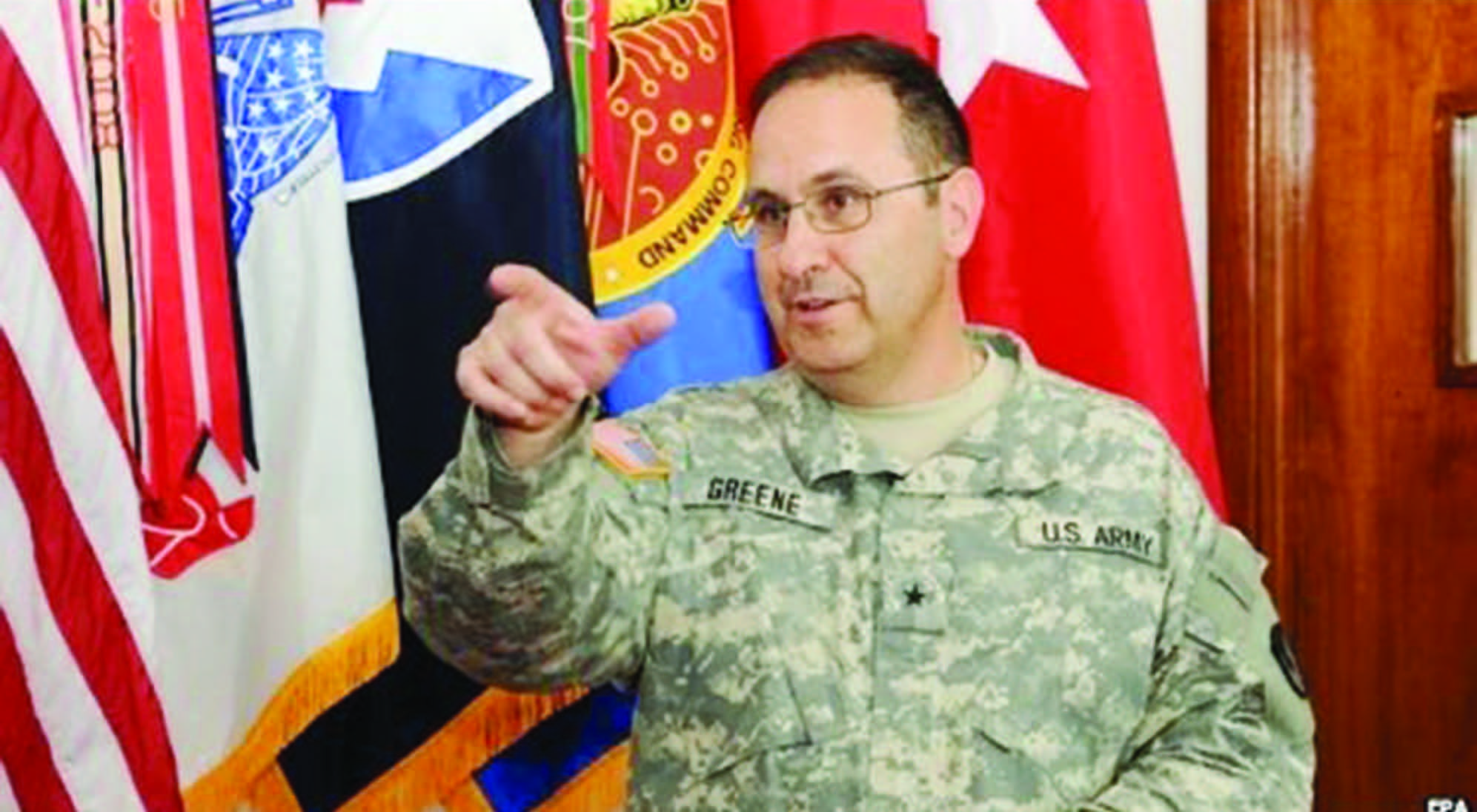
    “I can … confirm among the casualties was an American general officer who was killed,” Pentagon spokesman, Rear Admiral John Kirby, told reporters. Kirby said that he would not give the general’s name pending notification of next of kin. The Washington Post identified the deceased as Major General Harold J Greene, who served as the deputy for systems acquisitions at the US army headquarters. Greene’s official biography said that the New York State native held a doctorate in materials science from the University of Southern California as well as three master’s degrees.

    The general was the highest-ranking US officer killed since the September 11, 2001 attacks when Lieutenant General Timothy Joseph Maude was killed by a hijacked airliner that crashed into the Pentagon. No US general has been killed in combat since the Vietnam War, with topranking service members spared during the Iraq war and, until now, the Afghanistan conflict. President Barack Obama plans to withdraw most troops from Afghanistan later this year.

    A US official, speaking to AFP on condition of anonymity, said that around 15 people were injured including eight Americans. The nationalities of the other victims were unclear, but the German army said that one of its generals was wounded and the US official said that the injured included Afghans. The Pentagon spokesman said that the assailant was killed, although he did not have more detail on how the incident unfolded. “We believe that the assailant was an Afghan soldier,” Kirby said.

    Kirby said it was too early to assess whether US forces needed to improve vetting of Afghan troops. But he described the attack as an isolated incident and credited Afghan troops for their work in securing national elections. “I’ve seen no indication there’s a degradation of trust between coalition members and their Afghan counterparts,” Kirby said.

    “It’s impossible to eliminate, — completely eliminate — that threat, I think, particularly in a place like Afghanistan, but you can work hard to mitigate it,” Kirby said of insider attacks. “As terrible as today is — and it is a terrible day, a terrible tragedy — we haven’t seen in the course of the last year or so… a ‘spate’ of these insider threat attacks. I think that’s testament to the good work authorities have done,” he said in response to a question.

  • Killing of American general stirs new fears

    Killing of American general stirs new fears

    WASHINGTON (TIP): The brazen killing of an American two-star general in an Afghan “insider attack” is raising new concerns in Washington that U.S. forces, when the combat mission ends in December, could leave behind a country vulnerable to extremists waiting in the wings.

    Leading Republican lawmakers, who have long accused the administration of following a political timetable in Afghanistan and worry the country could follow in the path of unstable Iraq, pointed to the attack as another sign that militants are sending a message to the Afghan population. “The Taliban’s recent campaign of high-profile attacks is calculated to accompany a global PR strategy highlighting the fact that U.S. and coalition forces will soon be leaving Afghanistan and abandoning its weak and ineffective government.

    The Taliban wants everyone to know it will soon dominate all aspects of life in Afghanistan once again,” House Speaker John Boehner said in a statement. “I have told the president privately and publicly that my biggest concern is that America will end its mission in Afghanistan just short of the goal line. … So let me reiterate: if the president decides to re-think his strategy, including withdrawals, deadlines, and policy restraints, particularly on certain associated terrorist networks, he will have my support.”

    According to the administration’s latest timetable, announced in May, the U.S. combat mission will end in December of this year. Under the tentative plan, 9,800 U.S. troops will remain at the start of 2015, but that number will be cut in half by the end of next year. By the end of 2016, the U.S. is expected to maintain a “normal embassy presence” like it does in Iraq. The plan is subject to change, particularly if Afghanistan’s next president does not sign a vital security pact.

    Hamid Karzai would not sign the agreement — while the next president is expected to, that election remains contested as candidates Abdullah Abdullah and Ashraf Ghani battle over allegations of fraud and await a vote audit. House Armed Services Committee Chairman Buck McKeon, R-Calif., after the shooting on Tuesday, said “the event only underscores the importance of leaving Afghanistan when the job is finished — rather than stubbornly adhering to arbitrary political deadlines.” Sen. Jim Inhofe, R-Okla., top Republican on the Senate Armed Services Committee, said the incident is a reminder that “force protection” remains a critical mission.

    “As the president withdraws our forces, it is critically important that we listen to our commanders on the ground to determine what is necessary to safely and effectively accomplish our mission in Afghanistan,” he said in a statement. The investigation into the killing of Maj. Gen. Harold J. Greene, the highestranked U.S. officer to be slain in combat since 1970 in the Vietnam War, continued Wednesday , August 6 without any clear answers into why a man dressed in an Afghan army uniform opened fire.

    The shooting wounded about 15 people, including a German general and two Afghan generals. Greene, a 34-year U.S. Army veteran, was the highest-ranked American officer killed in combat in the wars in both Afghanistan and Iraq. About half of the wounded in Tuesday’s attack at Marshal Fahim National Defense University were Americans, several of them reported to be in serious condition.

    At the White House on Tuesday, August 5 Press Secretary Josh Earnest called the shooting a “painful reminder of the service and sacrifice that our men and women in uniform make every day for this country.” But he maintained that coalition forces have “made tremendous progress in disrupting, dismantling and defeating Al Qaida operations and leadership in Afghanistan.” He also cited “progress in winding down U.S. involvement in that conflict.”

  • US Army starts questioning Bergdahl about capture

    US Army starts questioning Bergdahl about capture

    HOUSTON:
    The US Army and a defense attorney say military investigators have begun questioning Bowe Bergdahl about his disappearance in Afghanistan that led to five years in captivity by the Taliban. Eugene R. Fidell says his client is cooperating with the investigation in Texas on Wednesday. Fidell declined to comment on what Bergdahl is being asked. An Army spokeswoman says Bergdahl was advised of his rights.

    The investigation’s findings will help determine whether the 28-year-old is prosecuted for desertion or faces any other disciplinary action. Bergdahl had been receiving care since returning to the United States on June 13 after his release by the Taliban on May 31. Earlier this month, the Army announced Bergdahl was given a desk job.

  • Afghan terror allegations ‘baseless’, Pakistan says

    Afghan terror allegations ‘baseless’, Pakistan says

    ISLAMABAD: Pakistan on Thursday rejected allegations from Kabul that it was involved in terrorist attacks and insurgent activities on Afghan soil. Foreign office spokesperson Tasneem Aslam said in her weekly briefing that Afghanistan has been continuously maligning Pakistan’s national security institutions unabated.

    “We categorically reject Afghan allegations of involvement in terrorist attacks, insurgent activities or cross-border shelling. We also firmly reject any statements casting aspersions on Pakistan’s commitment to fight terrorism,” Aslam said. She said that terrorism is a common enemy afflicting the whole region and concerted efforts must be made by all sides for combating it effectively.

    “Levelling baseless allegations serves no useful purpose. It rather benefits the enemies of peace and undermines the prospects of a cordial relationship between peoples of Pakistan and Afghanistan,” she said. Aslam emphasized that the launch of Operation ‘Zarb-e-Azb’ in North Waziristan is the clearest reflection of Pakistan’s resolve to fight terrorism.

    She also said that Pakistan remains committed to building friendly and good-neighbourly relations with Afghanistan based on the principles of mutual respect for sovereignty and territorial integrity of both countries. She hoped that Kabul would reciprocate to Islamabad’s policy of restraint and responsibility and its continued efforts for constructive engagement.

    On the violence in Gaza, Aslam said that PM Nawaz Sharif has strongly condemned Israel’s actions and reiterated Pakistan’s long-standing support to the cause of Palestine. “He also announced US$ 1 million for emergency humanitarian assistance for the affected people of Gaza,” she said.

  • Kerry Visit: Not Much Expected, Not Much Achieved

    Kerry Visit: Not Much Expected, Not Much Achieved

    Not too much was expected from the justconcluded India-US strategic dialogue and not too much has resulted. Its importance lay in resuming and creating a congenial atmosphere for high level engagement after several US steps roiling India on the diplomatic, economic and trade fronts.

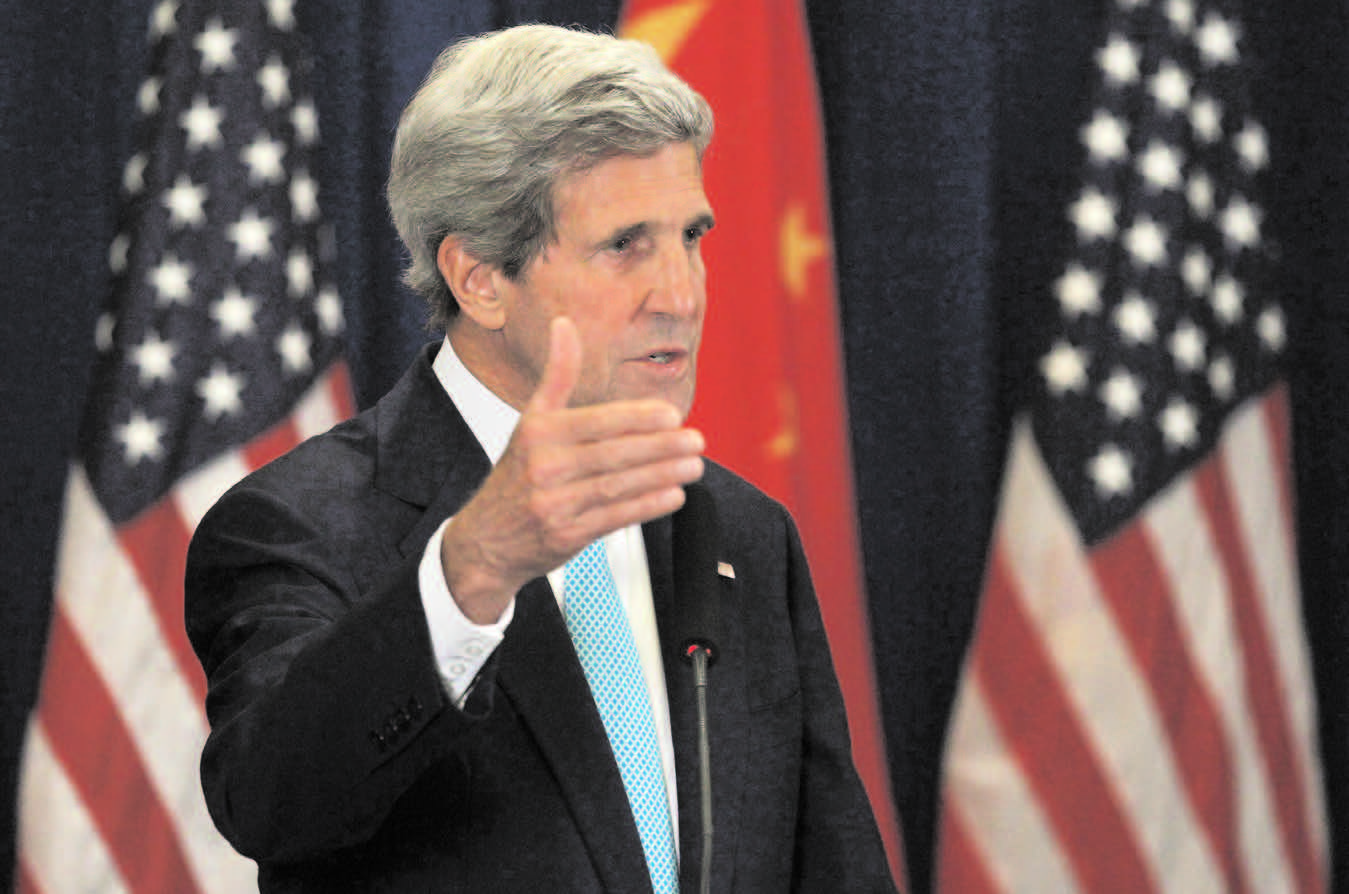
    To signal that the US was ready to engage the Modi government unreservedly, Kerry has tried to woo Shri Modi unselfconsciously by quoting his slogan of “sabke sath sabka vikas” approvingly more than once so as to disarm any personal rancour that they suspect may linger over the visa denial issue. Our external affairs minister has qualified her discussions with Kerry “excellent” though this is not reflected in the announced outcomes.

    She said astutely that the relationship is a truly defining partnership and a strategic one “to the extent” it takes care of our respective regional interests and contributes to security in our neighbourhood. Both sides “stand at a turning point”, she said and referred to the “latent potential” of the relationship -again phrases chosen with care.

    She spoke of scheduling the Ministerial Trade Policy Forum and other dialogue mechanisms to address outstanding trade and economic issues “that arise as a natural result of different perceptions” -again striking a note of realism. She implicitly called US snooping of India as an unfriendly act and “un acceptable”. This needed to be said frankly, as such snooping is a serious diplomatic breach, and had the US been the victim, its reaction would have been severe in reprisals.

    Kerry focused on the US agenda “to boost two-way trade, to support South Asia’s connectivity , to develop cleaner energy , to deepen our security partnership in the Asia Pacific and beyond.” How US can help South Asian connectivity and why the security partnership excludes South Asian security is not clear. He acknowledged realistically that “we all have a lot of homework to do coming out of this meeting”.

    He speaks of specifics that could be put on the table for Shri Modi’s visit to Washington, but which? The US economic interests identified by him are in high-end manufacturing, infrastructure, healthcare and information technology . The first would mean technology transfers and India’s absorption capacities; US companies are hardly likely to build highways, airports, ports, railways etc in India.

    In the IT sector visa issues and movement of professionals remain. Kerry wants removal of obstacles such as “tariffs, or price controls, or preferential treatment for certain products”, issues on which no quick progress can be made. On Climate Change issues, the US is pressing India to accept legally binding commitments to reduce carbon emissions in order to create business opportunities in India for US technologies.

    While supporting Shri Modi’s focus on solar energy , Kerry has said elsewhere that India should become part of global supply chains and not impose local manufacturing, which India seeks in the solar energy sector and for which we have been dragged to the WTO. The joint statement lists the areas of engagement, without breaking any new ground.

    It refers to India joining the export control organisations “in a phased manner”, which implies a delay in the process. On civil nuclear cooperation the joint statement, in deference to US sensitivities, is worded more positively than the situation warrants.

    The reference to India, the United States and Japan working together to build transport and trade connectivity , including by developing economic corridors” to our east is significant geopolitically . On Afghanistan, Iraq and Gaza, a language of the lowest denominator has been found. All in all, the best we could say about the India-US strategic dialogue is: Kerry on.

  • To each superpower, its own near-abroad

    To each superpower, its own near-abroad

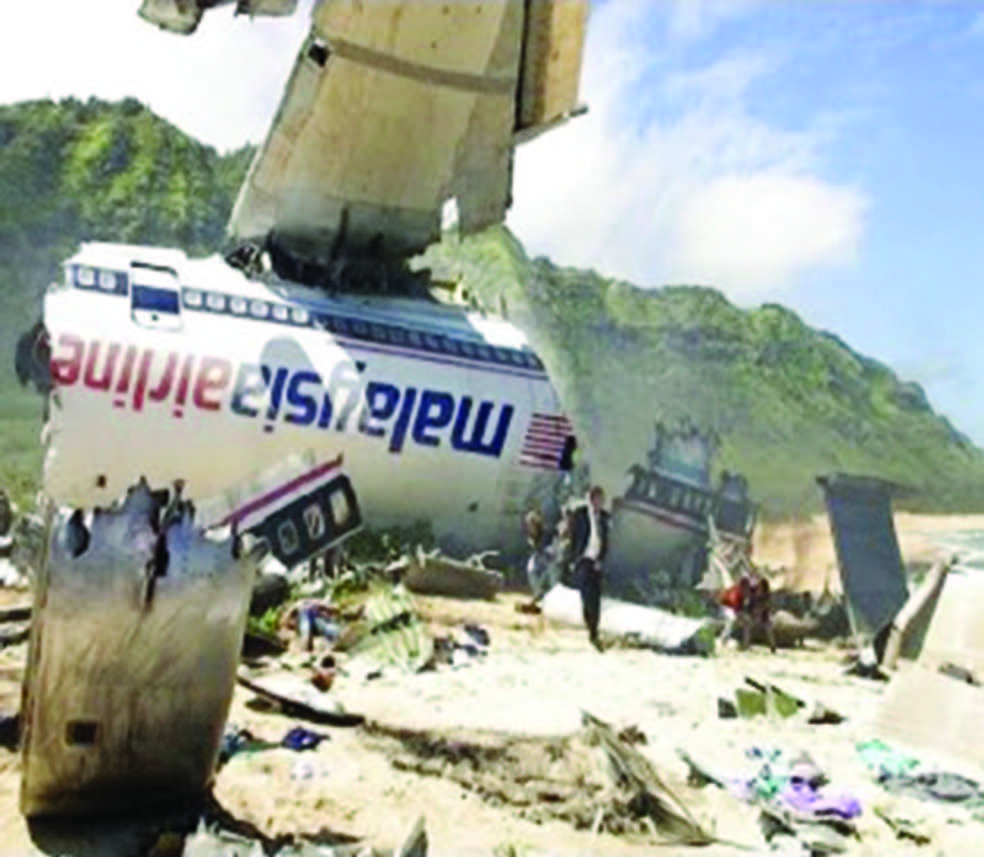
    The downing of MH17 puts the spotlight back on the Ukrainian crisis. It’s a warning to the West to eschew attempts to ‘contain’ Moscow and stop the provocative expansion of NATO across Russia’s borders.

    In the early hours of the morning of July 17, Malaysian Airlines Flight MH17 with 298 people on board was shot down over eastern Ukraine, now controlled by Russian separatists, engaged in a civil war against the Kiev Government. The Russian speaking minority has evidently been reinforced and equipped by their kinsmen from across the Russia-Ukraine border. They carry heavy firepower including tanks, armoured personnel carriers and a range of surface-to-air missiles.

    The shooting down of MH17 came alongside rebel missile attacks over the past four weeks, which have downed two military transport and three state-of-the-art Sukhoi attack aircraft, of the Ukrainian Air Force. It is evident that the missile attack on MH17 was based on the mistaken assumption that it was a Ukrainian Air Force aircraft. There have been seven incidents of such inadvertent shooting down of civilian aircraft in the past. In recent times, South Korean Airlines Flight 007 with 277 passengers and crew strayed into Soviet airspace. It was shot down by a missile fired from a Soviet MiG.

    After the usual rhetoric, Presidents Ronald Reagan and Mikhail Gorbachev returned to business as usual. Thereafter, on July 3, 1988, Iran Air Flight 655, flying from Tehran to Dubai with 290 passengers, mostly pilgrims headed for Mecca, was shot down over Iranian territorial waters, by two missiles fired from the US Navy missile cruiser, USS Vincennes. The US refused to accept responsibility for the action. It paid a sum of $61.8 million as compensation to the families of the victims, following the ruling of an international tribunal.

    What the US paid was less than three per cent of what it got from Libya, for the Lockerbie bombing of Pan Am 103. The Captain of the USS Vincennes was awarded Combat Action Ribbons, shortly after shooting down a civil airliner. Washington, DC’s displeasure, about Russian supply of surface-to-air missiles to the Russian resistance in Ukraine, is surprising. It was the US that started the practice of providing lethal weaponry to non-state actors. The Central Intelligence Agency liberally provided lethal Stinger surface-to-air missiles to the anti-Soviet Mujahideen in Afghanistan, through Pakistan’s Inter-Services Intelligence.

    Three Indian Air Force aircraft – a MiG 21, MiG 27 and a helicopter gunship – were shot down and a Canberra bomber damaged, during and just prior to the Kargil conflict. The IAF aircraft were fired on by Pakistan’s Northern Light Infantry, using, what were assessed to be, Stinger surface-to-air missiles. Given the relentless US policy of strategic ‘containment’ of Russia after the disintegration of the Soviet Union, it was inevitable that, pushed to a corner by American and NATO pressures, the Russians would reach a position of saying: “Thus far and no further”.

    The erratic nature of the policies of President Boris Yeltsin and his advisers like Yegor Gaidar and Mr Andrey Kozyrev, immediately after the disintegration of the Soviet Union, evidently encouraged the US and its NATO allies to erode Russian influence in the Balkans and undermine Russian credibility in Kosovo. Simultaneously, members of armed Chechen separatist groups were openly welcomed in western Europe. Yeltsin’s incompetence in Chechnya and his inability to deal with the expansion of American-led influence just across Russia’s borders, contributed to his being eased out of office and replaced by Mr Vladimir Putin.

    Even as the Russians tried to increasingly integrate former Soviet Republics economically and strategically, the US and its NATO allies held out lucrative offers for economic integration with the European Union and membership of the NATO military alliance. Russia faced a challenge of economic isolation and military encirclement. The Russians have responded by developing economic partnerships with former Soviet Republics and the establishment of the Collective Security Treaty Organisation.

    The economic and security inroads made by the EU and NATO have, however, significantly eroded traditional Russian influence in its immediate neighbourhood. These Western moves, which the Russians naturally regard as strategic encirclement, have resulted in former Warsaw Pact members – the Czech and Slovak Republics, Hungary, Bulgaria, Romania and Poland – joining NATO In the Balkans, Croatia and Slovenia are now NATO members. Moreover, the former Soviet Baltic Republics, Estonia, Latvia and Lithuania have joined NATO.

    There are also moves to consider EU and Nato membership for Ukraine, Azerbaijan, Armenia, Kazakhstan, Moldova and Georgia. Ukraine was ruled by Russian tsars for three centuries prior to the formation of the Soviet Union. It was regarded as part of the sphere of Russian influence. Its eastern region bordering Russia was increasingly populated by Russians. Ukraine’s Crimean region was transferred by Soviet leader Nikita Khrushchev from the Russian Federation to Ukraine in 1954, as a “gesture of goodwill”, marking the 300th anniversary of Ukraine being a part of Tsarist Russia.

    Sevastopol in Crimea is vital strategically to Russia, constituting Russia’s access to the warm waters of the Black Sea. Former President Viktor Yanukovych of Ukraine and other Ukrainian leaders inevitably played off the Russians, who promised plentiful supplies of energy, against the EU, which promised prosperity. Mr Yanukovych signed an agreement in 2010 extending the lease of Sevastopol till 2042. The quite evidently American-backed movement that resulted in the ouster of Mr Yanukovych, led to the takeover of Sevastopol and the Crimean region, with a Russian majority population, by Russia.

    The US-led attempts to contain Russia have been marked by inconsistencies. The dismemberment of Yugoslavia and the independence of Kosovo were justified by Western powers on the lofty grounds of respect for “human rights”. But, today these same powers are raving and ranting against the “separatists” of the Russian minority in Ukraine, who are seeking independence, or merger with Russia.

    There is little doubt that Russia today faces serious internal problems arising out of falling birth rates, alcoholism, drug addiction, declining life expectancy and corruption. But, it will be a historical error to underestimate Russian resilience in the face of adversity. Attempts to dominate and marginalise the Russian minority in Ukraine will be fiercely resisted and reinforced by support from across the Ukrainian-Russian border.

    What is needed is a realistic political solution involving a united, but federalised Ukraine. More importantly, attempts at ‘containment’ of Russia, will have to be eschewed and the expansion of NATO across Russia’s borders ended. Given the imperatives of stability and energy security, responsible European countries like Germany and France will recognise this. Will the Americans do likewise?

  • US Bonhomie for India: US Secretaries Storm New Delhi

    US Bonhomie for India: US Secretaries Storm New Delhi

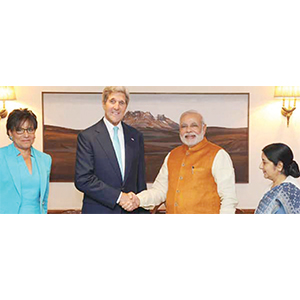
    The recent visits of Secretary of Commerce Penny Pritzker, Secretary of State John Kerry, and Secretary of Defense Chuck Hagel are being seen as demonstrative of the resurgence of U.S. interest in India as both countries try to strengthen ties.

    NEW DELHI (TIP): It may be a coincidence that the Union cabinet announced August 6, a day before US Secretary of Defense arrived in New Delhi, the decision to allow 49% FDI in Defense. Also announced were the cabinet decisions to allow 100% FDI in Close on the heels of the visits to India by U.S. Secretary of Commerce Penny Pritzker and U.S. Secretary of State John Kerry, U.S. Secretary of Defense Chuck Hagel arrived in India Thursday, August 7, for a three-day visit.

    The fact that these high-profile trips by American officials have occurred so close to one another indicates the resurgence of American interest in India. Furthermore, the emergence of a strong, decisive, and reformist government under the Bharatiya Janata Party (BJP) in India has suddenly put India back on the U.S. agenda. India’s Prime Minister Narendra Modi is keen on reminding the world that India is a large country that cannot be ignored and whose interests must be taken seriously.

    Secretary Hagel is scheduled to meet Prime Minister Narendra Modi and India’s Defense and Finance Minister Arun Jaitley on Friday, August 8 as well as U.S. and Indian defense company executives. Talks are expected to be fruitful for both countries. Hagel is in India to strengthen defense ties between the two nations. Although the two nations have been moving closer over the past decade, they have not become as close as some U.S. policymakers would have liked.

    In fact, events of the past year, including India’s support for Russia in Crimea and the Devyani Khobragade case, show the limitations of a U.S.-India relationship. Nonetheless, both countries are interested in strengthening defense ties when possible, as they still share many common interests, including stability in Afghanistan, as well as concerns over China. It is unlikely that India and the U.S. will remain on anything but cordial terms, despite some occasional bumps. Secretary Hagel himself recognized this, stating that U.S. relationships with new partners in Asia represented both opportunities and challenges.

    The Wall Street Journal quotes Rear Admiral John Kirby, the Pentagon press secretary, as saying that “Secretary Hagel’s meetings will focus on the United States’ and India’s converging interests in the Asia Pacific, our common interests in Afghanistan and initiatives to strengthen our defense cooperation, including military exercises, defense, trade, co-production and co-development and research.” One of Secretary Hagel’s goals is to seek more defense projects between the two countries.

    There is much scope for this. India is the largest importer of U.S. arms, although it still imports up to 75 percent of its arms from Russia. The two countries are close to finalizing a $1.4 billion deal in which India will buy at least 22 U.S. Apache and 15 Chinook helicopters made by Boeing, as well as other aircraft. Discussion of this deal will be at the top of Hagel’s agenda during his visit. India is also keen on bringing in more foreign investment in its defense sector, so it can meet more of its defense needs indigenously.

    India is becoming increasingly ambitious on this front, building, for example, ever-larger warships in India. U.S. investment in India’s defense sector could bolster India’s ability to meet its security needs and be another way in which both the U.S. and India cooperate and profit together. Hagel may also discuss a U.S. offer to jointly develop and produce the next generation of the Javelin missile in India for the Indian market as well for export.

    Analysts are optimistic on the outcome of Hagel’s visit to India. According to Vivek Lall, a former Boeing executive and current chairman of the aerospace and defense committee of the Indo-American Chamber of Commerce, “this visit could be the inflection point of deeper defense ties between both countries, specifically to help boost defense production and state-of-the-art technology absorption.”

  • Pakistan’s shrinking minority space

    Pakistan’s shrinking minority space

    By Farahnaz Ispahani

    The desire of Islamist extremists to ‘purify’ Pakistan has resulted in a major catastrophe for the minorities. The country cannot emerge as a modern pluralist state until the reversal of this culture of intolerance.

    “Pakistani laws, especially the one that deals with blasphemy, deny or interfere with the practice of minority faiths. Religious minorities are targets of legal as well as social discrimination”, says the author. .

    The murder in Gujranwala of an elderly woman, a seven-year-old girl and an infant in a mob attack on members of the Ahmadi community highlights the continuing deterioration of Pakistan’s treatment of its religious minorities. The mob was incited by an Ahmadi youth allegedly sharing blasphemous material on his Facebook page. But the cause of incitement is hardly relevant. Pakistan has been described by several human rights organizations as one of the nations with the least tolerance in religious matters.

    The latest incident should be viewed as part of a tragic pattern that has evolved over decades. Ironically, the intolerance that is now widely associated with Pakistan had little to do with its founder’s vision of a country where “in course of time Hindus would cease to be Hindus and Muslims would cease to be Muslims, not in the religious sense, because that is the personal faith of each individual, but in the political sense as citizens of the State.” The Ahmadis consider themselves Muslim but their beliefs are deemed by the orthodox as falling outside the tenets of Islam.

    The community recognizes Mirza Ghulam Ahmed of Qadian as messiah and an emissary from god, a concept that runs contrary to the Orthodox Muslim notion of Khatm-e- Nabuwwat or Finality of the Prophethood. Anti-Ahmadi agitations have often been used by religious-political groups, particularly in the Punjab, as an instrument of polarization. Violent attacks on Ahmadis in 1953 resulted in Pakistan’s first instance of limited martial law being imposed in the city of Lahore.

    Growing discrimination
    In 1974, another wave of violence led to Pakistan’s Parliament amending the Constitution to declare Ahmadis as non- Muslims for legal purposes. It was argued at the time that once the Ahmadis’ apostasy is legally recognized and they are classified legally as non-Muslims, their orthodox Muslim critics would be satisfied and anti- Ahmadi violence would decline. But that has not happened. Instead, attacks on Ahmadis have continued unabated and along with other minority religious communities, there is an effort to marginalize the community, convert them or push them out of Pakistan.

    Currently, the Ahmadis are barred by law from calling themselves Muslim or using Islamic terminology like “masjid” to describe their places of worship. Violation of that law entails criminal proceedings and imprisonment. But the community is not afforded any legal protection even as a non- Muslim minority. Over a one-and-a-half year period in 2012-2013, there were 54 recorded mob attacks against Ahmadis.

    The latest incident stands out because of the frivolousness of its ostensible cause and the innocence and helplessness of its victims. A grandmother and her seven-year-old granddaughter or an infant could hardly pose a threat to Islam in Gujranwala, a large city with millions of inhabitants and hundreds of mosques and madrasas. The desire of Islamist extremists to “purify” Pakistan has resulted in a major catastrophe for the country’s minorities.

    The violence of Partition denuded Pakistan of the majority of its Hindus and Sikhs, who would have otherwise constituted almost 20 per cent of the new country’s population based on the 1941 census. Now that a sizeable swathe of Pakistan’s Muslim population has been turned into zealots, communities such as the Ahmadis, who were considered Muslim at independence, have joined the ranks of endangered minorities. Even the Shia, almost 20 per cent of the populace, are being attacked by extremists who do not acknowledge them as being a part of Muslim society.

    The attempts to describe Shias as non-Muslims are particularly ironic in view of the fact that Pakistan’s founder, Quaid-e- Azam (the great leader) Muhammad Ali Jinnah was himself a Shia Muslim. Jihadist groups created and trained to fight “infidel” communists in Afghanistan and “Hindu” India have become a threat at home and no one in a position of power seems to have the will or the courage to shut them down.

    Such is the sway of extremist ideology that the murder in cold blood of Ahmadis, Shias, Christians, Hindus and now increasingly Barelvi or “soft Sunni” Muslims and other religious groups who do not belong to the majority Sunni Muslim interpretation of Islam no longer seems to have any shock value left. According to reports, crowds celebrated all night on July 27 after the bloodshed in Gujranwala.

    Erosion of diversity
    That this occurred in the month of Ramzan, a month meant to be spend praying and asking for forgiveness of one’s earthly sins, indicates the absence of any connection between violence against minorities and any notion of religious piety among the orthodox Sunnis who victimize them. More than three days have passed since the Gujranwala attack and most Pakistanis have seen the television images of the crowd who perpetrated this calumny, dancing in the streets all night in celebration.

    However, there was no condemnation heard from the Prime Minister of Pakistan, Nawaz Sharif or his brother, the Chief Minister of Pakistani Punjab. The utter irrationality of the rejection of the Ahmadiyya community in Pakistan is encapsulated in the manner in which one of its most famous sons, Dr. Mohammad Abdus Salam was spurned by his country. The physicist was the first and the only Pakistani as well as the first Muslim to win a Nobel Prize in science.

    After his death in 1996, Salam’s remains were returned to Pakistan and buried in an Ahmadi cemetery, with his tombstone describing him as the “First Muslim Nobel Laureate.” A magistrate subsequently ruled that the word “Muslim” on an Ahmadi grave was blasphemous and ordered it to be sanded off. It seems that nobody in Pakistan remembers Jinnah’s comments when confronted with the demand to exclude Ahmadis from the fold of Islam. Jinnah had said, “If someone describes himself as a Muslim, how can I judge him otherwise.

    Let God decide that matter.” When Pakistan was born on August 14, 1947, the new country’s capital, Karachi, was home to a religiously diverse community. The city’s architecture, too, reflected the traditions of several religions. In addition to mosques of various Muslim denominations, there were Catholic and Protestant churches, a Jewish synagogue, Parsi (Zoroastrian) fire temples, as well as Jain and Hindu temples devoted to various deities. The Muslim call to prayer (Azan) was called on loudspeakers by Shias, Sunnis and Ahmadis five times a day.

    Various religious holidays were observed openly and often across communities. Sixty seven years later, Karachi is no longer Pakistan’s capital. The country’s federal government now conducts its business from a purpose built capital, Islamabad, whose very name suggests a close relationship between Pakistan and Islam. Karachi’s synagogue has shut down as have several of its churches.

    The few remaining churches have a dwindling number of worshippers. Many Pakistani Christians have emigrated to North America or Australia. Most Jain and Hindu temples have either been destroyed or taken over by squatters or land-grabbers and property developers. The Parsi populations have also declined though their temples exist. The Muslim call to prayer no longer sounds from Ahmadi places of worship.

    Incremental intolerance
    Pakistan’s incremental intolerance in matters of religion is exemplified by the brutal assassination of former Punjab Governor Salmaan Taseer and its aftermath. Taseer had attempted to help a poor unlettered Christian woman, Asia Bibi who was facing false blasphemy accusations. He was accused of being a blasphemer himself and killed by his own bodyguard.

    His murderer, Mumtaz Qadri, was garlanded and showered with rose petals by educated middle class lawyers outside a courthouse at his arraignment. According to the independent Human Rights Commission of Pakistan (HRCP), the country’s problem is the tolerance of “pervasive intolerance” in the country. The commission’s director, I.A. Rehman, asserts that “Pakistan continues to offer evidence of its lack of respect for the rights of religious minorities.”

    He attributes it to “the virus of intolerance” that he maintains “has infested the Pakistani people’s minds.” Human rights advocates like Mr. Rehman demand “visible action to end abuse of minorities’ rights” instead of “half-truths and subterfuge in defending the state,” which they feel have been consistently employed by Pakistan officials over the years. Pakistani laws, especially the one that deals with blasphemy, deny or interfere with the practice of minority faiths.

    Religious minorities are targets of legal as well as social discrimination. Most significantly, in recent years, Pakistan has witnessed some of the worst organized violence targeting religious minorities. Over an 18-month period covering 2012 and part of 2013, at least 200 incidents of sectarian violence were reported, that led to 1,800 casualties, including more than 700 deaths.

    Those of us who have been born in Pakistan have seen and experienced the effects of the hatred fed to us through our textbooks, television sets, newspapers, religious clergy and military dictators about the purity of only one religion and one version of Islam.

    Their need to destroy any threat to its purity, and therefore the purity of the state, has ensured that the well of tolerance has by now been well and truly poisoned. Pakistan cannot emerge as a modern pluralist state until the reversal of this culture of intolerance.

  • HAMID KARZAI’S COUSIN KILLED IN SUICIDE ATTACK: OFFICIALS

    HAMID KARZAI’S COUSIN KILLED IN SUICIDE ATTACK: OFFICIALS

    KANDAHAR, AFGHANISTAN (TIP):
    A suicide attacker killed a cousin of outgoing Afghan President Hamid Karzai near the volatile southern city of Kandahar on Tuesday, officials said, raising tensions during a struggle over the contested election result. Hashmat Karzai was a campaign manager in Kandahar for Ashraf Ghani, one of the two presidential candidates involved in a bitter dispute over fraud that threatens to pitch the country into worsening instability.

    Hashmat Karzai, who famously owned a pet lion, was killed by a man with explosives hidden inside his turban when visitors arrived to celebrate Eid, the holiday marking the end of the Muslim holy month of Ramadan. “A suicide bomber disguised as a guest came to Hashmat Karzai’s house to greet him,” Dawa Khan Minapal, the Kandahar provincial governor’s spokesman, told AFP.

    “After he hugged Hashmat, he blew up his explosives and killed him.” Ghani and opposition leader Abdullah Abdullah are at loggerheads over the June 14 second-round election, which has been mired in allegations of massive fraud. Ghani won the vote according to preliminary results, but an audit of the ballots is under way after Abdullah refused to accept defeat due to fraud claims. Hashmat Karzai in Karz, Kandahar, killed today. No immediate Taliban assertion of responsibility.

    pic.twitter.com/OKffMQ4K8W — Lotfullah Najafizada (@LNajafizada) July 29, 2014 With the audit triggering another outbreak of complaints from both sides, many fear the country could be at risk of a revival of the ethnic violence seen during the 1992-1996 civil war. Hashmat Karzai first worked in this year’s presidential election campaign for Qayyum Karzai, the president’s brother, and later moved to support Ghani when Qayyum withdrew from the race.

  • Eight killed in Afghanistan market blast

    Eight killed in Afghanistan market blast

    KABUL (TIP): At least eight civilians died and 28 were injured on July 24 when a bomb planted on a motorcycle exploded in a market in northern Afghanistan, an official said. The bomb, activated by remote control, went off in the crowded market in Khwaja Ghar district in Takhar province, police spokesperson Abdul Khalid told Efe news agency. The province is not a usual scene of insurgent activities.

    Violence has been on the rise in Afghanistan since last year, when Afghan forces were handed back security tasks after the gradual withdrawal of the NATO-led International Security Assistance Force (ISAF). Forty two people died July 15 in one of the deadliest attacks in the last few years, carried out by a suicide bomber in a crowded market in the southeastern province of Paktika.

    The Taliban disassociated themselves from that attack and the Afghan government accused the Haqqani Network, a Pakistani insurgent group which operates between Pakistan and Afghanistan. In the first six months of this year, violence has claimed the lives of 1,564 civilians, 17 percent more than in 2013 over the same period, while the number of injured increased by 28 percent, to 3,289.

    ISAF will conclude its mission in Afghanistan at the end of 2014, but Washington has announced that it will maintain around 9,800 troops in the country until its complete exit at the end of 2016.

  • Militants kill eight Pakistani paramilitary members

    Militants kill eight Pakistani paramilitary members

    PESHAWAR, PAKISTAN (TIP): Militants killed eight members of a government paramilitary force in a midnight attack on a security checkpoint in Pakistan’s restive northwest, security officials said Friday. The militants bombarded the checkpoint with rocket-propelled grenades, two senior military officials said, before overrunning and ransacking it. Local residents said the gunfire began around midnight and continued for at least two hours.

    The attack, for which no militant group has so far claimed responsibility, comes amid a military offensive to push the Taliban out of North Waziristan, a remote northwestern region near the border with Afghanistan. Nato has long urged the military to take action against Taliban safe havens in North Waziristan, where many groups had bases they used to launch attacks in Afghanistan. North Waziristan was considered the key stronghold of the Taliban after other areas in Pakistan had been mostly cleared of militants.

    But residents say most militants moved out before the Pakistani army announced its offensive last month, raising fears that they may now be beefing up their presence in other areas. “The militants displaced from North Waziristan have returned to the Khyber agency and started attacks on security forces,” said one security official. The Khyber Agency is part of the semiautonomous areas where tribal law holds sway instead of Pakistan’s judicial system, and the government is represented by a political agent. Eight members of the state-run Frontier Corps men were killed and three others injured in the attack in the region’s Jamrud subdivision. Khyber is about 48 km (30 miles) north of North Waziristan, and also borders Afghanistan.

  • MILITANTS KILLED AFTER AUDACIOUS ATTACK ON KABUL AIRPORT

    MILITANTS KILLED AFTER AUDACIOUS ATTACK ON KABUL AIRPORT

    KABUL (TIP): Militants armed with rocket-propelled grenades attacked Kabul International Airport in the Afghan capital on July 17 in one of the most audacious assaults on the facility, used by both civilians and the military, in a year. The attack on the airport comes at a time of great uncertainty for Afghanistan as votes from the second round of a disputed presidential election are to be recounted.


    The poll is meant to mark Afghanistan’s first democratic transfer of power. The attack lasted about four hours after four unidentified militants armed with automatic rifles and rocketpropelled grenades opened fire on the airport from the roof of a building just to its north. “Four terrorists were killed by police special forces. The area is being cleared now, there are no casualties to our forces,” said Interior Ministry spokesman Sediq Sediqqi. The airport is home to a major operational base for NATO-led forces that have been fighting Taliban and other insurgents for 12 years and is bristling with soldiers and police, guard towers and several lines of security checkpoints. Militants fire rockets into the airport almost every week, causing little damage, but frontal attacks on the heavily guarded facility are rare and represent an ambitious target for insurgents.


    The attack was similar in tactics to last year’s assault on the airport, when seven Taliban insurgents including suicide bombers attacked after taking up positions inside a partially constructed building nearby. There was no immediate claim of responsibility for the latest attack. A Kabul airport official told Reuters all flights had been diverted to other cities. In such circumstances, passenger planes are immediately diverted to other Afghan cities such as Mazar-i- Sharif in the north or Herat in the west.


    “Due to the closeness of the attack to the runway, Kabul airport is now closed to all flights,” the official said. Planes could be heard circling above Kabul as the attack unfolded. A Reuters witness near the scene earlier saw black smoke billowing above the airport and heard several explosions. A car had been set on fire not far from the scene. On July 14, a car bomb detonated in a crowded market killed 43 people and wounded at least 74 in the eastern province of Paktika, close to Afghanistan’s porous border with Pakistan.

  • US SENTENCES BRITISH MEN OVER TALIBAN SUPPORT

    US SENTENCES BRITISH MEN OVER TALIBAN SUPPORT

    NEW YORK (TIP): A US judge sentenced two British men to a combined total of 20.5 years in prison on Wednesday for conspiring to provide and for providing equipment and personnel to the Taliban.Computer engineer Babar Ahmad was sentenced to 12.5 years and Syed Talha Ahsan, who was diagnosed with Asperger’s syndrome in custody, to time served at eight years.They were arrested by British police in 2004 and 2006 respectively and extradited to the United States in 2012 as part of a batch of Britons wanted on terror charges.

    British campaigners bitterly opposed their extradition on the grounds that they were held so long without charge and arguing they should be tried at home. Both sentences were lighter than demanded by prosecutors. Ahmad, 40, and Ahsan, 34, were indicted in Connecticut on charges of conspiring to support and supporting the Taliban regime in Afghanistan while they sheltered Al-Qaida, Chechens fighting the Russians and related terror groups.For years, they pleaded not guilty but in December changed their plea on two counts of the indictment — conspiring to provide and providing support to the former Taliban regime.

    US district judge Janet Hall sentenced Ahmad to 150 months’ imprisonment and Ahsan to 96 months, or time already served. The case was heard in US federal court in New Haven, Connecticut because websites they ran in London relied for a time on a Connecticut hosting company. Ahsan is now expected to be released and deported. Ahmad has already served a decade in custody and reports suggest he too could be freed in months. Their cases attracted the support of thousands in Britain and campaigners say Ahmad was the Briton held the longest without charge as part of the global “war on terror.” The son of a retired civil servant and a retired science teacher, Ahmad worked in the IT department of London’s prestigious Imperial College at the time of his arrest.

  • UNITED STATES HAS A STAKE IN INDIA’S SUCCESS

    UNITED STATES HAS A STAKE IN INDIA’S SUCCESS

    It is my hope that Prime Minister Modi and his government will recognize how a deeper strategic partnership with the US serves India’s national interests, especially in light of current economic and geopolitical challenges”, says the author.

    Iwant Prime Minister Modi to succeed because I want India to succeed. It is no secret that the past few years have been challenging ones for India – political gridlock, a flagging economy, financial difficulties, and more. It is not my place or that of any other American to tell India how to realize its full potential.

    That is for the Indians to decide. Our concern is simply that India does realize its full potential, for the United States has a stake in India’s success. It is also no secret that India and the US have not been reaching our full potential as strategic partners over the past few years, and there is plenty of blame to be shared on both sides. Too often recently we have slipped back into a transactional relationship.

    We need to lift our sights again. The real reason India and the US have resolved to develop the strategic partnership is because each country has determined independently that doing so is in its national interests. It is because we have been guided by our national interests that the progress of our partnership has consistently enjoyed bipartisan support in the US and in India.

    When it comes to the national interests of the US, the logic of a strategic partnership with India is powerful. India will soon become the world’s most populous nation. It has a young, increasingly skilled workforce that can lead India to become one of the world’s largest economies.

    It is a nuclear power and possesses the world’s second largest military. It shares strategic interests with us on issues as diverse and vital as defeating terrorism and extremism, strengthening a rules-based international order in Asia, securing global energy supplies, and sustaining global economic growth. We also share common values. It is because of these shared values we are confident that India’s continued rise as a democratic great power will be peaceful and thus can advance critical US national interests.

    That is why, contrary to the old dictates of realpolitik, we seek not to limit India’s rise but to bolster and catalyze it – economically, geopolitically, and, yes, militarily. It is my hope that Prime Minister Modi and his government will recognize how a deeper strategic partnership with the US serves India’s national interests, especially in light of current economic and geopolitical challenges.

    For example, a top priority for India is the modernization of its armed forces. This is an area where US defense capabilities, technologies, and cooperation can benefit India enormously. Similarly, greater bilateral trade and investment can be a key driver of economic growth in India. Put simply, I see three strategic interests that India and the US clearly share, and these should be the priorities of a reinvigorated partnership. First, to shape the development of South Asia as a region of sovereign democratic states that contribute to one another’s security and prosperity; second, to create a preponderance of power in the Asia-Pacific region that favors free societies, free markets, free trade, and free comments; and, finally, to strengthen a liberal international order and an open global economy.

    It is important for US leaders to reach out personally to Prime Minister Modi, especially in light of recent history. That is largely why I am traveling to India, and that is why I am pleased President Obama invited the prime minister to visit Washington. When the prime minister comes to Washington, I urge our congressional leaders to invite him to address a joint session of Congress.

    Yet we must be clear-eyed about those issues that could weaken our strategic partnership. One is Afghanistan. Before it was a safe haven for the terrorists who attacked America on September 11, 2001, Afghanistan was a base of terrorists that targeted India. Our Indian friends remember this well, even if we do not. For this reason I am deeply concerned about the consequences of the president’s plan to pull all of our troops out of Afghanistan by 2016.

    If Afghanistan goes the way of Iraq in the absence of US forces, it would leave India with a clear and present danger on its periphery. It would constrain India’s rise and its ability to devote resources and attention to shared foreign policy challenges elsewhere. It would erode India’s perception of the credibility and capability of US power and America’s reliability as a strategic partner.

    The bottom line here is clear: India and the US have a shared interest in working together to end the scourge of extremism and terrorism that threatens stability, freedom, and prosperity across South Asia and beyond.
    I hope the president will be open to reevaluating and revising his withdrawal plan in light of conditions on the ground. Another hurdle on which our partnership could stumble is our resolve to see it through amid domestic political concerns and shortterm priorities.

    If India and the US are to build a truly strategic partnership, we must each commit to it and defend it in equal measure. We must each build the public support needed to sustain our strategic priorities, and we must resist the domestic forces in each of our countries that would turn our strategic relationship into a transactional one.

    If the 21st century is defined more by peace than war, more by prosperity than misery, and more by freedom than tyranny, I believe future historians will look back and point to the fact that a strategic partnership was consummated between the world’s two preeminent democratic powers: India and the United States. If we keep this vision of our relationship always uppermost in our minds, there is no dispute we cannot resolve, no investment in each other’s success we cannot make, and nothing we cannot accomplish together.

  • Kerry arrives in Afghanistan to meet candidates

    Kerry arrives in Afghanistan to meet candidates

    KABUL, AFGHANISTAN (TIP): The US and its allies are growing increasingly concerned as Afghanistan shows signs of unraveling in its first democratic transfer of power from President Hamid Karzai. With Iraq wracked by insurgency, Afghanistan’s dispute over election results poses a new challenge to President Barack Obama’s effort to leave behind two secure states while ending America’s long wars. US Secretary of State John Kerry made a hastily arranged visit to Afghanistan on Friday to help resolve the election crisis, which is sowing chaos in a country that the US has spent hundreds of billions of dollars and lost more than 2,000 lives trying to stabilize. He was to meet with the two candidates claiming victory in last month’s presidential election runoff. “I’ve been in touch with both candidates several times as well as President (Hamid) Karzai,” Kerry said before leaving Beijing, where he attended a US-China economic meeting.

    He called on them to “show critical statesmanship and leadership at a time when Afghanistan obviously needs it.” “This is a critical moment for the transition, which is essential to future governance of the country and the capacity of the (US and its allies) to be able to continue to be supportive and be able to carry out the mission which so many have sacrificed so much to achieve.” With Iraq wracked by insurgency, Afghanistan’s power dispute over the election results is posing a new challenge to President Barack Obama’s 5 1/2-year effort to leave behind two secure nations while ending America’s long wars in the Muslim world. Obama wants to pull out all but about 10,000 US troops from Afghanistan by the end of the year, and the election of a new Afghan president was supposed to enshrine the progress the nation has made since the US-led invasion after the 9/11 terrorist attacks.

    The preliminary results of the presidential election runoff suggested a massive turnaround in favor of former Finance Minister Ashraf Ghani Ahmadzai, a onetime World Bank economist who lagged significantly behind former Foreign Minister Abdullah Abdullah in first-round voting. Abdullah, a top leader of the Northern Alliance that battled the Taliban before the American-led invasion, claims the runoff was a fraud, and his supporters have spoken of establishing a “parallel government,” raising the specter of the Afghan state collapsing. Abdullah was runner-up to Karzai in a fraud-riddled 2009 presidential vote before he pulled out of that runoff.

    Chief electoral officer Zia ul-Haq Amarkhail has resigned, denying any involvement in fraud but saying he would step down for the national interest. Kerry will seek to persuade both candidates to hold off from rash action while the ballots are examined and political leaders are consulted across Afghanistan’s ethnic spectrum. The US wants to ensure that whoever wins will create a government that welcomes all ethnic factions. If neither candidate gains credibility as the rightful leader, the winner could be the Taliban.

    Many Afghans fear the insurgent forces will only gain strength as the US military presence recedes. Internal instability could aid the insurgency. Abdullah and Ghani each have said that as president they’d sign a bilateral security agreement with the United States, granting American forces immunity from local prosecution. Without such an agreement, the Obama administration has said it would have to pull all US troops out of Afghanistan, a scenario that played out in Iraq three years ago. Karzai has refused to finalize the deal, leaving it to his successor. James Dobbins, the State Department’s special representative for Afghanistan and Pakistan, said this week some degree of fraud was expected, but it’s believed the fraud was “quite extensive.

    ” Speaking in Washington, Dobbins said the Abdullah campaign particularly mistrusts the impartiality of the Afghan electoral institutions. Both campaigns and Karzai have asked the Un for help, he noted, and the Un has been designing a plan for deciding how ballots can be reviewed and which ones would be reviewed for possible fraud. A Un audit, however rudimentary, probably could be done within two weeks, US officials believe. The focus would be on clear fraud indicators, including districts with high turnout or more women going to the ballots than men.

  • Foreign funding and the Maharajas among NGOs

    Foreign funding and the Maharajas among NGOs

    “At the heart of the dilemmas presented by the evolving situation is the kind of Middle East major regional and world powers want to see. More importantly, where will the present series of conflicts take the region, with the escalating Shia-Sunni conflict and the dislocation of millions, either internally displaced or living as refugees in neighboring countries?” the author wonders

    Behind the frenzied diplomacy over the future of Iraq are new assumptions taking shape. First, is the division of the country among its Shia, Sunni and Kurdish areas a matter of time? Second, how far will the Islamic State of Iraq and Syria (and its variant the Levant), collectively known as the ISIS, spread from its present swathe in Syria and Iraq? What is being debated is the future shape of the Middle East some hundred years after the French-British division of the spoils of the disintegrating Ottoman Empire.

    There are no clear answers because of the variety of regional and world powers pursuing differing policies. Of the regional actors, the most important are Saudi Arabia, Iran and Turkey. Here is a conflict not only between Sunni and Shia countries but the very different inflections of the two Sunni powers and Shia Iran’s interest in seeking the destruction of the ISIS as it protects its influence in Iraq, now being governed by the majority Shias.

    The United States has an obvious interest in seeking to check the onslaught of the ISIS and to save a scrap of investment in all that it put into Iraq starting with its invasion in 2003.

    But the ISIS represents a danger also to its vital interest in Israel’s security, with the present ruling dispensation there bent on colonizing the land of Palestine in perpetuity.

    The dilemma for President Barack Obama is that having won his election and reelection on the strength of ending America’s wars in Iraq and Afghanistan, he has been forced to re-introduce American military power in the shape of 300 military advisers and the threat of air strikes. Washington cannot allow a terrorist outfit of the shape of the ISIS to hold sway over Iraq.

    Here Iranian and U.S. interests coincide, despite their backing of opposite sides in neighbouring Syria. At the heart of the dilemmas presented by the evolving situation is the kind of Middle East major regional and world powers want to see.

    More importantly, where will the present series of conflicts take the region, with the escalating Shia-Sunni conflict and the dislocation of millions, either internally displaced or living as refugees in neighbouring countries? A few pointers can be tabulated. If the present crisis in Iraq continues to take its toll, what is being described as the soft partition of its three main regions is inevitable.

    Second, the Gulf monarchies led by Saudi Arabia will draw closer even as they have been disheartened by the hesitation shown by President Obama over effectively dealing with the Syrian crisis. It remains to be seen whether the vast differences that separate Iran and the US over resolving the Iranian nuclear portfolio can be bridged in the near future.

    But Tehran has been signaling for some time under the Presidency of Mr. Hassan Rouhani that it wants to play a constructive role in the region and beyond it. Future steps taken by President Obama and Iran, among others, will decide the shape of the region. Egypt, the traditional regional heavyweight, is too involved in its domestic transition and economic woes to be of much assistance in the immediate crisis facing the region.

    Indeed, we are entering a new phase in the affairs of the region and the Arab world. The days of the Arab Spring are but a distinct memory although the hopes of a better world will not die down for ever.

    The problem for the liberals and secular reformers is that they are in a minority and religion-based politics and the destructive uses of religion in its distorted forms have taken their toll. Basically, the peoples of much of the region are conservative and God-fearing in their outlook even as the younger generation, vast sections of whom are unemployed, are looking for work and the goodies promised in a television – and internet-generated age.

    Besides, it would be imprudent to forget after the Arab romanticism introduced by Gamal Abdel Nasser in Egypt, the dream was snuffed out and disillusionment set in, accentuated by the Arabs’ humiliating defeat in the 1967 war with Israel.

    Even as the Palestinians are seeking to recover some of their land and dignity, Israel shows no sign of obliging, enjoying as it does uncritical American support, thanks to the powerful American Jewish lobby. For the most part, the Arab world has been ruled by absolute monarchies or, as in Egypt’s case, by armed forces officers donning the lounge suit, as in the case of three decades of Hosni Mubarak rule, until his overthrow.

    Tunisia, the originator of the Arab Spring, is the only country that is trying to make a success of the spirit of the original revolution. Indeed, the prospects for the Arab world look gloomy but, as the old adage has it, time does not wait for people and countries and the question before the world is where the currents of history are taking the region. In installing another armed forces man in the shape of ex-Field Marshal Abdel el-Sisi as the new President, Egypt offers no solution.

    Nor can President Bashar al-Assad of Syria fighting a vicious civil war to safeguard his office and the rule of his minority Alawite rule offer a solution. In Algeria, an incapacitated President Abdelaziz Bouteflika has won yet another show election. If the region’s leadership does not provide the answer, where will the peoples and the world look for answers?

    For one thing, the ISIS has helped concentrate minds because this is one thing neither the majority in the region nor outside powers want. The threeyear savagery of the Syrian civil war first gave rise to it even as President Assad interested outside powers to help the fight for, or against, him. In Iraq, the rapidity of the ISIS’s advance was determined in part by Prime Minister Nouri al-Maliki’s marginalization of Sunnis and the disaffection of Kurds. But the question remains: Where does the Middle East go from here? (Courtesy The Tribune)

  • Taliban rocket destroys Afghan president’s helicopter

    Taliban rocket destroys Afghan president’s helicopter

    KABUL (TIP): Taliban insurgents fired rockets into Kabul airport on Thursday, destroying the Afghan president’s parked helicopter and damaging three other choppers, officials said, in an attack that underlined security fears in the capital.

    The two rockets caused no casualties at the airport, which includes a large NATO base as well as a terminal for civilian flights to cities such as Dubai, New Delhi and Istanbul. “Three helicopters were damaged and can be repaired, while President Hamid Karzai’s helicopter was destroyed,” Major General Afzal Aman, director general of military operations, told AFP.

    Mohammad Yaqub Rassouli, head of the airport, said that firefighters rushed to put out a blaze in a hangar as some flights were halted. Taliban spokesman Zabihullah Mujahid claimed responsibility for the attack on the heavily-guarded site, which has been targeted several times in recent years, in an email sent to AFP. “There is loss of life and financial losses, and several planes were torched,” the Taliban said.

    The insurgents often exaggerate the impact of their attacks. The strike came a day after a Taliban suicide bomber in Kabul killed eight military officers travelling on a military bus.The Afghan capital has been relatively peaceful since the presidential election on June 14, though there have been street demonstrations as politicians are locked in a dispute over vote fraud.All NATO combat troops will leave Afghanistan by December, with about 10,000 US troops staying into next year if the new president signs a security deal with Washington.

  • White House sends $60 billion war-funding request to Congress

    White House sends $60 billion war-funding request to Congress

    WASHINGTON (TIP): The White House sent Congress a 2015 war-funding request on Thursday of nearly $60 billion, a drop of $20 billion from the current fiscal year after President Barack Obama decided to withdraw all but 9,800 troops from Afghanistan by Dec 31. Obama, in a letter to the House of Representatives Speaker John Boehner, asked for $58.6 billion for the war in Afghanistan and other overseas military activity, the smallest Pentagon war-funding request in a decade.

    In addition to funding the Afghanistan war, the request also seeks $500 million to support Syria’s moderate opposition, $1.5 billion to support stability in the countries bordering Syria that have been flooded with refugees and $140 million for non-operational training in Iraq. The administration request was about $20 billion less than the current fiscal year, which ends on Sept 30, and $20 billion less than the $79.4 billion place-holder figure in its budget submission to Congress in February.

    The request to Boehner also included $1.4 billion in Overseas Contingency Operations funds for the state department, bringing its total request to $7.3 billion. The department had asked for $5.9 billion for overseas operations in its February budget. The Overseas Contingency Operations request on Thursday included $5 billion for a new Counterterrorism Partnership Fund and $1 billion for a European Reassurance Initiative. About $5 billion of the total would fall under the Pentagon’s budget and the remainder under the state department. The White House said the counterterrorism fund would be used to respond to emerging threats by “empowering and enabling our partners around the globe.”

    About $2.5 billion would go to train and equip nations fighting terrorist groups that threaten the United States and its allies. The fund, for example, would cover the cost of sending US commandos to train troops in other countries. The administration proposed spending up to $140 million to provide assistance to Baghdad, including non-operational training to help Iraqi forces address shortfalls in intelligence gathering, air sovereignty, logistics, maintenance and combined arms operations. Senator Carl Levin, the Democratic chairman of the Senate Armed Services Committee, welcomed the funding request, saying the $500 million to support Syrian opposition members matched language supported by members of his panel.

  • Hafiz Saeed slams ‘terror’ label for Jamat-ud-Dawa, says it serves people

    Hafiz Saeed slams ‘terror’ label for Jamat-ud-Dawa, says it serves people

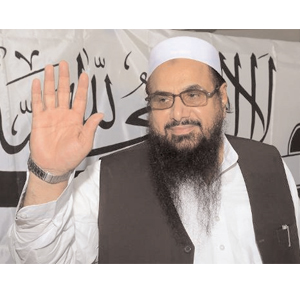
    LAHORE, PAKISTAN (TIP): The leader of a Pakistani Islamist organization that was labeled a terror group and slapped with economic sanctions by the United States denied having any links to militancy on June 26 and vowed to hold protests. Hafiz Muhammad Saeed, who is chief of Jamat-ud-Dawa (Organisation for Preaching), insisted his group was a charity and not a front for the Lashkar-e-Taiba (LeT) militant outfit which carried out the 2008 Mumbai attacks. “Jamat-ud-Dawa (JuD) has no link whatsoever with Lashkar-e-Taiba, which is a resistance wing in Kashmir,” he told a press conference in the eastern city of Lahore.

    “It is an independent Pakistani organization taking part in the promotion of education and relief operations. It is only serving the Pakistani people,” added Saeed. JuD is listed as an alias of LeT by the United Nations, which has also labelled Saeed an abettor of Al Qaeda and brought sanctions on him, though he has never been convicted of a crime inside Pakistan. Apart from the Mumbai attacks, which killed 166 people, LeT is active against Indian forces in Kashmir and was blamed for an attack on the Indian consul in Herat, Afghanistan in May. The US State Department announced the amendments to its Foreign Terrorist Organization list on Tuesday, where it also listed three further groups as fronts for LeT and brought sanctions against two more LeT operatives.

    The US Treasury said Nazir Ahmad Chaudhry, one of the two hit with sanctions, has been a senior leader and strategist for LeT since the early 2000s, while the second, Muhammad Hussein Gill, is an LeT founder and its chief financial officer. Saeed, 64, produced both men in front of the media and vowed to protest the decisions against them. “The designation of two JuD members is condemnable and we will hold protest rallies against the decision on Friday.

    “Americans don’t have any independent thought… they are stupid. They have been unleashing a negative propaganda campaign against us at the behest of India,” he added.A foreign office spokeswoman said the US sanctions would have no bearing any Pakistani response. “An action by any state individually does not have any bearing or obligations on Pakistan,” she said.

  • 800 Taliban fought Afghan troops in 5- day battle: Officials

    800 Taliban fought Afghan troops in 5- day battle: Officials

    KANDAHAR, AFGHANISTAN (TIP): More than 800 Taliban insurgents have launched a major offensive in southern Afghanistan to try to gain territory recently vacated by US troops, officials said on June 25, as five days of fighting left about 40 civilians dead. “About 800 fighters started to storm four districts of Helmand last Thursday night,” Helmand provincial governor spokesman Omar Zwak told AFP. “At least 21 Afghan forces have died and close to 40 civilians were killed.

  • National imperatives in a complex world

    National imperatives in a complex world

    A well-thought-through response combining intelligence, the internal security apparatus and mature political initiatives are called for. The design and execution of a response that is successful will need to ensure that the response itself does not exacerbate the problem, as would appear to be the case so far. Use of a sledge hammer either leaves a crater or results in diffusion and dispersion even more difficult to address”, says the author.

    Adecisive electoral mandate provides just the opportunity required for a comprehensive review of the national security architecture long overdue. It gives the Prime Minister the freedom and authority to evaluate existing systems. Considered judgment will be needed on the efficacy of existing systems and structures, particularly of their cohesiveness and efficient functioning. Should the “review” so warrant, new systems capable of assessing threats and delivering appropriate responses to challenges to the nation’s security will need to be put in place early before existing systems are tested.

    New threats

    The nature of threats to national security is fast altering. These emerge inter alia from the changing nature of violence in troubled hotspots like Afghanistan, Yemen, from Syria and Iraq where there are deepening and exploding sectarian fault lines, from transnational organized crime like piracy and terrorism, weapons of mass destruction, cyber security and from instability in fragile states and cities. The BJP’s election manifesto acknowledges the comprehensive canvas of national security to include military security, economic security, cyber security, energy, food, water and health security and social cohesion and harmony.

    In the BJP’s view, the lack of strong and visionary leadership over the past decade, coupled with multiple power centers, has led to a chaotic situation. Clarity is required on the factors that have led to this. Revisiting the genesis of the national security architecture as it has evolved, including prior to 1998 when the first National Security Advisor (NSA), Brajesh Mishra assumed office is instructive. It was clear all along that crafting a national security architecture on a Cabinet Parliamentary model would pose difficulties.

    Members of the Cabinet, entrusted with responsibility for defense, external affairs, home and finance invariably are senior political figures. As members of the Cabinet Committee on Security (CCS), given their seniority and influence, there was anticipation they could operate as independent silos. Experience has shown there are in-built institutional constraints to correctly assess emerging threats in an evolving and fastchanging strategic landscape by functionaries within a silo. The institution of a National Security Adviser (NSA) has worked best in a Presidential system, such as in the United States, where the NSA draws authority from the President as the chief executive.

    This apprehension has been validated over the past decade and a half, variations in the personality of individuals notwithstanding. The strategic community, both within the country and outside has looked to the NSA to obtain the government’s line on issues central to the nation’s security. The ability to respond quickly, appropriately and, if necessary, decisively to threats to national security, imminent and real is of vital essence. This has, however, not always been the case.

    The “review” being proposed could catalogue the challenges to national security over the past decade and a half and critically examine them as case studies to evaluate the efficacy of our response. Caution needs to be exercised. Not always is the failure to respond appropriately due to institutional constraints. Weak political leadership in the past has also been an important factor.

    The attack by the Haqqani network on our Embassy in Kabul was anticipated by the CIA but could not be prevented. By the time its deputy director reached Islamabad, the terror machine had struck. No self-respecting nation can allow itself to be repeatedly wounded. Unless retribution is demonstrated, further attacks will follow.

    Bifurcation of two jobs

    The first NSA’s success was partly due to the fact that he doubled up as the Principal Secretary and was known to enjoy the full confidence of the Prime Minister. Healthy disagreements between the first NSA and the then External Affairs Minister, in spite of both being familiar with issues relating to defense, intelligence and diplomacy, the three components of national security, viewed holistically, was, however, an early pointer of the shape of things to come. The decision to bifurcate the two jobs for a short period under UPA-I is well documented for its shortcomings. Even Mani Dixit, the tallest professional of his generation, could not manage the pressures from the EAM and turf battles within the PMO.

    The performance of successors largely content “to push files”, succeeded or failed depending on how weak or strong the silos were in defense, external affairs and home. The NSA’s influence fluctuated particularly in relation to the incumbent in the Home Ministry. In the absence of full play in the areas of defense and home, even a talented professional ended up as no more than a foreign policy advisor. The portfolios of home, defense, finance and external affairs now have incumbents who, in terms of seniority within the BJP, have the benefit of several decades of association with the Prime Minister.

    This gives them clout which no civil servant can ever hope to acquire. Battles for turf are central to the functioning of any democracy. Weak political leadership in the Ministry of External Affairs (MEA) over the last decade, in spite of a first-rate Foreign Service has led to the relative weakening of the MEA. This weakness has been most manifest in relation to the conduct of our bilateral relationships in our immediate neighborhood which are in varying degrees of disrepair, as are our relations with China and the United States.

    The policy of acquiescence with China will need to be shed at the earliest and more clinical and realistic assessments put in place. Deep incursions into our territory cannot continue to be explained away in terms of an un-demarcated border. With the United States, the transactional nature of the relationship resulting from absence or insufficient attention in Washington has been more than matched by our own shortsightedness. It will be easier to deal with China, if our relations with the United States are perceived to be on the upswing.

    Focusing on Japan alone will place us in an untenable situation. The game changer will be the twin focus on US and China. In terms of military strength, there has been lack of clarity in what capability we are seeking. Most war games and doctrines are still addressing either 1971- type scenarios or a tactical nuclear weapons exchange. It is a sad reflection on the state of play that we are the biggest importers of conventional armaments, even after acquiring strategic capability.

    Rationalization of armed forces

    Every other country, including China and now the United States have “rationalized” their Armed Forces, a euphemism for reducing. On the other hand, we are seeking creation of three more Commands – Special Forces, Aerospace and Cyberspace. The Central Army and Southern Air force Commands have limited roles yet, we keep increasing our “tails and turf”. There is an urgent need to rationalize our defense thinking and structures as part of an overall national security review.

    In 1965, the Government of India had commissioned Arthur D. Little, an American consultancy firm to make recommendations on defense production in India. Many of their recommendations, including on the involvement of the Indian private sector, are still valid. It should not be difficult given the visible and available political will to break through the dependence on imports to modernize our own defense production structures using FDI and an infusion of technology. The present system is unsustainable.

    Resources are not only limited but the evolving situation in Iraq could place us in dire straits. Every dollar increase in the benchmark price of brent crude results in an additional liability of Rs 3,000 to 5,000 crore. The producers of oil are salivating at the prospect of oil prices touching new highs. This could spell gloom and even doom for importing countries, particularly those heavily dependent on imports, the price having gone up from $106 to $115 in just five days.

    Shoring up security
    ● In 1965, the Government of India had commissioned Arthur D. Little, an American consultancy firm to make recommendations on defense production in India. Many of their recommendations, including on the involvement of the Indian private sector, are still valid.
    ● Given the political will, it will be easy to break through the dependence on imports to modernize our own defense production structures using FDI and an infusion of technology.
    ● Along with an evaluation of existing systems, a comprehensive review of all security challenges emanating from developments outside our borders is imperative.
    ● We are the biggest importers of conventional armaments, even after acquiring strategic capability. Every other country, including China and now the United States have “rationalized” their Armed Forces The attack by the Haqqani network on our Embassy in Kabul was anticipated by the CIA but could not be prevented. Along with an evaluation of existing systems, a comprehensive review of all security challenges emanating from developments outside our borders is imperative.

    Entities known to be inimical to India’s interests, particularly those enjoying some form of support from agencies of the state, if not outright patronage, in a few countries in our immediate neighborhood would readily suggest themselves and constitute the relatively easier part of this exercise. The ability of these entities to make common cause with sections of our own population whose alienation quotient has been enhanced by internal mismanagement is easy to identify if not easy to counter.

    A well-thought-through response combining intelligence, the internal security apparatus and mature political initiatives are called for. The design and execution of a response that is successful will need to ensure that the response itself does not exacerbate the problem, as would appear to be the case so far. Use of a sledge hammer either leaves a crater or results in diffusion and dispersion even more difficult to address. The BJP’s election manifesto separately calls for a study of India’s nuclear doctrine and its updating to make it relevant to current challenges.

    (The author, a retired diplomat, was till early 2013 India’s Ambassador and Permanent Representative to the United Nations in New York. He is presently Non- Resident Senior Adviser, International Peace Institute, New York. He has recently joined the BJP).

  • TALIBAN TARGET VOTERS IN AFGHANISTAN, KILL 50, MUTILATE 11

    TALIBAN TARGET VOTERS IN AFGHANISTAN, KILL 50, MUTILATE 11

    KABUL (TIP): Election officials overseeing Afghanistan’s first democratic transfer of power sifted through scores of fraud complaints on June 12 as they began a lengthy vote count, after insurgents killed at least 50 people on polling day.

    The final result in the run-off presidential election is not due for several weeks, and international concerns have focused on the risk of a disputed outcome as the two candidates started to trade fraud allegations. Officials said more than 50 people were killed in separate Taliban strikes on Saturday, when more than 7 million voters cast their ballot in the contest between former foreign minister Abdullah Abdullah and ex-World Bank economist Ashraf Ghani.

    The deaths included five election workers killed when their bus was hit by a roadside bomb in Samangan province, and five members of one family who died when a Taliban rocket hit a house near a polling station. Eleven voters in the western province of Herat had their fingers—which were dipped in ink to register their ballot—cut off by insurgents. The UN described the mutilations as “abhorrent”.

    More than 70 militants were also killed in fighting during the day, according to the interior ministry.The White House praised voters’ courage and called the elections “a significant step forward on Afghanistan’s democratic path”, after the turnout topped 50 percent. The US, along with the UN, urged the two candidates not to make unproven fraud allegations, but both Abdullah and Ghani raised the issue immediately after polls closed.

    “It is win or lose now,” said Kate Clark, director of the Afghanistan Analysts Network. “The voting is only one phase of the election, and there is still a lot that could change. Being a good loser doesn’t gain you much here. “If it is close and fraud looks to have been a lot, and either candidate wants to really make a fuss, then we could be in for months of wrangling.”

    The 2009 election, when outgoing President Hamid Karzai retained power, was hit by massive fraud that shook the US-led international effort to develop Afghanistan after the fall of the Taliban regime in 2001.

  • US depends on India, Pakistan for stability after US pullout from Afghanistan

    US depends on India, Pakistan for stability after US pullout from Afghanistan

    WASHINGTON (TIP): As President Barack Obama announced plans for Afghanistan after ending US combat mission by year end, the US hoped India, Pakistan and Afghanistan would help provide greater stability and security in the region. India’s new Prime Minister Narendra Modi and his Pakistani counterpart Nawaz Sharif had set a “constructive tone from the very beginning,” a senior administration official told reporters Tuesday in a background briefing on Obama’s plans.

    Under Obama’s plan to “bring America’s longest war to its responsible end,” the US which currently has 32,000 troops in Afghanistan will keep 9,800 troops there after December 2014. The US will then gradually withdraw troops keeping only a small residual force by the end of 2016 — just three weeks before his presidency ends. Obama said Americans have learned it was harder to end a war than to start one. “We have to recognize Afghanistan will not be a perfect place, and it is not America’s responsibility to make it one.”

    The role of US troops in Afghanistan after this year will be aimed at “disrupting threats caused by Al Qaeda, supporting Afghan security forces and giving the Afghan people the opportunity to succeed as they stand on their own,” he said. However, the US plan depends on the Afghans signing a bilateral security agreement. While current Afghan President Hamid Karzai has refused to sign such an agreement, both the candidates in next month’s runoff presidential election have indicated a willingness to do so.

    “With respect to India, I think we’ve seen a constructive tone set from the very beginning by Prime Minister Modi and by Prime Minister Sharif, who was one of the first leaders to speak to” Modi after his election victory, the US official noted. Noting that Sharif had traveled to India for Modi’s swearing in and the two had met Tuesday, he said: “We always encourage India and Pakistan to pursue dialogue that can reduce tension.” “We believe that that is in the interest of the entire region.

    And so we’ll continue to encourage that.” “So with that new leadership in India, the new leadership in Pakistan, and the new president coming to office in Afghanistan this year, I think we have an opportunity to have that discussion about how all the countries in the region can provide for a greater stability and security,” the official said. “And that’s certainly something we’re going to pursue,” he said. People have been wondering how “the region is going to respond in kind as the international community draws down in Afghanistan,” the official said as “regional dynamics, particularly with regards to their proxies, matters considerably to future stability in Afghanistan.”

    “But in recent and operational terms, the attack against the Indian consulate in Herat raised that very question,” he said. However, the US was “hopeful that the initial indication between both Islamabad and New Delhi is a positive one” he said taking note of Sharif’s attendance at the swearing in. Sharif’s “first such visit in many years” was “reminiscent of the last time there was significant progress” between the two countries when the Bharatiya Janata Party (BJP) came to power during Sharif’s previous term as Prime Minister in the late ’90s, the official said. “They made progress along lines that looked very much like what we have now,” he said. “So we’re cautiously hopeful that that could be a positive indicator, but we’re also mindful that this will be very important to the dynamic going forward,” the official said.

  • It’s a new era in India’s foreign policy as countries compete to woo Modi

    It’s a new era in India’s foreign policy as countries compete to woo Modi

    “The new majority government in power in New Delhi, freed from debilitating coalition politics and attaching priority to economic development, has aroused external interest”, says the author.

    In foreign policy, Prime Minister Modi has hit the ground running, taking unexpected initiatives. He reached out to our neighbors, taking the unprecedented step of inviting their leaders to his swearing-in ceremony. While invitations to Bangladesh, Nepal, Bhutan, Maldives and Afghanistan carried only positive connotations, those to Prime Minister Nawaz Sharif and President Rajapakse carried mixed political implications. It was felt that the plus points in extending invitations to Pakistan and Sri Lanka outweighed the negatives.

    Engagement

    In Pakistan’s case the dilemma is whether we should engage it at the highest level without any ground-clearing move by Nawaz Sharif on terrorism, the Mumbai trial and trade. The Pakistani premier has been, on the contrary, aggressive over Kashmir, invoking the UN resolutions and self-determination as a solution, seeking third party intervention, permitting tirades by Hafiz Saeed against India, maintaining the pitch on water issues and reneging on granting MFN status even under a modified nomenclature.

    In these circumstances, the move to invite him risked suggesting that, like the previous government, the new government too was willing to open the doors of a dialogue in the hope of creating a dynamics that would yield some satisfaction on the terrorism issue. In other words, practically delinking dialogue from terrorism, despite having taken a position to the contrary while in opposition.

    In Sri Lanka’s case, the whipped-up sentiments in Tamil Nadu against President Rajapakse for his triumphalist rather than reconciliatory policies on the Tamilian issue have upset the overall balance of India’s foreign policy towards Sri Lanka that requires that we adequately weigh the need to counter powerful adversarial external forces are at play there against our interests. Inviting President Rajapakse to New Delhi obviously risked provoking a strong reaction in Tamil Nadu, but the new government had to decide whether, like its predecessor, it would get cowed down by such regional opposition, or it would act in the greater interest of the country even when according importance to the sentiments of a section of our population.

    This dramatic outreach to the neighbors has elicited praise internally and externally, primarily focused on the invitation to the Pakistan president and its implication for the resumption of the Indo-Pak dialogue. Internally, those pro-dialogue lobbies that have espoused the previous government’s placative policies towards Pakistan have naturally welcomed the surprise move by Modi. Externally, India has always been counseled to have a dialogue with Pakistan irrespective of its conduct and its terrorist links, the argument being that these two South Asian nuclear armed neighbors with unresolved territorial conflicts risked sliding into a nuclear conflict unless they found a way to settle their differences for which a dialogue was an inescapable necessity. Such praise from within and without from predictable quarters should neither be surprising nor worth much attention.

    Outreach

    The new majority government in power in New Delhi, freed from debilitating coalition politics and attaching priority to economic development, has aroused external interest. The sentiment outside the country- as well as inside it – has been that the previous government lost its way, leading India into the quagmire of high fiscal deficits and tumbling growth, belying international expectations about its economic rise paralleling that of China.

    If India can be steered back into a high growth trajectory with stronger leadership and improved governance, more economic opportunities will open up for our foreign partners. This would also draw renewed attention to India’s geo-political importance which, though an accepted reality now, has receded from the foreground lately.

    Reassurance

    Modi is seen as the man of the moment. This would explain the telephone calls from world leaders to Modi and the invitations given and received. India is being courted, and Modi’s choice of the countries he first visits or foreign leaders he first receives, is drawing external attention as an indication of his diplomatic priorities.

    On this broader front too, Modi is following an unanticipated script of his own. He is being generous to the US despite its reprehensible conduct in denying him a visa, by prioritizing national interest over his individual feelings. He has not waited for the stigma of visa refusal to be erased by a US executive order removing his name from the State Department black-list. He is planning to meet President Obama in Washington in September – the first external visit to be announced – quickly relieving the Americans of fears that the visa issue could become a hurdle in engaging him.

    In another remarkable gesture that the State Department would have noted for its political import, he has agreed to a book launch by an American think-tank at Race Course Road. China wants to complicate moves by Japan to strengthen strategic ties with India. Its decision to send its Foreign Minister to India after the swearing-in seems to have been motivated by this rivalry, apart from seeking to build on the personal contacts established by China with Modi when he was Chief Minister. If the Chinese FM was allowed to be the first consequential foreign leader to meet Modi, it appears Japan may be the first foreign country – barring Bhutan – the latter may visit en route to the BRICS meeting in July in Brazil.

    The Bhutan visit underscores the importance Modi intends attaching to neighbors. Russia’s Deputy Prime Minister is visiting Delhi on June 18. It would seem that Modi’s immediate priority is to reassure all his important interlocutors, friends or adversaries, that they should have no misgivings about him and the direction of his policies, and that he seeks to engage with all power centers in a balanced manner.

  • Afghanistan flash floods kill around 60

    Afghanistan flash floods kill around 60

    KUNDUZ, AFGHANISTAN (TIP): Flash floods have killed around 60 people in northern Afghanistan, washing away hundreds of homes and forcing thousands to flee, officials said on Saturday warning that the death toll was expected to rise. The floods in the remote mountainous district of Baghlan province come a month after a landslide triggered by heavy rains buried a village and killed 300 people in a nearby region.

    The twin disasters highlight the challenges facing underdeveloped Afghanistan’s next leader as the country heads into the second round of the presidential election on June 14. “People have lost everything they had — houses, property, villages, agricultural fields, cattle,” Baghlan police spokesman Jawed Basharat said about the floods.

    “There’s nothing left for them to survive. People don’t even having drinking water,” he added. “They urgently need water, food items, blankets and tents.” Afghan disaster management officials said they were scrambling to get food and medical aid to the area after torrential rains unleashed the floods, which forced thousands of people to flee their houses. Officials recovered 58 bodies from the inundated areas, including women and children, with several people said to be missing, according to the National Disaster Management Authority (NDMA).

    “There is a lot of stagnant water, and there are more bodies under the rubble and mud,” Mohammad Nasim Kohzad, head of NDMA in Baghlan, said. “We are still looking for other victims of this flood.”