Tag: Afghanistan

  • Australian PM Tony Abbott makes surprise visit to Afghanistan

    Australian PM Tony Abbott makes surprise visit to Afghanistan

    CANBERRA (TIP): Australian Prime Minister Tony Abbott made a surprise visit to Afghanistan on October 28 to mark the impending end of Australia’s military involvement in the conflict, his office said. Abbott arrived at the Australian headquarters at Tarin Kowt under tight security for a ceremony to mark the end of Australia’s involvement in the war that has cost the lives of 40 Australian soldiers over more than a decade, the Prime Minister’s office said in a statement. The headquarters will be given to the Afghan army and most of Australia’s 1,500 troops will be withdrawn by Christmas. “Australia’s longest war is ending not with victory, not with defeat, but with, we hope, an Afghanistan that is better for our presence here,” Abbott told a large crowd of Australian and international soldiers. Abbott said it the withdrawal was a “bitter-sweet” occasion, and that “Afghanistan remains a dangerous place despite all that has been done.” Australia is the largest provider of troops to the Afghanistan war outside NATO.

  • LADAKH, THE MOUNTAIN KINGDOM

    LADAKH, THE MOUNTAIN KINGDOM

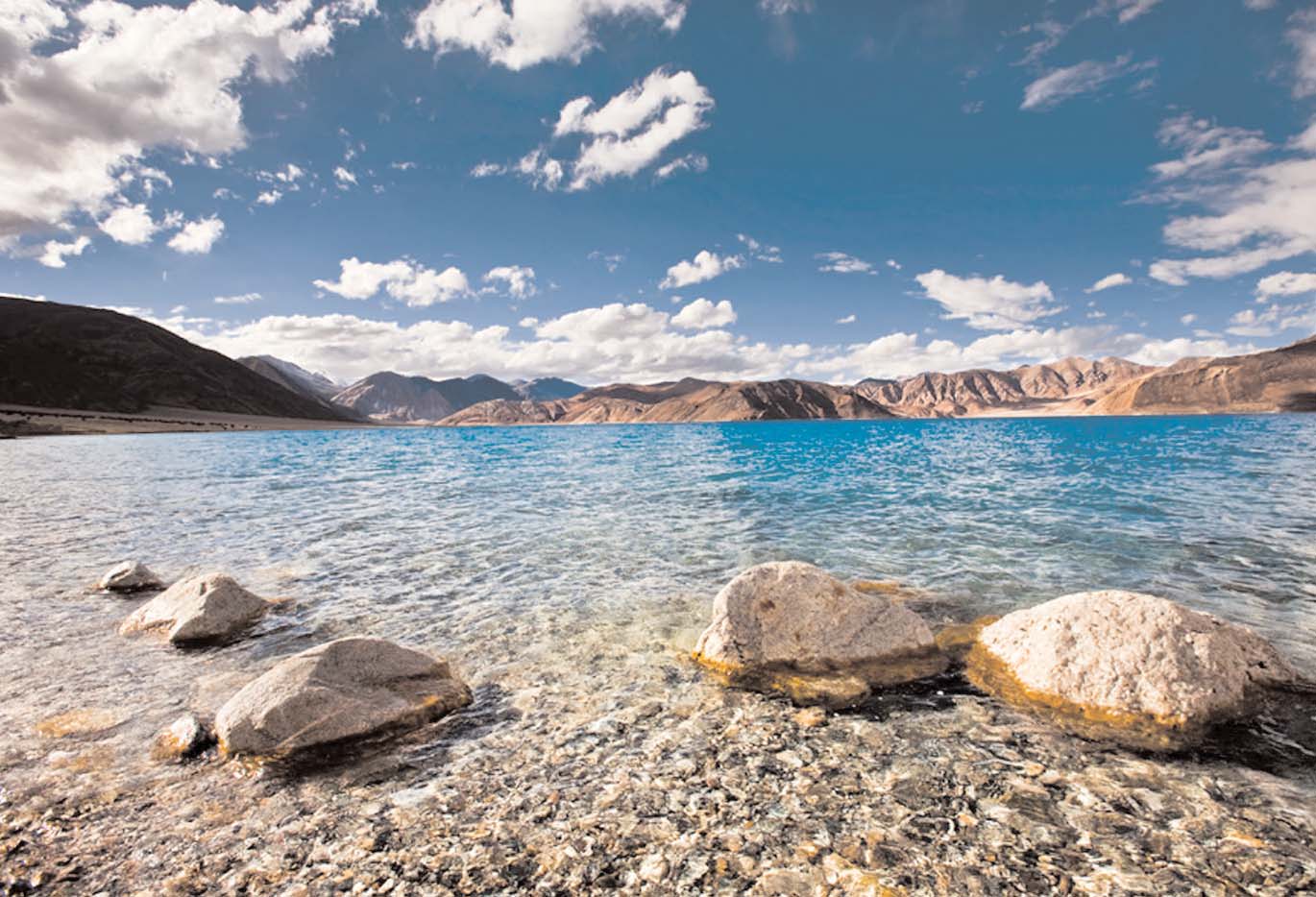
    Nestled at an altitude of 3,500 meters above the sea level, between the Kunlun Mountain Range in the north and the main Great Himalayas to the south, is a small, yet bustling town of Leh. Being the largest city of Ladakh, Leh enjoys the maximum tourism. It not links one of the sleepy hamlets and valleys of the district, but is also one of the few remaining Buddhist destinations in South Asia. Being a cold desert, this arid terrain experiences drastic weather changes. The temperatures are so extreme that while one in winters experiences temperatures range between 0 degrees to -28 degrees, in summers one gets to face temperatures like 3 degrees to 30 degrees. Since the temperatures are diverse and the altitude only gets higher, travellers are suggested to have preventive medication for altitude sickness before embarking on their journey.


    img34

    Must see
    The Leh Palace, which is situated behind the main market has eight stories and is similar to the Potala Palace of Lhasa and still belongs to the royal family of Ladakh. Just ahead of the palace is the famous Chamba Temple, which is a oneroomed shrine that has a huge icon of Maitreya, the Buddha to come. Since this temple cannot be found easily, it is essential to enquire about it in the second row of shops. Also in the bazaar, at the top of the street, one can see the Jama Masjid. This has been painted in green and white colour. Another place that you must visit is the Sankar Gompa, which is situated within the city and is one of the oldest structures here. At one time, this monastery only welcomes maximum twenty monks and is a fairly active one. Also the monks here are extremely hospitable and always offer yak butter tea to those visiting the monastery. Also a visit to the famous Thikse Monastery is a must. This monastery is the largest such structure in central Ladakh and is primarily known for its magnanimous statue of Maitreya (future Buddha) in its Maitreya Temple. This statue is 15 meters (49 ft) high and the largest such statue in Ladakh. The Buddha here is unusually portrayed as seated in the lotus position rather than his usual representations as standing or in a sitting posture on a high throne.

    Must do
    On Old Leh Road exists the Tibetan Refugee Market which is an ideal place for shopping in Leh. Tibetan markets are popular for their metal-ware. The visitors here who have an eye for artistic pieces would find sonorous bowls made of nine metals like cymbals, decorative brass and copper trumpets. Besides, cymbals that have religious themes that are used in meditation are also found here. Also if one is fond of jewellery, it is possible to find relevant items like unpolished silver and turquoise jewellery and chunky shell bangles worn by Ladakhi women. There are also a range of excellent rugs and carpets that have traditional Persian and Kashmiri themes. Some other attractions of these markets are the native Thangka paintings, jewellery made of semi-precious stones, small prayer wheels, shawls, stoles and music bowls. One can also find the lapis lazuli from Afghanistan and the rubies from Burma.

    Must know
    The cheapest way to travel within the region is by the state buses, which ply on fixed routes according to fixed time schedules. The most comfortable and convenient though expensive mode of travel, however, is taxi, which is available for hire on fixed point-topoint tariff basis. For visits to the newly opened areas of Nubra, Dah-Hanu, Tsomoriri, Tsokar and Pangong Lake, it is mandatory to engage the services of a registered and recognised travel agency that makes the requisite arrangements including internal transport.

    How to reach
    By road

    The overland approach to Ladakh from Kashmir Valley via Kargil is approximately 434 kms, which remains open for traffic from early June to November. The most dramatic part of this road journey is the ascent up the 11,500 feet 3,505 m high Zoji-La, the pass in the Great Himalayan Wall that serves as the gateway to Ladakh. There is also a motorable route between Manali and Leh which is 473 kms long. Manali-Leh Road has been serving as the second overland approach to Ladakh. Open for traffic from around mid-June to early October, this high road traverses the upland desert plateau of Rupsho, where altitude ranges from 3,660m to 4,570m. A number of high passes fall enroute among which the highest one known as Taklang-La is the world’s second highest motorable pass at an altitude of 17,469 feet/5,235 m. Both the Himachal Pradesh Tourism (HRTC) and J&K State Tourism (SRTC) operate daily deluxe and ordinary bus services between Manali-Leh and Srinagar-Leh. The bus journey between Leh and Manali takes about 19 hours or two days with an overnight halt in camps at Serchu or Pang. And the Srinagar- Leh trip takes 17 hours.

    By air
    Ladakh is well connected by air with New Delhi, Jammu and Srinagar.

  • Pak’s list of grouses grow, US unmoved

    Pak’s list of grouses grow, US unmoved

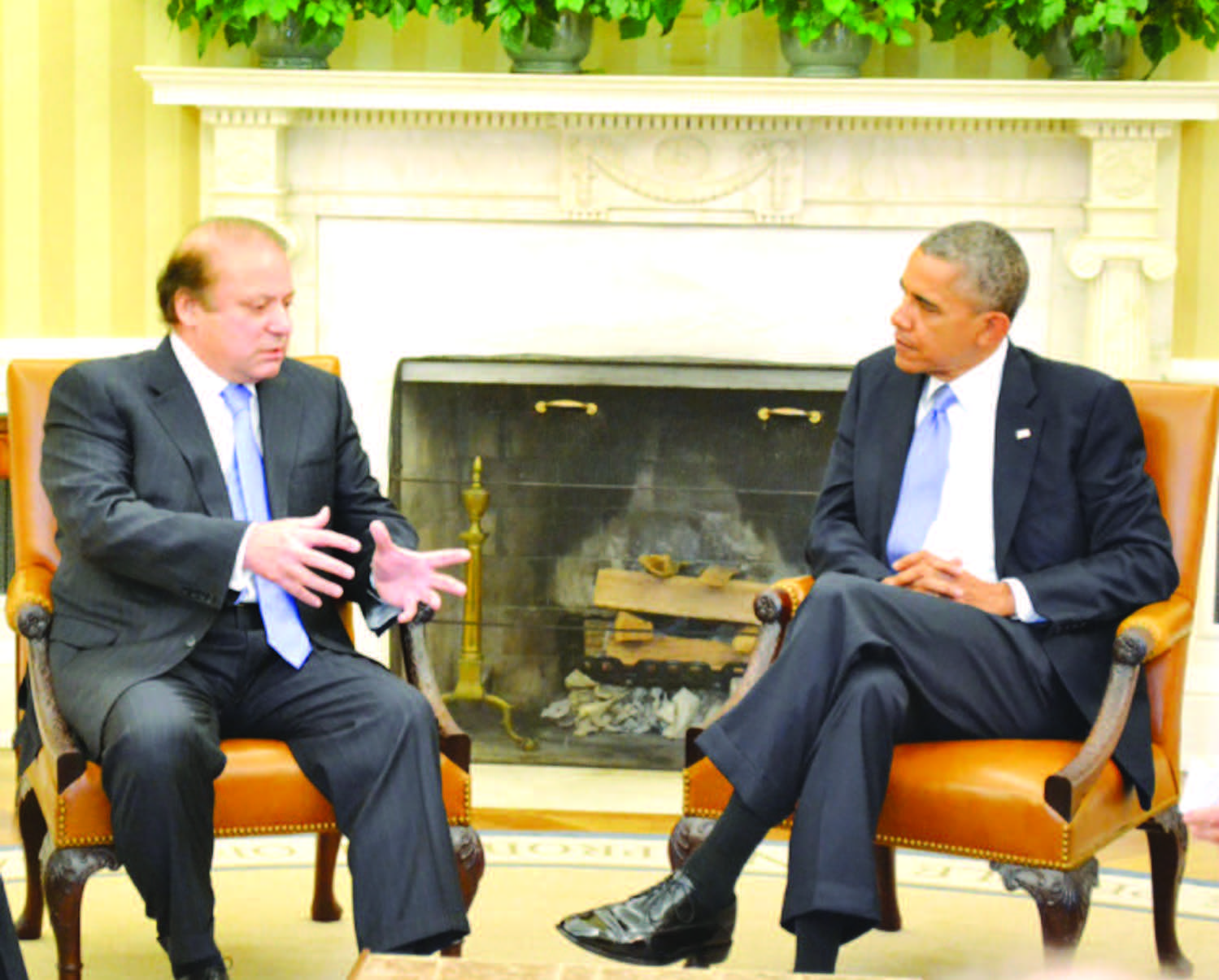
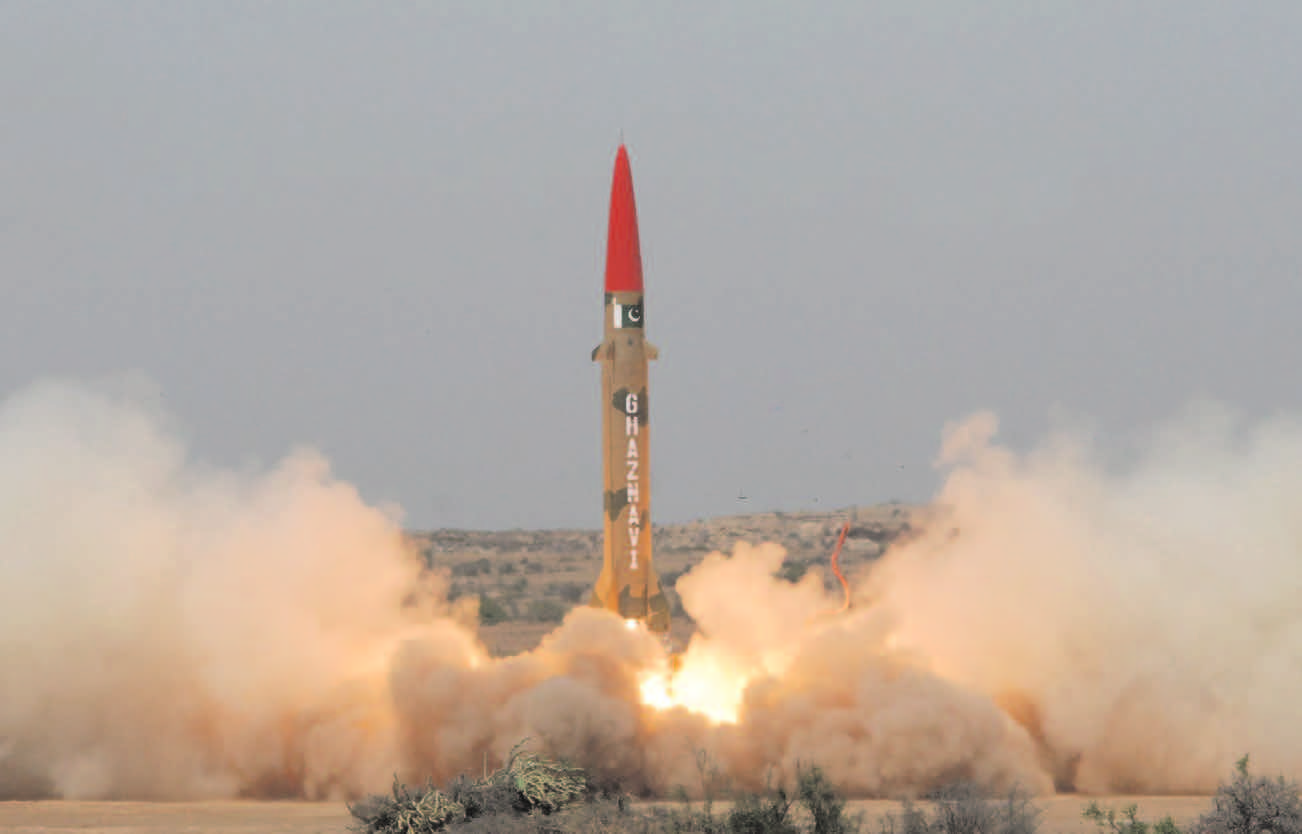
    WASHINGTON (TIP): Pakistan’s Prime Minister Nawaz Sharif trooped into the White House on October 21 for a meeting with President Obama in the face of multiple repudiations from the United States over Islamabad’s pet peeves: Drone strikes on Pakistan, its gripes against India over the Kashmir issue, and pleas that Washington treat it on par with New Delhi by accepting it as a nuclear equal. The meeting with the U.S President was going on at the time of writing and there was no readout yet, but the Obama administration made it clear on Tuesday that it did not particularly share Pakistan’s perception on any of these issues, starting with its handwringing over drone attacks on its lawless territory, accentuated by a well-timed Amnesty report highlighting some civilian casualties.White House spokesman Jay Carney set the stage for a rejection of Pakistan’s plea to stop drone strikes, saying U.S counterterrorism operations are precise, lawful, and effective, and they in fact minimize civilian casualties that would be greater if other conventional means were adopted to eliminate terrorists.

    “The United States does not take lethal strikes when we or our partners have the ability to capture individual terrorists. Our preference is always to detain, interrogate, and prosecute.We take extraordinary care to make sure that our counterterrorism actions are in accordance with all applicable domestic and international law and that they are consistent with US values and US policy,” Carney said, adding, “Before we take any counterterrorism strike outside areas of active hostilities, there must be near certainty that no civilians will be killed or injured, and that is the highest standard we can set,” he said. However, both sides are expected to project language that will minimize differences on this subject, with Washington promising to ease off the strikes as more and more suspected terrorists are eliminated, and praising Pakistan’s fight against terrorism despite its dubious credentials on this count. The U.S media was already predicting the pitch would be taking spin, with a headline in one newspaper reading, ”drones? What drones? Obama and Pakistan’s Sharif to accentuate the positive.”

    Various agreements, including one on science and technology cooperation, are being wheeled out to cover the tracks of disagreements, including over India’s role in Afghanistan, and more broadly the growing regional and global heft that Washington is helping New Delhi develop. Earlier this week, the Obama administration snubbed Sharif over his plea that Washington should mediate between India and Pakistan over the Kashmir issue, saying it was for the two sides to take care of this issue. In fact, despite the controversy over Sharif ’s reported putdown of Prime Minister Manmohan Singh (that he brings his complaints against Pakistan to Washington), it is Pakistan that has kept up an incessant reference to India, making it very much part of its gripe list. The Obama administration has entertained this only in the sense of trying to wean Pakistan out of its New Delhi complex of constantly seeking parity with it.Washington, US officials indicated ahead of the meeting, wants to have strong ties with Pakistan on its own without sharing its prejudice against India. The White House has not scheduled a media interaction at the Obama-Sharif meeting, much less an extended news conference, fearful of awkward questions.

    Even at a think-tank event on Tuesday, where Sharif made a speech, only the host former National Security Advisor Stephen Hadley posed three softball question before closing the meeting, keeping audience out of it. But it is not hard to discern that Sharif has had a torrid visit so far. There have been protocol putdowns, including him being entertained by Secretary of State John Kerry for dinner after he arrived on Sunday (while Obama was out playing golf with White House staffers), cooling his heels on Monday and Tuesday while the Obama dealt with other issues, and on Wednesday, having to breakfast with vicepresident Joe Biden (who, according to the White House schedule, then proceeded to have lunch with Obama) before the U.S President deigned to see him in the afternoon. The charitable explanation for all this is the Sharif is Pakistan’s Prime Minister, not President, but that brings to attention the extraordinary deference Obama has shown to Prime Minister Manmohan Singh. Sharif also faced a rough time on the Hill on Tuesday when he was questioned closely by the House Foreign Relations Committee over the continued incarceration of Dr Shakil Afridi, who helped the U.S nail Osama bin Laden, and Pakistan’s continued patronage of Lashkar-etaiba. “I specifically pressed the Prime Minister to release Dr. Shakil Afridi and encouraged him to ensure that his nation is in fact a responsible and effective partner in countering terrorism, proliferation and violent extremism in the region,” Committee chairman Ed Royce said later. His ranking colleague Eliot Engel was equally unsparing.

  • Afghan election candidates warned over phone bombs

    Afghan election candidates warned over phone bombs

    KABUL (TIP): Afghanistan’s intelligence service on October 21 warned candidates in the 2014 presidential election that mobile phones, computers and cameras given to them as gifts could contain hidden bombs. More than 20 candidates have registered in the race to succeed President Hamid Karzai, and the April election will pose a major security challenge as insurgents try to disrupt the US-backed process. The National Directorate of Security (NDS) said it had “intelligence information showing that the enemies of Afghanistan are planning to use new terrorist methods to disrupt the elections”. “Avoid accepting gifts such as mobile phones, computers, cameras and other packages before they are checked by your security personnel,” it advised. The Taliban last week claimed responsibility for a bomb hidden in a microphone that killed the governor of Logar province as he made a speech at a mosque after Eid prayers. Last year NDS chief Asadullah Khalid was badly injured by a suicide bomber who had explosives hidden in his underwear. Senior politician Burhanuddin Rabbani was assassinated by a bomber with explosives in his turban in 2011, while anti-Taliban commander Ahmed Shah Massoud was killed in 2001 by explosives inside a video camera.

  • The Obama Doctrine

    The Obama Doctrine

    Is the US president veering toward isolationism? Or will he proudly carry the banner of exceptionalism?

    The recent Obama-Putin tiff over American exceptionalism reignited an ongoing debate over the Obama Doctrine: Is the president veering toward isolationism? Or will he proudly carry the banner of exceptionalism? The debate is narrower than it may seem. There is considerable common ground between the two positions, as was expressed clearly by Hans Morgenthau, the founder of the now dominant no-sentimentality “realist” school of international relations. Throughout his work, Morgenthau describes America as unique among all powers past and present in that it has a “transcendent purpose” that it “must defend and promote” throughout the world: “the establishment of equality in freedom.” The competing concepts “exceptionalism” and “isolationism” both accept this doctrine and its various elaborations but differ with regard to its application. One extreme was vigorously defended by President Obama in his Sept. 10 address to the nation: “What makes America different,” he declared, “what makes us exceptional,” is that we are dedicated to act, “with humility, but with resolve,” when we detect violations somewhere. “For nearly seven decades the United States has been the anchor of global security,” a role that “has meant more than forging international agreements; it has meant enforcing them.”

    The competing doctrine, isolationism, holds that we can no longer afford to carry out the noble mission of racing to put out the fires lit by others. It takes seriously a cautionary note sounded 20 years ago by the New York Times columnist Thomas Friedman that “granting idealism a near exclusive hold on our foreign policy” may lead us to neglect our own interests in our devotion to the needs of others. Between these extremes, the debate over foreign policy rages. At the fringes, some observers reject the shared assumptions, bringing up the historical record: for example, the fact that “for nearly seven decades” the United States has led the world in aggression and subversion – overthrowing elected governments and imposing vicious dictatorships, supporting horrendous crimes, undermining international agreements and leaving trails of blood, destruction and misery. To these misguided creatures, Morgenthau provided an answer. A serious scholar, he recognized that America has consistently violated its “transcendent purpose.” But to bring up this objection, he explains, is to commit “the error of atheism, which denies the validity of religion on similar grounds.” It is the transcendent purpose of America that is “reality”; the actual historical record is merely “the abuse of reality.”

    In short, “American exceptionalism” and “isolationism” are generally understood to be tactical variants of a secular religion, with a grip that is quite extraordinary, going beyond normal religious orthodoxy in that it can barely even be perceived. Since no alternative is thinkable, this faith is adopted reflexively. Others express the doctrine more crudely. One of President Reagan’s U.N. ambassadors, Jeane Kirkpatrick, devised a new method to deflect criticism of state crimes. Those unwilling to dismiss them as mere “blunders” or “innocent naivete” can be charged with “moral equivalence” – of claiming that the U.S. is no different from Nazi Germany, or whoever the current demon may be. The device has since been widely used to protect power from scrutiny. Even serious scholarship conforms. Thus in the current issue of the journal Diplomatic History, scholar Jeffrey A. Engel reflects on the significance of history for policy makers. Engel cites Vietnam, where, “depending on one’s political persuasion,” the lesson is either “avoidance of the quicksand of escalating intervention [isolationism] or the need to provide military commanders free rein to operate devoid of political pressure” – as we carried out our mission to bring stability, equality and freedom by destroying three countries and leaving millions of corpses.

    The Vietnam death toll continues to mount into the present because of the chemical warfare that President Kennedy initiated there – even as he escalated American support for a murderous dictatorship to all-out attack, the worst case of aggression during Obama’s “seven decades.” Another “political persuasion” is imaginable: the outrage Americans adopt when Russia invades Afghanistan or Saddam Hussein invades Kuwait. But the secular religion bars us from seeing ourselves through a similar lens. One mechanism of self-protection is to lament the consequences of our failure to act. Thus New York Times columnist David Brooks, ruminating on the drift of Syria to “Rwanda-like” horror, concludes that the deeper issue is the Sunni-Shiite violence tearing the region asunder. That violence is a testimony to the failure “of the recent American strategy of lightfootprint withdrawal” and the loss of what former Foreign Service officer Gary Grappo calls the “moderating influence of American forces.” Those still deluded by “abuse of reality” – that is, fact – might recall that the Sunni- Shiite violence resulted from the worst crime of aggression of the new millennium, the U.S. invasion of Iraq. And those burdened with richer memories might recall that the Nuremberg Trials sentenced Nazi criminals to hanging because, according to the Tribunal’s judgment, aggression is “the supreme international crime differing only from other war crimes in that it contains within itself the accumulated evil of the whole.”

    The same lament is the topic of a celebrated study by Samantha Power, the new U.S. ambassador to the United Nations. In “A Problem from Hell: America in the Age of Genocide,” Power writes about the crimes of others and our inadequate response. She devotes a sentence to one of the few cases during the seven decades that might truly rank as genocide: the Indonesian invasion of East Timor in 1975. Tragically, the United States “looked away,” Power reports. Daniel Patrick Moynihan, her predecessor as U.N. ambassador at the time of the invasion, saw the matter differently. In his book “A Dangerous Place,” he described with great pride how he rendered the U.N. “utterly ineffective in whatever measures it undertook” to end the aggression, because “the United States wished things to turn out as they did.” And indeed, far from looking away, Washington gave a green light to the Indonesian invaders and immediately provided them with lethal military equipment. The U.S. prevented the U.N. Security Council from acting and continued to lend firm support to the aggressors and their genocidal actions, including the atrocities of 1999, until President Clinton called a halt – as could have happened anytime during the previous 25 years. But that is mere abuse of reality. It is all too easy to continue, but also pointless. Brooks is right to insist that we should go beyond the terrible events before our eyes and reflect about the deeper processes and their lessons. Among these, no task is more urgent than to free ourselves from the religious doctrines that consign the actual events of history to oblivion and thereby reinforce our basis for further “abuses of reality.”

  • Obama asks Sharif why trial of 26/11 accused has not started

    Obama asks Sharif why trial of 26/11 accused has not started

    WASHINGTON (TIP): Backing India’s concerns over the slow pace of progress in the 26/11 case in Pakistan, US President Barack Obama, October 24, asked the visiting Pakistan Prime Minister Nawaz Sharif why the trial of Mumbai attackers has not started. “He (Obama) asked, why the trial of the (Mumbai) terrorist attack in India has not started yet,” Sharif told reporters immediately after his over two-hour meeting with Obama at the Oval Office of the White House. During the meeting, the US President also raised the issue of Jamaat-ud-Dawa (JuD), cross border terrorism and Dr Shakil Afridi, the Pakistani doctor who helped the CIA track down al-Qaeda chief Osama bin Laden and has been imprisoned, Sharif said. “He (Obama) has raised the issue of (Dr Shakil) Afridi. He spoke about cross-border movement. He also talked about Jamaat-ud- Dawa,” the Pakistan Prime Minister said, without giving details. Speaking in chaste Urdu, Sharif told reporters that Pakistan’s relationship with India was discussed at length, including Kashmir, but did not give details of what aspect of Kashmir issue he raised; nor did he talk about the response from Obama on this issue.

    Obama, after the meeting with Sharif, said that the Pakistan Prime Minister was taking a “wise path” in exploring how decades of tension between India and Pakistan can be reduced. “I think he (Sharif) is taking a very wise path in exploring how decades of tension between India and Pakistan can be reduced, because, as he points out, billions of dollars have been spent on an arms race in response to these tensions and those resources could be much more profitably invested in education, social welfare programs on both sides of the border between India and Pakistan, and would be good for the entire subcontinent, and good for the world,” Obama told reporters in a joint media appearance with Sharif. In a joint statement issued after the meeting, Obama welcomed recent engagements between Sharif and Singh and expressed hope that this would mark the beginning of a sustained dialogue process between the two neighbors, aimed at building lasting peace in South Asia and resolving all outstanding territorial and other disputes through peaceful means. Obama said the two leaders had an opportunity to discuss India after the meeting of the Prime Ministers of India and Pakistan in New York on the sidelines of the UN General Assembly.

    Describing his meeting with Obama “a most cordial and comprehensive exchange of views” on matters of bilateral interest and issues of regional concern, Sharif said he told the US President about his sincere commitment to build a cordial and cooperative relationship with India. He also talked about “efforts to peacefully resolve all our outstanding issues, including Kashmir.” Sharif said that terrorism constitutes a common threat. “It is as much a concern to us as it is for India. We need to allay our respective concerns through serious and sincere efforts without indulging in any blame game. I also assured the President that as a responsible nuclear state, Pakistan will continue to act with maximum restraint and work toward strengthening strategic stability in South Asia,” Sharif said. In the joint statement, Obama and Sharif stressed that improvement in Pakistan- India bilateral relations would greatly enhance prospects for lasting regional peace, stability, and prosperity, as it would significantly benefit the lives of citizens on both sides of the border. “Obama welcomed steps taken by Pakistan and India to improve their economic relations, including by exploring electricity and gas supply agreements, developing a reciprocal visa regime, and expanding bilateral trade,” it said.

    Conceding that Pakistan is in the current situation today because of the action and deed of its own leaders in the past, Sharif said: “We need to keep our house in order. We have not taken care of our own house. As a result of which, the entire nation is suffering. We have to take Pakistan out of this situation.” He sought the support of the media, the civil society and people of Pakistan in this regard. “Both of us discussed strengthening and deepening of bilateral relationship. We had wide ranging discussions on issues including economy, Pakistan’s energy, education, extremism in Pakistan. We talked about Afghanistan; we talked about relationship with India. This included Kashmir. We talked on drones. We talked about Aafia Siddiqui,” Sharif said. Obama asked as to what the US can do for Pakistan, to which Sharif sought the policy of trade not aid. “When he (Obama) asked what we (US) can do for Pakistan, I said, I do not need any aid from you. We want to increase our economic relationship. Please open your market for Pakistani products. This is more than enough for us,” Sharif said. “He asked what we can do to address your energy issue. I said you should encourage your people, the private sector to come to Pakistan and invest in the energy sector. Pakistan is providing very good opportunities for them,” Sharif said. “We are trying to establish peace and stability in Pakistan. We hope that peace would be established in Karachi, a commercial hub. After lot of thought and determination, we have started operation there (in Karachi),” the Pakistan Prime Minister said. Sharif said he also appraised Obama on the peace talks with the Tehrik-e-Taliban Pakistan (TTP). Sharif left for Pakistan after the talks, concluding his four-day visit to the US, the first by a Pakistani head of State in more than five years.

  • US-India Relations Hit a Rough Patch

    US-India Relations Hit a Rough Patch

    The author feels that there are a number of vital issues which are unlikely to be settled within the tenures of either Obama or Singh, leaving a lingering note of ambivalence in the US-India relationship even as it deepens outside of the high politics.

    When Indian Prime Minister Manmohan Singh visited Washington last month for the first time in four years, the mood was distinctly subdued. India’s once-stratospheric growth rate is stubbornly depressed. The Indian government is low on political capital and stuck in risk-averse mode until next year’s general elections, with a huge question mark over Singh’s personal future. Most Indians anyway focused on Singh’s New York meeting with his Pakistani counterpart Nawaz Sharif – underwhelming, as it turned out, and marred by a perceived slur – rather than his meetings with President Obama. More generally, the promise of USIndia relations remains far below the levels anticipated only a few years ago.

    Why the stasis?
    There are any number of reasons. Indian journalist Indrani Bagchi suggests that ‘there remains a strong lobby within this government starting with [ruling Congress Party chairwoman] Sonia Gandhi and [Defense Minister] AK Antony downwards, which retains an instinctive aversion to America’. That same government’s slow rate of economic reform irks American companies who want to invest in India. In particular, a strict nuclear liability law limits those companies’ ability to exploit a landmark civil nuclear cooperation agreement initiated by the Bush administration in 2005. Also, India’s Byzantine procurement rules madden the American defense companies eager to sell into what is one of the few growing arms markets in the world. A sense prevails that the low-hanging fruit in the bilateral relationship was picked some years ago. But one less-noticed problem is that the limited bandwidth of US foreign policy is presently occupied by issues in which India is either wary of US policy or simply apathetic.

    The Middle East
    In his speech to the United Nations General Assembly on 24 September, President Obama noted that ‘in the near term, America’s diplomatic efforts will focus on two particular issues: Iran’s pursuit of nuclear weapons and the Arab-Israeli conflict’. India has much to gain from a rapprochement between Iran and the United States, not least the ability to once again freely import Iranian oil. India was circumventing international sanctions by paying for a diminished flow of Iranian oil in rupees, but the new Iranian government is insisting that India can only pay for half this way. India is a bystander rather than active participant in the broader dispute, watching from the sidelines as the P5+1 bloc, which includes Russia and China, participates in negotiations. On Syria, India is sympathetic to the regime of President Bashar al-Assad. It views the issue through the lens of the Afghan jihad in the 1980s, which Indians see as indelibly associated with the subsequent uprising in Kashmir and the growth of anti- Indian militancy. When the Indian Government summoned the Syrian Ambassador in Delhi last month, it was not because of Syrian policies but because the ambassador had alleged that Indian jihadists were fighting with the rebels. The ambassador stated, tellingly, that ‘he was always deeply appreciative of India’s position on Syria’.

    India unsurprisingly opposes efforts to arm the Syrian rebels, tends to see the armed opposition as irredeemably compromised by jihadists and reflexively opposes US proposals for military action, particularly outside the ambit of the UN Security Council. India has already had to abandon several oil fields in Syria and, in September 2013, India’s foreign secretary even referred to an existing Indian line of credit to the Syrian government. Yet, despite these equities, India has no leverage over the parties to the conflict. In May, an Iranian suggestion of greater Indian involvement went nowhere. There is little that Singh would usefully have been able to say to Obama on the subject. At a broader level, the more the Middle East distracts from US attention to Asia- Pacific – including the so-called ‘pivot’ of American military forces eastwards – the less high-level attention India receives in Washington. India was not mentioned once in Obama’s UN address (to compare: China was mentioned once, Iran 26 times, and Syria 20).

    Afghanistan
    India’s attitude to US policy in Afghanistan is even more conflicted. India is ostensibly supportive of US policy, and has formally signed on to an Afghan-led peace process. But Indian officials and strategists scarcely disguise their discomfort towards what they see as undue American haste in withdrawing troops, an overeagerness to accommodate the Taliban as part of political reconciliation, and a continued indulgence of Pakistan despite its support for Afghan insurgents. India felt that its views were vindicated by the June debacle over the opening of a Taliban office in Doha, which deviated from the agreed protocol, handed a propaganda victory to the Taliban, and angered the Afghan government. Indian national security reporter Praveen Swami summed up many Indians’ views in complaining that the US was ‘subcontracting the task of keeping the peace in Afghanistan to the ISI’, Pakistan’s premier intelligence service.

    In recent months, Indians have taken offence at statements by James Dobbins, the US Special Representative for Afghanistan and Pakistan, echoing earlier Indian anger at the late Richard Holbrooke, and have chafed at what they see as a Western equivalence between Indian and Pakistani policy in Afghanistan. For their part, US and British officials have grown increasingly frustrated with India’s approach to the issue, arguing that India offers no plausible alternative to the policy of reconciliation given the long-term weakness of the Afghan state. Yet it is in Obama’s interests to assuage Indian concerns, emphasize that reconciliation with the Taliban will be constrained by the established ‘red lines’, that the US will not abandon counterterrorism efforts in Afghanistan after 2014, and that India’s role in Afghanistan is not only welcome, but also necessary to the strengthening of the Afghan state. India rebuffed Afghan President Hamid Karzai’s request for arms earlier this year, wary of provoking Pakistan. But one area that deserves more discussion is greater direct cooperation between India and the NATO-led coalition in Afghanistan to train and equip Afghan National Security Forces (ANSF).

    According to one report, Obama asked Singh last week for an ‘increased effort’ in Afghanistan, although it’s unclear whether this included an implied or explicit training dimension. India, entirely reasonably, sees a potential eastward flow of militants from Afghanistan and Pakistan as a major security threat, particularly with violent trends in Kashmir worsening this year. India would therefore be particularly receptive to a US commitment to monitor and disrupt militant movement in the years after 2014. In truth, it will be difficult to make progress on these issues until Washington settles its own internal debates over what its posture in Afghanistan will be after 2014 (for example, how many (if any) troops will remain in a training capacity?), which in turn will depend on the peace process itself, President Karzai’s domestic political calculations in the face of presidential elections next year, the integrity of that election, and trends in Afghanistan.

    Where next?
    The level of US-India tension should not be exaggerated. It is telling that recent revelations over US intelligence collection against Indian diplomatic targets have, unlike in the case of Brazil, had negligible impact on the relationship. Indian officials chose to brush the issue under the carpet, presumably hoping that the issue had little domestic salience and perhaps even tacitly acknowledging that the NSA’s activities against Indian internet traffic were indirectly beneficial to Indian policy objectives. Twenty years ago, the Indian response may have been very different. It is these changes in tone that convey strategic shifts as much as any large policy initiative. And although the two countries differ on the contentious big-picture issues outlined above, this has not prevented the relationship from advancing on other tracks. In September, US Deputy Secretary of Defense Ashton Carter visited India to push ahead with the bilateral Defense Trade Initiative (DTI), which Carter co-chairs with India’s National Security Advisor, Shivshankar Menon.

    Carter reiterated his suggestion, dating from last year, that US and Indian firms cooperate to produce military equipment – including helicopters, nextgeneration anti-tank missiles, mine systems, and naval guns – for both countries’ use. India has been bafflingly slow and reticent to respond to these overtures, despite the possibility of much-needed technology transfer to Indian industry (though many analysts are skeptical as to its capacity for technology absorption). The negotiations nevertheless reflect the US perception that the defense strand of its relationship with India are a priority. The road ahead is rocky. Over the next eighteen months, the US-India relationship will be severely buffeted by US policy towards Afghanistan. As the American drawdown accelerates, one possibility is that the US intensifies diplomatic efforts to peel away moderate factions within the Afghan Taliban, Whether that amounts to anything or not (and few are optimistic) the process is certain to involve at least a period of deeper USPakistan consultations, at the expense of India. Later this month, for instance, a fourth Afghanistan-Pakistan-UK trilateral summit will take place in London.

    India has quietly seethed at the previous three, viewing them as a coordinated effort to reduce Indian influence. Yet, for the United States at least, the centre of gravity of the US-India relationship is not Afghanistan, but China. The Middle East’s fast-moving and highly visible crises have briefly distracted from a slow-moving background trend: the political and economic rise of China. Yet this remains where Indian and American strategic interests are most collectively at stake, if not necessarily congruent. Following India’s most recent crisis with China, involving deep Chinese incursions into disputed territory a few months ago, New Delhi’s instinctive response was not to make a prominent feint towards Washington – something that might have been the natural response of other states eager to balance against Beijing – but to engage China more intensively, including on the border dispute itself. Indeed, Singh will make a trip to Beijing next month, with indications that he may sign an upgraded border agreement. Nothing better underscores how India’s internal debate over the desired scope of its relationship with the United States is unsettled, on-going, and erratic. More generally, much of India’s press and strategic community have accepted the popular narrative that American leadership, as well as American power, is in decline, and that US reliability is therefore in question. These issues are unlikely to be settled within the tenures of either Obama or Singh, leaving a lingering note of ambivalence in the USIndia relationship even as it deepens outside of the high politics.

  • India-US Partnership

    India-US Partnership

    Defense Trade to be the Driving Engine

    Contrary to the forecasts of doom and gloom and the skepticism surrounding his visit to Washington, the third Manmohan- Obama Summit meeting on September 27 has been quite productive. With hindsight, one can say that media reports about growing impatience of US NSA Susan Rice, impact of the comprehensive immigration law, lobbying in the Capitol Hill by Microsoft, IBM and American drug manufacturing giants against Indian IT and drug manufacturing companies and differences on Afghanistan, Iran, Syria, nuclear liability Act etc were highly exaggerated. An honest and dispassionate assessment of India-US relations in the last decade clearly shows that they have been transformed beyond recognition; India-US strategic partnership is for real and it is in for a long haul in spite of serious differences on some issues in the short run. Nothing demonstrates this better than the exponential expansion of defense trade; US exports of defense and military hardware to India in the last five years have crossed US$ 9bn; with the long shopping lists of the Indian Army, Air Force and Navy this is bound to expand further.

    If the promise of transfer of defense technology, joint research and co-production mentioned in the joint statement is taken to its logical conclusion, this collaboration could become the driving engine of closer Indo-US strategic partnership. In this regard, the US decision to supply offensive weapons to India will be the leitmotif of this burgeoning relationship. Notwithstanding these positive signals, well-known strategic analyst Brahma Chellaney feels that India-US strategic relationship is somewhat “lopsided and unbalanced” on account of structural and strategic limitations of India. A lot is made out of the flattering phrases such as the “defining relationship of the 21st century” (used by Obama and John Kerry) which might transcend into the 22nd century and India being the “lynch pin” of the US policy in Asia (used by Leon Panetta) and optimistic projections made by the heads of think tanks such as Ashley Tellis of Carnegie Endowment. Visiting American dignitaries seldom fail to stress the commonalities between India and the US: democracy, rule of law, human rights, and multi-ethnic, multireligious, multi-lingual, plural societies. These are, no doubt, important factors but must be taken with a pinch of salt.

    In the real world, so long as it serves their national interests, countries don’t mind doing business with other countries where these factors don’t hold water. The US-China relations are an obvious example of this phenomenon. While the US IT companies might continue urging the US government to apply some indirect brakes on the Indian IT companies, the fact is they have been receiving “great service, great quality at low costs” from Indian companies and it has enabled them to operate efficiently and profitably. The misperception created by media reports that the US wishes to “contain” China and hence is trying to warm up to India warrants closer scrutiny. The US-China economic, financial, trade, business and investment ties are so huge and millions of jobs in the US depend on this collaboration that the US will never risk them. As a matter of fact, the US has been quite careful not to hurt China’s sensitivities; it’s decision to call its new approach in Asia now as “Asia Rebalance” instead of “Asia Pivot” is a “course correction” keeping China in mind. On the issues of alleged incursions into Indian territories by the Chinese troops and the India-China spat regarding the ONGC-Vietnam offshore oil drilling collaboration, the US has maintained strict neutrality.

    Conversely, it is also a fact that the US won’t like to see a China-dominated Asia. This, apart from the economic considerations, explains its concerted efforts to come closer to India, ASEAN and beyond to shore up its influence in Asia-Pacific and maintain pressure on China to keep trade routes through the South China Sea open to international trade according to international laws. Some recent developments have eased the alleged “drift”, “wrinkles” and imaginary or real “plateau” in relations. The preliminary contract between the US nuclear companies, Westinghouse and NPCIL for setting up a nuclear plant in Gujarat is a welcome beginning. The establishment of “an American India- US climate change working group” and convening the “India-US Task Force on HFCs” are viewed as positive developments. And the reiteration of US support for a place for India in the reformed UNSC should be music to Indian ears. Besides, a temporary postponement by the US Federal Reserve to end the stimulus package should give countries like India some breathing time to put their finances in order. Though nothing concrete has been promised, some negotiated compromise on the new Immigration laws shouldn’t be ruled out.

    In the field of foreign affairs, the biggest relief has come from Iran. There is thaw in the air in the US-Iran relations thanks to the speech of the newly elected President Rouhani in the UN General Assembly and his wishes on the Jewish New Year on his Twitter which prompted Obama to make the historic Presidential phone call for the first time in 30 years! Unless, this process is cut short by the Iranian supreme leader, US-Iran relations should see some further easing of tension and resolution of the nuclear issue which has led to the imposition of crippling UN sanctions on Iran. This thaw has the potential of lightening India’s oil import bill if more Iranian oil comes on the market. India’s expectations from the US to put further pressure on Pakistan to bring the perpetrators of 26/11 Mumbai attack to book and rein in the terrorist groups like Al-Qaida and LeT and dismantle terror infrastructure and go slow on co-opting the Taliban in the talks on the future of Afghanistan aren’t likely to be met fully because of the US priorities to exit from Afghanistan smoothly. In the meanwhile, India should brace itself for a Taliban-dominated Afghanistan after the withdrawal of the American troops in 2014.

    What role India could play in Afghanistan after the US exit can’t be guaranteed by the US; it will have to work out a strategy with countries like China, Russia, and Iran and, of course, the US. As the economies of India and the US aren’t doing as great as they would have expected, there are domestic pressures in both countries which impact negatively on the bilateral relations. The IT and pharma MNCs in the US and the constituencies in India which didn’t favor FDI in retail and pressed for a more stringent nuclear liability Bill are manifestations of such domestic pressures. As both India and the US have strategic partnership with a number of countries, in crises situations each country will take a decision based on its strategic interests. From this perspective, KS Bajpai, a former Ambassador to the US, injects a reality check: “If ever India finds herself in an open conflict with another country, she will be just by herself; none will come to her help”. That should give us a wake-up call to mend our fences with our neighbors and create an environment of goodwill and warmth without lowering our guards and ignoring defense preparedness.

  • Pakistan rejects allegations about detention of Mullah Baradar

    Pakistan rejects allegations about detention of Mullah Baradar

    ISLAMABAD (TIP): The Afghan Taliban on October 9 claimed their former deputy chief Mullah Abdul Ghani Baradar has not been freed by authorities, prompting a denial from Pakistani officials who said he was free to “meet and contact anyone”. Pakistan had announced on September 21 that Baradar, arrested in Karachi in 2010, had been released to help the peace process in war-torn Afghanistan. However, Afghan Taliban spokesman Zabihullah Mujahid said, “It is very sad that Mullah Abdul Ghani Baradar is still spending days and nights behind bars in Pakistan and we are deeply concerned about his health condition which is deteriorating by the day.” In a statement in Pashto posted on the group’s website, he added, “The Islamic Emirate of Afghanistan, Baradar’s family and his sympathisers consider freedom as Baradar’s right and we want his immediate release on Islamic and humanitarian grounds.” Rejecting the allegations, foreign office spokesman Aizaz Chaudhry told PTI: “Pakistan has released Taliban detainees to facilitate the reconciliation process in Afghanistan. “Mullah Baradar has been similarly freed. As far as we are concerned, he is free to meet and contact anyone to advance the cause of reconciliation.” Afghan leaders are not fully convinced by Pakistan’s announcements about his release. President Hamid Karzai said on Monday that Baradar still does not enjoy complete freedom and expressed hope that Pakistan will give him an opportunity to play a role for peace in Afghanistan. According to media reports, Baradar has been released from Pakistani custody but continues to remain under watch by security agencies.

  • Pentagon No. 2 to step down after four years in top defense jobs

    Pentagon No. 2 to step down after four years in top defense jobs

    WASHINGTON (TIP): Deputy defense secretary Ashton Carter, known for his deep knowledge of US defense spending and the defense industry, said on Thursday he was stepping down in December after four years in top Pentagon jobs. Defense secretary Chuck Hagel said he “reluctantly accepted” Carter’s decision to leave the post. Carter brought fresh analytical rigor to the job, but also helped reopen lines of communication with the defense industry, said Brett Lambert, who worked closely with Carter before retiring in August as the Pentagon’s head of industrial policy. But Carter’s main legacy was his “unwavering, untiring and overwhelming” commitment to making sure that US troops had the equipment to do their jobs, Lambert told Reuters. Over the years, that meant researching and sending in an array of unusual equipment – from explosive-sniffing dogs to surveillance blimps and mine-resistant trucks that could climb the mountainous roads in Afghanistan. “I truly believe he saved lives over there,” Lambert said. It was unclear who might replace Carter, although several names surfaced late Thursday as possible successors: Navy secretary Ray Mabus, former Air Force secretary Michael Donley and the Pentagon’s former policy chief, Michele Flournoy. Another possible contender might be Linda Hudson, a veteran defense industry executive who has announced plans to retire early next year as chief executive of BAE Systems Inc, the US unit of Britain’s BAE Plc. As deputy defense secretary over the past two years, Carter helped ensure a smooth hand-off from then defense secretary Leon Panetta to Hagel.

  • Mentor of 9/11 kingpin joins president race in Afghanistan

    Mentor of 9/11 kingpin joins president race in Afghanistan

    KABUL (TIP): A former Islamist warlord who is said to be responsible for bringing al-Qaida to Afghanistan and who trained the mastermind behind the 9/11 attacks, announced he was running for president on October 3, a move likely to be greeted with apprehension by the international community. A conservative Islamic scholar, Abdul Rasul Sayyaf ran paramilitary training camps in Afghanistan and Pakistan in the 1980s and 1990s, and it was there he meet al-Qaida leader Osama bin Laden . In 1996, Sayyaf helped Laden return to Afghanistan after he was ejected from Sudan . Laden stayed in the country under the protection of the Taliban until the Americanled invasion of late 2001. Sayyaf was named in the 9/11 commission report as the “mentor” of Khalid Sheikh Mohammed, the key plotter of the 2001 attacks on New York and Washington. Mohammed attended the military camps organized by Sayyaf in Pakistan and from which several of the 2002 Bali bombers graduated. “Today I nominate myself in order to serve my countrymen and my nation — I want to stand alongside the true servants of Afghanistan,” Abdul Rassoul Sayyaf said before he registered at the offices of Kabul’s Independent Election Commission. Western diplomats have previously talked of their concerns regarding Sayyaf ‘s nomination, given his deeply conservative views regarding women’s rights and social freedoms, and his deep ties to militant Islam. Sayyaf ‘s nominee for first vice president, Ismail Khan, will also worry the country’s Western backers.

  • Pakistani passport among worst for travel: Survey

    Pakistani passport among worst for travel: Survey

    ISLAMABAD (TIP): A Pakistani passport is among the worst to travel on as the country’s citizens can only enter 32 countries without a visa, according to a survey. Pakistan shared its ranking with Somalia in the list of some 200 countries surveyed by Henley & Partners, beating only Iraq which ranked 92nd and Afghanistan, which came in last. India ranked higher than all three countries at 74. Many intervening positions were shared by several countries, showing India ranked much higher than other nations. The report said Pakistanis had access to only 32 countries without a visa, while Afghans could access just 28. The Visa Restriction Index 2013 was released by Henley & Partners to rank countries based on the visafree entry enjoyed by their citizens. The firm analysed visa regulations around the globe to determine the results. “Pakistan, Somalia, Iraq and Afghanistan remain in the bottom four places of the ranking, which means that citizens of these countries enjoy the least freedom of travel,” the firm said in a statement.

  • Passion of Pakistani Sufis infuriates Taliban

    Passion of Pakistani Sufis infuriates Taliban

    SEHWAN SHARIF, PAKISTAN (TIP): Yielding to the hypnotic beat of drums and the intoxicating scent of incense, the woman danced herself into a state of trance, laughing and shaking uncontrollably alongside hundreds of others at Pakistan’s most revered Sufi shrine. Swathed in red, the Sufi colour of passion, she shouted invocations to the shrine’s patron saint in an ecstatic ritual repeated daily in the dusty town of Sehwan Sharif on the banks of the river Indus. With its hypnotic rituals, ancient mysticism and a touch of intoxicated madness, Sufism is a non-violent form of Islam which has been practised in Pakistan for centuries – a powerful antidote to extremism in places such as the province of Sindh. It is scenes like this, where men and women dance together in a fervent celebration of their faith, that make Sufis an increasingly obvious target in the conservative Muslim country where sectarian violence is on the rise.

    At a crossroads of historic trade routes, religions and cultures, Sindh has always been a poor but religiously tolerant place, shielded by its embrace of Sufism from Islamist militancy sweeping other parts of Pakistan. But this year peace came to an end with a string of attacks across the province, including against Sufi places of worship, as militants seek new safe havens and new ways of destabilising the country. “They are trying to kill us,” said Syed Sarwar Ali Shah Bukhari, whose father, a Sufi cleric, was killed in a bomb attack on the family’s ancestral shrine in February. Bukhari, 36, is now the oldest living descendant of a prominent Sufi “saint” whose tomb his family has tended for generations in a tradition handed down from father to son. “It was never like this before,” Bukhari, wearing a black turban and silver embroidered slippers, said nervously outside the Dargah Ghulam Shah Gazi shrine, its vast dome shining bright above the bleak mud-brick homes of his native Maari village. “Suddenly everyone is hostile towards us. People are afraid,” added Bukhari, who took over as the shrine’s resident saint and custodian after the death of his father.

    Irredeemable heretics
    The influx of Taliban-inspired gangs into Sindh is a disturbing development in a country where Prime Minister Nawaz Sharif’s government is already struggling to contain a Taliban insurgency and escalating religious violence. “In Sindh, militancy was not common until now. It was known for its tolerance,” said Abdul Khalique Shaikh, a senior police officer who investigated this year’s Sufi attacks. “You can hardly find any Sindh-based religious extremists here.” Insurgents see Sufis as irredeemable heretics who deserve to die. Long entrenched in their tribal safe havens on Pakistan’s border with Afghanistan, militants are seeping quietly into vulnerable, less protected areas, establishing cells in unlikely new places such as rural Sindh. Sindh is home to Pakistan’s violent city of Karachi, long infiltrated by the Taliban. But until now, its rural interior has been of little interest to insurgents.

  • SLOW AND STEADY RELATIONSHIP

    SLOW AND STEADY RELATIONSHIP

    “The PM’s Washington visit is unlikely to produce any dramatic result, but it will serve its purpose by reminding both sides of the high stakes they have in a progressively improving relationship that is undistorted by impatience or undue expectations on either side”, says the author.
    All eyes will be on the meeting between our Prime Minister and President Obama this week and what it produces. This is natural as our relationship with the US is, in many ways, the most important external relationship we have. The US is our largest trade and investment partner as well as the biggest source of advanced technology, management practices and technical and financial consultancies for our economic sector. The people to people contact with the US is profound, not only because of the large population of Indian origin and the almost 100,000 students we have there, but also because of the influences imbibed by our younger generation. The range of our engagement with the US is larger than with any other country, with over thirty on-going dialogues on various subjects, which implies a regularity of official exchanges on economic, political and security issues.

    Expectations
    Our armed forces have the largest number of military exercises with the US, even though it is not our largest supplier of defense equipment. However, here too the US is making headway, with substantial orders already obtained, even as promises are being made of joint production of advanced weaponry and transfers of technology to rival Russia as our leading defense partner. The political commitment shown by the US leadership to remove the most contentious nuclear issue in our relations has raised expectations on our side that dramatic breakthroughs in relations will continue, even though we cannot define what they could be precisely. At the very least, we expect a trouble free relationship with the US. On the US side, the expectations are more concrete and precise. They would want orders for the US nuclear and defense industries to materialize quickly enough as a quid pro quo for the nuclear deal. They want more access to the Indian market, for which financial and education sector reforms are considered necessary, not to mention improved regulatory frameworks. To the old grievances have been added new ones relating to Indian protectionism as indicated by the decision to give preferential market access to locally established companies in the telecom sector, the retrospective application of our tax laws as in the Vodafone case and inadequate protection to IPRs as decreed by the Supreme Court in the Novartis case. None of these decisions involve US companies, but the US has concerns that India’s example might be followed by other countries affecting ultimately either the global business models of its companies or negatively impacting their future operations in India.

    SHORT-SIGHTED
    The US corporate sector, earlier in the forefront of lobbying for India in the US Congress, is now taking the lead to have Indian trade practices investigated by the Congress. All the indications are that the mood in the US towards India has soured at the political and commercial levels. This is unfortunate because short term considerations of immediate gain are gaining ground over longer term US strategic investment in the India relationship. India’s views about the US have changed fundamentally and the relationship will become more dense with time. US impatience will not necessarily accelerate the process. India and the US have differences on WTO and Climate Change related issues. These differences are in a multilateral context, not a bilateral one, but the US is trying to push for bilateral convergences on these issues. Such pressure should not become counterproductive. India’s nuclear liability law has become a major obstacle in implementing India’s commitment to place orders on Westinghouse and GE for supply of nuclear reactors generating 10,000 MWs of power at two separate sites in India. Secretary Kerry had voiced his expectation that by September India would have found a way to resolve the issue to the satisfaction of US companies, having no doubt Prime Minister’s visit to Washington in view.

    Results
    Reports suggest that India may find a solution by interpreting the rules framed under the Liability Act flexibly enough to meet the demands of not only the US companies but the Russians as well for Kudankulam 3 and 4. This may not be easy in view of Article 17 of the legislation that obliges the operator to take recourse against the supplier for supply of defective equipment, even if the right to recourse is not expressly included in the contract. The challenge is to devise a way to provide insurance cover for such liability through some kind of a pooling arrangement, the cost of which can be adjusted in that of the project. Meanwhile, the decision to sign a “small works agreement” between Westinghouse and NPCIL during Prime Minister’s visit as a token of our intent to implement our commitment might be a diplomatic way out of the current impasse for now, but the larger questions of project cost and tariff competitiveness will remain unaddressed and could block negotiations in the future and cause disappointment. On the Afghanistan question president Obama will not give us satisfaction as he is seeking a dialogue with the Taliban brokered by the Pakistani military. India’s political and security interests in Afghanistan are becoming peripheral to US interest in an orderly withdrawal from there through a pact with the very extremist forces that they had initially dislodged and an understanding with the Pakistani military whose doubledealing they have directly experienced.With the continuing terrorist mayhem in Pakistan and extremist religious forces on the rampage in West Asia and Africa, accommodating the Taliban could prove a folly. The PM’s Washington visit is unlikely to produce any dramatic result, but it will serve its purpose by reminding both sides of the high stakes they have in a progressively improving relationship that is undistorted by impatience or undue expectations on either side

  • ‘India, US destined to be partners on world stage’, says US Deputy Defense Secretary Ashton Carter

    ‘India, US destined to be partners on world stage’, says US Deputy Defense Secretary Ashton Carter

    WASHINGTON (TIP): India and the US are destined to be partners on the world stage because of shared values and outlooks, a top US official told Indian officials ahead of Prime Minister Manmohan Singh’s visit to the US. US Deputy Defense Secretary Ashton Carter conveyed this message to India during his just concluded visit to India in preparation of Manmohan Singh’s Sep 27 meeting here with President Barack Obama, according to Pentagon Press Secretary George Little. Carter, who met with National Security Advisor Shivshankar Menon, Foreign Secretary Sujatha Singh and Defence Secretary Radha Krishna Mathur also discussed “steps toward deepening the multifaceted US-Indian defense relationship,” he stated.

    “They discussed steps the United States and India are taking to streamline their respective administrative processes and make bilateral defense trade more responsive and effective,” Little said. Carter also hosted a meeting of senior representatives from the US and Indian defense industries that focused on additional steps the United States can take to remove barriers to bilateral defence trade, he added. Carter himself told US traveling media on way back home that a central topic of discussion with India was the Defense Trade and Technology Initiative, which is intended to increase defence industrial and technology cooperation. The agreement isn’t just about selling defence equipment to India; it’s about fostering joint ventures he said. “They don’t want to just buy our stuff,” a story on Pentagon website quoted him as saying. “They want to build our stuff with us and they want to develop new things with us, and they want to do research with us.”

    The joint C-130J Super Hercules transport aircraft venture between the Indian multinational conglomerate Tata and Lockheed Martin is a perfect model of co-production, he said. “India is now part of the supply chain [for the aircraft], and has the economic benefit-the jobs benefit-of being part of that,” Carter said. Future defence projects between the two countries will include both codevelopment and co-production, the official said. “We want India to have all the capabilities it needs to meet its security needs, and we want to be a key partner in that effort,” Carter was quoted as saying. When you look at pictures of the Indian air force’s C-130s participating in the recent flood relief efforts in the north, that tells us we’re on the right track,” he added. Carter, who also visited Afghanistan and Pakistan before India said the principal threat to Pakistan is terrorism, not its neighbors. “The government of Pakistan has flirted over time with using terrorism as an instrument of state policy,” Carter was quoted as saying. “It is coming to the realization that terrorism is a boomerang, and it comes back on you when you try to use it for your own purposes.” “Their neighbor to the east is running away from them economically,” Carter said referring to India. To develop its economy, Pakistan first needs peaceful relations with India to begin trading with them, he said.

  • So-Called Spring; Su-Shi Strife and The South-West Asia

    So-Called Spring; Su-Shi Strife and The South-West Asia

    “The author foresees tremendous tectonic changes in the wake of Arab Spring et al. He says, “There will be following major discernible evolutionary geo-political trends underlying the so-called Arab spring. The despotic regimes headed by dictators, monarchs, military strongmen, presidents-for-life and supreme leaders-for-life would eventually be overthrown by the popular revolt. The middle-east is surely due for a major cartographic make-over in the next few decades. The fault-lines would be sectarian, ethnic and linguistic. The glue of Political Islam supported by embedded Jihadi elements would be torn asunder while facing the sectarian, ethnic and linguistic divide.”

    Arab Spring, Arab Winter, Arab Summer, Arab Renaissance, Arab Awakening, Islamic Awakening and Islamic Rise are just few of the epithets used to describe the complex and multidimensional geopolitical changes in the middle-east region that comprises of West Asia and Northern Africa. Depending upon one’s perspective, each of these adjectives is inadequate to describe the complex geopolitical phenomena that have engulfed the region. It is important to recapitulate that barring three nations, viz. Iran, Turkey an Israel all other countries in this region are Arab. Despite Francis Fukuyama’s puerile musings about the “end of history”, we are now witnessing tectonic changes of historic proportions.

    However, it will be a very slow and bloody change that would be unstoppable despite numerous western interventions. The genie of historic change had been unleashed much earlier in 2003 when the Baathist regime was toppled in Iraq ostensibly to chase the now non-existent “weapons of mass destruction”. The ten year anniversary of the US invasion of Iraq and “the ensuing mother of all battles” does not witness peace and tranquility in that nation, divided de facto, on sectarian and ethnic fault-lines. The Iraqi Kurdistan, nominally under the central government of Iraq is on a rapid trajectory to peace, prosperity and development while Baghdad continues to witness sectarian violence and bomb attacks. The Prime Minister Nouri al- Maliki is grabbing executive powers and has inadvertently encouraged sectarian divide and Shia identity politics. Besides the Iraqi Kurds, the real beneficiary of the US invasion worth $ 870 billion has been the Islamic Republic of Iran.

    If one chooses to be historically correct, the Islamic revolution of 1979 in Iran is the real harbinger of the so-called Arab spring. A US supported dictator was overthrown by popular revolt in Iran. The popular revolution was usurped and captured by Islamist Ayatollah Khomeini leading to a lot of blood-shed and massacre of democratic and liberal sections of the Iranian society in a targeted manner. A mini-version of this so-called (“Persian”) spring was again manifest in Iran, a non-Arab Shia theocracy in 2009 under the name of “green revolution”. However, the US administration led by Barak Hussain Obama “rightly” failed to capitalize on the situation leading to brutal suppression of young Iranians by the theocratic regime and its revolutionary guards. For the first time the US and its cronies missed an opportunity for externally driven regime change in Iran. Starting with Tunisia, the Arab Spring phenomena later on engulfed Egypt and Yemen. In Yemen, an extended “managed” political change was indeed brought in grudgingly under the patronage of Western imperialistic powers. Both Tunisia and Egypt saw subsequent takeover by Islamists in democratic elections. After over-throwing of Ben-Ali, the fundamentalist An-Nahda Islamists were the victors of the Tunisian democratic elections in October 2011.

    The Jihadists and the Salafists are now working in tandem with the conservative An-Nahda Islamists to infiltrate the previously secular Tunisian state from within. The story in Egypt is not very much different where the popular revolution against Hosni Mubarak and the Armed Forces has already been annexed by the Muslim Brotherhood (MB) and Mohammad Morsey. The Egyptian judiciary, especially the Supreme Court has resisted the Muslim Brotherhood and its attempts to foist an Islamist constitution. Furthermore, the Egyptian Supreme court has postponed yet again the parliamentary elections denying the MB an opportunity to control the entire state. Parts of the civil police force have already stopped obeying orders of the Islamist government to fight against fellow citizens forcing the MB to spare its cadre for law enforcement duties. Using the fig-leaf of so-called Arab Spring, the opportunistic Western powers militarily intervened in Libya, another socialist Baathist party ruled Arab dictatorship and brought out a regime change they had craved for long.

    The subsequent Islamist take-over of Libya, the barbaric treatment (victor’s justice) given to the quixotic dictator Col Mommar Gadaffi and killings of the US ambassador and other personnel by Al Qaeda in Ben Ghazi is illustrative of the nature of the beast. Interestingly, the Shah of Iran, Saddam Hussain and Col Mommar Gadaffi, all three had indeed served with great distinction as the “useful idiots” of the Western imperialism. The ideological hollowness of the West and the cheer-leaders of the socalled Arab Spring was noted again in Bahrain where popular and public demands for political change were exterminated brutally by foreign military intervention undertaken by the Kingdom of Saudi Arabia (KSA) and Pakistan in order to prevent take-over of the Sunni ruled nation by a Shia majority population. Syrian example shows the true colors of the cheer-leaders of the so-called Arab spring.

    Another socialist and secular Arab country ruled by the Baath party is being systematically destabilized from outsideintervention for the last two years and sacrificed at the altar of Sunni-Salafi- Jihadi-Wahabi (SSJW) geopolitical interests. Foreign Sunni fighters are leading the war against the Assad regime, fully supported by the regional Sunni monarchies. What we see now is essentially a Sunni-Shia (SU-SHI) sectarian power struggle in the Islamic nations of the West Asian region with Western imperialistic intervention in a systematic manner to defeat the secular and socialist Baath party regimes and of course to safeguard the interests of the Sunni-Salafi-Jihadi-Wahabi (SSJW) alliance. This bloody sectarian conflict will not be resolved in next few months or years.

    As the geopolitical events unfold, we will witness a quasi-permanent fratricidal intra-Islamic sectarian war for decades in the west Asian region culminating in major cartographic changes. There will be multiple incarnations of Arab & Islamist “Tianamen Squares” during which the despotic rulers will brutally suppress the revolting citizens. The US strategic retreat from the middle- east and pivot to Asia will finally allow the history to emerge in the middle-east uncontaminated by the hegemonic order imposed by the US hyper-power. Right now all the Arab monarchies have tried to buy out the demands for freedom and socio-political change by bribing their respective populations with yet more goodies financed by petro-dollars. This monetary intervention would at best delay the clamor for freedom and political change only by a few years in the oil-rich nations. There will be Islamist take-over of one-kind or other in all these countries. But political Islam would not be able to provide stability and strategic security to these nations.

    Just like in the communist countries as they vied with one another for title of the adherents of the true nature of communism practiced in the former communist countries, one would witness competitive claims of “true or genuine Islamism” by various ruling dispensations in this region. Fundamentalist competitive “political Islam” in alliance with Jihadis would hijack liberal and democratic popular uprisings. Indeed, there will be immense loss of human life and Jihadi terrorism will rule the roost. Transfer of power and change of regimes will be an inherently bloody process. There will be serious human rights violations and genocide by all the sides in the name of “true Islam”. Western apologists and backers for these despotic countries under severe financial crunch would no longer be interested in maintaining the geo-political status quo ante. geopolitical tectonic changes are likely to result in emergence of new nation states. Syria might be balkanized into multiple small entities or state-lets analogous to the former Republic of Yugoslavia.

    One would not be surprised if an Independent Kurdistan finally emerges as the 4th non- Arab country in the middle-east. Iraq, Iran, Syria and Turkey may lose their respective Kurdish populations to a newly independent and democratic Kurdistan. Since the fall of the Ottoman empire, the Western imperialistic powers while arbitrarily carving out state-lets to safeguard their own economic and hydrocarbon interests, chose to sacrifice the Kurdish national interests and denied them right to a state. West Asia has app 35 million Kurdish (non-Arab) people with app half (18 million) in Turkey, 8 million in Iran, 7 million in Iraq and 2 million in Syria. Unraveling of Syria will serve as a catalyst for Turkish Kurds to revolt against the increasingly Islamist Sunni dispensation of Turkish Prime Minister Recep Tayyip Erdogan in Ankara that has systematically deviated from the secular ideology of Kemal Ata-Turk, the founding father of modern Turkey.

    Both the PKK (Kurdistan Workers Party) and its imprisoned leader Abdullah Ocalan have successfully orchestrated staggered, coordinated hunger strikes for more than two months by thousands of Kurdish prisoners in Turkish jails. Turkey is going through a schizophrenic struggle between its European aspirations and Islamic moorings. However, political Islam will not be able to hold the Turks and the Kurds together. With increasing Sunniazation of the Turkish polity, this large ethnic and linguistic Kurdish minority will eventually assert itself in this chaotic geopolitical transition. Islamic glue will not be able to hold together Turkish and Kurdish ethnic identities and a volcanic eruption of nationalist fervor will unravel Turkey as we know it. If Turkish and Syrian Kurds turn more nationalistic and declare an independent Kurdistan, Iraqi and Iranian Kurds will be forced to follow suit. As a result of this, a truncated Iraq would eventually come out as a Shia-Arab theocracy with a Sunni minority supported by the neighboring Shia-Persian theocracy, Iran. Iran would not be insulated from demands of political freedom and change if there is no external intervention.

    Young, educated and emancipated Iranians will eventually overthrow the conservative Ayatollah-cracy leading to a more democratic and liberal regime change. A non-theocratic and more democratic and liberal Iran will re-emerge as a major regional power with friendly Shia majority governments in Iraq, Azerbaijan, Bahrain and elsewhere including in Lebanon. Iran will be a longterm winner in the despite losing some territory to Kurdistan and Baluchistan. A loose federation of Shia states may become a power grouping in the region. In such a geopolitical scenario, the territorial integrity and sovereignty of the Kingdom of Saudi Arabia (KSA) would no longer be safeguarded by a strategically retreating USA. By 2017, the USA will surpass the Saudis as the largest petroleum producing nation that will become a net exporter of hydro-carbons in 2020. Future US administrations will be forced by domestic isolationists to give up the stability mantra leaving the middle-east region to its own devices.

    The ultrageriatric conservative clan of Saudi princelings with all their extremities in the grave will not be able to hold the country together especially in the face of increasingly restive and un-employed young men. Increasing modernization and “secularization” of this tribal society will be resisted violently by the ruling political establishment. There have already been small demonstrations by Sunni Muslims calling for the release of people held on security charges. Saudi women will demand equal rights and driving privileges. The Saudi women would like to emulate their more emancipated Iranian counter-parts in public discourse. If Al Qaeda or its various mutants take-over the Saudi Arabia, the House of Saud will be brutally slaughtered in the name of “liberating Islam”. The internal strife in Saudi Arabia will manifest openly in an explosive manner when the oilfields dry up in few decades. The only unrest to hit Saudi Arabia during the so-called Arab Spring wave of popular uprisings was among its Shi’ite Muslim minority. The Shia populations in the Eastern region of Saudi Arabia will eventually revolt against a Sunni-Salafi- Jihadi-Wahabi (SSJW) complex leading to emergence of another Shia state-let.

    Bahraini Shia population is likely to overthrow the ruling Sunni dynasty, leading to emergence of another Shia nation. A Palestinian state-let may eventually be established as a joint protectorate of Egypt and Jordan. Egypt and Turkey will have much diminished geo-political influence. Egypt will have to deal with the issue of human rights of an increasingly vocal Coptic Christian minority. Some countries might eventually disappear by 2030. The most putative candidates are Lebanon, Kuwait and the Palestine. The impact of these geo-political changes will without doubt creep eastwards towards the Af-Pak region of the South-Asia leading to cartographic changes in national boundaries. Pakistanoccupied Baluch principalities, exploited by the Punjabi-dominated Pakistani army will successfully revolt for an independent Baluchistan as the Chinese footprint increases in the Gwadar port. After taking over the Gwadar port, China will seriously attempt to exploit the mineral and hydrocarbon wealth of Pakistan-occupied Baluch areas, thereby, increasing the sense of alienation and marginalization amongst the Baluch tribes.

    The separatist Baluchistan Liberation Army will target Chinese companies and personnel in the ensuing war of independence. The Sistan- Baluchistan province of Iran will take its own time joining an Independent Baluchistan. The consequent undoing of the artificial geographic boundaries arbitrarily determined by the British colonialists will lead to emergence of newer states carved out of the Af-Pak region. Another fall-out of these changes would be emergence of an independent and greater Pakhtoonistan comprising of the Khyber-Pakhtoonwah province of Pakistan and the Pakhtoon areas of the Afghanistan across the now defunct Durand line. The result would a truncated but more stable Afghanistan controlled by the northern alliance comprising of the Tajeks, Hazaras and Uzbeks. A truncated Pakistan will continue to remain as a rent-seeking failed state. It may implode eventually, leading to its fragmentation followed by multi-lateral external intervention under supervision of the UN and the IAEA to secure the nuclear weapons and the fissile materials.

    Further to north-east, a restive Uighurs’ population will force the emergence of Eastern Turkistan while throwing away the 300 years’ old occupation by the Han Chinese and subsequent annexation by the Communist China led by Comrade Mao. Will this tectonic change engulf the central Asian states or the “stans” is not clear at this time as the geopolitical dynamics are entirely different in the Central Asia in comparison to the South and West Asia. There will be following major discernible evolutionary geo-political trends underlying the so-called Arab spring. The despotic regimes headed by dictators, monarchs, military strongmen, presidents-for-life and supreme leaders-for-life would eventually be overthrown by the popular revolt. The middle-east is surely due for a major cartographic make-over in the next few decades. The fault-lines would be sectarian, ethnic and linguistic. The glue of Political Islam supported by embedded Jihadi elements would be torn asunder while facing the sectarian, ethnic and linguistic divide.

    Whether some kind of democracy will eventually prevail in this region in near future is doubtful, at best. Political Islam with its Jihadi mutant will be on the ascendance temporarily as an essential bloody interim phase in the long-term development of liberal democracy in the West Asia, North Africa and Af-Pak regions of South Asia. Increasing modernization, secularization and intellectual emancipation of the common masses will eventually defeat the Islamist counterreaction in each of these countries. Iran which is way ahead in the trajectory of civilizational change and democratic evolution will emerge as the most influential regional player while Egypt, Turkey and the KSA will eclipse relatively.

  • Room for improvement in Pakistan’s nuke arsenal security: US

    Room for improvement in Pakistan’s nuke arsenal security: US

    WASHINGTON (TIP): The US has said that there is room for improvement in Pakistan’s nuclear weapons security apparatus but exuded confidence that Pakistani government is well aware of its responsibilities and has secured its nuke arsenal accordingly. “While there is room for improvement in the security of any country’s nuclear programmes, Pakistan has a professional and dedicated security force that fully understands the importance of nuclear security,” the state department spokeswoman, Jen Psaki, said. Welcoming Pakistan’s statement that it is fully committed to the objectives of disarmament and nonproliferation, Psaki said the US “is confident that the Government of Pakistan is well aware of its responsibilities and has secured its nuclear arsenal accordingly”.

    The US recognises that Pakistan is fully engaged with the international community on nuclear safety and security issues, and is working hard to ensure its strategic export controls are in line with international standards, she said. “Pakistan is a state party to both Chemical Weapons Convention and Biological Weapons Convention and is a partner in the Global Initiative to Combat Nuclear Terrorism,” Paski said. Psaki said that US was having regular discussions with the Pakistani government on a range of issues including nuclear security, counterterrorism and fostering a stable Afghanistan and would continue to work together to find ways to make the Pakistan and the region more secure, stable and prosperous.

  • Karzai: Hindus, Sikhs get Afghan parliament seat

    Karzai: Hindus, Sikhs get Afghan parliament seat

    KABUL, AFGHANISTAN (TIP): Afghanistan President Hamid Karzai has issued a legislative decree that gives minority Hindus and Sikhs a seat in the country’s next parliamentarian election. A statement on September 4 from the presidency said the seat would be in the parliament’s lower house. The addition would make the parliament now have 250 seats. Karzai’s decision comes after lawmakers declined to require a special seat for Hindus and Sikhs in the law. Under Afghan law, the president has the power to issue legislative decrees when the parliament is on vacation.

  • Afghan police kill 2 militants at mosque

    Afghan police kill 2 militants at mosque

    KABUL (TIP): Afghan authorities say police killed two militants in an early morning shootout at a Shiite Muslim mosque in Kabul. Details were sketchy in the immediate hours after the clash on September 5, but the national intelligence service released a video showing the bloodied bodies of the alleged militants, who wore police uniforms. The intelligence service’s statement described the gunmen as being Pakistani, though it gave no indication as to how it knew that. It said the men were armed with Kalashnikovs and other weapons. According to the intelligence service, three bystanders attending early morning prayers at the mosque were wounded. However, the area district police chief, Hafizullah, who like many Afghans goes by one name, said no one was wounded. Afghanistan has accused Pakistan of supporting militancy here, a charge Pakistan denies.

  • Lanka to put Pak imports under lens

    Lanka to put Pak imports under lens

    NEW DELHI (TIP): A Sri Lankan ruling coalition party, Jathika Hela Urumaya (JHU), has called for a thorough check of all imports from Pakistan to the island nation after 250 kg of heroin was seized by narcotics and Customs officials. The largest ever drug haul in south Asia, the consignment had arrived in a container from Pakistan to Orugodwatta where it was seized. The JHU has asked the government to get to the bottom of the drug cartel operating in Sri Lanka %and its links with Pakistan and Afghanistan. The heroin was concealed in tins of grease. At least two persons, including a Pakistani national, were arrested in connection with the seizure. The party said in a statement that many banned goods were being smuggled into Sri Lanka from Pakistan “through a local Muslim channel”. According to an AP report, Sri Lankan authorities have seized large quantities of heroin and other drugs shipped from Pakistan in recent years, including 55 kg of heroin concealed in fake potatoes in 2010. According to a report in Lanka C News, the consignment had been sent to a Pakistani national from his compatriot in Karachi. “There had been several instances that drugs had been tried to smuggle into the country by Muslim nationals,” said the report. Led by Buddhist monks, JHU is known for its Sinhala nationalism.

  • INDIAN AUTHOR EXECUTED IN AFGHANISTAN BY TALIBAN

    INDIAN AUTHOR EXECUTED IN AFGHANISTAN BY TALIBAN

    KOLKATA/KABUL (TIP): Indian author Sushmita Banerjee was executed by the Taliban late on September 4. While the reason for the barbaric act was not given, Banerjee had possibly attracted the ire of the fundamentalist outfit for her ceaseless social work, especially for women’s healthcare and upliftment. Forty-nine-year-old Banerjee, according to reports, was dragged out of her house in Kharana in Paktita province before being shot dead by the turbaned militants. The execution signals the portent of things to come before the impending withdrawal of American forces from Afghanistan where deadly attacks and other forms of atrocities against women have spiralled in the past few months. Banerjee, who had converted to Islam and rechristened herself asSayeda Kamala, retained her Indian citizenship. Earlier too she had attracted the anger of the regressive Taliban. Her memoir about her dramatic escape from the clutches of the fundamentalist outfit inspired a movie in 2003, Escape from Taliban, starring Monisha Koirala.

    Last month, a female Afghan MP was abducted by suspected Taliban militants while she was travelling with her children. Another woman MP recently sought asylum in Britain after being abandoned by her relatives for seeking divorce from an abusive husband. In July, gunmen assassinated a high profile female police officer. These instances have occurred in the backdrop of orthodox Muslim groups renewing their call against women stepping out of their homes to work or seek independent careers. Indian officials in Kabul confirmed that Banerjee was shot around 11pm Wednesday and that her last rites were performed by her family Thursday morning. She had just returned to Afghanistan after celebrating Eid in West Bengal. Married to an Afghan businessman, Jaanbaz Khan, Banerjee had recently moved back to Afghanistan after spending a few years in India, especially Kolkata and Mumbai.

    Her best-selling book, Kababuliwalar Bangali Bou (A Kabuliwala’s Bengali Wife), was written in 1995 after she escaped from the clutches of the Taliban in the wake of the fall of Afghanistan to the marauding hordes. Although a report claimed the Taliban denied any involvement in the killing, Afghan police said militants belonging to the extreme Islamist outfit descended on her Kharana house, tied up her husband and other family members before dragging Sushmita out and pumping several bullets into her from close range. After the cold-blooded execution, the Talibs dumped her body near an Islamic seminary, the police added. Since returning to Afghanistan, Banerjee worked as a health worker in Paktita, recording on celluloid the lives of local women as part of her work. After her July 1988 marriage to Khan, who she had earlier met in Kolkata, Banerjee moved to Afghanistan when her parents tried to get her divorced. All of 27 at that time, Banerjee was shocked to learn that Khan was already married to another woman.

    She took pity on Khan’s first wife, Gulguti, and even reared her children besides adopting Tinni, daughter of her brother-in-law. “Her publisher Swapan Biswas said Banerjee had informed him about the plan to return to Afghanistan in February to start work on another book. “She was determined to go back for the book which she wanted me to publish,” Biswas said. Besides the first book, Banerjee has recounted her remarkable escape story in an article for an Indian news magazine in 1998. She wrote that “life was tolerable until the Taliban crackdown in 1993” when militants ordered her to shut down the dispensary she ran from her house and “branded” her as a woman of “poor morals.” In Banerjee’s words, she made an abortive bid to escape first in early 1994, but her brothers-in-law tracked her down to the Pakistani capital, Islamabad, where she had reached to seek assistance from the Indian embassy.

    They took her back to Afghanistan only to be confined by the Taliban in house arrest. The Taliban promised to send her back to India, which never happened. Instead, they heaped insults on her and threatened her daily. That is when she made up her mind to escape. The daring move bore fruit in 1995 when she was able to hoodwink her captors, fleeing her husband’s house which is three hours from Kabul. Banerjee’s execution does not bode well for Afghanistan’s women, especially when their empowerment under the Hamid Karzai regime was held up as one of the greatest successes of the Nato coalition forces. Human rights groups operating in Afghanistan and abroad say that a string of laws passed by the parliament will expose women to extreme forms of abuse. The Islamists have been demanding shutting down of women’s shelters which they describe as “dens of immorality”.

  • ‘Rogue’ acts on LoC

    ‘Rogue’ acts on LoC

    Raise the cost for Pakistan army’s proxy war
    In recent months the Pakistan army has been behaving in a rather aggressive manner on the Line of Control (LoC) in Jammu and Kashmir in blatant violation of the mutually observed ceasefire. Its rogue actions have included the beheading of an Indian soldier in January 2013 and an ambush on the Indian side of the LoC, which resulted in the death of five Indian soldiers in the Poonch sector. Since then, there have been daily incidents of trans-LoC firing, including in the relatively quiet Kargil sector.

    The Indian army has responded appropriately to this unprovoked firing. The Pakistan army has denied that its personnel were involved in the ambush on August 6 and that so-called Kashmiri terrorists may have sneaked across the LoC and ambushed the Indian patrol. This preposterous denial lacks credibility as every military professional familiar with the LoC environment knows that incidents of this nature can occur only with the direct involvement, wholehearted operational planning and full logistics support of the Pakistan army. Complex operations by Border Action Teams (BATs) are invariably led by personnel of the Special Services Group (SSG, Pakistan’s Special Forces) and include specially selected regular soldiers.A large-sized terrorist group simply cannot get through the Pakistan army’s wellcoordinated forward defenses, navigate the anti-personnel minefields and then come back safely after several rounds of firing have taken place and plenty of noise has been generated. In short, explicit connivance is an inescapable prerequisite for a trans-LoC raid to succeed. Why did the Pakistan army orchestrate such an incident at a time when the Nawaz Sharif government wishes to reach out to India? General Kayani has himself admitted that India is not Pakistan’s number one national security threat and that the danger lies within. Quite obviously, the Pakistan army is not in sync with Prime Minister Sharif regarding his policy of normalizing relations with India and would like to keep the pot simmering in Kashmir.

    Though it has carefully calibrated the number of incidents of violence and the targets to be attacked, the army considers it necessary to keep the machinery created for terrorism and insurgency well-oiled so that the so-called Jihad can be ratcheted up when needed. Perhaps the Pakistan army is of the view that the Jihad in Kashmir is flagging and needs to be revived through a series of spectacular incidents designed to raise the morale of terrorists. Lt Gen Gurmit Singh, GOC, 15 Corps, has said that 28 hard core terrorists have been eliminated since June 24. Of these, 18 were killed while attempting to infiltrate. Approximately 500 terrorists now remain, including sleeper cells, and about 2,000 are waiting in Pakistan and PoK to be inducted.

    The Indian army is making it difficult for them due to sustained counter-infiltration operations. This summer has seen a major increase in the number of attempts that are being made to infiltrate newly trained terrorists. According to a statement made by Defense Minister A. K. Antony in Parliament, there have been 57 violations of the ceasefire agreement so far this year compared with 93 in 2012. Most such violations are of small arms fire to aid and facilitate infiltration across the LoC. On another plane, there could be a connection with the situation in Afghanistan. The incident on the LoC has come close on the heels of the ISIsponsored attack on India’s consulate in Jalalabad. Is the Pakistan army sending a message to India to reduce its involvement in Afghanistan, particularly its military aid and training support to the Afghan National Army? It is well known that the Pakistan army is deeply concerned with the support India enjoys in Afghanistan and India’s continuing commitment to Afghan reconstruction and would like to limit India’s influence.

    The real question to be asked is whether the Pakistan army can ever have a genuine change of heart about the futility of prolonged hostility towards India. The answer is very simple. Pakistan’s recent overtures towards India are a tactical ploy to tide over the army’s current difficulties, rather than a paradigm shift in the grand strategy and should not be seen as a change of heart at the strategic level. What should be India’s response? Should India continue to engage Pakistan and discuss peace and stability? Even during war it is always advisable to keep a channel of communication open with the adversary. In the case of India and Pakistan this is even more important as the two nuclear-armed nations have a long history of conflict and have come close to war at least twice in the last decade.

    Hence, it is important to continue the dialogue process, but after first giving a befitting response for the Pakistan army’s grave provocations on the LoC. Edward N Luttwak, a well-known military strategist, said a few days ago, “Be good to Nawaz Sharif, be harsh with the army.” This advice is appropriate under the circumstances. The aim of the peace talks should be to get Pakistan to end terrorism directed against India from its soil, bring the perpetrators of the Mumbai terror attacks to justice and stop the army’s ‘rogue’ acts on the LoC. The Indian army has been given a free hand to retaliate punitively at one or more places of its choosing on the LoC. The aim should be to cause maximum damage to the forward posts of the Pakistan army, particularly those through which recent attacks have been launched. This will raise the cost for the army and the ISI to continue to wage their proxy war. The selected instrument should be the firepower of the artillery – guns, mortars, multi-barrel rocket launchers – supplemented by infantry weapons like medium machine guns. Every single bunker visible on the targeted Pakistani post should be razed to the ground. Planning for these ‘fire assaults’ should be carefully undertaken so that collateral damage is avoided and civilians are not hurt. Every time acts of similar provocation are repeated in future, the quantum of punitive retaliation must be correspondingly enhanced. Fire assaults should be repeated as often as necessary. Quite soon, when it bleeds and hurts, the Pakistan army will get the message that wanton acts of violence do not pay.

  • Karzai stresses need for Pakistani help in Taliban peace process

    Karzai stresses need for Pakistani help in Taliban peace process

    ISLAMABAD (TIP): Afghan President Hamid Karzai on Aug 25 stressed the need for Pakistan’s help in arranging peace talks with the Taliban in a meeting with Pakistani Prime Minister Nawaz Sharif who assured him of his support. Pakistan backed the Taliban’s rise to power in Afghanistan in the mid- 1990s and is seen as a crucial gatekeeper in attempts by the US and Afghan governments to contact insurgent leaders who fled to Pakistan after the group’s 2001 ouster. But Afghanistan has long accused Pakistan of playing a double game in the 12-year-old war, saying its neighbour, facing a Taliban insurgency of its own, makes pronouncements about peace, but allows elements of its military to play a spoiling role. Pakistan is keen to limit the influence of its old rival, India, in Afghanistan.

    Karzai, who has close ties with India, said he had “primarily and with emphasis” asked the Pakistanis to help with reconciliation as most foreign troops prepare to leave Afghanistan by the end of next year. He wants Pakistan to help arrange contacts between the Taliban and the Afghan High Peace Council, the government body tasked with reconciliation, or release highranking Taliban prisoners who might act as interlocutors. Sharif, who appeared with Karzai to deliver statements after their talks in the Pakistani capital, did not specifically address those requests. It is unclear whether the Afghan Taliban, in power from 1996 and 2001, will have a role in the next government.

    The Taliban, fighting to expel foreign forces and impose Islamist rule, have refused to talk to Karzai, accusing him of being an American puppet. “For the two countries, the primary concern is lack of security for their citizens and the continued menace of terrorism,” said Karzai. “It is this area that needs to have primary and focused attention from both governments.” ‘Strong, sincere support’ Sharif assured him of support and closed his address by listing economic deals the two countries had struck. “Pakistan (has) strong and sincere support for peace and reconciliation in Afghanistan. We fully agreed that this process has to be inclusive, Afghan-owned and Afghan-led,” Sharif said. The Taliban in June set up an office in Doha, touted as a conduit for peace talks with the United States, but the office infuriated Karzai the day it opened by displaying a flag bearing symbols from the time the Taliban ruled Afghanistan. Karzai accused the Taliban of running an embassy rather than an office.

    The office has now closed. Karzai has made 19 trips to Pakistan but this was his first meeting with Sharif since Sharif’s landslide election win in May. An Afghan-based analyst said people there might be disappointed that Karzai and Sharif had not show more solidarity on the question of the Taliban insurgency. “The two leaders were not on the same page,” said Barhan Osman of the Afghanistan Analysts Network think-tank. “One was talking about the peace process as the top issue and one was talking about trade as the top issue … it was not what the Afghans were looking for.” Even if Sharif wanted to persuade the Taliban to talk to Karzai, it was unclear how much influence he had, Osman said. Security and foreign policy in Pakistan is overseen by the military. Ever since Muslim Pakistan was carved out of British-ruled India in 1947, the military has seen India as Pakistan’s greatest threat.

  • US-India ties hit a Plateau

    US-India ties hit a Plateau

    It has now been confirmed that before going to New York to participate in the UN General Assembly deliberations in New York, Prime Minister Manmohan Singh will be visiting Washington in September for his second bilateral engagement with US President Barack Obama. Though New Delhi was very keen on the visit and the US President had extended an invitation to Manmohan Singh earlier this year, it’s not entirely clear what a lame-duck Prime Minister is likely to achieve during this visit.

    That US-India ties have hit a plateau has been evident from the lackluster engagements between the two sides in recent months. It was the turn of US Vice President Joseph – a month after Secretary of State John Kerry’s visit — to India to reassure New Delhi how Washington remains keen on a robust partnership with India. Biden’s four-day visit to India last month, first for a US Vice President in three decades, was aimed at laying the groundwork for the Indian Prime Minister’s visit to the US in September. Though it was clear from the very beginning that Biden’s trip will not result in any ‘deliverables’, it also remains a mystery as to what an Indian Prime Minister at the fag-end of his term and with hardly any political capital left will be able to do to galvanize this very important relationship with a perfunctory visit to the US.

    These are difficult times for the USIndia bilateral relationship which has been flagging for quite some time now and there is little likelihood of it gaining momentum anytime soon. The growing differences between the two today are not limited to one or two areas but are spread across most areas of bilateral concern. These include market access issues, the problems in implementing the US-India civil nuclear accord, the US immigration changes, changing US posture towards Afghanistan, defense cooperation and trade. Biden’s visit was specifically focused on trying to give a push to economic ties, enhancing cooperation on defense issues, pushing India for a greater role in the Asia-Pacific and addressing climate change. That the US is clearly concerned about Indian economic slowdown was reflected in Biden’s comments.

    He exhorted New Delhi to try to take bilateral trade with the US to $500 billion by removing trade barriers and inconsistencies in the tax regime. He recommended more measures like recent relaxation in the FDI rules by underlining “caps in FDI, inconsistent tax system, barriers to market access, civil nuclear cooperation, bilateral investment treaty and policies protecting investment.” Investor confidence in the Indian economy, Asia’s third largest, is at an all-time low with growth slowing down to its lowest level in a decade. Foreign direct investment slid about 21 per cent to $36.9 billion last fiscal year compared with 2011-12. The US is keen to see India remove investment caps in sectors like finance, retail and insurance. The US corporate sector has been up in arms in recent months about India’s trade policies, complaining that American firms are being discriminated against and the US intellectual property rights are being undermined by India.

    Sporadic outbursts of reform measures from New Delhi have not been enough to restore investor confidence in India even as Indian policymakers are now busy trying to secure their votes for the next elections. Policy-making in India remains paralyzed and haphazard with Washington getting increasingly frustrated with the Indian government’s lackadaisical public policy. For his part, Biden went out of his way to assuage the concerns of the Indian corporate sector by suggesting that Washington plans to increase the number of temporary visas and green cards to highly skilled workers from India. The concerns, however, continue to persist because the US Senate has already cleared the much talked-about immigration Bill that will significantly restrict Indian IT companies in the US. If the House of Representatives ends up endorsing it, then the Obama Administration will have to do some heavy lifting to mollify India. Meanwhile, the civil nuclear deal is floundering as the US companies remain wary of Indian laws on compensation claims in the event of a nuclear accident. India’s nuclear liability law is aimed at ensuring that foreign companies operating in Indian nuclear sector assume nearly unlimited liability for accidents, a condition that all but precludes the participation of US firms. After all the political and diplomatic investment that Washington made in making the nuclear deal happen, there is a pervading sense in the US that the returns have not been at all impressive.

    On climate change where the Obama Administration is focusing significantly, Biden pushed India to work with the US to reduce the flow of hydroflurocarbons and provide opportunities to the scientific establishment to work on green technology options. The US is already working with China on a joint effort to curb greenhouse gases. Biden also tried to ease Indian concerns on Afghanistan by underlining that the Taliban would have to give up ties with Al Qaeda and accept the Afghan constitution as part of the reconciliation process. New Delhi remains concerned about the impact of US withdrawal from Afghanistan for Indian security. The recent bombing outside the Indian consulate in Jalalabad merely highlights the challenges India faces in Afghanistan. According to Biden, “there are no obvious places where Indian interests and American interests diverge worldwide, regionally or domestically.” That may well be true but in the absence of a big idea to push the relationship forward strategically, the tactical issues where there are significant differences between Washington and New Delhi continue to shape the trajectory of the US-India bilateral ties. The relationship stands at a serious inflection point.

    The two sides need to start thinking seriously about bringing it back on track. New Delhi, in particular, needs to acknowledge the importance of what Biden suggested when he said that “there is no contradiction between strategic autonomy and strategic partnership.” In the name of ‘strategic autonomy’ New Delhi has become quite adept at scuttling its own rise. At this moment of significant geostrategic flux in the Indo-Pacific, India and the US need each other like no other time in the past. Biden’s visit has underlined India’s importance in US strategic calculus. It is now for India to decide what role it sees for the US in its foreign policy matrix and as a corollary what role it sees for itself in the rapidly changing global order.

  • KABUL SEEKS ECONOMIC, MILITARY AID FROM INDIA

    KABUL SEEKS ECONOMIC, MILITARY AID FROM INDIA

    NEW DELHI (TIP): Afghanistan has sought India’s economic and military assistance to help the embattled nation stand on its own feet after the drawdown by NATO troops in 2014. Visiting Afghanistan Second Vice-President Mohammad Karim Khalili today held talks with Prime Minister Manmohan Singh and other Indian leaders on the unfolding scenario in Afghanistan. He is understood to have discussed the steps that could be taken by the two countries in the coming days under the Strategic Partnership Agreement signed between the two nations in October 2011. Along with commitment to help Afghanistan develop in the fields of education and infrastructure, the agreement entails military support from India in the form of capacity building and equipment for the Afghan National Police (ANP) and the Afghan National Army (ANA).

    India is hosting Khalili with an eye on the looming political transition that is expected to take place in Afghanistan next year after the withdrawal of foreign forces. Khalili is accompanied by Afghan Economic Minister Abdul Hadi Arghandiwal, Higher Education Minister Obaidullah Obaid and Afghan Army Chief of Staff Sher Mohammad Karimi. His visit assumes significance against the backdrop of Afghan President Hamid Karzai, during his visit to India in May, had handed over a military wish-list to Indian officials. A number of Indian officials have also visited Kabul in recent days to discuss the needs of the Afghan security forces. During his meeting with President Pranab Mukherjee, Khalili thanked India for the assistance extended to his country and invited Indian companies to invest in Afghanistan, especially in the mining sector. The Indian President assured the Afghan leader that India was committed to assist Afghanistan in the critical period of transition, development and nation-building. India was committed to Afghanistan at the political and strategic level well beyond 2014 when international forces are scheduled to depart.