Tag: Afghanistan

  • PM TO MEET OBAMA ON SEPTEMBER 27

    PM TO MEET OBAMA ON SEPTEMBER 27

    NEW DELHI (TIP): US President Barack Obama will meet Prime Minister Manmohan Singh at the White House on September 27 in a meeting aimed at dispelling a common narrative in Washington and New Delhi that the Indo-US relationship has gone adrift. The visit will provide the two leaders an opportunity to chart a course toward enhanced trade, investment, and development cooperation between the US and India, said National Security Council spokeswoman Caitlin Hayden. The announcement coincided with Indian National Security Adviser Shivshankar Menon’s visit to Washington. Menon told reporters on Tuesday evening he was confident that preparations were underway for a “successful working visit”. “You must expect it to be a substantive meeting,” he said.

    Menon met National Security Adviser Susan Rice, Defence Secretary Chuck Hagel, Deputy Secretary of State William Burns, Energy Secretary Ernest Moniz and members of the intelligence community in Washington. Menon dismissed suggestions that the Indo-US relationship had gone adrift saying: “In every area we are doing more together.” Menon said there had been “steady” progress on the Indo-US civilian nuclear deal, but acknowledged that there were some people who would like it to move faster. In his meetings in Washington, Menon discussed the recent deadly incidents along the Line of Control (LoC). Amid the LoC flare-up, India has not taken any decision on whether Manmohan will meet Pakistan Prime Minister Nawaz Sharif when the two leaders attend the UN General Assembly session in New York next month. Menon said he discussed the violence along the LoC with his US interlocutors, but that the Americans did not share their opinion on a possible Manmohan- Sharif meeting.

    The US is “very correct about not getting involved in other people’s business,” he said. Hayden said the Manmohan- Obama meeting would “highlight India’s role in regional security and stability”. Menon and Rice reviewed the Indo-US strategic partnership. “Ambassador Rice reaffirmed US’ commitment to further expanding and strengthening our bilateral relationship, including economic and commercial ties,” Hayden said. “The two exchanged ideas on enhancing our security cooperation, reviewed progress on our civil nuclear and clean energy cooperation and explored greater collaboration on climate change.” The two officials also discussed India’s support for a stable, secure and prosperous Afghanistan. On proposed defence talks, he said: “It (defence ties) could be (path breaking). It is still a work in progress. But it is significant.”

  • Female Afghan MP Taken Hostage: Officials

    Female Afghan MP Taken Hostage: Officials

    GHAZNI, AFGHANISTAN (TIP): An unknown gang has kidnapped a female Afghan member of parliament, officials said August 14, in the latest example of prominent women being targeted in the country. Fariba Ahmadi Kakar and her three children were taken at gunpoint on August 10 in the central province of Ghazni on the main highway from Kandahar city to Kabul.

    “The security forces released her children (two girls, one boy) in an operation on Monday. But she has been kept in another location, we are still searching for her,” Mohammad Ali Ahmadi, deputy provincial governor of Ghazni, told AFP. “The town elders are also involved in talks with the kidnappers to secure her release,” he added, giving no further details about the identity of the kidnap gang. Several other officials in Ghazni and Kandahar confirmed the kidnapping, and dismissed interior ministry reports that Kakar was on a trip to Turkey.

    Kakar’s family earlier denied she had been taken hostage, with some relatives telling AFP she was in hospital. Taliban spokesman Zabihullah Mujahid told AFP that he was not aware of the kidnapping. Hostages in Afghanistan are often taken by local criminal gangs, and can be sold on to insurgent groups who then demand cash ransoms or prisoner exchanges for their release. Women who take on public roles in Afghanistan are constantly under threat, with many conservative Muslims against women working outside the home and building independent careers.

    Last month, gunmen shot dead one of the country’s most high-profile female police officers. Lieutenant Islam Bibi, a well-known face of female advancement, was killed by unknown assailants when she was being driven to work by her son in the southern province of Helmand. Women’s rights are a key focus of international efforts in Afghanistan, with foreign diplomats often pointing to more female school children and greater freedom for women as signs of progress. But donor nations have also raised fears that such advances are at risk as 87,000 Nato troops withdraw next year and Islamist groups lobby for more influence.

  • 5 Myths Used To Justify Death By Drone And America’s Assassination Policy

    5 Myths Used To Justify Death By Drone And America’s Assassination Policy

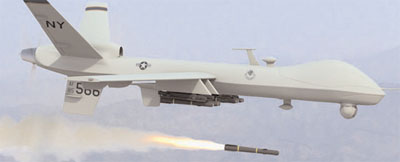
    America’s never-ending war on terrorism is almost always depicted in the mainstream media as a military and intelligence agency fight on a global battlefield. But it is also a propaganda war where the public is fed inaccuracies from Washington, especially when it comes to overseas killings by U.S. military drones. Here are five myths perpetuated by the military and its weapons makers that seek to make Americans feel good about drones and the White House’s policy of targeted assassinations.

    Myth #1: They Target High Level Terrorists
    Only two percent of drone strikes have killed “high value targets,” former counter-terror advisor to David Petraeus, David Kilcullen, notoriously remarked in a New York Times column early in the Obama presidency,where he said that 50 civilians were killed for every “high-value target” assassinated. That means that 98 percent of drone-caused deaths have been a mix of low-level militants, civilians, or another dubious Pentagon classification called “unknown militants.

    ” This spring McClatchy and later NBC reported that 25 percent of those killed in drone strikes in Pakistan have been classified as “unknown militants.” So by its own admission, the CIA has no idea whom they are killing about a quarter of the time. Keep in mind that if a militaryaged male is killed in a strike they are automatically presumed to be militants. The implication being, there is a huge room for error, and many of these “unknown militants” are likely civilians. In one case, the CIA classified 20-22 “unknown militants” killed. This strike actually killed around 40 civilians.

    Myth#2: Drones Are Accurate
    The Pentagon rhetoric touting “pin point” and “laser” accuracy of drones is baseless. Dr. Larry Lewis, a principal research scientist at the Center for Naval Analyses, a research group with close ties to the US military, studied the record in Afghanistan and found that drone strikes were no more accurate than traditional air power.

    So, after all this talk about the ability to discern enemies through surveillance, they are no more accurate traditional fly-bys. This rhetoric has allowed us to kill innocent children. Notably, this study was done in Afghanistan,where there is ample ground and human intelligence for selecting and assessing targets, as well as people who investigate the aftermath of the strikes. But that is not the case in Pakistan and Yemen,which means that the strikes have been more deadly for civilians.

    The implications from this reality are cynical and cavalier: Either the information on the ground is faulty, or drone operators are okay with certain levels of civilian casualties. Regardless, drones fall far short of the hyped rhetoric coming from the Obama administration.

    Myth #3: Drone Targets Imminently Threaten America
    The mainstream media have played into the CIA/Administration’s selective leaks about drones, especially the concept of a “kill list.” This military branding conjures up a process of carefully selected enemies who pose imminent threats to the U.S. However, the reality of “signature strikes” undercuts this P.R. construction.

    Never officially acknowledged by the administration, signature strikes target unknown suspected militants who display “pattern of live” behavior associated with Al Qaeda and the Taliban. What the “patterns” consist of is officially a secret. What we do know is that as soon as signature strikes were implemented there was a spike in number of drone strikes and the number people killed in strikes. Furthermore, reporting has recently revealed that the original authorization for drone strikes in Pakistan came from now deposed President Musharraf.

    The only way he would approve of the strikes was if the CIA killed his enemies. These “side-payments” became a characteristic of the CIA program. Instead of focusing on enemies of the U.S., the CIA played along with Pakistan’s intelligence agency, ISI, and its military to hit targets who posed no threat to the U.S.

    Myth #4 Drones Are Cheap
    Setting aside the moral, legal, and efficacy arguments about drones, the mantra from the administration, lobbyists and their lackeys in Congress has been drone’s low per-unit cost of $4 million to $5 million.

    According to Winslow Wheeler of the Project on Government Oversight, “This is quite incorrect.” He states, “The actual cost for a Reaper unit is $120.8 million in 2012 dollars.” This is far above the $27.2 million dollar F-16C or the $18.8 million A-10. Seemingly, this “aura of inevitability” about investing in this new revolutionizing weapon is the militaryindustrial- complex at its self-serving worst.

    Myth #5: Drones Are Making Americans Safer
    They are not, in fact.Not only are drones effectible destabilizing a nuclear power, Pakistan, in one of the most conflict-ridden regions of the world, they are inciting waves of suicide bombers to attack Pakistan. They are also directly threatening the U.S. In a global age connectivity there is a new phenomenon of self- radicalization. People who identify with the Muslim Diaspora are seeing their kinsmen being murdered by America in a most brutal way.

    The Boston Marathon bombers are only the latest example of this phenomenon. The most notorious selfradicalized terrorist was Faisal Shahzad, who, in 2010, tried to blow up New York’s Times-Square. When asked about his motive, he directly cited drones. These rebels with a cause will sadly become the norm as we push and provoke more of the world’s 1.3-1.4 billion Muslims into the political fringes where American violence begets more violence.

    Last fall I traveled to Pakistan where I witnessed first-hand the horror and challenges people of Pakistan face while living under drones. I went to Pakistan to investigate the civilian casualties caused by U.S. drone strikes and to speak with Pakistani people about how drone strikes impact their families, their communities, and their lives.

    During my travels I met Rafiq ur Rehman and his son and two young daughters whose mother was killed in a drone strike. Rafiq’s daughters reminded me of my daughters at a very young age and speaking with them left a significant impression on me. It helped drive my desire to create our upcoming film on drones.

  • Pakistan and the killings across the LoC: Tactical Offensive or a Strategic Defensive?

    Pakistan and the killings across the LoC: Tactical Offensive or a Strategic Defensive?

    “The fragile peace between India and Pakistan is once again under threat, but this time, the unease and tension may not be between India and Pakistan but between Pakistan and Pakistani Military establishment”, says the author.

    The recent killing of five soldiers in Poonch has reverberated the calculated and tested strategy of the Pakistan Army once again. Pakistan’s dubious track record of such events since the killing of Captain Saurabh Kalia and five other soldiers in May 15 1999 to the killing five of our brave men on Aug O5, 2013, inside our LoC are indicative of a revival of such dehumanization. The emotions and concerns raised by the nation each time may well be justified, but undue intensity in responses and reactions may often go to consolidate success of the perpetrators.

    In a contextual perspective, recurring events of this nature fall in line with the processes of authorization, routinization, and dehumanization, used by Kelman and Hamilton in studying My Lai and related events, to explain the dimension of Pakistan’s Military psychology. Pakistan military can learn from its record of atrocities in Bangladesh with larger ramifications of isolation in international relations, a possibility that Nawaz Sharif Government cannot allow.

    At a tactical level, Pakistan’s military psychology may be seen focused on a sense of achievement vis a vis India within the vacuum created by enormous disparities of conventional combat power or as a moral ascendancy/supremacy in the prevailing imbalance. While the dare exhibited in this raid may certainly be a shot of Adrenaline for the Pakistani military, but this may not be without a risk of escalation. India therefore, cannot and need not be cowed down by the hyped responses and talks of nuclear retaliation built up by Pakistani military establishment, to any action taken by the Indian Military and reiterated by every single Pakistani participant during television debates or panel discussions .

    Perhaps Our responses need to be fearless, timely and appropriate at the tactical level, and beyond glare of the media. While objectives of such or similar actions identified by India’s Security and Defence Experts during recent debates and discussions are extremely relevant, the outcome intended this time may well be more subtle and strategic. It is pertinent to bring here the internal security dynamic and declining influence of the Pakistani Military in the post elections scenario. The divergence in the civil military relationship between the Army, the PML-N and PTI on several security issues has been increasing .

    India’s role in Afghanistan, and cooperation between India and Pakistan towards peace and tranquility may well be the most serious differences that may threaten peace. In its first steps towards its strategic objectives of return to constitutional hierarchy, the Government’s focus is on the place of the Military denying it its traditional space of decision making on national issues.

    The federal government’s recent decision to initiate a high treason case against former military dictator Pervez Musharraf for subverting the constitution of Pakistan twice, which led to exile of Nawaz Sharif, and landing the shame/ humiliation of Kargil upon Pakistan are significant . Commencement of investigations , fully supported by the PTI and PPP’ have added to concerns of the Military , as any such prosecution would threaten many to similar fate. Silence of the Army chief, General Kayani during the entire process of campaigning and elections, and of keeping the Taliban at bay while propagating opportunities of their conditional return to main stream, while a step in the good and orderly direction, was viewed with serious reservations from many quarters within the Army.

    The implicit intent of the civil government may well be the nemesis of the Pakistan Army from a place of pre eminence and control, to a place of irrelevance or relative insignificance. The only field left where the Military can draw or perhaps redraw its significance is the LoC and issues of terrorism that may turn focus from civilian engagement to military incidents that tend to rally nations and people against each other reversing the entire process of restoring peace.

    Katharine Houreld from Reuters on 20 May this year, quoted Lieutenant Talat Masood who viewed the past five years significant in this context , in that, while the military remained the most powerful force behind the scenes, it no longer wanted to take direct power, Musharraf, the last military dictator, was in detention, Generals had been hauled up before Pakistan’s feisty courts and accused of voterigging, corruption and extrajudicial killings. The army does not have the monopoly of the power it once did.

    With a judiciary supportive of the Prime Minister s and a pro government media, an Army with a reformed, pro-democracy mindset, will complement the underpinnings for change in the overall environment in both Rawalpindi and Islamabad. Towards this, Nawaz Sharif will have to address the singular and greatest obsession of the Pakistan Military leadership and the rank and file, from its perceptions of India being the entire reason de etre of its existence to one of relevance in the national interests and internal contingencies. The fragile peace between India and Pakistan is once again under threat, but this time, the unease and tension may not be between India and Pakistan but between Pakistan and Pakistani Military establishment. For the latter, it may be a last strategic defensive for the Military’s relevance than a tactical victory vis a vis India.

  • US Drone Strikes In Pakistan Will End ‘Very Soon’: JOHN KERRY

    US Drone Strikes In Pakistan Will End ‘Very Soon’: JOHN KERRY

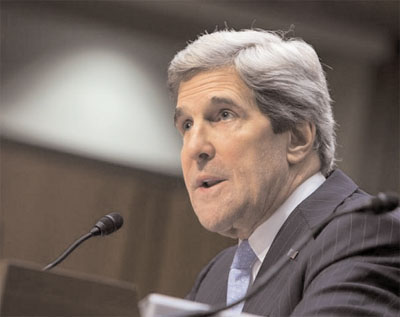
    ISLAMABAD (TIP): US secretary of state John Kerry told Pakistanis on August 1 that Washington planned to end drone strikes in their country soon – a message aimed at removing a major source of anti-American resentment in the strategically important country. After meeting Prime Minister Nawaz Sharif, Kerry said they had agreed to reestablish a “full partnership”, hoping to end years of acrimony over the drone strikes and other grievances including the US raid that killed Osama bin Laden.

    In a television interview later, Kerry said of the drone strikes: “I think the program will end as we have eliminated most of the threat and continue to eliminate it.” “I think the president has a very real timeline and we hope it’s going to be very, very soon,” he told Pakistan Television, when asked whether the US had a timeline for ending drone strikes, aimed at militants in Pakistan. US drone missiles have targeted areas near the Afghan border including North Waziristan, the main stronghold for various militant groups aligned with al-Qaida and the Taliban, since 2004.

    Pakistanis have been angered by reports of civilian casualties and what they see as an abuse of their sovereignty. It is unclear if, in their face-to-face talks, Sharif asked Kerry to halt the drone attacks. But when asked at a news conference whether Pakistan wanted the US to curtail the strikes, his foreign affairs adviser, Sartaj Aziz, replied: “We are asking them to stop it, not just curtail it.”

    Besides the drones and the killing of bin Laden in 2011, relations have been strained by Pakistan’s support for Taliban insurgents fighting Western troops in Afghanistan as well as a NATO air attack in which 24 Pakistani soldiers were killed. “I want to emphasize the relationship is not defined simply by the threats we face, it is not only a relationship about combating terrorism, it is about supporting the people of Pakistan, particularly helping at this critical moment for Pakistan’s economic revival,” Kerry told reporters.

    A new government in Pakistan and a new secretary of state in Washington have increased hopes the two sides can settle their grievances – something both hope to gain from, with Pakistan’s economy badly needing support and the United States aiming to withdraw the bulk of its troops from Afghanistan next year. Speaking after talks with Sharif in Islamabad, Kerry – who as a senator sponsored legislation to provide $7 billion in assistance to Pakistan over 5 years – said he had invited Sharif to visit the United States, Pakistan’s biggest donor, for talks with President Barack Obama.

    “What was important today was that there was a determination … to move this relationship to the full partnership that it ought to be, and to find the ways to deal with individual issues that have been irritants over the course of the past years,” he said. “And I believe that the Prime Minister is serious about doing that. And I know that President Obama is also.”

  • US, Pak Agree To Resume Stalled Strategic Dialogue

    US, Pak Agree To Resume Stalled Strategic Dialogue

    ISLAMABAD (TIP): Glossing over strained bilateral ties for over two years, the United States and Pakistan on August 1 agreed to resume the stalled strategic dialogue while Washington played down Islamabad’s concerns over continuing American drone strikes in its lawless northwestern tribal regions to take out Taliban militants. “We are here to speak honestly with each other, openly about any gaps that may exist and we want to bridge,” US secretary of state John Kerry said during his longanticipated visit to Islamabad, the first high-level contact after the Nawaz Sharif government took charge.

    “Our people deserve that we talk directly,” he said. Bilateral ties hit an all-time low in 2011 when US air strikes killed 24 Pakistani soldiers in the tribal region, bordering Afghanistan, and after al Qaeda chief Osama bin Laden was killed in the garrison town of Abbottabad in a daring secret raid by helicopter-borne US commandos. Pakistanis by CIA contractor Raymond Davis in Lahore.

  • US To Close Some Embassies On Sunday Over Threat

    US To Close Some Embassies On Sunday Over Threat

    WASHINGTON (TIP): US embassies that would normally be open this Sunday – including those in Abu Dhabi, Baghdad and Cairo – will be closed that day because of unspecified security concerns, the US State Department said on August 1. CBS News reported that the embassy closings were tied to US intelligence about an al-Qaida plot against US diplomatic posts in the Middle East and other Muslim countries.

    CBS said the intelligence did not mention a specific location. “The Department of State has instructed certain US embassies and consulates to remain closed or to suspend operations on Sunday, August 4th,” State Department spokeswoman Marie Harf told reporters at her daily briefing. “Security considerations have led us to take this precautionary step.” Harf declined to detail the “security considerations” or name the embassies and consulates that would be closed, but a senior State Department official told reporters later they were those that would normally have been open on Sunday.

    A quick search of the State Department website showed that those included several US missions in the Muslim world, including the embassies in Abu Dhabi, Baghdad and Cairo. CBS News said US embassies would also be closed in Bahrain, Israel, Jordan, Kuwait, Libya, Oman, Qatar, Saudi Arabia, Yemen, Afghanistan and Bangladesh. “The department has been apprised of information that, out of an abundance of caution and care for our employees and others who may be visiting our installations … indicates we should institute these precautionary steps,” Harf said. “The department, when conditions warrant, takes steps like this to balance our continued operations with security and safety.”

  • BJP Cautions US Against Peace Talks With Taliban

    BJP Cautions US Against Peace Talks With Taliban

    WASHINGTON (TIP): The BJP has cautioned the US against any peace talks with the Taliban arguing that the terrorist outfit is unlikely to change its behavior and reconciliation effort would be a futile exercise.

    “The eagerness to engage with elements that want to return Afghanistan to the status of ‘Islamic Emirates’ in the hope that they would deliver, and in the process humiliating and weakening the democratic leadership, doesn’t behove well for the region,” BJP President Rajnath Singh said here, July 23.

  • Reconciliation Only Path For Afghanistan To Achieve Peace: United States

    Reconciliation Only Path For Afghanistan To Achieve Peace: United States

    WASHINGTON (TIP): The United States, July 20, said it believes that reconciliation is the only ultimate path forward for Afghanistan to achieve peace, as Washington asked Taliban to decide how it wants to move forward on the peace talks. “We absolutely believe that reconciliation is the only ultimate path forward for Afghanistan to achieve peace. Afghans have to have these negotiations with Afghans, “White Press Secretary Jay Carney told reporters.

  • ‘Burka Avenger’ Pakistani Superwoman To Fight For Girls

    ‘Burka Avenger’ Pakistani Superwoman To Fight For Girls

    ISLAMABAD (TIP):Wonder Woman and Supergirl now have a Pakistani counterpart in the pantheon of female superheroes, one who shows a lot less skin. Meet Burka Avenger: a mild-mannered teacher with secret martial arts skills who uses a flowing black burka to hide her identity as she fights local thugs seeking to shut down the girls’ school where she works. Sadly, it’s a battle Pakistanis are all too familiar with in the real world.

    The Taliban have blown up hundreds of schools and attacked activists in Pakistan’s northwest because they oppose girls’ education. The militants sparked worldwide condemnation last fall when they shot 15-yearold schoolgirl activist Malala Yousafzai in the head in an unsuccessful attempt to kill her. Action in the “Burka Avenger” cartoon series, which is scheduled to start running on Geo TV in early August, is much more lighthearted.

    The bungling bad guys evoke more laughter than fear and are no match for the Burka Avenger, undoubtedly the first South Asian ninja who wields books and pens as weapons. The Urdu language show is the brainchild of one of Pakistan’s biggest pop stars, Aaron Haroon Rashid, known to many as simply Haroon, who conceived of it as a way to emphasize the importance of girls’ education and teach children other lessons, such as protecting the environment and not discriminating against others.

    This last point is critical in a country where Islamist militants wage repeated attacks on religious minorities. “Each one of our episodes is centered around a moral, which sends out strong social messages to kids,” Rashid said. “But it is cloaked in pure entertainment, laughter, action and adventure.” The decision to clothe the superhero in a black burka, also often spelled burqa, a fulllength robe commonly worn by conservative Islamic women in Pakistan and Afghanistan, could raise eyebrows because some people view the outfit as a sign of oppression .

    The Taliban forced women to wear burkas when they took control of Afghanistan in the 1990s. The version worn by the Burka Avenger shows only her eyes and fingers, though it has a sleeker, more ninjalike look than the bulky robes of an actual burka. Rashid, who is certainly no radical Islamist, said he used a burka to give a local feel to the show, which is billed as the first animated series ever produced in Pakistan. “It’s not a sign of oppression.

  • Insurgents Kill 8 Laborers, Afghan Officials Say

    Insurgents Kill 8 Laborers, Afghan Officials Say

    KABUL (TIP): Insurgents pulled over a minivan with eight young laborers on their way to work at a US base in eastern Afghanistan on july 18, forced them out and then shot them dead, officials said. The killings near Forward Operating Base Shank, a US base in Logar province, were the latest in a militant campaign of intimidation against Afghans working for the government or the international coalition.

    The attack took place just after dawn near Puli Alam, the provincial capital. “They were eight ordinary laborers going to work at that base. They were day laborers,” said Logar deputy police chief Raeis Khan Abdul Rahimzai. “This is very hard to believe. It is an inhuman and un- Muslim act against innocent people.” He said the eight were heading for temporary day jobs at the base and were not part of the facility’s local staff.

    The gunmen let the driver of the minivan go and did not harm him, Rahimzai said. Provincial spokesman Din Mohammad Darwesh said there were four gunmen on motorcycles who pulled over the minivan. “They just took them out of the car and shot them. They are all in their late teens and early 20’s,” Darwish said.

    Both officials said it was unclear if the incident could have been in reprisal for a coalition airstrike that killed 18 Taliban fighters in another part of the province on Wednesday. Logar, located just south of Kabul, has seen a sharp increase in insurgent activity this year, The Afghan army last week carried out a large operation against insurgents operating in the province.

    The Taliban have said they will not stop fighting during the holy month of Ramzan, which began last week, and will instead step up their attacks. About 1,000 Afghan civilians have been killed and more than 2,000 wounded in the first half of the year, according to the United Nations. That marked a 24 per cent increase in casualties compared to the same period last year.

  • Indian-American Nominated For Key Post In Obama Administration

    Indian-American Nominated For Key Post In Obama Administration

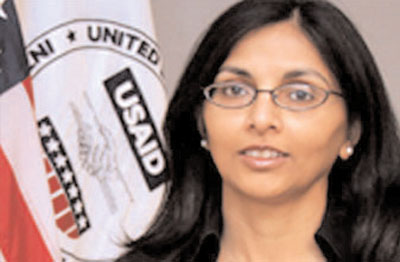
    WASHINGTON (TIP): US state department’s heavy hitter for India will be an Indian origin bureaucrat, Nisha Desai Biswal, a first for both the community and the administration. President Barack Obama on Thursday, July 18, sent a proposal to the senate to appoint Biswal assistant secretary of state for South Asia, top US diplomat for India.

    If confirmed Biswal will replace Robert Blake, an impossibly gangly career diplomat who liked to joke at India-US events his speeches were almost always the same as Indian ambassador’s. Biswal’s appointment was welcomed by the Indian American community, its experts and non-experts. “Great news … she is a terrific role model,” said a Facebook post.

    “This is a landmark appointment for Indian- Americans, the first time someone from the community has been chosen for the top diplomatic job dealing with South Asia,” said Sadanand Dhume, an Indian origin expert with conservative think tank American Enterprise Institute. “Nisha Biswal is an excellent choice for the position. She’s well-informed about the region and has many friends and admirers in both the executive and legislative branches of government.”

    Biswal is currently assistant administrator for Asia at the US Agency for International Development (USAID), a position she has held since September 2010. At USAID, her boss was administrator Raj Shah, another Indian American. who remains the senior most Indian American in the Obama administration. From 2005 to 2010, Biswal was the Majority Clerk for the State Department and Foreign Operations Subcommittee on the Committee on Appropriations in the House of Representatives.

    Biswal and her husband Subrat Biswal have two daughters. The position of assistant secretary of state – roughly the equivalent of additional secretary – is a crucial one, with responsibilities including Bangladesh and Sri Lanka. It wasn’t clear from the White House announcement if she would also hold charge of Central Asia, as was Blake’s brief, along side South Asia. She would most likely. But South Asia will not include Pakistan and Afghanistan, which have been entrusted to a special representative since the creation of that office in 2008, with Richard Holbrooke in charge.

  • They Thought Bullets Would Silence Us…

    They Thought Bullets Would Silence Us…

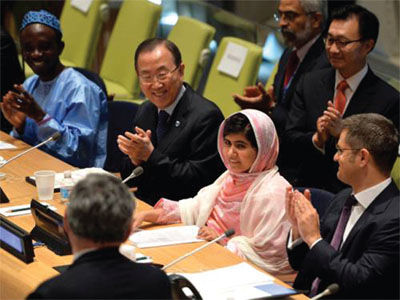
    On Friday, July 12, the United Nations Assembly listened spellbound to 16-year-old Malala, who was shot by the Talibans in Pakistan for attending school. Malala urged the governments to ensure free and compulsory education. Excerpts from her speech
    HONORABLE UN Secretary General Mr. Ban Ki-moon, respected president of the General Assembly Vuk Jeremic, honorable UN envoy for global education Mr. Gordon Brown, respected elders and my dear brothers and sisters: Assalamu alaikum(peace be upon you). Today is it an honor for me to be speaking again after a long time. Being here with such honorable people is a great moment in my life and it is an honor for me that today I am wearing a shawl of the late Benazir Bhutto.

    I don’t know where to begin my speech. I don’t know what people would be expecting me to say, but first of all thank you to God for whom we all are equal and thank you to every person who has prayed for my fast recovery and new life. I cannot believe how much love people have shown me. I have received thousands of good-wish cards and gifts from all over the world. Thank you to all of them.

    Thank you to the children whose innocent words encouraged me. Thank you to my elders whose prayers strengthened me. I would like to thank my nurses, doctors and the staff of the hospitals in Pakistan and the UK and the UAE government who have helped me to get better and recover my strength. I fully support UN Secretary General Ban Ki-moon in his Global Education First Initiative and the work of UN Special Envoy for Global Education Gordon Brown and the respectful president of the UN General Assembly Vuk Jeremic.

    I thank them for the leadership they continue to give. They continue to inspire all of us to action. Dear brothers and sisters, do remember one thing: Malala Day is not my day. Today is the day of every woman, every boy and every girl who have raised their voice for their rights. There are hundreds of human rights activists and social workers who are not only speaking for their rights, but who are struggling to achieve their goal of peace, education and equality.

    Thousands of people have been killed by the terrorists and millions have been injured. I am just one of them. So here I stand, one girl among many. I speak not for myself, but so those without a voice can be heard. Those who have fought for their rights. Their right to live in peace. Their right to be treated with dignity. Their right to equality of opportunity. Their right to be educated. Dear friends, on 9 October 2012, the Taliban shot me on the left side of my forehead.

    They shot my friends, too. They thought that the bullets would silence us, but they failed. And out of that silence came thousands of voices. The terrorists thought they would change my aims and stop my ambitions. But nothing changed in my life except this: weakness, fear and hopelessness died. Strength, power and courage was born. I am the same Malala. My ambitions are the same. My hopes are the same.

    And my dreams are the same. Dear sisters and brothers, I am not against anyone. Neither am I here to speak in terms of personal revenge against the Taliban or any other terrorist group. I am here to speak for the right of education for every child. I want education for the sons and daughters of the Taliban and all the terrorists and extremists. I do not even hate the Talib who shot me.

    Even if there was a gun in my hand and he was standing in front of me, I would not shoot him. This is the compassion I have learned from Mohamed, the prophet of mercy, Jesus Christ and Lord Buddha. This the legacy of change I have inherited from Martin Luther King, Nelson Mandela and Mohammed Ali Jinnah. This is the philosophy of nonviolence that I have learned from Gandhi, Bacha Khan and Mother Teresa.

    And this is the forgiveness that I have learned from my father and from my mother. This is what my soul is telling me: be peaceful and love everyone. Dear sisters and brothers, we realize the importance of light when we see darkness. We realize the importance of our voice when we are silenced. In the same way, when we were in Swat, the north of Pakistan, we realized the importance of pens and books when we saw the guns.

    The wise saying, “The pen is mightier than the sword.” It is true. The extremists are afraid of books and pens. The power of education frightens them. They are afraid of women. The power of the voice of women frightens them. This is why they killed 14 innocent students in the recent attack in Quetta. And that is why they kill female teachers. That is why they are blasting schools every day because they were and they are afraid of change and equality that we will bring to our society.

    And I remember that there was a boy in our school who was asked by a journalist: “Why are the Taliban against education?” He answered very simply by pointing to his book, he said: “A Talib doesn’t know what is written inside this book.” They think that God is a tiny, little conservative being who would point guns at people’s heads just for going to school.

    These terrorists are misusing the name of Islam for their own personal benefit. Pakistan is a peace-loving, democratic country. Pashtuns want education for their daughters and sons. Islam is a religion of peace, humanity and brotherhood. It is the duty and responsibility to get education for each child, that is what it says. Peace is a necessity for education.

    In many parts of the world, especially Pakistan and Afghanistan, terrorism, war and conflicts stop children from going to schools.We are really tired of these wars.Women and children are suffering in many ways in many parts of the world. In India, innocent and poor children are victims of child labor. Many schools have been destroyed in Nigeria. People in Afghanistan have been affected by extremism.

    Young girls have to do domestic child labor and are forced to get married at an early age. Poverty, ignorance, injustice, racism and the deprivation of basic rights are the main problems, faced by both men and women. Today, I am focusing on women’s rights and girls’ education because they are suffering the most. There was a time when women activists asked men to stand up for their rights.

    But this time we will do it by ourselves. I am not telling men to step away from speaking for women’s rights, but I am focusing on women to be independent and fight for themselves. So dear sisters and brothers, now it’s time to speak up. So today, we call upon the world leaders to change their strategic policies in favor of peace and prosperity.We call upon the world leaders that all of these deals must protect women and children’s rights.

    A deal that goes against the rights of women is unacceptable. We call upon all governments to ensure free, compulsory education all over the world for every child.We call upon all the governments to fight against terrorism and violence. To protect children from brutality and harm.We call upon the developed nations to support the expansion of education opportunities for girls in the developing world.

    We call upon all communities to be tolerant, to reject prejudice based on caste, creed, sect, color, religion or agenda to ensure freedom and equality for women so they can flourish.We cannot all succeed when half of us are held back.We call upon our sisters around the world to be brave, to embrace the strength within themselves and realize their full potential.

    Dear brothers and sisters, we want schools and education for every child’s bright future. We will continue our journey to our destination of peace and education. No one can stop us.We will speak up for our rights and we will bring change to our voice.We believe in the power and the strength of our words.

    Our words can change the whole world because we are all together, united for the cause of education. And if we want to achieve our goal, then let us empower ourselves with the weapon of knowledge and let us shield ourselves with unity and togetherness. Dear brothers and sisters, we must not forget that millions of people are suffering from poverty and injustice and ignorance.We must not forget that millions of children are out of their schools.

    We must not forget that our sisters and brothers are waiting for a bright, peaceful future. So let us wage a glorious struggle against illiteracy, poverty and terrorism, let us pick up our books and our pens, they are the most powerful weapons. One child, one teacher, one book and one pen can change the world. Education is the only solution. Education first. Thank you.

    The most courageous girl in the world Former UK Prime Minister Gordon Brown hailed Malala Yousafzai as “the most courageous girl in the world” as the Pakistani schoolgirl who was attacked by the Taliban last year called on world governments to provide free compulsory education for every child in a speech at the United Nations headquarters in New York.

    The address, timed to coincide with her 16th birthday, drew a standing ovation at a special Youth Assembly held in the presence of Mr. Brown, who is the UN’s special envoy for education, and the body’s Secretary- General, Ban Ki-moon, who declared it “Malala day”. Ms Yousafzai, who was shot in the head in October in Pakistan’s Swat Valley after attracting the ire of the Taliban for raising a voice against its attacks on girls’ education, also presented Mr. Ban with a petition signed by 4 million people asking for help to deliver education to all children.

    The speech came as Save the Children released a report based on research by UNESCO revealing that almost 50 million children living in war zones do not attend school at all, and that attacks on education are on the rise, largely due to the conflict in Syria. Justin Forsyth, Save the Children’s chief executive, said of Malala: “She was speaking for the nearly 50 million children around the world who are currently being denied the opportunity of an education because of conflict.”

    He added that the world “should listen” to Malala, who was nearly killed in last year’s attack. Few, however, managed to watch Ms Yousafzai in Pakistan. Only two of the county’s many news channels showed the speech live. The most-watched broadcaster, Geo News, showed portions of the speech later, while other channels all stuck to normal programming. Moreover, Pakistanis are currently unable to see videos on YouTube, because of an ongoing court ban.

    The speech did not get much attention in the days leading up to the event. In Pakistan, she is seen as a hero by many, especially those who oppose the Taliban’s campaign of violence. But for others she has been turned into an object of controversy, shrouded in conspiracy theories wildly alleging that she was “a CIA agent” and that her shooting was “staged”.

    These theories have had alarmingly wide purchase among young Pakistanis on the internet. The hostility to the schoolgirl, some observers say, is a measure of the pitch of anti-Americanism in Pakistan, where even the faintest association with the US is attacked.

  • Could Taliban Talks Lead To Partition Of Afghanistan?

    Could Taliban Talks Lead To Partition Of Afghanistan?

    The big question for the Afghans is: what happens in the long term? What will Kabul require to maintain the Afghan form of security and peace after the US/NATO troops leave, or will Afghanistan willy-nilly pitch itself right into yet another bloodletting civil war – like what followed the Soviet troop withdrawal in 1989? “, says the author.
    The much-expected talks between the Taliban and the United States in Doha have not yet begun, and there is no clear indication when the two parties, busy settling their list of pre-negotiation do’s and don’ts, will finally sit down to discuss the features of post-2014 Afghanistan and determine role of various parties in the future. Meanwhile, some within Afghanistan have expressed concern that if indeed talks progress between the Taliban and the Americans, it may lead to the partition of Afghanistan.

    As of now it seems that one important party, the Government of Afghanistan led by President Hamid Karzai, has suspicions that the Americans are working toward allowing the Taliban to carve out some territory of its own as part of the so-called solution to the Afghan imbroglio, and has remained unwilling to participate in these talks. President Karzai demands Afghan-to- Afghan talks unfettered by the presence of foreigners – particularly those who invaded, fought the Taliban unsuccessfully for more than a decade, and are now looking for a conditional getaway.

    President Karzai’s hard stance may change. After all, he also knows that he will have to depend on these foreigners’ money to keep Kabul secure after the 100,000-plus foreign troops leave Afghanistan by mid-2014. What happens next? However, these are short-term logistical problems. What is certain at this point is that the vast majority of foreign troops will leave Afghanistan according to the timetable set by US President Barack Obama.

    The big question for the Afghans is: what happens in the long term? What will Kabul require to maintain the Afghan form of security and peace after the US/NATO troops leave, or will Afghanistan willy-nilly pitch itself right into yet another bloodletting civil war – like what followed the Soviet troop withdrawal in 1989? At that time, the Afghan strongman Najibullah, a friend of the Soviets and a gritty Pushtun, had held on to power for almost five years fighting various Mujahideen groups.

    Most of those groups were propped up by the West, the Saudis and Pakistan in the 1980s using “Islamic Jihad” as the battle cry to fight the Soviet military. After the Soviets left, some of these groups continued to receive active Pakistani help to topple Najibullah, then the Afghan symbol of the godless Soviets. The question is: Will the withdrawal in 2014 usher in the same players that we saw in 1989, killing at random to get control of Kabul? Who knows? The current tiff between Kabul and Washington that is receiving attention in the mainstream media is part of a power play in progress between President Karzai and the United States.

    This, too, will pass. But what is not certain is what the talks will in fact bring in. Will they bear the fruit that the Obama administration is hoping for? Max Fisher of the New York Times noted that the so-called peace talks are already on shaky ground for three reasons. First, on the same day Washington announced the opening of “peace talks,” the Taliban claimed responsibility for an attack that killed four Americans.

    Second, Afghan President Hamid Karzai announced he was no longer planning to participate in either the talks or a separate troop-level negotiation with the United States. And, third, the Taliban’s new office in Doha flew a banner labeled “Islamic Emirate of Afghanistan” and a flag from its days of ruling the country. “All three are individually bad signs that represent much larger challenges for peace in Afghanistan,” said Fisher.

    “In some ways, though, it’s the flag that’s most serious” (“The ultimate symbol of why Afghan peace talks will be so difficult,” Max Fisher, New York Times, June 19, 2013). Maybe Fischer is overstating here. This little summer thunderstorm may pass in no time. But, the problem is that even if the talks turn out to be “successful,” will that be any good for the Afghans? There is no reason to believe that President Obama is losing sleep over that.

    As far as he is concerned, a peaceful withdrawal from Afghanistan – unlike the kind of withdrawal from Vietnam that resembled so starkly the fearful retreat of a defeated military – is all that he cares about, even if that means supping with the devil. All the rest of the verbiage that comes out of Washington is rhetoric.

    Appeasing the Taliban? That, however, also means that Washington needs to keep the Taliban in good humor, and that means allowing the group to have some sort of authority in Kabul when the foreigners are gone – or, most of them. There is a distinct possibility that the upcoming talks will include this as an important item. Some in Washington have long claimed that the Taliban is not really that bad.

    In a December 2011 interview with Newsweek/Daily Beast, US Vice President Joseph Biden said as much. “We are in a position where if Afghanistan ceased and desisted from being a haven for people who do damage and have as a target the United States of America and their allies, that’s good enough. That’s good enough. We’re not there yet,” said Biden. “Look, the Taliban per se is not our enemy. That’s critical,” he insisted.

    “There is not a single statement that the president has ever made in any of our policy assertions that the Taliban is our enemy because it threatens US interests…” What Biden says is clear. The United States has zero problem with the Taliban. But it has loads of problems with the al- Qaeda. In Afghanistan, however, those problems have been mostly resolved.

    In fact, Washington claims that it has virtually decimated al-Qaeda – the real bad guys – and the upcoming deal with the Taliban will include the condition that the Taliban cannot allow al-Qaeda to set up shop in Afghanistan once again. If all these negotiating points work out, the Taliban could have a legitimate presence in Kabul.

    Some in Afghanistan claim that long before that becomes a reality, talks with the Taliban – who have a put up a plaque in Doha claiming themselves to be the representatives of the “Islamic Emirate of Afghanistan,” as opposed to the citizens of the Islamic Republic of Afghanistan, the actual name of the Afghan Government – will pave the way for partition of Afghanistan.

    Afghanistan’s Weesa Daily, in its June 19 editorial referring to these developments, said attention should be paid to several major points: First, the opening of the office is an understanding between the Taliban and the United States, and the Taliban now think that US forces in Afghanistan have been defeated and are escaping while the US considers how to leave the ongoing war to Afghans so that it can merely watch.

    If there is no crisis following President Karzai’s term and if peace talks advance as planned, the Taliban, according to their recent statement, will hold talks with all involved sides. But, notes Weesa Daily, “these talks of the Taliban with all involved sides would resume based on the plans suggested by US Senator Dana Rohrabacher and US Vice- President Joe Biden, who have suggested Afghanistan’s division – which may result in civil war.”

    Partition of Afghanistan? Well, US Vice President Biden has talked about the “soft partition” of Iraq, but never about the partition of Afghanistan; while Congressman (not Senator) Rohrabacher has participated in deliberations where partition/decentralization of Afghanistan was addressed as an issue. But before Rohrabacher got into the act, former US Ambassador to India and US National Security Council Deputy for Iraq (2003-2004) Robert Blackwill, a neo-con, had identified the partition of Afghanistan as Plan B.

    In a July 2010 article in Politico, Blackwill was highly critical of the Karzai administration (“Afghan President Hamid Karzai’s deeply corrupt government – as unpopular as the Taliban – shows no sign of improvement”) and implied that the “corrupt governance” of Kabul was the prime reason behind US/NATO’s failure to “win” the war in Afghanistan. He called for a ‘de facto partition’ of Afghanistan and urged the Obama administration to “accept that the Taliban will inevitably control most of its historic stronghold in the Pashtun south.”

    But, Blackwill added, “Washington could ensure that north and west Afghanistan do not succumb to jihadi extremism, using US air power and special forces along with the Afghan army and likeminded nations.” Blackwill also stated: “Given the number of US combat forces now fighting, the Taliban cannot be sufficiently weakened in Pashtun Afghanistan to drive it to the negotiating table on any reasonable timeline. True, the Afghan Pashtun are not a unified group. But they do agree on opposing foreign occupation and wanting Pashtun supremacy.”

    In January 2012, Chairman of the Europe, Eurasia, and Emerging Threats Subcommittee of the US House Foreign Affairs Committee Dana Rohrabacher (RCalifornia) went to Berlin at the head of a bipartisan congressional group represented by Reps. Louie Gohmert (R-Texas), Steve King (R-Iowa) and Loretta Sanchez (DCalifornia).

    In Berlin, the delegation met with well-known National Front leaders such as Ahmed Zia Massoud, chairman of the National Front [Jebha-e-Melli]; General Abdul Rashid Dostum, leader of the National Islamic Movement of Afghanistan [Jumbesh-e-Milli]; Haji Mohammad Mohaqiq, leader of the People’s Unity Party of Afghanistan [Hezb-e Wahdat-e Mardom]; and Amrullah Saleh, former director of the Afghan National Security Directorate.

    Together, they had signed a document advocating major changes in the Afghan constitution, designed to create a federal system which would devolve power from the centre to the provinces. Of the existing governmental arrangements in Afghanistan they had the following to say: “The current system has fatally concentrated decision-making to whoever is president of the country. The Afghan president appoints the governors of each province and district, the mayor of every town, every provincial chief of police, one third of the entire Senate, and even every judge in Afghanistan.”

    “This centralized power has led to massive corruption, disenfranchisement of a large segment of the Afghan people, obstacles to economic development, massive abuses of power, increasing political instability, poor governance, and a vast undermining of law and order.” Almost instantly Kabul reacted sharply to the statement. In April 2012, Rep. Rohrabacher was stopped in Dubai as he was leading a delegation to Kabul.

    Officials say that while the other members of the delegation had visas for Afghanistan, Rohrabacher was denied a visa. Afghan officials had told the BBC that in addition to his criticisms of the president, Rohrabacher was being shunned because of meetings he had held in Berlin with Afghan politicians about the creation of a decentralized form of government.

    According to the BBC, Afghan officials viewed that as tantamount to interference in the country’s internal affairs. “Anyone who speaks against the good of Afghanistan and tries to interfere in our internal affairs is ineligible for an Afghan visa,” one official told the BBC. Though strong, President Karzai’s reaction was not impulsive. At the time of the Berlin meetings – in fact, two meetings took place over three days (Jan. 9-11) – he had made known his discontent.

    Given the lack of clarity in the US strategy on Afghanistan, Karzai had every reason to suspect that the Berlin outcome could become the official strategy one day, particularly since Blackwill had already called for a ‘de-facto partition’ of Afghanistan a few months before. According to available reports, there was also another reason why President Karzai reacted so sharply.

    Accompanying Rohrabacher and the three other representatives was an American confidant of Gen. Dostum, Charles Santos. Santos, who had been advocating the concept of federalism and the powerful role of democratically elected local and regional governments in Afghanistan through various articles, was not listed among the participants in Berlin.

    President Karzai might have wondered: what was that all about? Reports indicate that an angry President Karzai personally called the German Foreign Office, though the meeting was already over, and leaned on then US Ambassador Ryan Crocker to de-legitimize the Berlin proceedings. On Jan 10, Ambassador Crocker issued a short statement, titled “The United States Supports Afghan Unity.”

    The statement said: “In response to recent press [sic] reports, the US Embassy reaffirms the longstanding support of the United States for a unified Afghanistan based on the Afghan Constitution. Any assertions to the contrary are entirely without foundation. Reconciliation and the political process in Afghanistan are led by the elected government and the Afghan people.

    Any statement to the contrary is inaccurate.” Subsequently, at a Jan. 21 press conference in Kabul, then-US Af-Pak envoy Marc Grossman made efforts to cool down the Afghan president by reiterating that a peace deal could only be negotiated by Afghans and would not be hijacked by US officials, despite current appearances to the contrary. It is evident from many reactions within Afghanistan that the Afghans do not want partition of their country, and some news editorials express fear that the Taliban-US talks could lead to just that.

    Afghan analysts point out that the country suffered the pains of partition when the British Raj drew a border (known as the Durand Line) between Afghanistan and then British- India in 1893. The aim of that partition was to divide and weaken the Afghan tribes. More than a century later, the Durand Line remains one of the most disputed borders in the world. Further, Afghans rightly note that during the past three decades, Afghanistan has had no functioning government, yet nonetheless remained united against foreign invasions.

    Except for two or three of the country’s 33 provinces, each province has a distinct ethnic mix; and, perhaps because of this phenomenon, separatism has never raised its ugly head in Afghanistan. During Afghanistan’s civil war in the early 1990s, when a fierce internal competition for control of Kabul was raging, no ethnic group and no warlord ever called for partition. The anti-Soviet resistance in the north remained always as strong as in the south.

    “And let’s not forget that there are millions of Pushtun in the north as well,” as one analyst pointed out. In other words, should Washington try to partition Afghanistan to provide the Taliban a permanent home and hope that will prevent an all-out civil war, it might ensure US troops a peaceful retreat; but it could also lead to huge opposition within Afghanistan, triggering a civil war.

  • Indian Americans host Reception in Honor of Congressional leaders in Washington, D.C.

    Indian Americans host Reception in Honor of Congressional leaders in Washington, D.C.

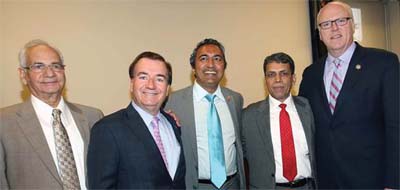
    WASHINGTON D.C.(TIP): The American India Public Affairs Committee (AIPACom) organized a reception in honor of Congressional leaders in Washington, D.C. on June 27th. Congressman Ed Royce, Chairman, Foreign Affairs Committee; Joe Crowley, Chair, India Caucus; Steve Chabot, Chairman, Subcommittee, South Asia; Gregory Meeks, Joe Wilson, Ami Bera, Grace Meng and several high-ranking officials from State Department, Senate and India Caucus participated. Joe Crowley Congressmen present expressed their whole-hearted support for India.

    Addressing the gathering, Mr. Jagdish Sewhani, President of the AIPACom said that the issue of pulling out the United States and its allied forces from Afghanistan by the end of 2014 and the rise of Taliban have created a sort of anxiety in the region. “There is a fear in the region that Taliban, supported by radicalized Pakistani army may make a forceful bid to take over Afghanistan and establish Sharia. This could trigger tension in the region,” he said.

    Disappointed over Pakistan’s sluggish pace of trial in the 26/11 Mumbai terror attack, Congressman Ed Royce, Chairman of the House Foreign Relations Committee demanded that the seven suspects, including LeT operational commander Zakiur Rehman Lakhvi, be handed over to the International Criminal Court to bring them to justice. Royce said there are rogue elements in the ISI who would use the opportunity of any instability in Afghanistan to go back to the Taliban era. “Ethnic cleansing is going on in Pakistan today against those who are speaking against it,” he said, alleging that the population of Hindus in Pakistan has now dropped to 1.5 per cent as against 25 per cent at the time of independence. Tracing the history of India Caucus, Sewhani said that the India Caucus has been a source of strength. It has done a commendable job to further cement an Indo-American relationship. Reminding the audience, Sewhani said that Pakistan is still the epicenter of terrorism.

    It is a wellknown fact that Pakistan is using terrorism as a tool to achieve its foreign policy objectives. At the moment, Pakistani society is the most radicalized society. Even though Pakistan Prime Minister Nawaz Sharif ostensibly wants to mend the relationship with India, Pakistan Intelligence Agency ISI is reported to have opened two new centers to train a large number of youngsters in terrorism on the other side of Jaisalmer in Indian state of Rajasthan. Trade between India and the USA has increased by 40% since the launch of Indo-US Strategic Dialogue by the Obama Administration 3 years ago and could cross $100 billion.

    The bilateral trade between India and the US could touch $500 billion mark over the next decade. Time has come for the oldest democracy in the world, the USA, to support the largest democracy in the world, the Republic of India and fourth economy in the world, in its bid to become the permanent member of the UN Security Council. “Both, USA and India are natural allies. Because of our mutual understanding and regard for each other, a new era in Indo-American relationship has dawned. The time has come to take this relationship from a mere friendship to a strategically meaningful relationship”, said Sewhany. (Based on a press release)

  • Taliban Gunmen Attack Presidential Palace In Afghanistan

    Taliban Gunmen Attack Presidential Palace In Afghanistan

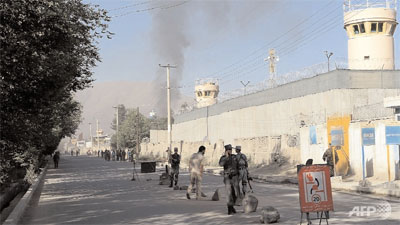
    KABUL (TIP): An early morning insurgent attack on Afghanistan’s presidential palace on June 25 has been put down with all the assailants killed, Kabul’s police chief said. General Ayoub Salangi told Reuters the gunfight ended after about 90 minutes with all the attackers killed. Taliban gunmen attacked Afghanistan’s presidential palace and surrounding buildings, including the CIA’s Afghan headquarters, with explosions and gunfire shaking the city centre.

    A Reuters reporter at the palace said the attack began soon after 6.30am (0200 GMT), when at least one man opened fire with an automatic rifle at a gate to the palace in the central Shash Darak district. Karzai’s whereabouts were not immediately known, though he was due to attend a press event at the palace after 9am (0430 GMT). Reporters had been gathering at the palace when the attack began and dived for cover as government forces returned fire. Heavy explosions resounded and the gunfire intensified. Schoolchildren walking to classes nearby were also caught in the exchanges.

    The Taliban claimed responsibility the attack in a text message to Kabul reporters from spokesman Zabihullah Mujahid. “Today at 6.30am a number of suicide bombers attacked the presidential palace, defence ministry and the Ariana Hotel,” Mujahid said. The Ariana Hotel is known to house the headquarters of the US Central Intelligence Agency (CIA) in Afghanistan. A thick plume of smoke was seen rising from the building.

    An Afghan official told Reuters the attackers had made their way into a nearby building from which they fired. Shash Darak includes the most important buildings in Kabul, including the palace, the headquarters of NATO-led forces in Afghanistan, the Afghan Defence Ministry and the CIA’s Afghan station.

  • If Pakistan Cannot Try 26/11 Culprits, Turn Them Over To International Criminal Court: ED ROYCE

    If Pakistan Cannot Try 26/11 Culprits, Turn Them Over To International Criminal Court: ED ROYCE

    WASHINGTON (TIP): Disappointed over Pakistan’s slow pace of trial in Mumbai terror attack case, a top US lawmaker has demanded that the seven suspects, including LeT operational commander Zakiur Rehman Lakhvi, be handed over to the International Criminal Court to bring them to justice, says a PTI report. “There are seven individuals that need to be brought to justice (for their role in the 26/11 attack case),” said Congressman Ed Royce, Chairman of the powerful House Foreign Relations Committee.

    “If Pakistan cannot try them, turn them over to international criminal court for crimes against humanity, for what they did in their collusion, in their culpability for what happened,” he said on Thursday. The seven Pakistani suspects have been charged with planning, financing and executing the attacks that killed 166 people in Mumbai in November 2008.

    A Rawalpindi-based anti-terrorism court had been handling the case since 2009 though the judge has been changed five times. Addressing a select group of Indian-Americans at a Congressional reception at the Capitol Hill organized by the American India Public Affairs Committee, Royce said both India and the United States are facing challenges from terrorism. Royce said some USD 100 million has been traced going from the Gulf States to Pakistan’s 600 Deobandi schools; which, according to him, are factories of radicalism.

    “Ethnic cleansing is going out in Pakistan today those who are speaking against it,” he said, alleging that the population of Hindus in Pakistan has now dropped to 1.5 %, against 25 % at the time of independence. Jagdish Sewhani, president of the American India Public Affairs Committee, said that the issue of pulling out USA and its allied forces from Afghanistan by the end of 2013 has created a sort of anxiety in the region. “There is a fear in the region that Taliban, supported by radicalized Pakistani army may make a forceful bid to take over Afghanistan and establish Sharia.

    This could trigger tension in the region,” he said. Royce said there are rouge elements in the ISI, who would use the opportunity of any instability in Afghanistan to go back to the Taliban era. Indian-American Congressman Ami Bera reiterated his commitment to strengthen ties between India and the US.

  • Pakistan, Afghanistan Trade Accusations At UN Over Extremist Havens

    Pakistan, Afghanistan Trade Accusations At UN Over Extremist Havens

    UNITED NATIONS (TIP): Afghanistan and Pakistan traded accusations in the UN Security Council on June 20 over the whereabouts of Islamist extremists on their porous border as the United Nations described increased tensions between the neighbors as “unfortunate and dangerous.” Afghanistan’s UN envoy, Zahir Tanin, told a council debate on the situation in Afghanistan that “terrorist sanctuaries continue to exist on Pakistan’s soil and some elements continue to use terrorism as an instrument of foreign policy.”

    Pakistan’s UN ambassador, Masood Khan, said “terrorists operate on both sides of the porous border” and many attacks against Pakistan were planned on Afghan soil. He said aggressive policing and border surveillance were needed. “I reject most emphatically Ambassador Tanin’s argument – root, trunk and branch – that terrorist sanctuaries exist in Pakistan and some elements continue to use terrorism as an instrument of foreign policy,” Khan told the council.

    He told Reuters in an interview afterward that Tanin had been “ill-advised” to raise the border issues at the Security Council as Kabul and Islamabad were already talking through other channels. Khan blamed Afghan President Hamid Karzai for stoking tensions. “When President Karzai meets our leadership, he’s most gracious, engaging, he’s a statesman. But when he talks to the media, he says things which inflame sentiment and that’s most unhelpful and destabilizing,” Khan said.

    “We have given very restrained responses.” Pakistan’s role in the 12-year-old war in Afghanistan has been ambiguous – it is a US ally but has a long history of supporting the Taliban in Afghanistan in a bid to counter the influence of its regional rival India. Pakistan’s military played a key role in convincing Afghan Taliban leaders to hold talks with the United States, US and Pakistani officials said, but Afghan anger at fanfare over the opening of the Taliban’s Qatar office this week has since delayed preliminary discussions.

    “We were talking to multiple interlocutors behind the scenes and we have been asking them to participate in these talks, (telling them) that we think the war should come to an end,” Khan told Reuters. ‘Succeed or fail together’ US-backed Afghan forces toppled the Taliban in late 2001 for refusing to hand over al-Qaida leader Osama bin Laden after the Sept. 11, 2001, attacks on the United States. Pakistan helped the Taliban take power in Afghanistan in the 1990s and is facing a Taliban insurgency itself.

    The Pakistani Taliban, known as the Tehreek-e-Taliban, is a separate entity from the Afghan Taliban, though allied with them. “Stability and sanctity of Pakistan- Afghanistan border is a shared responsibility. Robust deployment of Pakistani troops on our side is meant to interdict terrorists and criminals,” Khan told the council. “This must be matched from the other side.” A spate of cross-border shelling incidents by the Pakistani military, who said they were targeting Taliban insurgents, has killed dozens of Afghan civilians in the past couple of years.

    “We are very concerned with ongoing border shelling,” Tanin told the council. “This constitutes a serious threat to Afghan sovereignty and the prospect of friendly relations between the two countries.” UN special envoy to Afghanistan, Jan Kubis, told the Security Council that the heightened tensions between Afghanistan and Pakistan were a serious concern, especially at this stage of Afghanistan’s development.

    “Such tensions are unfortunate and dangerous,” he said. The NATO command in Kabul on Tuesday handed over lead security responsibility to Afghan government forces across the country and most foreign troops are due to withdraw from the country by the end of 2014.

  • Economic Issues Likely To Dominate Kerry’s Visit To India

    Economic Issues Likely To Dominate Kerry’s Visit To India

    WASHINGTON (TIP): Economic issues like intellectual property protection, local content restrictions and a continued cap on FDI are likely to be on top of his agenda when US Secretary of State John Kerry travels to India next week for the strategic dialogue between two countries. “First and the foremost from our perspective will be economic piece of this (dialogue). There has been lot of concern on part of American business community about what they see as growing obstacles to trade and investment,” Assistant Secretary of State for South and Central Asia, Robert Blake, told an audience here.

    Both Kerry and President Barack Obama have been receiving letters from the US business community, advocacy groups, Senators and Congressmen on the trade policies of India, which they claim is harming American businesses. “Intellectual property protection, local content restrictions, continued restrictions on FDI in different sectors. This is certainly going to be our focus,” Blake said, adding that one of the goals is to reinvigorate the bilateral investment treaty talks and conclude them as soon as possible.

    Likewise, the US wants to reinvigorate the trade policy forum, and will also push for continued progress on the civil nuclear side, he added. Responding to questions, Blake said the US is not looking at any deliverables during the strategic dialogue, except to making sure that they understand each other on these issues. “India has its own concerns on comprehensive immigration reform. Obviously we need to hear from that.

    The purpose of the dialogue is to hear each other out in a very open and friendly manner and then figure out who is going to take charge of fixing these,” he said. As a result of the three rounds of strategic dialogue so far, Blake said there has been significantly quite convergence of strategic growth between the United States and India. Referring to the various bilateral and trilateral dialogues between the two countries, Blake said: “All of these collectively really enabled us to have an extremely good dialogue on issues that were previously very difficult.”

    “Things like Afghanistan, Iran, Burma and Middle East were areas of quite sharp differences. Now we have a remarkable degree of convergence, which has been a very welcome to see. Non-proliferation, food security, scientific and academic co-operation, climate change, defence trade, and regional issues like Afghanistan and Pakistan will also figure prominently during Kerry’s visit, Blake noted. Responding to questions, Blake said India is one of the highest strategic priorities for the US.

  • Taliban Offer To Free US Soldier

    Taliban Offer To Free US Soldier

    ISLAMABAD (TIP): The Afghan Taliban are ready to free a US soldier held captive since 2009 in exchange for five of their senior operatives imprisoned at Guantanamo Bay as a conciliatory gesture, a senior spokesman for the group said on June 20 The offer follows this week’s official opening of a Taliban political office in Doha, the capital of the Gulf state of Qatar. The only known American soldier held captive from the Afghan war is US Army Sgt.

    Bowe Bergdahl of Hailey, Idaho. He disappeared from his base in southeastern Afghanistan on June 30, 2009, and is believed held in Pakistan. In an exclusive telephone interview with The Associated Press from his Doha office, Taliban spokesman Shaheen Suhail said on Thursday that Bergdahl “is, as far as I know, in good condition.” Suhail did not elaborate on Bergdahl’s current whereabouts.

    Among the five prisoners the Taliban have consistently requested are Khairullah Khairkhwa, a former Taliban governor of Herat, and Mullah Mohammed Fazl, a former top Taliban military commander, both of whom have been held for more than a decade. Bergdahl’s parents earlier this month received a letter from their son who turned 27 on March 28 through the International Committee of the Red Cross. They did not release details of the letter but renewed their plea for his release.

    The soldier’s captivity has been marked by only sporadic releases of videos and information about his whereabouts. The prisoner exchange is the first item on the Taliban’s agenda before even opening peace talks, saidn Suhail, who is a top Taliban figure and served as first secretary at the Afghan Embassy in the Pakistani capital of Islamabad before the Taliban government’s ouster in 2001.

  • Afghan Peace Bid Stumbles, Talks Delayed

    Afghan Peace Bid Stumbles, Talks Delayed

    DOHA (TIP): A fresh effort to end Afghanistan’s 12-year-old war was in limbo on Thursday after a diplomatic spat about the Taliban’s new Qatar office delayed preliminary discussions between the United States and the Islamist insurgents. A meeting between U.S. officials and representatives of the Taliban had been set for Thursday in Qatar but Afghan government anger at the fanfare surrounding the opening of a Taliban office in the Gulf state threw preparations into confusion.

    The squabble may set the tone for what could be arduous negotiations to end a conflict that has torn at Afghanistan’s stability since the U.S. invasion following the September 11, 2001 al Qaeda attacks on U.S. targets. Asked when the talks would now take place, a source in Doha said, “There is nothing scheduled that I am aware of.” But the U.S. government said it was confident the U.S.-Taliban talks would soon go forward.

    “We anticipate these talks happening in the coming days,” said State Department spokesman Jen Psaki, adding that she could not be more specific. James Dobbins, the U.S. special representative for Afghanistan and Pakistan “is packed and ready to go with his passport and suitcase,” she said. One logistical complication is a visit by U.S. Secretary of State John Kerry to Doha on Saturday and Sunday. Kerry will discuss the Afghan peace talks with the Qatari hosts, senior U.S. officials said, but does not plan to get immersed in any talks himself or meet with Taliban representatives.

    A major part of his meeting will be devoted to talks on the Syrian civil war. The opening of the Taliban office was a practical step paving the way for peace talks. But the official-looking protocol surrounding the event raised angry protests in Kabul that the office would develop into a Taliban government-in-exile. A diplomatic scramble ensued to allay the concerns. Kerry spoke with Afghan President Hamid Karzai on Tuesday and again on Wednesday in an effort to defuse the controversy.

    NATO chief Anders Fogh Rasmussen appeared to side with Karzai by pointing out that alliance leaders at NATO’s Chicago summit last year had made clear that the peace process in Afghanistan must be “Afghan-led and Afghan-owned”. “Reconciliation is never an easy process in any part of the world,” Rasmussen told reporters in Brussels. A Taliban flag that had been hoisted at the Taliban office in Qatar on Tuesday had been taken down and lay on the ground on Thursday, although it appeared still attached to a flagpole.

    A name plate, inscribed “Political Office of the Islamic Emirate of Afghanistan” had been removed from the outside of the building. But a similar plaque fixed onto a wall inside the building was still there on Thursday morning, witnesses said. Asked whether the Taliban office had created any optimism about peace efforts, the source replied: “Optimism and pessimism are irrelevant. The most important thing is that we now know the Taliban are ready to talk, and sometimes talk is expensive.”

    Word of the U.S.-Taliban talks had raised hopes that Karzai’s government and the Taliban might enter their first-ever direct negotiations on Afghanistan’s future, with Washington acting as a broker and Pakistan as a major outside player.Waging an insurgency to overthrow Karzai’s government and oust foreign troops, the Taliban has until now refused talks with Kabul, calling Karzai and his government puppets of the West.

    But a senior Afghan official said earlier the Taliban was now willing to consider talks with the government. “It’s hard to talk and fight at the same time,” said Marc Grossman, Dobbins’ predecessor as the U.S. envoy for Afghanistan and Pakistan. The talks will be “really” difficult, said Grossman, now vice chairman at The Cohen Group consulting firm. He added that he was heartened that the protocol dispute, which he called “the first bump” in the process, was being worked out.

  • Britain To Restart Detainees’ Transfer To Afghan Authorities

    Britain To Restart Detainees’ Transfer To Afghan Authorities

    LONDON (TIP): Britain would restart the transfer of detainees captured in Afghanistan to the local authorities later this month. The process was suspended in November last year after it emerged the prisoners were being mistreated in Afghan custody. The fresh move comes days after Britain confirmed it had 90 Afghan nationals in its custody at Camp Bastion, the country’s biggest base in Afghanistan and dubbed as the UK’s version of Guantanamo Bay detention camp.

    They were being held without charges for up to 14 months with no access to lawyers in violation of the international law. “We have been working to identify a safe transfer route to Afghan custody and I am pleased that this work has come to fruition,” said defence secretary Philip Hammond. “I very much hope we do not face any further legal impediments in the British courts which could prevent us from transferring these detainees and force us to hold them for even longer in Camp Bastion.” The prisoners would be transferred to an Afghan National Army facility at Parwan, which has received positive reports from rights organizations.

    “Our coalition allies also now transfer detainees to the same Afghan facility. I am confident the safeguards in place will ensure detainees will not be at risk of mistreatment,” said Hammond. He justified detentions, saying they were crucial on the battlefield to stop those intend to kill British troops. “Our troops must be able to detain enemies on the battlefield and debrief them for intelligence purposes and will continue to do so before transferring them into the Afghan judicial system.’

    ‘ British forces in Afghanistan are part of the International Security Assistance Force and are allowed to detain suspects for 96 hours. The custody can be extended in “exceptional circumstance”. Since 2003, UK operations in Afghanistan have been conducted under Operation Herrick.

  • Seven Georgian Troops Killed In Afghanistan Suicide Blast

    Seven Georgian Troops Killed In Afghanistan Suicide Blast

    TBILISI (TIP): Seven Georgian troops were killed and nine were wounded in a suicide attack in Afghanistan when insurgents attacked their base, the pro-Western Caucasus country’s army chief said on Thursday. “Seven military servicemen were killed” when a “suicide terrorist” blew up a truck loaded with explosives outside a Georgian military base in Afghanistan’s Helmand province, General Irakli Dzneladze, chief of the Georgian army joint staff, told a news conference.

    The incident brings to 30 the death toll of Georgian soldiers serving in the International Security Assistance Force in Afghanistan (ISAF). On May 13, three Georgian soldiers were killed in a similar suicide attack on their base in southern Afghanistan. “I offer my deepest condolences to the families of our fallen heroes and to all of Georgia,” Georgia’s staunchly pro-Western President Mikheil Saakashvili said in a televised address. “Our duty to their memory is to continue our path towards NATO membership,” he said.

    Georgia has 1,570 troops serving in Afghanistan’s Helmand province, making the small Caucasus country of 4.5 million the largest non-NATO contributor to ISAF, according to the defence ministry. Around 100,000 US-led NATO troops are fighting a Taliban-led insurgency in Afghanistan in a conflict that began a decade ago.

    Despite the stubborn insurgency, war-weary international forces are seeking to hand control of security to Afghan forces by withdrawing their combat troops by the end of 2014. Georgia has said it is willing to continue deploying troops to assist local security forces after the NATO-led combat mission formally ends. NATO has promised Georgia membership at an unspecified point in the future.

  • Britain To Restart Detainees’ Transfer To Afghan Authorities

    Britain To Restart Detainees’ Transfer To Afghan Authorities

    LONDON (TIP): Britain would restart the transfer of detainees captured in Afghanistan to the local authorities later this month. The process was suspended in November last year after it emerged the prisoners were being mistreated in Afghan custody. The fresh move comes days after Britain confirmed it had 90 Afghan nationals in its custody at Camp Bastion, the country’s biggest base in Afghanistan and dubbed as the UK’s version of Guantanamo Bay detention camp.

    They were being held without charges for up to 14 months with no access to lawyers in violation of the international law. “We have been working to identify a safe transfer route to Afghan custody and I am pleased that this work has come to fruition,” said defence secretary Philip Hammond. “I very much hope we do not face any further legal impediments in the British courts which could prevent us from transferring these detainees and force us to hold them for even longer in Camp Bastion.’

    ‘ The prisoners would be transferred to an Afghan National Army facility at Parwan, which has received positive reports from rights organizations. “Our coalition allies also now transfer detainees to the same Afghan facility. I am confident the safeguards in place will ensure detainees will not be at risk of mistreatment,” said Hammond. He justified detentions, saying they were crucial on the battlefield to stop those intend to kill British troops.

    “Our troops must be able to detain enemies on the battlefield and debrief them for intelligence purposes and will continue to do so before transferring them into the Afghan judicial system.” British forces in Afghanistan are part of the International Security Assistance Force and are allowed to detain suspects for 96 hours. The custody can be extended in “exceptional circumstance”. Since 2003, UK operations in Afghanistan have been conducted under Operation Herrick.

  • Real challenge for Sharif begins now

    Real challenge for Sharif begins now

    “Forces of destabilization are as active today as they were earlier. They are anxiously waiting for the withdrawal of the US-led troops from Afghanistan next year. The new scenario that will emerge in Afghanistan can affect Pakistan in various ways”, says the author.

    Most newspapers have preferred to highlight the fact that Nawaz Sharif is the first person in Pakistan to have become the democratically elected Prime Minister for a third time after a gap of 13 years. Thus, his success in capturing power is a historic development. In 1999 when his government was toppled in a military coup staged by the then Army Chief, Gen Pervez Musharraf, he had been written off as a politician with his party, the Pakistan Muslim League (N), struggling for survival.

    He was jailed and could have been hanged to death. That was the time when the world saw in his wife, Kulsoom, a fearless fighter for her rights. She made it clear to the General that she was not the one who would accept the designs of the dictator to throw her husband into the dustbin of history. She succeeded in making the Saudi rulers intervene in a clandestine cooperation with the US. Nawaz Sharif was forced to go on exile to Saudi Arabia.

    But the politician in him could not remain away from the hustle and bustle of politics forever. After all, he was destined to come back to power and change the course of politics in Pakistan. But this fact will be of no use to him as he begins his latest tenure at a time when most people in Pakistan are leading a miserable life because of daily power cuts for as long as 12 hours at some places. Pakistan during the PPP-led government somehow escaped having been declared a “failed state”.

    Its economy needs a surgical treatment to make it deliver the goods. Extremism promoted by elements like the Taliban has caused incalculable damage to the Pakistan economy. It invited drone attacks by the US which may now become history, as Nawaz Sharif has declared after taking over as Prime Minister. But how he manages to control extremists remains to be seen. Interestingly, the man who unsuccessfully tried to destroy Nawaz Sharif’s political career, Gen Musharraf, is in the dock when the PML (N) leader is in power.

    The world will be watching with interest whether Nawaz Sharif simply ignores him and allows the law to take its own course. He has no time to waste as people have great expectations from him. He was a successful business man before the PML (N) leader got inducted into politics during Gen Zia-ul-Haq’s rule. That is why Sharif’s approach has always been business-like. The privatization program with the setting up of the Privatization Commission of Pakistan began when he was at the helm of affairs.

    It’s a different matter that it was alleged those days that when government-owned undertakings were put on sale, his Ittefaq Group of Industries would purchase them. Despite this, Pakistan made some significant achievements on the industrial front during his past two tenures. But today the situation is different. Forces of destabilization are as active today as they were earlier. They are anxiously waiting for the withdrawal of the US-led troops from Afghanistan next year.

    The new scenario that will emerge in Afghanistan can affect Pakistan in various ways. But Pakistan can gain enormously by taking steps for the normalization of relations with India. Nawaz Sharif may face considerable pressure from businessmen to do all he can to increase business opportunities between India and Pakistan. Already the two countries are doing excellently on the bilateral trade front.

    Exports from India to Pakistan went up by around 15 per cent in 2012-13, adding $1.6 billion to bilateral trade between April 2012 and February 2013. Imports from Pakistan too increased to $488 million from $375 million, a rise of as much as 30 per cent. The new Prime Minister of Pakistan has a great opportunity available to him to change the economic profile of his country by concentrating on the Indo-Pak trade front.