Tag: Afghanistan

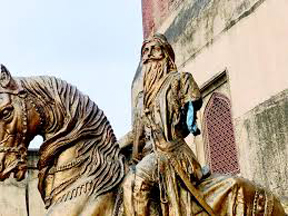
  • Toppling of Ghani’s regime in Afghanistan and Maharaja Ranjit Singh’s Statue in Pakistan

    Toppling of Ghani’s regime in Afghanistan and Maharaja Ranjit Singh’s Statue in Pakistan

    After recently reading the news item onhow the government of Afghanistan collapsed to Taliban onslaught with complete melt down of its defense forces, we are all in state of disbelief. Then followed the news of vandalization of Maharaja Ranjit Singh’s Statue in Lahore rekindling the gruesome scenes witnessed by manyat the partition of the country in August 1947. Incidentally, this is not the first time, but the third time the statue has been vandalized since its installation in 2019.The gory act of vandalization and that of overrunning of a country separated by few hundreds of miles geographically are two unrelated events on the surface, yet the underlying cause is common. The genesis of both these incidents is direct result of indoctrinationthat everything we associate with is right and superior,while other person, legacy or his ideas are not equal but inferior.

    The fall of Ghani government and Taliban gaining control over the country is creating a very fluid situation.The significant section of society there wants to move out of the mess they find themselves in since 1979, the time of Soviet invasion. At that time about 1 million Afghans lost their lives. But then after that the last forty years have been a time of turmoil on and off there. Then after the Soviet exit we saw the USA entry there. Now 20 years later USA is departing. The departing circumstancesare grave and have been dubbed as “Saigon Moment”. As this is stark reminder of helicopter airlift of USA while the Vietcong had overrun the capital of South Vietnam. While talking about the comparison reminds of another acronym coined to describe Afghanistan as “Graveyard of kingdoms” for the invaders. The historical track records go back to the time of invasion by Alexander the great, in 330 BC. This is a long-checkered history, where even the British could not tame the region almost a century before.  The present ground realities bring out thefollowing major challenges now:

    1. Restoration of order and a semblance of peace so that thenormal life as usual can resume.
    2. Safeguarding of the rights, status of women, minorities and others who do not belong to the so-called “our” club.
    3. How to protect and save the religious, spiritual, architectural, and intellectual assets of the minorities that will be left behind in Afghanistan,as well as safeguard those in Pakistan. The issue in Pakistan that the minority population is concentrated in pockets and heritage sites spread out providing opportunity for premier location land grab. So,the issue is how to save, protect, maintain, and preserve those historical relics. Although, PETPB has been managing and maintaining some historical minority shrines in Pakistanreasonably despite encroachments and efforts to erase them. Still overall the bigger problem remains, which has been exacerbated by the recent events in Afghanistan.
    4. The evacuation of remaining minority population along with their families, out of Afghanistan to safety and their resettlement has become a high priority. The insecurity being experienced by them is frightening. They need our help today. Already the vivid images of chaotic situation with citizens there trying to escape from the country are making shocking news.

    This is not a complete or comprehensive list of priorities, but just a starting point to start thinking about them.

     Bhupinder ‘Bo’ Singh

    singhbo@gmail.com

  • August 20 New York & Dallas E – Edition

    [vc_row][vc_column][vc_column_text]

    Edition

    [/vc_column_text][/vc_column][/vc_row][vc_row][vc_column width=”2/3″][vc_custom_heading text=”Dual Edition” font_container=”tag:h2|text_align:center” google_fonts=”font_family:Istok%20Web%3Aregular%2Citalic%2C700%2C700italic|font_style:700%20bold%20regular%3A700%3Anormal” link=”url:https%3A%2F%2Fwww.theindianpanorama.news%2Fwp-content%2Fuploads%2F2021%2F08%2FTIP-August-20-Dual-Edition.pdf|||”][vc_single_image image=”113549″ img_size=”full” add_caption=”yes” alignment=”center” onclick=”custom_link” link=”https://www.theindianpanorama.news/wp-content/uploads/2021/08/TIP-August-20-Dual-Edition.pdf”][/vc_column][vc_column width=”1/3″][vc_single_image image=”82828″ img_size=”medium” alignment=”center” onclick=”custom_link” link=”https://www.theindianpanorama.news/advertising-media-kit-portal-indian-panorama/”][vc_single_image image=”82829″ img_size=”medium” alignment=”center” onclick=”custom_link” link=”https://www.theindianpanorama.news/advertising-media-kit-portal-indian-panorama/”][/vc_column][/vc_row][vc_row][vc_column width=”2/3″][vc_custom_heading text=”Lead Stories This Week” font_container=”tag:h2|text_align:center” google_fonts=”font_family:Istok%20Web%3Aregular%2Citalic%2C700%2C700italic|font_style:700%20bold%20regular%3A700%3Anormal” link=”url:https%3A%2F%2Fwww.theindianpanorama.news%2F%20|||”][/vc_column][vc_column width=”1/3″][vc_widget_sidebar sidebar_id=”mh-sidebar”][/vc_column][/vc_row]

  • Man injures 8 with axe in Sweden before being shot, arrested

    Man injures 8 with axe in Sweden before being shot, arrested

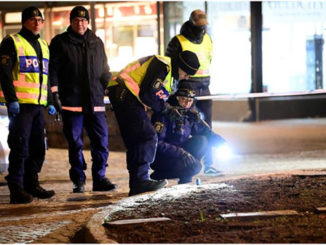
    Stockholm (TIP): A man armed with an axe attacked and injured eight people in a southern Swedish town Wednesday before being shot and arrested, police said.

    Prime Minister Stefan Lofven said a possible terrorist motive was being investigated.

    “In the light of what has emerged so far in the police investigation, prosecutors have initiated a preliminary investigation into terrorist crimes,” he said but didn’t elaborate.

    Shortly after his statement, investigators at a police press conference said they had started a preliminary investigation into attempted murder, with details “that make us investigate any terrorist motives”.

    “But at the moment, I cannot go into details,” regional police chief Malena Grann said.

    Hospital officials say three people wounded in an assault by a man using an ax in southern Sweden are in life-threatening condition and police have reduced the overall number of victims to seven.

    The other victims of Wednesday’s assault in the small town of Vetlanda, 190 kilometres southeast of Goteborg, Sweden’s second-largest city, include two seriously injured people, two with moderate injuries and one who is slightly injured, the Jonkoping region said in a statement late Wednesday.

    Police said the man in his 20s attacked people in the small town of Vetlanda, about 190 kilometres southeast of Goteborg, Sweden’s second-largest city. His motive was not immediately known.

    The man was shot by police, who said the condition of those attacked and of the perpetrator was not immediately known. Officials did not provide the identity of the suspect, who was taken to hospital. Local police chief Jonas Lindell said “it seems that the injuries are not life-threatening” but could not give further details.

    The events took place in downtown Vetlanda, with police saying they got calls just after 1400 GMT about a man assaulting people with an axe. Police also said there were five crime scenes in this town of roughly 13,000.

    Lofven condemned “this terrible act”, and added that Sweden’s domestic security agency SAPO was also working on the case.

    “They continuously assess whether there are reasons to take security-enhancing measures and are prepared to do so if necessary,” he said in a statement.

    Police said the man, who they would not identify in line with Swedish policy, is known to them for petty crimes. Overnight, officers raided an apartment where he was reportedly staying. The Expressen tabloid said the suspect was a 22-year-old man from Afghanistan. Sweden’s Home Affairs Minister Mikael Damberg told broadcaster SVT on Thursday that the case was being investigated as attempted murder but all aspects would be considered, including whether it was a terror attack. “It is obvious that you look at whether there are terrorist motives behind it, you have to get to the bottom of it,” he said. Regional police chief Malena Grann said police were investigating whether there were any terrorist motives in the case. AP

  • Afghan women judges killed

    Kabul (TIP): Unidentified gunmen killed two women judges from Afghanistan’s Supreme Court on Sunday morning, police said, adding to a wave of assassinations in Kabul and other cities while government and Taliban representatives have been holding peace talks in Qatar.

    The two judges, who have not yet been named, were killed and their driver wounded, in an attack at around 8:30 am, police said, adding the case was being investigated by security forces. — Reuters

  • Lloyd Austin is confirmed, becoming the first Black defense secretary in U.S. history

    Lloyd Austin is confirmed, becoming the first Black defense secretary in U.S. history

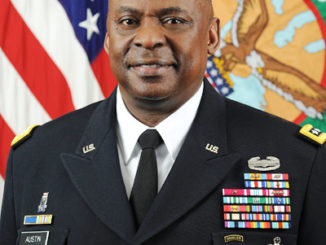
    WASHINGTON (TIP): The Senate on Friday, January 22, confirmed Lloyd J. Austin III as defense secretary, filling a critical national security position in President Biden’s cabinet and elevating him as the first Black Pentagon chief.

    The 93-2 vote came a day after Congress granted General Austin, a retired four-star Army general, a special waiver to hold the post, which is required for any defense secretary who has been out of active-duty military service for fewer than seven years. It reflected a bipartisan consensus on Capitol Hill that it was urgent for Mr. Biden to have his defense pick rapidly installed, a step normally taken on a new president’s first day. “It’s an extraordinary, historic moment,” said Senator Jack Reed, Democrat of Rhode Island and the chairman of the Armed Services Committee. “A significant portion of our armed forces today are African-Americans or Latinos, and now they can see themselves at the very top of the Department of Defense, which makes real the notion of opportunity.” Mr. Austin, 67, is the only African-American to have led U.S. Central Command, the military’s marquee combat command, with responsibility for Iraq, Afghanistan, Yemen and Syria. He retired in 2016 after 41 years in the military and is widely respected across the Army. Lawmakers in both parties initially had been uneasy at the prospect of granting General Austin an exception to the statutory bar against recently retired military personnel serving as Pentagon chiefs, a law intended to maintain civilian control of the military. They had already done so four years ago for President Donald J. Trump’s first defense secretary, Jim Mattis, a retired four-star Marine officer, and many had vowed not to do so again. But facing intense pressure from officials from Mr. Biden’s transition team and top Democrats, and after receiving assurances from General Austin that he was committed to the principle of civilian control, lawmakers rallied behind a barrier-shattering nominee. Two Republicans, Senators Josh Hawley of Missouri and Mike Lee of Utah, voted against the confirmation. Even though 43 percent of the 1.3 million men and women on active duty in the United States are people of color, the leaders at the top of the military’s chain of command have remained remarkably white and male. When President Barack Obama selected General Austin to lead the United States Central Command, he became one of the highest-ranked Black men in the military, second only to Colin L. Powell, who had been chairman of the Joint Chiefs of Staff. Mr. Austin will be the first Black Pentagon chief since the position was created in 1947 — just nine months before President Harry S. Truman ordered the desegregation of the armed forces, Representative Anthony Brown, Democrat of Maryland and a Black retired colonel in the Army Reserve, noted. “Secretary Austin’s confirmation is a historic first and symbolizes the culmination of the nearly 75-year march toward genuine integration of the department,” Mr. Brown said. “He is well positioned to draw upon his experiences as a seasoned military commander, respected leader and as a Black man who grew up amid segregation to drive progress forward as our next Secretary of Defense.”

    (Source: Washington Post / New York Times)

  • Bolsonaro warns US-like political crisis could happen in Brazil

    Bolsonaro warns US-like political crisis could happen in Brazil

    Brasilia (TIP): Brazil’s President Jair Bolsonaro said on Thursday the lack of trust in the vote count in the US election led to Wednesday’s mob attack on Congress and warned that the same could happen in his country.
    The far-right leader repeated claims of widespread fraud in the November 3 vote and said Brazil’s electronic voting system, internationally praised for its efficiency and speed in counting ballots, can be manipulated.
    Hundreds of President Donald Trump’s supporters stormed the U.S. Capitol on Wednesday in a harrowing assault on American democracy. A shaken Congress early on Thursday formally certified Democrat Joe Biden’s election victory.
    Bolsonaro, an admirer of Trump and whose anti-establishment style of politics he has mimicked, advocates a return to printed ballots for the 2022 presidential election, in which he plans to seek a second term.
    “What happened in the American elections? Basically, what was … the cause of the whole crisis? The lack of confidence in the vote,” he told supporters outside his residence. Bolsonaro said, without giving any evidence, that there were people who voted three or four times, and dead people had voted. “Here, in Brazil, if you have electronic voting, it will be the same. Fraud exists,” he said. “If we don’t have the ballot printed in 2022, a way to audit the votes, we’re going to have bigger problems than the United States,” he said. Reuters

  • Iran bans Covid-19 vaccines from US, UK

    Iran bans Covid-19 vaccines from US, UK

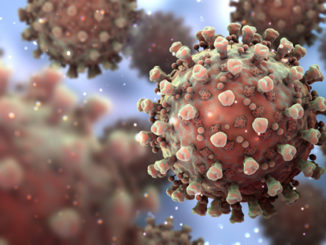
    Dubai (TIP): Supreme Leader Ayatollah Ali Khamenei on Friday banned Iran from importing of American Pfizer-BioNTech and Britain’s AstraZeneca Covid-19 vaccines.
    “The import of US and British vaccines into the country is forbidden. I have told this to officials and I am saying it publicly now,” Khamenei said in a live televised speech.
    “I have no confidence in them. Sometimes they want to test vaccines on other nations … If the Americans were able to produce a vaccine, they would not have such a big coronavirus fiasco in their own country,” said the leader.
    The country that has been worst hit by the novel coronavirus in West Asia, launched human trials of its first domestic Covid-19 vaccine candidate late last month, saying it could help Iran defeat the pandemic despite US sanctions that affect its ability to import vaccines.
    However, Khamenei praised Iran’s efforts to develop domestic vaccines but said it could obtain vaccines “from other reliable places”. He gave no details but China and Russia are both allies of Iran.
    “I’m not optimistic about France either because of their history of infected blood,” Khamenei said, referring to the country’s contaminated blood scandal of the 1980s and 1990s. — Reuters

  • China holds COVID-19 vice-ministerial meeting with Pakistan, Bangla, Nepal and Sri Lanka

    China holds COVID-19 vice-ministerial meeting with Pakistan, Bangla, Nepal and Sri Lanka

    Beijing (TIP): China has hosted a vice-ministerial-level meeting with Pakistan, Bangladesh, Nepal and Sri Lanka on controlling the COVID-19, expanding its first such meeting held in July involving Islamabad, Kathmandu and Kabul.
    Chinese Vice Foreign Minister Luo Zhaohui hosted the virtual meeting. “To jointly defeat COVID-19, protect people’s life, safety and health, and accelerate economic and social recovery and development, China, Bangladesh, Nepal, Pakistan and Sri Lanka convened a vice-ministerial-level video conference on COVID-19 response on November 10,” the Chinese Foreign Ministry said in a statement on Thursday.
    The five countries had “in-depth exchanges on cementing the political consensus on jointly fighting COVID-19, enhancing cooperation on containing the coronavirus and restoring economic development and movement of people and achieved positive results,” the statement said.
    This is the second ministerial meeting held by China involving the South Asian region on COVID-19. Chinese Foreign Minister Wang Yi held a similar meeting with his counterparts of Pakistan, Afghanistan and Nepal in July.
    China has pledged that COVID-19 vaccine development and deployment in China, when available, will be made a global public good, the statement said.
    China is also ready to consider providing vaccines to developing countries positively, the other four countries included, it said. In the context of long-term COVID-19 containment, the five countries will uphold multilateralism, firmly support the World Health Organisation in playing a leading role in the global fight against COVID-19.
    They reiterated their opposition to “politicisation and stigmatisation” by using COVID-19, and also agreed that the autumn and winter seasons are a crucial period for its containment and vowed to strengthen information sharing and coordination of policies and actions to cope with the impact of its second wave.
    The Chinese side is ready to step up cooperation with the other four parties in testing, diagnostics, treatment and medicine, and continue to provide them with assistance of containment supplies, the statement said.
    They agreed that countries linked by land ports should establish joint response mechanisms in border areas.
    Standard operating procedures will be developed on COVID-19-related notification, border control, containment measures at points of entry and emergency response to prevent cross-border transmission. They also agreed on the importance of coordinating COVID-19 response and economic and social development, and will advance the Belt and Road cooperation to boost post-COVID-19 economic recovery and development, it said. “In a spirit of mutual trust, openness and win-win cooperation, the Five Parties welcome other regional countries to join the cooperation against COVID-19 and are ready to engage in dialogue and communication with them,” the statement added. According to Johns Hopkins coronavirus tracker, the coronavirus has so far infected more than 52 million people and killed over 1.2 million others globally after it emerged in the central Chinese city of Wuhan last year. PTI

  • Biden likely to give India more strategic space

    Biden likely to give India more strategic space

    Biden has said that he would constitute a united front of the US, its allies and partners to ‘confront China’s abusive behavior and human rights violations’ and ‘place US back at the head of the table’ to mobilize collective action on global threats. Germany, France and the European Union have welcomed Biden’s election promise to work on issues like China’s unfair trade practices and other challenges.

    By Yogesh Gupta

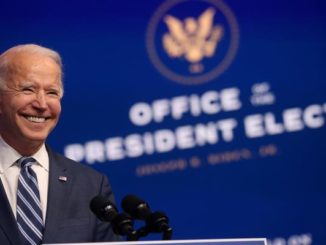
    Joseph  Biden Jr. will soon take over as the 46th President of the United States. There is some consternation as many critics are not sure how the Joe Biden-Kamala Harris duo will react to the human rights situation, particularly in Kashmir. Also, that he will be ‘soft’ on China which may recoil on India in its current military confrontation with that country. Biden is a seasoned and skillful politician, who for decades has served on the Senate Foreign Relations Committee, including as its chair. Second, he is calm, contemplative and a team leader who will listen to and go by the professional advice of the US establishment — including the State, Defense, National and Homeland Security, CIA, Trade and other departments. His long innings as the Vice President in two terms of President Obama unambiguously authenticate this view.

    In an article, Why America must lead again, in the Foreign Affairs journal in March this year, Biden wrote that President Trump had diminished the credibility and influence of the US by abdicating the American leadership, indulging in ill-advised trade wars which had hurt its own consumers and undermining and abandoning its allies which are America’s biggest strength.

    The post-COVID-19 world will be very different from 2016 when the Obama-Biden duo left. China’s economy has made huge strides during this period. However, much of China’s economic growth is based on extensive use of unfair trade practices, including denial of market access, stealing of foreign technologies, subsidies to its state-owned industries and others.

    China’s swift growth has been accompanied by massive modernization of its military, including manufacture of fifth generation of fighter and stealth aircraft, long- and medium-range missiles, hypersonic and artificial intelligence (AI)-based weapons, destroyers and aircraft carriers.

    Similarly, China has made considerable progress in other emerging technologies like 5G, quantum computing, new materials, robotics and space weapons. The rapidly growing China is now challenging the economic and military pre-eminence of the US in Asia. It has launched aggression against a number of countries allied or getting closer to the US such as India, Taiwan, Vietnam, Australia and others and is trying to divide the transatlantic alliance.

    Biden has said that he would constitute a “united front of the US, its allies and partners to confront China’s abusive behavior and human rights violations” and “place US back at the head of the table” to mobilize collective action on global threats. “When we join together with fellow democracies, our strength more than doubles. China can’t afford to ignore more than half the global economy,” he argued. Germany, France and leaders of the European Union have welcomed Biden’s election promising to work together on China and other challenges.

    Though the aggressive rhetoric of Trump administration may change as Biden seeks China’s collaboration on climate change, non-proliferation and control of infectious diseases, the US and its allies will take collective action against China’s unfair trade policies, as per the Biden team. The US sanctions on export of sensitive technologies to China are likely to continue. In his earlier avatars, Biden played an important role in the passage of the Indo-US Civil Nuclear Deal in the Congress (2005) and later when the Obama administration declared India as a ‘major defense partner’ (2016). With the signing of Logistics Exchange Memorandum of Agreement (LEMOA), Communications Compatibility and Security Agreement (COMCASA) and Basic Exchange and Cooperation Agreement for Geo-spatial Cooperation (BECA) recently, India has established close linkages with the US security architecture. Its large growing economy, professional armed forces and stout determination to resist China have augmented its strategic value. In its pursuit of multipolar world, India can play a critical role in checking the growth of China’s hegemony and its domination of Asia.

    Biden made it clear in his Foreign Affairs essay that he would “fortify the USA’s collective capabilities with democratic friends by reinvesting in its treaty alliances with Australia, Japan, South Korea and deepening partnerships from India to Indonesia to advance shared values in a region that will determine the USA’s future.”

    Biden has promised to invest in improving America’s competitiveness, pull down trade barriers, resist the slide towards protectionism and give more emphasis to fair trade. Given the rising trade deficit and unemployment in the US, it is likely that there will be some tough negotiations with India on issues such as high tariffs, market access, levy of taxes on US technological giants like Amazon and Google, but in an amicable manner without resorting to threats and tariffs.

    On issues relating to immigration, H1B visas and the studies of Indian students in US universities, Biden is likely to be more positive though keeping in view unemployment in his own country.Some Biden advisers have stated that he would raise human rights issues with India like Obama. This will be more in the nature of a dialogue among friendly states and would not be the main driver of his overall policy given New Delhi’s sensitivities and the importance attached to strategic issues confronting the two countries.

    Biden has stated that his administration would stand with India against the threats it faces from its own region and along its borders. Given the above template, it is likely that India would find greater resonance on Pakistan’s support of terrorism, a continued US role in the fight against terror groups in Afghanistan and on resuming a nuclear deal with Iran.

    Similarly, his stand on re-joining the Paris climate change agreement, convening a summit of democracies to discuss issues of common interest, meetings of major carbon emitters to reduce harmful emissions and control of infectious diseases would be of considerable interest to India. Summing up, India is likely to get more strategic space and a greater sympathetic understanding of its concerns from the Biden administration than that of President Trump.

    (The author is a former ambassador)

  • Pakistani army: Militant fire from Afghanistan kills soldier

    Peshawar (TIP): Militant gunfire from across the border with Afghanistan on Tuesday killed a Pakistani soldier and wounded two others, Pakistan’s military said, the latest in militant attacks on troops in the region. The attack targeted a border post in the village of Manzaikai in southwestern Baluchistan province, the military said in a statement. It said Pakistan has constantly been asking Afghan authorities to take effective measures on their side of the border “to rein in cross-border terrorist incidents”.

    The military provided no further details, but Pakistan and Afghanistan often accuse each other of turning a blind eye to militants operating along their shared porous frontier, which stretches some 2,400 kilometers (1,500 miles) across rugged mountainous terrain.

    Pakistan’s border areas have served as a base for militants until a few years ago, when the army claimed it cleared the regions of insurgents. However, occasional attacks have continued, raising fears that the Pakistani Taliban are regrouping in the area. — AP

  • Lok Sabha passes Citizenship (Amendment) Bill

    Lok Sabha passes Citizenship (Amendment) Bill

    NEW DELHI (TIP): The Lok Sabha passed the Citizenship (Amendment) Bill, which seeks to provide Indian citizenship to non-Muslim refugees coming from Pakistan, Bangladesh and Afghanistan after facing religious persecution there, a little past midnight on Monday, December 9, after a heated debate that lasted over seven hours.

    The Bill, which was passed in the Lok Sabha with 311 members favoring it and 80 voting against it, will now be tabled in the Rajya Sabha for its nod.

    Several amendments brought by opposition members, including one by a Shiv Sena MP, were defeated either by voice vote or division.

    According to the proposed legislation, members of Hindu, Sikh, Buddhist, Jain, Parsi and Christian communities, who have come from Pakistan, Bangladesh and Afghanistan, till December 31, 2014 facing religious persecution there, will not be treated as illegal immigrants but given Indian citizenship.

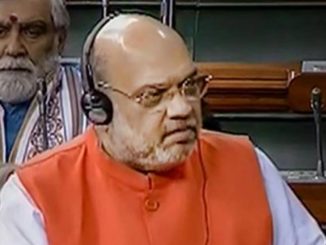
    In a hard-hitting reply to the debate on the proposed legislation, Union Home Minister Amit Shah said people belonging to any religion should not have any fear under the Modi government as he asserted that the bill will give relief to those minorities who have been living a painful life after facing persecution in neighboring countries.

    Shah also said the Modi government will definitely implement the National Register of Citizens (NRC) across the country and when it will be done, not a single illegal immigrant will remain in the country.

    Shah said there is a difference between illegal immigrants and those who have come after facing religious persecution in the three neighboring countries.

    “No one should have any fear of being persecuted under the Narendra Modi government,” he said after nearly seven-hour-long debate which was marked by fiery speeches by MPs belonging to both the opposition and the ruling alliance.

    The home minister said had India not been divided on religious lines in 1947, there was no need for the Citizenship (Amendment) Bill.

    “Muslim population in India has increased from 9.8 per cent in 1951 to 14.8 per cent in 2011 while the Hindu population has decreased from 84 per cent in 1951 to 79 per cent in 2011.

    “Whereas, the minority population in Pakistan has decreased from 23 per cent in 1947 to 3.7 per cent in 2011. Similarly minority population in Bangladesh has decreased from 22 per cent in 1947 to 7 per cent in 2011,” he said, adding India does not discriminate against anyone on the basis of religion.

    The home minister said the Citizenship Bill will give relief and constitutional respect to those who have been living a painful life after facing persecution in neighboring countries.

    Shah dismissed the suggestions that the Bill is violative of Article 14 of the Constitution, which guarantees equality for everyone, as it aims to give citizenship to persecuted people only.

    “This Bill is not unconstitutional and not in violation of Article 14 and has nothing to do with Muslims in India,” he said but made it clear that Rohingya Muslims, coming from Myanmar, will not be given Indian citizenship.

    The home minister countered the Congress charges that the bill is communal in nature, by taking a dig at the opposition party, saying “Congress is such a secular party which partners Muslim League in Kerala and Shiv Sena in Maharashtra”.

    “Modi government’s only religion is the Constitution,” he asserted.

    He also said India doesn’t need a refugee policy as the country has enough laws for the protection of refugees.

    Earlier, initiating the debate, Shah said the bill has the endorsement of India’s 130 crore citizens as it was part of the BJPs’ election manifestoes in 2014 and 2019.

    Opposition leaders Adhir Ranjan Chowdhury, Saugata Roy, N K Premchandran, Gaurav Gogoi, Shashi Tharoor and Asaduddin Owaisi opposed the introduction of the bill, saying it was violative of various provisions of the Constitution, including move to grant citizenship on the basis of religion.

    While defending the introduction of the bill, Shah said the Congress had “divided” the country on the basis of religion that is why it was necessary to bring the bill and added that it was brought on the basis of reasonable classifications provided under the Constitution.

    The tabling of the emotive bill through division of votes came in the wake of protests and incidents of violence in Northeastern states with most of the student unions and regional political parties opposing it, saying it will nullify the provisions of the Assam Accord of 1985, which fixed March 24, 1971, as the cut-off date for deportation of all illegal immigrants irrespective of religion.

    “We will have to differentiate between intruders and refugees. Citizenship amendment bill does not discriminate against anyone and does not snatch anyone’s rights,” Shah said while initiating the debate on the contentious bill.

    Trying to allay apprehensions of people of the Northeast, Shah said the Narendra Modi Government is committed to protect the customs and culture of people of the region and informed that Manipur will be brought under Inner Line Permit regime, where the proposed law will not be applicable.

    The home minister said under the proposed legislation, citizenship will be granted to refugees coming from the three countries after facing religious persecution there even without documents, including ration cards.

    Noting that India has given similar rights to people in the past, Shah said Manmohan Singh and L K Advani could become prime minister and deputy prime minister respectively due to this after they came from present-day Pakistan.

    “This bill is not even .001 per cent against Muslims. It is against infiltrators,” he said earlier while introducing the bill.

    During the debate, which was marked by heated arguments, AIMIM chief Asaduddin Owaisi also tore the bill, saying it was aimed at making Muslims “stateless” and will lead to another partition.

    Opposing the bill, Congress MP Manish Tewari said the bill is “unconstitutional” and “contrary to the spirit of the Constitution which is secular”.

    “Equals cannot be treated as unequal. When a person comes to India, he is a refugee. You cannot discriminate against him on the basis of religion,” he said during the debate.

    “The bill is against the Constitution, against the spirit of Constitution and against the ideology propounded by Babasaheb Ambedkar,” Tewari said.

    Discrimination on the basis of religion, he further said, was not in tune with the Preamble of the Constitution which specifically mentions the word ‘secularism’.

    “Secularism is embedded in the Constitution,” he said.

    Supporting the bill, BJP MP Rajender Agarwal said the country cannot ignore the suffering of the people who have come here after facing religious persecution.

    He said Pakistan has failed to protect its minorities under the Nehru-Liaquat pact.

    While NDA allies the JD(U) and the LJP extended support to the bill, fence sitters, including the BJD and the YSRCP also supported the bill while suggesting that Muslims should also be included in the bill.

    Meanwhile, West Bengal Chief Minister Mamata Banerjee said the NRC and the CAB will never be allowed in Bengal as long as the TMC is in power.

    “It’s a divisive bill and shall be opposed at any cost,” she said in Kharagpur while claiming that at least 30 people have committed suicide in the state due to panic over the implementation of the National Register of Citizens (NRC).

    Adhir Ranjan Chowdhury, Leader of the Congress in Lok Sabha, said the government was trying to create impression that by opposing the legislation, the party was anti-Hindu.

    “We are opposing the bill because it is discriminatory in nature. It wreaks havoc on the very foundations of the Constitution. This is a step towards Hindu Rashtra. India should maintain the essence of humanity,” Chowdhury said.

    Surpriya Sule (NCP) said the perception is that every Muslim is feeling insecure and the largest minority community should not be felt left out.

    Referring to DMK MP K Kanimozhi, Sule also asked, “What happens to those who practice atheism?”

    As per the bill, “on and from the date of commencement of the Citizenship (Amendment) Act, 2019, any proceeding pending against a person under this section in respect of illegal migration or citizenship shall stand abated on conferment of citizenship to him.”

    “Provided that such person shall not be disqualified for making application for citizenship under this section on the ground that the proceeding pending against him and the central government or authority specified by it in this behalf shall not reject his application on that ground if he is otherwise found qualified for grant of citizenship under section.”

    The BJP-led NDA government had introduced the bill in its previous tenure and got Lok Sabha’s approval. But it did not introduce it in Rajya Sabha, apparently due to vehement protests in the Northeast and lack of majority in the House. That bill lapsed following the dissolution of the last Lok Sabha.

    (Source: PTI)

  • India and U.S. resolve to work through their trade differences

    India and U.S. resolve to work through their trade differences

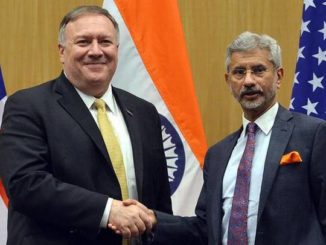
    NEW DELHI (TIP): India and the U.S. resolved to “work through” their differences which have led to an impasse on trade issues as External Affairs Minister S. Jaishankar hosted U.S. Secretary of State Mike Pompeo in Delhi ahead of a meeting between Prime Minister Narendra Modi and U.S. President Donald Trump in Osaka this week.

    “If you trade with somebody, and particularly if they are your biggest trading partners, it’s impossible that you don’t have trade issues. But I think the sign of a mature relationship is that ability to negotiate your way through that and find common ground,” Mr. Jaishankar said at the end of their meeting on Wednesday, although neither side announced any positive outcomes from the discussions. Mr. Pompeo and Mr. Jaishankar are understood to have thrashed out issues, including tariffs and counter-tariffs imposed by New Delhi and Washington on each other in the past year, as well as the U.S.’s specific concerns with India’s proposed laws on e-commerce and data localization, on price caps and market access.

    “The U.S. is clear that it seeks greater market access and the removal of trade barriers in our economic relationship, and today I addressed these differences in the spirit of friendship and I think we will be able to resolve these issues in the interests of our two countries,” said Mr. Pompeo.

    He clarified that the U.S. decision to withdraw India’s GSP preferential trade status this month had not come up for discussion.

    Mr. Jaishankar said both sides had come away with a “better understanding” of each other’s concerns on a wide variety of issues besides trade, including energy, defense, investment concerns and people-to-people contacts, as well as the growing conflict in the Gulf with Iran and the peace process in Afghanistan.

    Rejecting calls by the United States and the threat of sanctions under its CAATSA law, Mr. Jaishankar said that India will take its decision on the purchase of the Russian S-400 Triumf anti-missile system in its own “national interest”, and conveyed this to his American counterpart during talks here on Wednesday.

    “On the CAATSA ( Countering America’s Adversaries through Sanctions Act)issue) I explained to Secretary Pompeo in some detail that we have many relationships with many countries, and many of them have some standing and they have a history,” said Mr. Jaishankar, referring to India’s traditional relationship with Russia.

    Mr. Jaishankar also raised India’s concerns over growing U.S.-Iran tensions and their impact on India’s energy security.

    While India has zeroed out all oil imports from Iran since the U.S. sanctions deadline ran out on May 2, it has maintained a cordial and close relationship with the Iranian government. In response, Mr. Pompeo lashed out at the Iranian government, which he called a “terrorist regime”, adding that India and the U.S. had a “shared understanding” of the terrorist threat emanating from Iran.

    “We know that Iran is the world’s largest state sponsor of terror, and the Indian people have suffered from terror around the world. So I think there is a shared understanding of the threat and a common purpose to ensuring that we keep energy at the right prices and deter this threat,” Mr. Pompeo said.

    The MEA declined to comment on whether it supported Mr. Pompeo’s remarks, which were made in Mr. Jaishankar’s presence. Mr. Pompeo also met with PM Modi and National Security Adviser Ajit Doval on Wednesday, June 26.

  • Afghani Sikh and Hindu Community pay tribute to their brethren slain in Afghanistan

    Afghani Sikh and Hindu Community pay tribute to their brethren slain in Afghanistan

    Afghanistan Consul General in New York Abdul Satar Haqbin mourns with community

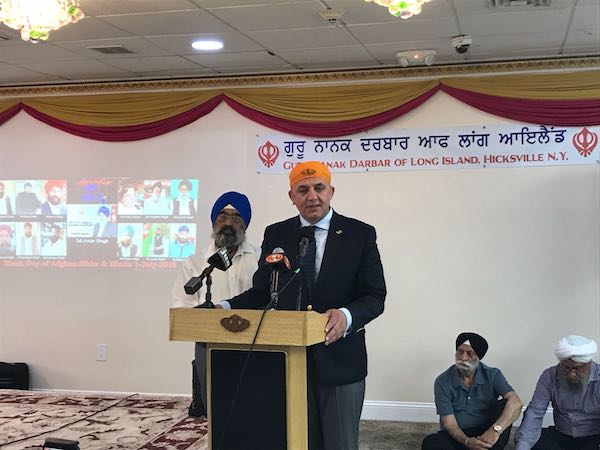
    HICKSVILLE, NY(TIP): The gory incident of the slaying of 19 Sikh and Hindu community leaders in Jalalabad, Afghanistan on July 1 came alive before the eyes of the gathering at Gurdwara Nanak Darbar here on July 5. The Afghani Singh and Hindu community which has a large presence in this part of New York organized an Akhand Paath in the memory of their slain brethren. The Sikhs who immigrated from Afghanistan after having suffered for years set up a Gurdwara by the name Gurdwara Nanak Darbar while the Afghani Hindus set up a temple by the name Asa Mai Hindu Temple. Both shrines are located in the vicinity of each other in Hicksville. The entire community which immigrated from Afghanistan is close knit and share their joys and sorrows.

    So it was when the Akhand Paath Sahib in the memory of those killed was organized by the Sikh sangat of Gurdwara Nanak Darbar. Members from Asa Mai Mandir and from other Hindu temples came to pay their tribute to the dear departed ones. Many had known those who were killed. In particular, Rawail Singh and Avtar Singh who were political leaders of the  Sikhs and Hindus in Afghanistan, were household names.

    Speaking on the occasion, Afghanistan Consul General in New York, Abdul Satar Haqbin said he was both “happy and sad”. Happy that he was with the community in a Sikh temple which he had always wanted to visit. And sad because of the tragic incident in Afghanistan on July 1 in which 19 Hindu and Sikh community leaders were killed. Among the killed were young and old, professionals, businessmen and workers. The gory incident has made government, parliament, and people of Afghanistan sad.

    Speaking about the turn of the events in Afghanistan, the Consul General said that Afghanistan was a very peaceful country until 40 years ago. But after Russia invaded Afghanistan, peace deserted the country and all kinds of problems started. But, “we have to regain peace”, said the CG. Sikhs and Hindus have made great sacrifices for Afghanistan. They have laid down their lives for the country. They have bravely served in the military. “I thank the Sikhs and the Hindus” for their sacrifices and contribution to Afghanistan. Haqbin was sad to recall how once upon a time there were 200,000 Sikhs and Hindus living in Afghanistan and now only a handful were left there.

    The Sikhs and the Hindus are held in high esteem. No sooner than the reports of the killings came in, the governor and senior officials visited the site of the incident and the gurdwara to express their condolences. They felt concerned for the Hindu and Sikh community and expressed their support to them.

    The Consul General paid his tribute to those killed and said he will ensure all possible help to the bereaved families.

    The Consul General was honored with a Siropa

    The Consul General was honored with a siropa.

    The Gurdwara General Secretary Harcharan Singh Gulati who has been in constant touch with the Sikh and Hindu community in Afghanistan, said that the Sikhs have been living in Afghanistan for the last hundreds of years. He spoke feelingly about the Sikh historical gurdwaras in Afghanistan and recalled how Rawail Singh and Avtar Singh stayed back only to look after those gurdwaras. They are “true martyrs”, Gulati said.

    A view of the sangat
    The grief stricken managing committee members of Gurdwara Guru Nanak Darbar
    Photos / Courtesy H.S. Ahluwalia

    A number of community leaders, Gurdwara and Mandir managers and intellectuals, who included, among others, Dr. Amarjit Singh, Giani Jagtar Singh Jachak, Prof. Indrajit S Saluja, Paramjit Singh Bedi, Mohan Singh, Virenderpal Singh Sikka, spoke on the occasion.

    Earlier, a large number of Sikhs and Hindus participated in the Bhog of Shri Akhand Paath Sahib and listened to Gurbani Kirtan.


  • Stay, Afghanistan needs you…

    Stay, Afghanistan needs you…

    Filled with remorse, an anguished Afghan hopes Sikhs, Hindus won’t flee what’s their home too

    By Saad Mohseni
    I am not certain if the community can tolerate more pain, but we don’t want them to forget that they represent a legacy that stretches back a thousand years in Afghan history.

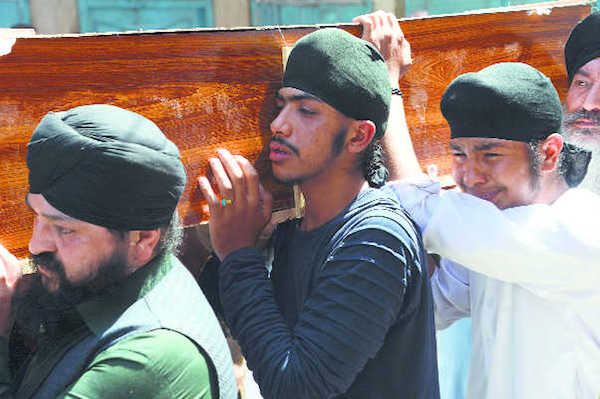
    It was a black day. On July 1, a suicide bomber tore into a crowd of Hindus and Sikhs who had collected to meet President Ashraf Ghani in Jalalabad, resulting in the massacre of 19 persons; 10 were badly injured. The pain has been felt and shared by every Afghan I have come in contact with since the attack. The brutal attack claimed the lives of two of the Sikh community’s favorite sons, Avtar Singh Khalsa, the only Sikh candidate running for Parliament in October; and Rawail Singh, a vibrant member of our trying-to-be-more-civil society. We all feel incredible shame that it has come to such a pass.

    I vividly recall Harandar Singh and Amarjeet Singh, my Sikh classmates in primary school at the French Lycee Isteqlal in Kabul, Afghanistan, in the late 1970s. As first cousins, they were inseparable: gossiping, laughing, switching between Farsi and Punjabi without missing a beat. One was quite tall and slim, while the other was darker, shorter and slightly chubby — although I can’t recall which one was which. What I do recall is that their parents, like many Sikhs in Kabul, were involved in the textile business. Anil Kumar, our lone Hindu classmate, came from a well-known family that operated one of Kabul’s better-known movie theatres.

    I would often walk with Harandar and Amarjeet the mile-long distance from our bus stop to school, going past the homes of the few remaining Jewish families adjacent to Flower Street. In the late 1970s, Kabul was a city that peacefully housed Indian communities. The same was true of Ghazni, Kandahar, Jalalabad and all other urban centers of Afghanistan.

    I viewed these boys as lucky to evade religious studies at school, they didn’t have to be subjected to the less-than-competent religious studies teacher, a character who once pulled his belt out to whip a student, only to see his pants fall to his knees. But other than their ‘exotic’ turbans and absence from the compulsory Islamic studies class, Harandar, Amarjeet and Anil were no different to my other friends in Kabul in those years of innocence.

    The 5 lakh-strong community of Sikhs and Hindus was a robust contributor to the private sector: trade, banking, textiles, food and retail. Throughout the city, they left a distinctive mark: an enduring signifier that Afghanistan was once a true crossroads between the Middle East and South Asia. How can I ever forget the exquisite jalebis sold in the Karte Parwan district of Kabul by a Hindu merchant? Or the lively Punjabi music and the bountiful spice shops that were a routine stopover for every Kabul cook. But what was special about them was their ownership of Afghanistan. They seemed to embrace the hybrid identity and took genuine pride in the link to this remote country. They belonged there.

    Afghan historians believe that the first wave of ‘modern’ Hindus arrived during Mahmood Ghaznavi’s reign over a thousand ago. Of course, it should also be noted that huge swathes of modern Afghanistan were ‘Hindu’ prior to the arrival of Islam in the 7th and 8th centuries, alongside Zoroastrianism, Buddhism and paganism.

    The Soviet invasion of Afghanistan and the civil war that ensued brought misery to millions of Afghans — Muslims, Hindus, Sikhs, Jews. Many members of the community were forced to flee the country, but some of them stayed, resolutely. Those who were forced to take refuge outside of Afghanistan took pains to identify themselves as Afghans. This endeared them even more to their fellow Afghans.

    The post-Soviet civil war that devastated Kabul and resulted in the lawlessness that destroyed the social, moral and economic fabric of the nation compelled more Hindus and Sikhs to flee their homes. But again, some of them stayed back.

    The arrival of the Taliban only brought more wretchedness. Hindus and Sikhs were initially forced to wear yellow dresses and turbans and raise a yellow flag on their rooftops. Many, feeling vulnerable, decided that it was finally time to leave. But despite this intolerant and violent environment, some of them still stayed put.

    The defeat of the Taliban regime and the emergence of an independent government in Kabul, committed to the rule of law, gave hope; encouraging many Afghans to believe that this was a new beginning for the country. In 2003, a brave Sikh gentleman stood before a Loya Jirga (grand assembly) of mostly Islamic commanders, politicians and clerics and screamed: ‘It is you Muslims that have ruined my Afghanistan.’ He received a standing ovation because we all knew that he was right.

    The rule of law of the post Karzai era was more myth than reality. Many of their properties, namely in the Karte Parwan district of Kabul, were squatted on and confiscated by warlords or Afghans with strong connections. Given that the community had survived for a millennium through peaceful means, there was no warlord to protect them. Many of them decided to leave the country. But again, some chose to stay.

    There were moments of optimism. To Hamid Karzai’s credit, he appointed Shamlal Bhatija Bhatia, an Afghan Hindu, as Ambassador to Canada — a first in the country’s history, despite the fact that Mr Bhatia’s family had resided in the city of Kandahar for over 350 years. Mr Bhatia regularly pointed out that Ahmad Shah Durrani, the Kandahari founder of modern-day Afghanistan, had based the concept of Afghanistan on inclusion.

    Forty years after I last shared a class with Harandar, Amarjeet and Anil, their community has dwindled from 5 lakhs to only 1,300 — scattered across three Afghan cities. Their numbers, which coexisted with Afghans of all faiths for centuries, has now shrunk to almost nothing.

    I am not certain if the community can tolerate more pain, but we don’t want them to forget that they represent a legacy that stretches back a thousand years in Afghan history.

    And more than ever, Afghanistan needs them to stay.

    (The author is Chairman of Moby Group, the largest media company in Afghanistan)

  • ISIS claims suicide bomb attack on Sikhs and Hindus in Afghanistan

    ISIS claims suicide bomb attack on Sikhs and Hindus in Afghanistan

    KABUL(TIP): ISIS has claimed responsibility for a suicide bombing in eastern Afghanistan on July 1 that killed at least 19 people, mostly Sikhs and Hindus.

    The bomber targeted a delegation from the minority communities as it was traveling to the governor’s residence in the eastern city of Jalalabad on Sunday for a meeting with President Ashraf Ghani.

    Avtar Singh Khalsa, a long-time leader of the Sikh community, was among those killed. Another 20 people were wounded.

    In a statement released on Monday, ISIS said it had targeted a group of “polytheists.”

    Sikhs and Hindus face discrimination in the conservative Muslim country and have been targeted by Islamic extremists in the past, leading many to emigrate. The community numbered more than 80,000 in the 1970s, but today only about 1,000 remain.

    Under Taliban rule in the late 1990s, they were told to identify themselves by wearing yellow armbands, but the dictate was not wholly enforced. In recent years, large numbers of Sikhs and Hindus have sought asylum in India, which has a Hindu majority and a large Sikh population.

    Afghan President Ashraf Ghani arrived in Jalalabad earlier on Sunday to open a hospital, part of a two-day visit to the province bordering Pakistan.

    Mr Ghani’s spokesman said the president was still in Nangarhar but was “away from danger”.

    The attack came a day after Mr Ghani ordered Afghan security forces to resume offensive operations against the Taliban following the expiry of the government’s 18-day ceasefire.

    The government’s unilateral truce overlapped with the Taliban’s three-day ceasefire for Eid, but the militants refused to prolong it.

    The unprecedented ceasefire over the holiday capping Ramadan triggered spontaneous street celebrations involving Taliban fighters, security forces, and war-weary civilians.

    ISIS, which has an affiliate in the province, was not part of the ceasefire. The group fights both government forces and the Taliban, which has shown no sign of letting up its campaign of violence.

  • Can the 3 Ms save Iran deal?

    Can the 3 Ms save Iran deal?

    By Arun Kumar

    The Macron-Merkel-May trio hopes to bear upon Trump to keep pact

    Besides the Europeans, the looming May 12 deadline also has India worried, as since the end of sanctions, it has greatly strengthened its bilateral relations and economic partnership with Iran. During Rouhani’s visit, the two countries signed nine agreements, including a crucial one on connectivity via the strategic Chabahar Port. India has also committed itself to completing the Chabahar- Zahedan rail link to provide an alternative route to Afghanistan, completely bypassing Pakistan, say the author.

    French President Emmanuel Macron has just ended a glitzy visit with President Donald Trump. German Chancellor Angela Merkel came calling today and British Prime Minister Theresa May has been burning the phone across the Atlantic. Their mission: to persuade the mercurial occupant of the White House not to tear up the Obama era 2015 landmark Iran nuclear deal as he threatened on the campaign trail.

    The wily Donald is not telling anyone what he would do on May 12 when he must either sign a fresh waiver on Western sanctions against Iran or walk away from what Trump has decried as an “insane” and “ridiculous” deal signed by P5+1 — the US, Russia, China, UK, France and Germany — world powers with Tehran to end its nuclear weapons program.

    But swept off his feet by what the American media called “Le Bromance” unleashed by Trump at the first State dinner of his presidency, Macron ended up calling for a new “big deal” with the old one limiting Iran’s uranium enrichment for 15 years serving as one of its four pillars.

    Or did the suave Frenchman charm the Manhattan mogul into buying these side deals he Merkel and May have been working on to convince Trump to stay on in the Iran deal? European leaders are also said to be crafting a “Plan B” to continue without the US. But Iran is unlikely on come on board without the US.

    The three new pillars that Macron suggested in Washington would rework the sunset clause in the accord to ensure there is no nuclear activity by Iran in the long run, as feared by the critics who have accused Europeans, particularly Germany, of putting business before security.

    The Macron proposal would also seek to limit Tehran’s ballistic missile program and curb its “regional influence” by ceasing support for militant groups across the Middle East, particularly Yemen and Syria.

    Even as he declined to show his hand, Trump suggested: “I think we will have a great shot at doing a much bigger maybe deal, maybe not deal” built on solid foundations. In an escalating war of words, he also cautioned Iran against restarting its nuclear program, warning it may “have bigger problems than they have ever had before.”

    Iranian President Hassan Rouhani, who during his February visit to India — the first by an Iranian head of state in 10 years — had dismissed Trump as a “haggler”, was quick to heap fresh insults on “a tradesman” with no understanding of diplomacy. Western powers, he asserted, had no right to make changes in the deal now.

    Earlier in February, Iranian deputy foreign minister Abbas Araqchi had assured that Iran’s commitment to not seek nuclear weapons is permanent and that there was no sunset clause in the deal.

    Besides the Europeans, the looming May 12 deadline also has India worried, as since the end of sanctions, it has greatly strengthened its bilateral relations and economic partnership with Iran. During Rouhani’s visit, the two countries signed nine agreements, including a crucial one on connectivity via the strategic Chabahar Port. India has also committed itself to completing the Chabahar- Zahedan rail link to provide an alternative route to Afghanistan, completely bypassing Pakistan.

    Chabahar Port, Rouhani declared, can serve as a bridge connecting India to Afghanistan, Central Asia and Eastern Europe.

    India, which backs “full and effective implementation” of the Iran nuclear deal, could use Afghanistan as a bargaining chip at the next India-US two plus two dialogue between Trump’s incoming Secretary of State Mike Pompeo and Defense Secretary James Mattis and their Indian counterparts, Sushma Swaraj and Nirmala Sitharaman. The dialogue earlier set for April 18-19 in New Delhi was postponed with the unceremonious dismissal of Trump’s previous chief diplomat Rex Tillerson.

    Pompeo, currently CIA Director, who is set to join Trump’s equally hawkish new National Security Adviser John Bolton, assured the Congress during his confirmation hearings that he would work to fix the “terrible flaws” in the Iran nuclear deal even if Trump walks away from it.

    Unlike Tillerson, who favored a somewhat softer approach towards Pakistan, Pompeo, Bolton and Mattis are all for ramping up US pressure on Pakistan to roll up its terrorism infrastructure to allow India to engage in institution building in Afghanistan.

    Trump’s declaration of a virtual trade war against friends and foes alike has sent diplomats across the world scrambling for new options. India and China, too, are coming closer with Chinese foreign minister Wang Yi declaring that the upcoming informal summit between Indian PM Narendra Modi and Chinese President Xi Jinping would be a “new starting point in relationship.” The two have, for long, put their vexed boundary dispute on the back burner to let their trade relations bloom. China has emerged as India’s largest trading partner with an 18 per cent growth, taking bilateral trade to $84 billion.

    The fate of the Iran deal would certainly cast a shadow on the upcoming nuclear summit between Trump and North Korean leader Kim Jong-un. If Trump tears up the Iran accord, can Kim trust him to keep his word on a peace pact with Pyongyang?

    Would the author of “The Art of the Deal”, who looks at every issue as a transaction, risk a legacy building landmark accord with Kim after bringing him to the negotiating table with threats of “fire and fury”?

    Not likely, as after a secret preparatory visit by Pompeo, a la Henry Kissinger, the legendary architect of Richard Nixon’s opening to China, he now sees Kim whom he once dismissed as the “Little Rocket Man” as “very open and very honorable.”

    At their joint presser, Macron declared that “together US and France would defeat terrorism, curtail weapons of mass destruction in North Korea and Iran and act together on behalf of the planet.” The last bit was seen as a hint that Trump may be open to revisiting the Paris Climate accord too.

    Earlier in January, Trump declared that he would reconsider joining the “terrible” Trans Pacific Partnership if the US got a “substantially better deal.”

    At his presser with Macron, Trump declared in a conspiratorial tone: “Nobody knows what I am going to do on the 12th (of May), although Mr President, you have a pretty good idea.” Macron responded with just a wink.

    It would, indeed, be hazardous to guess what Trump would or would not do. But given that he is open to revisiting every “terrible” deal in search for a “better” one, it may be safe to presume that the Iran accord will live another day.

    (The author is an expert on international affairs)

  • Joint Secretary Vinay Kumar appointed India’s Ambassador to Afghanistan

    Joint Secretary Vinay Kumar appointed India’s Ambassador to Afghanistan

    NEW DELHI(TIP) : Senior diplomat Vinay Kumar has been appointed as India’s ambassador to strategically key Afghanistan.

    He will replace Manpreet Vohra in Kabul.

    Kumar, a 1992 batch Indian Foreign Service officer, is currently serving as Joint Secretary (South) in the headquarters of the external affairs ministry here.

    “He is expected to take up his assignment shortly,” the ministry said in a release.

    Vohra has been serving as ambassador of India to Afghanistan since January 2016.

    Kumar, a graduate from IIT Kharagpur, has served in various positions. He had also worked in India’s permanent mission to the United Nations in New York.

    India and Afghanistan are strategic partners and relations between the two countries have been on an upswing in the last few years.

    India has invested over $2 billion in aid and in development projects in the war-ravaged country.

    In September last year, India made a fresh announcement of taking up 116 “high impact community developmental projects” in 31 provinces of Afghanistan.

  • Pakistan says ready for mediation between Afghanistan govt and Taliban

    Pakistan says ready for mediation between Afghanistan govt and Taliban

    ISLAMABAD (TIP): Pakistan on March 1 said it was ready for mediation between the Afghan government and the Taliban as it extended support to Afghan President Ashraf Ghani’s political process in the war-torn country.

    Speaking at the second Kabul Process conference, Ghani yesterday said that his government was ready to recognise the Taliban as a political group and offered unconditional talks with the militant group to “save the country”.

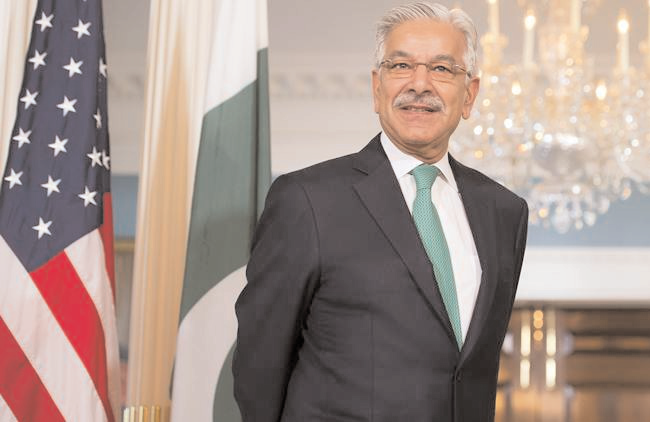
    The Afghan Taliban are a political entity and Pakistan supports the dialogue between the Afghan government and the Taliban, Foreign Minister Khawaja Asif told journalists here.

    “The talks between the Taliban and the Afghan government are actually discussions between two political forces, and Pakistan will support it…Pakistan is also ready for one-on-one mediation with the Afghan Taliban,” he said.

    He said Pakistan wants peace and stability in the neighbouring country, while stressing that there was no military solution to the Afghan conflict.

    The foreign minister also asked Washington to strike a balance in its policy towards South Asia if it was interested in having a dialogue between Pakistan and India.

    “The US can have an interest in Pak-India discussions, but before that it should create some balance in its South Asia policy,” he said.

    He also talked about the so-called “institutional interests” in Pakistan and said that practice of portraying interests of institutions as the greater national interest “will also be changed soon”.

    Asserting that Pakistan will frame its foreign policy keeping in view the national interests, Asif said, “We will not sacrifice our own interests for the protection of the interests of the United States.”

    “The effects of the 80s and the Musharraf era still exist, Pakistan will not make the same mistakes now to keep American interests above its own interests,” he said.

    He was referring to the military governments of General Zia-ul Haq and General Pervez Musharraf that allied with the US respectively in 1980s and after 9/11 to support it against erstwhile USSR and terrorism.

    (PTI)

  • Trump unveils Afghanistan and South Asia policy, calls for deeper strategic partnership with India

    Trump unveils Afghanistan and South Asia policy, calls for deeper strategic partnership with India

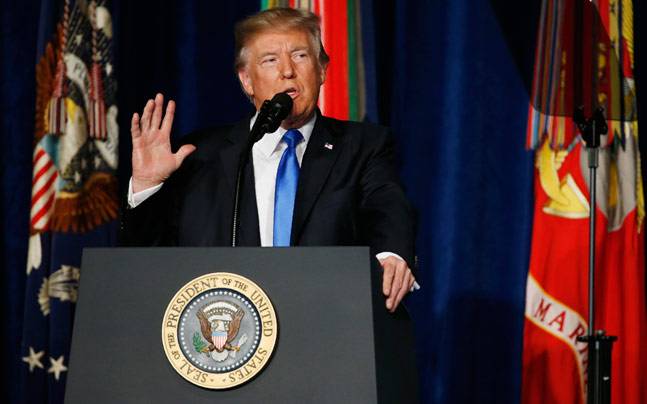
    WASHINGTON DC (TIP): US President Donald Trump announced a comprehensive review of the US South Asia policy in Afghanistan and the region. Calling out Pakistan’s duplicitous role in harboring agents of terror and violence on its soil, Trump called for further developing strategic partnership with India, ‘the world’s largest democracy and a key security and economic partner of the United States.’ Noting that billions of dollars were given as aid to Pakistan Trump declared, “They are housing the very terrorists we are fighting……That will have to change and that will change immediately. No partnership can survive a country’s harboring of terrorists.”

     President Trump hailed India’s role in stabilizing Afghanistan, adding, “We appreciate India’s important contributions to stability in Afghanistan, but India makes billions of dollars in trade from the United States, and we want them to help us war with Afghanistan, especially in the area of economic assistance and development.” Even as Trump elevates India’s bilateral status as an un-declared ally, in Afghanistan, India has long shared cultural, social, economic and security ties with the beleaguered nation. In the region, India is the biggest regional donor to Afghanistan and globally the fifth largest donor with over $3 billion in assistance. India has been an active partner in the reconstruction and infrastructure development in Afghanistan, building critical infrastructure including roadways, highways, dams, electricity lines, educational centers and even the Afghan Parliament building. India also trains Afghan military officers. Reinforcing its partnership with India and rebuking Pakistan for its role in terror activities in the region, Trump is strengthening India’s image as a force for good, democracy and stability. This shift in American policy in South Asia carries huge implications regarding India’s role vis-a- vis both Pakistan and China.

     Sanjay Puri, Chairman, US India Political Action Committee, said, “President Trump has recognized India’s key role in maintaining peace and stability in South Asia. As close strategic allies, India and the US can defeat ISIS and the Taliban and ensure stability in South Asia and Afghanistan.”


  • Suicide bomber strikes near Shiite mosque in Kabul, 4 dead

    Suicide bomber strikes near Shiite mosque in Kabul, 4 dead

    KABUL, AFGHANISTAN (TIP): A suicide bomber struck outside a Shiite mosque in the Afghan capital Kabul late Thursday night, killing four people, including a leader of Afghanistan’s ethnic Hazaras, Hajji Ramazan Hussainzada.

    Another five people were wounded, said Interior Ministry spokesman Najib Danish. Danish said there was gunfire outside the mosque as the suicide bomber tried to force his way inside, but he was stopped by a police officer, who died in the explosion. Another policeman was wounded.

    The US-based SITE, which tracks the online activity of extremist organizations, said the Islamic State claimed responsibility for the attack through its Amaq news agency. The Associated Press could not independently verify the claim, however the IS affiliate in Afghanistan has taken responsibility for past attacks against the country’s minority Shiites. Last year IS claimed an attack on a Shiite shrine that killed 14 people.

    Muslims are observing the holy month of Ramadan, during which the faithful fast from sunrise to sunset and mosques are typically crowded in the evening hours.

    Kabul has been battered by violence in recent weeks. The worst attack in Afghanistan’s 16-year war took place on May 31 when a massive truck bomb exploded at a busy intersection in Kabul, killing more than 150 people. (AP)

  • Retrieving ground in Afghanistan

    Retrieving ground in Afghanistan

    By Rakesh Sood

    The legitimacy of its institutions, including the unity government and the security forces, must be enhanced

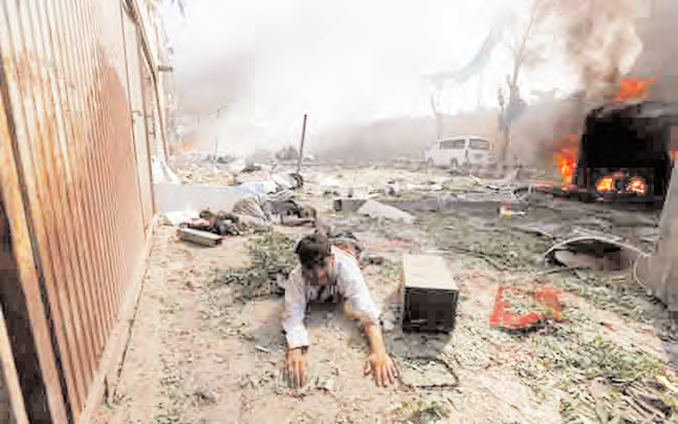
    First week of June provided a grim reminder of the worsening security situation in Afghanistan. A suicide attack on May 31 in the heart of Kabul, with a truck bomb containing 1,500 kg of explosives, has left more than 150 persons dead and hundreds injured.

    No one has claimed responsibility and the Taliban issued a statement denying any involvement. Afghan intelligence have blamed the Haqqani network working together with the Pakistani Inter-Services Intelligence, a charge vehemently rejected by the Pakistani government.

    Two days later when over a thousand people collected near the site, the mood of the demonstrators was antigovernment. Banners and slogans were raised calling on the government to resign. As the demonstrators moved towards the presidential palace, police used water cannons and tear gas to break up the crowd. According to the police, some protesters were armed and began shooting, forcing the police to retaliate. Half a dozen protesters were killed. Among them was Salim Izadyar, son of Mohammed Alam Izadyar, a prominent Tajik and the Deputy Speaker of the Meshrano Jirga (Upper House).

    Fault lines exposed

    The following day, on June 3, at Izadyar’s funeral, three suicide attackers blew themselves up killing more than 20 and injuring over a hundred mourners. Among those present were Chief Executive Abdullah, Foreign Minister Salahuddin Rabbani and former intelligence chief Amrullah Saleh, who escaped any injuries. A fourth attacker was nabbed and has admitted to having been recruited and trained by the Taliban in Quetta.

    Coming in quick succession, these events have exposed the weaknesses of the National Unity Government (NUG), emboldening the opposition. Dr. Abdullah has appealed for calm and said that if it helps, he is ready to step down. It is clear that his support base has eroded. Meanwhile, Foreign Minister Rabbani hinted at conspiracies. Protesters have pitched a tent outside the hospital in the area, which has become a focal point for speeches by Tajik leaders, including former Vice- President Ahmad Zia Massoud, who hold the Pashtun-dominated government of President Ashraf Ghani responsible. The Tajik-led Jamiat is now reaching out to other ethnic groups, Uzbeks and the Hazaras. Meanwhile, Uzbek leader and Vice President Abdul Rashid Dostum left for Turkey last month for ‘medical treatment’ following growing public criticism after his security guards sexually assaulted a political rival.

    The NUG agreement, concluded in September 2014, with strong backing of the U.S., was more than just a means of resolving the electoral dispute between the two candidates, Ashraf Ghani and Abdullah. It was a power-sharing arrangement between the Pashtuns who have traditionally ruled Afghanistan and the non-Pashtuns (Tajiks, Uzbeks and Hazaras). The creation of the post of the Chief Executive, to be converted into the position of a Prime Minister within two years, was an attempt at moving away from the highly centralized presidential system introduced in 2003 towards a more federal arrangement. In 2003 too, the Northern Alliance had demanded the position of a PM but had to be content with the compromise of a President and two Vice-Presidents on the tacit understanding that the two Vice-Presidents would come from the smaller ethnic groups. The U.S. had strongly backed the idea of a strong American-style presidency, overlooking the fact that the institutional checks and balances of the U.S. system were missing in the war-ravaged country.

    The constitutional amendment for converting the position of the CEO into that of PM is still pending as parliamentary elections which were due in 2015 have not taken place; these elections were to be preceded by changes in the election procedures which were to be worked out by a special commission that would, in turn, be approved by a newly constituted Independent Election Commission. With this process having come to a halt and a change of administration in Washington, differences between President Ghani and Dr. Abdullah today can no longer be patched up. They keep erupting, reflecting a governance structure that is both under internal strain and external attack by the Taliban. The visible antigovernment sentiment is a worrying sign.

    Deteriorating security

    There is talk about pushing through a parliamentary election next year and advancing the presidential election by a year (it is due in 2019) to save costs. However, the deteriorating situation raises questions about the feasibility of elections. Today, less than 60% of Afghanistan’s territory is under government control; the rest is either contested by or under the Taliban. While putting its weight behind the NUG in 2014, the Obama administration also backed the idea of ‘a lasting political settlement between the Afghan government and the Taliban’. To this end, he announced that 8,400 U.S. troops would stay on in Afghanistan (together with another 5,000 from NATO partners) in an ‘assist, advise and train’ mission.

    The Trump administration has yet to announce its policy though indications are it might authorize an increase of 3,000-5,000 in U.S. troop levels. This is the figure mentioned by General John Nicholson in his testimony to the U.S. Congress in February and has been supported by both Defense Secretary Jim Mattis and National Security Adviser H.R. McMaster. Gen. Nicholson described the current situation as a ‘stalemate’ which needed to be tilted in favor of the Afghan security forces. Like his predecessors, he too held Pakistan responsible for the Taliban’s successes, pointing out that eliminating external sanctuary and support is essential to the success of the mission. Yet, other than calling for a ‘holistic response’, he failed to specify what this would entail.

    Since the U.S. has been unable to change Pakistan’s behavior despite having provided nearly $34 billion in economic and military assistance since 2002 accompanied by occasional threats to suspend or withhold the funds, enhancing capability of the Afghan security forces remains the only option.

    This means strengthening the Special Forces in both the Army and the Police as these are most effective in fighting the insurgency and providing air power and artillery. The U.S. provides $3.4 billion out of the NATO’s annual support of $4 billion for the Afghan National Security Forces. In addition, it spends nearly $18 billion on maintaining its troop presence (it costs slightly more than $2 million a year to deploy a U.S. soldier in Afghanistan). In comparison, raising and equipping a brigade of Special Forces would cost a billion dollars a year.

    Therefore Gen. Nicholson’s idea of a slight increase in international troop presence can only work only if it is coupled with practical ways of enhancing Afghan capabilities.

    Mirage of reconciliation 

    In recent years, numerous initiatives to bring the Taliban to the negotiating table have been attempted. A Taliban office in Doha was intended to get the Taliban negotiators away from the ISI’s control but turned out to be a nonstarter.

    The four-country quadrilateral group involving China along with Pakistan, the U.S. and Afghanistan came to an abrupt end when it was revealed that Mullah Omar was no longer alive and had died, possibly two years earlier. Russia is now promoting the idea of talks by playing up the idea of the larger threat of the Islamic State that has emerged in eastern Afghanistan in Nangarhar province though this has failed to carry much traction with the Afghan authorities. President Ghani is putting his faith in a new regional initiative, similar in composition to the Heart of Asia process. If the past is any guide, none of these will yield any concrete benefits because unless the ground situation is materially altered, any talk of reconciliation with the Taliban remains premature and ends up conveying mixed signals, to the Afghans, the Taliban and Pakistan.

    If the gains of the last fifteen years are to be preserved, the only option is to enhance legitimacy of the Afghan institutions: the NUG, the election process and the Afghan National Security Forces.

    (The author is a former Ambassador to Afghanistan and currently Distinguished Fellow at the Observer Research Foundation. He can be reached at rakeshsood2001@yahoo.com)

  • US might take the hard option in Afghanistan

    US might take the hard option in Afghanistan

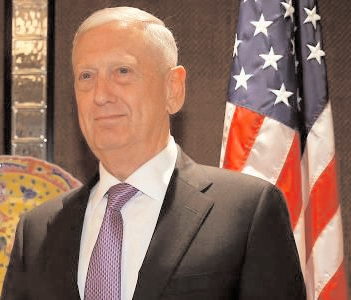
    KABUL (TIP): The US official policy on supporting a “peace process” in Afghanistan may change. In remarks at Canberra, US defence secretary James Mattis gave clear indication that the US may not give Taliban the space for a political “solution” in Afghanistan. The message from Rex Tillerson secretary of state and Mattis is the same – Taliban is a terror group, and they will be tackled militarily.

    Mattis said, “we’re up against an enemy that knows that they cannot win at the ballot box, and you think – we have to sometimes remind ourselves of that reality. That’s why they use bombs because ballots would ensure they never had a role to play…”

    Tillerson continued, “our commitment to Afghanistan is to ensure that it never becomes a safe haven for terrorists to launch attacks against the civilized world or against any other part of the world or any of their neighbors.”

    Thus far, the US has been pushing the Afghan government to set up a peace process with the Taliban, as the only way to end the war. Although the official US review of its Afghanistan policy is still pending, the remarks are a strong signal that the US may turn up the military heat on the Taliban. Certainly, there is no more the oft-repeated line that the US believes “there is no military solution” to the Afghan crisis.

    This used to be the line used by both former secretaries of state Hillary Clinton and John Kerry. That gave the Pakistanis the opportunity to set up all manner of arrangements starting with the Qatar process run by Taliban leader Tayyab Agha, who was quickly discredited. This was followed by the ill fated QCG between the US, China,

    Afghanistan and Pakistan which ended with two things: the announcement that Taliban leader Mullah Omar had died over two years prior, and the elevation of Sirajuddin Haqqani as deputy chief of Taliban, effectively joining the ISI supported Haqqani network with the Taliban. In more recent months, Russia and Iran have both joined the fray, this time using ISIS as a reason for bringing Taliban into the mainstream and power structure in Kabul.

    The US accuses Russia of supplying weapons to Taliban. But the horrific attacks in recent weeks by the Haqqani network appears to have made up US minds on how not to look for peace in Afghanistan. While the dilemma in Washington about another troop surge remains, it’s also clear that the US may step in to prevent Russia and Iran from becoming players in this particular conflict.

    The recent US MOAB (mother-of-allbombs)+ drop in Nangarhar has been widely seen as a signal for North Korea. But could there be a possibility of it being used again in Afghanistan, against the Taliban?

    (PTI)

  • India, Pak to become full SCO members at Astana summit: China

    India, Pak to become full SCO members at Astana summit: China

    BEIJING (TIP): India and Pakistan’s admission to the Beijing-backed Shanghai Cooperation Organisation (SCO) will be formalised at the grouping’s summit in Kazakhstan next week, China said on June 1.

    “The members states of the SCO are accelerating the MoU procedures with the two countries and everything is going very well,” foreign ministry spokesperson Hua Chunying said.

    “We hope India and Pakistan as the full members at the Astana summit (on June 8-9). We also expect the Astana summit will complete the admission procedures for the two countries,” Hua told reporters.

    Afghanistan, Belarus, India, Iran, Mongolia and Pakistan have observer status. (PTI)

  • Afghanistan blames Haqqani network, ISI for Kabul blast

    Afghanistan blames Haqqani network, ISI for Kabul blast

    KABUL/ISLAMABAD (TIP): The Afghan intelligence service, the National Directorate of Security (NDS), said on Thursday that early findings showed the Haqqani network with the assistance of Pakistan’s ISI carried out the attack in Kabul that killed at least 90 people.

    “These terrorists once again proved they don’t represent any religion and they only carry out such coward attacks to please their Pakistani masters which is against all Islamic and human rights principals,” the NDS said in a statement on Thursday.

    The Haqqani network has carried out a number of kidnappings and attacks against US interests in Afghanistan.

    The group is also blamed for several deadly attacks against Indian interests in Afghanistan, including the 2008 bombing of the Indian mission in Kabul that killed 58 people.

    Afghanistan cancels Pakistan games after Kabul attack Afghanistan also cancelled proposed home and away cricket fixtures with Pakistan after the Kabul bombing.

    Pakistan were set to play their first Twenty20 match in Kabul later this year in what was seen as an opportunity for the neighbours to ease tensions over border skirmishes and alleged proxy warfare.

    The Kabul match, set for July or August, would have been followed by a fixture in Pakistan and a full series at an unspecified date.

    But the Afghanistan Cricket Board issued a strongly worded statement late on Wednesday, cancelling the matches in light of a truck bombing in the city’s diplomatic quarter that killed at least 90 people.

    No group has claimed responsibility for Wednesday’s attack, although the Taliban has denied involvement.

    “The ACB hereby cancel all kinds of cricket matches and initial mutual relationship agreement with the Pakistan Cricket Board,” the Afghan board said on its Facebook page. “No agreement of friendly matches and mutual relationship agreement is possible with a country where terrorists are housed and provided safe havens.” The development leaves Pakistan’s cricketers even more isolated in the region.

    Pakistan rejects Afghan allegations Pakistan, however, strongly rejected as “baseless” the Afghan allegations that ISI was in any way involved in the Kabul attack. “The accusatory approach is unhelpful towards efforts to peace,” Pakistan’s Foreign Office (FO) spokesman Nafees Zakaria said during the weekly media briefing on Thursday. Zakaria said Pakistan suffered due to terrorism and has the highest stakes in Afghan peace and stability. “Our commitment to peace in Afghanistan is based on sincerity and is beyond any doubt,” he added. Zakaria said that it was highly disappointing that certain elements in Afghanistan were damaging relations between the two neighbours. (agencies)

  • Militant attack on Afghanistan army base kills 10 soldiers: Officials

    Militant attack on Afghanistan army base kills 10 soldiers: Officials

    KANDAHAR (TIP): At least 10 Afghan soldiers were killed when militants attacked their army base in the southern province of Kandahar, the defence ministry said Tuesday, in the latest attack on Western-backed forces.

    “Last night the enemies of Afghanistan attacked Achakzai camp of army corps 205 in Shah Wali Kot district. Ten brave army soldiers were martyred and nine others wounded,” the ministry said in a statement. (AFP)