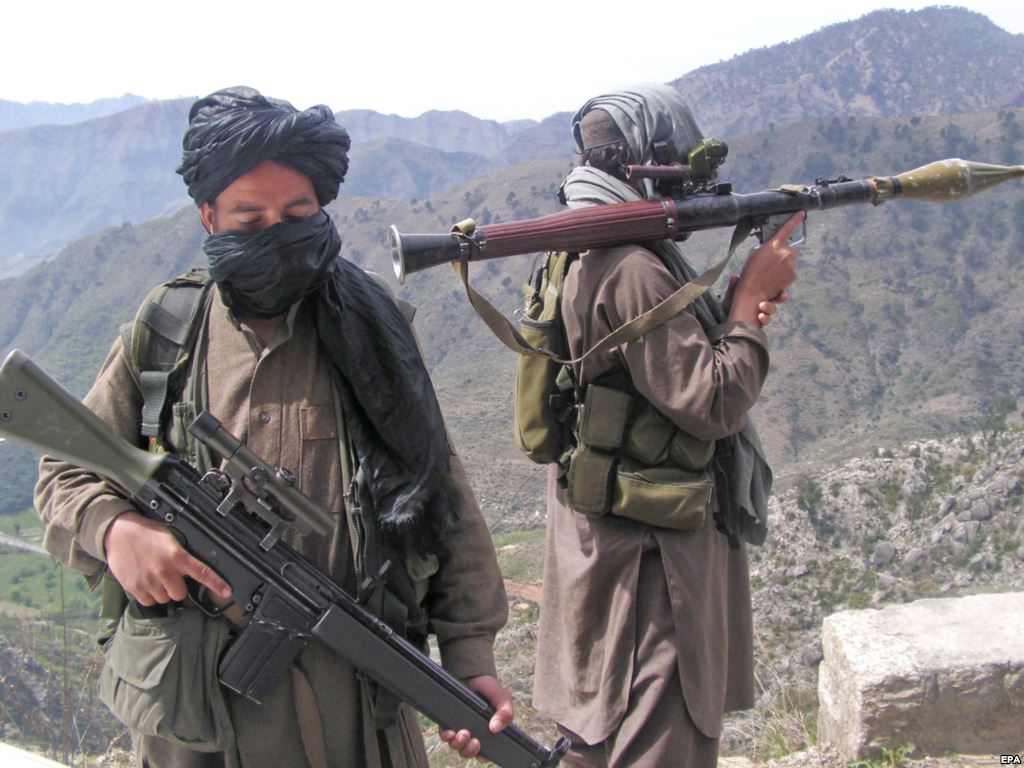
ISLAMABAD (TIP): The Afghan Taliban has freed the crew of a Pakistani helicopter that crash-landed in Afghanistan’s Logar province on August 4, Pakistani intelligence officials have said.
Six Pakistanis and a Russian pilot, who were captured by militants in a Taliban-controlled district, were handed over to authorities in Pakistan’s Kurram Agency on Friday, Radio Free Europe quoted the intelligence officials as saying.
The Punjab government Mi-17 helicopter was on its way to Russia via Uzbekistan for maintenance when it crashed in Afghanistan, the officials said.
According to Dawn online, the reports have not been confirmed by Pakistani officials.
Both Russian and Pakistani governments were making efforts for the release of the crew. The Afghan government also initiated an operation for their rescue.
The Foreign Office said earlier this week that the Afghan government was trying to secure their release with the help of tribal elders of the area.
Following the crash, Pakistani Army chief General Raheel Sharif had immediately called Commander Resolute Support Mission in Afghanistan General Nicolson and asked him to help in the recovery of the crew. Gen Sharif also asked Afghan President Ashraf Ghani to help in organising a safe and early recovery of the crew. (IANS)
WASHINGTON (TIP): The US is monitoring the movement of ISIS and its affiliated groups in Afghanistan besides helping the latter’s security forces to fight out the terrorist organization which is trying to expand its base rapidly in the war-torn country, a top American official has said.
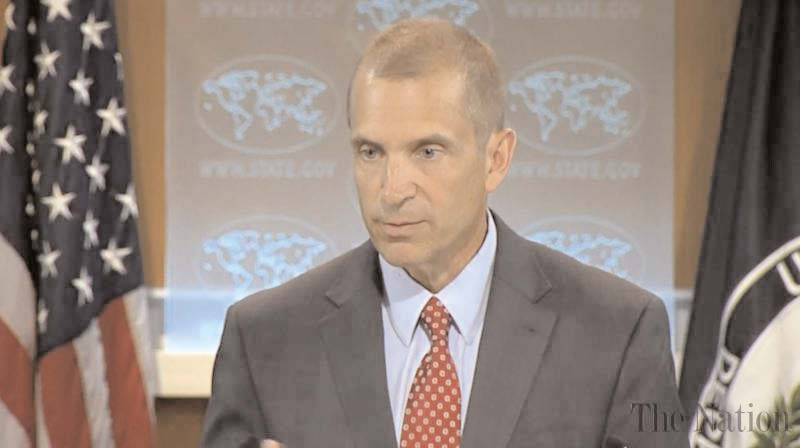
“We are always looking at ISIL’s ability to find safe haven and then expand to work with, these affiliate groups, factions of groups such as the Taliban that they might be able to exploit. We are monitoring it very closely,” State Department Deputy Spokesman Mark Toner told reporters on Wednesday.
“We’re in close contact and coordination with the Afghan Security Forces in that regard, and we’re going to continue. If we see opportunities to take out key leadership, we’re going to strike,” he said while responding to a question and reiterated that reconciliation process with the Taliban needs to be an “Afghan-led, Afghan-owned process”.
“Any time you’ve got various splinter groups emerging, that does make those efforts more complex, but that remains our overarching goal and what we view as really the long-term solution for Afghanistan to achieve peace and stability. But I don’t have an assessment of what the latest development might mean for prospects, but we continue to encourage those efforts,” he said.
The US is monitoring the presence of ISIL-affiliated groups very closely in Afghanistan, he said.
“We’re actively engaged with the Government of Afghanistan and our partners in the region to prevent that from taking place. We don’t want to see them gain safe haven or material support from the Taliban or anyone,” he added.
Asserting that the US has made a long-term commitment to Afghanistan, Toner said it would continue to help Afghanistan build a more stable, peaceful, democratic, and prosperous future. (TOI)
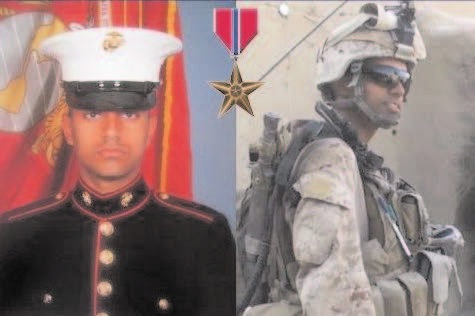
LOS ANGELES (TIP): Voicing support for a fallen Pakistani-origin American soldier’s parents who had come under attack from Donald Trump, the family of a slain Sikh Marine has said they were “hurt” by his remarks and it amounted to playing “political games.”
Five years after he was shot to death by enemy fighters in Afghanistan, Marine Cpl. Gurpreet Singh’s bedroom is still decorated in red, white and blue and his dress uniform hangs in his closet with medals pinned to it.
His father, Nirmal Singh, keeps a poster on a wall in his home in Antelope, Calif., calling the corporal an American hero. Singh and his family have spent much of the past week watching the immigrant parents of another fallen military service member spar with Republican presidential candidate Trump.
“It hurts. I don’t know why. It’s like they’re playing political games with a Gold Star family,” Nirmal told The Sacramento Bee.
Gold Star families are immediate relatives of U.S. Armed Forces members who died in battle or in support of certain military activities.
Many military families around the country have been surprised by Trump’s criticism of the parents of the late Army Captain Humayun Khan after they endorsed Democratic presidential hopeful Hillary Clinton and rebuked the Republican presidential candidate at the Democratic National Convention in Philadelphia last month.
Trump’s tactics drew condemnation from leaders of the groups Veterans of Foreign Wars and Iraq and Afghanistan Veterans of America. Gold Star Wives and the grief-counseling nonprofit Tragedy Assistance Program for Survivors also stepped in to criticize the business tycoon.
The Singhs identify with the Khans, a Muslim family of Pakistani descent, who, like them, lost a proud son to their adopted nation’s long wars.
Nirmal Singh noted that he has often met other immigrants when he gets in touch with Marines.
“Religion does not matter. They love their country. That’s why they go and they should be respected,” Nirmal said.
Unlike Trump, the Singhs did not question why Captain Khan’s mother stood silent at the convention next to her husband, Khizr.
Cpl. Gurpreet Singh’s mother, Satnam Kaur, likely would do the same.
“When (Trump) said something about (Capt. Khan’s) mother, that insulted my mother,” Cpl. Singh’s 28-year-old sister, Manpreet Kaur, was quoted as saying.
However, the election has also resulted in military families turning against each other.
“It’s like they’re trying to divide even Gold Star families. We should be united,” Manpreet said.
Another ministerial meeting of the South Asian Association for Regional Cooperation (SAARC) has come and gone, this time in Islamabad, with people of its eight-member nations none the wiser about the purpose of the get-together. The dysfunctional organization with a 31-year history is known more as a setting for repeated attempts by Pakistan and India to turn a new page in their embittered relationship. This time the violence in Kashmir, the attacks in Pathankot and Dinanagar and the earlier arrest of an alleged Indian spy in Baluchistan have blotted bilateral ties so badly that both sides decided to spurn the opportunity of an interaction between the Home Ministers of both countries.
For the record, the meeting discussed a range of crucial issues. A limited progress on some of them would eliminate considerable discord not only between Pakistan and India but also Afghanistan and Pakistan. The issues on the table, constant and unresolved since the Interior Ministers’ forum was set up a decade back, are terrorism, corruption, narcotics and psychotropic substances and maritime piracy. The meeting also deliberated on the Conventions on Suppression of Terrorism and the Additional Protocol and Convention on Mutual Assistance in Criminal Matters. But ties between Pakistan and India have been in deep freeze for months and Afghan President Ashraf Ghani has pulled up Islamabad for its double talk on Taliban. The atmospherics certainly did not portend a breakthrough on any of the issues.
Mercifully, the SAARC charter does not provide for countries to launder their bilateral disputes at the forum. So while the meeting of the Interior Ministers went through its motions peacefully, Pakistan Prime Minister Nawaz Sharif leveraged a meeting of Pakistani envoys to convey that the Kashmir issue is not India’s internal matter. Home Minister Rajnath Singh repeated the statements about terrorism and sanctuaries that he has repeatedly made in India. Prime Minister Narendra Modi will be hard- pressed to come up with some out-of-the-box ideas, an expression he is so enamored of, if the SAARC summit in Islamabad later this year does not turn out to be as vacuous as this SAARC ministerial meeting.
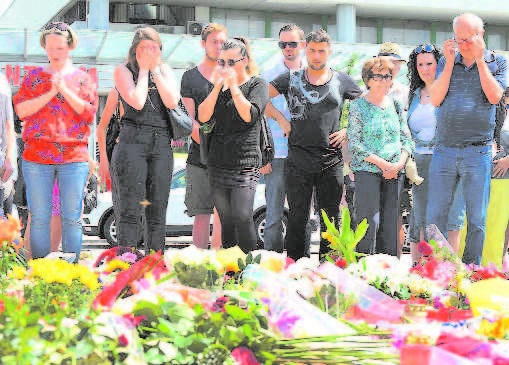
The frightful and bloody hours of Friday night (July 22) and Saturday morning in Munich and Kabul – despite the 3,000 miles that separate the two cities – provided a highly instructive lesson in the semantics of horror and hypocrisy. I despair of that generic old hate-word, “terror”. It long ago became the punctuation mark and signature tune of every facile politician, policeman, journalist and think tank crank in the world.
But from time to time, we trip up on this killer cliché, just as we did at the weekend. Here’s how it went. When first we heard that three armed men had gone on a “shooting spree” in Munich, the German cops and the lads and lassies of the BBC, CNN and Fox News fingered the “terror” lever. The Munich constabulary, we were informed, feared this was a “terrorist act”. The local police, the BBC told us, were engaged in an “anti-terror manhunt”.
And we knew what that meant: the three men were believed to be Muslims and therefore “terrorists”, and thus suspected of being members of (or at least inspired by) Isis. Then it turned out that the three men were in fact only one man – a man who was obsessed with mass killing. He was born in Germany (albeit partly Iranian in origin). And all of a sudden, in every British media and on CNN, the “anti-terror manhunt” became a hunt for a lone “shooter”.
One UK newspaper used the word “shooter” 14 times in a few paragraphs. Somehow, “shooter” doesn’t sound as dangerous as “terrorist”, though the effect of his actions was most assuredly the same. “Shooter” is a code word. It meant: this particular mass killer is not a Muslim. Now to Kabul, where Isis – yes, the real horrific Sunni Muslim Isis of fearful legend – sent suicide bombers into thousands of Shia Muslims, who were protesting on Saturday morning at what appears to have been a pretty routine bit of official discrimination.
The Afghan government had declined to route a new power line through the minority Hazara (Shia) district of the country – a smaller electric cable connection had failed to satisfy the crowds – and had warned the Shia men and women to cancel their protest. The crowds, many of them middle-class young men and women from the capital, ignored this ominous warning and turned up near the presidential palace to pitch tents upon which they had written in Dari “justice and light” and “death to discrimination”.
But death came to them instead, in the form of two Isis men – one of them apparently pushing an ice-cream cart – whose explosives literally blew apart 80 of the Shia Muslims and wounded at another 260. In a city in which elements of the Afghan government are sometimes called the Taliban government, and in which an Afghan version of the Sunni Muslim Islamic State is popularly supposed to reside like a bacillus within those same factions, it wasn’t long before the activists who organized the demonstration began to suspect that the authorities themselves were behind the massacre. Of course, we in the West did not hear this version of events. Reports from Kabul concentrated instead on those who denied or claimed the atrocity. The horrid Islamist Taliban denied it. The horrid Islamist Isis said they did it. And thus all reports centered on the Isis claim of responsibility. But wait. Not a single report, not one newscast, referred to the Kabul slaughter as an act of “terror”. The Afghan government did. But we did not. We referred to the “suicide bombers” and the “attackers” in much the same way that we referred to the “shooter” in Munich.
Now this is very odd. How come a Muslim can be a terrorist in Europe but a mere “attacker” in South-west Asia? Because in Kabul the killers were not attacking Westerners? Or because they were attacking their fellow Muslims, albeit of the Shia Muslim variety?
I suspect both answers are correct. I can find no other reason for this weird semantic game. For just as the terrorist identity faded away in Munich the moment Ali Sonboly turned out to have more interest in the Norwegian mass murderer Anders Breivik than the Caliph Abu Bakr al-Baghdadi of Mosul, so the real Isis murderers in Kabul completely avoided the stigma of being called terrorists in any shape or form.
This nonsensical nomenclature is going to be further warped – be sure of this – as more and more of the European victims of the attacks in EU nations turn out to be Muslims themselves. The large number of Muslims killed by Isis in Nice was noticed, but scarcely headlined. The four young Turks shot down by Ali Sonboly were subsumed into the story as an almost routine part of what is now, alas, the routine of mass killing in Europe as well as in the Middle-East and Afghanistan. The identity of Muslims in Europe is therefore fudged if they are victims but of vital political importance if they are killers. But in Kabul, where both victims and murderers were Muslim, their mutual crisis of religious identity is of no interest in the West; the bloodbath is described in anemic terms. The two attackers “attacked” and the “attacked” were left with 80 dead – more like a football match than a war of terror. It all comes down to the same thing in the end. If Muslims attack us, they are terrorists. If non-Muslims attack us, they are shooters. If Muslims attack other Muslims, they are attackers. Scissor out this paragraph and keep it beside you when the killers next let loose – and you’ll be able to work out who the bad guys are before the cops tell you.
(The author, an English writer and journalist from Maidstone, Kent is currently Beirut correspondent of The Independent)
DARRA ADAMKHEL (TIP): Gunfire echoes through a dusty northwest tribal town, the soundtrack to Pakistan’s biggest arms black market, where Kalashnikovs welded from scrap metal are cheaper than smartphones and sold on an industrial scale.
Darra Adamkhel, a town surrounded by hills some 35 kilometres (20 miles) south of the city of Peshawar, was a hub of criminal activity for decades. Smugglers and drug runners were common and everything from stolen cars to fake university degrees could be procured.
This generations-old trade in the illicit boomed in the 1980s: The mujahideen began buying weapons there for Afghanistan’s battle against the Soviets, over the porous border.
Later, the town became a stronghold of the Pakistani Taliban, who enforced their strict rules and parallel system of justice — infamously beheading Polish engineer Piotr Stanczak there in 2009.
Now Darra is clean of all but the arms, yet the gunsmiths in the bazaar say the region’s improved security and authorities’ growing intolerance for illegal weaponry are withering an industry that sustained them for decades.
“(The) Nawaz Sharif government has established checkpoints everywhere, business is stopped,” said Khitab Gul, 45.
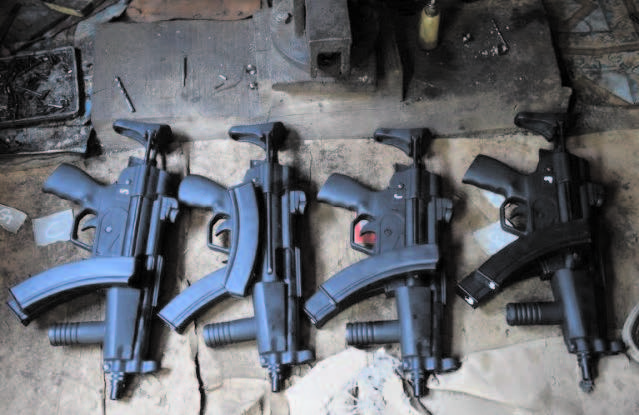
Gul is known in Darra for his replicas of Turkish and Bulgarian-made MP5 submachine guns, one of the most popular weapons in the world, widely used by organisations such as America’s FBI SWAT teams.
The MP5 can retail for thousands of dollars. Gul’s version, which comes with a one-year guarantee, costs roughly 7,000 rupees, or $67 — and, he claims, it works perfectly.
Gul then puts on a demonstration, test-firing his MP5 in the small outer yard of his workshop — first the single shot mode, then firing in a burst.
A Darra-made Kalashnikov, Gul says, can sell for as little as $125, cheaper than most smartphones. “The workers here are so skilled that they can copy any weapon they are shown,” he explains.
“In past 10 years I have sold 10,000 guns, and had zero complaints,” he claims.
In Gul’s sweltering workshop, employees shout over the roar of electrical generators as they expertly cut and drill through metal brought from the shipyards of Karachi, far to the south on the Arabian Sea.
The main bazaar which cuts through the town used to hold nothing but tiny gun shops crammed together, their gleaming wares displayed openly on racks as customers test-fired into the air above. Trade was illegal, unlicensed and unregulated, but long tolerated by authorities with little power in the tribal areas between Afghanistan and Pakistan, where militants once operated with impunity. Residents, for their part, viewed the market as legitimate in an area dominated by Pashtun traditions, where gun culture is deeply embedded in male identity.
But in recent years, the military has cracked down on extremism, particularly in the tribal areas, and security is the best it has been since the Pakistani Taliban were formed in 2007.
Every second or third shop in Darra now sells groceries or electronics instead of weapons, the gunsmiths lament. The Wild West atmosphere is fading as the town embraces modern conveniences.
Before the crackdown Gul’s workshop — just one of hundreds in the town –could produce more than 10 weapons a day, he says.
Now they only produce four. “Demand has decreased,” he says.
Gunsmiths put the blame squarely on the Pakistani government and military, particularly checkpoints on the way to Darra halting customers who once travelled to the town openly.
Foreigners have been banned for security reasons.
The military has not yet objected to the gun market in Darra directly, but residents say they have had to give sureties that they will not harbour militants, and a half-hearted attempt at licensing is now also being made.
“I have been working here for 30 years but now I have no work to do,” says Muzzamil Khan, sitting idle outside his workshop. “I am ready to sell my lathe machine.”
Muhammad Qaisar, making cartridges at his shop in the main bazaar, said at one point there had been up to 7,000 shops there — but now almost half have closed.
If the government does not change its policies, he says, “I fear… Darra will be finished”.
Darra trade union leader Badam Akbar confirmed that some 3,000 shops have closed, and said skilled workers are attempting to learn new trades. “Nothing is left in this bazaar now,” he says.
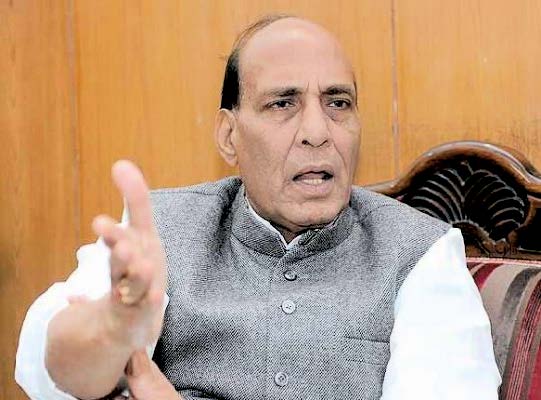
NEW DELHI (TIP): Home minister Rajnath Singh will visit Islamabad on August 3 and 4 to attend the meeting of home ministers and interior ministers of South Asian Association for Regional Cooperation (Saarc)?nations.
This will be the first visit by a top Indian political functionary to Pakistan after the January 2 Pathankot airbase attack carried out by militants believed to be from across the border.
It also comes at a time ties between the two nuclear-armed neighbours are seeing a chill in the aftermath of the killing of Hizbul Mujahideen commander Burhan Wani.
Kashmir has been on the boil since the death of 22-year-old Wani on July 8 in an encounter in southern Kashmir. His death sparked violent protests in the Valley that killed more than 40 people and wounded hundreds.
Pakistani leaders have criticised India over the Kashmir unrest, and the country observed on July 20 a “black day” to protest against the killings. The move drew angry reaction from India, which accused Islamabad of interfering in New Delhi’s internal affairs and backing terrorism.
Sources said the home minister may have bilateral meetings with Pakistani politicians during the visit.
At the 13th Saarc Summit held in Dhaka in November 2005, the heads of states decided that Saarc interior/home ministers will meet annually preceded by a meeting of the interior/home secretaries to strengthen counter-terrorism cooperation.
“As far as the home minister’s visit to Islamabad is concerned, he will leave on August 3 and come back the next day,” said a home ministry official.
Singh is likely to take up with the Pakistani leadership the issue of a reciprocal visit of the National Investigation Agency (NIA) to Islamabad for the Pathankot probe. A Pakistani joint investigation team visited India earlier this year, and the NIA shared the details of its investigation with it.
A week before the Pathankot attack that killed seven securitymen, Prime Minister Narendra Modi made a brief stopover in Lahore while returning to India from Afghanistan and Russia. Three weeks before Modi’s visit, external affairs minister Sushma Swaraj visited Pakistan for a conference. Source: HT
TEHRAN (TIP): Iran has arrested 40 members of a “terrorist group” who plotted to attack military targets in the southeast of the country, the interior minister said on July 21.
Iran’s southeastern province of Sistan-Baluchistan, which borders Pakistan and Afghanistan, has been the scene of armed clashes in recent weeks between Iranian forces and Sunni militants.
Interior Minister Abdolreza Rahmani-Fazli, in statements carried by the official IRNA news agency, did not identify those detained.
He said the suspects had built a tunnel 40 metres (132 feet) long and 20 metres deep which they had planned to use to carry out attacks.
The governor of the city of Khash in Sistan-Baluchistan said those arrested had “intended to carry out terrorist and sabotage acts” against important military and security centres.
Mohammad Akbar Sharekzehi said the suspects had “advanced military equipment” and were arrested by security forces in a nearby house before they could carry out “their evil plan”. The governor gave no further details.
On July 6, Iranian media reported that four Iranian border guards were killed in a clash with armed rebels in Sistan-Baluchistan province without elaborating.
In June, Iranian state television said that a police officer and five “terrorists” said to be members of the Jaish al-Adl jihadist group were also killed in the Khash region.
The same month, Iran’s intelligence ministry said it had thwarted a major jihadist plot to carry out bomb attacks in the capital Tehran and other provinces and arrested suspects, without elaborating.
Jaish al-Adl is thought to be behind a number of attacks in Sistan-Baluchistan in recent years, and Tehran accuses it of ties to Pakistan-based Al-Qaeda cells.
Ninety percent of Iran’s population is Shiite, but the country has significant Sunni populations in its restive border regions, notably Kurdistan in the northeast, Sistan-Baluchistan and Khuzestan in the southwest.
In Sistan-Baluchistan, security forces also clash frequently with drug traffickers.
The province lies on a major transit route for opium and heroin being smuggled from Afghanistan and Pakistan to Europe, the Middle East and Africa.
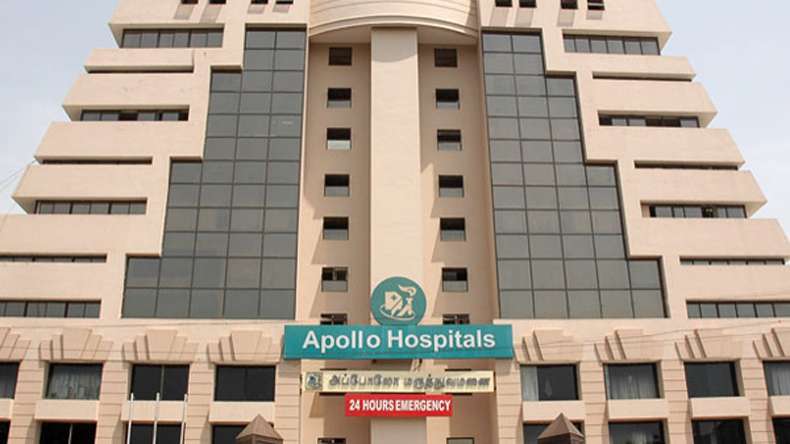
NEW DELHI (TIP): Five Nepalese guards, injured in a suicide attack in Kabul two days ago, are under treatment at the city-based Indraprastha Apollo Hospital, hospital authorities confirmed on June 23.
“We have received five Nepalese patients who were working as private security guards in Kabul. They are being treated for blast related injuries,” a senior authority of Apollo told IANS.
The injured Nepalese worked for private security company Sabre International to guard the Canadian embassy in Kabul.
On Monday, 12 Nepalese security guards were killed in a suicide blast targeting their minibus in Kabul. Nine other people were wounded, including five Nepalese and four Afghans.
The bodies of the 12 Nepalese guards killed were on Wednesday flown to Nepal in a special chartered flight.
On a bright day in downtown Kabul, Jagtar Singh Laghmani was in his traditional herb shop when a man turned up, drew a knife and told him to convert to Islam or he would cut his throat. Only bystanders and other shopkeepers saved his life.
The incident earlier this month was the latest attack on a dwindling community of Sikhs and Hindus in Afghanistan, the country struggling with growing insecurity caused by an Islamist insurgency and economic challenges.
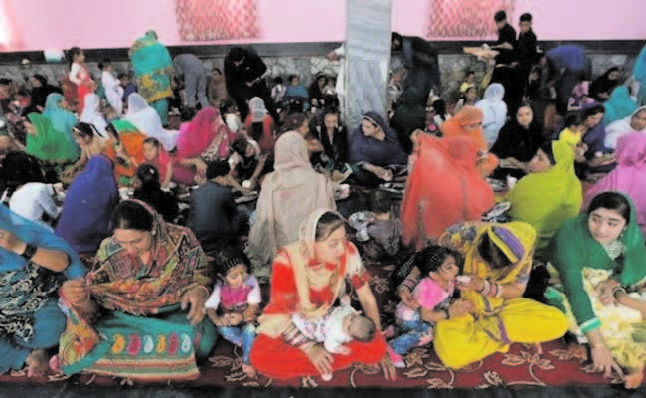
Once a thriving minority, only a handful of Sikh and Hindu families remain. Many have chosen to flee the country of their birth, blaming growing discrimination and intolerance.
“This is how we begin our day – with fear and isolation. If you are not a Muslim, you are not a human in their eyes,” said Jagtar Singh, speaking in his tiny shop in the bustling center of Kabul. “I don’t know what to do or where to go.”
For centuries, Hindu and Sikh communities played a prominent role in merchant trade and money lending in Afghanistan, although today they are known more for medicinal herb shops.
According to Avtar Singh, chairman of the national council of Hindus and Sikhs, the community now numbers fewer than 220 families, compared with around 220,000 members before the collapse of the Kabul government in 1992.
Once spread across the country, the community is now mainly concentrated in the eastern provinces of Nangarhar, Ghazni, and the capital Kabul.
Although Afghanistan is almost entirely Muslim, its constitution, drawn up after US-led forces drove out the Taliban government in 2001, theoretically guarantees the right of minority religions to worship freely.
But as the conflict drags on, Avtar Singh said conditions were worse than under the Taliban, which imposed strict Islamic laws, staged public executions and banned girls from schools.
Hindus and Sikhs had to wear yellow patches that identified them in public, but were otherwise seldom bothered.
“The good old days have long gone when we were treated as Afghans, not as outsiders,” Avtar Singh said from a temple in Kabul, all the while keeping an eye on visitors using monitors linked to security cameras.
“Our lands have been taken by powerful figures in the government, especially by the warlords. We are facing threats, and this small community is getting smaller and smaller every day,” he added.
Last week, dozens of Hindu and Sikh families left Helmand, where Taliban insurgents, who have a presence in much of the southern province, sent a letter demanding 200,000 Afghani ($2,800) a month from the community.
Jagtar Singh Laghmani, 50 at his traditional herb shop in Kabul
HOSTILITY Tensions have surfaced in Qalacha, an area on the outskirts of Kabul where the Sikh and Hindu community owns a high-walled crematorium.
As the capital has expanded in recent years, the neighborhood has become densely populated and some newer residents oppose Hindu and Sikh cremations, a practice foreign to Muslims, who bury their dead.
“When they burn the body the smell makes our family sick and we don’t want this to happen here,” said Ahmad Timor, a Muslim resident in Qalacha.
The Sikhs say local Muslim hardliners have stirred up hostility against them, and the community now requires police protection for their funeral rituals.
“They throw stones and bricks at us, at the bodies of the dead, whenever there is a funeral,” said Avtar Singh, pointing to a newly built house next to the crematorium.
Dahi-ul Haq Abid, deputy minister for Haj and religious affairs, said the government had done what it could to improve the livelihood of Hindus and Sikhs.
“We agree that conflicts pushed them out of the country, but their condition is not as bad as they claim,” Abid added.
“We have allocated them a place to burn their bodies because inside the city people complained about the smell, but they did not agree,” he told Reuters.
Harassment is also common Jasmeet Singh, eight, stopped going to school because of what he said was daily harassment. He and other children from the community now either go to private schools or study inside the temple.
“While I was at school, other students were making fun of me. They were removing my turban, hitting me and calling me Hindu and kaffir (infidel),” said Jasmeet Singh, as other boys nodded their heads in agreement.
Increasing numbers of Sikhs and Hindus have moved to India, but some say they remain foreigners wherever they go.
“When we go to India, we are known as Afghans, but when we are here, we are seen as outsiders even if we are native Afghan,” said Baljit Singh, a shopkeeper in Kabul. “We are lost between both worlds.”
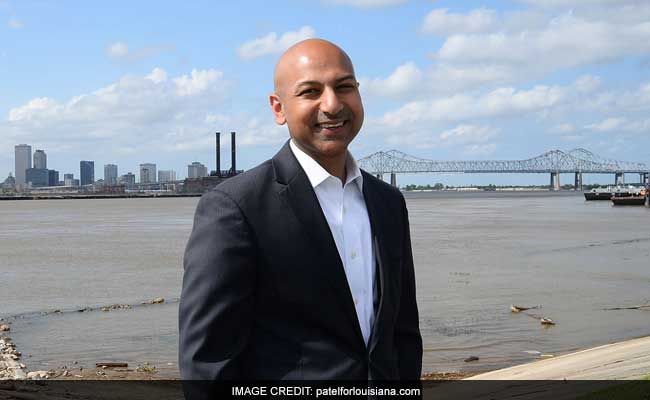
NEW ORLEANS (TIP): 40-year-old Indian-American economic development professional has declared his candidacy for the US Senate from Louisiana.
Abhay Patel, from New Orleans, is one of the six Republicans to have entered into this race the seat of which has been vacated by Senator David Vitter who announced last year that he would not seek re-election for the seat.
Currently, the Vice President of business development for the New Orleans Business Alliance, Mr. Patel is a former Wall Street investment banker who at one time raised in excess of USD 30 billion for transactions like Hertz’ acquisition of Dollar Thrifty.
“I’m not a career politician. I’m a businessman who learned about hard work and sacrifice by watching my immigrant parents,” Mr. Patel said yesterday while announcing his candidature.
“Over my career, I’ve advised some of our nation’s most important companies, led economic development and promoted the overall growth of our local, state and national economy,” he said making his case to the people of Louisiana.
Observing that for Louisiana to thrive, however, Washington must get out of the way, he said the US Constitution was written to control the size and scope of the federal government, but today Washington controls every aspect of American life.
“I am a Republican who will fight tirelessly to defend our Constitution and to ensure that the people of Louisiana have the power to control our own destiny,” said Mr. Patel, whose parents are immigrants from India.
In an interview to a media outlet, Mr. Patel said that he wants to improve India-US relationship.
“India is fast becoming one of our closest allies and it is important that we continue to grow this burgeoning relationship,” he said.
“With China to its east and Pakistan, Afghanistan, and Iran to its west, India’s geography makes the nation a critical partner in helping the US and its allies achieve regional and global stability and security.
“In addition, the US can benefit from India’s rising economy, bringing new opportunities in trade, investment, and technology,” Mr. Patel said.
The US Senate has passed its draft of the National Defence Authorisation Bill, including a provision to set up a new fund to reimburse Pakistan for its efforts in the war against terrorism.
The Senate version authorised $800 million under a provision called the ‘Pakistan Security Enhancement Authorisation’, Dawn online reported on Thursday, June 16.
It also fenced $300m behind a similar Haqqani network provision that has existed in the annual defence authorisation acts since the fiscal year 2015.
The proposal for Pakistan was passed as originally initiated.
The proposed reimbursement mechanism for Pakistan replaces the Coalition Support Fund (CSF), which was used to reimburse both Afghanistan and Pakistan for their efforts to combat terrorism.
Pakistan has received a total of $3.1 billion since 2013 under the CSF. But this fund expires in the current financial year, ending in October.
While adopting the new provision, the Senate Armed Services Committee used the CSF model to restructure security support for Pakistan. But it focuses specifically on Pakistan’s own security needs instead of tying it to a broader coalition.
In doing so, the new provision delinks Pakistan from Afghanistan, by recognising it as a country with its own strategic value for US interests.
In a report filed with the draft Defence Bill, the US Senate Armed Services Committee called Pakistan “a long-standing strategic partner” and stressed the need to continue a strong relationship with the country.
Both houses of the Congress have passed their versions of the Defence Bill. A conference committee of both houses will now be formed to develop a consensus draft.
The procedure can be completed by July, although past bills have been passed as late as November.
Besides, the Haqqani restriction, the bill requires Pakistan to keep open ground communication lines to Afghanistan for receiving reimbursements from this fund.
Another bill, passed by the House of Representatives last week, linked $450m from a total of $900m proposed for Pakistan to take action against the Haqqani network.
LAHORE (TIP): The Jaish-e-Mohammed leader who gave directions over phone to the terrorists during the attack on the Pathankot airbase has reportedly managed to flee to Afghanistan from Pakistan, an official said.
“The alleged JeM handler who communicated by telephone more than two-dozen times with the terrorists in Pathankot before they carried out the attack on the airbase on January 2 has managed to cross into Afghan border,” a member of the joint investigation team probing the attack said on Thursday.
He said the JeM handler, who is in late 20s, was in the tribal area of Pakistan when he communicated about 18 times with the terrorists.
“The law enforcement agencies tried to trace him (in the tribal belt) but there are reports that he managed to escape to Afghanistan,” he said, without disclosing the JeM leader’s identity.
Interestingly, during interrogation JeM chief Masood Azhar claimed that the handler of the Pathanokot operation had quit the organisation sometimes ago.
“Azhar disowns the JeM handler (to prove his innocence),” another source privy to the development told PTI.
He said the investigation agencies have been under “immense pressure” from Prime Minister Nawaz Sharif to thoroughly probe the matter and come up with “true facts” of the Pathankot incident.
Although the counter-terrorism department (CTD) of the Punjab police had registered an FIR against the alleged attackers of the Pathankot airbase and their abettors, not a single person has been charged in this regard.
The FIR was registered in the CTD police station Gujranwala under sections 302, 324 and 109 of the Pakistan Penal Code, and sections 7 and 21-I of the Anti-Terrorism Act.
The FIR says Indian national security adviser Ajit Doval informed authorities that the four attackers had come from Pakistan and had “probably crossed the border adjacent to the Pathankot general area”. The NSA says the terrorists made phone calls to cell phones and belonged to a proscribed organisation.
Five terrorists and seven Indian army personnel were killed in a gun battle at the Pathankot airbase.
The attack occurred just days after Prime Minister Narendra Modi paid a ‘surprise’ visit to Sharif on his birthday on December 25 and the occasion of his granddaughter’s wedding – a move that appeared to promise better ties between the two countries in future.
Adviser to the Prime Minister on foreign affairs Sartaj Aziz also confirmed that one of the mobile phone numbers linked to those who attacked the airbase had been traced to the JeM headquarters in Bahawalpur, some 400km from Lahore.
JeM chief Azhar, who has been named by India as the mastermind of the airbase attack, had been under protective custody since January 14.
Aziz said that Azhar, along with a few other operatives of JeM, had been kept under protective custody and that some of the JeMs premises had been sealed.
He said action would follow against Azhar and others the moment evidence became available.
However, despite the Pathankot visit of five-member JIT team of Pak Punjab government headed by CTD additional inspector General of Police (IGP) Tahir Rai, no progress has been made in the investigation so far.
TARIN KOT (TIP): The Taliban are using young boys as sex slaves to mount crippling insider attacks on police in southern Afghanistan, exploiting the pervasive practice of “bacha bazi” —paedophilic boy play — to infiltrate security ranks, multiple officials and survivors of such assaults said.
Even as ISIS attacks and kills men for being gay – the terrorist group says homosexuality is unIslamic – the ancient custom of “bacha bazi” is still practiced across Afghanistan. Nowhere does it seem as entrenched as in the province of Uruzgan, where “bacha bereesh” — or boys without beards — widely become objects of lustful attraction for powerful police commanders.
The Taliban over nearly two years have used them to mount a wave of Trojan Horse attacks — at least six between January and April alone — that have killed hundreds of policemen, according to security and judicial officials in the province.
“The Taliban are sending boys —beautiful boys, handsome boys — to penetrate checkpoints and kill, drug and poison policemen,” said Ghulam Sakhi Rogh Lewanai, who was Uruzgan’s police chief until he was removed in a security reshuffle in April amid worsening violence.
“They have figured out the biggest weakness of police forces — bacha bazi,” he said. The assaults, signifying abuse of children by both parties in the conflict, have left authorities rattled, with one senior provincial official who echoed Rogh Lewanai’s view saying “it’s easier tackling suicide bombers than bacha attackers”.
The killings illustrate how bacha bazi is aggravating insecurity in Uruzgan, a remote province which officials warn is teetering on the brink of collapse, unravelling hard-won gains by US, Australian and Dutch troops who fought there for years.
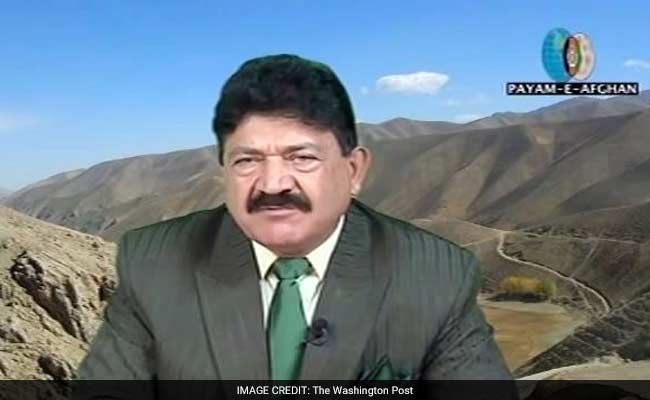
The father of Omar Mateen, identified by police as the man behind the carnage at an Orlando nightclub early Sunday morning, is an Afghan man who holds strong political views, including support for the Afghan Taliban.
Seddique Mateen, who has been referred to as Mir Seddique in early news reports, hosted a television show called Durand Jirga on a channel called Payam-e-Afghan, which broadcasts from California. In it, the elder Mateen speaks in the Dari language on a variety of political subjects. Dozens of videos are posted on a channel under Seddique Mateen’s name on YouTube. A phone number and post office box that are displayed on the show were traced back to the Mateen home in Florida. Mateen also owns a non-profit organization under the name Durand Jirga which is registered in Port St. Lucie, Florida.
In one video, Mateen expresses gratitude towards the Afghan Taliban, while denouncing the Pakistani government.
“Our brothers in Waziristan, our warrior brothers in Taliban movement, and national Afghan Taliban are rising up,” he says.
“Inshallah the Durand line issue will be solved soon.”
The “Durand line issue” is a historically significant one, particularly for members of the Pashtun ethnic group, whose homeland straddles the border between Afghanistan and Pakistan. The Durand line is that border. It is not clear whether the Mateens are Pashtun. The Afghan Taliban is mostly made up of Pashtuns.
The line was drawn as a demarcation of British and Afghan spheres of influence in 1893. The British controlled most of subcontinental Asia at the time, though some parts, like what is now Afghanistan and northwest Pakistan, were only loosely held. The line was inherited as a border by Pakistan after its independence. Since it splits the Pashtun population politically, it is seen as a cause for their marginalization. Pashtuns are the largest ethnic group in most of eastern Afghanistan and northwestern Pakistan.
Pashtuns are also sometimes referred to as Pakhtuns, or Pathans.
The most recent video on Mateen’s YouTube channel shows him declaring his candidacy for the Afghan presidency. The timing of the video is strange, as it came a year after presidential elections were held in Afghanistan. Mateen appears incoherent at times in the video, and he jumps abruptly for topic to topic.
On Sunday morning, Mateen told NBC News that his son’s rampage “has nothing to do with religion.” Instead, he offered another possible motive. He said his son got angry when he saw two men kissing in Miami a couple of months ago. He said his son was especially enraged because the kissing took place in front of his own young son.
“We are saying we are apologizing for the whole incident. We weren’t aware of any action he is taking. We are in shock like the whole country,” Mateen said.
Mateen could not be reached for comment by The Washington Post. His cellphone has been switched off.
ISLAMABAD (TIP): Pakistan on June 9 accused India of using the Pathankot terror attack as an “excuse” to derail the bilateral dialogue process and said that talks are the best way forward to resolve outstanding issues, including “mutual concerns” related to terrorism.
Pakistan Prime Minister’s Advisor on foreign affairs Sartaj Aziz said that peaceful neighbourhood was part of the government’s policy.
He said Pakistan and India had agreed to start the dialogue in December 2015 when Indian foreign minister Sushma Swaraj visited Pakistan.
“But before the foreign secretaries could meet and finalise a schedule for resuming the Comprehensive Dialogue, the Pathankot incident of 2 January 2016 gave India an excuse to postpone the resumption of the dialogue,” he said.
“Pakistan believes that dialogue is the best way forward to resolve outstanding issues, including mutual concerns related to terrorism,” he said.
He said Pakistan sent a joint investigation team to India and has already initiated the required investigation against those alleged to be involved.
The India-Pakistan talks were was stalled after the January 2 attack on Pathankot airbase in which seven Indian security personnel were killed.
India has accused Pakistan-based terror group Jaish-e-Mohammed for the attack and has linked the resumption of the dialogue process to the action taken by Pakistan against the group.
Aziz addressed the media here to highlight achievements of Prime Minister Nawaz Sharif ‘s government.
To a question, Aziz said that Pakistan would continue to support Kashmiris’ struggle for the right of self-determination at bilateral level in talks with India as well as at multilateral forums like the UN.
Aziz reiterated that US drone attack on May 21 which killed Afghan Taliban leader Mullah Mansour damaged the efforts for peace and reconciliation in Afghanistan.
“The recent drone attack in Balochistan in which the Taliban leader Mullah Akhtar Mansour was killed, has breached our sovereignty, caused a serious setback to the peace efforts and intensified hostilities in Afghanistan. The drone strike must, therefore, be condemned by all stakeholders,” he said.
He said Pakistan’s relations with the US have improved since Sharif took over but the main issue affecting the ties is American indifference towards security needs of Pakistan.
“In our interactions, we firmly conveyed to the US that maintaining effective nuclear deterrence is critical for Pakistan’s security and only Pakistan itself can determine how it should respond to the growing strategic and conventional imbalances in South Asia,” he said.
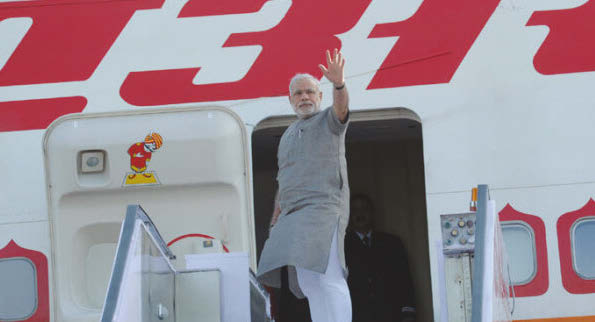
NEW DELHI (TIP): After a lull of several months, Prime Minister Narendra Modi will be off to another whirlwind diplomatic tour starting next week. His first stop will be Afghanistan on June 4 to inaugurate the Salma Dam which has been built with Indian assistance.
By end of the day Modi will be in Doha to return a visit by the emir, Sheikh Tamim bin Hamad Al Thani, who visited India on March 2015. Qatar is India’s largest source for natural gas and Modi is keen to encourage more investments from there.
PM Modi in his two years in office has already visited 29 nations. He now has the distinction among all Prime Ministers of India to have visited the highest number of nations in first two years in office
India and Qatar are expected to hold some intensive discussions on the security situation too. The Afghan Taliban was allowed to open an office in Doha, which is something India has frowned upon in the past.
Announcing the visit, MEA spokesperson Vikas Swarup said, “Qatar is an important trading partner for us in the Gulf region with bilateral trade in 2014-15 exceeding $15 billion. It is our largest supplier of LNG requirements, accounting for 65% of our total imports in 2015-16. It was also one of our key sources of crude oil. Over 6,30,000 Indian nationals form the largest expatriate community in Qatar.”
Modi will then stopover in Switzerland on June 6 to hold talks with Swiss President Johann Schneider-Ammann on technology and investments. Interestingly, he will be visiting Switzerland days after the country inaugurates the world’s longest tunnel, an engineering feat of sorts.
On June 7-8, Modi will be in US, his fourth visit to the country. “The main objective of the forthcoming visit would be to consolidate the progress made in diverse areas such as economy, energy, environment, defense and security, and to intensify cooperation for the future,” Swarup said.
Modi will also address a joint session of the US Congress, a rare honor. “He will be the first foreign leader to be given this honor in 2016. The USCongress has been a source of strength for India-US strategic partnership and the India Congressional Caucus is the largest such group in the US Congress. During the visit, PM will interact with CEOs of major US companies.”
Modi will then pay an important visit to Mexico, which has seen a big increase in economic ties with India. It’s not yet clear whether PM will stop over at any other country on way back. Generally, Air India One, the PM’s plane stops over in Germany for refueling, but Modi could utilize this stop for another short bilateral. Last year, PM stopped over in Ireland for such a visit.
Modi has displayed great skill in moving ‘forwards and backwards’
In the first two years of his term Prime Minister Narendra Modi @narendramodi has devoted time, energy and attention to the conduct of foreign policy. He has sought to enlarge India’s influence through frequent interaction with his global peers in bilateral meetings. Modi’s participation in international and multilateral conferences has conveyed the country’s position in impressive, though pragmatic, interventions. In this largely successful canvas there is a one major dark spot: utter confusion that has prevailed in the pursuit of the nation’s Pakistan policy.
The stated premise of Modi’s Pakistan policy was recently reiterated by him in a written response to the Wall Street Journal. He said, inter alia,
“There can be no compromise on terrorism. It can only be stopped when all support to terrorism, whether state or non-state, is completely stopped. Pakistan’s failure to take effective action in punishing the perpetrators of terrorist attacks limits the forward movement in our ties.”
“In my view, our ties can truly scale great heights once Pakistan removes the self-imposed obstacle of terrorism in the path of our relationship. We are ready to take the first step, but the path of peace is a two-way street.”
There can be no quarrel with this position or the principle contained in Modi’s comment. These have been the stated policy of all governments since Pakistan made the use of terror an essential ingredient of its security approach to India. The problem lies not in the enunciated principle and position but in not following them. It is also in compromising with their obvious logic in the country’s diplomacy towards Pakistan. While diplomacy has to retain, at all times, a measure of flexibility, abrupt U-turns, somersaults or verbal contortions do not constitute the stuff of flexibility. This is especially so when there are no objective reasons to indicate a change in the prevailing realities of a relationship or the regional or international context.
The objective reality is that the Pakistan army continues to control that country’s India policy. The elected leadership, including the Prime Minister, has little capacity to change its thinking. If it had, Pakistan would have agreed to begin a process of cooperative interaction with India, including in the areas of trade and connectivity. None of that has taken place and yet Modi, like his predecessors, proceeded to follow a “flexible” approach. The Generals have remained unmoved and through their actions have demonstrated so. Yet Modi has ignored all that and gone “forwards and backwards”. How has that process unfolded in the past two years?
Modi invited Prime Minister Nawaz Sharif to his swearing-in ceremony in May 2014. Nawaz Sharif, ignoring the reservations of the Generals, came to Delhi. The two Prime Ministers decided that the Foreign Secretaries would meet to consider how to take the relationship forward. The Generals reacted to Nawaz Sharif’s decision to visit Delhi by sponsoring an attack on the Indian Consulate-General in Herat, Afghanistan, just before Modi assuming office. The bravery of the ITBP security detachment prevented a major disaster. This was the Generals’ signal to both Prime Ministers: they should not be ignored.
Just before the then Foreign Secretary Sujatha Singh was to travel to Pakistan in August 2014, the Pakistan High Commissioner in Delhi met the Hurriyat leadership despite the last-minute warning from the Indian side. Modi rightly called off the visit on the ground that, irrespective of India looking the other way in the past, it would no longer accept the projection of the Hurriyat as a party in the Jammu and Kashmir issue. A red line was correctly drawn but such an approach requires patience and perseverance.
A month later at the UN Modi signaled to Pakistan that all issues had to be settled bilaterally and terrorism had to be abandoned. Again these were words in keeping with India’s basic approach. However, while the Generals showed no change, Modi sent Foreign Secretary Jaishankar to Islamabad in March 2015 to explore ways to take the relationship forward.
In July 2015 Modi met Nawaz Sharif in Ufa, Russia. They decided that bilateral interaction should begin and the two National Security Advisers should meet in Delhi to discuss all aspects of terror. Jammu and Kashmir found no mention in the Ufa joint statement. This angered the Generals who insisted that discussions should not be only on terror and that Pakistan would not accept a veto on the meeting with the Hurriyat in Delhi. The visit of the Pakistani NSA was called off and strong words were exchanged. Soon afterwards Pakistan appointed a retired and well-regarded General, Nasser Janjua, as its NSA. For some inexplicable reason Indian policy-makers construed Janjua’s appointment as an indication of the army changing course and wanting to improve relations with India. There was simply no evidence of the Generals of wanting to do so.
It was this assessment that led to the activity of December 2015 when the Ufa decisions were set aside and the NSAs, accompanied by the Foreign Secretaries, met in Bangkok. This was immediately followed by External Affairs Minister Sushma Swaraj going to Islamabad to attend the Heart of Asia conference on Afghanistan. On its sidelines, India and Pakistan decided to begin a Comprehensive Bilateral Dialogue Process with a meeting of the two Foreign Secretaries to work out its modalities.
On the Christmas day Modi made a stop-over visit to Lahore to meet Nawaz Sharif. This was a flamboyant gesture of goodwill but that aspect escaped the Generals who brushed it aside not only as of no enduring value to bilateral ties but also one that required a reminder that they are the bosses in Pakistan. The Pathankot attack followed and despite the brave front, Modi was severely embarrassed. In Pathankot’s immediate aftermath an effort was made to save the Modi initiative by projecting that Pakistan was serious in investigating the Pathankot conspiracy. Special emphasis was given to the visit of the JIT. Even while it was in India the Generals responded by levelling charges of espionage and terrorism against retired naval officer Kulbhushan Jadhav, and worse, sought to target the Indian NSA in this concoction.
Thus the Generals’ hostility towards India remains single-minded and abiding. However, Modi’s response has been vacillating like that of his predecessors. Besides, Pakistani terrorism is not considered a strategic challenge by the Indian political and strategic establishment. As long as Indian policy-makers continue with the present approach, the Generals will not change. The focus has to be on ensuring that the Generals modify their India policy. That will not be achieved either through hope or considering that the NIA’s visit — should it take place — will be the mark of a successful Pakistan policy.
(The author is a former Secretary, Ministry of External Affairs)
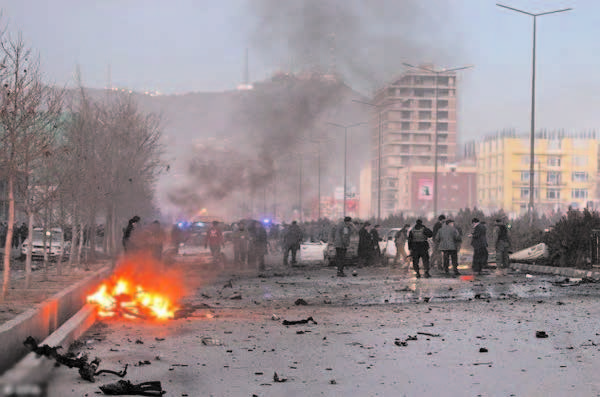
KABUL (TIP): A suicide bomber targeted a vehicle carrying court employees in Kabul during morning rush hour on May 26, killing 10 people, an Afghan official said. The Taliban has claimed responsibility for the attack.
The bomber, who was on foot, detonated his explosives vest as he walked by the vehicle in the western part of the city, said Najib Danish, the Interior Ministry’s deputy spokesman.
The casualties include both court workers and civilians and the explosion also wounded four people, Danish said.
The vehicle belonged to the judiciary department in neighboring Maidan Wardak province and was taking the workers there when it came under attack, he added.
Within an hour of the assault, the Taliban, who often target government employees in their war against the state, claimed responsibility for the bombing. The claim came from Zabihullah Mujahid, a Taliban spokesman, in an email sent to the media.
The attack came as the Taliban named a new leader following Mullah Akhtar Mansour’s death in a US drone strike on May 20.
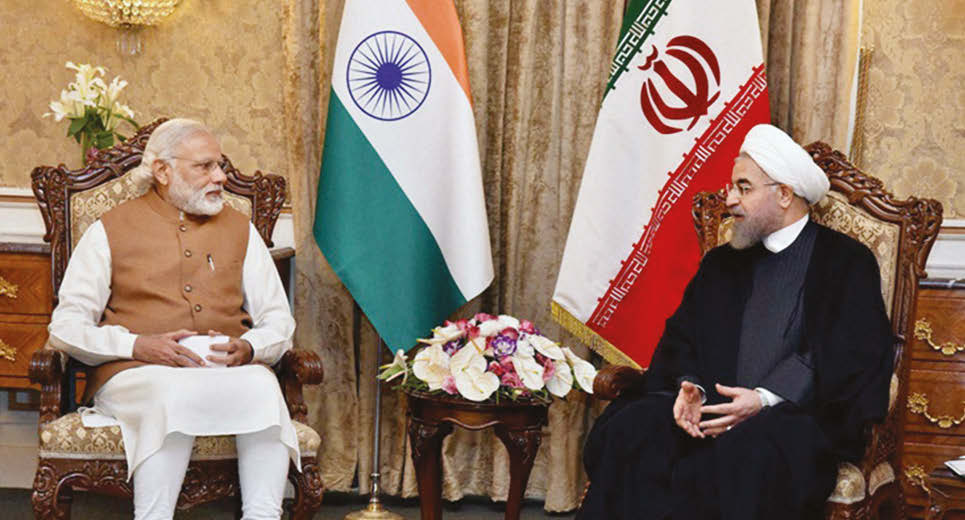
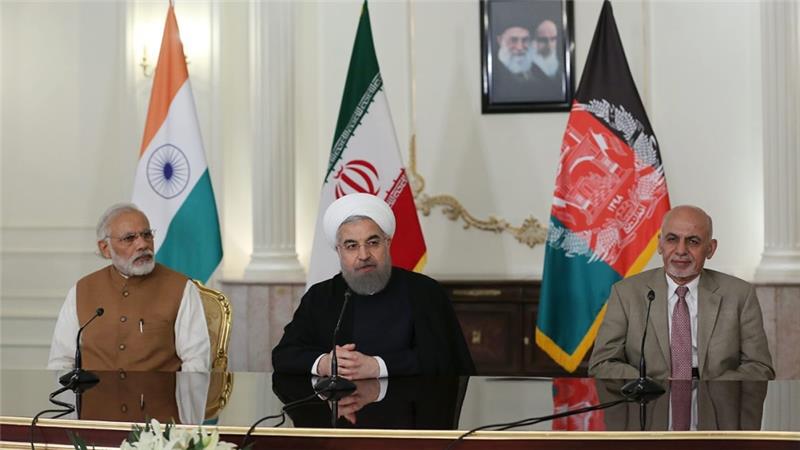
TEHRAN (TIP): Under the ornate chandeliers inside Saadabad palace’s atrium, Iranian President Hassan Rouhani by his side, Prime Minister Narendra Modi on May 23 quoted a Persian couplet by Mirza Ghalib to describe India’s ties with Iran: “Once we make up our mind, the distance between Kaashi and Kaashan is only half a step.”
Looking on with a broad smile was Iranian Foreign Minister Javad Zarif and other officials standing behind the two leaders. This scene captured in a nutshell what the day’s meeting between Modi and Rouhani had achieved. Minutes earlier, India and Iran signed the “historic” Chabahar port agreement, which has the potential of becoming India’s gateway to Afghanistan, Central Asia and Europe. Later, Afghanistan President Ashraf Ghani joined the two leaders and a trilateral transit agreement was signed.
The two sides did not stop there. Mindful of the threat to peace and stability in the region, they also agreed to cooperate on “intelligence-sharing” to combat “terrorism”, “drug trafficking” and “cyber crime”. “Due to the importance of stability and security in the region, especially in countries like Afghanistan, Iraq, Syria and Yemen, a big problem called terrorism is running rife and rampant in the region. The two countries discussed political issues as well, and how they can cooperate on intelligence-sharing, their fight against terrorism and extremism, and how they can contribute towards peace and stability in the region,” Rouhani said. Modi, who told Rouhani that “leadership and the clarity of your vision have deeply impressed me”, said, “India and Iran also share a crucial stake in peace, stability and prosperity of the region. We also have shared concerns at the spread of forces of instability, radicalism and terror in our region. We have agreed to consult closely and regularly on combating threats of terrorism, radicalism, drug trafficking and cyber crime. We have also agreed to enhance interaction between our defense and security institutions on regional and maritime security.”
However, the centerpiece of their talks was Chabahar port, described by Rouhani as “strategic” at least twice. “Considering the fact that Iran is very rich in energy and the fact that India possesses very rich minds, so considering that they have a strategic port, the port of Chabahar, various important industries like the production of aluminum, petro chemicals, steel are the ones on which (the two countries) can have vast cooperation,” he said. With all the investments that are going to be made in the development of Chabahar port and considering the credit lines that are going to come from India, Rouhani said that “this very strategic port can very well turn into a very big symbol of cooperation between the two great countries”. However, Rouhani, mindful of Pakistan’s sensitivities, made it clear, “Today’s agreement is not against any other country.” He added that other countries are also welcome to participate in the initiative to develop Chabahar. Modi, without mentioning Pakistan, said, “Today, the watch-words of international ties are trust not suspicion; cooperation not dominance; inclusivity not exclusion. This is also the guiding philosophy and driving spirit of the Chabahar agreement.” Modi said the bilateral agreement to develop the port and related infrastructure, along with availability of about $500 million from India for this purpose, is an “important milestone”. “This major effort would boost economic growth in the region,” the PM said. Making a pitch for improved economic ties, Rouhani said, “This visit comes at a time when we have managed to conclude the nuclear deal and at a time when sanctions are gone… the ground is prepared more than ever for furthering our economic cooperation…” “Today, we have this chance to develop relations further to be even more beneficial to the people of our two countries,” he said. In this context, the Iranian President pointed out the challenges arising out of banking channels, which is preventing India from paying the full $6 billion of past dues from oil exports. Modi, on his part, said that India and Iran are not new friends. “Our dosti is as old as history,” he said.
“We can never forget that Iran was among the first countries to come forward in support when an earthquake struck my state, Gujarat, in 2001. Similarly, India is proud to have stood with the people of Iran during your difficult times. I compliment the leadership of Iran for their far-sighted diplomacy,” Modi said. The two sides signed a total of 12 of agreements on economy, trade, transportation, port development, culture, science and academic cooperation. In this context, Rouhani said, “Since India has made many advancements in new and high technologies, like ICT, biotech, nanotech and aerospace, today we made a decision to bring our academics, universities, technological and scientific partners closer to each other.” Earlier in the day, Modi was accorded a ceremonial welcome at the Saadabad palace’s Jomhouri building. Rouhani hosted a lunch and then they moved to the palace’s Talar building where they, along with Ghani, signed the trilateral transit pact.
India, Iran and Afghanistan have signed a tripartite agreement to turn the Iranian port of Chabahar into a transit hub bypassing Pakistan, which has been the only route for war-stricken Afghanistan to the Indian Ocean.
“The agreement can change the course of history in this region,” Indian Prime Minister Narendra Modi said on Monday, May 23, during his visit to Tehran.
The accord, which calls for joint investments, will significantly boost the role of the under-tapped port of Chabahar. Once the project is realised, it will connect India to Afghanistan and central Asia, while Kabul will get an alternate route to the Indian Ocean.
India has agreed to finance the development of the port as a regional hub, as Modi sought to revive economic ties with Tehran after the lifting of sanctions.
Modi also met Iranian officials including supreme leader Ayatollah Ali Khamenei and President Hassan Rouhani which was termed by him as “a new chapter in our strategic partnership”.
Modi and Rouhani oversaw the signing of a memorandum of understanding for the provision of a $500m line of credit.
“Today is an important and historical day of development of relations between the three countries,” Rouhani said in a televised speech, seated between the two other leaders.
“From Tehran, New Delhi and Kabul, this is a crucial message … that the path to progress for regional countries goes through joint cooperation and utilising regional opportunities.”
The deal is crucial for the landlocked Afghanistan, as it changes the geopolitics of the region and is seen as a way out of its dependency on Pakistan.
Alternate route will leave China & Pakistan red faced
The tripartite deal is likely to upset China, the greatest economic rival of India in Asia, and Pakistan, which has been the only transit route for Afghanistan to the Indian Ocean.
Chabahar is not very far from the Pakistan port city of Gwadar, which is being developed by China.
The volume of trade between Iran and India in the past 11 months reached $9bn, according to Iran’s official IRNA news agency.
Tehran was New Delhi’s second largest oil supplier until 2011-12, when the sanctions cut its dependence on Iranian oil.
Advantage India | If Chabahar is realized it would be the kind of alternate route that would really not cause much comfort and happiness for China and Pakistanand will give India access to Afghanistan and central Asia.
1) Where is Chabahar?
The port of Chabahar is located in southeastern Iran in the Gulf of Oman. It is the only Iranian port with direct access to the ocean.
2) What does the pact entail and what are India’s plans for Chabahar?
India will develop and operate the Chabahar port. India Ports Global, a recently formed port project investment arm of the shipping ministry and a joint venture between the Jawaharlal Nehru Port Trust and the Kandla port, will invest $85 million in developing two container berths with a length of 640 metres and three multi-cargo berths.
The contract is for 10 years and extendable. It will take 18 months to complete phase one of the port construction. The first two years of the contract are grace period which means India doesn’t have to guarantee any cargo for the port.
From the third year, India will facilitate 30,000 TEUs (Twenty Foot Equivalent) of cargo at the port. The quantum will rise to 2,50,000 TEUs by the 10th year.
3) Is that all?
No. State run railway body IRCON International will set up a railway line at Chabahar to move goods right up to Afghanistan. The 500-km rail link between Chabahar and Zahedan will link Delhi to the rest of Iran’s railway network.
Also, part of the agreement is a free trade zone where a total investment of ₹1 lakh crore is envisaged. Indian companies would set up a range of industries from aluminium smelter to urea plants in the region. State-owned NALCO will set up an aluminium smelter while private and co-operative fertiliser firms are keen to build urea plants.
India will also supply $400 million of steel rails to Tehran. There are plans of a fertilizer plant through a joint venture with the Iran government. Securing hydrocarbon sources is a priority for India as Delhi and Tehran would look to expand the basket in the coming years.
4) Why is it so important for India?
No other international port has seen the level of involvement and enthusiasm from Chabahar as India. The port will make way for India to bypass Pakistan in transporting goods to Afghanistan using a sea-land route. At present, Pakistan does not allow India to transport through its territory to Afghanistan. It has, however, recently allowed some Afghan shipments to come to India.
This will also give momentum to the International North-South Transport Corridor of which both are initial signatories along with Russia. Iran is the key gateway in this project. It entails the ship, rail, and road routes for moving freight between India, Russia, Iran, Europe and Central Asia. The route primarily involves moving freight from India, Iran, Azerbaijan and Russia. The objective of the corridor is to increase trade connectivity between major cities such as Mumbai, Moscow, Tehran, Baku, Astrakhan etc.
It would counter Chinese presence in the Arabian sea through the support to Pakistan in developing Gwadar port. It can be used to station security vessels for merchant ships off the African coast apart from giving the country a foothold in the western Arabian Sea, which is important as many of its energy imports pass through the route.
5) India has been making efforts to finalise this deal. What took it so long and what is the history?
The port was partially built by India in the 1990s. An initial pact to build the Chabahar port was first inked during the Atal Bihari Vajpayee’s government in 2003, but the deal slipped through during subsequent years.
Negotiations only intensified after nuclear deal between P5 + 1 (the UN Security Council’s five permanent members — China, France, Russia, UK and US — plus Germany) and Iran last year. But reaching the deal was far from smooth and differences cropped up over ownership as Tehran’s Port Authority introduced role of private player in the process. After several rounds of negotiations between India’s consortium ofJNPT, Kandla Port Authority and Iranian authorities, the contract was deemed ready for signing.
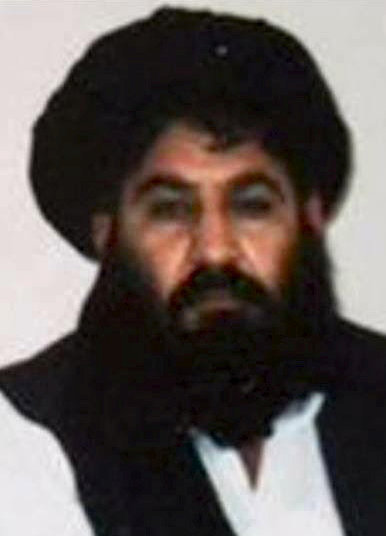
President Barack Obama confirmed Taliban chief Mullah Akhtar Mansour was killed in a US air strike, hailing his death as an “important milestone” in efforts to bring peace to Afghanistan — but the strike was also an illustration of the tangled relationship between Washington and Islamabad.
Saturday’s bombing raid, the first known American assault on a top Afghan Taliban leader on Pakistani soil, marks a major blow to the militant movement, which saw a new resurgence under Mansour.
“He is an individual who as head of the Taliban was specifically targeting U.S. personnel and troops inside of Afghanistan who are there as part of the mission I have set to maintain a counterterrorism platform and provide assistance,” Mr. Obama said during a news conference in Hanoi, Vietnam. Killing Mullah Mansour, Mr. Obama said, sent a message that “we’re going to protect our people.”
“We have removed the leader of an organisation that has continued to plot against and unleash attacks on American and Coalition forces, to wage war against the Afghan people, and align itself with extremist groups like Al-Qaeda,” the US president said in a statement.
To many outside experts, it sent an equally powerful message to Pakistan.
“The administration is no longer worried about blowing up anything,” said Vali Nasr, a former State Department official who worked on Pakistan. “This is literally carrying out an operation, not against an Arab terrorist leader, but against a Pashtun ally of Pakistan, inside Pakistani territory.”
On Monday, May 23, the Pakistani Foreign Ministry summoned the American ambassador, David Hale, to lodge a protest for what it said was a “violation of Pakistan’s sovereignty.” The killing would obstruct multiparty efforts to negotiate a settlement between the Taliban and the Afghan government, it said.
Obama, who is on a three day visit to Vietnam, said Mansour had rejected efforts “to seriously engage in peace talks and end the violence that has taken the lives of countless innocent Afghan men, women and children.”
He called on the Taliban’s remaining leadership to engage in peace talks as the “only real path” to ending the attritional conflict.
Mansour was elevated to the leadership of the Taliban in July 2015 following the revelation that the group’s founder Mullah Omar had died two years earlier.
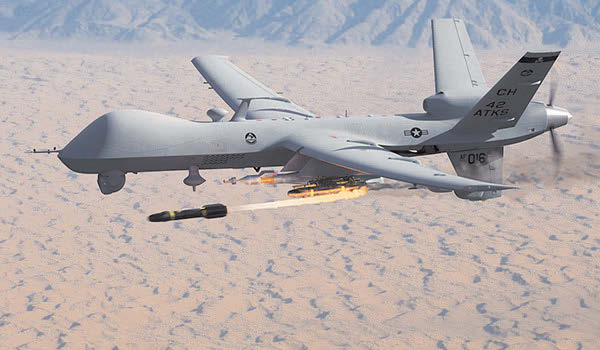
He was killed on Saturday near the town of Ahmad Lal in Pakistan’s south western Balochistan province, when missiles fired from a drone struck the car he was travelling in.
It was believed to be the first time the United States has targeted a senior Taliban figure in Pakistan.
When a new government takes over, people have a lot of expectations. The government’s success is measured in terms of initiatives it has taken to permanently alter the fundamentals in social, political and intellectual domains.
Seeds of such changes are mostly sown in the first year of the assumption of power. Narasimha Rao ushered in economic reform by de-licensing industries in his first budget presentation, the results of which were far-reaching. Rajiv Gandhi brought in Sam Pitroda and created C-Dot. The present telecom revolution owes a lot to that initiative of Rajiv Gandhi. Barack Obama reached out to Muslims by giving a speech at Al-Azhar University, clearly making a policy statement that the US was no longer interested in continuing Bush’s foreign policy while hinting at the withdrawal of US forces from Iraq and Afghanistan.
Narendra Modi is completing two years in the government and without any exception, making efforts which have the potential to permanently change the fundamentals of the Indian system and its value structures.
The social system’s liberal tradition has been confronted with the one-dimensional behavior pattern led by RSS’s ideological zealots. The killing of Akhlaq in Dadri by BJP leaders because of his alleged eating habits is symptomatic of that assertion. Beef has been banned in Maharashtra despite protests by minority communities. The Kerala House in Delhi, which has been serving beef for decades, was raided by the Delhi police. Haryana Chief Minister ML Khattar has advocated that girls should not wear jeans. “Love Jihad” and “Ghar Wapsi” are excuses to stop Hindus and Muslims from inter-mingling. Aamir Khan and Shah Rukh Khan have been hounded for statements on intolerance.
Activists Kalburgi and Pansare were killed by people who could not tolerate them speaking their minds. The social atmosphere has been so vitiated that the President of India, Pranab Mukherjee has publicly prodded the government many times about its responsibilities, but without any substantive results.
On the political front, the Modi government has been ruthlessly pursuing the agenda of making India “Congress mukt (free)”, or rather, devoid of any opposition whatsoever. Two Congress governments were toppled without any constitutional validity. The Supreme Court still has to decide about the Arunachal case, but its decision on Uttarakhand is a slap on the face of the Modi government and a warning for any future misdemeanors. But the simple fact that such attempts were made despite protests from all corners is proof that other opposition-led states will bear the wrath of the Modi government in days to come.
The Modi government has been rigorous in its pursuit of denigrating Nehru, not just as an individual, but also in the context of his legacy. Modi knows that the Congress derives its ideological sustenance and legitimacy from Nehru and his liberal thoughts. To permanently discredit the Congress, Nehru’s legacy has to be discredited. The legends of Subhas Chandra Bose, Vallabhbhai Patel, Baba Saheb Ambedkar and Bhagat Singh are being resurrected in an attempt to diminish the historical contributions of Nehru and erase him from the collective consciousness. The Rajasthan government has tried to remove Nehru from its school curriculum. The chairman of the Nehru museum has been replaced by a Nehru baiter.
Modi also knows that one liberal political discourse should not be replaced with another. So along with the Congress, other liberal political formations also have to suffer. Therefore, the Arvind Kejriwal government and its leaders are targeted by central agencies because the Aam Aadmi Party brand has the power to grow into a national alternative. A very powerful Chief Minister confided in me that the plan was that by 2019, many senior leaders of opposition parties would be in jail and there would be no opposition to Modi.
The JNU episode is probably the most important indicator that the third sector I spoke of – the intellectual domain – has to make way for the militant right. Let’s not forget that Modi is not an ordinary politician. He represents the historical ideological ambition of the RSS which wants to create militant Hinduism, take revenge for the past and to establish the rule of the “pure” Hindu Race. The RSS was born in 1925 as a revolt to the Gandhian philosophy which it perceived as making Hindus weak, and the reason for civilizational dominance of other faiths over Hindus. But after independence, the Gandhian discourse was replaced by the Left ideology thanks to Nehru and that dominatedoverwhelmingly till India was opened to the world market in 1991.
Such was the dominance of the Left in the academic and intellectual universe in India that the RSS was relegated to the margins. JNU or Jawaharlal Nehru University in Delhi was the epitome of the Left’s intellectual prevalence. To establish Hindutva ideology, that has to be discredited, broken and replaced. The RSS and the BJP did not mince words in calling Left intellectuals “anti-nationals”, accusing them of colluding with terrorists, and describing universities like JNU and Jadavpur inBengal as dens of terrorists. These varsities are the knowledge leaders of the country, and very highly rated globally. They have to be demolished in order to stitch a new intellectual paradigm. Kanhaiya got caught in that cross fire. He is an accident of history.
Many argue that Modi has not fulfilled the promises he made during the 2014 elections. That kind of yardstick is applied to measure the success and failure of mere mortals. Modi is not one. He thinks he is a special child of history with a civilizational project. Those who thought that he would change the course of the economy are disappointed. Despite India being the fastest-growing economy, job growth is at its lowest in the last six years, eight core industries are shrinking, inflation is down but export figures are discouraging, the rupee is highly stressed, and social conflict is growing. The Jat and Patidar movements have been examples of civil unrest, but the Modi government is oblivious. Modi is busy laying the foundations of a new ideological edifice. In communist parlance, once the base is solidified, the super structure will take care of itself.
Two years of Modi in government tell a singular story which looks strange and intimidating to many, but for his supporters and ideological friends he is doing a good job. Paul Eldridge, famous writer, said, “Man is ready to die for an idea, provided that idea is not quite clear.” There were many, other than his ideological friends, who were willing to die for Modi in 2014; for them he was a refreshing idea. For many of them, that idea is now losing its sheen. Or maybe the idea is getting clearer.
(Ashutosh, a well-knownjournalist, joined the Aam Aadmi Party in January 2014.)
BEIJING (TIP): The British media is riddled with “barbarians” who would benefit from a lesson in manners from China’s ancient civilisation, a state-run newspaper said May 12 after Queen Elizabeth II called some Chinese officials “very rude”.
In a rare diplomatic gaffe, the British monarch was caught on camera at a Buckingham Palace garden party making unguarded comments about a state visit last year by President Xi Jinping that drummed up billions in Chinese investment.
The remarks made headlines worldwide on Wednesday but initially they were largely censored in China, blacked out of BBC World transmissions, according to the British broadcaster.
The Global Times newspaper, which is close to China’s ruling Communist Party, blamed the British media for blowing the incident out of proportion and fawning over the footage as if it was “the most precious treasure”.
“The West in modern times has risen to the top and created a brilliant civilisation, but their media is full of reckless ‘gossip fiends’ who bare their fangs and brandish their claws and are very narcissistic, retaining the bad manners of ‘barbarians’,” it said in an editorial.
“As they experience constant exposure to the 5,000 years of continuous Eastern civilisation, we believe they will make progress” when it comes to manners, it added in the Chinese-language piece, which was not published in English.
London and Beijing have both proclaimed a new “golden era” of relations between the former imperial power — whose forces repeatedly invaded China in the 19th century — and the rising Asian giant, now the world’s second-largest economy.
Xi’s trip in October saw a clutch of contracts announced, which Cameron said were worth almost $58 billion. At the time the overseas edition of the People’s Daily, the Communist Party’s official mouthpiece, breathlessly portraying the visit as the start of a beautiful friendship.
But in her recorded comments the Queen commiserated with a police commander for her “bad luck” in having to oversee security for Xi and his wife.
Members of the Chinese delegation “were very rude to the ambassador”, the monarch said, exclaiming: “Extraordinary!”
A columnist at Chinese website “Today’s Headlines” recalled visible mutual discomfort during the three-day sojourn, describing it as “thought-provoking awkwardness” and adding it “primarily arose out of cultural and political differences”.
On Chinese social media posters decried Britain’s lack of awareness and understanding of Chinese ways, noting “an arrogance which makes them feel they needn’t bother to learn”.
“Every country’s customs are different, OK – not all people must cater to you,” wrote a commenter on the Twitter-like Sina Weibo.
Others were ashamed. “We’re already embarrassed by talk about what our average people get up to abroad,” said one. “Being embarrassed by our officials abroad is even worse.”
The British monarch never expresses overtly political views in public and is known for her discretion, never granting an interview in her 64-year reign.
But her comments came as British Prime Minister David Cameron was recorded calling Nigeria and Afghanistan “possibly the two most corrupt countries in the world”, heaping scrutiny on the tete-a-tetes of British leadership.
“Even among Western countries, Britain is most frequently ‘caught with its pants down’ and ‘exposing itself’,” the Global Times editorial said.
But it added that it would be “unthinkable” for British authorities to have deliberately leaked the royal footage, as “if they had deliberately done so, that would have been truly crude and rude”. The paper shrugged off the Queen’s comments themselves as “not a big deal”, stating: “Chinese diplomats surely also scoff at British bureaucrats in private.” (AFP)
KABUL (TIP): Seven Taliban militants were killed after an unmanned plane of the NATO-led coalition forces struck a vehicle in Afghanistan’s Kunduz province, an official said on May 10. “Based on a tip-off, a coalition forces’ drone carried out an air raid against a vehicle running in Nah-r-Sufi locality of Chahar Dara district on Monday night. The air strike left seven militants killed and two other militants injured,” district Governor Zulmai Farooqi told Xinhua. In another development, a Taliban military chief named Abdul Jabar Mardan for the neighbouring Baghan province was killed during a special operation conducted by Afghan forces on Monday evening, an official told Xinhua earlier on Tuesday. (TNN)
Signup to our Newsletter!
Don’t miss out on all the happenings around the world