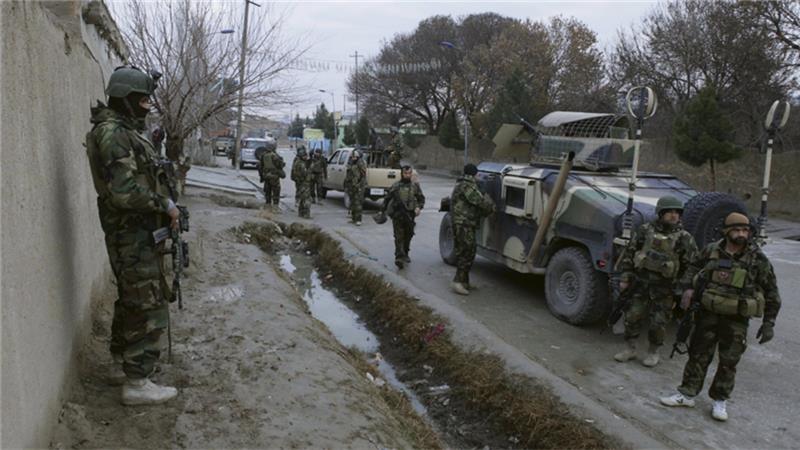
A day after Afghanistan Police named Pakistan for the Mazar-i-Sharif attack, a blast took place in Jalalabad, nearly 200 meters away from the Indian consulate in Afghanistan.
Four Afghan policemen were reportedly killed in the blast, which was suspected to have been carried out by a suicide bomber,. According to sources.
All Indians in the consulate are reported to be safe.
An intense gun-battle between security forces and the attackers took place outside the Indian consulate in Mazar-e-Sharif after assailants attempted to storm the mission building on January 3.
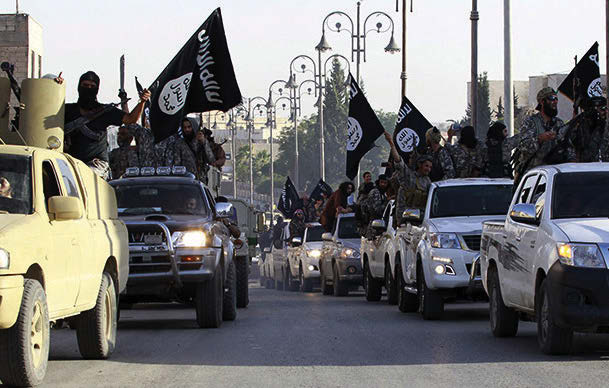
ISIS ushered in 2015 with the terrifyingly typical displays of brutality which initially put the group in the international community’s crosshairs. They beheaded Japanese hostages, burned a Jordanian pilot alive in a cage and announced the death of American captive Kayla Mueller.
The Sunni militants seized Ramadi in May and later the ancient city of Palmyra.
David Phillips, a former senior adviser to the State Department on Iraq, said ISIS was “on a roll” at the beginning of the year.
“They started off at a gallop,” explained Phillips, now director of the program on peace-building and human rights at Columbia University.
But something was shifting as the year progressed.
If 2014 was all taking and consolidating territory – Mosul, Tikrit and more – the seizures of Palmyra and Ramadi this year were overshadowed by losses on the ground. Key leaders were killed and territory slipped away.
“In 2015, they’ve consistently had to abandon territory,” Phillips said.
ISIS has been prevented from expanding operations in Iraq and Syria because of resistance they’ve encountered on the battlefield from Kurdish fighters backed by Western airstrikes, and Iran-backed militias, according to Phillips.
“The caliphate has been restricted, hemmed in and is under more pressure now than it ever has been particularly with the start of the Russian airstrikes,” echoed Matthew Henman, head of IHS Jane’s Terrorism and Insurgency Center.
But he and other analysts warned not to count ISIS out just yet: It’s important to note that the caliphate has survived another full year.
“They remain hanging on,” Henman said. “They’re still in the game.”
ISIS is still controlling “priority areas” in Syria and Iraq, Henman noted. The key cities of Fallujah, Ramadi, Mosul, Raqqa and Palmyra are still in ISIS hands despite billions of dollars worth of airstrikes against ISIS.
“The group doesn’t need territory,” Henman added. “If it loses control of those cities it reverts back to insurgent operations – the threat doesn’t go away.”
That’s also because ISIS in 2015 has experienced a great deal of international expansion, with operations in Libya, Yemen, Saudi Arabia, Pakistan, Egypt and Afghanistan. Even if ISIS is wiped out in Iraq and Syria, Henman warned it’s still got its hooks into other places.
“That ideology now is something which can’t just be bombed away,” he said.
ISIS appears to be driving that point home by increasing its attacks internationally and outside of their strongholds in Iraq and Syria, showing that it can strike out and hit its adversaries on their home turf.
The group claimed responsibility for massive terror attacks in Tunisia, France, Yemen and the downing of a Russian passenger plane.
“They’ve shown a consistent ability to project their terrorist goals,” Phillips said. “It’s a stark reminder that you’re not safe anywhere.”
Those attacks outside Iraq and Syria serve several purposes, analysts said.
First, it’s direct retribution for Western airstrikes. It also serves as a distraction from whatever losses ISIS may be suffering, according to Henman.
“It’s that show of strength to inspire fear into the heart of their enemies but also to buoy up their supporters at a time when they’re coming under pressure,” Henman said. “It’s all about distracting away from their losses and reinforcing that narrative of continued expansion and momentum and winning victories.”
It’s also partially about pulling the West further into the fight, Henman and other experts said.
Analysts note that the first thing France did in response to the Paris attacks was to intensify airstrikes – which might play right into the ISIS-driven narrative.
“They’re targeting farther abroad because they’re trying to draw the West into a major conflict and use that as a basis for a third world war,” Phillips said. “Their ideology is about the end of days and civilization as we know it being destroyed.”
Whatever the goal – baited or otherwise -external actors have gotten more directly involved in the battle against ISIS this year.
The killing of the Jordanian pilot drew Amman into the fight against ISIS. Moscow intensified airstrikes against ISIS following the downing of the Russian passenger plane. The U.S. said it was sending special operations forces into Syria and the Paris attacks provoked further action, confirming longstanding fears about the potential of returned foreign fighters to carry out mass-casualty attacks in the West.
“It underlined that that threat is very real… It has catalyzed nations into acting,” Henman said.
It also looks like the end of the year could hit ISIS particularly hard: an offensive against ISIS to retake Ramadi got under way on Tuesday and Iraqi forces have continued to advance in the days since.
Still, ISIS released a new audio message purportedly from its leader on Saturday mocking the U.S. for not putting boots on the ground. Abu Bakr al-Baghdadi said in the clip that airstrikes against ISIS were failing and the group was thriving.
It’s become increasingly difficult to ascertain how ISIS really is faring in terms of financing and fighter strength, analysts said. The group is particularly good at managing its image and keeping their propaganda tightly controlled.
But while the various coalitions against ISIS have been criticized for a lack of cohesion or strategy, analysts note their impact can’t be discounted.
“There’s a lot going on in terms of the lack of unity by the international community but nevertheless ISIS has been hit quite severely,” said Dr. Nelly Lahoud, a senior fellow for political Islamism at the London-based International Institute for Strategic Studies.
She said some of that is clear from ISIS’ own propaganda releases. For example, ISIS has released several videos denouncing the recently-announced Saudi Arabian coalition against terrorism.
“If you read what ISIS is saying they are very annoyed. They are alarmed,” Lahoud said. “It’s more preoccupied with attacking others on the rhetorical level and on the ideological level more so than showing the territorial victories because they don’t have any.”
That level of alarm could bode worse for the West and the territories under ISIS control, she warned.
“One has to be scared and concerned about what the group might decide to do when it is losing,” Lahoud said. “Mercy is not something that ISIS has shown to be part of its vocabulary … It is perhaps even more dangerous when it is losing.”
NEW DELHI (TIP): India on Jan 7 made it clear to Pakistan that the proposed foreign secretary-level talks could be held only if Islamabad acts promptly against plotters of the Pathankot airbase attack.
New Delhi put the onus on Islamabad to salvage the peace process which was recently reinitiated by Prime Minister Narendra Modi and his Pakistan counterpart M Nawaz Sharif.
The dialogue process between the two countries came under a shadow after the recent attacks on the Indian Air Force base in Pathankot (Punjab) and the Consulate General of India at Mazar-e-Sharif in Afghanistan.
“The ball is in Pakistan’s court,” Ministry of External Affairs spokesperson Vikas Swarup told journalists on Thursday.
He, however, declined to comment on the proposed meeting between Foreign Secretary S Jaishankar and his Pakistan counterpart A A Chaudhry, which is scheduled to be held in Islamabad on January 15.
“The immediate issue (for India) is Pakistan’s response to the terrorist attack (on IAF base in Pathankot) and the actionable intelligence provided to it,” he said.
Prime Minister Narendra Modi’s National Security Advisor Ajit Doval on Monday shared with his Pakistani counterpart Naseer Khan Janjua details of the calls and transcripts of the conversations between the Jaish-e-Mohammed (JeM) terrorists, who attacked the IAF base in Pathankot, and the “commanders” of the terror organisation based in the neighbouring country.
It was reported that New Delhi had asked Islamabad to immediately arrest JeM founder Moulana Masood Azhar and three other operatives of the terror organisations — Ashfaq Ahmad, Hafiz Abdul Shakur and Kasim Jaan.
They were in constant touch with the terrorists and coordinating their assault on the airbase from a control room set up at the outfit’s headquarters in Bahawalpur in Pakistan.
New Delhi suspects that Azhar’s brother Abdul Rauf Ashgar masterminded the attack. Modi on Tuesday asked Sharif to immediately act against the individuals and organizations responsible for the terrorist attack.
Sharif assured Modi over phone that his government would take “prompt and decisive action against the terrorists”.
“Actionable intelligence with regard to the terrorist attack and the links with the perpetrators in Pakistan have been provided to the Pakistani side. The Pakistani Prime Minister promised prompt and decisive action. We now await that prompt and decisive action,” the MEA spokesperson said on Thursday.
“We had extended a hand of friendship to Pakistan but we will not countenance cross-border terrorist attacks,” said Swarup. The meeting between the two foreign secretaries on January 15 is expected to mark restart of the bilateral dialogue, which remained stalled since January 2013.
Seven security-men were killed in the attack on the IAF base in Pathankot. The six JeM terrorists, who carried out the attack, were all eliminated by the security personnel in a three-day-long operation.
The terrorist attack came just a little more than a week after Modi’s surprise visit to Lahore to greet Sharif on his birthday and to join celebration for the wedding ceremony of the Pakistan Prime Minister’s granddaughter. The visit added to the newly generated goodwill between the two neighbours, which saw a thaw in their ties with the December 9 announcement on resumption of the parleys as Comprehensive Bilateral Dialogue.
ISLAMABAD (TIP): The Afghan Taliban have launched an unprecedented winter surge that points to a desire for an upper hand in peace talks, analysts say, while some suggest rogue Pakistani elements may be bolstering the effort to derail overtures by Islamabad to India.
Taliban fighting normally quiets down in winter months with the insurgents resting ahead of an annual spring offensive, but this year has seen a series of fierce attacks –many focused on Kabul in recent weeks, including three in the capital since January 7.
Some say the ongoing fighting is a bid by Taliban leader Mullah Akhtar Mansour to consolidate his position ahead of four-way talks between Afghanistan, Pakistan, the US and China slated for next week, a precursor to a revived peace dialogue between Kabul and the insurgents.
Ahmed Rashid, a leading expert on the Afghan Taliban, said Mansour was tightening his grip on power through the high-profile attacks, after a shootout between rival insurgent commanders in Pakistan in December left him wounded. (AFP)
Building upon Prime Minister Narendra Modi’s initiative of inviting all SAARC leaders to his swearing-in ceremony in May 2014, the neighbourhood continued to be the primary focus of India’s foreign policy in 2015. While relations with Pakistan and Nepal remained on a tricky path, there was some forward movement in the ties with Bangladesh, Afghanistan, Bhutan, Maldives and Myanmar. Relations between India and Sri Lanka more or less maintained a status quo.
Nepal
It began with an upswing in the ties but the relationship were strained by the time the year came to an end. Bilateral ties with Nepal took a hit after the neighbouring country promulgated a new Constitution. India argued that the new Constitution did not take into account the concerns of all sections of the population, particularly the Madhesis who enjoy close ties with India. However, Nepal did not pay heed to India’s protests and rebuked it for interfering in the country’s internal affairs.
Earlier when Nepal was hit by a massive earthquake on April 25, India responded to the calamity and helped Nepal by launching its largest disaster response abroad, Operation Maitri. During External Affairs Minister Sushma Swaraj’s visit to Kathmandu in June, India pledged $1 billion grant for the reconstruction of the quake-hit country.
Pakistan
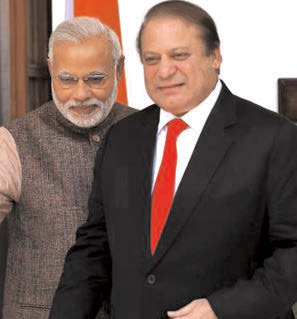
File image of Narendra Modi with Pakistan PM Nawaz Sharif
Ties with Pakistan did not see any forward movement in the past one year despite two meetings between Modi and his Pakistani counterpart Nawaz Sharif. While pushing for better relations, India has maintained that talks are possible only in an atmosphere that is free of terror and violence.
Sharif and Modi first met on the sidelines of the BRICS summit in Ufa in Russia. The two sides unveiled a five-point agenda to address concerns on terrorism and to promote people-to-people contact. Despite a number of hurdles including on account of terror attacks in the aftermath of Ufa, and cancellation of initial round of NSA-level talks, a significant breakthrough was achieved in December with the NSAs meeting in Bangkok, followed by Swaraj’s visit to Islamabad for the Heart of Asia Conference.
Bangladesh
Prime Minister Narendra Modi and Bangladesh Prime Minister Sheikh Hasina shake hands in Dhaka, Bangladesh, Saturday, June 6, 2015.
Modi’s visit to Bangladesh in June saw the exchange of instruments of ratification of the landmark land boundary agreement. It was a relief for over 50,000 people living in 162 enclaves across both countries as India and Bangladesh swapped enclaves, bringing to an end the 68-year-old boundary dispute. The June 6-7 visit of PM Modi also saw India-Bangladesh developmental cooperation scaling new heights, with India pledging a $2 billion Line of Credit for Bangladesh. The two countries took a host of steps to enhance trade and connectivity, including the launch of two new bus services. The two countries are a part of the sub-regional cooperation between Bangladesh, Bhutan, India and Nepal to enhance connectivity and regional integration.
Sri Lanka
Not much change taken place in the ties between India and Sri Lanka in the year gone by. Within months of the newly-elected Sri Lankan President Maithripala Sirisena taking charge of the island nation, two-way visits were held by the leaders and foreign ministers of the two countries. During Modi’s visit to Sri Lanka in March, India pledged $318 million Line of Credit for railway upgradation (New Delhi’s development assistance is already about $1.6 billion), unveiled a currency swap agreement of US $1.5 billion to help stabilise the Sri Lankan rupee and to develop Trincomalee as a regional petroleum hub with the cooperation of Lanka IOC (Indian Oil Corp’s subsidiary in Sri Lanka) and Ceylon Petroleum Corporation.
Both countries also signed four pacts regarding visa exemption for official passport holders, youth exchanges, customs agreement (to address trade concerns and reduce non-tariff barriers) and the construction of the Rabindranath Tagore auditorium at the Ruhuna University with India’s aid.
Afghanistan
Amid the backdrop of the unfolding transition in Afghanistan, India sustained its engagement with the war-torn country. During the visit of Afghan President Ashraf Ghani in April 2015, India reiterated its commitment to the reconstruction of the strife-torn country. The two sides focused on working towards a more liberalised business visa regime. Afghanistan welcomed India’s decision to extend the 1000 scholarships per year scheme by another 5 years as part of capacity building initiatives. India continues its assistance to the construction of the India-Afghanistan Friendship (Salma) Dam in Herat, expected to be completed in the first half of 2016. The Parliament Building in Kabul constructed with Indian assistance has already been completed as well as on the Doshi and Charikar power stations. But the resurgence of Taliban and Pakistan’s continued support to the group remain a huge hindrance. Taliban has regained control of large swathes of land in Afghanistan in the last few months and is now in a position to threaten the elected government once again.
Bhutan
India’s all-weather friendship with Bhutan continued on an upward curve. The visit of Bhutan’s Prime Minister Tshering Tobgay to India in January focused on optimising cooperation in the field of hydropower – the centerpiece of economic cooperation between the two countries. The two sides reiterated their commitment to the 10,000 MW initiative and in this context, to the early implementation of the four JV-model projects, totaling 2120 MW.
Maldives
India also engaged with the Maldives leadership despite political volatility in the island country. This was reflected in the meeting between the foreign ministers of India and the Maldives on the sidelines of the UN summit in New York in September. External Affairs Minister Sushma Swaraj followed it up with a visit to the island nation from October 10-11 to reinvigorate ties.
Myanmar
Bilateral relations with Myanmar improved with the first India-Myanmar Joint Consultative Commission (JCC) meeting held in New Delhi on July 16, 2015. Steps were taken to further enhance the existing air connectivity, extending a$500 million Line of Credit to the Government of Myanmar for development priorities, and a commitment to enhance the regional and sub-regional cooperation under the BCIM-EC and the BIMSTEC framework. India also played an instrumental role in providing disaster relief support to Myanmar in response to widespread floods and landslides caused by Cyclone Komen.
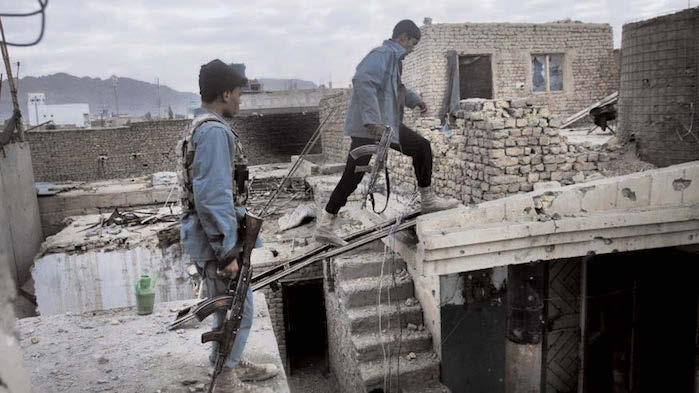
In intense 25-hour gunbattle between security forces and terrorists out side the Indian consulate in Mazar-i-Sharif came to end late on Monday, Jan 4, night with the killing of all the attackers without any damage to the mission in Afghanistan.
While three of the attackers were killed on Sunday night, the remaining were neutralised a day later. “The clearance operation is over and all the terrorists have al been killed,” provincial police chief Sayed Kamal Sada was quoted as saying by AFP.
The diplomatic mission manned by about 45 ITBP commandos, is highly vulnerable to attacks as it is located in a densely populated residential area and the buildings around it are taller than the consulate, leaving it exposed to attacks by rocket launchers.
Top government sources said that the first RPG was fired by militants from a 100meter distance and was directed at the Indian consulate, but it missed the building and hit another building nearby . That’s when ITBP commandos at the sentry post fired at the terrorists.
From 9 pm to 9.15pm on Sunday, ITBP officials en gaged with militants and there was heavy exchange of fire. Sources said that at least seven rocket-propelled grenade (RPG) rounds were fired towards the consulate but all of them missed the target. Later, Afghan national police commandos secured the Indian consulate around 12 midnight.
A senior officer said that there was no intelligence input from either side -India or Afghanistan -on any possible terror attack at the consulate. ITBP director general Krishna Chaudhary said the force has secured the mission area effectively. “I can assure you that my men are in a state of very high morale. I first talked to them when the attack started Sunday night and I am in constant touch with them,” he said without going into further details about the incident.
The US expects Pakistan will take actions against the perpetrators of the terror attack on IAF base in Pathankot, a top American official said, hours after Islamabad said it is working on the “leads” provided by India.
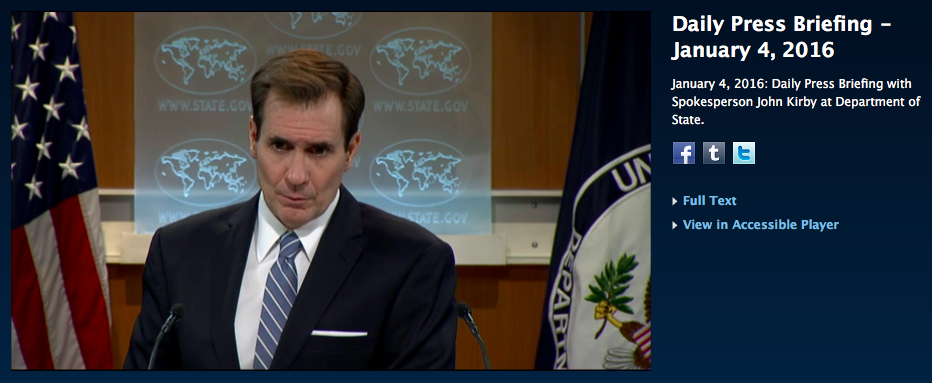
“The government of Pakistan has spoken very powerfully to this and it’s certainly our expectation that they’ll treat this exactly the way they’ve said they would,” state department Spokesman John Kirby said on Monday.
Pakistan has said it is working on the “leads” provided by India on this attack.
Describing terrorism as a “shared challenge” in South Asia, the US also asked all countries in the region to work together to disrupt and dismantle terrorist networks and bring justice to the perpetrators of the Pathankot terrorist attack.
“We urge all the countries in the region to work together to disrupt and dismantle terrorist networks and to bring justice to the perpetrators of this particular attack. I would note that the government of Pakistan, also publicly and privately condemned this recent attack on the Indian air base.
“We have been clear with the highest levels of the government of Pakistan that it must continue to target all militant groups,” Kirby said.
The government of Pakistan has said publicly and privately that it’s not going to discriminate among terrorist groups as part of its counter-terrorism operation, he said.
“So this is a shared challenge that we all face in the region and we in the United States want everybody to treat it as a shared challenge,” Kirby said, adding that the US has strongly condemned the terrorist attack on the Indian Air Force (IAF) base in Punjab’s Pathankot.
“We extend our condolences to all the victims and their families,” he said.
He said the US has for a long time talked about the continued safe haven issues there in between Afghanistan and Pakistan and certainly between India and Pakistan.
“We’re mindful that there remain some safe havens that we obviously want to see cleared out. And we continue to engage with the government of Pakistan to that end. And again, I would point you back to what the government of Pakistan itself has said and acknowledged that it’s not going to discriminate among terrorist groups and it will continue to take the fight,” Kirby said.
The Pakistani government, the Pakistani people very much understand the threat here, Kirby said.
“What we want and what we continue to say we want and will continue to work for is increased cooperation, communication, coordination, increased information-sharing and increased efforts against what we all believe is a shared challenge in the region.
“We want to see the government of Pakistan continue to press the fight against terrorists, all terrorists, and to meet their own expectations that they’re not going to discriminate among groups. They’ve said themselves and our expectation is that they’ll live up to that pledge,” he said.
“We recognise there’s more everybody can do, not just Pakistan but every nation can do because it is a shared challenge and it’s a challenge, as you well know, that doesn’t necessarily observe borders and boundaries. So it’s something that everybody can attack more,” Kirby said.
Kirby said the US is encouraged by the government of Pakistan condemning this attack, and the statement that they’ve made about not discriminating among groups.
“As we’ve said before, this is an issue that, as are so many issues between India and Pakistan and we want to see them work out bilaterally,” Kirby said, adding that normalisation of relations between India and Pakistan remains vital to the security and economic prosperity of the entire region.
“We strongly encourage the governments of both India and Pakistan to remain steadfast in their commitment to a more secure and prosperous future for both our countries and for their region,” Kirby added.
Pakistan on Monday said it is working on the “leads” provided by India on the terror attack on the IAF base in Pathankot, according to the Foreign Office.
Extending Pakistan’s deepest condolences to the government and people of India on the “unfortunate terrorist incident” in Pathankot, a statement by the spokesperson of the ministry of foreign affairs said, “In line with Pakistan’s commitment to effectively counter and eradicate terrorism, the Government is in touch with the Indian government and is working on the leads provided by it.”
The statement, however, did not give details of the “leads” provided by India.
BELOW IS THE TRANSCRIPT OF THE PRESS BRIEFING
QUESTION: Two questions. Yes, sir. One, it was then prime minister Atal Bihari Vajpayee who went to Pakistan with a message of peace, and it was also Prime Minister Nawaz Sharif then. And he took the bus from India to Pakistan. It was a big step at that time. And when he came back in the bus, India was faced with the Kargil War.
MR KIRBY: Faced with a what?
QUESTION: Kargil War. War.
QUESTION: Kargil War.
MR KIRBY: Kargil War.
QUESTION: That means Pakistan’s General Musharraf attacked India. That was a gift for the Atal Bihari prime minister for the peace message. Now, on Christmas Day, Prime Minister Narendra Modi took another peace step and went to Pakistan, meet and greet Prime Minister Nawaz Sharif. When he came back – and again, the message was same from the people of India to the people of Pakistan: message of peace. When he came back, India was faced with the terrorism, terrorists on the border in airbase. So what would – and upcoming meeting January 16 is also now at stake whether India should continue or not. So what do we make this, before my second question?
MR KIRBY: Well, there is an awful lot there. I mean, you saw my statement over the weekend. We strongly condemn the terrorist attack on the airbase in the Indian state of Punjab; and as before, we extend our condolences to all the victims and their families. We remain committed to a strong partnership with the Indian Government to combat terrorism. You and I have talked about that many, many times. We urge all the countries in the region to work together to disrupt and dismantle terrorist networks and to bring justice to the perpetrators of this particular attack.
I would note that the Government of Pakistan also publicly and privately condemned this recent attack on the Indian airbase. And we’ve been clear with the highest levels of the Government of Pakistan that it must continue to target all militant groups, and the Government of Pakistan has said publicly and privately that it’s not going to discriminate among terrorist groups as part of its counterterrorism operations.
So I think as I’ve said before, this is a shared challenge that we all face in the region. And we in the United States want everybody to treat it as a shared challenge. And the Government of Pakistan has spoken to this, has spoken very powerfully to this, and it’s certainly our expectation that they’ll do exactly what – they’ll treat this exactly the way they’ve said they will.
QUESTION: Second, the people of Pakistan and the people of India both wants these terrorists – that training centers in Pakistan should be closed down, but the Pakistan Government is not taking any steps. And finally, what – the Indian media has been showing all these terrorism activities line by line and live from Pakistan and into India, this latest attack. And at the same time, Pakistani media has been told by the ISI and the military they will be punished if they show, but they must condemn that India media is just overstating all these attacks. What I’m saying: What is the future? Why U.S. is not taking action or asking Pakistan to stop and close down all these training centers, which they are threatening U.S. and India?
MR KIRBY: Well, we have for a long time talked about the continued safe haven issues there in between Afghanistan and Pakistan and certainly between India and Pakistan. We’re mindful that there are – remain some safe havens that we obviously want to see cleared out. And we continue to engage with the Government of Pakistan to that end. And again, I would point you back to what the Government of Pakistan itself has said and acknowledged, that it’s not going to discriminate among terrorist groups and it will continue to take the fight.
And Pakistan too has suffered from terrorism. Thousands and thousands of Pakistani soldiers have been killed. Thousands of Pakistani citizens – innocent Pakistani citizens – have been killed or injured by terrorist attacks. The Pakistani Government, the Pakistani people very much understand the threat here. And what we want and what we continue to say we want and will continue to work for is increased cooperation, communication, coordination; increased information sharing and increased efforts against what we all believe is a shared challenge in the region.
QUESTION: Thank you, sir.
MR KIRBY: Yeah.
QUESTION: Can I follow it up?
MR KIRBY: Yeah.
QUESTION: Can I follow it up?
QUESTION: South China Sea.
QUESTION: Follow-up.
MR KIRBY: I’ll go to you, then I’ll come to you. Go ahead.
QUESTION: Do you think Pakistan is taking enough steps against terrorist networks which are targeting India, like Lashkar-e-Tayyiba, Jaish-e-Mohammad?
MR KIRBY: Well, what I would tell you is we all recognize this is a fluid threat. It’s one that you could probably never do enough to get at. So we want to see the Government of Pakistan continue to press the fight against terrorists, all terrorists, and to – as I said, to meet their own expectations that they’re not going to discriminate among groups. They’ve said that themselves, and our expectation is that they’ll live up to that pledge. But we recognize there’s more everybody can do – not just Pakistan, but every nation in the region can do – because it is a shared challenge. And it’s a challenge, as you well know, that doesn’t necessarily observe borders and boundaries. So it’s something that everybody can attack more.
QUESTION: You said more every nations to do. What should India do?
MR KIRBY: I’m not going to —
QUESTION: What —
MR KIRBY: Look, I —
QUESTION: In this fight against terrorism, what do you want – expect India to do?
MR KIRBY: I’m not prepared with an agenda list for every nation in the region and what they can do. I think you should speak to Indian authorities about the challenges that they’re facing and their plans to address it. Our role has been and will continue to be one of encouraging regional cooperation and communication to get at what is actually a regional – trans-regional, frankly – threat.
QUESTION: And finally, the kind of statements that have come from India and Pakistan after this Pathankot attack – does this give you comfort, some kind of comfort, that there is not much – enough tension between the two countries after this attack?
MR KIRBY: Well, I mean, certainly we – we’re encouraged by the Government of Pakistan condemning this attack, and again, the statements that they’ve made about not discriminating among groups. But this is – as we’ve said before, this is an issue that – as are so many issues between India, Pakistan – India and Pakistan – we want to see them work out bilaterally.
Okay? Yes.
QUESTION: Can I have a follow-up on that —
MR KIRBY: Okay.
QUESTION: Yeah. Over the weekend, have you been in touch with either India or Pakistan to ensure that talks are on tracks and it – they’re not derailed?
MR KIRBY: Talks are —
QUESTION: Talks between India and Pakistan which have been started afresh last week.
MR KIRBY: I don’t have any discussions to read out to you, but I can tell you the normalization of relations between India and Pakistan remains vital to the security and economic prosperity of the entire region. We strongly encourage the governments of both India and Pakistan to remain steadfast in their commitment to a more secure and prosperous future for both their countries and for the region. So I don’t have any specific discussions to read out to you.
KABUL (TIP): A suicide car bomb attack killed at least one civilian on Monday near the Kabul international airport, Afghan government officials said.
Another 13 civilians were wounded in the attack, Kabul Police Chief Gen. Abdul Rahman Rahimi told reporters at the blast site. “As a result of the explosion one of our citizens was martyred and 13 others were wounded,” said Rahimi. Early reports had only four civilians wounded.
The attack occurred near the eastern entrance of the airport, said Afghan Interior Ministry spokesman Sediq Sediqqi. Several nearby shops, houses and vehicles were damaged as a result of the attack according to an AP photographer at the scene of the attack.The Taliban claimed responsibility for the attack, and said the target was a convoy of foreign forces.
The attack came one week after another suicide attack carried out by the Taliban in which six US soldiers were killed and two others along with an Afghan were wounded near Bagram Airfield, just north of Kabul. The troops were killed when an attacker rammed an explosives-laden motorcycle into their patrol in a village near the airfield.
Meanwhile, in the southern province of Kandahar, a woman distributing polio vaccinations to children was shot dead by unknown gunmen, said Samim Khpolwak, spokesman for the provincial governor.
Prime Minister Narendra Modi’s apparently impromptu visit to Lahore on Christmas day is readily explained by the need to contain the Taliban and ensure regional stability and connectivity in the ‘Heart of Asia’ after the US-led International Security Assistance Force withdraws next year. The visit follows growing realization in capitals across the region that mutual security interests must supersede Cold War alliances or ideological mindsets to avoid the fate of nations like Iraq and Syria. The Taliban and/or its mutants cannot be permitted to spread in the Afghan neighborhood, which includes Central Asia, Iran, Pakistan and India, an effort that calls for convergence between Kabul, Islamabad and New Delhi. One can discern the benign presence of Moscow and Beijing as both have huge stakes in a revitalized Asian economic boom independent of Western hegemony.
Besides China’s Silk Road project, several multi-nation projects centre on Afghanistan, viz, the Turkmen railways, transmission lines, highways, oil pipelines and gas pipelines including the Turkmenistan-Afghanistan-Pakistan-India pipeline. India wants to join the Afghanistan-Pakistan trade and transit agreement so that Afghan products can directly enter India and its products reach Afghan and Central Asian markets.
These mega-development prospects doubtless prompted Mr. Modi to engage with Pakistani Prime Minister Nawaz Sharif on the sidelines of the Paris climate conference in late November. Thereafter the National Security Advisors met in Bangkok and smoothened the way for External Affairs Minister Sushma Swaraj’s visit to Islamabad for the Heart of Asia-Istanbul Process conference on Afghanistan. India has huge stakes in the integration of Central Asia, East Asia and West Asia.Though not opposed, India does not expect a lasting peace to emerge from talks between the Afghan Government and Afghan Taliban groups. A better option is state-level engagement which Kabul too prefers. Hence, it is inconceivable that as he went through his Kabul engagements – inaugurating the India-built $90 million Parliament House, gifting three Mi-25 attack helicopters and 500 new scholarships for children of martyrs of Afghan security forces -Mr. Modi would not have discussed the Lahore stopover with President Ashraf Ghani and CEO Abdullah Abdullah. It seems equally likely he mentioned it to Russian President Vladimir Putin before departing from Moscow. It may be relevant to note that since Russia began bombing IS positions in Syria, Pakistan does not favor regime change in Damascus.
Pakistan Tehreek-e-Insaaf party leader Imran Khan’s presence in India (possibly to deliver the Sharif family wedding invitation) and the mature welcome to Mr. Modi’s stopover by Pakistan political parties (as opposed to the Congress’s petty squabbling) suggests that the Pakistani polity may have achieved some degree of cohesion in tackling terrorism. The Peshawar school attack last year is a grim warning of the danger from non-state actors.
Mr. Modi’s first state visit to Russia, as part of the 16th Annual Bilateral Summit, has revitalized India’s most tried and trusted friendship and sent a signal to the international community that President Putin cannot be downsized by Western machinations. Mr. Modi secured Mr. Putin’s backing for India’s permanent membership of the UN Security Council and reiterated the commitment of both nations to a multipolar world order. Both nations already cooperate in forums like Brics and the Shanghai Cooperation Organisation (where Russia helped in India’s full membership), the G20 and the East Asia Summit.
Syria, Afghanistan and the common threat posed by terrorism figured in the talks, but the summit’s main takeaway was Russia’s big bang return to India’s defense and nuclear energy sectors. Mr. Modi’s Make in India project in the defense sector got a major boost with the deal to jointly manufacture 200 Kamov-226T light military helicopters.
The real triumph is the acquisition of five S- 400 Triumf surface-to-air missile systems (and 6,000 missiles). Literally the ‘crown jewels’ of Russia’s defense capability, the S-400 can destroy aircraft that use stealth technology, other fighter aircraft, cruise missiles and tactical missiles from up to 400 kilometers away, as effectively demonstrated earlier this month when Russia deployed the system to protect its Hmeimim airbase in Syria after Turkey downed a Russian jet.
This will give India the ability to engage multiple targets at long range and restore the strategic balance with China and Pakistan. With Prime Minister Modi reportedly budgeting $150 billion to upgrade India’s military, with the Navy planning to order three Russian frigate warships and a possible joint development of a fifth generation fighter aircraft, New Delhi could be Moscow’s salvation as the latter faces a second year of recession amid Western sanctions.
With the Paris climate conference failing to yield a comprehensive deal, the burden of combating global warming with clean energy expectedly fell upon individual nations. Mr. Modi having previously identified nuclear energy as pollution-free, the two nations are moving ahead with plans to build at least 12 nuclear power plants in India with the highest safety standards in the world, over the next 20 years. Two plants are slated to come up in Andhra Pradesh under the Make in India program. A vibrant partnership, however, calls for deeper economic integration. The Indian Prime Minister hopes to take advantage of the US-led Western sanctions against Russia to meet the latter’s demand for dairy products, seafood, and other goods and to attract Russian cash-rich billionaires to invest in India’s infrastructure fund, since they are no longer welcome in the old European financial havens due to Mr. Putin’s resistance to Western geo-political agendas to dismember West Asian and African countries on the lines of the old Yugoslavia.
Access to Russian capital for his Make in India campaign would empower Mr. Modi’s drive to build a strong indigenous manufacturing base to generate employment and export revenues. Given the sharp downturn in Russo-Turkey relations, Mr. Modi hopes that Russian tourists will flock to India (not just in Goa) and tasked the tiny Indian community in Russia to motivate Russian families to discover India.
Another gain is Russia’s commitment to ship 10 million ton of oil annually to energy-starved India in the next 10 years. Both countries plan to intensity collaboration in developing space exploration, rocket manufacture and engine manufacture, nano-technology, metallurgy, optics and software sectors. In substance, the visit announced that the Asian quest to forge a rational world order has moved to a new level. Mr. Modi’s short and informal visits to Afghanistan and Pakistan may be read as an invitation to take a seat of honor at the evolving new world concert.
(The author is a social development consultant and a columnist with The Pioneer, a leading newspaper of Delhi).
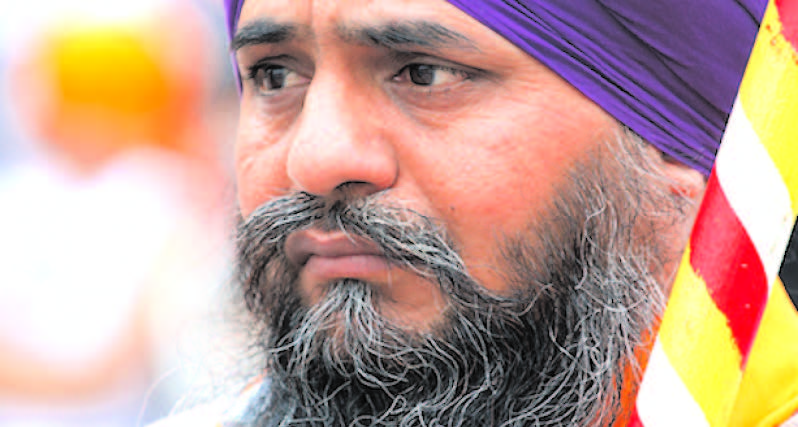
Shah Noor, a recent transplant to California from Maryland, was driving through a nearby community one evening with his wife and stopped at a 7-Eleven to get some milk.
A police car pulled up with lights flashing. Officers walked to their car and grilled them for 45 minutes. They were aggressive, he said, and asked what they were doing there, where they work. At one point, he saw the officer put his hand on his gun.
“It was scary,” Noor said. “Pure harassment.”
Police — Noor declined to identify the agency because of an ongoing investigation —cited him for talking on his cell phone while driving. He said the charge is bogus.
“My phone had been dead for over three hours,” said Noor, 32, a lawyer who now runs JS Noor, a jewelry business. And the log on his wife’s cell phone shows no activity during that time.
He’s convinced that racial profiling was in play. He wears a turban and has a beard. His wife, Stephanie, is African-American. And all of this happened within days of a mass shooting in San Bernardino carried out by a Muslim couple.
After every attack on U.S. soil committed by Muslims, the backlash seems to increase. But hate crimes don’t target only Muslims.
Noor is originally from India and a Sikh, not an Arab or Muslim.
‘[Sikhism] preaches a message of devotion, remembrance of God at all times, truthful living, equality between all human beings, social justice, while emphatically denouncing superstitions and blind rituals.’ – Sikh Coalition
Since 9/11, Islamophobia has spread and has targeted groups indiscriminately. Sikhs, who wear a turban as an article of faith, have often been mistaken for Muslims in the U.S. They pray at a gurdwara, not a mosque, but a gurdwara in Buena Park, Caifornia, was vandalized days after the San Bernardino shooting. Graffiti sprayed on the façade included the misspelled “Islahm” and an expletive directed at the Islamic State of Iraq and the Levant.
The San Bernardino shooters had apparently been inspired by the group that has been behind horrific violence worldwide, including the Nov. 13 attacks in Paris.
The 20-year-old man arrested for the vandalism issued a public apology to the congregation of Buena Park Gurdwara Singh Sabha, a Sikh house of worship in Orange County.
But other assaults have been more violent. On Sept. 15, 2001, four days after the attacks on the World Trade Center towers, Balbir Singh Sodhi was shot and killed outside of his Mesa, Arizona, gas station by Frank Roque. Roque wanted to “kill a Muslim” in retaliation for the attacks on Sept. 11. Sodhi is considered the first murder victim of post-9/11 backlash. Roque was convicted of first-degree murder and sentenced to life in prison for the hate crime.
The Sikh Coalition was founded by volunteers in 2001 in response to a spate of attacks against Sikh Americans.
“Sikh adults were assaulted, Sikh children were bullied, places of worship were vandalized,” said Arjun Singh, the coalition’s law and policy director. “Terrorist attacks lead to xenophobia and anyone who looks different is targeted, including Sikhs.”
The Sikh Coalition reports a spate of attacks and harassment this month alone.
A Sikh woman traveling to California shortly after the San Bernardino attacks said she had to show her breast pump to airline employees to prove she wasn’t a “terrorist”.
In Grand Rapids, Michigan, a store clerk originally from the state of Punjab in India was shot during an armed robbery. The assailants called the clerk a terrorist.
Five days after the San Bernardino attack, Gian Singh, a 78-year-old grandfather, was walking to pick up his grandson from school in Bakersfield, when a man in a pick-up truck threw an apple at him with such force that the apple split when it hit his head, according to the Sikh Coalition, which is representing him.
‘Sikh adults were assaulted, Sikh children were bullied, places of worship were vandalized. Terrorist attacks lead to xenophobia and anyone who looks different is targeted, including Sikhs.’ – Arjun Singh, law and policy director, Sikh Coalition
There have been Sikhs in the U.S. for more than a century. Many came to build the railroads in the West. There is no accurate data on the number of Sikhs here, and estimates vary widely between 750,000 and 1.6 million, according to the coalition. Almost half of them live in California, the state with the largest Sikh population, but the densest concentration of Sikhs is in the tri-state area of New York, Connecticut and New Jersey.
The Sikh religion is a monotheistic religion that originates in the Punjab region of India. According to the coalition, it “preaches a message of devotion, remembrance of God at all times, truthful living, equality between all human beings, social justice, while emphatically denouncing superstitions and blind rituals.”
“We were shocked after finding out about the graffiti,” said Jaspreet Singh, 40, on the board of the Buena Park gurdwara that was vandalized. “Especially the hate words being used.”
For Sikhs who grew up in the U.S., harassment has been a way of life. For Noor, schoolyard teasing was common but never did he feel so much hatred as after 9/11.
“You feel people don’t like you, like an outsider,” he said. People would call him “Osama” in reference to Osama bin Laden, the founder of Al-Qaeda, the group that claimed responsibility for the 9/11 attacks. They also called him “Taliban,” the armed fundamentalist movement in Afghanistan.
“Sometimes, I would walk up to [the hecklers] and yell back, ‘I’m not a terrorist,’” Noor said.
One time, someone pulled a knife on him in Wheaton, Maryland, a suburb of Washington. Another time, in Amsterdam, people in a car yelled out “bin Laden” at him, he said. When he yelled back, they followed him up an alley. He escaped.
And there was another encounter with police in a Detroit suburb. He had a bracelet in his hand that he was playing with. Police mistook it for a masbaha, Muslim prayer beads. He showed them that it had a cross on it.
“I wear religious symbols of all kinds,” Noor said. “I go to church, to gurdwara, to mosque.”
He has attended service at a Baptist congregation, his wife’s religion.
His cousin, Jaisal Noor, 30, a reporter for The Real News Network, a nonprofit news and documentary service based in Baltimore, wrote about assaults on Sikhs for the 10th anniversary of 9/11.
“The day of 9/11, I was confronted with the reality that things changed,” he said in an interview.
He was in high school when the World Trade Center towers collapsed.
“I remember that day feeling worried for my family, my parents,” he said. His father was a frequent business traveler who encountered a lot of discrimination at airports.
His classmates would rant, “We’re gonna get these A-rabs” but then would turn to him and tell him they had no problem with him because he was Indian.
“But it’s never gone away,” said Jaisal Noor. “Whenever we’re at war, the attacks increase … They see images of turban-wearing men as the enemies.”
Sikhs say their first reaction may be to distance themselves from Muslims and explain to people that they are not Arabs or Muslim. But they stress that no one, Sikh or Muslim or any other religious or ethnic minority, should be targeted.
“Many Sikhs are worried, and rightly so,” said Arjun Singh. “If the bigoted rhetoric continues, hate violence will continue too … Today’s toxic political climate has led to bias, discrimination and hate violence.”
The head of Al-Qaeda’s South Asian wing is Sanaul Haq, a one-time resident of Sambhal, in Uttar Pradesh, over 150 km from the national capital, intelligence sources have confirmed to The Indian Express. Known to the world as Maulana Asim Umar, Haq was appointed amir of al-Qaeda in the Indian Subcontinent, or AQIS, by its overall chief, Ayman al-Zawahiri, last year.
Haq was identified, sources said, on the basis of the questioning of Sambhal resident Mohammad Asif and Cuttack-based cleric Abdul Rehman, who the Delhi Police said, had been tasked by Haq with setting up “AQIS recruitment networks” in India.
Rehman, 37, was arrested by a joint team of the Special Cell of Delhi Police and Bhubaneswar-Cuttack Commissionerate police from his house at Paschima Kachha village under Jagatpur police station early this morning. Asif was arrested in Delhi on December 14. Rehman, who holds two PhDs in Arabicand Islamic Studies from Deoband, runs a madrasa in the Tangi area of Cuttack district.
Haq’s operational deputy, sources said, has also been identified as an Indian national from Sambhal, Said Akhtar. Investigators say they have evidence that at least five Indian nationals are part of the organisation’s network in Pakistan.
Haq’s identification marks a breakthrough in the international hunt for the Pakistan-based AQIS chief who has never been photographed or appeared in propaganda videos without a digital mask. Last year, The Indian Express was the first to report on the speculation that newly appointed AQIS chief was suspected of being an Indian national.
Delhi Police Special Commissioner Arvind Deep said today that Asif, who had grown up along with Haq, travelled to Pakistan through Iran in 2012, along with two other Uttar Pradesh men — whose identities have been withheld — to train at a jihadist camp in Miranshah, in Pakistan’s north-west. There, he said, Asif, a 37-year-old father of two, received only ideological instruction, because of ill health, before being sent home in October 2014, to recruit more Indian nationals.
For his part, Rehman is alleged to have recruited at least one Odisha resident for training with AQIS.
Earlier this year, the United States announced it had destroyed what it said was the largest al-Qaeda camp detected in Afghanistan where upwards of 150 AQIS personnel were thought to have been training. Pamphlets and videos recovered from the site threw up evidence that many of the recruits spoke Urdu and Bengali, officials said.
Educated at the famous Dar-ul-Uloom seminary at Deoband, from where he graduated in 1991, Haq became allegedly involved in jihadist circles following the demolition of the Babri Masjid in December 1992, investigators say they had been told by his alleged lieutenants whose arrest was announced today. He disappeared from Sambhal in 1995, severing contacts with his family.
Maulana Ashraf Usmani, a spokesperson for the Deoband seminary, said he could not immediately confirm or deny if Haq had been a student there and added that there were no records for many students who dropped out before completing their theological education.
From Pakistani sources familiar with the jihadi movement, though, The Indian Express learned that Haq arrived in Pakistan that year, beginning studies at the Jamia Uloom-e-Islamiaa Karachi seminary that has produced several jihadist leaders, including Maulana Masood Azhar, the leader of the Jaish-e-Muhammad; Qari Saifullah Akhtar, who headed the Har-kat-ul-Jihad-al-Islami, and Fazl-ur-Rehman Khalil, the leader of Harkat-ul-Mujahideen.
Haq, sources said, was mentored by Nizamuddin Shamzai, a cleric closely linked to the Taliban who once bragged of being treated as a “state guest” in Mullah Muhammad Omar’s Islamic Emirate of Afghanistan.
In the late 1990s, after finishing his studies in Karachi, Haq is believed to have joined Fazlur-Rehman Khalil’s Harkat-ul-Mujahi-deen, teaching briefly at the Dar-ul-Uloom Haqqania seminary in Peshawar, and serving at the Harkat-ul-Mujahideen’s training camps in PoK . Following the events of 9/11, sources said, Haq moved back to Karachi, living from 2004-2006 at the Harkat-ul-Mujahideen’s of-fice in Haroonabad.
Haq’s turn towards al-Qaeda began in the summer of 2007, after General Pervez Musharraf ordered the storming of Lal Masjid in Islamabad, a seminary run by Jamia Uloom-e-Islamia alumnus Maulana Abdul Rashid Ghazi. He made contact with Muhammad Ilyas Kashmiri, a top jihadist with close links to al-Qaeda. Interestingly, jailed 26/11 perpetrator David Headley had told the FBI of a “Karachi project” run by Kashmiri, with plans to target India.
In 2013, Haq delivered the first exhortations specifically targeting Muslims in India — the first of its kind in global jihadist writing. He invoked anti-Muslim communal violence in India, saying “the Red Fort in front of the mosque cries tears of blood at your slavery and mass killing at the hands of the Hindus”.
Bhubaneswar-Cuttack Police Commissioner Rajendra Prasad Sharma said the Delhi Police got to know know of Rehman’s links with the al-Qaeda group after tracking his telephone call records. The team, which landed in Bhubaneswar, yesterday raided Rehman’s residence in Paschima Kachha village last night. Rehman’s mobile phone, a tablet and his passport were seized.
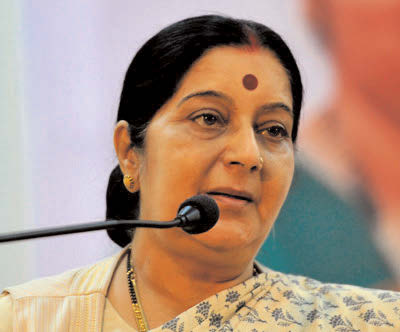
NEW DELHI (TIP): A new beginning has been made by India and Pakistan as the two countries have agreed on a new bilateral comprehensive dialogue to address all outstanding issues through peaceful means, External Affairs Minister Sushma Swaraj said on December 17.
To a question in Rajya Sabha on whether India has raised the issue of Pakistan Occupied Kashmir in international fora, Swaraj replied in affirmative and said government’s principled and consistent position on the issue of Jammu and Kashmir has been that the entire state is an integral part of India.
“A new beginning has been made in the form of the agreement of the two countries on a new bilateral comprehensive dialogue to address all outstanding issues between them through peaceful means,” she said.
During her visit to Islamabad earlier this month to attend a multilateral meet on Afghanistan, both India and Pakistan announced that they have decided to engage in a “comprehensive” dialogue.
Replying to a query, she said the Permanent representative of Pakistan to the UN has recently written three letters to the President of the UN Security Council which referred to the issue of Jammu and Kashmir and asked the top decision making body to take note of situation along the Line of Control.
To a separate question, Swaraj, who is also Overseas Indian Affairs Minister, said it was aware of an Amnesty International report which said that 279 Indian migrant workers died in Qatar in 2014.
“The report also states that these figures are of migrant workers deaths from all causes, including fatalities, not directly related to labour conditions,” she said.
ISLAMABAD (TIP): All cellphone coverage was blocked by the government for three hours one recent afternoon in the Pakistani capital, and it did not take people long to discover why: Maulana Abdul Aziz, the radical preacher of the Red Mosque, was sermonizing again.
Banned from giving sermons in the mosque, the scene of an army siege on extremists that killed as many as 75 people in 2007, Aziz had announced that he would relay his latest Friday sermon by cellphone, calling aides at the mosque who would rebroadcast it over the mosque’s loudspeakers.
But instead of arresting the jihadi preacher, as many moderate Pakistanis would like, the authorities simply turned off the city’s cell networks last Friday from 11am to 2pm, the traditional time for Friday Prayer, according to senior Pakistani officials, speaking on condition of anonymity because they were not authorized to talk to the news media.
Aziz’s relative untouchability is a measure of how enduring the power of militant Islamist ideology has remained in Pakistan. Even as the Pakistani military has driven some jihadi groups out of business or into hiding over the past year, other technically banned jihadi or sectarian groups like Lashkar-e-Taiba and Ahle Sunnat Wal Jamaat are still thriving, with little apparent effort by the government or military to curb them.
The ascendance of such groups and of radical mosques and madrassas was well underway during the years that Tashfeen Malik, half of the husband-wife pair of mass shooters in California, returned to Pakistan for her university education in Punjab province.
Many Pakistani officials have been quick to suggest that Malik must have found her extremist beliefs while she was growing up in Saudi Arabia. But the reality in Pakistan is that hard-line Islamist views in line with some of the most conservative Saudi teachings are more mainstream than ever.
While the Shariah law the hard-liners here tend to espouse calls for their women to be kept in purdah — strictly separated from men at all times — some Pakistani women have been at the fore in pushing the Islamist agenda themselves.
That fact came into view most prominently with the case of Aafia Siddiqui, a Pakistani neuroscientist and member of al-Qaida who was convicted in 2010 of trying to kill American personnel in Afghanistan. She is serving an 86-year prison sentence in the United States.
A recent example popped up here at the Jamia Hafsa school, a girls’ madrassa attached to Aziz’s Red Mosque. About 15 of the older students recently posted a video of themselves in full burqas in front of the flag of the Islamic State, praising the group’s leader, Abu Bakr al-Baghdadi, and asking him to come help them avenge their followers and others who have been killed — especially Osama bin Laden. “May God annihilate America and those who support it,” their spokeswoman said. “We pray for you every night here in the land of Pakistan.” (NYT News Service)
The Heart of Asia Conference (HOAC) in Islamabad last week was bookended by two devastating attacks in Kandahar and Kabul. As Afghan President Ashraf Ghani was being honoured with a 21-gun salute in Islamabad, the Taliban were in the midst of a 20-hour-long assault on Kandahar airport that killed at least 54. And before the ink dried on the HOAC pledges, the Taliban penetrated the relatively secure diplomatic enclave in Kabul in a brazen attack on the Spanish embassy in which eight people died. The Afghan High Peace Council called it a slap in the face of the peace process. The Taliban is clearly sticking to the fight-talk-fight strategy even in winter. That the Taliban chose a key peace conference to shed blood is the jihadist group’s way of painting the Afghan government as weak and it’s the harbinger of yet another bloody spring and summer.
The HOAC has been underway since 2011, but has not been able to evolve into a tangible mechanism to deliver peace. Ghani’s speech alluded to this shortcoming and called for verifiable mechanisms to counter the jihadist threat. He was careful in choosing his words in Islamabad, but not when giving interviews to the German and French media earlier, when he clearly said, “Pakistan was in a state of undeclared war against Afghanistan” and “a major trust deficit” exists between the two. Whether one conference can bridge that mistrust seems unlikely, Ghani’s optimism notwithstanding.
Afghan officials attribute the HOAC’s “success” to several factors: One, Pakistani PM Nawaz Sharif acknowledging Afghanistan’s sovereignty, its central government and constitution; two, the US and China acting as guarantors for the peace negotiations with the “reconcilable” Taliban and opposing the irreconcilable ones; three, the commitment to a high-level meeting in early 2016 to draw a region-wide counter-terrorism and security strategy.
To Afghan officials, the litmus test of Pakistan’s seriousness and sincerity would be whether it’s willing to restrain the Taliban from conducting largescale attacks. Kandahar and Kabul appear to have already betrayed the newfound Afghan trust in the capacity, if not the will, of the Pakistani security establishment. The chief of the Afghan National Security Directorate (NDS), General Rahmatullah Nabil, took to Facebook to post a scathing critique of not just Pakistan but also Ghani, chiding the latter for letting “the 5,000-year-old Afghan history kneel before a 60-year-old Pakistan”. Nabil followed this with a resignation. Needless to say, Ghani accepted it promptly. This led to the media asking if he was fired at Pakistan’s behest. A visibly upset Ghani formally denied the charge but the die has been cast.
The Afghan media then reported Ghani conceded way too much in Islamabad. A leaked report was cited that Pakistan has apparently demanded that Ghani act against the Tehrik-e-Taliban Pakistan, restrain “anti-Pakistan rhetoric and individuals”, accept the Durand Line as the formal border, limit Indian influence, and deny support to Baloch separatists and Pashtun nationalists. This litany of Pakistani demands means we are back at square one in the bilateral relationship. Islamabad’s demands have put the onus of securing peace wholly on Kabul.
That fits well with the pattern of Pakistan’s peace pledges to Afghanistan, which start before the first snow and melt away with the first thaw, making way for the Taliban’s attacks. Pakistan has never been keen on a political solution. The closest it came to a political partner was the fundamentalist warlord Gulbuddin Hekmatyar. What’s at stake isn’t just military gains but also the future of Ghani’s government. He is bound to face a backlash when Pakistan reneges on its pledges. The opposition is wary of Ghani putting all his eggs in Pakistan’s basket again. His attempt in May to have the NDS surreptitiously sign an MoU with the ISI had backfired badly.
The difference now is that Ghani has almost no political capital to squander. The November protests in Kabul, after the Islamic State’s massacre of Hazaras, showed Ghani is on thin ice. This is not lost on Pakistan and the Pakistan-backed Taliban, who would love to plunge Kabul into political chaos at a time of their choosing. International guarantors can certainly play a major role. But they and the principles of non-interference were hallmarks of the May 1988 Pak-Afghan Geneva Accords. Yet, Afghanistan has been the bleeding heart of Asia since.
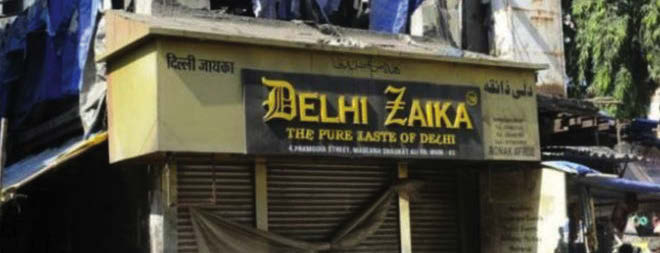
MUMBAI (TIP): A former journalist & social worker S Balakrishnan bought underworld don Dawood Ibrahim’s Mumbai restaurant for Rupees 4.28 crores in an auction of the property on December 9.
The government auctioned the restaurant “Delhi Zaika” which was owned by India’s “most wanted man” Dawood Ibrahim in Mumbai on Wednesday, December 9. The restaurant was one of the seven properties of Ibrahim that was put for auction.
S Balakrishnan, who bought the restaurant, wants to make it an education centre for the poor.
Ibrahim is a fugitive in India and has been charged with masterminding the 1993 Mumbai serial bombings.
Some 257 people died and more than 700 others were wounded in the attacks.
India alleges that Ibrahim lives in the Pakistani city of Karachi, but Islamabad has always denied the charge.
Mr Balakrishnan needs to pay the sum he bid on the restaurant within 30 days to acquire it, and is seeking donations to do so.
“I want to open a computer centre for children and also a legal aid centre for women of the area,” he said.
The former journalist said that the government’s earlier attempts to sell the property had failed because people were afraid to buy the underworld don’s property.
“But this time we decided to show courage,” he said.
“I got a message from Chhota Shakeel asking what you are up to. The intention behind the message was quite clear, but we decided to join the auction because if we don’t, then it is a shame for the country,” Balakrishnan told NDTV.
Earlier he had told to India Today, “I am bidding on behalf of my NGO Desh Seva Samiti which works for child welfare and women’s empowerment. We will run English speaking and computer training institute at the place. It will be named after great patriot Ashfaqullah Khan. He should be the role model for kids, not Dawood.”
Ibrahim was named a “global terrorist” in October 2003, and in June 2006, then US President George W Bush labeled him a “foreign narcotics trafficker”.
He is accused of smuggling narcotics from Afghanistan and Thailand to the US, Europe, the Middle East, Latin America and Africa.
KANDAHAR (TIP): With final mopping up operations continuing late on Wednesday in Kandahar, 24 hours after Taliban insurgents attacked its airport, 37 civilians and members of Afghan security forces had been killed and 35 wounded, the defence ministry said, even as a key district in neighbouring Helmand province fell to the insurgents.
The attack on the airport, one of the most heavily protected bases in the country, underlined the Taliban’s ability to inflict serious damage on security forces, still shaken by the insurgents’ brief capture of the northern city of Kunduz in September.
In addition, nine Taliban men were killed and another wounded with a final survivor still resisting security forces, the ministry said. One security official said the assailants held some civilians as “human shields”, which had complicated their operation. Adoctor at a local hospital, said 41people (37 civilians and 4 soldiers) had been killed.
In a separate incident in neighbouring Helmand province, where the Taliban has been increasing pressure for weeks, insurgents captured the district of Khanishin, a major control point for drug smuggling routes through the south. Fourteen policemen were killed and 11others wounded, provincial council chief Karim Atal said. The airport in Kandahar has for years been a major hub for operations of international forces, most of whom had withdrawn from Afghanistan by 2014-end.
A spokesman for Nato’s resolute support mission said there had been no reports of casualties among the hundreds of international personnel at the air base.
The raid coincided with President Ashraf Ghani’s visit to Islamabad on Wednesday for the Heart of Asia conference, where he made a plea for more support from neighbours to fight the growing insurgency. The Taliban, fighting to re-establish Islamist rule after US-led military intervention ousted them from power in 2001, have been struggling to settle a leadership dispute of late. But the attack in Kandahar showed their ability to inflict damage and also increase pressure on Ghani’s government to contain the spreading insurgency. Officials said fighters attacked a perimeter area of the huge and heavily fortified complex on Tuesday evening, initially taking up position in a school in a residential area, which houses both a civilian airport and military base.
Earlier, the Taliban said in a statement 150 soldiers had been killed after suicide attackers had entered the base and attacked international forces and their Afghan allies. (Reuters)
ISLAMABAD: A three-tier security arrangement headed by police and backed up by para-military and the army was put in place by Pakistan for a regional conference on Afghanistan with security forces keeping a strict vigil as top leaders were here to attend the high-profile meeting.
The two-day ‘Heart of Asia’ conference started yesterday but the key ministerial meeting attended by Foreign Ministers of several countries, including External Affairs Minister Sushma Swaraj, and senior officials was today jointly inaugurated by Prime Minister Nawaz Sharif and Afghan President Ashraf Ghani.
An Interior Ministry official said a three-tier security was in place for the safety of the leaders of 14 members and 17 supporting countries as well as officials of 12 international organisations.
“Police is on the front and is backed by para-military Rangers and Army,” he said.
The intelligence officials — both military and civilian –combed the entire area around the Ministry of Foreign Affairs and the plush Serena hotel where most of the delegates were staying.
Entry to the area of the conference is restricted and only people having special permits and media were allowed to go there.
Traffic police also made special arrangements to control the vehicular movement in the city.
An intelligence official said that religious schools in the capital and neighbouring Rawalpindi were also being monitored.
Security officials in plain clothes were also deployed at key places to keep a vigil on everything.
The lessons learnt from the Indo-Pak joint statement at Ufa finally produced a breakthrough in Islamabad. The clincher was the hush-hush meeting in Bangkok. It produced a joint statement clearly spelling out all issues both sides plan to discuss. As in Bangkok, the Ufa statement had all the ingredients to move the dialogue process forward. But it failed to clearly spell out that “all outstanding issues” also meant Kashmir. The Indian media, present in strength in Ufa, immediately hailed – with a gentle nudge from South Block – the statement as a victory for India. This foray into a kind of triumphalism triggered an opposite reaction in Pakistan. And that terminated the Ufa breakthrough. Two other opportunities went abegging because India drew red lines that Pakistan could not have honoured.
This time the dialogue platter has more subjects than the comprehensive dialogue process that began in 1997. It endured despite being buffeted by the Kargil conflict in 1999, the Parliament House attack in 2001 and a change in government in 2004. But the Mumbai attacks finally killed the spirit behind it just when a breakthrough was imminent. This time, statements by leaders from both countries seem to indicate they intend staying the course. Foreign Minister Sushma Swaraj promised to move at a pace Pakistan is comfortable with and Pakistani Prime Minister Nawaz Sharif maintained that working for the achievement of a peaceful neighborhood is a “cardinal principle” of Pakistan’s foreign policy.
On a wider geo-political plane, the gesture has travelled far and wide. At hand in Islamabad were high-ranking delegations from 18 countries, assembled to bring closure to the Afghan conflict. Thus the filling of the Indo-Pak breach raises India’s stock for responding to Pakistan’s overtures despite no movement to accelerate the trial of its citizens accused of masterminding the Mumbai attacks. If carried forward with perseverance, it will not just outflank the spoilers in India and Pakistan, but Afghanistan as well. The NSAs of both countries now need to put the rowdier elements under strict vigilance to maintain a conducive environment.
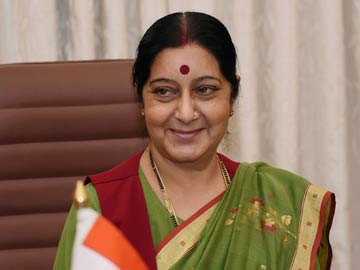
External Affairs Minister Sushma Swaraj may travel to Islamabad next week to attend a multilateral conclave on Afghanistan.
Though the government has not yet officially announced Swaraj’s visit to Islamabad, sources said she herself might travel to the capital of the neighbouring country for a day or two to attend the “Heart of Asia” meet on Afghanistan, instead of asking Minister of State for External Affairs V K Singh to represent her and lead the delegation from India.
Sources said that New Delhi would factor in Prime Minister Narendra Modi’s “brief but good discussions” with his Pakistani counterpart Nawaz Sharif on the sidelines of the UN climate change summit COP 21 in Paris on Monday to arrive at a decision on the External Affairs Minister’s visit to Islamabad.
BRUSSELS (TIP): Nato will keep some 12,000 troops in Afghanistan for an extra year in 2016 to prevent the country again becoming a terrorist safe haven, alliance head Jens Stoltenberg said on Wednesday.
Nato’s resolute support advice and training mission was supposed to end this year but Taliban battlefield successes, especially their recent brief capture of the northern city of Kunduz, prompted a radical re-think.
“Today, Nato allies and Resolute Support operational partners have agreed to sustain the Resolute Support presence … during 2016,” Stoltenberg said after alliance foreign ministers endorsed the decision. “The mission … will continue to be kept under review and, if necessary, will be adjusted to ensure its effectiveness.” Troop numbers will be “12,000 approximately,” in line with current strength, he added.
US-led Nato invaded Afghanistan in 2001 shortly after the 9/11 terror attacks to oust the Taliban from Kabul. US troop numbers peaked at around 90,000. The alliance ended combat operations at the end of 2014, leaving in place the Resolute Support mission. Taliban militants are still mounting attacks while the Islamic State is gaining a foothold in the country. (AFP)
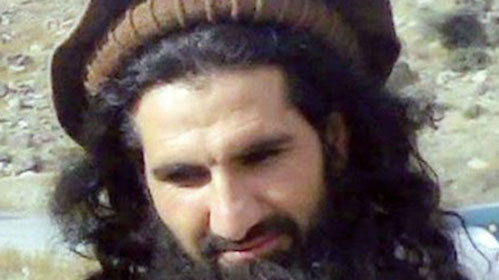
A senior commander of Tehreek-i-Taliban Pakistan (TTP) has been killed in US drone strikes in Afghanistan’s Khost province, Pakistani intelligence officials told Al Jazeera.
Khalid Mehsud – alias Khan Said Sajna – was killed with 12 fighters on Wednesday when four US drones carried out strikes in the Damma area of Afghanistan, close to Pakistan’s North Waziristan province, the officials said on condition of anonymity.
However, Azam Tariq, spokesman for Sajna’s faction of the Pakistani Taliban, denied the reports, saying the leader was still alive. Tariq said he was with Sajna hours before the alleged attack and would have known if he had been killed.
Sajna, formerly chief of the TTP’s South Waziristan unit, has led a breakaway faction of the armed group that has waged a bloody rebellion against the Pakistani state.
Do drone strikes create more terrorists than they kill?
The US State Department listed Sajna as a “terrorist” on October 21 last year for his alleged involvement in the May 2011 attack on Mehran Naval Base in Karachi. That attack killed 10 people and destroyed two US-supplied maritime surveillance planes.
The Pakistan Taliban commander had been fighting alongside the Afghan Taliban against US-led NATO forces in Afghanistan.
He formed his own faction after Mullah Fazlullah was appointed TTP chief after the killing of Hakeemullah Mehsud in a US drone attack on November 1, 2013.
The reported strikes on Wednesday come days after a US drone killed 45 fighters, mostly Pakistani Taliban fighters, in Afghanistan’s Khost province.
Security officials said 25 bodies were taken to the Dir district of Khyber Pakhtunkhwa province in Pakistan.
The controversial US drone programme in Pakistan has slowed sharply in recent months because of political opposition.
KABUL (TIP): A new road linking the Afghan capital with a trade hub near Pakistan has been stuck in the slow lane since a state-owned Chinese company took the contract to build it two years ago, bedevilled by militant attacks and accusations of mismanagement.
The 106km (65 mile) highway section running most of the way from Kabul to Jalalabad had been slated for completion in April 2017, and delays will further hurt Afghanistan’s ambition to promote economic growth to quell a rising Taliban insurgency.
The setbacks are also a reality check for China, as it seeks to bring stability to its war-ravaged neighbour in part through extensive investment.
A giant copper mine remains untapped despite the involvement of another Chinese state firm, and Afghan officials and politicians are openly questioning Beijing’s commitment.
“Overall, the company is far behind (on) the commitments they had given to us. We are not satisfied with the company’s general performance,” Mahmoud Baligh, Afghanistan’s minister of public works, said, referring to the road project.
The work was contracted to Xinjiang Beixin Road and Bridge Group Co Ltd in late 2013 for $110 million, according to the Asian Development Bank (ADB), which is financing the road.
It is designed as an alternative to the overburdened and sometimes dangerous highway from Kabul east to Jalalabad, capital of Nangarhar province and a trade gateway to Pakistan.
According to Baligh, insurgents attacked the workers’ camp several times at the start of the project, wounding some Afghans and halting work for three months.
A source familiar with the project, who spoke on condition of anonymity, said as little as 3 percent of construction was carried out in the first year.
Another person with knowledge of the project said Xinjiang Beixin changed its Afghan-based management this year because of a lack of proper oversight.
Xinjiang Beixin did not respond to requests for comment, and officials at China’s embassy in Kabul declined an interview request.
KABUL (TIP): The Afghan defense ministry says a foreign national was among three people killed when Taliban insurgents ambushed a helicopter that made an emergency landing in northwestern Afghanistan.
The ministry said the privately contracted Mi-17, which was carrying military personnel, was forced to land in Faryab province on Tuesday after suffering a technical problem.
Today’s statement also said that two foreigners were among 18 people captured in the raid.
In the course of one week in November 2015, militants from Abu Bakr Al-Baghdadi’s self-proclaimed Islamic Caliphate – also called ISIS, ISIL and Daesh – struck multiple targets in Beirut, Paris and Mali. Earlier, on October 31, ISIS claimed to have brought down a Russian civilian aircraft flying from Sharm al-Sheikh to St. Petersburg.
The ISIS militia, numbering between 20,000 and 30,000, now controls approximately 300,000 square kilometre of territory straddling the Syria-Iraq border. Its brand of fundamentalist terrorism is gradually spreading beyond West Asia and the militia is slowly but surely gaining ground. In Africa, ISIS fighters and their associates have been active in Algeria, Lebanon, Libya, Mali, South Sudan and Tunisia in recent months. Boko Haram, the militant Islamist group in Nigeria, has pledged allegiance to ISIS.
Fighting Back
Recent acts of terrorism have steeled the resolve of the international community. Significant help is being provided to the government of Iraq by the US and its allies. The Peshmerga, forces of the Kurdistan Regional Government (KRG) which had captured oil-rich Kirkuk, have joined the fight against the ISIS and recaptured the Syrian (Kurdish) border town of Kobani.
The US began launching air strikes against the ISIS militia about a year ago, while simultaneously arming anti-Assad forces like the Free Syrian Army with a view to bringing about a regime change in Syria. The US has been joined in this endeavour by Australia, Britain, Canada, Denmark, France and Netherlands as well as five Arab countries (Bahrain, Jordan, Saudi Arabia, Qatar and the United Arab Emirates). The air strikes have resulted in substantial collateral damage. It is being gradually realised that the ISIS militia cannot be defeated from the air alone.
Putin’s Russia joined the fight on September 30, 2015 with the twin aims of defeating the ISIS and destroying anti-Assad forces. However, the initial air strikes launched by the Russian Air Force were directed mainly against the forces opposed to President Assad of Syria. Russian ground troops are also expected to join the fight soon. The Russians have also descended on Baghdad to establish a military intelligence coordination cell jointly with Iran, Iraq and Syria – a move that has not been appreciated by the Americans.
In a rare show of unity after the Paris attacks, the United Nations Security Council passed a unanimous resolution stating that “The Islamic State in Iraq and the Levant constitutes a global and unprecedented threat to international peace and security,” and called upon all member states to join the fight against the ISIS.
Diplomatic moves have been initiated to coordinate operations and work together for peace and stability in the region. The US and Russia agree that the objective of their interventions should be to end the civil war in Syria through a political deal and that both Iraq and Syria should retain their territorial integrity. They also agree that the ISIS extremists must be completely eliminated. Iran has agreed to join the negotiations to resolve the conflict in Syria. However, while the political objectives are similar, the methods being used to achieve them are different and are designed to extend the influence of each of the protagonists in the region.
Implications for South Asia
Al-Baghdadi has openly proclaimed the intention of ISIS to expand eastwards to establish the Islamic state of Khorasan that would include Afghanistan, the Central Asian Republics, eastern Iran and Pakistan. The final battle, Ghazwa-e-Hind – a term from Islamic mythology – will be fought to extend the caliphate to India. An ISIS branch has already been established in the Subcontinent. It is led by Muhsin al Fadhli and is based somewhere in Pakistan. Some factions of the Tehrik-i-Taliban Pakistan have declared their allegiance to al-Baghdadi. Afghanistan’s new National Security Adviser, Mohammad Hanif Atmar, has said that the presence of Daesh or the ISIS is growing and that the group poses a threat to Afghan security. And, some ISIS flags have been seen sporadically in Srinagar.
Instability and major power rivalry in West Asia do not augur well for India’s national security and economic interests. Combined with the increase in force levels in the Indian Ocean, the heightened tensions in West Asia may ultimately lead to a spill-over of the conflict to adjacent areas. India now imports almost 75 per cent of the oil required to fuel its growing economy and most of it comes from the Gulf. The long-drawn conflicts of the last two decades of the 20th century had forced India to buy oil at far greater cost from distant markets, with no assurance of guaranteed supplies. The 1991 oil shock had almost completely wrecked India’s foreign exchange reserves. The situation could again become critical. Oil prices had shot up to USD 115 per barrel in June 2014, soon after the Caliphate was proclaimed, but have since stabilised around USD 50 to 60 per barrel.
Since the early 1970s, Indian companies have been winning a large number of contracts to execute turnkey projects in West Asia. The conflict in the region has virtually sealed the prospects of any new contracts being agreed to. Also, payments for ongoing projects are not being made on schedule, leading to un-absorbable losses for Indian firms involved, and a dwindling foreign exchange income from the region.
India also has a large Diaspora in West Asia. A large number of Indian workers continue to be employed in West Asia and their security is a major concern for the government. Some Indian nurses had been taken hostage by ISIS fighters, but were released unharmed. All of these together constitute important national interests, but cannot be classified as ‘vital’ interests. By definition, vital national interests must be defended by employing military force if necessary.
US officials have been dropping broad hints to the effect that India should join the US and its allies in fighting ISIS as it poses a long-term threat to India as well. India had been invited to send an infantry division to fight alongside the US-led Coalition in Iraq in 2003. The Vajpayee government had wisely declined to get involved at that time as it was not a vital interest.
It must also be noted that India has the world’s third largest Muslim population. Indian Muslims have remained detached from the ultra-radical ISIS and its aims and objectives, except for a handful of misguided youth who are reported to have signed up to fight. This could change if India sends armed forces to join the US-led coalition to fight the ISIS militia.
Prime Minister Narendra Modi proposed at the G-20 summit in Antalya last week that the war against terrorism must isolate and contain the sponsors and supporters of terrorism. He clearly implied that India is willing to join the international coalition against the ISIS and other non-state actors. Besides contributing to the global war against terrorism, India’s participation would help to isolate the Pakistan Army and the ISI – the foremost state sponsors of terrorism.
Direct Indian military intervention against the ISIS militia would depend on the manner in which the situation unfolds over the next one year. It could become necessary if ISIS is able to extend the area controlled by it to the Persian Gulf as that would affect the supply of oil and gas from the Persian Gulf to India – clearly a vital national interest. For the time being, India should cooperate closely with the international community by way of sharing information and intelligence and providing logistics support like port facilities if asked for. India should also provide full diplomatic support and work with the United Nations for evolving a consensual approach in the fight against the ISIS.
A concerted international effort is needed to first contain and then comprehensively defeat the ISIS and stabilise Iraq and Syria, failing which the consequences will be disastrous not only for the region, but also for most of the rest of Asia and Europe. Helping the regional players to gradually eliminate the root causes of instability will not be an easy challenge for the international community to address. As an emerging power sharing a littoral with the region, India has an important role to play in acting as a catalyst for West Asian stability.
The ‘notion’ of Critical Infrastructure Protection (CIP) has taken a beating after the November 13, 2015 terrorist attacks in Paris. CIP is about protecting vital infrastructure, which, if attacked, would have deleterious consequences for the state and society. Such infrastructure includes essential services on which the population depends heavily for various routine but essential activities like managing water and electric supply, maintenance of rail and airline networks, etc. For the last couple of years many states have placed a major emphasis upon CIP and have made significant investments to ensure that the architecture for CIP gets appropriately established. However, the recent attacks in Paris and the nature of targets selected there by the terrorists indicate that the ‘process’ behind identifying what is Critical Infrastructure has limitations and terrorists could select many more targets that are outwardly not Critical.
The idea of CIP could be said to have begun when US President Bill Clinton issued Presidential Decision Directive [PDD]-63 in May 1998 to set up a national program of ‘Critical Infrastructure Protection’. Europe too views CIP as an important instrument and has in place the ‘European Program for Critical Infrastructure Protection’ (EPCIP). For its part, India has the ‘National Critical Information Infrastructure Protection Centre’ (NCIPC), which essentially handles cyber security related issues.
The terrorist attacks in Paris and prior to that in Mumbai (26/11) demonstrate that terrorists are not concentrating on Critical Infrastructure as a target of choice. Instead, they are targeting places where they can inflict maximum damage to human life as well as garner wide publicity. This is, however, not to argue that Critical Infrastructure has lost its relevance as a ‘rewarding’ terror target. Perhaps realizing that such targets are difficult to attack owing to security measures put in place, terrorists seem to have shifted their attention to softer targets.
This raises some basic questions: Are global powers unable to visualize the probable patterns of terrorism? Are the tools used by them to handle current asymmetric threats appropriate? Are attacks like those in Paris exposing the limitations of the existing preparedness and response mechanisms?
It is well-known that ‘terrorists have to be lucky only once but the state has to be vigilant all the time’. The successes achieved by intelligence agencies are normally not known but their one odd failure has large-scale ramifications. Also, policing or military measures are unlikely to eradicate terrorism and the solution has to be political, economic and socio-cultural. Zero terrorism is not an achievable objective. However, all this should not justify the failures of security agencies at Paris or Mumbai. The success of terrorists indicates policy and policing failure at both tactical and strategic levels.
Against the backdrop of the Paris attacks, there is a need to introspect about the effectiveness of the approaches adopted by major states to counter terrorism. It could be broadly argued that the ‘Global War on Terror’ being a US construct, the global response also has a US bias. States are mostly building their respective policy structures based on the US ‘interpretation and response’ to this challenge.
As a result, CIP became a buzzword and the idea spread globally owing to the degree of emphasis given to it by the US and the EU. Post 9/11, many terrorism experts ‘mushroomed’ and some ended up converting the issue into an academic debate. This led to non-specialists influencing major policy decisions. Various forecasting and modeling techniques borrowed from military studies, management and economics were used to analyze terrorism. Multiple justifications were offered to understand the ‘method behind the madness’ for various acts of terrorism. Theoretical conceptualizations were evolved to ‘situate’ terrorism under preconceived ‘formats’.
None of this appears to have helped to stem terrorism as is evident from the continuing activities of ISIS, Boko Haram, Al Qaeda, and Talban during the last decade and a half. The Paris attacks only reinforces the case for states to recalibrate their approaches to intelligence gathering, data interpretation and policy response. Analysts need to recognize that the use of smart language and analyses based on Cold War era theories are unlikely to offer appropriate solutions to current problems. For example, the ‘game of chicken’ metaphor used to explain how people avoid a potentially fatal head-on collision may not hold good in the scenario of a suicide terrorist who is ready to die for a cause.
Post 26/11, it appears that India is essentially following the Western model to counter terror-related challenges. The Paris attacks show that such models have limitations. India is often criticized for lacking in ‘Strategic Thought’. However, states that are lauded for their ‘Strategic Thought’ have only faced failures from Vietnam to Iraq to Afghanistan to Syria. The Paris attacks should make India think for itself.
Signup to our Newsletter!
Don’t miss out on all the happenings around the world