Tag: Afghanistan

  • Strong 6.7 quake jolts Pakistan

    ISLAMABAD (TIP): A strong earthquake of 6.7 magnitude on August 10 jolted several parts of Pakistan.

    The epicentre of the quake was in the border region of Afghanistan and Tajikistan at the depth of about 200 km, according to Geo TV.

    The tremor was felt in various parts of the country including Islamabad, Faisalabad, Mianwali, Peshawar and Sargodah. It also hit Pakistan occupied Kashmir (PoK).

    So far, there was no report of any loss to life or property from any area of Pakistan.

  • US cops adopt face-recognition tech used in wars

    SAN DIEGO (TIP): Facial recognition software, which American military and intelligence agencies used for years in Iraq and Afghanistan to identify potential terrorists, is being eagerly adopted by dozens of police departments around the country to pursue drug dealers, prostitutes and other criminal suspects. But because it is being used with few guidelines, it is raising questions of privacy and concerns about potential misuse.

    Law enforcement officers say the technology is much faster than fingerprinting, although it is unclear on how much it is helping the police make arrests. When Aaron Harvey was stopped by the police here in 2013, an officer not only searched his car, he said, but also took his photograph and ran it through the software to confirm whether he had a criminal record, Eric Hanson, a retired firefighter, had a similar experience too, though neither of them were arrested. “I felt like my identity was being stolen. I was treated like a criminal,” Hanson said.

    Lt. Scott Wahl, a spokesman for San Diego Police Department, said the department does not require police officers to file a report when they use the technology but do not make an arrest.

    County documents show that in January and February, San Diego law enforcement agencies used the software on more than 20,600 occasions — finding a match to criminal records only about 25% of the time. But people who are not criminal suspects are included in the database, and the error rate for the software is as high as 20% — meaning the authorities could misidentify millions of people.

  • Afghan military helicopter crashes, killing 17

    Afghan military helicopter crashes, killing 17

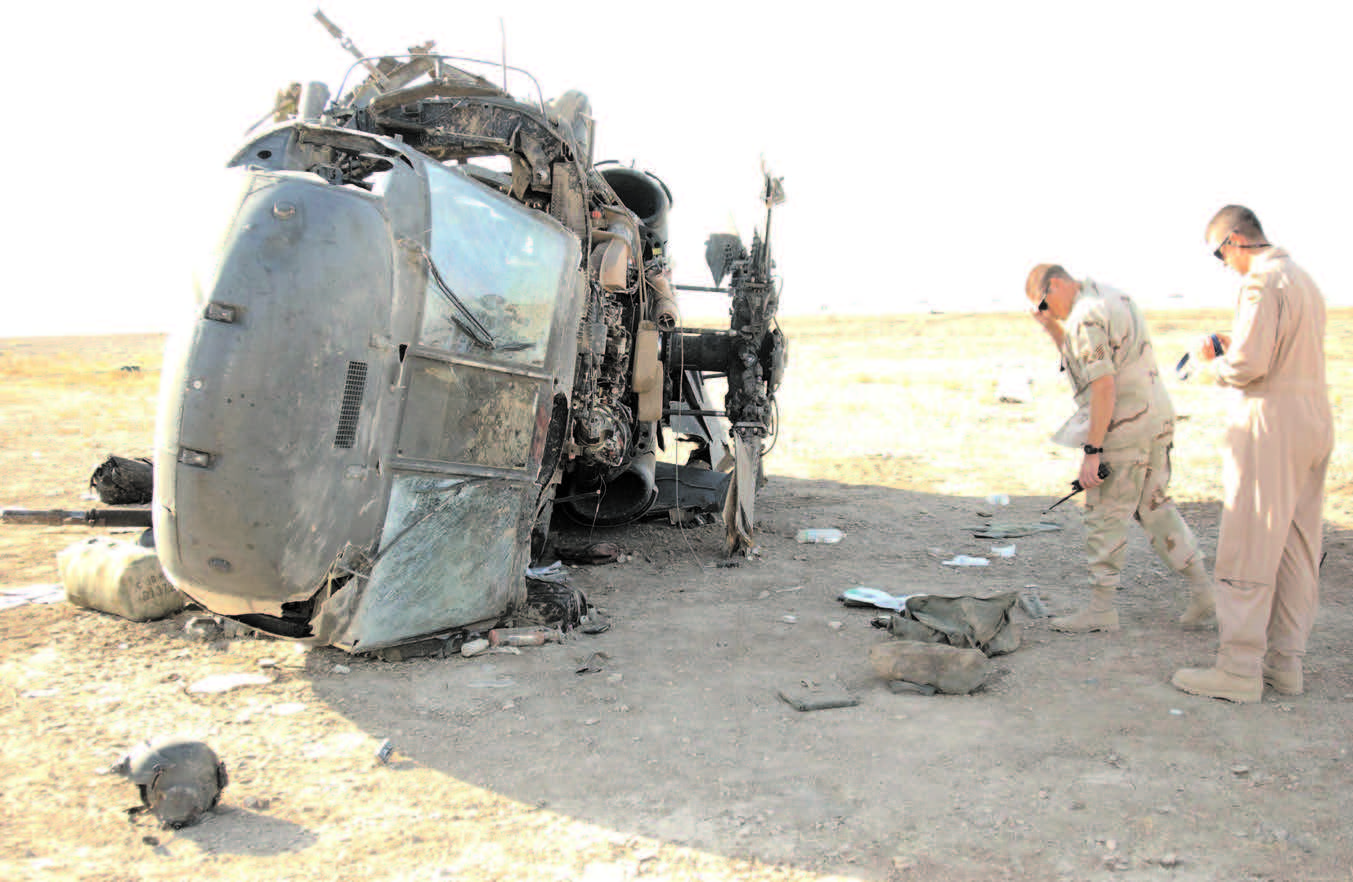
    KABUL, AFGHANISTAN (TIP): An Afghan military helicopter crashed in a remote region of the southern Zabul province on August 6, killing 17 people on board — 12 soldiers and five crew members, officials said.

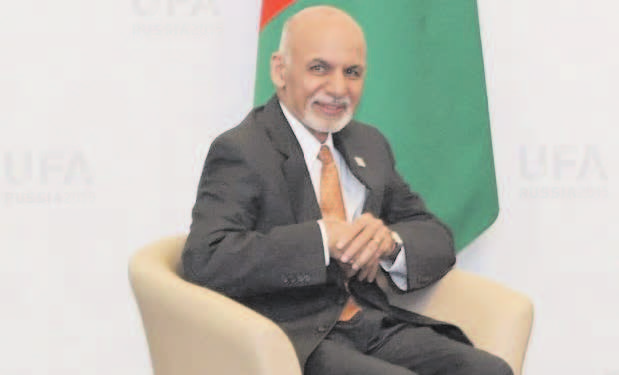
    President Ashraf Ghani offered his condolences to the families of those killed, while the Taliban claimed they had shot down the aircraft.

    In the capital Kabul, a suicide triuck bomb exploded in a residential area near a government complex early Friday, killing seven people and wounding about 400 others, police and health officials said.

    Provincial police chief Mirwais Noorzai said the cause of the helicopter crash was not yet known and was under investigation. The defense ministry said the crash appeared to have been caused by a technical problem, without elaborating.

    Afzal Aman, the defense ministry’s chief of operations, described it as “the worst calamity to hit the air force.” He confirmed the casualty figure, and said the dead included a unit commander and 11 soldiers, as well as the crew.

    The Afghan military has been fighting the Taliban-led insurgency alone since US and Nato forces concluded their combat mission at the end of last year, shifting to a support and training role instead.

    Aman said the helicopter was a Russian-made M-17, and was flying between Zabul’s capital of Qalat and the town of Shinkay, 20 kilometers (12 miles) away.

    The Taliban statement, posted on their website, said the helicopter was “shot down with a rocket launcher.” The claim was impossible to verify and the insurgents regularly exaggerate their battlefield gains.

    Meanwhile, in eastern Logar province, a suicide bomber driving an explosives-laden truck detonated his payload outside provincial government offices, killing eight people and wounding another 12.

    Din Mohammad Darwish, spokesman for the governor of Logar province, near Kabul, said the dead from Thursday’s attack included three police officers and five civilians. Five police were among the wounded.

    The massive blast, in the provincial capital of Puli Alam, blew out windows in buildings 500 meters (1,600 feet) away, he said.

    The Taliban also claimed responsibility for that attack, saying in a statement that they targeted military and paramilitary units.

    The Taliban have been in turmoil following confirmation of the death of their leader, Mullah Mohammad Omar. Afghan authorities say he died in a Pakistani hospital more than two years ago.

    In Kandahar city, meanwhile, two police stations came under attack from gunmen wearing suicide vests, according to officials.

    Rahmatullah Atrafi, the province’s deputy police chief, said two police officers died while five attackers were killed.

    The Taliban claimed responsibility for the Kandahar attack as well.

    Wahidullha Mayar, spokesman for the Health Ministry, said 147 people were wounded including 10 children in the car bomb attack in Kabul. The explosion took place in a residential area next to a government complex.

    Dr Fida Mohammad in the emergency unit of Ibnisina Hospital said the bomb injured at least 20 women. He said most of the injuries were caused by flying glass.

  • FIVE KILLED IN US DRONE STRIKE IN PAKISTAN

    FIVE KILLED IN US DRONE STRIKE IN PAKISTAN

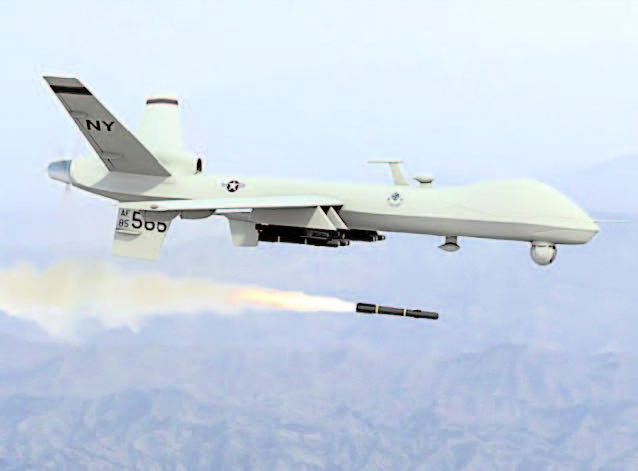
    ISLAMABAD (TIP): At least five people were killed and three others injured in a US drone strike in Pakistan’s northwest tribal area of North Waziristan on Thursday night, media reported.

    The US pilotless aircraft fired two missiles at the headquarters of Haqqani network, located in Datta Khel area of North Waziristan, a semi-autonomous tribal area along Pakistan-Afghanistan border, Xinhua reported citing Abb Takk News. The centre was levelled to ground, following the attack and the residents pulled the bodies of the killed people from the debris. Media reports said that all the five deceased belonged to the Haqqani network who were targeted during a meeting.

    The drones kept on hovering over the area before and after the strike, causing panic among local residents.

    The attack on the Haqqani network headquarters came a week after Afghan Taliban sources told media that the chief of the Haqqani network Jalaluddin Haqqani died of illness a year ago.

    The latest strike is 11th of its kind in tribal areas of Pakistan since the beginning of this year.

    So far this year more than 68 people have been killed and many others injured in such strikes in the country.

  • INDIA ADRIFT IN HIGH ASIA

    INDIA ADRIFT IN HIGH ASIA

    The recent revelation of the death of the charismatic Taliban leader Mullah Mohammed Omar in circumstances that are unclear and seem shadowy, and the apparent disunity reported in the Taliban leadership following his removal from the scene, should ordinarily have served as an opening for India in the AfPak region.

    But questions are legitimate if since 2001, when the Taliban were driven from power in Afghanistan thanks to decisive US intervention and went to shelter in Pakistan, this country has taken steps to convert the enormous goodwill for it across Afghanistan into leverage and influence to stabilize its influence, and deepen its presence in that country on terms that may help it achieve its strategic aims in Central Asia.

    Time may have come for a thoroughgoing re-appraisal of our part and place in the Afghan theatre. In assistance terms, India is heavily engaged with Afghanistan and its people for the past decade and a half. It also has a border with Afghanistan through Pakistan-occupied Kashmir. A heavily Pakistan-influenced government in Kabul, through the aegis of an extremist faction or any other, will cause long-term damage to Indian interests in High Asia. India, therefore, cannot just walk away.

    In Kabul last May, days after President Ashraf Ghani’s government signed an intelligence cooperation agreement with Pakistan’s Inter-Services Intelligence (ISI), a group of eminent Afghans asked this writer, in the course of a question-answer session that followed a talk, how India might react to this development, and what its future policy trajectory toward Afghanistan might be.

    Pakistan has not exactly been popular in Afghanistan, and save the erstwhile Taliban regime no Afghan government since the mid-70s has given Islamabad an inch. But the page is evidently turning, whether President Ghani’s moves are merely tactical or strategic, focused on the short term or the long term. The question from the audience was, thus, valid. Indeed, the Afghans themselves seemed to have been taken aback by President Ghani’s move. In time-honored Indian fashion, the present writer’s instinctive response was a fudge, leading an Afghan notable to remark privately afterward, “You might have been more forthright being a journalist, but you spoke diplomatically.”

    There were two reasons for this. The tone had to be measured before Afghan listeners in their capital, especially when times were in flux, if for no other reason than that the Afghans are a very courteous people. But more importantly, India seemed to be singularly lacking in a cogent, coherent policy. There simply seemed no thinking in place, no lever to activate, for the post-US situation. In essence, the thinking in New Delhi seemed to be one of a superior neutrality – let the new Afghan government of President Ghani get its fill of Pakistan and see how far this would take Kabul in its search for peace by appeasing the Pakistan military and the ISI, which has all but kept the top Taliban leaders, including the late Mullah Omar, captive all these years, giving them no freedom of action, even in talking to their own brethren, the Afghans in Kabul.(Any talk with the Afghans had to be under Pakistani tutelage. Islamabad began to see itself as the de facto power in Kabul in the wake of the Western withdrawal.)

    The practical aspects of the US leaving the Afghan battlefield – including what to do about the Taliban – has simply not been factored into the Indian calculus, although India has been served by diplomatists of a high order in Kabul.

    From the first National Democratic Alliance government of Atal Behari Vajpayee through the United Progressive Alliance years under Manmohan Singh, and now under the second NDA regime of Narendra Modi, India seemed to have drawn a line for itself – that it would not seek to cross the bounds of developmental assistance (no doubt truly valued by the Afghan people), and labored under this sub-optimal principle even when President Hamid Karzai pleaded for suitable defense assistance and signed a strategic partnership agreement in 2011, Kabul’s first with any country.

    In Indian thinking, husbanded through different regimes, the US could not be displeased through any ambitious political maneuvers in Afghanistan. The Americans would be averse because their principal client in the region, the Pakistan military, did not desire that India should gain a foothold in Kabul.

    In terms of comprehensive national power, the Pakistani state is of little consequence. But in recent years it has been in a position to exert inordinate pressure on Washington because American military supplies to Afghanistan passed through Pakistan, which is also its exit route. For this very reason, of late, America has willy-nilly become an indirect buddy of the Taliban, seeking to please it at every bend in the road. It is, after all, not keen that Taliban detachments – with not-so-secret Pakistani assistance – should be harassing its tail as it departs Afghanistan.

    With the US combat mission in Afghanistan ending, China is letting Pakistan draw it into the Afghan tango, and Beijing is a willing bride, making its entry with mincing steps – in the guise of being a do-gooder observer alongside the US at the so-called peace negotiations between the Ashraf Ghani government and the ISI’s chosen Taliban leaders, set up by Islamabad.

    Pakistan, and the leaders of the Taliban factions it has nurtured precisely for this day, have gathered two very powerful allies – the US as well as China. America had already outsourced the Afghanistan solution to Pakistan and has now acquiesced in China partnering Pakistan with both money and muscle. In circumstances such as these, India risks playing dumb charade if it puts all its money on the regional solution of the kind being talked about even a year ago in the aftermath of the proposed US pullout. For New Delhi, there is considerable re-arranging of the regional table to do if it is serious about a future role in Afghanistan.

    Since about 2001, when the Taliban were ousted from Kabul, there appeared a deep anxiety in India not to falter in courting Washington in season and out of season in order to bury for good the “estranged democracies” syndrome. This has cost us in Afghanistan. Turning our backs on the foreign policy formats of the first four decades was not a precondition of friendship imposed by Washington, but that is how New Delhi interpreted it. The Taliban are splintering by all accounts, but we have not pre-positioned ourselves to gain from the situation, thanks to the deference in which we held Washington even as it was genuflecting before Islamabad.

  • Taliban confirm chief’s death, pick successor

    Taliban confirm chief’s death, pick successor

    WASHINGTON (TIP): The United States and other stakeholders in Afghanistan are scrambling to organize a response to the sudden disclosure that Taliban chief Mullah Omar has been dead for sometime and a council of the rebel Islamist seminary has appointed his deputy Mullah Akhtar Mansour as his successor.

    Confirmation of Mullah Omar’s death and the succession has been officially conveyed through the Afghan government by a Taliban faction that is in favour of talks with Kabul. But some Taliban leaders are said to be opposed to the talks, and they are the ones who have apparently kept Mullah Omar “alive” to serve their ends.

    The peace process suffered a blow earlier on Thursday, first when the Afghan Taliban indicated they were pulling out of the negotiations with the Kabul government, and later, when the Pakistan foreign ministry confirmed the talks hosted by Islamabad were postponed.

    The one-eyed bandit, a semiliterate peasant who directed Afghanistan back to the stone age during the time he was the “Emir” under Pakistan’s patronage, is said to have died of tuberculosis at least two years ago in Karachi. The news was kept secret as Pakistan continued to manipulate various Taliban factions in an effort to maintain its leverage in Afghanistan.

    Some Pakistani accounts, in order to avoid implicating Islamabad from charges that it was hiding him, maintain that he died in Afghanistan.

    In either event, the Obama White House said reports of Mullah Omar’s death are credible. “The intelligence community is looking at these reports and continues to assess the circumstances around his death,” spokesman Eric Schultz said. But, US continued to keep the fugitive who sheltered Osama bin Laden on its Rewards for Justice page, where there is a bounty up to $10 million for information that brings him to justice. Eventually though, illness is reported to have done to him what American justice could not.

    Following Mansour’s election, the Taliban also chose Sirajuddin Haqqani as its new deputy leader, a report said. Haqqani has a US government bounty of$10 million on his head as a leader of the extremist Haqqani network, which has carried numerous attacks on Afghanistan from their base in Pakistan’s North Waziristan.

    Meanwhile, Pakistan, which is said to have sheltered the terrorist, once again escaped unscathed. No one in the US administration or its roster of regional experts and analysts have really questioned the serial transgression of a terrorist-supporting and terrorism-patronizing state that has hosted the world’s most wanted men — from Osama bin Laden to Khalid Sheikh Mohammed to Dawood Ibrahim, among dozens of other terrorists. Instead, there are now romanticized commentaries how US may actually miss Mullah Omar because he was the unifying factor in the Taliban.

    Backed by Pakistan’s military and its intelligence agency ISI, Omar and his band of extremist yahoos wrecked Afghanistan while hosting and supporting fellow terrorists like Osama bin Laden and Khalid Sheikh Mohammed who would eventually plan 9/11. All Pakistan got out of the whole fiasco was more misery for its people, but its army fattened itself on the billions of dollars the west poured into the region as it fought al-Qaida and Taliban.

  • Embarrassed Cong disowns Digvijaya, Tharoor remarks on Yakub hanging

    Embarrassed Cong disowns Digvijaya, Tharoor remarks on Yakub hanging

    DigvijayaTharoorNEW DELHI (TIP): Congress on July 30  scrambled to disown the controversial remarks of its party leaders Digvijaya Singh and Shashi Tharoor over the hanging of Yakub Memon.

    With finance minister Arun Jaitley pouncing on what he called “irresponsible” remark of Singh where he seemed to contrast the “urgency” shown in Yakub Memon’s case with the the soft-peddaling of other terror accused, a harried Congress distanced itself from the remarks of the party general secretary as well as those of Tharoor.

    In a series of tweets, Tharoor also questioned the death sentence. “Saddened by news that our government has hanged a human being. State-sponsored killing diminishes us all by reducing us to murderers too”, said Tharoor, while terming hanging
    “unworthy of a government” and questioning its effectiveness as a deterrent against terrorism.

    The twin comments triggered a row, especially Singh’s sentiment being seen as a bid to compare the Yakub hanging with other terror accused including those involving Hindu terrorists. “No individual, howsoever big, can change the stand of a political party,” AICC spokesman Randeep Surjewala said as the party tried to douse the controversy.

    Congress said the comments of individuals were their personal opinion, citing senior BJP leader and MPs Shatrughan Sinha and Ram Jethmalani who signed the petition in favour of mercy for Yakub, owning the argument that he was innocent in Mumbai blasts. “What Sinha and Jethmalani say do not become the BJP stand,” Surjewala said.

    Congress questioned BJP’s track record on terror while arguing that it had lost two prime ministers among other leaders to the menace while the saffron party had only released terrorists when it has been in power.

    Surjewala said, “Jaitley and BJP leaders should not lecture Congress and the country on terror. From Punjab to North-East, we faced terror and also ended it. Congress lost Indira Gandhi and Rajiv Gandhi, a chief minister in Punjab, to terrorists and top leaders in Chhattisgarh to naxals.”

    He said BJP’s track record on terror was questionable as it released top terror merchants led by Masood Azhar to Afghanistan in the Vajpayee government while in the coalition government led by VP Singh, terrorists were released in exchange of Rabaiyya Sayeed. Also, when PM Vajpayee went to Pakistan on a bus, Pakistan captured the Kargil heights and hundreds of soldiers had to sacrifice their lives to win back the territory.

    After Tharoor’s remarks were slammed by BJP and a section of netizens, the Congress leader noted in an article on a website that he had joined the public debate by expressing his sadness that the government has hanged a human being, whatever his crimes may have been. “I stressed that I was not commenting on the merits of this or any specific case: that’s for the Supreme Court to decide. My problem is with the principle and practice of the death penalty in our country,” he said in a blog.

  • Afghanistan’s Bamiyan on frontline of warzone tourism

    BAMIYAN, AFGHANISTAN (TIP): Trudging halfway up a jagged goat trail, guide Mohammad Ibrahim extolled the panoramic view — a vast, ancient landscape of russet-hued cliffs that is on the frontline of Afghan efforts to jumpstart warzone tourism. Bamiyan — famous for empty hillside niches that once sheltered giant Buddha statues that were blown up by the Taliban — is a rare oasis of tranquility that has largely been spared the wrenching conflict that afflicts the rest of Afghanistan.

    Once a caravan stop along the fabled Silk Road, the central Afghan city was recently named this year’s cultural capital of South Asia, igniting hopes of restoring its place on the global tourism map. One obstacle, however, remains: Bamiyan is hemmed in by war. Figuring out how to get to the ancient city –endowed with stunning landscapes but wedged between volatile provinces — itself is a challenge.

    But that doesn’t stop Ibrahim, head of the local tourism association with a penchant for Indiana Jones-style straw hats, from making his sales pitch. “Bamiyan has caves with the world’s oldest oil paintings, the country’s first national park and during winter it’s home to Afghanistan’s only ski slopes,” he said, sounding like a walking tourism brochure. Hiking up to the ruined ramparts of Shahr-e-Gholghola — the City of Screams, which was destroyed by Genghis Khan in the 13th century — Ibrahim stopped to catch his breath and picked up a spent bullet shell from the ground, one of many Soviet-era casings that litter the windswept trail overlooking the sandstone cliffs and snow-clad pyramids of the Hindu Kush range.

  • Transnationals | Tax Havens | Terrorism

    Transnationals | Tax Havens | Terrorism

    “Westphalian sovereignty is the principle of international law that each nation state has sovereignty over its territory and domestic affairs, to the exclusion of all external powers. The principle of non-interference in another country’s domestic affairs, and that each state (no matter how large or small) is equal in international law is recognized. This doctrine is named after the Peace of Westphalia, signed in 1648, which ended the Thirty Years’ War.” 

    “It is ironical that Terror organizations on one side and Tax havens on the other have completely undermined Westphalia consensus. In that context countries like India have every right to exercise its freedom to pursue terrorists who are undermining its existence whether sponsored by foreign countries or home grown. The concept of territorial jurisdictions and sovereignty are no more valid in the context of terror organizations since they damage both India and its own host countries over period of time. India must protect its national interests and institutions by challenging inimical forces wherever they are located without worrying about Westphalia consensus”.


    In the context of the strikes made against terror camps on the border of Manipur/Nagaland by the Indian Army; there has been number of discussions about national sovereignty and the role of individual States. Actually in the last few decades the activities of transnational corporations aided by tax havens on one side and terrorists on the other side have destroyed the concept of nation state and its sovereignty evolved after the 30 years’ war in 1648 in Westphalia. Westphalian sovereignty is the principle of international law that each nation state has sovereignty over its territory and domestic affairs, to the exclusion of all external powers. The principle of non-interference in another country’s domestic affairs, and that each state (no matter how large or small) is equal in international law is recognized. This doctrine is named after the Peace of Westphalia, signed in 1648, which ended the Thirty Years’ War .After that war major continental European states – the Holy Roman Empire, Spain, France, Sweden and the Dutch Republic – agreed to respect one another’s territorial integrity. As European influence spread across the globe, the Westphalian principles, especially the concept of sovereign states, became central to international law and to the prevailing world order.

    Scholars of international relations have identified the modern, Western-originated, international system of states, multinational corporations, and organizations, as having begun at the Peace of Westphalia. Henry Kissinger in his important book on “world Order” says:

    “No truly global “world order’ has ever existed. What passes for order in our time was devised in Western Europe nearly four centuries ago, at a peace conference in the German region of Westphalia, conducted without the involvement or even the awareness of most other continents or civilizations. A century of sectarian conflict and political upheaval across Central Europe had culminated in the Thirty Years’ war of 1618-48- a conflagration in which political and religious disputes commingled, combatants resorted to “total war” against population centers, and nearly a quarter of the population of Central Europe died from combat, disease, or starvation. The exhausted participants met to define a set of arrangements that world stanch the bloodletting. Religious unity had fractured with the survival and spread of Protestantism; Political diversity was inherent in the number of autonomous political units that had fought to a draw. So it was that in Europe the conditions of the contemporary world were approximated: a multiplicity of political units, none powerful enough to defeat all others, many adhering to contradictory philosophies and internal practices, in search of neutral rules to regulate their conduct and mitigate conflict.

    “The Westphalian peace reflected a practical accommodation to reality, not a unique moral insight. It relied on a system of independent states refraining from interference in each other’s domestic affairs and checking each other’s ambitions through a general equilibrium of power. No single claim to truth or universal rule had prevailed in Europe’s contests. Instead, each state was assigned the attribute of sovereign power over its territory. Each would acknowledge the domestic structures and religious vocations of its fellow states as realities and refrain from challenging their existence. With a balance of power now perceived as natural and desirable, the ambitions of rules would be set in counterpoise against each other, at least in theory curtailing the scope of conflicts. Division and multiplicity, an accident of Europe’s history, became the hallmarks of a new system of international order with its own distinct philosophical outlook. In this sense the European effort to end its conflagration shaped and prefigured the modern sensibility: it reserved judgment on the absolute in favor of the practical and ecumenical; it sought to distill order from multiplicity and restraint.

    “The seventeenth-century negotiators who crafted the peace of Westphalia did not think they were laying the foundation for a globally applicable system. They made no attempt to include neighboring Russia, which was then reconsolidating its own order after the nightmarish “Time of Troubles” by enshrining principles distinctly at odds with Westphalian balance; a single absolute ruler, a unified religious orthodoxy, and a program of territorial expansion in all directions. Nor did the other major power centers regard the Westphalian settlement (to the extent they learned of it at all) as relevant to their own regions.1

    The three core principles on which the consensus rested are:

    1. The principle of the sovereignty of states and the fundamental right of political self determination
    2. The principle of legal equality between states
    3. The principle of non-intervention of one state in the internal affairs of another state

    Interestingly, all three are questioned by contemporary leaders of West and radical Islam.

    Tony Blair the then Prime Minister of UK in his famous Chicago Address -1999-suggests

    “The most pressing foreign policy problem we face is to identify the circumstances in which we should get actively involved in other people’s conflicts. Non -interference has long been considered an important principle of international order….

    “But the principle of non-interference must be qualified in important respects. Acts of genocide can never be a purely internal matter. When oppression produces massive flows of refugees which unsettle neighboring countries then they can properly be described as “threats to international peace and security”.2

    The NATO intervention in Kosovo and Afghanistan as well as US intervention in Iraq provide recent examples of breakdown of idea of Westphalia. Similar is the humanitarian crisis faced by India regarding refugees from East Pakistan.

    Interestingly Radical Islam also considered that the world order based on Westphalian consensus will collapse. “In the aftermath of the 11 March 2004 Madrid attacks, Lewis ‘Atiyyatullah, who claims to represent the terrorist network al-Qaeda, declared that “the international system built up by the West since the Treaty of Westphalia will collapse; and a new international system will rise under the leadership of a mighty Islamic state.”3

    The spread of ISIS across countries and activities of Boko Haram based in Nigeria in Kenya and Chad re-emphasis this point. Radical Islam do not accept territorial boundaries since it works for a global regime for global Ummah.

    The recruitment by these terror organizations is also across continents and countries which does not respect territorial sovereignty. The talk about Caliphate indicates that they are trans-border organizations.

    On the other side we find global corporations transcending sovereignty in search of global profits. For this they use tax havens as a tool.

    Tax havens–numbering more than 70 jurisdictions–facilitate bank facilities with zero taxes and no-disclosure of the names and in many cases anonymous trusts holding accounts on behalf of beneficiary. Basically lawyers and Chartered accountants will deal with mattes. Sometimes a post box alone will be operative system. In the case of Bahamas one building seems to have had tens of thousands of companies registered there.

    Luxemburg (population half a million!) registered companies of various countries have evaded taxes significantly from their legal jurisdiction. The key findings of the activities of transnational companies cutting across territorial jurisdiction is given below.

    • Pepsi, IKEA, AIG, Coach, Deutsche Bank, Abbott Laboratories and nearly 340 other companies have secured secret deals from Luxembourg that allowed many of them to slash their global tax bills.
    • PricewaterhouseCoopers has helped multinational companies obtain at least 548 tax rulings in Luxembourg from 2002 to 2010. These legal secret deals feature complex financial structures designed to create drastic tax reductions. The rulings provide written assurance that companies’ tax-saving plans will be viewed favorably by Luxembourg authorities.
    • Companies have channeled hundreds of billions of dollars through Luxembourg and saved billions of dollars in taxes. Some firms have enjoyed effective tax rates of less than 1 percent on the profits they’ve shuffled into Luxembourg.
    • Many of the tax deals exploited international tax mismatches that allowed companies to avoid taxes both in Luxembourg and elsewhere through the use of so-called hybrid loans.
    • In many cases Luxembourg subsidiaries handling hundreds of millions of dollars in business maintain little presence and conduct little economic activity in Luxembourg. One popular address – 5, rue Guillaume Kroll – is home to more than 1,600 companies.
    • A separate set of documents reported on by ICIJ on Dec. 9 expanded the list of companies seeking tax rulings from Luxembourg to include American entertainment icon The Walt Disney Co., politically controversial Koch industries and 33 other firms. The new files revealed that alongside PwC tax rulings were also brokered by Ernst & Young, Deloitte and KPMG, among other accounting firms.4

    The big four accounting firms namely KPMG/E&Y/Deloitte and PwC have facilitated the movement of funds of clients across borders and territories to make tax “planning” easier for these companies. USA is literally waging war with major Giants like Amazon/Google/Microsoft etc. for not paying adequate taxes in USA in spite of being US based companies. Most of these companies have moved their profits to other Tax Havens.

    Global firms such as Starbucks, Google and Amazon have come under fire for avoiding paying tax on their British sales. There seems to be a growing culture of naming and shaming companies. But what impact does it have?5

    Royal Commission into tax loopholes a must—says a report in Australia.6

    There is an increasing clamor in USA about Congress Should Pass the Stop Tax Haven Abuse Act to Combat International Tax Avoidance. This has been highlighted by both TAX justice network as well as Global Financial Integrity.

    A simple method of trade mis-invoicing by global companies using tax-havens have impacted developing countries nearly 730Billion USD in 2012 says Global Financial integrity. Another interesting finding by GFI is about terror financing using Tax haven route.

    Because of the increasing wariness of MNCs using Tax havens for avoidance of taxes and the opaque ways of functioning of these off-shore structures, demands are growing about their activities and even closing down of these tax havens by European parliament etc.

    Due to relentless pressure from OECD as well as G20 many of these secretive jurisdictions are becoming more transparent.

    But the fact of the matter is these Trans National Companies and Tax Havens together have significantly undermined the concept of sovereignty and territorial jurisdictions.

    It is ironical that Terror organizations on one side and Tax havens on the other have completely undermined Westphalia consensus. In that context countries like India have every right to exercise its freedom to pursue terrorists who are undermining its existence whether sponsored by foreign countries or home grown. The concept of territorial jurisdictions and sovereignty are no more valid in the context of terror organizations since they damage both India and its own host countries over period of time. India must protect its national interests and institutions by challenging inimical forces wherever they are located without worrying about Westphalia consensus.

    (The author is Professor of Finance at IIM-Bangalore)

  • IS No. 3 in Afghanistan killed in US drone strike

    KABUL (TIP): The Afghan intelligence agency on July 9 said a third top IS commander in Afghanistan was killed in a US drone strike in the country’s east this week.

    Shahidullah Shahid, a former member of the Pakistani Taliban who defected to the IS and was operating in Afghanistan, was killed along with five militants on Tuesday, an official said. “He wanted to expand IS operation in the country and with his death, it will have an impact on their activities,” Hasib Sediqi, spokesman for the Afghanistan National Directorate of Security (NDS), said.

  • Sabotage suspected as Pakistan troop train plunges into canal

    Sabotage suspected as Pakistan troop train plunges into canal

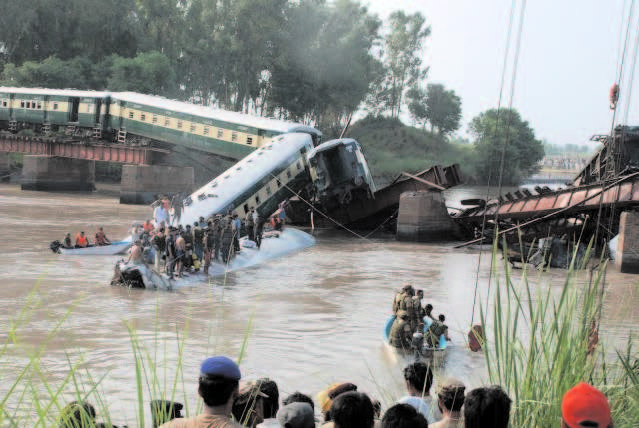
    LAHORE (TIP): A train carrying hundreds of Pakistan soldiers and their families plunged several feet into a canal on July 2 when a bridge collapsed in the country’s east in what the army suspects was sabotage, officials said.

    At least six people were missing, but officials at the ministry of railways and the military had not confirmed any deaths. An army spokesman confirmed that four carriages plunged into the canal.

    The military is fighting a Taliban insurgency in several regions of the country’s tribal areas bordering Afghanistan in the northwest.

    The crash in Pakistan’s Gujranwala district, in the northeast, happened as an army unit was being transported from southern Sindh province to northern Pakistan.

    “There were around 300 passengers on board,” Minister for Railways Khawaja Saad Rafiq told Reuters. “It is too early to say about the reason for the mishap. Rescue work is under way.”

    More than 50 people were rescued, a military official said.
    Television images of the scene showed several carriages partly submerged in the canal.

    Rafiq told local Geo TV that six people were missing and the cause of the crash was unknown. But a senior military official said the army suspected sabotage.

    “We suspect that this was an act of sabotage and the planks on the rail were tampered with,” the official said, requesting anonymity as he was not authorised to speak to the media.

    The collapse also raises concerns about the safety of infrastructure. Several TV channels reported that the bridge had been marked as “extremely dangerous”.

    In May, a Pakistan military helicopter carrying diplomats to inspect a tourist project crashed, killing seven people, including the ambassadors of Norway and the Philippines.

  • Indians in UK face risk of radicalization by terrorists, says British Parliament

    Indians in UK face risk of radicalization by terrorists, says British Parliament

    LONDON (TIP): Indian youngsters in UK face real time risk of being radicalized by Islamic terrorist organizations and handlers, says Britain’s House of Commons.

    Keith Vaz, Britain’s longest-serving Indian-origin MP who was recently re-elected as chair of Parliament’s influential Home Affairs Select Committee told TOI in an exclusive interview that Indian families in UK need to be vigilant. Indians are the largest foreign-born group in London. Nearly 9% of all foreign-born residents in London are now Indian. In sheer numbers, this means 2.63 lakh persons born in India are now living in London.

    Vaz told TOI “radicalization of our young people is at the forefront of our minds”.

    He added “So far there has not been much evidence of young Asian and Indian individuals falling victim to the propaganda and extremist influence on the internet or via other means, but members of the community should remain vigilant. The government needs to be far better at working with communities, not against them”.

    UK’s Office of National Statistics has confirmed that Indians had overtaken the Irish to become the largest foreign-born ethnic group in the whole of England and Wales. The latest census had revealed that the number of Indians went up by over 52%, from 4.56 lakh in 2001 to 6.94 lakh a decade later.

    Britain’s International Centre for the Study of Radicalization (ICSR) says that a record number of foreign fighters have now been confirmed to have joined militant organizations in Syria and Iraq. It is now estimated that the total now exceeds 20,000 – of which nearly a fifth were residents or nationals of western European countries.

    The largest European countries -France, the UK, and Germany – also produce the largest numbers of fighters. This has made the conflict in Syria and Iraq the largest mobilization of foreigner fighters in Muslim majority countries since 1945. It now surpasses the Afghanistan conflict in the 1980s, which is thought to have attracted up to 20,000 foreigners.

  • SUICIDE BOMBER ATTACKS NATO CONVOY IN KABUL

    SUICIDE BOMBER ATTACKS NATO CONVOY IN KABUL

    KABUL, AFGHANISTAN (TIP): A suicide attacker driving an explosives-packed vehicle targeted a Nato military convoy in the Afghan capital, Kabul, on July 1, police and a Nato official said.

    Police on the scene said casualties were expected. “It was a suicide car bomber, there are casualties but it is too early to know the extent of the damage,” said Kabul deputy police chief Sayed Gulagha.

    A spokesman for the Nato mission in Afghanistan, US Army Col Brian Tribus, said that a coalition convoy had been attacked.

    “We can confirm there was an attack on coalition forces. We are gathering information,” he said.

    SUICIDE BOMBER ATTACKS NATO CONVOY IN KABUL (inset)The explosion happened at 1.20pm on the main airport road in eastern Kabul. The blast sent a huge plume of black smoke over the city.

    It happened as government employees were leaving their offices and roads were choked with vehicles as the working day is shortened during the Ramadan fasting month.

    It comes a week after an audacious attack on the nation’s parliament, which highlighted the ability of insurgents, who have been fighting to overthrow the Kabul government for almost 14 years, to enter the highly fortified capital to stage deadly attacks.

    Also on Tuesday, a suicide attack on the police headquarters of southern Helmand province killed up to three people and wounded more than 50, including policemen, officials said.

    Omar Zawak, spokesman for the governor of Helmand province, said most of the injured in the Tuesday morning attack were women and children.

    Police spokesman Farid Hamad Obaid said a car packed with explosives was driven into the back wall of the police headquarters in an attempt to breach a gate. All the gunmen fled the area, he said.

    Also Tuesday in eastern Paktya province, three people were killed and one wounded when their vehicle hit a roadside mine, the provincial police chief Zalmai Oryakhel said.

  • TERROR TALKS TOP PM’S CENTRAL ASIA VISIT

    TERROR TALKS TOP PM’S CENTRAL ASIA VISIT

    NEW DELHI (TIP): As Prime Minister Narendra Modi heads for Central Asia, the first PM to visit all the five ‘Stans’ in one shot, India is hoping political outreach, counter-terrorism cooperation, energy and soft power will overcome the challenge of physical connectivity with the region.

    PM is expected to visit Uzbekistan and Kazakhstan on his way out to Russia, and Turkmenistan, Kyrgyzstan and Tajikistan on his return journey. The growing threat of extremist terrorism, of the kind unleashed by Islamic State is perceived as a clear threat by these states — they have watched with concern, thousands of their young citizens travelling to Iraq and Syria to join IS. The prospect of IS taking root in these countries is real. India hopes to engage these countries in a deeper conversation on counter-terrorism. “They are worried about radicalization, and we hope to be able to cooperate and look for solutions together,” said government sources.

    Energy has always been an attractive draw between India and Central Asia but there is the challenge of getting that energy to India. That will be the focus of conversations in both Kazakhstan and Turkmenistan. Many pipelines, including TAPI, have been the subject of intensive discussions, but there has been little progress so far. India already has a uranium supply agreement with Kazakhstan.

    The Afghanistan situation post-2014 will be a common thread in the discussions. There is a resurrection of Taliban forces, even in their regions which means all countries involved have an interest in Afghanistan’s immediate future. The bigger aim behind Modi’s visit is to reclaim politically a part of India’s near neighbourhood. India has always believed this to be its strategic backyard, but in recent years, Central Asia has built very close trade and security links with China. India cannot possibly replace China, or compete with such a large presence, but New Delhi hopes to be a viable alternative in the region.

  • Putting India Emphatically on Global Map – Part 2

    Putting India Emphatically on Global Map – Part 2

    Continued from Putting India Emphatically on Global Map – Part 1

    It defies logic that a country that is considered as our most serious adversary and whose policies in our region has done us incalculable strategic harm should have been accepted as India’s strategic partner during Manmohan Singh’s time. Such a concession that clouds realities serves China’s purpose and once given cannot be reversed. Pursuant to discussions already held during the tenure of the previous government, the Chinese announced during Xi’s visit the establishment of two industrial parks in India, one in Gujarat and the other in Maharashtra, and the “endeavour to realise” an investment of US $ 20 billion in the next five years in various industrial and infrastructure development projects in India, including in the railways sector. The Chinese Prime Minister’s statement just before Modi goes to China on May 14 that China is looking for preferential policies and investment facilitation for its businesses to make this investment suggests that the promised investment may not materialise in a hurry. While the decision during Xi’s visit to continue defence contacts is useful in order to obtain an insight into PLA’s thinking and capacities at first hand, the agreement, carried forward from Manmohan Singh’s time, to explore possibilities of civilian nuclear cooperation puzzles because this helps to legitimise China’s nuclear cooperation with Pakistan.

    Even as Modi has been making his overall interest in forging stronger ties with China clear, he has not shied away from allusions to Chinese expansionism, not only on Indian soil but also during his visit to Japan. During his own visit to US in September 2014 and President Obama’s visit to India in January 2015, the joint statements issued have language on South China Sea and Asia-Pacific which is China-directed. A stand alone US-India Joint Vision for Asia Pacific and the Indian Ocean Region issued during Obama’s Delhi visit was a departure from previous Indian reticence to show convergence with the US on China-related issues. India has now indirectly accepted a link between its Act East policy and US rebalance towards Asia. The Chinese have officially chosen to overlook these statements as they would want to wean away India from too strong a US embrace. During Sushma Swaraj’s call on Xi during her visit to China in February 2015 she seems to have pushed for an early resolution of the border issue, with out-of-the-box thinking between the two strong leaders that lead their respective countries today. Turning the Chinese formulation on its head, she called for leaving a resolved border issue for future generations.

    It is not clear what the External Affairs Minister had in mind when she advocated
    “out-of-the-box” thinking, as such an approach can recoil on us. That China has no intention to look at any out-of-the-box solution has been made clear by the unusual vehemence of its reaction to Modi’s visit to Arunachal Pradesh in February 2015 to inaugurate two development projects on the anniversary of the state’s formation in 1987. The pressure will be on us to do out-of-the-box thinking as it is we who suggested this approach. China is making clear that it considers Arunachal Pradesh not “disputed territory” but China’s sovereign territory. This intemperate Chinese reaction came despite Modi’s visit to China in May. The 18th round of talks between the Special Representatives (SRs) on the boundary question has taken place without any significant result, which is not surprising in view of China’s position on the border. The Chinese PM has recited the mantra a few days ago of settling the boundary issue “as early as possible” and has referred to “the historical responsibility that falls on both governments” to resolve the issue, which means nothing in practical terms. As against this, India has chosen to remain silent on the China-Pakistan Economic Corridor (CPEC) which will traverse territory that is legally Indian, and which even the 1963 China-Pakistan border agreement recognises as territory whose legal status has not been finally settled. The CPEC cannot be built if China were to respect its own position with regard to “disputed” territories which it applies aggressively to Arunachal Pradesh. Why we are hesitant to put China under pressure on this subject is another puzzle.

    Modi’s visit to Seychelles, Mauritius and Sri Lanka in March 2015 signified heightened attention to our critical interests in the Indian Ocean area. The bulk of our trade- 77% by value and 90% by volume- is seaborne. Modi was the first Indian Prime Minister to visit Seychelles in 34 years, which demonstrates our neglect of the Indian Ocean area at high political level and Modi’s strategic sense in making political amends. During his visit Modi focused on maritime security with agreement on a Coastal Surveillance Radar Project and the supply of another Dornier aircraft. In Mauritius, Modi signed an agreement on the development of Agalega Island and also attended the commissioning of the Barracuda, a 1300 tonne Indian-built patrol vessel ship for the country’s National Coast Guard, with more such vessels to follow. According to Sushma Swaraj, Modi’s visit to Seychelles and Mauritius was intended to integrate these two countries in our trilateral maritime cooperation with Sri Lanka and Maldives.

    In Pakistan’s case, Modi too seems unsure of the policy he should follow- whether he should wait for Pakistan to change its conduct before engaging it or engage it nevertheless in the hope that its conduct will change for the better in the future. Modi announced FS level talks with Pakistan when Nawaz Sharif visited Delhi for the swearing-in ceremony, even though Pakistan had made no moves to control the activities of Hafiz Saeed and the jihadi groups in Pakistan.

    The Pakistani argument that Nawaz Sharif was bold in visiting India for the occasion and that he has not been politically rewarded for it is a bogus one. He had a choice to attend or not attend, and it was no favour to India that he did. Indeed he did a favour to himself as Pakistan would have voluntarily isolated itself. The FS level talks were cancelled when just before they were to be held when the Pakistan High Commissioner met the Hurriyet leaders in Delhi. Pakistan’s argument that we over-reacted is again dishonest because it wanted to retrieve the ground it thought it had lost when Nawaz Sharif did not meet the Hurriyet leaders in March 2014.

    Modi ordered a robust response to Pakistani cease-fire violations across the LOC and the international border during the year, which suggested less tolerance of Pakistan’s provocative conduct. We have also been stating that talks and terrorism cannot go together. Yet, in a repetition of a wavering approach, the government sent the FS to Islamabad in March 2015 on a so-called “SAARC Yatra”. Pakistan responded by releasing the mastermind of the Mumbai attack, Lakhvi, on bail and followed it up by several provocative statements on recent demonstrations by pro-Pakistani separatists in Srinagar, without any real response from our side. Surprisingly, in an internal political document involving the BJP and the PDP in J&K, we agreed to include a reference to engaging Pakistan in a dialogue as part of a common minimum programme, undermining our diplomacy with Pakistan in the process.

    Pakistan believes that it is US intervention that spurred India to take the initiative to send the FS to Pakistan, which is why it feels it can remain intransigent. Pakistan chose to make the bilateral agenda even more contentious after the visit by the FS by raising not only the Kashmir cause, but also Indian involvement in Balochistan and FATA. On our side, we raised the issue of cross border terrorism, the Mumbai terror trial and LOC violations, with only negative statements on these issues by Pakistan. Since then the Pakistani army chief has accused India of abetting terrorism in Pakistan. The huge gulf in our respective positions will not enable us to “find common ground and narrow differences” in further rounds of dialogue, about which the Pakistani High Commissioner in Delhi is now publicly sceptical.

    Even though one is used to Pakistan’s pathological hostility towards India, the tantrums that Nawaz Sharif’s Foreign Policy Adviser, Sartaj Aziz, threw after President Obama’s successful visit to India were unconscionable. He objected to US support for India’s permanent seat in the UNSC and to its membership of the Nuclear Suppliers Group (NSG). He castigated the Indo-US nuclear deal, projecting it as directed against Pakistan and threatened to take all necessary steps to safeguard Pakistan’s security- in other words, to continue to expand its nuclear arsenal.

    Chinese President Xi’s April 2015 visit to Pakistan risks to entrench Pakistan in all its negative attitudes towards India. The huge investments China intends making through POK constitutes a major security threat to India. China is boosting a militarily dominated, terrorist infested, jihadi riven country marked by sectarian conflict and one that is fast expanding its nuclear arsenal, including the development of tactical nuclear weapons, without much reaction from the West. President Ashraf Ghani’s assumption of power in Afghanistan and his tilt towards Pakistan and China, as well as the West’s support for accommodating the Taliban in Afghanistan with Pakistan’s help will further bolster Pakistan’s negative strategic policies directed at India. Ghani’s delayed visit to India in April 2015 has not helped to clarify the scenario in Afghanistan for us, as no change of course in Ghani’s policies can be expected unless Pakistan compels him to do by overplaying its hand in his country. Modi is right in biding his time in Afghanistan and not expressing any undue anxiety about developments there while continuing our policies of assistance so that the goodwill we have earned there is nurtured.

    Prime Minister Modi, belying expectations, moved rapidly and decisively towards the US on assuming office. He blindsided political analysts by putting aside his personal feelings at having been denied a visa to visit the US for nine years for violating the US law on religious freedoms.

  • India ranks 143rd on global peace index topped by Iceland

    India ranks 143rd on global peace index topped by Iceland

    India ranks a lowly 143rd on a global peace index, lagging way behind the likes of Bhutan, Nepal, Sri Lanka and Bangladesh with Iceland emerging as the most peaceful nation in the world.

    According to the nonprofit Institute for Economics and Peace, Iceland, the thinly populated island in the midst of the North Atlantic has retained its place as the most peaceful country in the world.

    The institute released its Global Peace Index for 2015 recently, which ranks 162 nations around the globe based on factors like the level of violent crime, involvement in conflicts and the degree of militarisation. The nations are given a score on that basis. The more the score, the less peaceful the country is.

    India is ranked at 143 on the index with a score of 2.504. “The number of casualties from internal conflict also rose in India where a Maoist insurgency stills runs rife. The downgrade in India’s score is tempered, however, by an improvement in political stability. The world’s second most populous country witnessed an historic election in 2014 as the Bharatiya Janata Party secured India’s first one-party majority since the mid-1980s,” the report said.

    Six out of the top 10 most peaceful countries were European, with Denmark and Austria holding the second and third spots.

    “Europe maintained its position as the most peaceful region in the world, supported by a lack of domestic and external conflicts,” the report said.

    Pakistan fares badly ranked at 154 with its score deteriorating on the back of a worsening of its perceptions of criminality, as a result, the country remains second from the bottom in South Asia.

    “The country’s dire domestic security situation continues to be hampered by the presence of Islamist militant groups. Even though the number of deaths from internal conflict did not worsen significantly over the past twelve months, Pakistan suffered a handful of high-profile incidents — most notably the separate attacks on Jinnah International Airport and an army-run school in Peshawar,” the report said.

    Afghanistan remains the most lowly ranked in South Asia at 160. Bhutan (18), Nepal (62), Bangladesh (84) and Sri Lanka (114) are all ranked above India, Pakistan and Afghanistan.
    US is also ranked at a lowly 94 scoring badly in terms of militarisation, homicides and fear of violence. China is ranked 124.

    Syria and Iraq where the Islamic State terror group has taken over large swathes of land are at the bottom of the table as the least peaceful countries.

  • Afghanistan’s Sikhs feel alienated, pressured to leave

    KABUL, AFGHANISTAN (TIP): Afghanistan’s once-thriving Sikh community is dwindling fast as many choose to leave the country of their birth to escape what they say is growing intolerance and discrimination. Once boasting as many as 1,00,000 members in the 1990s, Afghanistan’s Sikh population, according to community leaders, has fallen to an estimated 2,500.

    The reason for the exodus: endemic societal discrimination in the majority Muslim country and an inability to reclaim Sikh homes, businesses and houses of worship that were illegally seized years ago.

    “I’m worried that if things don’t change and we are no longer able to stay, then the only people left will be those who cannot afford to leave,” said 23-year-old pharmacist Charn Singh. His family traces its roots back more than 400 years to Gardez, the capital of Paktya province bordering Pakistan, where his ancestors were wealthy traders and landowners and his grandfather was an oral historian and keeper of Sikh legends.

    These days, the family has little of its former wealth, having lost much of its land to what Afghan Hindu lawmaker Anarklai Kaur Honaryar called a series of illegal land grabs.

    Hindus in Afghanistan have faced similar persecution. Sikhism and Hinduism are distinct religions, but many Afghans view both communities as non-Muslim foreigners.

    “In all provinces they (Sikh and Hindus) owned lands, but unfortunately their lands were taken over by powerful individuals during the fighting,” said Honaryar, who is also a human rights activist.

    The persecution of Afghan Sikhs has remained a constant through decades of upheaval in this war-torn country.

    After the Russians ended their occupation in February 1989 and Afghanistan collapsed into civil war, various mujahedeen splinter groups fought each other for territory and power. In the ensuing chaos, many Sikh houses of worship, known as gurdwaras, were destroyed — along with many Hindu temples. A United Nations report in 2005 said that most of Kabul’s eight Sikh and four Hindu temples had been destroyed in the fighting.

    In the chaos of the civil war, Afghans’ tolerance toward ethnic and religious minorities hardened. That intolerance became official policy when the Islamic extremist Taliban took over in 1996.

    Under the Taliban, Sikhs and Hindus were pressured to convert to Islam and forced to pay a special tax and publicly identify themselves with yellow patches on their clothing. Muslims were encouraged to avoid doing business with them.

  • Putting India Emphatically on Global Map – Part 1

    Putting India Emphatically on Global Map – Part 1

    Prime Minister Modi has surprised his own people and, no doubt, external observers, by his foreign policy activism since he took office. In his year in power he has travelled abroad 16 times- and 19 if the forthcoming visits to China, Mongolia and South Korea are included- inviting some criticism that these peregrinations have meant less attention devoted to domestic affairs. This is misplaced criticism because today, with the change in the nature of diplomacy, the heads of governments play a critical role in external affairs. Frequent personal contacts at the highest political level have now become the norm, leaders often are on first name terms and difficult knots are untied by exertions at their level, sometimes in an unorthodox manner. Modi, even if seemingly inexperienced in the foreign policy domain, has had to, therefore, wade into the deep waters of diplomacy as soon as he took over because his position has demanded this. But no one was prepared for a Modi with a natural flair for diplomacy, to which he has brought a surprising degree of imagination and self-assurance. From the start, he seemed to have a clear idea of where the interests of his country lay and the initiatives needed to advance them.

    All Indian Prime Ministers on taking over give priority to ties with neighbouring countries. The belief is that either India has neglected its neighbours or has been insensitive and overbearing, leading to their alienation and consequent opportunities for external powers to intervene at the cost of India’s interests. Modi too began by reaching out to the neighbours, but in a manner not anticipated. He invited all the SAARC leaders to his swearing-in, with the intention no doubt to signal that his elevation to power would usher in a new era of South Asian relations, that the clear victory in elections of a supposedly nationalist party did not denote a more muscular policy towards neighbours and that, on the contrary, India intended to work together with them to move the whole region forward towards peace and prosperity. This gesture had most meaning for India-Pakistan relations, and Nawaz Sharif’s decision to attend the swearing-in was “rewarded” with the announcement of FS level talks between the two countries.

    Continuing the emphasis on the neighbourhood, he chose Bhutan as the first country to visit in June 2014. This made sense as Bhutan is the only neighbour that has not played an external card against us or politically resisted building ties of mutual benefit. His August 2014 visit to Nepal made a notable impact in local political and popular thinking about India as a well-wisher. His extempore address to the Nepalese parliament was a tour de force. He handled sensitive issues during his visit with finesse and played the cultural and religious card dextrously. External Affairs Minister Sushma Swaraj visited Bangladesh in June 2014. A very notable development is the approval of the Land Boundary Agreement with Bangladesh approved by the Indian parliament in May 2015. Modi visited Myanmar in November 2014 to take part in the East Asia summit and for bilateral discussions with this strategically placed neighbour whose honeymoon with China is waning.

    SAARC figures prominently in Modi’s foreign policy vision. He invited all SAARC leaders to his swearing-in ceremony, which was unprecedented. It is true that SAARC is one of the least integrated regions economically speaking, which means that the potential of the region remains unexploited. This also means that external actors find it easier to intrude into the loose equations in the subcontinent. While in terms of aspirations for the region, Modi is right in imagining a more tightly textured SAARC, India’s capacity to do this is limited in the face of Pakistani recalcitrance. A strengthened SAARC means a stronger Indian role in it, which is anathema to a Pakistan that is obsessed with countering Indian “hegemony” in South Asia. Pakistan will be reduced to its true importance if it ceases to confront India, which is why it will continue its confrontational policies. it also means that Afghanistan will not be adequately integrated into SAARC structures as that is contingent on Pakistan’s willingness to facilitate access to this landlocked country. At the Kathmandu SAARC summit in November 2014, Modi encouraged neighbours to benefit from opportunities provided by India’s growth, promised a special funding vehicle overseen by India to finance infrastructure projects in the region and announced India’s readiness to develop a satellite specifically for the region by 2016. He warned at the Kathmandu summit that regional integration will proceed with all or without some, which suggested that if Pakistan did not cooperate, others could go ahead without it, though under the SAARC charter this is not possible and other countries may not support a strategy of isolating Pakistan.

    Modi seems to admire China’s economic achievements, which would not be surprising given China’s spectacular rise. His several visits to China as Gujarat Chief Minister no doubt gave him familiarity with the country and take its pulse. His view that economic cooperation is the key driver in relations between countries and that all countries give more importance to economic growth and prosperity for their peoples than creating conditions of conflict evidently guides his thinking towards China. He was quick to court China after assuming power, with reinforcement of economic ties as the primary objective. The huge financial resources at China’s disposal, its expertise in infrastructure building, its need for external markets for off-loading the excess capacity it has built in certain sectors has made cooperation with China a theoretically win-win situation. The Chinese Foreign Minister was the first foreign dignitary to be received by Modi. He invited the Chinese President to make a state visit to India in September 2014, during which unprecedented personal gestures were made to him in an informal setting in Ahmedabad on Modi’s birthday. This imaginative courting was marred by the serious border incident in Ladakh coinciding with Xi’s visit- one more case of China reaching out to India and simultaneously staging a provocation so that India remains unsure about China’s intentions and finds it difficult to make a clear choice about what policy to pursue, and in the process has to accept faits accomplish that are to China’s advantage.

    Unlike the timidity of the previous government to treat such incidents as acne on the beautiful face of India-China relations, Modi raised the border issue frontally with XI at their joint press conference, expressing
    “our serious concern over repeated incidents along the border”. His call for resuming the stalled process of clarifying the Line of Actual Control (LAC) and mention of “India’s concerns relating to China’s visa policy and Trans Border Rivers” while standing alongside Xi Jinping at the joint press conference indicated a refreshing change from the past in terms of a more open expression of India’s concerns. With regard to Bangladesh-China-India-Myanmar Economic Corridor that China has been pushing hard, Modi was cautious. Why we accepted to discuss such a proposal in a working group in the first place is a puzzle. Engagement with China ought not to mean that we let it set the agenda when the downsides to us of what it seeks are clear. Equally importantly, he did not back another pet proposal of Xi: the Maritime Silk Road, which is a repackaged version of the notorious “string of pearls” strategy, as the joint statement omitted any mention of it. Since then China is pushing its One Belt One Road (OBOR) proposal which seeks to tie Asian and Eurasian economies to China, create opportunities for Chinese companies to bag major projects in this region financed by the Asian Infrastructure Investment Bank (AIIB) that China has floated. This ambitious concept is intended to establish China’s hegemony in Asia and outflank India strategically.

    On a more positive side, during Xi’s visit, the two sides agreed to further consolidate their Strategic and Cooperative Partnership, recognised that their developments goals are interlinked and agreed to make this developmental partnership a core component of this partnership.

    Read More : Putting India Emphatically on Global Map – Part 2

  • Militants blow up primary school in Pakistan

    Militants blow up primary school in Pakistan

    PESHAWAR (TIP): Militants blew up a primary school for boys early this morning in Pakistan’s volatile Bajaur Agency bordering Afghanistan.

    No casualty was reported as no one was inside the building when the explosion took place.The militants planted explosives in the government school building in Mamoond Tehsil and blew it up razing it to the ground, officials said.

    Bajaur Agency is considered to be the spiritual homeland of the Tehreek-e-Taliban Pakistan’s top leadership.

    About 116 schools have been destroyed by militants in Bajaur Agency since 2005, but a large number of schools have been reconstructed with the help of military and other donor organisations, the officials said.

    The vehicle of a local administration official, who went to investigate the bombing of the school, was also targeted with an improvised explosive device (IED), the officials said.

  • Afghanistan gets ‘mini-Pentagon’ as troops struggle

    KABUL (TIP): They call it the “mini-Pentagon” — a white marble building in the heart of Afghanistan’s capital built with US funds to serve as the headquarters of a modern military more than a decade in the making.

    But the newly constructed building is a world apart from the front-lines of Afghanistan’s unfinished war, where soldiers huddled at exposed checkpoints increasingly rely on police and local militias, and where logistical bottlenecks almost led to the loss of a key northern city to insurgents who swept across the northern plain in April.

    US officials told The Associated Press during an exclusive tour of the building that the new $160 million defense ministry will help the military streamline its operations and more effectively counter the Taliban now that the US and Nato combat mission has officially ended.

    The five-story building with a 34-meter (110-foot) dome will accommodate 2,500 employees, with barracks for officers and enlisted men, an ancillary garrison as well as a wastewater treatment facility and a power plant. Three dining halls can seat a total of 1,000 people, and an auditorium more than 900. The sprawling compound also includes gyms, clinics and military courtrooms.

    The design for the 38,500 sq. meter (414,500 sq. foot) structure was chosen from entries in a nationwide competition open to architecture students. The resulting building, a combination of the top two designs, has taken four years to complete. Some 70 tons of furniture, along with fixtures and computer equipment, have added another$33.3 million to the US taxpayer-funded bill, and information technology alone will add another $12 million.

    “We now have the ability to be able to see the progress and the potential of everything that the security forces in Afghanistan can do,” said US Maj Gen Todd Semonite, the American commander overseeing the transition, calling it “a new beginning for the Ministry of Defense.”

    There’s at least one key element missing, a defense minister. President Ashraf Ghani has yet to fill the post in the nine months since assuming office because of infighting with chief executive Abdullah Abdullah, the man he defeated in a hotly disputed election. It’s hoped that his fourth nominee, Masoom Stanekzai, will be confirmed later this month, in time for the ribbon-cutting ceremony.

  • India set to ramp up engagement with Tehran

    NEW DELHI (TIP): India is reopening its engagement with Tehran even as a game-changing nuclear deal between Iran and world powers looks potentially around the corner. After Nitin Gadkari’s visit to the Iranian capital in May to sign an MOU on the Chahbahar port, foreign secretary S Jaishankar will be in Tehran on Saturday for political consultations.

    While India had reduced its oil imports from Iran during the US sanctions, it will be keen to restart the trade relationship as well as push the Iranian leadership to expedite the necessary clearances for building the Chahbahar port. India has even set up a special purpose vehicle (SPV) India Ports Global, to handle the port project.

    India would want to revive its oil interests in Iran as well. India, Afghanistan and Iran have signed a transit agreement, and India is keen to build the connections through Iran into Afghanistan and central Asia. The port and its attendant railway lines, once built, would give India an alternative to Pakistan’s Karachi port.

    Foreign minister Sushma Swaraj has already said she would be visiting Iran in the coming weeks for bilateral and NAM consultations. After engaging its immediate neighbourhood and east Asia, the Indian government is working on the Connect Central Asia project.

    Prime Minister Modi will be visiting all the five “Stans” during his trip to Ufa, Russia for the BRICS summit.

  • ‘The Challenge of Journalism is to Survive in the Pressure Cooker of Plutocracy’

    ‘The Challenge of Journalism is to Survive in the Pressure Cooker of Plutocracy’

    Thank you for allowing me to share this evening with you. I’m delighted to meet these exceptional journalists whose achievements you honor with the Helen Bernstein Book Award.

    What happens to a society fed a diet of rushed, re-purposed, thinly reported “content?” Or “branded content” that is really merchandising — propaganda — posing as journalism? But I gulped when [New York Public Library President] Tony Marx asked me to talk about the challenges facing journalism today and gave me 10 to 15 minutes to do so. I seriously thought of taking a powder. Those challenges to journalism are so well identified, so mournfully lamented, and so passionately debated that I wonder if the subject isn’t exhausted. Or if we aren’t exhausted from hearing about it. I wouldn’t presume to speak for journalism or for other journalists or for any journalist except myself. Ted Gup, who teaches journalism at Emerson and Boston College, once bemoaned the tendency to lump all of us under the term “media.” As if everyone with a pen, a microphone, a camera (today, a laptop or smartphone) – or just a loud voice – were all one and the same. I consider myself a journalist. But so does James O’Keefe. Matt Drudge is not E.J. Dionne. The National Review is not The Guardian, or Reuters The Huffington Post. Ann Coulter doesn’t speak for Katrina Vanden Heuvel, or Rush Limbaugh for Ira Glass. Yet we are all “media” and as Ted Gup says, “the media” speaks for us all.

    So I was just about to email Tony to say, “Sorry, you don’t want someone from the Jurassic era to talk about what’s happening to journalism in the digital era,” when I remembered one of my favorite stories about the late humorist Robert Benchley. He arrived for his final exam in international law at Harvard to find that the test consisted of one instruction: “Discuss the international fisheries problem in respect to hatcheries protocol and dragnet and procedure as it affects (a) the point of view of the United States and (b) the point of view of Great Britain.” Benchley was desperate but he was also honest, and he wrote: “I know nothing about the point of view of Great Britain in the arbitration of the international fisheries problem, and nothing about the point of view of the United States. I shall therefore discuss the question from the point of view of the fish.”

    So shall I, briefly. One small fish in the vast ocean of media.

    I look at your honorees this evening and realize they have already won one of the biggest prizes in journalism — support from venerable institutions: The New Yorker, The New York Times, NPR, The Wall Street Journal and The Christian Science Monitor. These esteemed news organizations paid — yes, you heard me, paid — them to report and to report painstakingly, intrepidly, often at great risk. Your honorees then took time — money buys time, perhaps its most valuable purchase — to craft the exquisite writing that transports us, their readers, to distant places – China, Afghanistan, the Great Barrier Reef, even that murky hotbed of conspiracy and secession known as Texas.

    And after we read these stories, when we put down our Kindles and iPads, or — what’s that other device called? Oh yes – when we put down our books – we emerge with a different take on a slice of reality, a more precise insight into some of the forces changing our world.

    Although they were indeed paid for their work, I’m sure that’s not what drove them to spend months based in Beijing, Kabul and Dallas. Their passion was to go find the story, dig up the facts and follow the trail around every bend in the road until they had the evidence. But to do this — to find what’s been overlooked, or forgotten, or hidden; to put their skill and talent and curiosity to work on behalf of their readers — us — they needed funding. It’s an old story: When our oldest son turned 16 he asked for a raise in his allowance, I said: “Don’t you know there are some things more important than money?” And he answered: “Sure, Dad, but it takes money to date them.” Democracy needs journalists, but it takes money to support them. Yet if present trends continue, Elizabeth Kolbert may well have to update her book with a new chapter on how the dinosaurs of journalism went extinct in the Great Age of Disruption.

    You may have read that two Pulitzer Prize winners this year had already left the profession by the time the prize was announced. One had investigated corruption in a tiny, cash-strapped school district for The Daily Breeze of Torrance, California. His story led to changes in California state law. He left journalism for a public relations job that would make it easier to pay his rent. The other helped document domestic violence in South Carolina, which forced the issue onto the state legislative agenda. She left the Charleston Post and Courier for PR, too.

    These are but two of thousands. And we are left to wonder what will happen when the old business models no longer support reporters at local news outlets? There’s an ecosystem out there and if the smaller fish die out, eventually the bigger fish will be malnourished, too.

    A few examples: The New York Times reporter who rattled the city this month with her report on the awful conditions for nail salon workers was given a month just to see whether it was a story, and a year to conduct her investigation. Money bought time. She began, with the help of six translators, by reading several years of back issues of the foreign language press in this country… and began to understand the scope of the problem. She took up her reporting from there. Big fish, like The New York Times, can amplify the work of the foreign language press and wake the rest of us up.

    A free press, you see, doesn’t operate for free at all. Fearless journalism requires a steady stream of independent income. It was the publisher of the Bergen Record, a family-owned paper in New Jersey who got a call from an acquaintance about an unusual traffic jam on the George Washington Bridge. The editor assigned their traffic reporter to investigate. (Can you believe? They had a traffic reporter!) The reporter who covered the Port Authority for the Record joined in and discovered a staggering abuse of power by Governor Chris Christie’s minions. WNYC Radio picked up the story and doggedly stuck to it, helped give it a larger audience and broadened its scope to a pattern of political malfeasance that resulted in high-profile resignations and criminal investigations into the Port Authority. Quite a one-two punch: WNYC won a Peabody Award, the Record won a Polk.

    A Boston Phoenix reporter broke the story about sexual abuse within the city’s Catholic Church nine months before the Boston Globe picked up the thread. The Globe intensified the reporting and gave the story national and international reach. The Boston Phoenix, alas, died from financial malnutrition in 2013 after 47 years in business.

  • Militant attack kills seven Afghan aid workers: officials

    MAZAR-I-SHARIF, AFGHANISTAN (TIP): Nine people including seven Afghan aid workers were killed when militants attacked a guesthouse in northern Afghanistan around midnight June 3, officials said.

    “Those killed in Zari district of Balkh province include seven aid workers – six men and one woman -and two guards,” deputy provincial police chief Abdul Razaq Qaderi told AFP, blaming the Taliban for the attack.

  • A way with the world

    A way with the world

    The Prime Minister, Narendra Modi, scored most in foreign policy in his first year in power. No one anticipated Modi’s natural flair for diplomacy, to which he has brought imagination and self-assurance. Modi has been more emphatic than his predecessors in giving improvement of relations with neighbors greater priority. He invited all the SAARC leaders to his swearing-in, to signal that the decisive election victory of a supposedly nationalist party did not denote a more muscular policy towards neighbors. On the contrary, India would take the lead in working for shared regional peace and prosperity.

    Bhutan, the only neighbor that has not politically resisted building ties of mutual benefit, was the first country he visited in June, 2014. He handled his August 2014 visit to Nepal with sensitivity and finesse, and followed it up with exceptional leadership in providing immediate earthquake relief to Nepal in May, 2015. In obtaining Parliament’s approval of the land boundary agreement with Bangladesh in May, 2015, Modi showed his determined leadership again.

    He did falter with Pakistan, seemingly unsure about whether he should wait for it to change its conduct before engaging it, or engage it nevertheless in the hope that its conduct will change for the better in future. He announced foreign-secretary-level talks during Nawaz Sharif’s visit to Delhi, but cancelled them precipitately. He ordered a robust response to Pakistan’s cease-fire violations, yet sent the foreign secretary to Islamabad in March, 2015, on an unproductive SAARC Yatra. Relations with Pakistan remain in flux. In Afghanistan, President Ashraf Ghani’s tilt towards Pakistan and China has challenged the viability of India’s Afghanistan policy. Ghani’s delayed visit to India in April 2015 did not materially alter the scenario for us, but India has kept its cool.

    Modi’s foreign policy premise, that countries give priority today to economics over politics, has been tested in his China policy, which received a course correction. After courting China economically, Modi had to establish a new balance between politics and economics. President Xi’s visit to India in September, 2014, was marred by the serious border incident in Ladakh. Modi showed a sterner side of his diplomacy by expressing serious concern over repeated border incidents and calling for resuming the stalled process of clarifying the Line of Actual Control. During his China visit in May, Modi was even more forthright by asking China to reconsider its policies, take a strategic and long-term view of our relations and address “the issues that lead to hesitation and doubts, even distrust, in our relationship”. He showed firmness in excluding from the joint statement any reference to China’s One Road One Belt initiative or to security in the Asia-Pacific region. The last minute decision to grant e-visas was puzzling, especially as the stapled visa issue remains unresolved. The economic results of his visit were less than expected, with no concrete progress on reducing the huge trade deficit and providing Indian products more market access in China. The 26 “agreements” signed in Shanghai were mostly non-binding MoUs involving the private sector and included the financing of private Indian companies by Chinese banks to facilitate orders for Chinese equipment.

    Modi’s visit to Seychelles, Mauritius and Sri Lanka in March, 2015, signified heightened attention to our critical interests in the Indian Ocean area. Modi was the first Indian prime minister to visit Seychelles in 33 years. His visit to countries in China’s periphery in May, 2015, was important for bilateral and geopolitical reasons. During his visit to South Korea the bilateral relationship was upgraded to a “special strategic partnership’, but Korea nevertheless did not support India’s permanent membership of the United Nations Security Council. Modi’s visit to Mongolia was the first by an Indian prime minister to a country whose position is geopolitically strategic from our point of view.

    Belying expectations, Modi moved decisively towards the United States of America on assuming office. He set an ambitious all-round agenda of boosting the relationship during his September, 2014, visit to Washington. In an imaginative move, he invited Obama to be the chief guest at our Republic Day on January 26, 2015. To boost the strategic partnership with the US, he forged a “breakthrough understanding” on the nuclear liability issue and for tracking arrangements for US-supplied nuclear material. Progress on the defense front was less than expected with four low-technology “pathfinder” projects agreed under the defense technology and trade initiative. The important US-India joint strategic vision for the Asia-Pacific and Indian Ocean region, issued as a stand-alone document, high-lighted the growing strategic convergences between the two countries, with China in view. A special feature of Modi’s September, 2014, US visit was his dramatic outreach to the Indian community, which has since then become a pattern in his visits abroad, whether in Australia, Canada or Beijing. No other prime minister has wooed the Indian communities abroad as Modi has done.

    President Putin’s visit to India in December, 2014, was used to underline politically that Russia remains India’s key strategic partner. Modi was effusive in stating that with Russia we have a “friendship of unmatched mutual confidence, trust and goodwill” and a “Strategic Partnership that is incomparable in content”. He was careful to convey the important message that even as India’s options for defense cooperation had widened today, “Russia will remain our most important defense partner”. Civilian nuclear cooperation with Russia got a boost with the agreement that Russia will build “at least” ten more reactors in India beyond the existing two at Kudankulam. All this was necessary to balance the strengthened strategic understanding with the US and its allies.

    Modi bolstered further our vital relations with Japan, which remains a partner of choice for India. Shinzo Abe announced $35 billion of public and private investment in India during Modi’s visit to Japan in September 2014, besides an agreement to upgrade defense relations.

    Modi’s visit to France and Germany in April, 2015, recognized Europe’s all-round importance to India and was timely. He rightly boosted the strategic partnership with France by ensuring concrete progress in the key areas of defense and nuclear cooperation by announcing the outright purchase of 36 Rafale jets and the MoU between AREVA and L&T for manufacturing high-technology reactor equipment in India. Modi’s bilateral visit to Canada in April, 2015, was the first by an Indian prime minister in 45 years. Bilateral relations were elevated to a strategic partnership and an important agreement signed for long-term supply of uranium to India.

    Relations with the Islamic world received less than required attention during the year, although the Qatar Emir visited India in March, 2015, and the political investment we made earlier in Saudi Arabia aided in obtaining its cooperation to extract our people from Yemen. Gadkari went to Iran in May, 2015, to sign the important agreement on Chabahar. Modi did well to avoid any entanglement in the Saudi-Iran and Shia-Sunni rivalry in West Asia. He met the prime minister of Israel, Benjamin Netanyahu, on the sidelines of the UN general assembly meeting in September, last year, to mark the strength of India-Israel ties. So, Modi’s handling of India’s foreign policy in his first year is impressive. He has put India on the map of the world with his self-confidence and his faith in the nation’s future.

  • Majority of Americans support drone strikes in Pakistan: Survey

    Majority of Americans support drone strikes in Pakistan: Survey

    WASHINGTON: (TIP) Nearly 60 per cent of Americans support the country’s policy of carrying out drone strikes against militants in Pakistan, according to a national survey.

    The Pew survey, released on May 28, stated that while 58 per cent Americans approve of US drone strikes to target militants in countries such as Pakistan, Yemen and Somalia, about a third (35 per cent) disapproves such attacks.

    The survey was conducted between May 12-18 based on telephone interviews with around 2,000 adults living in all 50 US states and the capital Washington.

    It stated that the public opinion about US drone strikes has changed only modestly since February 2013, when 56 per cent approved of them.

    Compared to the 74 per cent Republicans who favour the drone strikes, only 56 per cent independents and 52 per cent Democrats support them, the survey said.

    While men approve of drone attacks by more than two-to-one (67 per cent to 28 per cent), the balance of opinion is much narrower among women.

    Half (50 per cent) of the women approve of the use of drones, while 42 per cent disapprove them, it said.

    The survey also found that a majority (56 per cent) of the Americans say the US has mostly failed in achieving its goals in Afghanistan, while 36 per cent say the it has mostly succeeded.

    Also a declining share of Americans sees prospects for long-term stability in Afghanistan.

    Just 29 per cent respondents say it is likely that Afghanistan will be able to maintain a stable government following the departure of US forces from the country.

    More than twice as many (68 per cent) say this outcome is unlikely, the survey added.