Tag: Afghanistan

  • Why Is Pakistan Such a Mess? Blame India

    Why Is Pakistan Such a Mess? Blame India

    [quote_box_center]

    After a year in office, Modi’s gestures of conciliation toward Islamabad have gone nowhere. That’s because India’s founding fathers set Pakistan up to fail.

    “With rabid 24-hour satellite channels seizing upon every cross-border attack or perceived diplomatic affront, jingoism is on the rise. Indian strategists talk loosely of striking across the border in the event of another Mumbai-style terrorist attack; Pakistani officials speak with disturbing ease of responding with tactical nuclear weapons. From their safe havens in Pakistan meanwhile, the Taliban have launched one of the bloodiest spring offensives in years in Afghanistan, even as U.S. forces prepare to draw down there. If he truly hopes to break the deadlock on the subcontinent, Modi needs to do something even Gandhi could not: give Pakistan, a nation born out of paranoia about Hindu dominance, less to fear”, says the author.


    [/quote_box_center]

    Of all the hopes raised by Narendra Modi’s election as prime minister of India one year ago, perhaps the grandest was ending the toxic, decades-long rivalry with Pakistan. Inviting his counterpart Nawaz Sharif to the swearing-in — remarkably, a first since their nations were born out of the British Raj in 1947 — was a bold and welcome gesture. Yet within months of Modi’s inauguration, Indian and Pakistani forces exchanged some of the most intense shelling in years along their de facto border in Kashmir. Incipient peace talks foundered. And in April, a Pakistani court freed on bail Zaki-ur-Rehman Lakhvi, operational commander of the militant group Lashkar-e-Taiba (LT) and the alleged mastermind of the 2008 Mumbai terrorist attacks, infuriating many in India.

    Most Indians believe Pakistan’s generals have little interest in peace, and they’re not entirely wrong. For decades now, hyping the threat from across the border has won the army disproportionate resources and influence in Pakistan. It’s also fueled the military’s most dangerous and destabilizing policies — from its covert support of the Taliban and anti-India militants such as LT, to the rapid buildup of its nuclear arsenal. One can understand why Modi might see no point in engaging until presented with a less intractable interlocutor across the border.

    But however exaggerated Pakistan’s fears may be now, Indian leaders bear great responsibility for creating them in the first place. Their resistance to the very idea of Pakistan made the 1947 partition of the subcontinent far bitterer than it needed to be. Within hours of independence, huge sectarian massacres had broken out on both sides of the border; anywhere from 200,000 to a million people would ultimately lose their lives in the slaughter. Pakistan reeled under a tidal wave of refugees, its economy and its government paralyzed and half-formed. Out of that crucible emerged a not-unreasonable conviction that larger, more powerful India hoped to strangle the infant Pakistan in its cradle — an anxiety that Pakistan, as the perpetually weaker party, has never entirely been able to shake.

    Then as now, Indian leaders swore that they sought only brotherhood and amity between their two nations, and that Muslims in both should live free of fear. They responded to charges of warmongering by invoking their fealty to Mohandas K. Gandhi — the “saint of truth and nonviolence,” in the words of India’s first prime minister Jawaharlal Nehru. In fact, Nehru, and Gandhi himself — the sainted “Mahatma,” or “great soul” — helped breed the fears that still haunt Pakistan today.

    There’s little question, for instance, that Gandhi’s leadership of the Indian nationalist movement in the 1930s and 1940s contributed to Muslim alienation and the desire for an independent homeland. He introduced religion into a freedom movement that had until then been the province of secular lawyers and intellectuals, couching his appeals to India’s masses in largely Hindu terms. (“His Hindu nationalism spoils everything,” Russian writer Leo Tolstoy wrote of Gandhi’s early years as a rabble-rouser.) Even as Gandhi’s Indian National Congress party claimed to speak for all citizens, its membership remained more than 90 percent Hindu.

    Muslims, who formed a little under a quarter of the 400 million citizens of pre-independence India, could judge from Congress’s electoral victories in the 1930s what life would look like if the party took over from the British: Hindus would control Parliament and the bureaucracy, the courts and the schools; they’d favor their co-religionists with jobs, contracts, and political favors. The louder Gandhi and Nehru derided the idea of creating a separate state for Muslims, the more necessary one seemed.

    Ironically, Gandhi may have done the most damage at what is normally considered his moment of triumph — the waning months of British rule. When the first pre-Partition riots between Hindus and Muslims broke out in Calcutta in August 1946, exactly one year before independence, he endorsed the idea that thugs loyal to Mohammad Ali Jinnah, leader of the Muslim League, the country’s dominant Muslim party, had deliberately provoked the killings. The truth is hardly so clear-cut: It appears more likely that both sides geared up for violence during scheduled pro-Pakistan demonstrations, and initial clashes quickly spiraled out of control.

    Two months later, after lurid reports emerged of a massacre of Hindus in the remote district of Noakhali in far eastern Bengal, Gandhi fueled Hindu hysteria rather than tamping it down. Nearing 80 by then, his political ideas outdated and his instincts dulled by years of adulation, he remained the most influential figure in the country. His evening prayer addresses were quoted and heeded widely. While some Congress figures presented over-hyped casualty counts for the massacre — party chief J.B. Kripalani estimated a death toll in the millions, though the final tally ended up less than 200 — Gandhi focused on wildly exaggerated claims that marauders had raped tens of thousands of Hindu women. Controversially, he advised the latter to “suffocate themselves or … bite their tongues to end their lives” rather than allow themselves to be raped.

    Within weeks, local Congress politicians in the nearby state of Bihar were leading ugly rallies calling for Hindus to avenge the women of Noakhali. According to New York Times reporter George Jones, in their foaming outrage “it became rather difficult to differentiate” between the vicious sectarianism of Congress and radical Hindu groups like the Rashtriya Swayamsevak Sangh (RSS), whose cadres had begun drilling with weapons to prevent the Partition of India.

    Huge mobs formed in Bihar — where Hindus outnumbered Muslims 7 to 1 — and spread across the monsoon-soaked countryside.

    Huge mobs formed in Bihar — where Hindus outnumbered Muslims 7 to 1 — and spread across the monsoon-soaked countryside. In a fortnight of killing, they slaughtered more than 7,000 Muslims. The pogroms virtually eliminated any hope of compromise between Congress and the League.

    Equally troubling was the moral cover the Mahatma granted his longtime followers Nehru and “Sardar” Vallabhbhai Patel — a Gujarati strongman much admired by Modi, who also hails from Gujarat and who served as the state’s chief minister for over a decade. Echoing Gandhi’s injunction against pushing anyone into Pakistan against their wishes, Nehru and Patel insisted that the huge provinces of Punjab and Bengal be split into Muslim and non-Muslim halves, with the latter areas remaining with India.

    Jinnah rightly argued that such a division would cause chaos. Hindus, Muslims, and Sikhs were inextricably mixed in the Punjab, with the latter in particular spread across both sides of the proposed border. Sikh leaders vowed not to allow their community to be split in half. They helped set off the chain of Partition riots in August 1947 by targeting and trying to drive out Muslims from India’s half of the province, in part to make room for their Sikh brethren relocating from the other side.

    Jinnah also correctly predicted that a too-weak Pakistan, stripped of the great port and industrial center of Calcutta, would be deeply insecure. Fixated on building up its own military capabilities and undermining India’s, it would be a source of endless instability in the region. Yet Nehru and Patel wanted it to be even weaker. They contested every last phone and fighter jet in the division of colonial assets and gloated that Jinnah’s rump state would soon beg to reunite with India.

    Worse, Congress leaders threatened to derail the handover if they weren’t given power almost immediately. The pressure explains why Britain’s last viceroy, Lord Louis Mountbatten, rushed forward the date of the British withdrawal by 10 months, leaving Pakistan little more than 10 weeks to get established. (Excoriated ever since, the British seemed vaguely to believe they might keep governing Pakistan until the state had gotten on its feet.) Nehru and Patel cared little for Jinnah’s difficulties. “No one asked Pakistan to secede,” Patel growled when pressed by Mountbatten to show more flexibility.

    Yes, once the Partition riots broke out, Gandhi and Nehru strove valiantly to rein in the killings, physically risking their own lives to chastise angry mobs of Hindus and Sikhs. Yet to many Pakistanis, these individual efforts counted for little. Gandhi and Nehru couldn’t stop underlings from sabotaging consignments of weapons and military stores being transferred to Pakistan. They didn’t prevent Patel from shipping out trainloads of Muslims from Delhi and elsewhere, which raised fears that India meant to overwhelm its neighbor with refugees. They didn’t silence Kripalani and other Congress leaders, who warned Hindus living in Pakistan to emigrate and thus drained Jinnah’s new nation of many of its clerks, bankers, doctors and traders.

    Nor did the Indian leaders show much compunction about using force when it suited them. After Pakistan accepted the accession of Junagadh, a tiny kingdom on the Arabian Sea with a Muslim ruler but almost entirely Hindu population, Congress tried to spark a revolt within the territory — led by Samaldas Gandhi, a nephew of the Mahatma’s; eventually, Indian tanks decided the issue. When Pakistan attempted in October 1947 to launch a parallel uprising in Kashmir — a much bigger, richer state with a Hindu king and Muslim-majority population — Indian troops again swooped in to seize control.

    The pacifist Gandhi, who had earlier tried to persuade Kashmir’s maharajah to accede to India, heartily approved of the lightning intervention: “Any encroachment on our land should … be defended by violence, if not by nonviolence,” he told Patel. After Gandhi’s assassination in January 1948, Nehru continued to cite the Mahatma’s blessings to reject any suggestion of backing down in Kashmir.

    Gandhi’s motivations may have been pure. Yet he and his political heirs never fully appreciated how the massive power imbalance between India and Pakistan lent a darker hue to their actions. To this day, Indian leaders appear more concerned with staking out the moral high ground on Kashmir and responding to every provocation along the border than with addressing Pakistan’s quite-valid strategic insecurities.

    This serves no one except radicals on both sides. With rabid 24-hour satellite channels seizing upon every cross-border attack or perceived diplomatic affront, jingoism is on the rise. Indian strategists talk loosely of striking across the border in the event of another Mumbai-style terrorist attack; Pakistani officials speak with disturbing ease of responding with tactical nuclear weapons. From their safe havens in Pakistan meanwhile, the Taliban have launched one of the bloodiest spring offensives in years in Afghanistan, even as U.S. forces prepare to draw down there. If he truly hopes to break the deadlock on the subcontinent, Modi needs to do something even Gandhi could not: give Pakistan, a nation born out of paranoia about Hindu dominance, less to fear.

    (The author can be reached at syn2002@qatar-med.cornell.edu)

  • 4 militants die in attack in upscale area of Afghan capital

    KABUL (TIP): An all-night siege in an upscale neighborhood of Afghanistan’s capital ended in the early hours of Wednesday morning with the deaths of four heavily armed attackers, though no civilians or security personnel were injured or killed, an Afghan official said. Deputy interior minister Mohammad Ayub Salangi said that weapons had been seized, including a rocket-propelled grenade launcher, three automatic rifles and a hand grenade. Using his official Twitter account, Salangi said there were “no civilian or military casualties.”

    The siege ended after 5 am in a sustained barrage of automatic weapons fire and a series of huge explosions that resounded across the Wazir Akbar Khan district of downtown Kabul, home to many embassies and foreign firms.

    Salangi had said earlier that the target of the attack appeared to be a guesthouse, but he gave no further details.

    The Taliban claimed responsibility for the attack in tweets on a recognized Twitter account. They referred to the target as “belonging to the occupiers,” reiterating the insurgents’ message that foreign installations are specific targets in the Afghan capital. The attack came amid intensified fighting across many parts of Afghanistan since the insurgents launched their annual warm weather offensive a month ago. A Taliban attack on a guesthouse in another part of the capital earlier this month left 14 people dead, including nine foreigners.

    The United Nations already has documented a record high number of civilian casualties — 974 killed and 1,963 injured —in the first four months of 2015, a 16 percent increase over the same period last year. The siege began late Tuesday, with heavy explosions accompanying sporadic automatic weapon fire, and sounded to be focused on the Rabbani Guesthouse, which is favored by foreigners as the area is in the heart of the diplomatic district and close to the airport. Police and a paramilitary Crisis Response Unit surrounded the area, blocked roads, took up positions on rooftops and parked armored personnel vehicles in the streets around the guesthouse. Police officers smashed lights throughout the neighborhood to cover their movements. For about five hours, gunfire and explosions were sporadic, before a lull lasting more than an hour ended with a dawn volley of sustained gunfire and huge explosions that sent clouds of black smoke into the sky.

  • Secrets of the bin Laden ‘treasure-trove’ – 106  documents released

    Secrets of the bin Laden ‘treasure-trove’ – 106 documents released

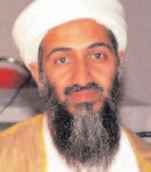
    In his final years hiding in a compound in Pakistan, Osama bin Laden was a man who at once showed great love and interest in his own family while he coldly drew up quixotic plans for mass casualty attacks on Americans, according to documents seized by Navy SEALs the night he was killed.

    On May 20th  morning, the U.S. Office of the Director of National Intelligence released an unprecedented number of documents from what U.S. officials have described as the treasure-trove picked up by the SEALs at bin Laden’s compound in Abbottabad, Pakistan, on May 2, 2011.

    Totaling 103 documents, they include the largest repository of correspondence ever released between members of bin Laden’s immediate family and significant communications between bin Laden and other leaders of al Qaeda as well as al Qaeda’s communications with terrorist groups around the Muslim world.

    Also released was a list of bin Laden’s massive digital collection of English-language books, think tank reports and U.S. government documents, numbering 266 in total.

    To the end bin Laden remained obsessed with attacking Americans. In an undated letter he told jihadist militants in North Africa that they should stop “insisting on the formation of an Islamic state” and instead attack U.S. embassies in Sierra Leone and Togo and American oil companies. Bin Laden offered similar advice to the al Qaeda affiliate in Yemen, telling it to avoid targeting Yemeni police and military targets and instead prioritize attacks on American targets.

    Much of bin Laden’s advice either didn’t make it to these groups or was simply ignored because al Qaeda affiliates in Yemen and North Africa continued to attack local targets.

    ISIS, of course, didn’t exist at the time bin Laden was writing. The group, which now controls a large swath of territory in the Middle East, grew out of al Qaeda in Iraq and has charted a different path, seeking to create an Islamic state and not prioritizing attacks on the United States and its citizens.

    Taken together, these documents and reading materials paint a complex, nuanced portrait of the world’s most wanted man in the years before he was killed in the raid on his compound.

    In the letters that bin Laden exchanged with his many sons and daughters, he emerges as a much-loved and admired father who doted on his children. And in a letter he sent to one of his wives, he even comes off as a lovelorn swain.

    That’s in sharp contrast to the letters bin Laden sent to al Qaeda leaders that demanded mass casualty attacks against American targets and insisted that al Qaeda affiliates in the Middle East stop wasting their time on attacks against local government targets. “The focus should be on killing and fighting the American people,” bin Laden emphasized.

    What bin Laden was reading

    Bin Laden’s digital library is that of an avid reader whose tastes ran from “Obama’s Wars,” Bob Woodward’s account of how the Obama administration surged U.S. troops in Afghanistan in 2009 and 2010, to Noam Chomsky as well as someone who had a pronounced interest in how Western think tanks and academic institutions were analyzing al Qaeda.

    Bin Laden was a meticulous editor, and some of the memos he wrote were revised as many as 50 times. Of the thousands of versions of documents recovered from computers and digital media that the SEALs retrieved at bin Laden’s compound, the final tally numbers several hundred documents.

    The new documents show how bin Laden reacted to the events of the Arab Spring, which was roiling the Middle East in the months before his death. While bin Laden had nothing to say publicly about the momentous events in the Middle East, privately he wrote lengthy memos analyzing what was happening, pointing to the “new factor” of “the information technology revolution” that had helped spur the revolutions and characterizing them as “the most important events” in the Muslim world “in centuries.”

    Some of the documents paint an organization that understood it was under significant pressure from U.S. counterterrorism operations. One undated document explained that CIA drone attacks “led to the killing of many jihadi cadres, leaders and others,” and noted, “(T)his is something that is concerning us and exhausting us.” Several documents mention the need to be careful with operational security and to encrypt communications and also the necessity of making trips around the Afghan-Pakistan border regions only on “cloudy days” when American drones were less effective.

    Al Qaeda members knew they were short on cash, with one writing to bin Laden, “Also, there is the financial problem.”

    Some of the documents have nothing to do with terrorism. One lengthy memo from bin Laden worried about the baleful effects of climate change on the Muslim world and advocated not depleting precious groundwater stocks. Sounding more like a World Bank official than the leader of a major terrorist organization, bin Laden fretted about “food security.” He also gave elaborate instructions to an aide about the most efficacious manner to store wheat.

    Family concerns

    Many of the documents concern bin Laden’s sprawling family, which included his four wives and 20 children. Bin Laden took a minute interest in the marriage plans of his son Khalid to the daughter of a “martyred” al Qaeda commander, and he exchanged a number of letters with the mother of the bride-to-be. Bin Laden excitedly described the impending nuptials, “which our hearts have been looking forward to.”

    Bin Laden corresponded at length with his son Hamza and also with Hamza’s mother, Khairiah, who had spent around a decade in Iran under a form of house arrest following the Taliban’s fall in neighboring Afghanistan during the winter of 2001.

    Hamza wrote a heartfelt letter to bin Laden in 2009 in which he recalled how he hadn’t seen his father since he was 13, eight years earlier: “My heart is sad from the long separation, yearning to meet with you. … My eyes still remember the last time I saw you when you were under the olive tree and you gave each one of us Muslim prayer beads.”

    In 2010 the Iranians started releasing members of the bin Laden family who had been living in Iran. Bin Laden spent many hours writing letters to them and to his associates in al Qaeda about how best he could reunite with them.

    In a letter to his wife Khairiah, he wrote tenderly, “(H)ow long have I waited for your departure from Iran.”

    Bin Laden was paranoid that the Iranians –who he said were “not to be trusted” — might insert electronic tracking devices into the belongings or even the bodies of his family as they departed Iran. He told Khairiah that if she had recently visited an “official dentist” in Iran for a filling that she would need to have the filling taken out before meeting with him as he worried a tracking device might have been inserted inside.

    U.S. intelligence officials have a theory that bin Laden might have been grooming Hamza eventually to succeed him at the helm of al Qaeda because the son’s relative youth would energize al Qaeda’s base. But Hamza never made it to his father’s hiding place in Abbottabad. When the SEALs raided bin Laden’s compound, they assumed Hamza would likely be one of the adult males living there, but he wasn’t.

    U.S. intelligence officials say they don’t know where Hamza, now in his late 20s, is today.

  • US arms Pakistan with combat aircraft, trainer jets

    US arms Pakistan with combat aircraft, trainer jets

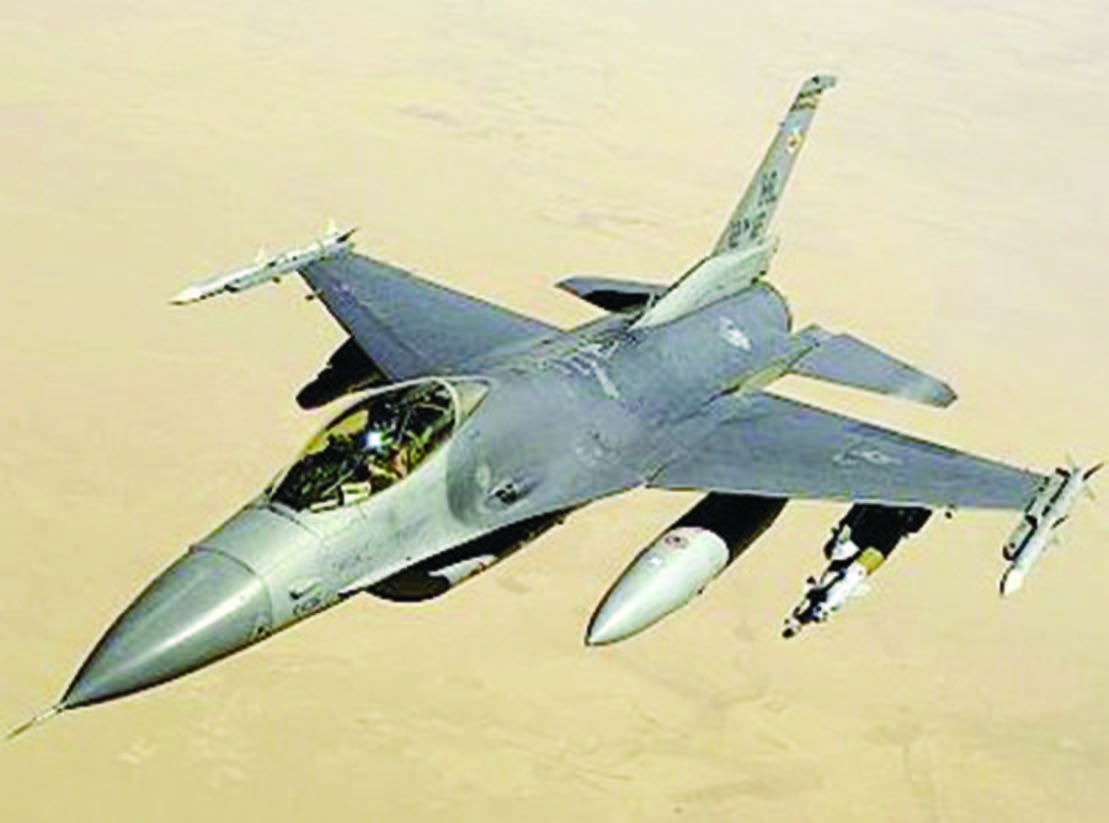
    WASHINGTON (TIP): As the United States withdraws its forces from Afghanistan, the Obama administration has armed Pakistan with 14 combat aircraft, 59 military trainer jets and 374 armored personnel carriers, an internal Congressional report has said.

    The major defense articles have been transferred to Pakistan under its ‘Excessive Defense Article’ category, which are mostly from its war combat zones of Afghanistan and Iraq.

    India had in the past have opposed the transfer of such arms to Pakistan as it believes Islamabad would eventually use the fighter jets against it.

    According to an internal report prepared by Congressional Research Service – an independent research wing of the Congress – Pakistan has either made full payment or will make payments from its national funds towards the purchase of 18 new F-16C/D Block 52 Fighting Falcon combat aircraft worth USD1.43 billion.

    This includes F-16 armaments including 500 AMRAAM air-to-air missiles; 1,450 2,000-pound bombs; 500 JDAM Tail Kits for gravity bombs; and 1,600 Enhanced Paveway laser-guided kits. All this has cost Pakistan USD629 million.

    Pakistan has also paid USD298 million for 100 harpoon anti-ship missiles, 500 sidewinder air-to-air missiles (USD95 million); and seven Phalanx Close-In Weapons System naval guns (USD80 million).

    Under Coalition Support Funds (in the Pentagon budget), Pakistan received 26 Bell 412EP utility helicopters, along with related parts and maintenance, valued at USD235 million.

    Pakistan is also receiving military equipment with a mix of its national funds and America’s foreign military funding.

    These include 60 Mid-Life Update kits for F-16A/B combat aircraft (valued at USD891 million, with USD477 million of this in FMF).

    Pakistan has purchased 45 such kits, with all upgrades completed to date. This include 115 M-109 self-propelled howitzers (USD87 million, with USD53 million in FMF).

    Under Frontier Corps, and Pakistan Counterinsurgency Fund authorities, US has provided four Mi-17 multirole helicopters (another six were provided temporarily at no cost), four King Air 350 surveillance aircraft, and 450 vehicles.

    Pakistan has also received 20 Buffalo explosives detection and disposal vehicles, helicopter spare parts, explosives detectors, night vision devices, radios, body armor, helmets, first aid kits, litters, and individual soldier equipment.

    Through International Military Education and Training and other programs, the US has funded and provided training for more than 2,000 Pakistani military officers.

    In April, the State Department approved a possible USD- 952 million FMS deal with Pakistan for 15 AH-1Z Viper attack helicopters and 1,000 Hellfire II missiles.

    Congress has appropriated about USD3.6 billion in Foreign Military Financing for Pakistan since 2001, more than two-thirds of which has been disbursed.

    President Barack Obama has slowed the drawdown of the roughly 10,000 US troops remaining in Afghanistan until at least the end of the year.

  • Taliban kill 14, mostly foreigners, in Kabul guesthouse siege

    Taliban kill 14, mostly foreigners, in Kabul guesthouse siege

    KABUL (TIP): Fourteen people, most of them foreigners, were killed in a Taliban attack on a Kabul guesthouse that trapped dozens attending a concert and triggered an hours-long standoff with Afghan forces, officials said on May 14.

    Four Indians, two Pakistanis, an American, an Italian and a British-Afghan dual national were among those killed in the overnight siege on the Park Palace, which was about to host a performance by a well-known Afghan singer.

    The Taliban claimed responsibility for the seven-hour assault, which triggered explosions and bursts of gunfire. It came as Afghan forces face their first fighting season against the insurgents without the full support of US-led foreign combat troops.

    “An attack against civilians gathered for a cultural event in the Park Palace hotel in Kabul killed 14 civilians and injured several others,” the United Nations Assistance Mission in Afghanistan (UNAMA) said in a statement.

    Kabul police chief Abdul Rahman Rahimi earlier said five people including foreigners and Afghans were killed in the attack, but deaths confirmed by overseas governments saw the toll of foreigners rise.

    “Fifty-four people were rescued by security forces,” Rahimi added, after a large number of armed personnel swooped on the guesthouse, located in an up-market district and popular with international aid agency workers.

    An Indian foreign ministry official said that “unfortunately four Indians have died in the attack as per the information we have so far”.

    Prime Minister Narendra Modi had spoken with Afghan President Ashraf Ghani to offer his condolences, saying “we are one when it comes to fighting terror”.

    US embassy spokeswoman Monica Cummings said: “Our thoughts are with the families of the victims at this time.”

    The Pakistani embassy said two of its nationals were killed and the British embassy confirmed the death of a British-Afghan dual national, adding in a statement that “the next of kin have been informed and we are providing consular assistance”.

    The Taliban, which has stepped up assaults on government and foreign targets, said that the attack was carried out by a single gunman and “planned carefully to target the party in which important people and Americans were attending”.

    The attack was also claimed by the Taliban-allied Haqqani network that is believed to be based out of the porous Afghanistan-Pakistan border region.

  • Afghan judge sentences 4 to death in mob killing of woman

    KABUL (TIP): An Afghan court on May 5 convicted and sentenced four men to death for their role in the brutal mob killing of a woman in Kabul in March – a slaying that shocked the nation and spurred calls for authorities to ensure women’s rights to equality and protection from violence.

    The sentences were part of a trial of 49 suspects, including 19 police officers, over the March 19 killing of the 27-year-old woman named Farkhunda who was beaten to death in a frenzied attack sparked by a bogus accusation that she had burned a copy of the Quran.

    The trial, which began Saturday, only involved two full days of court proceedings – an unusual swiftness in the slow-moving Afghan judicial system. It was broadcast live on national television, reflecting huge public interest in the case.

    Judge Safiullah Mojadedi handed down the four death sentences at Afghanistan’s Primary Court in Kabul today. He also sentenced eight of the defendants to 16 years in prison and dropped charges against 18. The remaining suspects are to be sentenced on Sunday.

    The defendants have the right to appeal their sentences. The charges included assault, murder and encouraging others to participate in the assault. The police officers were charged with neglecting their duties and failing to prevent the attack.

    Farkhunda’s brother, Mujibullah, told The Associated Press that her family was angered by the leniency of the court toward the majority of the defendants.

    “The outcome of the trial is not fair and we do not accept it – you saw just four people sentenced to death but everybody knows that more than 40 people were involved in martyring and burning and beating my sister,” said Mujibullah, who like many Afghans, including his sister, uses only one name.

    “Eighteen people have been freed. The court should punish them and that should be a lesson for anyone who would commit this sort of crime, anywhere in our country, in the future,” he added.

    Farkhunda’s brutal killing shocked many Afghans, though some public and religious figures said it would have been justified if she had in fact damaged a Quran. A presidential investigation later found that she had not damaged a copy of the Muslim holy book.

    The last agonising and brutal moments of her life were captured on mobile phone cameras by witnesses and those in the mob that attacked her. The videos of the assault circulated widely on social media. They showed her being punched, kicked, beaten with planks of wood, pushed by police onto a roof and dropped from it, thrown in the street and run over by a car.

  • Strategic Autonomy as an Indian Foreign Policy Option

    Strategic Autonomy as an Indian Foreign Policy Option

    [quote_right]For a large country like India, which has the potential of becoming a big power in the future, strategic autonomy is a compelling choice. By virtue of its demographic, geographic, economic and military size, India must lead, but does not have yet the comprehensive national power to do so. It cannot subordinate itself to the policies and interests of another country, however powerful, as its political tradition and the functioning of its democracy will not allow this. India may not be strong enough to lead, but it is sufficiently strong not to be led”, says the author.[/quote_right]

    In the joint statement issued during the Indian prime minister’s visit to France in April, the two sides reaffirmed “their independence and strategic autonomy” in joint efforts to tackle global challenges. In the French case, as a member of NATO it is not so clear what strategic autonomy might mean, but in our case it would essentially mean independence in making strategic foreign policy decisions, and, consequently, rejecting any alliance relationship. It would imply the freedom to choose partnerships as suits our national interest and be able to forge productive relationships with countries that may be strategic adversaries among themselves.

    In practical terms, this means that India can improve relations with the United States of America and China while maintaining close ties with Russia. It can forge stronger ties with Japan and still seek a more stable relationship with China. It can forge strong ties with Israel and maintain very productive ties with the Arab world, including backing the Palestinians in the United Nations. It means that India can have strategic partnerships with several countries, as is the case at present with the US, France, Germany, the United Kingdom, the European Union, Russia, China, Japan, Brazil, Saudi Arabia, Australia, Canada, Kazakhstan, Afghanistan, Vietnam, Iran and the like.

    It means that India can be a member of BRICS and the RIC dialogues, as well as IBSA, which exclude the West, and also forge closer political, economic and military ties with the Western countries. Our strategic autonomy is being expressed in other ways too. India is a democracy and believes that its spread favors its interests, but it is against the imposition of democracy by force on any country. If the spread of democracy is in India’s strategic interest, using force to spread it is against its strategic interest too, as is shown by the use of force to bring about democratic changes in West Asia by destroying secular authoritarian regimes and replacing them with Islamic authoritarian regimes. Likewise, India believes in respect for human rights, but is against the use of the human rights agenda to further the geo-political interests of particular countries, essentially Western, on a selective basis.

    For a large country like India, which has the potential of becoming a big power in the future, strategic autonomy is a compelling choice. By virtue of its demographic, geographic, economic and military size, India must lead, but does not have yet the comprehensive national power to do so. It cannot subordinate itself to the policies and interests of another country, however powerful, as its political tradition and the functioning of its democracy will not allow this. India may not be strong enough to lead, but it is sufficiently strong not to be led.

    India preserved its strategic autonomy even in the face of severe technology sanctions from the West on nuclear and missile issues. It preserved it by not signing the non-proliferation treaty and continuing its missile program. By going overtly nuclear in 1998, India once again exercised its strategic autonomy faced with attempts to close the doors permanently on its nuclear program by the permanent extension of the NPT and the comprehensive nuclear test ban treaty and fissile material cutoff treaty initiatives.

    In some quarters in India and abroad, the idea of strategic autonomy is contested as another manifestation of India’s non-aligned mindset, its propensity to sit on the fence, and avoid taking sides and assuming responsibility for upholding the present international order as a rising power should. These critics want India to join the US camp more firmly to realize its great power ambitions. These arguments ignore the reality that while the US has been crucial to China’s economic rise, China has been sitting on the fence for many years, even as a permanent member of the UN security council. Far from sacrificing its strategic autonomy, it has become a strategic challenger of the US.

    To be clear, the US government has officially stated its respect for India’s position on preserving its strategic autonomy, and denies any expectation that India would establish an alliance kind of relationship with it. It is looking for greater convergence in the foreign policies of the two countries, which is being realized.

    During Narendra Modi’s visit to the US in September, 2014, and Barack Obama’s visit to India in January this year, a strategic understanding on Asia Pacific and Indian Ocean issues, encapsulated in the January 2015 joint strategic vision for the Asia Pacific and the Indian Ocean has emerged. This document suggests a shift in India’s strategic thinking, with a more public position against Chinese maritime threat and a willingness to join the US in promoting partnerships in the region.

    Modi chose a striking formulation in his joint press conference with Obama in September when he said that the US was intrinsic to our Look East and Link West policies, which would suggest a growing role for the US in our foreign policy thinking. During Obama’s January visit, the joint statement noted that India’s Act East policy and the US rebalance to Asia provided opportunities for India, the US and other Asia-Pacific countries to work closely to strengthen regional ties. This was the first time that India implicitly endorsed the US rebalance towards Asia and connected our Act East policy to it.

    Rather than interpreting it as watering down our strategic autonomy, one can see it as strengthening it. So far, India has been hesitant to be seen drawing too close strategically to the US because of Chinese sensitivities. China watches closely what it sees are US efforts to rope India into its bid to contain China. At the same time, China continues its policies to strengthen its strategic posture in India’s neighborhood and in the Indian Ocean at India’s expense, besides aggressively claiming Indian territory.

    By strengthening relations with the US (which is strategically an Asian power), Japan and Vietnam, and, at the same time, seeking Chinese investments and maintaining a high-level dialogue with it, India is emulating what China does with India, which is to seek to build overall ties as much as possible on the economic front, disavow any negative anti-India element in its policies in our neighborhood, but pursue, simultaneously, strategic policies intended to contain India’s power in its neighborhood and delay its regional extension to Asia.

    In discussing the scope of our strategic autonomy, one should recognize that the strength of US-China ties, especially economic and financial, far exceeds that of India-US ties. India has to be careful, therefore, in how far it wants to go with the US with a view to improving its bargaining power with China. The other point to consider is the US-Pakistan equation. The US has just announced $1 billion of military aid to Pakistan; its position on the Taliban is against our strategic interests in Afghanistan; its stand on Pakistan’s sponsorship of terrorism against us is not robust enough.

    To conclude, strategic autonomy for India means that it would like to rely as far as possible on its own judgment on international issues, balance its relations with all major countries, forge partnerships with individual powers and take foreign-policy positions based on pragmatism and self-interest, and not any alliance or group compulsion.

    (The author is former foreign secretary of India. He can be reached at sibalkanwal@gmail.com)

  • US is often unsure about who will die in drone strikes

    US is often unsure about who will die in drone strikes

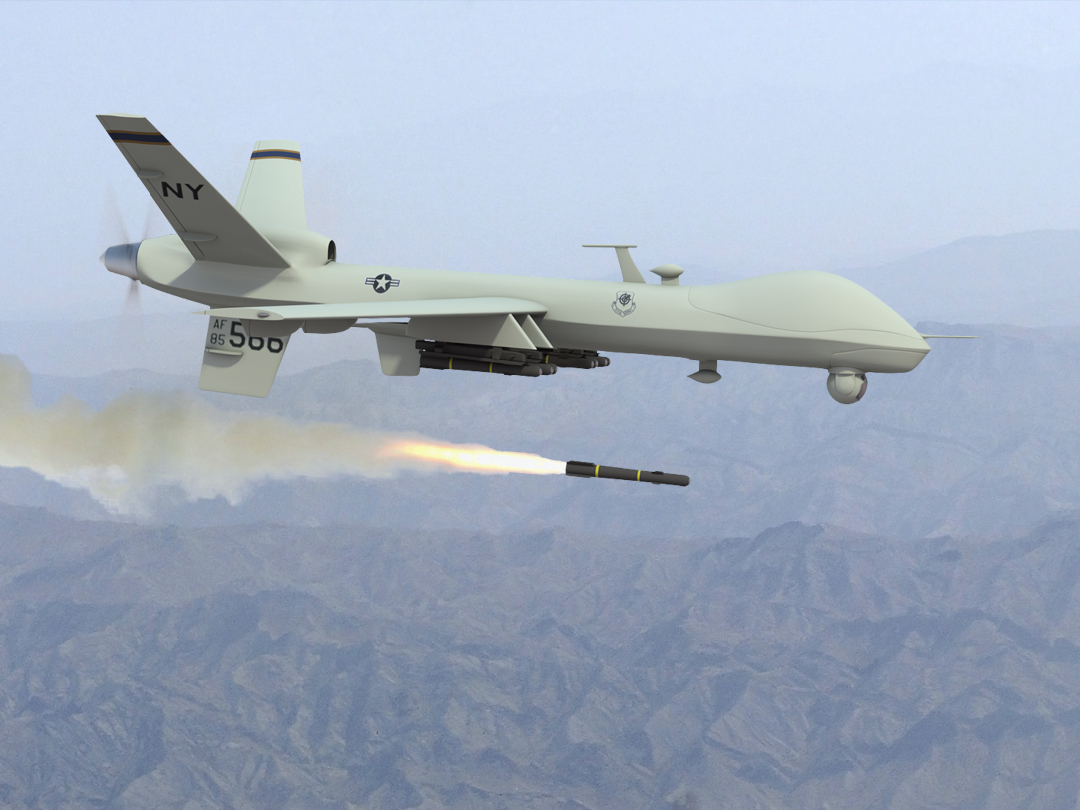
    WASHINGTON (TIP): Barack Obama inherited two ugly, intractable wars in Iraq and Afghanistan when he became president and set to work to end them. But a third, more covert war he made his own, escalating drone strikes in Pakistan and expanding them to Yemen and Somalia.

    The drone’s vaunted capability for pinpoint killing appealed to a president intrigued by a new technology and determined to try to keep the United States out of new quagmires. Aides said Obama liked the idea of picking off dangerous terrorists a few at a time, without endangering American lives or risking the years long bloodshed of conventional war.

    “Let’s kill the people who are trying to kill us,” he often told aides.

    By most accounts, hundreds of dangerous militants have, indeed, been killed by drones, including some high-ranking al-Qaida figures. But for six years, when the heavy cloak of secrecy has occasionally been breached, the results of some strikes have often turned out to be deeply troubling.

    Every independent investigation of the strikes has found far more civilian casualties than administration officials admit. Gradually, it has become clear that when operators in Nevada fire missiles into remote tribal territories on the other side of the world, they often do not know who they are killing, but are making an imperfect best guess.The president’s announcement on Thursday that a January strike on al-Qaida in Pakistan had killed two Western hostages, and that it took many weeks to confirm their deaths, bolstered the assessments of the program’s harshest outside critics. The dark picture was compounded by the additional disclosure that two American members of al-Qaida were killed in strikes that same month, but neither had been identified in advance and deliberately targeted.

    In all, it was a devastating acknowledgment for Obama, who had hoped to pioneer a new, more discriminating kind of warfare. Whether the episode might bring a long-delayed public reckoning about targeted killings, long hidden by classification rules, remained uncertain.Even some former Obama administration security officials have expressed serious doubts about the wisdom of the program, given the ire it has ignited overseas and the terrorists who have said they plotted attacks because of drones. And outside experts have long called for a candid accounting of the results of strikes.

    “I hope this event allows us at last to have an honest dialogue about the US drone program,” said Rachel Stohl, of the Stimson Center, a Washington research institute. “These are precise weapons. The failure is in the intelligence about who it is that we are killing. “Stohl noted that Obama and his top aides have repeatedly promised greater openness about the drone program but have never really delivered on it.

    In a speech in 2013 about drones, Obama declared that no strike was taken without “near-certainty that ano civilians will be killed or injured.” He added that “nevertheless, it is a hard fact that US strikes have resulted in civilian casualties” and said “those deaths will haunt us as long as we live.”

  • Ex-general, CIA chief Petraeus gets probation, $100,000 fine in leak case

    Ex-general, CIA chief Petraeus gets probation, $100,000 fine in leak case

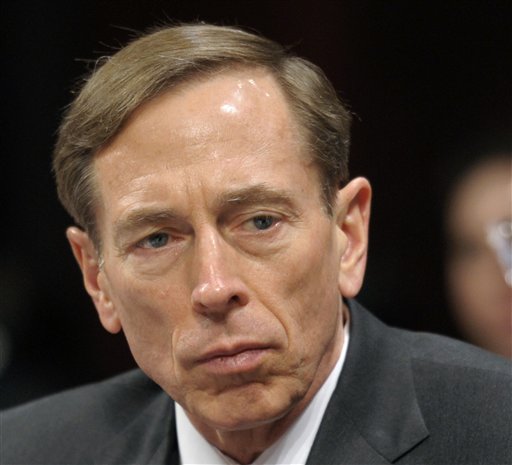
    CHARLOTTE, NC (TIP): Former US military commander and CIA director David Petraeus was sentenced to two years of probation and ordered to pay a$100,000 fine but was spared prison time on April 23 after pleading guilty to mishandling classified information.

    The retired four-star general apologized as he admitted in federal court in Charlotte, North Carolina, to giving the information to his mistress, who was writing his biography. He agreed under a plea deal to a misdemeanor charge of unauthorized removal and retention of classified material. US magistrate judge David Keesler raised the fine from the $40,000 that had been recommended to the maximum possible financial penalty for that charge, noting it needed to be higher to be punitive and reflect the gravity of the offense. “This constitutes a serious lapse of judgment,” Keesler said during the hour-long hearing. The guilty plea ended an embarrassing chapter for a man described in letters to the court as one of the finest military leaders of his generation. Petraeus, 62, a counter-insurgency expert with a Princeton University doctorate, served stints as the top U.S. commander in the wars in Iraq and Afghanistan and was once considered a possible vice presidential or presidential candidate.

  • Pakistan stood by us when China was isolated: Xi Jinping

    Pakistan stood by us when China was isolated: Xi Jinping

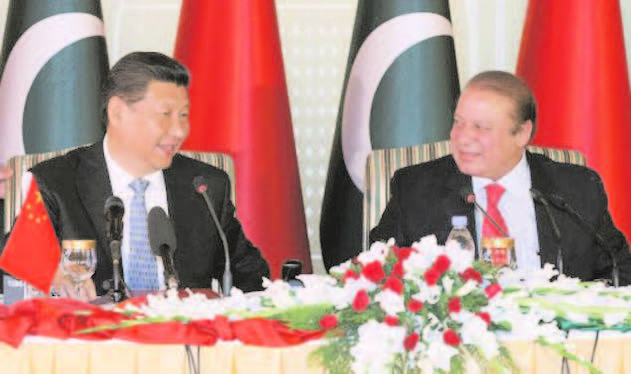
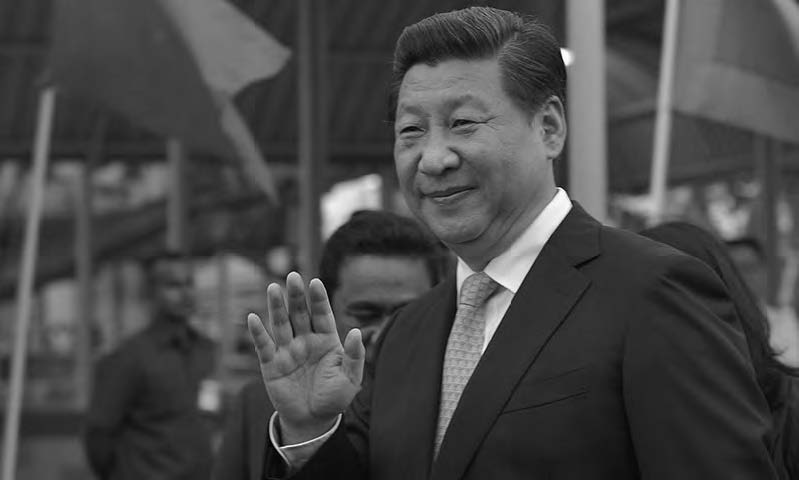
    ISLAMABAD (TIP): Chinese President Xi Jinping on April 21 described Pakistan as China’s “dependable” friend and firmly backed its territorial integrity, as he announced long-term support for the cash-strapped country’s economic development.

    Addressing a joint sitting of Pakistan’s parliament on the final day of his two-day maiden trip during which he oversaw signing of 51 agreements, Xi stressed that the bilateral ties are based on mutual trust and support.

    Xi, also the general-secretary of ruling Communist party, said China and Pakistan will always move forward together and the Chinese people will always stand together with the Pakistani people.

    “During my current visit, President Mamnoon Hussain, PM (Pakistan Prime Minister Nawaz) Sharif and I jointly agreed to elevate China-Pakistan relations to an all-weather strategic partnership,” Xi said, a day after unveiling USD 46 billion ambitious China-Pakistan Economic Corridor.

    The 3,000-km corridor linking China’s far-western region to Pakistan’s south-western Gwadar port on the Arabian Sea through Pakistan-occupied Kashmir (PoK) is massive project of road, rail, energy schemes, pipelines and investment parks.

    Xi lavished praise on Pakistan and said it stood with China from the earliest days of founding of the People’s Republic of China. He said Islamabad stood by Beijing at a time when China stood isolated on the world stage.

    He said both countries have tremendous support to each other and stood by each other in times of need.

    The two countries should support each other’s core interests, Xi said, noting that China firmly backs Pakistan’s territorial integrity.

    “Pakistan is the first foreign country that I visit this year and (it is my) first visit to your country, but Pakistan is not at all unfamiliar to me,” said Xi, the first Chinese President to visit Pakistan in nine years.

    He said he brought warm greetings and best wishes to the “brotherly people of Pakistan” on behalf of the 1.3 billion people of China.

    “Pakistan and China’s struggles have brought their hearts and minds together,” he said.

    He referred to the assistance offered by the two countries to one another in the events of natural disasters.

    Xi also praised Pakistan’s anti-terror effort, saying that Islamabad has always stood at the frontlines in the fight against terrorism and has made huge sacrifices to that end.

    He outlined the vision of Chinese development and said that China wants to go ahead by forging “win-win” cooperative deals with other countries, especially neighbours.

    Xi said China will open up all sectors of its economy. He said South Asia has great potential and China was eager to have close cooperation with all countries of the region.

    He mentioned his last year visit to three regional countries including India.

    Xi mentioned his concept of “Roads and Belts” and said China-Pakistan Economic Corridor will benefit all region of Pakistan and the region.

    He said China was also working for another regional connectivity plan to link with India, Bangladesh and Myanmar.

    Xi also said that China would work with Pakistan for reconciliation and peaceful transition in Afghanistan.

    Earlier, Xi arrived at the Parliament amid tight security. He was welcomed by Pakistan Prime Minister Sharif, National Assembly Speaker Ayaz Sadiq and Chairman Senate Mian Raza Rabbani.

    Sadiq officially welcomed the Chinese president and his delegation for visiting Pakistan.

    Sharif in his brief address at the end said that the two countries were committed to have closer cooperation in all fields.

  • Gunmen storm Afghan police station as mine clearers abducted

    KANDAHAR, AFGHANISTAN (TIP): Insurgents armed with guns and explosives attacked a police station in Afghanistan’s southern city of Lashkar Gar, wounding two officers and a civilian as gunmen elsewhere kidnapped at least a dozen mine clearers, authorities said.

    Nabi Jan Malakhail, the police chief of Helmand province, said at least two insurgents were inside the police station, fighting late on Sunday with police who had the building surrounded. One suicide bomber had blown himself up outside the station to allow the others in, he said. Helmand province is a stronghold of the Taliban, who have been fighting the Kabul government for more than a decade.

    Meanwhile, gunmen kidnapped at least a dozen Afghan mine clearers in the eastern province of Paktia, said Gen. Zelmai Oryakhail, the provincial police chief. He said the clearers had been working without police or soldiers protecting them at their own request.

    No group immediately claimed either attack.

    The attacks come a day after a suicide bomber in Jalalabad killed at least 35 people and wounded around 125. President Ashraf Ghani attributed the attack to the Islamic State group, without revealing the source of his information.

    Also Sunday, the United Nations said that Afghanistan’s women were being failed by the country’s justice system as most complaints of domestic violence were dealt with through mediation rather than prosecution.

    In a new report, it said that only 5 percent of surveyed domestic violence cases were resolved through the judicial system, resulting in criminal prosecution and punishment for perpetrators.

    The UN’s Assistant Secretary General for Human Rights, Ivan Simonovic, said women often choose mediation to resolve complaints of violence, partly because they lack faith in the justice system.

  • Chinese president to visit Pakistan, hammer out $46-billion deal

    Chinese president to visit Pakistan, hammer out $46-billion deal

    ISLAMABAD (TIP): Chinese President Xi Jinping will launch energy and infrastructure projects worth $46 billion on a visit to Pakistan next week as China cements links with its old ally and generates opportunities for firms hit by slack growth at home.

    Also being finalized is a long-discussed plan to sell Pakistan eight Chinese submarines. The deal, worth between $4 billion and $5 billion, according to media reports, may be among those signed on the trip.

    Xi will visit next Monday and Tuesday, Pakistan’s foreign ministry said.

    Commercial and defence ties are drawing together the two countries, which share a remote border and long-standing mistrust of their increasingly powerful neighbour, India, and many Western nations.

    “China treats us as a friend, an ally, a partner and above all an equal — not how the Americans and others do,” said Mushahid Hussain Sayed, chairman of the Pakistan parliament’s defence committee.

    Pakistan and China often boast of being “iron brothers” and two-way trade grew to $10 billion last year from $4 billion in 2007, Pakistani data shows.

    Xi’s trip is expected to focus on a Pakistan-China Economic Corridor, a planned $46 billion network of roads, railways and energy projects linking Pakistan’s deepwater Gwadar port on the Arabian Sea with China’s far-western Xinjiang region.

    It would shorten the route for China’s energy imports, bypassing the Straits of Malacca between Malaysia and Indonesia, a bottleneck at risk of blockade in wartime.

    If the submarine deal is signed, China may also offer Pakistan concessions on building a refuelling and mechanical station in Gwadar, a defence analyst said.

    China’s own submarines could use the station to extend their range in the Indian Ocean.

    “China is thinking in terms of a maritime silk road now, something to connect the Indian Ocean and Pacific Ocean,” said a Pakistani defence official, who declined to be identified.

    For Pakistan, the corridor is a cheap way to develop its violence-plagued and poverty-stricken Baluchistan province, home to Gwadar.

    China has promised to invest about$34 billion in energy projects and nearly$12 billion in infrastructure.

    Xi is also likely to raise fears that Muslim separatists from Xinjiang are linking up with Pakistani militants, and he could also push for closer efforts for a more stable Afghanistan.

    “One of China’s top priorities on this trip will be to discuss Xinjiang,” said a Western diplomat in Beijing. “China is very worried about the security situation there.”

  • VOTING RIGHTS OF MUSLIMS SHOULD BE WITHDRAWN: SENA MOUTHPIECE

    MUMBAI (TIP): Shiv Sena courted controversy by demanding scrapping of voting rights of Muslims, saying the community has often been used for vote bank politics, evoking sharp reactions from several political parties which accused it of trying to inflame passions and divide people.

    An editorial in Sena mouthpiece ‘Saamana’ also likened the All India Majlis-e-Ittihadul-Muslimeen (MIM) and Owaisi brothers to “poisonous snakes” who spew venom to “exploit” the minority community.

    “Vote bank politics is being played in the name of fighting against the injustice meted out to Muslims. Their educational and health status is being used politically. This politics was once played by the Congress and now every other person calls himself secular.

    “If Muslims are only being used this way to play politics, then they can never develop. Muslims will have no future till they are used to play vote bank politics and thus Balasaheb had once said to withdraw Muslims voting rights. What he said is right,” the editorial said.

    Strongly condemning the remarks, Congress said they are aimed at dividing society and inflaming passions and are unacceptable. Those behind them have no place in a culture like ours.

    It also said such controversial statements continue to be made despite repeated assurances from Prime Minister Narendra Modi in Parliament.

    The Samajwadi Party castigated the remarks, saying it was aimed at creating enmity between various communities and demanded that the government initiate legal action against them. Those who do not believe in the Constitution have no place in the country and should leave it, it said.

    Under attack, the Shiv Sena later sought to downplay the issue, contending that the party is against “appeasement politics”.

    “The (Saamana) article tries to say that to achieve development in every sphere of life, the politics of appeasement being done by a section of leaders needs to be done away with as it is not in the interest of Muslims. These people are only misguiding the community without really helping them,” Sena MLC and spokesperson Dr Neelam Gorhe told PTI.

    The Sena in its editorial said the “secular masks” of all the so-called secular political parties will be worn out, once such voting rights are withdrawn, it said.

    Taking a dig at AIMIM MP Asaduddin Owaisi for daring Sena president Uddhav Thackeray to come to Hyderabad, the editorial said, “Owaisi dares us to come to Hyderabad. But we want to ask him if Hyderabad is in India or in Lahore, Karachi or Peshawar. The pride of Marathis is known in Pakistan, Afghanistan and Kandahar as well.”

    “By saving the hiding place of poisonous snakes, you cannot kill them. Owaisi and his party are like a snake which, if fed, will do no good to the nation. AIMIM is an old snake,” it said.

    Criticising the Sena, Congress leader Anand Sharma said, “These observations deserve to be condemned.It’s unacceptable. We are proud to be a constitutional democracy, a secular nation. We are proud of India’s diversity, its pluralism. India belongs to all and every citizen of this country enjoys the same fundamental rights.”

    He said it is very clear that there are elements who are creating conflict and division in society to inflame passions and there are multiple violations taking place by some leaders and members of the extended Sangh parivar despite assurances of the Prime Minister to Parliament and the nation.

    “It is for them now to realise that they have been elected to provide governance and not to create daily commodition,” he said.

    Another party leader Abhishek Singhvi said though he does not want to comment on “silly, ridiculous, ill informed and deliberately provocative” statements,”I think Saamna thinks it might be living in some Talibanised land and not in a secular, democratic, socialist, world’s largest vibrant democracy. I think it is Saamna which has no place in a culture like ours rather than those against whom they spread hatred.”

  • 10 killed in Taliban siege on Afghan court complex

    MAZAR-I-SHARIF (Afghanistan) (TIP): At least 10 people died today when Taliban insurgents wearing military uniforms mounted a six-hour gun and grenade siege on a court complex in northern Afghanistan, in an assault highlighting the country’s fragile security situation.

    The attack in the usually tranquil city of Mazar-i-Sharif occurred just before the start of the Taliban’s traditional spring offensive, set to be the first fighting season when Afghan security forces battle insurgents without full NATO support.

    Explosions rang out as the assailants lobbed grenades and exchanged gunfire with Afghan security forces, setting ablaze one of the buildings in the compound, according to officials and an AFP reporter at the scene.

    Dozens of people were left wounded, with reports emerging of blood shortages in hospitals and urgent appeals for donors circulating on social media.

    “Around noon four assailants dressed in military uniforms breached the main gate of the Appeals Court in Mazar-i-Sharif and started firing gunshots and throwing hand grenades inside the complex,” said Abdul Raziq Qaderi, the acting provincial police chief of Balkh province.

    “Five security personnel and five civilians were killed and 66 others were wounded,” he added.

    Noor Mohammad Faiz, a senior doctor at the local public hospital, confirmed the toll, adding that some of the wounded were in critical condition.

    “Police, prosecutors, court staff, women and children are among those wounded,” Faiz told AFP.

    The insurgents were holed up inside the complex for six hours, surrounded by a large number of Afghan security forces before they were taken down.

    The Taliban claimed responsibility for the attack, which underscores Afghanistan’s precarious security situation as US-led foreign troops pull back from the frontlines after a 13-year war against the Taliban.

    “Our mujahideen have carried out a martyrdom attack… in Mazar-i-Sharif city,” Taliban spokesman Zabihullah Mujahid told AFP by telephone.

    Militant attacks are relatively rare in Mazar-i-Sharif, a city well-known as a melting pot of diverse cultures and religious influences where liberal attitudes coexist with conservative traditions.

    The United States’ embassy in Kabul strongly condemned today’s “horrific attack”.

    It “reminds us of the risks that police, prosecutors and judges face in going about their daily work pursuing impartial justice and rule of law in Afghanistan,” the embassy said in a statement.

  • Prince Harry to quit British army in June

    LONDON: It’s a soldier’s life no more for Britain’s Prince Harry.

    Royal officials said on Tuesday that the 30-year old prince will leave the armed forces in June after 10 years of service that included two tours of duty in Afghanistan.

    Harry’s final army duties will include a four-week assignment in April and May with the Australian Defence Force. The prince will spend time in Darwin, Perth and Sydney and attend centenary commemorations of the World War I Gallipoli campaign in Turkey.

    Harry said that leaving the army had been “a really tough decision” but he was excited about the future.

    In a statement, Harry said he felt “incredibly lucky” to have had the chance to serve in the armed forces.

    “From learning the hard way to stay onside with my Color Sergeant at Sandhurst, to the incredible people I served with during two tours in Afghanistan _ the experiences I have had over the last 10 years will stay with me for the rest of my life,” he said. “For that I will always be hugely grateful.”

    Harry, who is fourth in line to the British throne, graduated from Sandhurst officers’ academy in 2006 and joined the Household Cavalry as an armored reconnaissance troop leader. He served in Afghanistan as a battlefield air controller for 10 weeks in 2007-2008 until a media leak cut his tour short.

    Keen to return to the front lines despite fears he would be a top Taliban target, Harry retrained as a helicopter pilot and served in Afghanistan in 2012- 2013 as an Apache co-pilot gunner.

    Most recently he has served as a staff officer in the army’s London headquarters, playing a big role in bringing the Invictus Games _ an international sports competition for wounded troops _ to Britain.

    Kensington Palace said that after leaving the army Harry will volunteer with the British military’s Recovery Capability Program, which helps wounded service members, “while actively considering other longer-term employment opportunities.”

    Harry was the first British royal to see combat since his uncle, Prince Andrew, who flew Royal Navy helicopters during the 1982 Falklands War. His older brother Prince William also attended Sandhurst before training as a Royal Navy search-and-rescue helicopter pilot. He has since left the navy to become an air-ambulance pilot.

    Harry has often seemed more comfortable as a soldier than in his royal duties, although he has been visibly energized by his work with charities for wounded veterans.

  • Afghan court sentences photojournalist’s killer to 20 years in jail

    Afghan court sentences photojournalist’s killer to 20 years in jail

    KABUL (TIP): An Afghan police officer who shot and killed a veteran Associated Press photographer during the country’s 2014 presidential election has been sentenced to 20 years in prison, a Supreme Court official told mediapersons on March 30.

    The official spoke on condition of anonymity because he was not authorized to give statements to the press.

    A second AP reporter was injured in the attack, which took place in eastern Khost province while they were sitting in their car inside a government compound.

    Anja Niedringhaus, 48, a German national, was killed instantly while Canadian reporter Kathy Gannon who had covered conflict in Afghanistan for 30 years survived the shooting.

    The police officer had initially been sentenced to death, but that decision was overturned by an appeals court and the Supreme Court upheld that ruling, the court official said.

  • Air strikes kill 30 militants allied with Pakistani Taliban: sources

    ISLAMABAD (TIP): Pakistani jet fighters killed 30 militants allied to the Pakistani Taliban in a missile attack in the mountainous northwestern Khyber region on March 24, including the group’s spokesman, intelligence officials said.

    The air force has been pounding positions in the Tirah Valley for days and the military says it has killed scores. At least seven soldiers have also been killed.

    The 30 killed in Wednesday’s attack in the Sipah district were from the Lashkar-e-Islam, which announced an alliance with the Taliban earlier this month, the intelligence officials said.

    The casualties included group spokesman Salahuddin Ayubi, the officials said.

    Members of the group said they could neither confirm nor deny the intelligence officials’ version of events and said they were checking.

    A US drone strike killed 11 Pakistani Taliban militants in Kunar in northeastern Afghanistan, intelligence officials said on Wednesday, hours after a strike killed at least nine militants in the same area. They said six or seven senior Taliban commanders had been killed, a claim the Taliban denied.

    “I am sitting here in Kunar along with several other people but our fighters and commanders haven’t been killed in a drone strike,” Ehsanullah Ehsan, spokesman for the Taliban faction, Tehrik-e-Taliban Pakistan Jamaatul Ahrar, told Reuters.

    The Pakistani and Afghan Taliban share a similar jihadist ideology but operate as separate entities.

    No one tracks drone strikes in Afghanistan – many of them take place in remote regions and are not reported -but Taliban commanders say that fighters there have been increasingly targeted since late last year.

    The strikes come amid warming relations between Pakistan and Afghanistan, traditionally hostile neighbours who each accuse the other of harbouring insurgents to act as proxy forces.

    Relations improved after Afghan President Ashraf Ghani was elected last year. Pakistan says it is supporting potential peace talks between the Afghan government and Afghan Taliban.

  • Afghan protesters demand justice for woman killed by mob

    KABUL, Afghanistan: Hundreds marched on Monday in the Afghan capital, demanding justice for a woman beaten to death last week by a Kabul mob over false allegations she had burned a Quran — a vicious killing that shocked many Afghans and renewed calls for authorities to ensure women’s rights to equality and protection from violence.

    The killing has also drawn condemnation from Afghanistan’s President Ashraf Ghani, now in Washington on his first state visit to the United States since taking office in September, who denounced it as a “heinous attack” and ordered an investigation.

  • SMART MOVES – Modi Government on US & China

    SMART MOVES – Modi Government on US & China

    [vc_row][vc_column][vc_column_text]

    “The Modi government will face the test of managing closer strategic relations with the US, which are in part directed against China, and forging closer ties with China that go against this strategic thrust, besides the reality that China has actually stronger ties with the US than it can ever have with India, though the underlying tensions between the two are of an altogether different order than between India and the US.”


    [/vc_column_text][/vc_column][/vc_row][vc_row][vc_column width=”1/2″][vc_column_text]

    [quote_box_center]China[/quote_box_center] 

    Prime Minister Modi has been quick to court both US and China. His first overtures were to China, prompted no doubt by his several visits there as Chief Minister of Gujarat, Chinese investments in his home state and his general admiration for China’s economic achievements. Beyond this personal element, many in the government and corporate sectors in India believe that our politically contentious issues with China, especially the unresolved border issue, should be held in abeyance and that economic cooperation with that country should be expanded, as India can gain much from China’s phenomenal rise and the expertise it has developed in specific sectors, especially in infrastructure. It is also believed that China, which is now sitting over $4 trillion of foreign exchange reserves, has huge surplus resources to invest and India should actively tap them for its own developmental needs. In this there is continuity in thinking and policy from the previous government, with Modi, as is his wont, giving it a strong personal imprint.

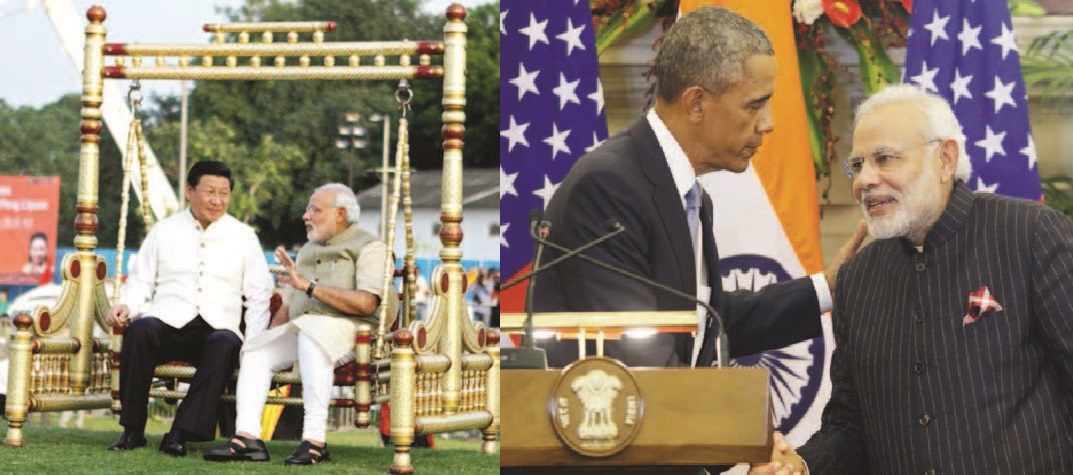
    The first foreign dignitary to be received by Modi after he became Prime Minister was the Chinese Foreign Minister, representing the Chinese President. This was followed by up by his unusually long conversation on the telephone with the Chinese Prime Minister. Our Vice-President was sent to Beijing to celebrate the 60th anniversary of the Panchsheel Agreement even though China has blatantly violated this agreement and India’s high level diplomatic endorsement of it only bolsters Chinese diplomacy, especially in the context of China-created tensions in the South China and East China Seas. Modi had occasion to meet President Xi Jinxing in July at the BRICS summit in July 2014, and this was followed up by the Chinese President’s state visit to India in September 2014, during which the Prime Minister made unprecedented personal gestures to him in an informal setting in Ahmedabad.

    The dramatics of Modi’s outreach to the Chinese aside, his objectives in strengthening economic ties with China, essentially imply a consolidation of the approach followed in the last decade or so, with some course correction here and there. In this period, China made very significant headway in our power and telecom sectors, disregarding obvious security concerns associated with China’s cyber capabilities and the links of Chinese companies to the Chinese military establishment. Many of our top companies have tapped Chinese banks and financial institutions for funds, and this has produced a pro-Chinese corporate lobby in our country. This lobby will obviously highlight the advantages of economic engagement over security concerns. The previous Prime Minister followed the approach of emphasizing shared interests with China rather than highlighting differences. The position his government took on the Depsang incident in May 2013 showed his inclination to temporize rather than confront. Externally, he took the line, which Chinese leaders repeated, that the world is big enough for India and China to grow, suggesting that he did not see potential conflict with China for access to global markets and resources. Under him, India’s participation in the triangular Russia-India-China format (RIC) and the BRICS format continued, with India-originated proposal for a BRICS Development Bank eventually materializing. Indian concerns about the imbalance in trade were voiced, but without any action by China to redress the situation. India sought more access to the Chinese domestic market for our competitive IT and pharmaceutical products, as well as agricultural commodities, without success. Concerns about cheap Chinese products flooding the India market and wiping out parts of our small-scale sector were voiced now and then, but without any notable remedial steps. The Strategic Economic Dialogue set up with China, which focused primarily on the railway sector and potential Chinese investments in India, did not produce tangible results.

    The Manmohan Singh government, despite China’s aggressive claims on Arunachal Pradesh and lack of progress in talks between the Special Representatives on the boundary issue as well as concerns about China’s strategic threats to our security flowing from its policies in our neighborhood, especially towards Pakistan and Sri Lanka, declared a strategic and cooperative partnership with that country. During Manmohan Singh’s visit to China in September 2013, we signed on to some contestable formulations, as, for example, the two sides committing themselves to taking a positive view of and supporting each other’s friendship with other countries, and even more surprisingly, to support each other enhancing friendly relations with their common neighbors for mutual benefit and win-win results. This wipes off on paper our concerns about Chinese policies in our neighborhood. We supported the BCIM (Bangladesh, China, India, Myanmar) Economic Corridor, including people to people exchanges, overlooking Chinese claims on Arunachal Pradesh and the dangers of giving the Chinese access to our northeast at people to people level. The agreement to carry out civil nuclear cooperation with China was surprising, as this makes our objections to China-Pakistan nuclear ties politically illogical. We also agreed to enhance bilateral cooperation on maritime security, which serves to legitimize China’s presence in the Indian Ocean when China’s penetration into this zone poses a strategic threat to us.

    As a mark of continuity under the Modi government, during President Xi Jinxing’s September 2014 visit to India, the two sides agreed to further consolidate their Strategic and Cooperative Partnership, recognized that their developments goals are interlinked and that their respective growth processes are mutually reinforcing. They agreed to make this developmental partnership a core component of their Strategic and Cooperative Partnership. The India-China Strategic Economic Dialogue was tasked to explore industrial investment and infrastructure development.

    To address the issue of the yawning trade imbalance, measures in the field of pharmaceuticals, IT, agro-products were identified and a Five-Year Development Program for economic and Trade Cooperation to deepen and balance bilateral trade engagement was signed. Pursuant to discussions during the tenure of the previous government, the Chinese announced the establishment of two industrial parks in India, one in Gujarat and the other in Maharashtra, and the “Endeavour to realize” an investment of US $ 20 billion in the next five years in various industrial and infrastructure development projects in India, with production and supply chain linkages also in view. In the railway sector, the two sides the two sides agreed to identify the technical inputs required to increase speed on the existing railway line from Chennai to Mysore via Bangalore, with the Chinese side agreeing to provide training in heavy haul for 100 Indian railway officials and cooperating in redevelopment of existing railway stations and establishment of a railway university in India. The Indian side agreed to actively consider cooperating with the Chinese on a High Speed Rail project. In the area of financial cooperation, the Indian side approved in principle the request of the Bank of China to open a branch in Mumbai.

    The Modi government has agreed to continue defense contacts, besides holding the first round of the maritime cooperation dialogue this year, even though by engaging India in this area it disarms our objections to its increasing presence in the Indian Ocean area, besides drawing negative attention away from its policies in the South China Sea as well as projecting itself as a country committed to maritime cooperation with reasonable partners. The joint statement issued during Xi Jinxing’s visit omitted any mention of developments in western Pacific, though it contained an anodyne formulation on Asia-Pacific. This becomes relevant in view of the statements on Asia-pacific and the Indian Ocean region issued during President Obama’s visit to India in January 2015.

    Our support, even if tepid, continues for the BCIM Economic Corridor. On our Security Council permanent membership, China continues its equivocal position, stating that it “understands and supports India’s aspiration to play a greater role in the United Nations including in the Security Council”. It is careful not to pronounce support for India’s “permanent membership”. During Foreign Minister Sushma Swaraj’s visit to China for the RIC Foreign Ministers meeting, China has maintained its equivocation, although the press has wrongly presented the formulation as an advance. China is openly opposed to Japan’s candidature in view of the sharp deterioration of their ties. In India’s case, it avoids creating a political hurdle to improved ties by openly opposing India’s candidature. “A greater role” could well mean a formula of immediately re-electable non-permanent members, of the kind being proposed by a former UN Secretary General and others.

    On counter-terrorism lip service is being paid to cooperation. On Climate Change, the two countries support the principle of “equity, common but differentiated responsibilities and respective capabilities”, although the US-China agreement on emission reduction targets has created a gap in Indian and Chinese positions, with the Modi government deciding to delink itself from China in international discussions to follow.

    In diplomacy, once concessions or mistakes are made, retrieval is very difficult unless a crisis supervenes. The Modi government, for reasons that are not too clear, repeated the intention of the two countries to carry out bilateral cooperation in civil nuclear energy in line with their respective international commitments, which has the unfortunate implication of India circumscribing its own headroom to object to the China-Pakistan nuclear nexus, besides the nuance introduced that China is observing its international commitments in engaging in such cooperation. The calculation that this might make China more amenable to support India’s NSG membership may well prove to be a mistaken one. Surprisingly, stepping back from the Manmohan government’s refusal towards the end to make one-sided statements in support of China’s sovereignty over Tibet when China continues to make claims on Indian territory, the new government yielded to the Chinese ruse in making us thank the “Tibetan Autonomous Region of the People’s Republic of China” as well as the Chinese Ministry of Foreign Affairs – as if both are independent of the Chinese government- for facilitating the Kailash Mansarovar Yatra and opening the new route through Nathu La, even though this is not the  most rational route because it involves a far longer journey, made easier of course by much better infrastructure. On receiving the flood season hydrological date the Chinese have stuck to their minimalist position.

    On the sensitive border issue, the disconnect between the joint statement which repeats the usual cliches and the serious incident in Chumar coinciding with Xi’s visit was obvious. China’s double game of reaching out to India- with greater confidence now as the gap between it and India has greatly widened and it has begun to believe that India now needs China for its growth and development goals- and staging a provocation at the time of a high level visit, continues. This is a way to remind India of its vulnerability and the likely cost of challenging China’s interests, unmindful that its conduct stokes the already high levels of India’s distrust of that country. It went to Modi’s credit that he raised the border issue frontally with XI Jinping at their joint press conference, expressing “our serious concern over repeated incidents along the border” and asking that the understanding to maintain peace and tranquility on the border “should be strictly observed”. He rightly called for resuming the stalled process of clarifying the Line of Actual Control (LAC). While this more confident approach towards China is to be lauded, we are unable to persuade China to be less obdurate on the border issue because we are signaling our willingness to embrace it nonetheless virtually in all other areas.

    That Modi mentioned “India’s concerns relating to China’s visa policy and Trans Border Rivers” while standing alongside Xi Jinping at the joint press conference indicated a refreshing change from the past in terms of a more open expression of India’s concerns. With regard to Bangladesh-China-India-Myanmar Economic Corridor that China is pushing hard, Modi rightly added a caveat by declaring that “our efforts to rebuild physical connectivity in the region would also require a peaceful, stable and cooperative environment”. He also did not back another pet proposal of Xi: the Maritime Silk Road, which is a re-packaged version of the notorious “string of pearls” strategy, as the joint statement omits any mention of it.

    Even as Modi has been making his overall interest in forging stronger ties with China clear, he has not shied away from allusions to Chinese expansionism, not only on Indian soil but also during his visit to Japan. After President Obama’s visit to India and the joint statements on South China Sea and Asia-Pacific issued on the occasion which can be construed as directed at China, Foreign Minister Sushma Swaraj’s recent visit there acquired more than normal interest in watching out for indications of China’s reaction. Her call on Xi Jinping was projected, quite wrongly, as going beyond normal protocol, when in actual fact the Chinese Foreign Minister gets access to the highest levels in India during visits. Swaraj seems to have pushed for an early resolution of the border issue, with out-of-the-box thinking between the two strong leaders that lead their respective countries today. Turning the Chinese formulation on its head, she called for leaving a resolved border issue for future generations.

    That China has no intention to look at any out-of-the-box solution- unless India is willing to make a concession under cover of “original thinking”- has been made clear by the vehemence of its reaction to Modi’s recent visit to Arunachal Pradesh to inaugurate two development projects on the anniversary of the state’s formation in 1987. It has fulminated over the Modi visit over two days, summoning the Indian Ambassador to lodge a protest, inventing Tibetan names for sub-divisions within Arunachal Pradesh to mark the point that this area has been under Tibetan administrative control historically. The Chinese Vice-Foreign Minister arrogantly told our Ambassador that Modi’s visit undermined “China’s territorial sovereignty, right and interests” and “violates the consensus to appropriately handle the border issue.” China is making clear that it considers Arunachal Pradesh not “disputed territory” but China’s sovereign territory. It is also inventing a non-existent “consensus” that Indian leaders will not visit Arunachal Pradesh to respect China’s position. There is a parallel between China’s position on the Senkakus where it accuses the Japanese government to change the status quo and inviting a Chinese reaction, and its latest broadside against India. This intemperate Chinese reaction casts a shadow on Modi’s planned visit to China in May and next round of talks between the Special Representatives (SRs) on the boundary question. If without a strong riposte these planned visits go ahead we would have allowed the Chinese to shift the ground on the outstanding border issue even more in their favor. It would be advisable for our Defense Minister to visit Tawang before Modi’s visit. A very categorical enunciation of our position that goes beyond previous formulations should be made by the Indian side. The Chinese position makes the SR talks pointless, as the terms of reference China is laying down cannot be agreed to by our side.

    [/vc_column_text][/vc_column][vc_column width=”1/2″][vc_column_text]

    [quote_box_center]UNITED STATES[/quote_box_center] 

    Prime Minister Modi, contrary to expectations, moved rapidly and decisively towards the US on assuming office. He confounded political analysts by putting aside his personal pique at having been denied a visa to visit the US for nine years for violating the US law on religious freedoms, the only individual to be sanctioned under this law. The first foreign visit by Modi to be announced was that to the US. Clearly, he believes that strong relations with the US gives India greater strategic space in foreign affairs and that its support is crucial for his developmental plans for India.

    To assess the Modi government’s policies towards the US, the results of his visit to Washington in September 2014 and that of Obama to India in January 2015 need to be analyzed, keeping in mind the approach of the previous government and the element of continuity and change that can be discerned.

    The joint statement issued during his US visit set out the future agenda of the relationship, with some goals clearly unachievable, but the ambitions of the two countries were underscored nonetheless. It was stated that both sides will facilitate actions to increase trade five-fold, implying US-China trade levels, which is not achievable in any realistic time-frame. They pledged to establish an Indo-US Investment Initiative and an Infrastructure Collaboration Platform to develop and finance infrastructure. An agreement on the Investment Initiative was signed in Washington prior to Obama’s visit to India, but bringing about capital reforms in India, which the Initiative aims at, is not something that can be realized quickly. India wants foreign investment in infrastructure and would want to tap into US capabilities in this broad sector, but the US is not in the game of developing industrial corridors like Japan or competitively building highways, ports or airports. Cooperation in the railway sector was identified, but it can only be in some specific technologies because this is the field in which Japan and China are competing for opportunities in India, whether by way of implementing high speed freight corridors or building high speed train networks in the country. India offered to the U.S. industry lead partnership in developing three smart cities, even if the concept of smart cities is not entirely clear. Some preliminary steps seem to have been taken by US companies to implement the concept. The decision to establish an annual high-level Intellectual Property (IP) Working Group with appropriate decision-making and technical-level meetings as part of this Forum was done at US insistence as IPR issues are high on the US agenda in the context of contentious issues that have arisen between the US companies and the Indian government on patent protection, compulsory licensing and local manufacturing content requirements.

    In his joint press briefing with Obama, Modi raised IT related issues, pressing Obama’s support  “for continued openness and ease of access for Indian services companies in the US market”, without obtaining a reaction from  the latter then or later when Obama visited India. On the food subsidy versus trade facilitation stand off in the WTO, Modi maintained his position firmly and compelling the US to accept a compromise. Modi’s firmness on an issue of vital political importance to India showed that he could stand up to US pressure if the country’s interest so demanded. He welcomed “the US defense companies to participate in developing the Indian defense industry”, without singling out any of the several co-development and co-production projects offered by the US as part of the Defense Technology and Trade Initiative (DTTI). Clearly, it was too early to conclude discussions on the US proposals before his September visit.

    The more broad based reference in the joint statement to India and the US intending to expand defense cooperation to bolster national, regional and global security was, on the contrary, rather bold and ambitious, the import of which became clearer during Obama’s January visit. While bolstering such cooperation for national security makes sense, regional security cannot be advanced together by both countries so long as the US continues to give military aid to Pakistan, which it is doing even now by issuing presidential waivers to overcome the provisions of the Kerry-Lugar legislation that requires Pakistan to act verifiably against terrorist groups on its soil before the aid can be released. As regards India-US defense cooperation bolstering global security, securing the sea lanes of communication in the Indian Ocean and the Asia-Pacific region is the obvious context. It was decided to renew for 10 years more the 2005 Framework for US-India Defense Relations, with defense teams of the two countries directed to “develop plans” for more ambitious programs, including enhanced technology partnerships for India’s Navy, including assessing possible areas of technology cooperation.

    The US reiterated its commitment to support India’s membership of the four technology control regimes: the Nuclear Suppliers Group (NSG), the Missile Technology Control Regime (MTCR), the Wassenaar Agreement and the Australia Group, with Obama noting that India met MTCR requirements and is ready for NSG membership, but without setting any time-tables. An actual push by the US in favor of India’s membership has been lacking because of issues of nuclear liability and administrative arrangements have remained unresolved until now and the US has wanted to use their resolution as a leverage. US support for India’s membership of these export control organizations was reiterated during Obama’s January visit, but how quickly the US will move remains unclear even after the political resolution of outstanding nuclear issues.

    The US at one time described India as a lynchpin of its pivot or rebalance towards Asia. The underlying motivation behind the pivot and US interest in drawing India into this strategy is China, though this is not stated publicly in such open terms. India has been cautious about the US pivot towards Asia as its capacity and willingness to “contain” Chinese power has been doubted because of the huge financial and commercial interdependence forged between the two countries. India seeks stable and economically productive relations with China and has wanted to avoid the risk of being used by the US to serve its China strategy that raises uncertainties in the mind of even the US allies in Asia. However, under the Modi government, India has become more affirmative in its statements about the situation in the western Pacific and the commonalities of interests between India and the US and other countries in the Indo-Pacific region. The government has decided to “Act East”, to strengthen strategic ties with Japan and Australia, as well as Vietnam, conduct more military exercises bilaterally with the US armed forces as well as naval exercises trilaterally with Japan. Modi has spoken publicly about greater India-US convergences in the Asia-Pacific region, to the point of calling the US  intrinsic to India’s Act East and Link West policies, a bold formulation in its geopolitical connotations never used before that suggested that India now viewed the US as being almost central to its foreign policy initiatives in both directions.

    On  geopolitical issues, India showed strategic boldness in the formulations that figured in the September joint statement. These laid the ground for more robust demonstration of strategic convergences between the two countries during Obama’s visit later. The reference in September to the great convergence on “peace and stability in the Asia Pacific region” was significant in terms of China’s growing assertiveness there. The joint statement spoke of a commitment to work more closely with other Asia Pacific countries, including through joint exercises, pointing implicitly to Japan and Australia, and even Vietnam. In this context, the decision to explore holding the trilateral India-US-Japan dialogue at Foreign Minister’s level- a proposition that figured also in the India-Japan joint statement during Modi’s visit there- was significant as it suggested an upgrading of the trilateral relationship at the political level, again with China in view.

    On the issue of terrorism and religious extremism, India and the US have rhetorical convergence  and some useful cooperation in specific counter-terrorism issues, but, on the whole, our concerns are  inadequately met because US regional interests are not fully aligned with those of India. The September joint statement called for the dismantling of safe havens for terrorist and criminal networks and disruption of all financial and tactical support for networks such as Al Qaeda, Lashkar-e-Taiba, Jaish-e-Mohammad, the D-company and the Haqqanis, but the Taliban were conspicuously omitted from the list. In any case, such statements against Pakistan-based terrorist groups have been made before but are ignored  by Pakistan in the absence of any real US pressure on it to curb Hafiz Saeed or credibly try Lakhvi despite repeated joint calls for bringing those responsible for the Mumbai terrorist massacre to justice.

    We had a paragraph on Iran in the joint statement in Washington, clearly at US insistence, which the Iranians would have noted with some displeasure. The Modi government is also willing to accommodate the US on Iran within acceptable limits. While the US supports India’s permanent membership of the UN Security Council, the support remains on paper as the US is not politically ready to promote the expansion of the Council.

    At Washington, India and the US agreed on an enhanced strategic partnership on climate change issues, and we committed ourselves to working with the US to make the UN Conference on Climate Change in Paris in December this year a success. This carried the risk of giving a handle to the US to ratchet up pressure to obtain some emission reduction commitments from India, encouraged  diplomatically by the US-China agreement.

    The unusually strong personal element in Modi’s diplomacy towards the US came apparent when during his Washington visit he invited Obama to be the chief guest at our Republic Day on January 26, 2015- a bold and imaginative move characteristic of his style of functioning. That this unprecedented invitation was made was surprising in itself, as was its acceptance by Obama at such short notice. Modi and Obama evidently struck a good personal equation, with the earlier alienation supplanted by empathy. Obama made the unprecedented gesture of accompanying Modi to the Martin Luther King Memorial in Washington, perhaps taking a leaf from the personal gestures made  to Modi in Japan by Prime Minister Abe.

    On the occasion of Obama’s January visit, Modi has moved decisively, if somewhat controversially, on the nuclear front, as this was the critical diplomatic moment to work for a breakthrough to underline India’s commitment to the strategic relationship with the US, which is the way that US commentators have looked at this issue. While in opposition the BJP had opposed the India-US nuclear agreement, introduced liability clauses that became a major hurdle in implementing the commitment to procure US supplied nuclear reactors for producing 10,000 MWs of power, and had even spoken of seeking a revision of the agreement whenever it came to power. During Obama’s  visit, the “breakthrough understandings” on the nuclear liability issue and that of administrative arrangements to track US supplied nuclear material or third party material passing through US supplied reactors, became the highlight of its success, with Modi himself calling nuclear cooperation issues as central to India-US ties. The supplier liability issue seems to have resolved at the level of the two governments by India’s decision to set up an insurance pool to cover supplier liability, as well as a written clarification through a Memorandum of Law on the applicability of Section 46 only to operators and not suppliers. On the national tracking issue the nature of the understanding has left some questions unanswered; it would appear that we have accepted monitoring beyond IAEA safeguards as required under the US law. However, the larger question of the commercial viability of US supplied reactors remains, a point that Modi alluded to in joint press conference. On the whole, whatever the ambiguities and shortfalls, transferring the subject away from government to company level to eliminate  the negative politics surrounding the subject is not an unwelcome development.

    For the US, defense cooperation has been another touchstone for the US to measure India’s willingness to deepen the strategic partnership. While the significant progress expected to be announced under the DTTI during Obama’s visit did not materialize, some advance was made with the announcement of four “pathfinder” projects involving minor technologies, with cooperation in the area of aircraft engines and aircraft carrier technologies to be explored later. The government has already chosen for price reasons the Israeli missile over the Javelin that was part of the several proposals made to India under the DTTI. As expected, the India-US Defense Framework Agreement of 2005 was extended for another 10 years, without disclosing the new text. It is believed  that India is now more open to discussions on the three foundational agreements that the US considers necessary for transfer of high defense technologies to India.

    The US-India Joint Strategic Vision for the Asia-Pacific and Indian Ocean Region signed during the visit is a major document which in the eyes of some reflects India’s move away from the shibboleths of the past associated with nonalignment and the obsession with strategic autonomy. Issuing a separate document was intended to highlight the growing strategic convergences between the two countries, with full awareness of how this might be interpreted by some countries, notably China. It affirms the “importance of safeguarding maritime security and ensuring freedom of navigation and overflight throughout the region , especially in the South China Sea”, while calling also on all parties to avoid the threat or use of force and pursue resolution of territorial and maritime disputes through all peaceful means in accordance with international law, including the Law of the Sea Convention. It speaks, in addition, of India and the US investing in making trilateral countries with third countries in the region, with Japan and Australia clearly in mind. This is a direct message addressed to China, reflecting less inhibition on India’s part both to pronounce on the subject and do it jointly with the US, irrespective of Chinese sensibilities. Some Chinese commentary has criticized this effort by the US to make India part of its containment strategy, without taking cognizance of how India views China’s maritime strategy in the Indian Ocean involving its strategic investments in Sri Lanka, Maldives, Pakistan and other countries. In the joint statement issued during  Obama’s visit, the two sides noted that India’s Act East Policy and the US rebalance to Asia provided opportunities to the two countries to work closely to strengthen regional ties, in what amounted to an indirect endorsement of the US pivot to Asia.

    Obama’s visit also demonstrated the consolidation of the good personal rapport established between him and Shri Modi, with embraces and first name familiarity- possibly overdone on Modi’s part- walk in the park and talk over tea, all of which boosted the prime minister’s personal stature as a man comfortable and confident in his dealings with the world’s most powerful leader on the basis of equality. This personal rapport should assist in greater White House oversight over the Administration’s policies towards India, which experience shows greatly benefits the bilateral relationship.

    Counter-terrorism is always highlighted as an expanding area of India-US cooperation because of shared threats. The joint statement in Delhi spoke dramatically of making the US-India partnership in this area a “defining” relationship for the 21st century. Does this mean that the US will share actionable intelligence on terrorist threats to us emanating from Pakistani soil? This is doubtful. The continued omission of the Afghan Taliban from the list of entities India and the US will work against is disquieting, as it indicates US determination to engage the Taliban, even when it knows that it is Pakistan’s only instrument to exert influence on developments in Afghanistan at India’s cost. The subsequent refusal of the US spokesperson to characterize the Taliban as a terrorist organization and preferring to call it an armed insurgency has only served to confirm this.

    On trade, investment and IPR issues, the two sides will continue their engagement with the impulse given to the overall relationship by the Obama-Modi exchanges. On a high standard Bilateral Investment Treaty the two sides will
    “assess the prospects for moving forward”, which indicates the hard work ahead. On the tantalization agreement the two will “hold a discussion on the elements requires in both countries to pursue” it, a language that is conspicuously non-committal. On IPRs there will be enhanced engagement in 2015 under the High Level Working Group.

    On climate change, we reiterated again the decision to work together this year to achieve a successful agreement at the UN conference in Paris, even when our respective positions are opposed on the core issue of India making specific emission reduction commitments. While stating  that neither the US nor the US-China agreement put any pressure on India, Modi spoke in his joint press conference about pressure on all countries to take steps for the sake of posterity. While  finessing the issue with high-sounding phraseology, he has left the door open for practical compromises with the US.

    As a general point, hyping-up our relations with the US is not wise as it reduces our political space to criticize its actions when we disagree. The previous government made this mistake and the Modi government is not being careful enough in this regard. Obama’s objectionable lecture to us at Siri Fort on religious freedom and his pointed reference to Article 25 of our Constitution, illustrates this. He showed unpardonable ignorance of Indian history and Hindu religious traditions in asking us to “look beyond any differences in religion” because “nowhere in the world is it going to more necessary for that foundational value to be upheld” than in India. To say that “India will succeed so long as it is not splintered around religious lines” was a wilful exaggeration of the import of some recent incidents  and amounted to playing the anti-Hindutva card by a foreign leader prompted by local Christian and “secular” lobbies. Reminding us of three national cinema and sport icons belonging only to minority religions- when their mass adulation is unconnected to their faith- was to actually encourage religiously fissured thinking in our society. On return to Washington Obama pursued his offensive line of exaggerating incidents of religious intolerance in India. On cue, a sanctimonious editorial also appeared in the New York Times. The government could not attack Obama for his insidious parting kick at Siri Fort so as not to dim the halo of a successful visit and therefore pretended that it was not directed at the Modi team. The opposition, instead of deprecating Obama’s remarks, chose to politically exploit them against Modi, as did some Obama-adoring Indians unencumbered by notions of self-respect.

    While giving gratuitous lessons on religious tolerance to the wrong country Obama announced $1 billion civil and military support to Pakistan that splintered from a united India because of religious intolerance in 1947 and has been decimating its minorities since. Obama has also invited the Chinese president to visit the US on a state visit this year, to balance his visit to India and the “strategic convergences” reached there on the Asia-Pacific region. Obama’s claim that the US can be India’s “best partner” remains to be tested as many contradictions in US policy towards India still exist.

    The Modi government will face the test of managing closer strategic relations with the US, which are in part directed against China, and forging closer ties with China that go against this strategic thrust, besides the reality that China has actually stronger ties with the US than it can ever have with India, though the underlying tensions between the two are of an altogether different order than between India and the US.

    [/vc_column_text][/vc_column][/vc_row]

  • Disaster waiting to happen in Afghanistan

    Disaster waiting to happen in Afghanistan

    The black flag of Isis has replaced the white ones of the Taliban in a swathe of areas, including in Helmand. That is where UK forces spent eight years at a cost of more than 450 lives trying to defeat Mullah Omar’s fighters.

    • Isis supporters have set up their own social network, Khelafabook, though the site looked amateur and has broken since it was discovered recently.
    • The site claimed to be set up to allow Isis and its supporters to communicate each other in the face of bans from social networks like Twitter and Facebook. Twitter especially has become a battleground for propaganda -with the network acting to shut down many of the 90,000 accounts the group is thought to have set up, but not being able to stop the spread of Isis messages entirely.
    • Khelafabook had the appearance of a normal social network, but had a photograph of the world with Isis logos posted over its countries as its background. It appeared to have been built on a platform called SocialKit, which anyone can download and use to make social networks of their own. When tales began to emerge in January that Mullah Abdul Rauf has obtained the Isis franchise in Afghanistan and was inviting his comrades in the Taliban to join him there was general surprise. He had the most glittering of CVs for movement, severely injured fighting the Russians and incarcerated by the Americans at Guantanamo Bay before returning to triumphs in the jihad. 
    • Rauf began to gather followers rapidly, but a month later he was dead from a US drone strike. Isis, however, has been establishing itself since last autumn and keeps marching on, seizing areas from the country’s traditional insurgents as well as the government and, significantly, becoming a major player in the opium trade, the country’s most lucrative asset.
    • The black flag of Isis has replaced the white ones of the Talibs in a swathe of areas including in Helmand where UK forces spent eight years at a cost of more than 450 lives trying to defeat Mullah Omar’s fighters. Villages around Sangin, a town many of us remember as a symbol of the ferocity of Taliban resistance, with constant attacks, now has Isis presence. “Mullah Rauf started this, but these people (Isis) are now here, they openly challenge the Taliban”, reported Saifullah Sanginwal, a local tribal leader we had met at the time. “About 20 people have been killed, Yes, this is happening in Sangin.”

    The declaration of adherence to Isis by Boko Haram, the Islamist group capturing territory and kidnapping girls in Nigeria, led to widespread publicity. There is alarm as Isis establish themselves in Libya, just across the Mediterranean, beheading Christian hostages. But the focus, understandably, has been very much on the war in Syria and Iraq and the latest barbarity being committed there by the Isis, it’s spreading tentacles in Afghanistan has, internationally, gone largely unrecorded.

    The spread of Isis into south Asia has major ramifications. The Afghan president, Ashraf Ghani, has reversed the policy of his predecessor, Hamid Karzai, with a policy of rapprochement towards Pakistan in the hope that elements of the Pakistani military and the secret police, the ISI, would bring the Taliban leadership, which they control, to the negotiating table.

    There is already rising dissension in Afghanistan with no end to Taliban attacks with the Pakistanis being accused of reneging on the deal. Abdullah Abdullah, the country’s Chief Executive with who President Ghani is in a power-sharing arrangement after a disputed election, is known to be skeptical about the policy.

    Now we have the problem that even if the ISI reins in the Taliban, they have do not have the same leverage with Isis which has released footage of its members decapitating a Pakistani soldier. The video, in which Afghan and Pakistani fighters declare loyalty to Abu Bakr al-Baghdadi, the ‘caliph’ of the Islamic State, was presented by Shahidullah Shahid, a former Taliban spokesman.

    A move by Isis into Pakistan will be a deadly addition to a state already hosting a toxic mix of terrorist groups from Al-Qaida (at war with Isis in Syria) to the Haqqani Network, which is also Afghan focused, to Kashmiri, Uzbek and Tajik militants. The consequences are likely to be dire in an already combustible scenario.

    The gains for Isis are not purely military in Afghanistan. Like the Taliban they are grabbing chunks of the narcotic stocks which can then be moved west along the parts of Iraq under its control. This is of great value at a time when their income from sale oil from captured fields, said not so long ago to be a $1 million a day, are being hit by US led air strikes: the latest ones were today at a refinery in Tel Abyad.

    Also, under Western pressure the Turkish authorities are turning less of a blind eye to Islamist supplied fuel from across the border. Another source of revenue, from the sales of looted historic artefacts, is likely to dwindle with the leadership now apparently decided on wholesale destruction for theocratic reasons.

    It has taken a while for official recognition of the Isis threat in Afghanistan. Last month, General Ali Murad, of the Afghan army, stated that “elements of Isis, masked men, are active in Zabul (another Taliban dominated province) and Helmand and have raised black flags. Now, they are trying to spread their activities to the north.” 

    General John Campbell, the US head of Nato forces in the country, acknowledged that “You do have some Taliban breaking off and claiming allegiance towards Isis. It’s a source of course of concern to President Ghani and to me, (we need) to make sure that we understand where this is going in Afghanistan and Pakistan.”

    The Russians have focused on drugs, Afghan heroin has been a long standing problem to them through the former Soviet Central Asian Republics. Viktor Ivanov, the head of the Federal Drug Control Service, maintains “Isis makes up to $1 billion annually from Afghan heroin trafficked through its territory” and this will grow as they hold more areas in the country.

    Afghanistan is a war and a place the West would like to forget, there’s too much of a sense of futility about the very long mission there. But that is the way we also felt about Iraq. There, too, Isis started on a slow burn and look what happened. Like Iraq, the West may have to revisit Afghanistan as well, this time facing an enemy more implacable and savage than the Taliban ever were.

  • PRINCE HARRY TO QUIT BRITISH ARMY IN JUNE

    LONDON (TIP): It’s a soldier’s life no more for Britain’s Prince Harry. Royal officials said on Tuesday that the 30-year old prince will leave the armed forces in June after 10 years of service that included two tours of duty in Afghanistan.

    Harry’s final army duties will include a four-week assignment in April and May with the Australian Defence Force. The prince will spend time in Darwin, Perth and Sydney and attend centenary commemorations of the World War I Gallipoli campaign in Turkey.

    Harry said that leaving the army had been “a really tough decision” but he was excited about the future.

    In a statement, Harry said he felt “incredibly lucky” to have had the chance to serve in the armed forces.

    “From learning the hard way to stay onside with my Color Sergeant at Sandhurst, to the incredible people I served with during two tours in Afghanistan _ the experiences I have had over the last 10 years will stay with me for the rest of my life,” he said. “For that I will always be hugely grateful.”

    Harry, who is fourth in line to the British throne, graduated from Sandhurst officers’ academy in 2006 and joined the Household Cavalry as an armored reconnaissance troop leader. He served in Afghanistan as a battlefield air controller for 10 weeks in 2007-2008 until a media leak cut his tour short.

    Keen to return to the front lines despite fears he would be a top Taliban target, Harry retrained as a helicopter pilot and served in Afghanistan in 2012-2013 as an Apache co-pilot gunner. Most recently he has served as a staff officer in the army’s London headquarters, playing a big role in bringing the Invictus Games _ an international sports competition for wounded troops _ to Britain.

  • Burqa-clad suicide bomber kills provincial Afghan police chief

    KANDAHAR (TIP): A suicide bomber wearing a burqa blew himself up in the Afghan capital Kabul, killing an influential provincial police chief, officials said March 19.

    The Taliban immediately claimed responsibility for the death of Matiullah Khan, head of police in central Uruzgan province, where he had worked closely with NATO troops during their combat mission.

    Afghanistan’s interior ministry said in a statement that a “terrorist clad in a burqa” had killed Khan and strongly condemned the murder.

    General Farid Afzali, head of the criminal police in Kabul, confirmed to AFP the attack, which took place late on Wednesday.

    “Last night, Matiullah Khan was targeted by a suicide attack in Kabul and killed,” said Dost Mohammad, a spokesman for the governor of Uruzgan.

    It was not immediately clear why Khan was in Kabul, more than 300 kilometres (miles) from his province.

    Taliban spokesman Qari Yousuf Ahmadi claimed responsibility for the killing, which comes as Afghanistan prepares to celebrate Persian New Year called Nowruz.

    Taliban insurgents have been waging a deadly campaign in Afghanistan since they were overthrown from power 14 years ago.

    They have stepped up suicide attacks on government targets following an Afghan army offensive which began in southern Helmand province two months ago, but are under pressure to enter peace talks.

    The offensive in Helmand is seen as a key test of the ability of Afghanistan’s military to curtail the insurgency following the end of the US-led NATO mission in late December.

  • PAKISTANI-BORN BROTHERS PLEAD GUILTY IN FLORIDA TERROR PLOT

    PAKISTANI-BORN BROTHERS PLEAD GUILTY IN FLORIDA TERROR PLOT

    MIAMI (TIP): Two Pakistani-born brothers pleaded guilty on March 11 to charges of plotting a terrorist explosives attack against New York City landmarks and assaulting two deputy US marshals while in custody.

    The pleas were entered Thursday in Miami federal court by Sheheryar Alam Qazi, 32, and Raees Alam Qazi, 22. The pair has been in federal custody since late November 2012 after Raees Qazi returned from New York by bus following an aborted attack, possibly involving bombs made of common chemicals and Christmas tree lights.

    Assistant US attorney Karen Gilbert, reading from a factual statement signed by both brothers, said Raees Qazi had unsuccessfully attempted to enter Afghanistan to join Islamic extremists while visiting Pakistan in 2011. After that, she said, he decided to become a “lone wolf” who would find a way to attack the US from within.

    In one meeting with a confidential FBI informant, Gilbert said, Raees Qazi said he had been in contact with al-Qaida operatives and added, “the leaders know what they are talking about so when they call on Muslims in the West to stay in the West, there’s a reason for that.” 

    Sheheryar Qazi’s role was to provide financial and emotional support for his younger brother’s quest to launch a terror attack, Gilbert said.

    “Although Sheheryar Alam Qazi likely did not know all the details of the planned operation, he encouraged his brother to succeed in his task,” she said.

    Both brothers were avid followers of lectures by Anwar al-Awlaki, an American-born radical Muslim cleric who was killed by a US drone strike in Yemen in September 2011, according to the statement. Raees Qazi also admitted logging on to Internet sites linked to al-Qaida to research bomb-making techniques and other ways of launching attacks with common items.

    US district Judge Beth Bloom set sentencing June 5 for both men. Raees Qazi faces up to 35 years in prison, while Sheheryar Qazi faces a 20-year maximum. Raees Qazi’s maximum sentence is higher because he pleaded guilty to an additional material support count. Key evidence includes FBI wiretap and other communications intercepts. Earlier in the case, defense lawyers sought access to information about the brothers collected under the once-secret National Security Agency surveillance program revealed by one of its contractors, Edward Snowden.

  • As I See IT – A Chinese-American game plan

    As I See IT – A Chinese-American game plan

    Describing Hinduism in India as “anti-human rights” and accusing former Afghan President Hamid Karzai of helping “India stab Pakistan in the back,” General Musharraf acknowledged on February 13 that “Pakistan had its own proxies” in Afghanistan and that his intelligence agencies had been “in contact with Taliban groups”. A reputed Pakistani journalist noted that the very next day. Afghanistan’s former Intelligence Tsar, Amrollah Saleh, hit back at Pakistanis piously disavowing any links with terrorism in Afghanistan. Saleh asserted: “Pakistan is the source of all ills in Afghanistan. Your own President has made the confession of having cultivated and supported the Taliban”. Saleh also lashed out at China for “pushing us to talk to Taliban terrorists”. He noted that while China was cracking down on the “Chinese Taliban,” associated with the East Turkistan Islamic Movement in Xinjiang, it had placed no sanctions on a “a state that abets terrorism (Pakistan)”.

    Responding to Saleh, a senior Chinese official observed that his government was only trying to “facilitate intra-Afghan reconciliation,” urging Saleh not to call the Chinese effort a “surrender to terrorists”. Obviously irritated, the Chinese official asserted: “The Taliban are your people and your President Ashraf Ghani has been asking for help in reaching out to the insurgent group. We will do as much as we can, as long as the Afghans want us to”. It is interesting that both the Chinese and Americans now refer to the Taliban as “insurgents” and not “terrorists”. This, after the Talban have killed over 2,000 American soldiers in Afghanistan. President Obama has evidently converted what President Bush called the “War of Terror” into a mere 14-year-old “counter-insurgency” operation! It is no secret that the American and Chinese efforts for “reconciliation” with the Taliban are being run in a carefully crafted and coordinated manner.

    Both the US and China are jointly attempting to mid-wife an ISI-led effort to legitimize Pakistani aims to give the Taliban a major say in the future governance of Afghanistan. There are reliable reports suggesting that in the talks in Qatar, the US has offered the Taliban the Governorship of the Uruzgan, Helmand and Kandahar Provinces and ministerial slots in Kabul in the Ministries of Frontier and Rural Development and Religious Affairs. Two hot American favorites from the Taliban leadership are reported to be Wakil Ahmed Muttawakil, who unloaded the luggage of the hijackers of IC 814 in Kandahar into his car, and Mullah Akhtar Muhammad Mansour, who allegedly provided the hijackers with explosives and assault weapons.

    China’s policies in Afghanistan are largely mercantilist. Beijing has offered very little economic aid to Afghanistan over the past one and half decades. It has, however, set its eyes on access to Afghanistan’s natural resources
    (estimated at $1 trillion) ranging from iron ore to coal, cooper, lithium and natural gas. China is, however, yet to spend a cent on developing the Aynak copper mines to which it has been granted access in northeast Afghanistan. It is using the
    “reconciliation” with the Taliban to protect its commercial interests by keeping the Taliban away from Muslim separatists of the ETIM based in Afghanistan, while being on the same page as its “all-weather friend” Pakistan. China has barred all Islamic religious practices and prayer meetings in government buildings, schools, business premises in Xinjiang. A recent Australian television documentary described details of a Chinese crackdown on Muslims in Xinjiang. Muslim women wearing veils or head scarves cannot travel in public transport. Muslim men sporting beards, attired in Muslim dress, or displaying an Islamic Crescent, receive similar treatment.

    Persecuted Muslims in Xinjiang sought refuge in the Taliban-ruled Afghanistan in the 1990s and associated themselves with Osama bin Laden’s International Islamic Front formed in Kandahar in February 1998. China’s links with the Taliban go back to 1998. While offering economic aid for the development of communications networks in Kabul and elsewhere, China asked Mullah Omar to end support for the ETIM separatists. While the Taliban did not hand over Uighur separatists, they allowed them space in camps for Chechens and Central Asian Jihadis from the Islamic Movement of Uzbekistan. It is well known that over the past five years, the ISI has facilitated China’s links with the Mullah Omar-led Quetta Shura of the Taliban. This has ensured that while the Taliban and the ISI-backed Haqqani network target Indian nationals in Afghanistan at the behest of the ISI, Chinese nationals roam around the country freely, having secured ISI insurance. At the same time, China has sought to remain in the good books of the Afghan Government, having signed a strategic partnership agreement with Kabul and expressed its readiness to provide security assistance.

    These developments have led to a congruence of Chinese and American interests and policies in Afghanistan. But there are several complications which lie ahead in this Chinese-American game plan. Both Washington and Beijing are going on the assumption that once they entered the portals power, the Taliban would play by the rules they set. They seem to forget that Mullah Omar regards himself as the ‘Amir ul Momineen’
    (Leader of the Faithful) and his cadres have no faith in any form of pluralism. Any attempt by President Ashraf Ghani to acquiesce in the sort of power sharing with the Taliban that the ISI wants will not only meet fierce resistance from Tajiks, Uzbeks, Turkmens and Hazara Shias, but also from substantial sections of the Pashtuns, who have no desire to return to an era of Taliban medievalism. Ever since Ashton Carter took over as the American Defense Secretary, the Obama Administration has become more cautious about the speed of their troop withdrawal schedule.

    India’s imaginatively crafted economic assistance over the past 14 years has won it vast political goodwill across the ethnic divide in Afghanistan. New Delhi is thus not without its own political leverage. This leverage, combined with imaginative diplomacy, is required to see that Afghanistan does not again become a hotbed for ISI-backed terrorist groups, or a destination for hijacking Indian Airlines’ aircraft.

  • Iqbal leads Bangladesh to important win over Scotland

    NELSON (TIP): Tamim Iqbal came agonisingly close to scoring Bangladesh’s first World Cup century as his side completed a six-wicket win over Scotland in their Pool A clash at Saxton Oval in Nelson on Thursday.

    Iqbal scored 95, while Mohammad Mahmudullah (62) and wicketkeeper Mushfiqur Rahim (60) also contributed as Bangladesh achieved 322-4, their highest successful run chase in one-day internationals.

    Shakib Al Hasan (52 not out) and Sabbir Rahman (42 not out) guided Mashrafe Mortaza’s side home with 11 balls to spare to cap off the perfectly timed run chase.

    The victory put all the pressure on England for their showdown with Eoin Morgan’s side on March 9 in Adelaide, with Bangladesh now on five points and level with third-placed Australia, while England have two.

    Both have just two games remaining to play.

    Scotland had been well placed to achieve their first World Cup victory, days after throwing away the opportunity against Afghanistan, after Kyle Coetzer had scored a career-best 156 in his side’s 318 for eight.

    The 30-year-old’s innings was the first World Cup century by a Scotland batsman and also the highest score by someone from an associate nation at the global showpiece.

    It also ensured his team posted their highest score against a Test nation.

    Coetzer, who was named man-of-the-match, shared in a 141-run partnership with captain Preston Mommsen (39) and 78 runs with Matt Machan (35) to anchor the innings.

    Scotland enjoyed their third 300-plus score in one-day internationals, having also achieved the mark against Ireland in 2011 and Canada in 2014.