Tag: Ajay Ghosh

  • AAPI Delegation Champions Unity and Healthcare Collaboration in Gujarat

    AAPI Delegation Champions Unity and Healthcare Collaboration in Gujarat

    Historic Meetings Advance Shared Vision for Medical Excellence in India and Beyond

    • Ajay Ghosh

    AHMEDABAD (TIP): The American Association of Physicians of Indian Origin (AAPI) reaffirmed its commitment to unity and healthcare advancement during a series of pivotal engagements in Gujarat, India. At the heart of these meetings was the message that unity is the cornerstone of AAPI’s impact—both within its membership and in its partnerships with Indian healthcare leaders.

    During the Indian Medical Association (IMA) convention in Ahmedabad, an AAPI delegation led by President Dr. Amit Chakrabarty met with the Honorable Chief Minister of Gujarat, Shri Bhupendra Rajnikant Patel. The delegation presented a comprehensive memorandum addressing critical healthcare challenges, including “the urgent need to expand postgraduate training slots in emergency medicine and the importance of structured training programs for first responders and EMTs,” a priority strongly advocated by Dr. Lokesh Edara, former Chair of the AAPI Board of Trustees.

    Dr. Hetal Gor, AAPI Chairwoman, eloquently shared AAPI’s mission and objectives in Gujarati, emphasizing the organization’s dedication to enhancing healthcare across India. “Our vision is to collaborate, innovate, and uplift the standards of care in every community we touch,” Dr. Gor stated. The Chief Minister responded with deep appreciation, requesting that the IMA, in collaboration with AAPI, prepare and submit a formal memorandum to his office for further action.

    The delegation’s visit to the iconic Statue of Unity served as a powerful symbol of their message. Reflecting on the legacy of Sardar Vallabhbhai Patel, the Iron Man of India, the group drew inspiration from his pivotal role in uniting the nation. “Standing before this monumental tribute, we were reminded that unity is not just a word—it is the very foundation upon which greatness is built,” remarked Dr. Chakrabarty.

    Patel’s achievements resonated with AAPI’s ongoing efforts. “Patel’s legacy teaches us that when diverse voices come together under shared principles, no challenge is insurmountable. Division weakens, but unity empowers,” Dr. Chakrabarty emphasized. He called upon all AAPI members to “stand shoulder to shoulder, celebrate our shared identity, and carry forward the torch of solidarity.”

    Unity, the delegation stressed, remains AAPI’s “greatest power.” It is the force that “gives us credibility in the halls of power, amplifies our service to patients and communities, and ensures that AAPI continues to rise as a beacon of excellence, dignity, and heritage.”

    Another highlight of the Gujarat visit was the historic meeting with IMA leadership during the organization’s centennial conference. The gathering culminated in the drafting of a Memorandum of Understanding (MOU) between AAPI and IMA, laying the groundwork for future collaborative events that will blend Indian and American medical expertise. “This meeting was not just about agreements—it was about building bridges, fostering trust, and envisioning a future of collaboration,” said Dr. Chakrabarty.

    AAPI members actively participated in the conference, delivering lectures and engaging in vibrant exchanges of ideas. The event underscored “the importance of dialogue in shaping evidence-based practices that serve patients with compassion and clarity.”

    Dr. Chakrabarty concluded, “AAPI is our collective home, our shared voice, and our enduring strength. Just as Patel refused to let India fragment, we must refuse to let discord dilute our mission.” As AAPI and its partners continue to build bridges and uplift communities, their unity remains the guiding light for a future of medical excellence and service to humanity.

  • AAPI’s Landmark Odisha Global Health Summit

    AAPI’s Landmark Odisha Global Health Summit

    Forging Partnerships, Celebrating Achievements, and Shaping the Future

    • Ajay Ghosh

    BHUBANESWAR (TIP): The American Association of Physicians of Indian Origin (AAPI) organized its 19th annual Global Health Summit (GHS) from January 9–11, 2026, in Bhubaneswar, Odisha, which was attended by over 100 Physician leaders from the United States, along with nearly 500 participants from India.

    Organized for the first time in the state of Odisha under the leadership of AAPI President Dr. Amit Chakrabarty, the Summit brought together leading physicians, researchers, educators, and public health experts from India and the United States, united in their mission to advance medical innovation, global partnerships, and community impact. Held across the Kalinga Institute of Medical Sciences (KIMS), Kalinga Institute of Industrial Technology (KIIT), Mayfair Lagoon, and Swosti Premium, the summit showcased groundbreaking medical developments and collaborative initiatives aimed at strengthening healthcare delivery in India.

    Setting the Stage for Global Collaboration

    Dr. Amit Chakrabarty opened the summit by highlighting its transformative potential of the Summit: “Global Healthcare Summit 2026 reflects AAPI’s unwavering commitment to elevating global health standards. When experts from two of the world’s most dynamic healthcare systems come together, the impact extends far beyond conference halls—it reaches communities, hospitals, and future generations.”

    India’s Minister for Health, Shri Jagat Prakash Nadda, in a video message at GHS, commended AAPI’s role as a bridge between India and the United States: “AAPI stands as a powerful symbol of professional excellence, global leadership and dedicated service to humanity, representing over 100,000 Physicians of Indian origin practicing in the United States. Through sustained academic collaboration, knowledge exchange and capacity building, AAPI has significantly strengthened healthcare systems in both nations. Service beyond borders is the highest form of leadership.”

    Dr. Achyuta Samanta, Founder of KIIT, emphasized the university’s partnership with AAPI: “KIIT is one of India’s leading private universities, known for its academic excellence, world-class infrastructure, and impressive placement records.” He lauded AAPI, which represents over 100.000 Indian American physicians, playing a vital role as a bridge between India and the US through academic collaboration, research, knowledge sharing, and capacity building.

    Welcoming AAPI delegates, Prof. R C Das, Dean and Principal of KIMS, said, “A hearty welcome to AAPI delegates to the Kalinga Institute of Medical Sciences, which has redefined healthcare services in Odisha and neighboring states, anchored on a genuine desire to promote a healthy society and provide advanced medical care.”

    Others who addressed the audience during the inaugural ceremony were Prof. CBK Mohanty, Pro Vice Chancelor of KIMS; Dr. Atashu Nayak, President, Odisha Physicians of America; Dr. Ajit K Mohanty, Chair of GHS Host Committee.

    Rabi N. Samanta, Director of the GHS Host Committee, stated, “We are extremely happy to have the esteemed delegates of AAPI from the United States, join us here in Odisha with the objective of enhancing healthcare delivery in India.”

    During the gala on the first day of the GHS, AAPI recognized and honored Dr. Sita Kanta Dash for his contributions to society both in the USA and Odisha. Dr. Dash is the Chairman of Kalinga Hospital, a part-sponsor of this year’s GHS. Dr. Dosh rose from rural Odisha to global acclaim through education and innovation in the field of Probiotics.

    Dr. Santosh Dora, CEO of Kalinga Hospital, was also honored during the gala for his support in organizing the GHS.

    “Our community programs reflect AAPI’s heart. Beyond CMEs and conferences, we are committed to protecting and empowering the next generation,” emphasized Dr. Meher Medavaram, President-Elect of AAPI. “Our workshops and community collaboration are designed to strengthen frontline decision-making. These are the skills that save lives in the golden hour,”

    Clinical Excellence and Youth Empowerment

    Under the leadership of Dr. Chakrabarty, GHS prioritized youth engagement and medical education, drawing participants from both India and the United States. A diverse lineup of activities for medical students, residents, and early-career clinicians included poster presentations and hands-on skills workshops.

    Among the summit’s highlights, the AAPI-IMG Section Update provided a vital lifeline for international medical graduates. “We want to demystify the process for those seeking U.S. residencies—guidance on applications, interview strategies, and what to expect in a new healthcare system,” said Dr. Amit Chakrabarty, President of AAPI.

    “We aimed to create an inclusive and interactive learning environment, including the much sought after AAPI’s Poster Contest, where over 150 students could showcase their research, practice clinical skills, and network with global experts,” shared Dr. Priyanka Kolli, President of AAPI’s Medical Students, Residents, and Fellows section.

    “These workshops and mentoring sessions are investments in our collective future,” explained Dr. Abhishek Kashyap, co-coordinator of the student activities.

    The Scientific Forum featured high-impact CME sessions, addressing metabolic syndrome (Dr. Prasun K. Jalal), advances in hemoglobinopathy treatment (Dr. Arun Panigrahi), healthcare gaps in India (Dr. Lokesh Edara), and cervical cancer updates (Dr. Bhagyalaxmi Nayak). The sessions on PSA Tightrope Balancing (Dr. Amit Chakrabarty), New Data and Techniques in Management of Carotid Stenosis (Dr. Uttam Tripati) and Navigating the Thin Red Line in The ED & ICU (Dr. Ajit Kayal).

    Live robotic and minimally invasive surgical demonstrations, broadcast live from the United States by internationally renowned experts exemplified advances in surgical technology. The session on “Cutting Edge Developments in Urology” was chaired by Dr. Ashok Hemal and was Co-Chaired by Dr. Amit Chakrabarty,

    A parallel breakout star studded session on Ayurveda Consortium was headed by Dr. Amit Shah and Dr. Arti Prasad, which featured luminaries, including Mr. Rajesh Kotecha (Secretary, Union Ministry, AYUSH, India) and Dr. Charles Elder, Executive Director, Maharishi International University.

    The session on Physician, Heal Thyself: Mental Health, Suicide Risk, and the Implementation of Prevention Programs, presented by Dr, Tarak Vasavada highlighted the very important concerns experienced by the medical fraternity around the world.

    A large-scale Mass CPR Training Event for students under the leadership of Dr. Vemury Murthy reinforced AAPI’s dedication to community empowerment.

    Artificial Intelligence and Emergency Care Innovation

    This Summit spotlighted Artificial Intelligence in Medicine, with a pioneering session on “AI in Global Medical Practices,” and was led by Dr. Suresh Reddy, and Dr. Inderpal Chhabra. Panelists, Kinjal Saxena (CTO, AIG), Dr. Vidhur Mahajan (CEO, CARPL.AI), Dr. Suvrankar Datta, and Dr. Priyaa Jain shared insights into the transformative role of AI.

    “AI is transforming medicine at a pace we’ve never seen before. AAPI is committed to ensuring that Indian and U.S. physicians lead this transformation with responsibility and vision,” said Dr. Seema Arora, Secretary of AAPI.

    The Resuscitation & Emergency Medical Care Workshop, led by Dr. Vemury Murthy and Dr. Anjali Gulati, covered the 2025 AHA Resuscitation Guidelines, sudden cardiac arrest research, and the National Emergency Life Support Program, with hands-on simulations and AI-based clinical case discussions.

    Dr. Krishan Kumar, President-Elect of AAPI noted, “A major objective of the GHS has been providing education on current trends in medicine, cutting edge technologies and on relevant policies. These discussions are not just academic, they are actionable. Our goal is to bring evidence‑based solutions to the forefront of India’s healthcare landscape.”

    Recognizing the dire need for an increased donor pool amongst people of Indian origin across the globe, the Stem Cell Donor Drive in the United States was launched in 2024, by Dr. Satheesh Kathula, the immediate past president of AAPI. This noble initiative achieved remarkable success under the leadership of Dr. Shahi Kuppala, Chair of the Stem Cell Drive.

    With the objective of enhancing the stem donor pool, Dr Chakrabarty launched the Stem Donor Drive during the Global Healthcare Summitt in Odisha, in collaboration with the Global Association of Indian Medical Students.

    “We received 238 Stem Donors who registrations at our Stem Donor Registry during the Global Healthcare Summit,” said Dr. Sashi Kuppala. “To put it in context, we would have had to do 20 drives to get those many registrations in the United States. Thanks to Dr. Amit Chakrabarthy, we successfully launched the project in India.”

    Dr. Chakrabarty expressed his “deep gratitude to the many AAPI members, and the students and staff at Kalinga Institute of Medical Sciences, who have overwhelmingly supported and participated at AAPI’s Stem Cell Drive during the GHS in Orissa.

    Prof. R C Das, Dean and Principal of KIMS stressed the importance and urged the medical students at KIM to come forward and register for Stem Donorship. The students were then led to pledge and commit to encourage Stem Donorship among the patient population they are committed to serve.

    Parallel CME collaborative educational forum focused on TB elimination, led by Dr. Manoj Jain, and Dr. Smita Joshi: Diabetes and Obesity, led by Dr. Dibyajiban Mohapatra; and, Critical Care Skills, led by Dr. Kalpalatha Guntupalli and Dr Siddhatha Mishra.

    “GHS 2026 was truly memorable. The hosts were exceptional, setting a gold standard for collaboration and hospitality,” said Dr. Soumya Neravetla, Treasurer, AAPI. “This summit strengthened Indo-U.S. partnerships, inspired young clinicians, and advanced community impact.”

    Women’s Leadership and Community Initiatives

    The final day centered on women’s leadership in medicine, with the Women in Healthcare CME co-chaired by Dr. Kalpalatha Guntupalli, and Dr. Tapti Panda. Sessions addressed gender equity, leadership pathways, and the evolving role of women in global healthcare. “The Real and the Reel,” led by Dr. Priya Abraham (Director, ICMR–National Institute of Virology), celebrated the story behind India’s COVID-19 vaccine, Covaxin, with panelists Pallavi Joshi and Vivek Ranjan Agnihotri discussing the intersection of science and storytelling.

    “From Pitch to Policy” honored four visually challenged cricket champions from Odisha, members of India’s victorious women’s blind cricket team at the inaugural Blind Women’s T20 World Cup 2025 in Colombo.

    Other community health initiatives during the GHS included the launching of the first AAPI -HPV Vaccination Drive India at the MKCG Medical College, where 100 girls were vaccinated. Dr. Chakrabarty said, “The HPV Project by AAPI will continue for the next several years with the objective of vaccinating 5,000 girls.”

    Faculty from MKCG Medical College, including Dr. Bharati Mishra and Dr. Suchitra Das, expressed gratitude for AAPI’s flagship event and advocated continued collaboration in healthcare and mentoring. Dr. Chakrabarty expressed his heartfelt gratitude to his Alma Matter for hosting the AAPI delegation.

    In addition, during the GHS, AAPI launched the AAPI Child Welfare Initiative India, chaired by Dr Sunitha Pollepalli. AAPI will continue the efforts, where AAPI has adopted Four Orphanages and Schools for the Blind, donating blankets, clothes, and other essential equipment in Cuttack, Odisha.

    Describing GHS as “Truly an exceptional experience,” Dr Hetal Gor, AAPI BOT Chair, said, “Not only we interacted with local physicians, residents, & students, and judged poster presentations, but it was a spiritual and cultural experience, visiting several holy Temples and cultural sites.”

    The mesmerizing cultural spectacular on Jan 9th was performed by talented artists from the Orissa Dance Academy. On Jan 10th at the Rose Garden, KITT, led by Saswat Joshi, who has popularized Odisha’s Culture, Music, Dance and Handlooms across the globe, the GHS delegates were presented with live performances, depicting the rich and diverse cultural heritage of Odisha through captivating live dance and music performances.

    AAPI’s Vision Forward

    As GHS 2026 drew to a close, AAPI leadership reaffirmed its commitment to strengthening Indo-U.S. medical collaboration. Dr. Chakrabarty summed up the summit’s spirit: “AAPI’s strength lies in our unity, our expertise, and our purpose. Together, we are shaping a healthier future for India and the world.” For further details, visit: www.summit.aapiusa.org

    (Report by Ajay Ghosh, Media Coordinator, AAPI, in consultation with Dr. Amit Chakrabarty)

  • A World Without Childhood Blindness: Hope for Tomorrow – A Fundraiser for The Eye Foundation of America Planned in New Delhi, India

    • By Ajay Ghosh

    MORGANTOWN, WV (TIP): “Every child deserves to see the world with clarity and purpose. Let’s join hands to eradicate childhood blindness and unlock a brighter future for generations to come,” says Dr. Vadrevu K. Raju, a world-renowned ophthalmologist, philanthropist, and the founder of the Eye Foundation of America (EFA).

    In response to this noble call, Grant Thornton, The Rotary Club District – 311 (Delhi) in collaboration with the Young Rotarians, who are truly committed, and the Gautami Institute have joined hands with the Eye Foundation of America to organize a major Fundraiser with the theme, “Hope for Tomorrow” at the prestigious India Habitat Centre, New Delhi on Friday, January 31, 2025.

    Among the many initiatives Dr. Raju has undertaken, the upcoming Fundraiser in New Delhi is a pan-India Roll Out Program with the objective of raising $500,000, which will be matched by the Eye Foundation of America. The funds raised will be utilized towards establishing 100 ROP screening centers across India; Training 500 healthcare professionals in ROP screening and treatment; and, Treating 10,000 ROP-affected babies annually across India.

    Lord Rami Ranger, a well-known philanthropist, and successful businessman from the United Kingdom, who will be the Chief Guest at the Fundraiser, while echoing the mission of EFA says, “Childhood blindness is a solvable problem, but it requires our collective action.” According to Lord Ranger, a Board Member of the Eye Foundation of America and Eye Foundation of UK, who has been honoured by Her Majesty the Queen on Eight occasions for his Business leadership in and for community services, “Together, we can ensure that every child has access to quality eye care and a chance to reach their full potential.”

    Dr. Raju, a physician with a noble vision, who has dedicated his entire life to helping make “the world where every child can see, learn, and thrive without the shadows of blindness,” while referring to scientific studies says, “Retinopathy of Prematurity (ROP) affects 200,000 premature babies in India annually, leading to irreversible blindness.”
    According to the South Indian Journal of Ophthalmology, of the 3.5 million premature babies born in India, nearly one in six (600,000) babies are born less than 32 weeks gestational age. Estimating that 40% of them receive neonatal care and 80% of them survive, over 200,000 chilkdren are at risk for developing Retinopathy of Prematurity.

    Dr. Raju, who has lived in England and the USA longer than in India, has visited India more than 140 times since 1977. Each visit is a working vacation to combat avoidable blindness among Indians, especially children.  He founded “Eye Foundation of America” in 1979, which is active in India and 31 other developing countries across the globe.

    A Faculty of the Department of Ophthalmology at Johns Hopkins University, Dr. Raju believes that Retinopathy can cause blindness; however, early detection and treatment can prevent blindness in up to 90% of cases. The EFA is now a global organization, whose noble initiatives have resulted in screening and treating a total of over 3.5+ million people in addition to one million school children, and the mission continues to impact many more every day around the world. EFA has performed hundreds of thousands of surgeries, and trained hundreds of eye care professionals to join in the global fight against preventable blindness.

    Born in Rajahmundry, Andhra Pradesh, India, Dr. V.K. Raju is a Clinical Professor of Ophthalmology at West Virginia University, Fellow of the Royal College of Surgeons, Fellow of the American College of Surgeons, Director of the International Ocular Surface Society, Director of the Ocular Surface Research and Education Foundation, Chairman of Goutami Eye Institute in Rajahmundry and is the President and Founder of the Eye Foundation of America, a non-profit organization dedicated to realizing a world without childhood blindness. Dr. Raju earned his medical degree from Andhra University and completed an ophthalmology residency and fellowship at the Royal Eye Group of Hospitals in London.
    For the past four decades, Dr. Raju and the EFA have been actively and tirelessly on a crusade to eliminate avoidable blindness in areas plagued by poverty and poor access to medical care. The EFA’s mission is to eliminate avoidable blindness under the guiding principles of service, teaching, and research.

    This is accomplished through eye camps and brick-and-mortar hospitals in developing countries, training of medical personnel to serve the needy, and educating the population at large on preventative eye care and healthy lifestyle choices. With adequate education, patients are empowered to take charge of their lives and their own health and prevent further deleterious consequences of their poor lifestyle choices, while sharing this knowledge with their friends and families.

    The public is educated on eye care and injury prevention, and local teachers are taught how to screen for early eye problems in children. Patients, their families, and the greater community benefit from preventative medical care, free procedures, and access to education.

    When education and preventative measures are insufficient, medical and surgical interventions are performed. With the aim of permanently providing world-class state-of-the art services to populations with poor access to health care, the EFA helped to build 2 hospitals in rural India: the Srikiran Eye Institute and the Goutami Eye Institute.

    With all of Dr. Raju’s momentous achievements, he has also ensured that his life’s work and vision are self-sustaining. The Goutami Institute, which has been honoured as the Best Eye Hospital in the state of Andhra Pradesh by the state Government continues to add new buildings, more staff and equipment, and mobile clinics to meet the growing demand for treatment for children and adults.

    The Goutami Institute has a wing dedicated exclusively for children, and the EFA has future plans to build a service and research eye hospital in India where no child will be denied treatment and children from around the world can come to receive services. Dr. Raju and the EFA are also committed to finding new cures for age-old eye disease in children.

    “I feel so incredibly thankful for my personal and professional gifts, and I make great efforts to share those gifts with those in need of my services,” says Dr. Raju. “I am ever grateful to India for giving me stellar medical education for almost free. The work of EFA and the Goutami Eye institute wouldn’t be possible without the support of our Board Members, who go beyond to enhance and help realize our mission to make the world free of blindness.”

    Dr. Raju has generously and freely given his own time, money, and medical expertise to help the less fortunate for the past several decades. Dr. Raju’s over 40 years of noble work have helped and is continuing to restore vision to millions in India and abroad. Never too tired to give his best for preventing, caring for, and sustaining the vision of the visually impaired, Dr. Raju says, “Our work is only just beginning.”

    Dr. Raju says childhood blindness has far-reaching consequences. 75% of blind children never attend school. Blindness reduces employability by 50%. Blindness increases poverty and social isolation. Urging everyone to be part of this noble mission, Dr. Raju says, “Together, Let Us Illuminate Young Lives and Create A World Without Childhood Blindness. Your Support Can: Change Lives, Restore Vision, And Empower Futures. Now, Let’s All Join the Movement; Be Part of Something Extraordinary.” For more information, please contact
    info@eyefoundationofamerica.org

  • India Today and Tomorrow, in MY View

    •  Readers Comment 

    The Indian nation is celebrating Azadi Ka Amrit Mahotsav during the 75th anniversary of Independence. The period between August 15, 1947 and August 15, 2022 offers a rich history of a people hoping to enjoy the fruits of their struggle for freedom. They dreamed of an India where they would get all that was denied them by the oppressive Mughal and British rulers. After all, the Indian Constitution guaranteed them their fundamental rights , and they hoped they would be treated as equals, something denied to a vast number of people because of the caste system, that they would have equal opportunities to grow, that they would be free from poverty and hunger, that they would be their own masters. Where are they after 75 years of Independence?

    We thought we could have the  viewpoint of Indian Americans  on  “India Today and Tomorrow”. We reached out to a few readers of  The Indian Panorama  with the request to share their viewpoint. They have been very kind to send in their comments which we are happy to publish here. We thank them for their contribution.– EDITOR

    Mr. Gobind Bathija, New York

    Gobind Bathija, New York

    Seventy-five years later, the India of today is almost unrecognizable from that under the nearly 200 years of British control. Average life expectancy is now over 70 years, up from 37 years. Literacy rates have risen exponentially. India’s nearly 3 trillion economy sits at 5th worldwide leading to recognition of a middleincome status on a per capita basis. Indians have established presence in senior level positions in the world’s largest companies.

    India’s space exploration participation, their commitment to enhancing its’ sporting prospects, promotion of  global entertainment superstars and the growth of their military  are indicative of India’s strength as a country. A viable economy with a focus on culture, India is positioned well to remain a global superpower. The vision is clear and with continued unification under the leadership of Prime Minister Modi, India will surpass the  successes of the first 75 years of independence and learn from the challenges. The people of India are the strength of India;  protecting them, reducing pollution levels, continuing to enhance literacy rates, extending average life expectancies even further through public health initiatives, continuing to reduce economic inequities, providing opportunities to all citizens, securing public  safety and continuing to investing in the infrastructure of stable  utilities and water supplies for the entire country are paramount to  India’s continued growth, stability and position of leadership in the world .

    (Gobind Bathija is a businessman and a community leader)

     ———————————

    Mr. Ajay Ghosh

    Ajay Ghosh, New Jersey, India, The Future Leader of the World

    Thousands of miles away from India, our hearts long for India, our motherland. A land with rich traditions, history and culture. A land that gave to the world so much and welcomed everyone with open arms. The generosity and spirit of warmth that we all inherited for centuries from generation to generation, with its unparalleled glorious past makes us all stand tall. Today, after centuries of enslavement, plundering, destruction and marginalization, India has begun to raise its head, seeking and finding its rightful seat among the nations of the world. We are a young nation, full of energy and power; talent, skills and education; future-oriented and willing and able to accomplish our goals.

    India Today gives us hope. The vibrant and the largest democracy makes us all proud even though it has its own limitations, with certain groups trying to abuse power and threaten the very foundation of democracy and equality. In India, transfer of power happens peacefully through ballots at local, state and federal levels. And, not by force and intimidation. The people of India are rising. They have made a name for themselves across the globe, wherever they went, and wherever they made their homes. They are appreciated for what they are and what they bring to their adopted lands. They are much sought after for their integrity and caliber.

    The President of the United States, Joe Biden on the occasion of India’s 75th anniversary of India’s Independence Day hailed India as an “indispensable partner” He said, “The United States joins the people of India to honor its democratic journey, guided by Mahatma Gandhi’s enduring message of truth and non-violence.” Biden expressed his commitment to further strengthen the U.S.-India Strategic Partnership that is formed on the ideals of law and democracy and most importantly on their people-to-people ties.

     (Ajay Ghosh is Chief Editor, Theunn.com)

  • Assault on Media Continues across the Globe

    Assault on Media Continues across the Globe

     India’s record on violations against Journalists has been among the worst in recent times. A nation, said to be the “beacon of hope” and the “largest democracy” in the world dropped eight laces to 150 — out of 180 countries — on the World Press Freedom Index compiled by the Paris-based Reporters Without Borders (RSF) for 2022. The index’s report notes that “with an average of three or four journalists killed in connection with their work every year, India is one of the world’s most dangerous countries for the media.” In the current year alone, it states, while one journalist has been killed, another 13 are behind bars. 

    By Ajay Ghosh

    “Finally, it is also an important right in a free society to be freely allowed to contribute to society’s well-being. However, if that is to occur, it must be possible for society’s state of affairs to become known to everyone, and it must be possible for everyone to speak his mind freely about it. Where this is lacking, liberty is not worth its name, Peter Forsskål, a philosopher, theologian, botanist and orientalist wrote in his pamphlet, Thoughts on Civil Liberty, published in Stockholm in 1759.

    And, it’s noteworthy that The World Press Freedom Day in Helsinki in 2016 adopted the Access to Information and Fundamental Freedoms, which is the right of every human being around the world, and its three perspectives: freedom of information as a fundamental freedom and a human right; protecting press freedom from censorship and surveillance overreach; and ensuring safety for journalism online and offline. Freedom of expression is a fundamental human right, and a prerequisite for several other democratic rights. It is a right, but it implies responsibility and respect for the rights of others. The role of media has been changing rapidly, especially in recent times, with the advent of social media platforms where not only the news and views of the trained and well-established journalists are published, but anyone has the right reports, post a comment and be appreciative or critical of people, programs and policies for their worth. The media is expected to be the “watchdog” of the other three branches of the government. Promoting the safety of journalists and combatting impunity for those who attack them are central elements within UNESCO’s support for press freedom on all media platforms. Media is described as the Fourth Estate after the executive, legislature, and judiciary.

    However, media has been constantly criticized, intimidated and their rights taken away for being the “watchdog.’ There are many forces assaulting journalism around the world: misinformation, intimidation, pressures on revenue models, and a growing trend of autocrats attacking press freedoms. Journalists are attacked, and imprisoned and their rights to disseminate news and views taken away in numerous countries across the globe. According to UNESCO, on average, every five days a journalist is killed for bringing information to the public. Attacks on media professionals are often perpetrated in non-conflict situations organized crime groups, militia, security personnel, and even local police, making local journalists among the most vulnerable. These attacks include murder, abductions, harassment, intimidation, illegal arrest, and arbitrary detention.”

    The 2020 UNESCO Director-General’s Report on the Safety of Journalists and the Danger Impunity stated that with 22 killings each, Latin America and the Caribbean, together with Asia and the Pacific, registered the highest number of fatalities among journalists.

    These organized crimes and strategies to prevent journalists, media and media platforms are not unique to the Third World or autocratic/tyrant rule d states alone. They are occurring on a daily basis in well-established democracies, using so called “democratic laws” as well as in those nations and their rulers who have no regard for freedom of speech and do not tolerate dissent or criticism.

    It’s noteworthy, after four years of contestant attacks on the media by his predecessor, President Jose Biden of the United States has kept the media at arm’s length while being decidedly less combative than his predecessor with reporters, an approach that was on display when he attended the White House Correspondents’ Association dinner this year.  It’s an approach that administration officials say is deliberate, and that Democrats say is part of Biden’s effort to return the White House to a more normal rapport with the media.

    Meanwhile, the US Department of Justice and Federal Trade Commission (FTC) under the Trump and Biden administrations are now going after tech giants in antitrust lawsuits, based on deals that were solidified under Obama’s watch. The FTC’s case against Facebook seeks to undo the company’s acquisitions of WhatsApp and Instagram that were approved under the former president.

    Filipino American media executive and Nobel Peace Prize laureate Maria Ressa, founder of the digital media outlet Rappler in the Philippines in 2012, has become the target of a series of attacks. Ressa has been arrested several times. This month, with the new administration of Bongbong Marcos in place, Rappler was ordered to shut down, for being the voice of the people.

    Rana Ayyub, a senior journalist summarized the state of today’s journalistic fraternity: “The burden of bearing witness and speaking truth to power comes at great personal risk for journalists in many countries around the world. They live a relentless struggle, slapped with lawsuits and criminal cases for sedition, defamation, tax evasion and more. Their lives, and too often the lives of their families, are made miserable.” Ayyub points to the heinous crimes inflicted on “Gauri Lankesh, Daphne Caruana Galizia and Jamal Khashoggi—all journalists with a profile, all brazenly killed in broad daylight. Their murders dominated the front pages of international publications. But their killers, men in power, remain unquestioned not just by the authorities but often by publishers and editors who develop a comfortable amnesia when meeting those in power. They do not want to lose access to them.”

    The Committee to Protect Journalists (CPJ) Termed the recent murders of British journalist Dom Phillips and Indigenous issues expert Bruno Pereira, whom police suspect were killed by people with ties to illegal fishing in the Amazon, amounted to a “nightmare” come true. “Central African Republic authorities should investigate the threats made against journalist Erick Ngaba and ensure his safety,” said Angela Quintal, CPJ’s Africa program coordinator, in Durban, South Africa. “The security situation in the Central African Republic is worrisome enough for media professionals without additional online harassment.”

    India’s record on violations against Journalists has been among the worst in recent times. A nation, said to be the “beacon of hope” and the “largest democracy” in the world dropped eight laces to 150 — out of 180 countries — on the World Press Freedom Index compiled by the Paris-based Reporters Without Borders (RSF) for 2022. The index’s report notes that “with an average of three or four journalists killed in connection with their work every year, India is one of the world’s most dangerous countries for the media.” In the current year alone, it states, while one journalist has been killed, another 13 are behind bars.

    In fact, in the last 20 years, India, which was ranked 80th on the index in 2002, has seen its press freedom ranking progressively plummet. The country profile by RSF on India also says that “the Indian press used to be seen as fairly progressive but things changed radically in the mid-2010s, when Narendra Modi became prime minister and engineered a spectacular rapprochement between his party, the BJP, and the big families dominating the media.”

    Twitter’s latest transparency report, for July-December 2021 says that the country made the highest number of legal demands to remove content posted by verified journalists and news outlets on Twitter. Of the total 326 legal demands Twitter received globally, against 349 accounts of verified journalists, India sent in 114 legal demands. India in fact also raised the second highest number of information requests, after the US, accounting for 19% of global information requests and 27% of the global accounts specified. Information requests seek details about an account and are issued by law enforcement or government agencies.

    Terming the Indian press as “a colossus with feet of clay”, RSF adds that Indian “journalists are exposed to all kinds of physical violence including police violence, ambushes by political activists, and deadly reprisals by criminal groups or corrupt local officials” by “supporters of Hindutva” with the situation “very worrisome in Kashmir where reporters are often harassed by police and paramilitaries.”

    If the powerful rulers of the countries use their power to intimidate the media world, the public are not immune to such ill thought out and narrow views. For some it’s their ideology that motivates them, for others it’s the belief in their “leader” who spreads lies and the flock follow them blindly, and for some who are so called well educated and well informed, it’s their goals to attain power, position and prestige in the society. Recently, I came across on a WhatsApp media posting, where a picture of half a dozen veterans, well respected and award-winning journalists meeting with a Justice of the Supreme Court of India were called as “traitors of India” because they criticize and point to the ruling party for its policies that do not benefit the people of India, but the members of the ruling regime.

    Speaking at a Stanford University event, former US President Barack Obama called the present as “another tumultuous, dangerous moment in history,” where social media platforms are well-designed to destroy democracies. “Disinformation is a threat to our democracy, and will continue to be unless we work together to address it,” he said.

    According to analysts, while free speech is protected by both the EU Charter of Fundamental Rights and the European Convention on Human Rights, these legal instruments offer governments much greater leeway than the First Amendment of the U.S. Constitution when it comes to defining categories, such as hate speech, that can be regulated.

    Reports state. the European Union is in the midst of finalizing the Digital Services Act (DSA), an ambitious legislative attempt to create a “global gold standard” on platform regulation. After five trilogues, on April 23, the European Parliament and European Council reached a provisional political agreement on the DSA. As such, the DSA is likely to affect the practical exercise of free speech on social media platforms, whether located in Silicon Valley or owned by American tech billionaires.

    Freedom of expression is a vital part of democracy, considering it does not cross the “Lakshman Rekha” of public order and morality, said former Chief Justice of India Ranjan Gogoi.

    Gogoi, while expressing his views on action against individuals over social media posts, said, “Now on social media — is a critical part of healthy democracy, so long as it does not cross the Lakshman Rekha of public order and morality, be it against an individual or an institution. If the opinion is within the line (of public order), it should not be restrained…,” said Gogoi.
    Adding that such an opinion should be based on facts and bonafide information, the former CJI said, “If it is an opinion not based on facts and disturbs public order and transgresses morality or creates distrust among the public for the institution, posing a threat to national interest, action needs to be taken. Nothing can be bigger than national interest.”
    Gogoi also said that the present generation youth in the country are fortunate to have the power of social media. “It is a powerful tool, but it can be misused, which is unfortunate… Youth today, who wish to enter public life or politics must be aware that they cannot be successful unless they work hard and base their journey on facts. This is because it is very easy for misinformation to be spread…”

    Media reports pointed out that in the first quarter of 2018, Facebook removed 2.5 million pieces of content for the transgression of community standards on hate speech. By the third quarter of 2021, the number had increased almost tenfold to 22.3 million. This was mainly the result of increased reliance on AI-based content-filtering algorithms. In 2018, AI caught 4 out of 10 transgressions before any user complaint, but in the third quarter of 2021, this rose to 96.5 percent.

    “We’ve come a long way towards realizing freedom of expression, and other fundamental freedoms. The right to access to information is entrenched in law in over a hundred countries,” said Secretary-General Guterres of the United Nations during the 70th anniversary of the Geneva Association of UN Correspondents (ACANU). “But despite these advances, in recent years, civic space has been shrinking worldwide at an alarming rate.”

    In the midst of all these, some recommend a model that would “encourage the implementation of human-rights standards as a framework of first reference in the moderation practices of large social media platforms. This would result in a social media environment that would be both more transparent and protective of users’ free speech on categories such as hate speech and disinformation. Using human rights law as the standard of content moderation would also provide platforms with norms and legitimacy to resist demands to censor dissent made by authoritarian states keen to exploit the well-intentioned but misguided attempts by democracies to rein in harmful online speech.” Stating that Journalism and the media are “essential to peace, justice, sustainable development and human rights for all – and to the work of the United Nations,” Guterres noted, paying tribute to reporters who “go to the most dangerous places on earth, to bring us important information, to give a voice to people who are being ignored and abused, and to hold the powerful to account. Your work reminds us that truth never dies, and that our attachment to the fundamental right that is freedom of expressions must also never die… Informing is not a crime.”

    (The author is Chief Editor of Universal News Network)

  • A Senator Representing Fewer than 2 million Americans Hijacks the Agenda of 330 million Americans Multiple Times

    A Senator Representing Fewer than 2 million Americans Hijacks the Agenda of 330 million Americans Multiple Times

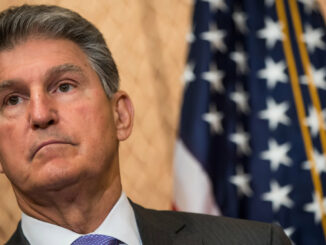
    Manchin’s refusal to back any climate proposal could doom action for years to come, given the strong likelihood of Republicans flipping the House in November. Sens. Tina Smith (D-Minn.) and Martin Heinrich (D-N.M.) independently used the same term to describe Manchin’s stance this week: “Infuriating.”

    By Ajay Ghosh

    West Virginia’s population shrank 3.7% to 1,782,959 in 2021, from the 1.9 million people who lived there in 2010. In contrast, as per a report by The Census Bureau’s Population Estimates Program, the population in the US grew 6.5% during that period to 330 million people across all the 50 states and DC. The state of West Virginia ranks 50 out of all 50 US states in population. West Virginia’s gross state product (GSP) reached $72.2bn, with growth of 0.6% over the 5-years to 2019. West Virginia’s GSP growth ranks 45 out of all 50 US states. GSP is a measurement of a state’s output, or the sum of value added from all industries in the state. The state employs 0.9 million people with a growth rate of -0.2% over the five years to 2018, which ranks it 50 out of all US states. Senator Joseph Manchin III, representing the state of West Virginia in the US Senate since 2010, is a politician and businessman. A member of the Democratic Party, he was the 34th governor of West Virginia from 2005 to 2010 and the 27th secretary of state of West Virginia from 2001 to 2005. As per his website, Senator Manchin currently serves as the Chairman of the Senate Energy and Natural Resources Committee, and also serves on the Senate Committee on Appropriations, the Senate Committee on Armed Services, and the Senate Committee on Veterans’ Affairs – four critical committees that tackle the important work of addressing our nation’s energy needs, overseeing discretionary spending, standing up for our Veterans, and defending our nation.

    Democrats now have a thin majority in the US Senate, and passing sweeping legislation is not easy, due to a rule requiring votes from 60 of the Senate’s 100 members.  With just 50 members and a tie-breaking vote from Vice President Kamala Harris, Senate Democrats will have the power to confirm executive and judicial nominees and launch investigations in a range of areas. The current predicament of a 50/50 split in the Senate gives the ruling Democratic party very little scope for legislating President Biden’s Agenda. And that makes every one of the 50 Democratic Senatorial a strong voice, allowing them to choose to support or reject any agenda or policy of the Biden administration. Manchin is powerful in part because of circumstance — in a 50-50 Senate, his party can pass almost nothing without him. In order to advance any legislation, President Joe Biden’s administration may need to modify its priorities on economic relief, climate change, gun laws, electoral reforms, racial equity and immigration in order to gain support from Republicans and moderate Democrats like Manchin. One senator, who has exploited this position to suit his narrow political  agenda, is Sen. Manchin, who represents the less than 2 million people of West Virginia, against the well-being of the 330 million Americans.

    For instance, Manchin’s decision last week to move ahead with a reconciliation deal that doesn’t involve climate change and raising taxes on the wealthy, risks consigning the entire world to a warmer future, said scientists and advocates for a safer world, said while reacting to the news. Democrats, activists and scientists reacting to the news worried that the inability of Congress to take meaningful reaction would consign the U.S. to more heatwaves, floods, droughts and intense storms. Democratic senate leaders have been negotiating with Manchin for over a year to try to get him on board with investments that would dramatically reduce U.S. contribution to climate change.  But on Friday last week, Manchin said he’s not interested in immediately moving forward with a deal that includes those investments. Manchin, relaying a discussion he’d had telling Majority Leader Charles Schumer (D-N.Y.) of his decision, suggested he might be able to agree to a deal at a later date. But those comments rang hollow with climate activists, who noted he has made similar remarks in the past. “Joe Manchin is waving the fate of human survival over our heads like a bone to hungry dogs and it’s really quite frightening,” John Paul Mejia, a national spokesperson for Sunrise Movement, told the media. Evergreen Action Executive Director Jamal Raad said in a statement that Manchin should not be considered a good-faith negotiator.  “Senator Manchin has lost all credibility and can no longer be trusted to prioritize the well-being of Americans and the planet over his own profiteering and political grandstanding,” Raad said.

    “Every ton matters,” said Dan Lashof, the U.S. director of the World Resources Institute, referring to tons of carbon emissions.  “Whether or not this bill gets done has a material impact on total emissions from the U.S. and that affects the magnitude of climate change that we will face,” he said.  Those who have studied the climate-saving potential of the Democrats’ climate bill agree that not passing it would likely lead to more emissions and a warmer planet. Princeton professor Jesse Jenkins, who has modeled the potential emissions cuts of the legislation under consideration, told The Hill that based on what had been reported thus far, a climate deal would have probably cut emissions between 800 million and 1 billion metric tons in 2030. That’s the equivalent of taking between 172 million and 215 million cars off the roads for a year.  “We’re losing two-thirds to three-quarters of the progress we were hoping to make by 2030,” he said. Some argued that the rest of the world may be less inclined to take bold action without the U.S. participating as well.  “The U.S. is THE largest historical all-time emitter, and for that reason occupies a special role. We can’t expect other countries to act meaningfully if we fail to,” said climatologist Michael Mann.

    President Biden pledged “strong executive action” on climate change in reaction to Manchin’s move. But, with Trump appointed conservative Justices leading the US Supreme Court, Biden’s actions could be blocked, and impact minimized.

    Most activists reacted in fury to the latest setback, castigating the West Virginia Democrat as potentially signing a death warrant for meaningful climate action against the backdrop of a generationally conservative court, the likely loss of a Democratic majority in Congress and the possible loss of the White House in 2025. “Joe Manchin has pretended to be supportive of certain investments for over a year now, and it turns out that that was bulls—,” Jamal Raad said.  “That will now be his lasting legacy — a person that tried to put his own profits and sense of his political standing over the planet.”

    This is not the first time, Manchin ditched Democrats. The 2018 confirmation hearings for Supreme Court Justice Brett Kavanaugh were tumultuous even by the standards of the Trump era. Kavanaugh, a staunch conservative nominated to replace a more centrist figure, Justice Anthony Kennedy, faced sexual assault allegations dating back four decades from Christine Blasey Ford. Republicans had held a 51-49 majority in the Senate, but Sen. Lisa Murkowski (R-Alaska) would ultimately refuse to back Kavanaugh. That left Manchin and moderate Republican Sen. Susan Collins (R-Maine) as the crucial votes. Manchin was the only Democrat confirming him to the highest court. Last month, after the Supreme Court struck down the landmark Roe v. Wade abortion decision, Manchin said he was “alarmed” by the actions of Kavanaugh and Justice Neil Gorsuch, the other Trump nominee for whom he voted.

    Again, in December 2021, the West Virginia Senator’s single most dramatic intervention may have been his announcement that he would sink President Biden’s keystone legislation, the “Build Back Better” bill. The fact that he chose to announce his opposition on Fox News drove liberal Democrats to even more intense outrage.

    Manchin said in a statement reiterating his opposition to the legislation, which would have extended an expanded child tax credit, helped with childcare costs, taxed high earners more and taken significant action on climate change, among other things.

    In June 2021, Manchin destroyed the potential party unity on ‘For the People’ voting reform legislation, one of the major goals of Democrats when they won back the White House — and control of the Senate — in the 2020 election. Many in the party see American democracy as being in existential danger. Schumer declared the protection of voting rights, and of elections themselves, to be a “top priority.” The legislation never had a clear path through the Senate, requiring 60 votes to pass in the absence of filibuster reform. But Manchin denied Democrats even the claim that they were unified behind the proposal. Manchin reiterated his opposition to filibuster reform, driving the final nail in the coffin of the “For the People” proposal.

    Manchin has all along thwarted filibuster reform ever since he was elected to the Senate. Democrats often become enraged with Manchin because they believe he acts in bad faith.  In one of many statements outlining his position, Manchin’s office detailed his steady stance dating back to 2013, when he opposed such reform while Democrats held the Senate majority. Manchin is the most conservative Democrat in the Senate — and perhaps the most controversial, at least with the rest of his party. He won reelection to a second full Senate term in 2018, just two years after President Trump carried his state by more than 40 points. “Manchin is not particularly concerned about President Biden succeeding. He’s not particularly concerned about the needs of working people,” Sen. Bernie Sanders (I-Vt.) told SiriusXM’s “Dean Obeidallah Show” last week.

    Manchin’s refusal to back any climate proposal could doom action for years to come, given the strong likelihood of Republicans flipping the House in November. Sens. Tina Smith (D-Minn.) and Martin Heinrich (D-N.M.) independently used the same term to describe Manchin’s stance this week: “Infuriating.”

    (The author is Chief Editor of www.theunn.com and  The Asian Era. He can be reached at ajghosh@gmail.com)