Tag: Ajit Singh

  • Guru Gobind Singh: Epitome of Sacrifice

    Guru Gobind Singh: Epitome of Sacrifice

    Guru Gobind Singh’s life is a remarkable tapestry of sacrifice, courage, and devotion to the principles of justice and righteousness. Among the numerous sacrifices he made, the most heart-wrenching was the loss of all four of his sons—known as the “Sahibzade”—in the struggle to uphold the values of Sikhism and protect the oppressed. This narrative encapsulates the essence of his ultimate sacrifice and the legacy it left behind.
    The Four Sahibzade
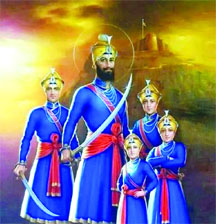
    The four sons of Guru Gobind Singh-Ajit Singh, Jujhar Singh, Zorawar Singh, and Fateh Singh-are collectively known as the Sahibzade. They were raised in an environment imbued with Sikh values of bravery, compassion, and unwavering faith in the divine. Despite their young ages, each Sahibzada exhibited remarkable courage and dedication to the ideals of Sikhism, becoming immortalized as symbols of sacrifice and resilience.
    Ajit Singh (1687-1704)
    Ajit Singh, the eldest son of Guru Gobind Singh, was born on January 26, 1687, in Paonta Sahib. As a young boy, he displayed extraordinary intelligence, physical prowess, and a keen sense of responsibility. His upbringing in the Guru’s household prepared him to be a fearless warrior and a compassionate leader.
    Ajit Singh’s first significant contribution to the Sikh cause came during the Battle of Nirmohgarh in 1702, where he led a group of warriors against the Mughal forces. His bravery earned him admiration and respect among his peers. However, his ultimate sacrifice came during the Battle of Chamkaur in December 1704. At just 17 years old, Ajit Singh led a small group of Sikh warriors against the vast Mughal army, fighting valiantly until his last breath. His fearless sacrifice inspired his younger brother, Jujhar Singh, to follow in his footsteps.
    Jujhar Singh (1691-1704)
    Jujhar Singh, the second son of Guru Gobind Singh, was born on March 14, 1691, in Anandpur Sahib. Like his elder brother, Jujhar Singh was trained in martial arts, weaponry, and the teachings of Sikhism. His unwavering faith and courage made him a natural leader among his peers.
    During the Battle of Chamkaur, Jujhar Singh, then only 14 years old, witnessed his elder brother’s martyrdom. Undeterred, he sought his father’s permission to join the fight. Guru Gobind Singh, though heartbroken, blessed his son and encouraged him to uphold the principles of righteousness. Jujhar Singh led a charge against the Mughal forces, fighting with unmatched bravery until he too attained martyrdom. His sacrifice is remembered as a shining example of youthful valor and devotion to a higher cause.
    Zorawar Singh (1696-1705) and Fateh Singh (1699-1705)
    The younger Sahibzade, Zorawar Singh and Fateh Singh, were born in Anandpur Sahib. Zorawar Singh, born on November 17, 1696, and Fateh Singh, born on February 25, 1699, were brought up with the same values as their elder brothers. Despite their tender ages, they exhibited wisdom and courage beyond their years.
    In 1705, when the Guru’s family was forced to evacuate Anandpur Sahib under the Mughal siege, the younger Sahibzade were separated from Guru Gobind Singh. Accompanied by their grandmother, Mata Gujri, they were betrayed by a trusted servant and handed over to Wazir Khan, the governor of Sirhind.
    Wazir Khan attempted to break their spirit by offering them wealth, titles, and safety in exchange for converting to Islam. However, Zorawar Singh and Fateh Singh remained steadfast in their faith, refusing to bow to tyranny. Their unwavering resolve enraged Wazir Khan, who ordered them to be bricked alive. The boys faced their execution with unshakable courage, reciting Sikh hymns and reaffirming their commitment to their beliefs. Mata Gujri, imprisoned in a freezing tower, passed away upon hearing of her grandsons’ martyrdom.
    The Legacy of the Sahibzade’s Sacrifice
    The sacrifice of the four Sahibzade is unparalleled in history. Their martyrdom exemplifies the highest ideals of faith, courage, and selflessness. The Sahibzade chose death over compromise, leaving behind a legacy that continues to inspire Sikhs and non-Sikhs alike.
    Their sacrifices are commemorated annually during the “Shaheedi Jor Mela”, held in Fatehgarh Sahib, Punjab. The event draws thousands of devotees who come to pay homage to the Sahibzade and reflect on their enduring legacy. Their story is also a cornerstone of Sikh education, ensuring that future generations understand the values of sacrifice and resistance against oppression.
    The story of the Sahibzade is a testament to the power of faith and the strength of the human spirit. Despite their youth, they displayed remarkable courage and an unwavering commitment to righteousness. Guru Gobind Singh’s sons gave their lives to uphold the principles of Sikhism, becoming eternal symbols of sacrifice and resilience. Their legacy serves as a source of inspiration, reminding humanity of the importance of standing firm in the face of injustice and oppression.

  • US-based Indian journalist narrates rise of ‘phenomenal’ Kamala Harris in his new book

    US-based Indian journalist narrates rise of ‘phenomenal’ Kamala Harris in his new book

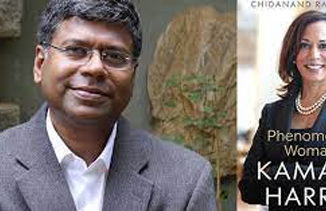
    WASHINGTON, D.C. (TIP): A new book narrating the rise of “phenomenal” US Vice President Kamala Harris, the first woman to occupy this position, and in the process shattering several glass ceilings, by a Washington DC-based Indian journalist and author throws some previously unknown facts about her. For instance, the middle name given to Harris, when she was born and which was mentioned in her birth certificate was “Iyer”—before it was changed to Devi, Chidanand Rajghatta writes in his book “Kamala Harris: Phenomenal Woman” that hits the stands later this month. The drawing room friends of the parents of Harris at the University of California, Berkeley, when she was a child were Lord Meghnad Desai, Amartya Sen and Ajit Singh, economists and contemporaries of former prime minister Manmohan Singh, writes the author. Harris, 57, was born in Oakland, California on October 20, 1964. Her mother, Shyamala Gopalan, came from a traditional Tamil brahmin family. She immigrated to the US from India in 1958 at the age of 19 to study nutrition and endocrinology at the University of California. It’s there she met Harris’s father Donald Harris, an African-American from British Jamaica.

    In the book, published by Harper Collins India, Rajghatta writes that Donald spent time at the Delhi School of Economics on a fellowship when Harris was a toddler.

    The book begins as a profile of Harris’ mother, partly out of personal interest of Rajghatta, whose father came to the US around the same time as Shyamala Gopalan and studied agriculture and dairy science at Kansas State. The story was so fascinating that it expanded into a larger, longer narrative of Harris’ growing up years, life, and career, he says.

    “It is a biography of sorts, but wider in scope, examining the history of the Indian-American community (of which I’m one—with mixed-race children) and India’s ties with Black America (under-reported and under-chronicled), including exchanges between Black activists such as George Washington Carver, Booker Washington, and W E B Dubois, and Mahatma Gandhi, whose aides Madeleine Slade (Mirabai) and Charlie Andrews visited Howard for lectures that influenced a civil rights activist generation before MLK Jr,” Rajghatta says.

    The book, which runs into more than 300 pages, also looks at the suffragette movement and the barriers and hurdles women face in political representation and ascendancy.

    “For Kamala, cooking is both therapy and art,” Rajghatta writes in the book.

  • REVISITING INDIAN HEROES

    REVISITING INDIAN HEROES

    By Dr. Bhuvan Lall

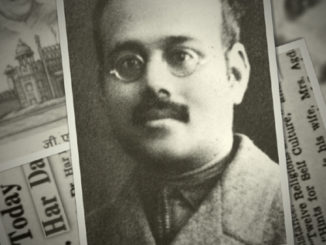
    Har Dayal, the gentleman revolutionary and the architect of the Ghadar Party who was recognized in 1912 in America as ‘the greatest man of India’ and the New York Times termed him the ‘brainiest man in the Indian revolutionary party’ in 1919 remains absent in the popular narratives of our nation’s history. Sadly, most Indians do not even know he even existed though Stanford where he taught in 1912 has preserved his letters, and Oxford where he outshined everyone maintains a record of his contributions to debates of the day as well as his admission card. No wonder the Hukumat-i-Britannia feared Har Dayal the most and exiled him from India for most of his life. After living in America, Britain, France, Switzerland, Germany, Algeria, Turkey, and Sweden for 30 years he died on 4 March 1939 in Philadelphia while on a lecture tour. He was 54. Hukumat-i-Britannia purposefully censored all the news and information relating to the immeasurably popular Har Dayal in the Indian media as it suited their imperialistic ambition. All this changed with WW2 when Netaji Subhas Chandra Bose went on the air on the Azad Hind Radio from Berlin in 1942. Netaji was our only hope in those dark hours and the most beloved leader across India. At the end of WW2 during the INA trials in December 1945, the victorious Hukumat-i-Britannia that had defeated the Axis powers lost to one man – Subhas Chandra Bose.  Hukumat-i-Britannia finally decided to ‘Quit India’ having lost the support of the armed forces.

    Founders of the Ghadar Party

    However, after independence, our recorders of history imposed the Hukumat-i-Britannia’s version of events and intentionally ignored the multilayered story of our freedom movement. They discounted the achievements of 1857, Ghadar Party, and the Indian National Army – the three events that unmistakably displayed India’s belief in gender parity and eternal philosophy of religious coexistence. The brave Indians who followed the ancient military doctrine of India to wage a war were rubbished as quickly as possible. Subsequently, their arduous struggles were simply painted out first from the newspapers and then our nation’s history books. Not only were their contributions erased, but extraordinary efforts were also made to distort their characters in the media with both editorial material and stupid cartoons. Today almost no one in the present generation has heard about the amazing triumphs of countless Indian revolutionaries such as Ajit Singh, Bhikaji Cama, Chidambaram Pillai, Gulab Kaur, Gurdit Singh, Kartar Singh Sarabha, Har Dayal, M.N. Roy, Mahendra Pratap Singh, Maulvi Barkatullah, Pandurang Khankhoje, Rash Behari Bose, Shyamji Krishna Varma, S.R. Rana, or the revolutionary life of one of the most brilliant students of the British school and university system – Aurobindo Ghosh. Journalists and historians of that period wiped out thousands of such names as if they never existed. Not a single major street, college, university, public building, neighborhood, town, or city in India is named after Lala Har Dayal whose lifelong contribution to India as an intellectual, spiritual, and revolutionary leader is far greater than most prominent leaders of India. Similarly, the fact that the lifework of Subhas Bose has been deliberately removed from the school and college textbooks and erased from our history is well known. Both these men have been brushed aside to favor several others.

    Ghadarite heroes

    On the eve of the 75th anniversary of independence, we must accept that the real heroes of our nation’s struggle for freedom were those who fought in the first war of Indian independence (1857-1858), the second war of Indian independence- Ghadar Party (1912-1919) and the final and decisive third of war of Indian independence fought under the leadership of Netaji Subhas Chandra Bose and the Indian National Army (1943-46) that crushed British imperialism and led us to a free nation. There should not be any doubt that these three wars along with the patriotic sacrifices of our nation’s revolutionaries who spent years in the torture chambers of the Cellular Jail and happily kissed the noose ended Hukumat-i-Britannia’s rule over India. All the national archives in Britain, America, Canada, Germany, and Sweden conclusively prove this fact.

    At this juncture of human history, we must always be inspired by the fact that we the people of India destroyed Hukumat-i-Britannia, the greatest empire the world had ever known, and then built the largest democracy in history of human civilization. Marching forward as we master the fourth industrial revolution in the 21st century we must set our minds to emulate the ideals of our thought leaders Har Dayal and Netaji Subhas Chandra Bose and firmly imitate their belief in self-discipline, hard work, personal sacrifice, honesty, merit and love for India.

    Dr. Bhuvan Lall, based between Los Angeles and India is the author of The Great Indian Genius Har Dayal and The Man India Missed the Most Subhas Chandra Bose.

    (The author is a writer, director and producer. He is Executive Chairman at Lall Brothers Media & Entertainment)